
Roman Training Gladius: Solid Wood, 70 cm
Specifications
| Color | Brown |
| Material | Solid hardwood, turned and sanded, one piece |
| Dimensions | About 70 cm long, 50 cm blade |


- For: men and women (adults)
- Solid hardwood, turned and sanded, one piece
- About 70 cm long, 50 cm blade
- Practice tool: no edge, no point
- Free shipping from 49€ · secure payment
The rudis — the wooden sword Rome used to train its soldiers
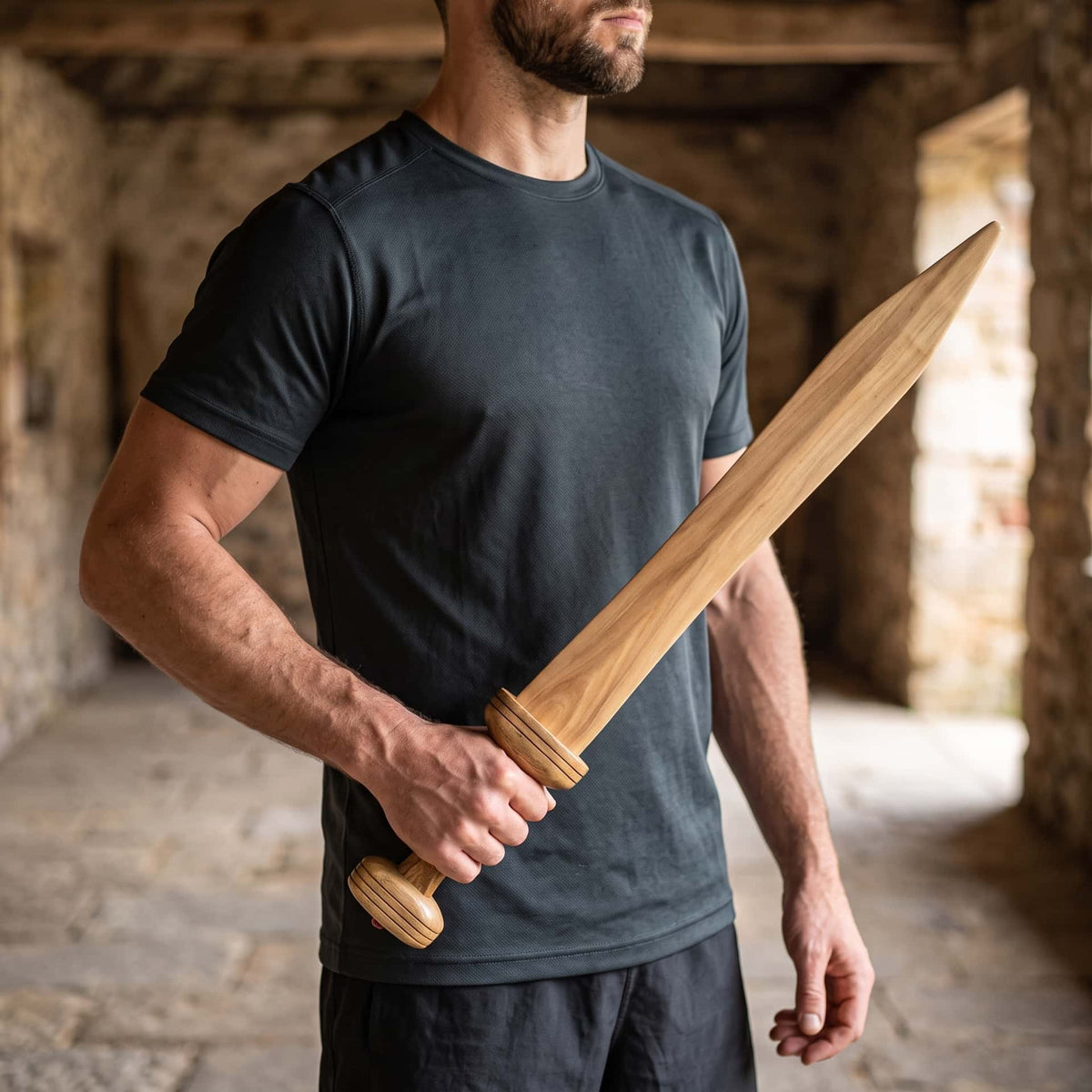
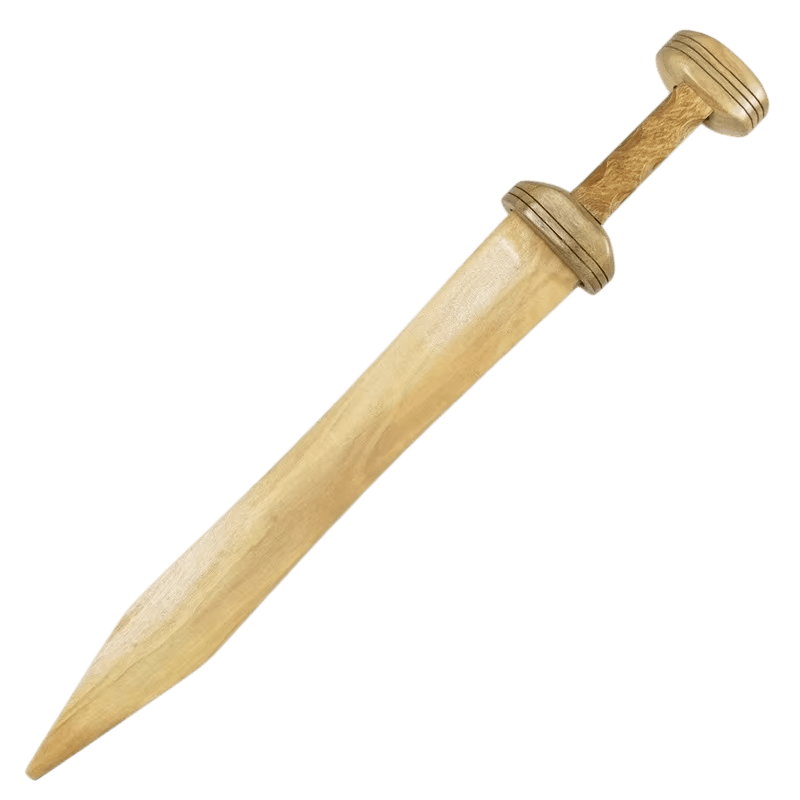
A short sword carved from a single block of hardwood, sanded and left raw. Wide blade with a long point, round guard, grooved grip, and a thick disc pommel. No paint, no varnish: the wood grain is visible along the entire length.
Find this piece in our weapons department.
What sets this piece apart
- A single piece of wood: no assembly, no glue, no screws. This is what gives it its durability and balance in the hand.
- The shape of the Roman gladius: wide, short blade, very elongated point, and a heavy pommel for counterbalance. This geometry is designed for thrusting, not slashing.
- Raw finish: the wood is bare. It develops a patina with use and can be sanded with fine-grit paper if a splinter appears — just like a tool handle.
- It is a practice tool, not a prop: neither sharp nor pointed, but designed to withstand repeated contact. Use with protective equipment and a forewarned partner.
Specifications
- Material: Solid hardwood, turned and sanded, single-piece construction
- Dimensions: Approximately 70 cm long, 50 cm blade
- Usage: training, historical fencing, reenactment
- Sold: individually
Did you know?
This is not a modern reenactment invention: the rudis was the training weapon of the Roman army, and Vegetius describes its use in his military treatise. Recruits would strike a stake planted in the ground with a wooden sword and a wicker shield, both deliberately heavier than real equipment — "so that the soldier, upon taking up the real weapon, would find it light." The rudis had a second life in the arena: it was the wooden sword given to a freed gladiator, a symbol of his liberty. A freed gladiator was called a rudiarius.
To learn more, our anatomy of a Viking sword explains the purpose of each part of an ancient blade, and our feature on the Ulfberht sword recounts the steel that made these blades famous.
In the same department
Is this gladius a toy?
No. It is a solid wood training sword, with no cutting edge, but heavy and rigid. It hits hard: the usual protective gear is required.
What is a rudis?
The wooden sword of the Roman army, used for training against a post. It was also the sword given to a gladiator when he was freed, hence the name rudiarius given to freed gladiators.
Will the wood get damaged?
It develops a patina and can show marks from impacts, like a tool handle. Sanding with fine sandpaper is enough to deal with a splinter.
Is it a Viking weapon?
No, it is a Roman gladius — a short, broad blade with a long point. We offer it for what it is: a historical training tool, not a Norse piece.
Delivery — Allow 7 to 15 business days for mainland France, 10 to 20 days for the European Union. Free delivery on orders over €49.
Delivery guarantee — If your parcel is not delivered within 60 business days, we will provide an immediate reshipment or a full refund.
14-day returns — You have 14 calendar days from receipt to request an exchange or refund. The item must be returned within this period, in its original packaging.
Legal guarantees — All our products are covered by the legal guarantee of conformity and the guarantee against hidden defects, in accordance with the Consumer Code and the Civil Code.


