
Filters
37 products
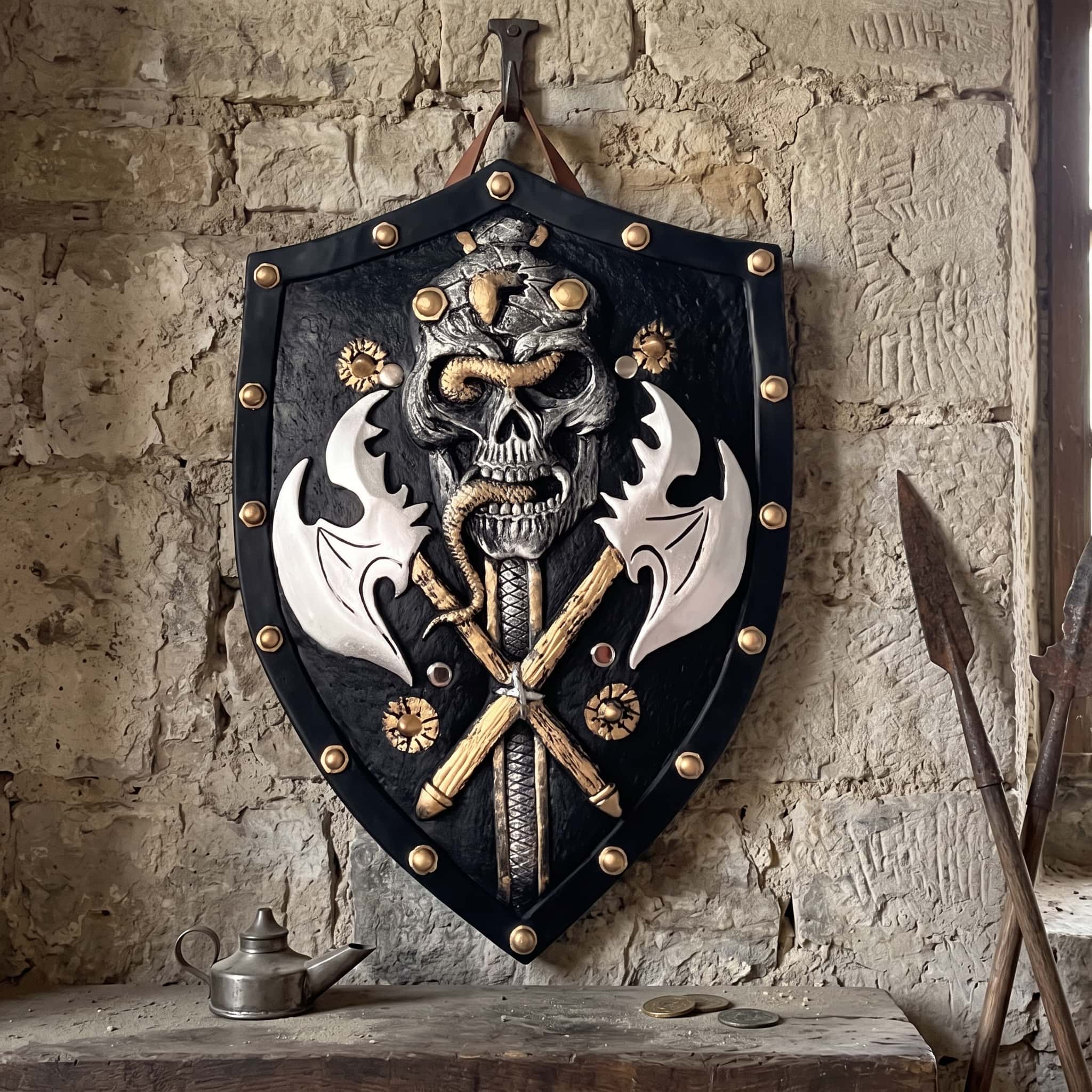
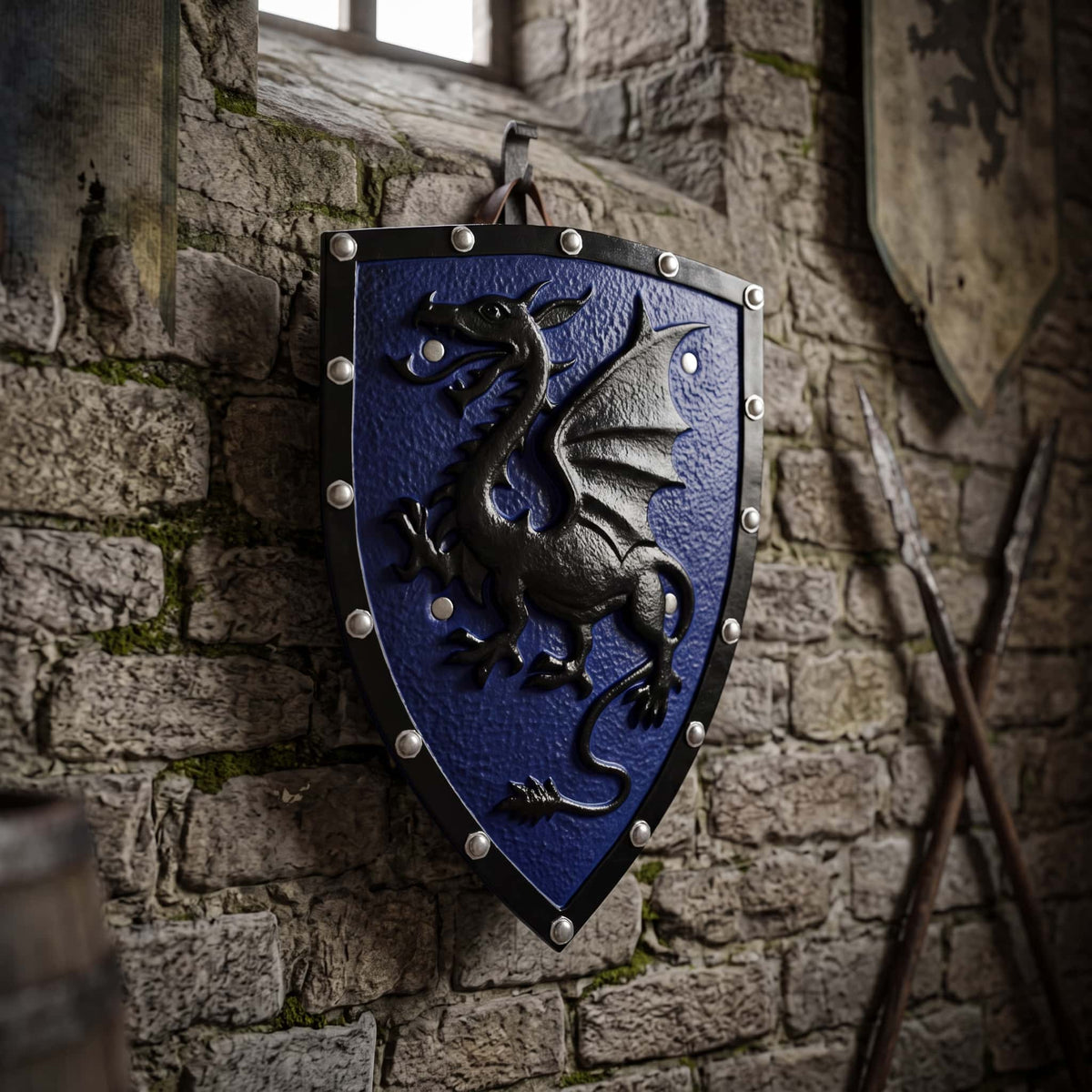
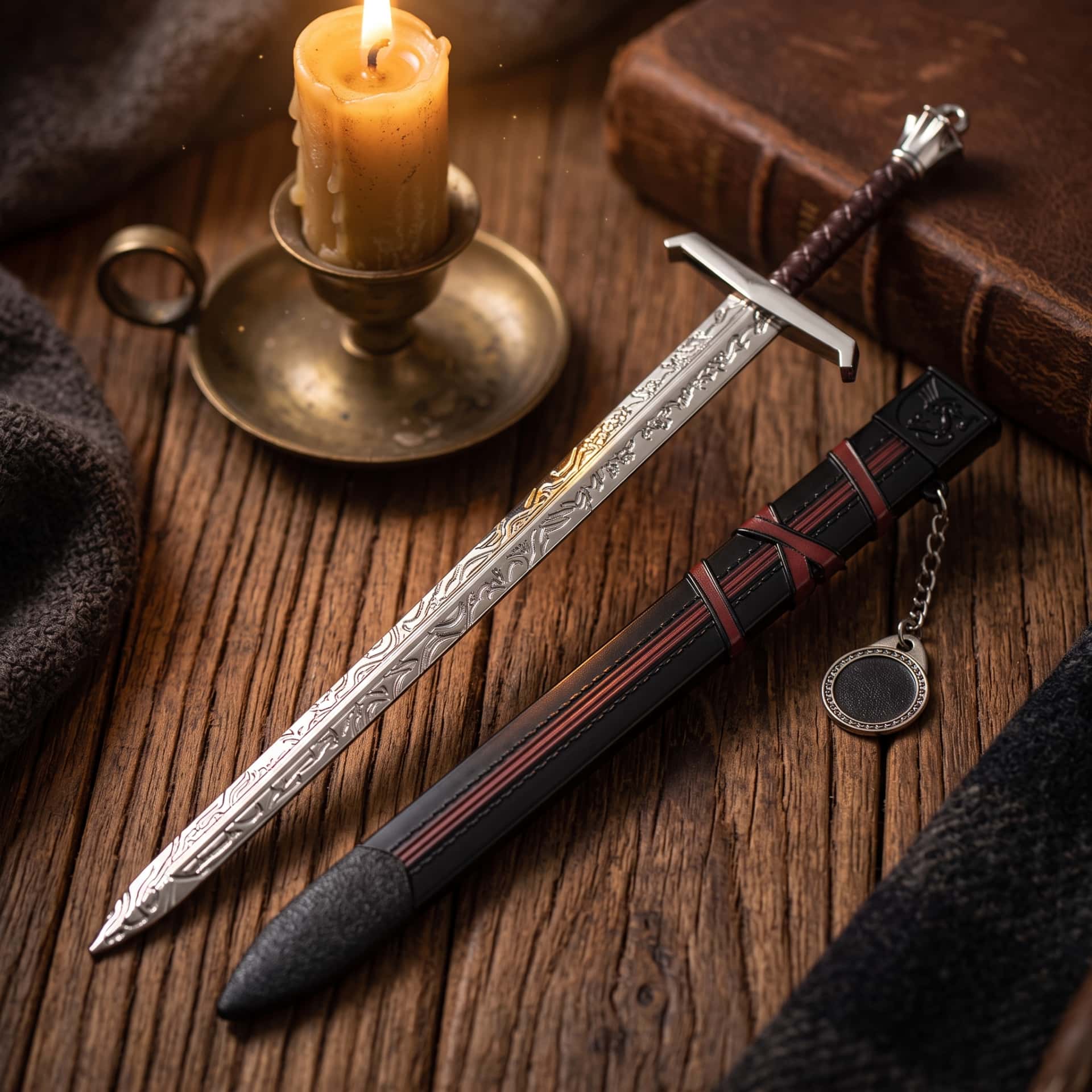
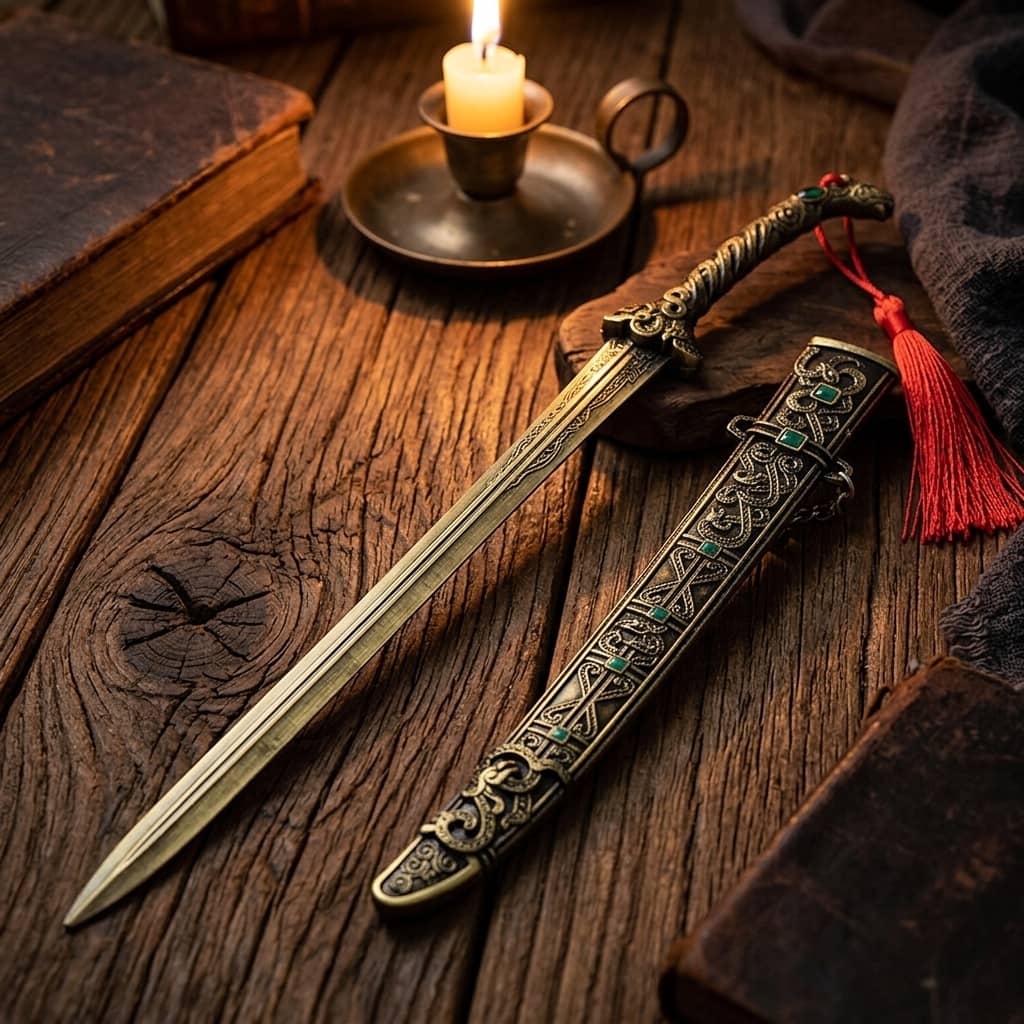
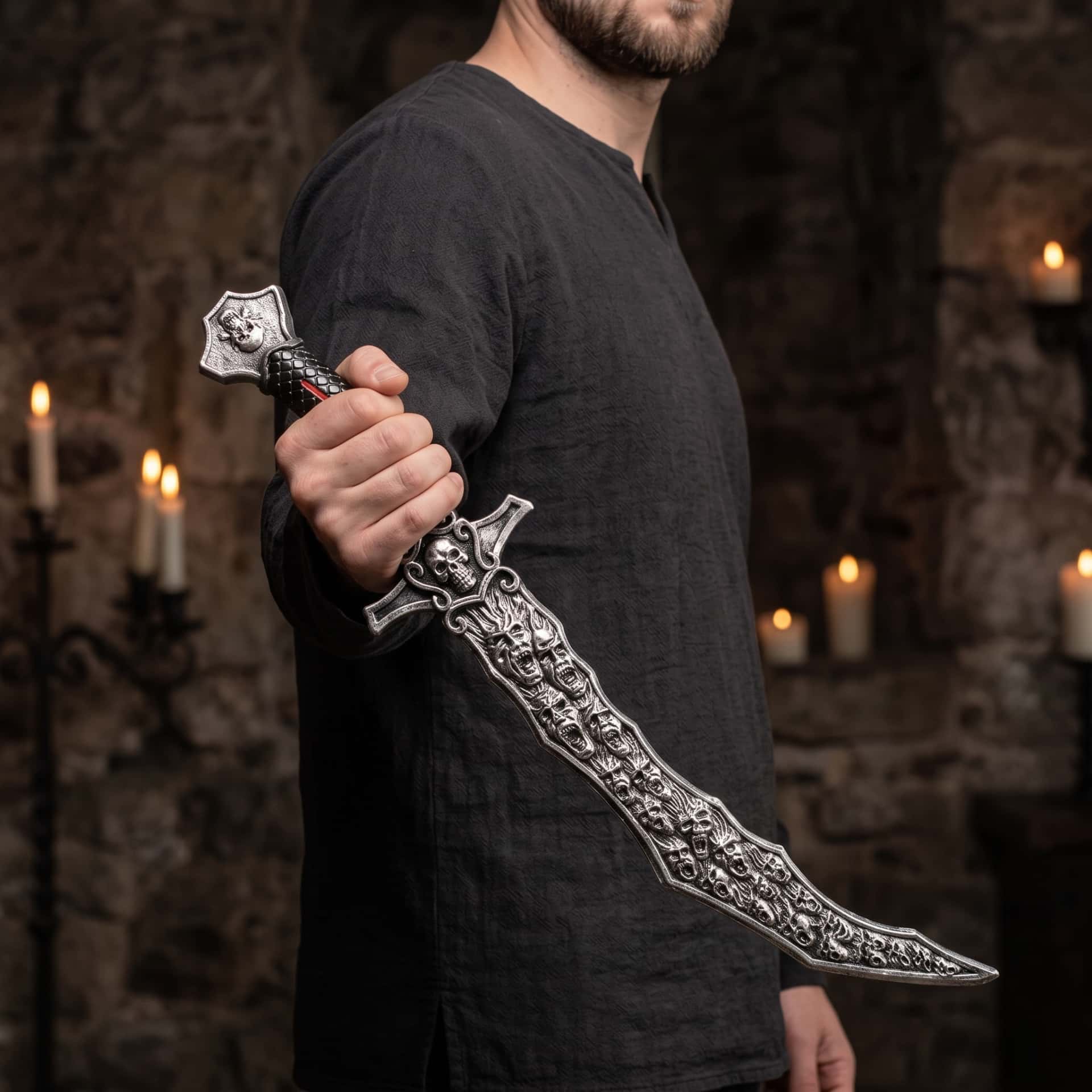
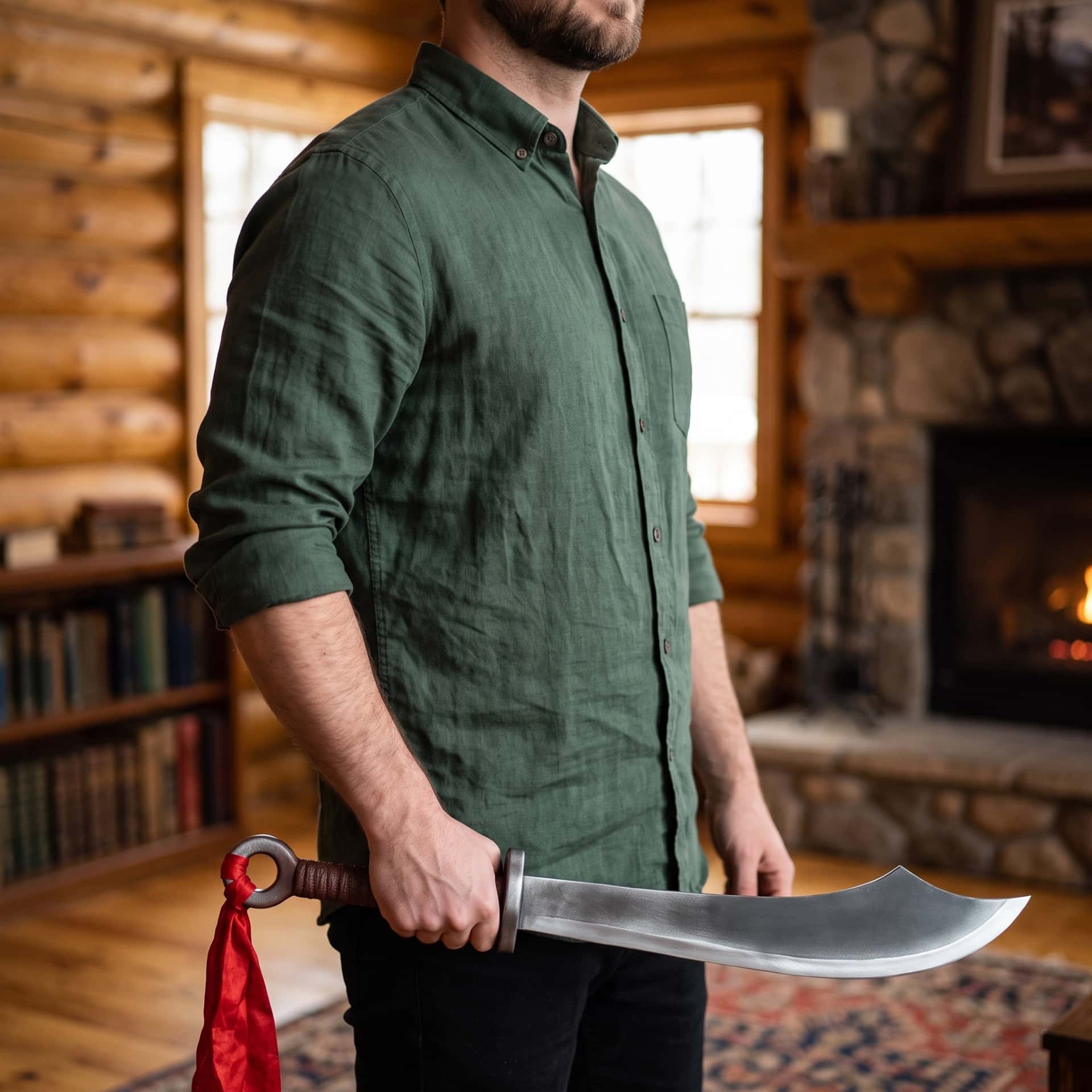
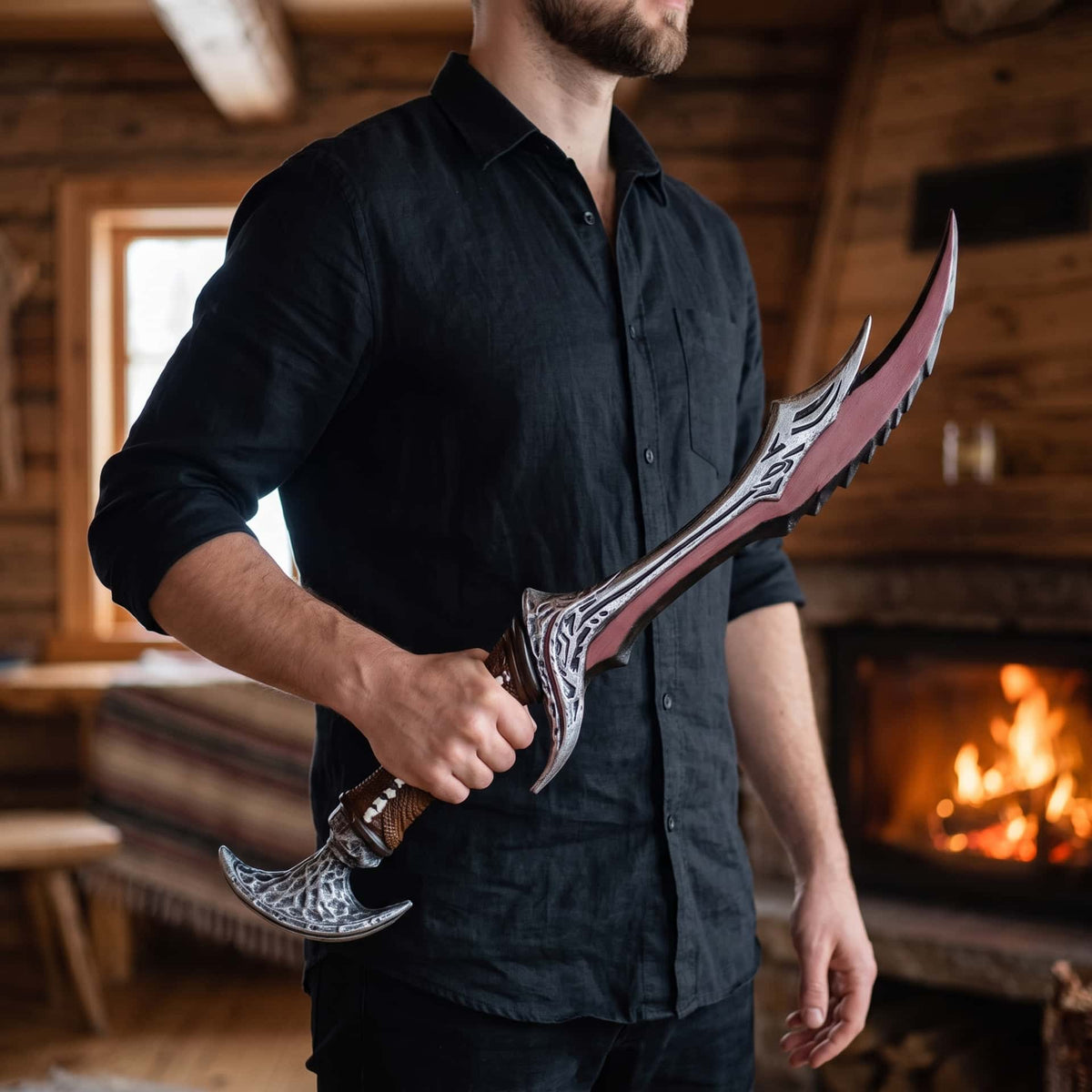

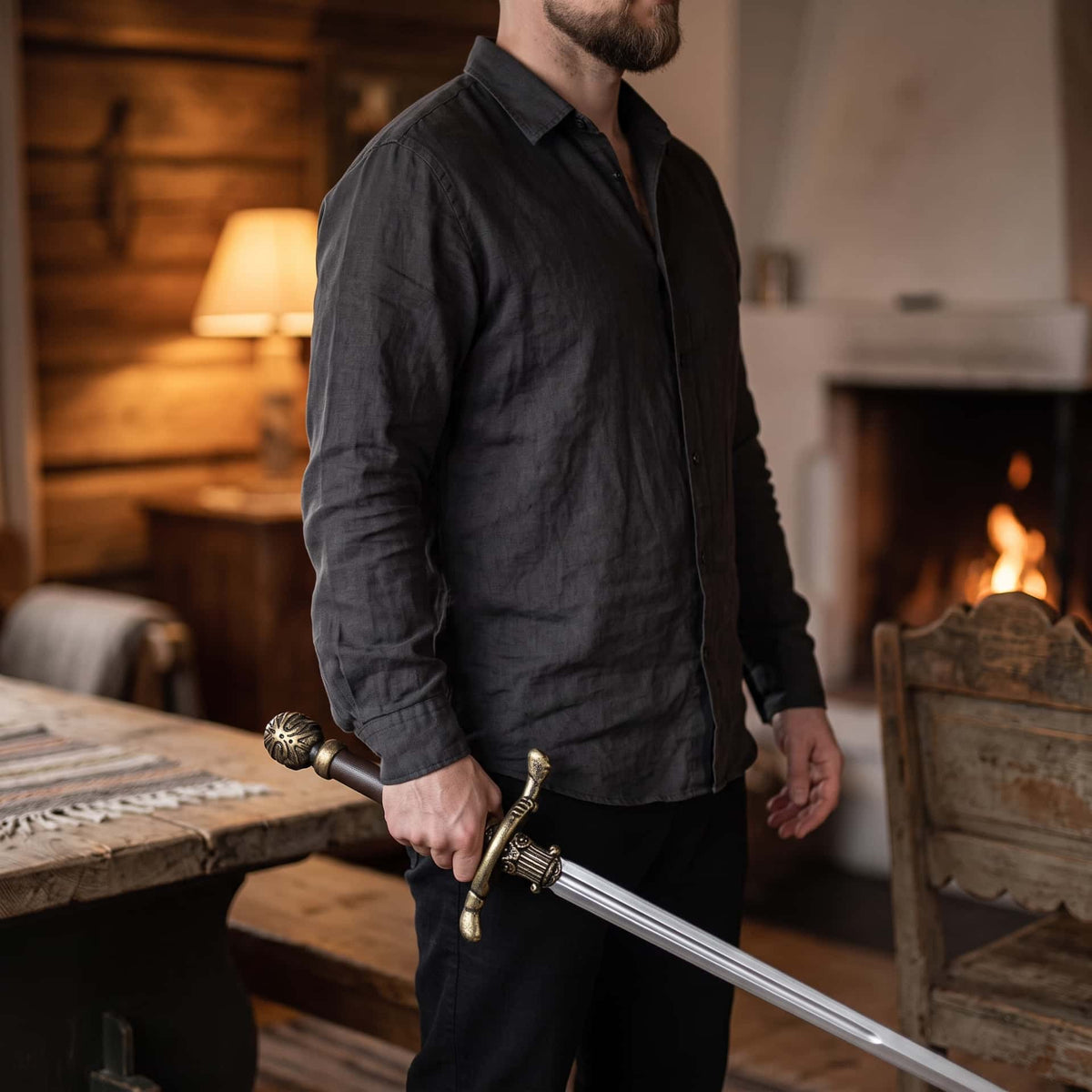

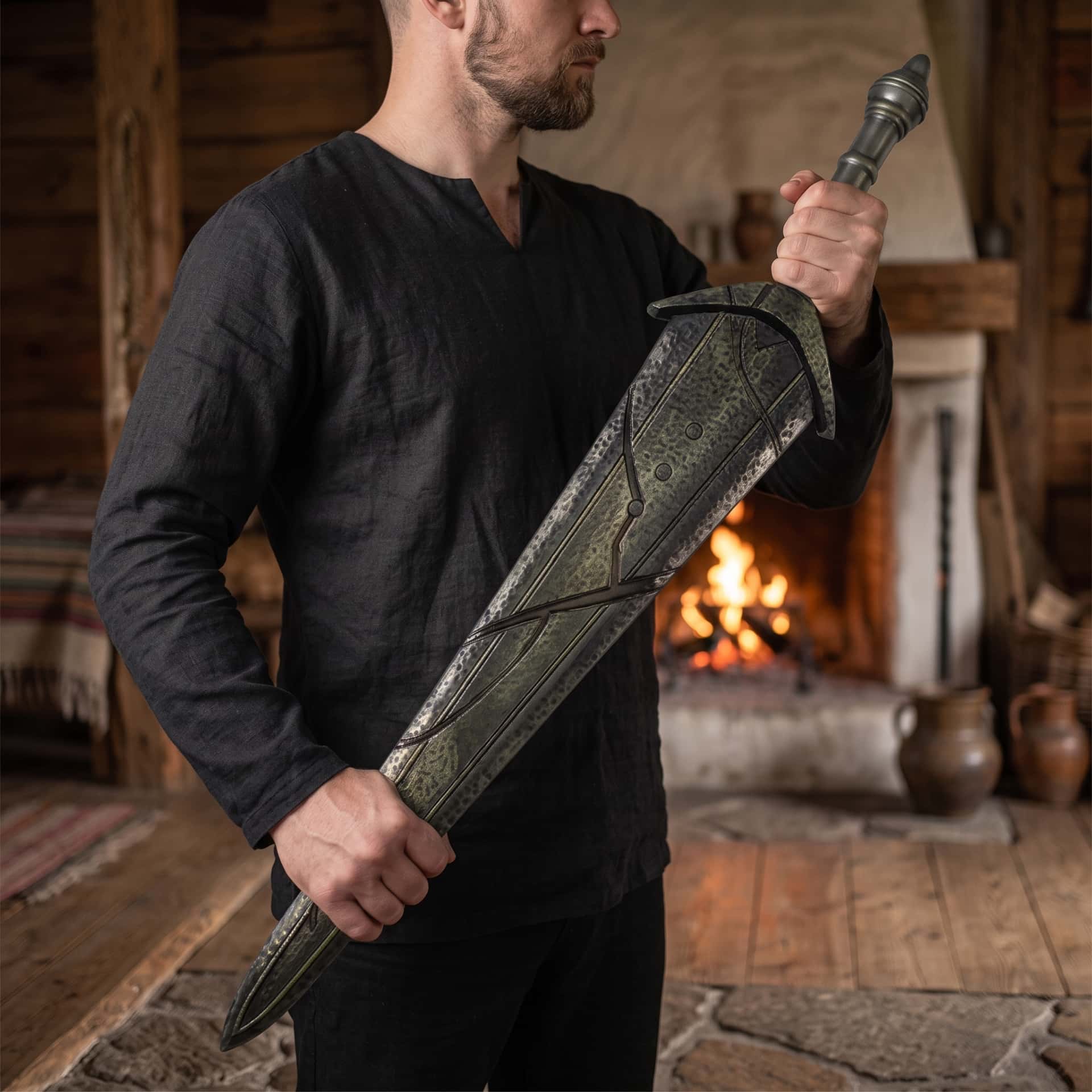
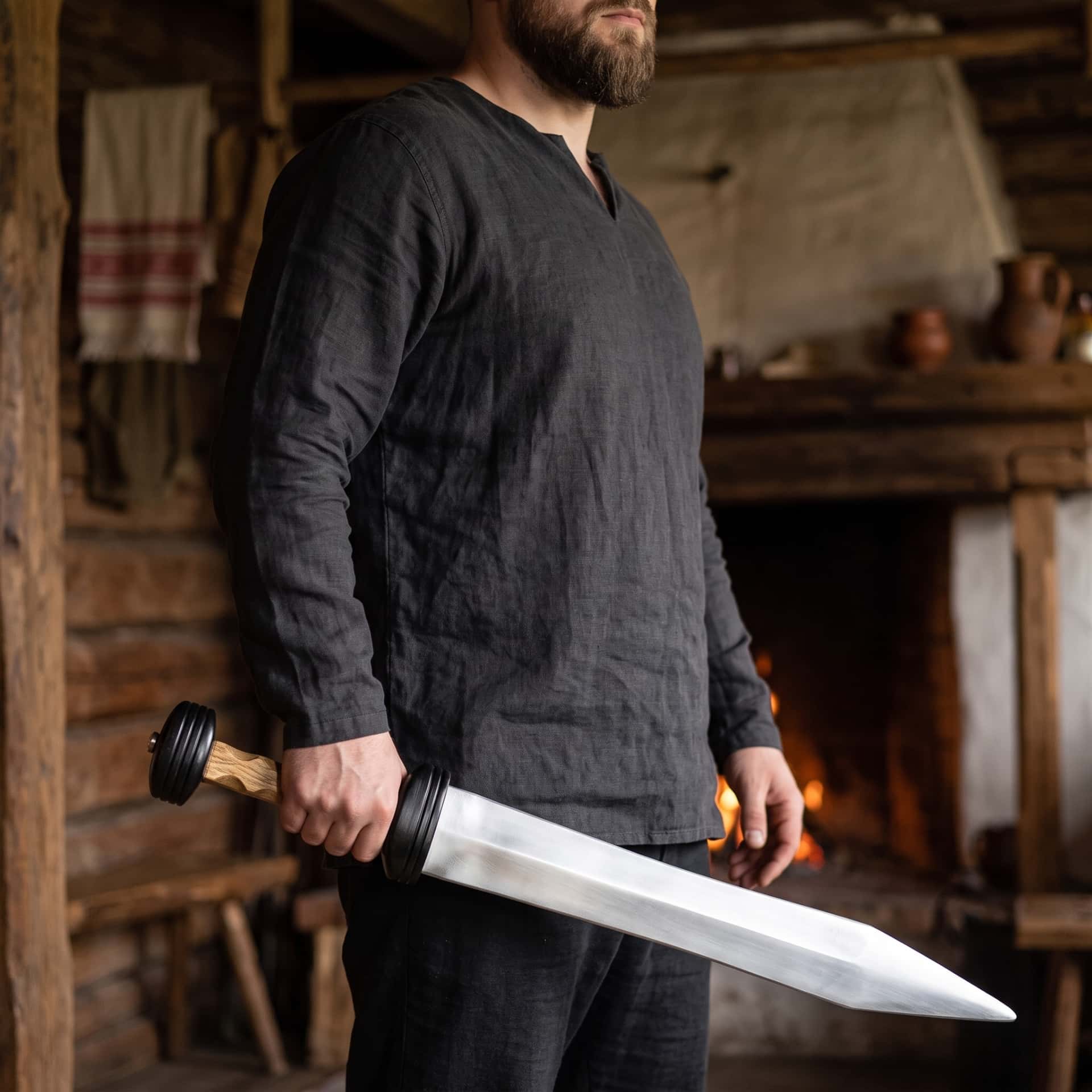
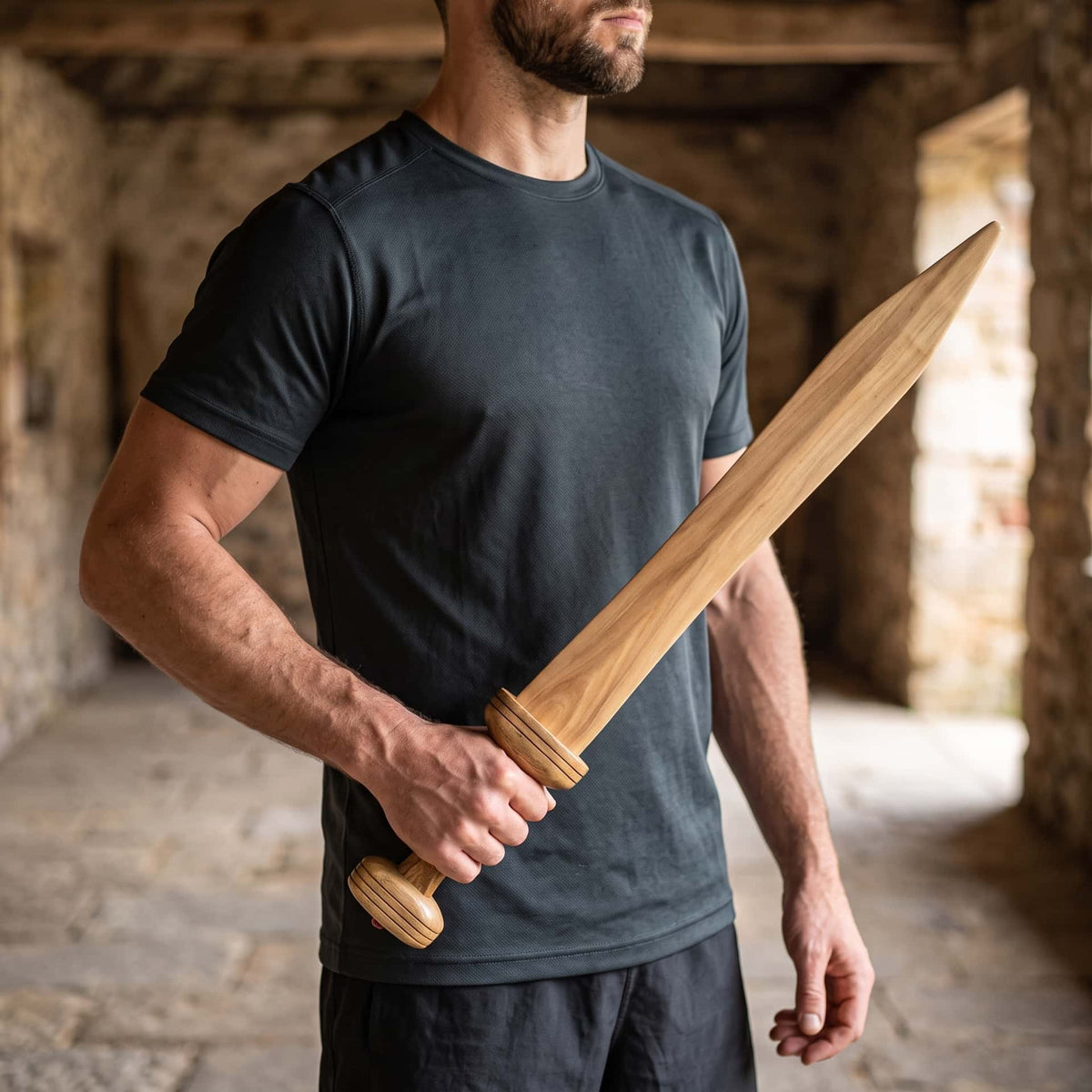
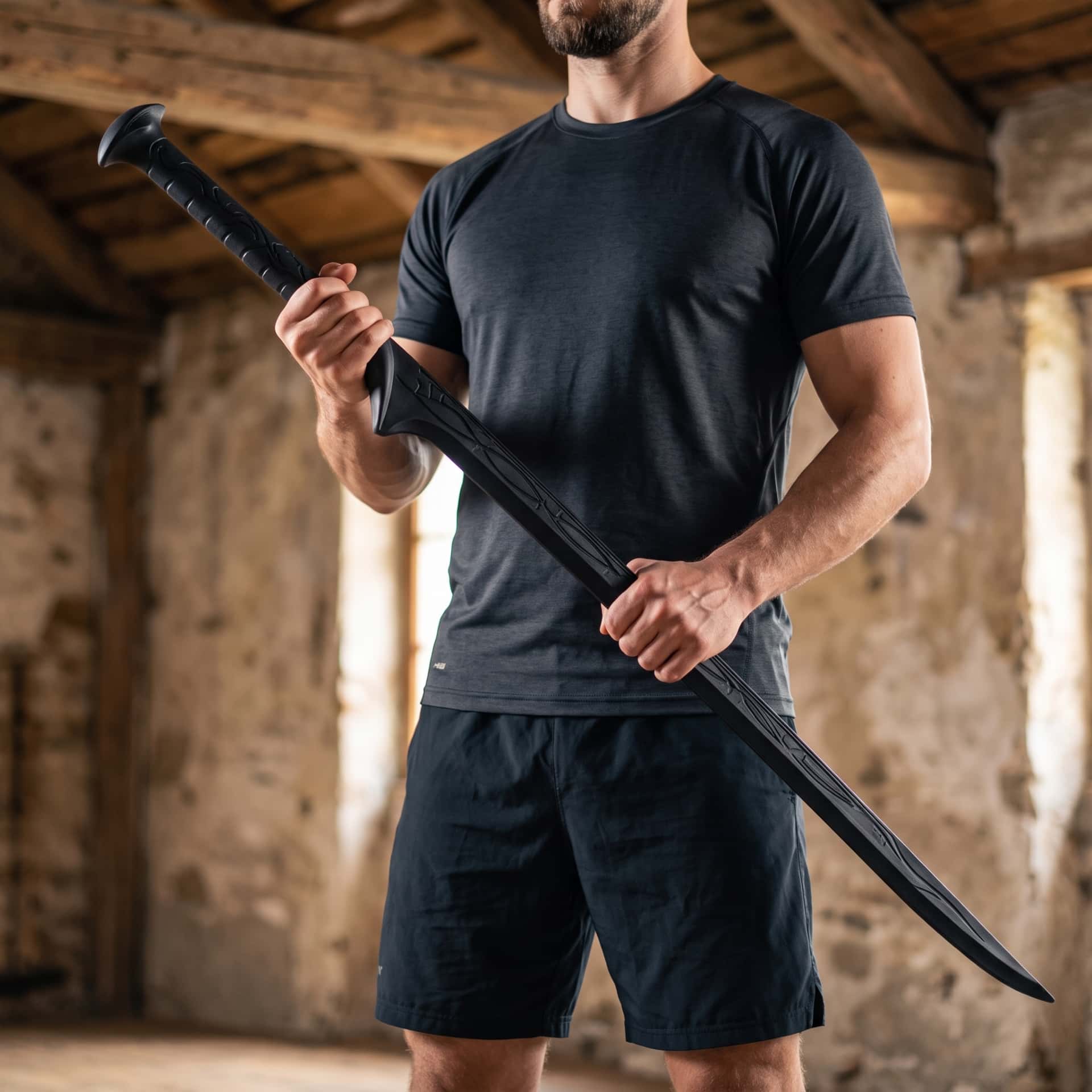

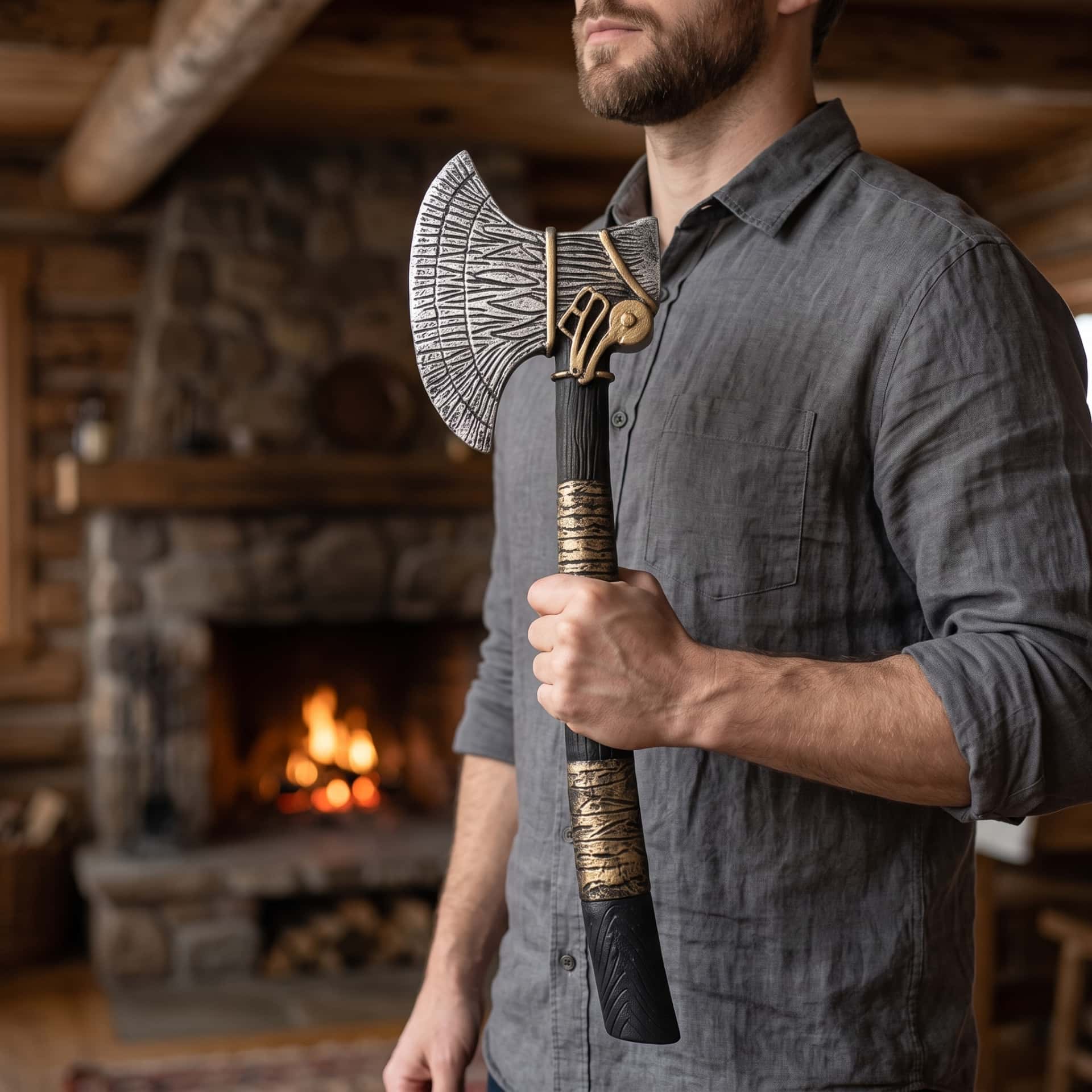


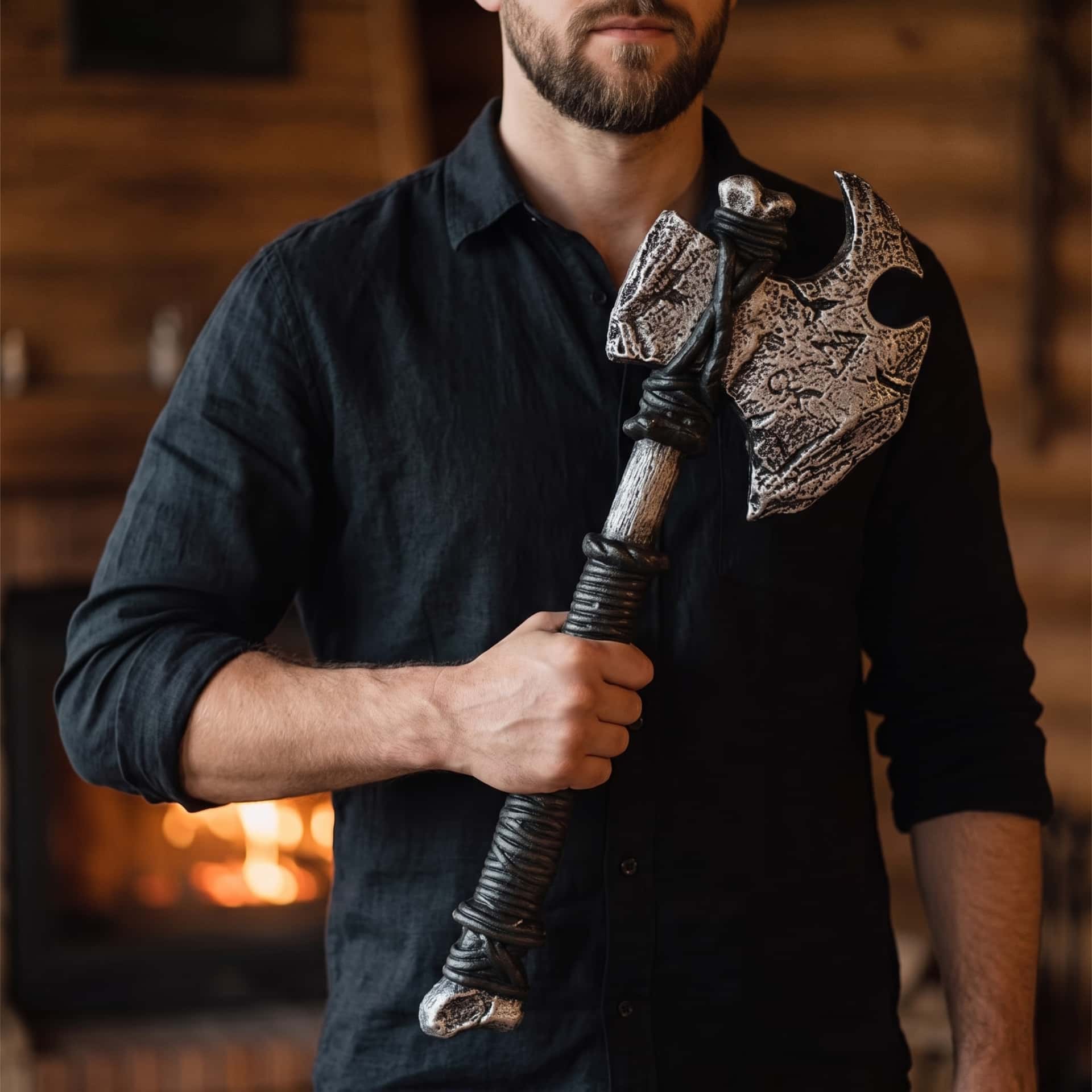
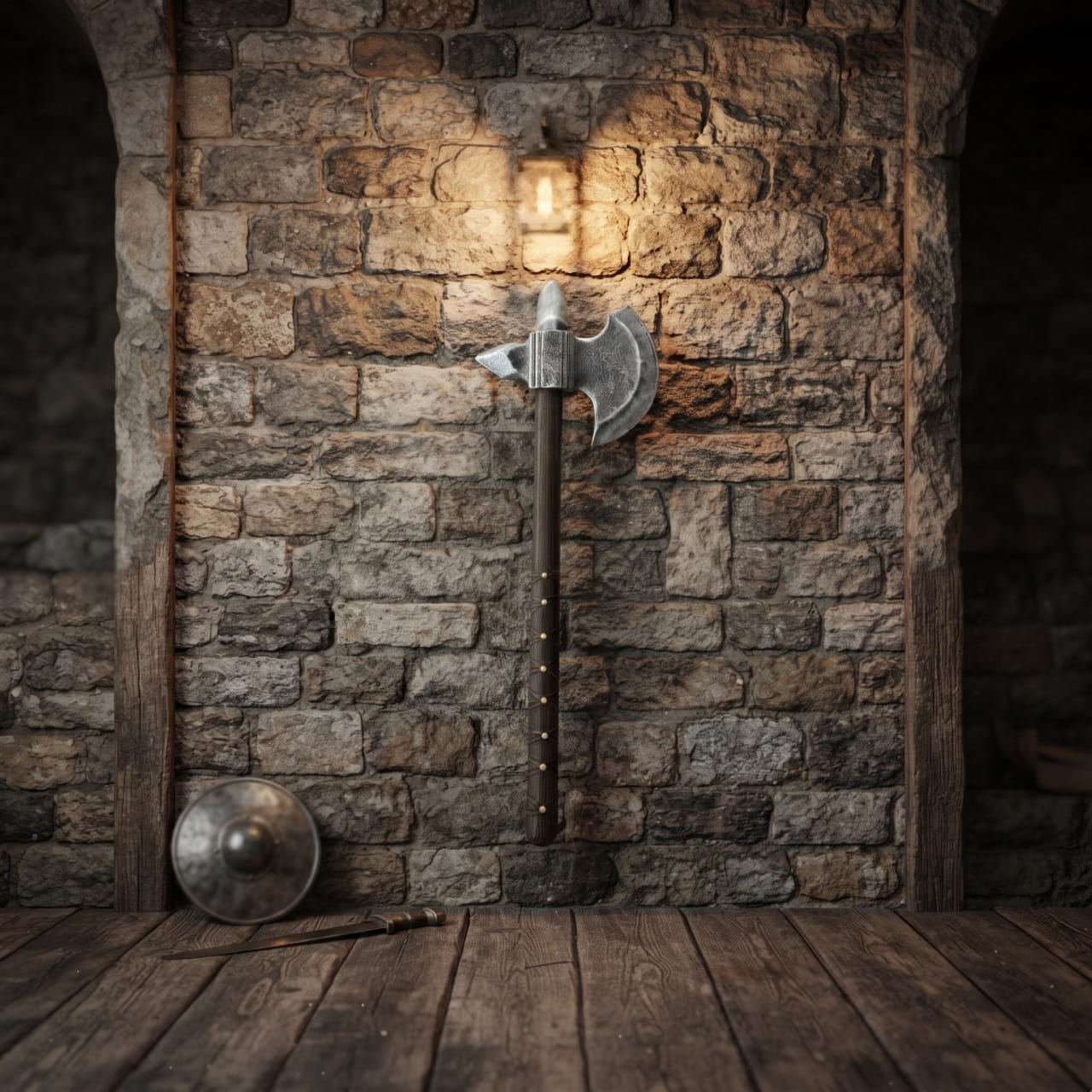
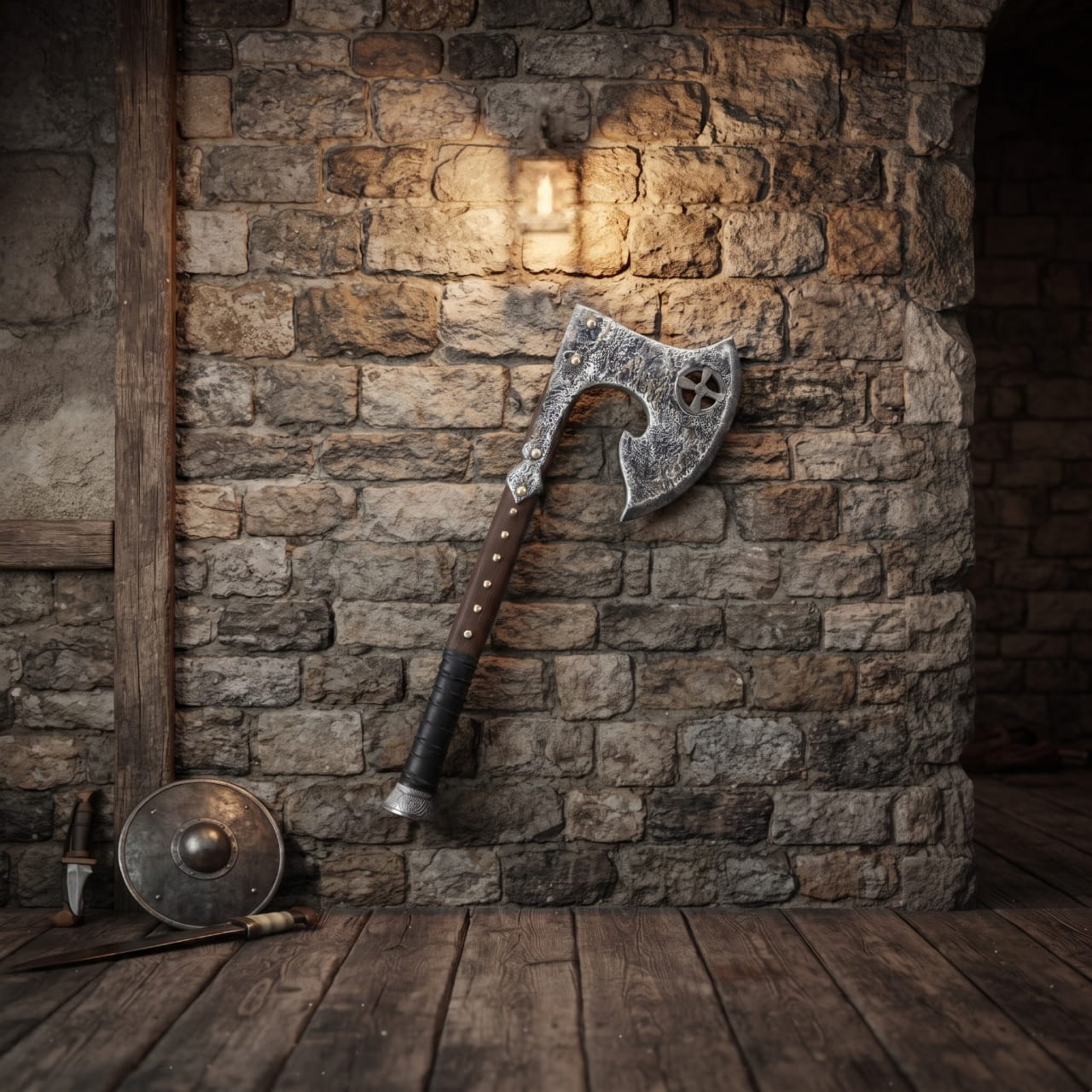
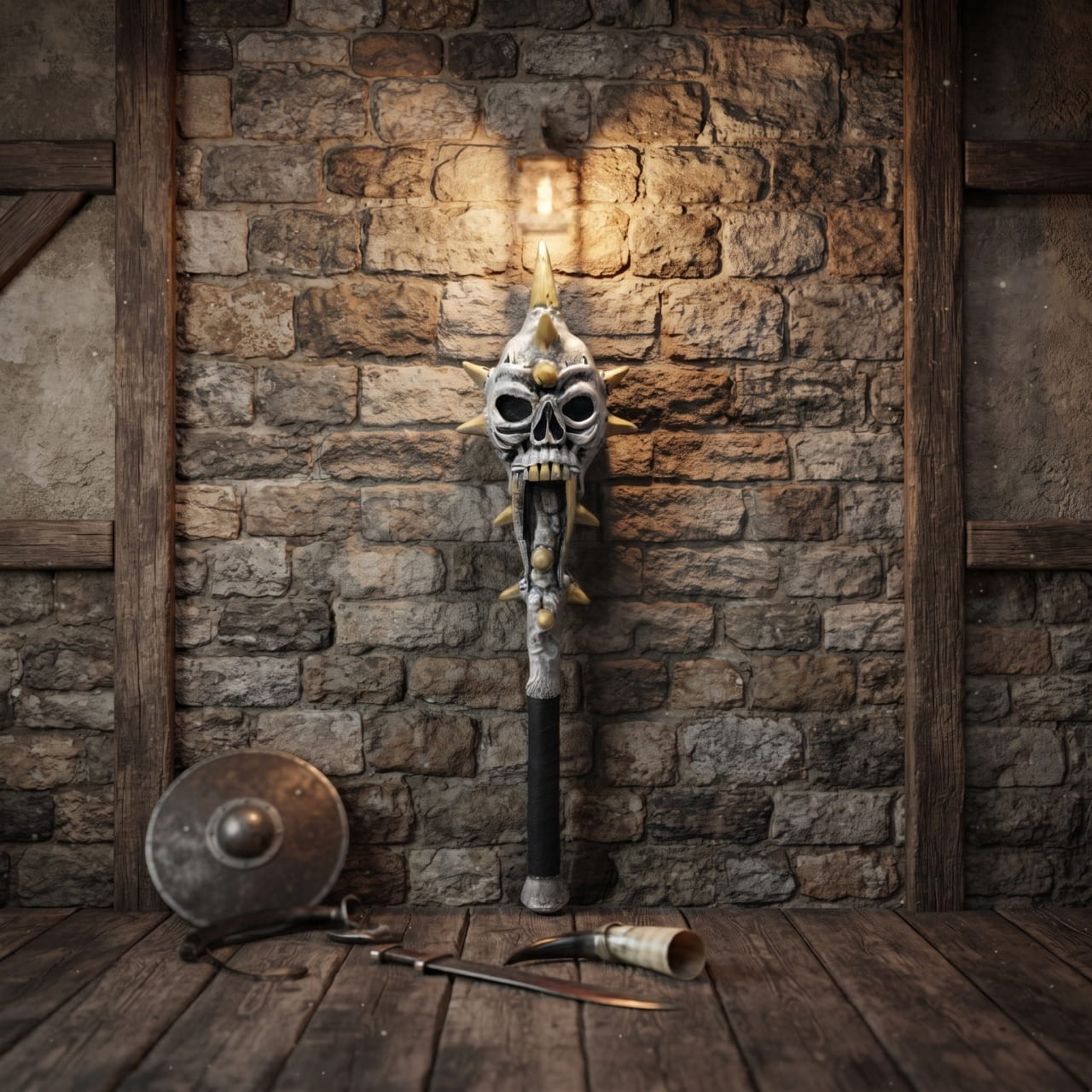
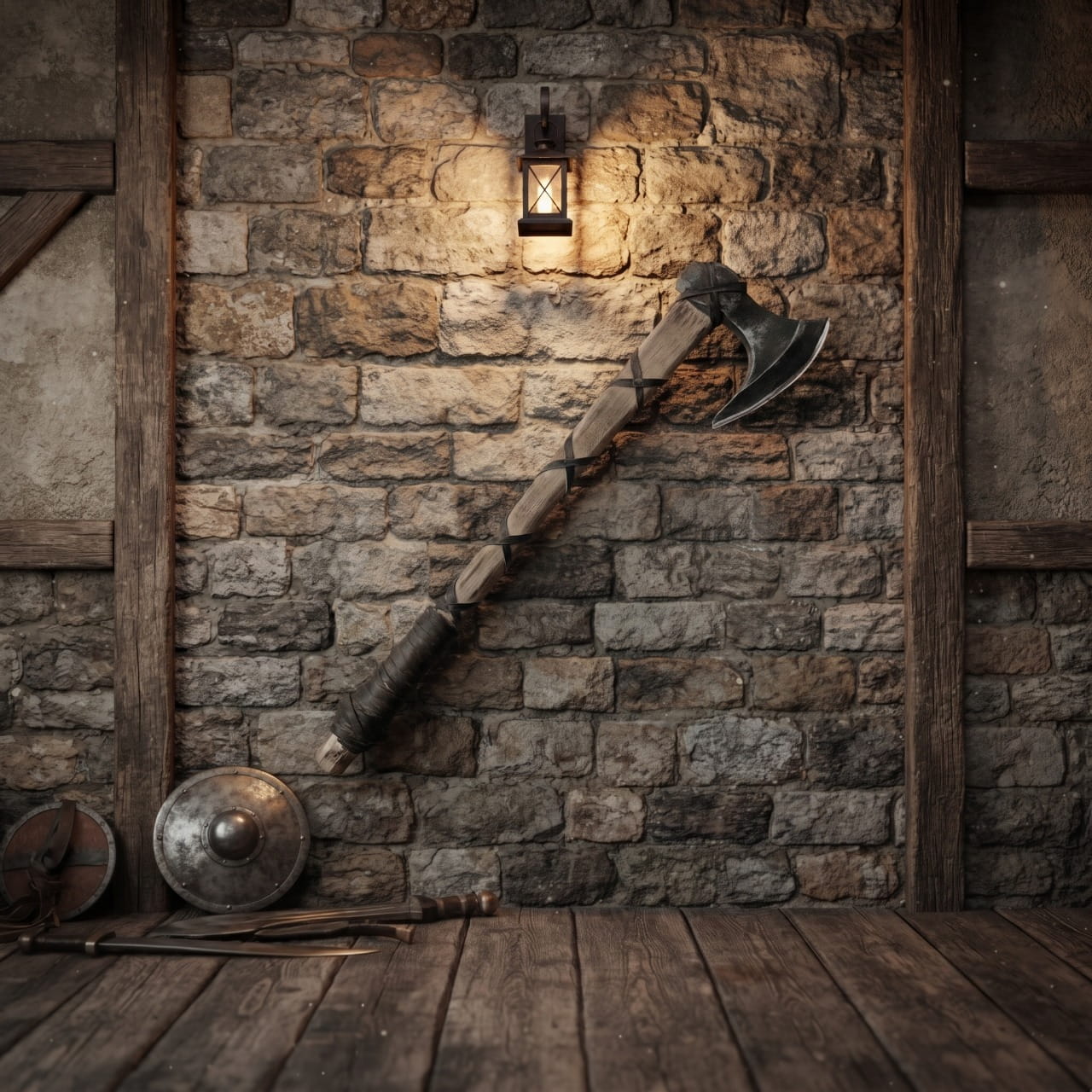
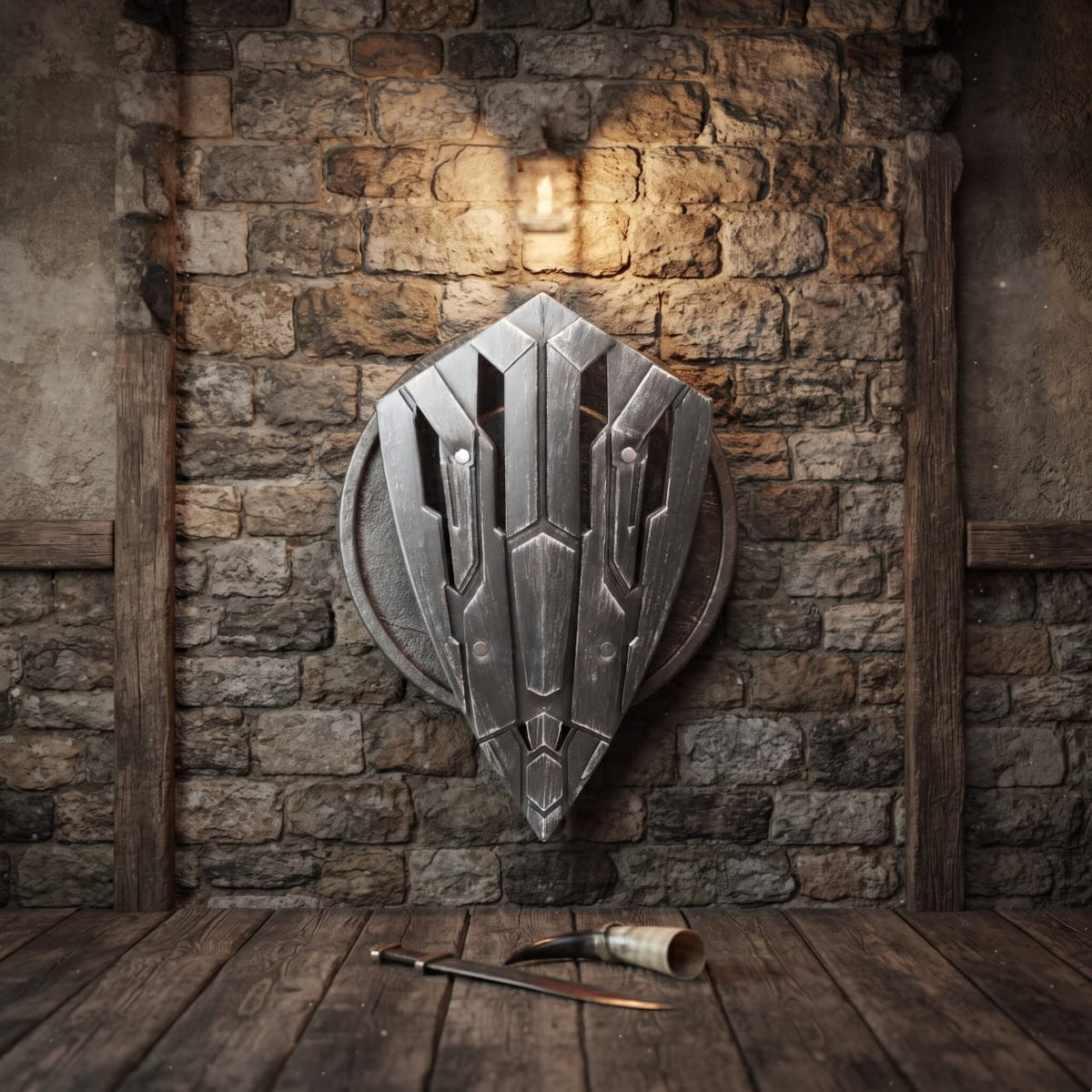

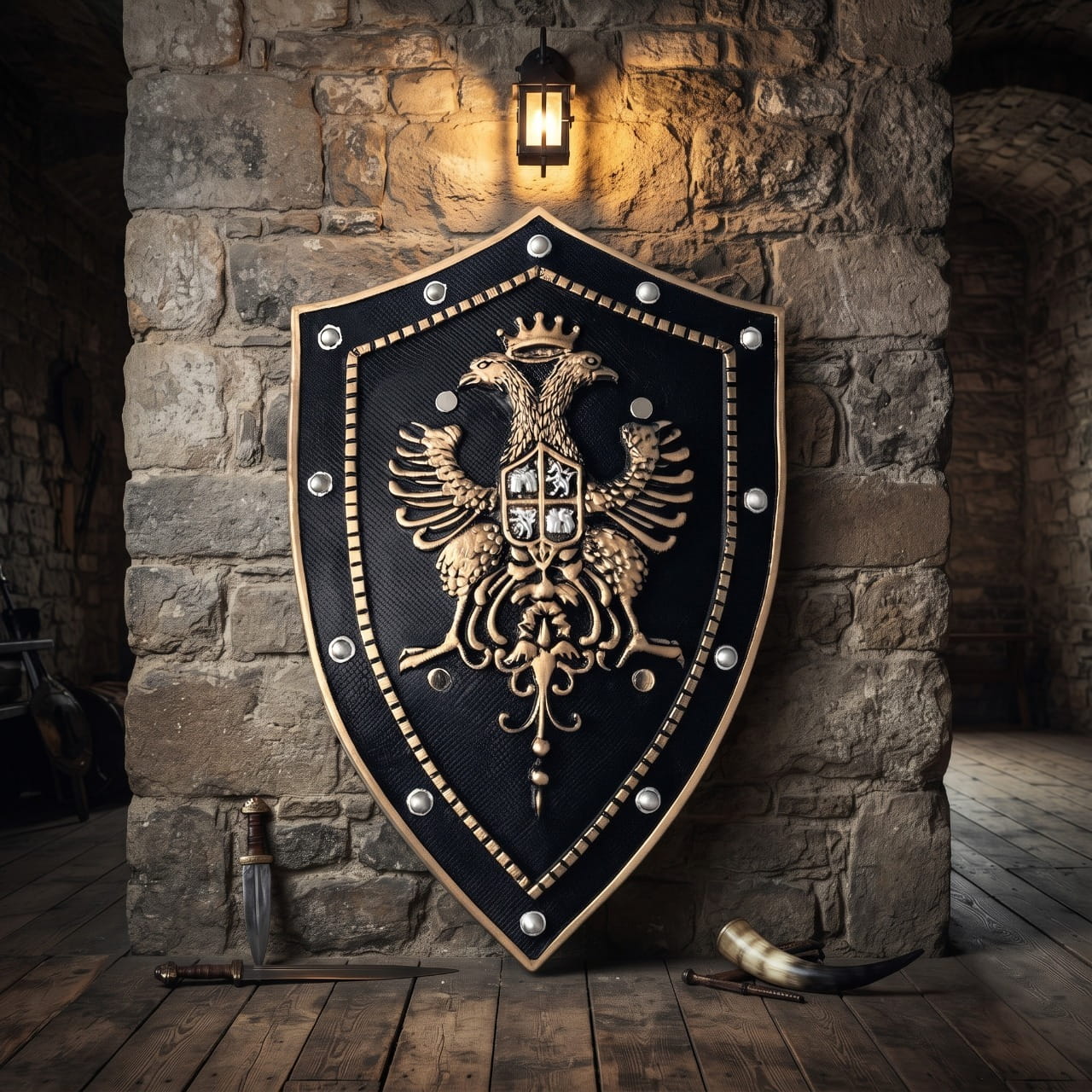

Collections similaires
You would also like

Frequently Asked Questions About Our Viking Weapons
Are your Viking weapon replicas dangerous?
No, all of our Viking weapon replicas are made from safe materials: polyurethane (PU), high-density foam, or resin. The edges are blunt and the materials are flexible, making them perfect for cosplay, conventions, and decoration without any risk of injury.
What Viking weapons do you offer?
Our collection includes hammer replicas (Thor’s Mjölnir), Viking axes (Kratos’ Leviathan), Norse swords, and shields. Each piece is inspired by Norse mythology or video games like God of War, with an attention to detail and historical accuracy.
Are these replicas suitable for cosplay?
Absolutely! Our weapons are designed specifically for cosplay and conventions. Lightweight (generally less than 1 kg), easy to transport, and compliant with event safety rules, they are the perfect complement to a Viking warrior or God of War character costume.
Can a Viking weapon be given as a gift?
Yes, our Viking weapon replicas make original and impressive gifts for fans of Norse mythology, video games, or themed decor. Each piece is delivered in neat and secure packaging.
What weapons did real Viking warriors use?
Viking warriors mainly wielded the axe (the most widespread weapon), the sword (reserved for chiefs and elite warriors), the spear, and the wooden round shield. The war hammer also existed, but it is above all Mjölnir, Thor's mythical hammer, that has become the most iconic symbol of Viking culture.
Viking Weapons — en savoir plus
This collection brings together our weapon replicas: axes, swords, shields, hammers and maces, Viking pieces, and pieces from cinema, video games, or other eras. A clarification is necessary right from the start, as it dictates everything else — most are made of polyurethane foam, designed for cosplay, photography, and decoration; the exceptions are noted below.
What these replicas are, and what they are not
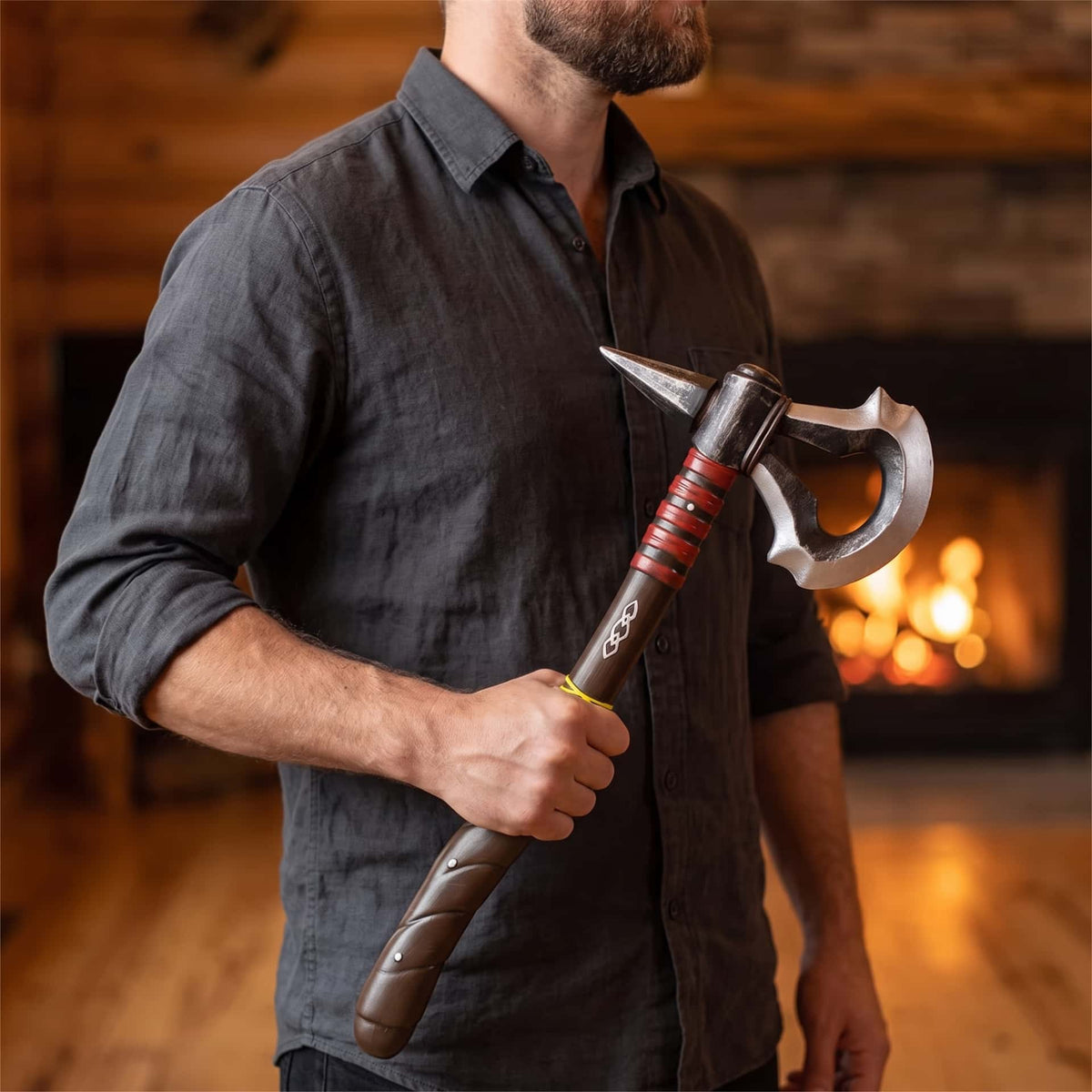
These pieces are molded in high-density PU foam, sometimes reinforced with EVA. They have the look of patinated metal, the texture of engravings, the exact shape of a bearded axe or a round shield — but they weigh only a few hundred grams, bend under thumb pressure, and have neither a cutting edge nor a point. They can be handled in front of a child without worry, taken to conventions, or hung on a wall.
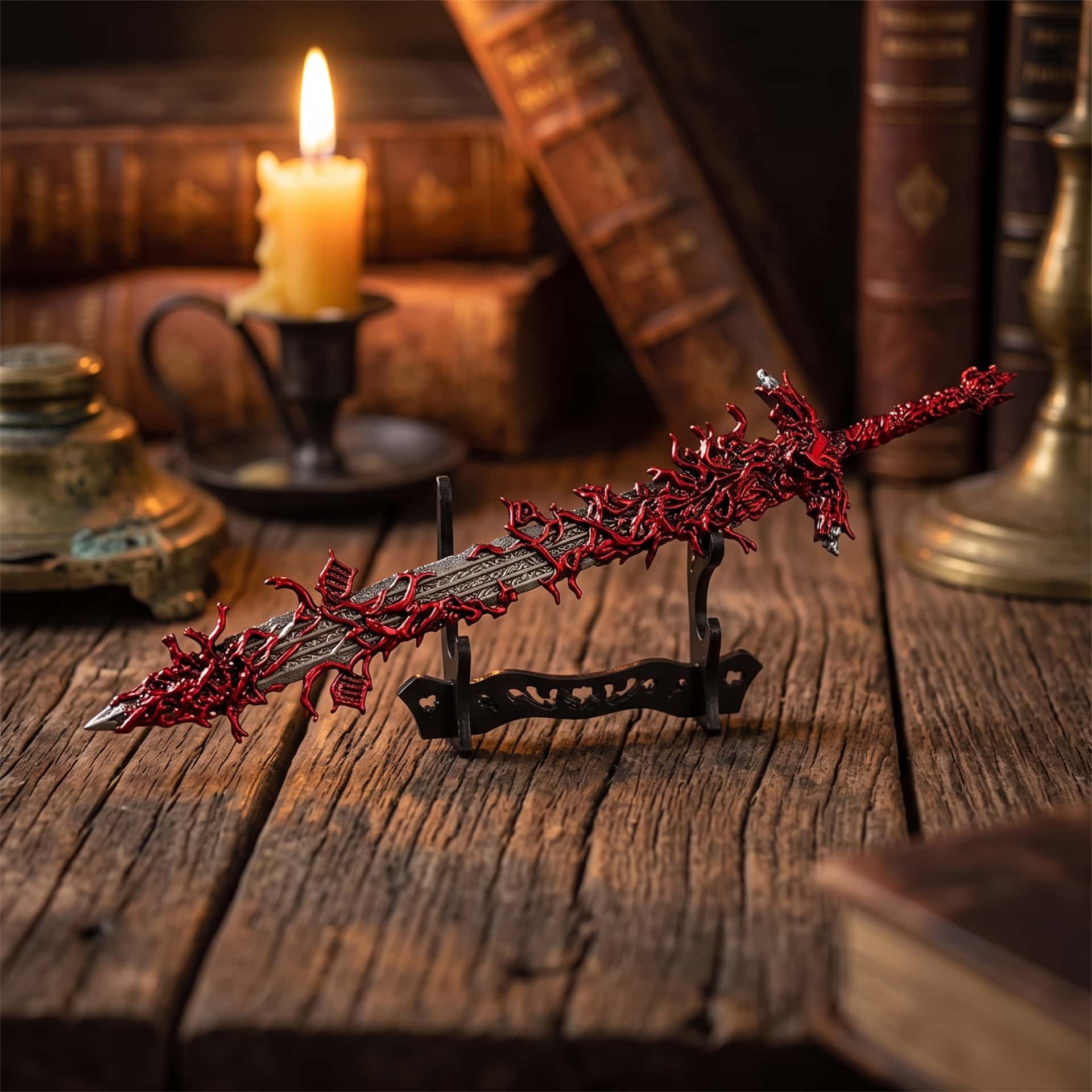
They do not cut, cannot be filed, and cannot be sharpened: foam cannot take an edge. Nor are they weapons for combat re-enactment — they are not designed to withstand repeated strikes, unlike certified LARP (live-action role-play) equipment. Several pieces are exceptions, and they are rigid: the miniatures and the iron mace made of zinc alloy, which are display objects to be treated as decorative pieces; the training swords made of polypropylene or solid wood, designed to withstand repeated contact with protective gear; and a molded ABS sword, without a cutting edge or sharp point.
Real sizes
A 48 cm shield in a product photo looks like an 80 cm shield. Here are the advertised dimensions, measured along the longest length.
| Piece | Dimensions | Reference |
|---|---|---|
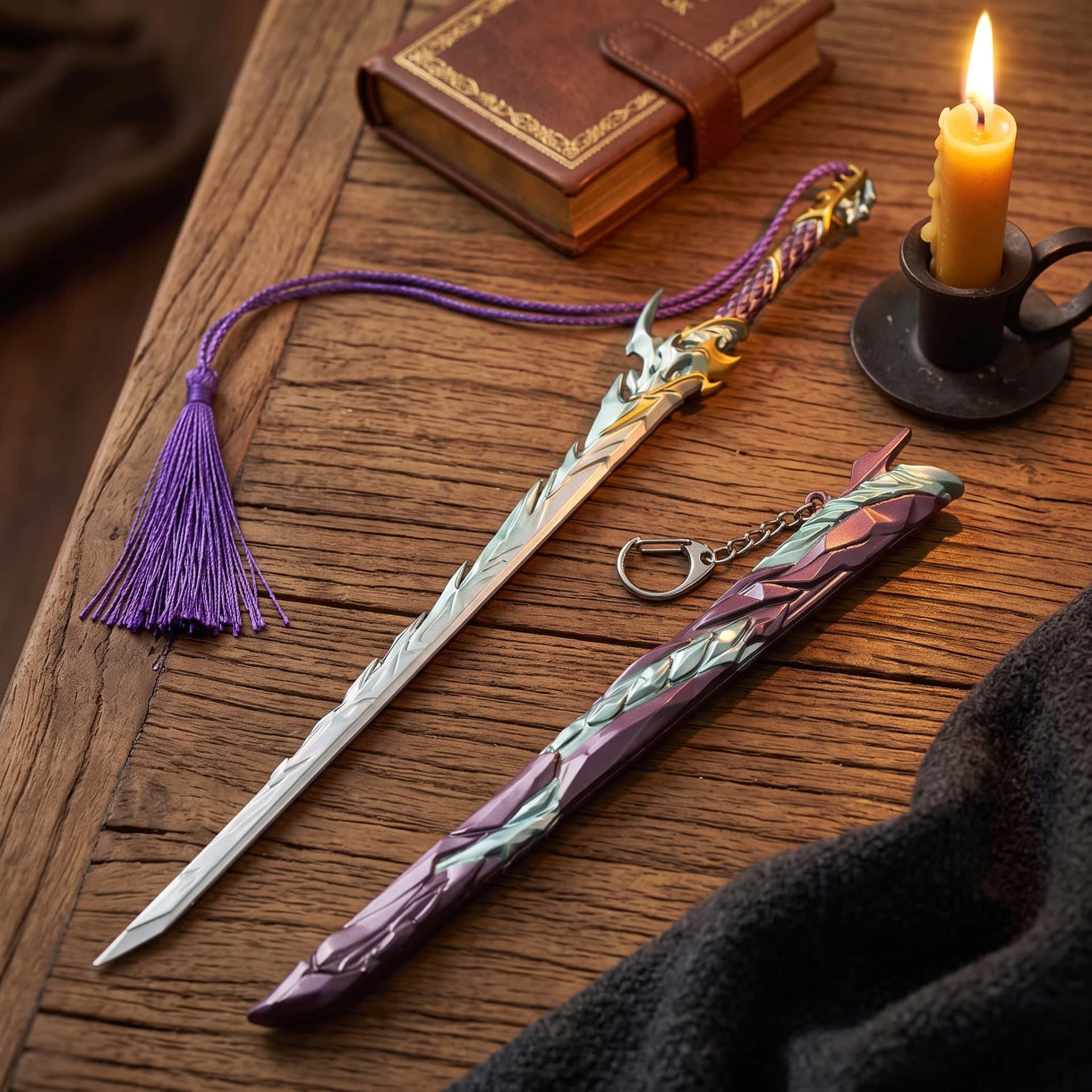
| Swords | from 30 to 102 cm | from miniature to large cosplay sword |
| Axes | from 36 to 87 cm | from hatchet to two-handed Danish axe |
| Shields | from 44 to 55 cm | a bit more than a trash can lid |
| Mjölnir Hammers | 44 and 48 cm long | head from 14 to 30 cm |
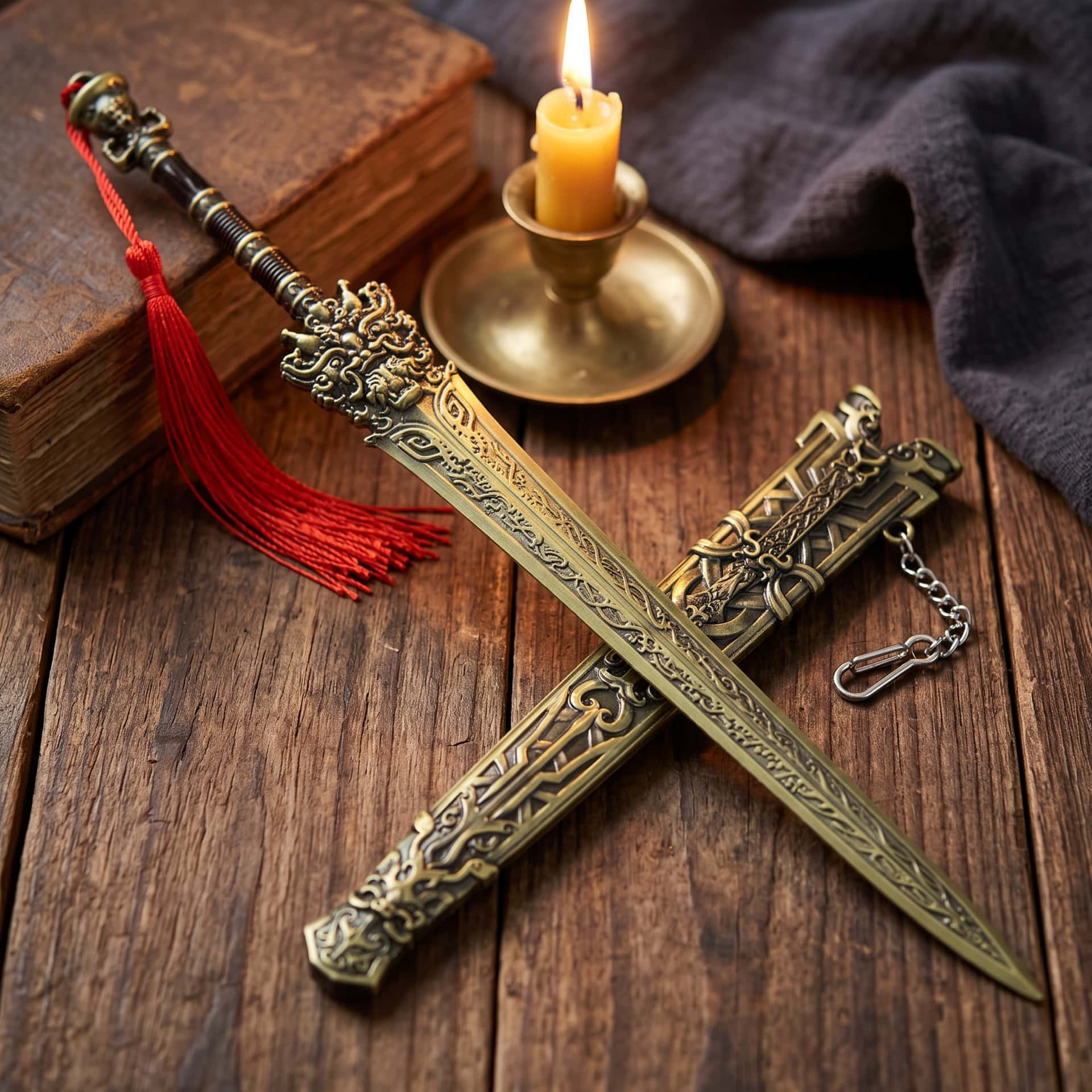
| Iron mace | 18 cm | metal, display piece |
Shields deserve a note: their advertised diameter corresponds to the largest dimension, and several models are not perfectly circular — a "53 cm" shield actually measures 47 by 53. On the arm, this covers from the elbow to the mid-forearm, which is more than enough for the desired photographic effect.
The weapons, one by one
Here is what archaeology says about Viking Age weapons, family by family, and what our replicas incorporate — or not.
A useful starting point: for the Scandinavians, being armed was not a choice but an obligation. The Gulathing Law in Norway required every free man to own a shield, a spear, and an axe or a sword, and to be able to present them at the assembly. The weapon was not a status symbol reserved for an elite: it was the condition for a free man's legal existence.
The axe
From the hatchet to the large Danish axe, all our axes are gathered in the Viking axes section. It was the Viking weapon par excellence, for a very concrete reason: price. An axe requires only a small amount of iron for the axe head, with the handle being made of wood — whereas a sword requires several kilos of a rare metal and dozens of hours of forging. This is why axe heads are, by far, the most frequently found weapon in Scandinavian graves.
The most impressive is the Danish axe (breiðøx), which appeared in the late 10th century: a crescent-shaped edge that could reach thirty centimeters, mounted on a shaft of one meter or more. Contrary to popular belief, it was light — the iron is very thin, sometimes two millimeters near the edge, with only the eye being thickened. It is this axe that Harold's housecarls are brandishing on the Bayeux Tapestry.
Not all of them were utilitarian: the Mammen axe, discovered in Denmark in a grave from the 970s, is inlaid with silver wire on both sides. It has given its name to an entire artistic style. The detail is included in our dossier on Viking axes and their use in combat. A clarification about our replicas: the beak or point on the back of the iron found on some models has no Scandinavian archaeological equivalent — it is a design from modern imagery. It is spectacular in costume; it is not historical.
The sword
Our swords, gathered in the swords section, are not Viking replicas: they come from cinema, video games, training, or other traditions. The Viking sword, meanwhile, was a weapon of prestige: heavy in investment, passed down, and often named. A Viking Age blade generally measures 90 cm in total and weighs 1.1 to 1.3 kg — much lighter than what the public imagines, and designed for slicing, with a wide central fuller that lightens the blade without weakening it.
The pinnacle of production bears a name: Ulfberht. About one hundred and seventy recovered blades bear the inscription +VLFBERH+T inlaid in the metal. The best ones were forged from a high-carbon steel with a purity that Northern Europe did not know how to produce — the prevailing hypothesis is the importation of ingots from the Orient. A delicious detail: among the signed blades, many are counterfeits, recognizable by the incorrect placement of the crosses in the inscription. The brand of quality was already being copied in the 10th century. Our dossiers on the anatomy of the Viking sword and the legendary steel of the Ulfberhts detail the manufacturing.
The round shield
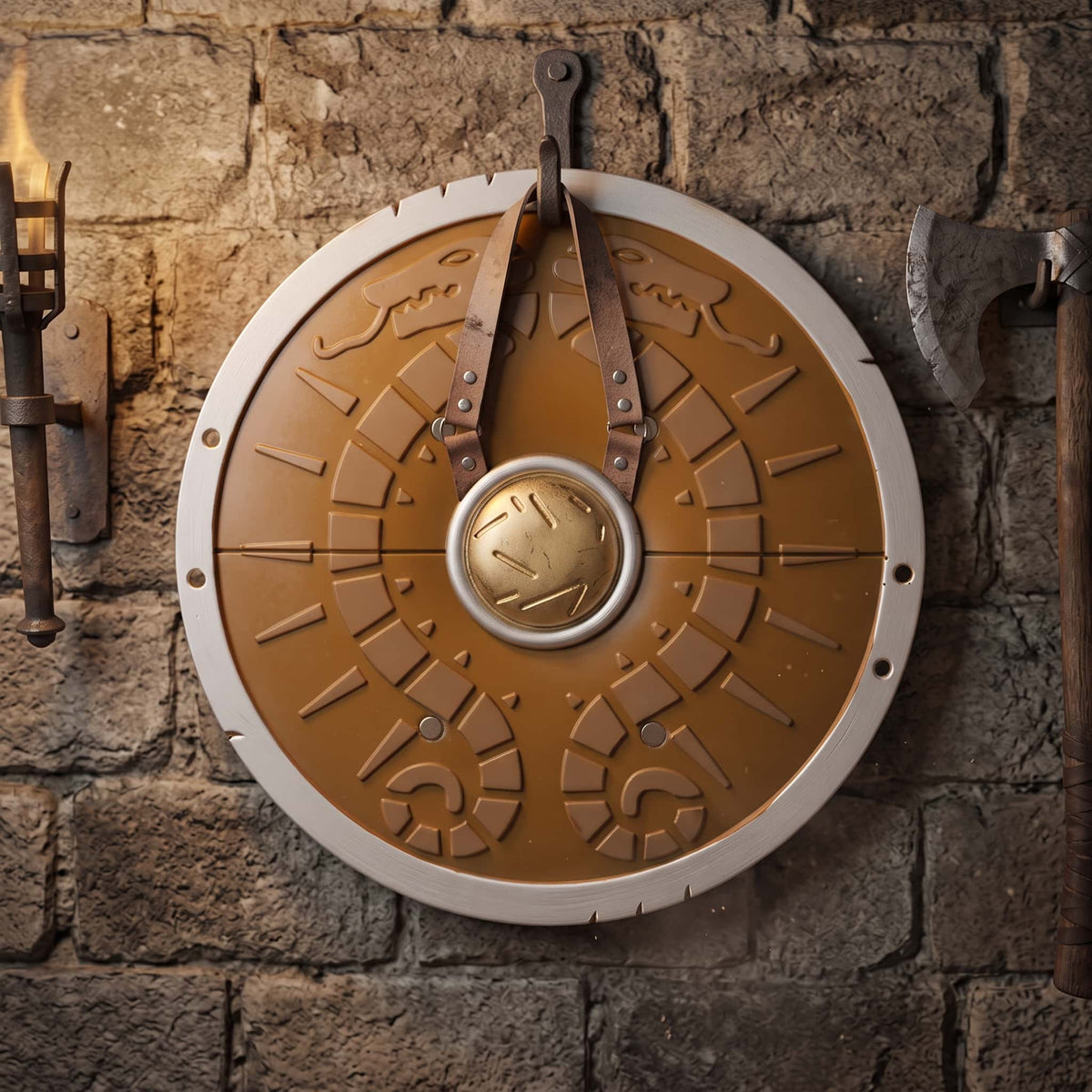
Round or heater-shaped, our shields are gathered in the Viking shields section. This is where the gap with the original is most distinct, and it is worth knowing: real shields were much larger. The Gokstad ship, in Norway, yielded sixty-four shields lined up along the sides, about 94 cm in diameter, painted alternately in yellow and black.
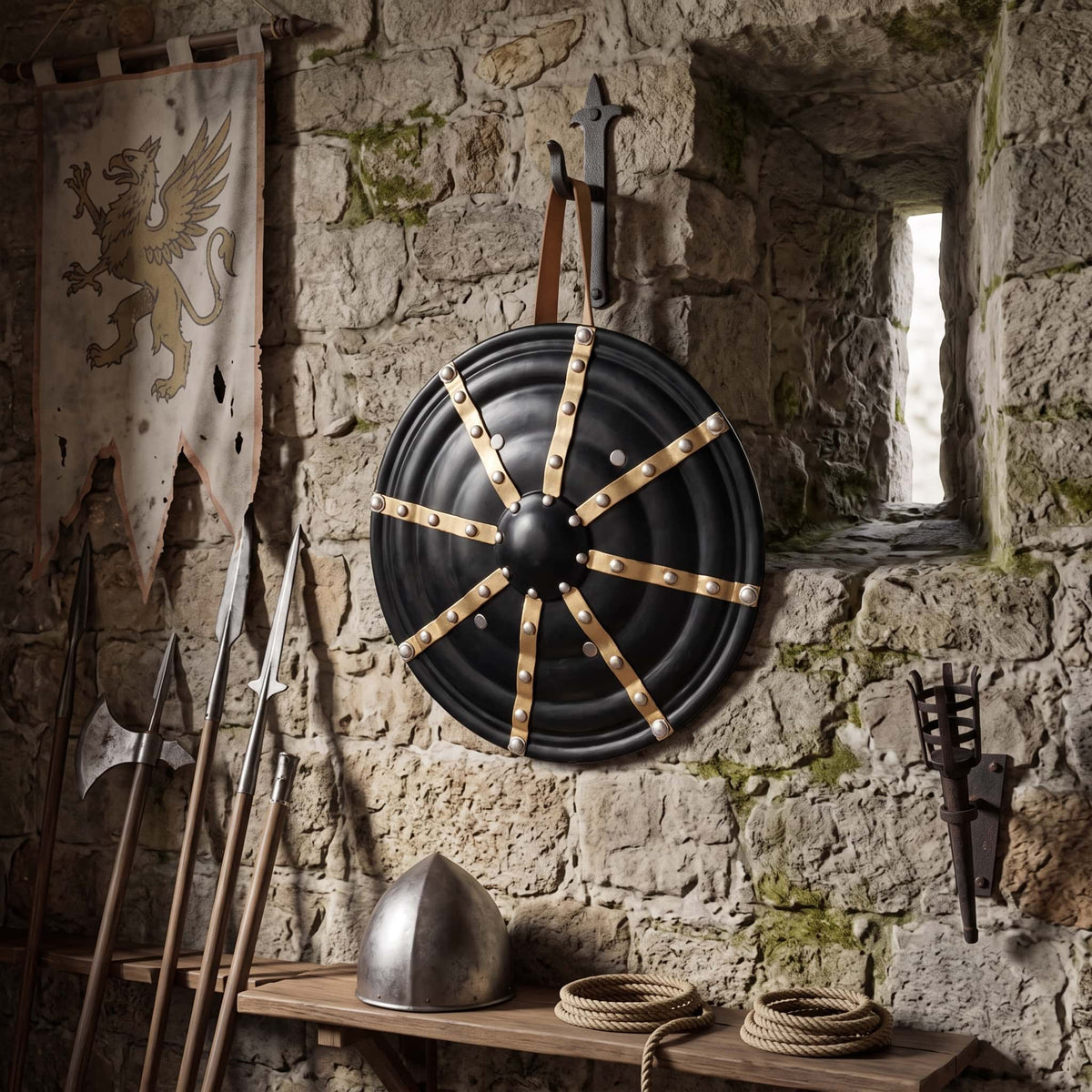
Their construction is instructive: simple planks joined together, seven to ten millimeters thick, a horizontal handle in the center, a hemispherical iron umbo to protect the hand, and sometimes a leather-stitched edge. It was a consumable object — the sagas describe warriors who wore out several shields in a single duel. Light, held at arm's length and not strapped to the forearm, it served as much to deflect and strike as it did to protect. Our dossier on the Viking shield and defensive techniques covers the famous shield wall, the skjaldborg.
Our replicas adopt a reduced size for a practical reason: a 94 cm disk is unmanageable in a convention aisle and in a three-quarter photograph. A 44 to 48 cm round remains the most versatile.
The spear
The polearm of the Viking Age is the spear — and it was, along with the axe, the most widespread weapon of all.
It also had a ritual dimension that no other weapon possessed. The spear is the weapon of Odin: Gungnir, forged by dwarves, which never misses its target. And the texts report a specific gesture before battle — throwing a javelin over the enemy army to dedicate it to Odin, i.e., to vow it to death. The Völuspá makes this throw the trigger for the first war in the world. Our article on the spear, the most used weapon, expands on the subject.
Thor's hammer
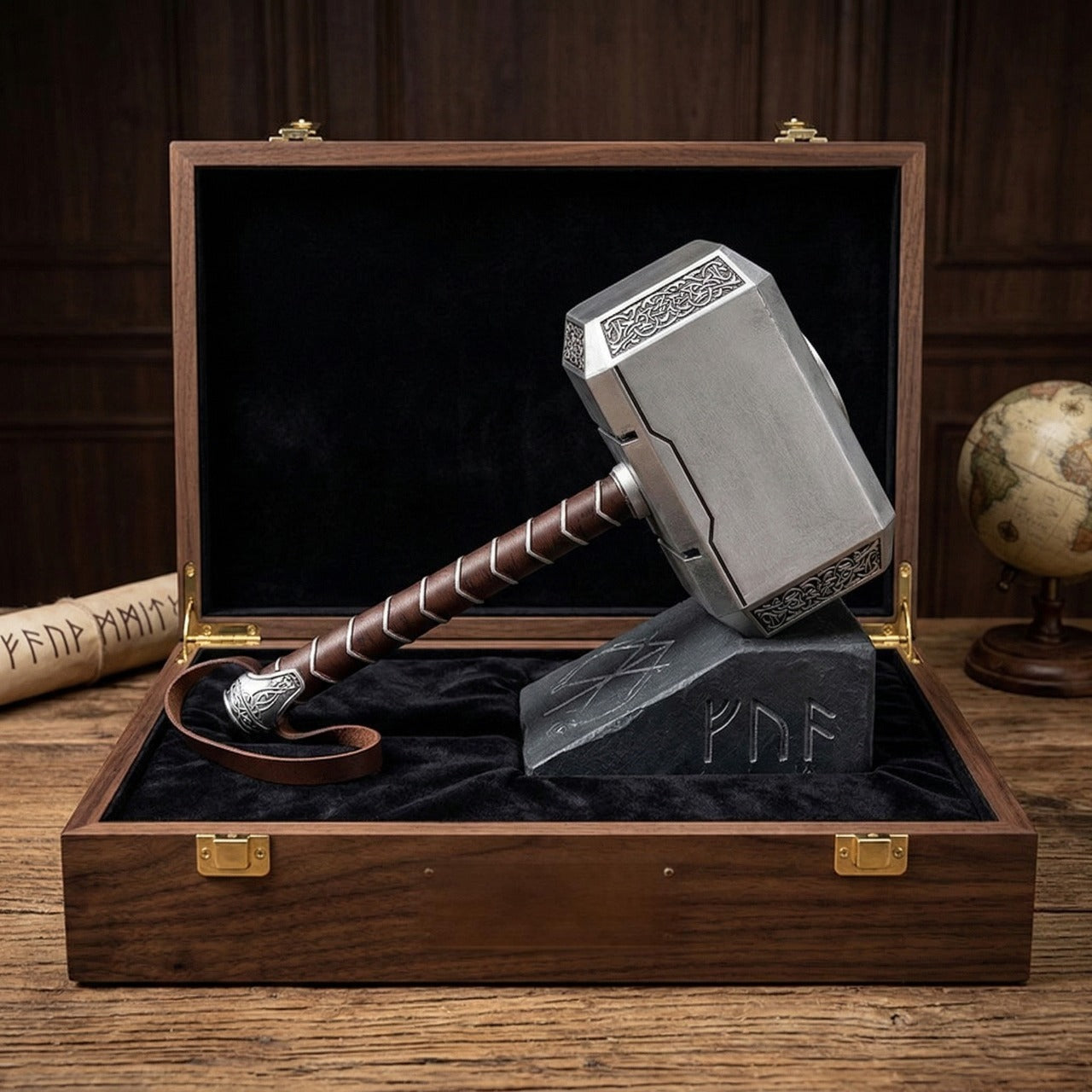
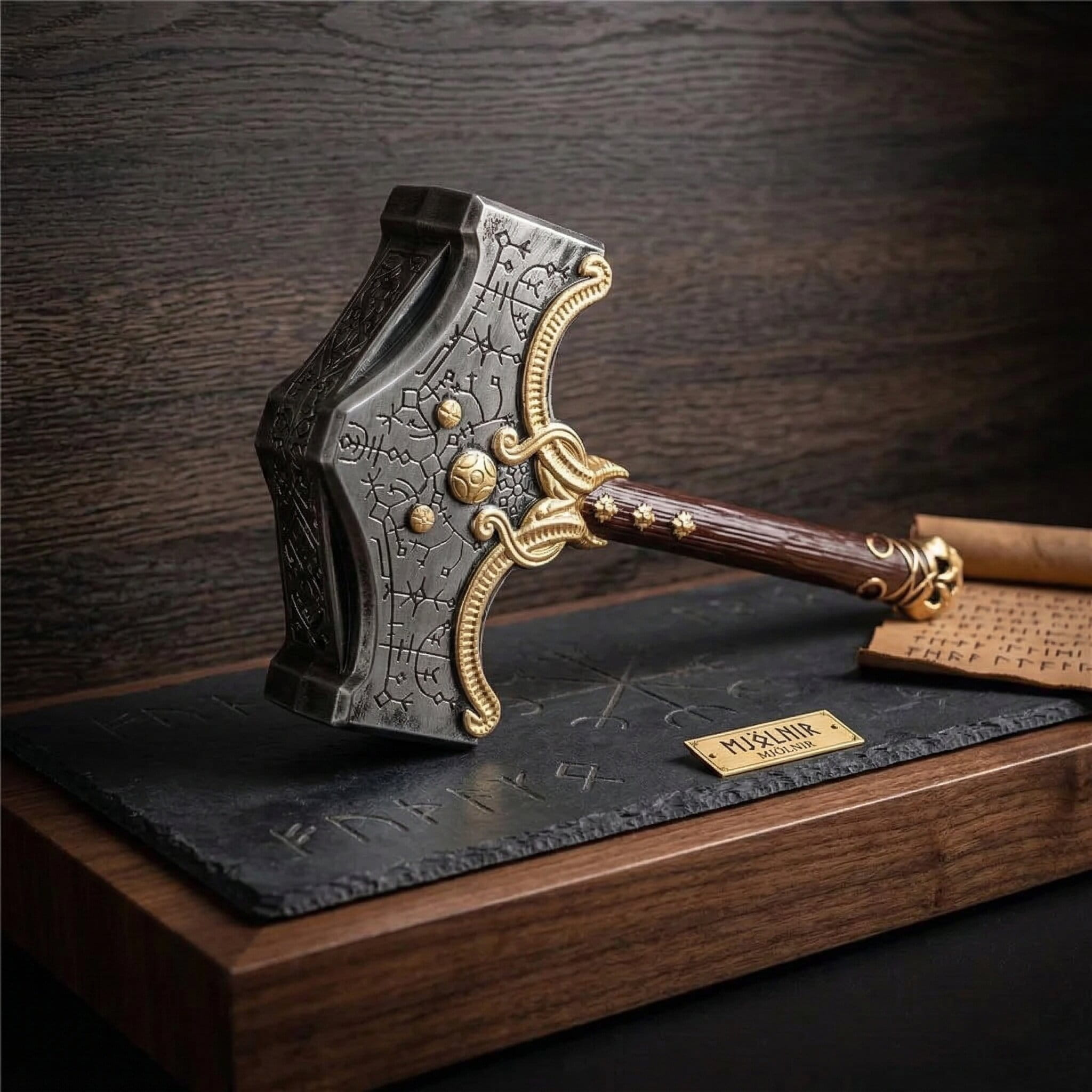
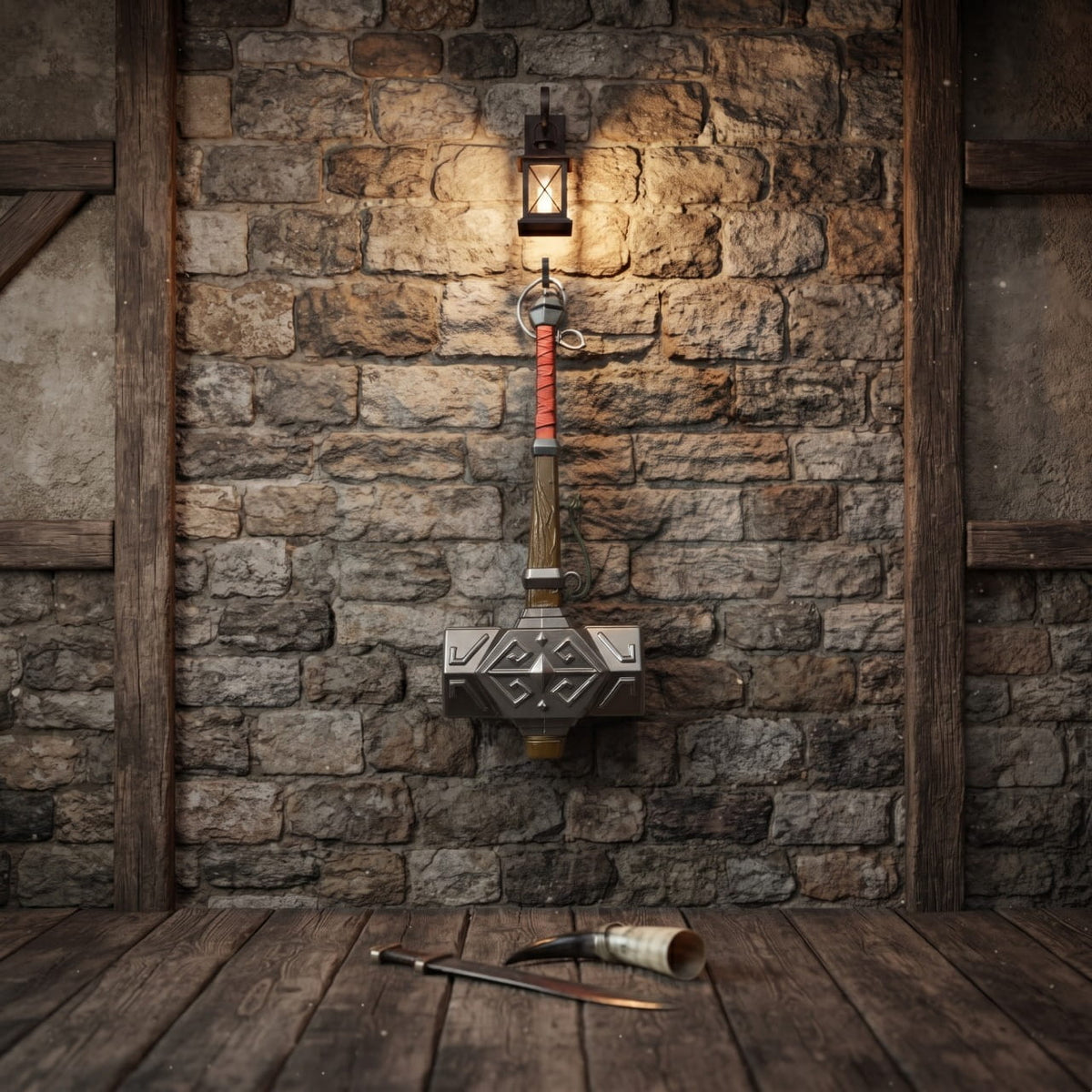
Our Mjölnir replicas, 44 and 48 cm, including one inspired by the game God of War, are gathered with our other hammers and maces in the hammers section. A clarification is necessary, as it often comes as a surprise: the war hammer does not exist in the Viking arsenal. No Scandinavian grave has yielded a combat hammer. Mjölnir is a divine attribute, not a man's weapon — and it is worn, in the archaeological reality, in the form of a pendant, with nearly a thousand examples found.
The hammer itself has a failed manufacturing story: it came out of the forge of the dwarves Brokkr and Eitri with a handle that was too short, because Loki, turned into a fly, had stung the blacksmith's eyelid. The defect was never corrected, and that is why Thor wields it with one hand. On the subject of the forge and metalworking, see our dossier on the Viking blacksmith.
The iron mace
An 18 cm piece in zinc alloy, to be treated as a display object. Here again, a useful clarification: the mace is not a characteristic weapon of the Scandinavian panoply. Iron maces are mostly documented in the eastern area, among the Rus' and their neighbors of the steppes, with whom the Scandinavians were in constant contact via the rivers. It therefore has real cultural relevance — just not the one one imagines when thinking of a raid on an English coast.
Maintaining the foam
PU foam should be cleaned with a damp cloth, without detergent: solvents dissolve the surface paint. Store these replicas flat or hanging, never crushed under a weight — the foam retains the mark of prolonged compression and does not lose it. Also avoid permanent exposure to direct sunlight, which yellows clear polyurethane over the months.
Which replica for which use
Three very different uses coexist in this collection, and the right choice depends on your specific needs.
For a costume worn all day. Weight and size take precedence over everything. A one-handed axe or a short sword can be worn on the belt, leaving the hands free; a 48 cm shield can be strapped to the back. The large pieces — Danish axe, 95 cm swords and longer — occupy one hand permanently and quickly become tiresome in a crowd: they are photo pieces more than "all-day" pieces.
For photography. It's the opposite: size wins. A hammer with a 30 cm head and a 55 cm shield fill the frame and support wide shots, where a small piece would get lost. Also think about side lighting — the molded texture of the foam does not stand out under front lighting.
For a wall. Shields and hammers are the two formats that stay up on a partition on their own. The foam has a decisive advantage over metal here: a few hundred grams can be hung on a simple adhesive hook, without anchors or drilling. This is the only argument for which a light replica beats a heavy one.
Giving a Viking replica as a gift
The gift works very well, provided you clear up one doubt, once, at the right time.
Say immediately that it is foam. Counter-intuitive, but it's the right reflex: someone who unwraps a 60 cm axe without knowing it will recoil. Announce it when giving the gift, and the object immediately changes status from a weapon to an accessory — which is what it is.
The axe and the shield are the safe bets. These are the two pieces that speak to everyone, hang easily, and require no costume to exist. Swords are geared more towards someone who is already into cosplay or fencing.
Beware of rigid pieces. The iron mace and zinc alloy miniatures, like the training swords, are not made of foam: do not put them in the hands of a child. If the gift is for a teenager, stick to the foam.
Frequently asked questions
Are these weapons dangerous? The polyurethane foam replicas, the majority of the section, are not: without a cutting edge or point, they deform under the finger. The zinc alloy miniatures and mace, the polypropylene or wood training swords, and the ABS sword are, however, rigid.
Can they be taken to a convention? Foam replicas are the standard cosplay accessory. However, each event has its own accessory rules: check them before you go.
Can they be used for LARP or combat re-enactment? Not the foam replicas: they are not designed to take strikes and would be damaged from the very first exchange. Combat equipment requires specific certification. The training swords are designed to withstand repeated contact, with protective gear and an informed partner.
What is the weight of a foam axe? A few hundred grams. That is precisely the point: you can hold it with your arm extended during a photo shoot without shaking.
Does the paint peel? It resists normal use well, but it is vulnerable to solvents and repeated rubbing against rough surfaces. A damp cloth is enough for maintenance.
Which shield should I choose for a costume? A 44 to 48 cm round shield is the most versatile. The 51 to 55 cm formats provide a stronger presence in photos but become cumbersome in a crowded aisle.
What are the delivery times and costs? Tracked delivery is free on orders over €49, regardless of the country of delivery.
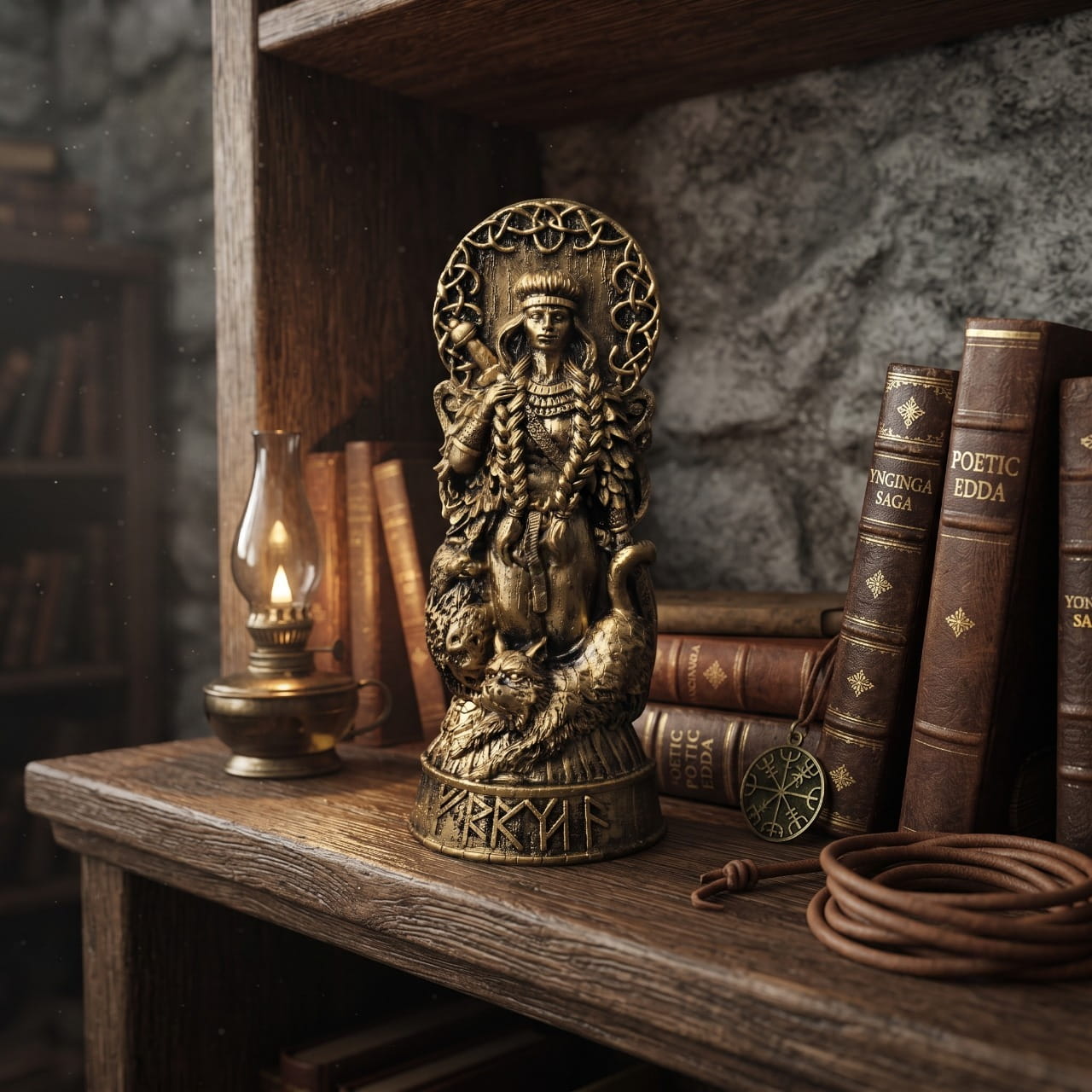
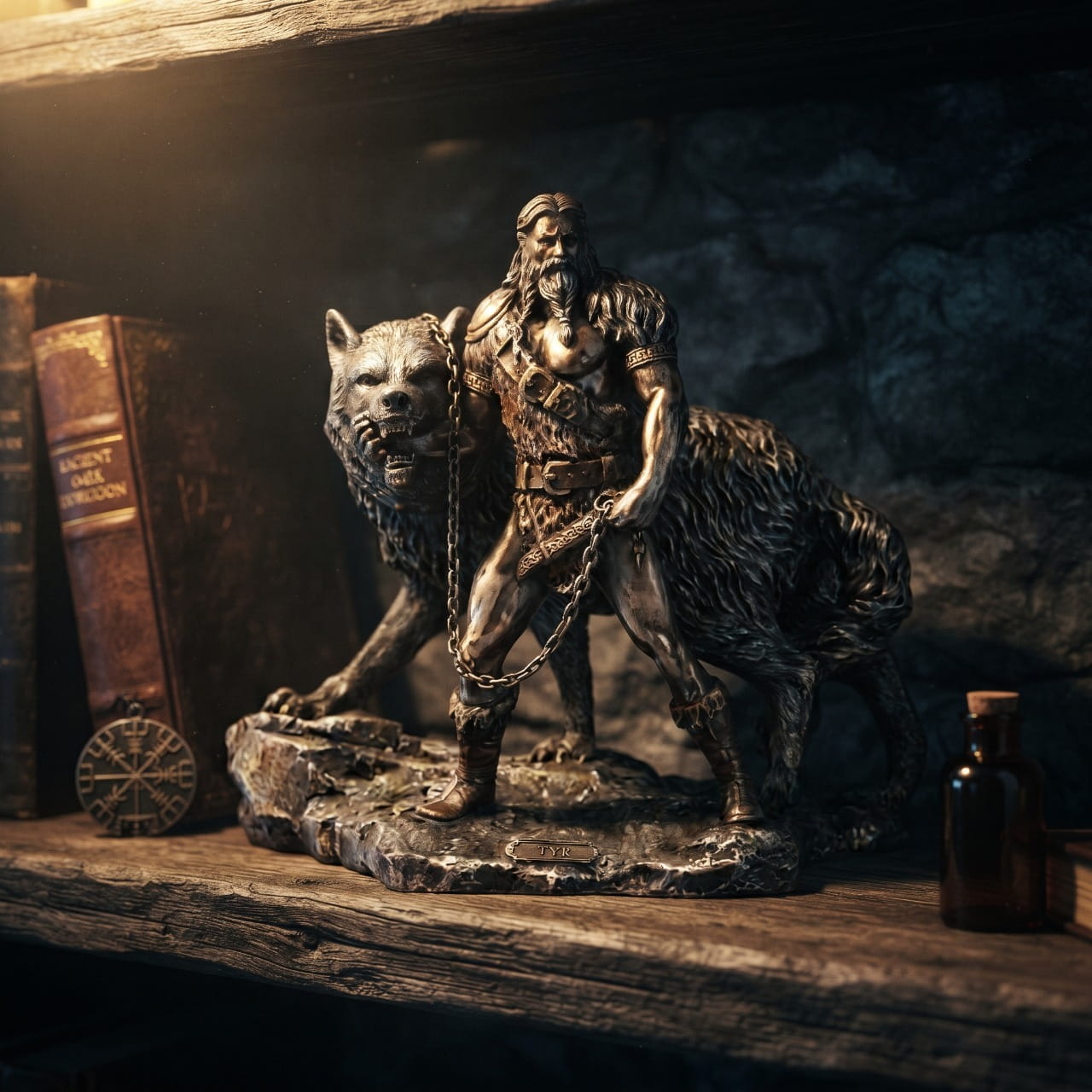
Also explore: complete the look with our Viking decoration, our Norse god statues, or our Viking rings to perfect the costume.