
Filters
8 products
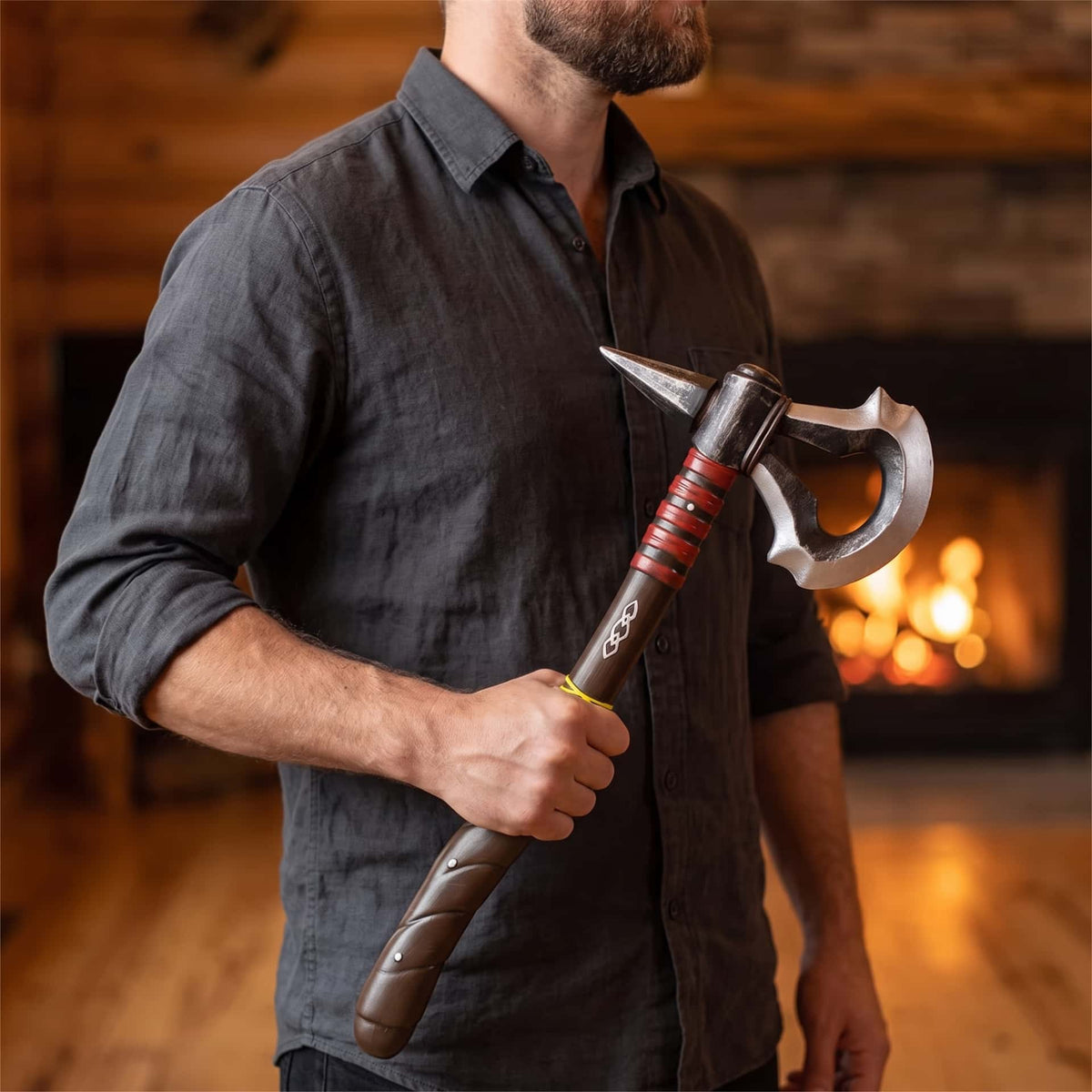
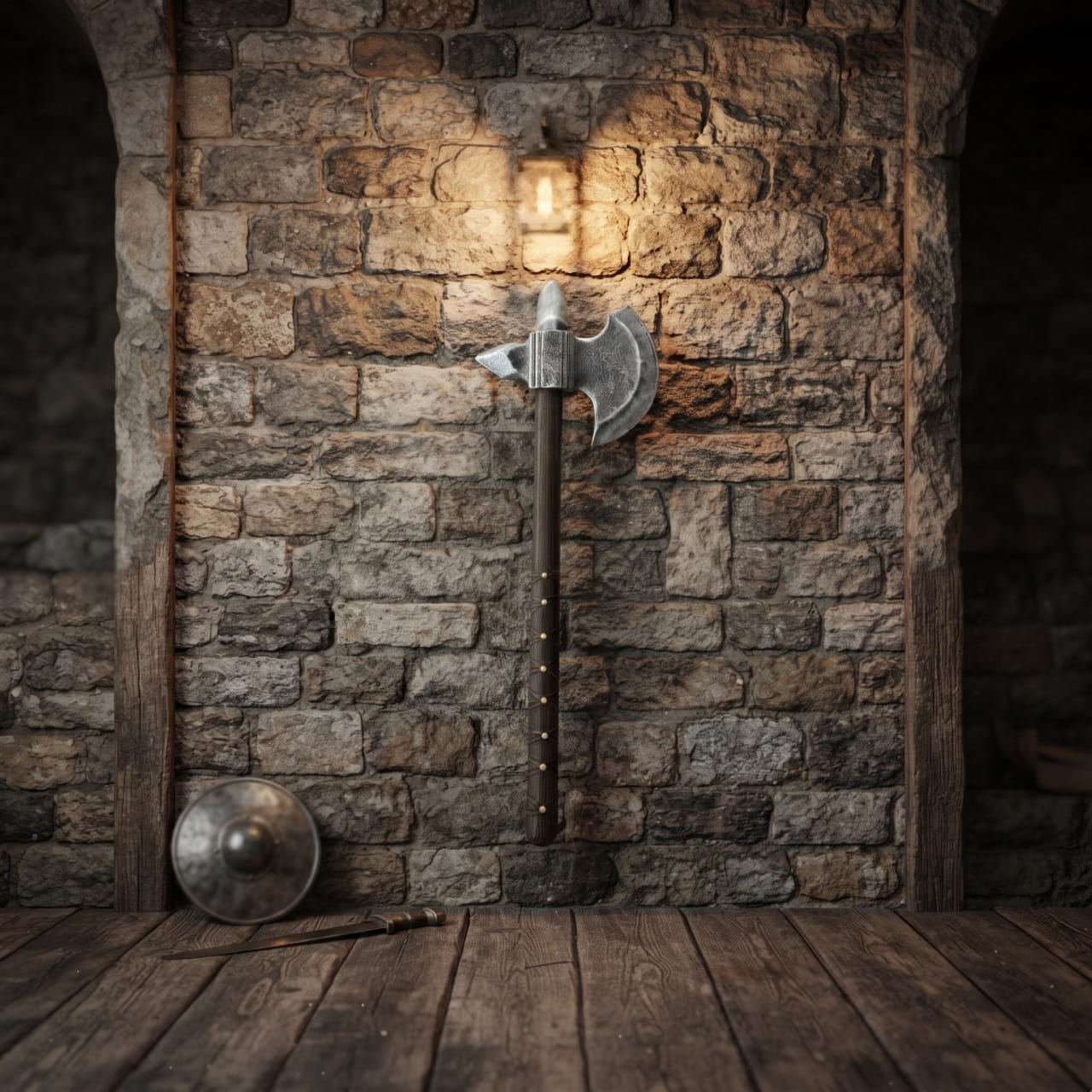
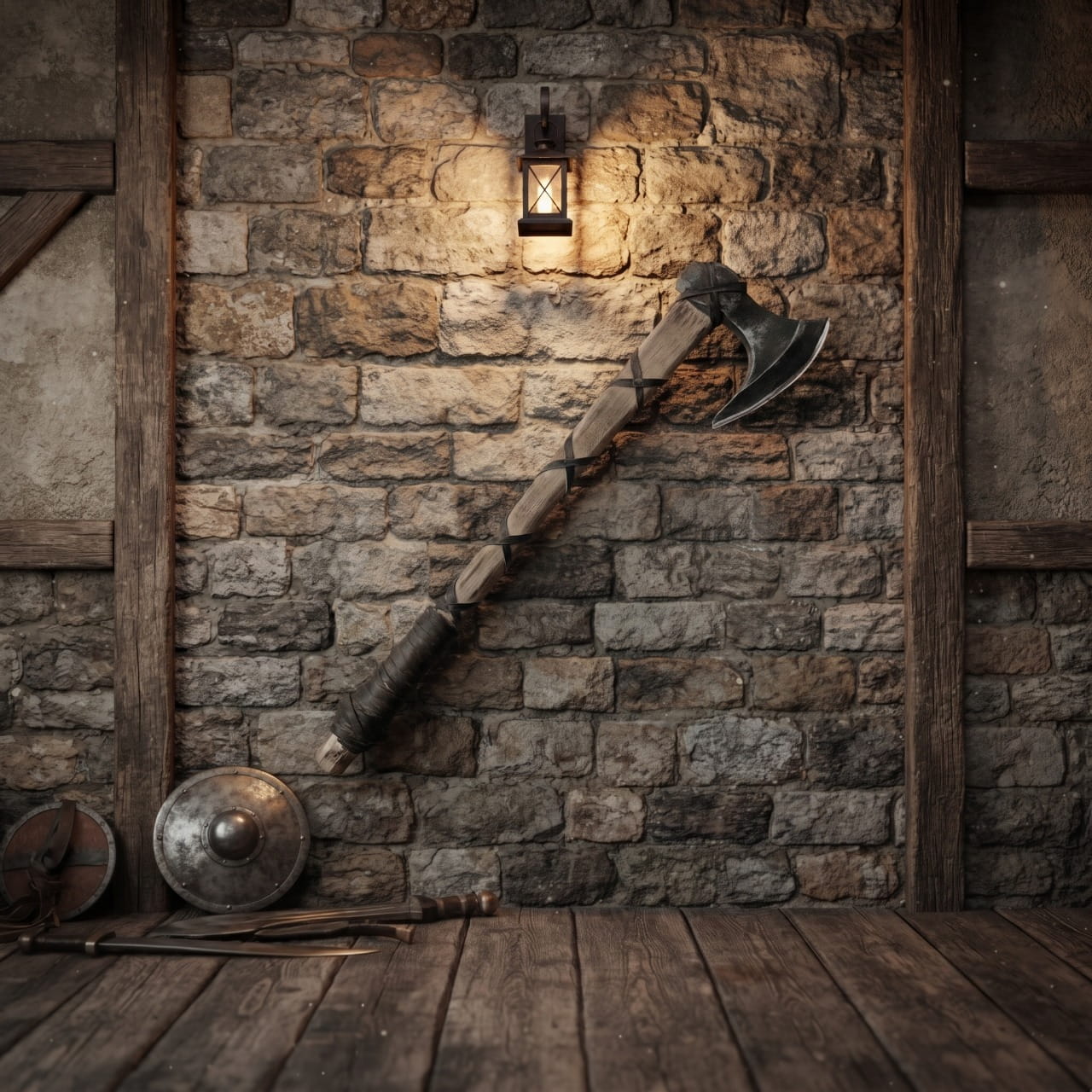

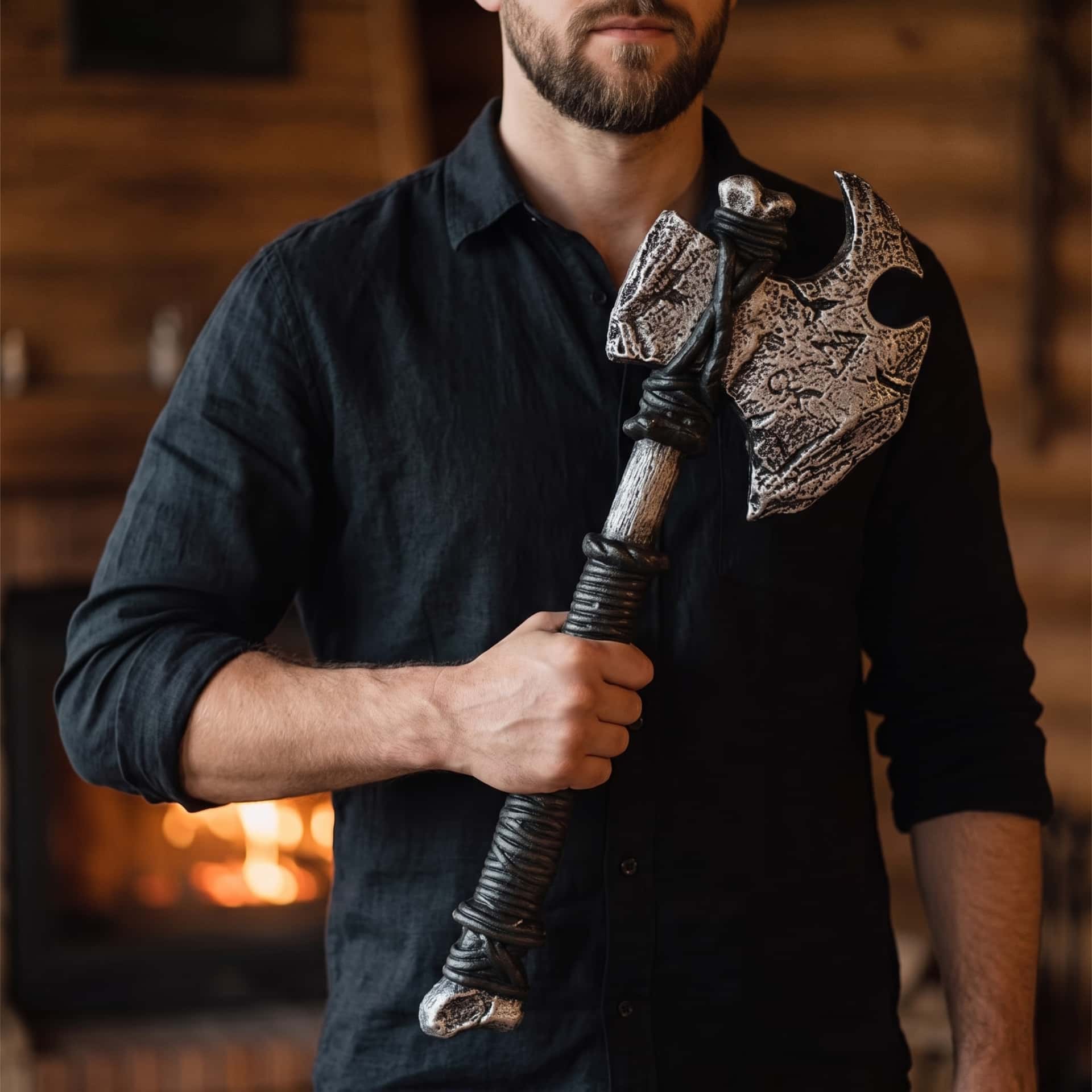
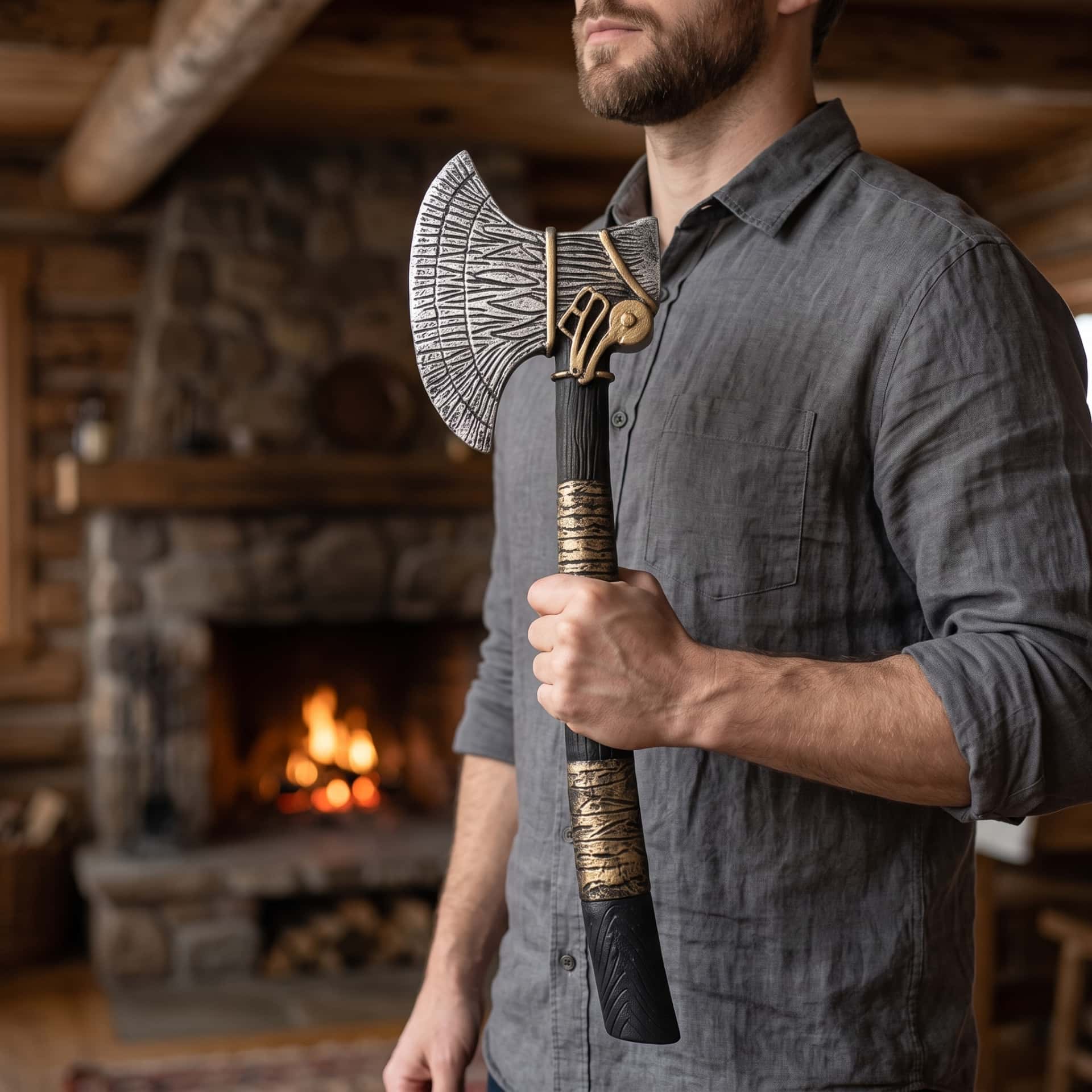

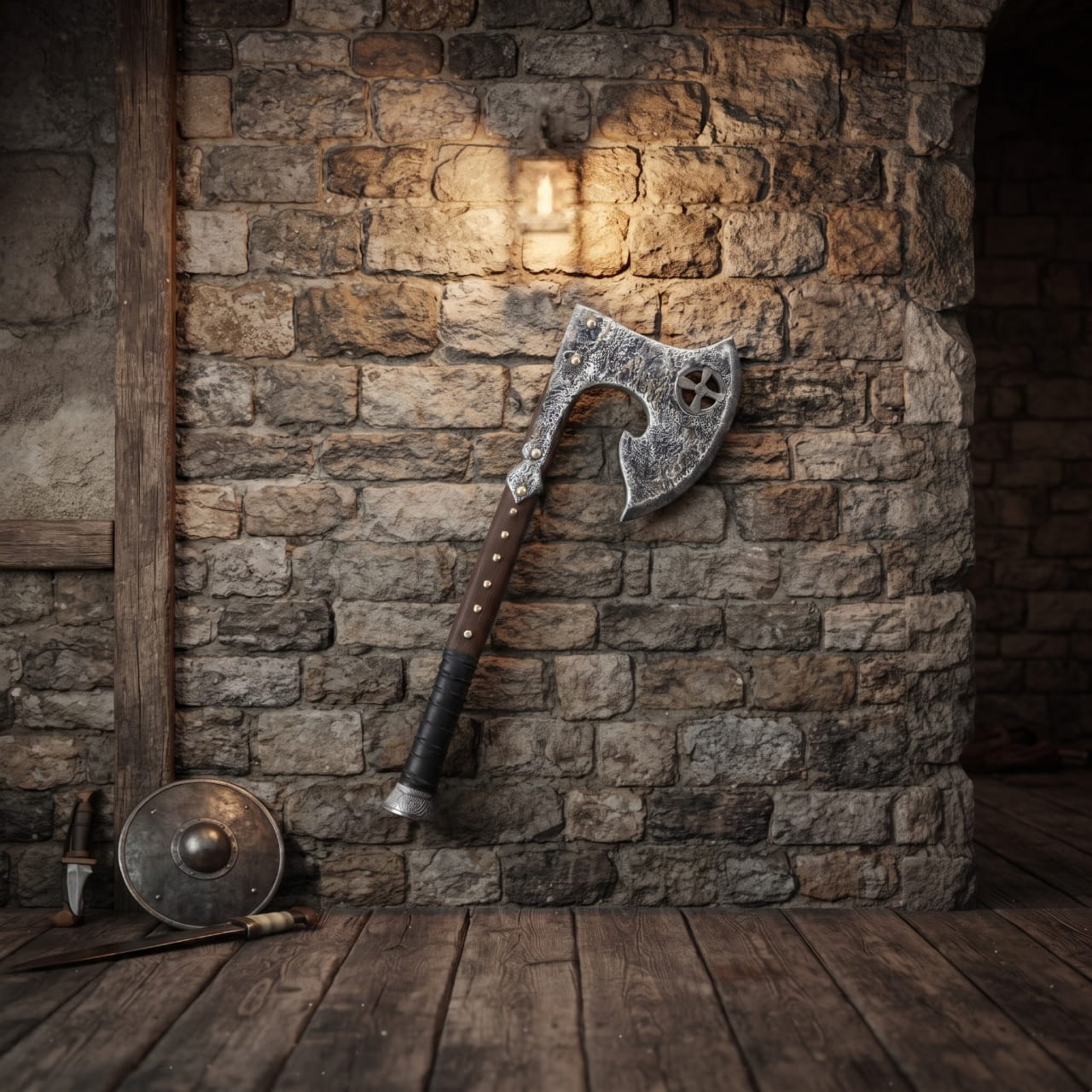
Viking Axes — en savoir plus
This section brings together every axe in the shop: replicas of Norse axes, and a tomahawk that has nothing Scandinavian about it, which we flag as such on its product page.
Which axe to choose
On the originals, a one-handed axe had a handle of around 60 to 80 cm, and the large Dane axe was over a meter long. Our replicas are a little shorter, and it's their length that determines their use.
| Type | Length | Best for |
|---|---|---|
| Hatchet | about 36 cm | a child or a first costume: the lightest format |
| One-handed axe | 50 to 63 cm | a costume with the axe worn at the belt, photos, wall decor |
| Two-handed Dane axe | about 87 cm | the housecarl silhouette in photos, the wall; unwieldy in a crowd |
The axe, by contrast, was everywhere
Where the sword was a privilege, the axe was a given. Every farm already had one: there were trees to fell, wood to split, frames to build, boats to make. Going from tool to weapon required neither a special order nor a fortune — just a slightly thinner head, mounted on a slightly longer handle.
That's why the axe dominates the weapons found in Viking Age graves, and it's for that same reason that it has become, in the popular imagination, the Norse weapon. For once, the popular imagination is right.
The bearded axe, and the large Dane axe
Two silhouettes keep coming back, and they don't do the same job.
The bearded axe — skeggøx — drops below the eye into an elongated point, the “beard.” This step-down serves two purposes: it lengthens the cutting edge without making the head heavier, and it leaves a grip just below the head, hand held high, for fine carpentry work. It's the quintessential tool-weapon, the one you take along because you already own it.
The Dane axe — breiðøx, the “broad axe” — is something else: a thin, widely flared head, sometimes thirty centimeters across, mounted on a handle over a meter long. It is held with both hands, leaves no hand free for a shield, and has a purely military use. It was the weapon of the housecarls, the personal guard of the Danish and English kings, and it's the one you see on the Bayeux Tapestry.
These two forms, their variants and their use in combat are covered in detail in our feature on Viking axes.
The Mammen axe: when a weapon becomes jewelry
A piece worth knowing about before choosing your own. In a grave at Mammen, in Denmark, dated by dendrochronology to the winter of 970-971, an axe head was found entirely inlaid with silver on both faces, damascened with knotwork and a tree motif.
No one ever struck a blow with this object. It was a ceremonial piece, carried to be seen, and it gave its name to an entire style of Scandinavian art. It offers a useful reminder when you look at a highly ornate replica: in the North, a decorated axe was no contradiction.
What you'll find here
This section does not sell weapons. All the pieces are costume or decorative replicas in PU foam with a rigid core, incapable of cutting: lightweight and with no edge, they can be handled safely in public and photograph very well. They take a crease if stored bent.
Some models add a beak or spike on the back of the head. It's a modern fantasy design, not an attested Scandinavian form — that takes nothing away from the object, but if you're after the historical silhouette, choose a bearded head with no rear projection.
Caring for a replica
A dry cloth on patinated metal, never silver polish: it eats away the oxidation in the recesses, which is to say the design itself. On foam, avoid direct sunlight — the paint yellows behind glass — and store flat rather than squeezed into a box.
If the handle is wrapped in faux leather, don't leave it in a damp room: the glue in the wrapping is the first thing to give way.
Frequently asked questions
Do these axes cut?
No. They are costume and decorative replicas in PU foam, with no cutting edge.
Was the axe really the most common Viking weapon?
Along with the spear, yes. Every farm already had one as a tool, which made it accessible where the sword remained a mark of rank.
What is a bearded axe?
A head whose cutting edge drops into a point below the eye. This “beard” lengthens the cut without adding weight and lets you hold your hand just below the head for precise work.
Did the Vikings decorate their axes?
Yes, and sometimes lavishly. The Mammen axe, inlaid with silver on both faces, dates from the winter of 970-971 and was never used to strike a blow.
Explore further: Viking shields, hammers and maces and our full range of Viking weapons.