
Filters
41 products


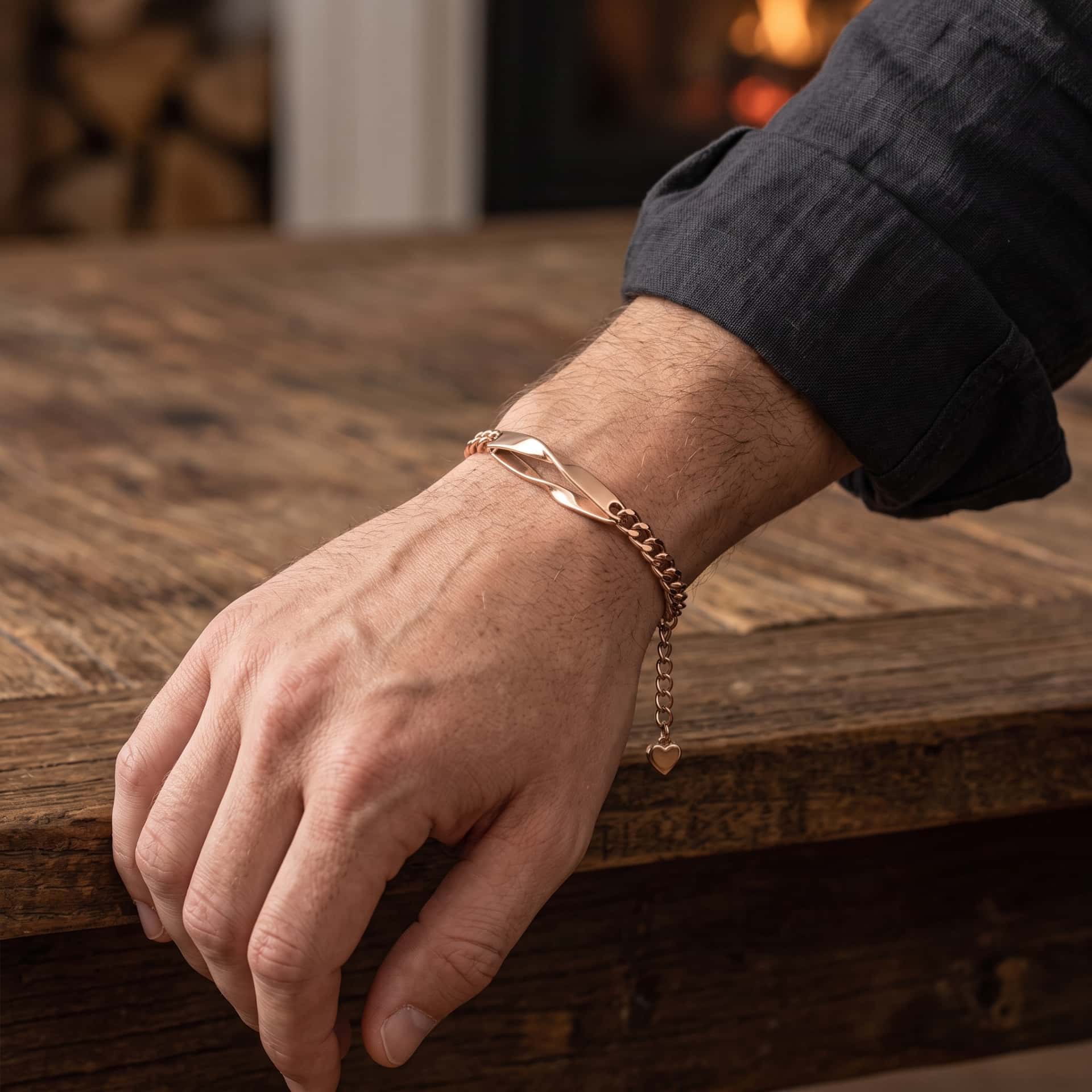
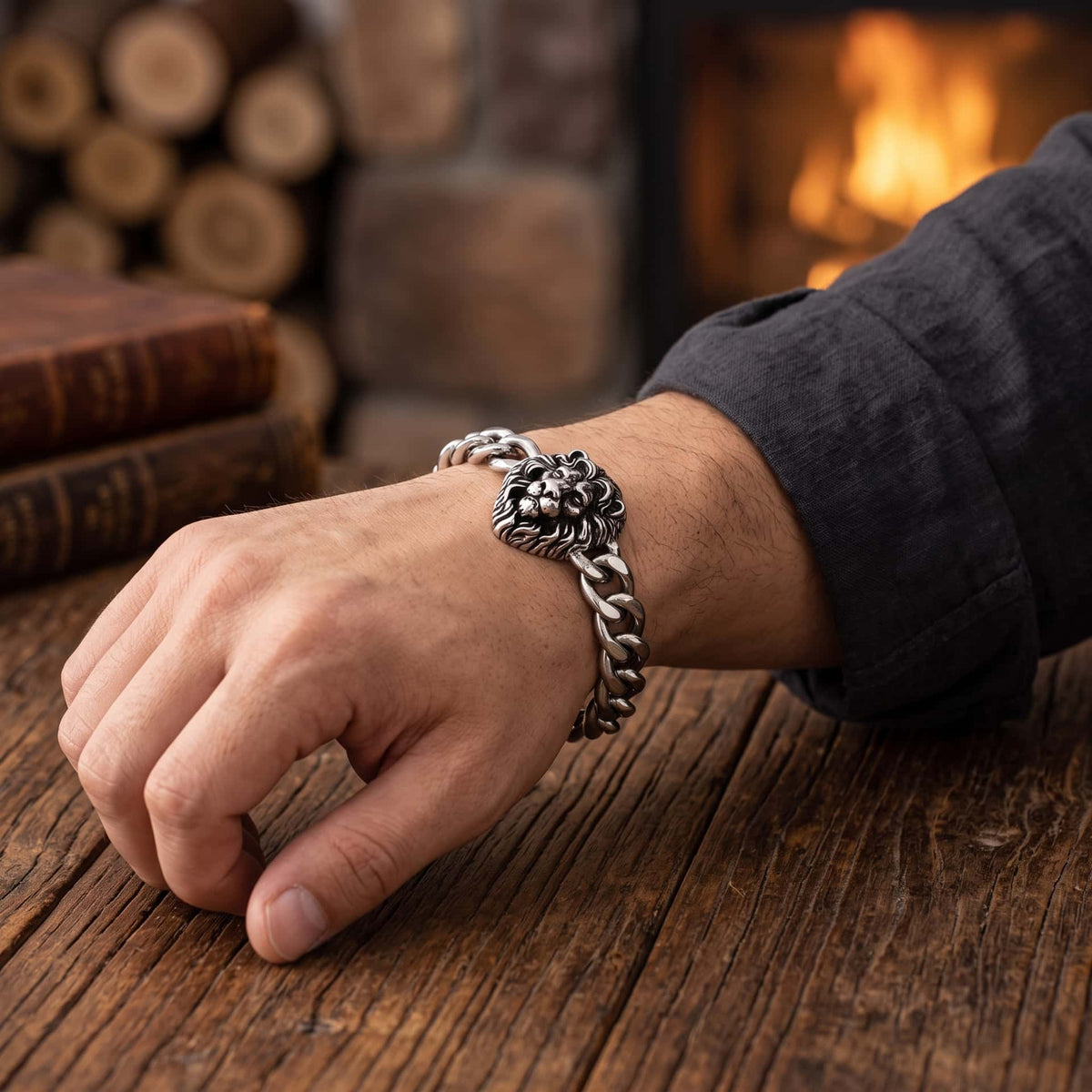
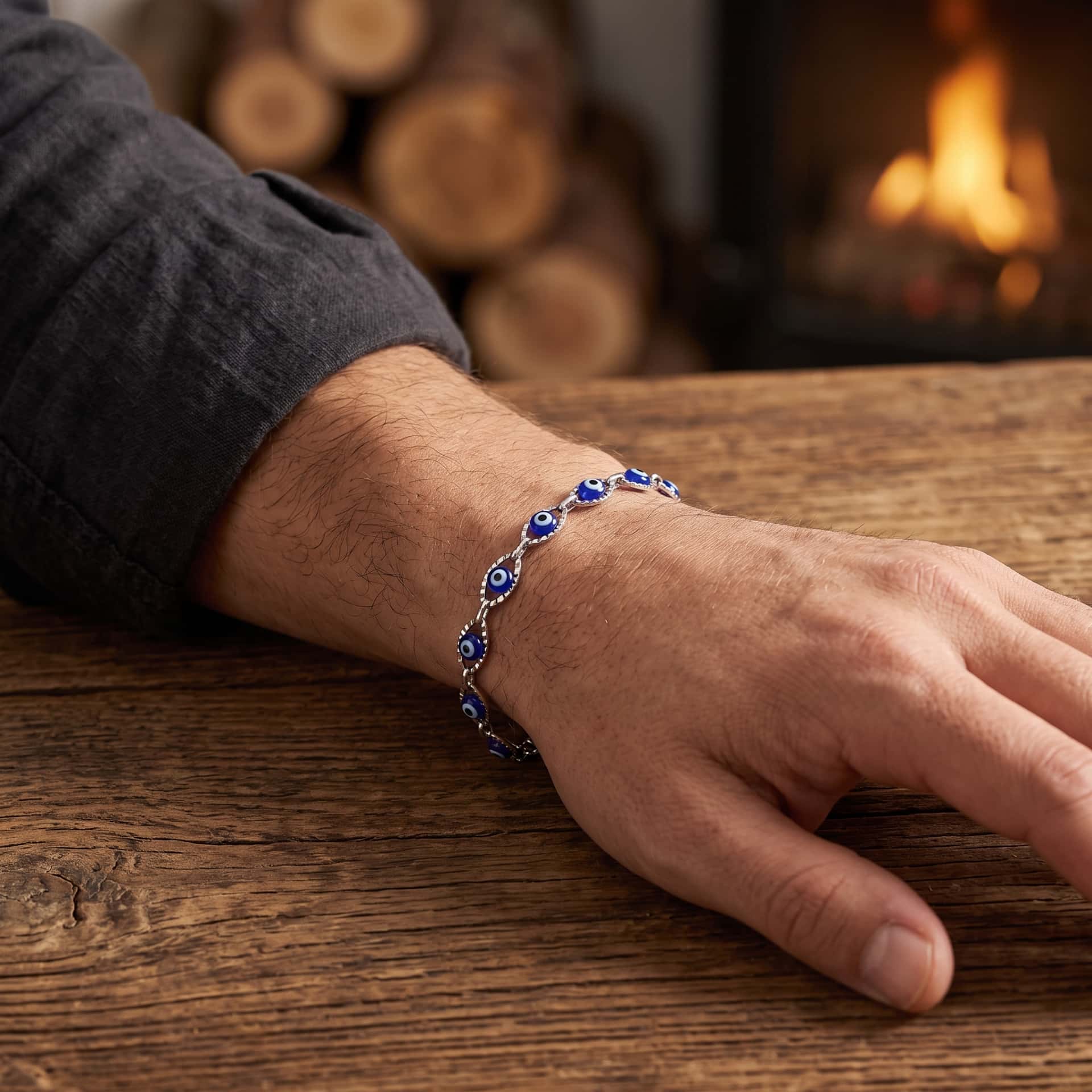
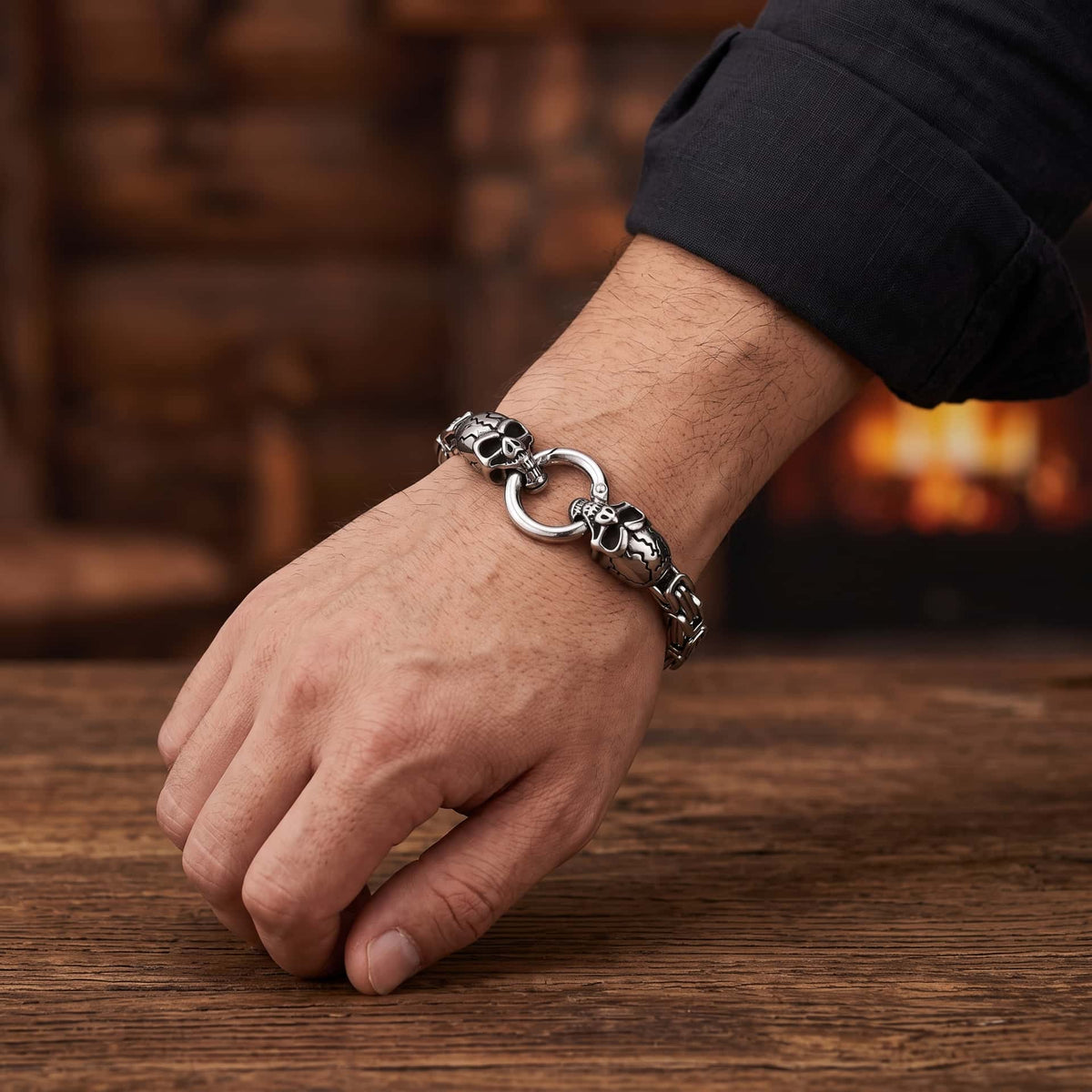
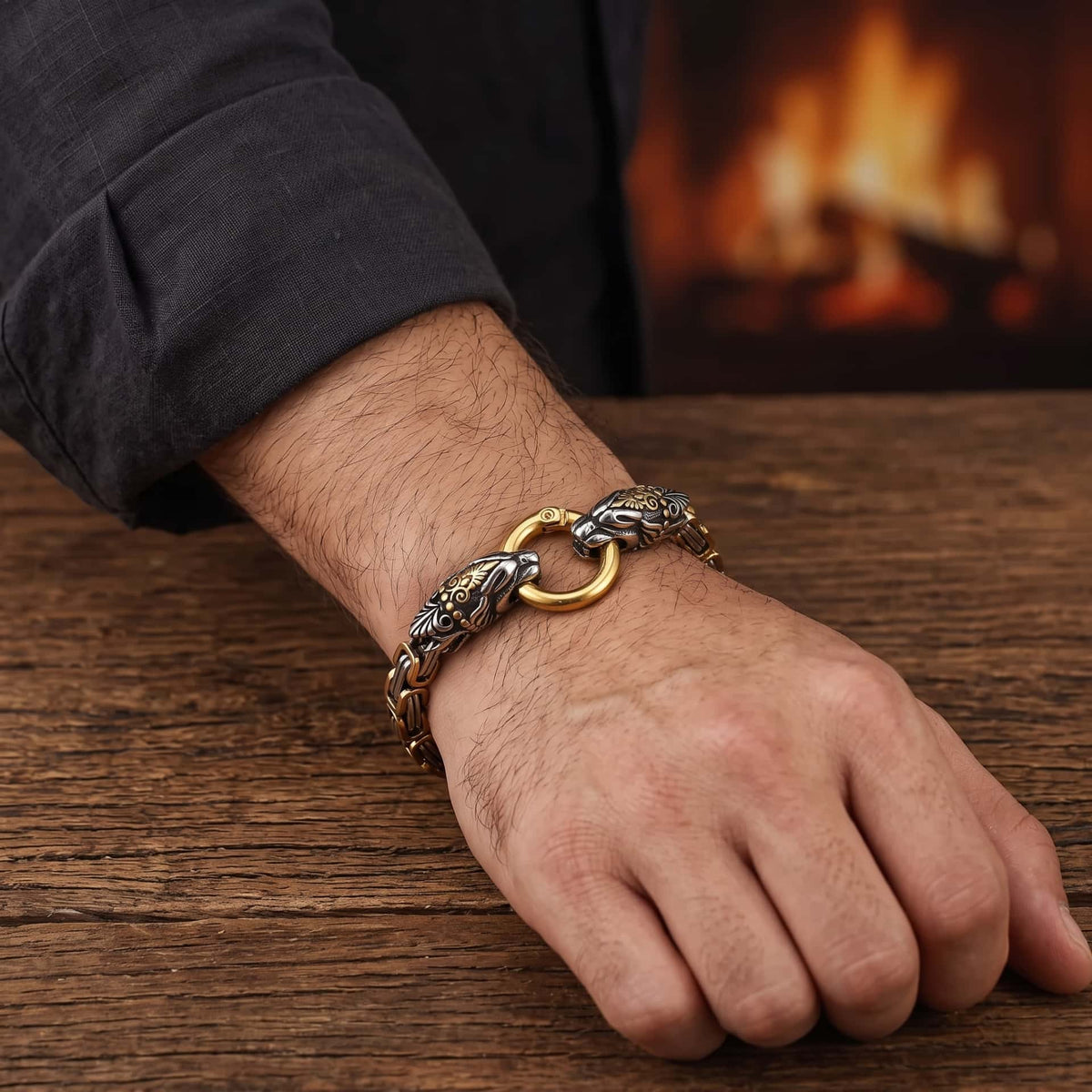
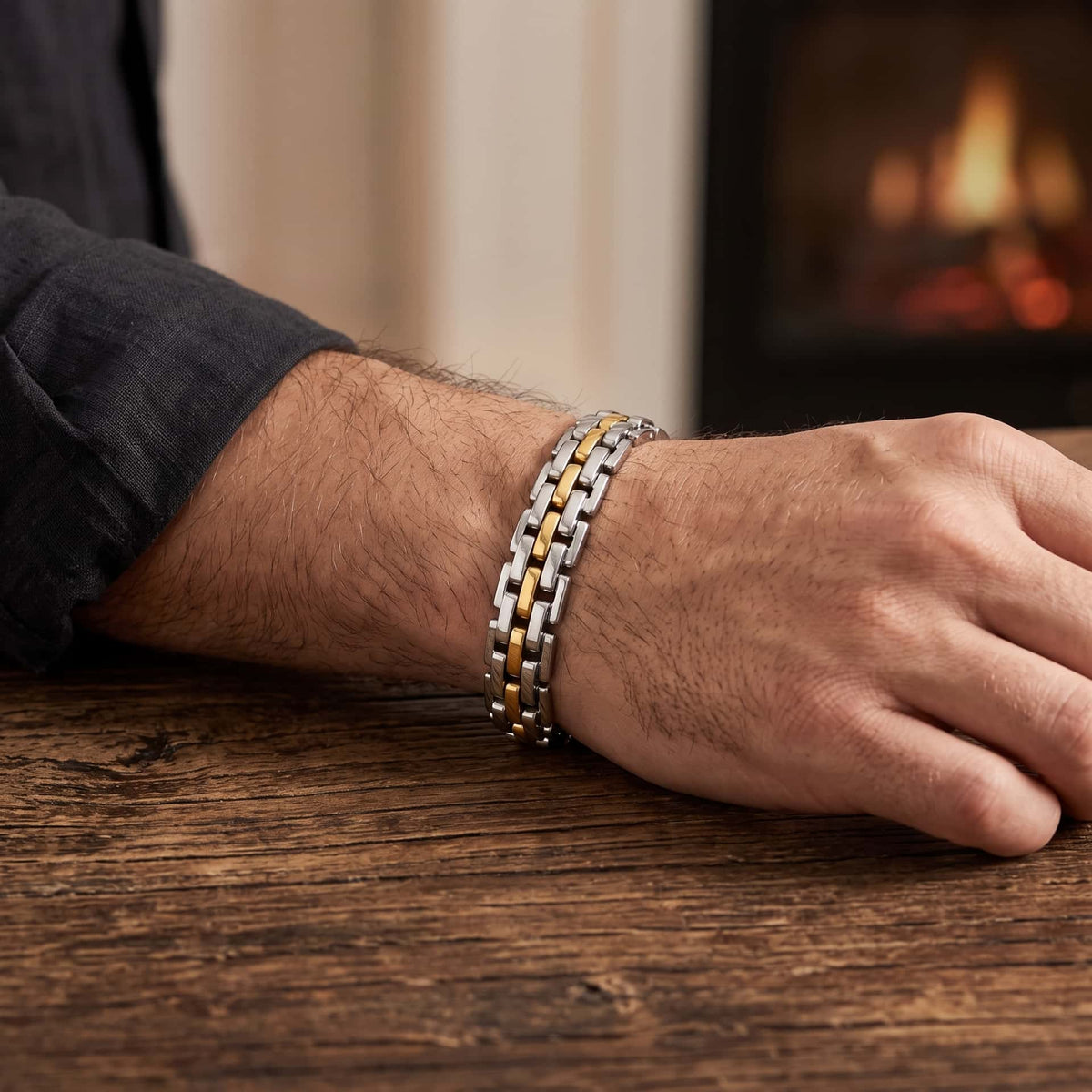
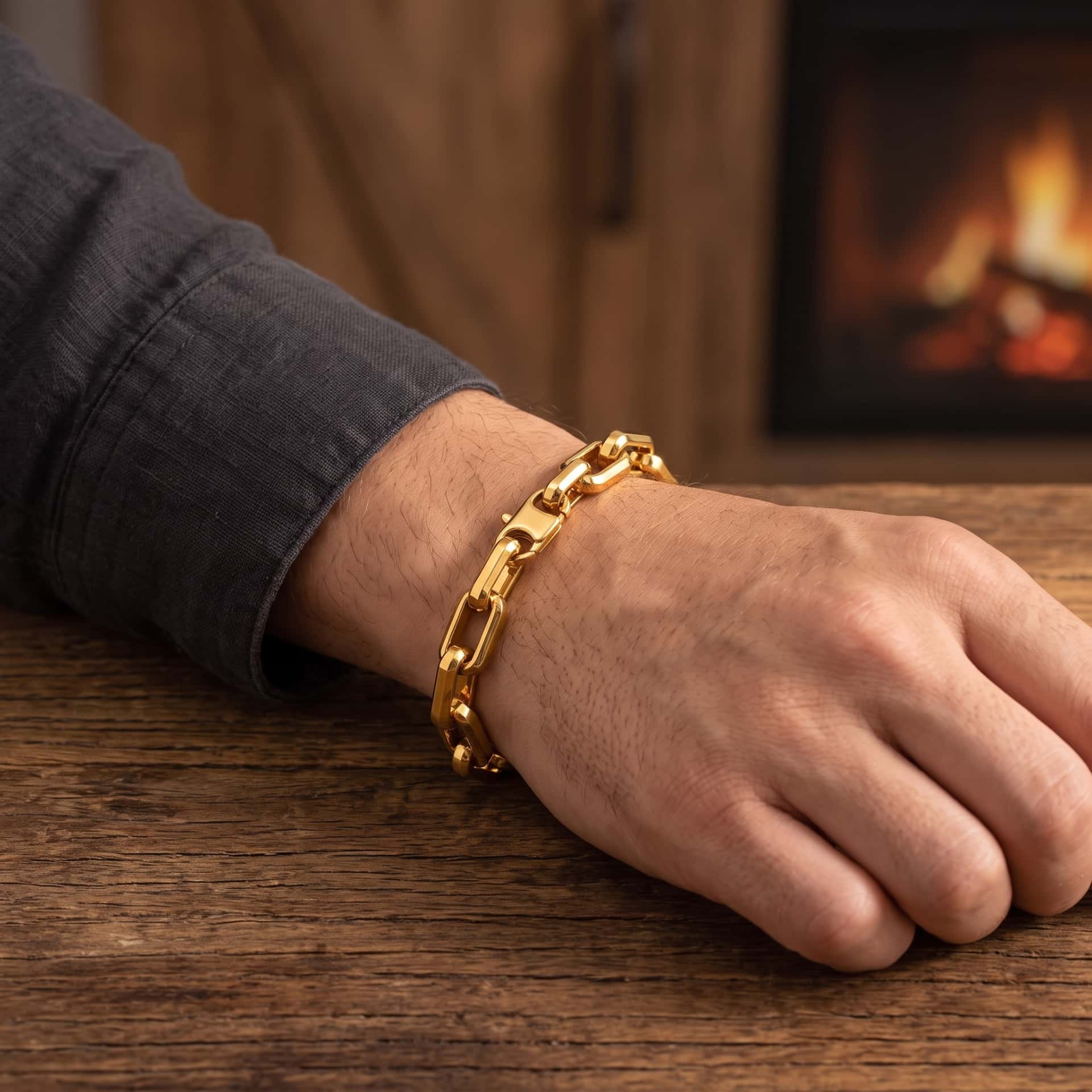
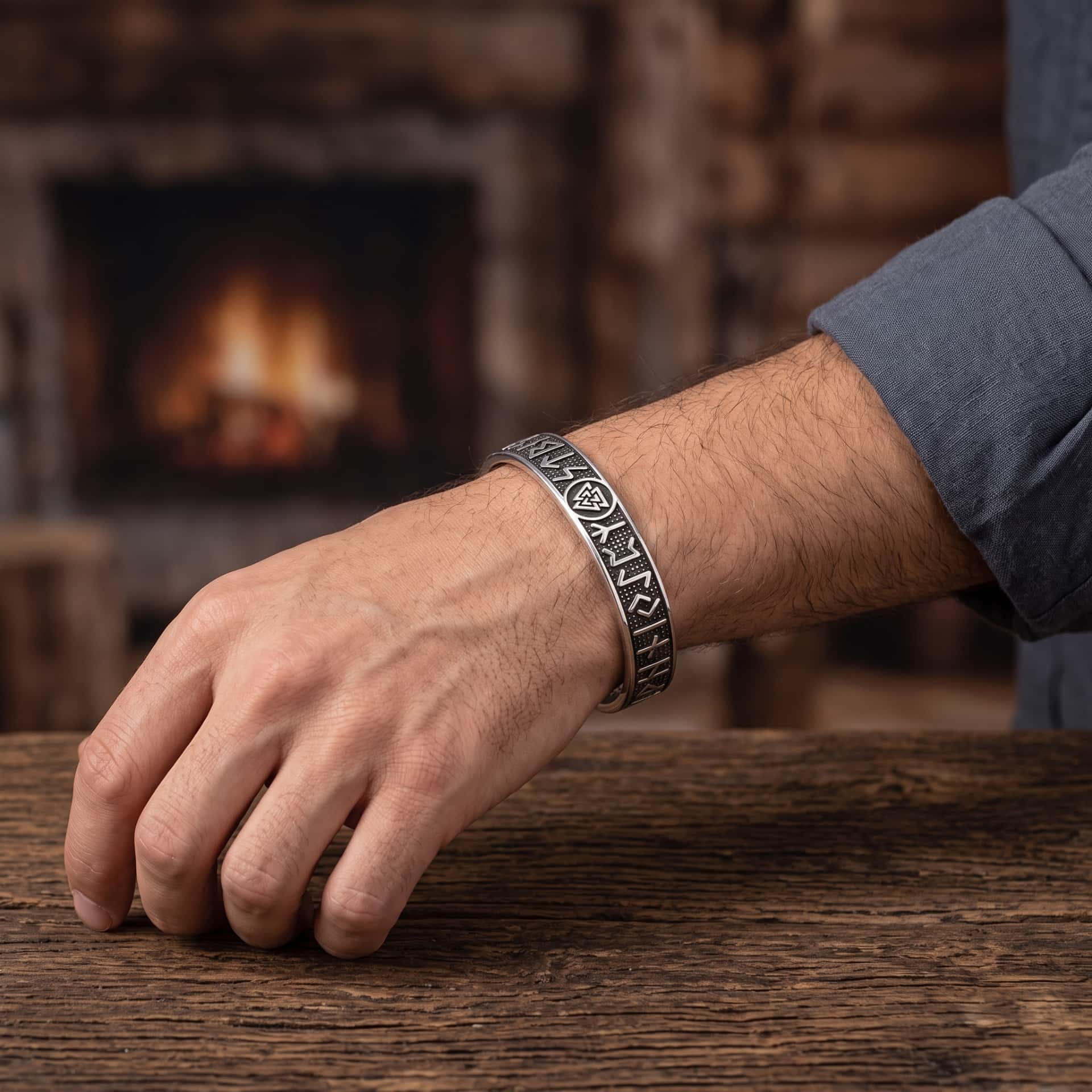



Collections similaires
You would also like

Frequently Asked Questions about our Viking Bracelets
What styles of Viking bracelets do you offer?
Our collection includes Viking torcs (open rigid bracelets), wide engraved cuffs, braided leather bracelets with Norse clasps, and steel chains with pendants. Each style is inspired by actual artifacts from the Viking Age.
How do I choose the size of my Viking bracelet?
Measure your wrist circumference with a flexible measuring tape. Our Viking torques are slightly adjustable thanks to their opening — they fit most wrists (16-22 cm). For bracelets with a clasp, choose 1 to 2 cm more than your wrist circumference for a comfortable fit.
Are Viking steel bracelets water-resistant?
Yes. The 316L stainless steel of our bracelets is highly corrosion-resistant. You can wash your hands, shower, or swim without any issues. Only high-concentration chlorinated pool water is not recommended for the long term.
Can you wear a Viking bracelet with a watch?
Absolutely! Viking torcs and cuffs go very well as a complement to a watch. The trend is to wear the bracelet on the opposite wrist to the watch, or to stack a thin bracelet with the watch for a Nordic layered look.
What does the Viking bracelet symbolize in Norse culture?
The bracelet (or arm-ring) was of major importance to the Vikings. Chieftains would offer them to their warriors as a sign of loyalty and reward. It was also a form of currency — one could cut a piece of silver from the bracelet to pay. Wearing a Viking bracelet today is a tribute to this heritage.
What is the difference between a torque and a Viking bracelet?
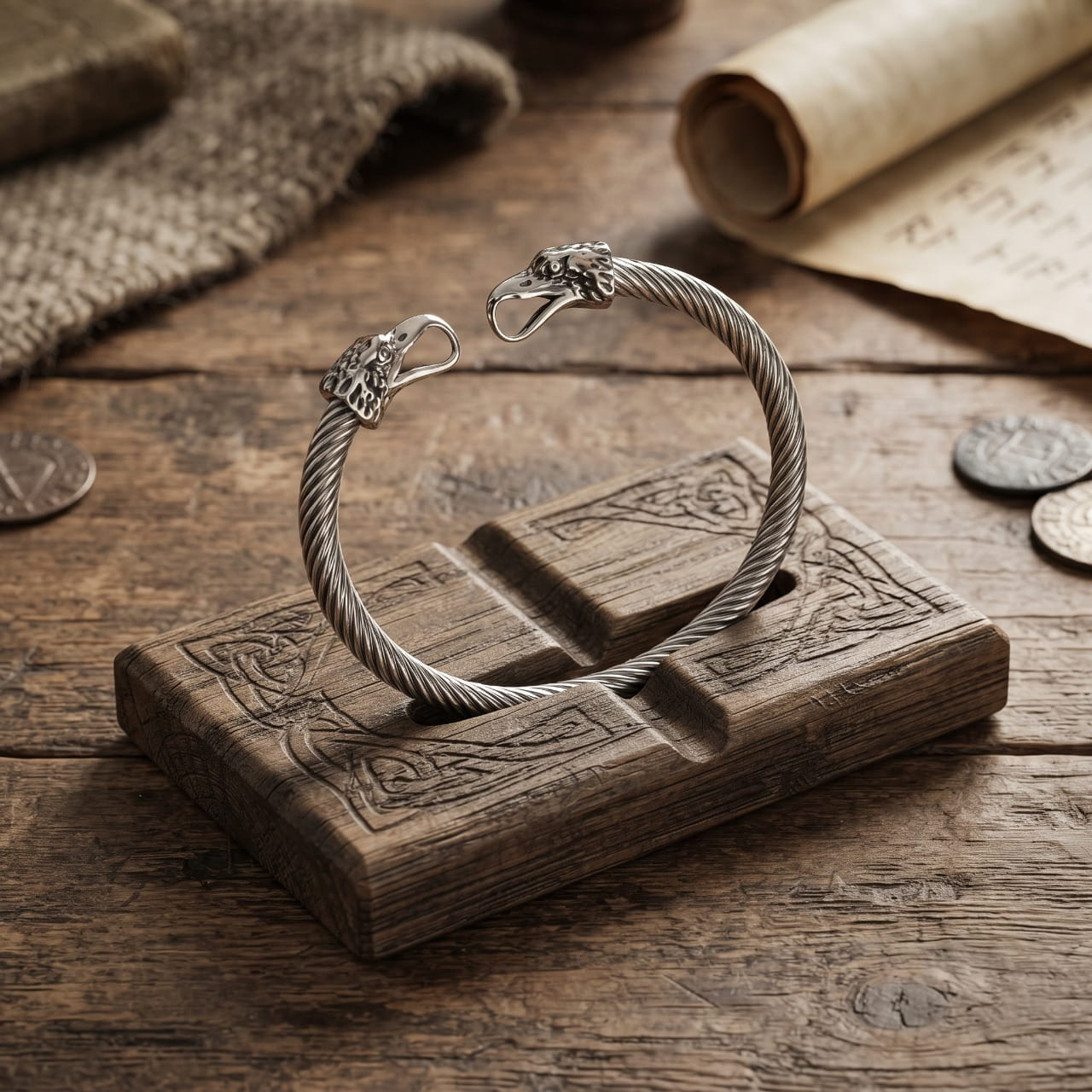
A Viking torque is a rigid open bracelet, often ending in animal heads (wolves, ravens, dragons). It is put on through the opening and adjusted by slightly spreading the ends. A classic Viking bracelet can be a chain, a braided leather strap, or a wide cuff. Torques are closer to the original archaeological pieces.
Can you wear a Viking bracelet every day?
Yes, our 316L stainless steel bracelets are designed for daily wear. They are water and sweat resistant and are hypoallergenic. Our real leather bracelets require a little more care—please avoid prolonged immersion in water. The steel torques are the most durable and require no special maintenance.
Did Viking bracelets really exist in history?
Absolutely. Arm-rings were among the most important Viking pieces of jewelry. Jarls distributed them to their warriors as a sign of loyalty. Archaeological hoards from Gotland (Sweden) and the Danelaw (England) contain hundreds of silver bracelets, often chopped to serve as currency. Our designs are inspired by these historical finds.
Viking Bracelet — en savoir plus
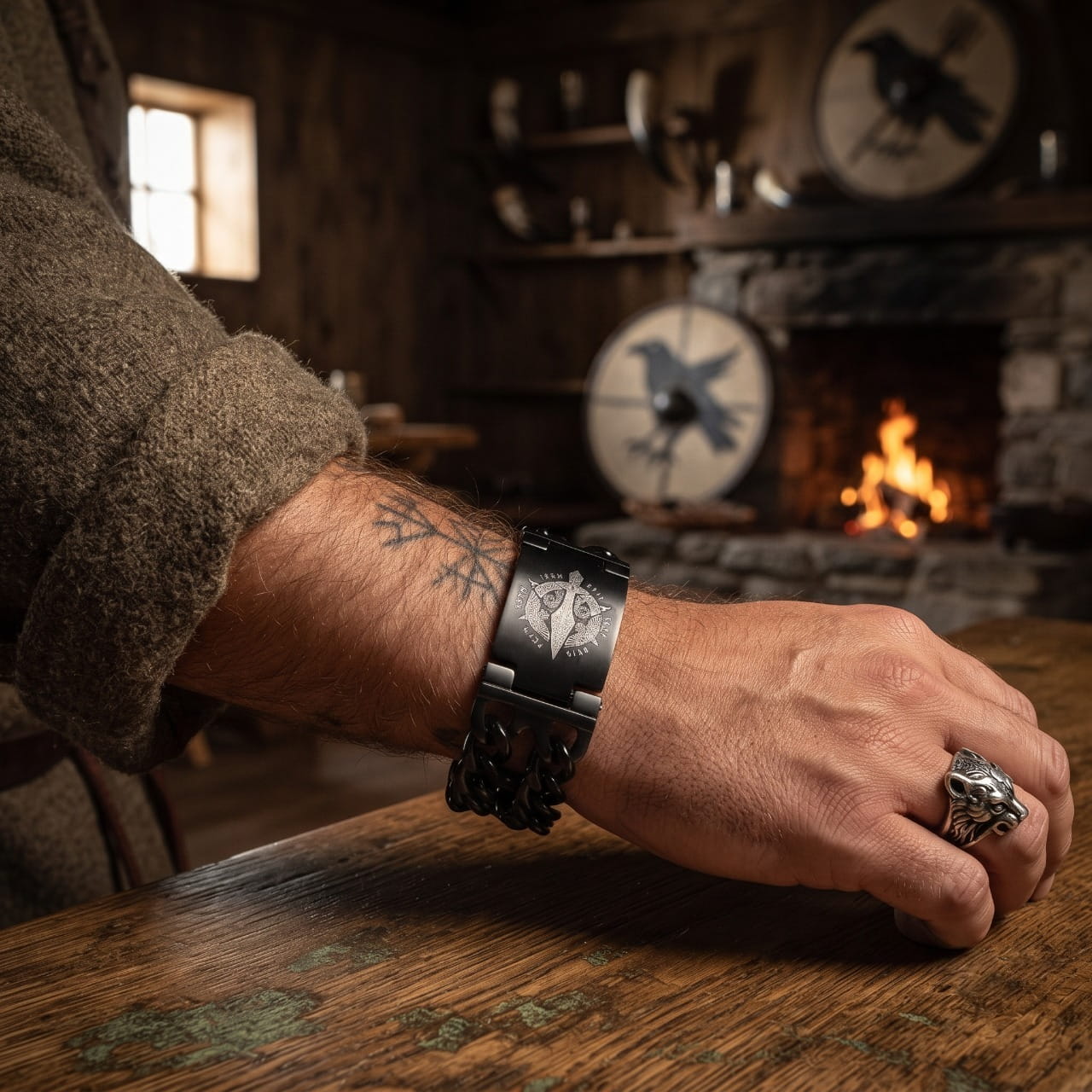
This collection brings together Viking bracelets for men and women: bangles engraved with Futhark, wide-link chains, braided leather cuffs, and steel plates struck with a raven or a wolf head. Each model is available in several lengths, and half of them combine stainless steel with real leather.
Choosing the right length: wrist size
A bracelet that is too short will pinch and leave marks on the skin; if it is too long, it will spin around, and the motif will end up under your wrist. Our models range from 18 to 25 cm, with the indicated length being that of the closed bracelet, including the clasp. The rule is simple: add 1.5 to 2 cm to your wrist circumference for a comfortable fit that still has a little bit of play.
| Bracelet length | Corresponding wrist size | Note |
|---|---|---|
| 18 cm | 16 to 16.5 cm | snug fit, thin wrist |
| 19 cm | 17 to 17.5 cm | most requested size for women |
| 20.5 cm | 18.5 to 19 cm | intermediate |
| 21 cm | 19 to 19.5 cm | most requested size for men |
| 23 cm | 21 to 21.5 cm | large wrist |
| 25 cm | 23 to 23.5 cm | extra-large wrist or loose fit |
How to measure. Wrap a tailor's tape measure around your wrist, just above the prominent bone, without tightening it: the tape should fit without marking the skin. Don't have a soft tape measure handy? A strip of paper works just as well: mark the overlap point with a pen, then measure the length against a ruler. Measure the specific wrist on which you will wear the bracelet, as the two are rarely exactly the same size.
One particular case deserves attention: rigid bangles, such as our Futhark-engraved models, do not close with a clasp but open slightly to wrap around the wrist. They should be chosen as close as possible to your measurement, without adding the two centimeters of comfort, and then closed with a gentle squeeze of your fingers.
Four families, four styles
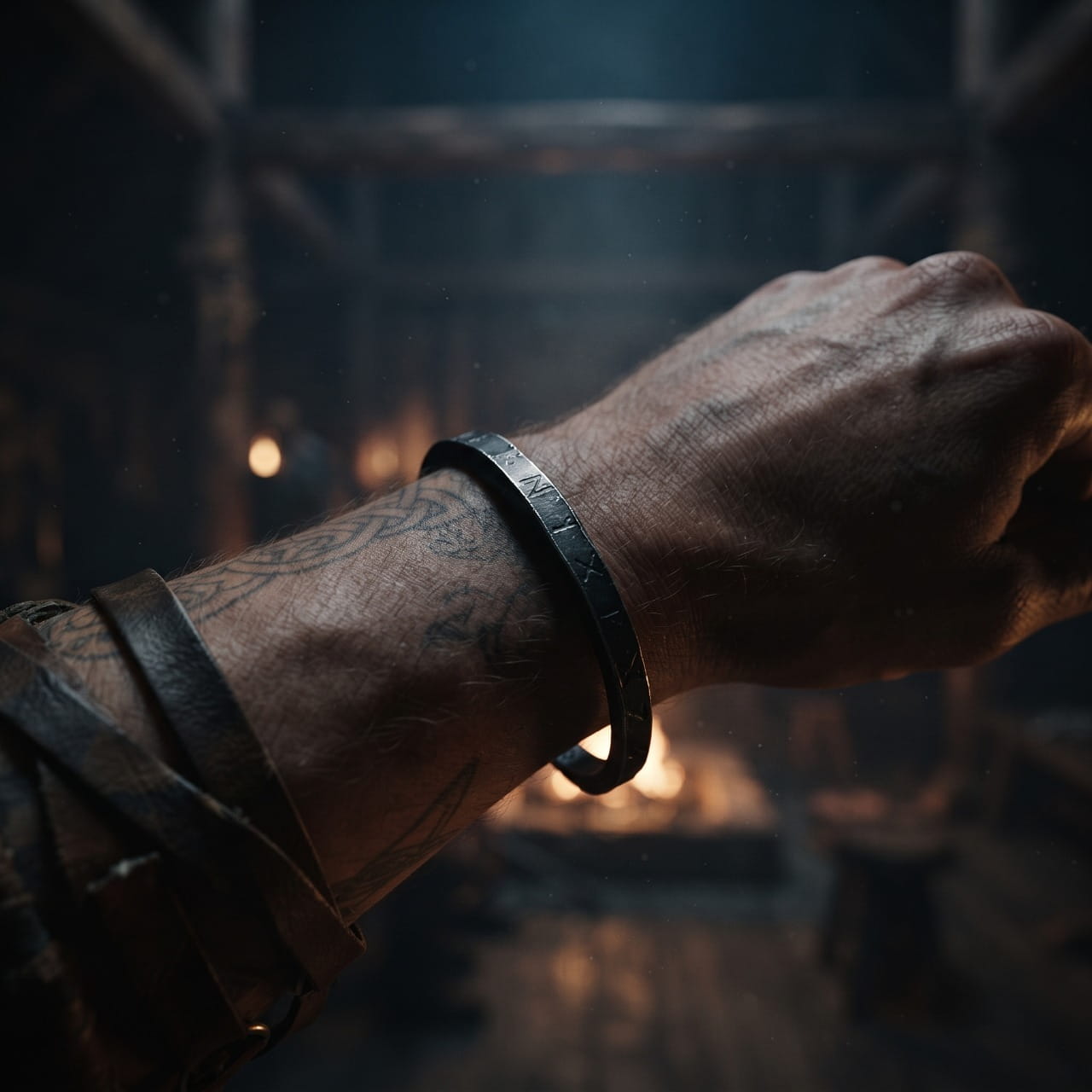
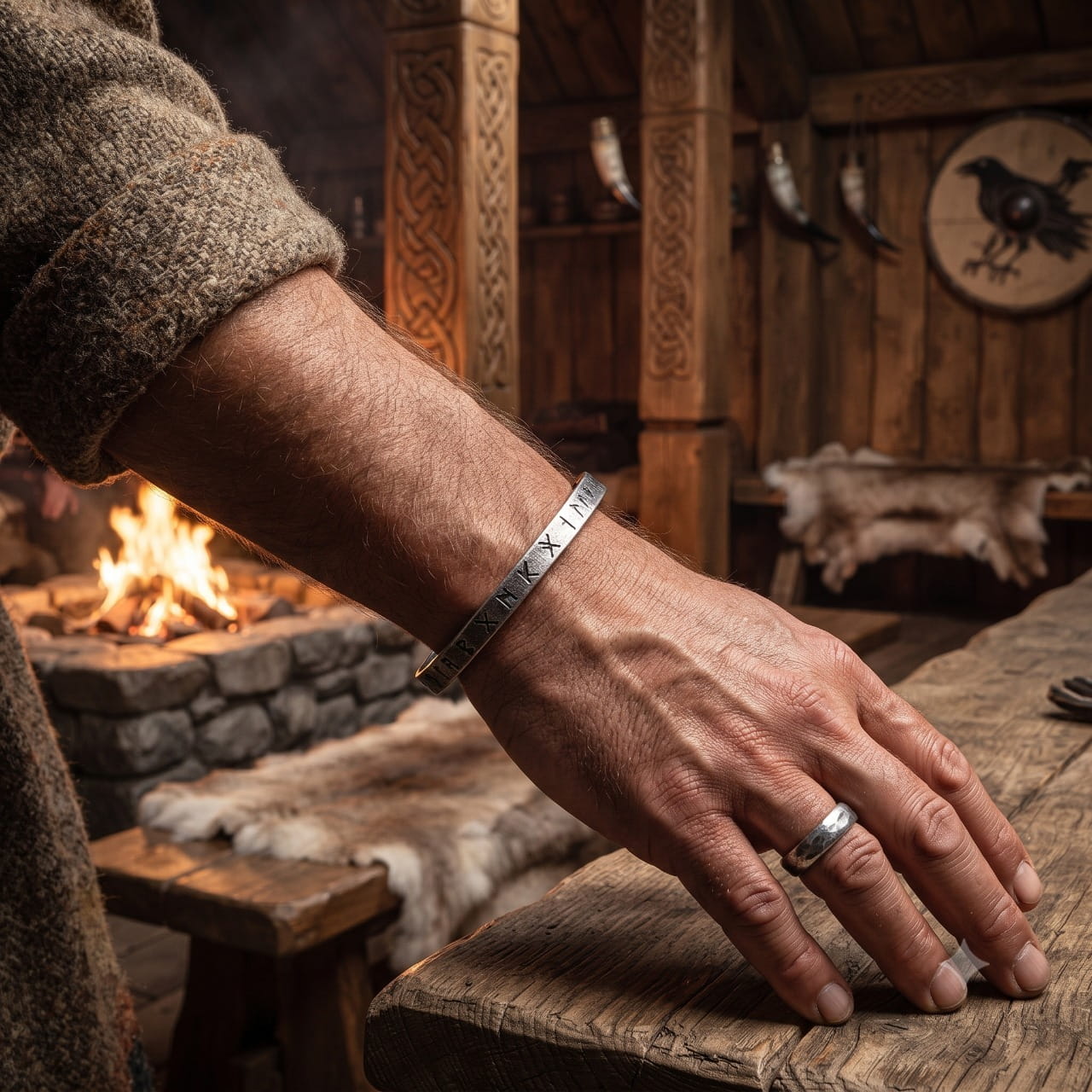
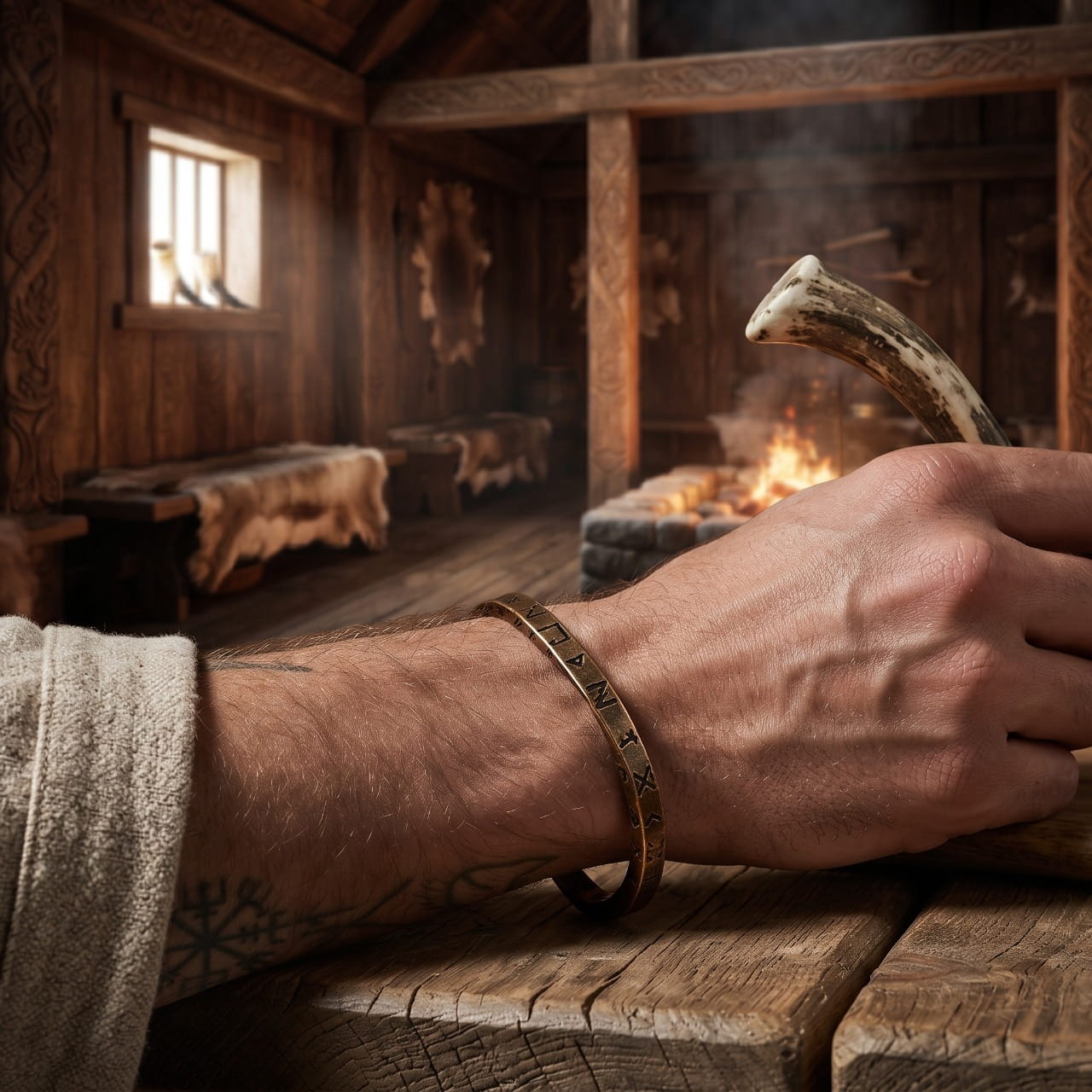
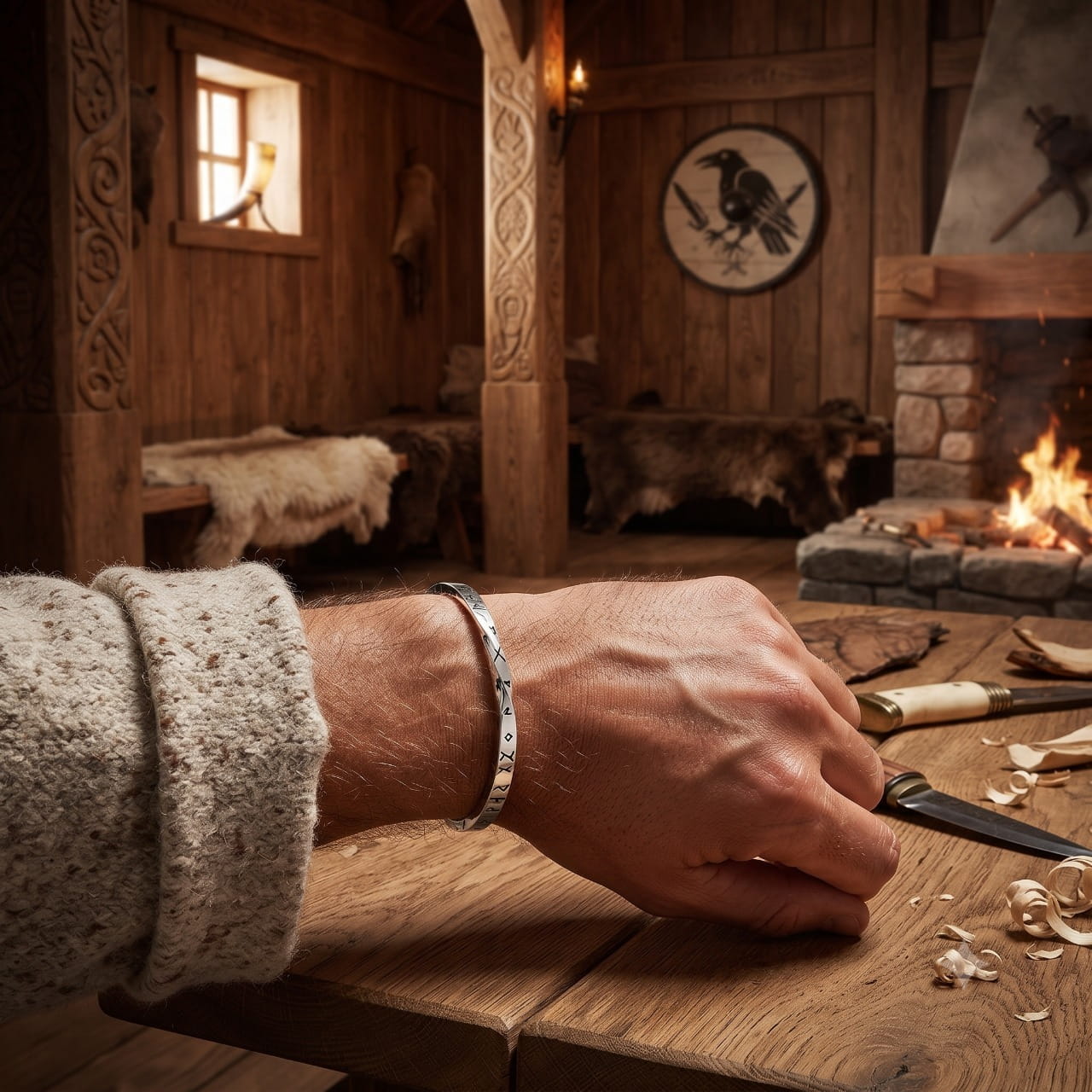
Bangles form the heart of the collection: an open half-ring of steel, engraved with Futhark runes along its entire length, available in polished steel, blackened steel, or bronze finish. It is the most understated format, one that can be worn every day without snagging your sleeves.
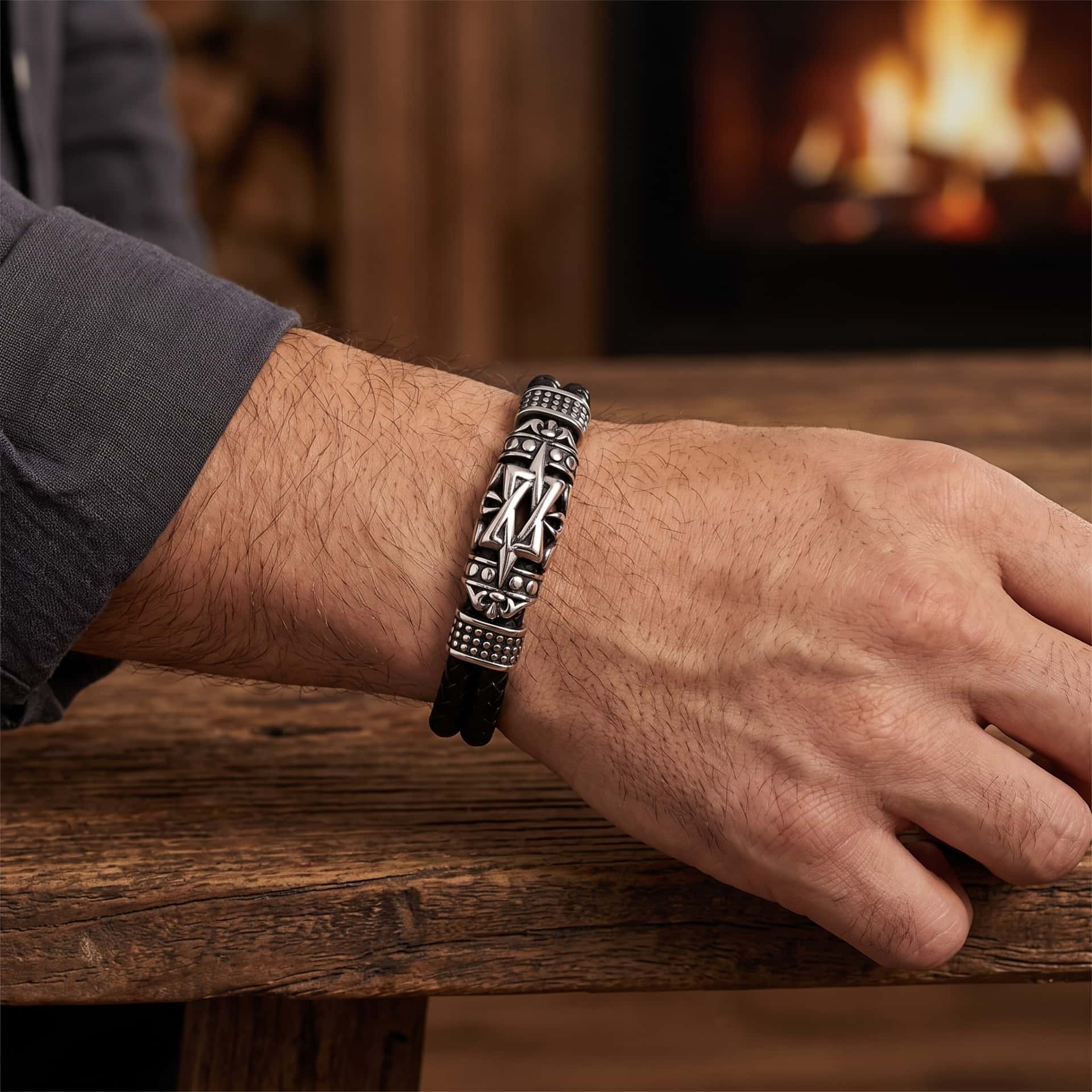
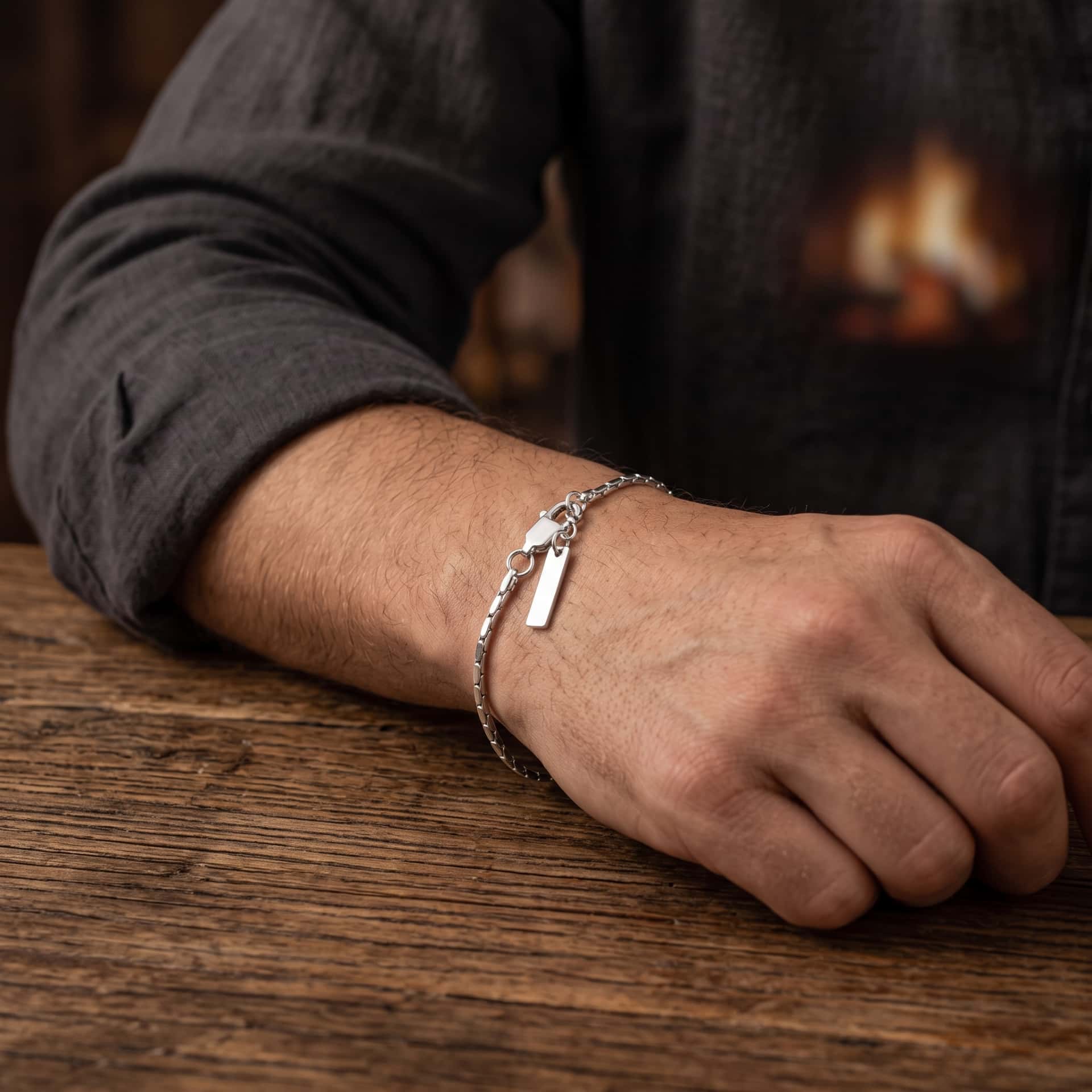
Chains take the opposite approach: wide links, braided links, double chains, with a clasp often sculpted into a wolf head or Thor's hammer. They are more present on the wrist, and noisier too.
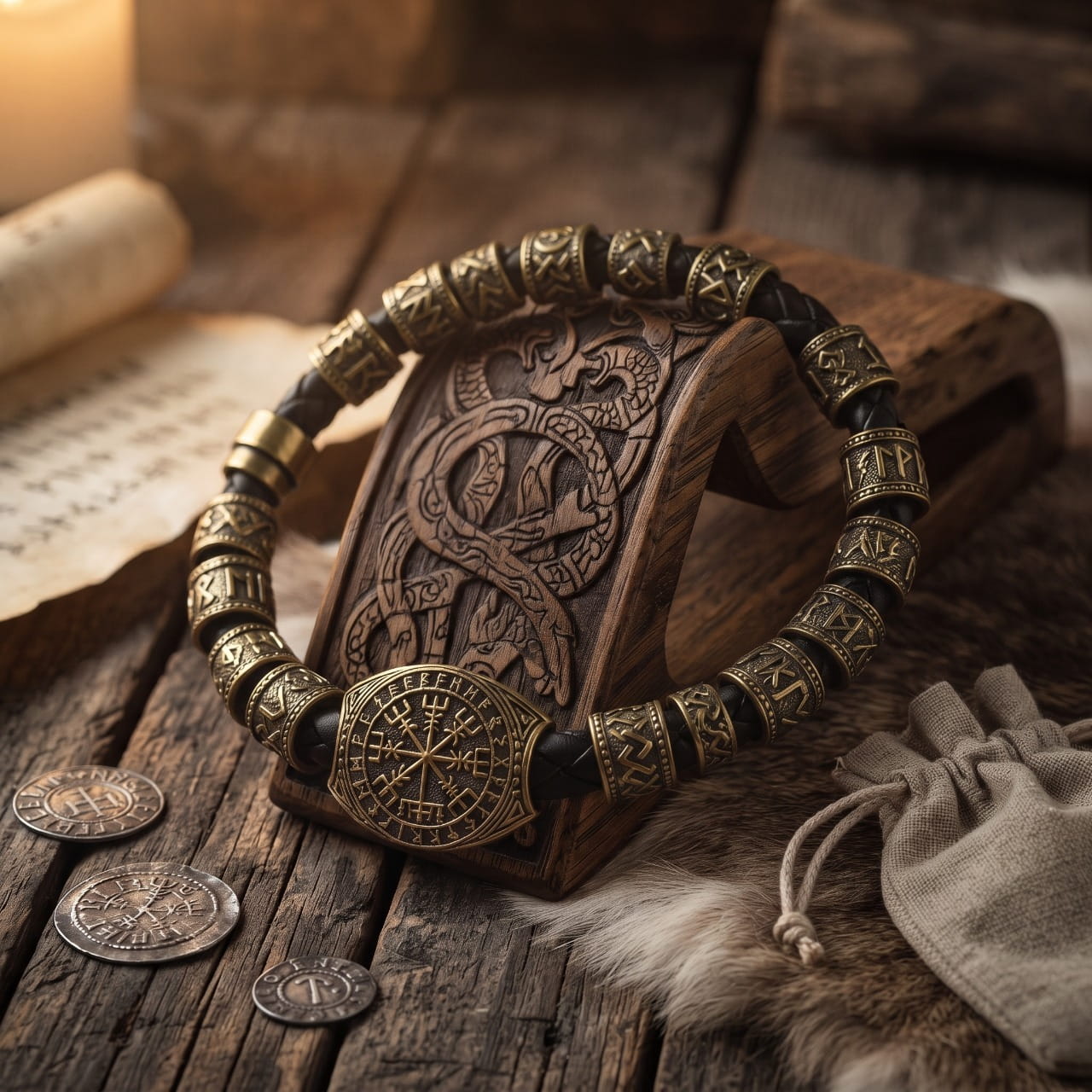
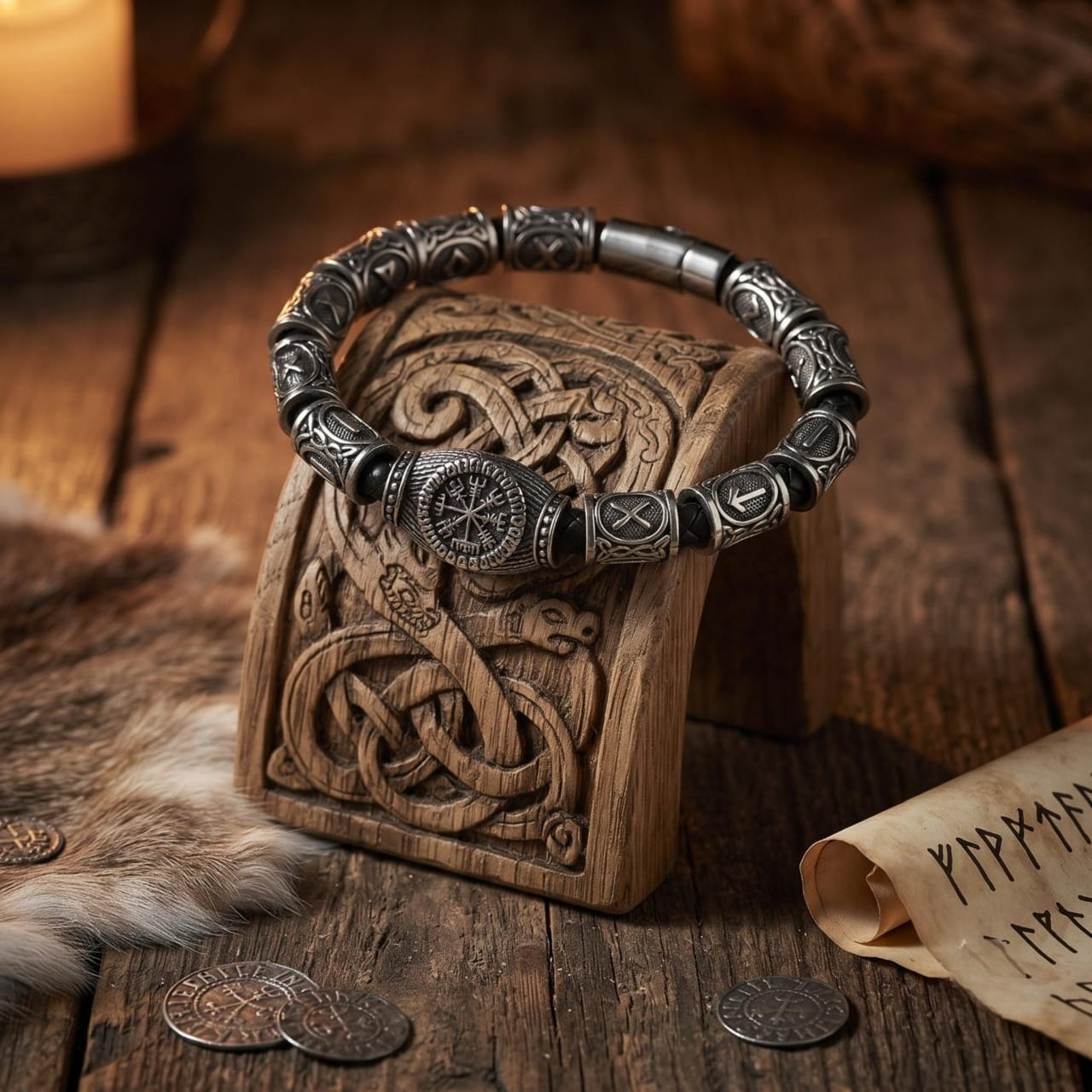
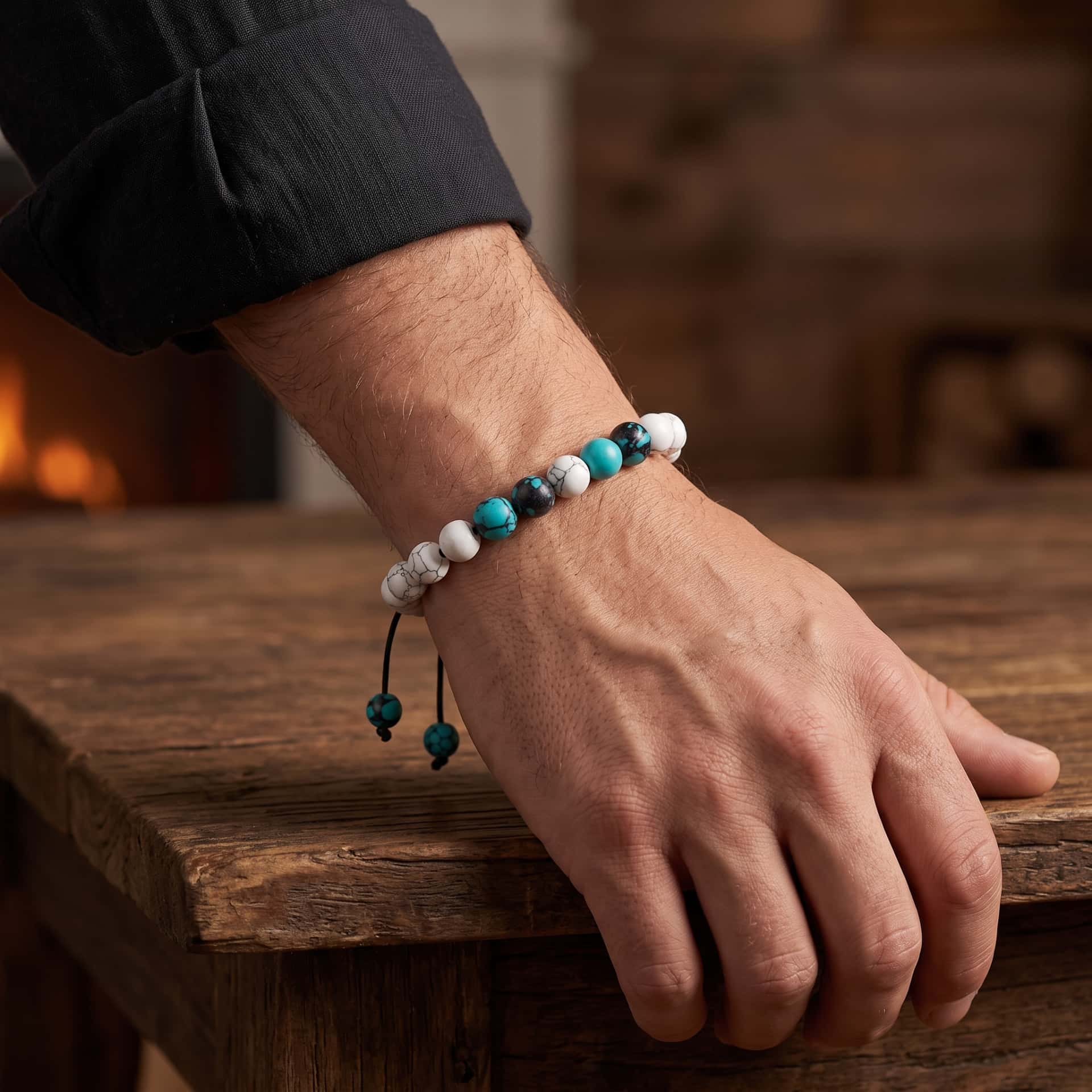
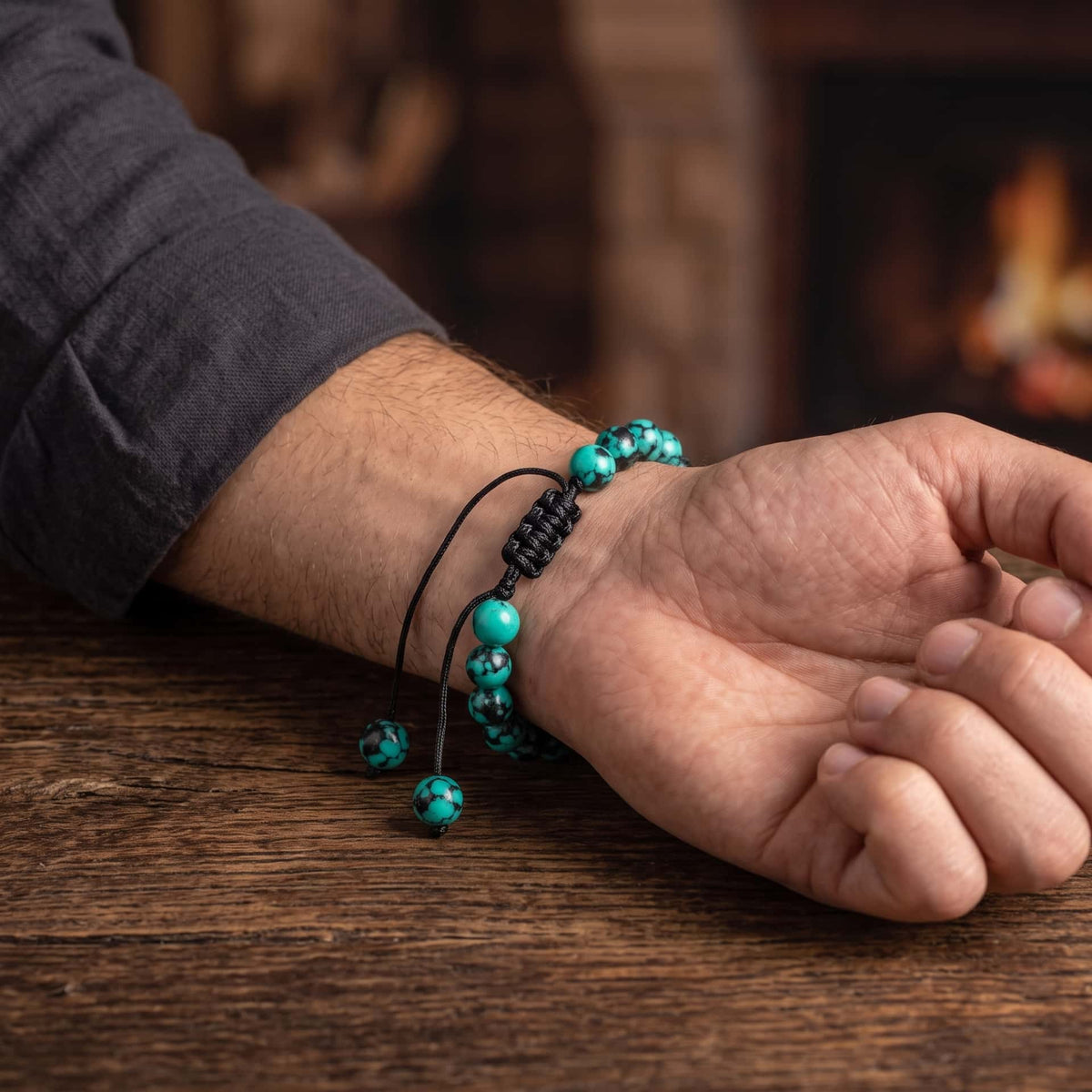
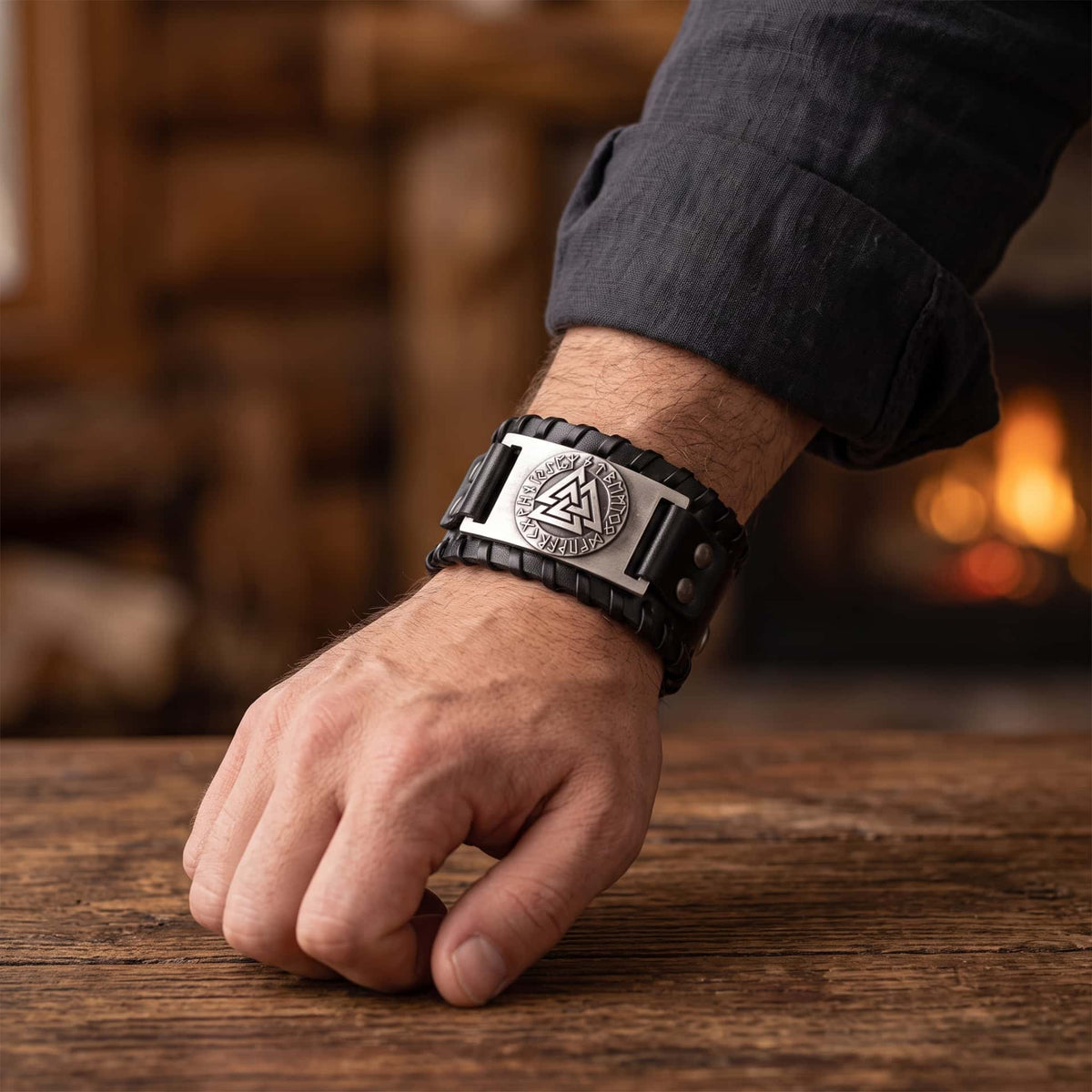
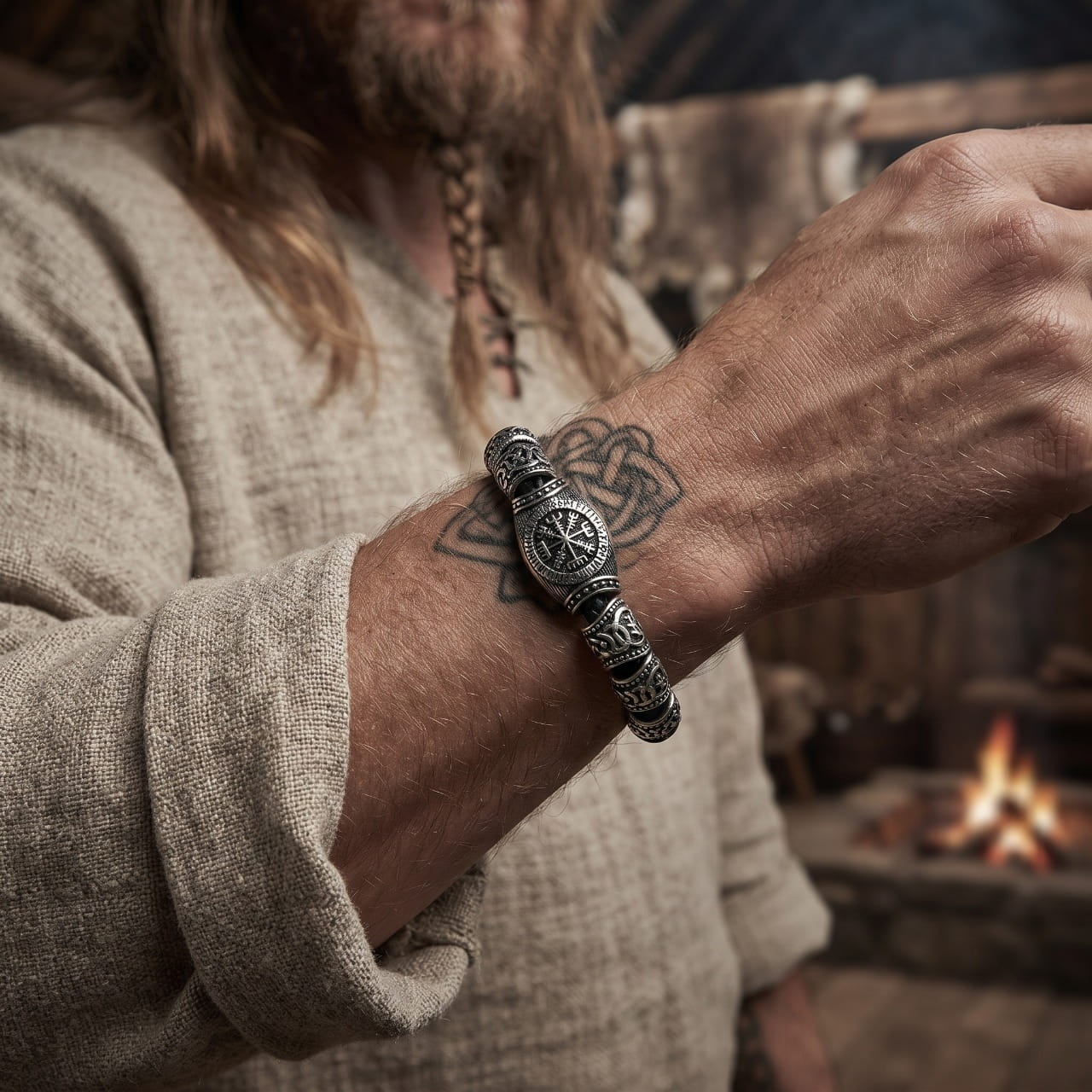
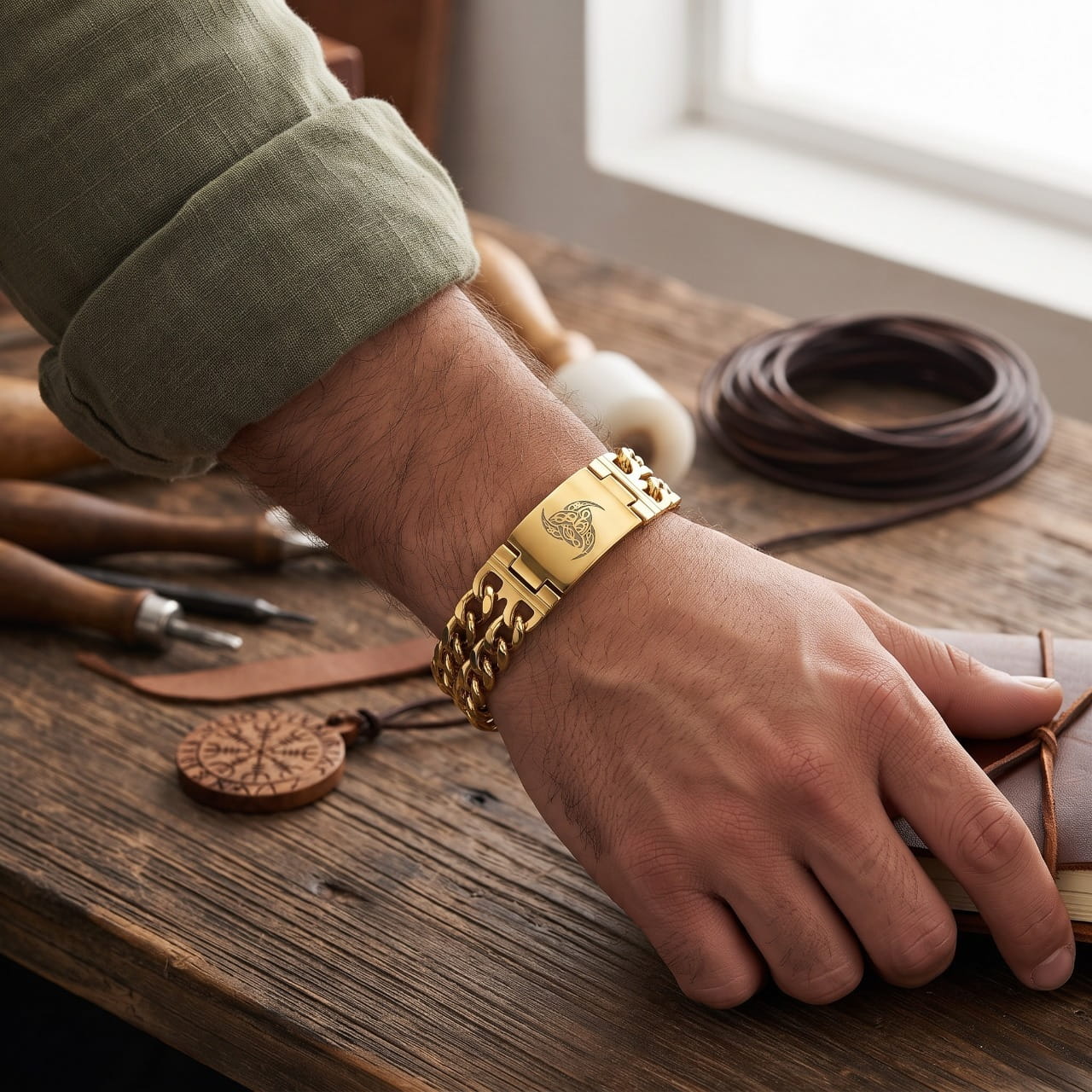
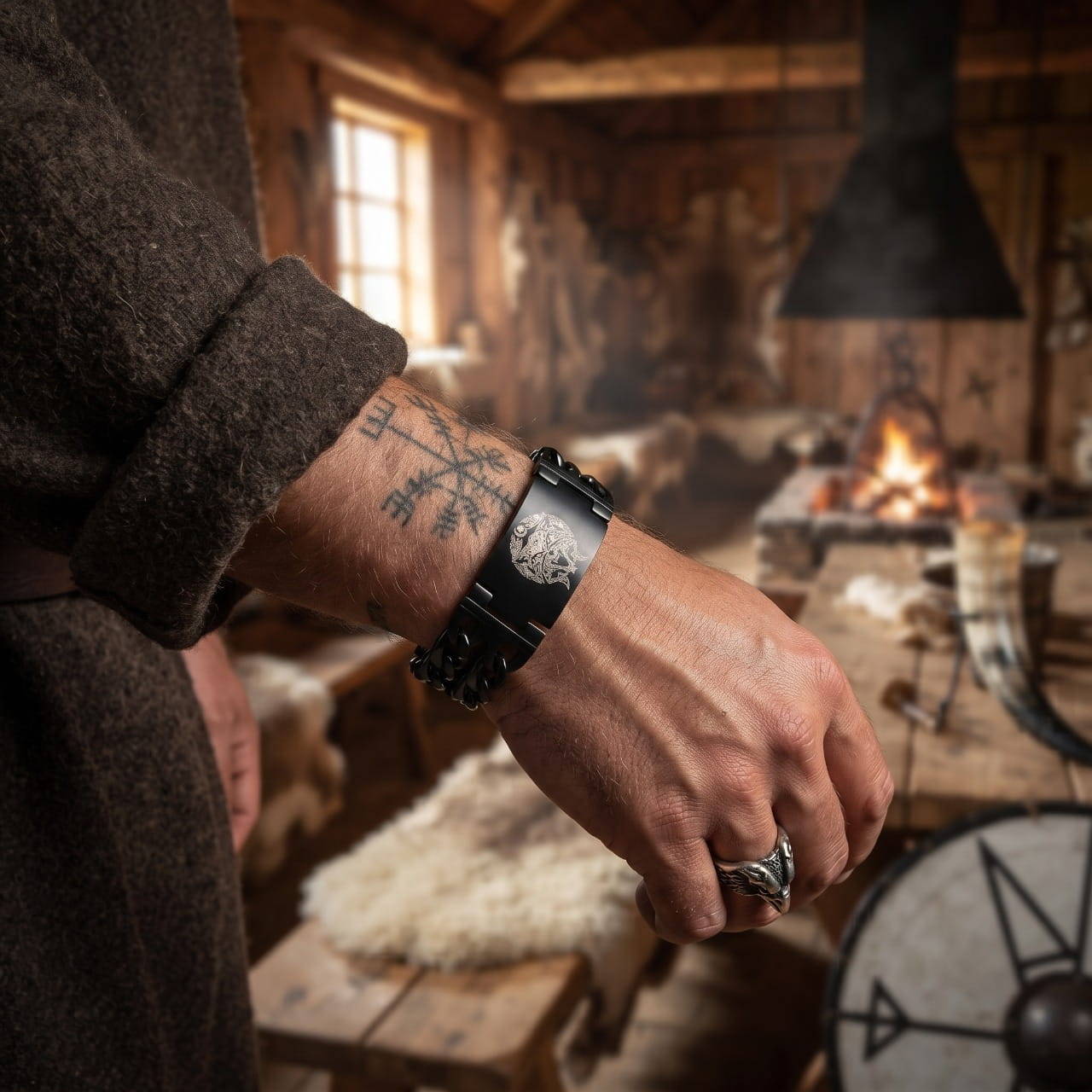
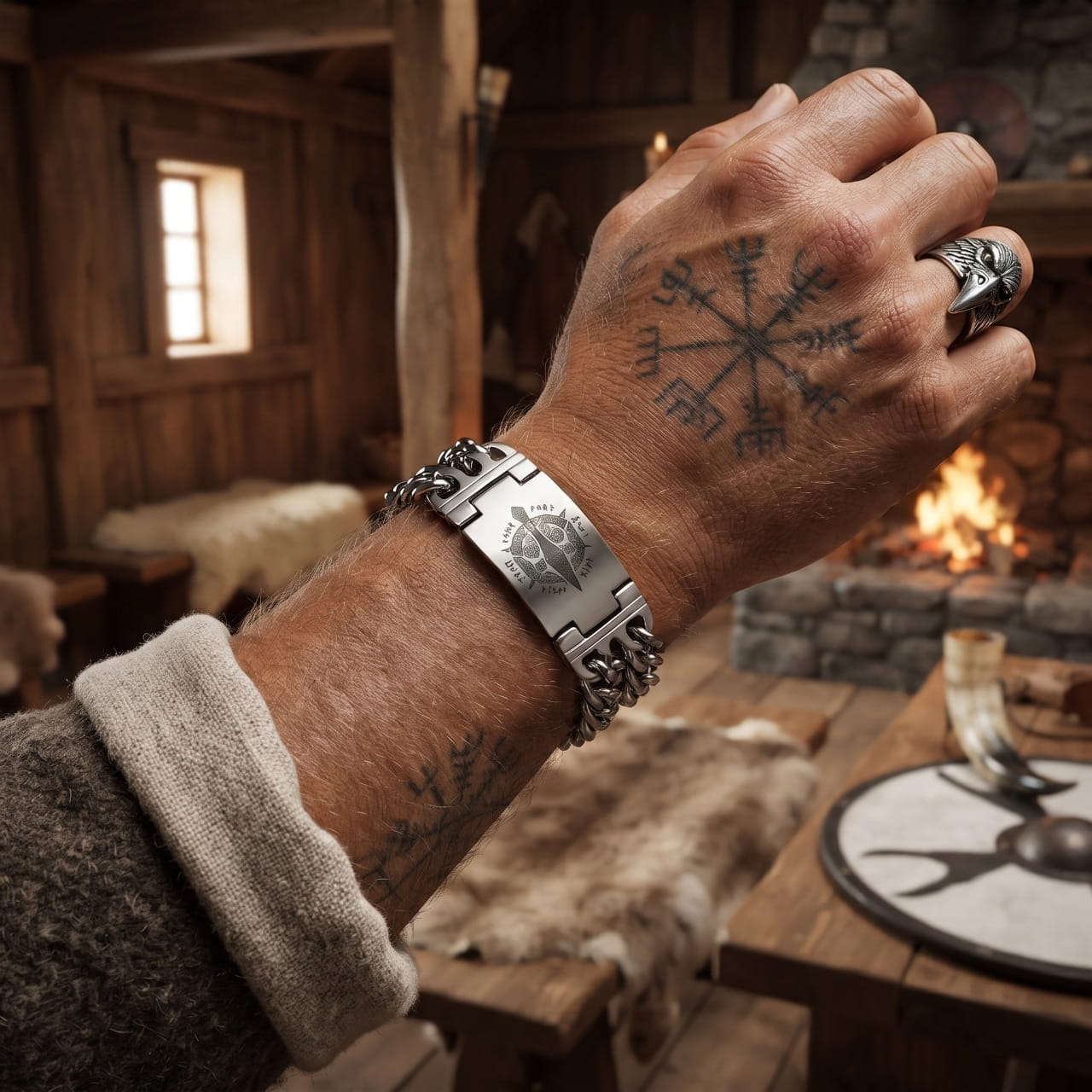
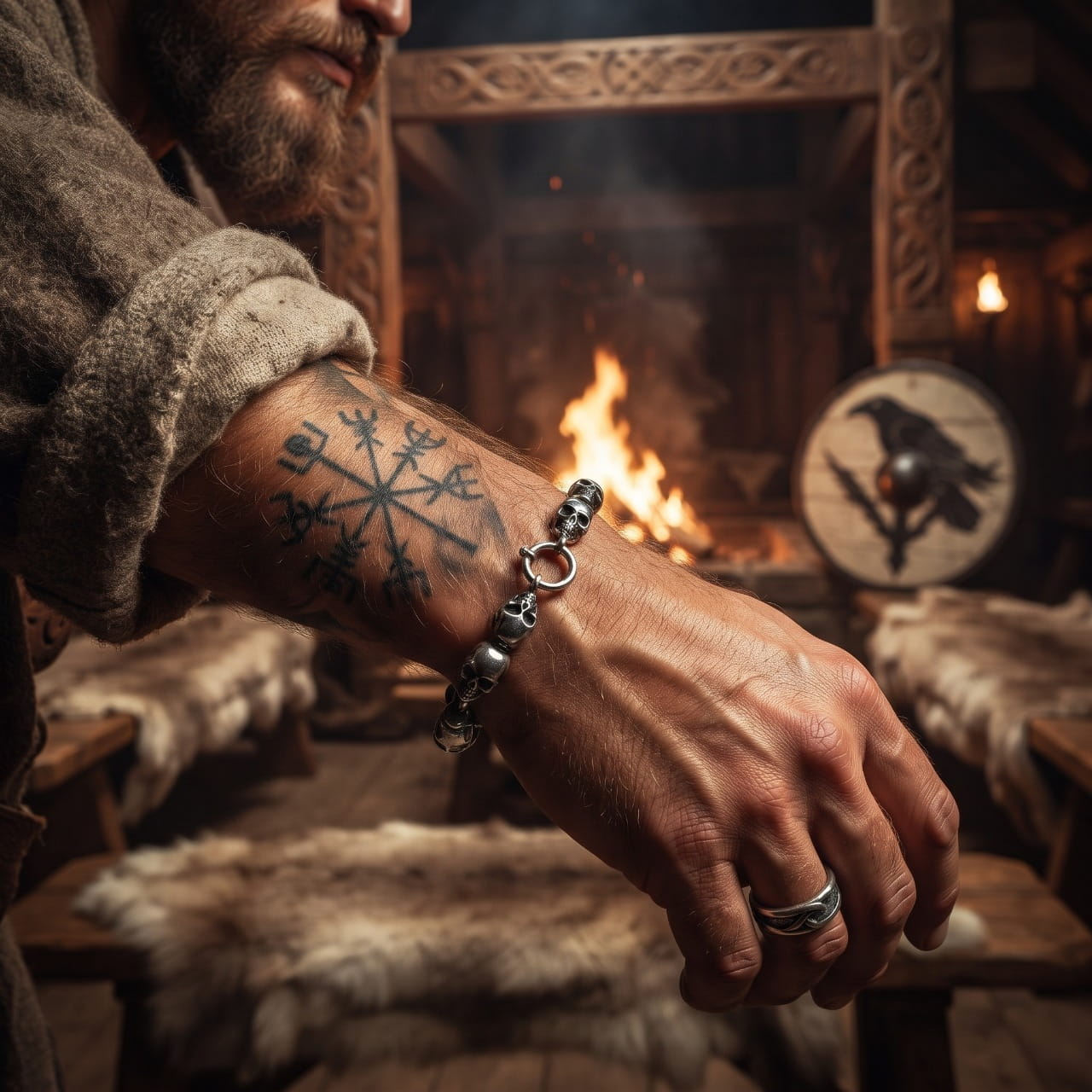
Plate cuffs combine a strip of leather with a steel plate stamped with a motif—raven and runes, Celtic interlacing, wolf head. It is the perfect compromise between jewelry and a leather accessory. Finally, a few bead bracelets alternate engraved steel beads with braided cord, surrounding a Vegvísir or runes.
Symbols, one by one
Of the three types of jewelry, the bracelet has the longest history among the Scandinavians—and not primarily as an ornament. Here is what the models in this collection represent, and where the format itself comes from.
The Viking bangle before it was jewelry
Before decorating a wrist, the arm ring—baugr in Old Norse—was two very concrete things.
Silver worn on the person. In an economy without reliable minted currency, Scandinavians weighed metal. Silver arm rings served as a store of value and were cut when needed: buried treasures regularly yield hacksilver, fragments of rings and jewelry cut to adjust a payment by weight. This is the origin of one of the finest circumlocutions in skaldic poetry: a generous king is called a "ring-breaker", because he broke his bangles to reward his men.
A legal object. The Eyrbyggja saga describes a ring kept on the temple altar, which the goði wore on his arm during assemblies and upon which oaths were sworn. This fact is corroborated on the English side: the Anglo-Saxon Chronicle reports that in 876, the Danes swore peace to King Alfred on a "holy ring"—an oath they quickly broke, by the way. Wearing a bangle, back then, was not decorative: it was a pledge of one's word.
Futhark Runes
This is by far the most dominant motif here—engraved along the entire length of an open bangle, struck onto a steel plate, or distributed across strung beads. The Elder Futhark has twenty-four signs, each being both a letter and a word: Fehu for cattle and wealth, Uruz for aurochs, Ansuz for speech.
The format of the engraved bangle is particularly well-suited to the complete alphabet: the surface area of a half-ring allows the twenty-four runes to be aligned without overcrowding them, which a finger ring never allows. This is the reason our most legible models are bracelets, not rings. To understand what you are wearing, our guide to the Futhark alphabet details each sign—and if you are hoping to read a name, our page on how to write your name in runes explains why letter-to-letter transcription from English (or French) doesn't work.
The Vegvísir
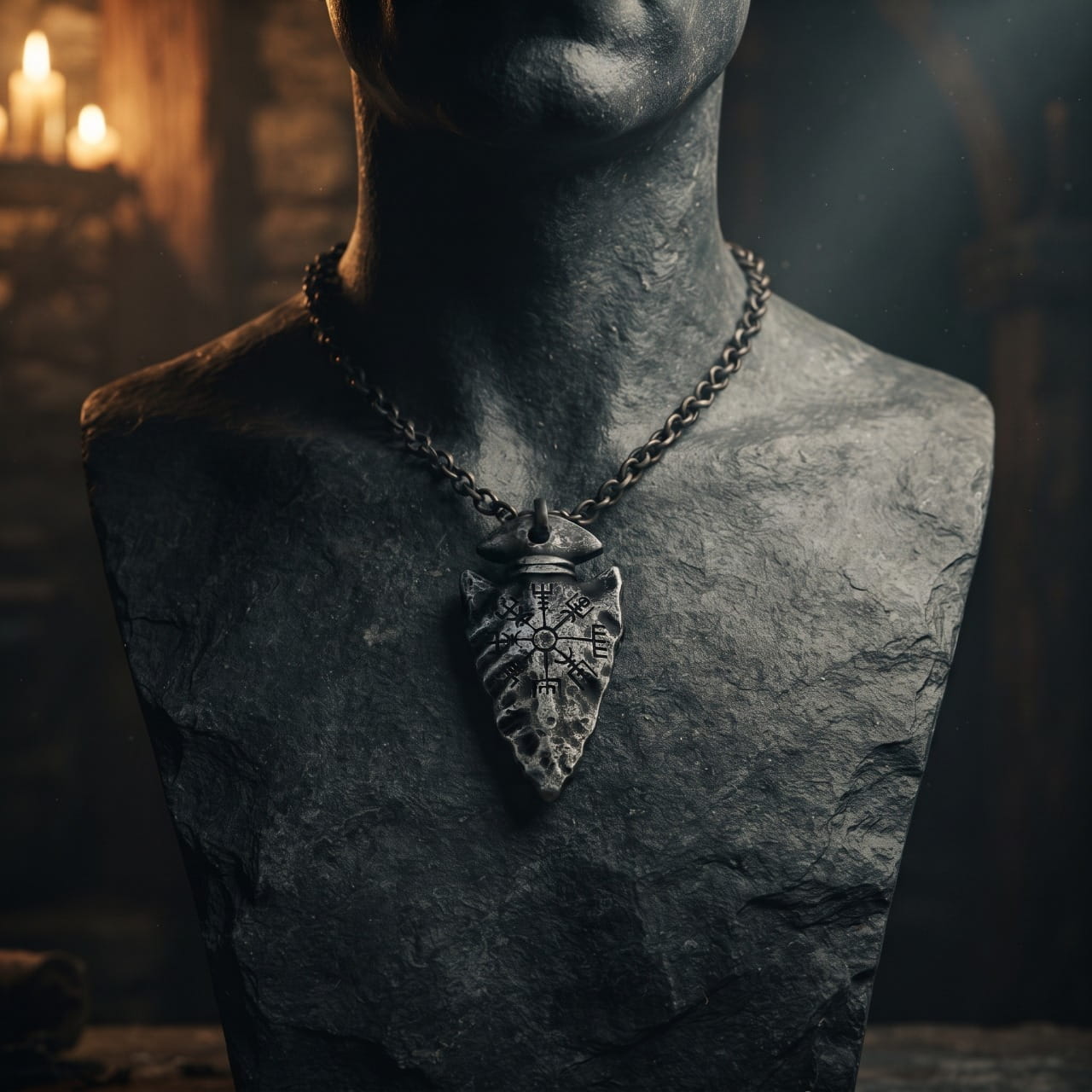
Several models feature this eight-armed circle, either on a plate or at the center of a row of beads. A clarification we want to make, which few sellers do: the Vegvísir does not belong to the Viking Age. It is only documented in late Icelandic grimoires, including the Huld manuscript compiled in 1860—more than eight centuries after the Scandinavian period. It is a true symbol of a real Icelandic magical tradition, just not the one typically attributed to it. The details are in our dossier on the Vegvísir.
Wolf heads and ravens
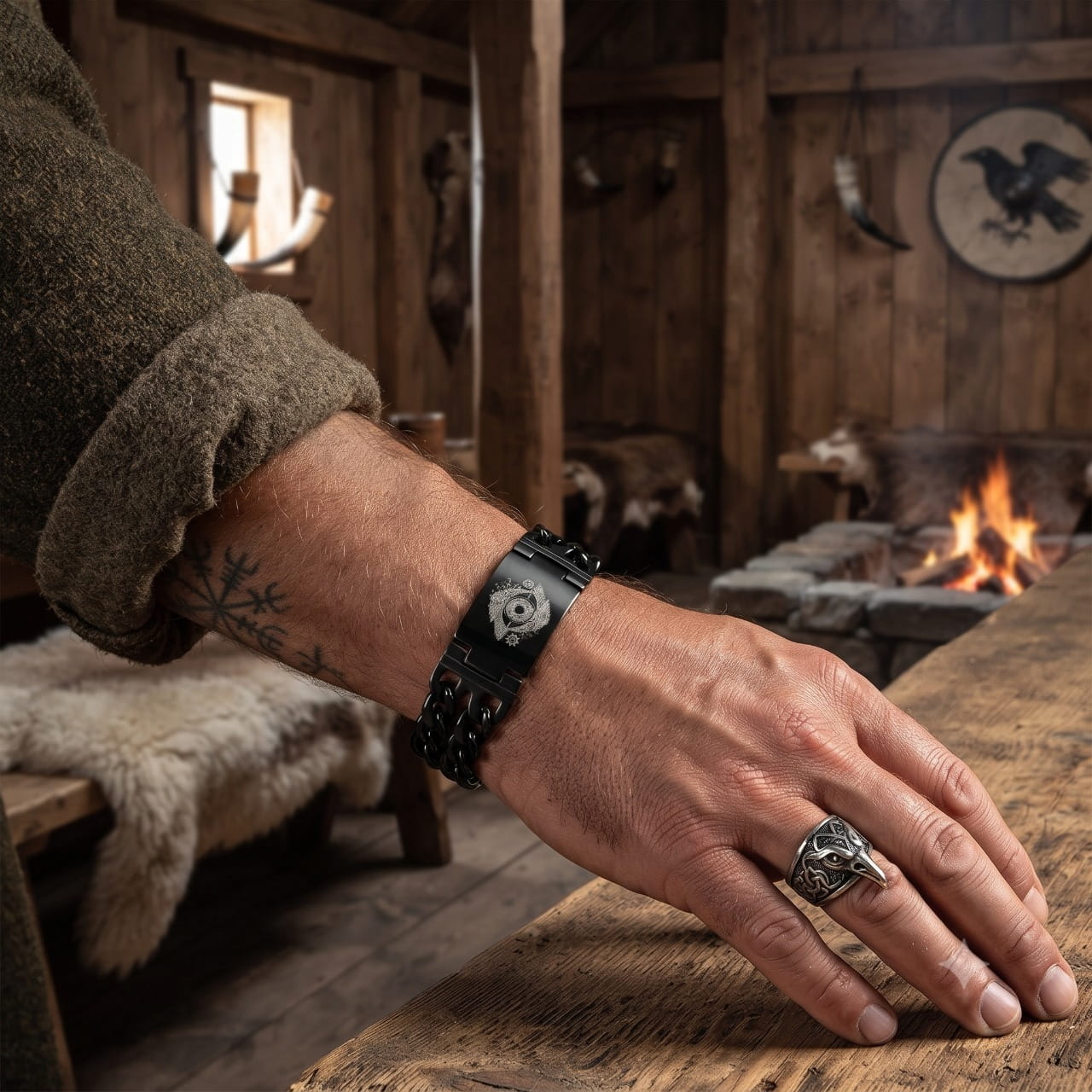
Some bracelets feature a wolf head—as a thick chain clasp, or stamped on a leather plate. The figure refers to Fenrir, the wolf the gods had to shackle with a bond forged from six impossible things, and whose release heralds Ragnarök. Others bear Odin’s ravens, Huginn and Muninn, thought and memory, who roam the world and report back what they have seen.
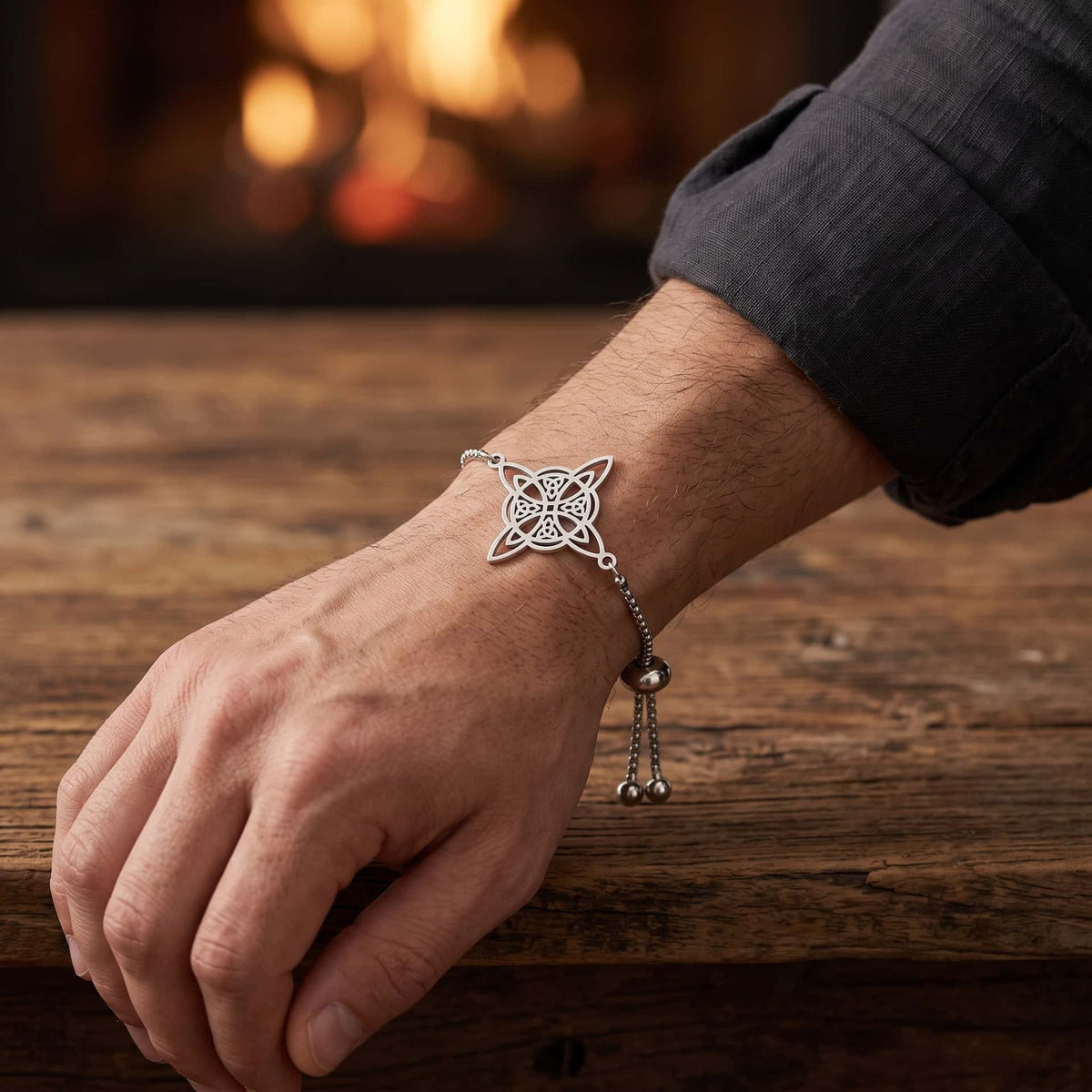
These animal motifs are not decorative by chance: Scandinavian art is massively zoomorphic. From the 9th to the 12th century, the successive styles—Borre, Jelling, Mammen, Ringerike, Urnes—built almost all their interlace designs from elongated animal bodies biting their own ribbons. What is commonly called "Celtic interlace" on Viking jewelry actually belongs to these Norse styles, which are datable and named.
Thor's Hammer
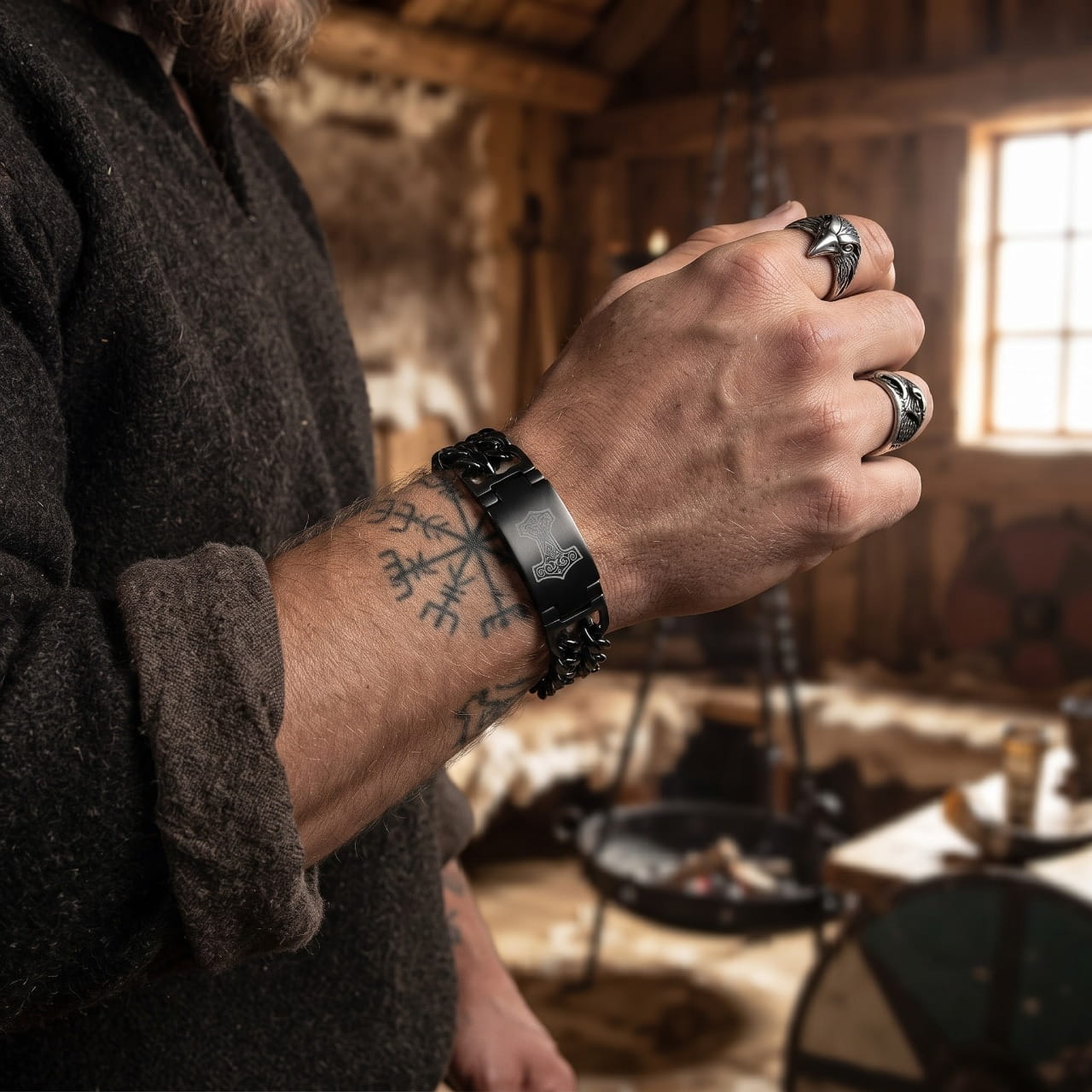
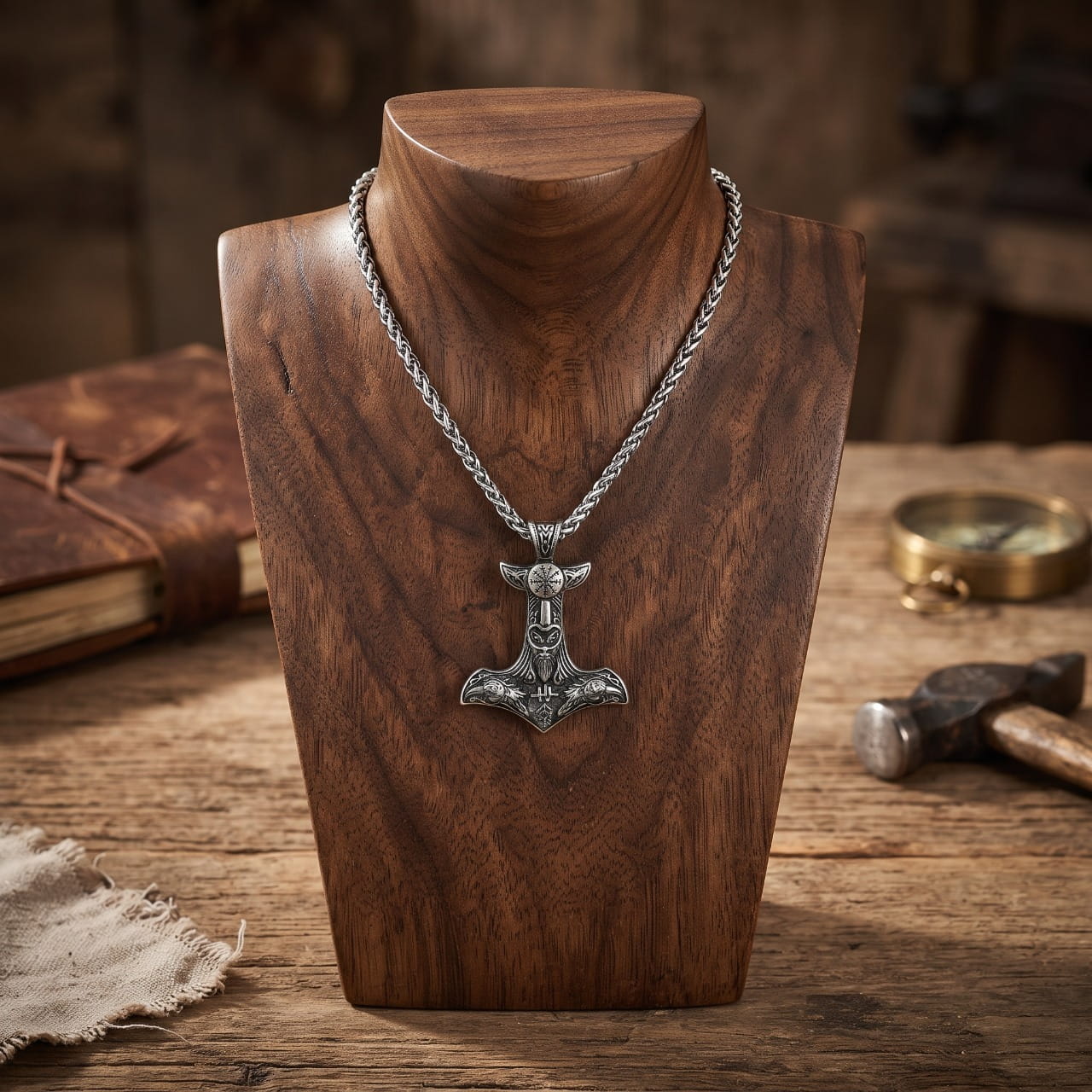
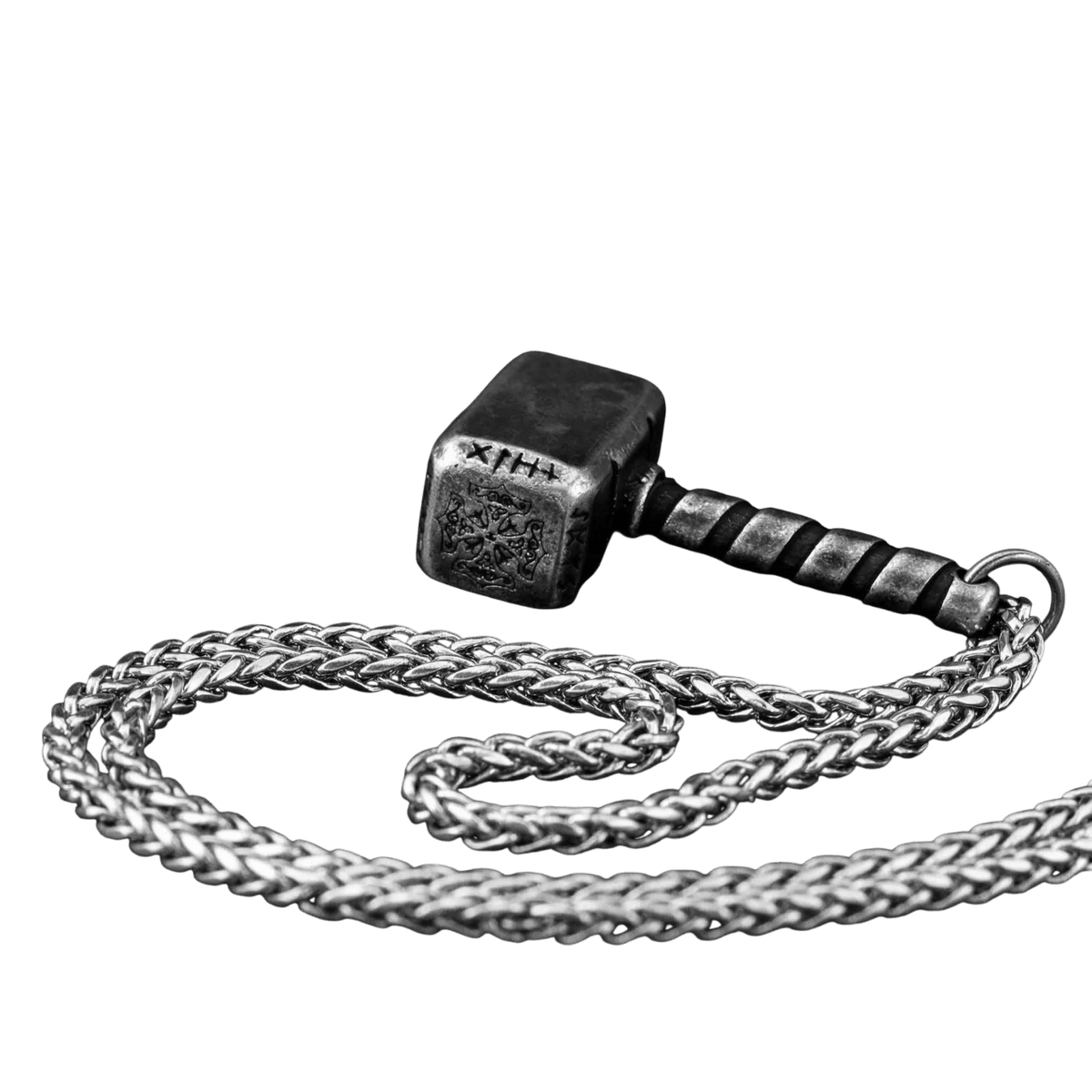
Some models feature it as a central link or clasp. The Mjölnir is the Viking motif best attested by archaeology: nearly a thousand pendants have been found. Their identification was long debated, until the 2014 discovery in Købelev, Denmark, of an example engraved with the runic inscription hmar x is—"this is a hammer." The debate was settled. Our Mjölnir guide reviews its history, and the dossier on protective runes covers how the Scandinavians used them.
Materials
Some of the bracelets are made of pure stainless steel: hypoallergenic, nickel-free, impervious to water and sweat, it can be worn at the gym just as it can in the shower. Others combine this steel with leather, generally as a strip or braid: warmer to the eye, but leather does not like soaking or hair dryers.
Some pair steel with bronze, which develops a patina over time—this is intended, but it is something to be aware of. Others are made of leather alone, or of metal, an alloy that is lighter and cheaper than steel, which does not offer the same guarantee for reactive skin. The exact material is indicated on each product page.
Maintenance
Stainless steel only needs a soft cloth and a little lukewarm soapy water. Leather, however, requires two habits: do not soak it, and let it dry flat away from a radiator if it gets wet. A drop of cleansing milk on a cloth will restore its suppleness once a year. Bronze that has tarnished can be revived dry, using a cloth, without any product.
Which bracelet for your wrist
The table above provides the length; three details determine the actual comfort.
Wrist shape. A flat wrist, wider than it is thick, carries a plate or a cuff better: the surface sits flat instead of tilting. A round wrist is better suited to a bangle or a chain, which follow the curve without any hard contact points.
Hairiness. The criterion people are afraid to mention, yet it ruins many purchases: a fine-link chain will pinch hairs with every movement. On a hairy forearm, prefer a rigid bangle, a plate on leather, or a wide link—anything but a tight mesh.
What you are already wearing. A bracelet is worn on the opposite wrist to the watch in most cases; if they coexist on the same side, the bracelet must be significantly thinner than the watch case, otherwise the two compete for attention and clatter against each other. Since our watches have a 44 mm dial, wearing both requires a discreet bangle.
Giving a Viking bracelet as a gift
It is an easier gift than a ring, but less so than a necklace—there is a measurement involved, and it counts.
Measuring without being noticed. A bracelet the person already wears, laid flat and measured from end to end, provides the answer in ten seconds. Failing that, 21 cm for a man, 19 cm for a woman: these are the lengths that cover the vast majority of wrists.
The bangle is forgiving, the chain less so. A rigid bangle spreads slightly and tolerates a good margin of error; a chain with a clasp fits or it doesn't. For a blind gift, the bangle is objectively the safest choice.
Beware of leather if you are unsure. Our models combining steel and leather are beautiful, but leather requires maintenance that not everyone wants to handle—no showers, no swimming, dry flat. If the person wears their jewelry constantly without thinking about it, opt for steel alone.
For the historical meaning of the arm ring, the symbols, and how to wear it, read our guide Viking Bracelet Meaning: symbols, models and size.
Frequently asked questions
What size Viking bracelet for a man? 21 cm covers the vast majority of male wrists, which corresponds to a wrist circumference of 19 to 19.5 cm. Go up to 23 cm if your wrist exceeds 20.5 cm.
And for a woman? 19 cm in most cases, for a wrist circumference of 17 to 17.5 cm. 18 cm is suitable for thin wrists looking for a snug fit.
How to measure your wrist without a tailor's tape measure? A strip of paper around the wrist, a pen mark at the overlap point, then measure against a ruler. It is just as accurate as a soft tape measure.
Can rigid bangles be adjusted? Yes, slightly. They spread to pass over the wrist and then close with a squeeze. Avoid opening and closing them too often, as the steel will eventually fatigue.
Can you wear a leather bracelet in the shower? No. Water stiffens leather and causes it to crack over time. Remove it before showering, swimming, or exercising.
Is steel suitable for sensitive skin? Yes for stainless steel, which is hypoallergenic and nickel-free. Metal models do not offer this guarantee: check the material on the product sheet if your skin reacts easily.
What are the delivery times and costs? Tracked delivery is free on orders over €49, regardless of the delivery country. Below that, costs are shown in the cart.
Also explore: complete your set with our Viking rings, our Viking necklaces, or our entire collection of Viking jewelry. See also our Viking jewelry for men.