
Filters
24 products
You would also like
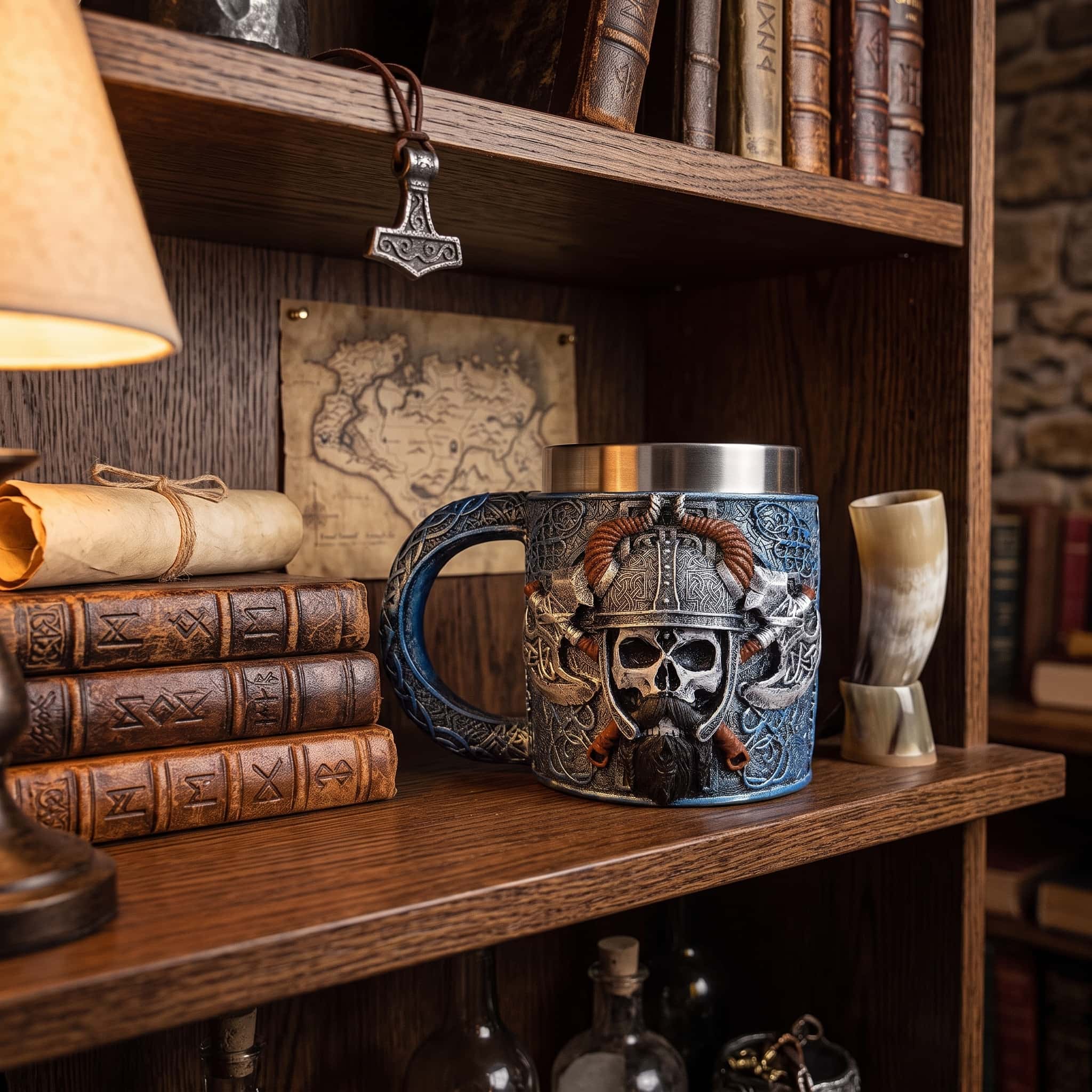
Frequently Asked Questions about our Viking Chalices
Can you really drink from a Viking chalice?
Yes. Each chalice contains a removable food-grade stainless steel cup: your drink never touches the sculpted resin, which serves only as an exterior casing. The cup can be fully removed for cleaning.
What is the difference between a chalice and a Viking tankard?
The format and usage. A chalice holds 200 ml, is held by the stem, and is set down between sips—it is a ceremonial piece raised for a toast. A Viking tankard holds 500 to 600 ml with a handle, for long drinking. A drinking horn, on the other hand, cannot be set down.
Are these chalices dishwasher safe?
No, hand wash only. Heat and harsh detergents damage the hand-painted patina and can cause the resin to peel from the steel. Wash the inner bucket with warm water and wipe the outside with a damp cloth.
Can a hot drink be poured into it?
This is not recommended. Steel conducts heat and the exterior resin is not designed for high temperatures. Reserve these chalices for cool or room-temperature drinks: mead, wine, beer, juice.
What are the weight and dimensions?
Approximately 442 g empty, 18 cm high and 9 cm wide. It is this weight that makes the difference when held compared to a costume party cup: the weighted resin and the steel goblet give it a real presence in the hand.
Viking Chalices — en savoir plus
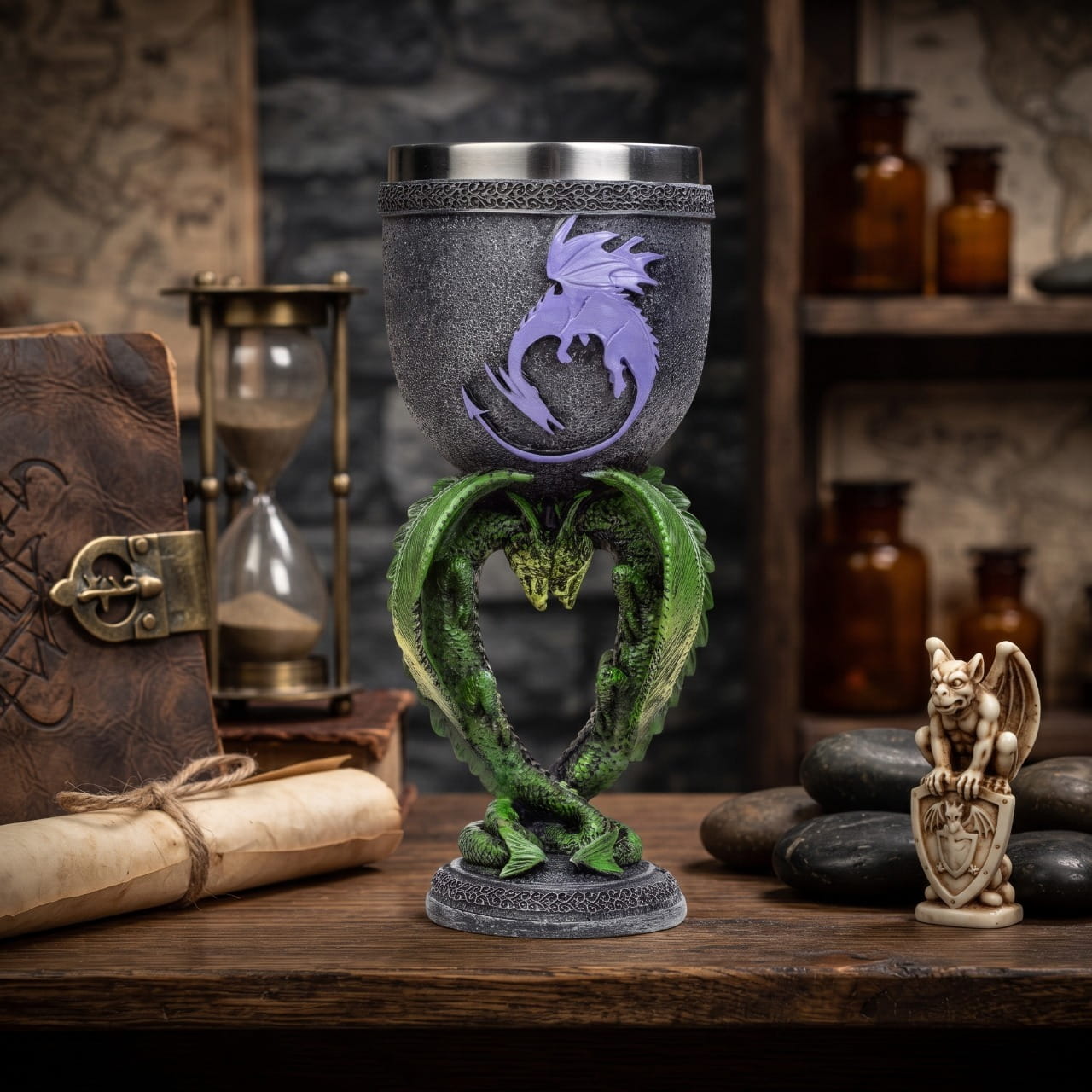
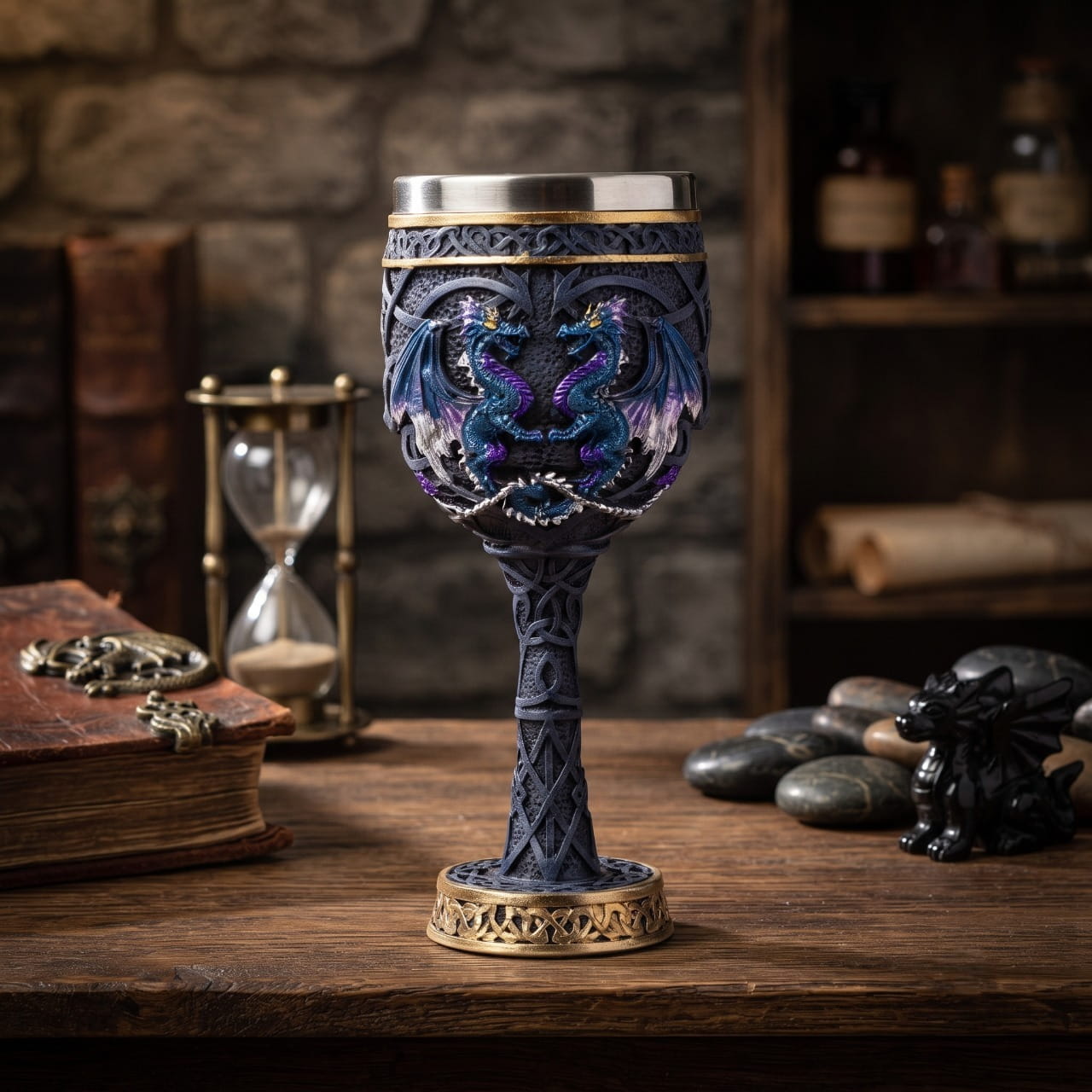
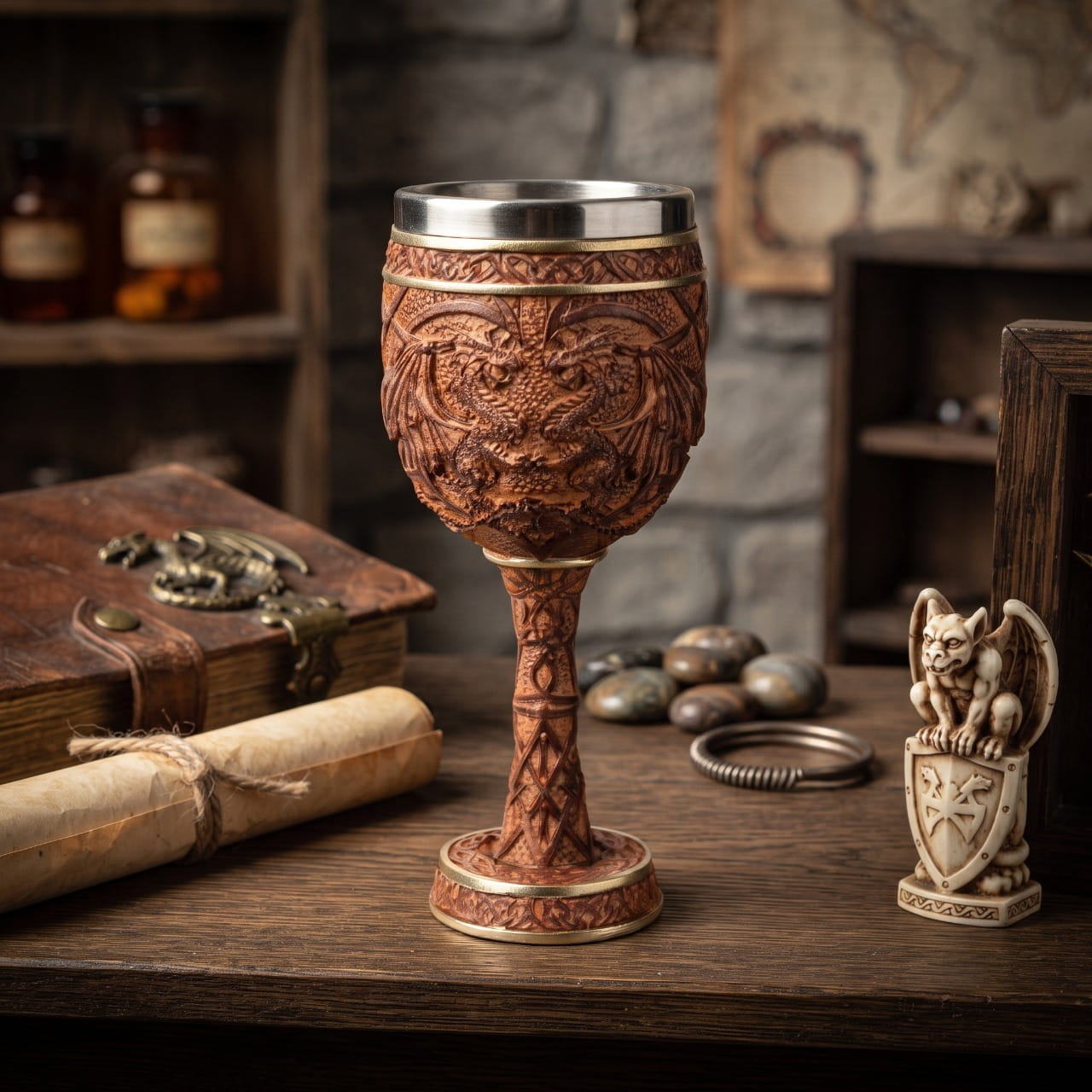
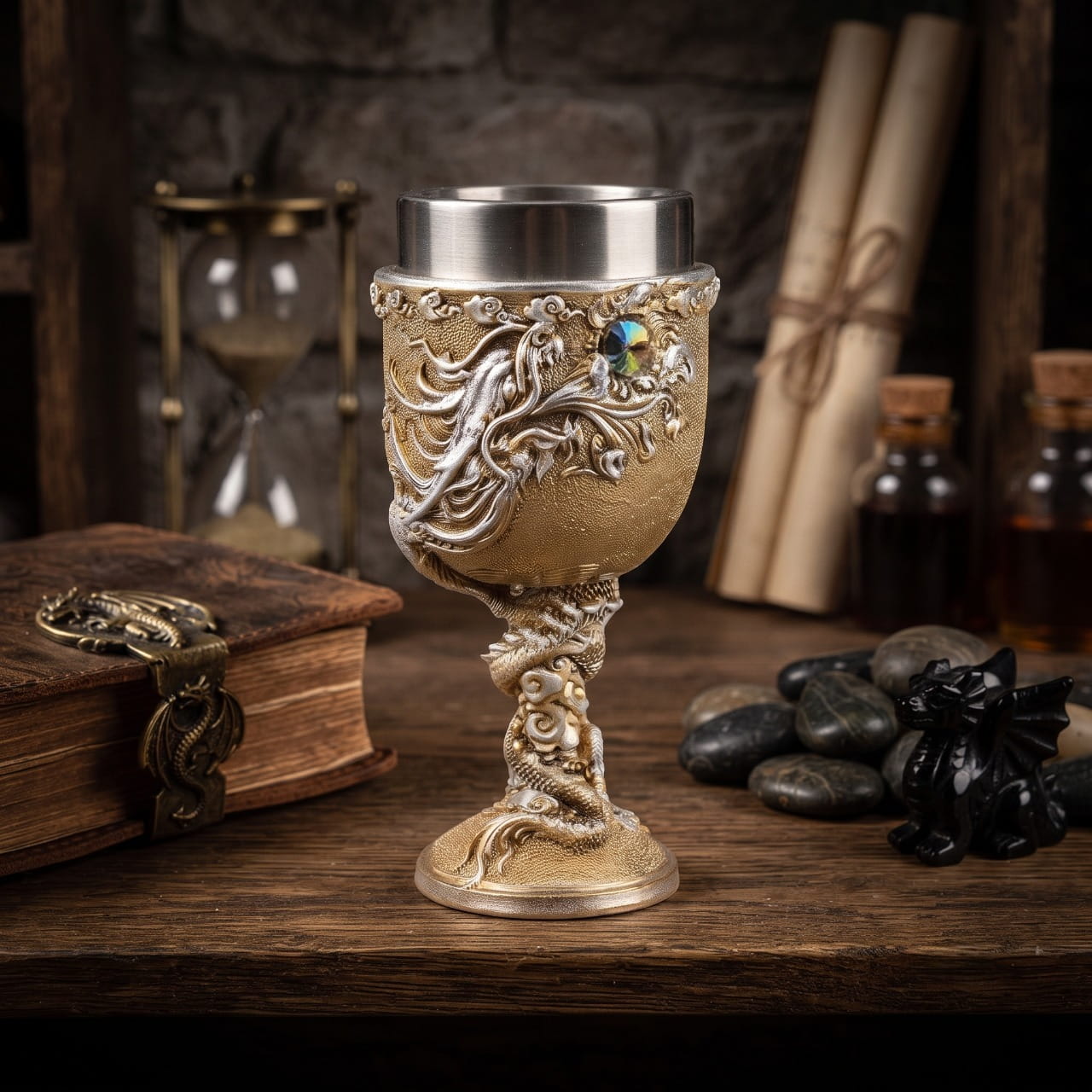
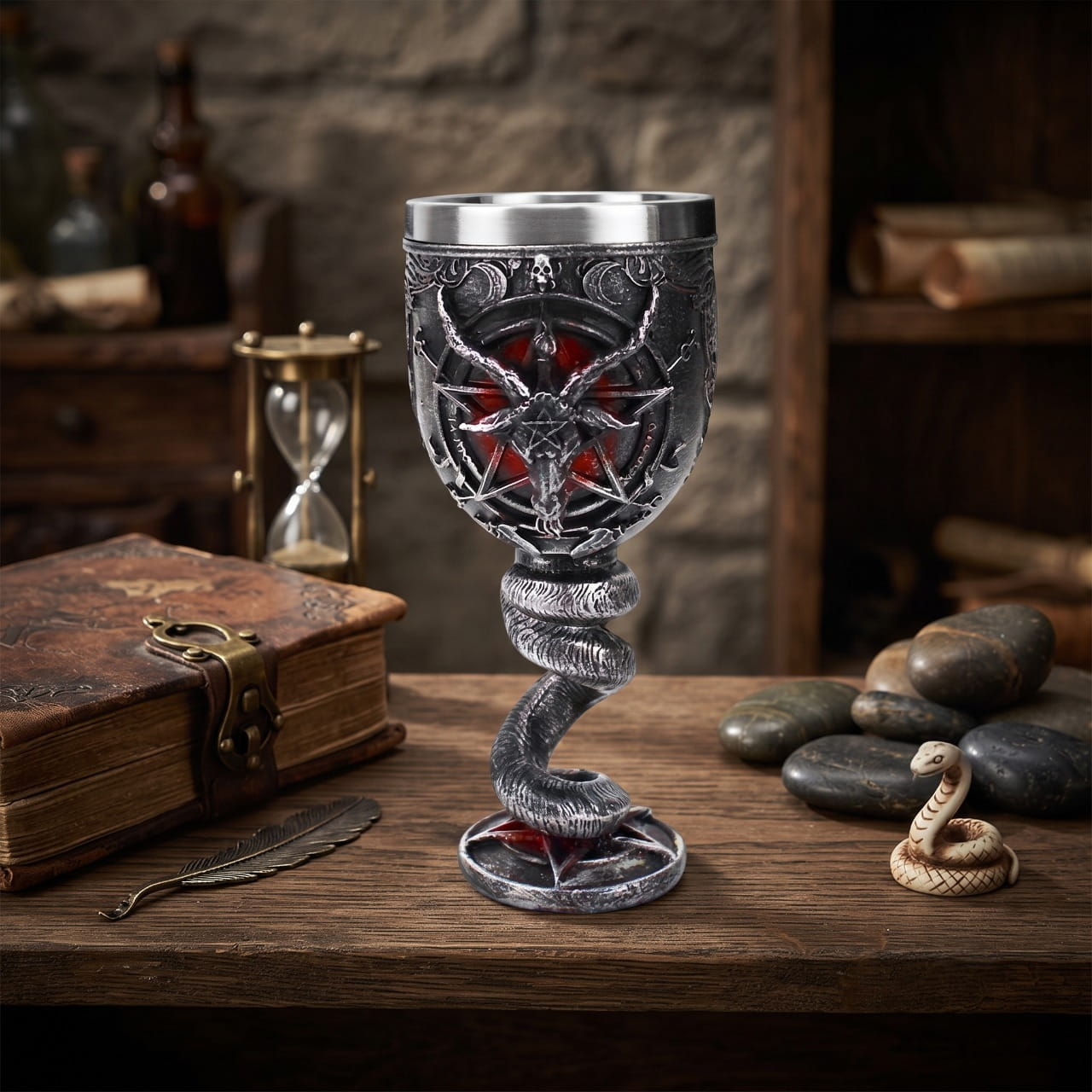
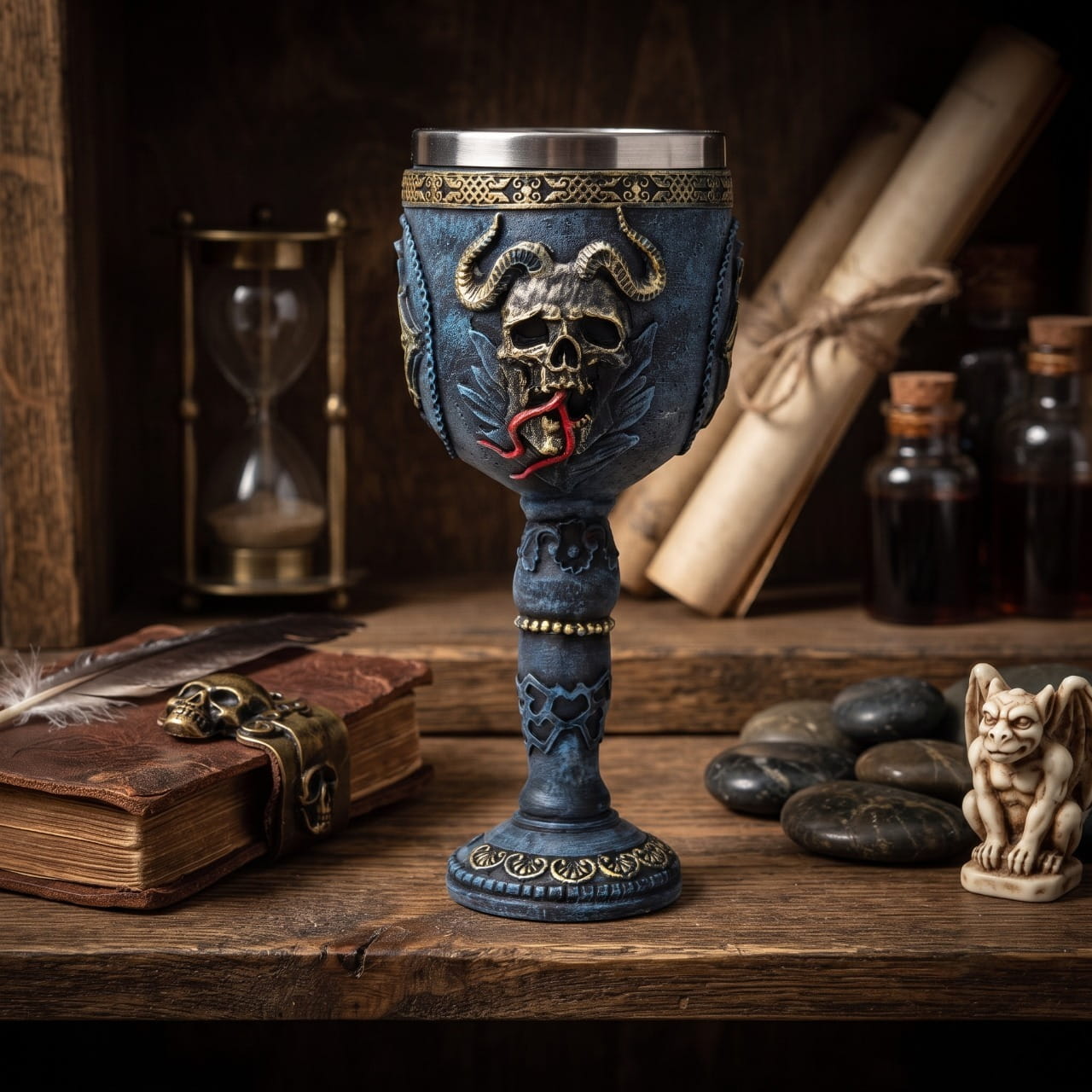
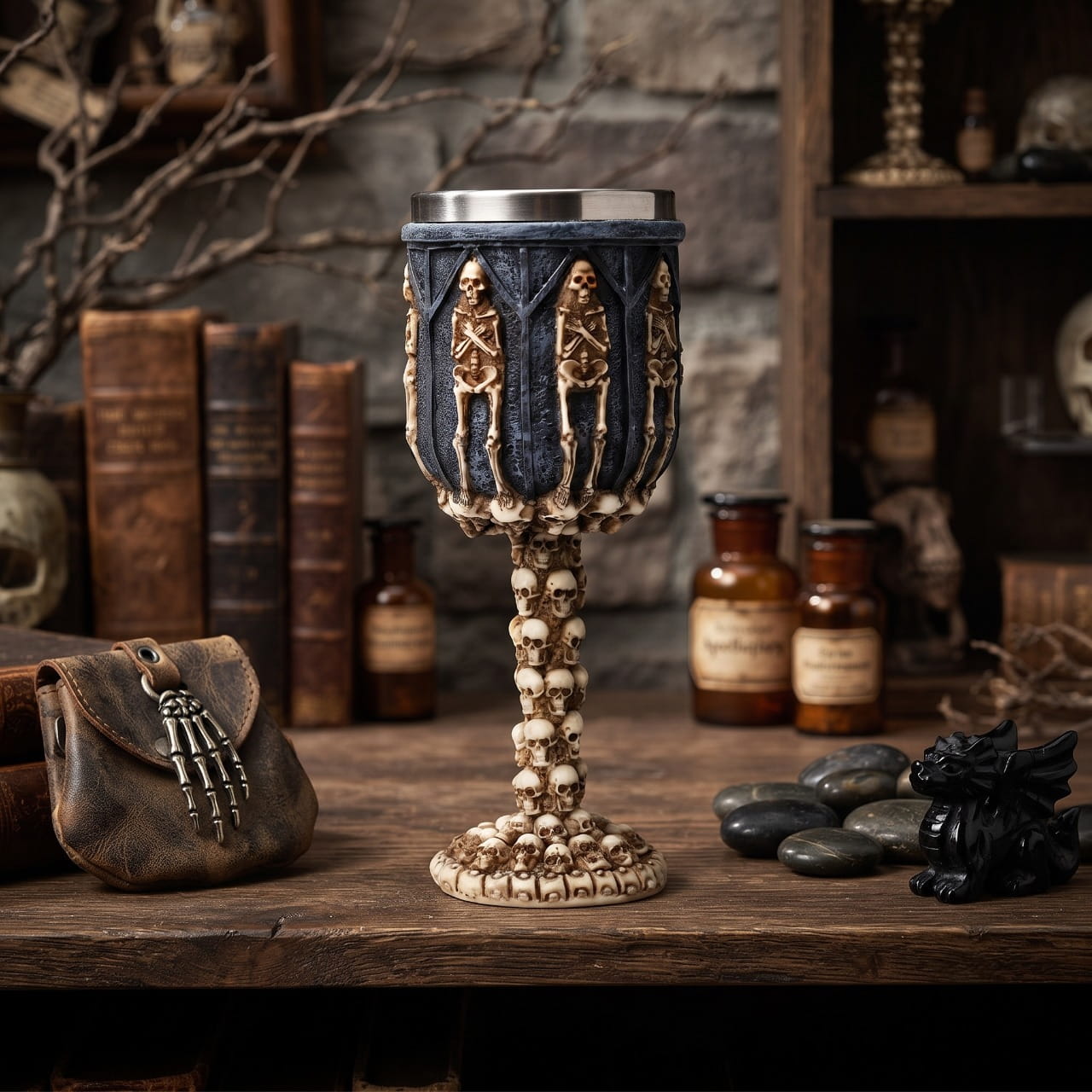
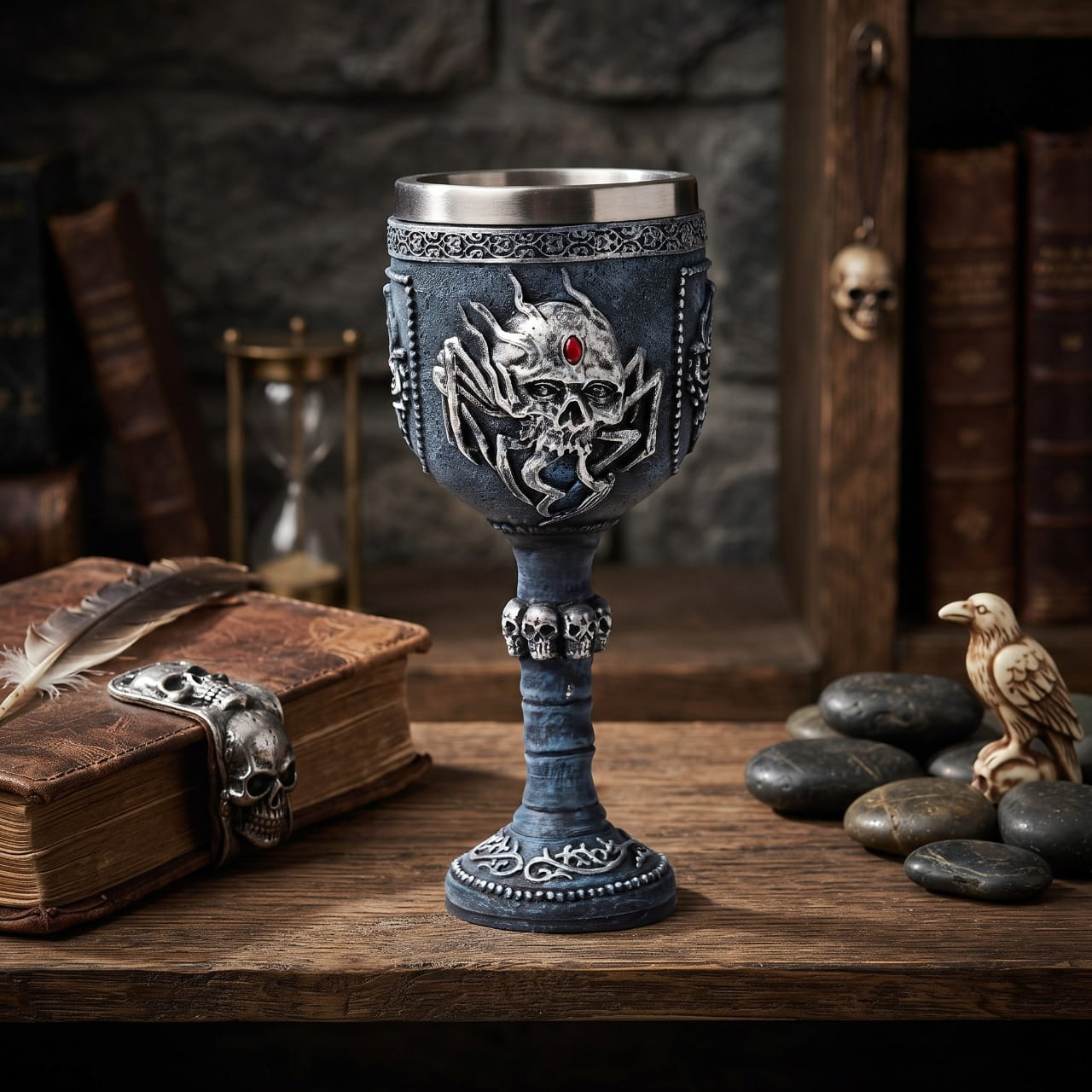
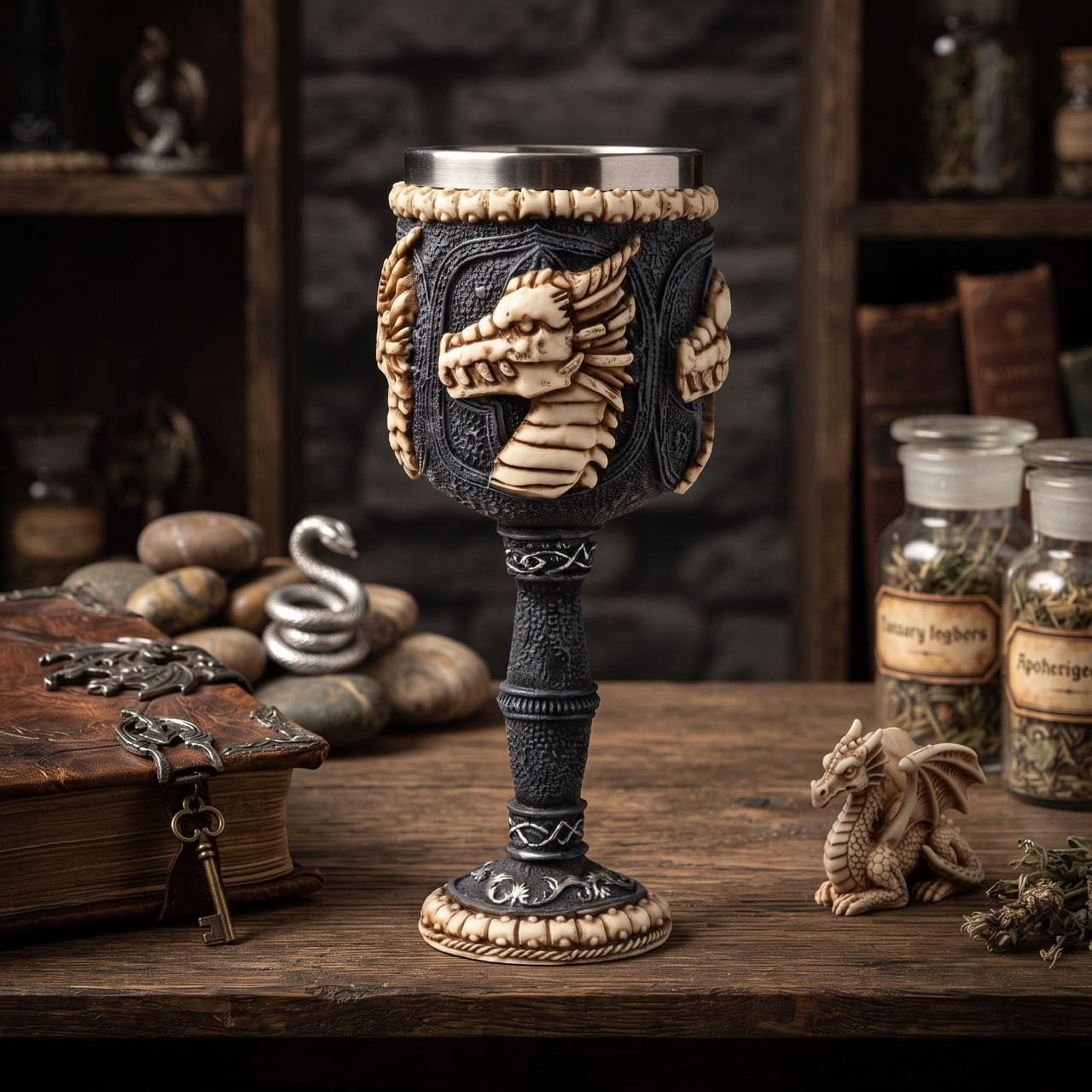
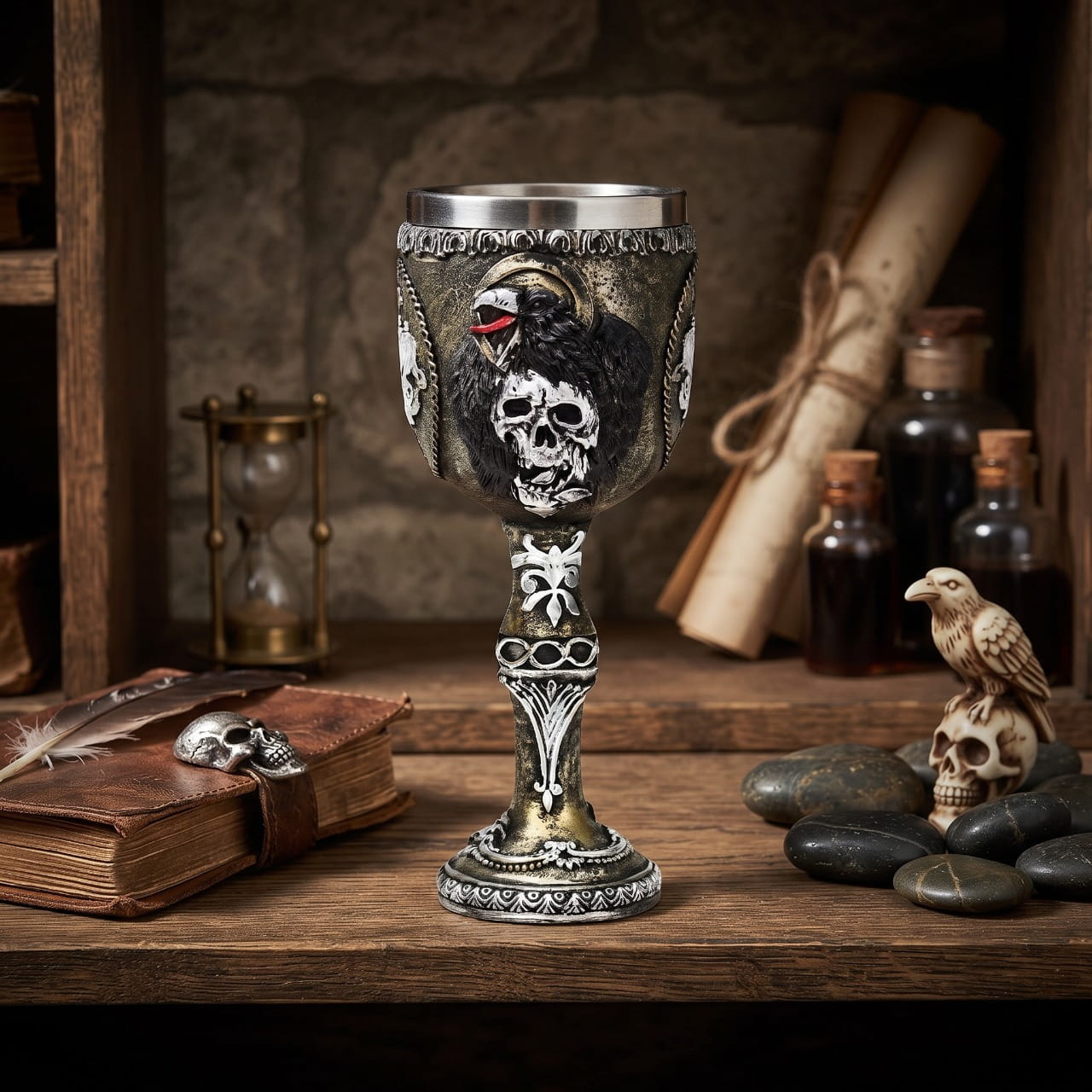
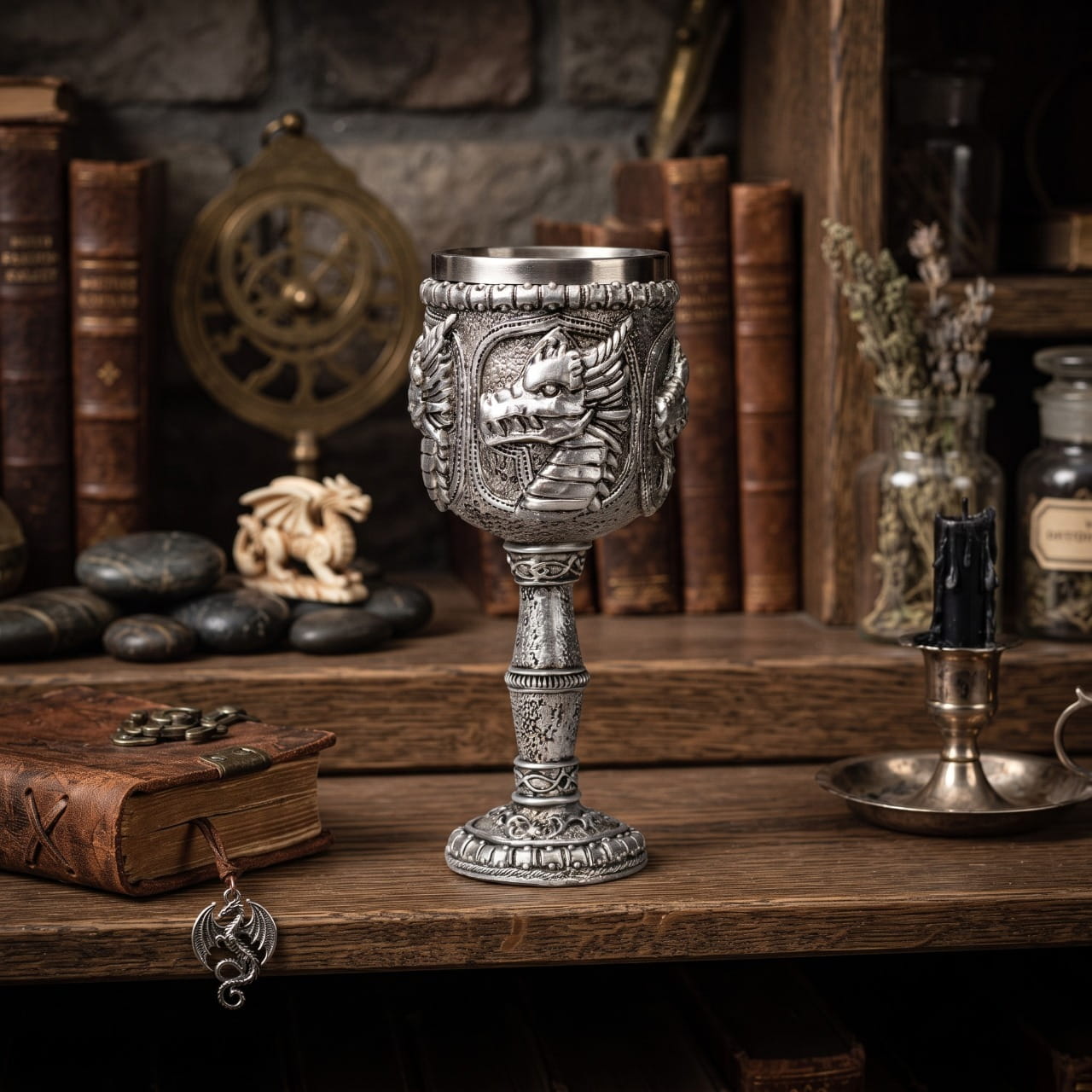
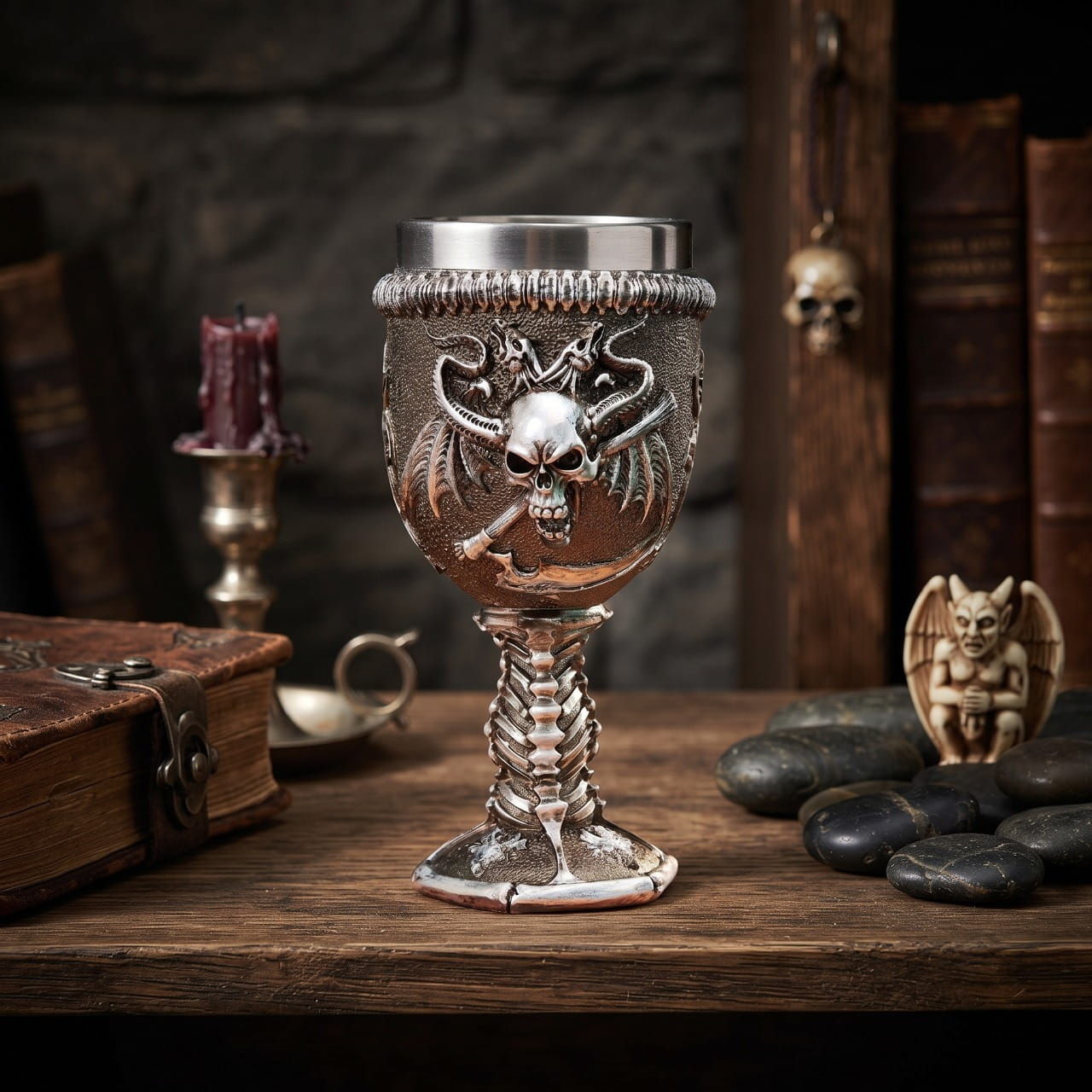
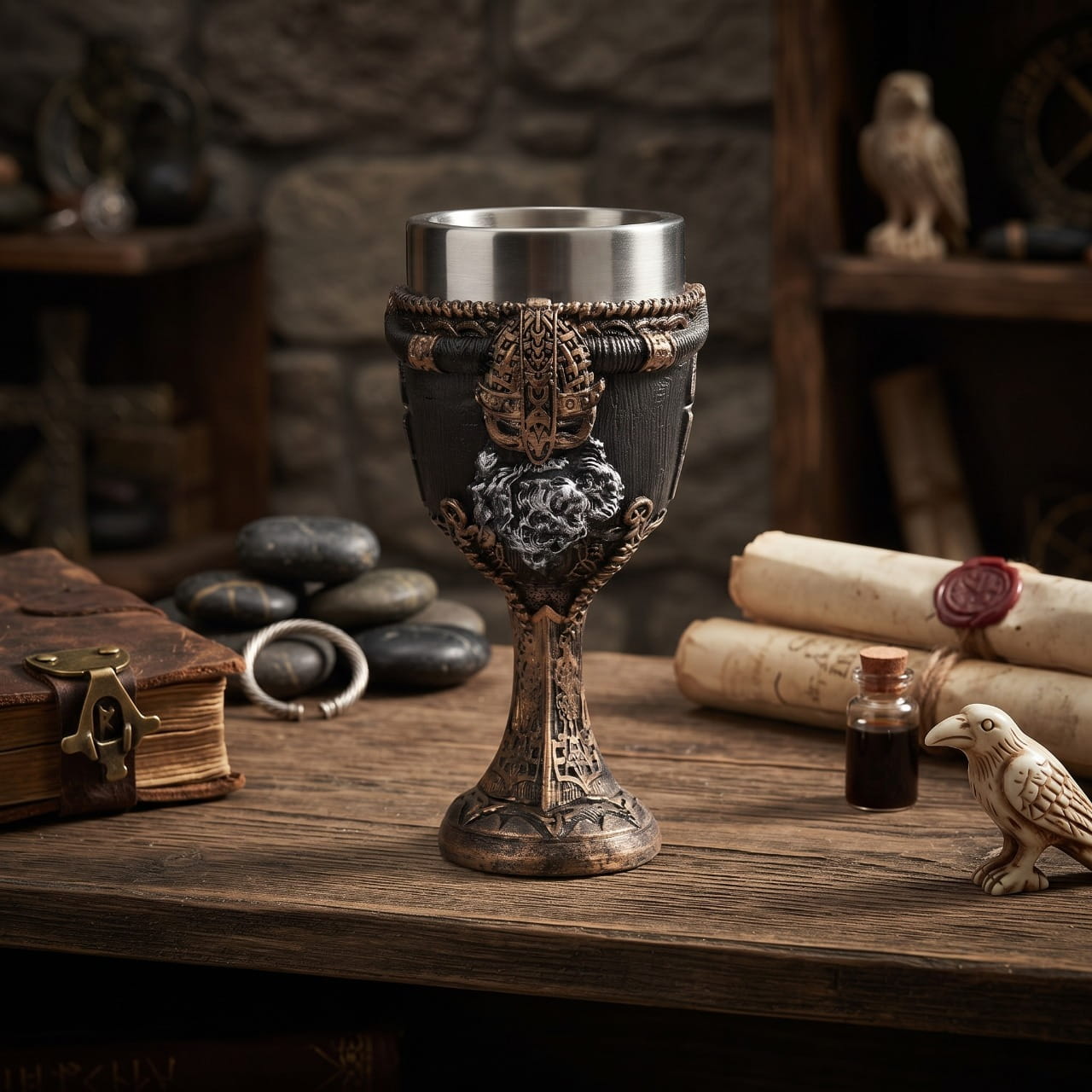
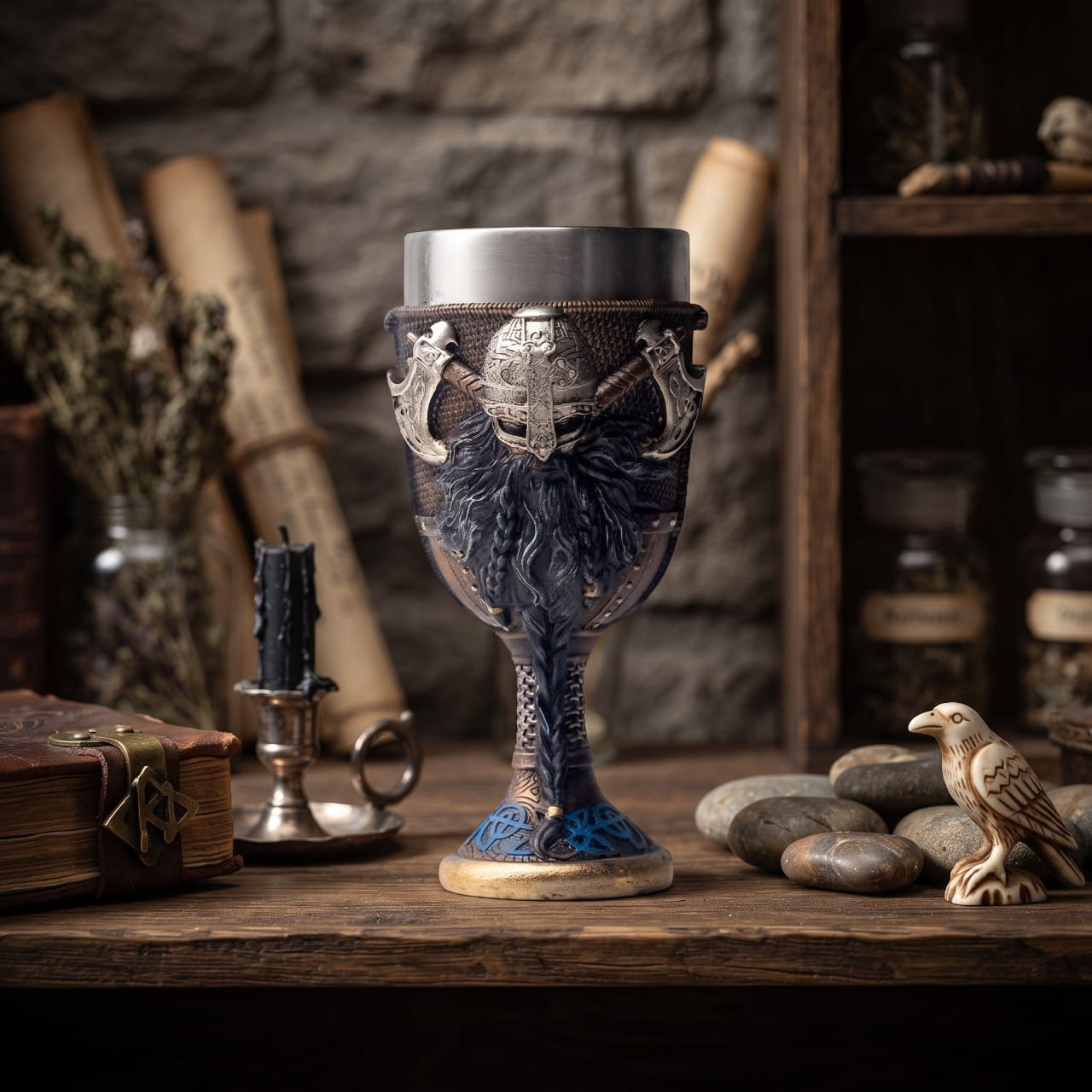
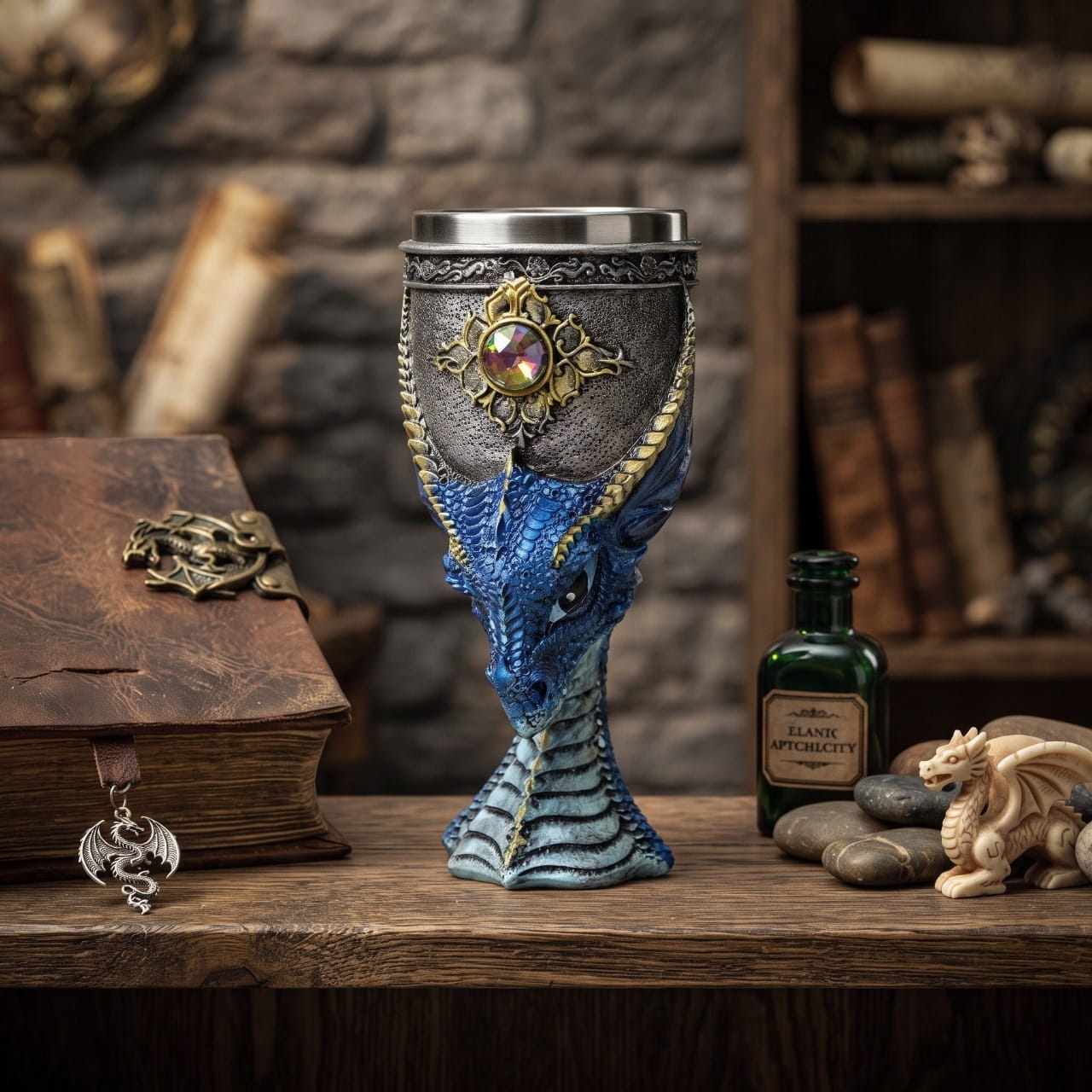
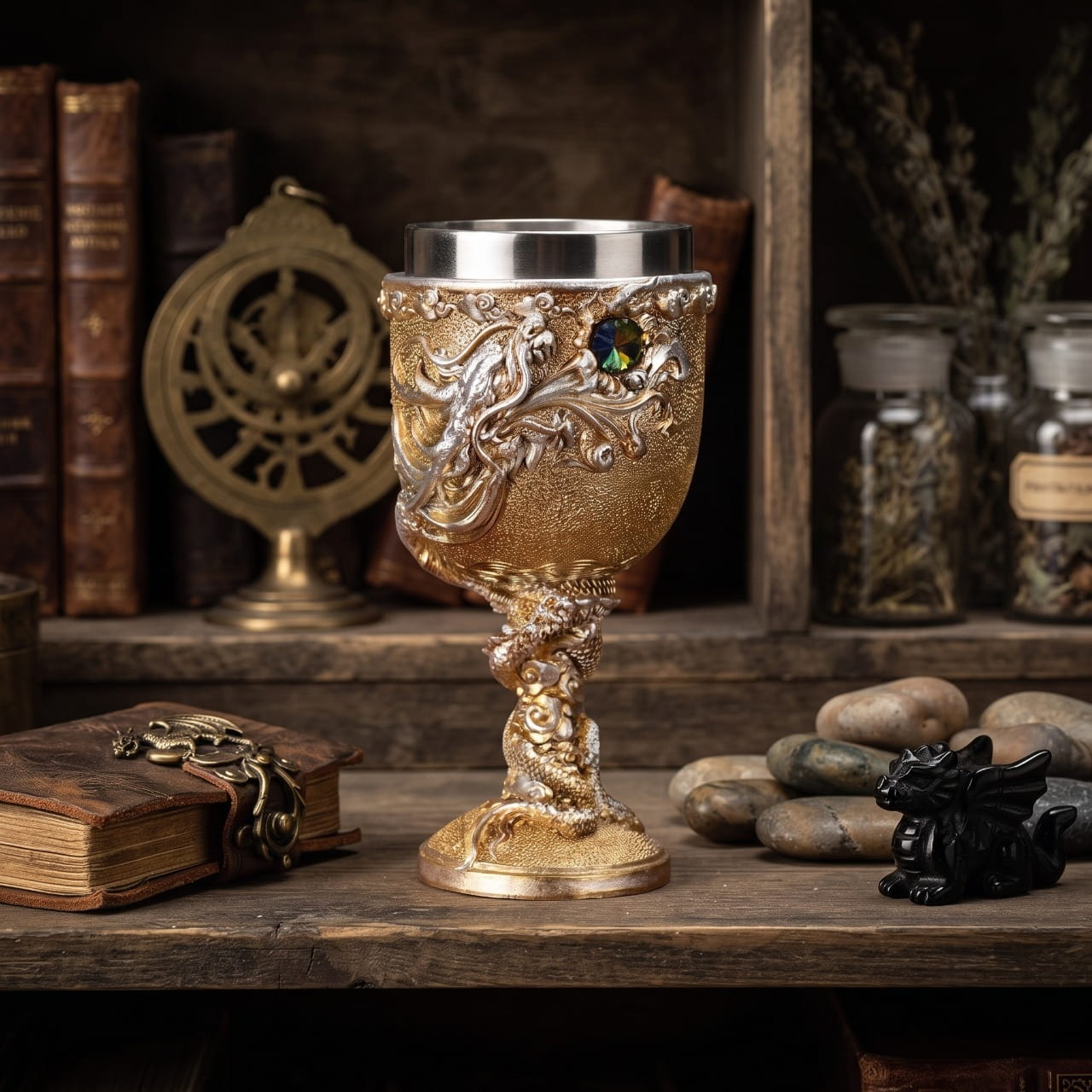
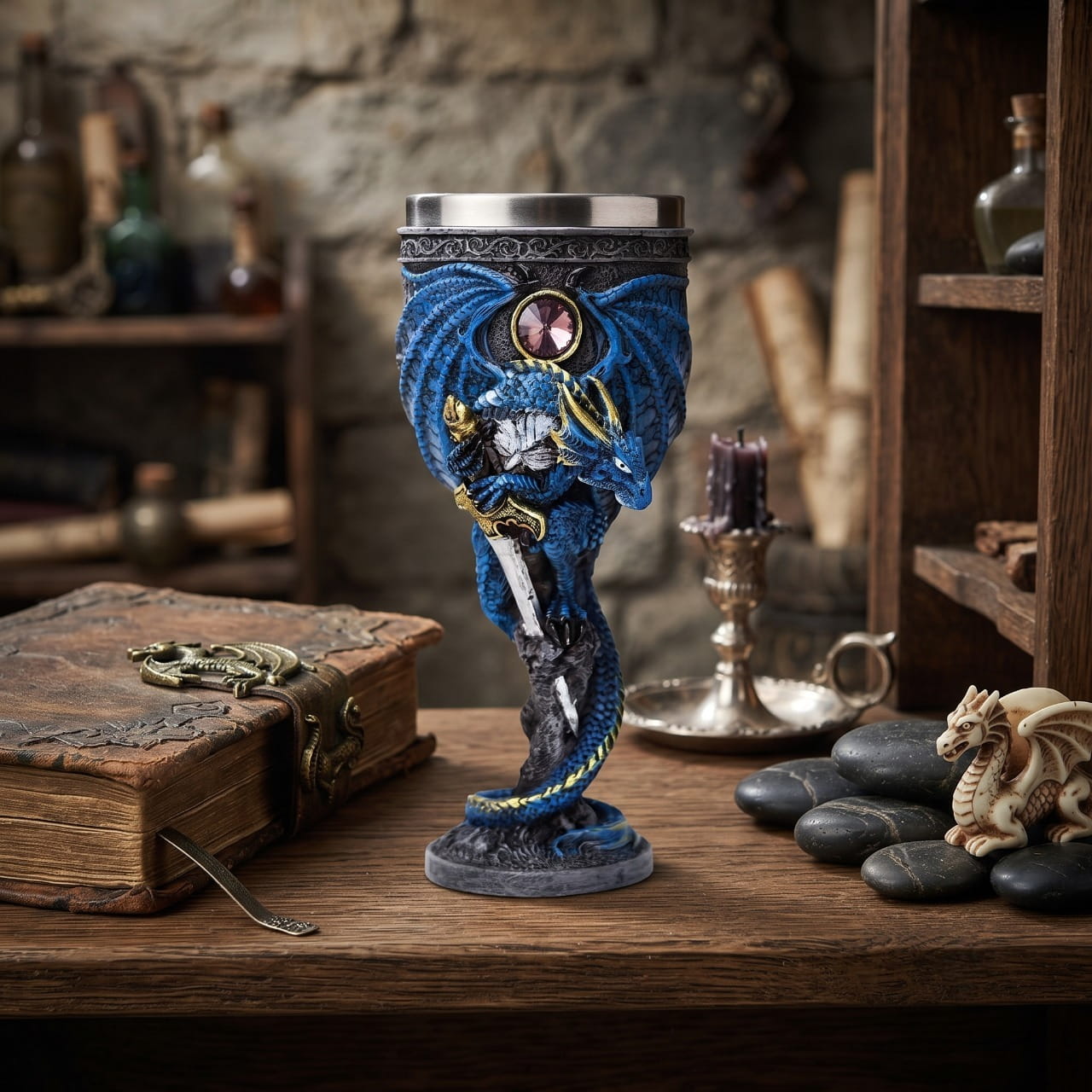
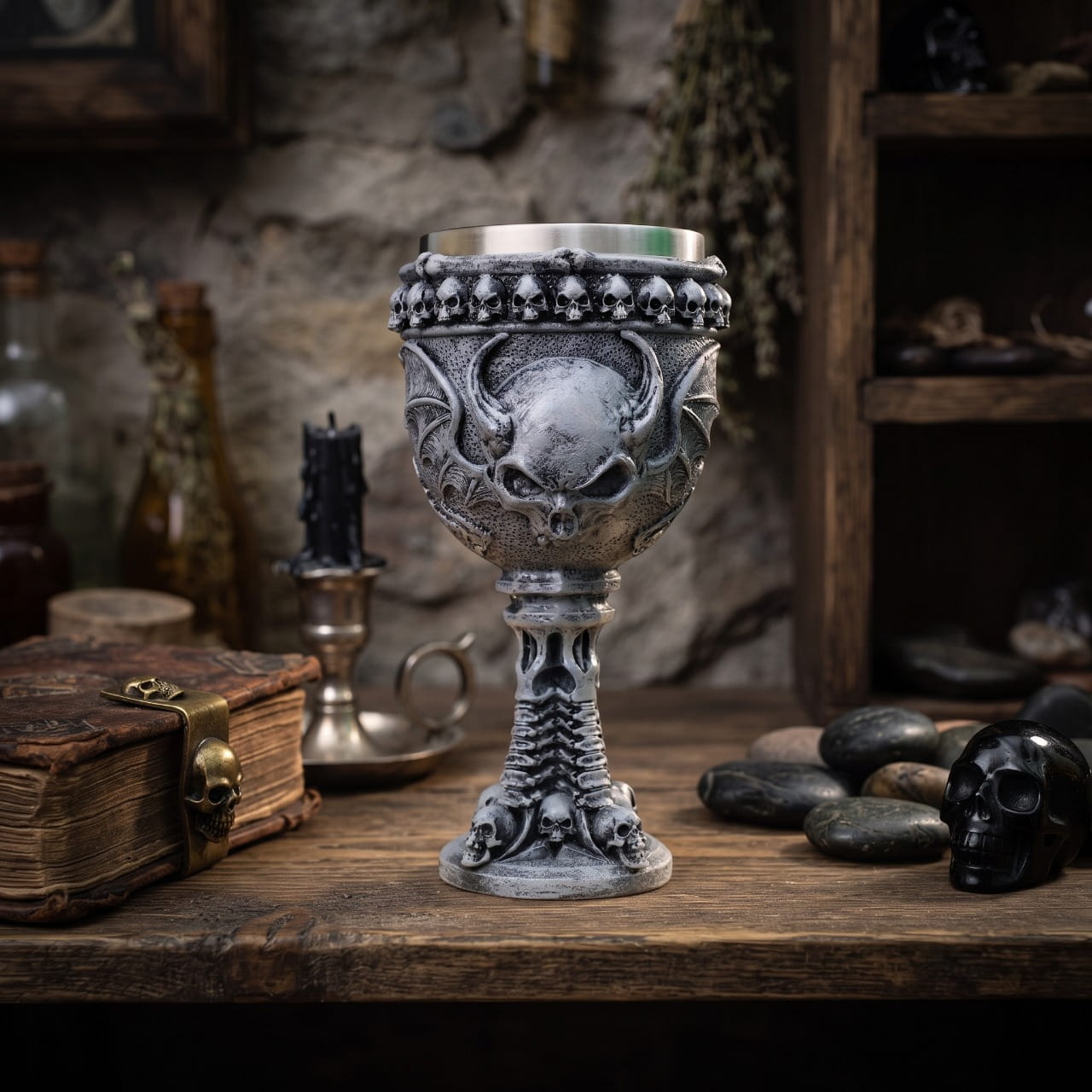
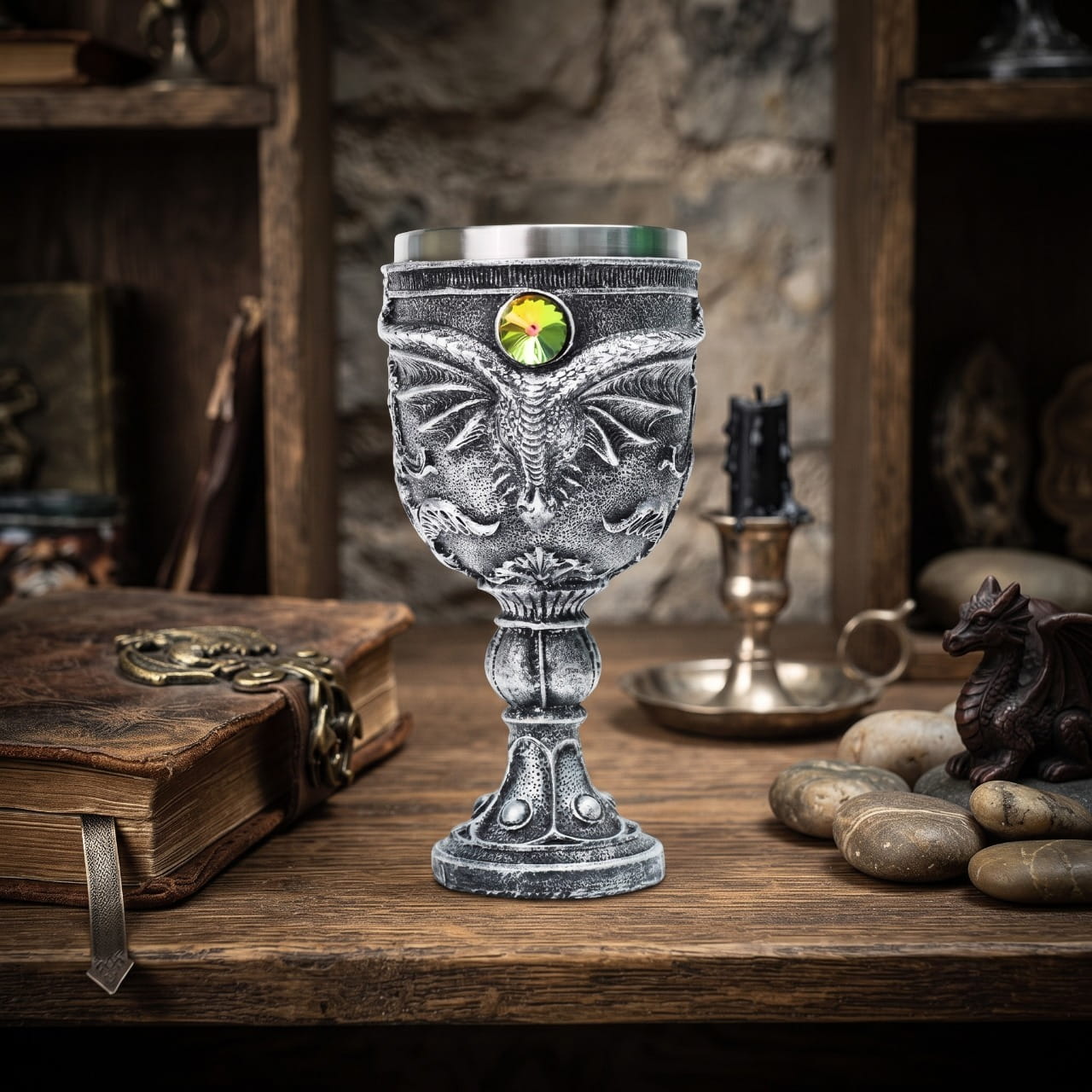
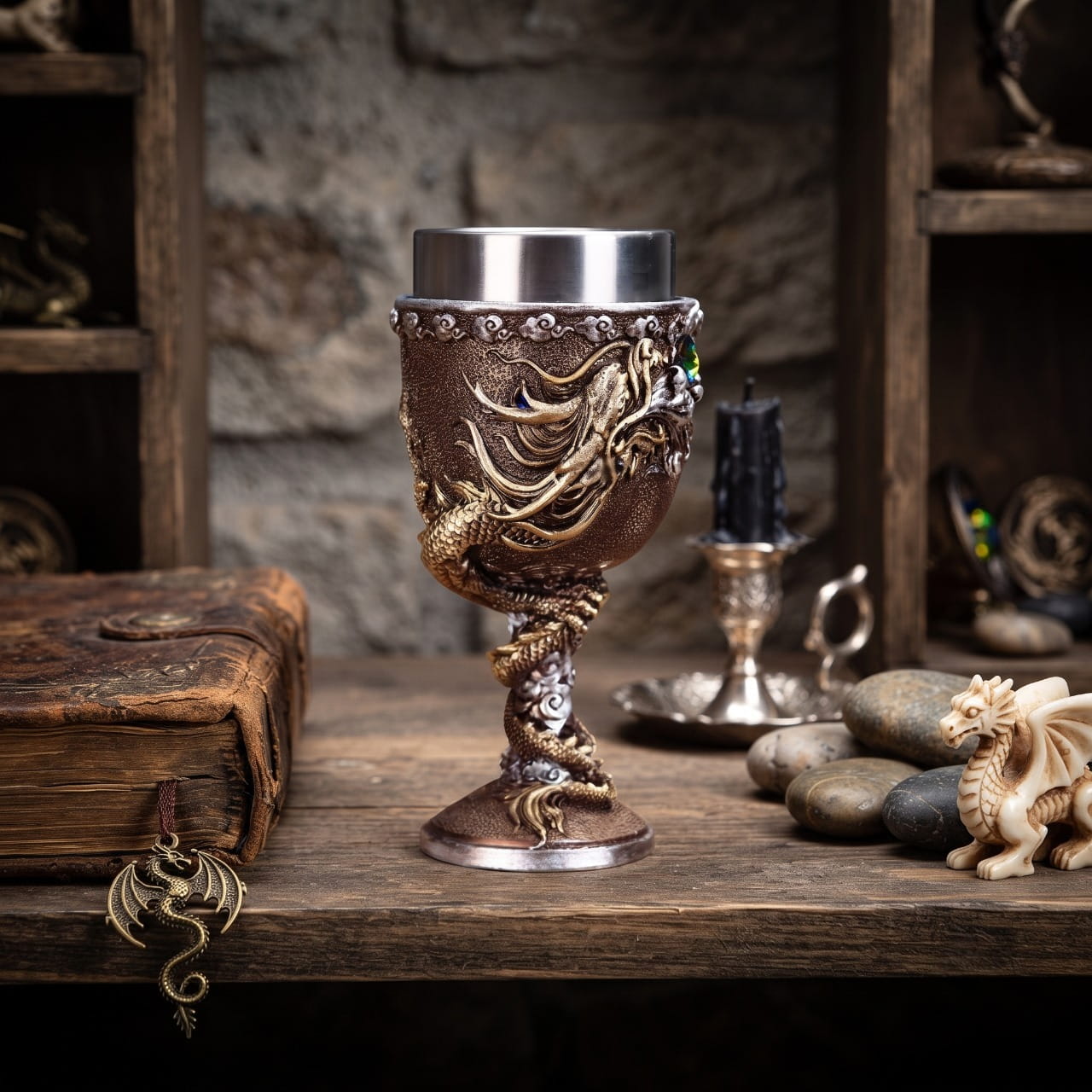
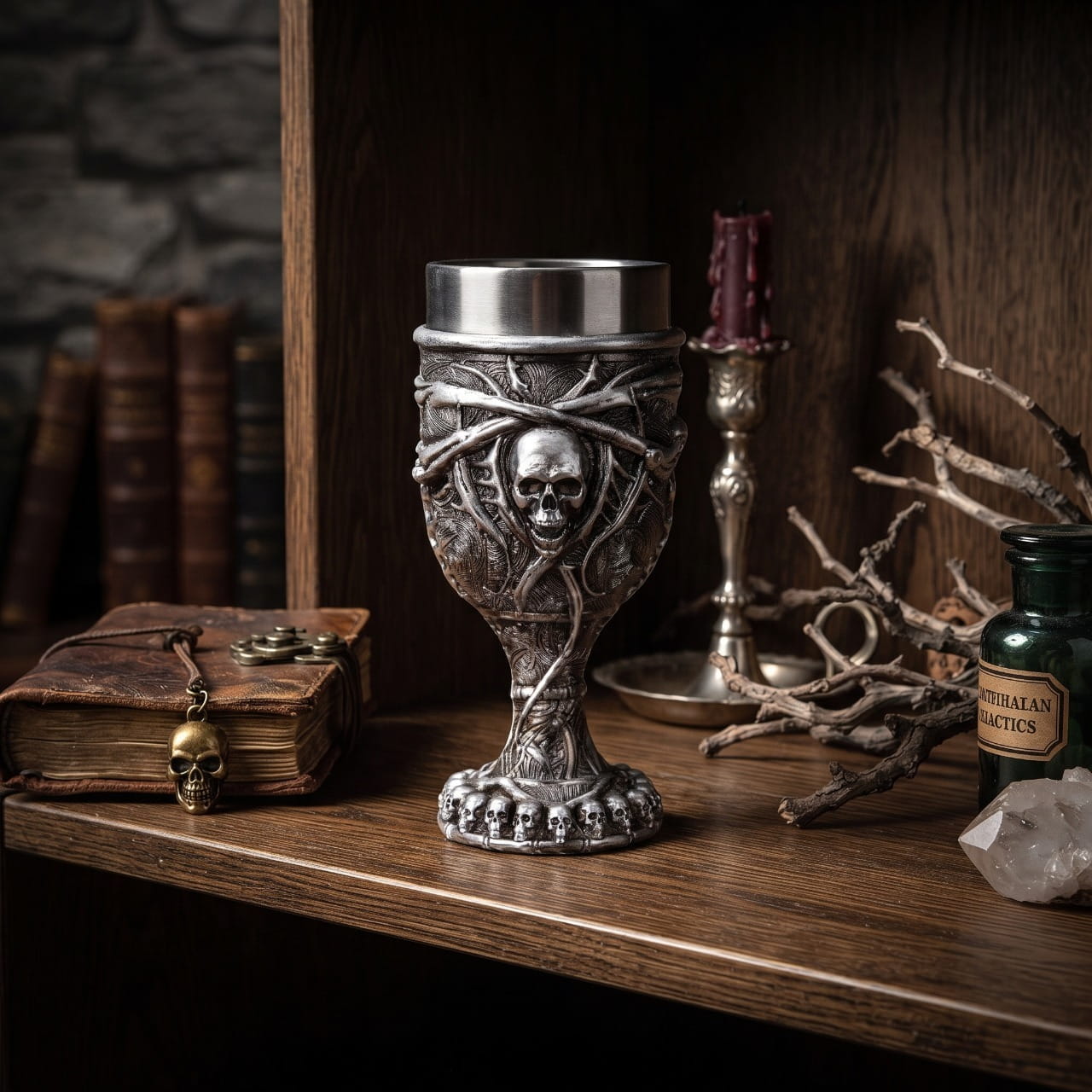
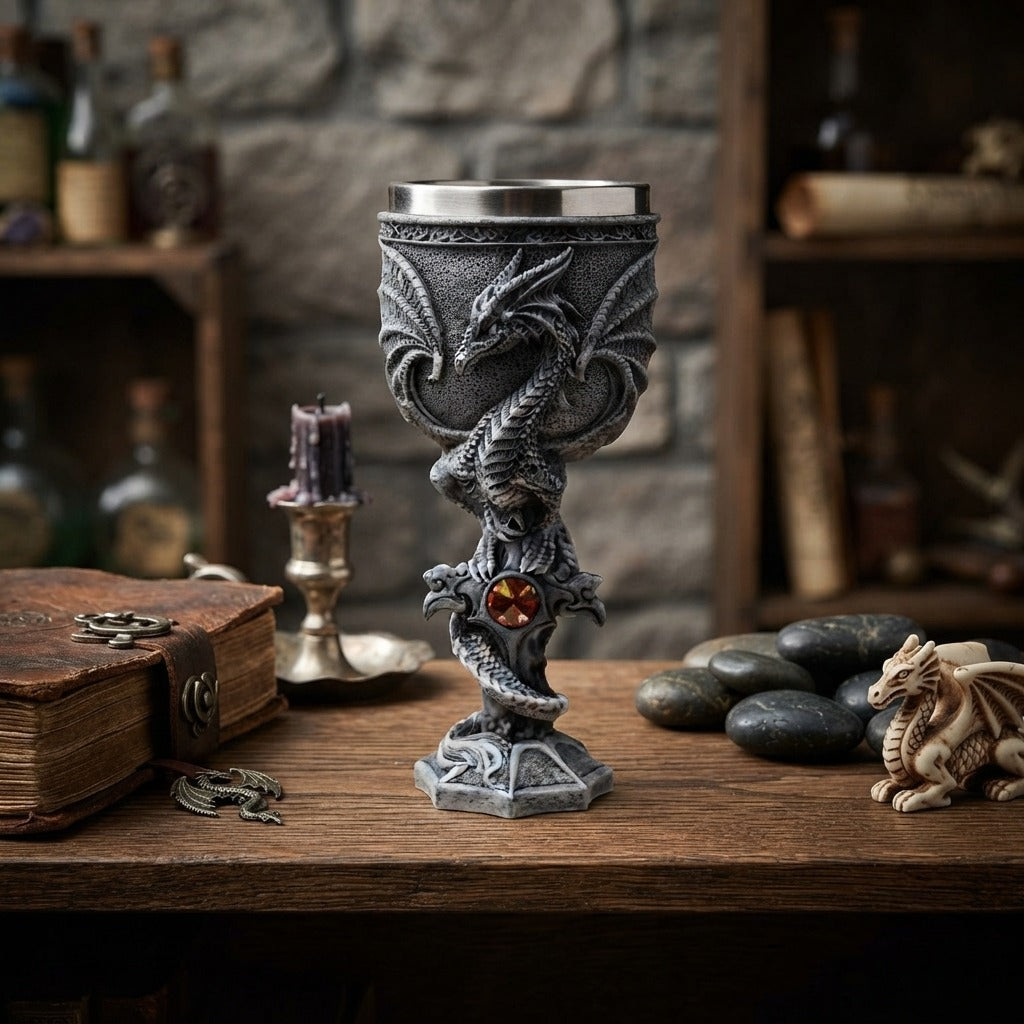
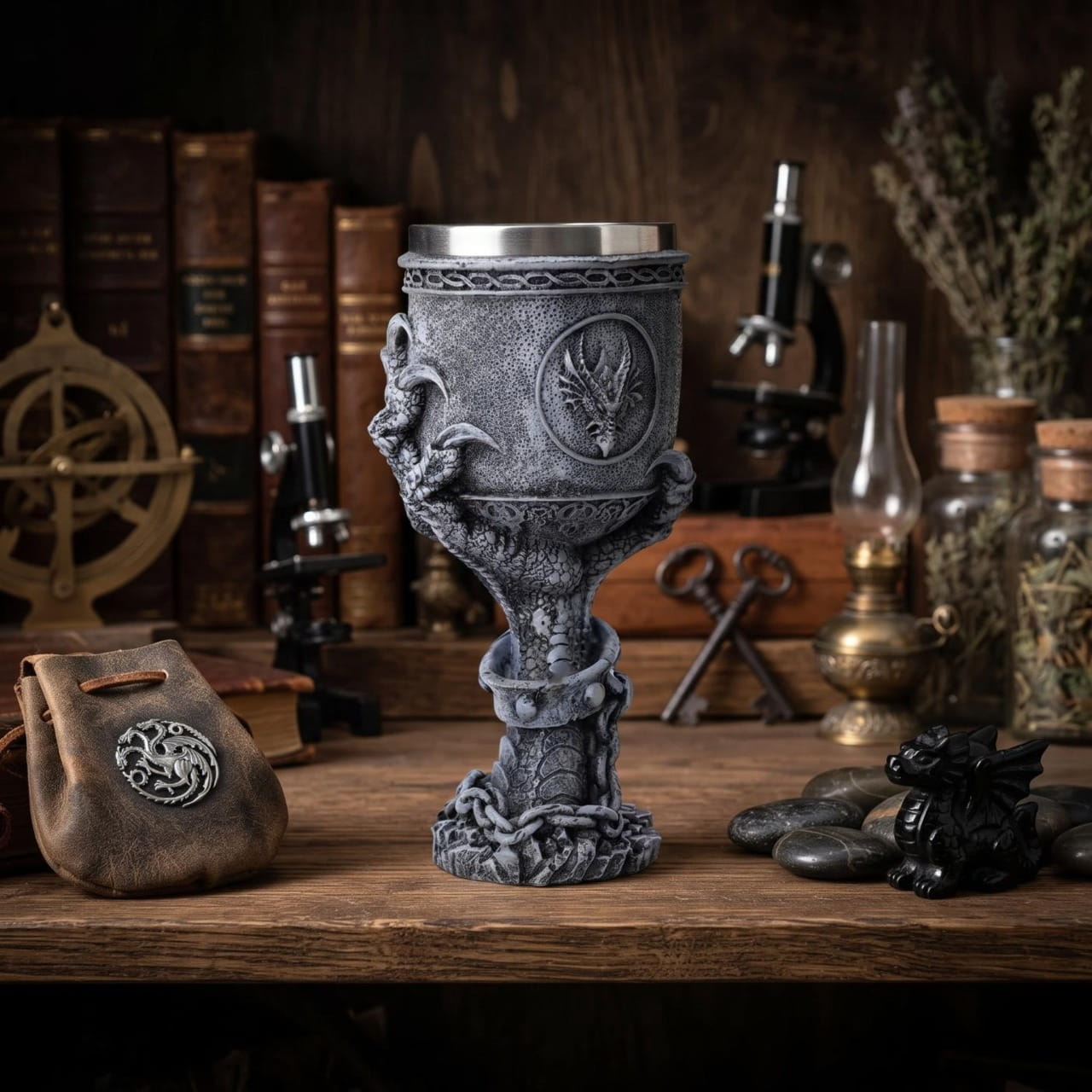
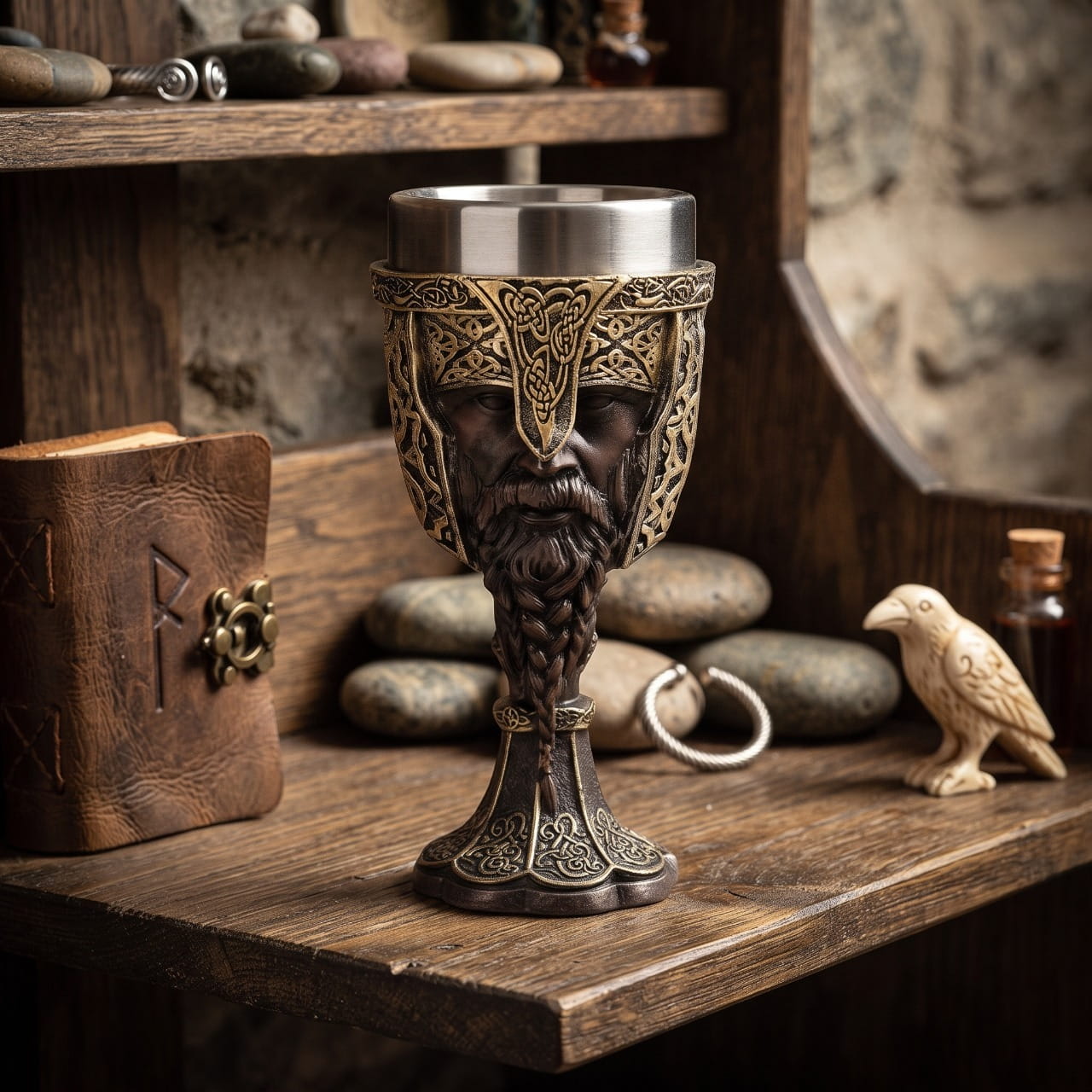
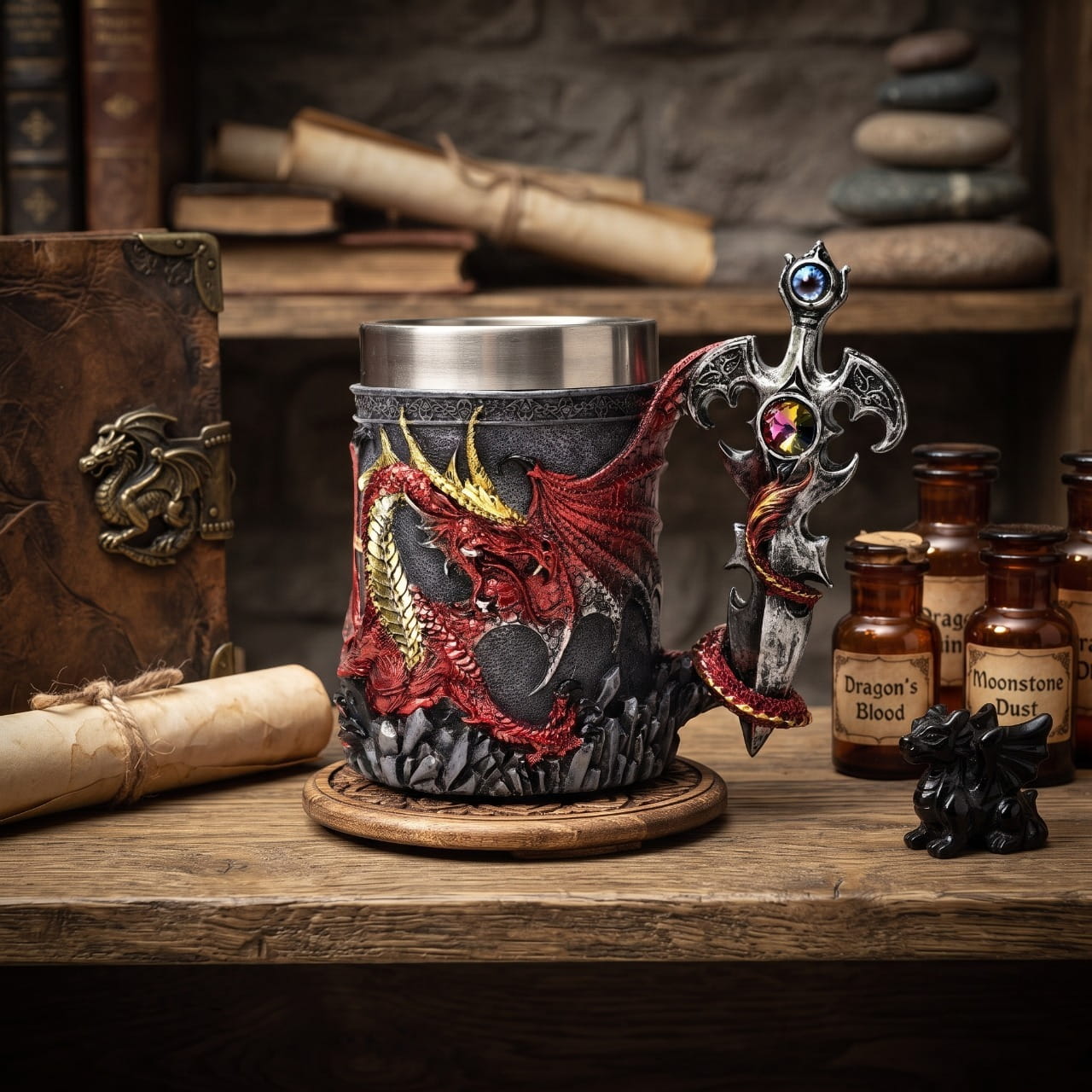
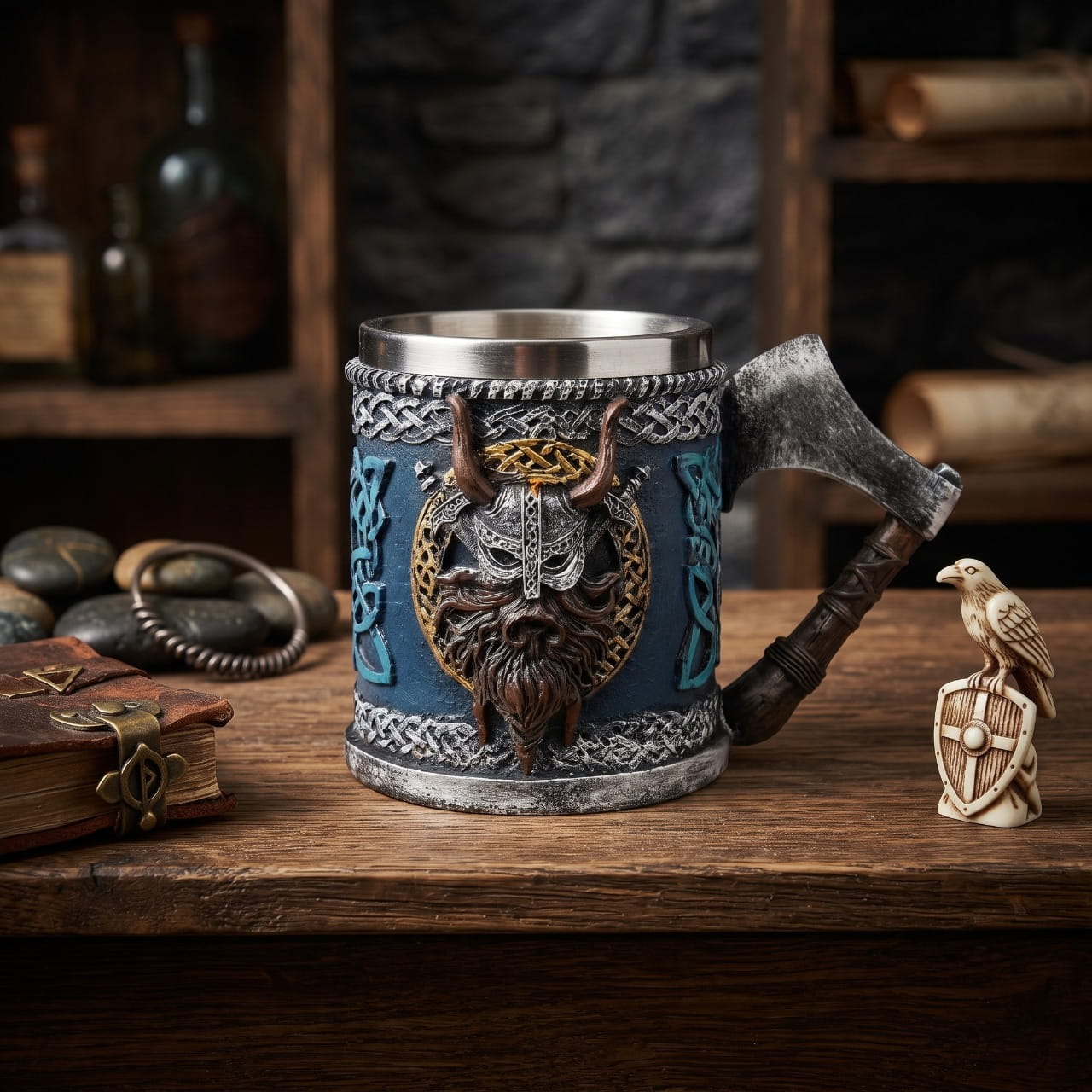
This collection gathers our Viking goblets. Dragons coiled around the stem, horned skulls, helmeted warriors: each cup is sculpted from resin and then mounted on a food-grade stainless steel liner. These are drinking vessels, not display replicas—but their size is not that of a beer mug, and it is better to know this before ordering.
Actual size: 200 ml, 18 cm tall
This is the point that most often surprises customers upon delivery, because a photo of a goblet doesn't provide any scale. Here are the figures, unrounded: almost all our goblets hold 200 ml and measure 18 cm in height by 9 cm in width at the widest part of the cup. Only one model, the Baphomet goblet, goes up to 600 ml.
| Measure | Value | What it represents |
|---|---|---|
| Capacity | 200 ml | a generous glass of wine |
| Height | 18 cm | the height of a 33 cl bottle |
| Width | 9 cm | fits in one hand, held by the stem |
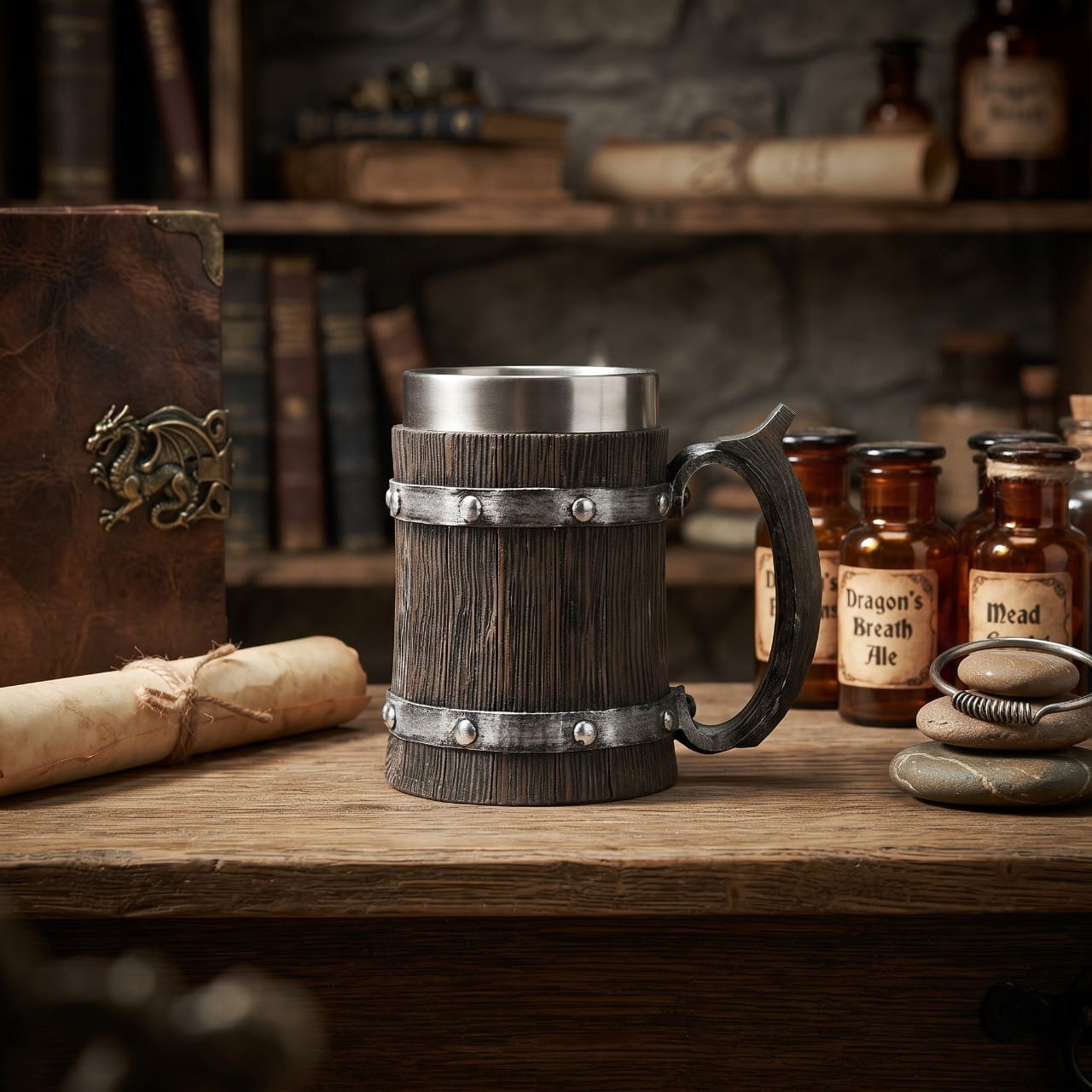
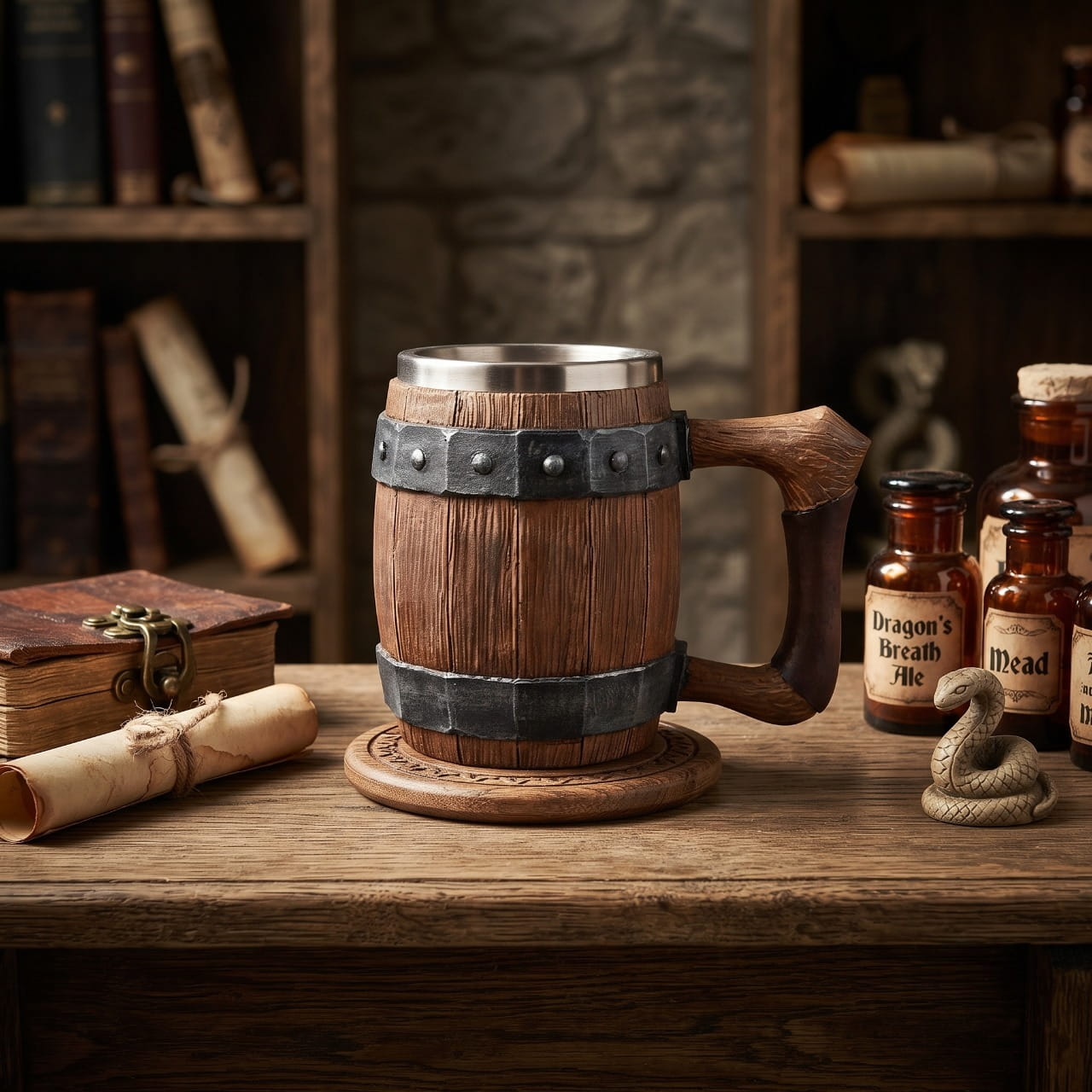
Two hundred milliliters is the capacity of a wine glass, not a beer mug. If you are looking for something to serve a full beer, take a look at our Viking tankards instead, which range from 450 to 600 ml. The goblet is made for mead, mulled wine, a digestif, or a cocktail served with ceremony—and it is precisely this format that gives it the look of a banquet cup rather than a utilitarian container.
How a goblet is constructed
All our cups rely on the same principle: a sculpted resin shell, molded with its scales, brambles, or reliefs, then hand-painted and patinated; and inside, a food-grade stainless steel liner that holds the drink. There is no contact between the liquid and the resin.
This dual nature explains the fineness of the detail—impossible to cast in metal—and imposes a single but absolute rule: hand wash only. All the goblets in the collection carry this note. Lukewarm water, a soft sponge, and immediate drying, taking care with the base where water can stagnate. The dishwasher will fade the patinas in just a few cycles and eventually cause the resin to detach from the steel.
Three families
Dragon goblets make up half the collection: beast coiled around the shaft, wings spread as buttresses, claws gripping the cup, gem set in the eye or chest. They feature the same creature from bronze to frosted blue, with names taken from the sagas—Fáfnir, Níðhöggr, the Midgard serpent.
Skull goblets strike a funereal note: horned skull, winged skull, skull caught in brambles, raven perched on bone. Finally, some warrior cups feature the nasal helmet, the bearded face of the jarl, or Heimdall's guard. All are stemmed, which distinguishes them from a mug: you hold them by the stem, not by the body.
Finishes
Each model comes in one or two colors, and the choice significantly changes the object: antique bronze and patinated copper for a look of an unearthed artifact, aged silver for cold metal, stone gray and slate gray for a mineral look, frosted blue and midnight blue for ice-themed models. These patinas are applied by hand: no two examples of the same goblet are strictly identical, which is part of the object's character.
Frequently asked questions
What is the capacity of a Viking goblet? 200 ml for almost the entire collection, which is equivalent to a full glass of wine. Only one model reaches 600 ml.
Can you really drink from them? Yes. The inside is a food-grade stainless steel liner, with no contact between the drink and the sculpted resin.
Are the goblets dishwasher safe? No, none of them. All models must be hand-washed: heat and alkaline detergents attack the patina and the seal between the resin and the steel.
What is the difference compared to a Viking tankard? The format and usage. The goblet is stemmed, holds 200 ml, and is intended for wine, mead, or a spirit served in a small quantity. The tankard, which has no stem, holds 450 to 600 ml and is intended for beer.
Are two examples of the same model identical? Almost. As the patinas are applied by hand, slight variations in shade exist from one piece to another.
Can I serve a hot drink in them? Mulled wine or warm mead, no problem. Avoid boiling liquids, which cause the resin-steel assembly to expand.
What are the delivery times and costs? Tracked delivery is free for orders over €49, regardless of the delivery country.
Also to explore: discover our drinking horns and Nordic mugs, and to choose between the formats, read our guide to Viking tankards and mugs.