
Filters
18 products






Collections similaires
You would also like
Frequently Asked Questions About Our Viking Statues
What material are your Viking statues made of?
Our Viking statues are primarily made of high-quality resin, hand-painted with bronze, copper, or stone-effect finishes. Some premium models use cold-cast bronze or marble resin. The result is a heavy, detailed, and durable object.
Which Norse deities are depicted?
Our collection includes Odin the All-Father, Thor with Mjölnir, Freya goddess of love, Loki the cunning, the warrior Valkyries, Fenrir the giant wolf, and many other figures from Norse mythology.
What are the dimensions of your statues?
Our statues range from 15 cm for desk figurines to 30-40 cm for imposing collector's pieces. The exact dimensions (height, width, depth) and weight are indicated on each product page to help you find the perfect spot.
How do you maintain a resin Viking statue?
Dust regularly with a soft, dry cloth. For a deeper clean, use a slightly damp cloth. Avoid abrasive chemicals. Place your statue away from direct sunlight to preserve the hand-painted colors.
Are your statues one-of-a-kind pieces?
Each statue is hand-painted, which means that slight variations in color and patina make each piece unique. It is this finishing touch that gives our statues their own character—no two are exactly alike.
Viking Statues: Gods & Warriors — en savoir plus
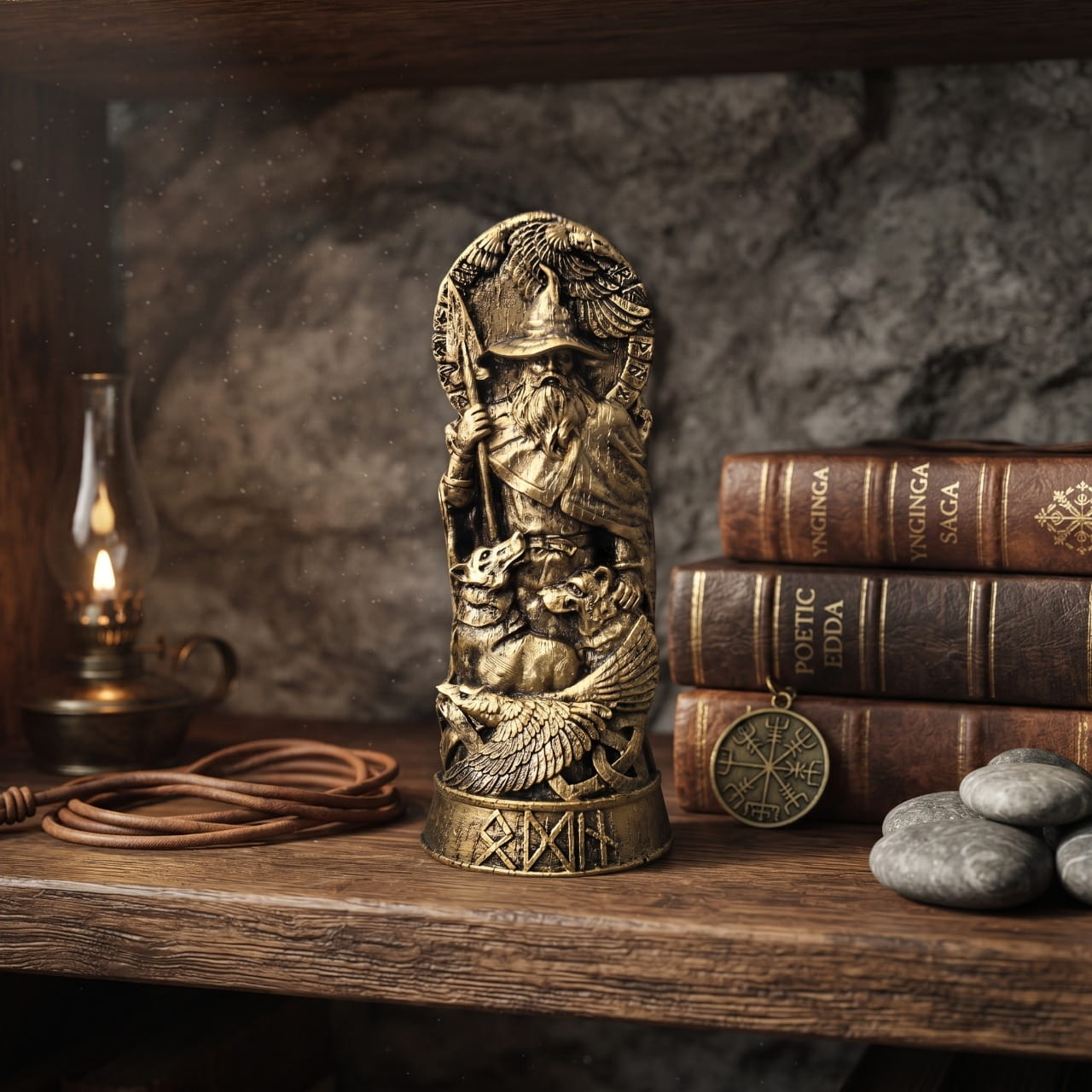
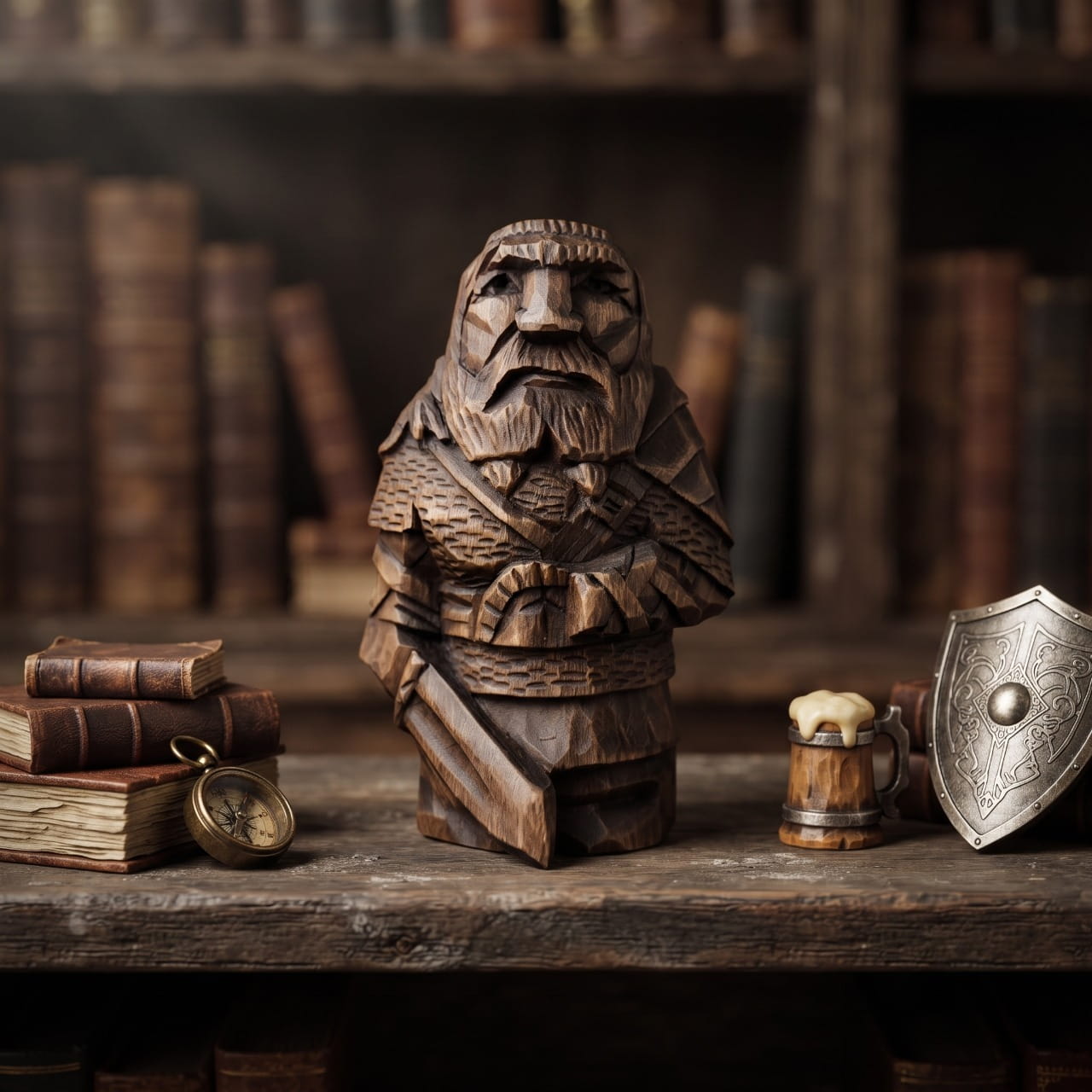
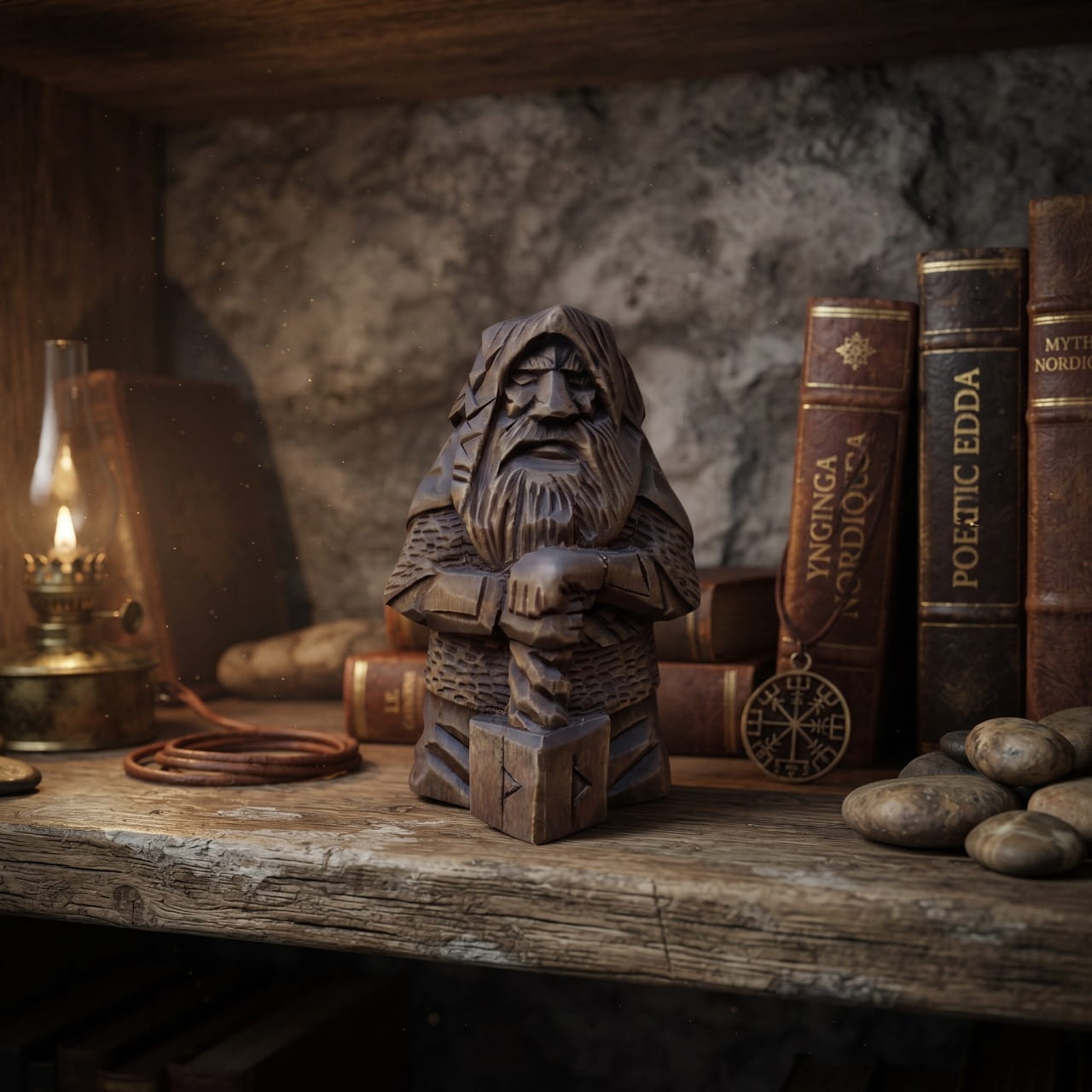
This collection brings together our Viking statues and figurines: Odin on his throne, Thor and his Mjölnir, Loki, Freyja, Týr offering his hand to Fenrir, and the wolf-warrior Ulfhednar. Two very different formats coexist here, and that is the first thing to understand before choosing.
Two families, two scales
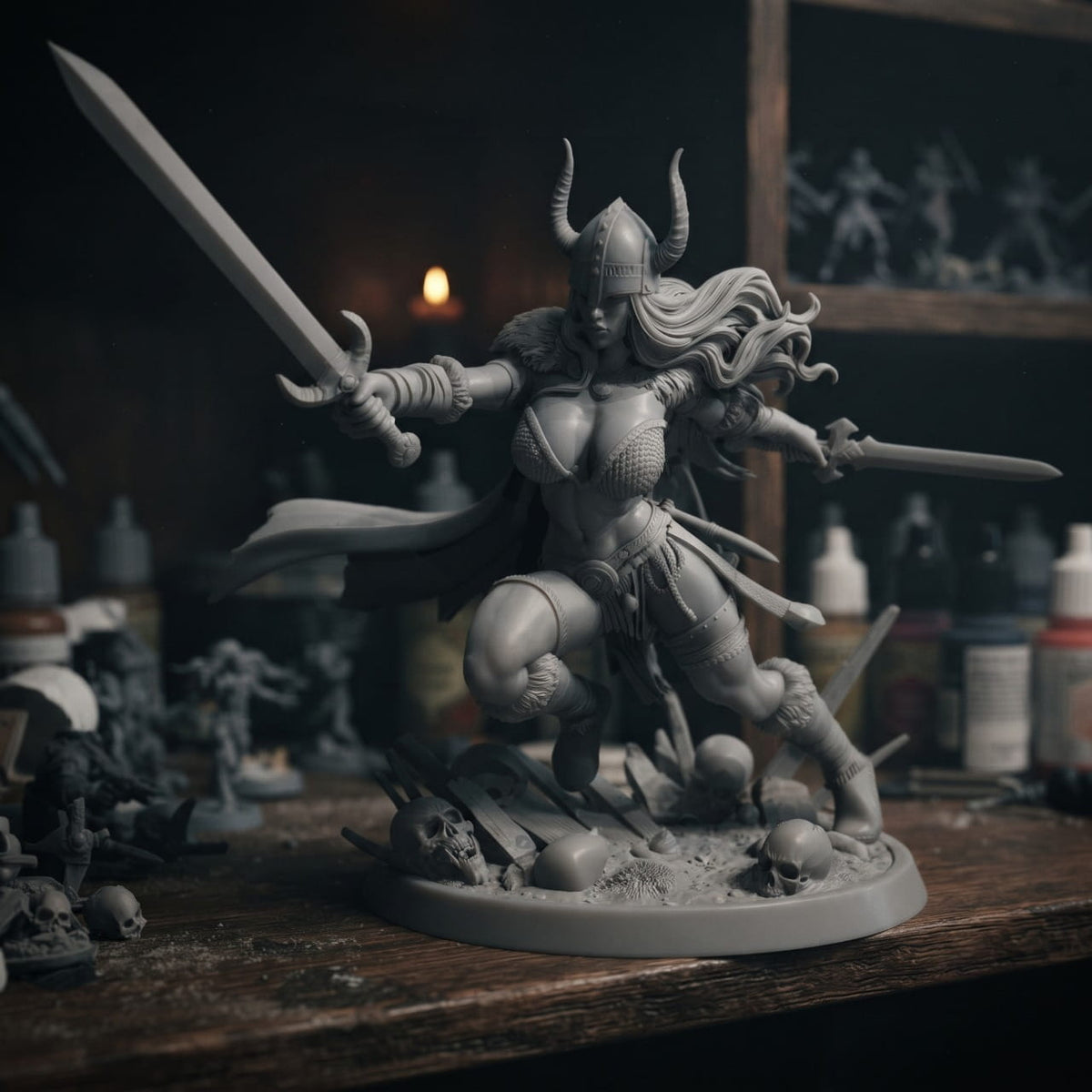
A photo of resin gives no idea of the size. Yet, in this collection, there are 20 cm statues intended for a shelf, and 7 to 9 cm figurines intended for enthusiasts of figure painting. The size ratio between the two is one to three.
| Format | Dimensions | Who it is for |
|---|---|---|
| God statue | 20 cm high, 9.5 × 4.5 cm at base | decoration, shelf, desk |
| Wall plaque | 22 × 21.7 × 10 cm | for hanging, high relief |
| 1/24 scale figurine | 55 to 88 mm high | collection, figure painting |
Pay attention to the 1/24 scale. A figurine advertised as "75 mm" is seven and a half centimeters tall, not seventy-five. This is the modeling standard, where the measurement is taken from the base to the top of the head. These pieces are aimed at those who enjoy painting: the sculpting is fine, and the details of the face and armor chainmail are designed to be revealed with a brush. In fact, many are explicitly sold as painting kits — the mention appears in their title, so please check it before ordering if you are looking for a finished piece.
The gods represented, one by one
Before detailing each figure, a clarification that changes how one views these objects.
The true statues of the Viking Age were tiny. We imagine life-size wooden idols; archaeology has only yielded pocket-sized statuettes. The most famous, the Eyrarland figurine discovered near Akureyri in Iceland and kept at the National Museum of Iceland, measures 6.7 cm: a seated, bearded character clutching a hammer-shaped object — almost everyone sees it as Thor. The Rällinge figurine, from Sweden, is barely 7 cm tall and represents a seated god identified as Freyr. In Lindby, Scania, a small one-eyed bronze was found, which led to thoughts of Odin. That is all, or almost all.
In other words, our 20 cm statues do not copy any antique model: they are a modern interpretation of texts written in the 13th century. We prefer to state this clearly rather than sell you a "faithful reproduction" that does not exist anywhere. Our report on statues and sacred representations covers in detail what the Scandinavians actually made.
Odin
He is the best-represented god in the collection, with a wall plaque and two very different postures.
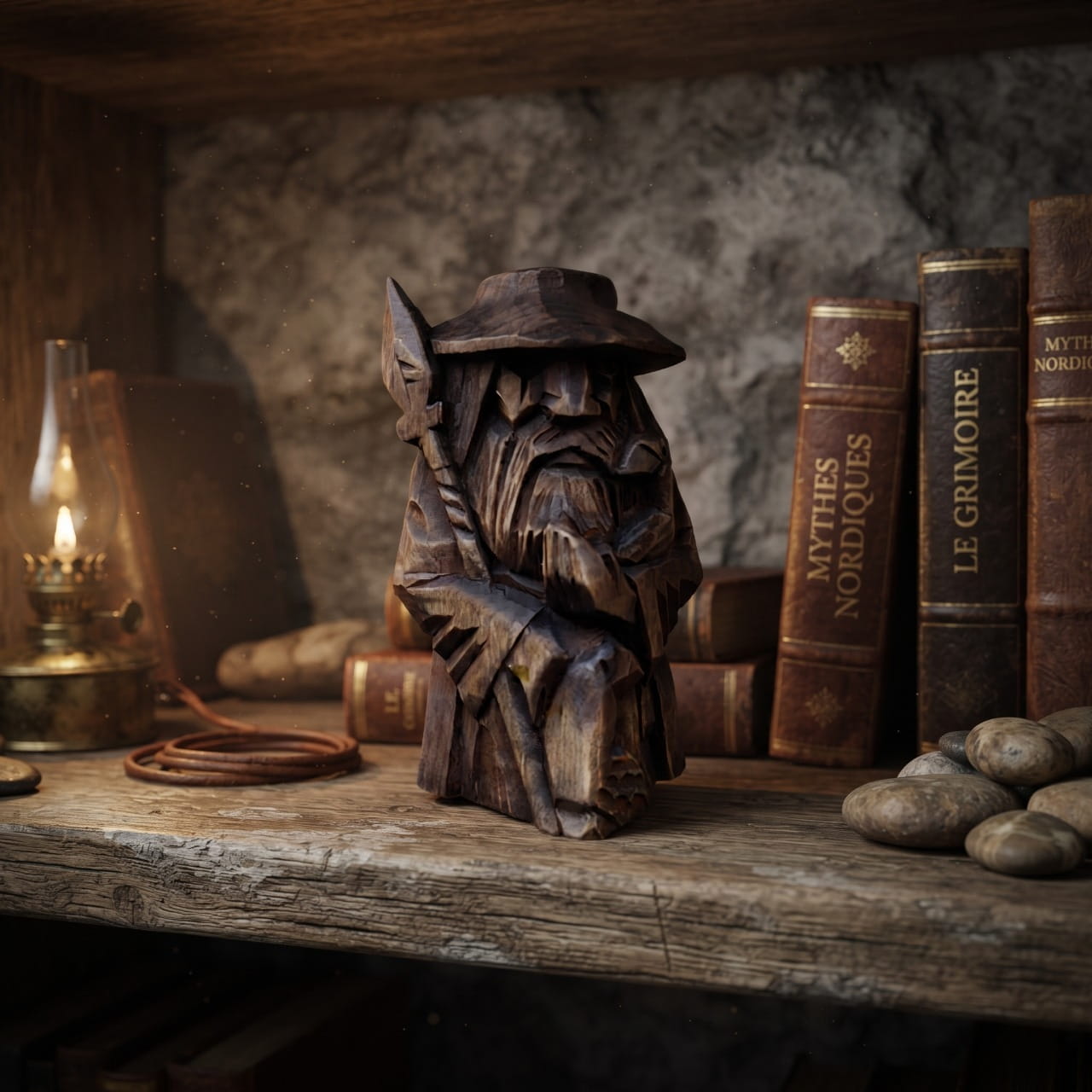
The Wanderer shows him leaning on his staff, his wide-brimmed hat pulled down over his missing eye. This is the form in which he travels the world of men in the sagas, under about thirty aliases: Grímnir, "the masked one"; Gangleri, "the wanderer"; Bölverkr, "the worker of evil." Disguised Odin is a recurring motif, and rarely a good omen for the one he visits.
The All-Father on his throne shows him seated on Hlidskjalf, from which he gazes out over the nine worlds. He left his eye in Mímir's spring in exchange for a sip of wisdom. The Hávamál credits him with a second, even more harrowing sacrifice: nine nights hanging from the wind-swept tree, wounded by a spear, "self-offered to myself," to grasp the runes. The god of Nordic wisdom received nothing — he paid for everything. The tree in question is Yggdrasil, whose name literally means "the steed of Ygg," one of Odin's nicknames.
Thor
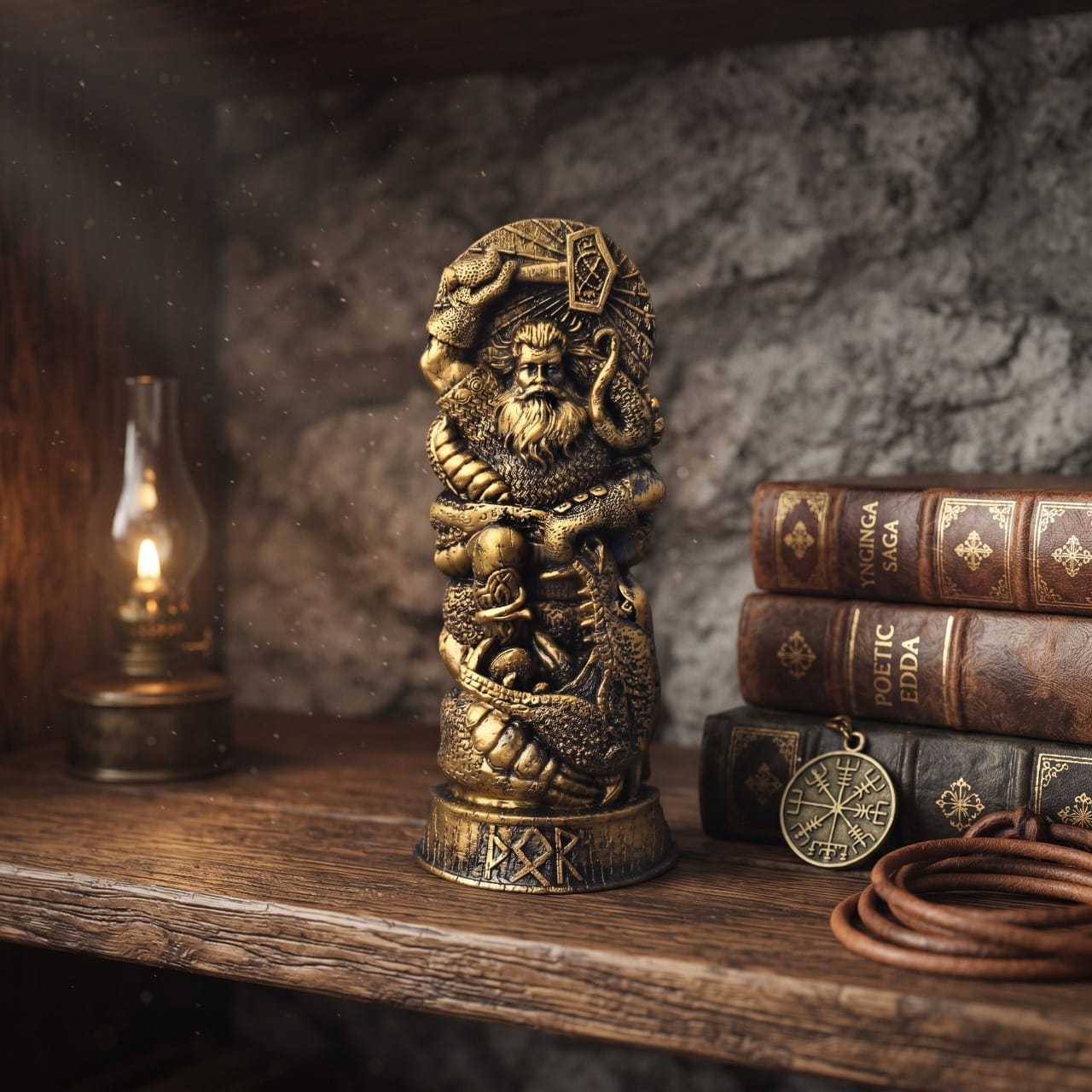
Several pieces, including the wall plaque he shares with his father. He always holds Mjölnir, and the hammer itself bears a story: forged by the dwarves Brokkr and Eitri, it came out of the forge with a handle that was too short, because Loki, turned into a fly, had bitten the blacksmith's eyelid during the work. The defect was never corrected.
Thor is the most popular god of ancient Scandinavia, by far — place names, first names starting with Thor-, and the thousand hammer pendants found testify to this much better than Odin, who was rather reserved for the elites. He is a god of farmers as much as of warriors: he drives his chariot pulled by two goats, Tanngrisnir and Tanngnjóstr, whom he can eat in the evening and resurrect in the morning, provided no bone has been broken. The hammer, the Valknut, the ravens: our guide to Viking symbols covers every motif and what archaeology says about them.
Loki
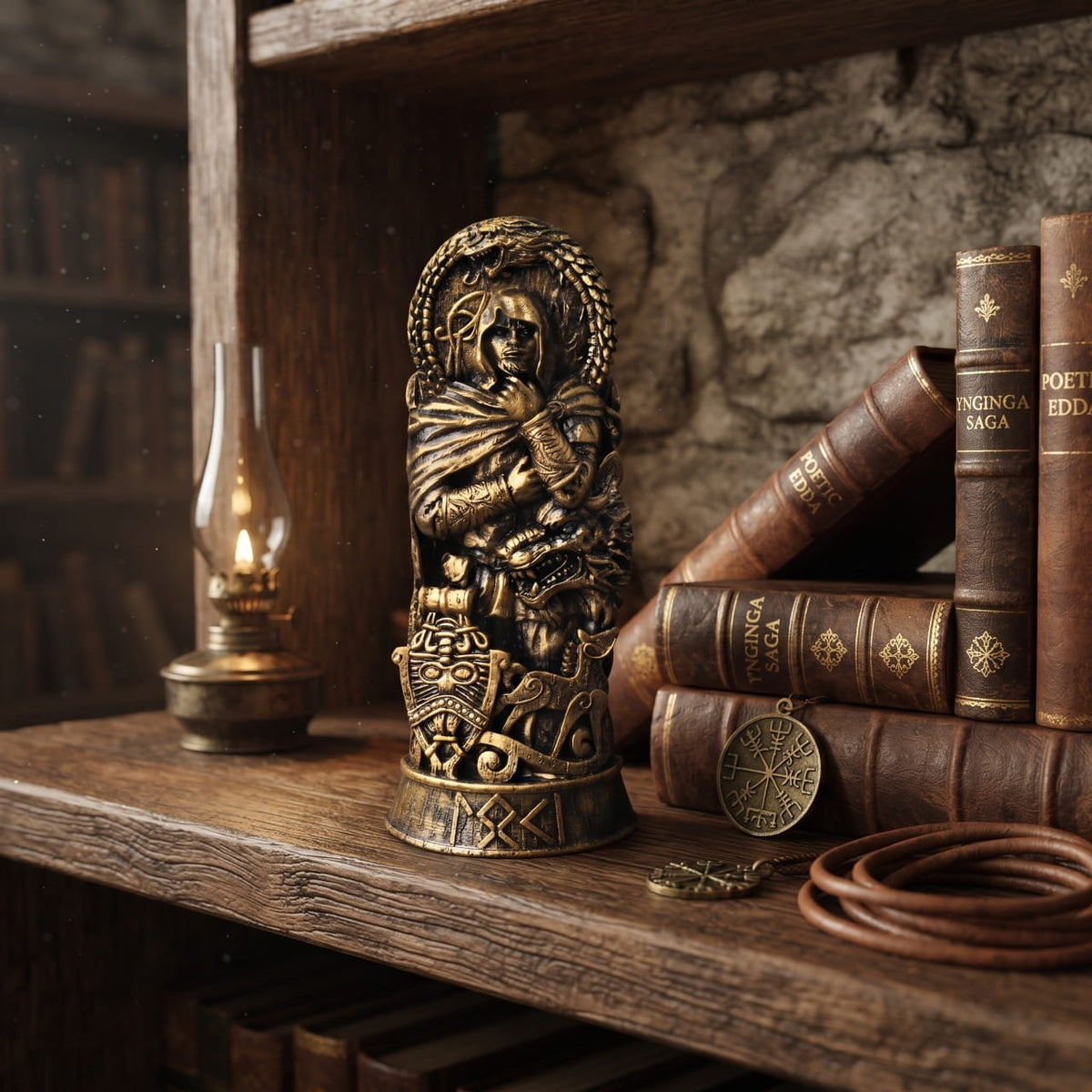
A statue, and a character who is summarized too quickly. Loki is not "the god of evil": he is a giant's son, Odin's blood brother, and he spends half the stories getting the Aesir out of the trouble he himself caused. He is the one who secures Mjölnir, Odin's spear, and Freyr's ship; he is also the one who causes Baldr's death.
A detail that the statues never show: Loki is the mother of Sleipnir. Changed into a mare to distract the stallion of a giant builder, he returned carrying the eight-legged foal that he offered to Odin. After Baldr's murder, the gods chained him with his own son's entrails, a serpent hanging above his face — until Ragnarök, when he will lead the assault against them.
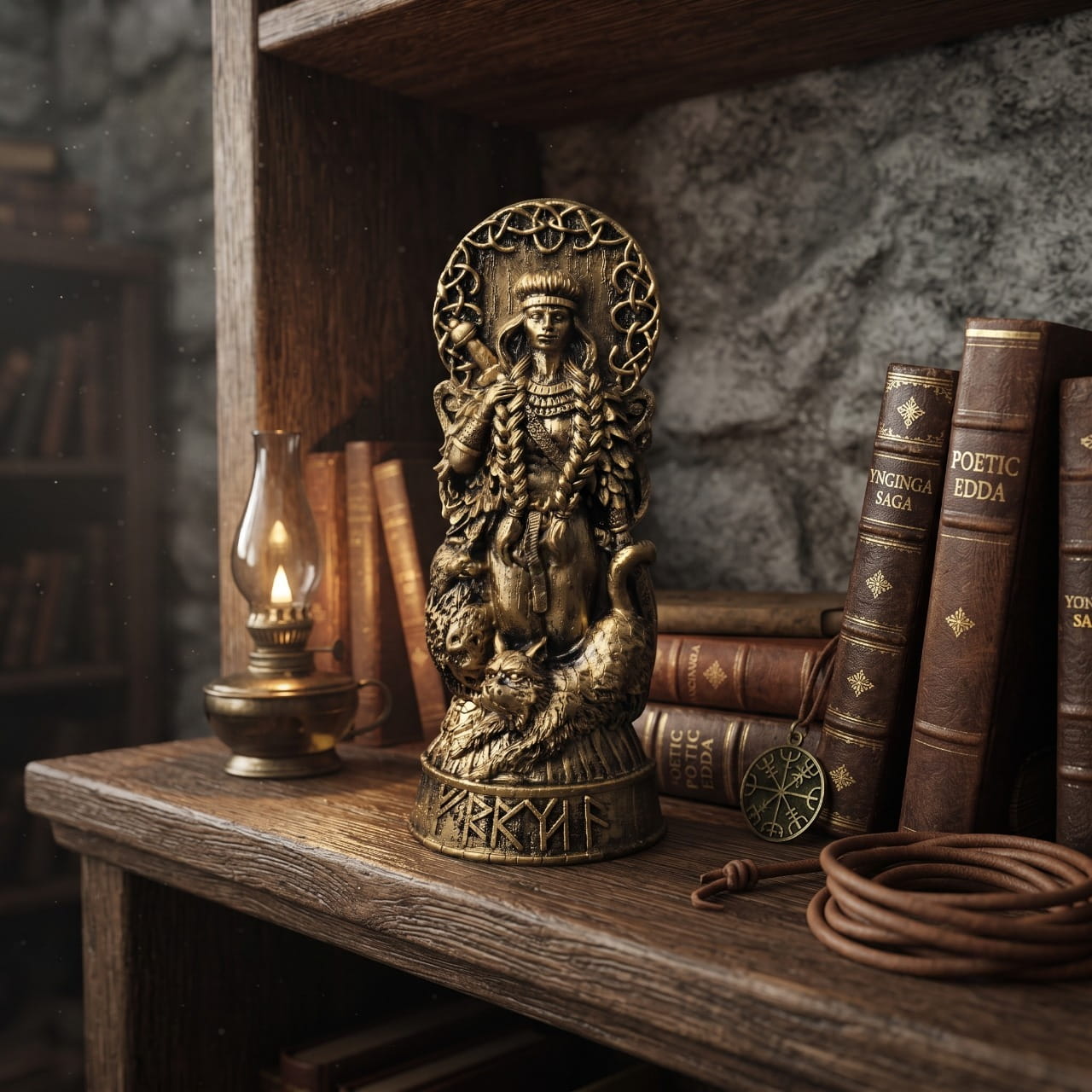
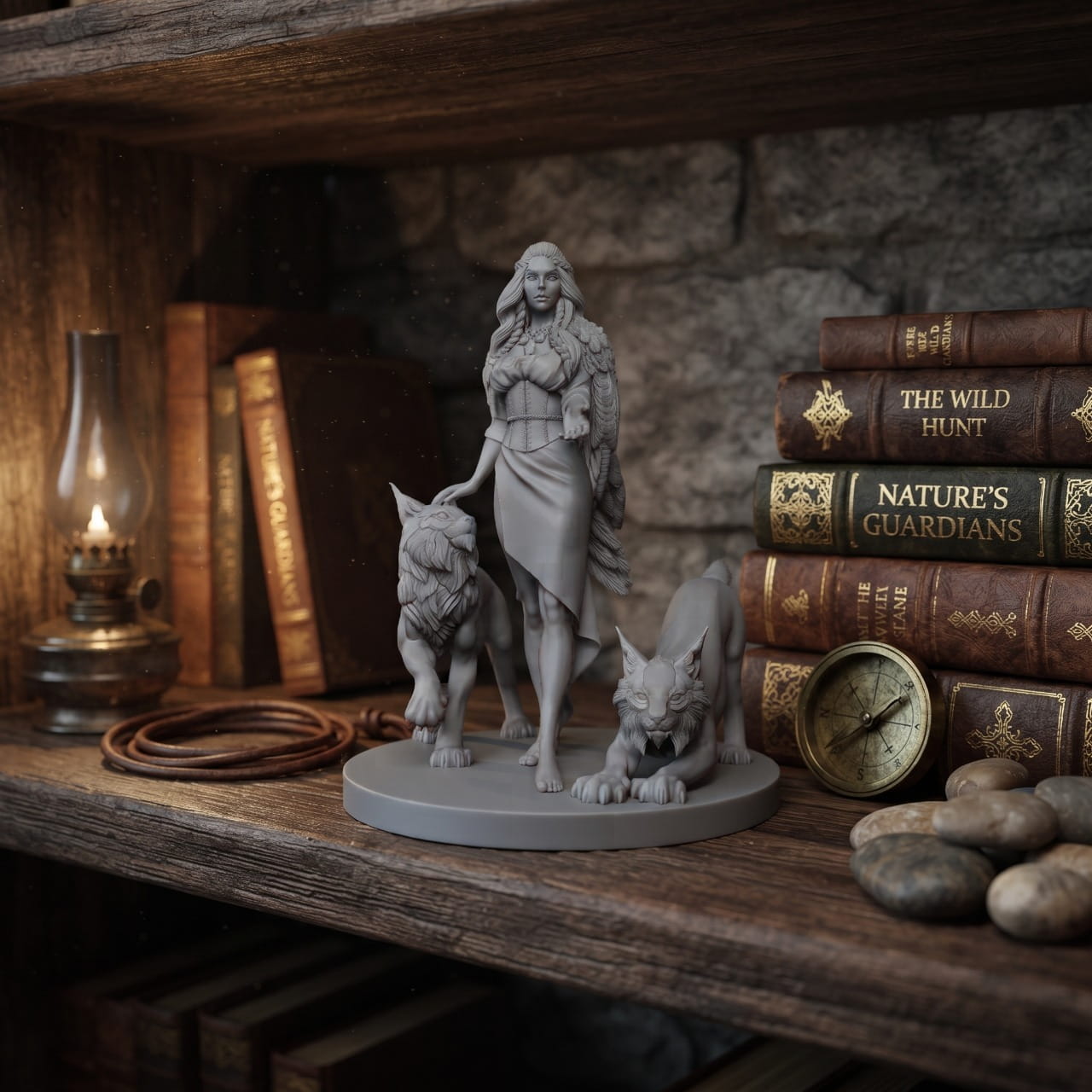
Freyja
Among her pieces, a figurine framed by her wolves. Freyja is not an Aesir: she belongs to the Vanir, the second divine family, who came to the Aesir as hostages after the war that pitted the two clans against each other. She is a goddess of love, fertility, and war at the same time — the combination is not contradictory in the Nordic world.
She rules over Fólkvangr, and the Grímnismál clarifies a point that many ignore: she chooses half of those who die in battle, with Odin receiving only the other half in Valhalla. Her chariot is pulled by cats, she possesses a cloak of falcon feathers that allows her to fly, and the Brísingamen necklace, obtained from the dwarves at a price that Snorri prefers not to detail. When her husband Óðr disappears, she searches for him across the worlds, weeping tears of red gold.
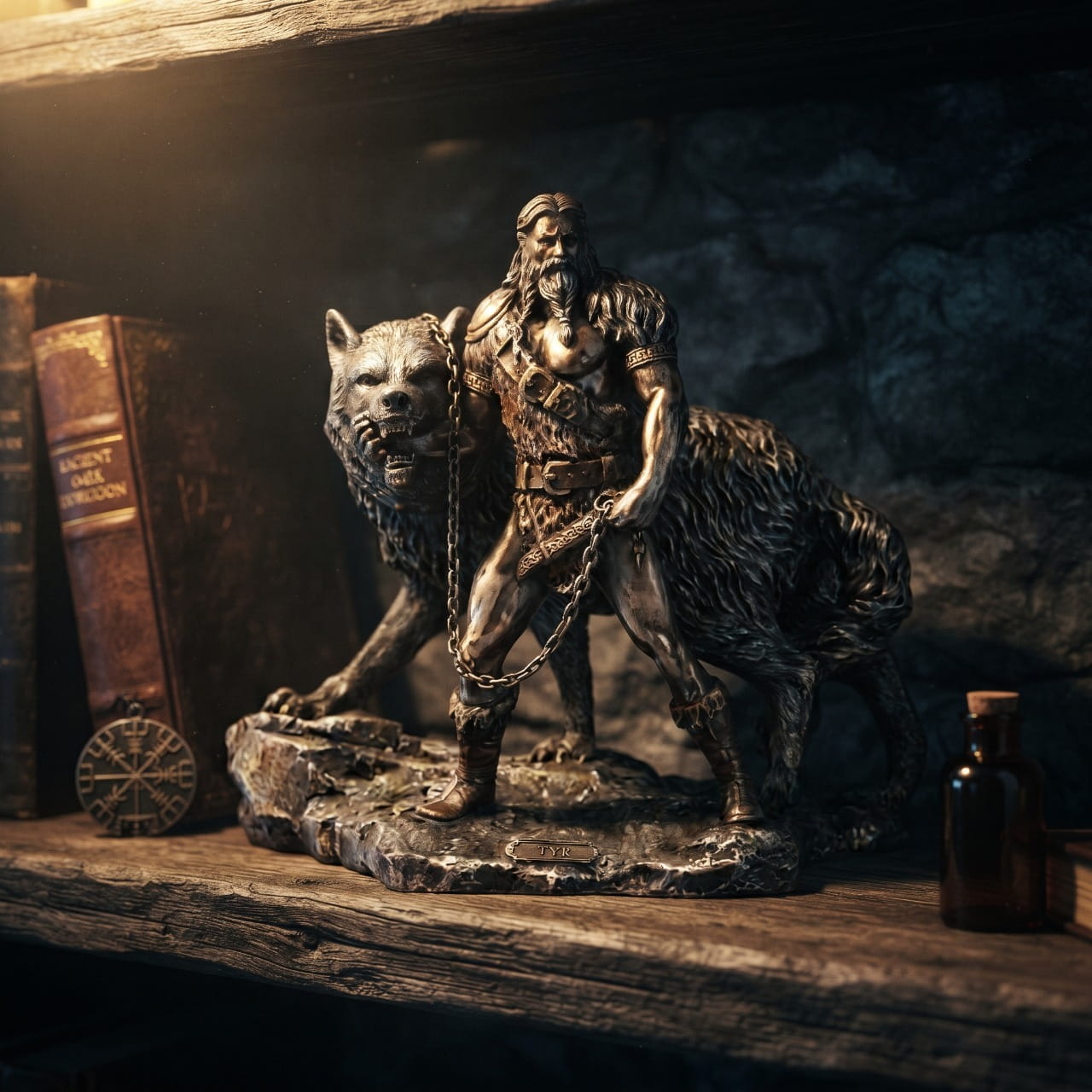
Týr
A statue, captured at the very moment of his sacrifice. The gods had to chain Fenrir with Gleipnir, a link woven from six impossible things — the sound of a cat's footfall, the beard of a woman, the roots of a mountain, the tendons of a bear, the breath of a fish, the spittle of a bird. The wolf, suspicious, demanded that a god place his hand in his mouth as a pledge. Týr did so, and lost it.
His name hides an even older story. Týr descends from the same Indo-European root as the Latin deus and the Greek Zeus: he was likely, long before Odin, the sovereign god of the sky. A trace of this remains in our calendar — the English Tuesday is Týr's day, just as our French mardi is Mars's day.
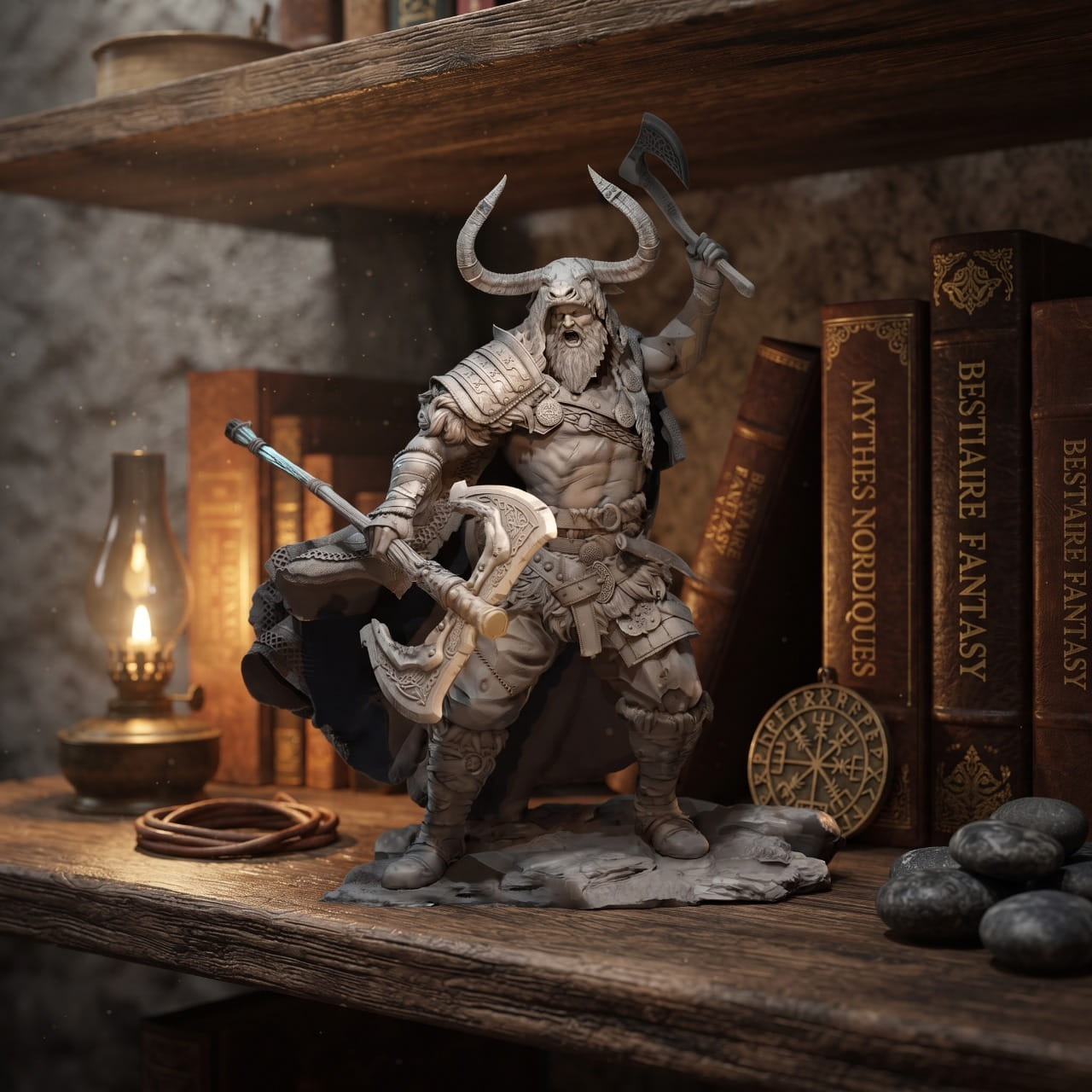
The Ulfhednar and the warriors
The wolf-warrior has his statue, and he should not be confused with the berserker. The sagas distinguish two categories: the berserkir, "bear-shirts," and the úlfhéðnar, "wolf-coats," whom the Haraldskvæði describes as howling and biting their shields before battle. Snorri, in the Ynglinga saga, says of them that they went into battle without armor, impervious to iron and fire.
Modern explanations — hallucinogenic mushrooms, henbane, simple ritual rage — remain hypotheses. What is certain is that the character existed socially: 12th-century Norwegian and Icelandic laws explicitly forbid the act of entering berserksgangr, which is not something one legislates against if it were purely a legend.
The figurines from the series and the bull skull
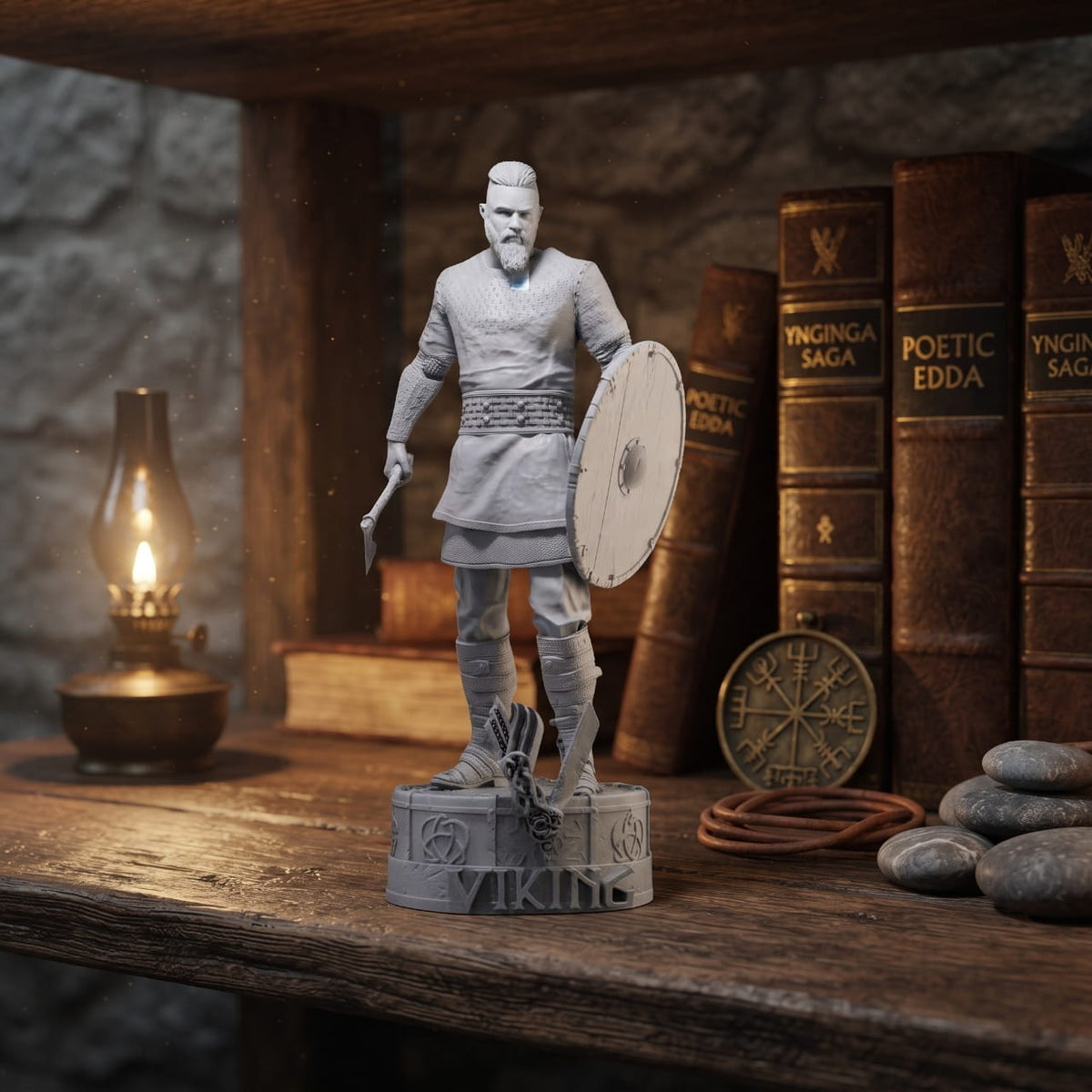
Figurines for painting feature characters from the Vikings series. Their historical status varies significantly, and it is worth stating:
Ragnar Lothbrok is a legendary character: his saga dates from the 13th century, and no contemporary source mentions him. His sons, however, are much better attested. Björn Ironside likely corresponds to the Viking leader who sailed up the Mediterranean around 859-861. Floki is the most solid of the three: the Landnámabók tells that Hrafna-Flóki, "Raven-Floki," released three birds from his ship to find land — the first returned, the second as well, the third flew straight ahead. It was he who, discouraged by a winter of drifting ice, gave the island the name Iceland.
The Kratos figurine, meanwhile, does not belong to any mythology: it is the hero of the game God of War, whose recent episodes take place in a Nordic setting. We list it because it is popular, not because it is Viking.
As for the black-horned bull skull, it helps to put an end to the most persistent of misconceptions: no Viking helmet with horns has ever been found. The only complete Viking Age helmet unearthed to date is that of Gjermundbu, in Norway, discovered in 1943: an iron cap with four plates, with an eye mask — and not the slightest horn. Horned imagery comes from costumes created for Wagner's opera in the 19th century.
Resin, and why this choice
Most of our pieces are made of solid resin; some combine resin with metal or wood. Resin allows for a level of detail that no cheap metal casting can achieve: the wrinkles of a face, the texture of fur, the interlace of a shield. It is also lighter, which matters for a 22 cm wall plaque.
Its drawback: it does not forgive falls. A 20 cm statue that falls off a shelf will break cleanly, usually at the thinnest point — an outstretched arm, a spear, a wing. Re-gluing with cyanoacrylate glue works well, but it is better to place the piece where nothing will bump it. Also, avoid direct and prolonged exposure to the sun, which tarnishes the finishes over time.
Maintenance
Use a soft brush or a dry cloth for dust, focusing on the crevices where it accumulates. No soapy water on finished pieces, no aerosol dusting products: the solvent attacks the paint. For a wall plaque, provide a fixture adapted to the weight and the support — resin is light, but 22 cm of relief at the end of a thin picture nail will eventually give way.
Which statue depending on the room
The table above gives the dimensions; three points decide the actual look once the piece is set up.
Viewing distance. A 55 to 88 mm figurine is an object to be looked at closely: it requires a shelf at eye level, a display case, or a desk. Placed on a low piece of furniture at the back of a living room, it disappears. The 20 cm statues and the wall plaque, conversely, hold their effect from three meters away and can handle a console table or a mantelpiece.
Grazing light. This is the most overlooked criterion. Resin restores reliefs — folds of a cloak, texture of a beard, scales of a serpent — only if the light comes from the side. A vertical ceiling light flattens everything and gives a plastic appearance. A side lamp, even a dim one, completely transforms the same piece.
The background. These statues are mostly dark, patinated bronze or stone. In front of a dark wall, they blend in. They gain a great deal by being placed in front of a light-colored surface, or outlined by a tapestry — this is, in fact, the most common combination among our customers: a wall tapestry behind, the statue in front.
Giving a Viking statue as a gift
It is a double-edged gift: very strong when it hits the mark, cumbersome when it misses. Three guidelines.
The painting figurine is not a gift for everyone. A 1/24 resin kit is for someone who already paints or wants to get started. Given to someone who has neither paints nor brushes, it stays grey in its box. When in doubt, prefer a finished statue.
Choose the god, not the size. Each figure has a character distinct enough to get it right: Odin for a thoughtful person, Thor for a frank temperament, Freyja for those who love strong female figures, Týr for the sense of duty, Loki for the playful spirit. It is the kind of gift that tells a story when it is given — and the story counts as much as the object.
Think about the available space. A 20 cm statue on a 9.5 × 4.5 cm base requires free surface space that not everyone has. If you do not know the person's interior, the wall plaque or a compact piece carries significantly less risk. The relics and artifacts section offers smaller-format alternatives.
Frequently Asked Questions
What is the actual size of the god statues? 20 cm high, on a 9.5 × 4.5 cm base. It is the size of a 33 cl bottle.
And that of the 1/24 figurines? From 55 to 88 mm, or 5.5 to 8.8 cm. These are collectible figurines to paint, not decorative statues.
Are the figurines delivered painted? Several are explicitly sold as painting kits, with the mention appearing in the product title. Check it on the page before ordering.
What are these statues made of? Resin for the most part, some combined with metal or wood. The exact material is indicated on each page.
Can they be put outside? It is not advised. Frost, rain, and UV rays attack the resin and the finishes. These pieces are designed for indoor use.
How to mount a wall plaque? With a mounting adapted to the weight and the nature of the wall. A simple picture nail is not enough for a 22 cm piece in relief.
What are the delivery times and costs? Tracked delivery is free on all purchases over €49, regardless of the country of delivery.
Also explore: extend the atmosphere with our Viking decoration and our Nordic relics and artifacts.
To understand who is the goddess with the necklace and the cat-drawn chariot, read our article Freya: Nordic goddess of love, war, and magic.