
Filters
11 products

Collections similaires
You would also like
Frequently Asked Questions about our Viking Relics & Artifacts
Are your Viking relics reproductions?
Yes, our relics and artifacts are carefully made reproductions inspired by real archaeological objects discovered in Scandinavia. They are made with quality modern materials (resin, metal, wood) while faithfully respecting the original designs and motifs.
What types of Viking artifacts do you offer?
Our collection includes rune sets, protection talismans, Viking coin reproductions, ritual objects, and Nordic curiosities. Each piece is a unique collector's item that tells a story from the Viking Age.
Are artifacts suitable as decorative objects?
Absolutely. Our relics are designed to be both collector's items and decorative pieces. Placed on a shelf, desk, or in a display case, they add a touch of history and Nordic mystery to your interior.
Do the relics come with historical explanations?
Yes, each product sheet details the historical origin, the significance, and the archaeological context of the reproduced artifact. You will know exactly which piece of Viking history you possess and what it represented to the ancient Norse people.
Relics & Artifacts — en savoir plus
This collection gathers small Viking items that don't fit into any other category: keychains, beard beads, jewelry boxes, coasters, rune sets, and gift pouches. This is the section for small gifts and pieces you can buy without much thought.
The rune set, and what it really contains
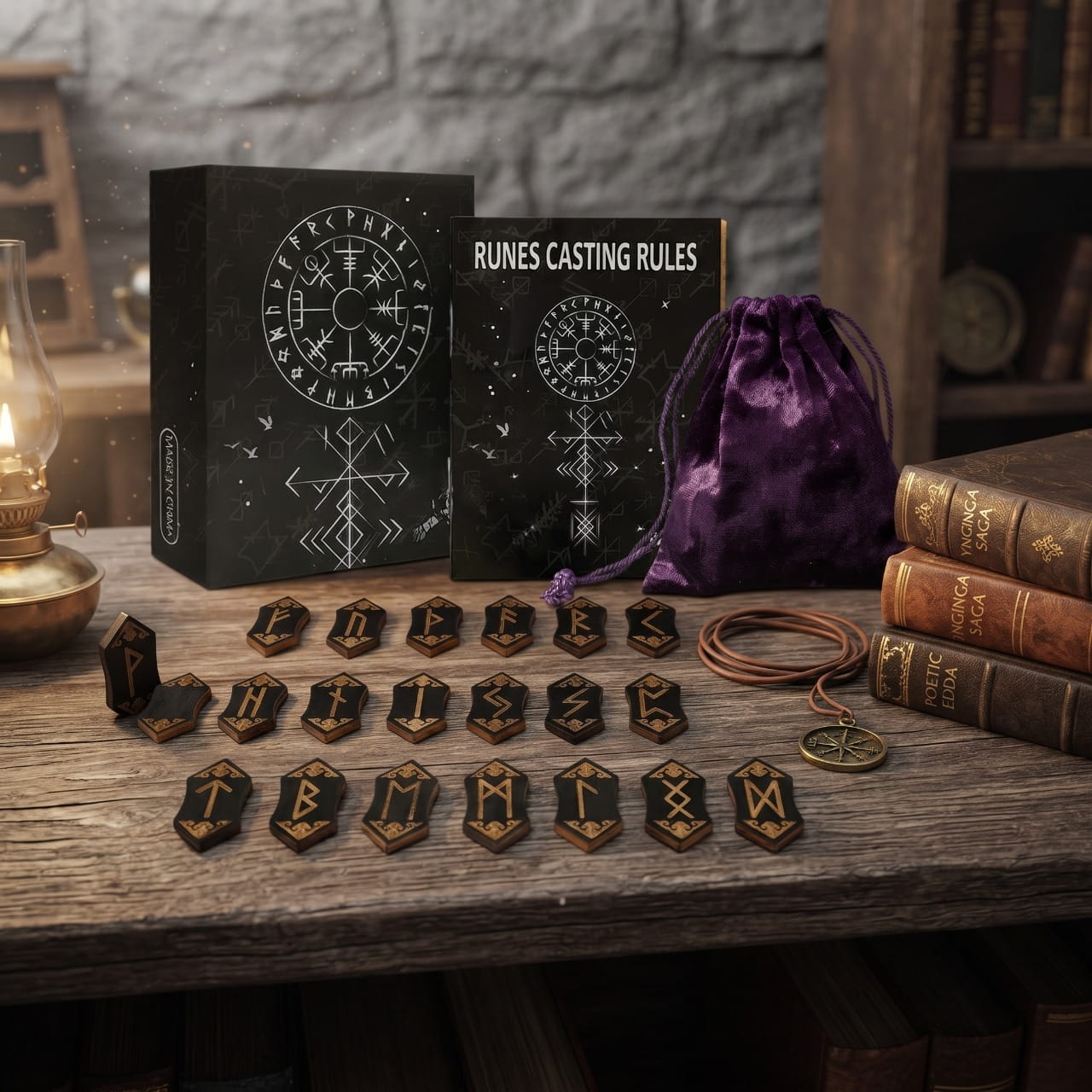
This is the most popular item in this department, and the one about which the most inaccuracies circulate. Our set includes twenty-five wooden pieces, a guide, and a storage pouch.
For context: the Elder Futhark, the runic alphabet used in Scandinavia from the 2nd to the 8th century, consists of twenty-four signs divided into three groups of eight called ættir. Each rune is both a letter and a word — Fehu for cattle and wealth, Uruz for aurochs and raw strength, Ansuz for god and speech. The sets sold today use this corpus of twenty-four pieces, to which modern divination practice has added an extra piece.
A point of honesty: rune casting as practiced today is a 20th-century reconstruction. Medieval sources do mention Germanic fortune-telling practices — Tacitus describes twigs marked with signs — but no manuscript has transmitted a Scandinavian casting method to us. It is a contemporary custom inspired by ancient foundations, and that is perfectly fine as long as it is not presented as something it is not. Our guide to writing your name in runes and our dossier on protective runes distinguish between what is attested and what is reconstructed.
Beard and hair beads
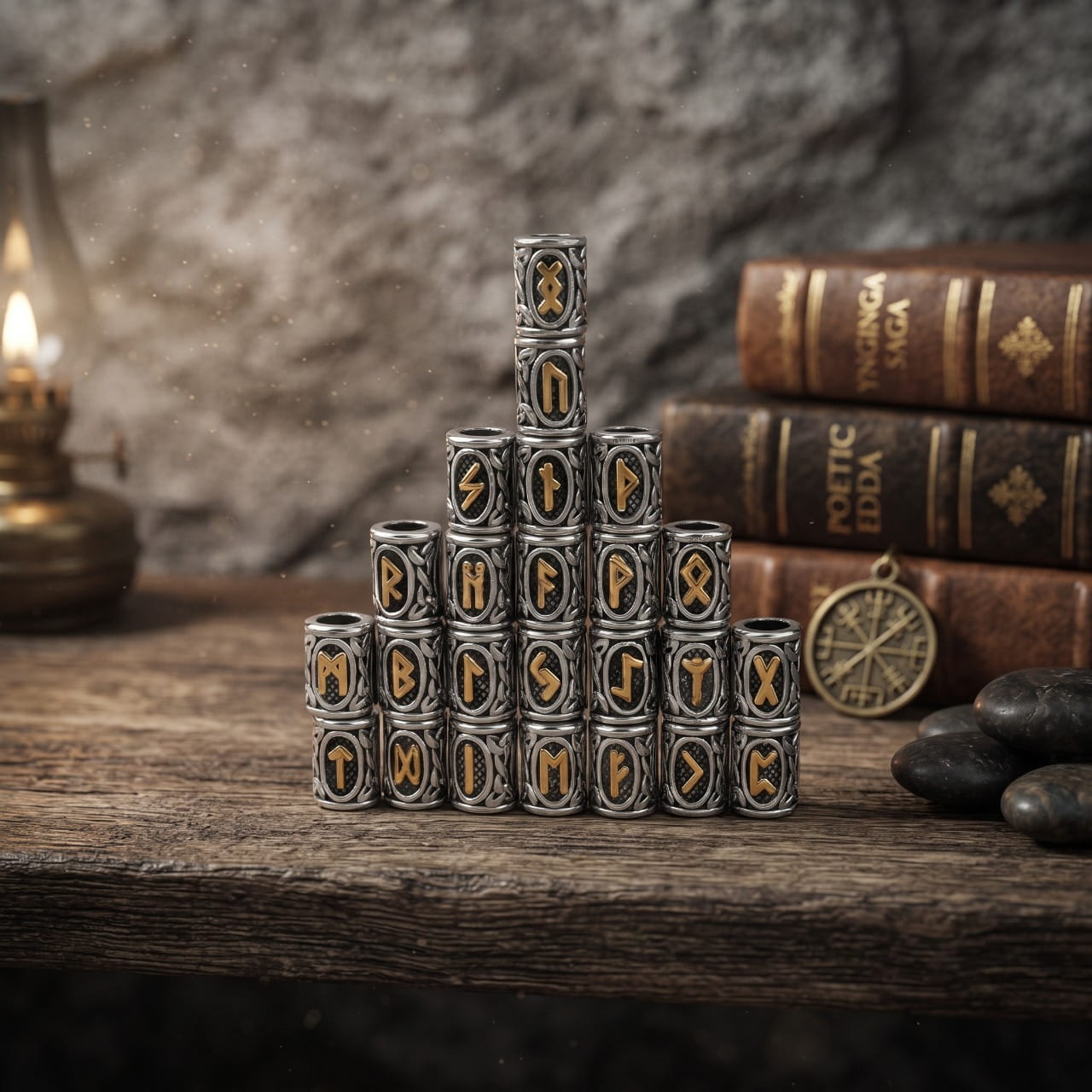
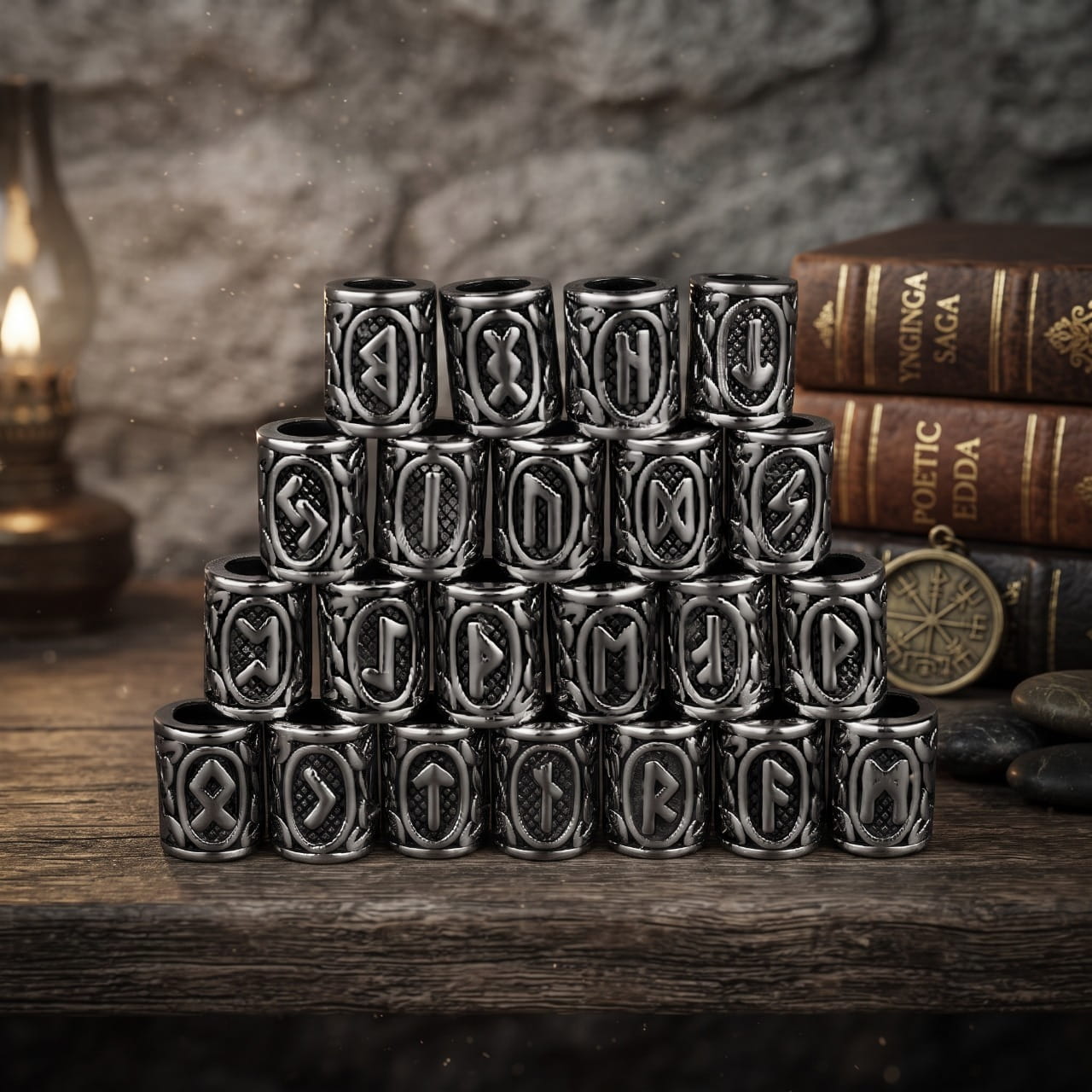
Sold in sets of twenty-four beads in steel, silver-colored or gold-colored, each engraved with a rune from the Futhark. They slide onto a lock of beard or a braid of hair and are tightened with pliers, or left to slide depending on the diameter of the strand.
Two practical tips. Choose the diameter based on the actual thickness of the lock, not its appearance: a bead that is too large will slide and fall off, a bead that is too tight will break the hair over time. And don't put more than three or four on the same braid — any more and the weight will pull on the roots.
Keychains and pocket items
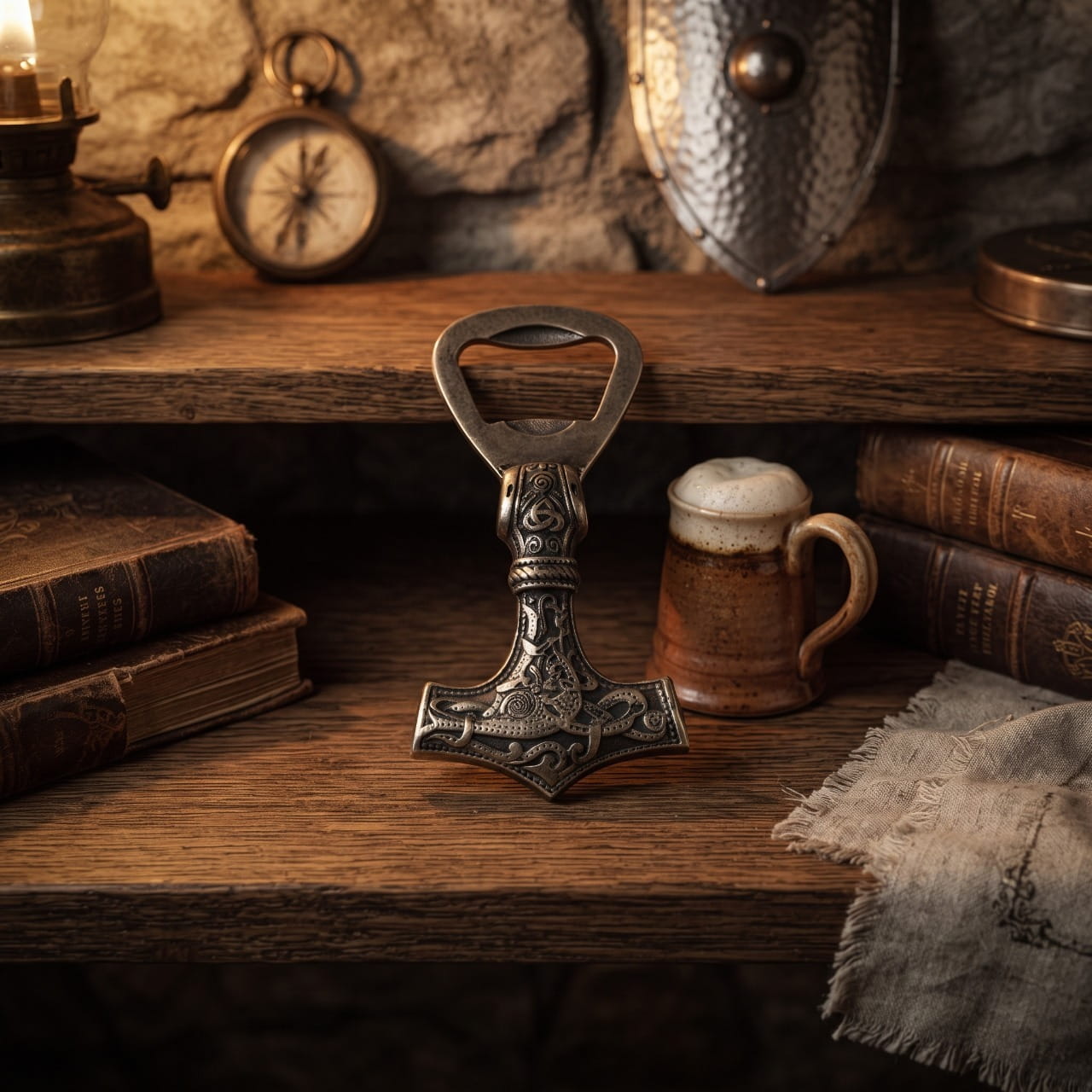
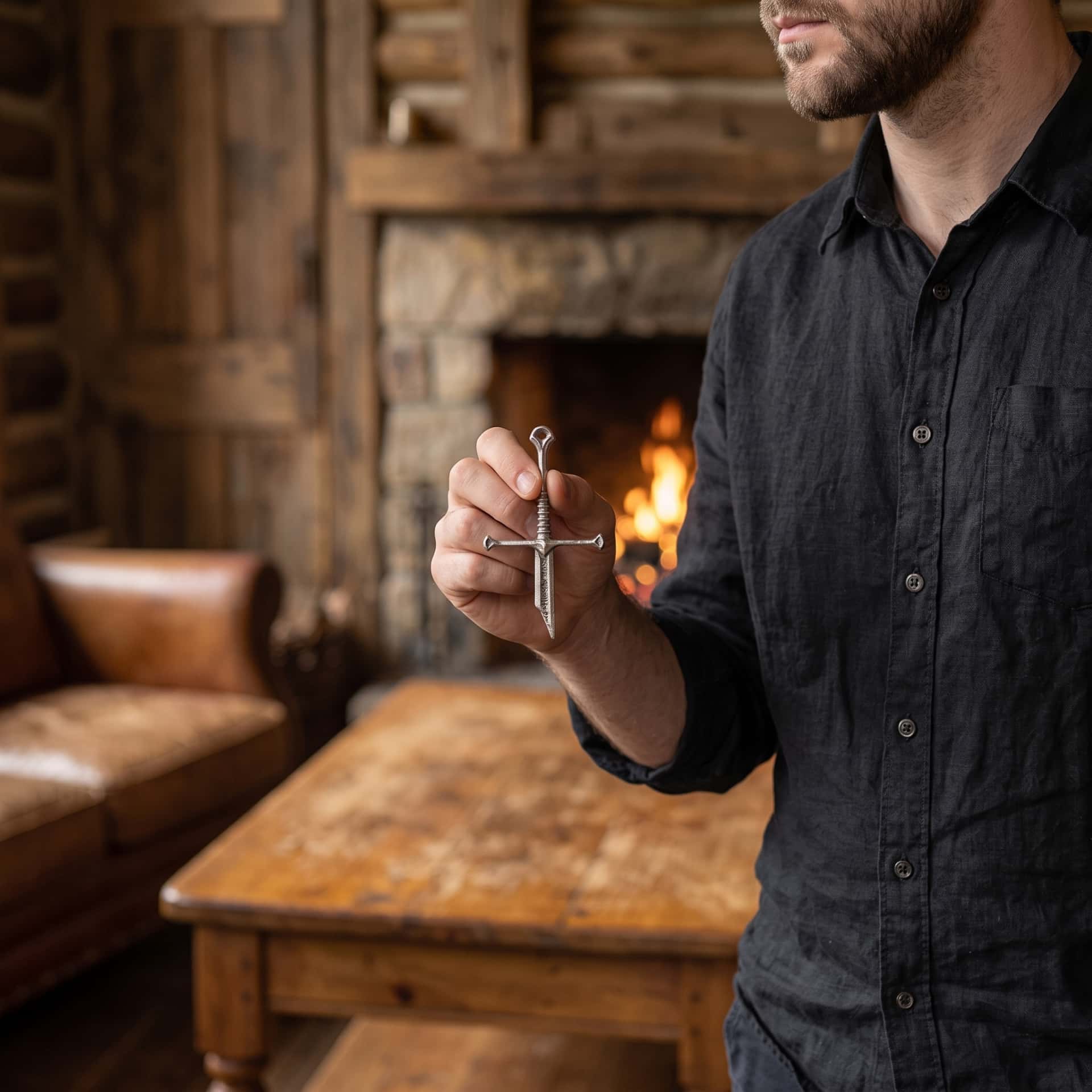
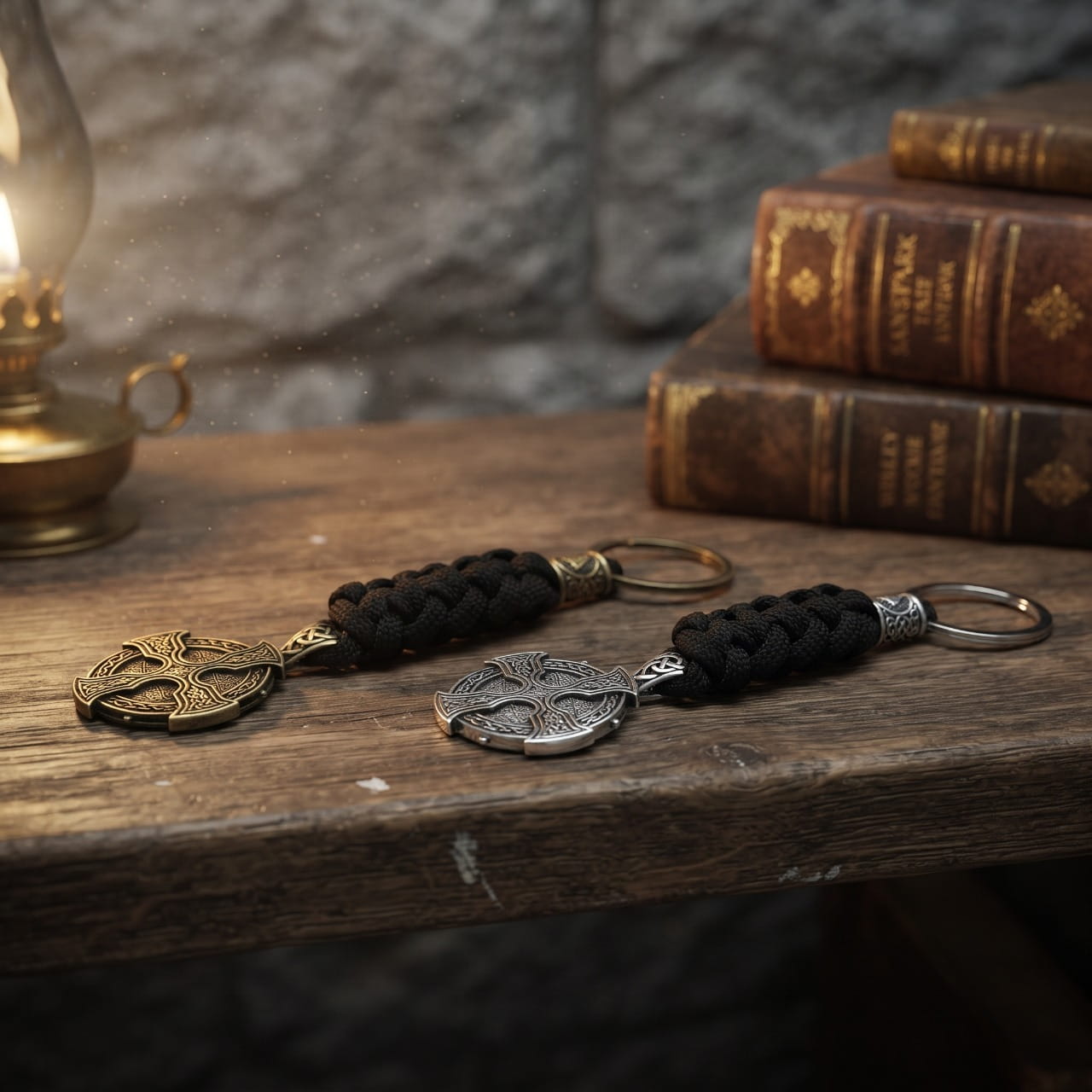
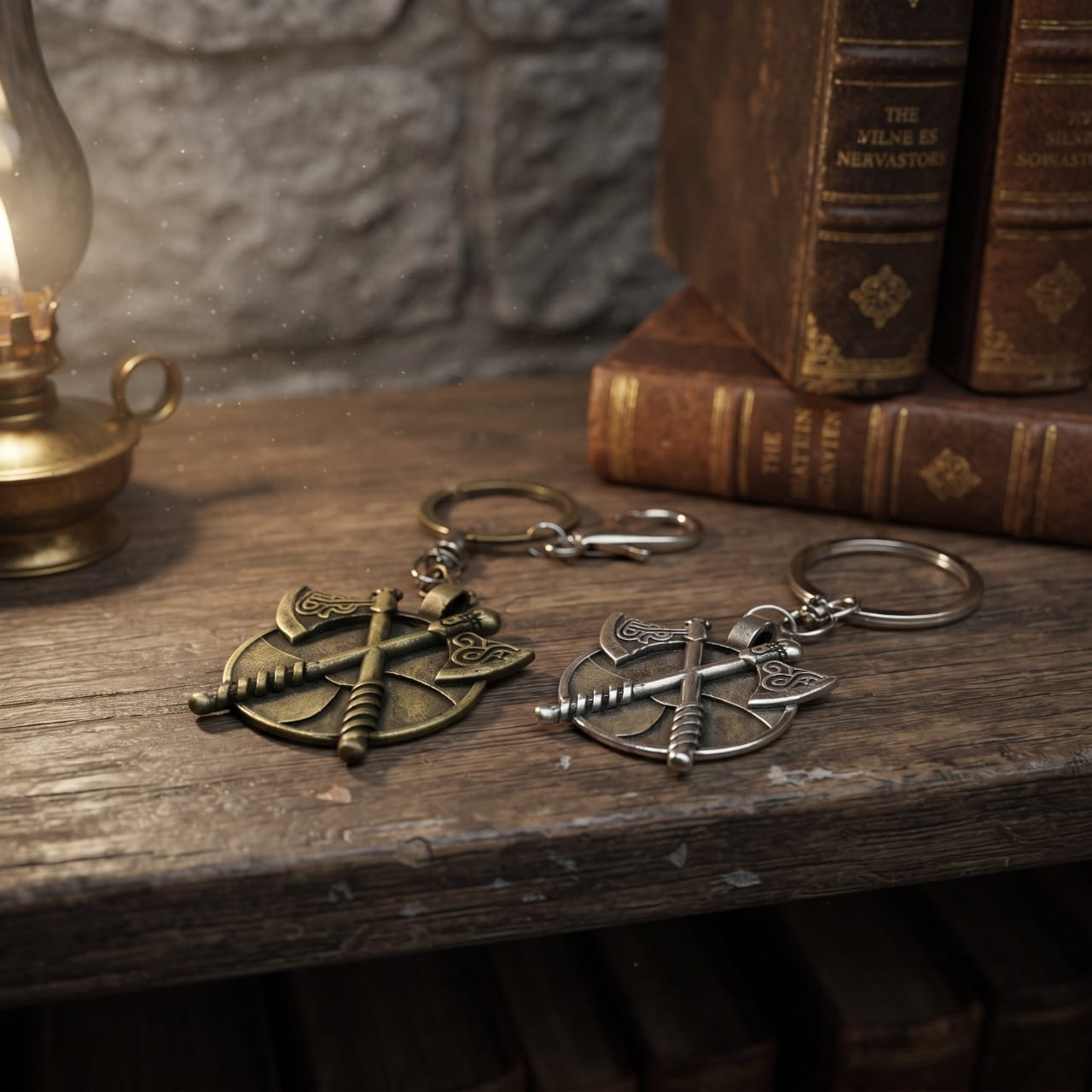
Several models share this segment: a 10 × 4 cm Mjölnir bottle opener that actually works on a bottle cap, a stainless steel runic Kolovrat, a shield with crossed axes, and a runic medallion mounted on braided paracord. All are made of steel or alloy, sized to fit in a pocket without snagging the lining.
Boxes, coasters, and pouches
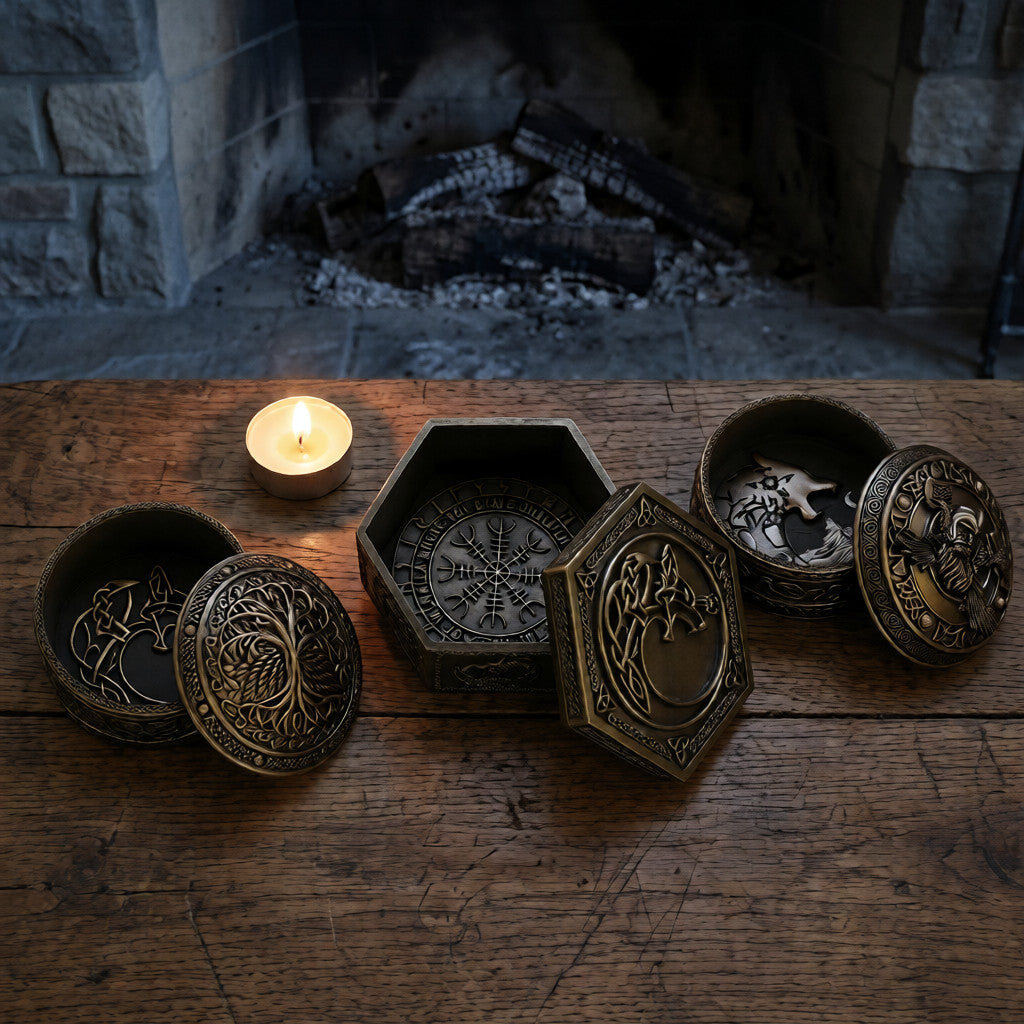
The bronze and resin jewelry boxes are the premium item in this department, with three designs to choose from: Yggdrasil and the wolf Fenrir, Odin and Fenrir, or a hexagonal Vegvísir. The lid is sculpted in relief, and the interior is lined.
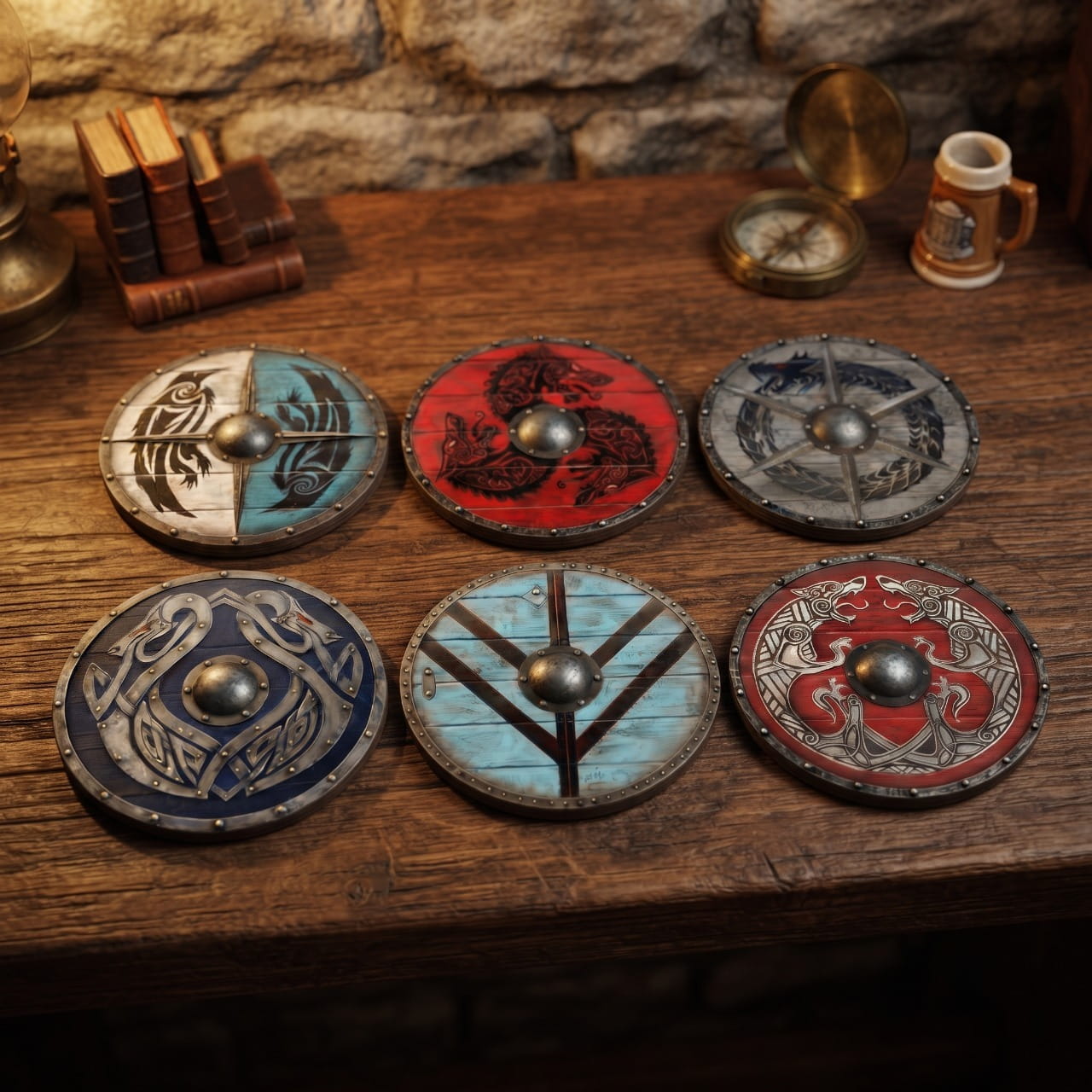
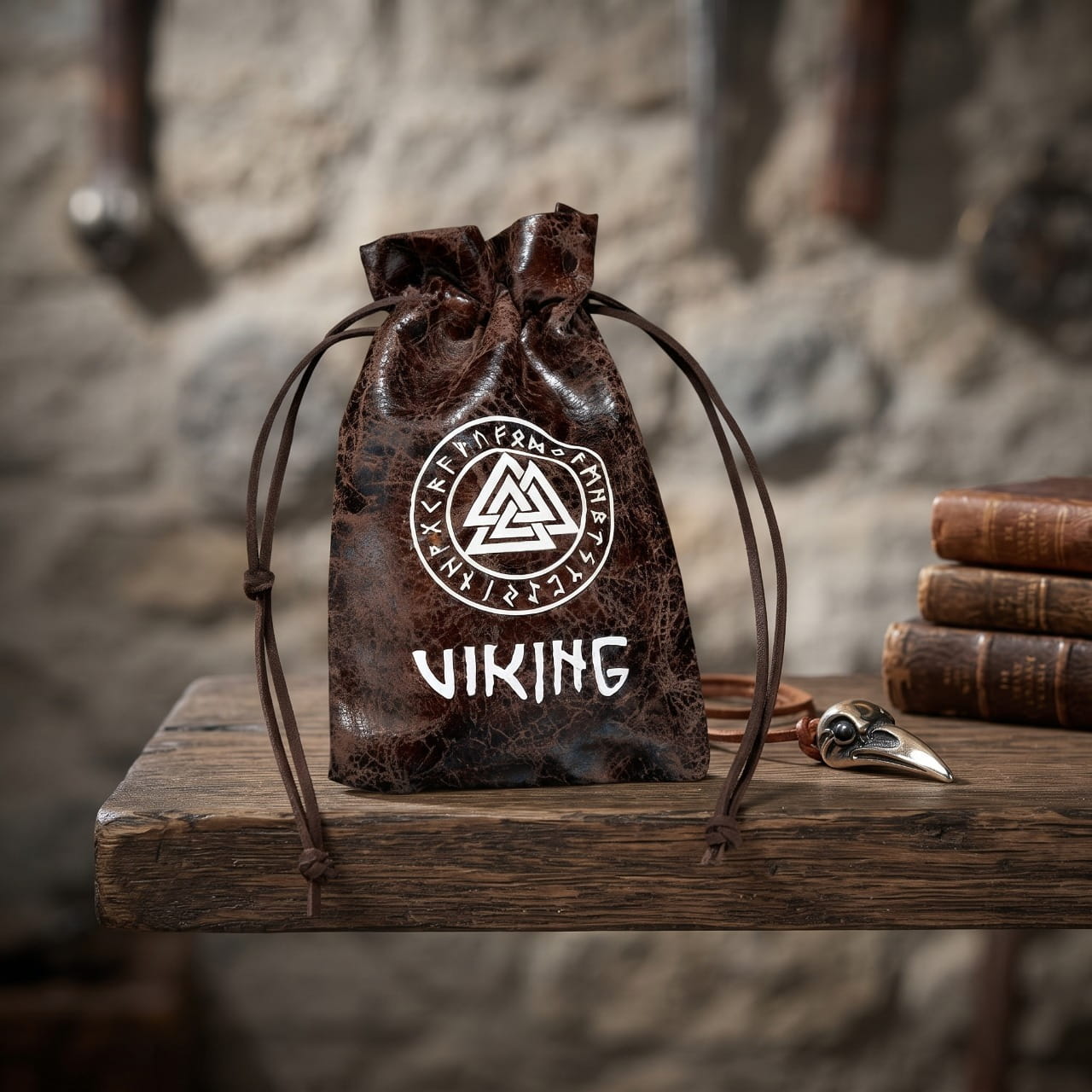
The wooden coasters, sold in a set of six and engraved with a warrior's shield, are the natural complement to a tankard. Finally, the leather pouch, one of the least expensive items in the shop, serves as a gift box for a piece of jewelry.
Maintenance
The stainless steel of the keychains and beads can be cleaned with a soft cloth and lukewarm soapy water; it does not rust and can withstand pockets, rain, and perspiration. The bronze of the boxes will develop a patina over time and can be revived with a dry cloth, without any product. The wood of the coasters and the rune set should never be soaked: wipe them down, let them dry flat, and keep them away from direct heat sources.
Frequently Asked Questions
How many runes are in the set? Twenty-five wooden pieces, delivered with a guide and a pouch. The Elder Futhark itself consists of twenty-four signs.
Is rune casting a real Viking practice? No, not in its current form. Ancient sources describe Germanic fortune-telling practices, but no Scandinavian casting method has come down to us: what is practiced today is a modern reconstruction.
How many beads are in a set? Twenty-four, one for each rune of the Futhark, in silver-colored or gold-colored steel.
Are the beads suitable for a thin beard? Choose the diameter based on the actual thickness of the hair lock. If it's too wide, the bead will fall; if it's too tight, it will damage the hair.
Does the Mjölnir bottle opener actually work? Yes, it is a 10 × 4 cm steel bottle opener mounted on a keychain ring.
Which small gift should I choose? The leather pouch, the set of six coasters, or the Kolovrat keychain and Mjölnir bottle opener.
What are the delivery times and costs? Tracked delivery is free on orders over €49, regardless of the delivery country.
Also explore: browse our Viking decor, our Norse god statues, and our best sellers.