
Filters
8 products
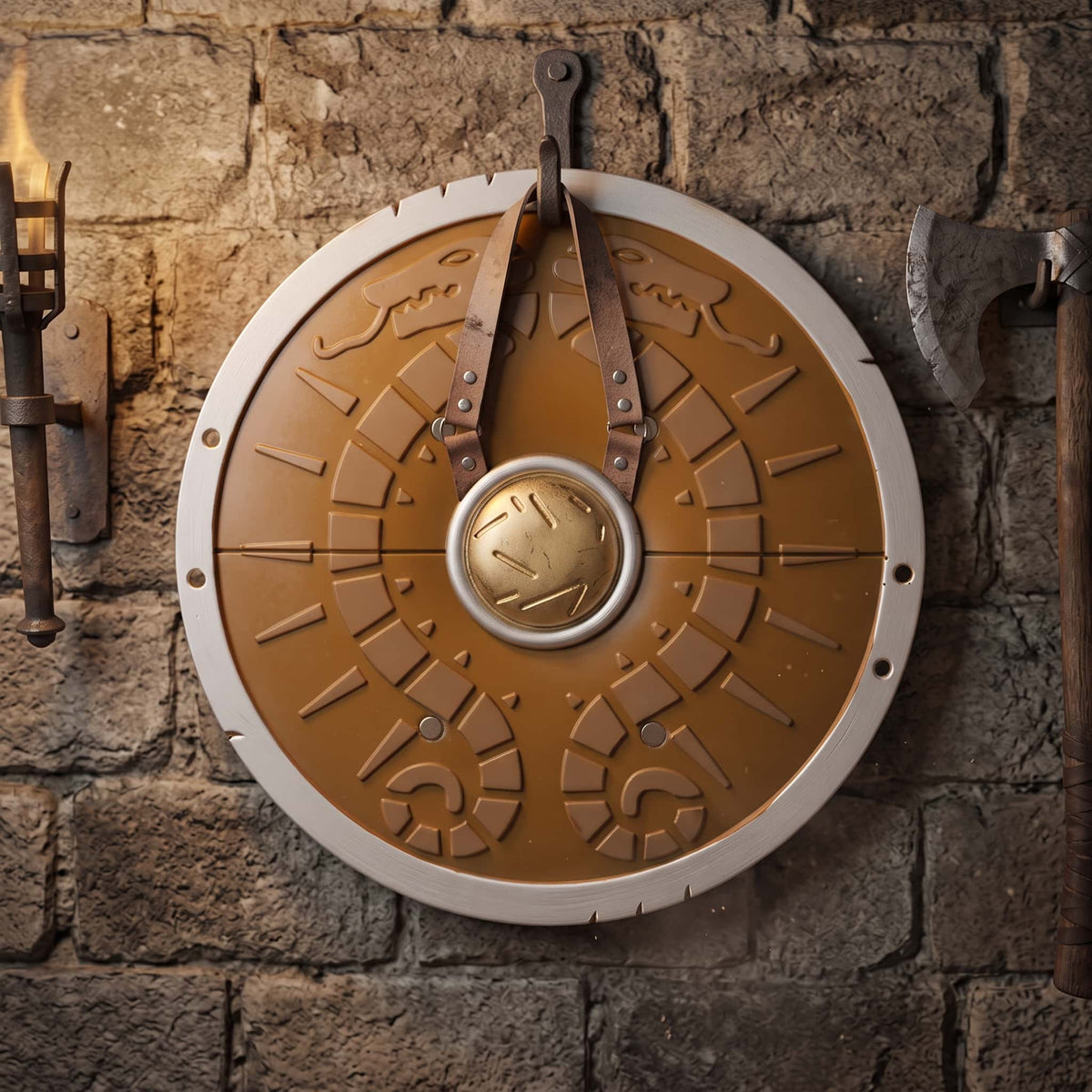
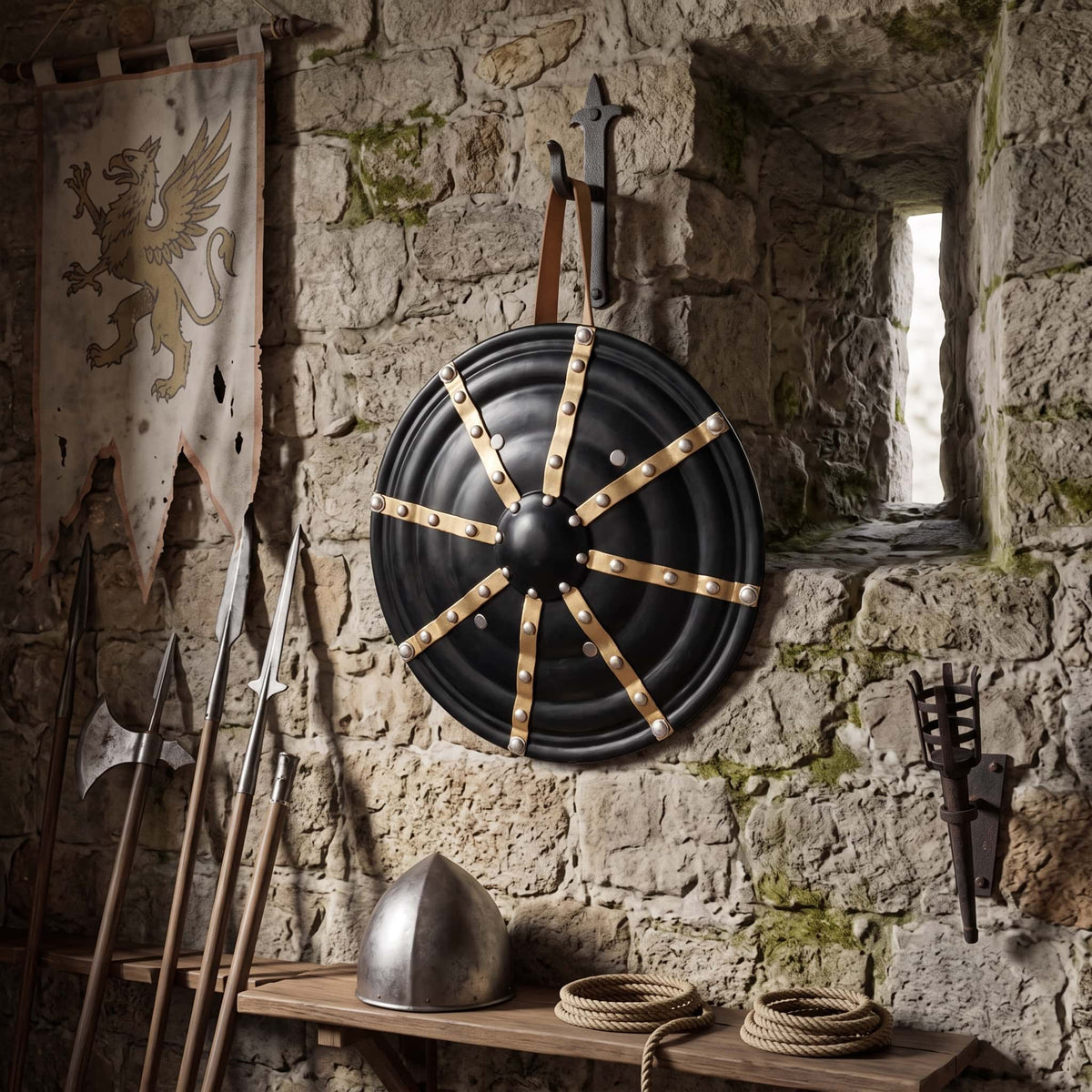
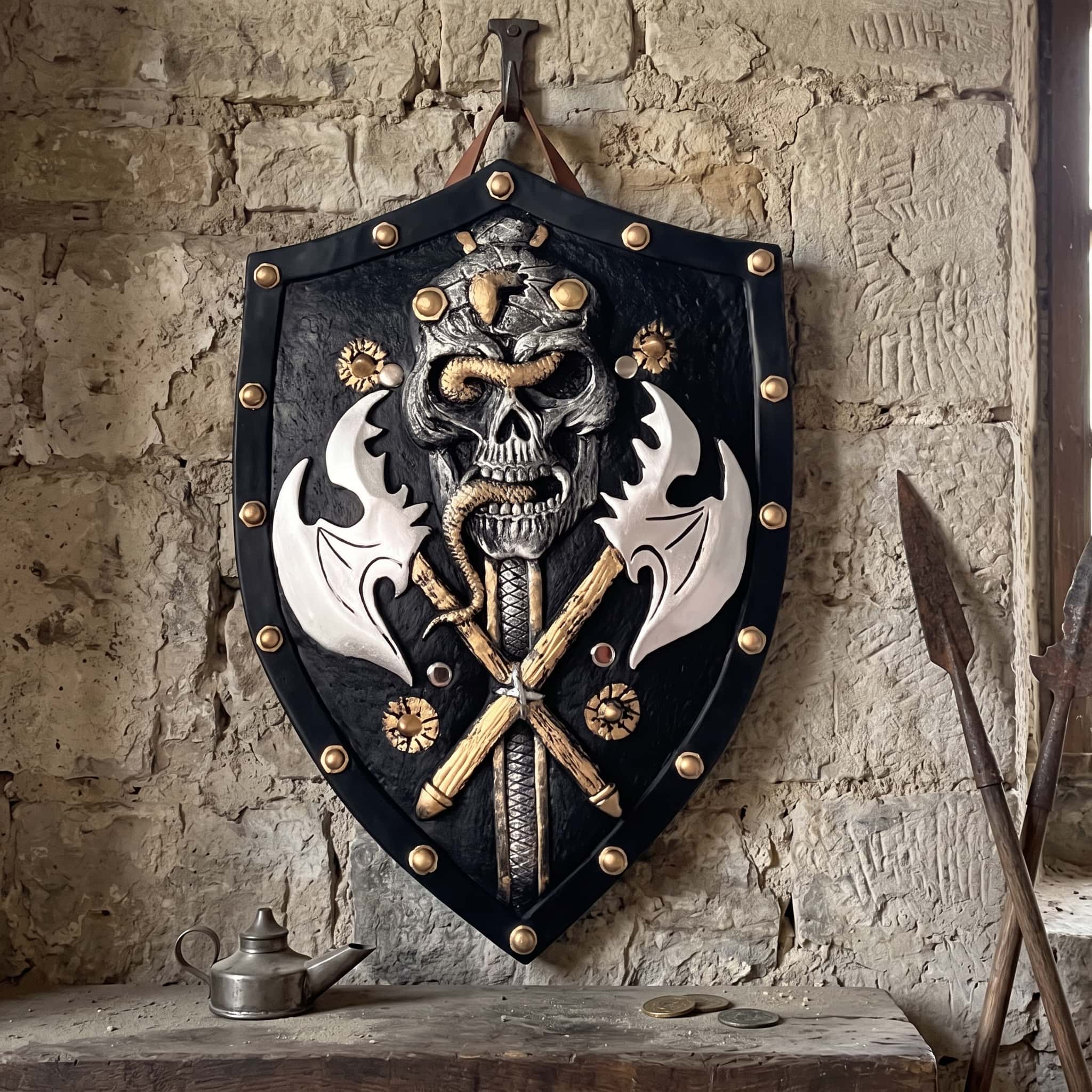
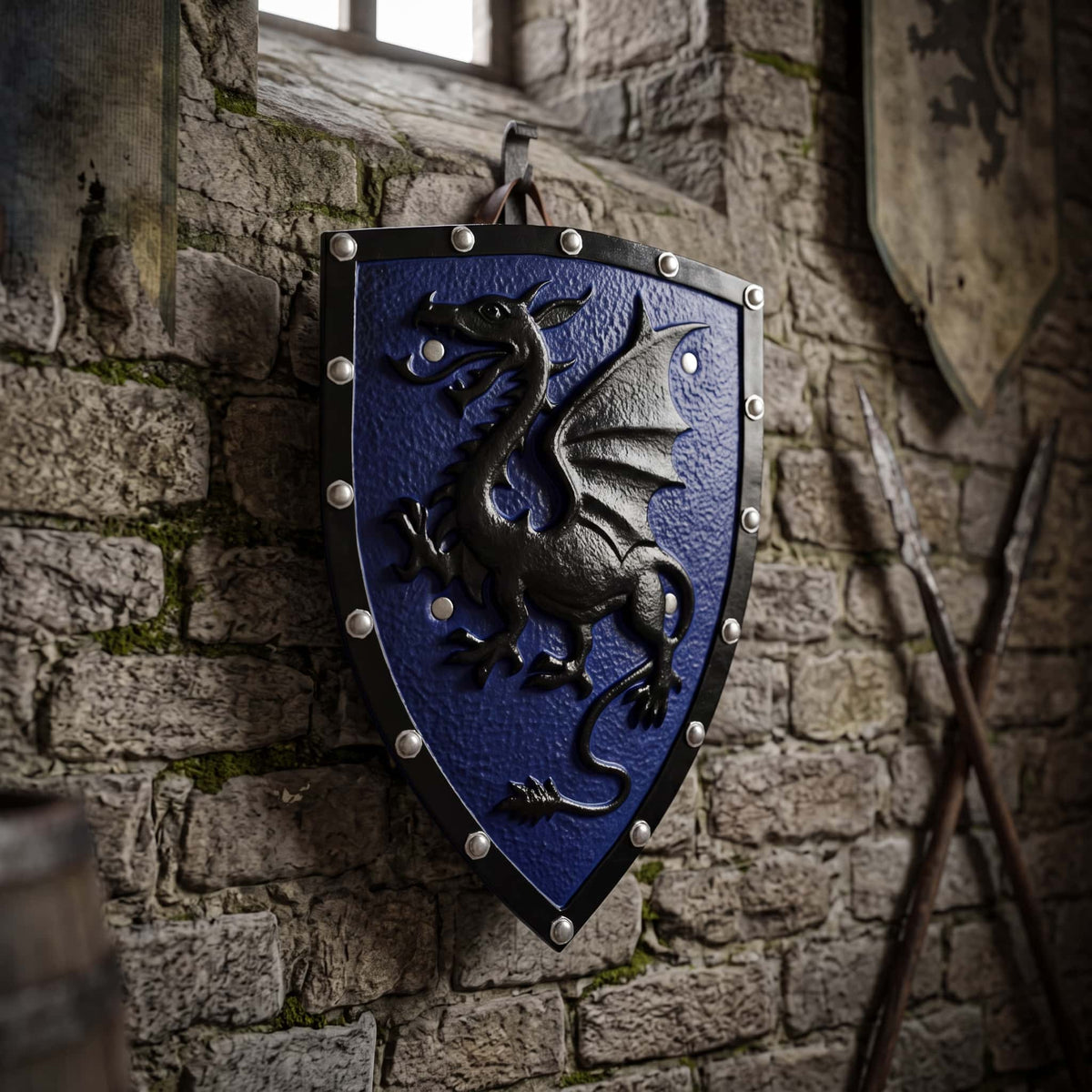
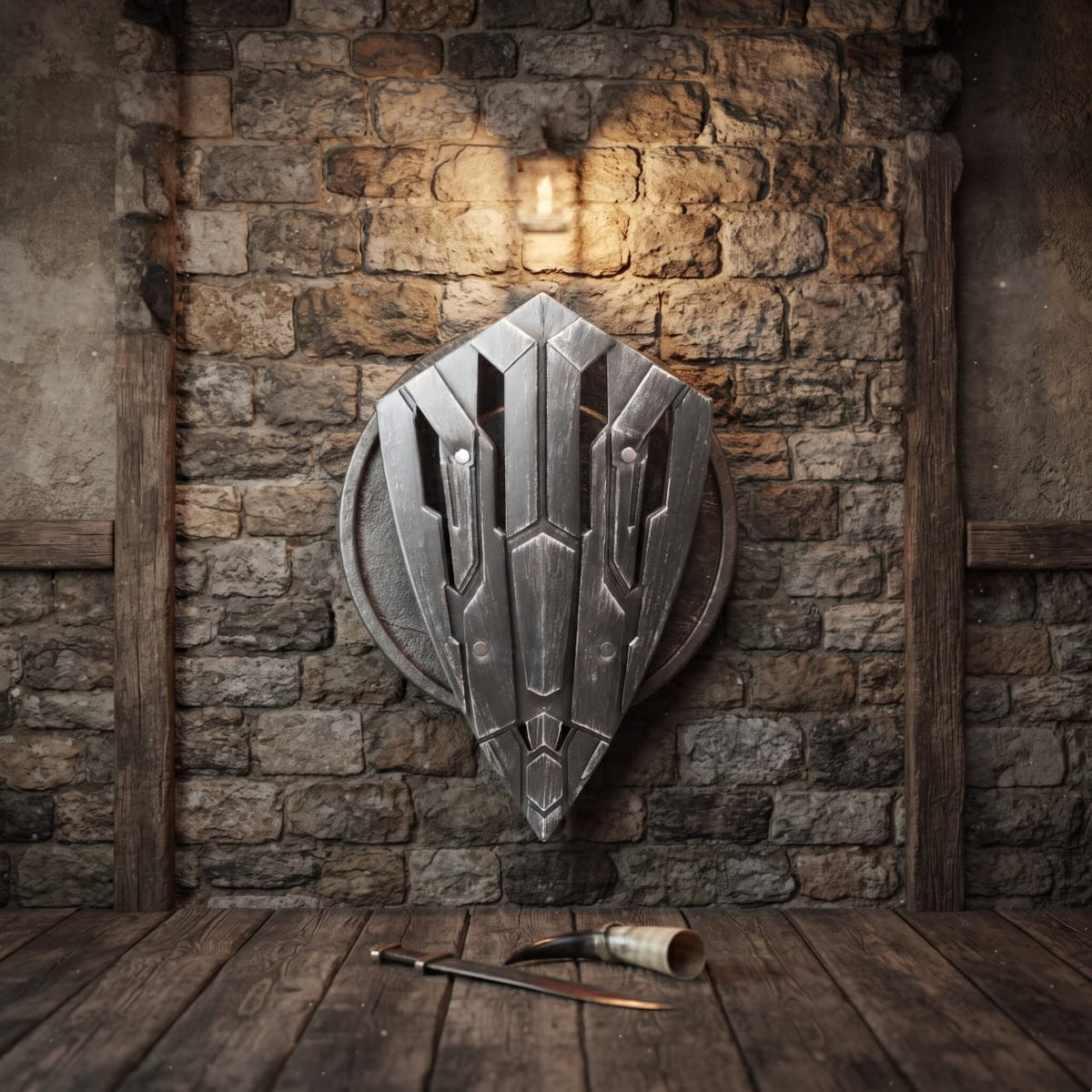

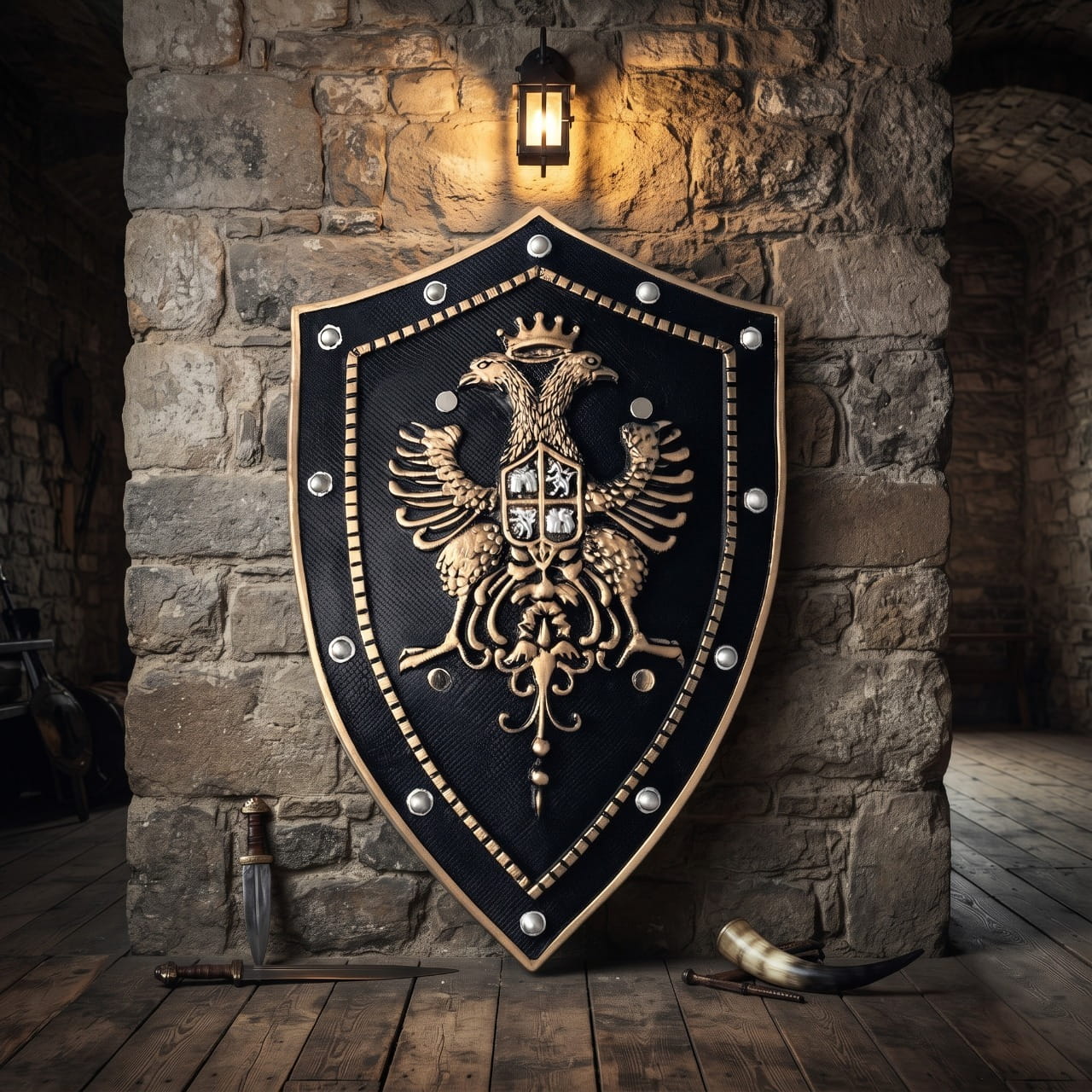

Viking Shields — en savoir plus
This section brings together every shield in the shop: Norse-inspired round shields, and heater shields and elongated shields, closer to the Middle Ages or to fantasy than to the Viking Age.
Round or heater: which to choose
Viking Age shields were essentially round: for the historical silhouette, the first row is the one to look at.
| Shape | Dimensions | Best for |
|---|---|---|
| Round shield | 44 to 53 cm | the Viking silhouette: costume, photos, wall decor |
| Heater or elongated shield | 48 to 55 cm high, 33 to 35 cm wide | a medieval or fantasy costume, heraldic decor |
The one piece of gear everyone had
If any single object deserves to be called Viking equipment, it's the shield. It cost a few planks and a strip of iron; it protected more effectively than any affordable armor; and the law sometimes made it compulsory — several Scandinavian law codes required a free man to turn up equipped, shield included.
Gokstad: sixty-four shields in one find
What we know comes mostly from a single find. The Gokstad ship, in Norway, buried around 900, carried sixty-four shields lined up along its sides, thirty-two on each side. No other site has yielded as many in a single group.
They provide precise figures, and those figures are surprising:
- A diameter of about 94 cm — much larger than most modern replicas.
- A thickness of only 6 to 10 mm, in butted linden planks, a light wood that doesn't split easily.
- An umbo — the central iron boss — riveted over a hole cut in the middle, behind which the hand gripped a simple crossbar.
- Alternating yellow and black paint, every other shield, all along the hull.
A shield this thin was not made to take blows head-on: it was made to deflect them, and to be replaced. The sagas speak of men going through several in a single fight.
The shield wall, and what we really know about it
The skjaldborg, the “shield wall,” is the obligatory scene in every Viking TV series: a tight row, shields overlapping, advancing as one block.
The sources mention it, but they never describe it with that much precision. Experimental reconstructions, for their part, reveal an awkward limitation: shields that overlap too much pin the arm and prevent striking. The most plausible formation leaves each man room to move, a far cry from the Roman tortoise of the movies. It's a fine image — but only an image. Our feature on the Viking shield in combat details its construction and defensive techniques.
What you'll find here
This section does not sell combat gear. The pieces offered are replicas for costume and wall decoration, in PU foam. They cannot take a single blow.
Two uses, two choices:
- To carry — weight decides everything. A 50 cm foam shield can be held all day; beyond 60, the arm tires quickly, especially with a single central grip.
- To hang — diameter is what counts, and nothing else. Measure the available wall space before ordering: a 55 cm round takes up far more room than it seems on a screen.
The designs: what's attested and what isn't
The traces of paint that have been found are rare and fragmentary. Gokstad gives yellow and black; other fragments suggest red. Alternating segments, in quarters of color, are therefore plausible.
On the other hand, the large painted knotwork designs, stylized ravens and rings of runes that cover modern shields have no archaeological equivalent. They are beautiful, they are modern, and we'd rather say so than sell an invention as a source. Our guide to the Futhark alphabet at least lets you check whether the runes on a design mean anything.
Caring for a replica
PU foam fears direct sunlight, which yellows the paint within a few months behind a picture window, and storage under pressure, which leaves a permanent crease. Hang rather than stack.
On metal or patinated parts, a dry cloth only: never use silver polish, which strips the oxidation from the recesses and wipes out the design.
Frequently asked questions
How big was a real Viking shield?
About 94 cm in diameter for those from Gokstad, with a thickness of only 6 to 10 mm. Most modern replicas are considerably smaller.
What was it made of?
Butted linden planks, a light wood, with a central iron boss — the umbo — riveted over a hand hole.
Did the shield wall really exist?
The sources mention it, but without describing it precisely. Reconstruction trials show that shields overlapping too much make fighting impossible: the real formation was probably much looser than the one in TV series.
Do these shields actually protect you?
No. They are costume and decorative replicas in PU foam, with no protective function whatsoever.
Explore further: Viking axes and our full range of Viking weapons.