
Filters
5 products

Viking Hammers — en savoir plus
This section brings together every hammer and every mace in the shop: Mjölnir replicas, war hammers and maces.
A clarification no seller makes
Let's say it right away: the war hammer is not a Viking weapon. Viking Age excavations in Scandinavia yield spears, axes, swords, knives — no war hammers. The long-handled war hammer people picture here appeared in Europe much later, in the late Middle Ages, as an answer to plate armor the Vikings never encountered.
So this section exists for another reason, and a better one: Mjölnir. Thor's hammer is not a piece of warrior's equipment, it's an object of myth — and it is by far the Norse symbol best attested by archaeology.
Mjölnir: more than a thousand witnesses
More than a thousand pendants shaped like a hammer have been found in Scandinavian graves and hoards, in silver, bronze and iron, from Denmark to Russia. This is no historian's hypothesis: it was a mass-produced object, worn around the neck by ordinary people.
Their spread accelerated in the 10th century, precisely when the Christian cross was spreading through the North. Many read this as a response: showing which side you were on. The most intriguing object comes from Fyrkat, in Denmark — a caster's mold that could cast, in the same pour, a cross and a hammer. The smith didn't choose: he sold to both.
What the myth says, and what it doesn't
In Snorri's Edda, Mjölnir is forged by the dwarves Brokkr and Sindri. It always returns to the hand that throws it and never misses its target — but it has a flaw, and it's a detail few people know: its handle is too short. Loki, turned into a fly, had stung the eyelid of the dwarf working the bellows, and the handle came out of the forge botched.
The name itself is still debated: it is most often linked to a root meaning “to grind” or “to crush,” related to the word that gave Russian molnija, lightning.
What you'll find here
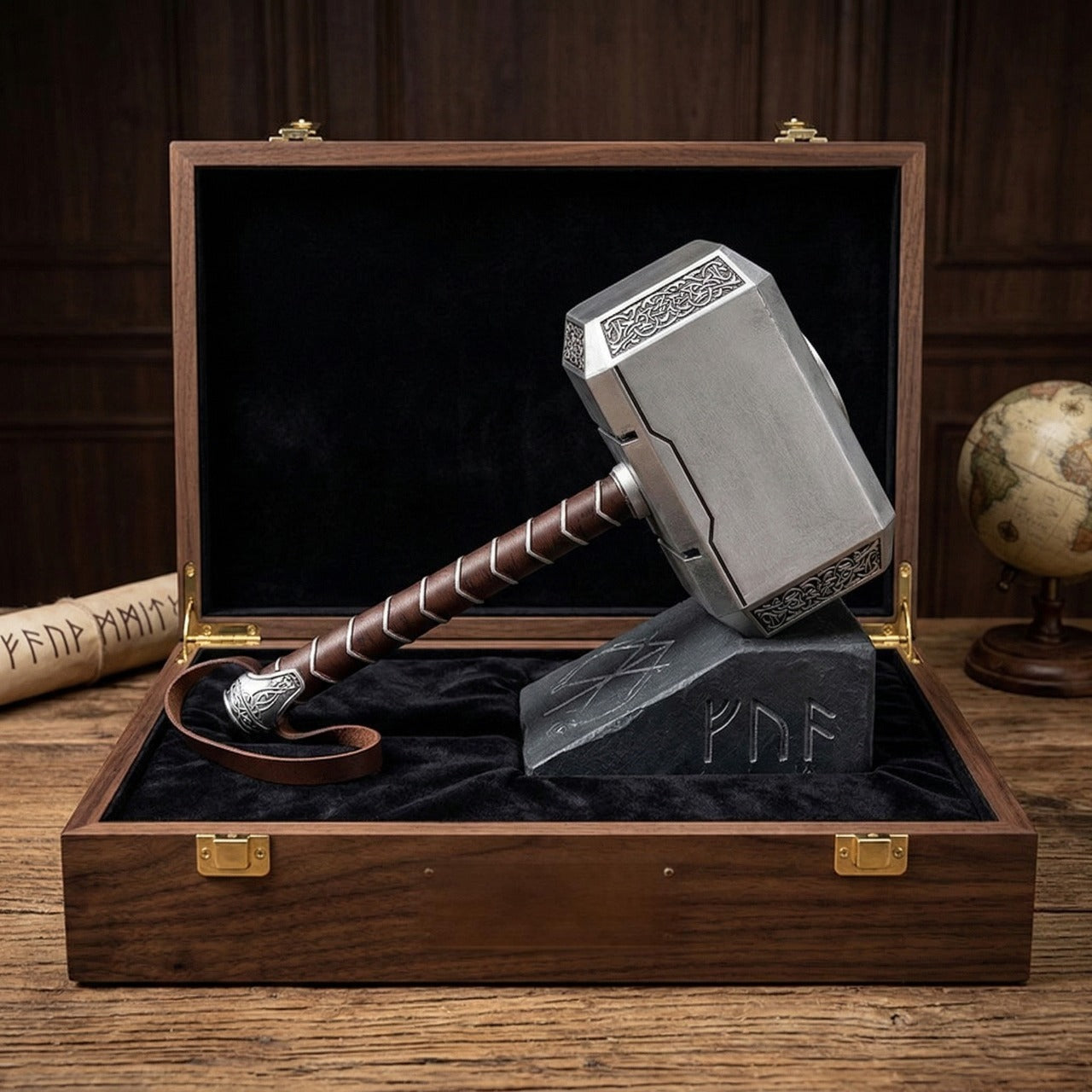
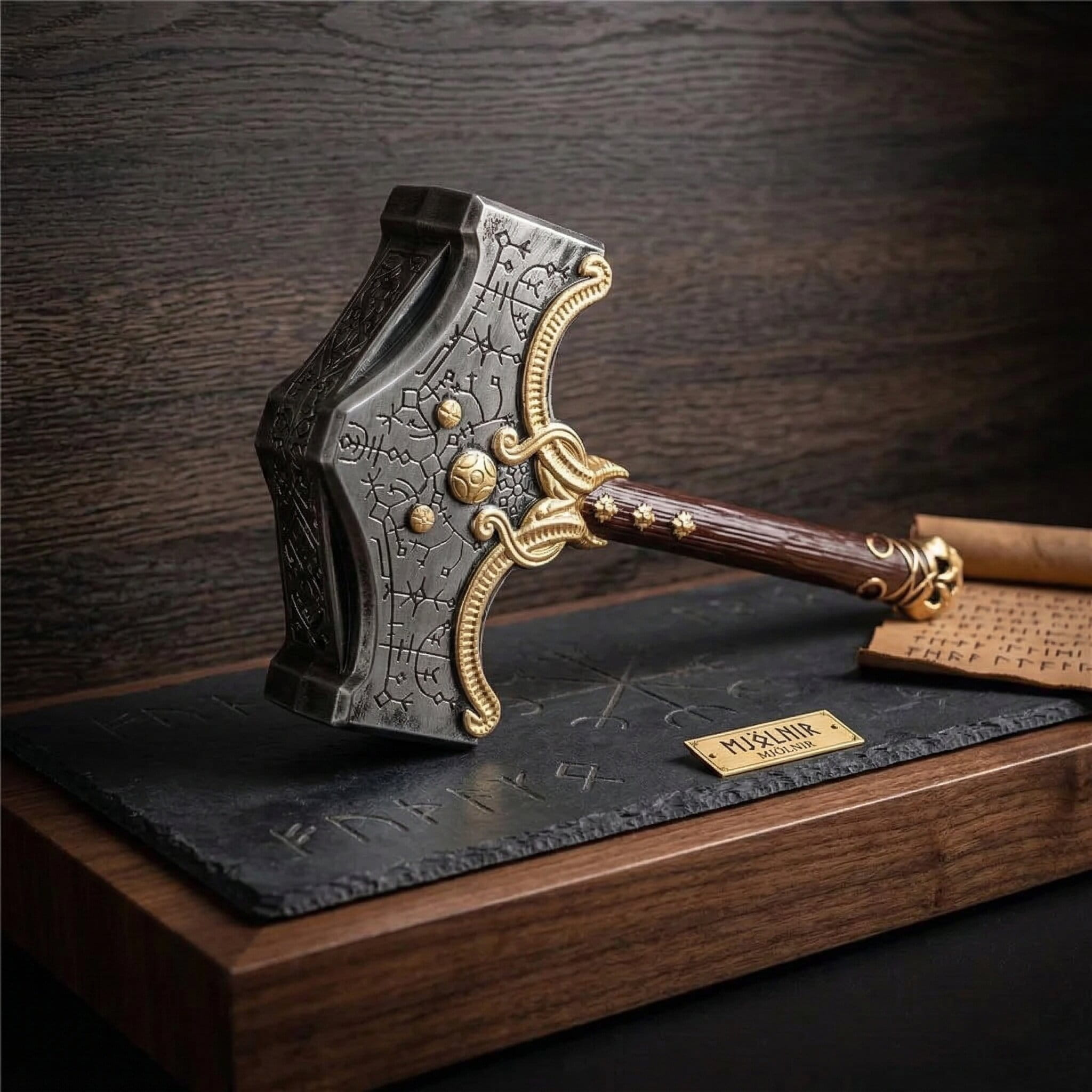
This section does not sell weapons. What you'll find are costume and decorative replicas, in foam or in resin and metal, to be handled as props and not as striking tools.
- Mjölnir replicas, with a massive head and a short handle, true to the silhouette that mythology and jewelry have handed down to us.
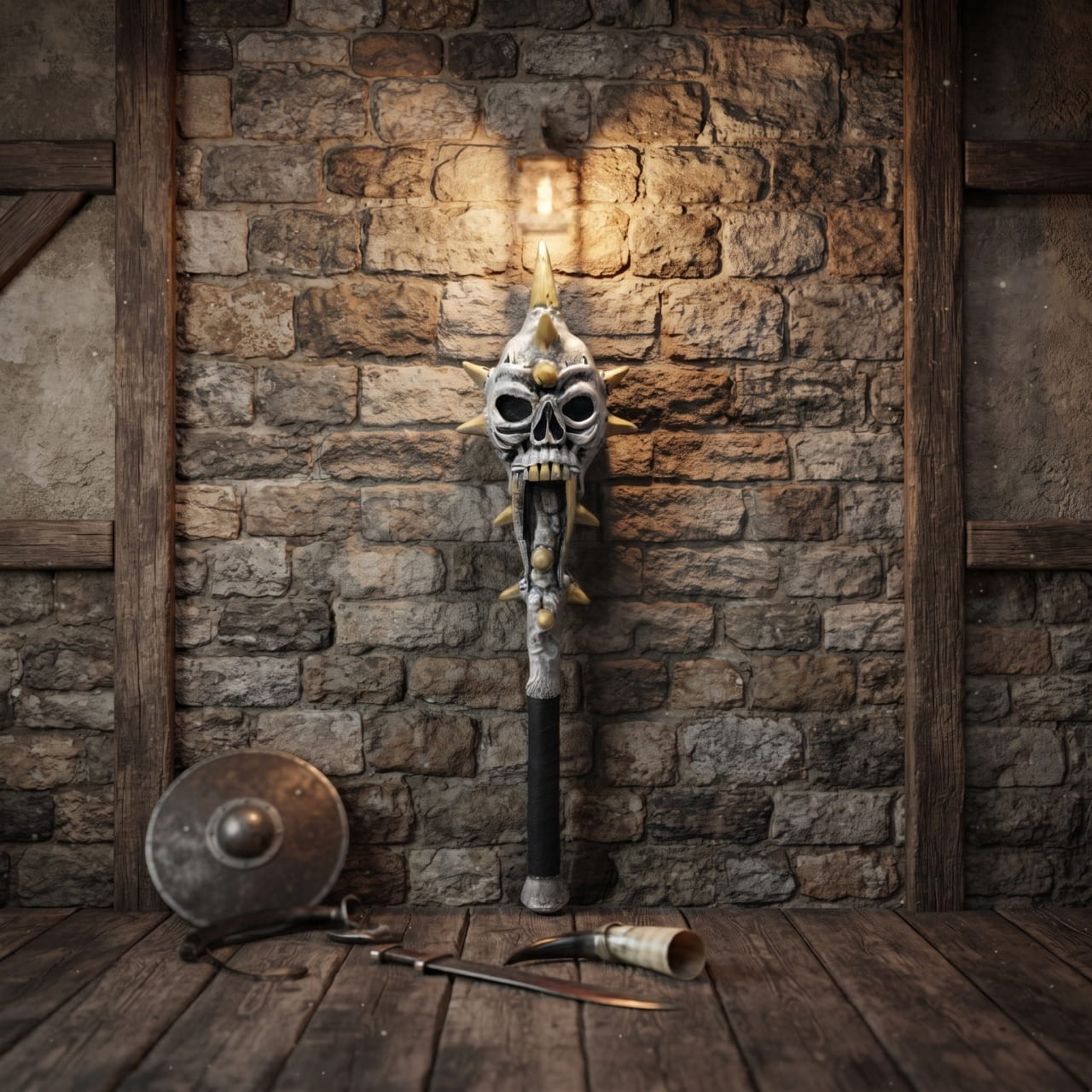
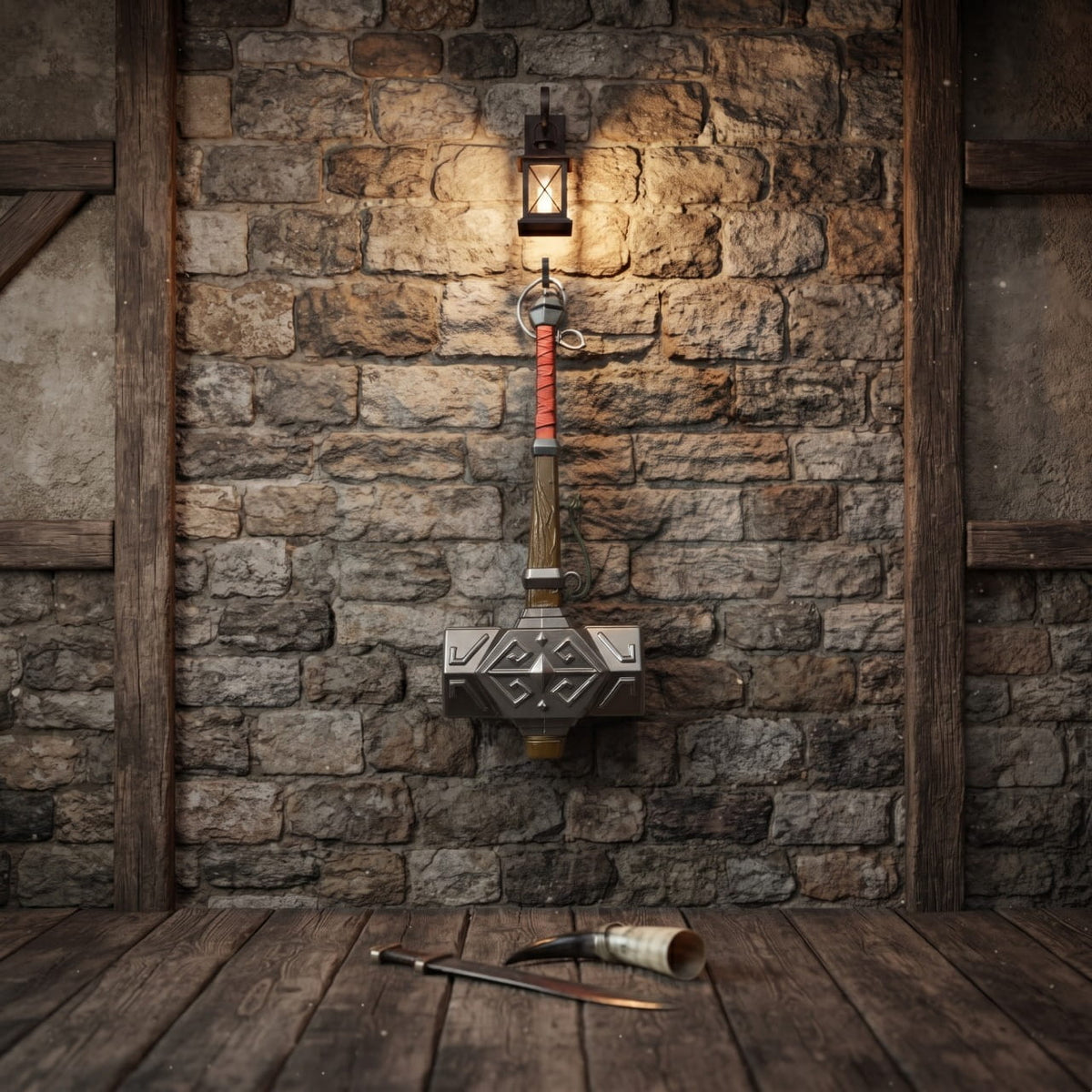
- Fantasy-inspired war hammers, with a broad head and a long handle. They come from video games and movies, not from excavations — we own that, and it says so on their product pages.
If you'd rather wear the symbol than the object, our Mjölnir jewelry takes the same shape as pendants, rings and beads.
Choosing and care
A Mjölnir replica is head-heavy by design: that's what gives it its look, and it's what tires the wrist after an hour. For carrying it for a long time, go for foam; for a display case, resin or metal, whose relief is incomparable.
A dry cloth on patinated pieces, never silver polish — it strips the oxidation from the recesses, which is to say the design. Keep foam out of direct sunlight, which yellows the paint behind glass.
Frequently asked questions
Did the Vikings fight with hammers?
No. No Viking Age excavation in Scandinavia has yielded a war hammer. The war hammer is a much later European weapon, born in response to plate armor.
Is Mjölnir attested?
As a symbol, massively: more than a thousand hammer-shaped pendants have been found in Scandinavian graves and hoards.
Why is Mjölnir's handle so short?
The myth explains it: Loki, turned into a fly, stung the dwarf working the bellows during the forging. The handle came out botched, and Thor kept it that way.
Can these replicas be used to strike?
No. They are costume and decorative props, in foam, resin or cast metal.