Filters
36 products
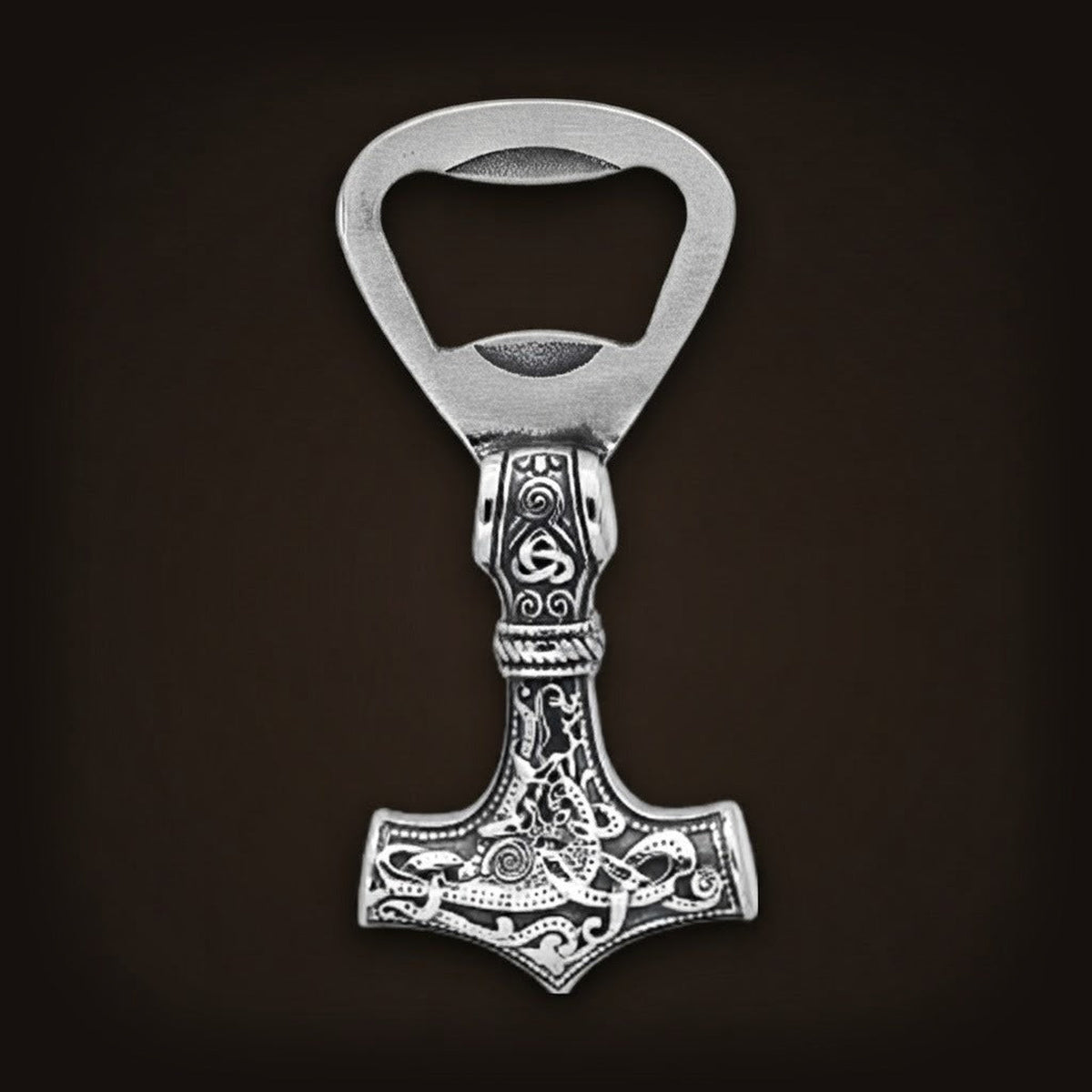


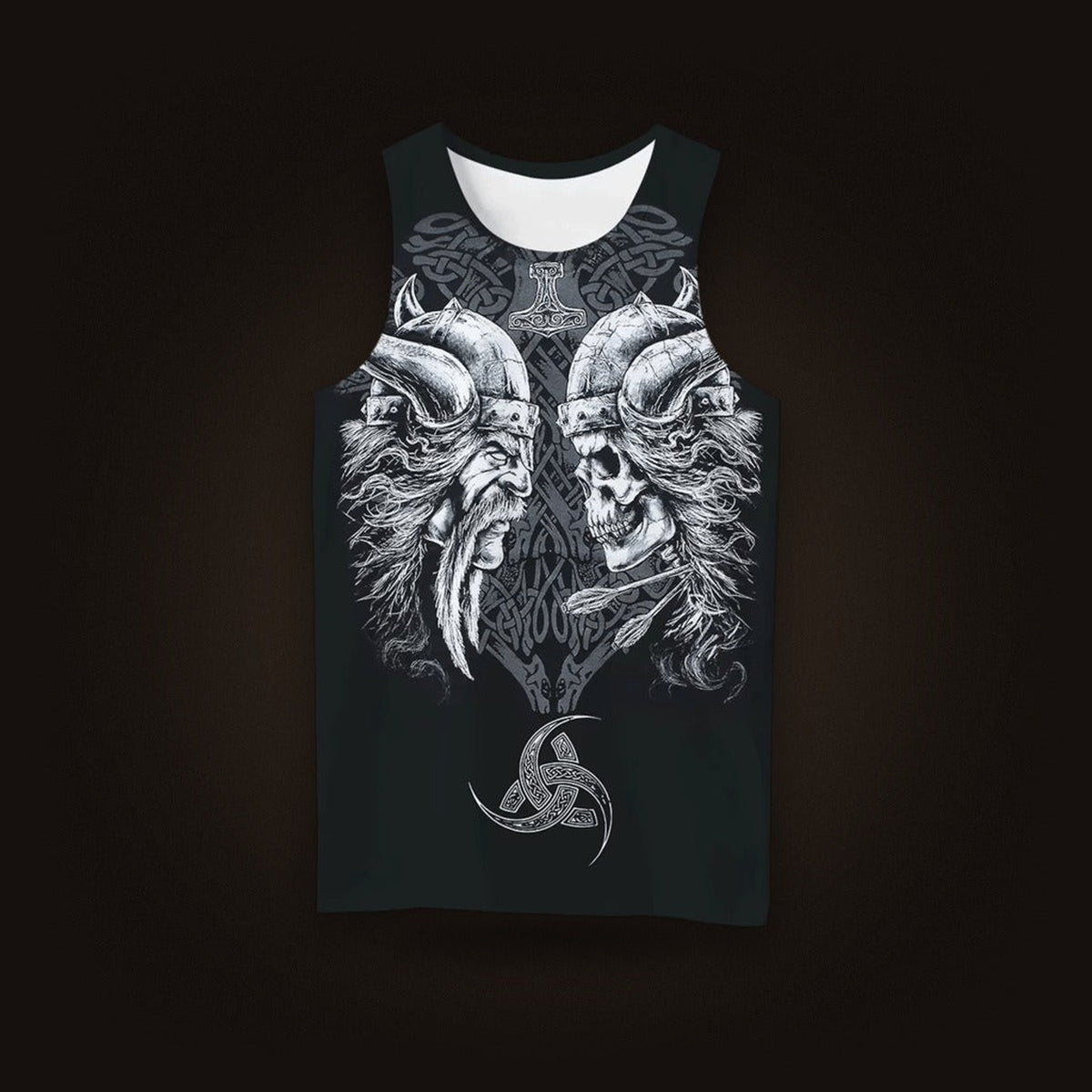

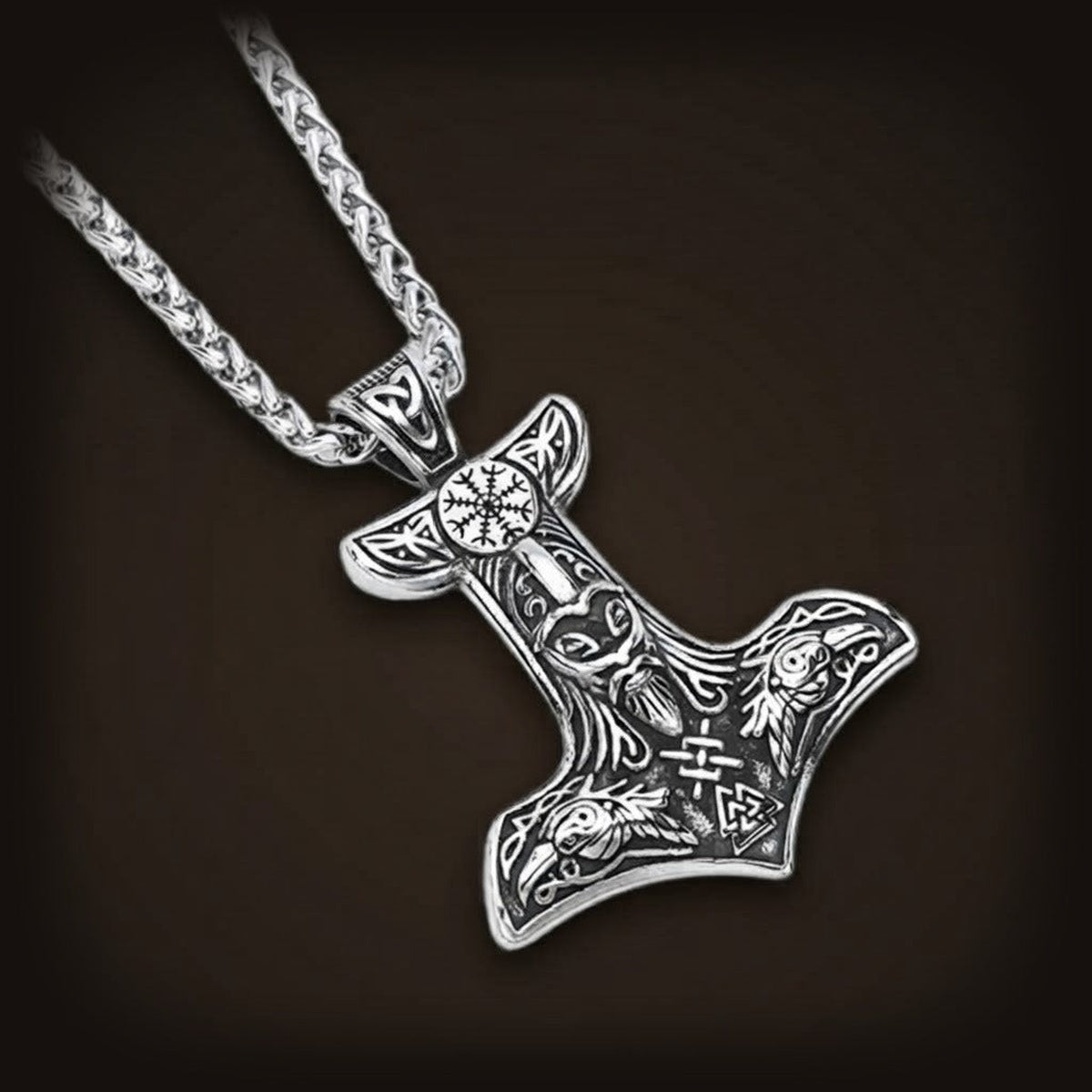
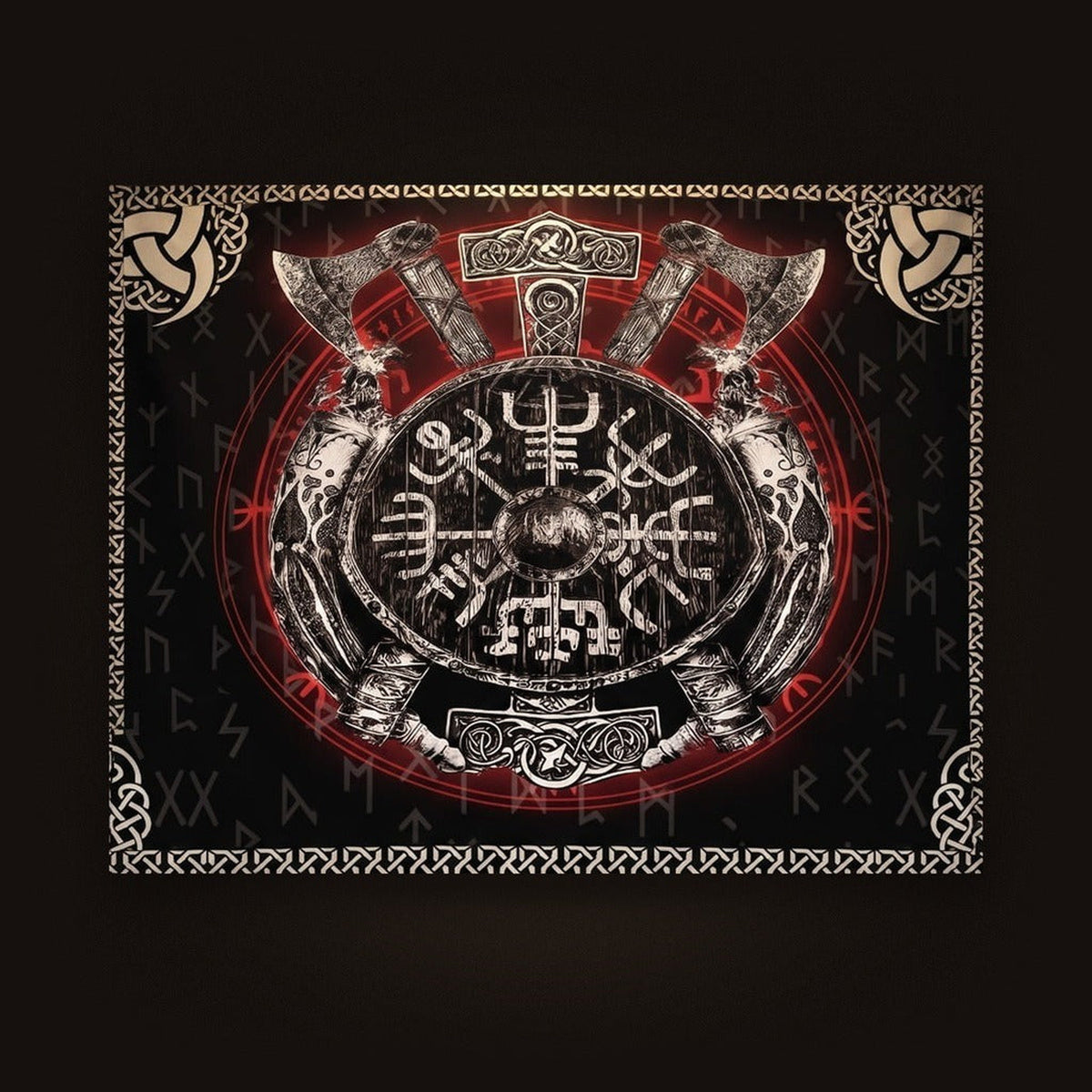
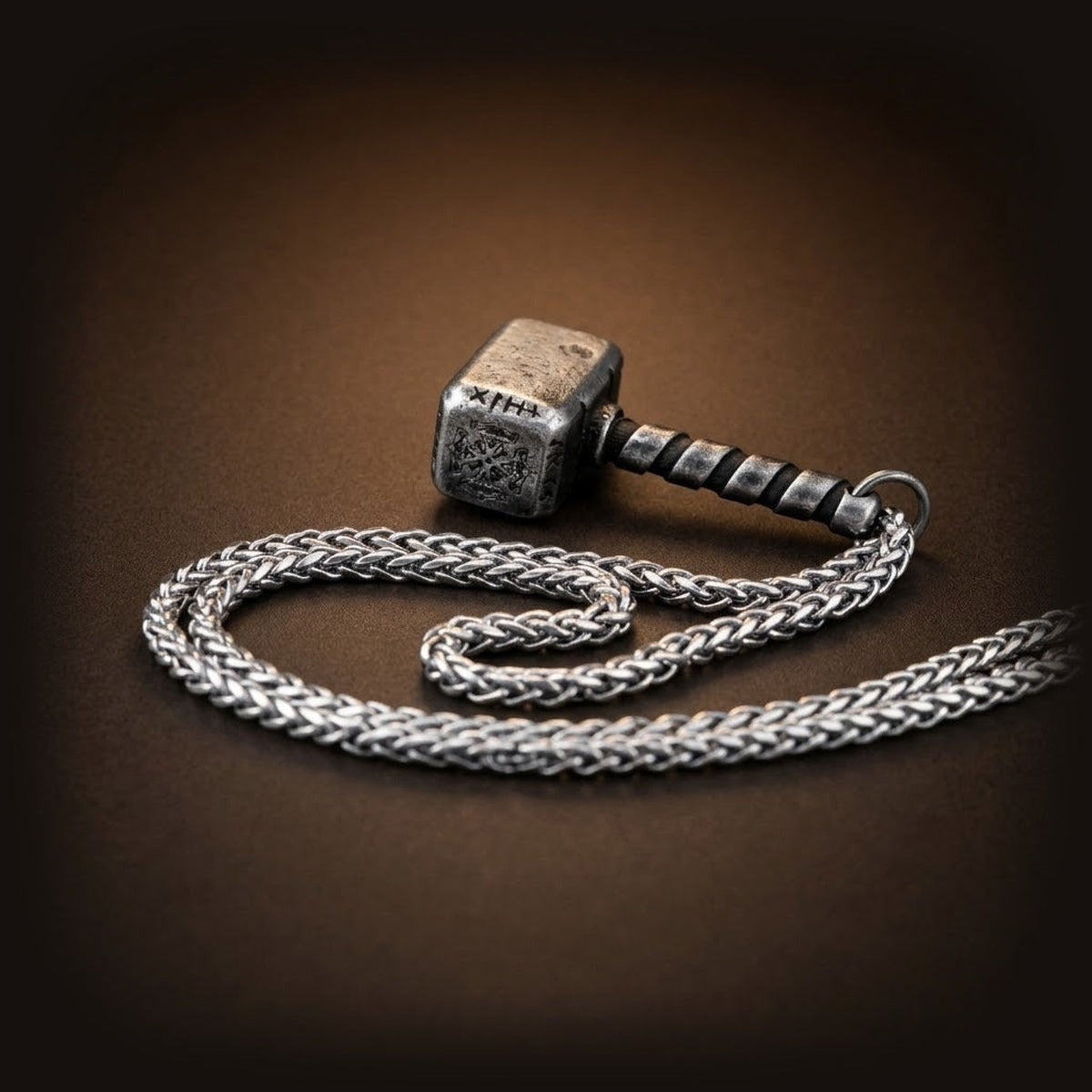
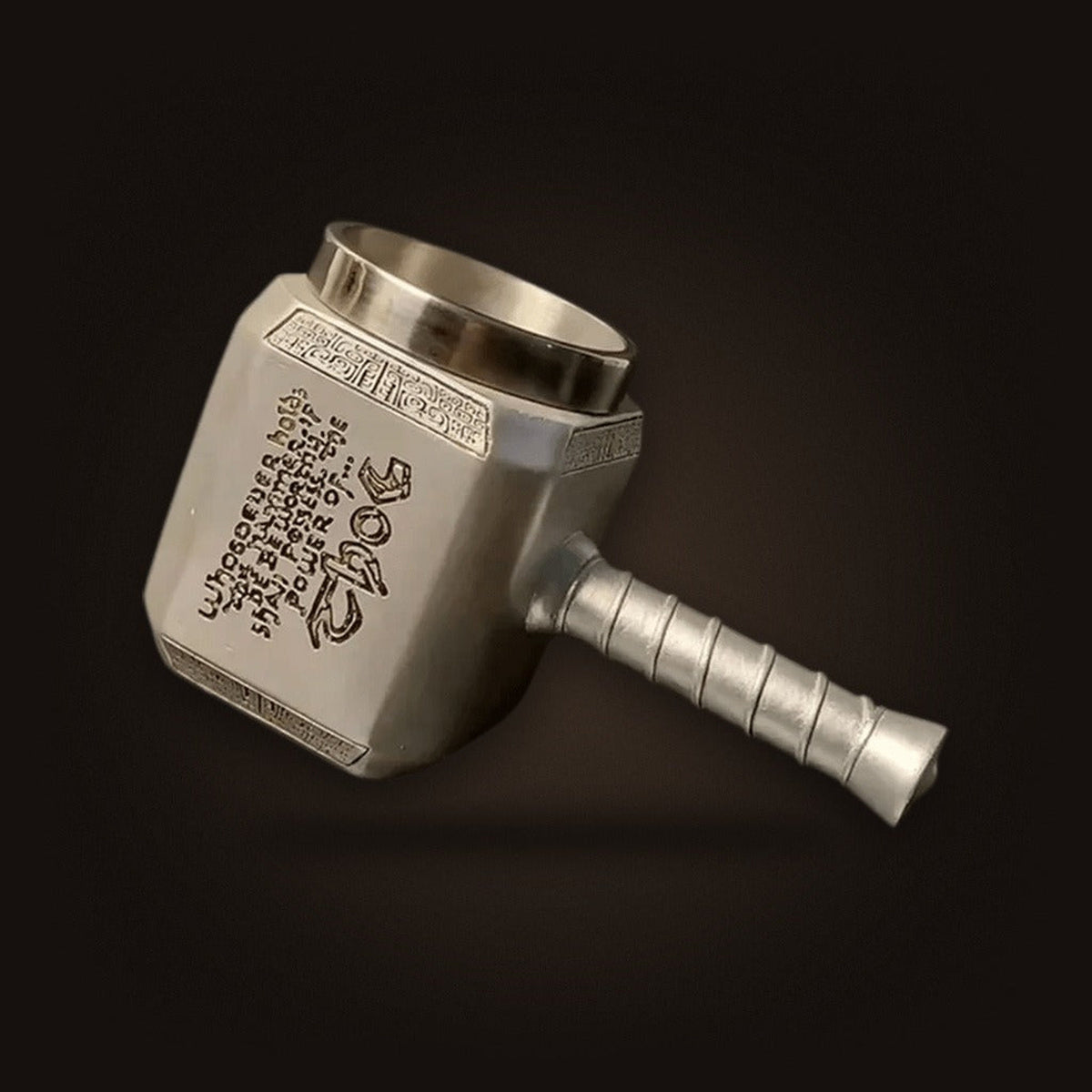


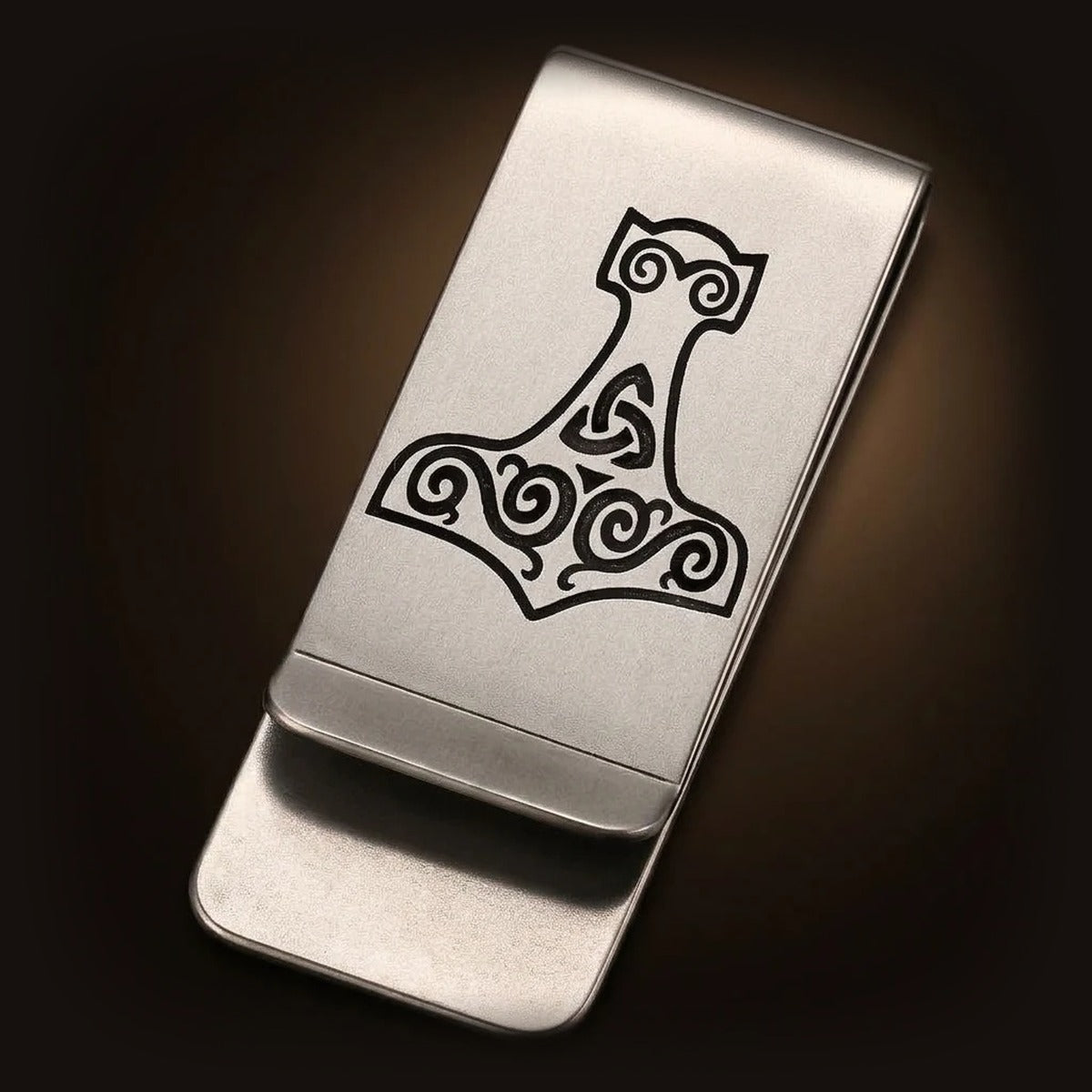





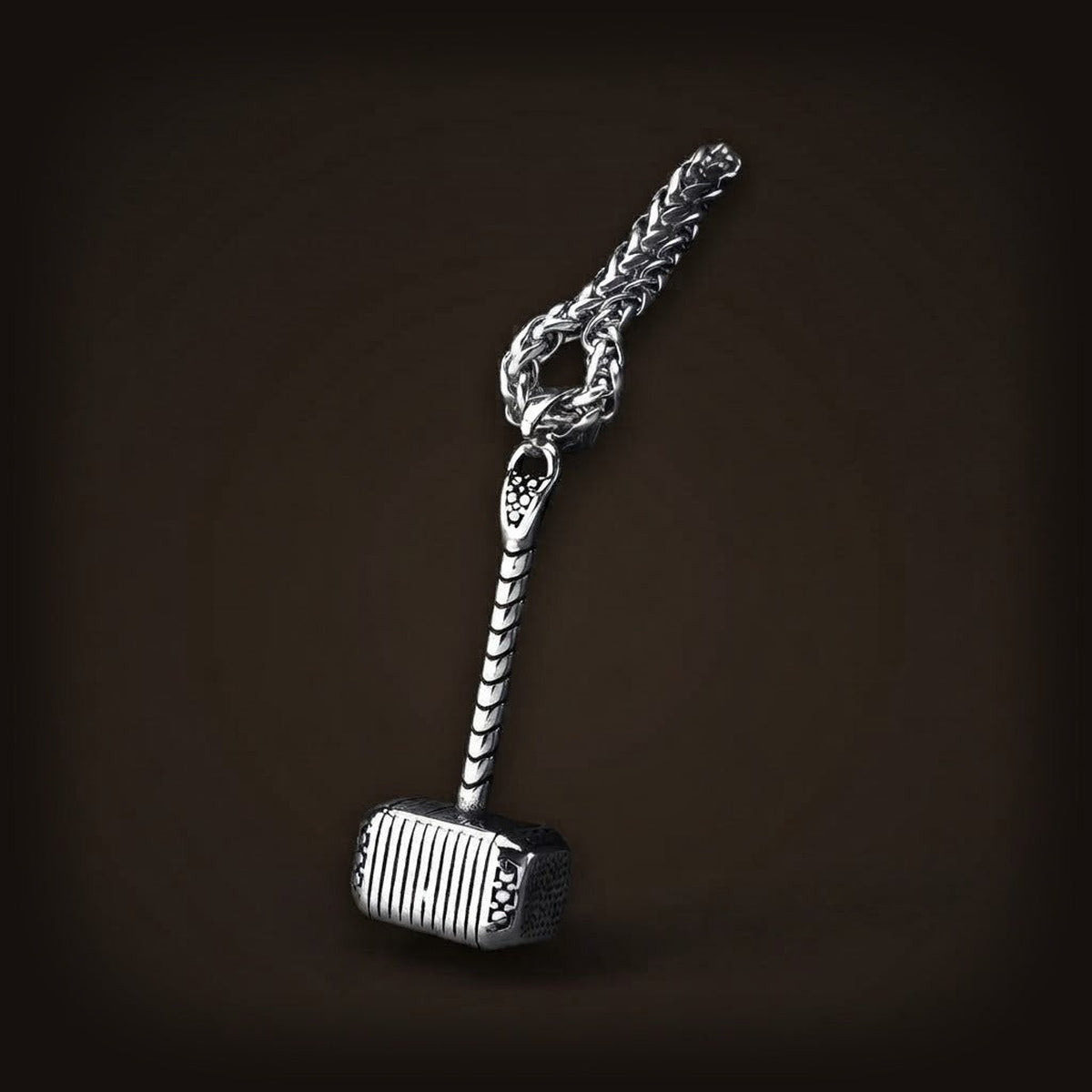


Mjölnir — Thor's Hammer — en savoir plus
The Mjölnir is the Viking symbol best documented by archaeology—by far. Where the Vegvísir originates from a 19th-century notebook and the Valknut never even had a name in its own time, Thor's hammer can be found by the hundreds in the display cases of Scandinavian museums. This page gathers what we truly know about it, and what we have to offer.
Mjölnir at Le Comptoir, by format
The hammer is worn, used for drinking, placed on the wall, and hung from the wrist. Here is how it is categorized in our shop, with real price ranges:
| Format | For whom |
|---|---|
| Watches | Discreet daily wear |
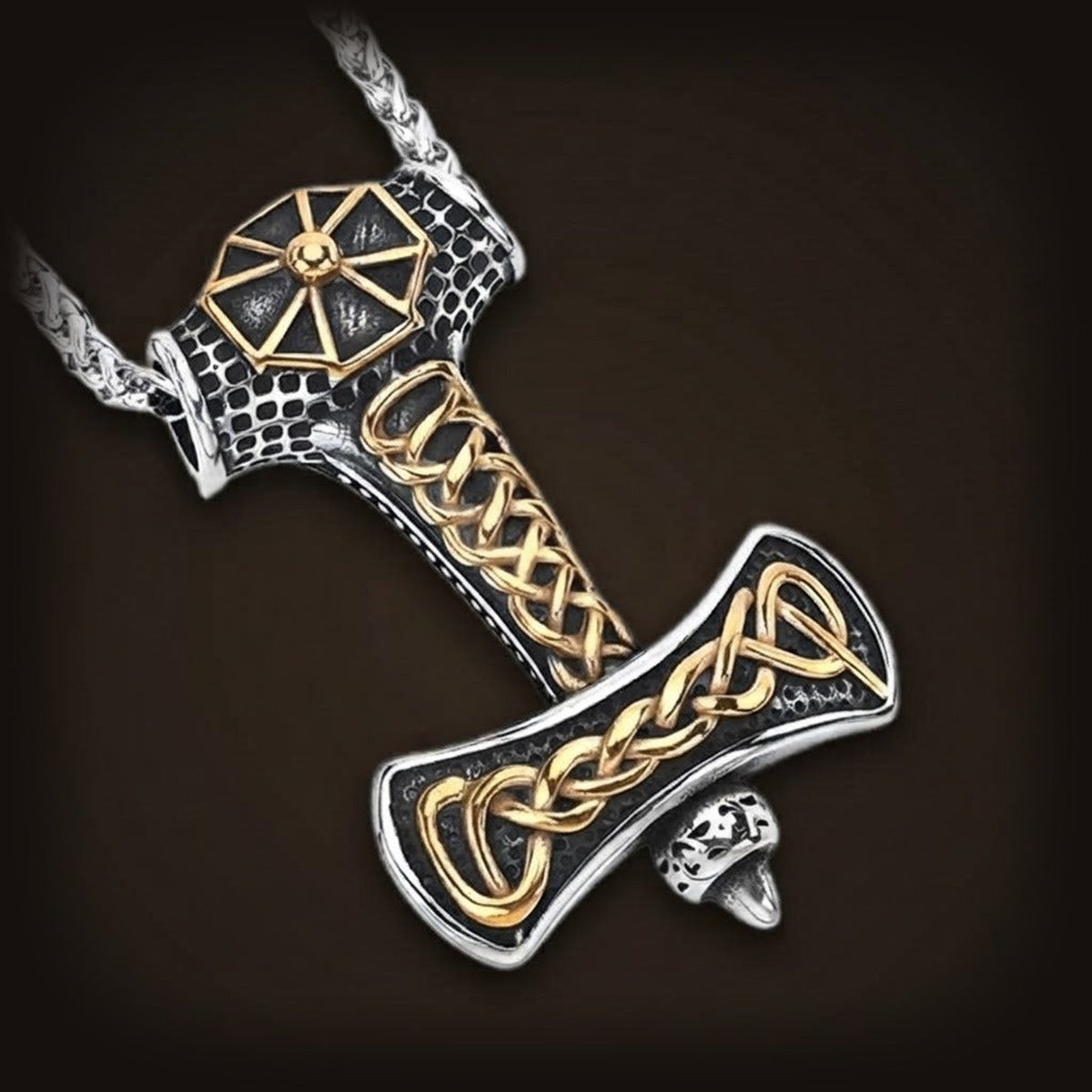
| Necklaces | The historical format of the amulet |
| Statues and replicas | Desks, shelves, display cases |
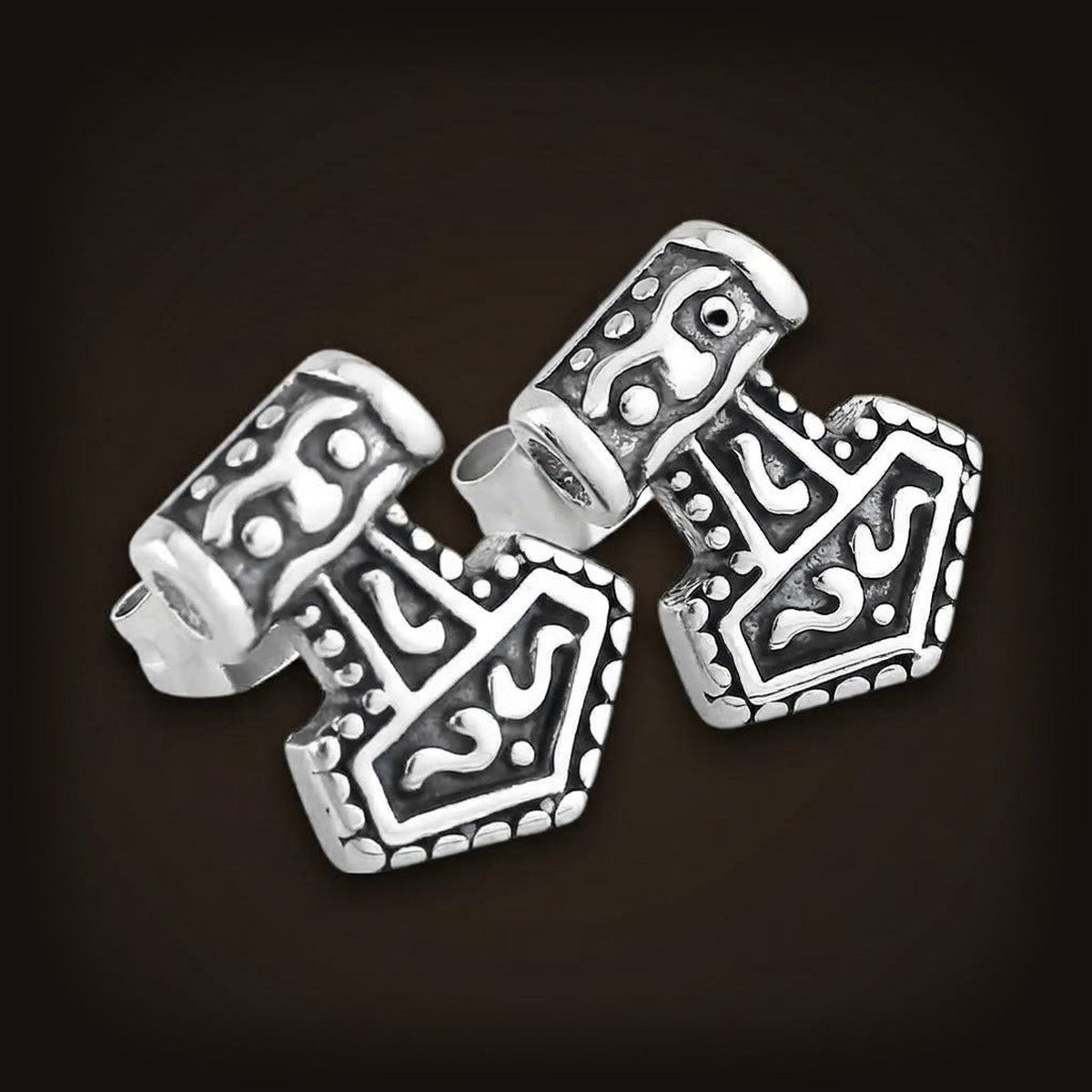
| Earrings | The detail that catches the eye up close |
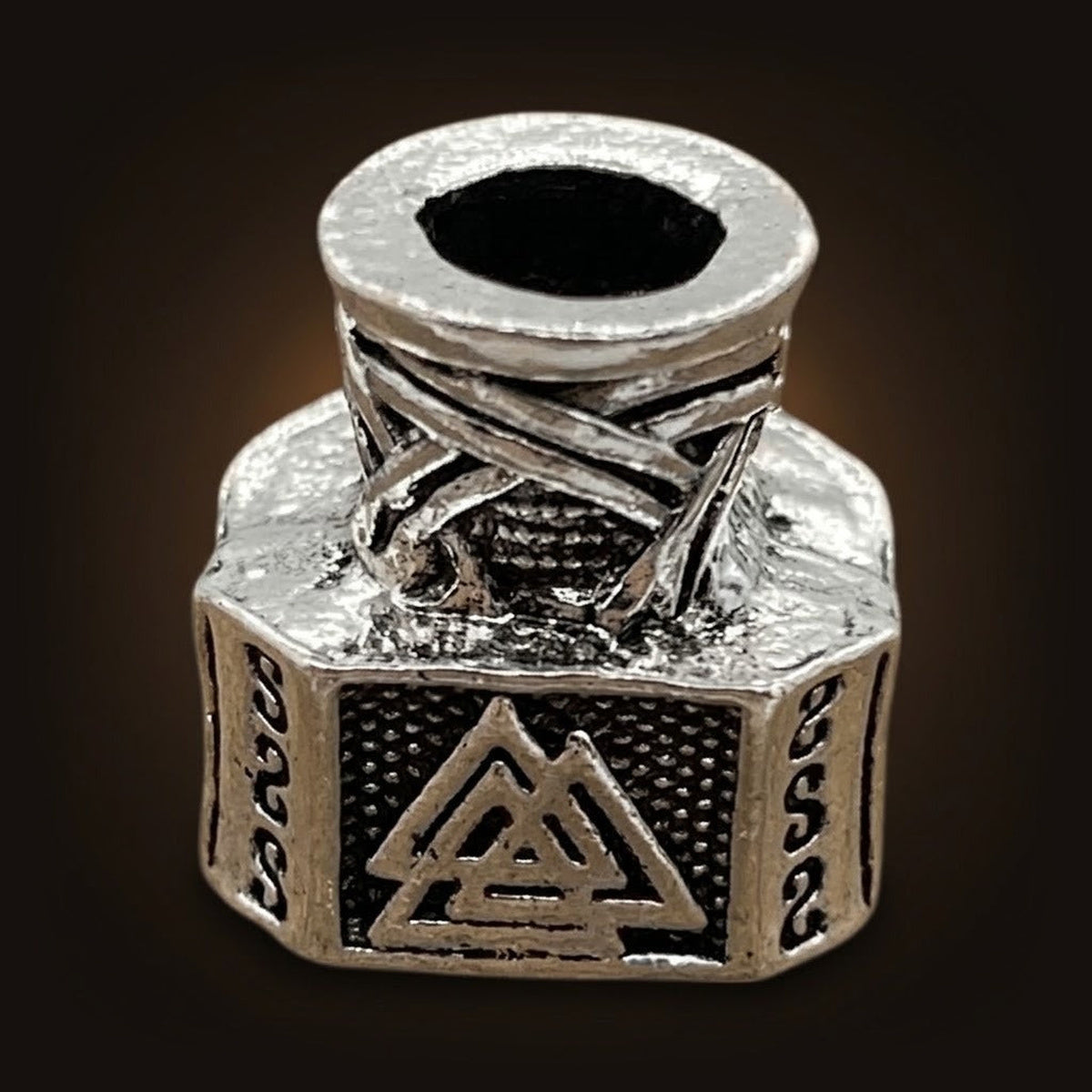
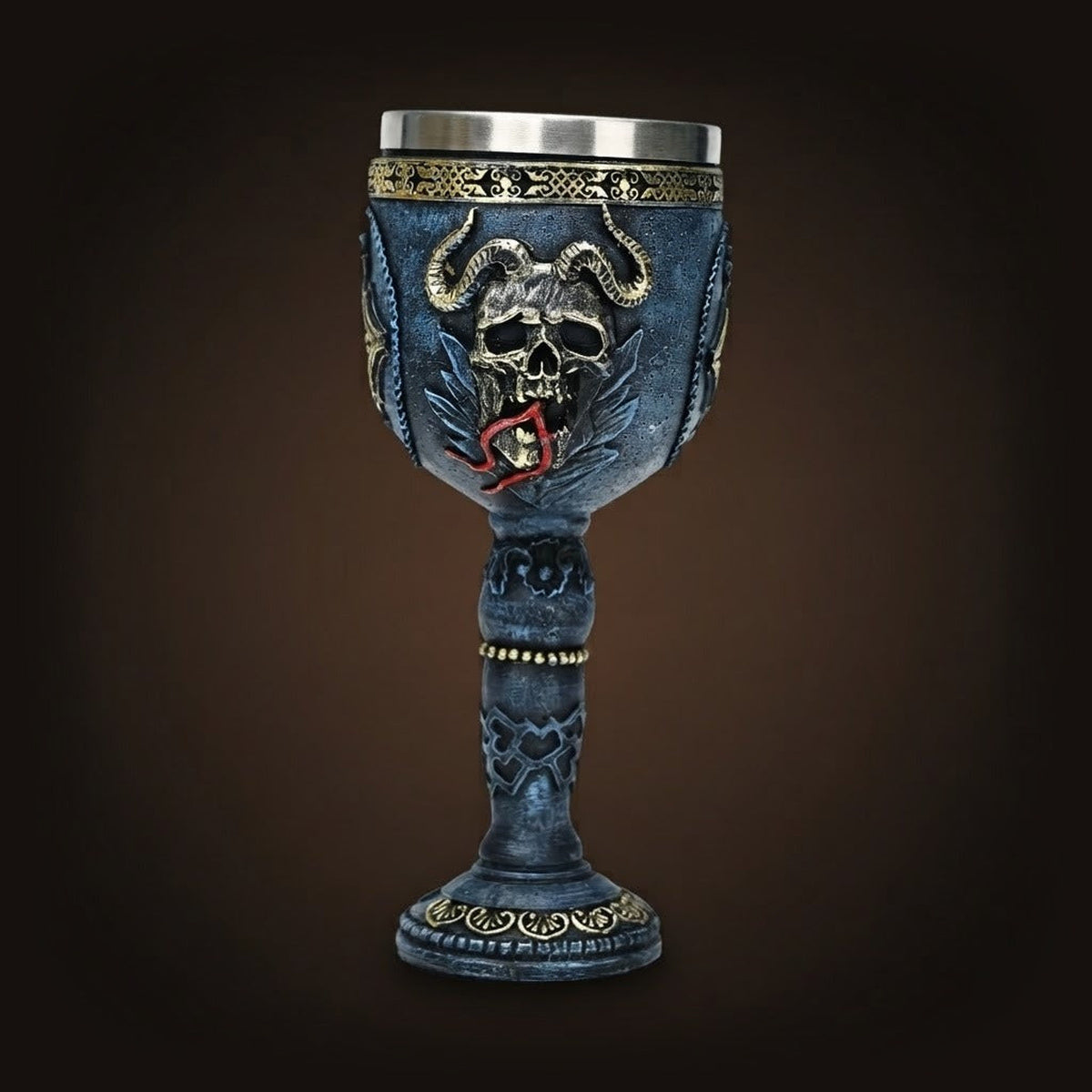
| Tableware | Mugs, chalices, bottle openers |
| Bracelets and wall hangings | Wrists and walls |
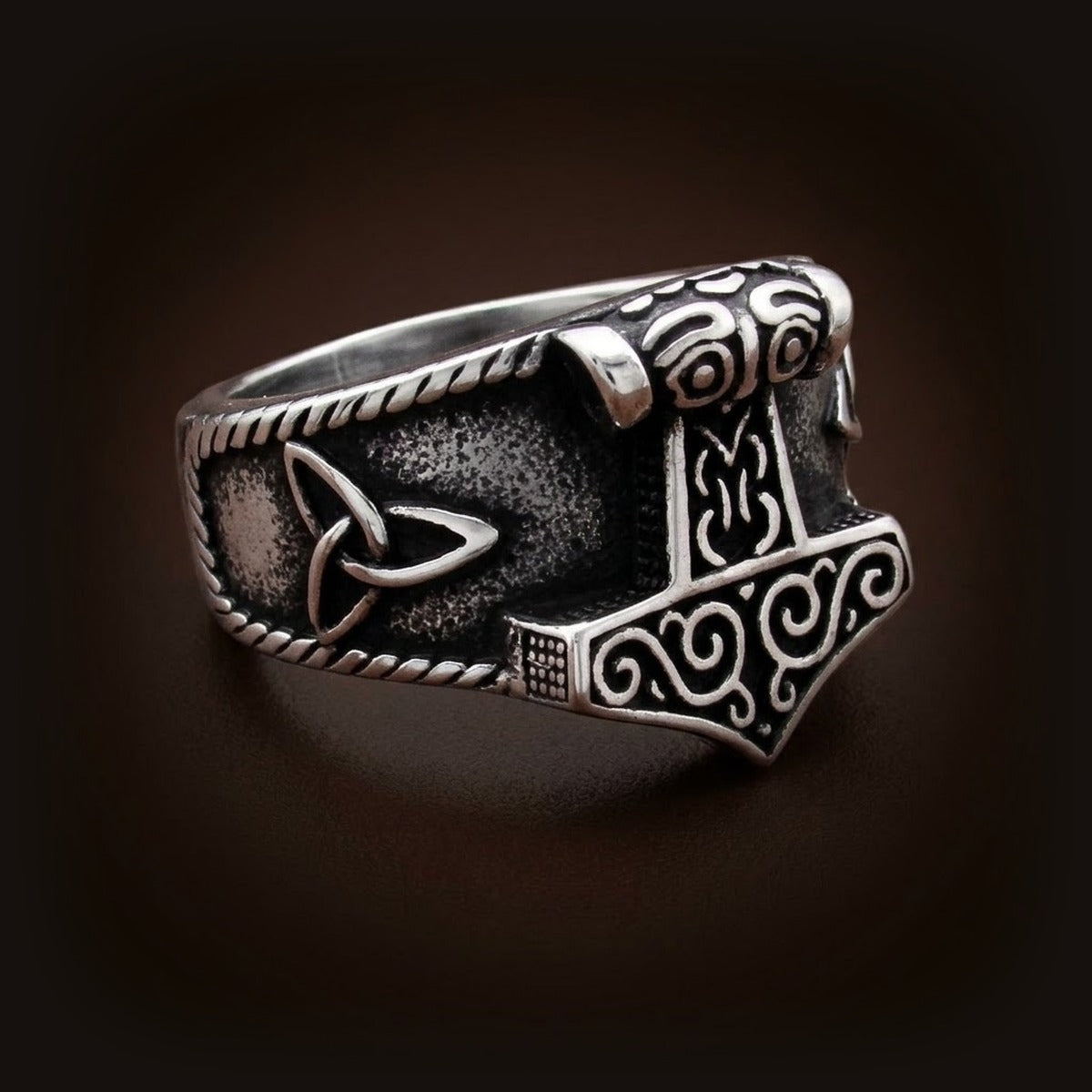
If you are hesitating between formats, know that the necklace remains the only one that reproduces the attested usage: in the Viking Age, the hammer was worn around the neck, never on the finger. Our Viking necklaces offer the most faithful version of this. For those who prefer it on the finger, three rings take it up freely: Mjölnir and triquetra, Mjölnir with a beast head and runic double-band Mjölnir.
What archaeology has actually recovered
Today, nearly a thousand hammer-shaped amulets have been cataloged, spread from Iceland to Russia, made of silver, bronze, iron, and sometimes amber. They were worn around the neck by both men and women and are found as much in graves as in treasure hoards.
For over a century, a question divided researchers: did these pendants truly represent Thor's weapon, or a Christian cross stylized to local tastes? The two objects are similar enough to fuel doubt, and some workshops produced both.
The answer came from Danish soil in 2014. In Købelev, on the island of Lolland, a metal detectorist unearthed a 10th-century bronze amulet bearing a short runic inscription: hmar x is—"this is a hammer." A Viking craftsman had taken the trouble to write it on the object himself. The debate ended there.
Thor's hammer, in detail
A weapon born of a rigged bet
The Skáldskaparmál recounts its creation. Loki, to get out of a tight spot, challenges the dwarves to forge three treasures finer than those of the sons of Ivaldi. While Brokkr works the bellows and Eitri works the fire, Loki turns into a fly and bites the dwarf on the eyelid. Brokkr lets go of the bellows for a fraction of a second. The third object emerges from the forge with a flaw: a handle that is too short.
This detail is not anecdotal. It explains the characteristic silhouette of the Mjölnir—a wide head and a compact handle—and it allows one to immediately distinguish a faithful representation from a modern fantasy.
What it did, beyond striking
In the texts, Mjölnir is not just a throwing weapon that returns to the hand. It is, above all, an instrument of consecration. Thor uses it to sanctify Baldr's funeral pyre. In the Þrymskviða, the giant Thrym demands that the hammer be placed on the bride's lap to bless the union—which allows Thor, disguised as Freyja, to recover his property and slaughter the assembly. It also resurrects the two goats that pull his chariot, Tanngrisnir and Tanngnjóstr, which had been eaten the night before.
Wearing the hammer did not just mean "I hit hard." It meant "I place what matters under Thor's protection."
Thor was more popular than Odin
Modern imagery places Odin at the top. Toponymy says otherwise. Place names formed from Thor—Torshälla, Torsåker, Thorsberg—are far more numerous than those formed from Odin, and the names of the era confirm this: Þórsteinn, Þórbjörn, Þórfinnr are everywhere in the sagas. Odin was the god of kings, poets, and magicians. Thor was the god of farmers, sailors, and craftsmen—that is to say, almost everyone.
The hammer vs. the cross
The frequency of hammer amulets clearly increases in the 10th century, at the very moment when Christianity was progressing in Scandinavia. Many researchers see this as an identity-based response: faced with a cross worn around the neck, one wears a hammer. A stone mold found in Trendgården, Denmark, shows that the matter was more flexible than a simple confrontation—it allowed the same workshop to cast Christian crosses and Thor's hammers. The craftsman served both clienteles.
Hammer rings, the other way to wear it
Alongside pendants, Swedish archaeology has yielded a lesser-known family of objects: hammer rings. These are iron rings worn around the neck or deposited in graves, from which several small miniature hammers are suspended, sometimes accompanied by spirals and crooks. They are found mostly in Uppland and the Mälardalen region, in the heart of pagan Sweden, often in cremation graves.
The multiplication of the motif is intriguing: why five or six hammers rather than one? The most common hypothesis views this as a ritual object rather than personal jewelry—a miniature instrument of consecration, consistent with the usage the texts attribute to Mjölnir. None of our pieces reproduce this shape, which remains very marginal in modern jewelry, but it serves as a reminder that the hammer was not worn in only one way.
Thor could not lift his hammer alone
A detail that imagery consistently forgets: the hammer is too heavy, even for him. Snorri specifies that Thor possesses three inseparable treasures. Mjölnir, of course. But also Járngreipr, a pair of iron gauntlets without which he cannot grasp the burning handle. And Megingjörð, a belt of strength that doubles his power when he tightens it.
The strongest god in the pantheon therefore needs three pieces of equipment to do his work. It is a very Nordic lesson: power is never naked; it is always equipped.
Recognizing a faithful Mjölnir
Three simple markers. The handle is short, never like that of a modern blacksmith's hammer. The head is wide and compact, often trapezoidal, sometimes adorned with interlacing, dots, or a bird's head at the junction. Finally, the suspension ring is located at the top of the handle, which makes the hammer hang head-down—this is how they are worn in graves. Models with long handles hanging horizontally have no archaeological equivalent.
The materials at our counter
Most of our Mjölnir pieces are made of stainless steel. It is not a period metal—it dates from 1913—but it is the one that behaves best in daily life: it does not blacken from sweat, does not turn the skin green, and withstands showers, the sea, and sports without special care.
Replicas and statues use hand-painted resin, which allows for sculpting impossible in cast metal at this price. Watches combine steel with wood, with each piece showing a different grain. None of our pieces are made of solid silver, and we state this rather than maintaining ambiguity.
Maintenance
For stainless steel: lukewarm water, mild soap, dry with a cloth. The crevices of interlaced engravings collect sebum and lose their contrast—a soft toothbrush opens them up in seconds. Avoid chlorinated products, which are just about the only things that can attack the protective layer.
For painted resin: dry or barely damp cloth, never use solvents. For the wood of watches: dry cloth, and no prolonged immersion.
How to wear it
The Mjölnir necklace is traditionally worn alone, on a short chain at mid-chest, so that the hammer remains visible under an open shirt. If you pair it, do so with a motif from another family rather than a second Nordic symbol: a rune ring or a twisted bracelet accompanies the hammer without stealing the spotlight.
Chain length changes everything for a pendant of this size. At 45 cm, the hammer falls to the base of the neck and remains visible with a closed collar—this is the length for fine chains. At 55 cm, it falls to mid-chest and is worn over clothing: this is the length that best highlights a wide head. Beyond 60 cm, the pendant passes below the sternum and disappears into the folds of a sweater. For a hammer a little over three centimeters, 55 cm remains the best compromise.
For discreet daily wear, the watch remains the best compromise: the symbol is there, engraved on the dial or the clasp, without anything protruding from the wrist.
Gifting a Mjölnir
It is the safest Nordic symbol to give, because it is the most readable. A hammer necklace is recognized without explanation, including by someone who knows nothing about mythology—which is not the case for a Valknut or a Vegvísir.
Regarding the choice of piece: the necklace covers the general case; the replica or statue is suitable for someone who already has jewelry but no object; the bottle opener is the small gift that hits the mark without pressure. Our complete Viking Jewelry section allows you to compare formats side by side.
Frequently Asked Questions
Is the Mjölnir a religious symbol?
It was. It has become one again for a minority: reconstructed Nordic paganism, Ásatrú, has been a recognized religion in Iceland since 1973, and the hammer serves as a sign of belonging there. For the vast majority of wearers, it is today a cultural and aesthetic object. Both uses coexist without difficulty.
Should it be worn head-up or head-down?
Amulets found during excavations hang head-down, as the ring is fixed to the end of the handle. This is the historical orientation. Nothing stops you from doing otherwise, but if faithfulness matters to you, that is the one.
What is the difference with Thor's cross?
None: "Thor's cross" is a modern commercial name for a hammer whose arms are more symmetrical. The name is confusingly similar to the Christian cross, so we do not use it.
Is it a symbol reserved for men?
No, and the archaeology is formal: hammer amulets have been found in female graves, sometimes associated with brooches and bead necklaces. Our pieces are unisex.
📖 To learn more: our complete guide to the Mjölnir necklace, our portrait of Thor, god of thunder, and the 17 Viking symbols to place the hammer among the others.