
Filters
18 products
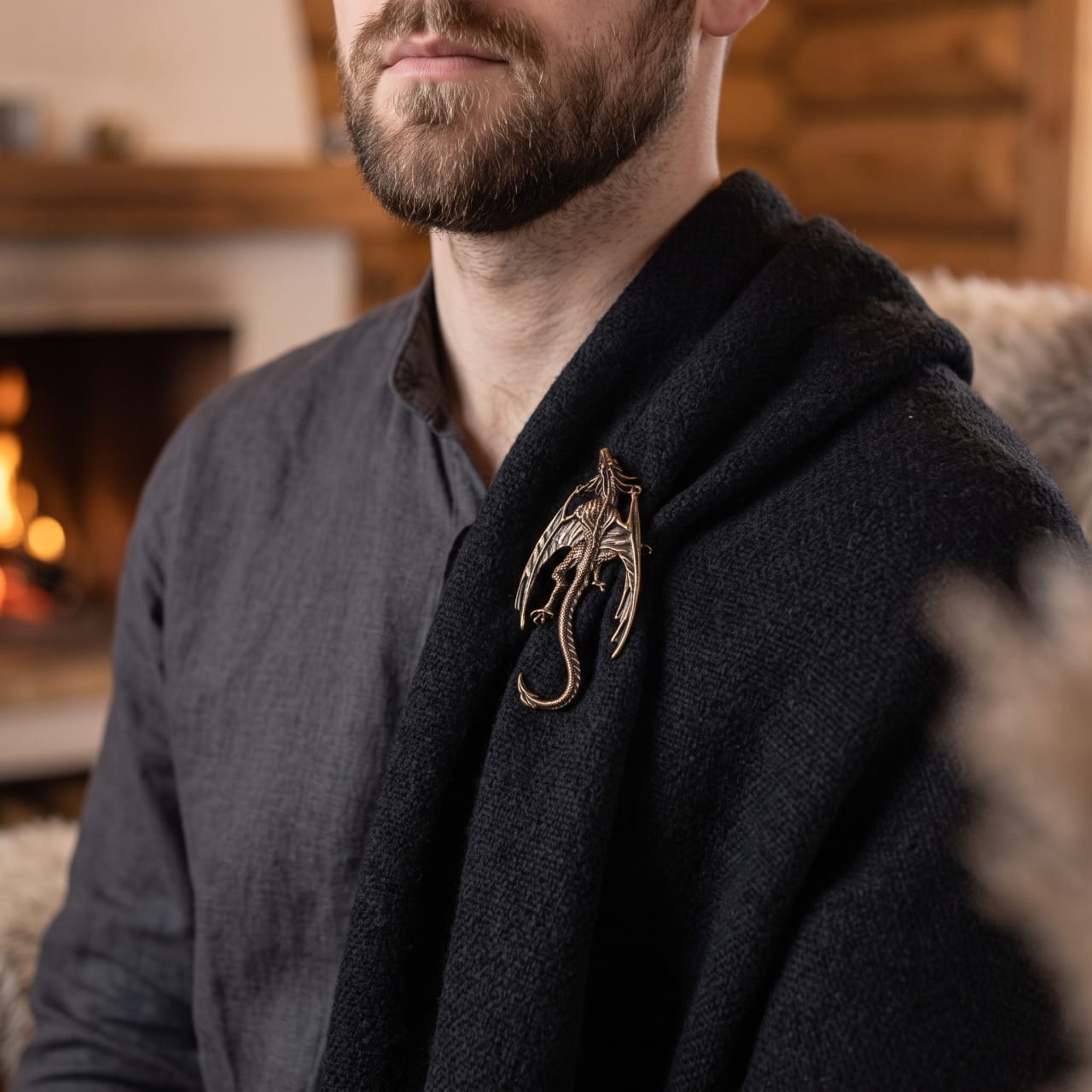
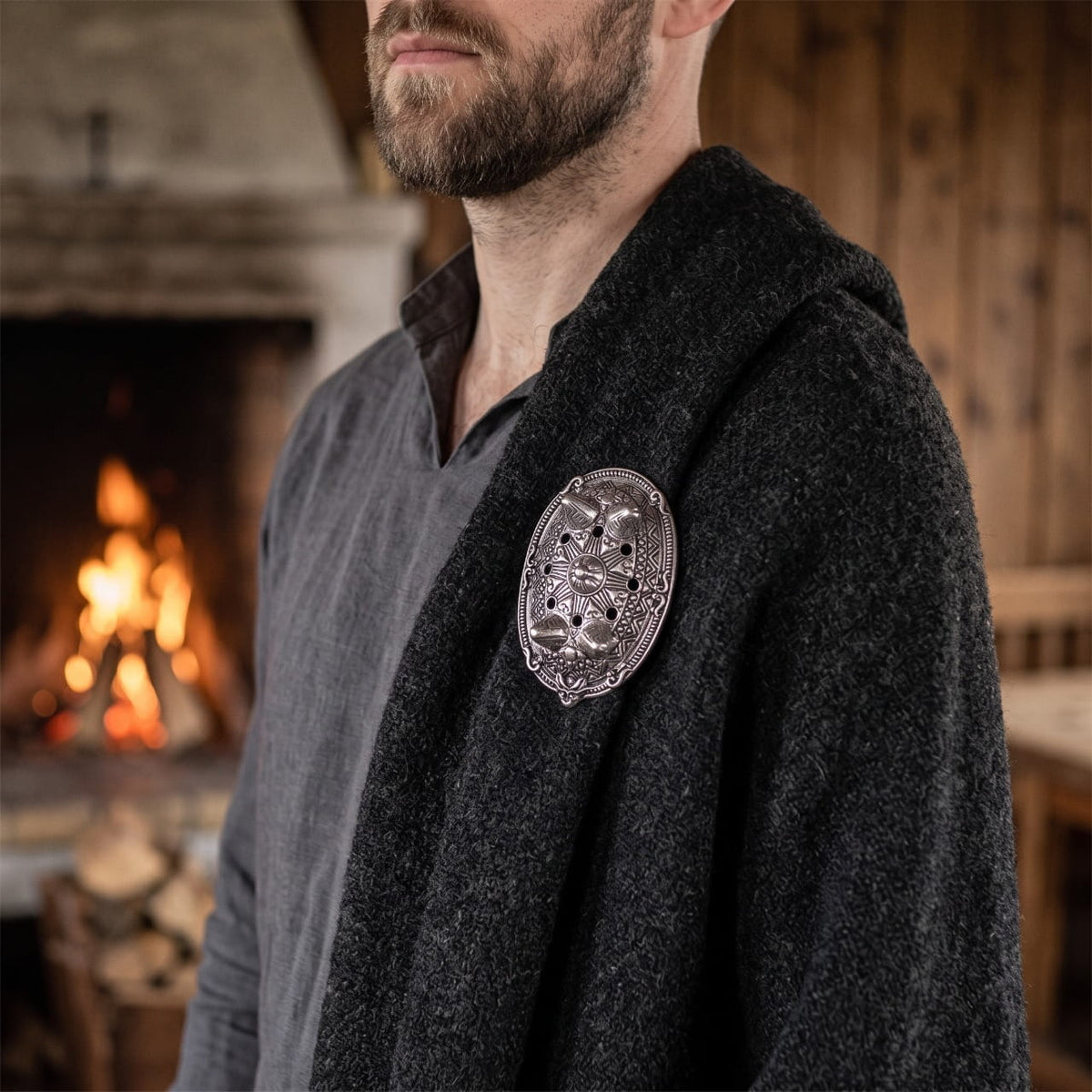
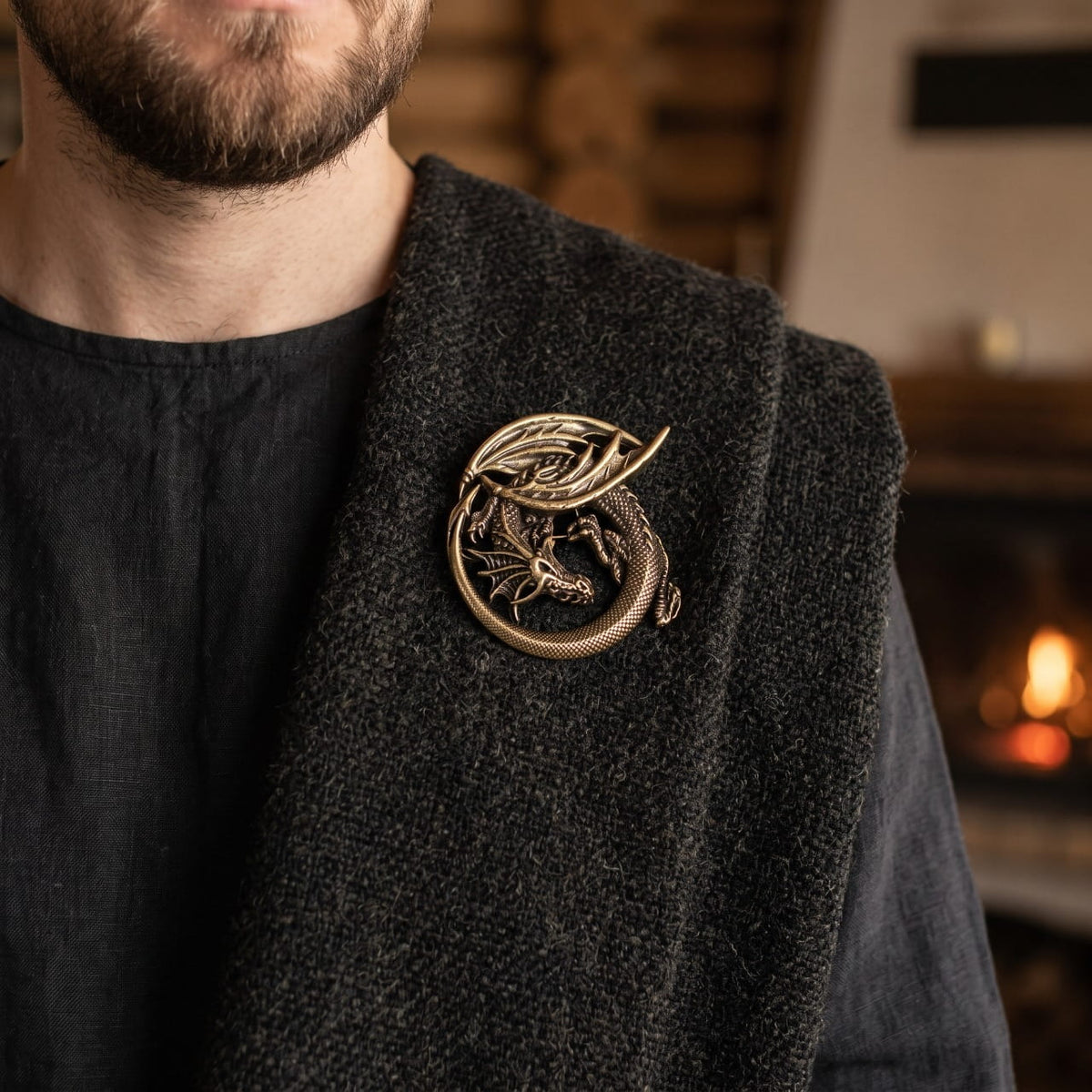
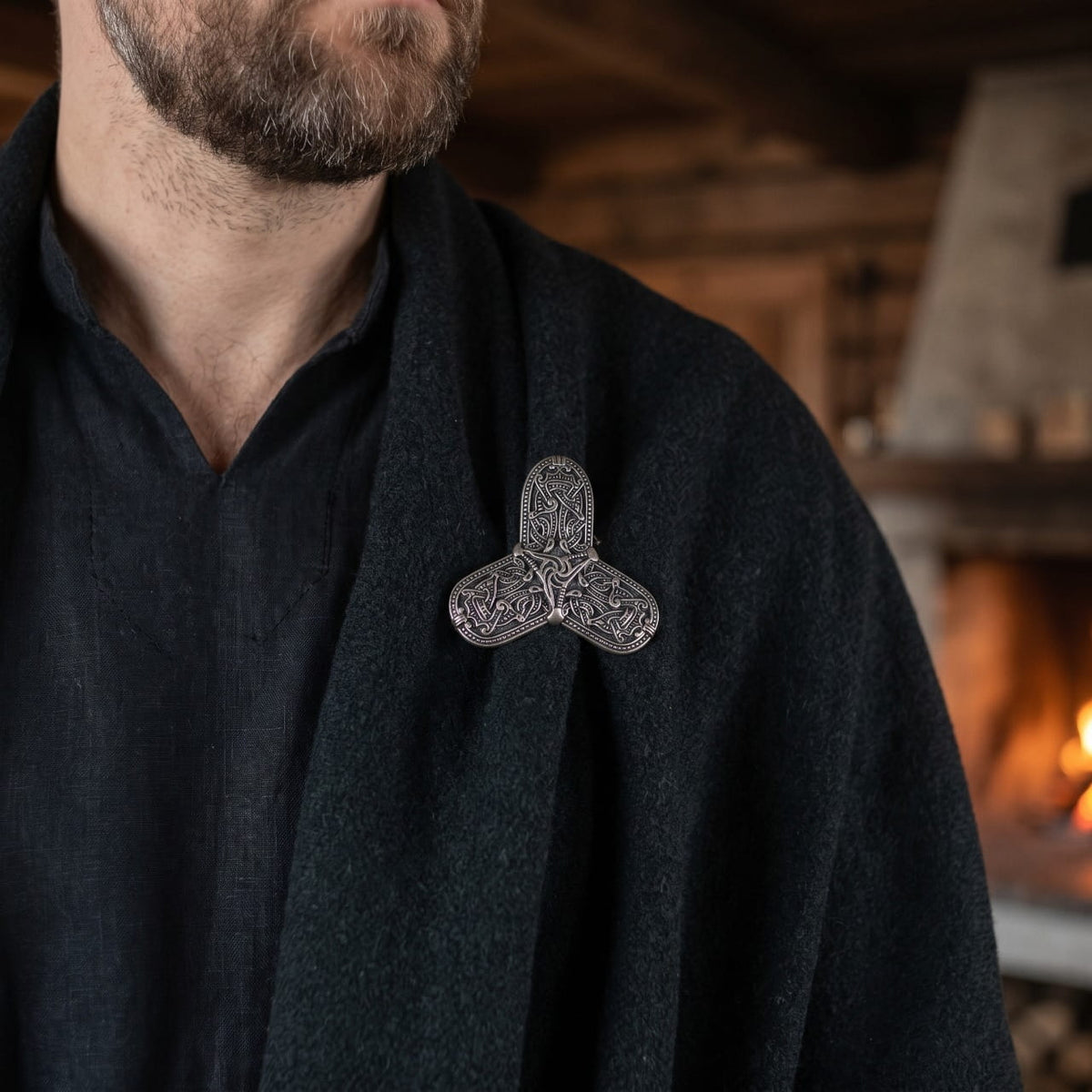
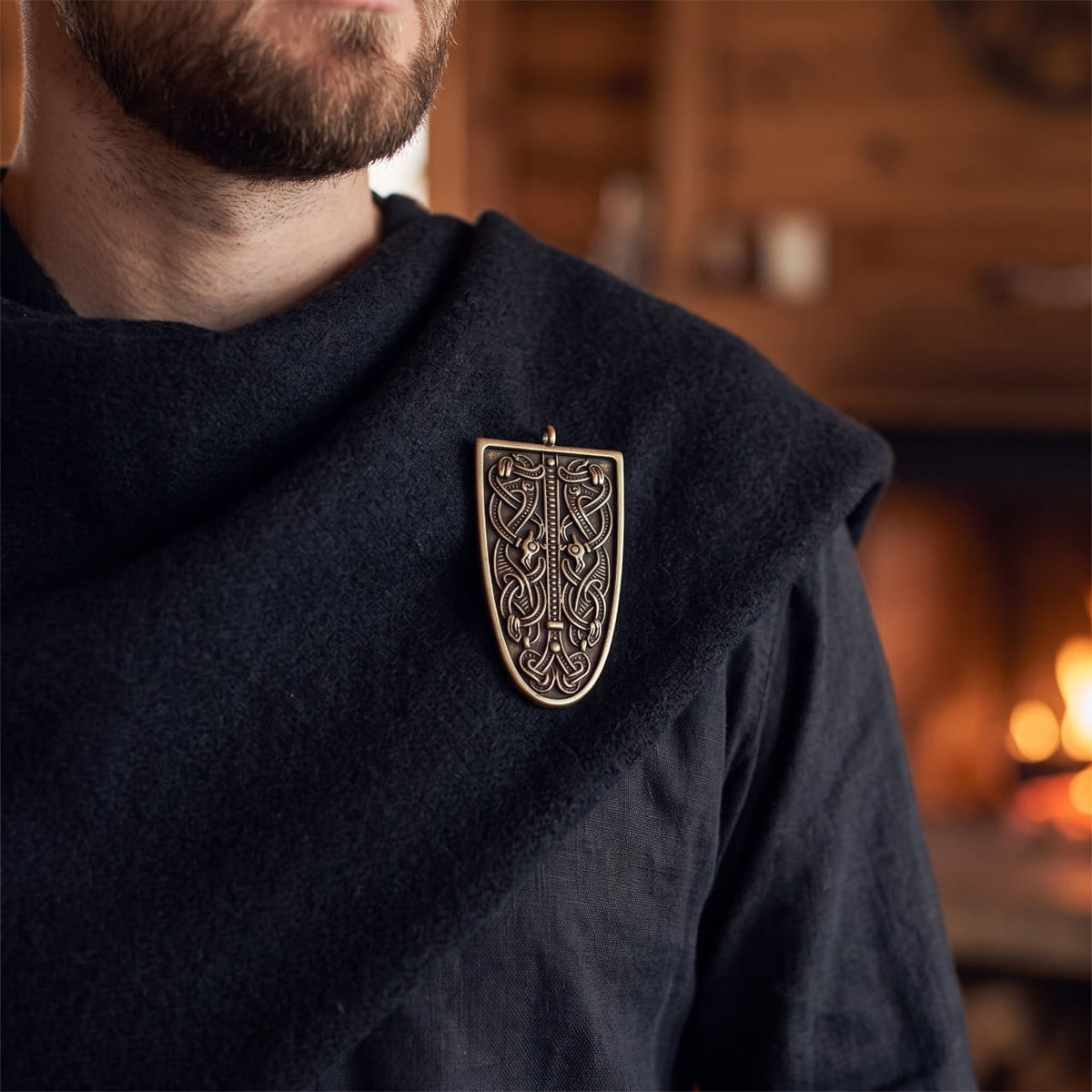
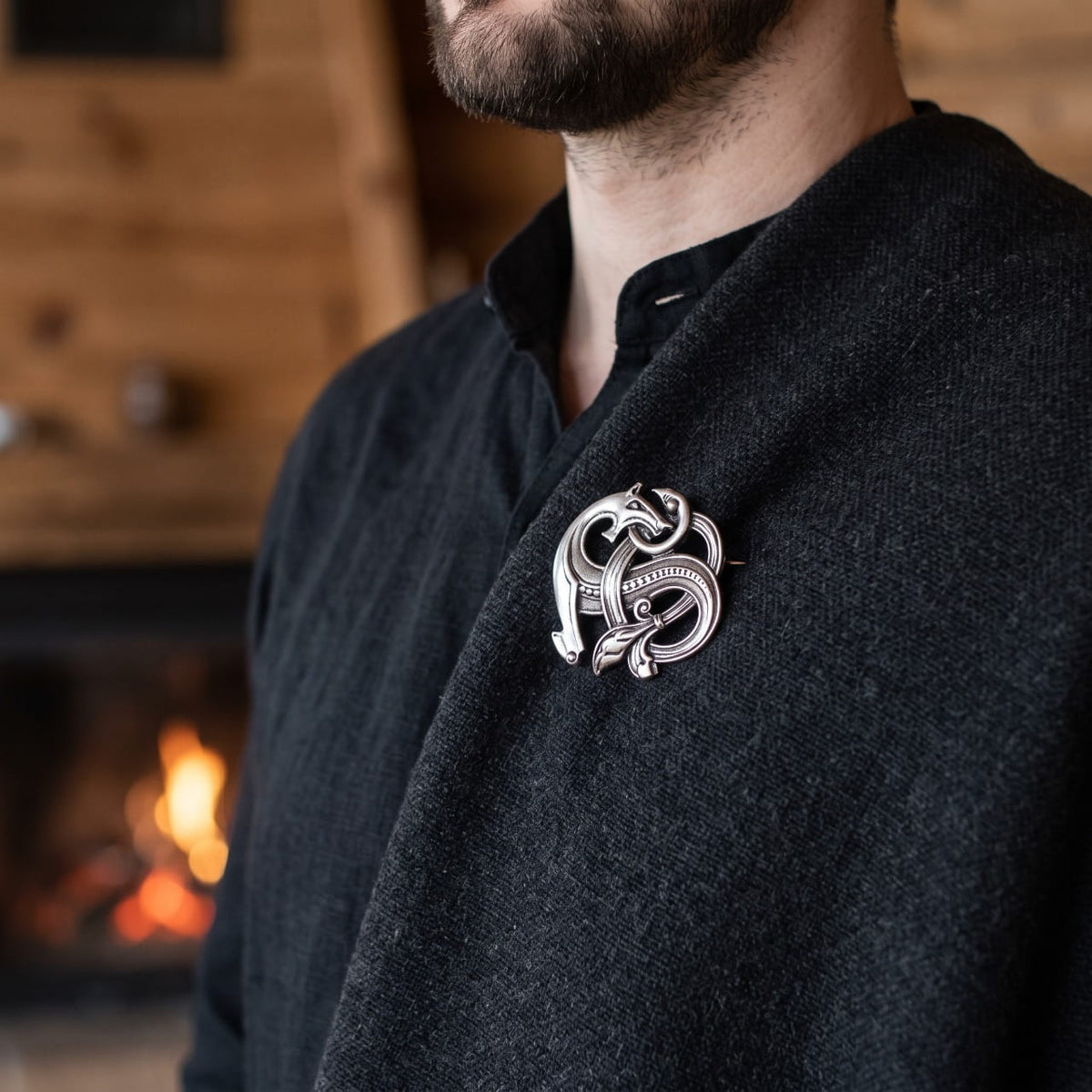
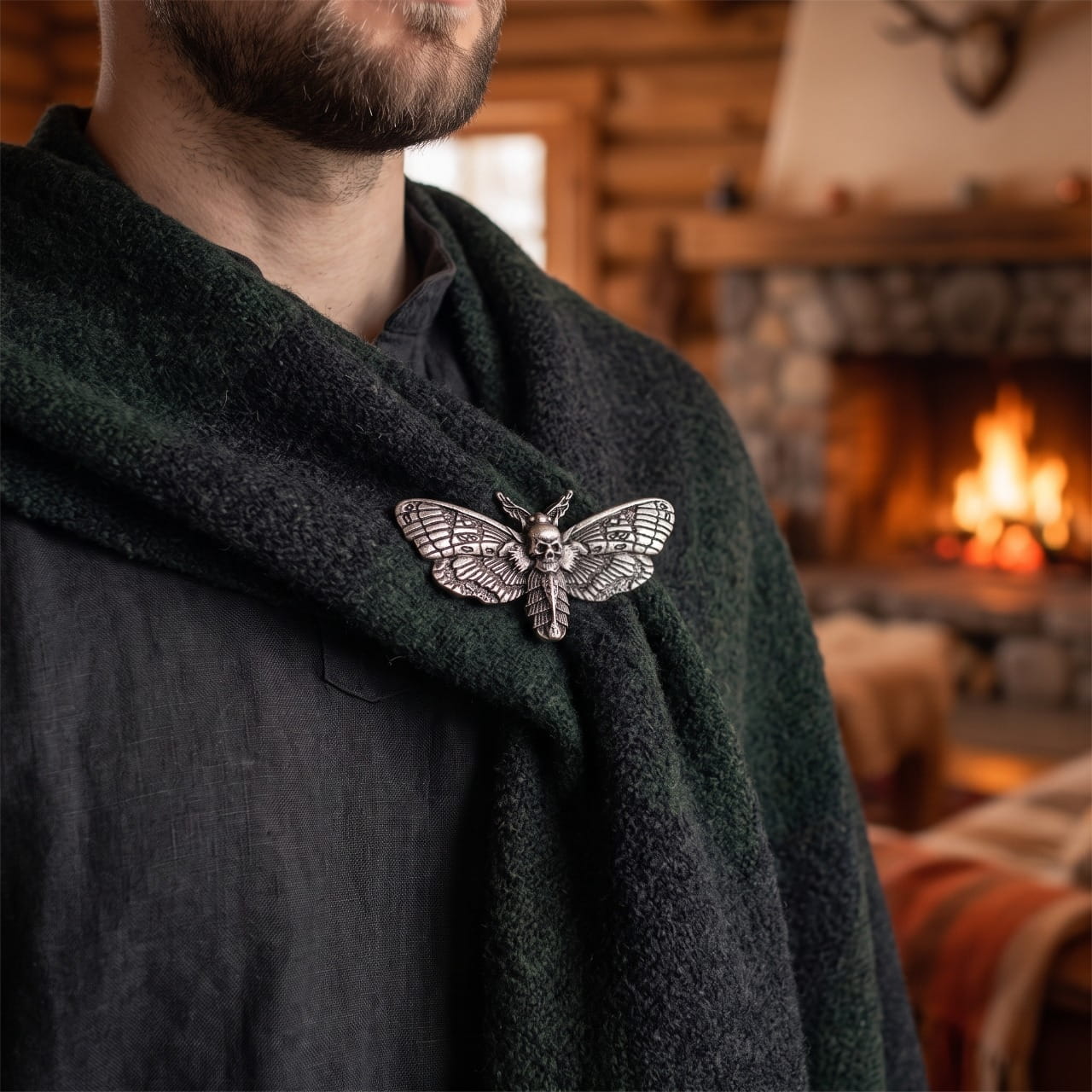
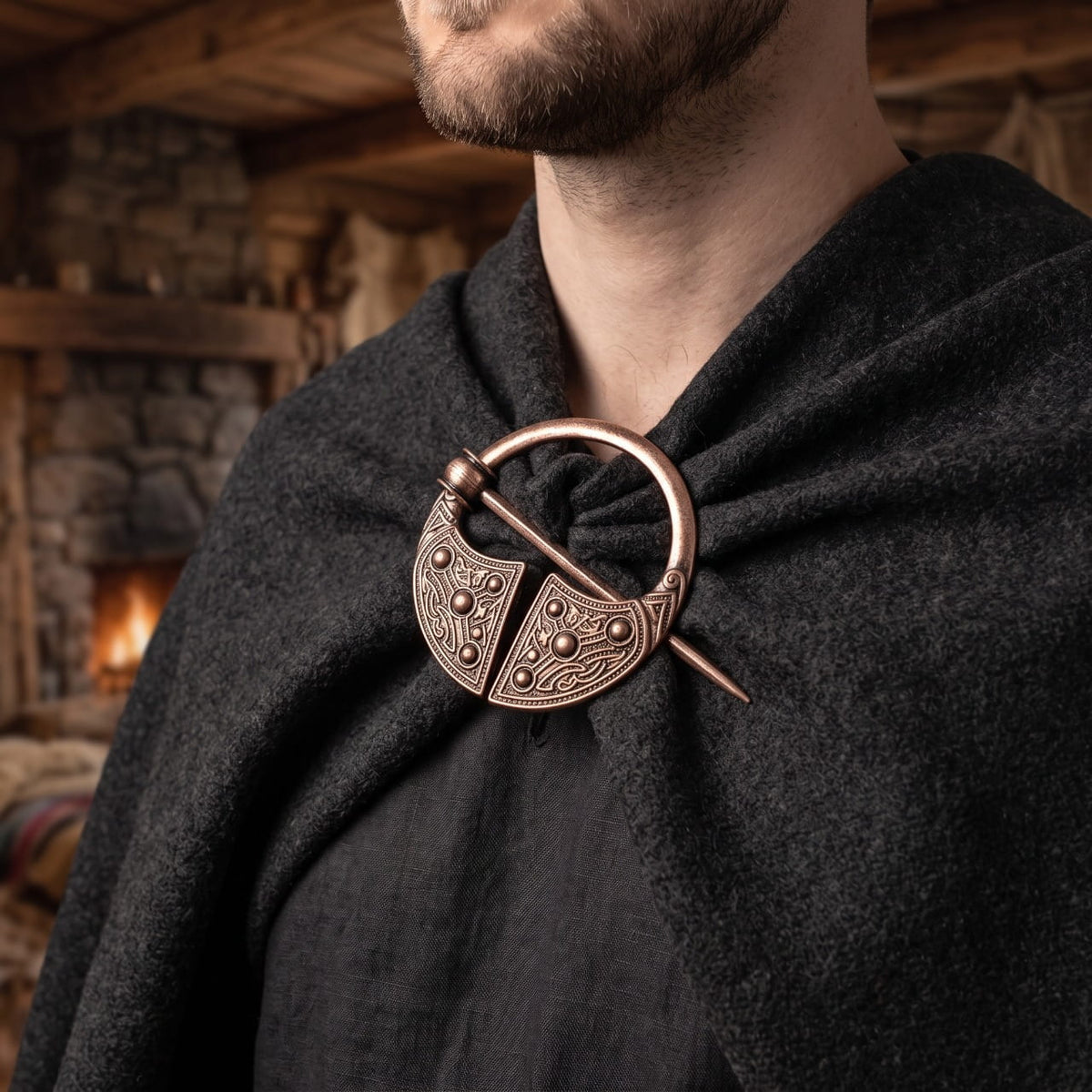
Viking Fibulae & Brooches — en savoir plus
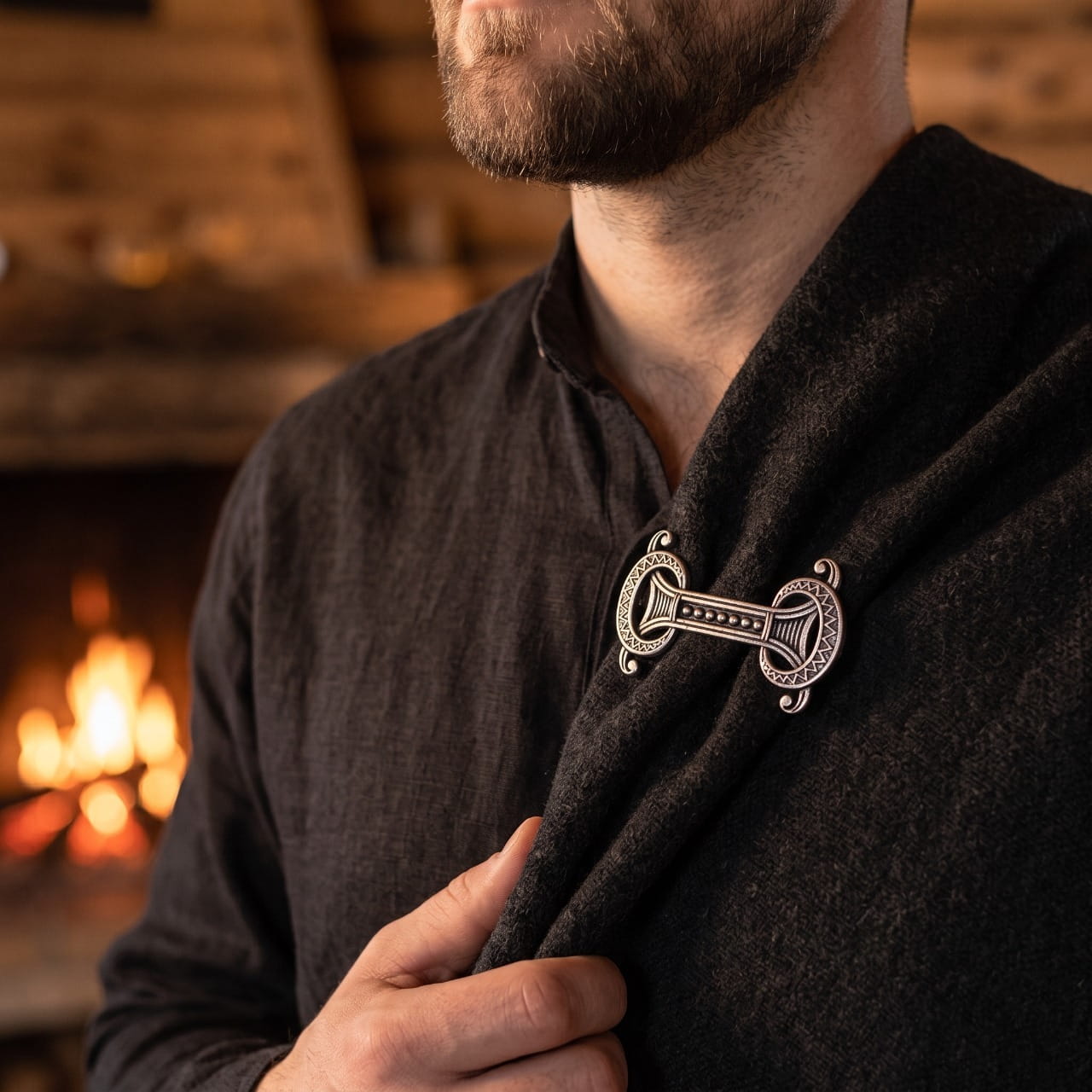
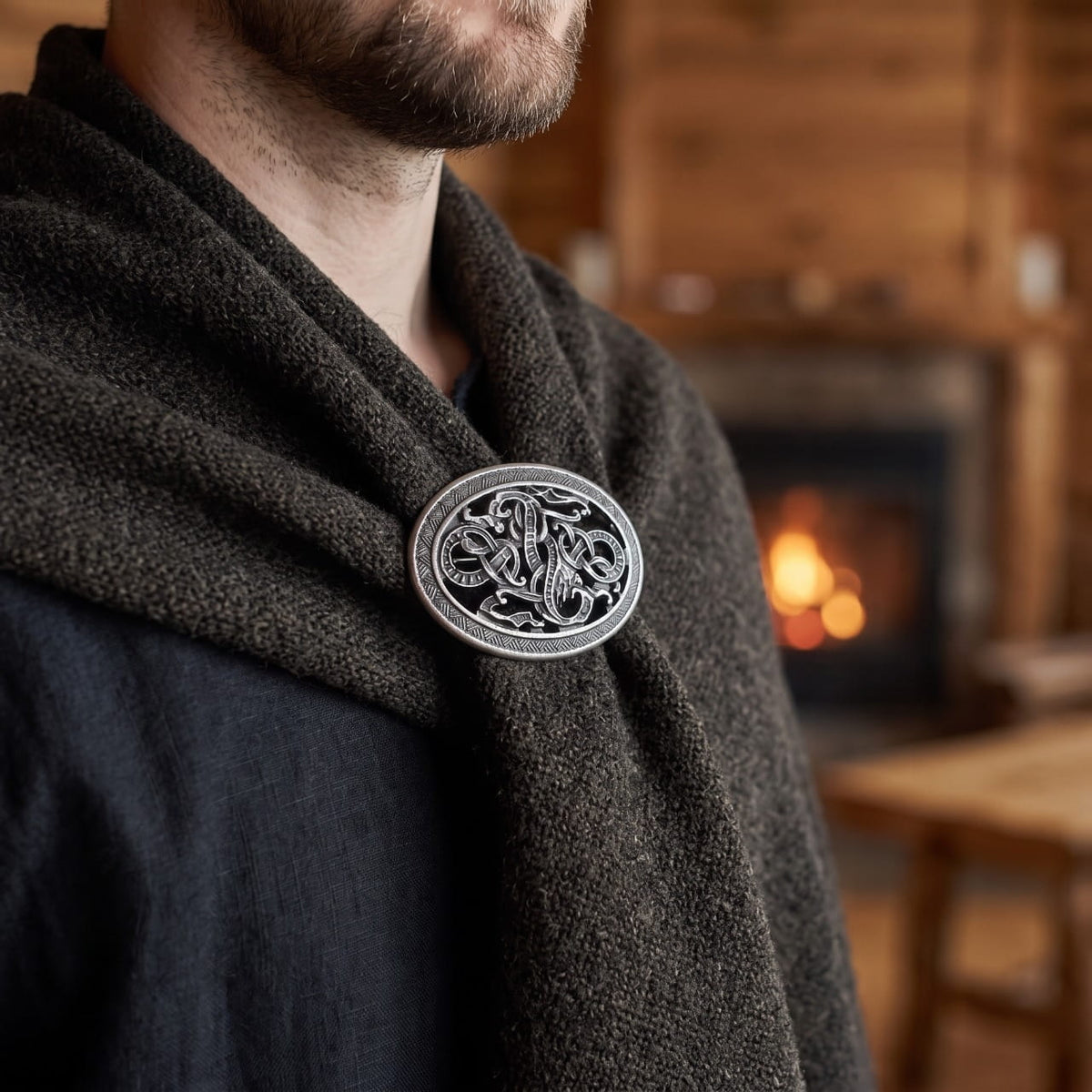
The fibula is the most functional piece of jewelry of the Viking Age: it is what fastened the cloak at the shoulder, from the farmer's simple clasp to the jarl's great ceremonial penannular. This collection brings together penannular fibulae and oval, round, trefoil and shield-shaped brooches, in patinated alloy — bronze, antique silver, copper or antique pewter. Each piece works just as well on a reenactment cloak as on a modern coat, a scarf or a shawl.
The only Viking jewelry whose exact use we know
That is what makes the fibula so fascinating. With a pendant, the meaning is open to debate; with a fibula, we know what it was for, where it was worn and often who wore it — because it is found in situ in burials, at the exact spot on the body where it held the garment.
A Viking Age wardrobe has no buttons, no fastenings, no joining seam where one would be needed. It is held together by fibulae. Remove them and the garment falls off: they are literally the pieces that keep the clothing up.
The shapes, and what each one tells us
The oval brooch, known as the “tortoise brooch”
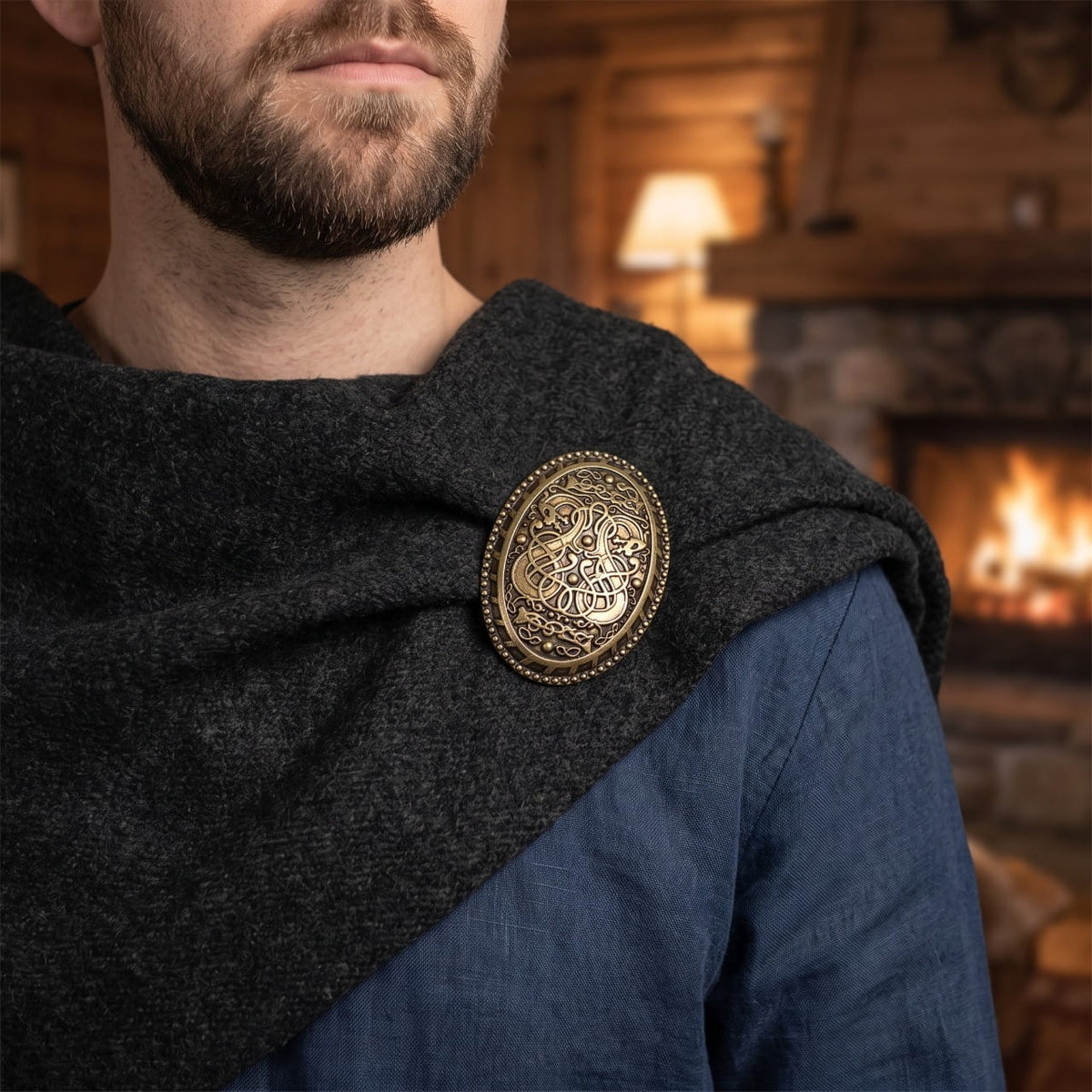
It is the most characteristic of all. Domed, decorated in relief, it was worn in pairs, one at each shoulder, to fasten the straps of the smokkr — the suspended apron-dress that Scandinavian women wore over their linen shift. Often a small chain or a string of beads ran from one to the other, and keys, scissors and a needle case hung from it.
This use is so consistent, from Denmark to Russia, that a pair of oval brooches is enough for archaeologists to identify a female burial. Few objects say as much. The models in this collection with a beaded border or a rosette take up this shape.
The penannular fibula
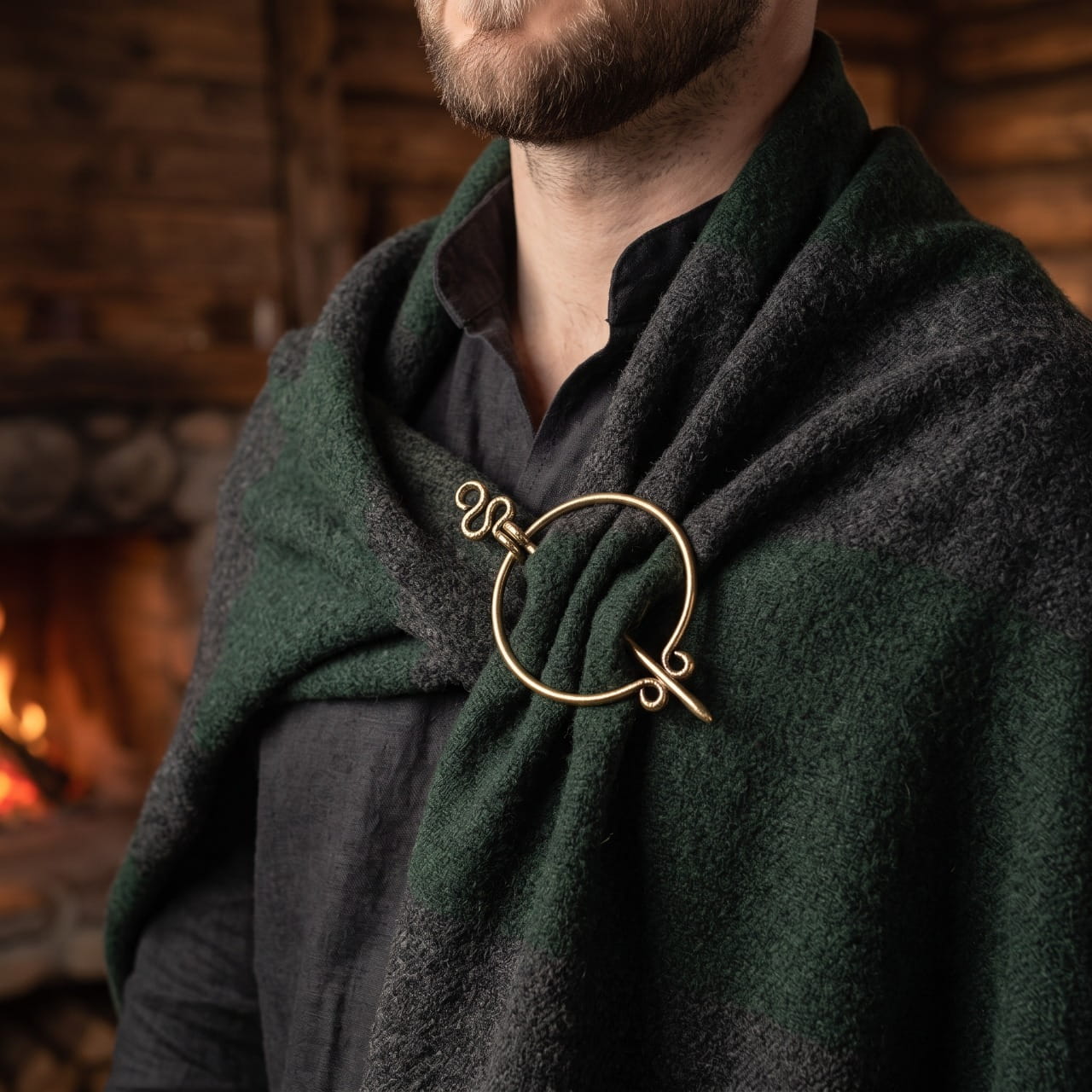
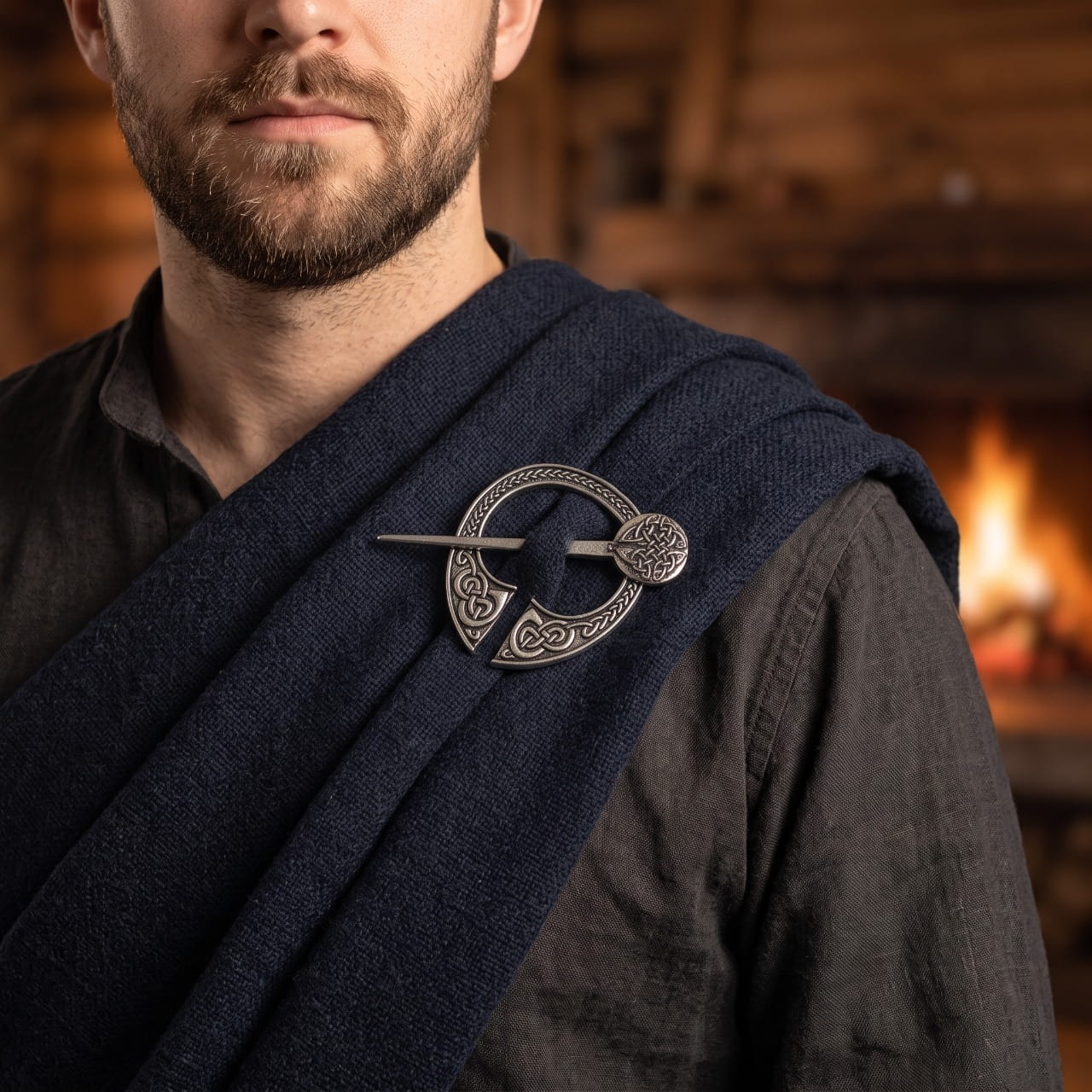
An open ring — that is what “penannular” means, almost a ring — crossed by a long, movable pin. The mechanism is remarkably clever: you pass the pin through the fabric, turn the ring a quarter turn, and the tension of the cloth locks the whole thing. No spring, no part to break, and the heavier the cloak, the better the fibula holds.
Its origin is not Scandinavian: it comes from the Insular world, Irish and Scottish, where it is the prestige jewel above all others. Scandinavians encountered it on their expeditions to the west, adopted it, then made their own versions of it — the variant with ball-shaped terminals, known as the “thistle brooch,” is a Hiberno-Scandinavian creation. It is an object that tells of contact, not of invention.
The trefoil brooch
The most surprising in origin. Its three-lobed shape does not come from Norse ornament: it reproduces that of Carolingian sword-belt mounts, the plates that adorned Frankish belts. Brought back as loot or through trade, they were diverted from their military use and remounted as women's brooches — then copied locally by Scandinavian craftsmen, who made them a type in their own right.
A piece of Frankish goldsmith's work turned into a Viking woman's jewel: few objects sum up so well what the Viking Age was, a world of circulation as much as of raids.
Round, shield-shaped and rectangular brooches
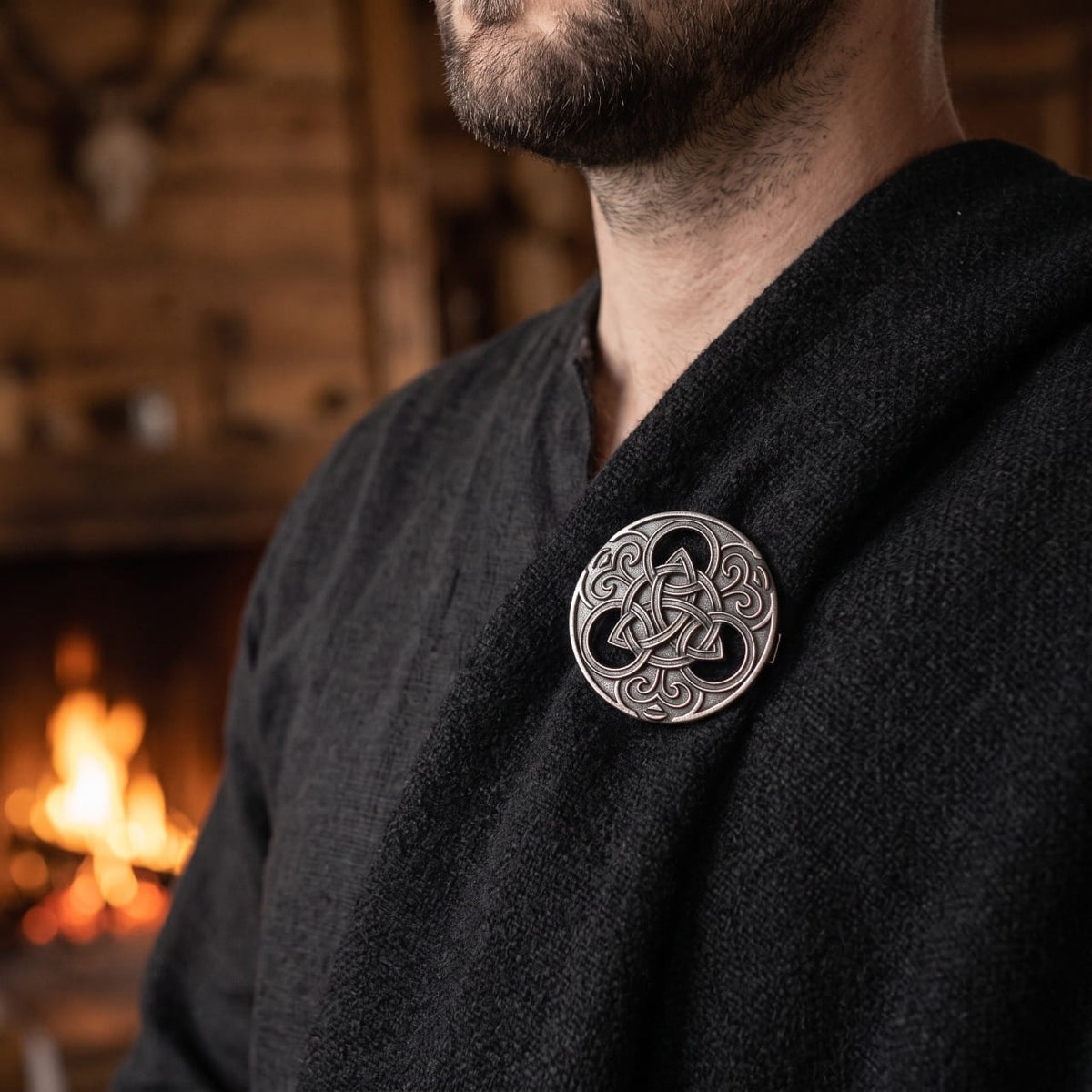
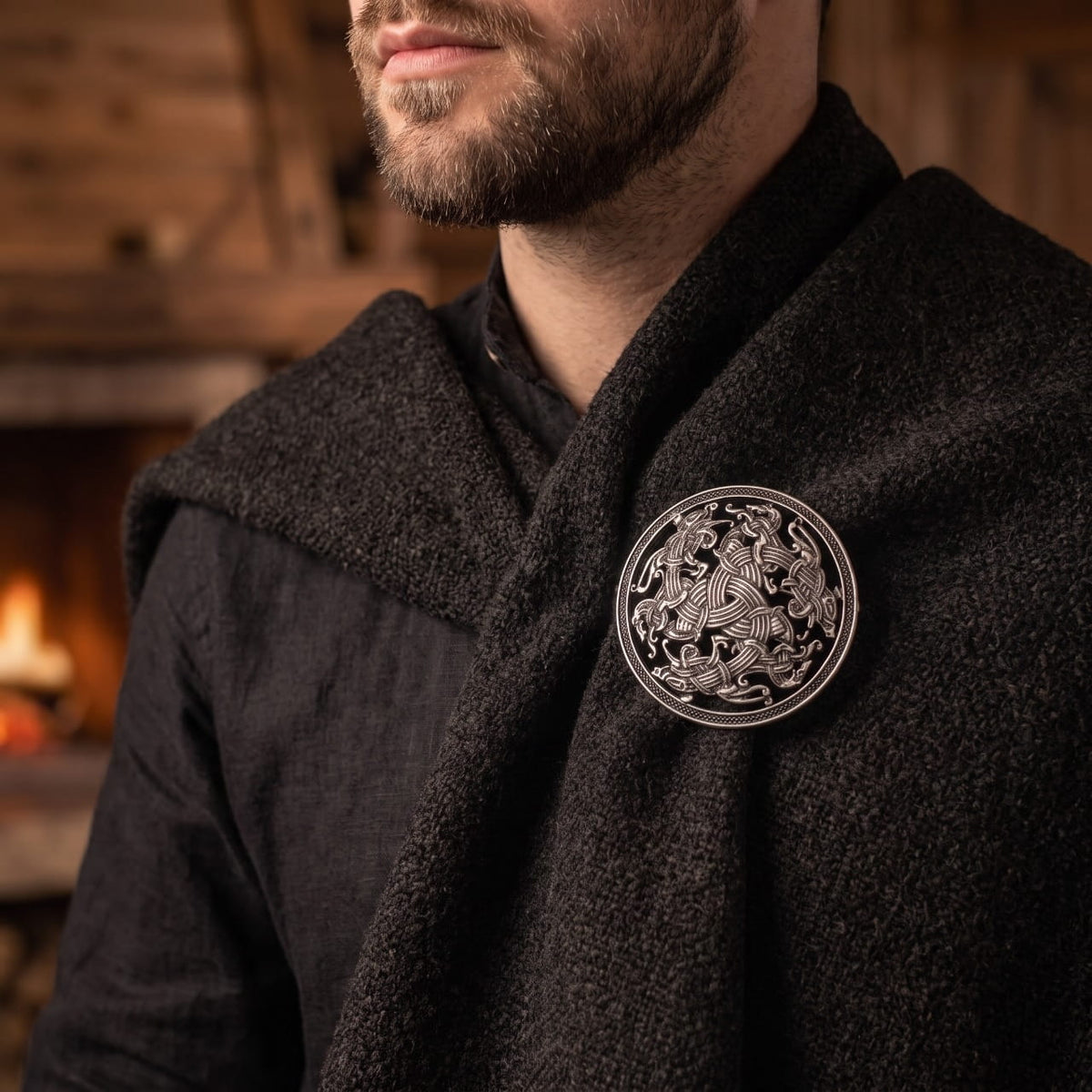
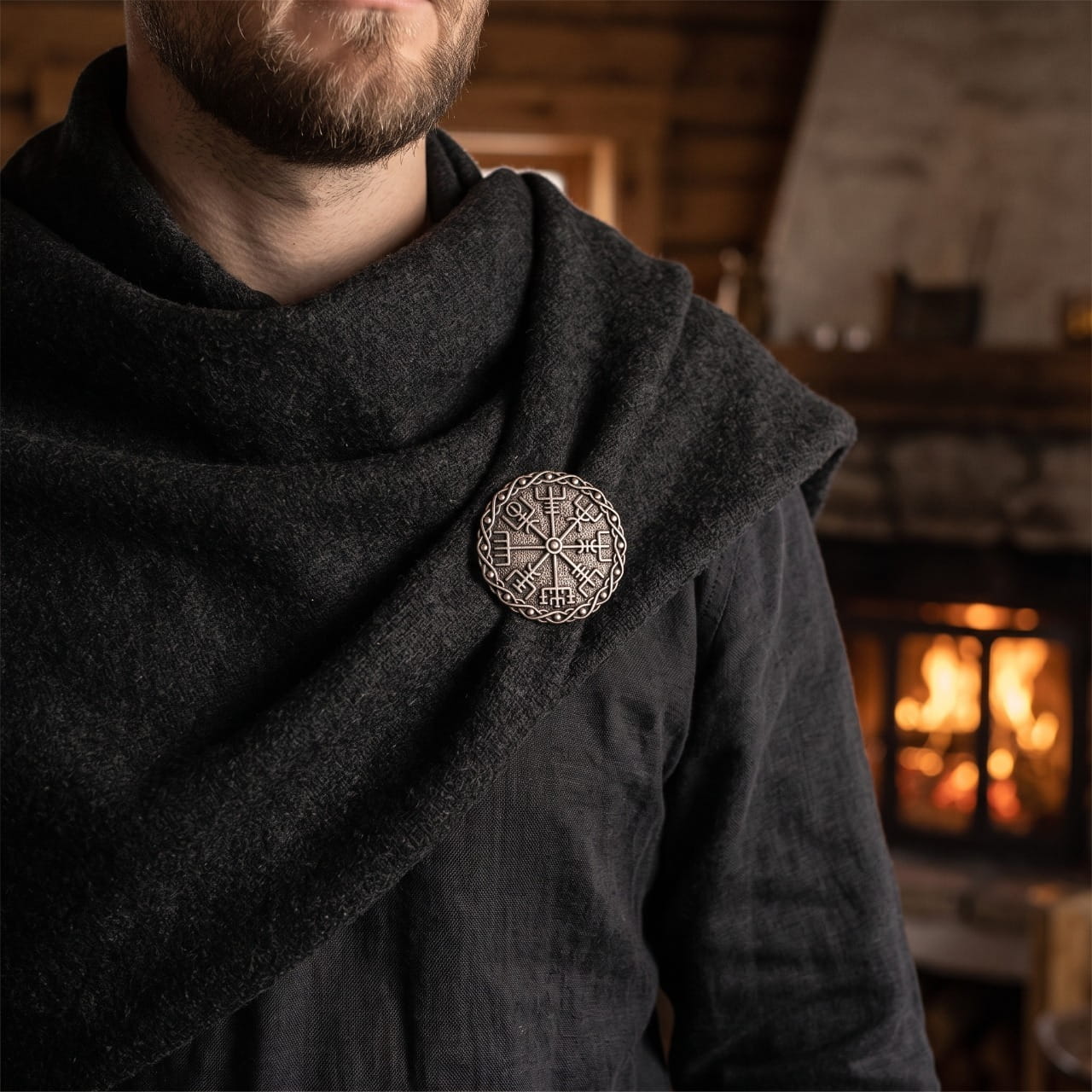
Disc brooches fastened the shift at the neck, or men's cloaks. The shield-shaped and riveted rectangular forms, which came later, served the same purpose. Here you will find the triquetra, the Vegvísir, interlaced animals and an Urnes beast — named after the last great style of Scandinavian art, recognizable by its zoomorphic ribbons stretched into very fine loops.
Men or women: the rule that excavations confirm
It is simple, and it changes the way these pieces are worn today.
Women wore two oval brooches, one at each shoulder, for the straps of the apron-dress, plus often a third at the neck, round or trefoil, to close the shift.
Men wore only one, almost always on the right shoulder. This is not an aesthetic convention: a cloak fastened that way leaves the right arm free, the sword arm. A cloak pinned in the center or on the left hampers movement. It is the kind of detail you would never guess, and that the position of the finds makes undeniable.
Nothing obliges you to follow it today, but for a reenactment outfit, it is the difference between an accurate silhouette and an approximate one. Our article on Viking daily life describes the rest of the costume in detail.
How to wear it every day
A fibula is not a spring-clasp brooch and is not handled like one. Three points are all you need.
On a thick material. Wool coat, cloak, chunky-knit scarf, shawl, throw: the more body the fabric has, the better the pin is held. On a thin shirt, the pin goes through without catching anything and leaves a hole.
Pin along the weave, not against it. Insert the pin following the grain of the fabric, over two to three centimeters, then bring it back out. On a knit, go between the stitches instead of piercing them — that is what keeps a knit from running.
For a penannular, do not forget the quarter turn. That is what locks it: the pin passes through the gap in the ring, then the ring turns so that the pin rests on the solid metal. Many people miss this step, decide that “it doesn't hold,” and put the piece away. It holds very well — once turned.
Materials and care
These pieces are made of patinated metal alloy, in a bronze, antique silver, copper or antique pewter finish — not polished steel. The dark patina settled in the recesses of the design is not wear: it is applied deliberately to bring out the relief of the knotwork, which would disappear on uniformly shiny metal. Some items come in two finishes; you choose on the product page.
Care. A soft, dry cloth, nothing else. Never use silver polish or polishing paste: these products are designed to remove the oxidation from the recesses, which is exactly what gives the piece its design. A fibula polished with an abrasive cloth loses its pattern in a few passes.
Store it somewhere dry, away from a closed bathroom, and take it off before a downpour — the alloy tarnishes with prolonged humidity. Finally, check the pin from time to time: it is the only moving part, and therefore the only one that can bend if you force it when putting it on.
A few pieces outside the Norse field
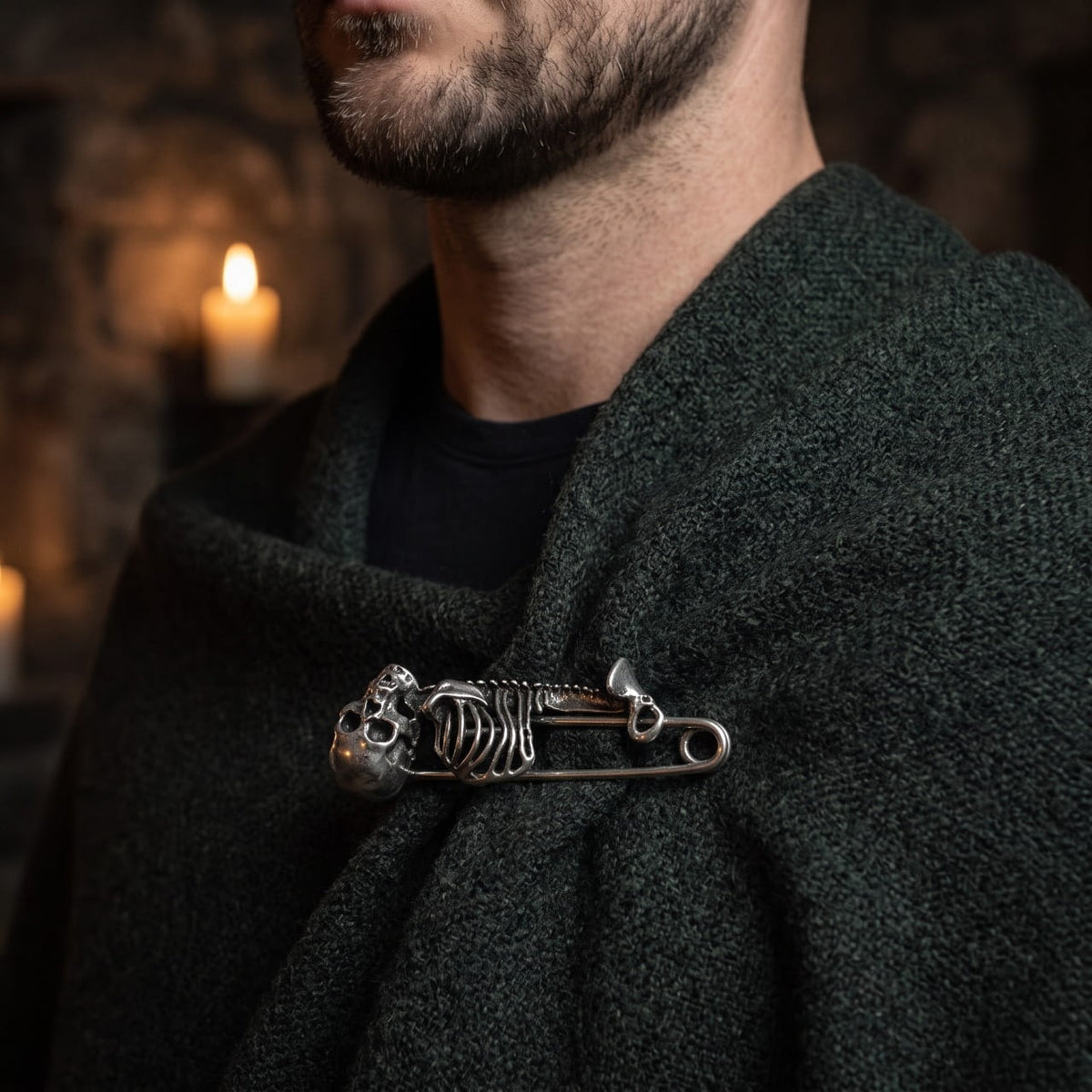
The section includes a few Gothic-inspired brooches — a skeleton, a death's-head hawkmoth — that have nothing Scandinavian about them. They are here because they share the same format and the same use, not because they are supposedly Viking, and we would rather say so than let you believe otherwise.
Frequently asked questions
What is a Viking fibula? It is the clasp that fastened the garment, the cloak or the apron-dress in the Viking Age. It took the place of the button, which did not exist in the Scandinavian wardrobe. Excavations find it at the exact spot on the body where it held the cloth.
What is the difference between a fibula and a brooch? In everyday use, none: both words refer to the same clasp. “Fibula” is the archaeological term, used for ancient forms; “brooch” is the modern word. We use both depending on the shape of the piece.
How does a penannular fibula work? You pass the pin through the fabric via the gap in the ring, then turn the ring a quarter turn so that the pin rests on the solid metal. The tension of the cloth does the locking. Without that quarter turn, the fibula does not hold.
Can it be worn on modern clothing? Yes, as long as the fabric has some body: wool coat, thick scarf, shawl, throw, tweed jacket. On a thin fabric, the pin leaves a hole without holding anything.
Are these fibulae for men or for women? Both. Historically, women wore two oval brooches at the shoulders, men a single clasp on the right shoulder to free the sword arm. Today, none of these shapes is gendered.
What are they made of? Patinated metal alloy, in bronze, antique silver, copper or antique pewter finishes. The available material and finish are specified on each product page.
How do you clean a patinated fibula? With a soft, dry cloth only. Silver polishes and polishing pastes strip the patina from the recesses and erase the design — it is the most common mistake, and it is irreversible.
What are the delivery times? Allow 10 to 20 working days in total: 3 to 5 days of processing, then 7 to 15 days of delivery in mainland France, 10 to 20 days in the European Union. Free tracked shipping from 49 €, whatever the destination country.
Explore further: for your hair, our Viking hair clips and hair jewelry; for the rest of your adornment, our necklaces, our Viking bracelets and our full range of Viking jewelry. For the outfit, the clothing section. For designs, the triquetra and Norse knotwork and Vegvísir collections. For reading, our guide to the Viking blacksmith and the one on the 17 Viking symbols.