
Filters
27 products

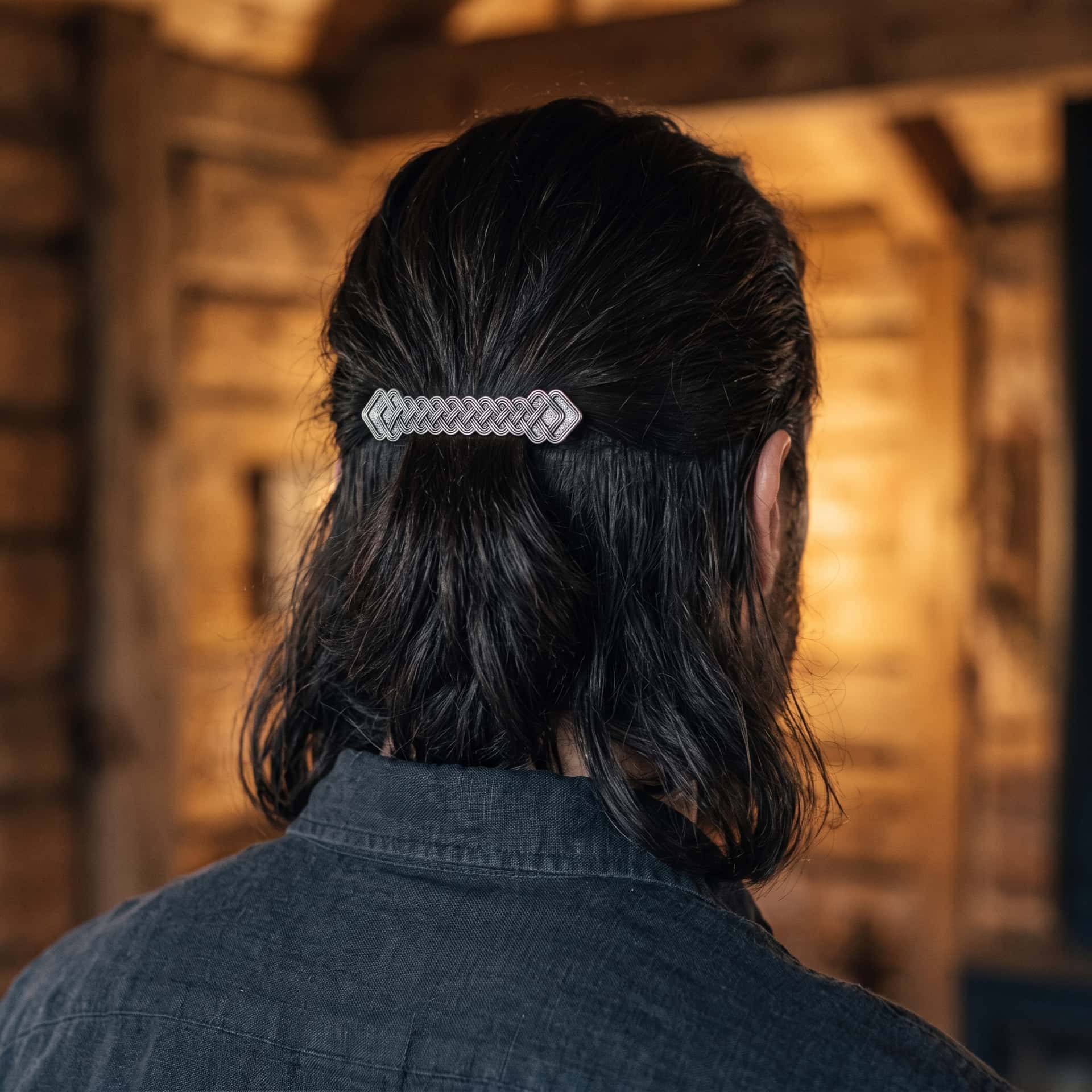
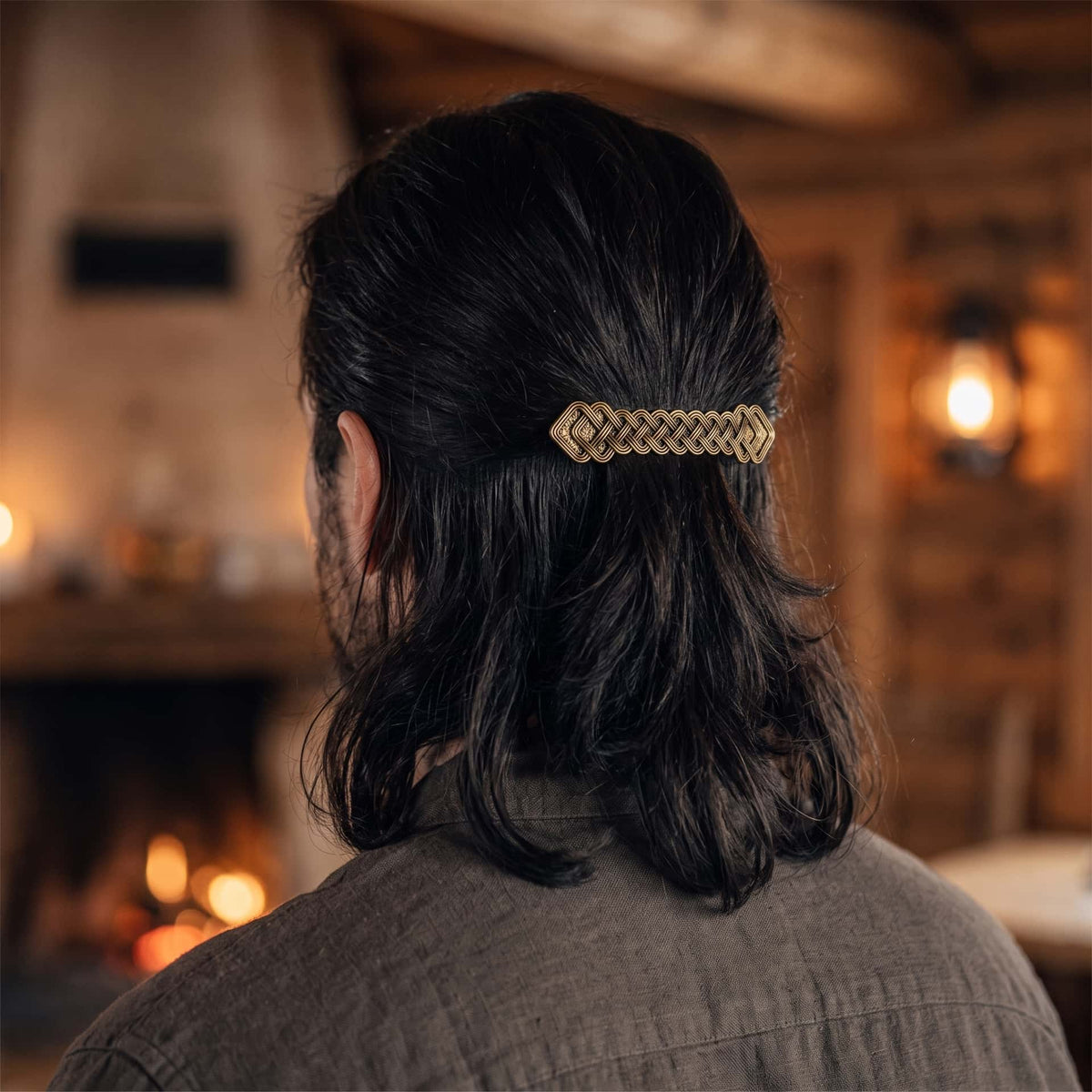


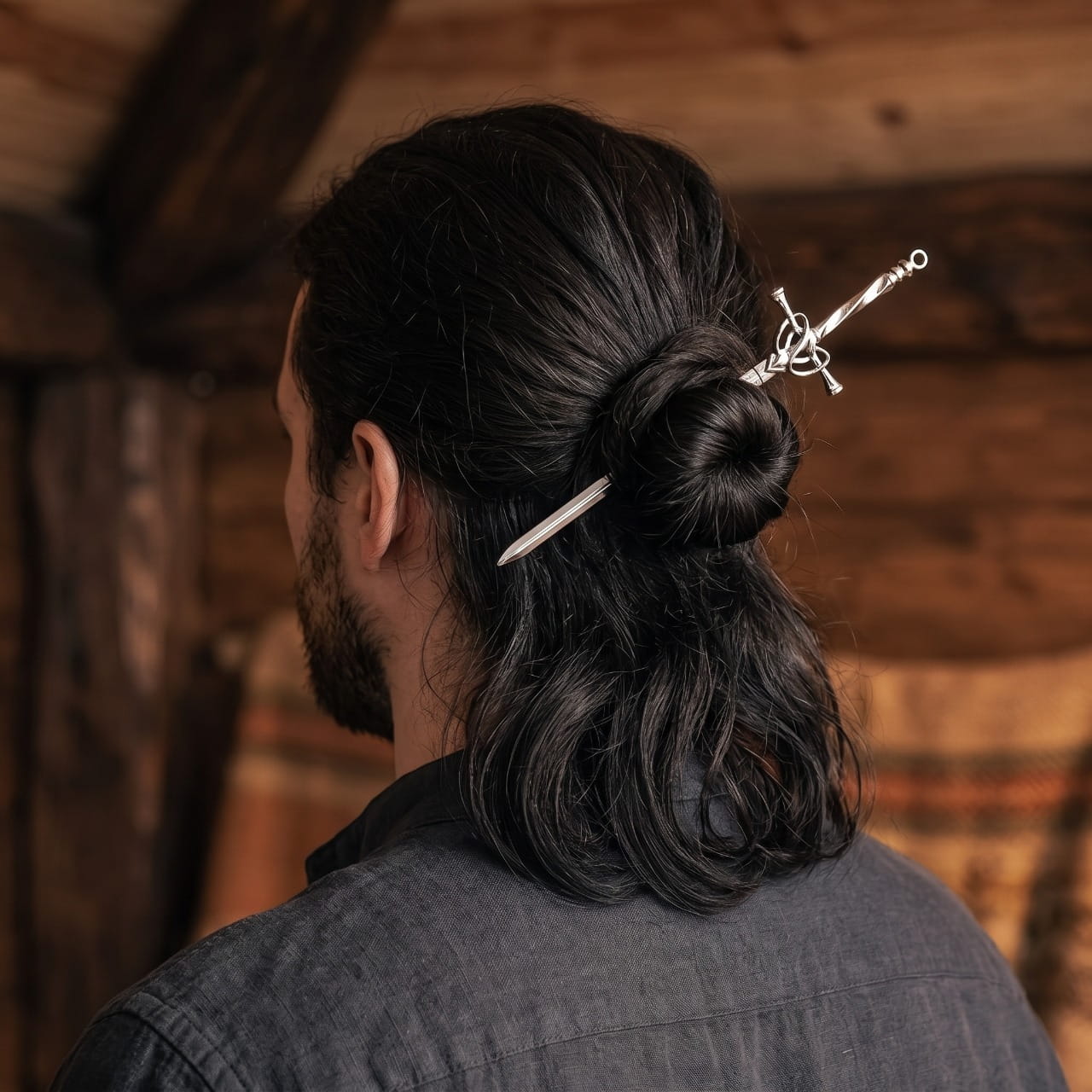
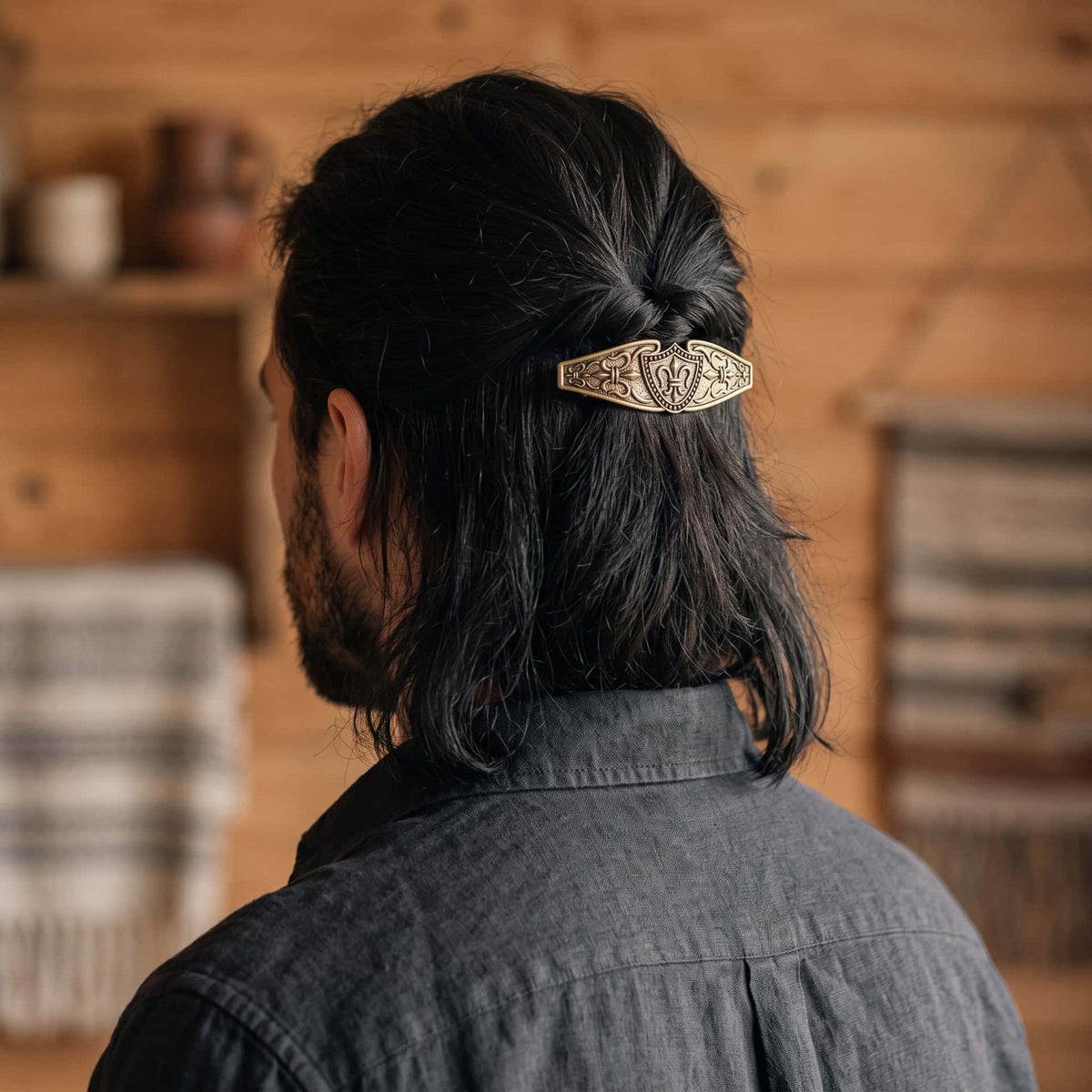




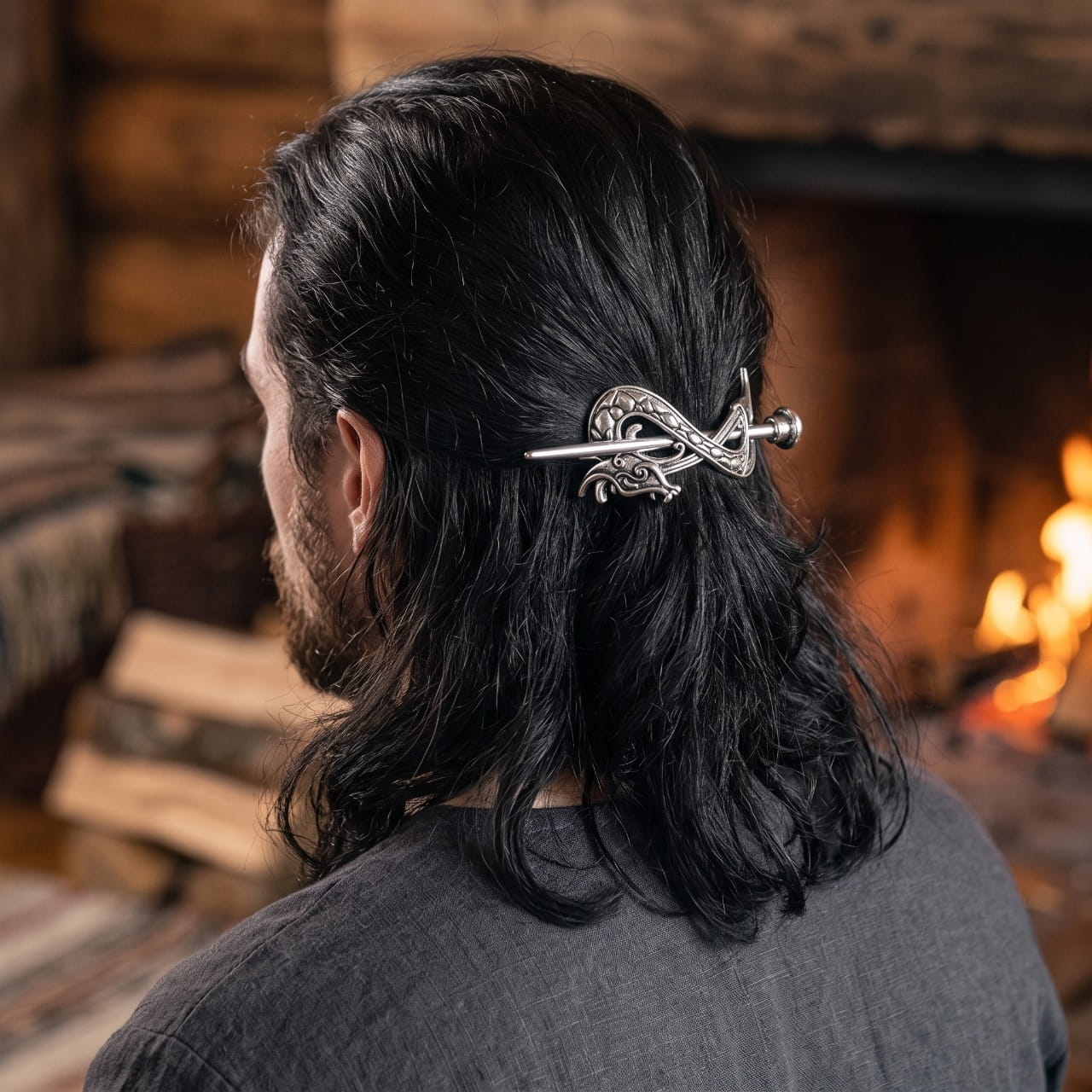

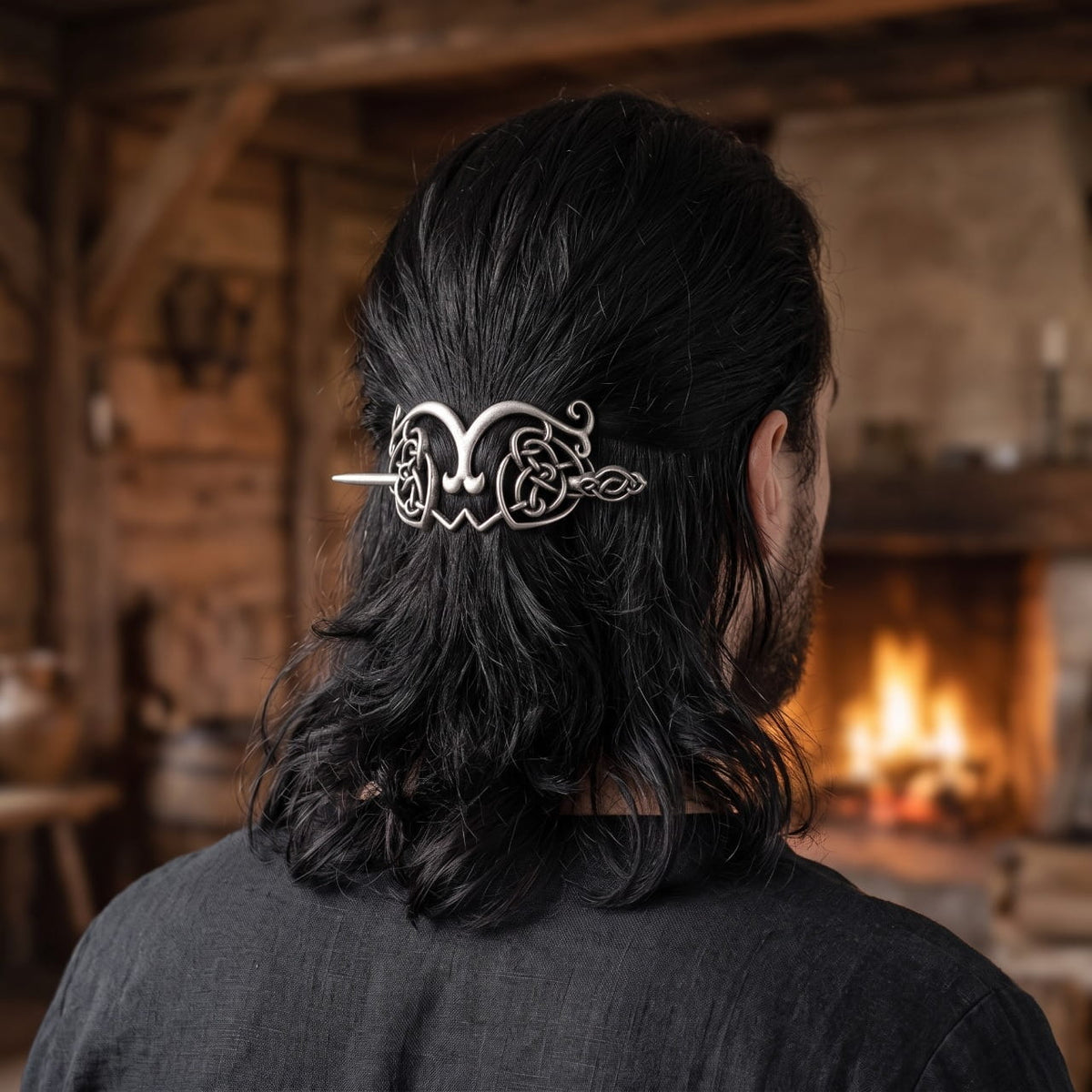
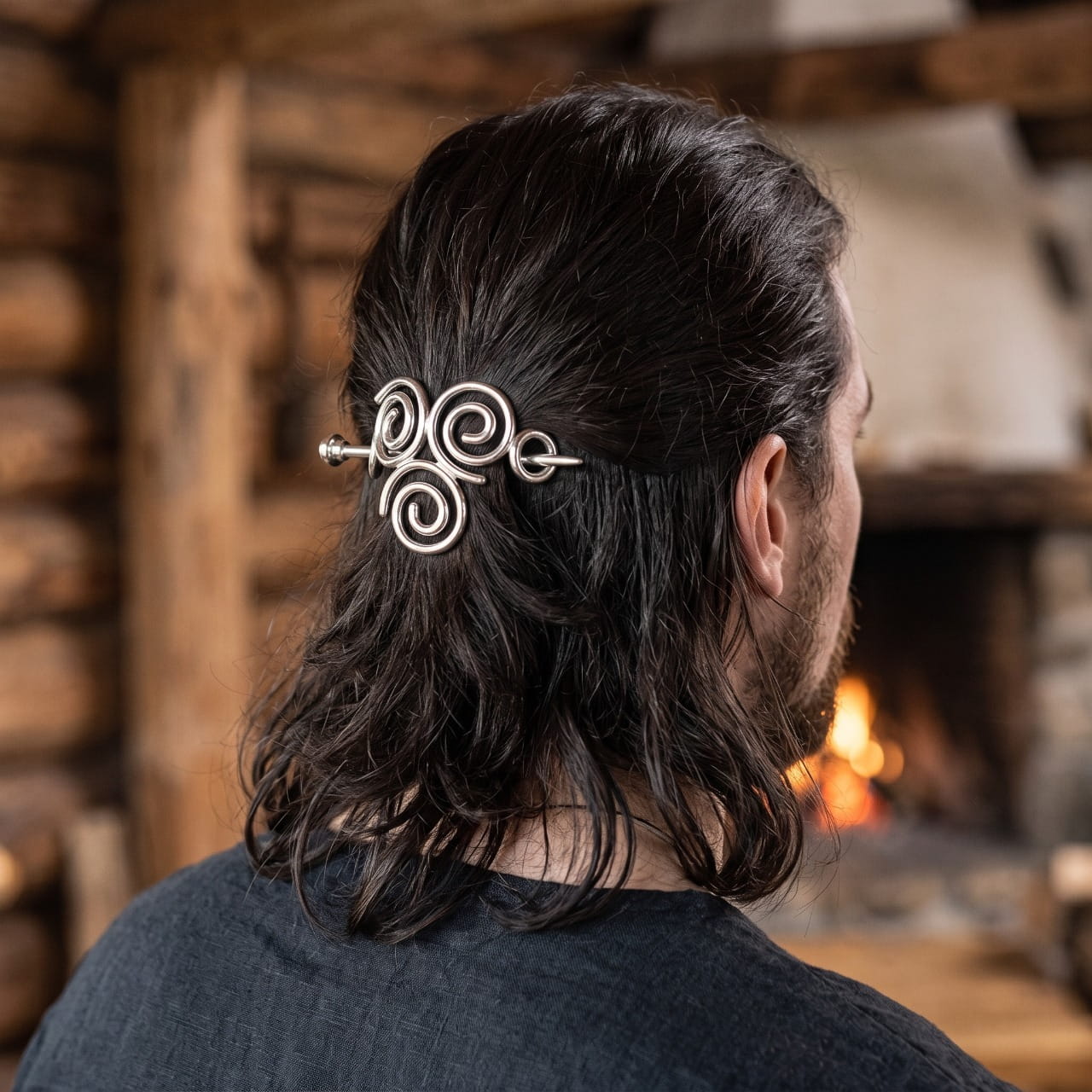
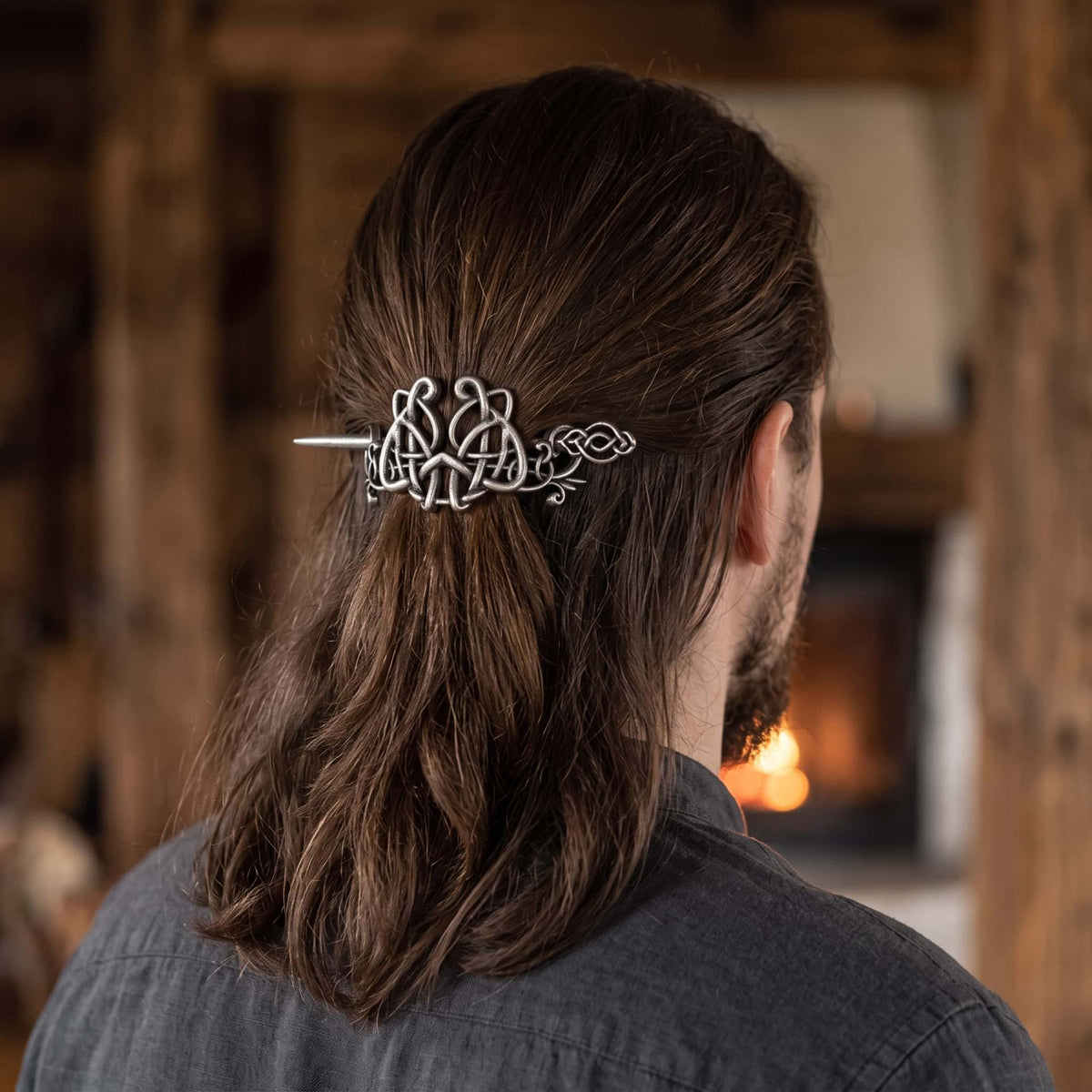


Viking Barrettes & Hair Jewelry — en savoir plus
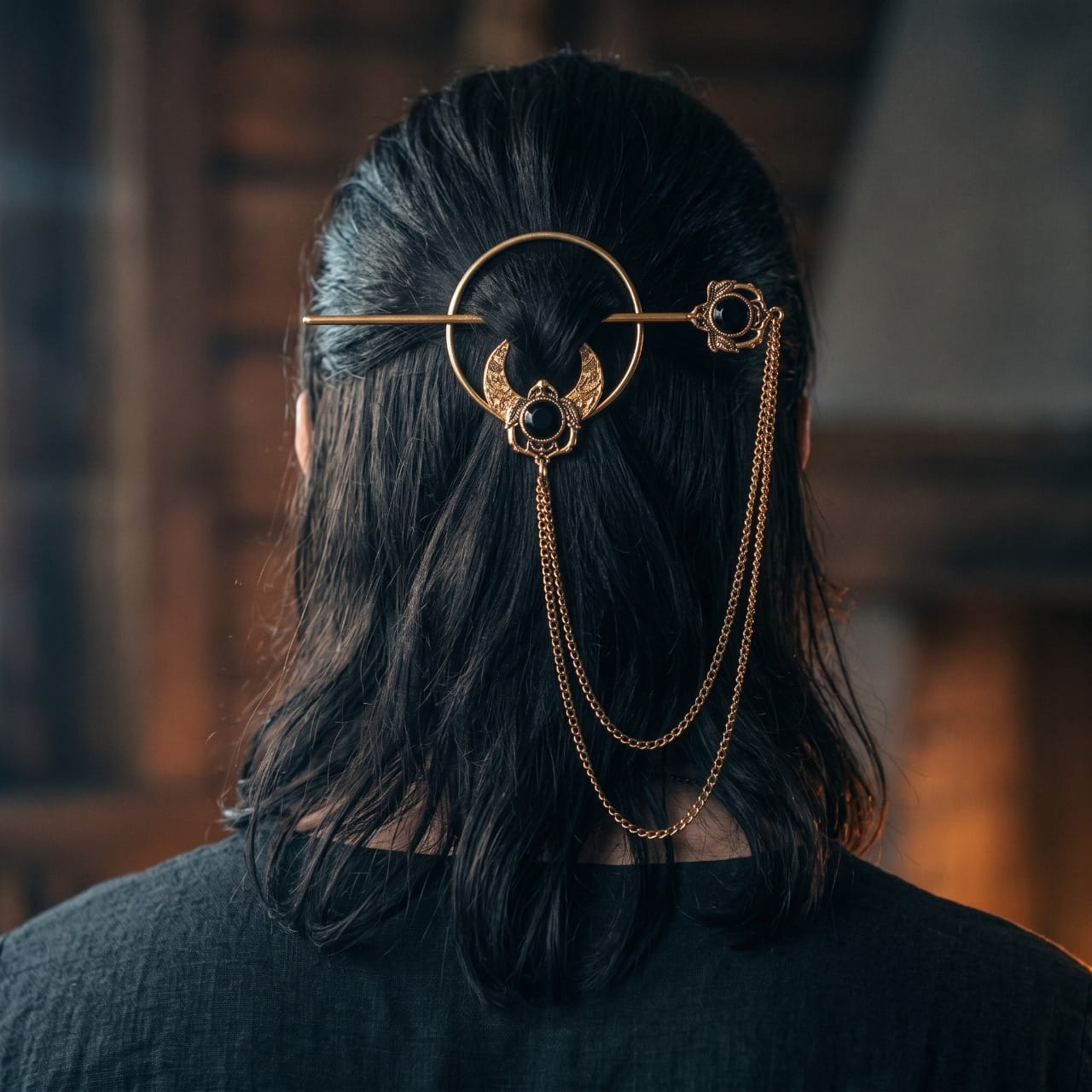
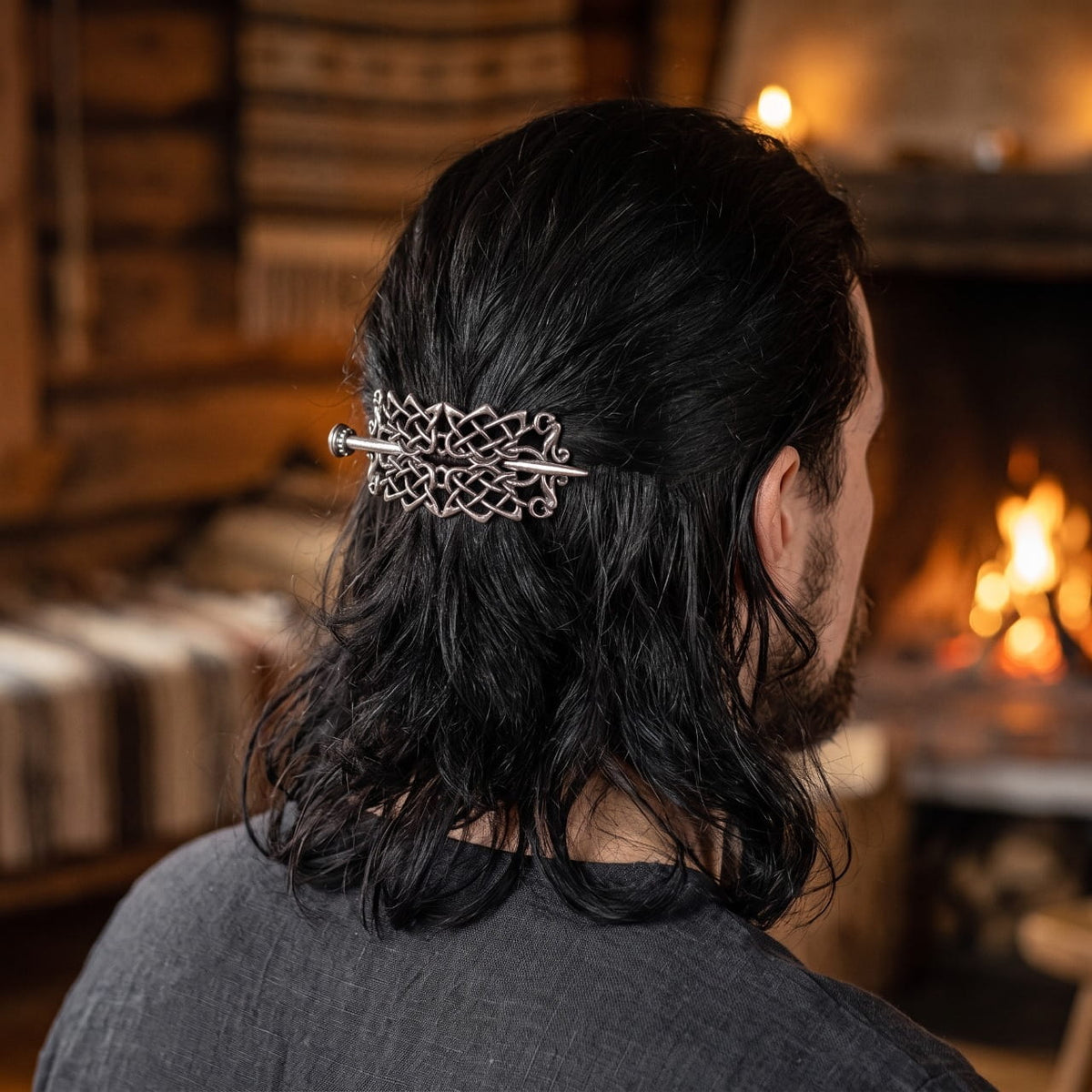
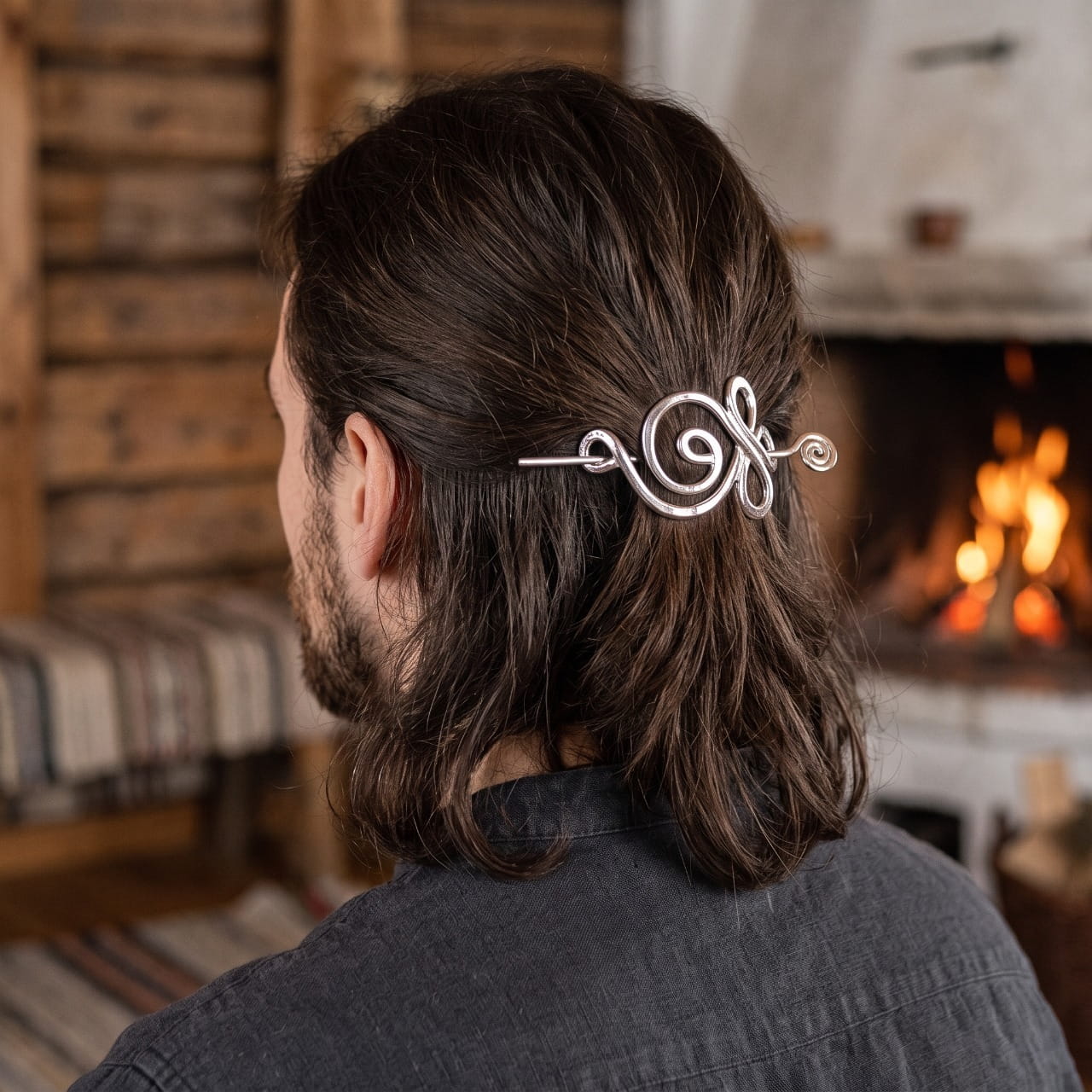
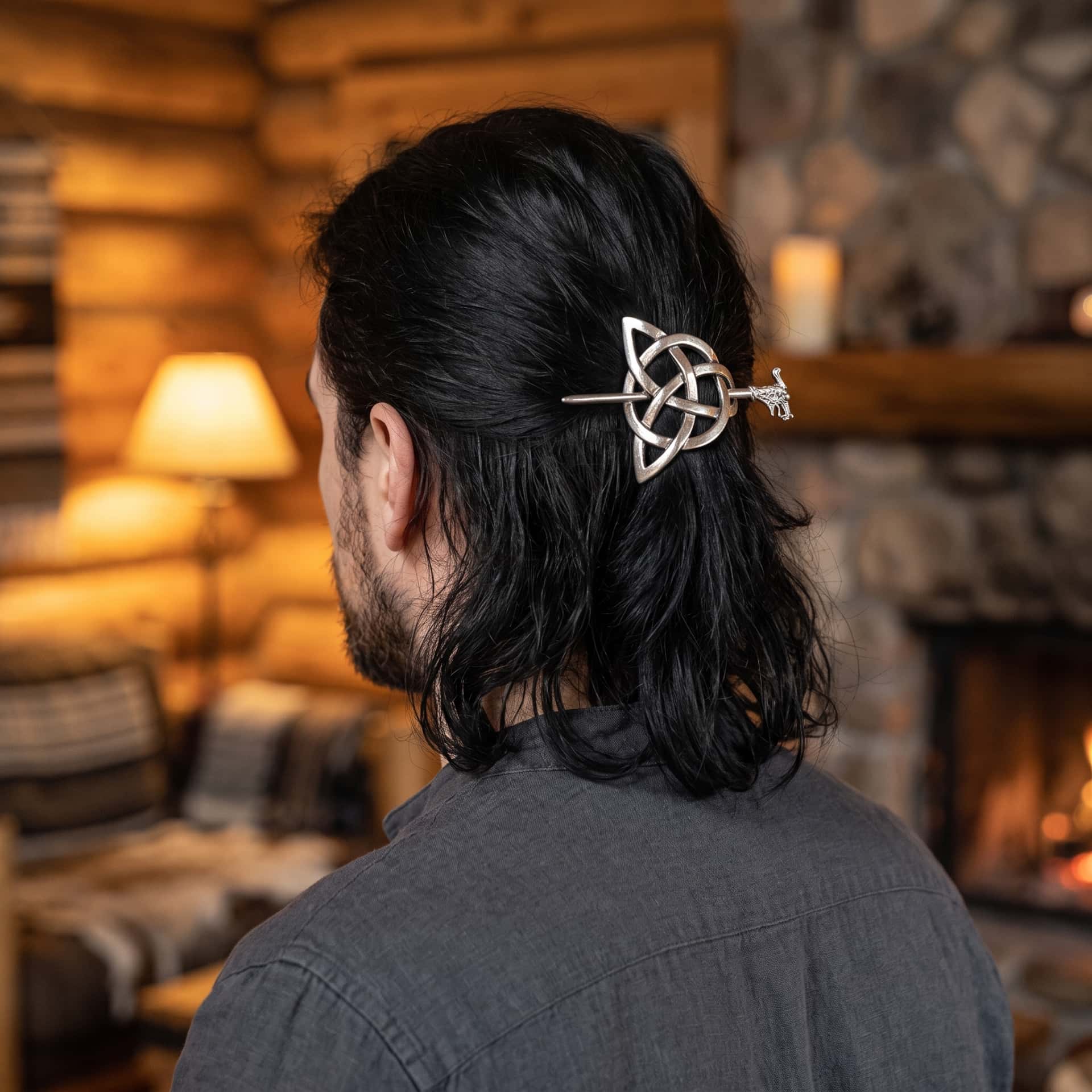
Decorated combs are among the most frequent objects in Viking graves: hair was not a detail, it was part of daily care. This collection brings together stick barrettes, hair sticks and hair and beard beads, engraved with knotwork, endless knots and dragon heads. They come in antique silver, silver-tone, antique bronze or gold-tone finishes. Strong enough to hold a thick braid, detailed enough to be worn as jewelry.
Three different objects, three different techniques
They look alike in the display case but are used in completely different ways. That's the first thing to know before choosing.
The stick barrette
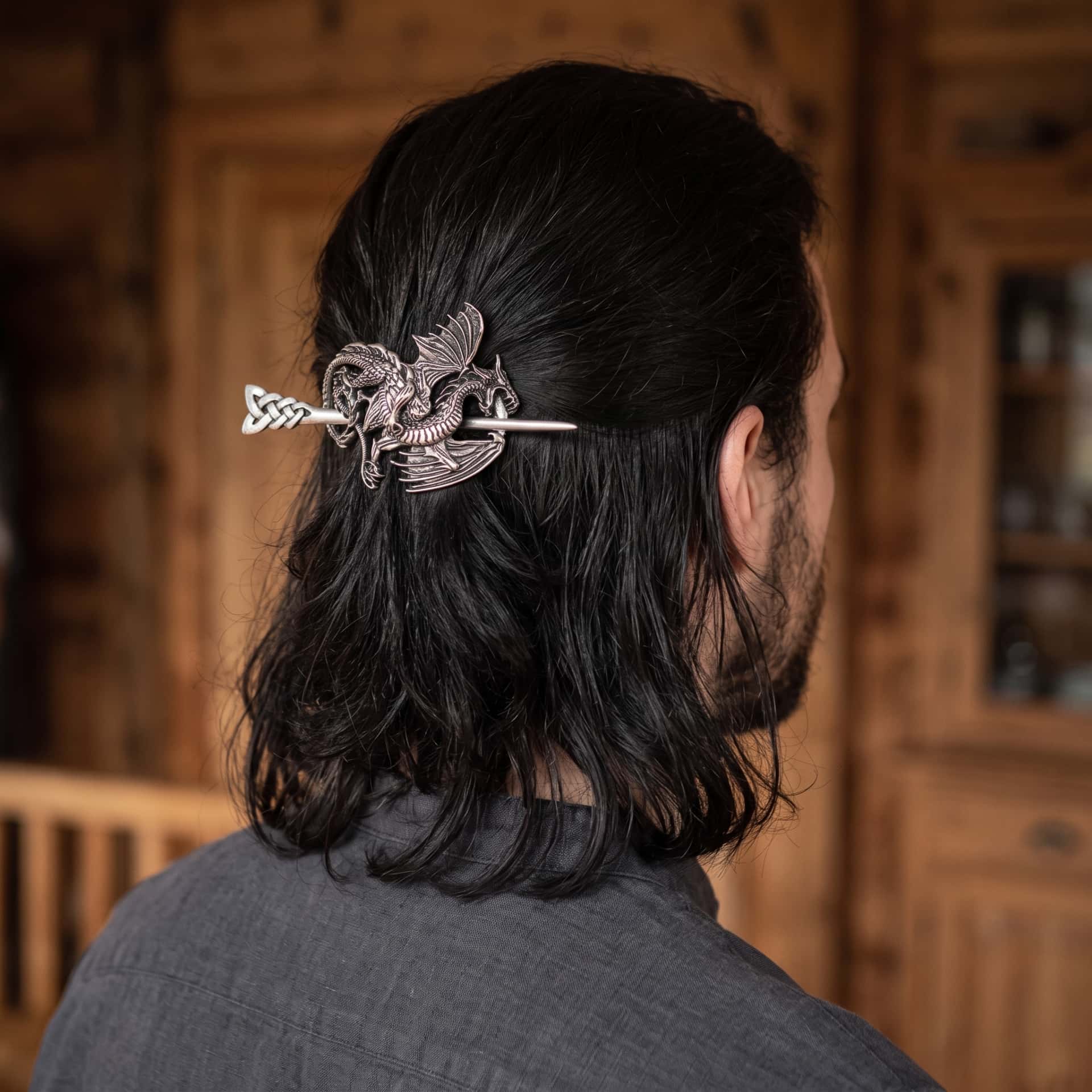
The most common format here, and the easiest to get the hang of. An openwork plate — oval, round or elongated — pierced with two slots, and a straight stick that passes from one to the other, trapping the lock of hair on its way. No spring, no mechanism: it's the tension of the hair itself that locks everything in place, and nothing breaks because there's nothing to break.
How to put it in. Gather your hair, lay the plate flat on top, then push the stick through the first slot, under the lock of hair, and bring it out through the second. If it slips, you've taken too little hair: this fastener needs something to bite into. On very fine hair, twisting it first solves the problem.
It's the format that best holds a half-up ponytail or a low bun all day long, and the one that does the least damage: no teeth to snap, no elastic to saw into the hair.
The hair stick on its own
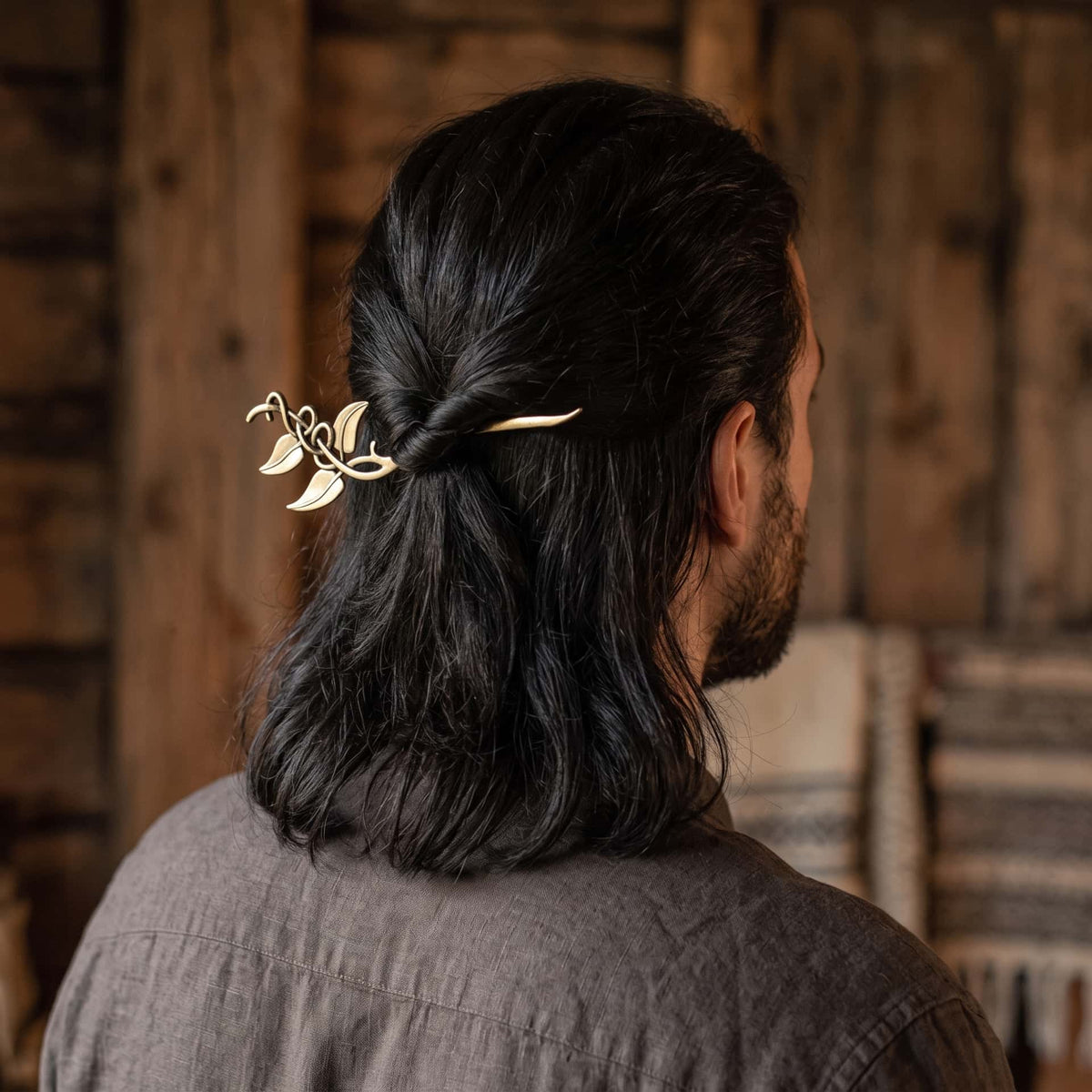
A single stick, decorated at one end — a moon with a dangling chain, a miniature sword blade, a gold-tone spray of leaves. It slides into a bun that's already formed, and here again it's the twist of the hair that holds it, not the point.
The technique is different. Twist the lock of hair, coil it, then insert the stick aiming across the bun rather than into the center: the stick should come out the other side after catching some hair at the root. Pushed straight into the mass of hair, it works its way out on its own within an hour. This format needs real length of hair and a little practice — it's more elegant, but less instant than the barrette.
Hair and beard beads
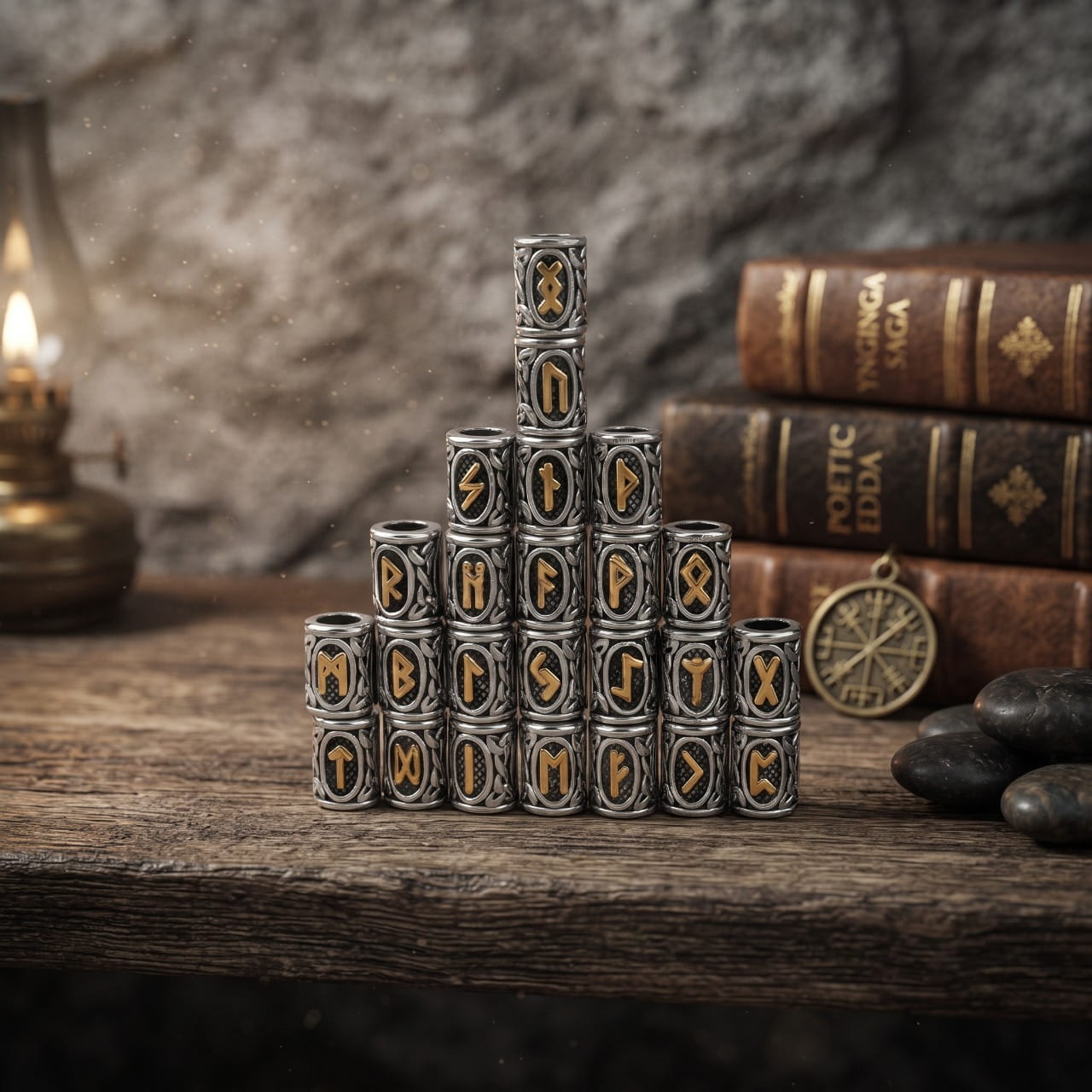
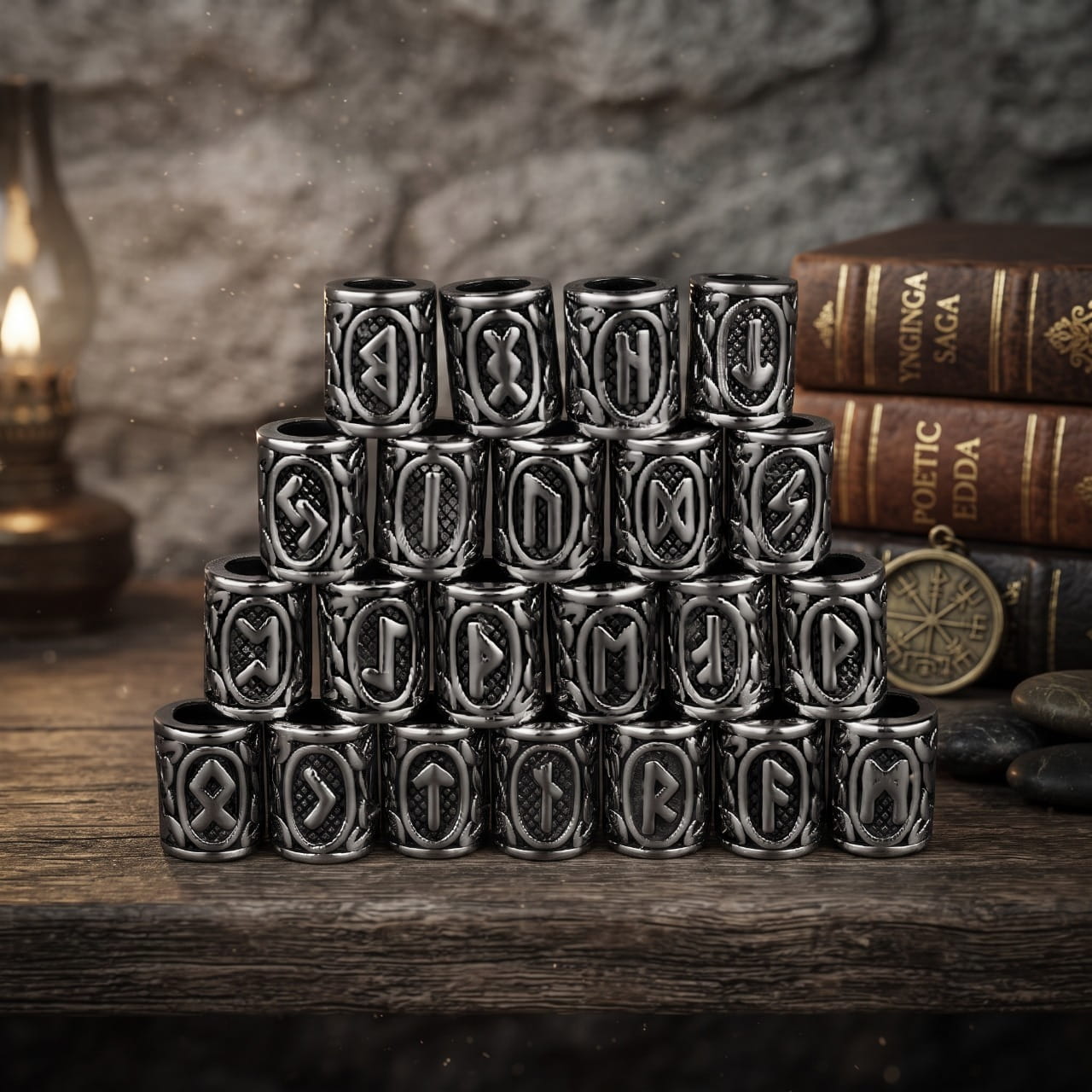
Steel beads, engraved with Futhark runes, that thread onto a braid — of hair, beard or mustache. They slide onto the lock before braiding and are moved up afterward, or go onto a finished braid if the diameter allows. They are the sturdiest pieces in the section, and they now have their own page: our Viking beard and hair beads, where the hole diameter is given product by product.
What we know about hair in the Viking Age
Quite a lot, in fact, and more about hair care than about the hairstyles themselves.
The comb is one of the objects most frequently found in excavations, from Denmark to Ireland: carved from antler or bone, held together with rivets, often kept in a protective case and worn at the belt. Combs turn up in men's and women's graves alike, and even in the Oseberg ship burial. An object people take with them into the afterlife is no mere accessory.
Two details of vocabulary drive the point home. In Old Norse, Saturday is laugardagr — literally “bath day” — and the word has survived as such in the modern Scandinavian languages. And a 13th-century English chronicler, John of Wallingford, reproached the Danes settled in England for combing their hair every day, bathing on Saturdays and changing their clothes often, “to the point of seducing women of noble birth.” The reproach is in bad faith; the information, on the other hand, is invaluable.
Our article on Viking daily life takes a broader look at this material side of everyday life.
What's modern about these objects, and we say so
The stick barrette you see here is a contemporary object. The principle — a pin passing through a lock of hair — is as old as long hair, and excavations have yielded plenty of dress pins and hairpins. But the openwork plate with two slots, as sold today, belongs to the Celtic-revival craftwork of the 19th and 20th centuries, not to the toolkit of a woman of Birka.
Likewise, beard beads are a largely modern practice, popularized by reenactment and TV series. Scandinavian archaeology yields beads by the thousands — glass, amber, carnelian — but their use in beards remains very poorly established. We offer them because they're beautiful and they hold a braid, not because a jarl wore them.
As for the knotwork engraved on these pieces, the label “Celtic knot” is convenient but imprecise: the Scandinavian ornamental vocabulary belongs to the Norse animal styles — Borre, Jelling, Mammen, Ringerike, Urnes — which were widely exchanged with the Irish insular world. The two spheres crossed paths throughout the Viking Age, and untangling one from the other on a given motif often takes a specialist's eye.
The motifs in the collection
Dragon heads are the most frequent motif, at the tip of an elongated barrette or coiled in a circle. They refer to ships' figureheads and to the ribbon-like beasts of Scandinavian art — the Norse dragon is not the treasure-guarding monster of Western imagery, it's a creature of the prow, of protection and of speed. Jewelry and objects with this motif are gathered in the Norse dragons and serpents section.
Endless knots, drawn in a single continuous line, come as a simple spiral, a triple spiral and a symmetrical double knot. The triquetra — three arcs in one unbroken piece — appears on the Funbo runestone in Sweden as well as in the Irish Book of Kells: it belongs to both worlds. Its reading as a symbol of the Christian Trinity came later, born of Christianization; the reading as body, mind and soul is contemporary and has no medieval source.
The interlaced horses evoke Sleipnir, Odin's eight-legged steed, and the longship under sail the langskip — the French word “drakkar” itself being a 19th-century neologism. Finally, a few pieces set storytelling aside in favor of pure decoration: filigree set with turquoise and red cabochons, silver-tone or gold-tone braids, a flower and an imitation pearl. They are the lightest pieces in the collection, and the least expensive.
For the meaning of each symbol, our guide to the 17 Viking symbols and the Futhark runic alphabet go further.
Materials, finishes and care
Most of the collection is in metal alloy, with an antique silver, antique bronze, silver-tone or gold-tone patina. The patina is not a flaw: it's applied deliberately so that the recesses of the design stay dark and the relief stands out. That's what gives these pieces their look of old metal rather than shiny costume jewelry.
The rune beads, for their part, are steel, harder and unaffected by moisture.
Care. A soft, dry cloth is all it takes. Avoid prolonged soaking in soapy water and silver polish on patinated pieces: an abrasive cleaner strips the patina from the recesses and the design loses all its relief. Take the barrette out before showering, swimming or coloring your hair, and store it away from moisture — the alloy tarnishes mostly in a closed bathroom. Pieces set with resin or imitation pearl are also sensitive to hairspray and perfume: do your hair first, then put the jewelry in.
Frequently asked questions
How do I put in a Viking stick barrette? Gather your hair, lay the plate on top, push the stick through the first slot, under the lock of hair, then bring it out through the second. It's the tension of the hair that locks everything in place: if it slips, take more hair.
Does it hold in fine hair? Yes, as long as you twist the lock before laying the plate on. A stick barrette needs volume to bite into — on very fine, straight hair, the twist makes up for the missing volume.
What's the difference between a barrette and a hair stick? The barrette consists of a plate and its stick, and goes on a ponytail or half-up ponytail without any special skill. The hair stick alone goes into a bun that's already twisted, across rather than into the center, and takes a little practice and real length of hair.
Do beard beads suit every beard? You need to be able to braid a lock and thread it through the hole. On a short beard, the bead won't stay put. The inner diameter is given on the product page.
Is this jewelry hypoallergenic? Most of it is metal alloy, which doesn't offer the same guarantees as surgical steel. This makes no difference in the hair, where contact with the skin is minimal; the rune beads, for their part, are steel. The exact material is listed on each product page.
Will the finish wear off? The patina is meant to stay in the recesses of the design and lighten slightly on the raised areas over time — that's the expected aging. An abrasive cleaner or silver polish, however, removes it in one go: dry cloth only.
What are the delivery times? Allow 10 to 20 working days in total: 3 to 5 days of processing, then 7 to 15 days of delivery to mainland France, 10 to 20 days within the European Union. Free tracked shipping from 49 €, whatever the destination country.
Explore further: to fasten a cloak or a shawl, our Viking fibulae and brooches; for the rest of your jewelry, our earrings, our Viking necklaces and all our Viking jewelry. For motifs, the triquetra and knotwork and Futhark runes collections. For reading, our complete guide to Viking jewelry. And to find out which hairstyles these fasteners hold best — braids, half-up ponytails, buns — our guide to Viking hairstyles covers it all, sources in hand.