
Filters
45 products
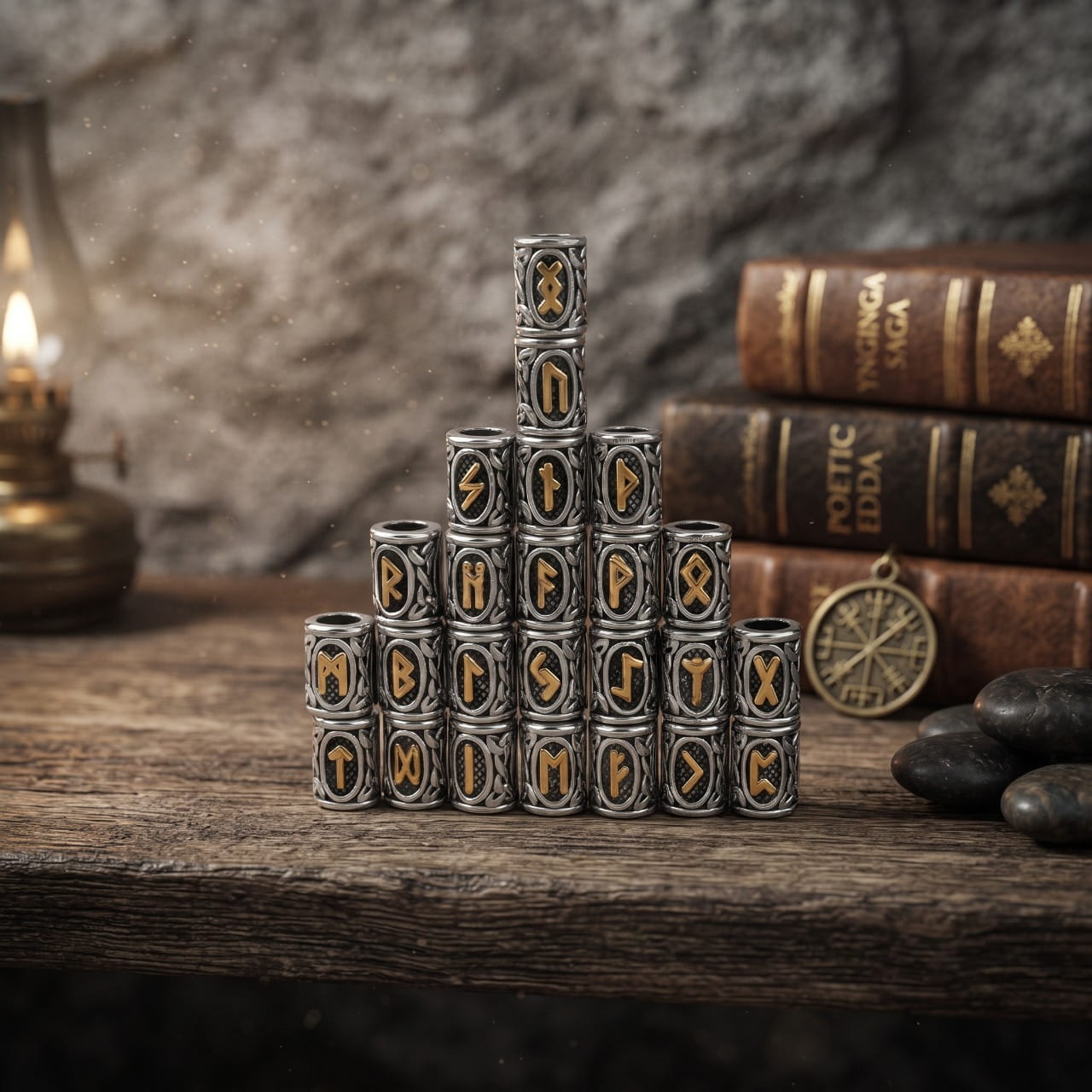
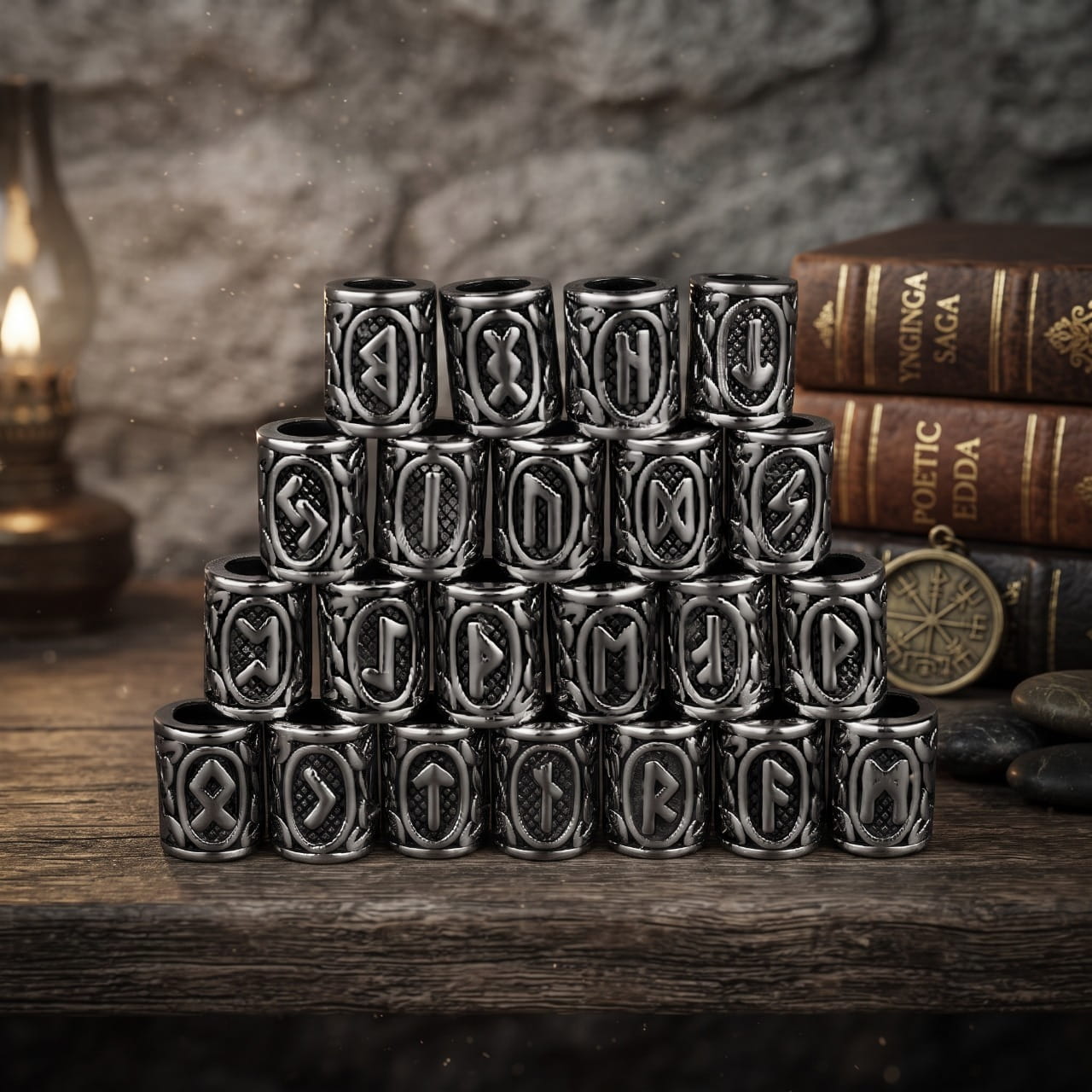
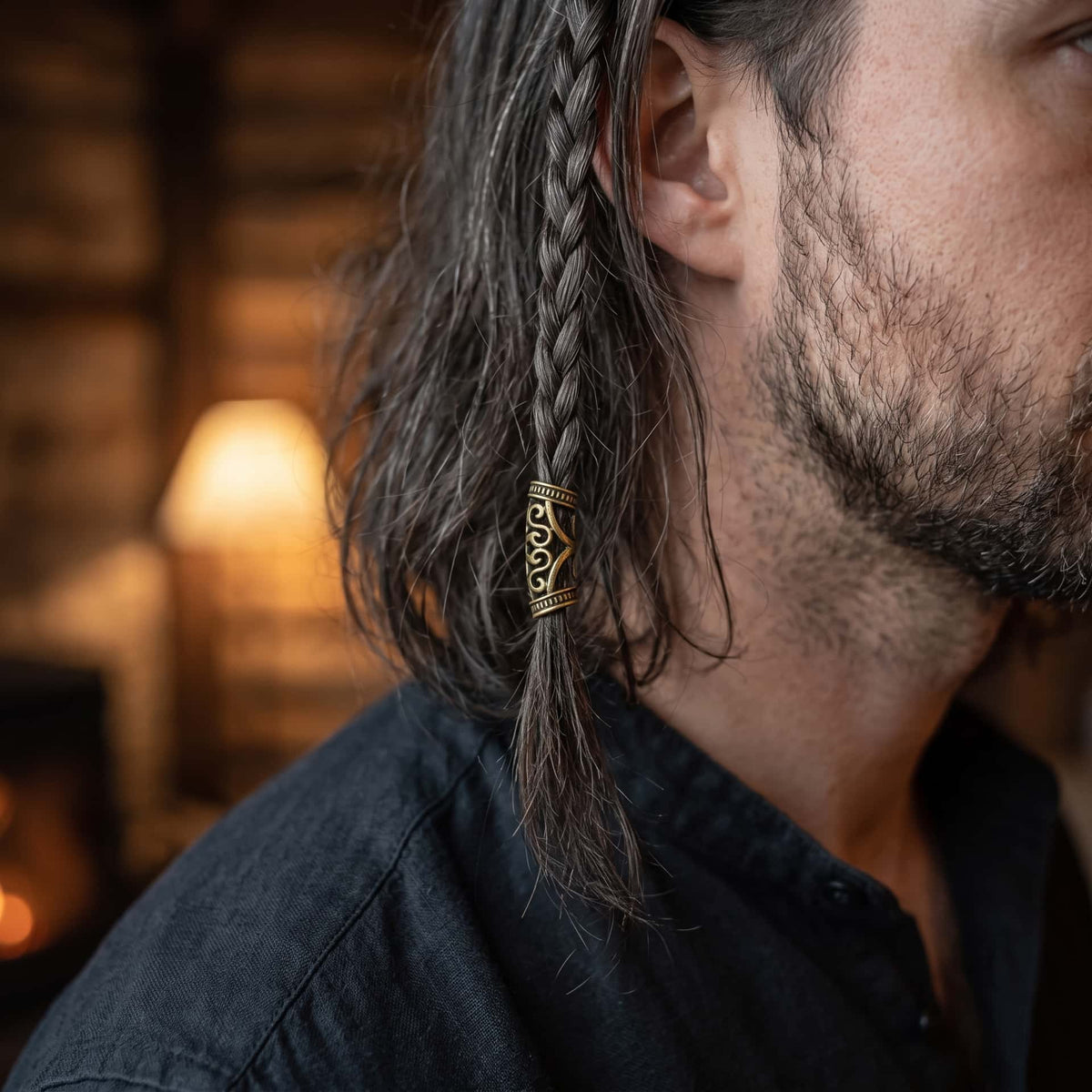
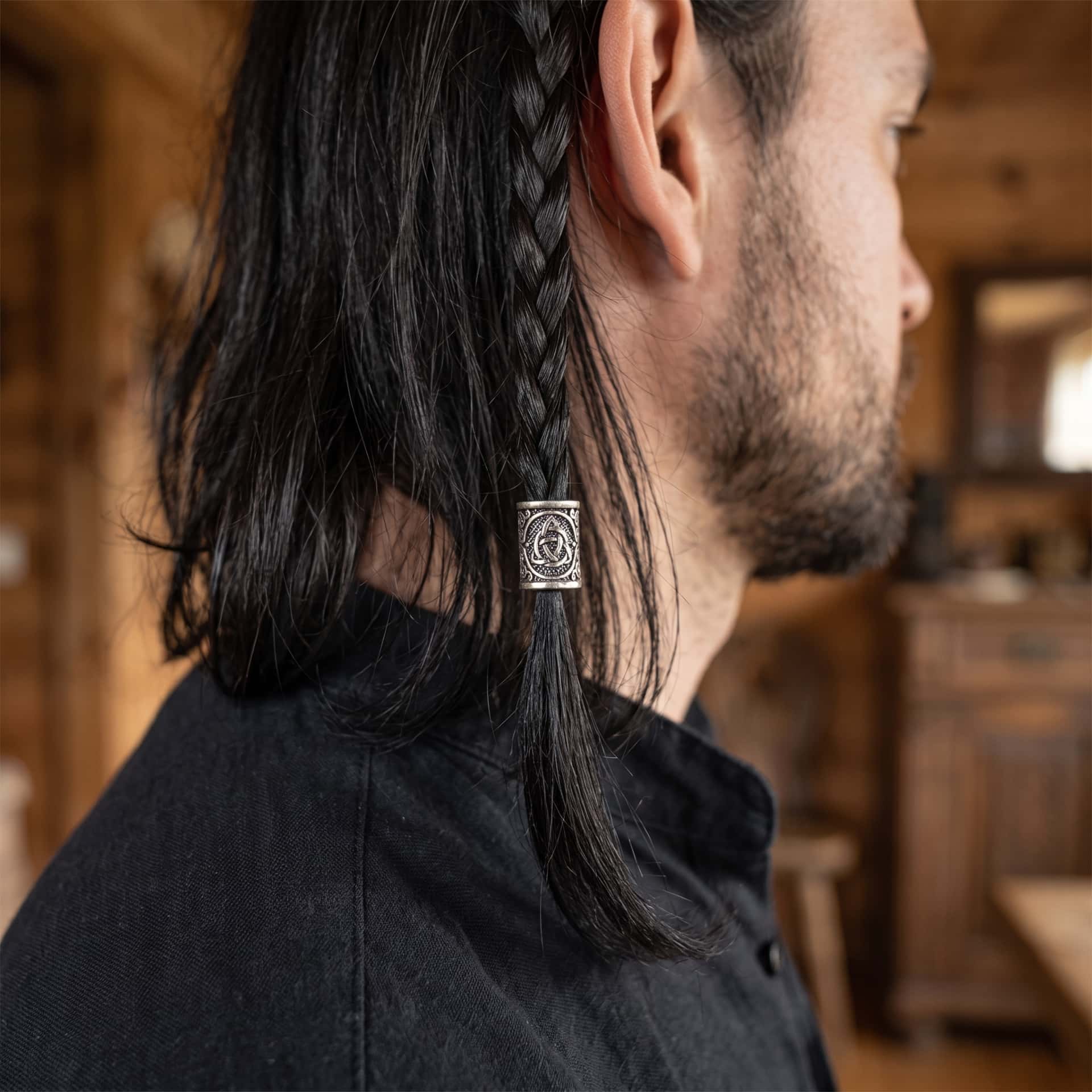
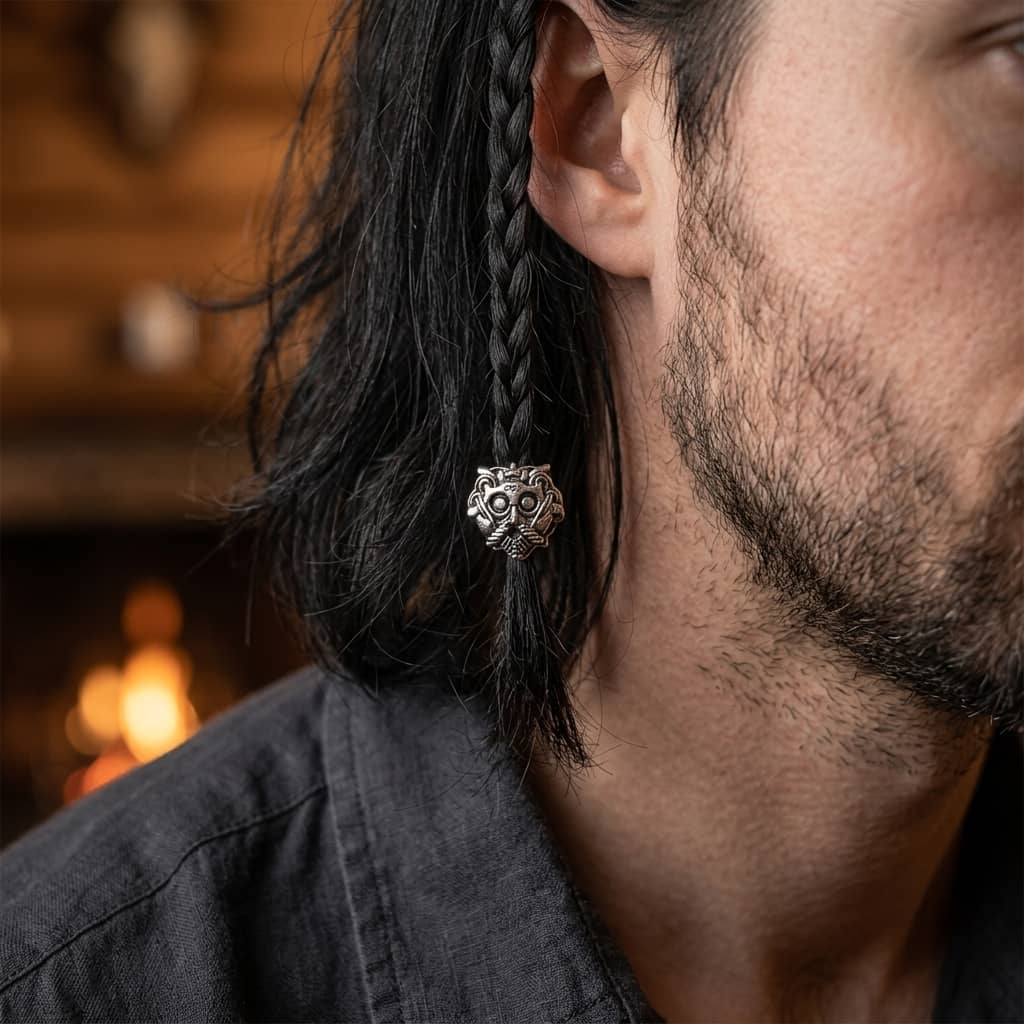
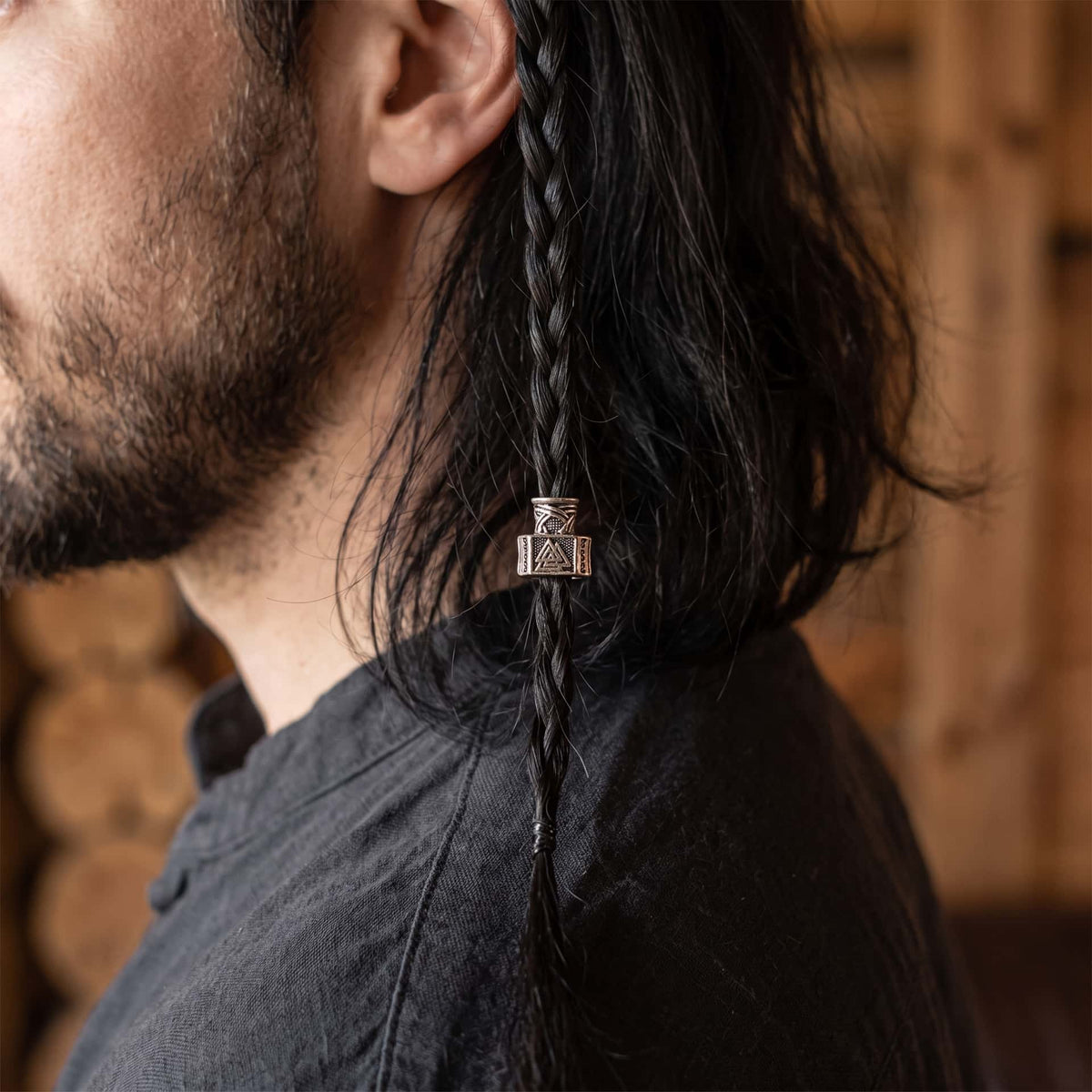
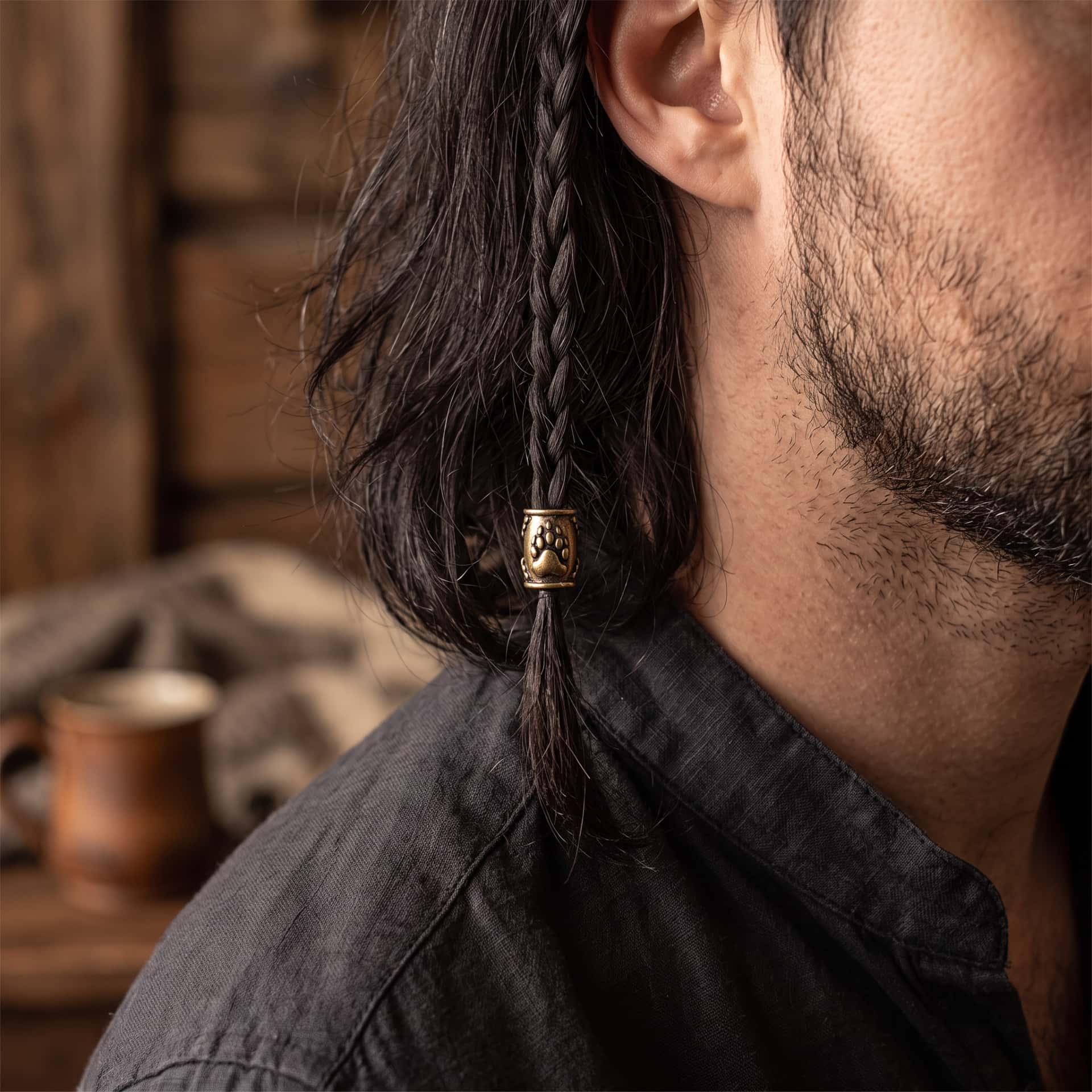
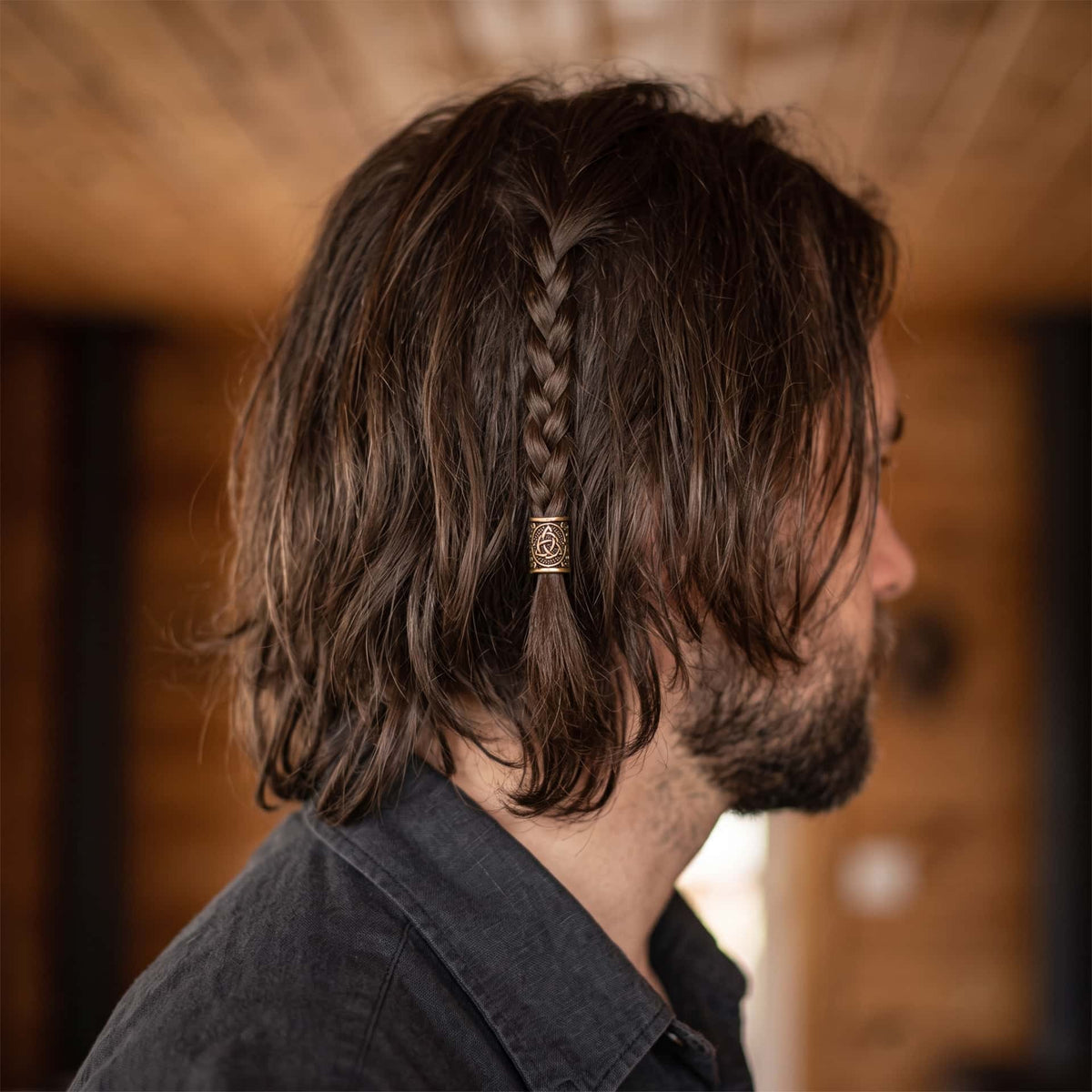
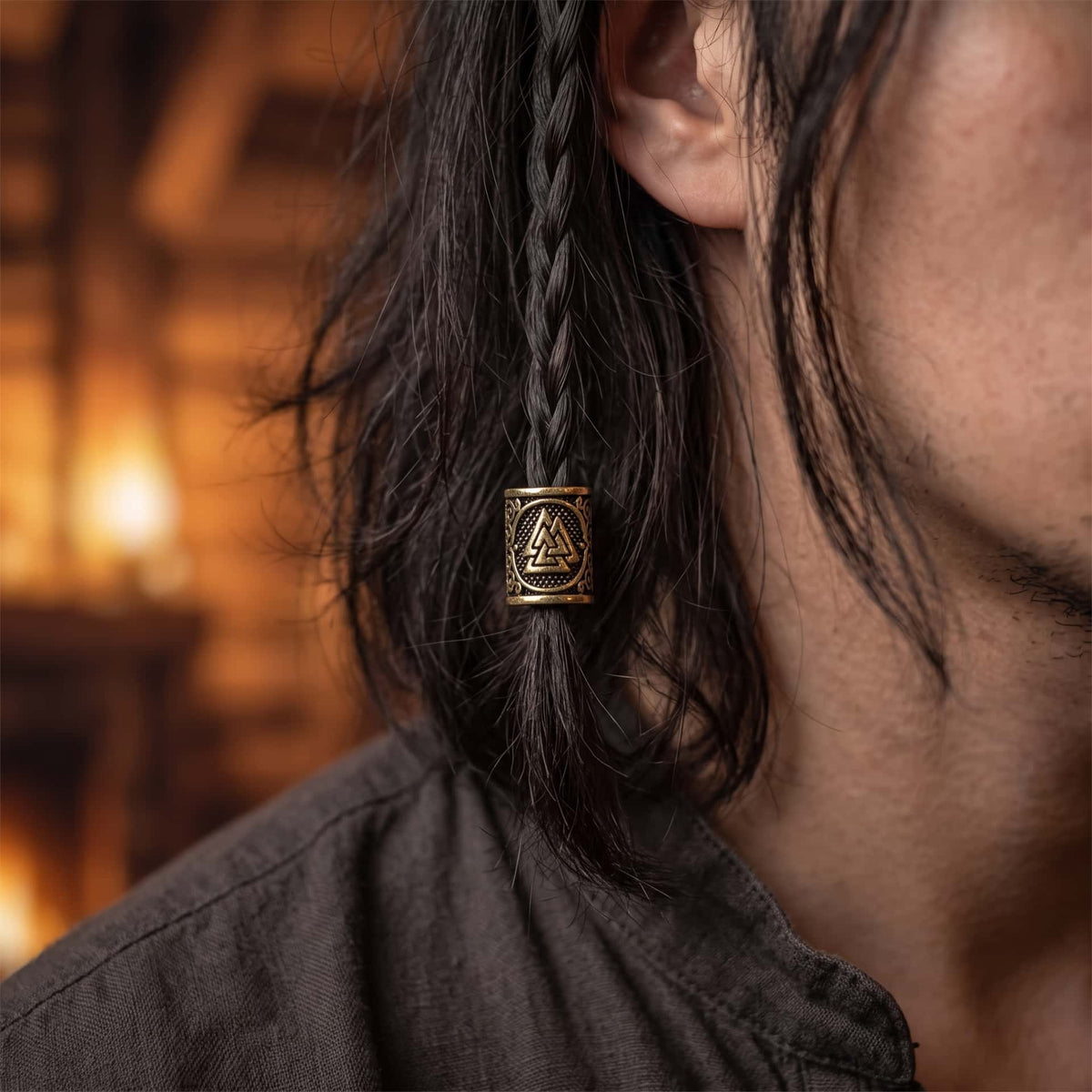
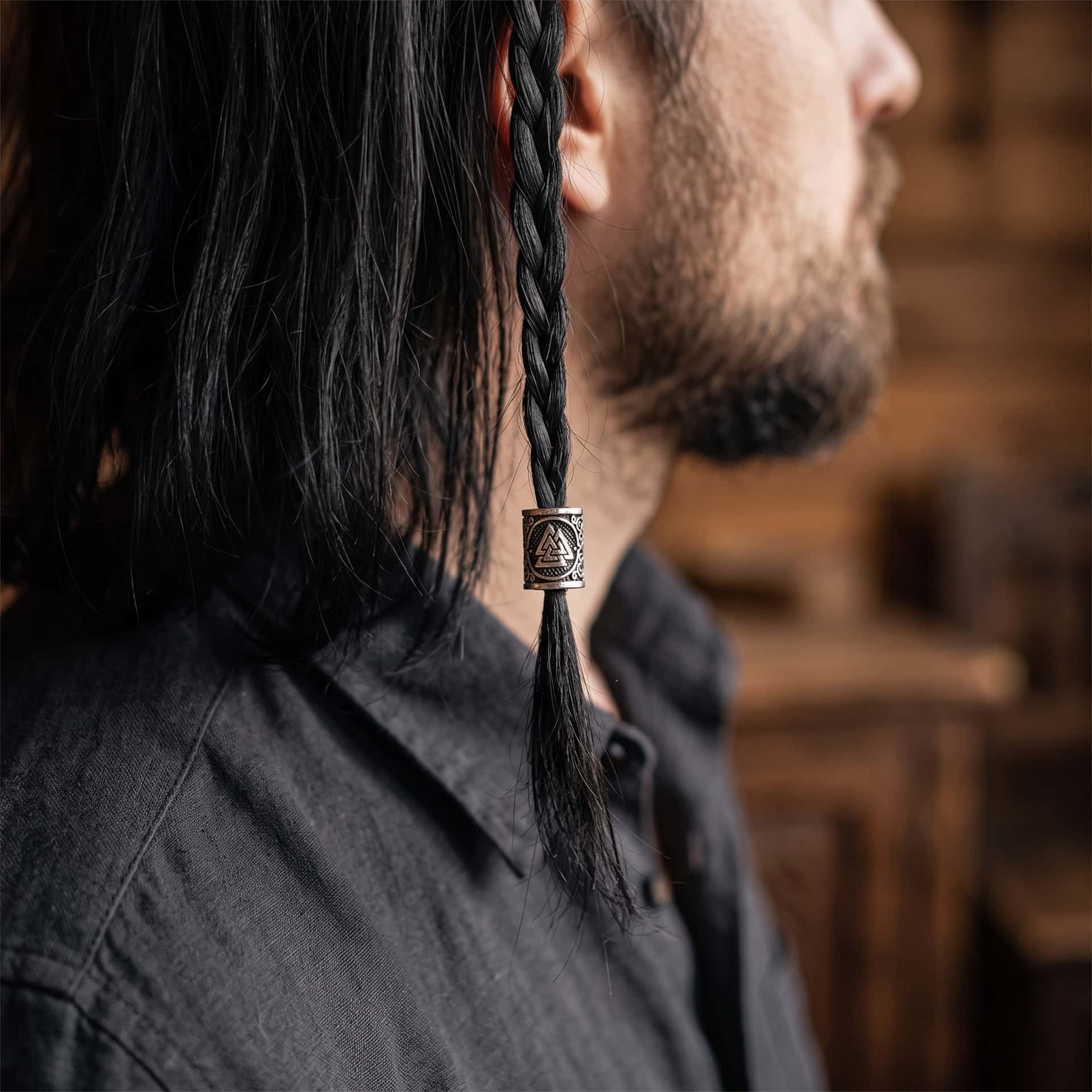
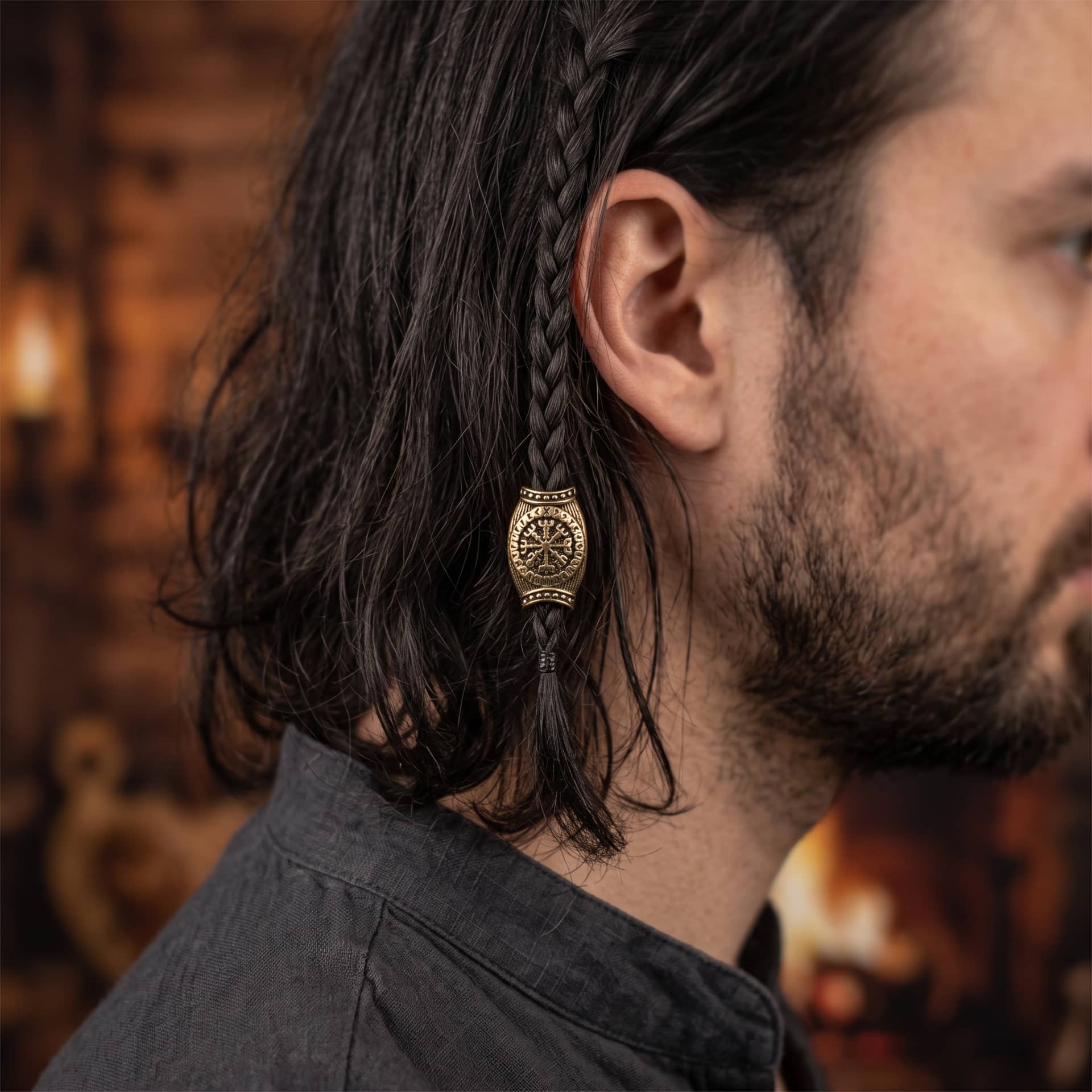
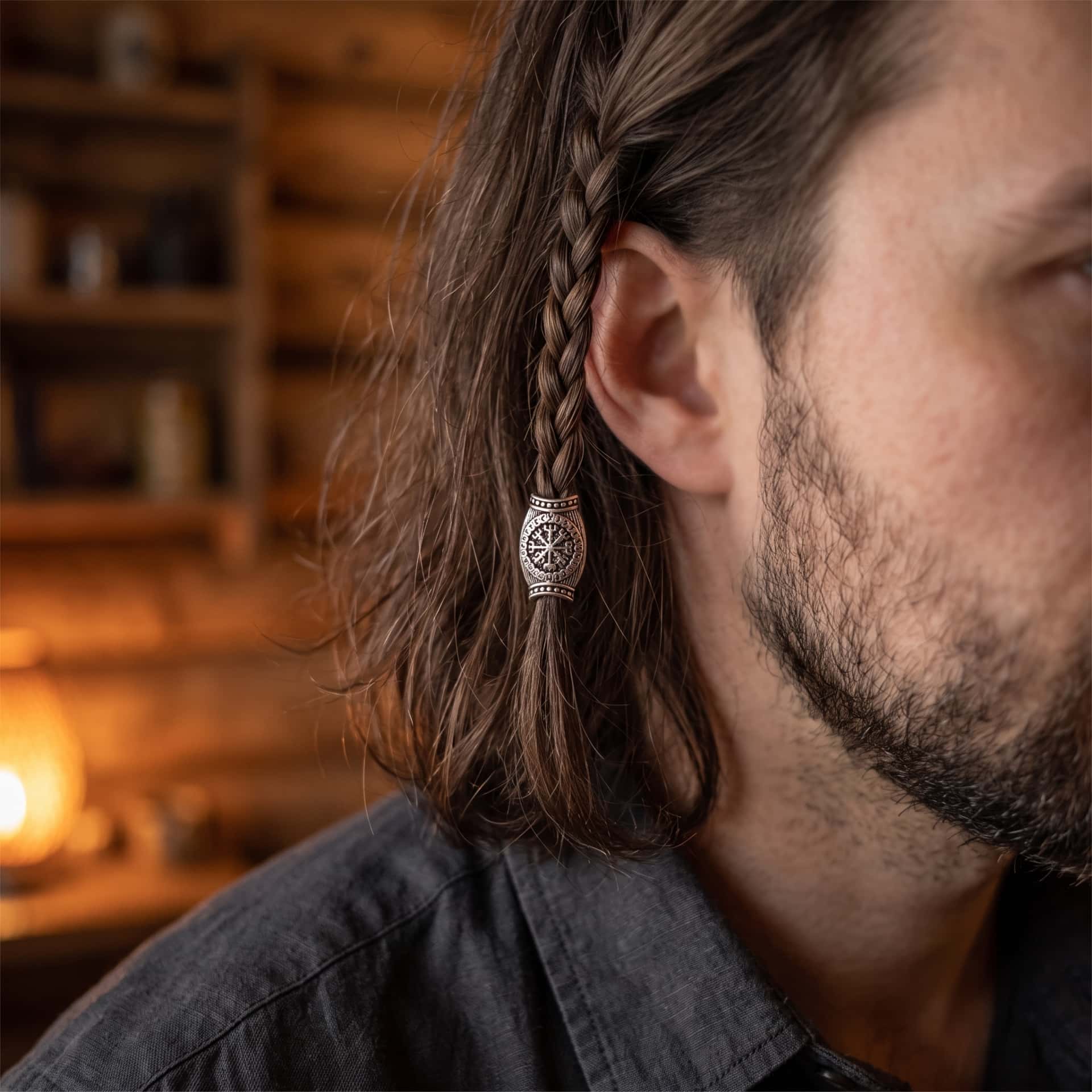
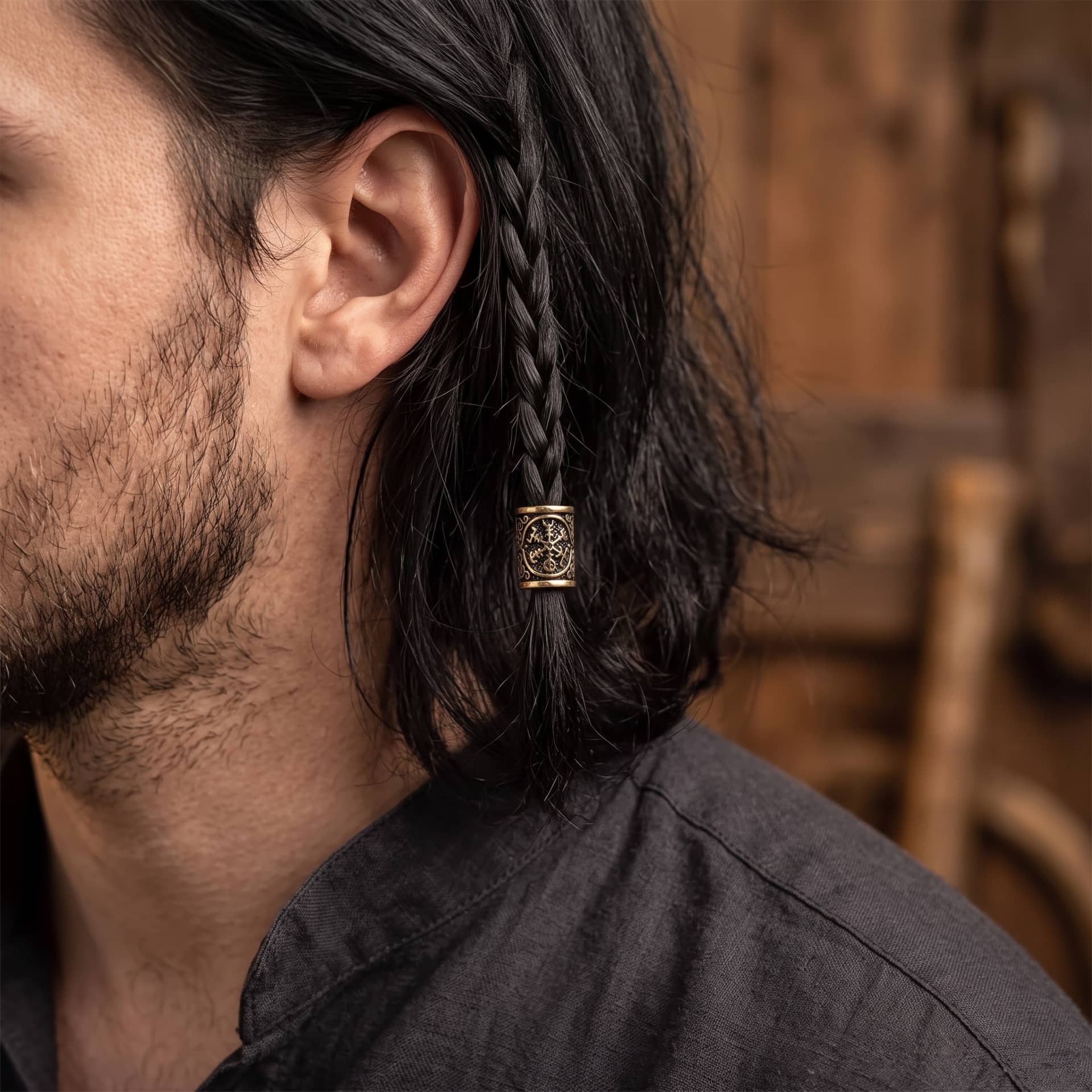
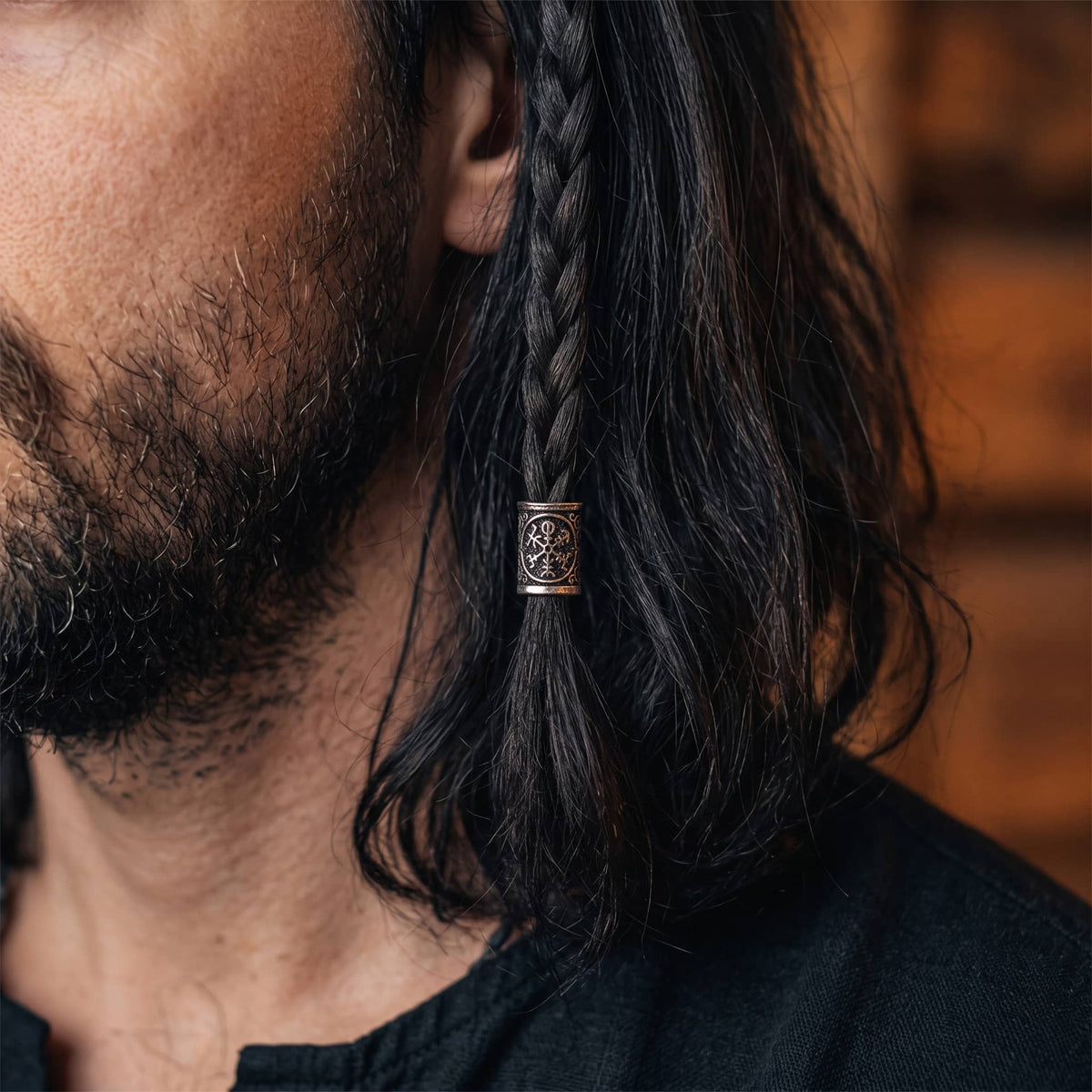
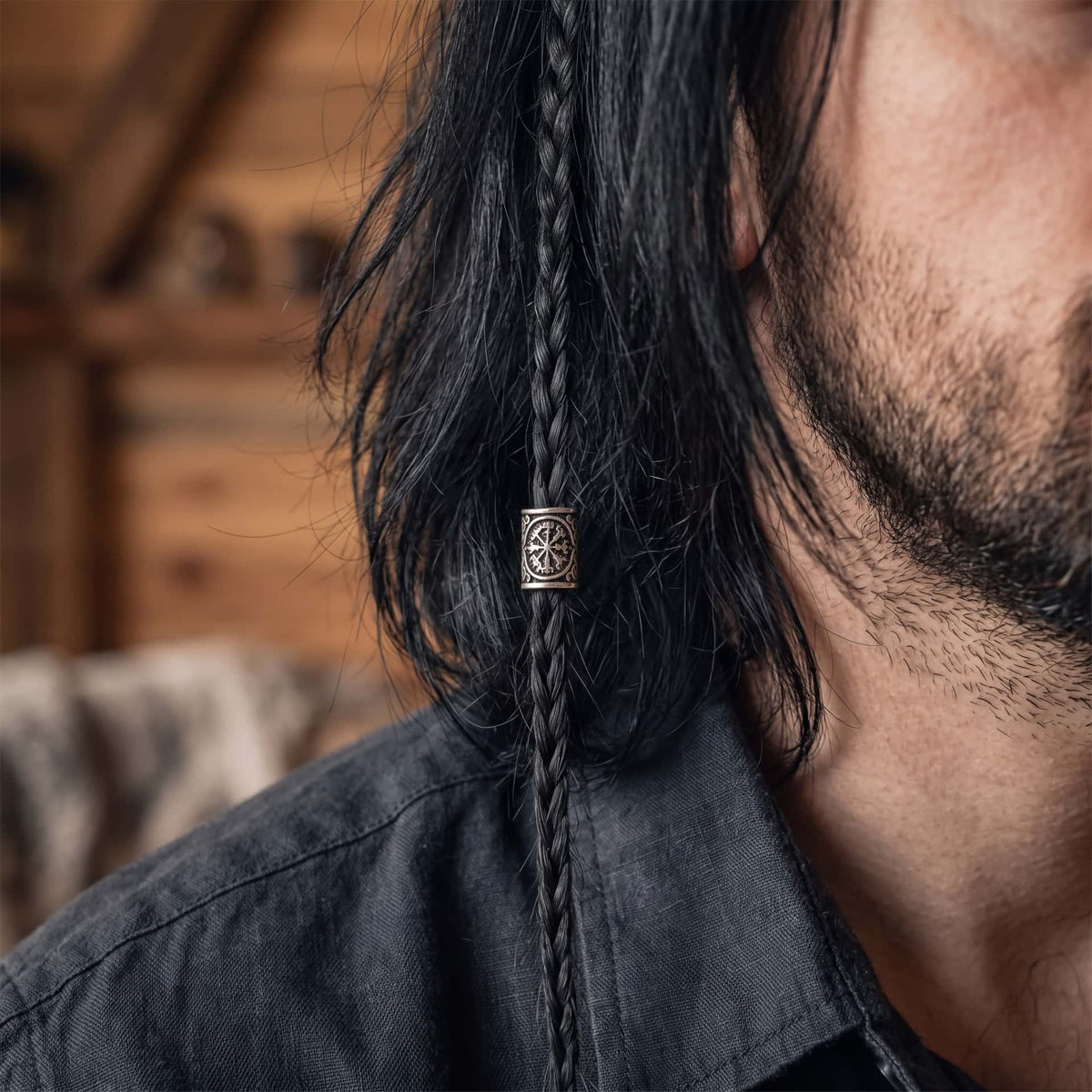
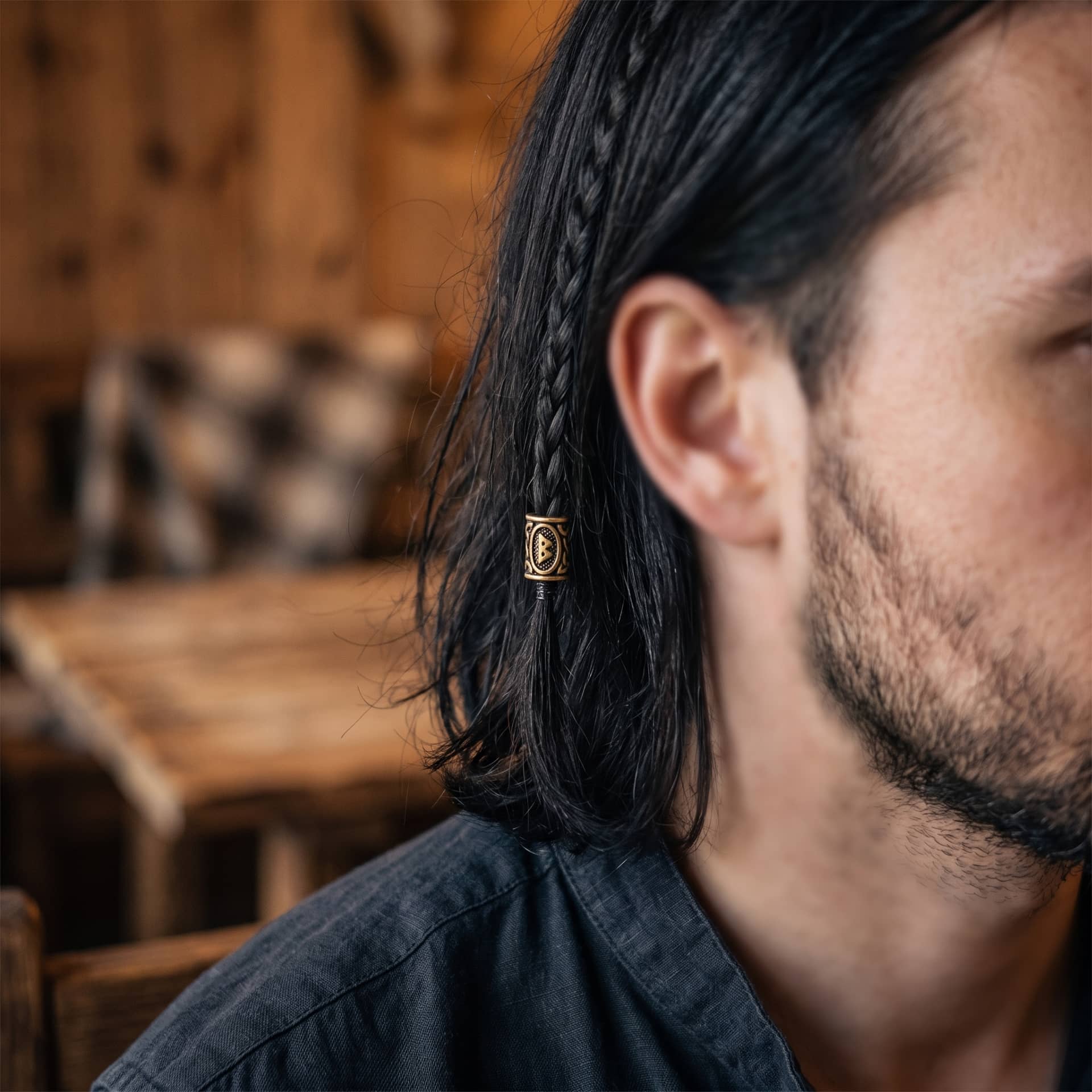
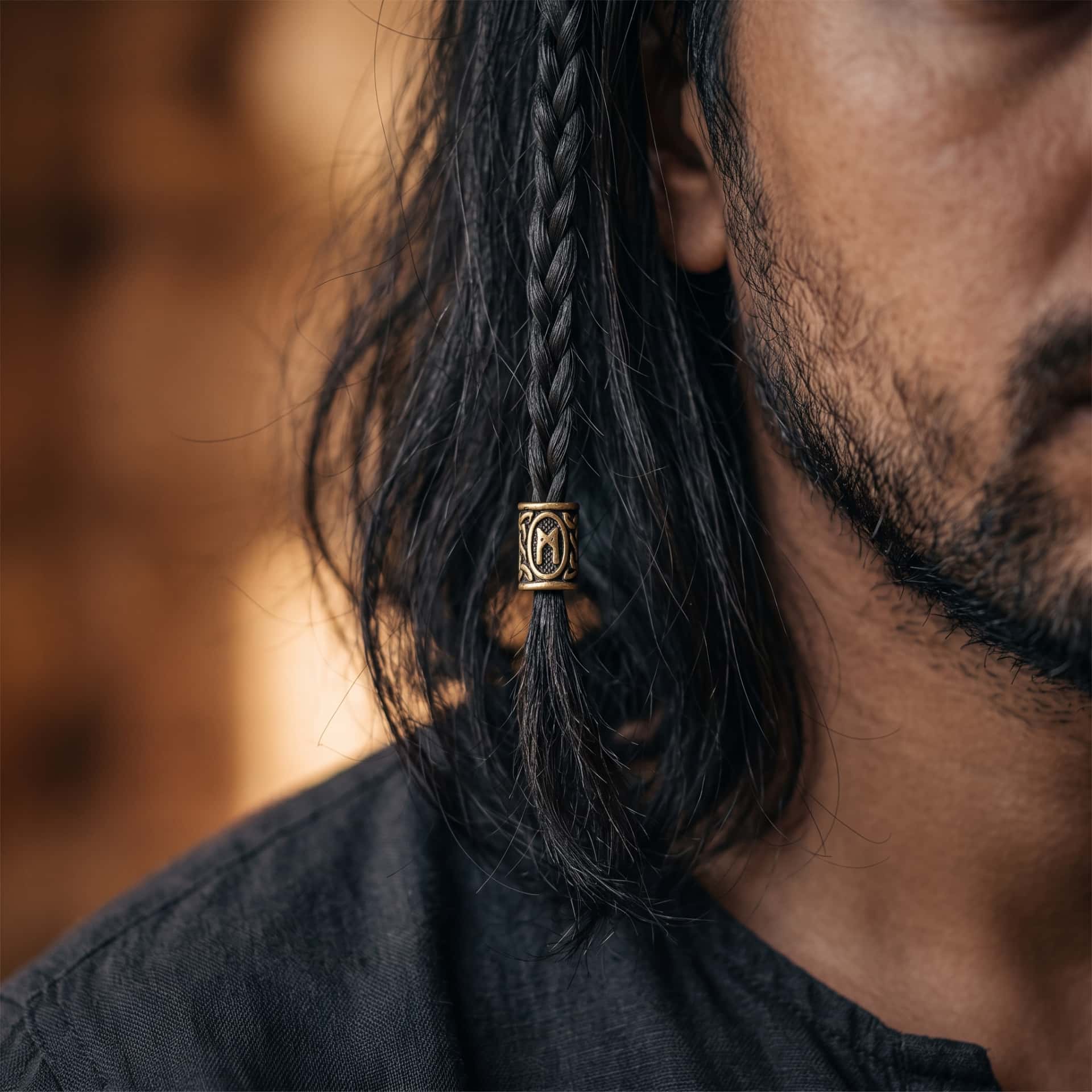

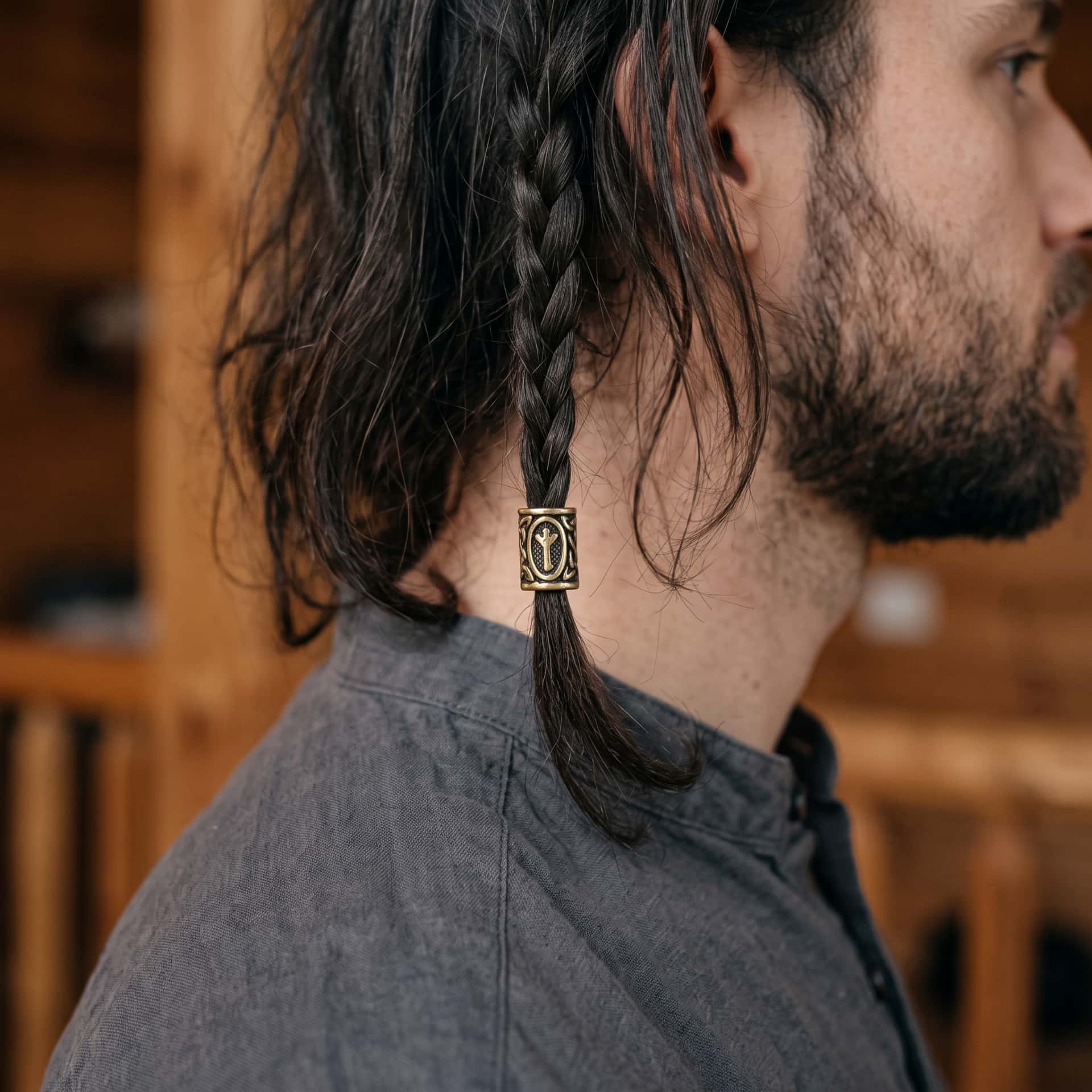
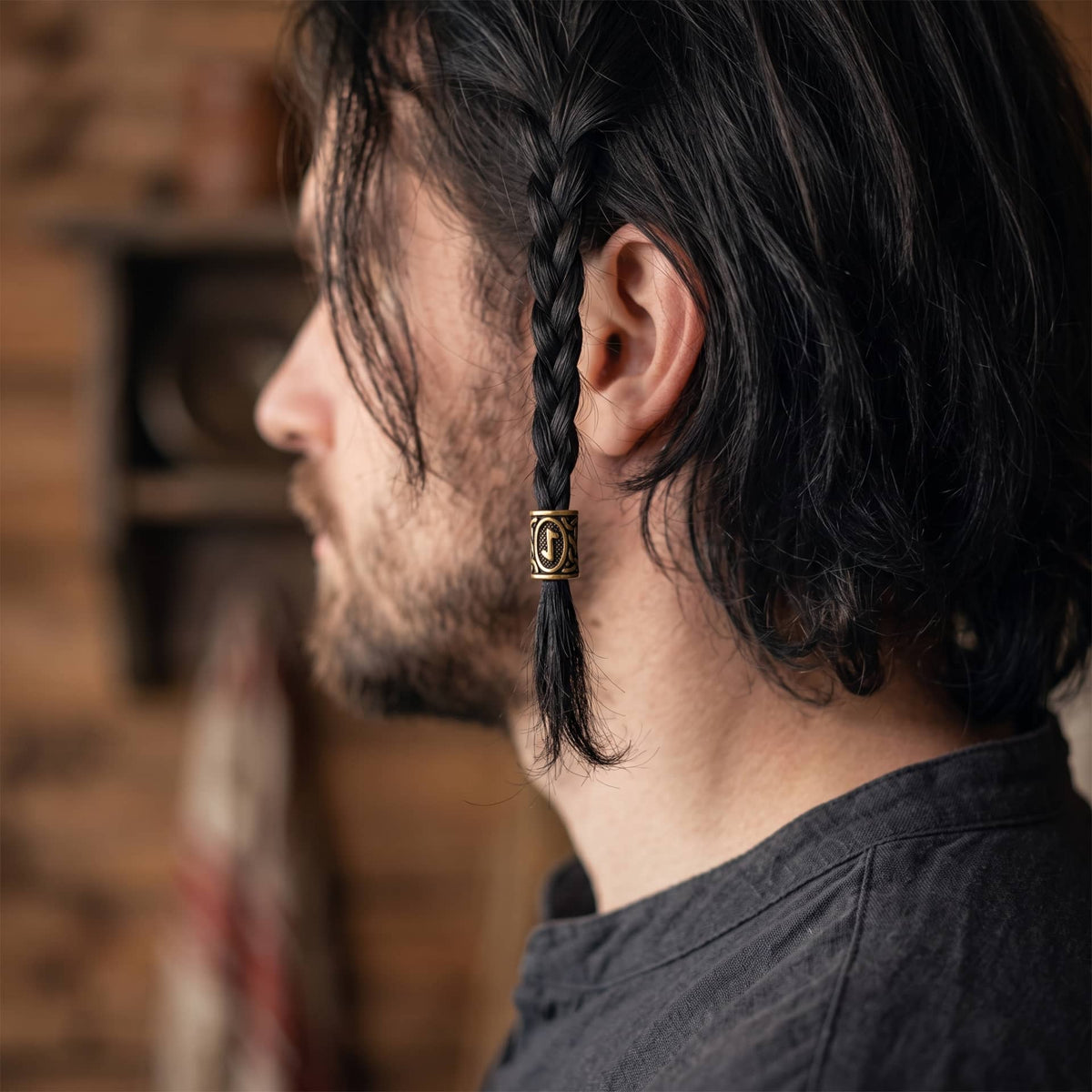
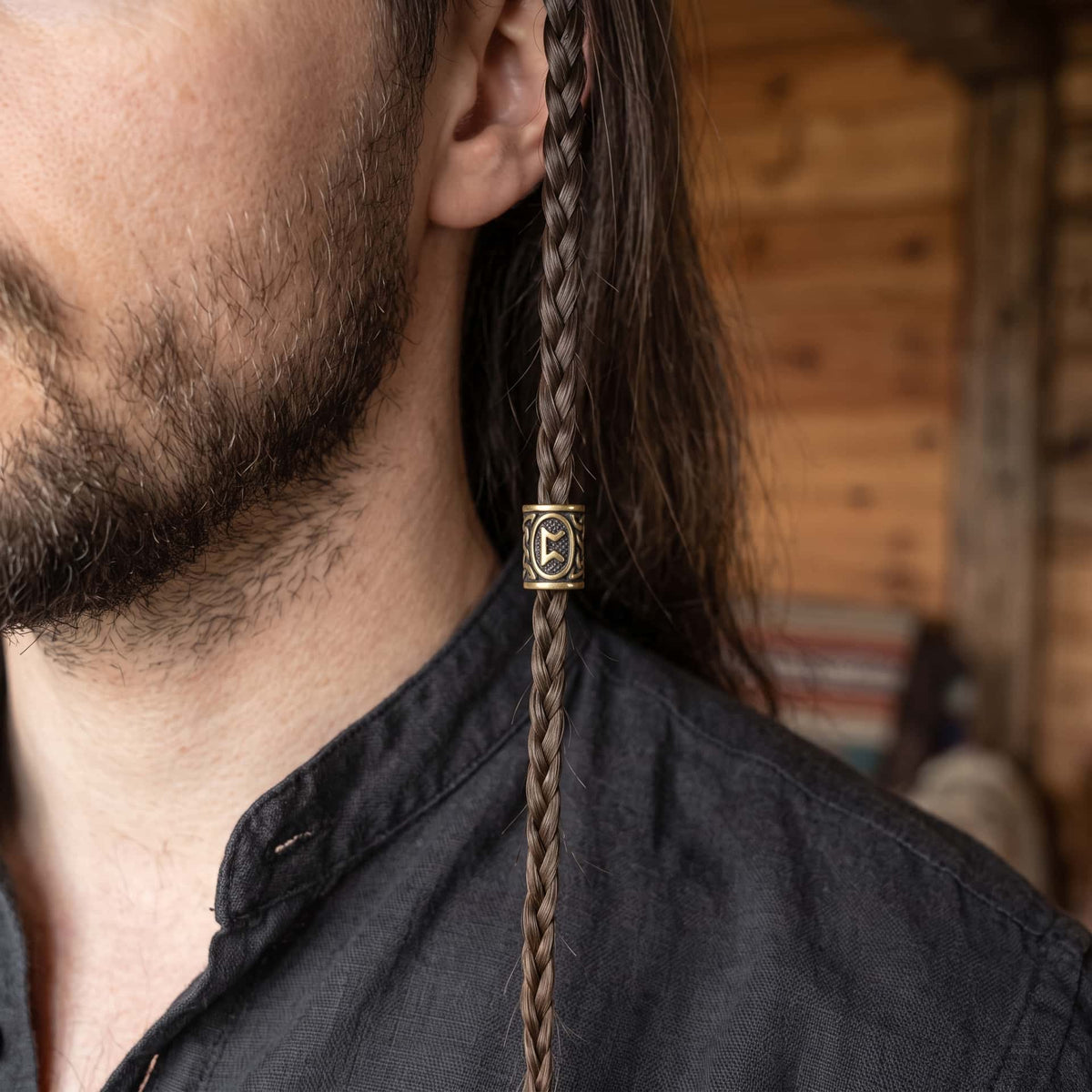
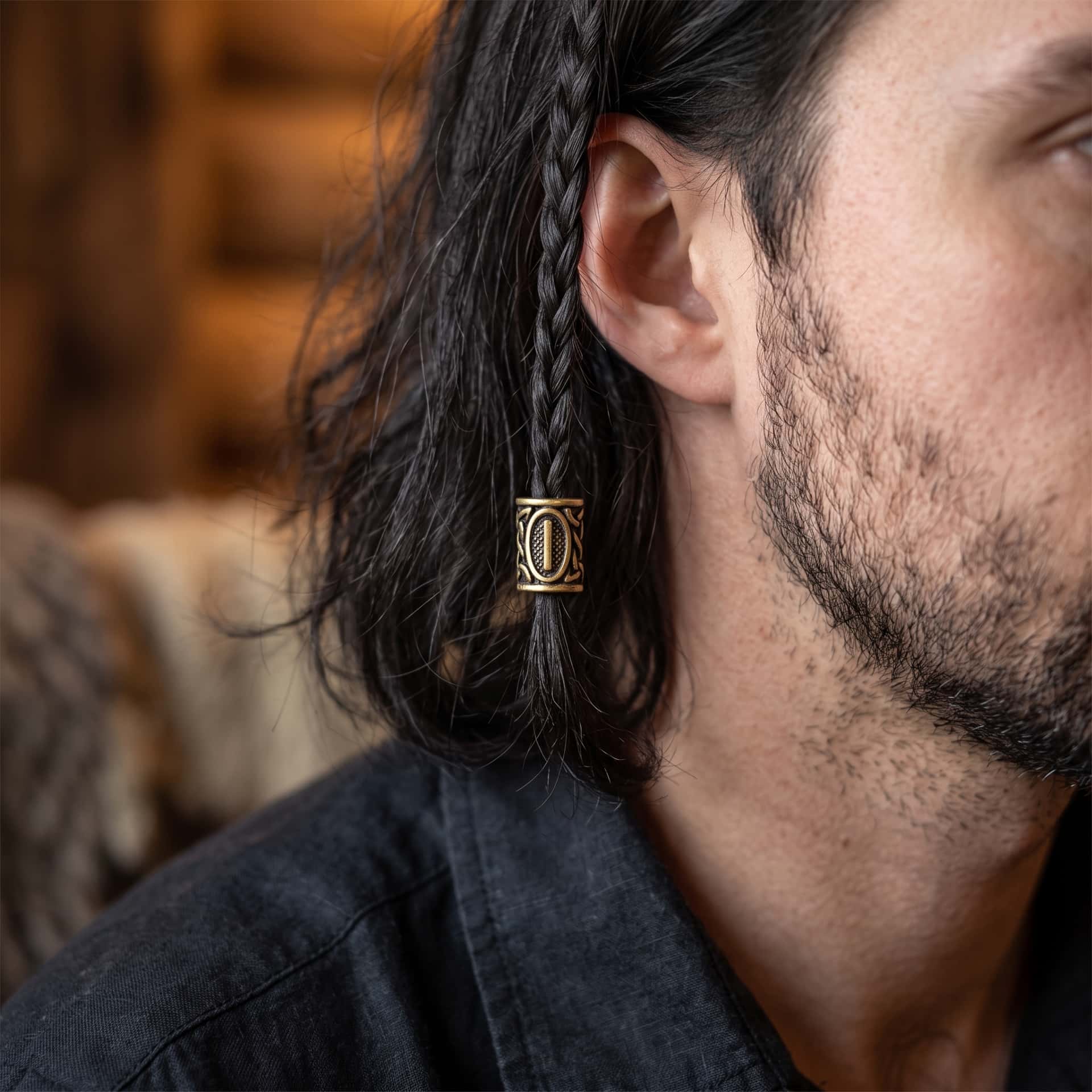
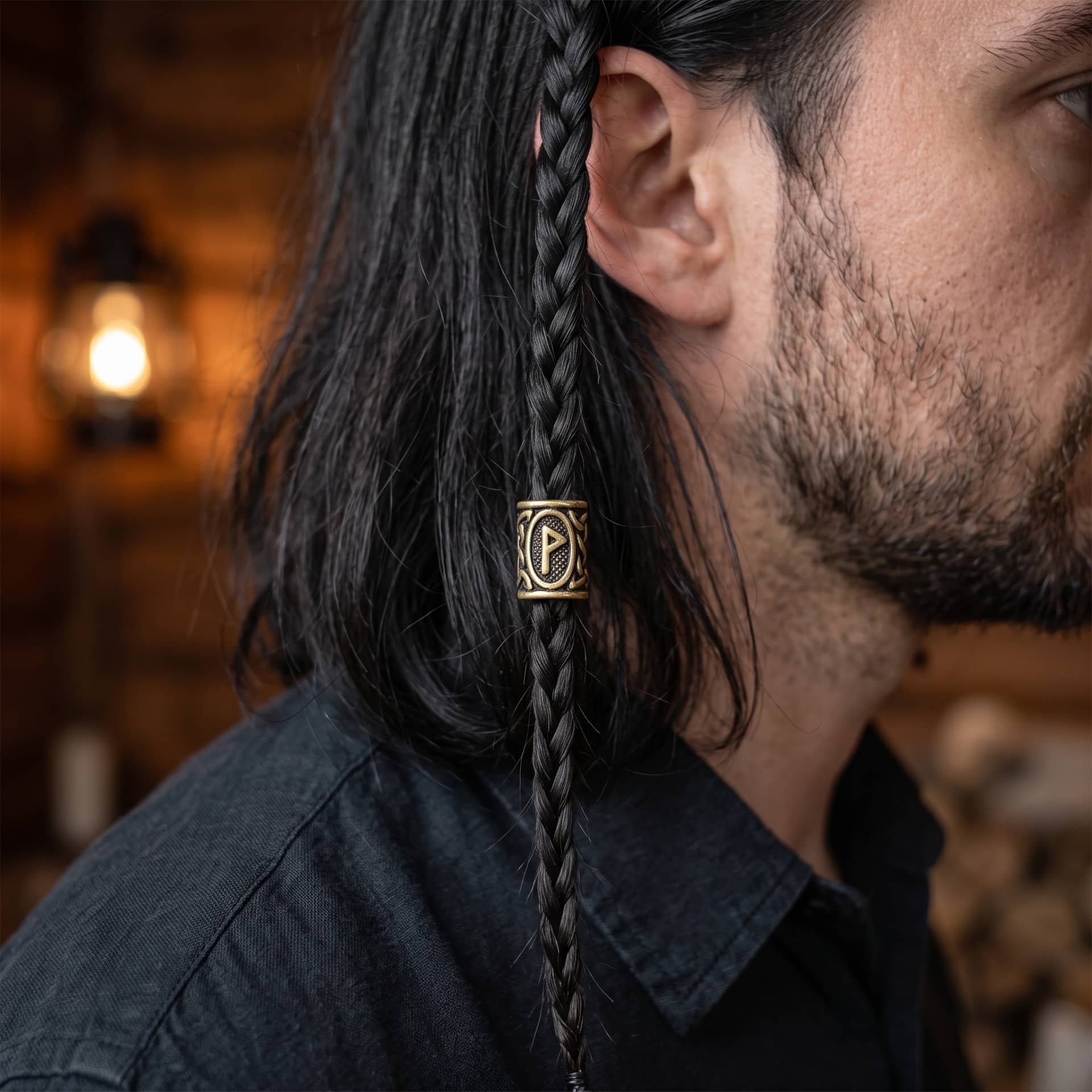
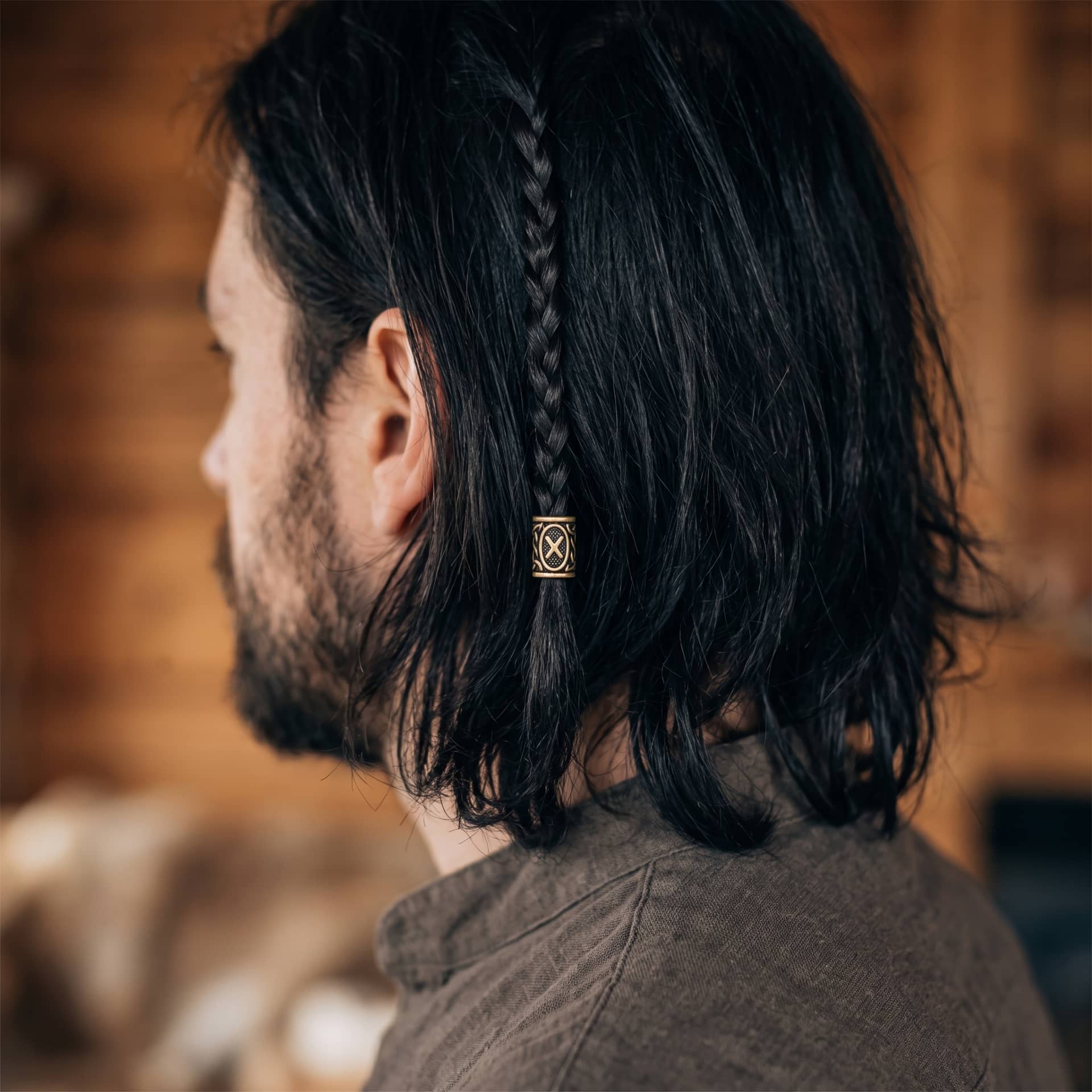
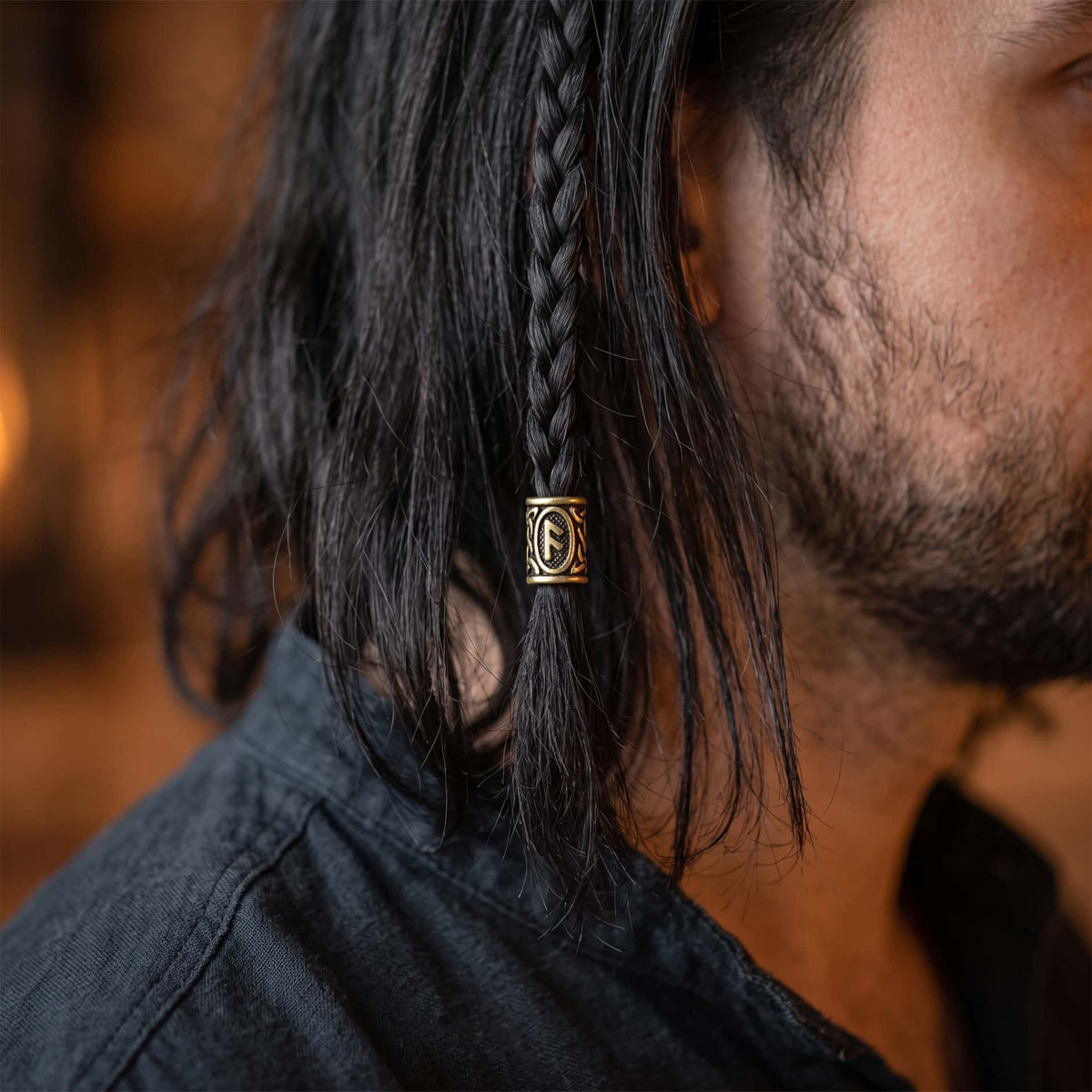

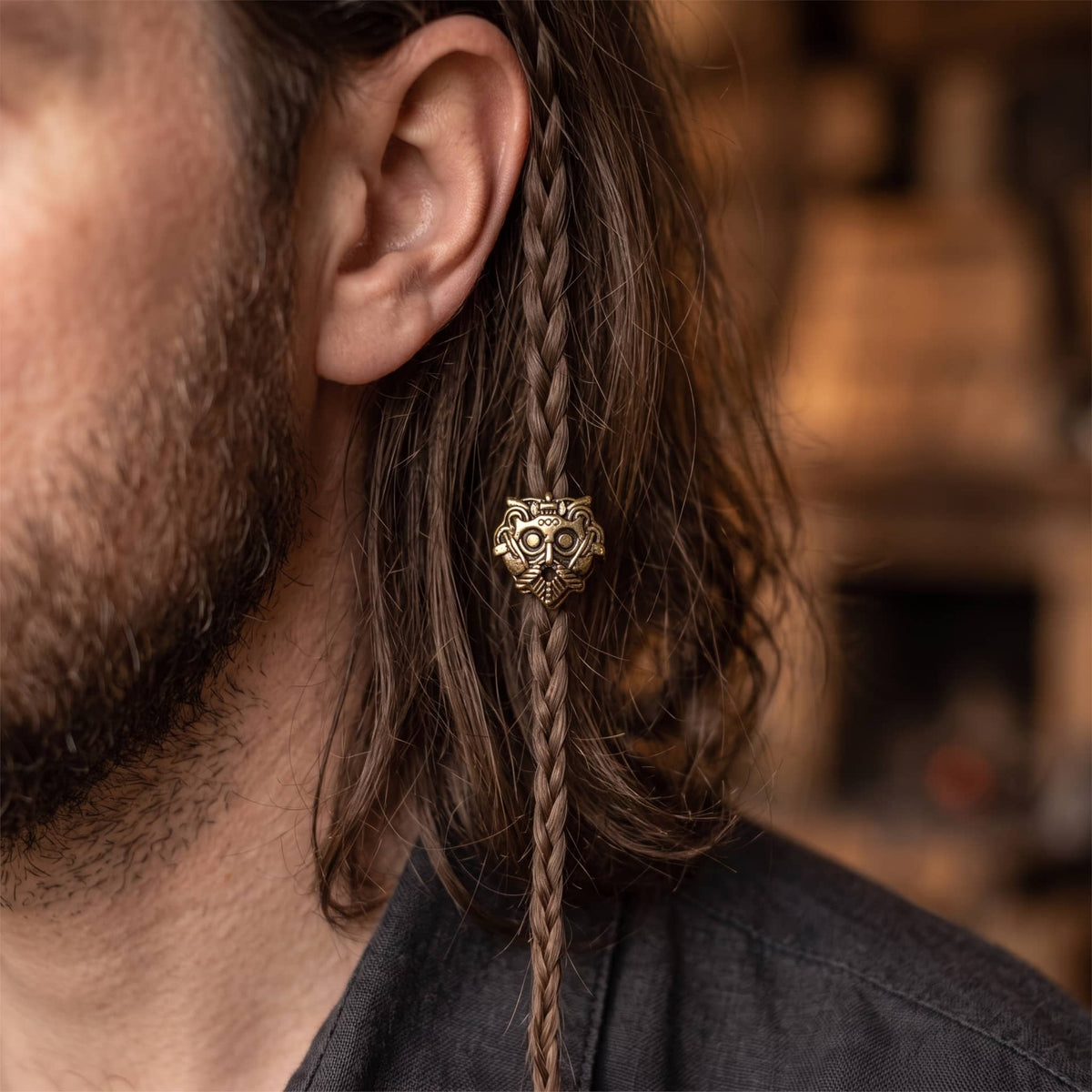
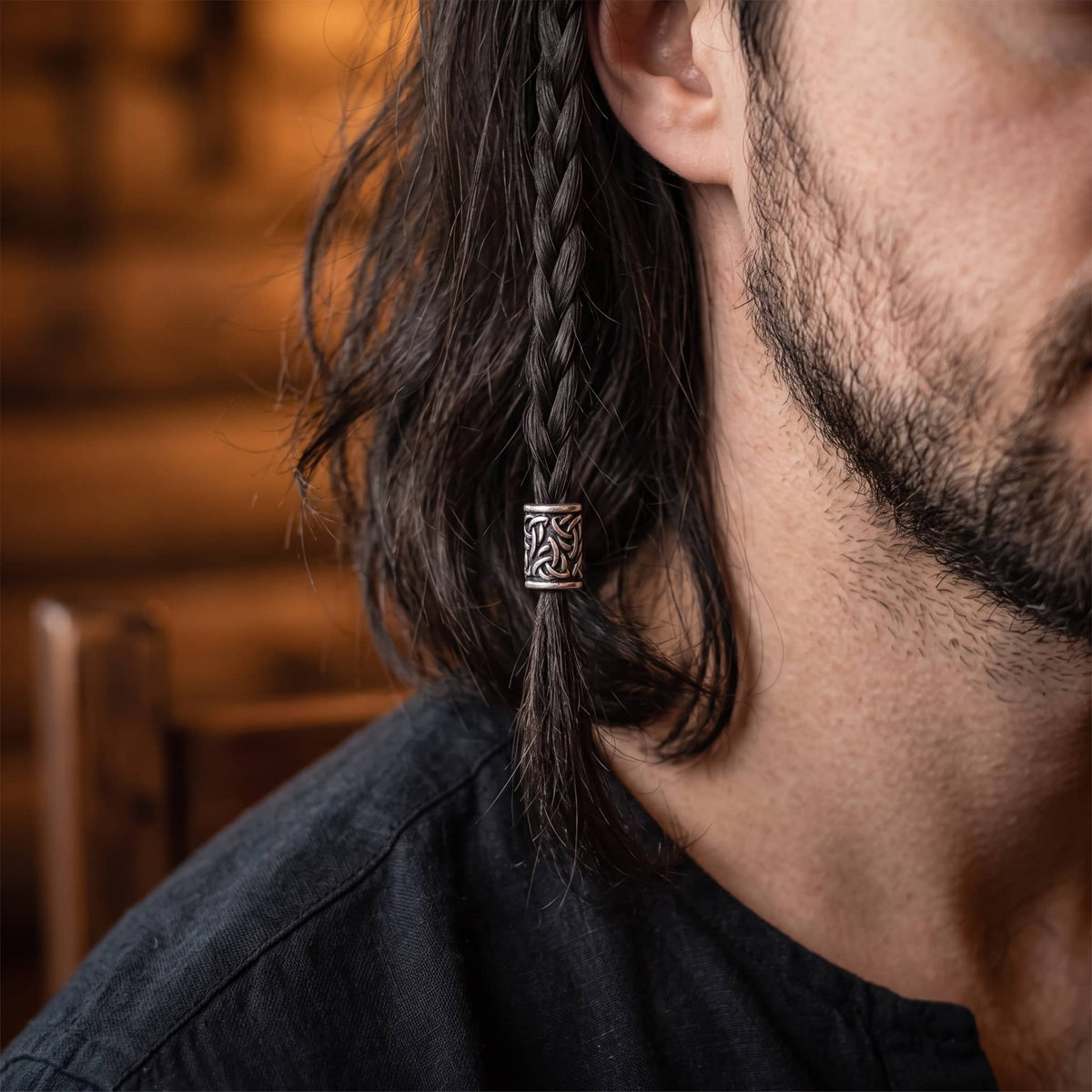
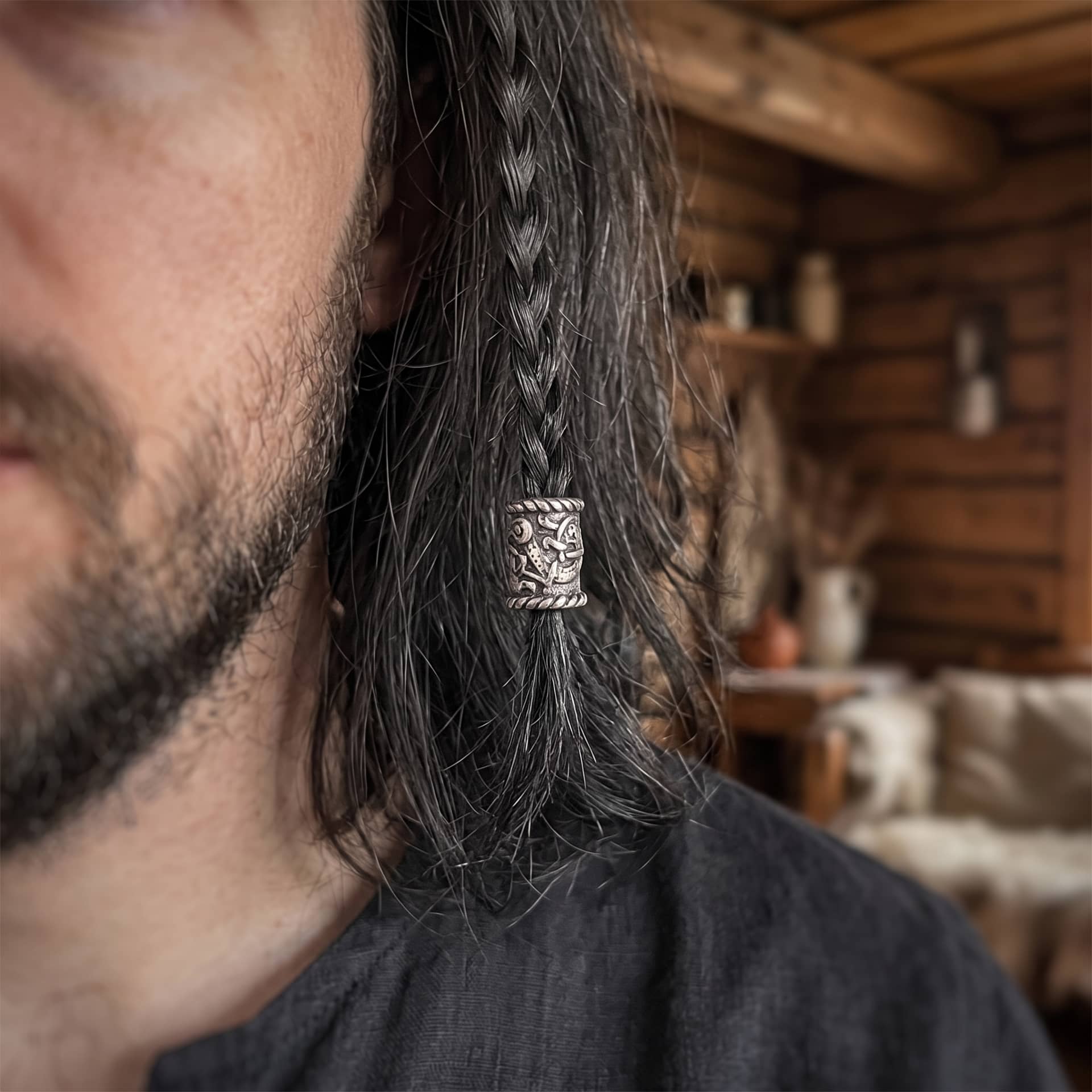
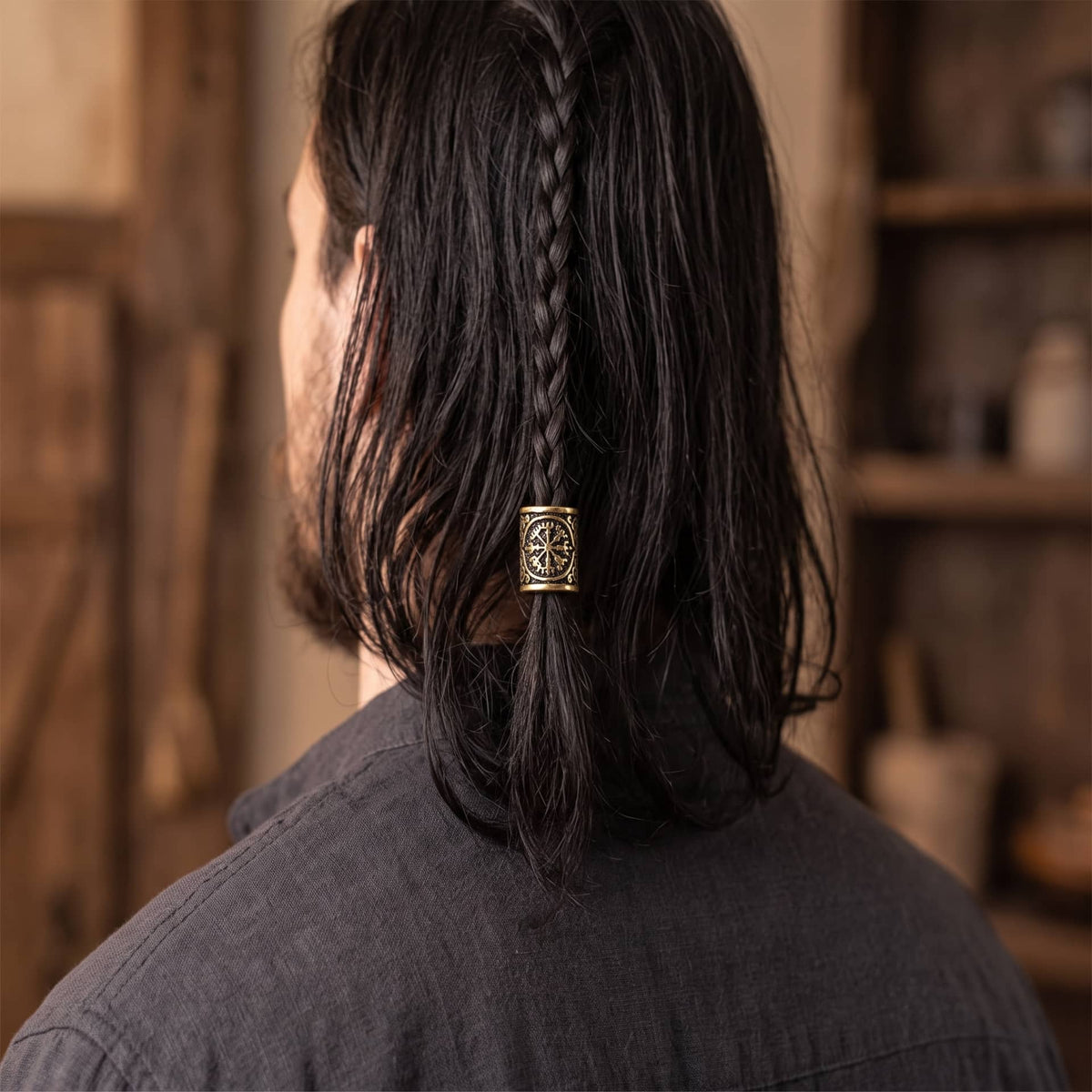
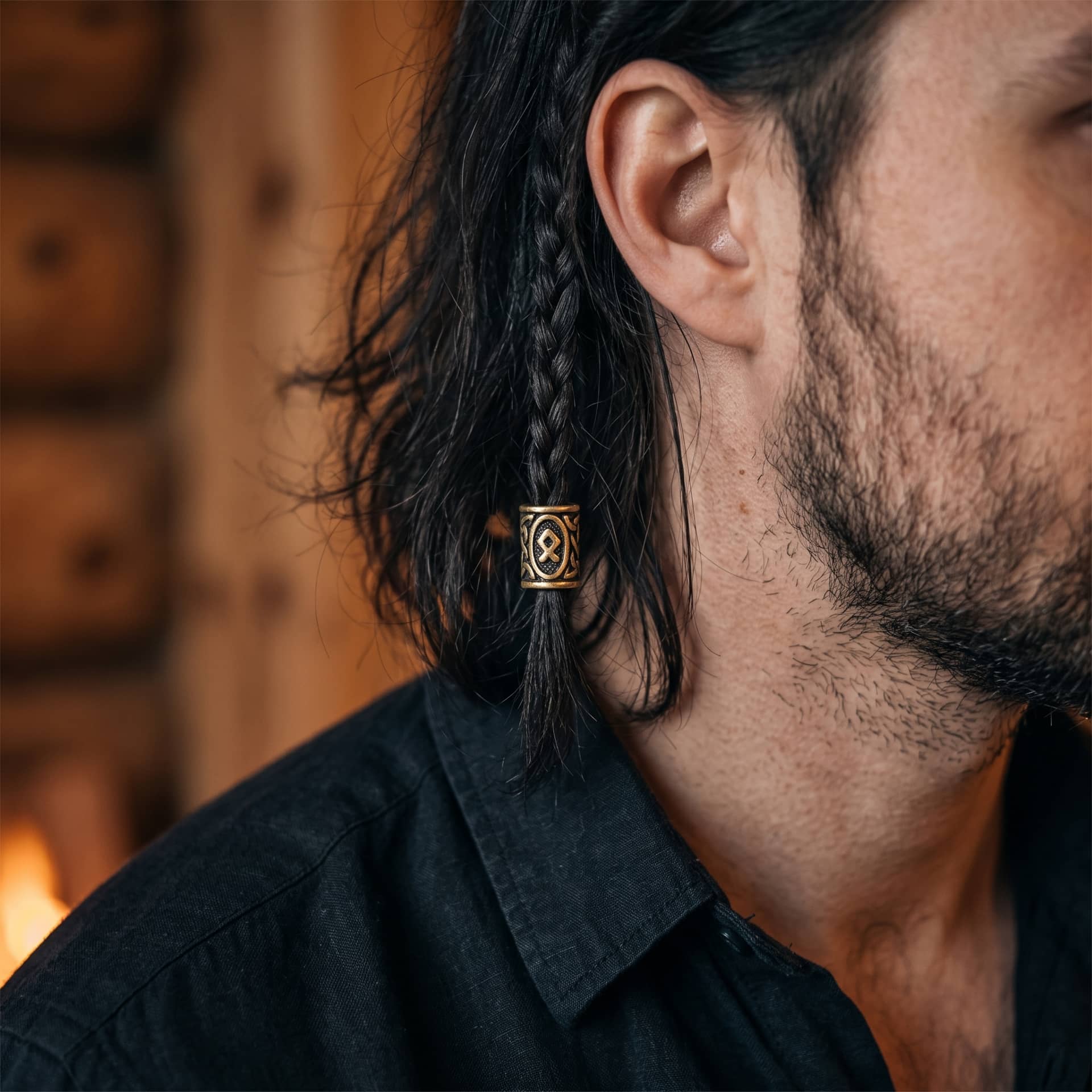
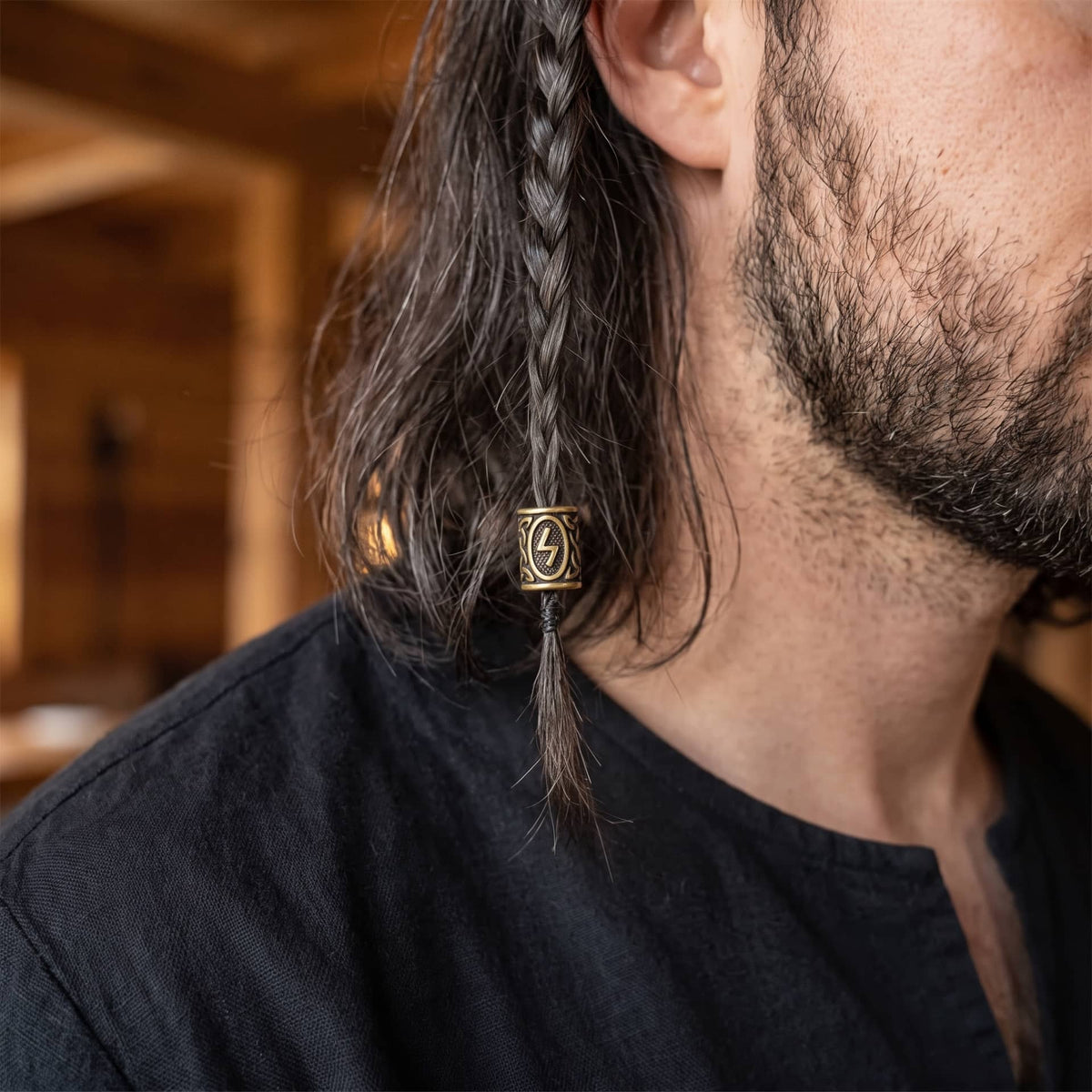
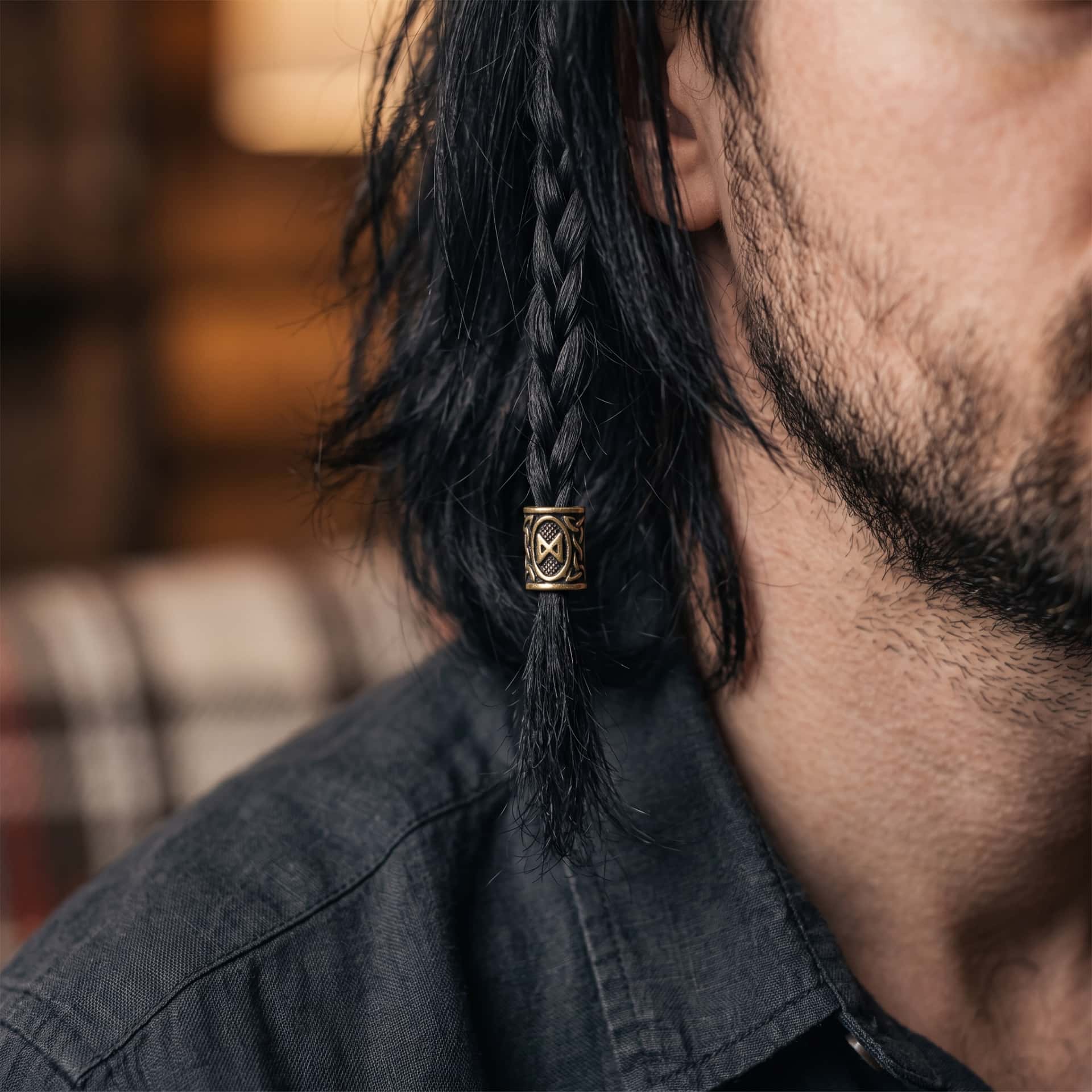
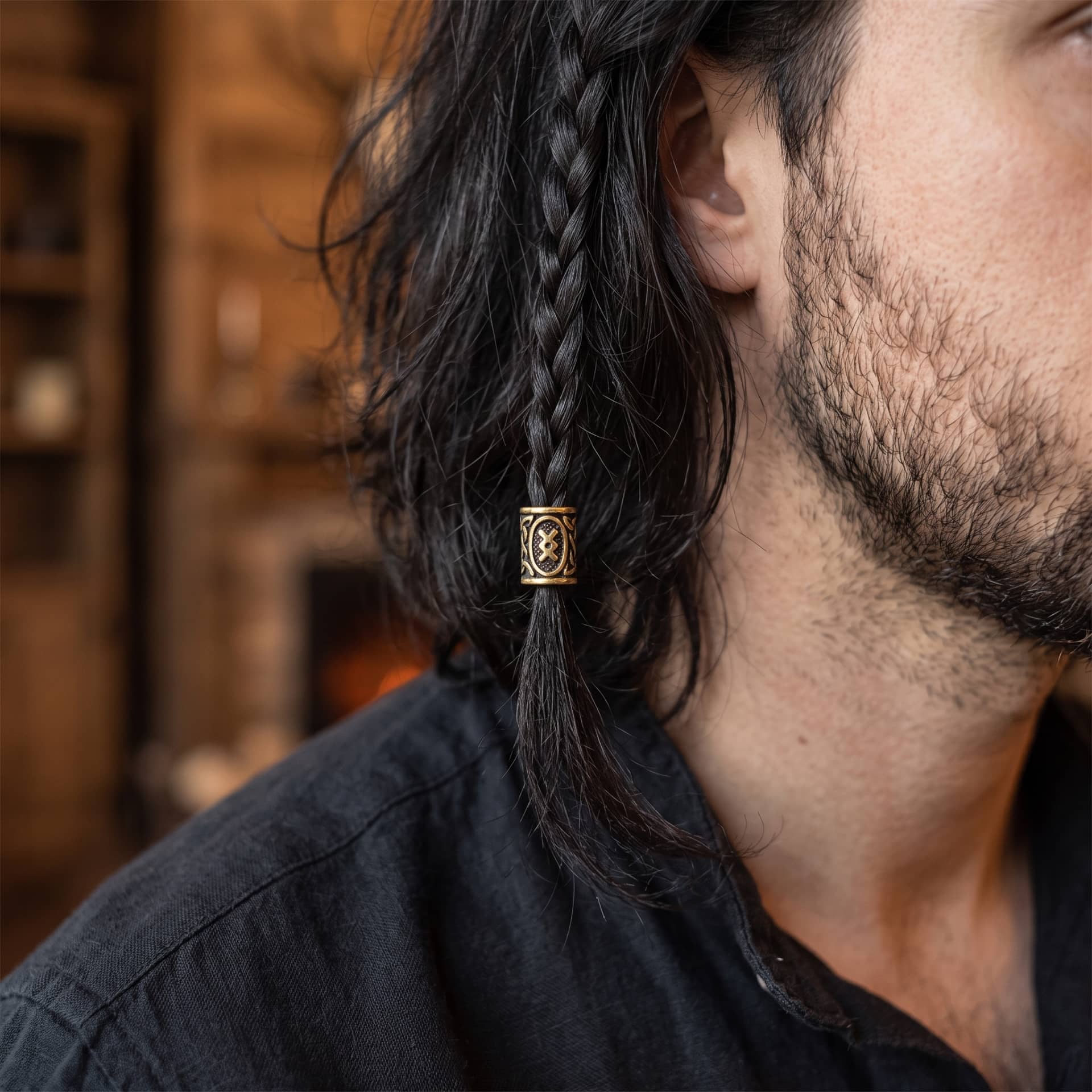
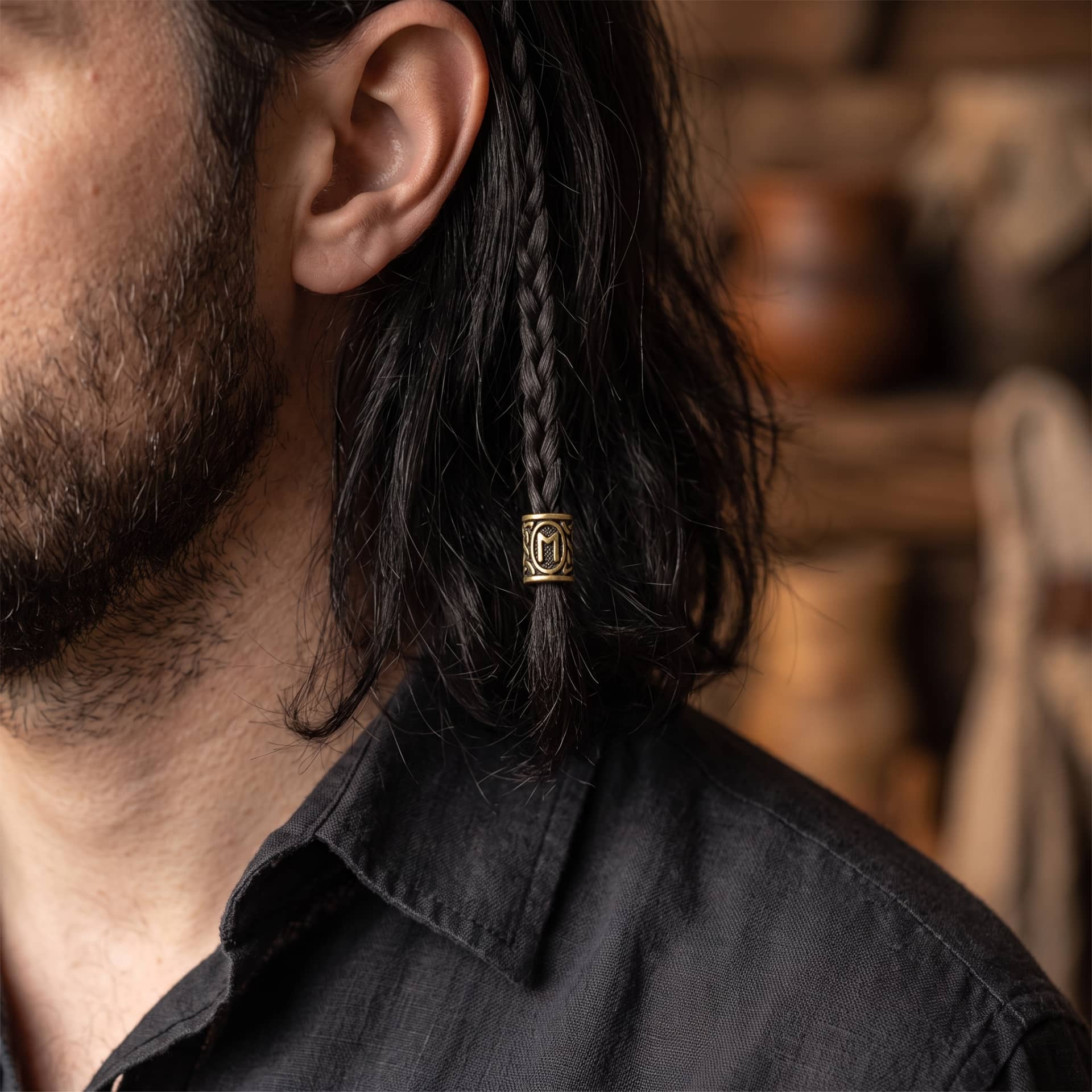
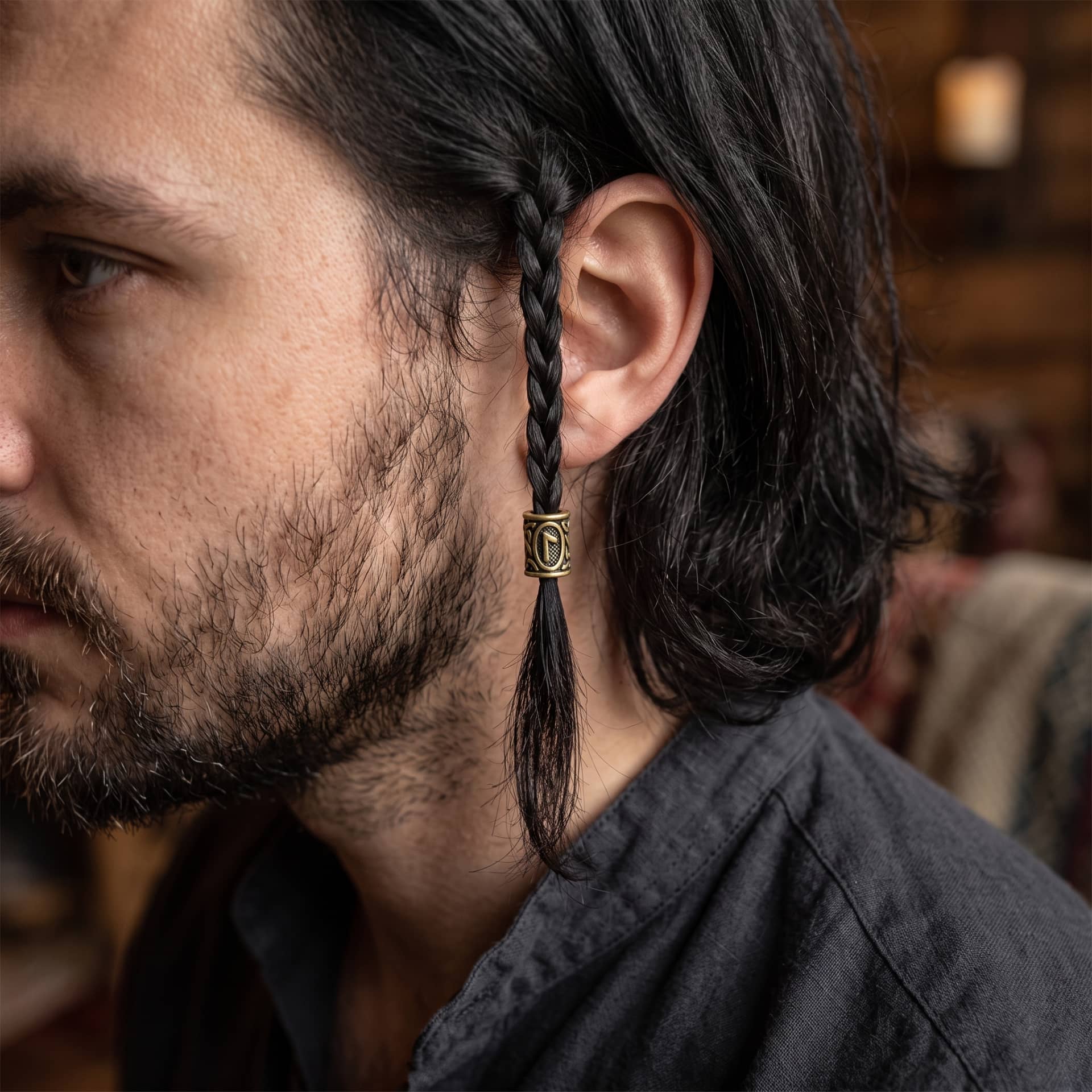
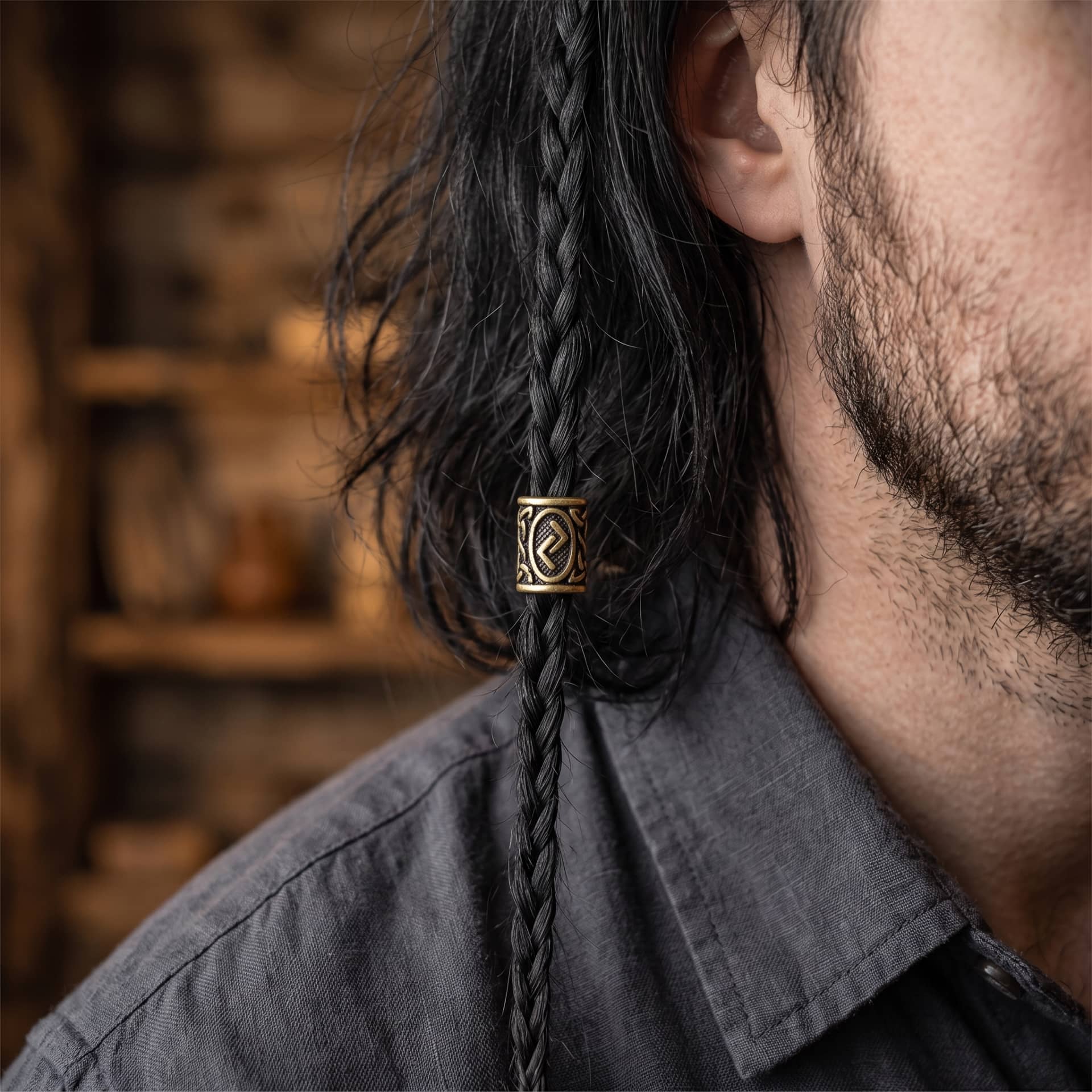
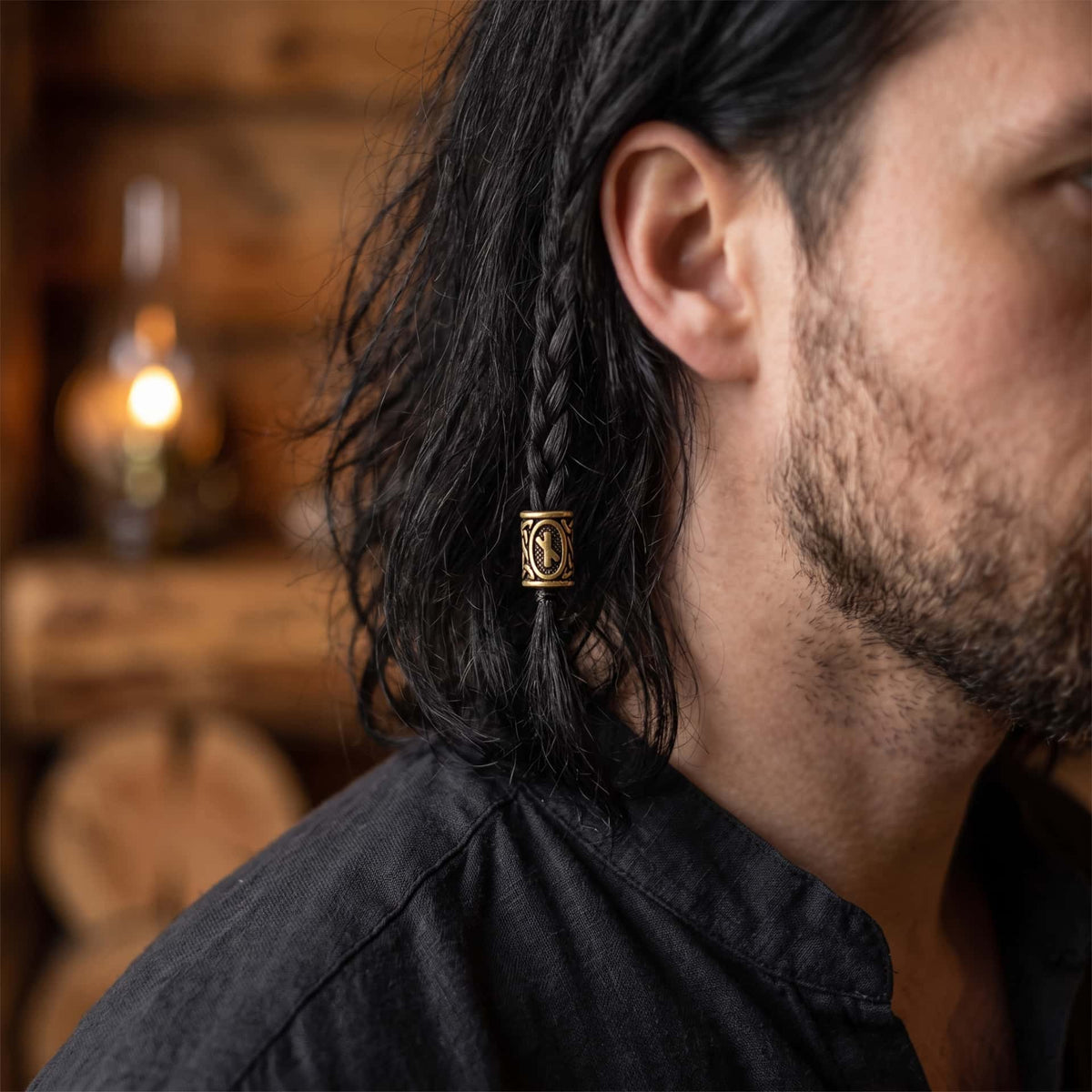
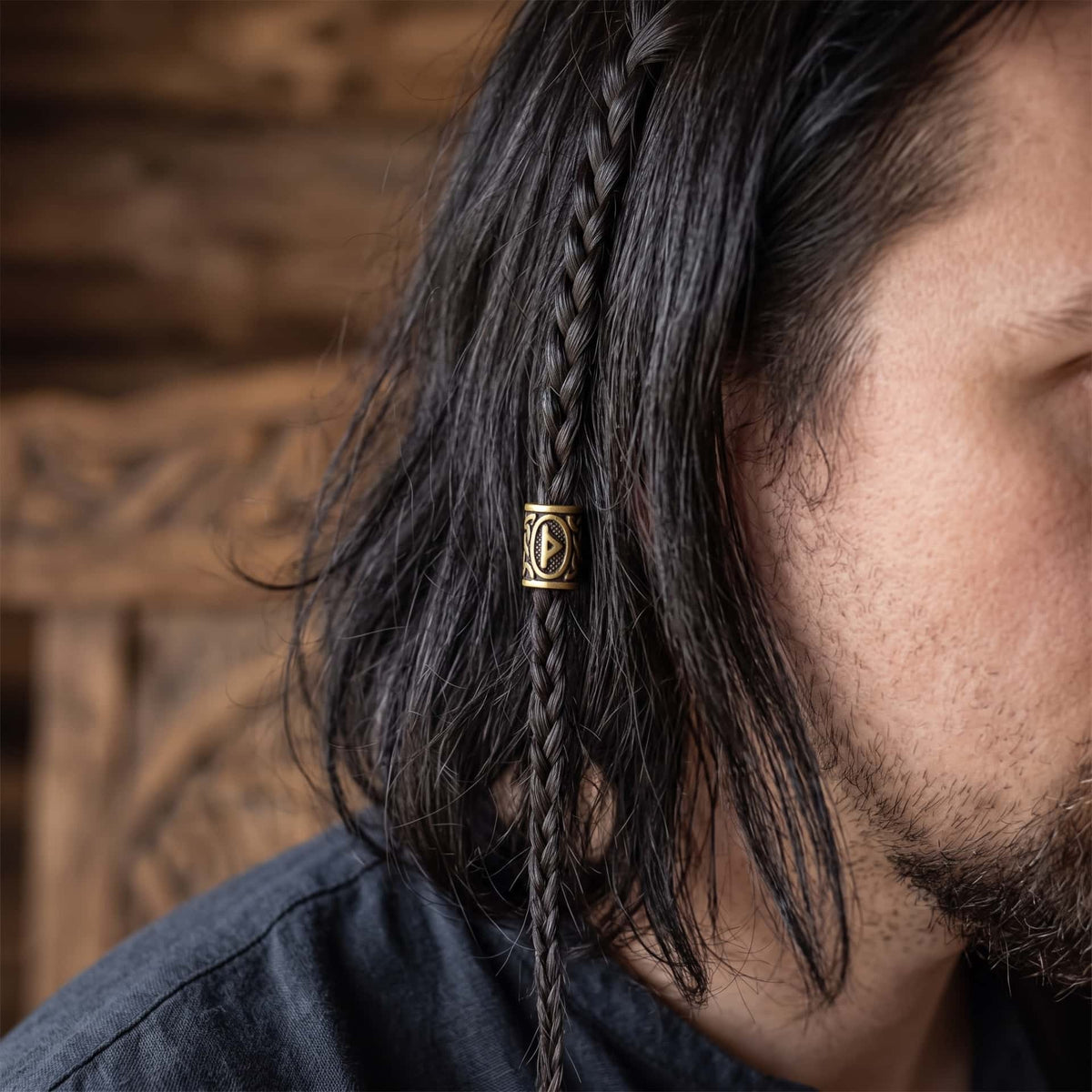
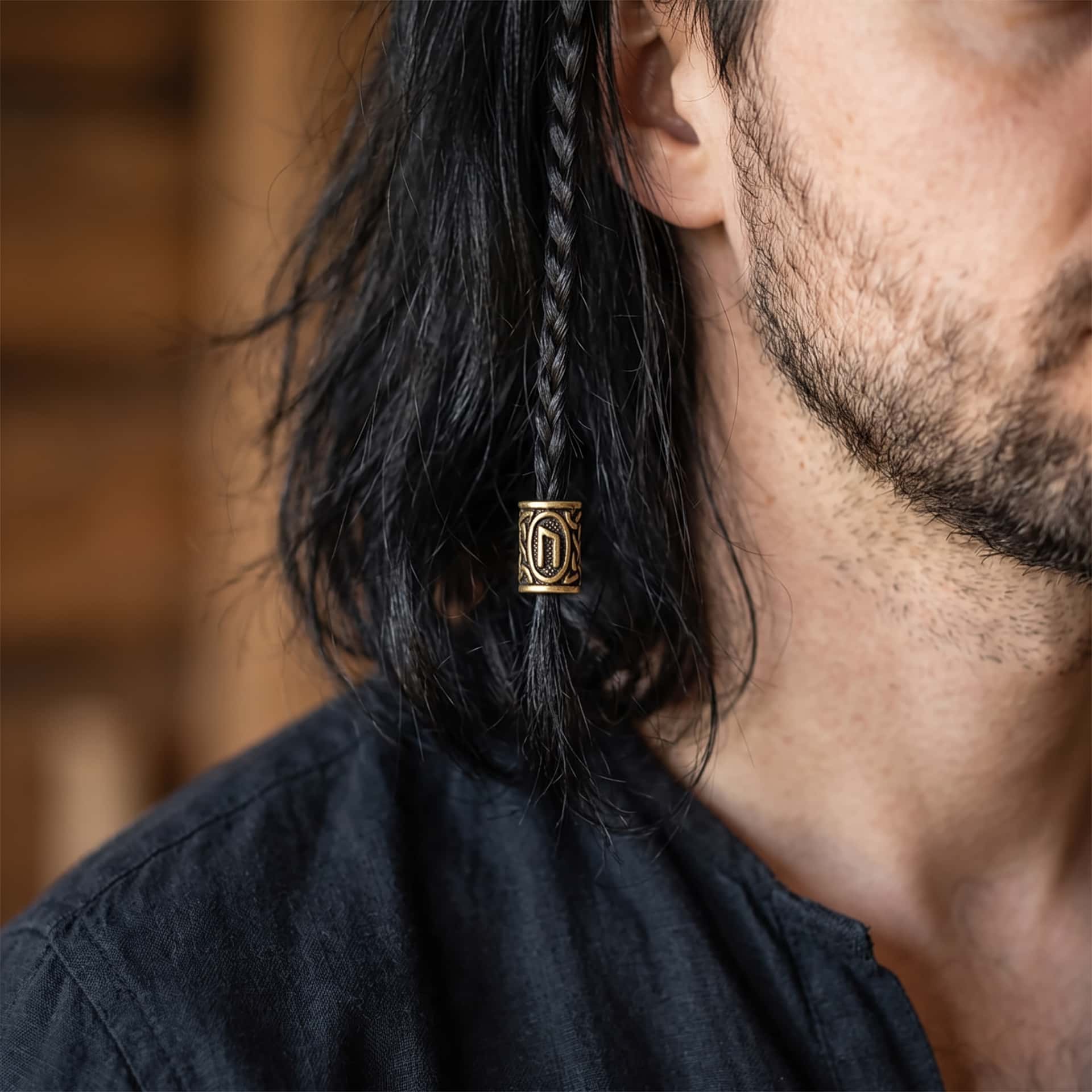

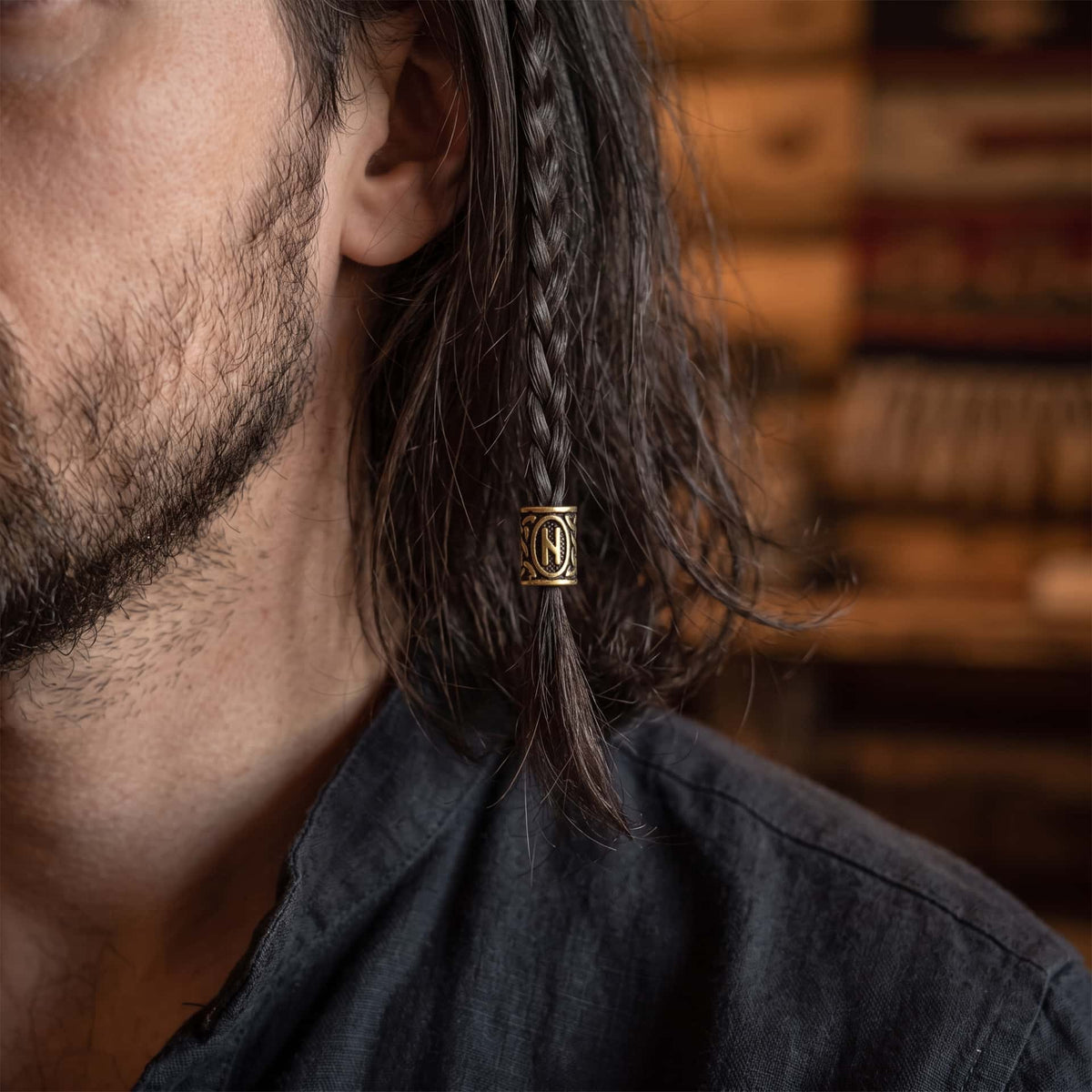

Viking Beard & Hair Beads — en savoir plus
A beard or hair bead is the smallest piece of Viking jewelry, and the only one that does not close: it clamps nothing, it threads on. You slide it onto a strand, braid, and the bulk of the braid locks it in place by itself. Nothing to break, nothing to adjust — which explains why it stays put all day without you giving it a thought.
Three ways to wear it
The same object, three different techniques, and it is the technique that decides which diameter to choose.
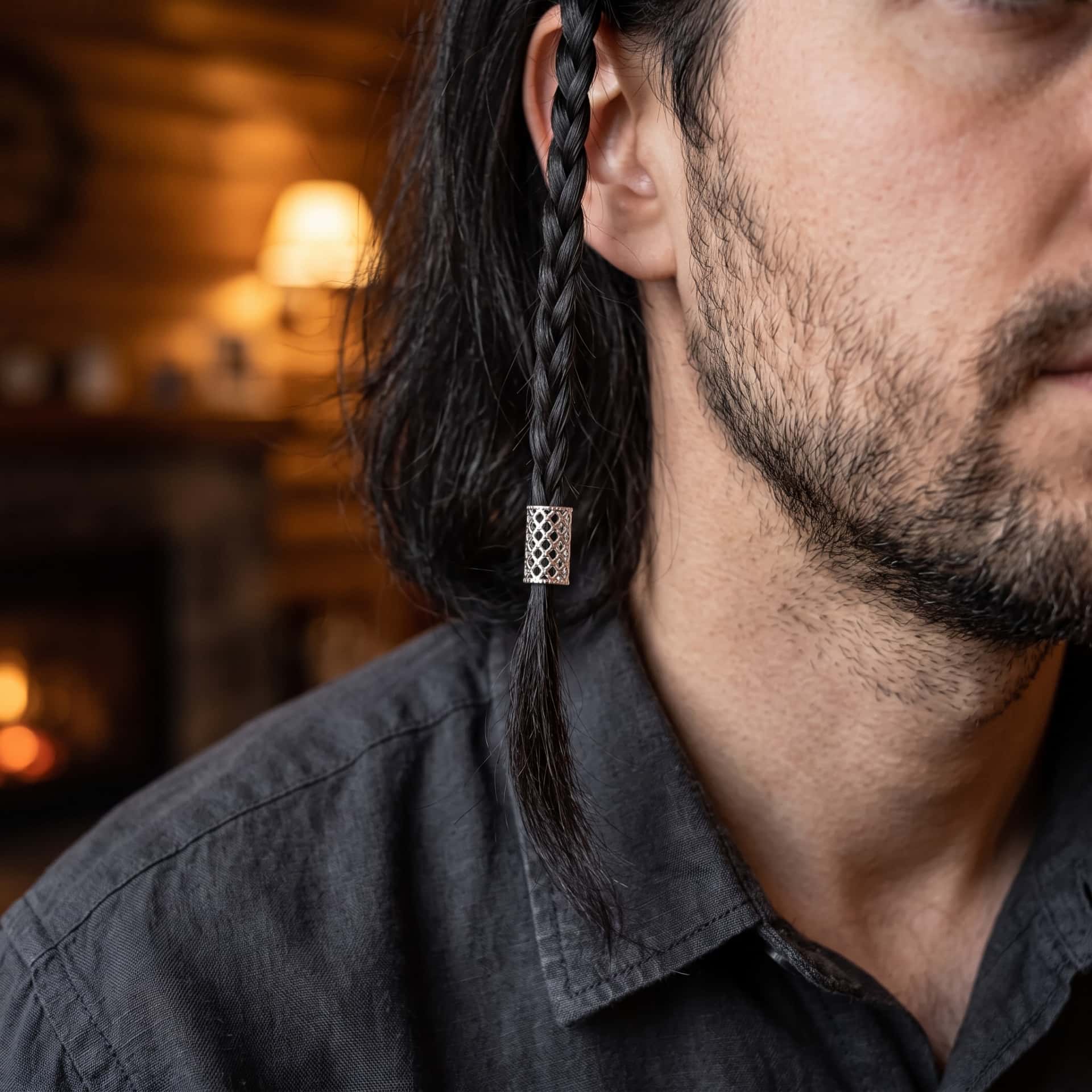
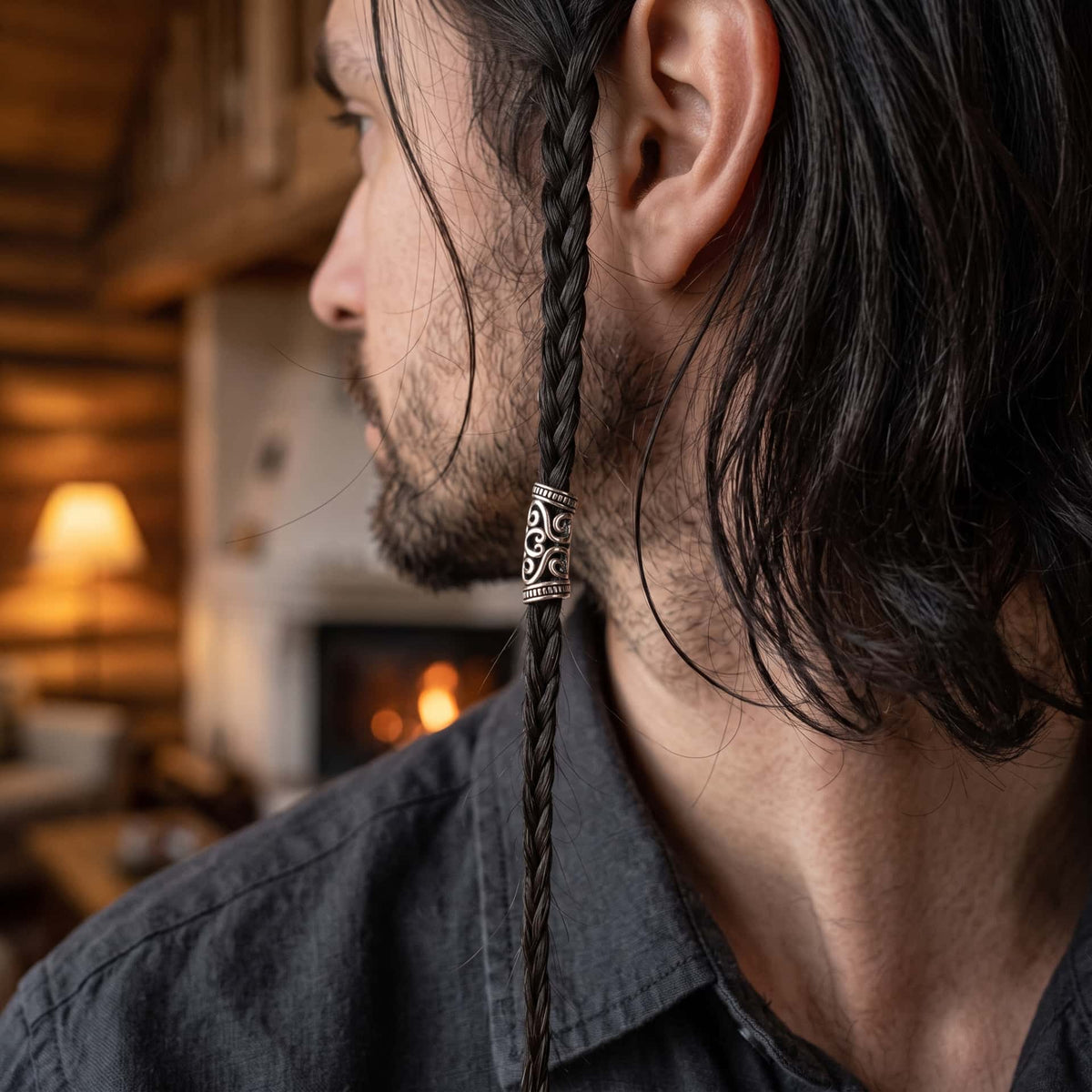
In the beard. The most common way to wear it today. Gather a strand under the chin, thread the bead up to the height you want, then braid below it: the braid swells and the bead no longer slides down. Two or three beads spaced along the same braid hold better than a single one, because they lock each other in place.
In the hair. On a thin braid taken at the temple or on a full braid down the back. Here the bead can be seen from a distance and acts as punctuation: a single one, placed a third of the way down, says more than a tight row.
On a matching beard braid and hair braid. This is the most put-together look, and the easiest to get wrong: choose the same finish on both, otherwise the eye reads two accessories instead of a set.
Diameter: the only criterion that really matters
Everything else is a matter of taste; this one is mechanical. A bead that is too wide slips and eventually falls off; too narrow, it will not go on and you tug at the strand for nothing.
The rule is simple: the hole must be slightly narrower than the finished braid, and slightly wider than the unbraided strand. That difference is what locks it. In practice, a beard of medium density calls for a hole of around six to eight millimeters; a thick hair braid easily goes beyond that. The inner diameter is listed on each product page — it is the first thing to check, before the design.
A foolproof test: thread the bead onto the strand before braiding. If it slides down on its own under its own weight, it is too wide for that strand.
What archaeology says, and what it does not
Beads abound in Scandinavian burials — by the thousands, in colored glass, in Baltic amber, in carnelian brought from the East along the Volga route. They are among the most ordinary objects of the Viking Age, and glass-bead necklaces are a classic marker of women's graves.
But we need to be precise on a point that almost nobody raises: wearing them in the beard remains poorly established. The beads that have been found come from necklaces and pendants, were sewn onto clothing or tucked into a pouch — they have not been identified as ornaments for beard or hair. The beard bead as it is worn today owes a great deal to modern reenactment and to TV series.
What is attested, on the other hand, is grooming. Antler combs are among the most frequent finds in excavations, often kept in a case and worn at the belt. Saturday is laugardagr in Old Norse, literally “bath day,” and the word has survived in the modern Scandinavian languages. A well-kept beard, combed, trimmed, sometimes braided: that, the sources do say. The Danish king Sven Tveskægg, “Forkbeard,” even carries his chin style in his own name.
We are happy to sell these beads. We simply refuse to invent an antiquity for them that they do not have. The sources are detailed in our guide to Viking hairstyles.
The runes engraved on them
Most of these beads carry signs from the Futhark, the Scandinavian runic alphabet. A useful clarification before choosing: there are two of them, and the difference matters.
The Elder Futhark has twenty-four signs and was used from the 2nd to the 8th century — in other words before the Viking Age. The Younger Futhark has only sixteen, and it is the one actually carved on runestones from the 9th to the 11th century. A bead set sold as “the 24 Viking runes” is therefore, strictly speaking, a set of runes the Vikings no longer used. That takes nothing away from the object — but it is worth knowing.
That is also why we sell the signs individually: you choose the one whose meaning holds up for you, rather than a whole alphabet. Fehu opens the Elder Futhark with movable wealth, Othala closes it with inherited property; between the two, Raidho names the journey, Laguz water, and Sowilo the sun you steer by. The pieces without runes belong to other traditions, each explained on its product page.
The pieces without runes
Two late Icelandic sigils that are constantly confused: the Vegvísir — also in antique silver and in a version ringed with runes, bronze or silver — whose eight arms all end differently; and the Ægishjálmur, in bronze or silver, whose eight arms are, on the contrary, identical. That is the only criterion that tells them apart.
The Valknut, in bronze or silver, is well attested by archaeology: it is found carved on the Gotland stones. It also appears on a piece shaped like Thor's hammer, the only one in the section that is neither a tube nor a mask.
For knotwork, the all-over triquetra covers the whole surface, while the medallion triquetra, bronze or silver, isolates the knot in the center of a circle. For figurative designs: the bear paw in high relief, and the bearded mask, available in antique silver.
And a warning that applies to the whole section: do not spell out a word by stringing beads together at random. Runes record the sounds of a specific language, not the letters of our alphabet; letter-by-letter transliteration does not work. Our article on runes and how to transcribe them and the guide to the Futhark alphabet explain why, and how to go about it instead.
Materials, finishes and care
Two materials coexist here. The models sold individually are made of patinated alloy, warmer in tone and closer to ancient metal: bronze for most, antique silver for a few pieces such as the triquetra and the Urnes beast. The complete sets, on the other hand, are made of silver-tone or gold-tone stainless steel — the right choice for an object that lives against the skin and goes through the shower, since steel does not rust, does not turn green and shrugs off soap. The exact material is listed on each product page.
Care comes down to two steps. Remove the beads before washing your beard or hair: the problem is not the water, it is shampoo and conditioner, which leave a film inside the hole and make the strand slippery. A rinse under lukewarm water and drying with a soft cloth are then all it takes.
On patinated pieces, never use silver polish: these products are made to remove the oxidation from the recesses, which is exactly what draws the design. A dry cloth, nothing else.
Giving a bead as a gift
It is an easier gift than it looks, because it has no size in the usual sense — no ring size, no chain length. The only risk is the diameter of the hole, and there is a way around it: a set of several beads naturally covers several strand thicknesses, whereas a single bead means you have to get it exactly right.
Second pointer: a dark or silver finish goes with every beard color, whereas gold has to be worn with confidence. If you do not know the person's taste, antique silver is the safest bet.
Frequently asked questions
How does a beard bead stay in place? Through the braid, not through a mechanism. You thread it onto the strand, braid below it, and the swelling of the braid keeps it from sliding back down. No spring, no screw, nothing that can break.
Which diameter should I choose? The hole must be slightly narrower than the finished braid. For a beard of medium density, allow six to eight millimeters; more for a thick hair braid. The inner diameter is shown on each product page.
Can they be worn in the hair too? Yes, it is actually the most visible way to wear them. On a thin braid taken at the temple or on a full braid, a single bead placed a third of the way down is enough.
Did the Vikings really wear beads in their beards? Nothing proves it. Beads abound in excavations, but in necklaces, in pendants or sewn onto clothing — never identified as beard ornaments. What is attested is grooming: combs everywhere, trimmed beards, and a king nicknamed Forkbeard.
Should I take them out to sleep or to wash? To wash, yes: shampoo leaves a film inside the hole. To sleep, it is not necessary, but a braid that has come undone by morning can be rebraided in thirty seconds.
Does it damage the hair? Less than a tight hair tie, because nothing is squeezed. The only thing to avoid is pulling the bead downward to remove it without undoing the braid first.
What are they made of? Mainly stainless steel, silver-tone or gold-tone, sometimes patinated alloy. The exact material is specified on each product page.
What are the delivery times? Allow 10 to 20 working days in total: 3 to 5 days of processing, then 7 to 15 days of delivery in mainland France, 10 to 20 days in the European Union. Free tracked shipping from 49 €, whatever the destination country.
Explore further: to hold a thicker braid, our Viking hair clips and hair jewelry; for the rest of your adornment, our Viking jewelry for men, our Viking bracelets and our full range of Viking jewelry. For designs, the Futhark runes collection. For reading, our guide to Viking hairstyles — cuts, braids and beards, with sources to back it up.