
Filters
10 products
Berserkers & Ulfhednar — en savoir plus
They are called “mad warriors,” which is convenient and wrong. The Norse sources name two distinct groups, and the word that names them speaks of clothing, not madness: berserkr and úlfhéðinn, the man in the bear shirt and the man in the wolf cloak. This section brings together the pieces that bear their mark — the paw, the claw, the jaws, the blade of the beast-warrior.
Two words, two beasts
Berserkr: the bear shirt
The word breaks down into ber- + -serkr. Serkr means a shirt, a tunic — the word survives in the English sark. The first element has been debated for two centuries: either ber- stands for björn, the bear, and the berserkr is “the one who wears the bearskin”; or it is berr, “bare,” and he is “the one who fights without armor.”
Both readings can be defended and the sources do not settle the question — but they agree on the essentials: in both cases, the man gives up the protection of metal. He trades armor for something else.
Úlfhéðnar: the wolf cloaks
The second term, úlfhéðinn (plural úlfhéðnar), leaves no room for ambiguity: úlfr, the wolf, and heðinn, the fur cloak. These are the wolf-men, and they appear alongside the berserkers in the same stanzas, as a parallel corps.
The wolf is no trivial choice in the North: it is also the animal that devours Odin at the end of time — see the Fenrir section.
What the texts say
Snorri, and the description everyone quotes
Snorri Sturluson's Ynglinga saga (around 1225) gives the most detailed portrait: Odin's men went without mail shirts, were as frenzied as dogs or wolves, bit their shields, and were as strong as bears or bulls; they cut people down, and neither fire nor iron could harm them.
This page has to be read for what it is: a 13th-century Christian text describing a pagan practice that had died out two hundred years earlier. Snorri never saw them. He compiles, he puts things in order, and along the way he adds a veneer of invulnerability that already belongs to legend.
Harald's men at Hafrsfjord
The source closest to the events is a skaldic poem, the Haraldskvæði (also called Hrafnsmál), composed at the end of the 9th century for Harald Fairhair. It describes the naval battle of Hafrsfjord: the berserkers howl, the úlfhéðnar shake their spears, and they hold the prow — the most exposed position on the ship.
The detail says more than any description of fury: these men are shock troops placed at the point of contact, in the service of a king who pays them. A military role, not an individual trance.
What the objects show
The texts are late. The objects, on the other hand, are contemporary — and they confirm the animal disguise.
The Torslunda dies
Four bronze plates found at Torslunda, on the island of Öland in Sweden, and dated to the 6th–7th century, were used as dies for stamping decorative helmet foils. One of them shows an armed warrior walking beside a wolf-headed man who has a tail and brandishes a spear. It is the oldest and clearest depiction of the Norse beast-warrior — two centuries older than the Viking Age, which shows how old the practice is.
The madmen of the Lewis chessmen
The famous walrus-ivory chess set found on the Isle of Lewis, in Scotland (12th century, probably Norwegian in origin), includes rooks in the form of foot soldiers who bite the rim of their shields. The gesture Snorri describes is thus found carved, by a craftsman who knew exactly what he was depicting.
How it ended
Berserkers come to a bad end in the Icelandic sagas — and not as heroes. They most often appear as thugs who turn up at a farm, demand the daughter of the house or the neighbor's property, and get killed by the protagonist. The figure has become a foil.
The law followed suit: around 1015, Jarl Eiríkr Hákonarson outlawed them in Norway, and the Grágás, the collection of Icelandic law, prescribes banishment for “going berserk.” A century after the conversion, the beast-warrior is no longer an elite corps: he is a criminal offense.
The mushroom legend
One explanation comes up everywhere: the berserkers drugged themselves with fly agaric. It deserves to be put in context, because it is repeated as fact.
It comes from a Swedish pastor, Samuel Ödmann, who put it forward in 1784 by analogy with what he had read about Siberian shamans. He cites no Norse source, for the simple reason that there is none: no medieval text mentions a mushroom, a drink or a plant in connection with the berserkers. Other hypotheses followed — black henbane, alcohol, ritual self-suggestion, plain troop discipline. None has been proven.
The subject is covered in detail in our article Berserkers: Odin's Mad Warriors.
Finding the right piece
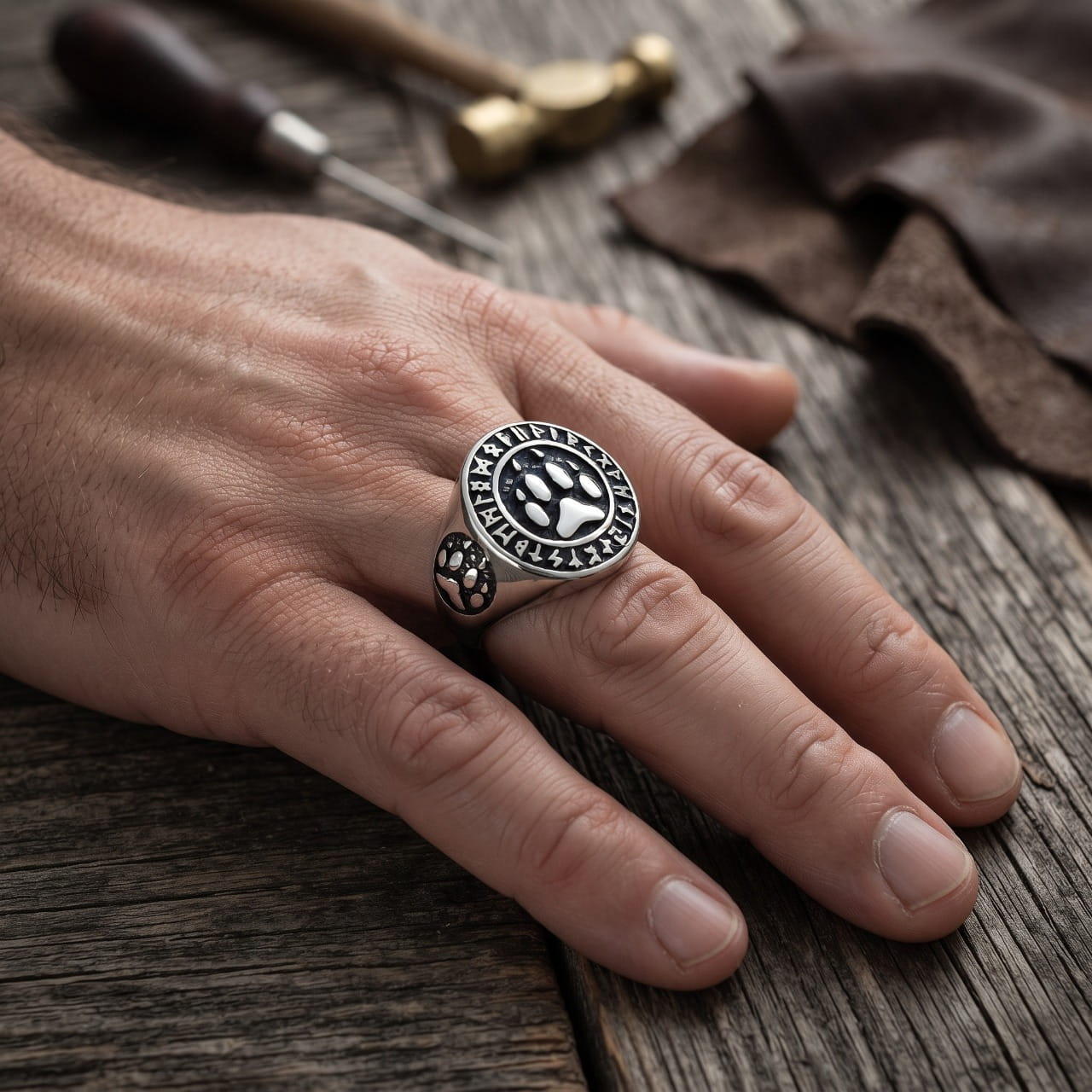
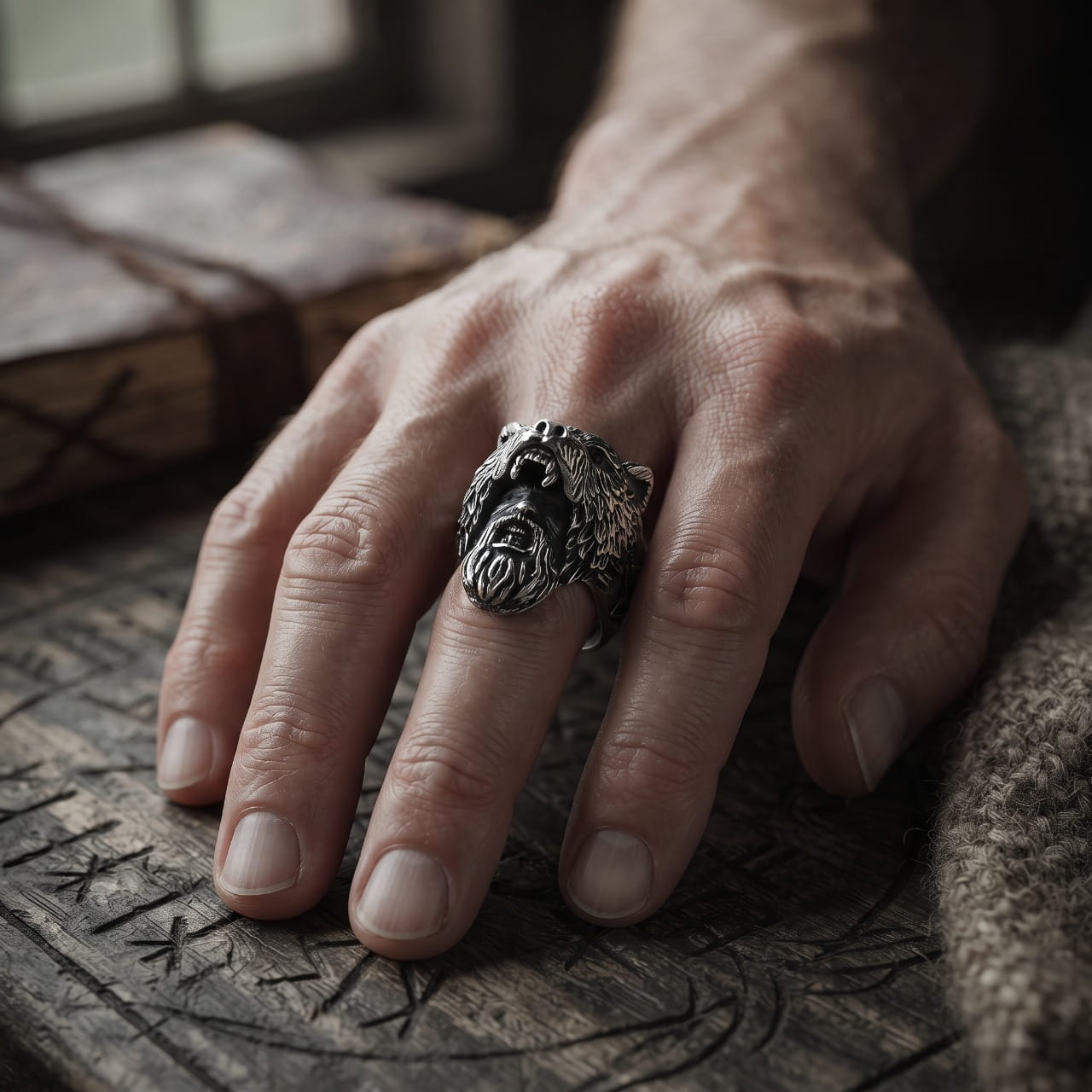
The berserker's mark can be read in three signs: the paw and the claw for the bear, the jaws for the wolf, the bare blade for the man without armor.
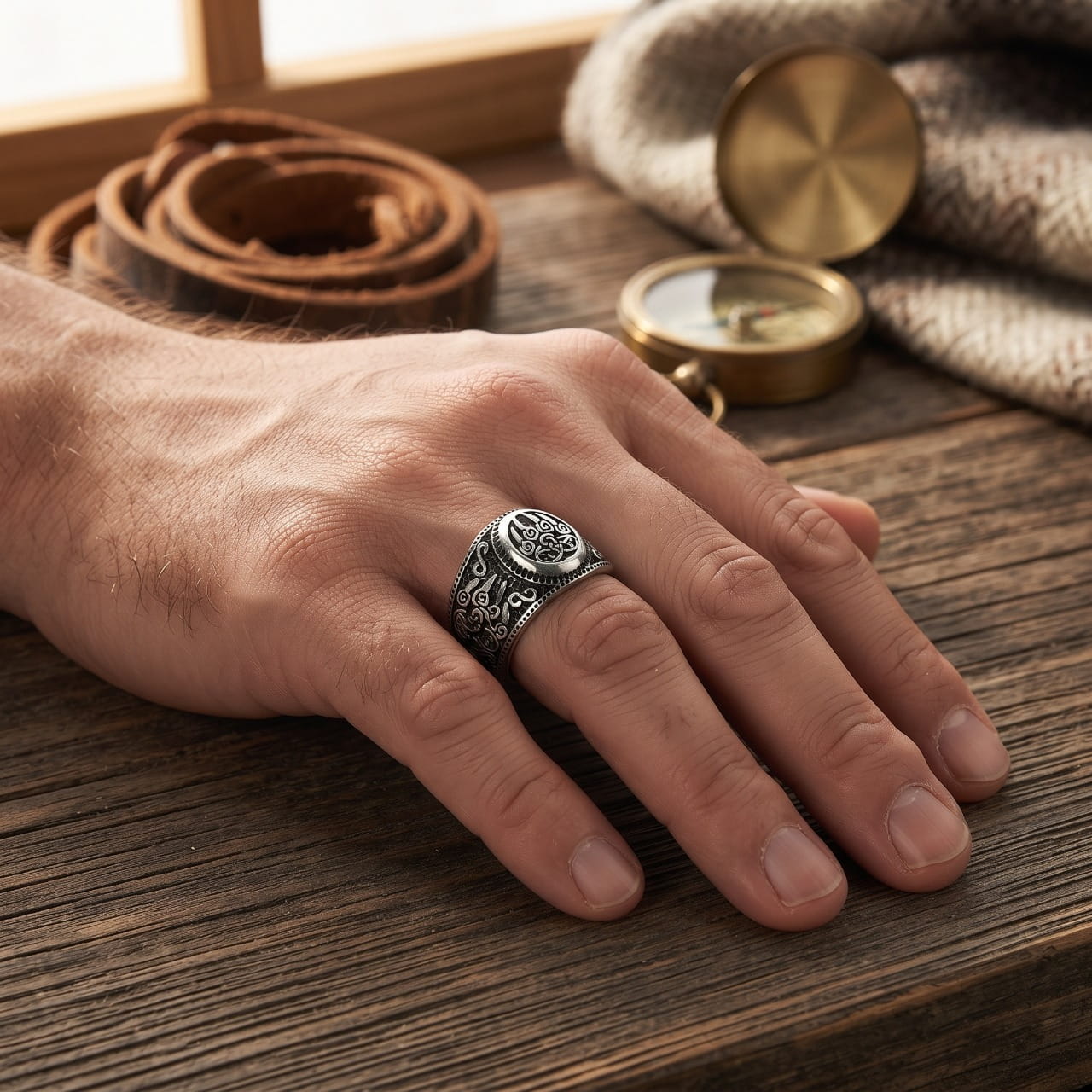
- On the hand — the signet ring is the natural setting for the paw and the claw: see the rings.
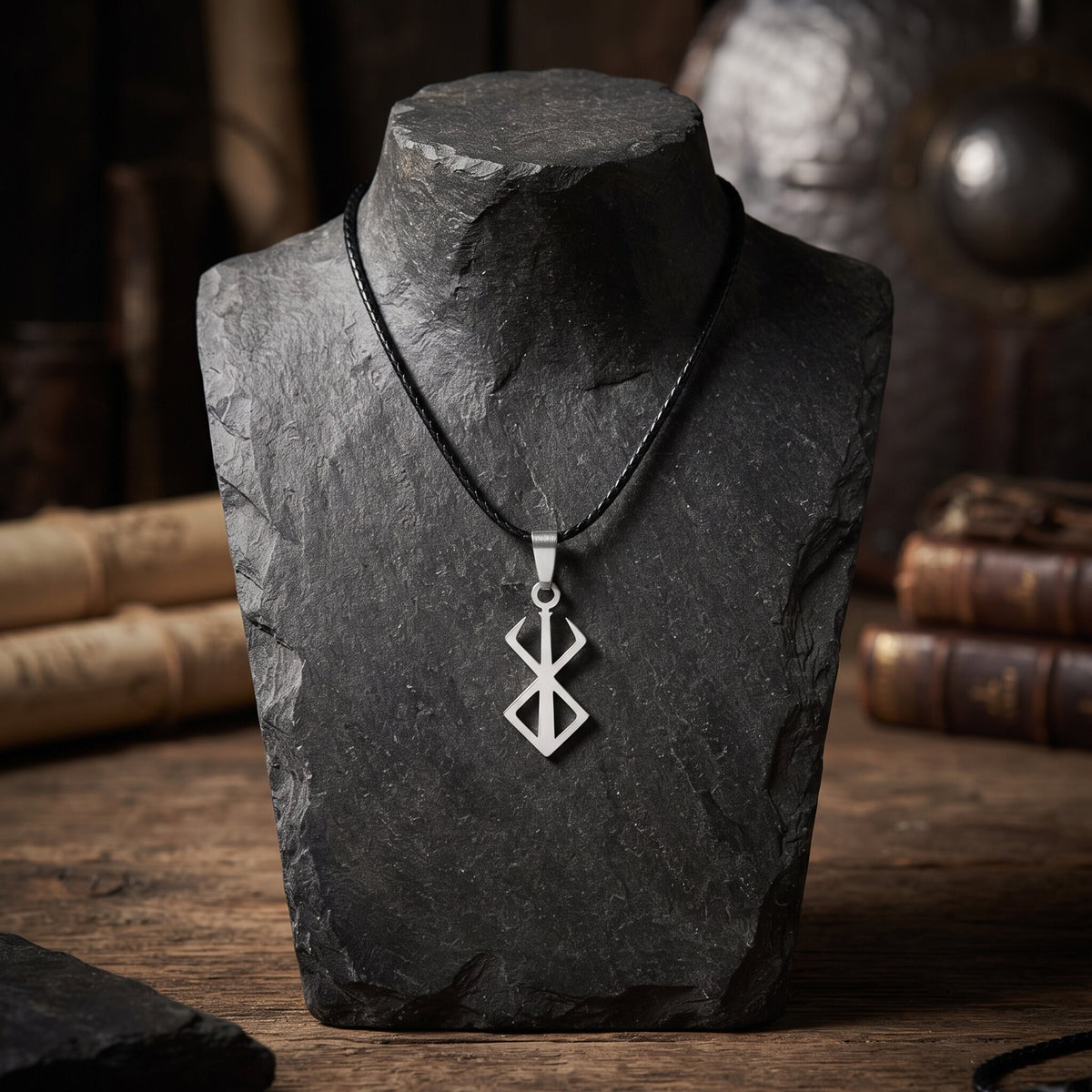
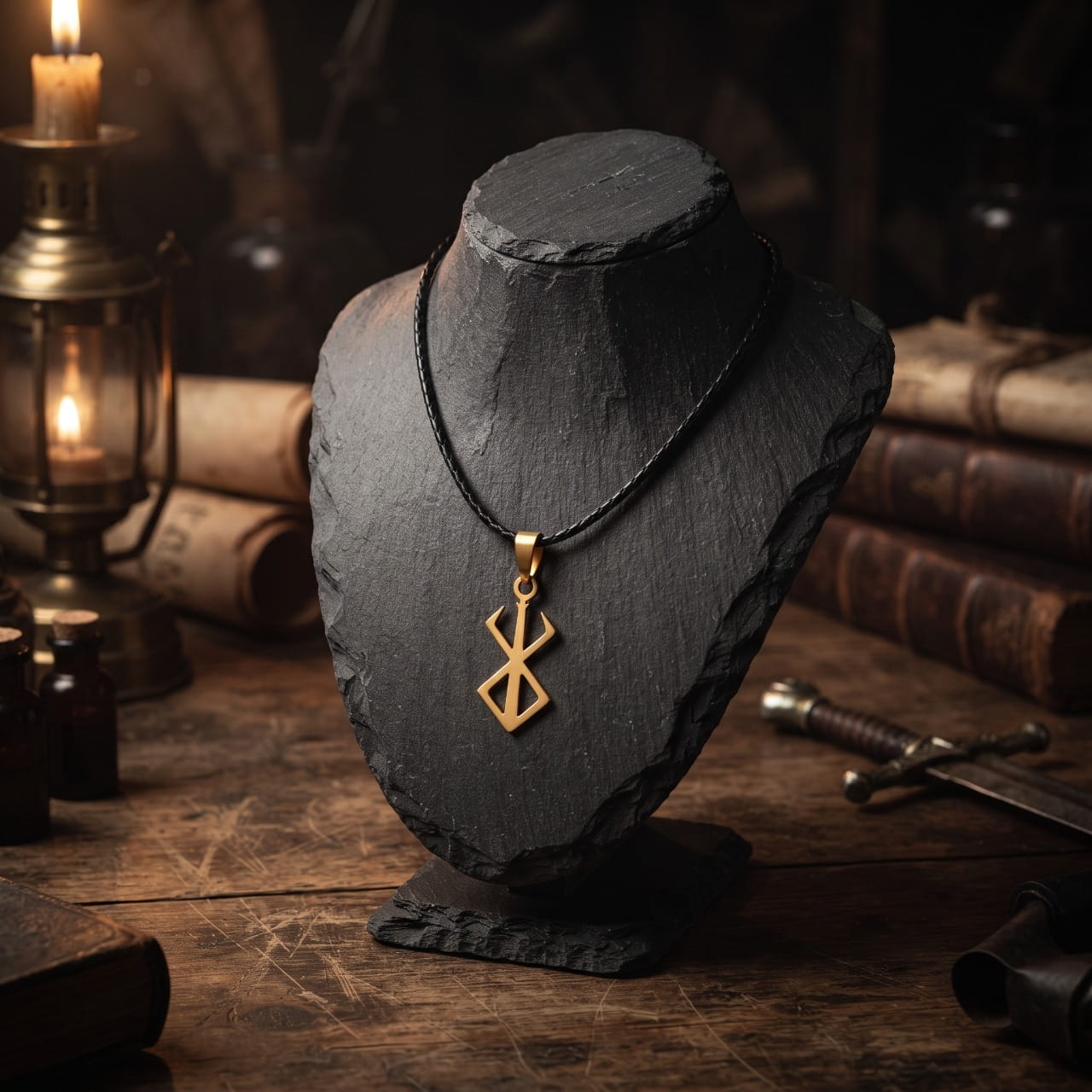
- Around the neck — the Berserk sword is worn as a pendant: see the necklaces.
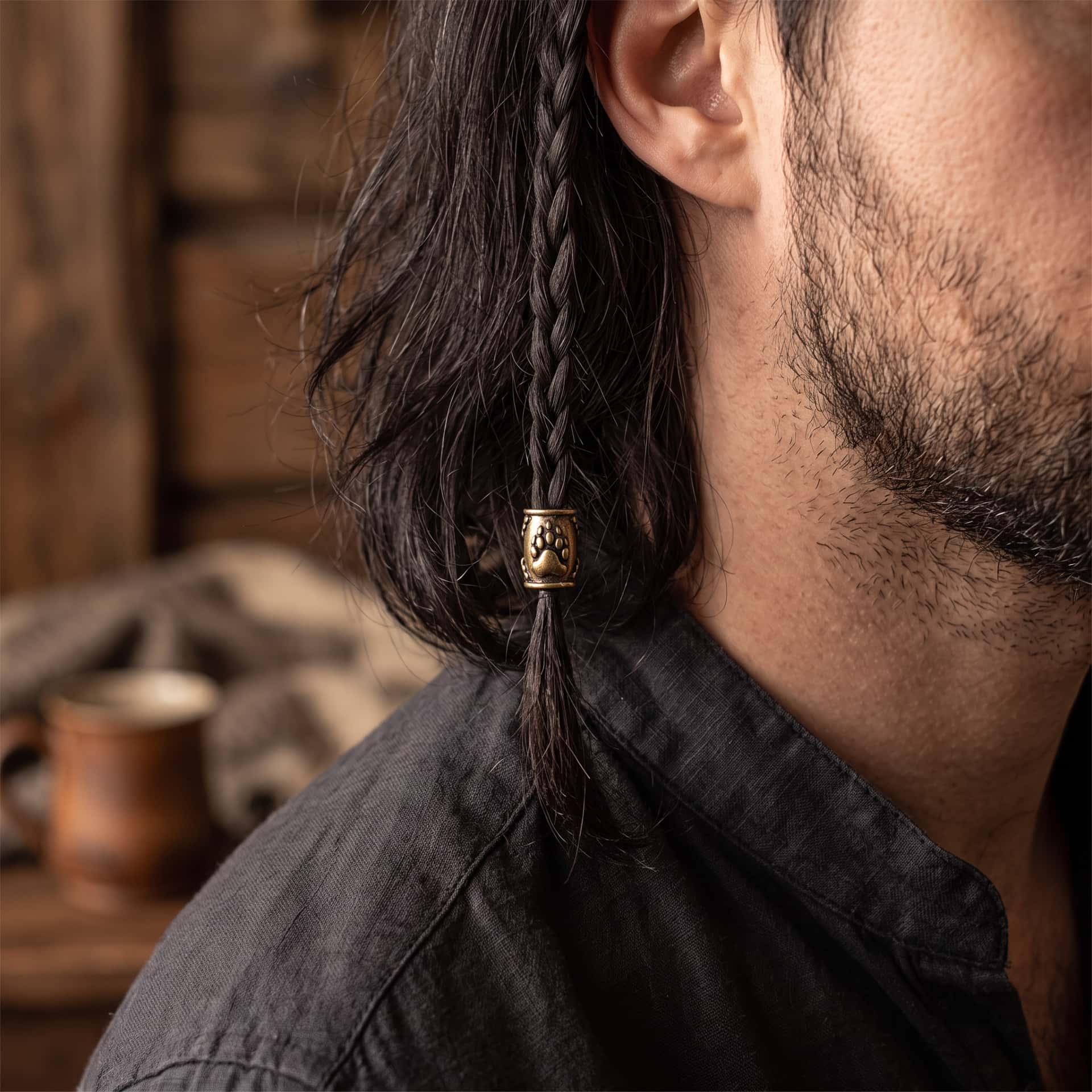
- In the beard and hair — see the beard and hair beads.
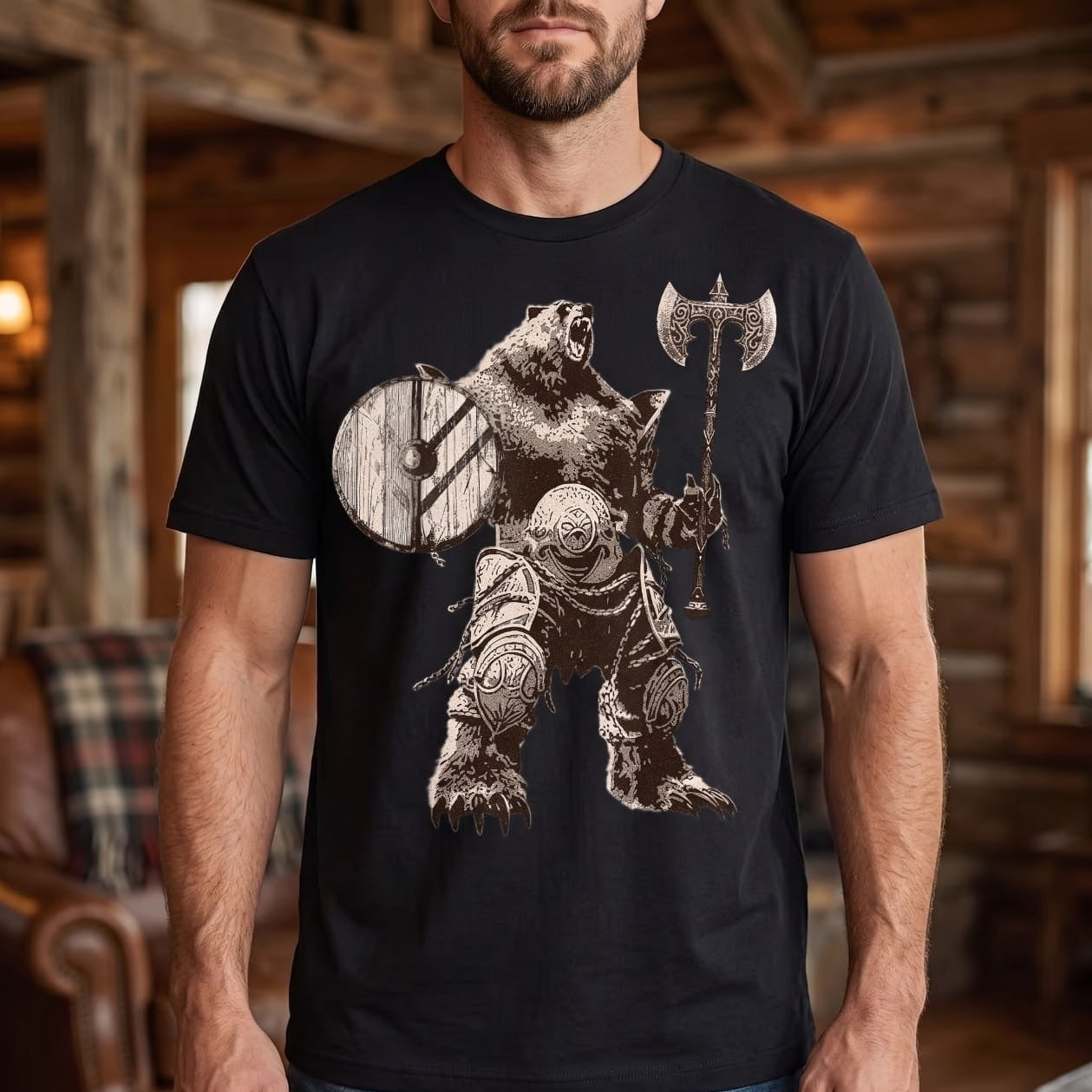
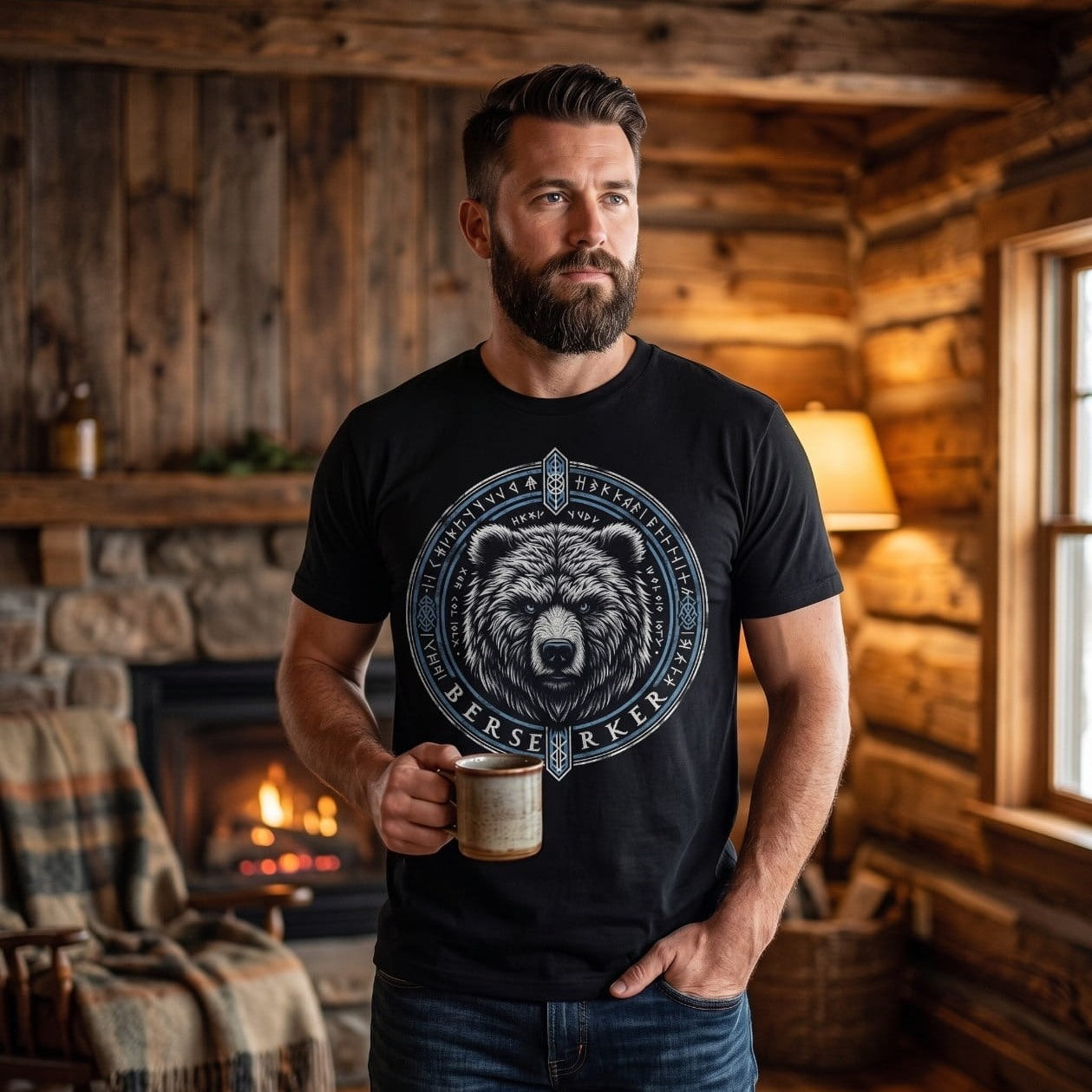
- To wear — see the T-shirts.
- On the shelf — see the statues.
- And the gear — see the weapons and the shields.
The two animals that give these warriors their name each have their own section: Fenrir the wolf and dragons and serpents. And the god they served can be recognized by two signs: his ravens Huginn and Muninn and the Valknut, the knot of the slain.