
Filters
38 products
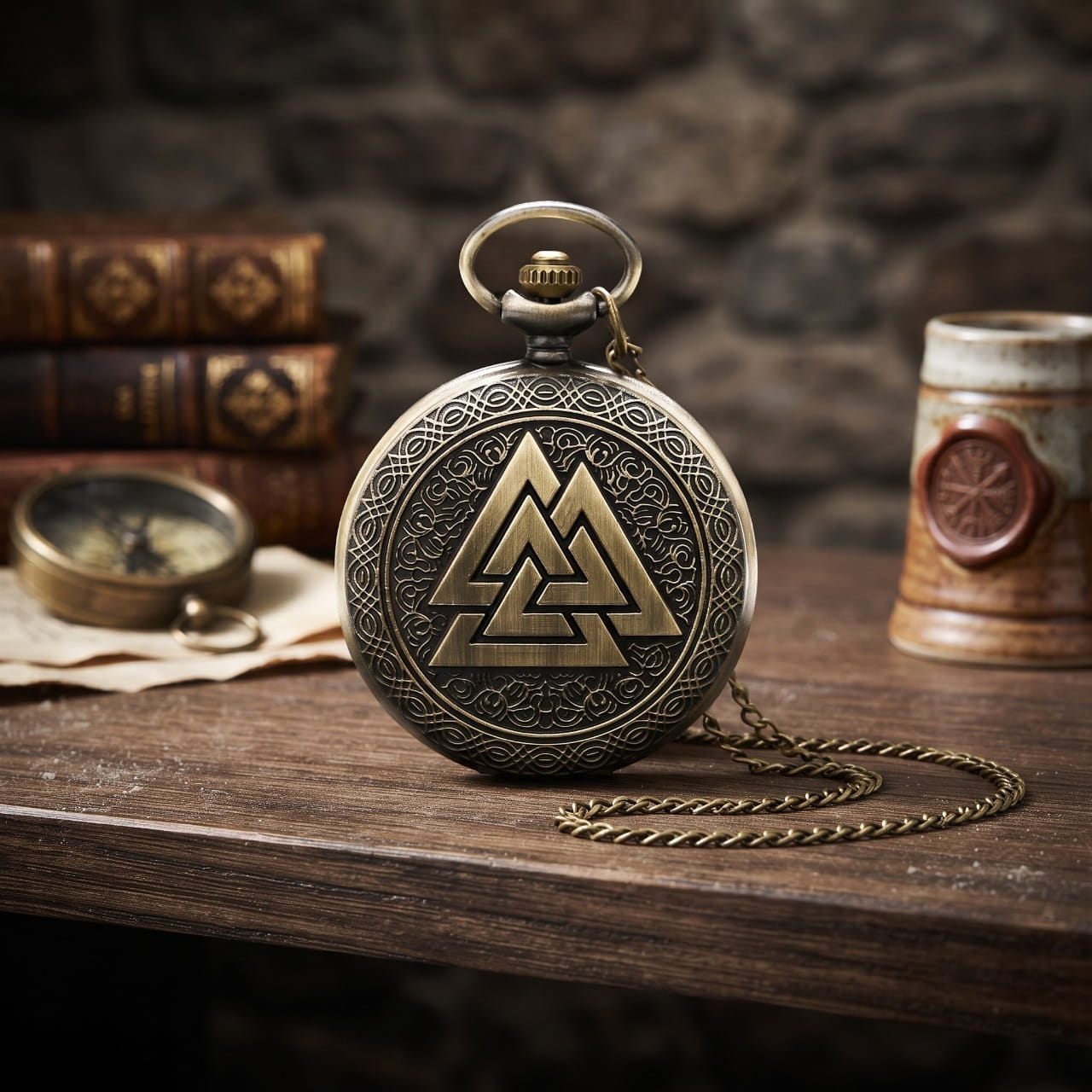
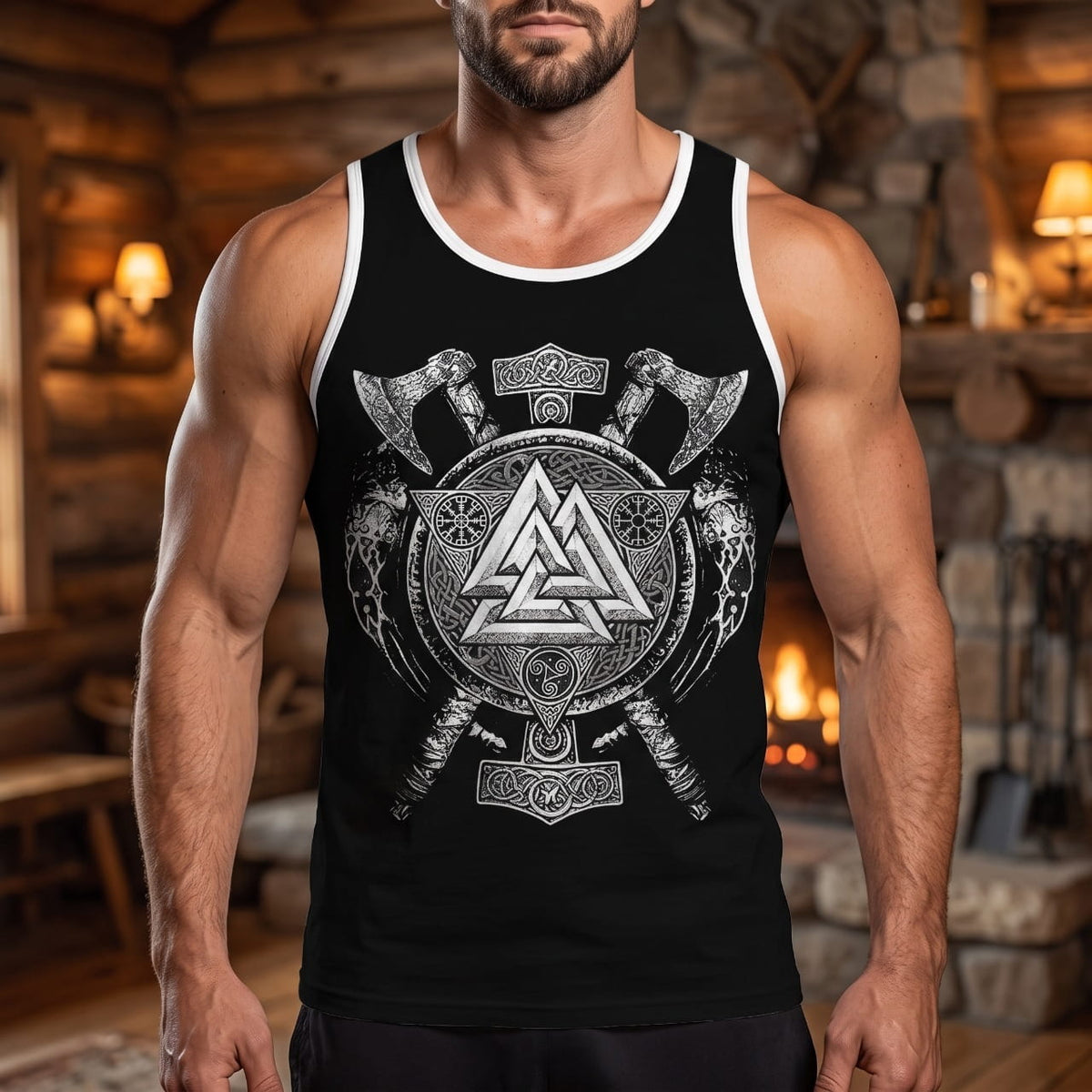
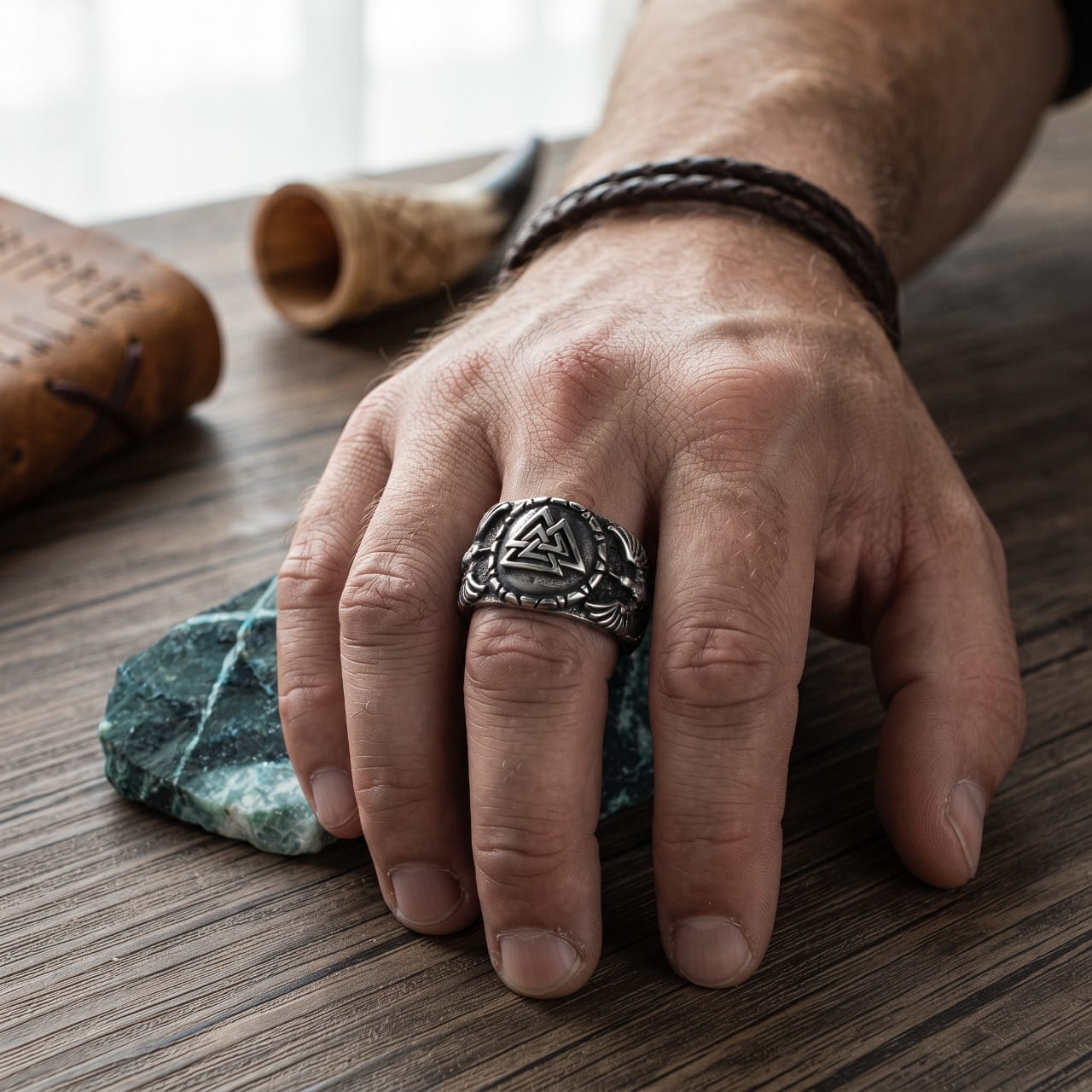
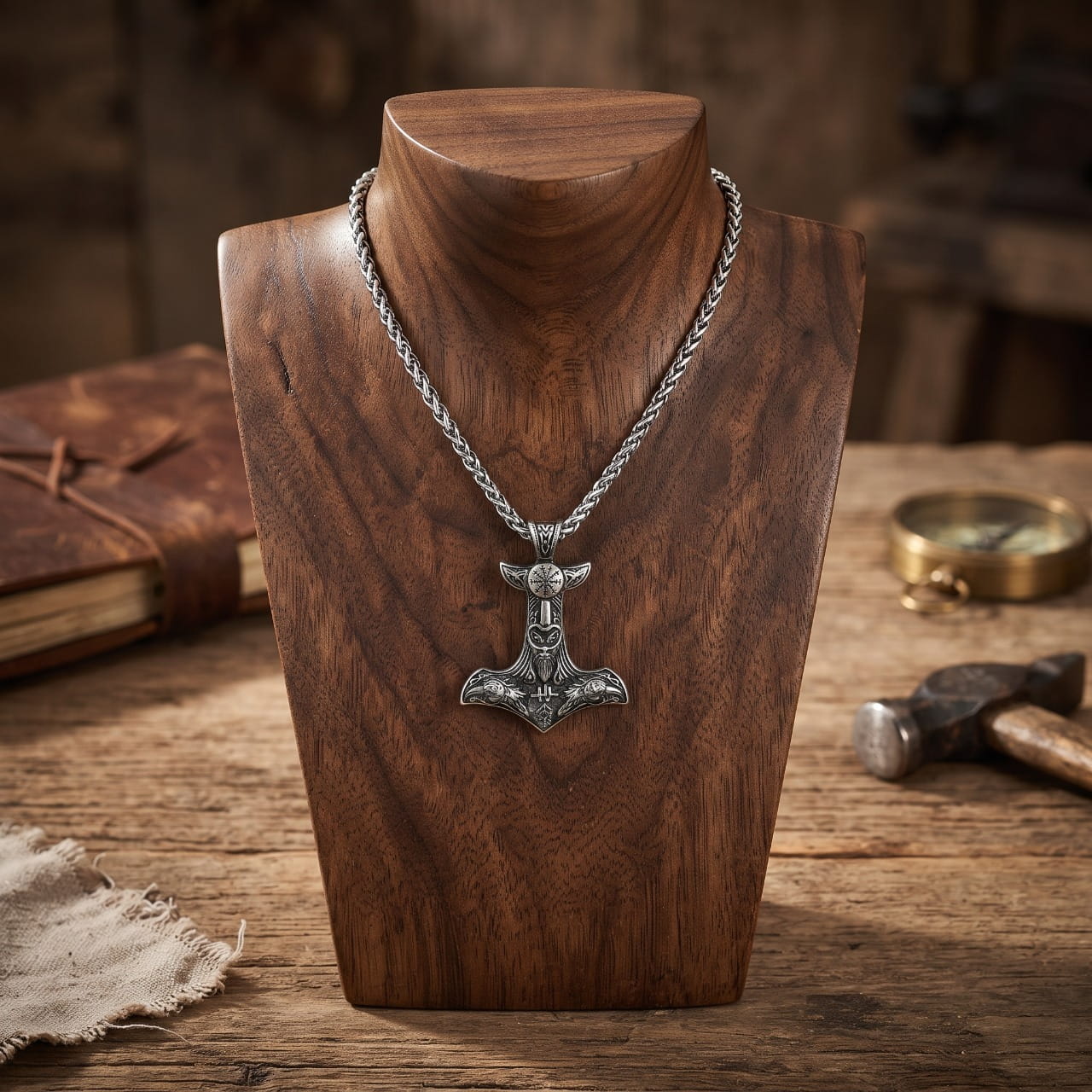
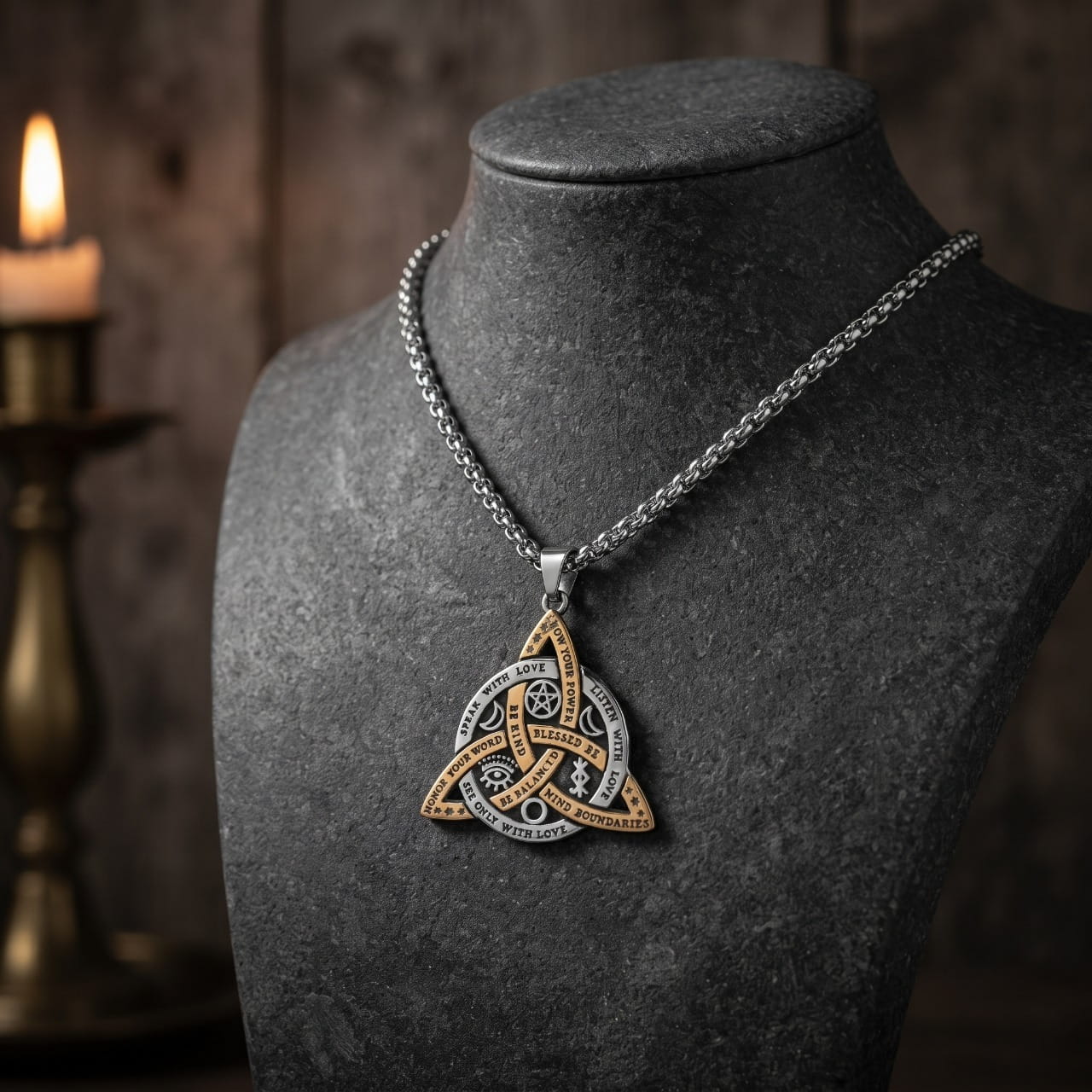
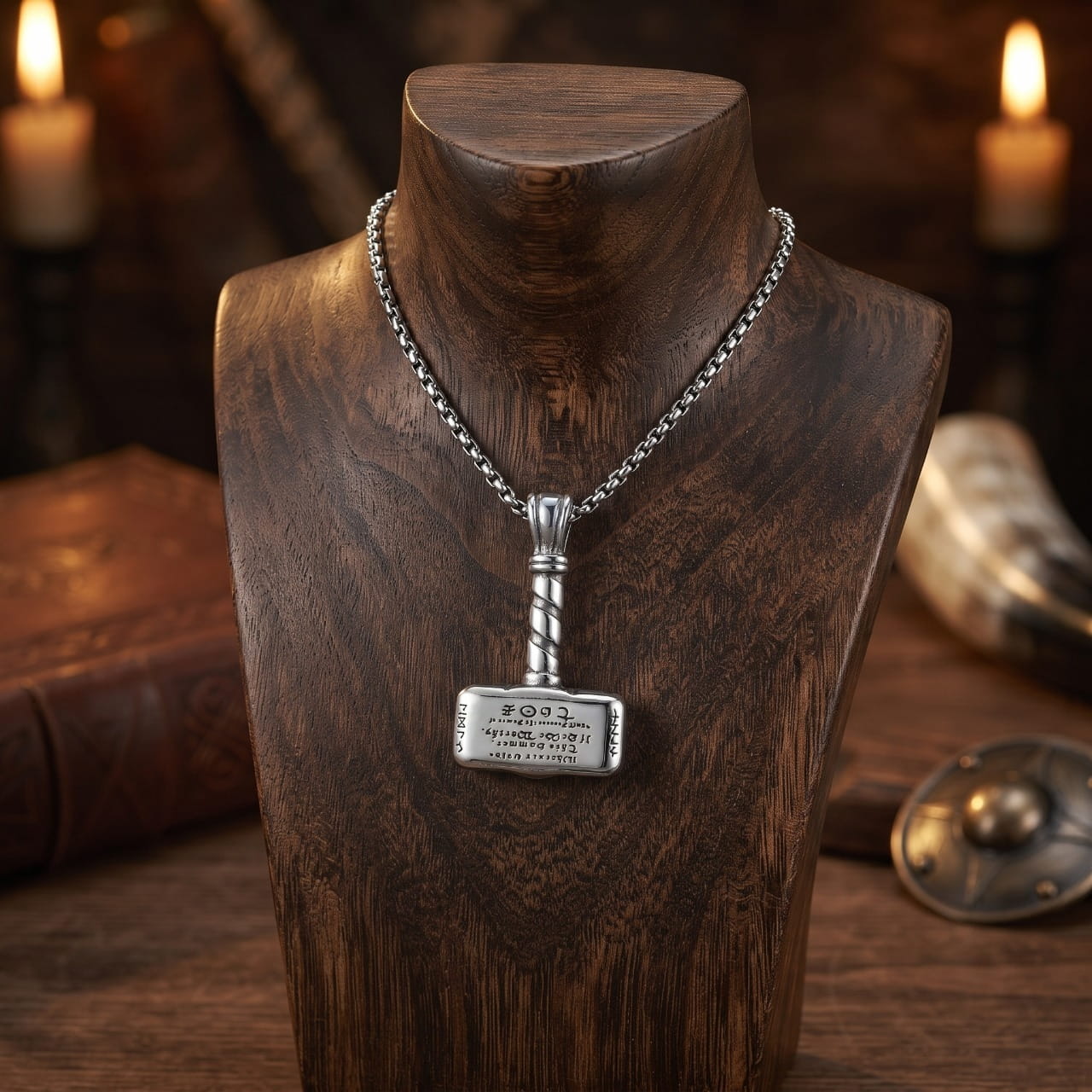
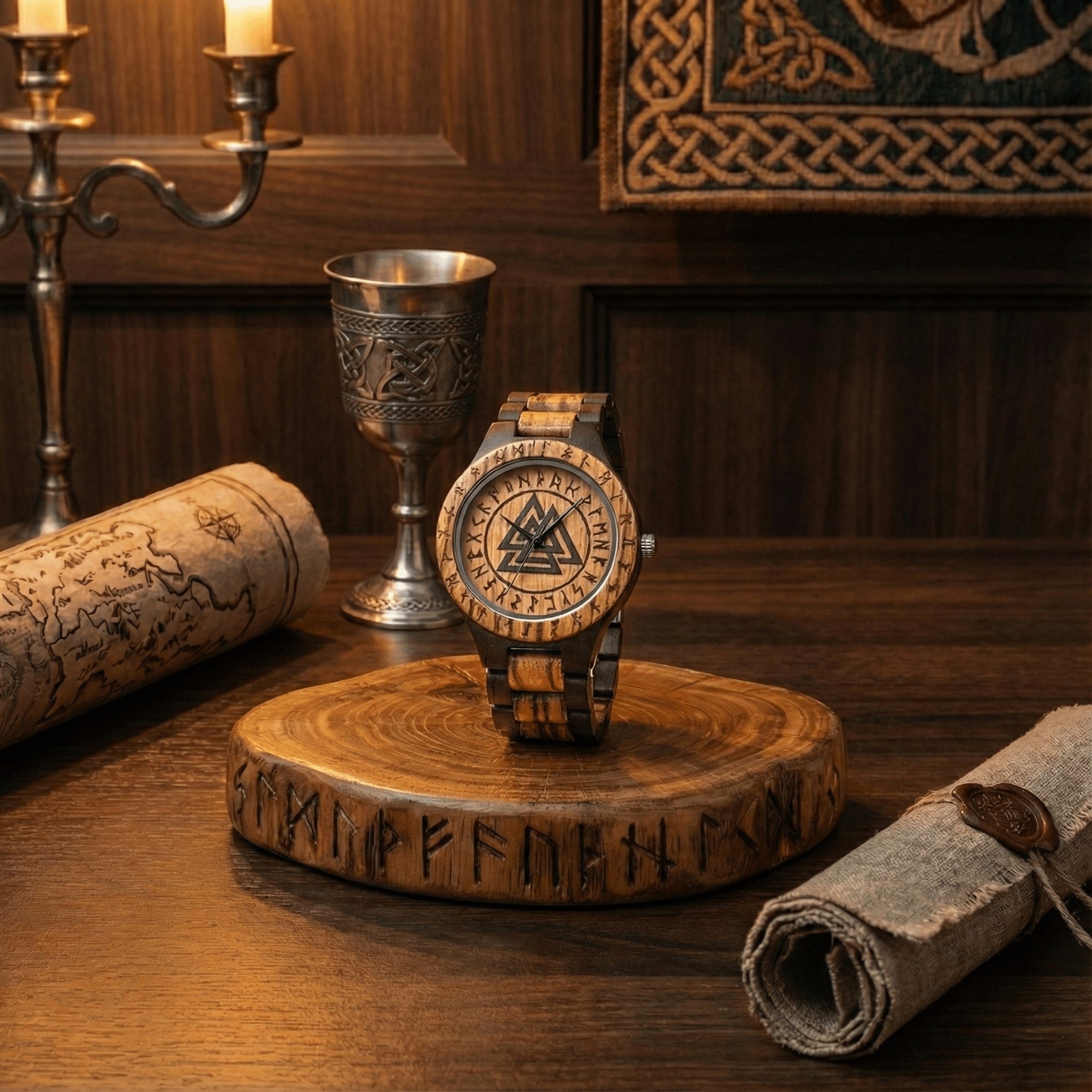
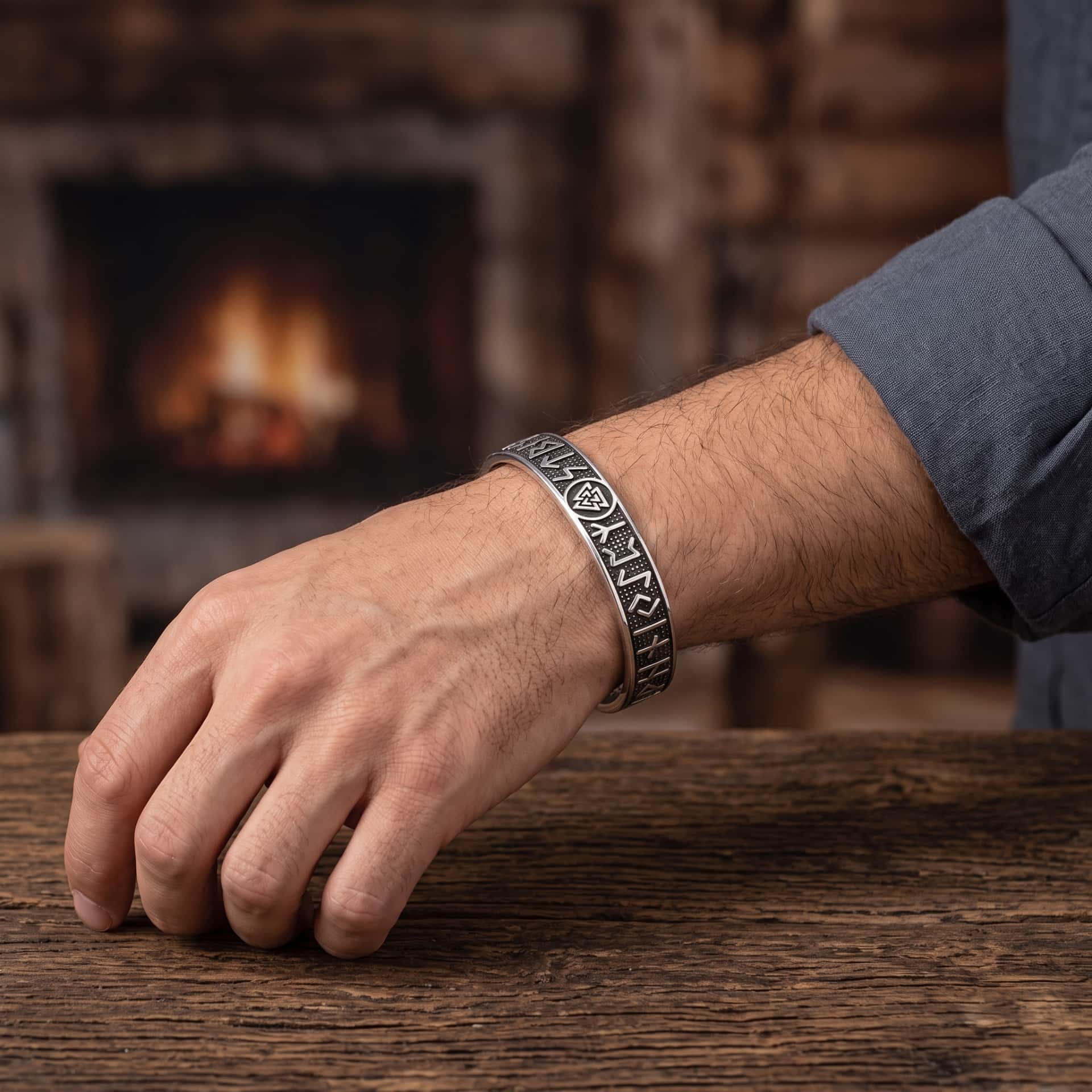
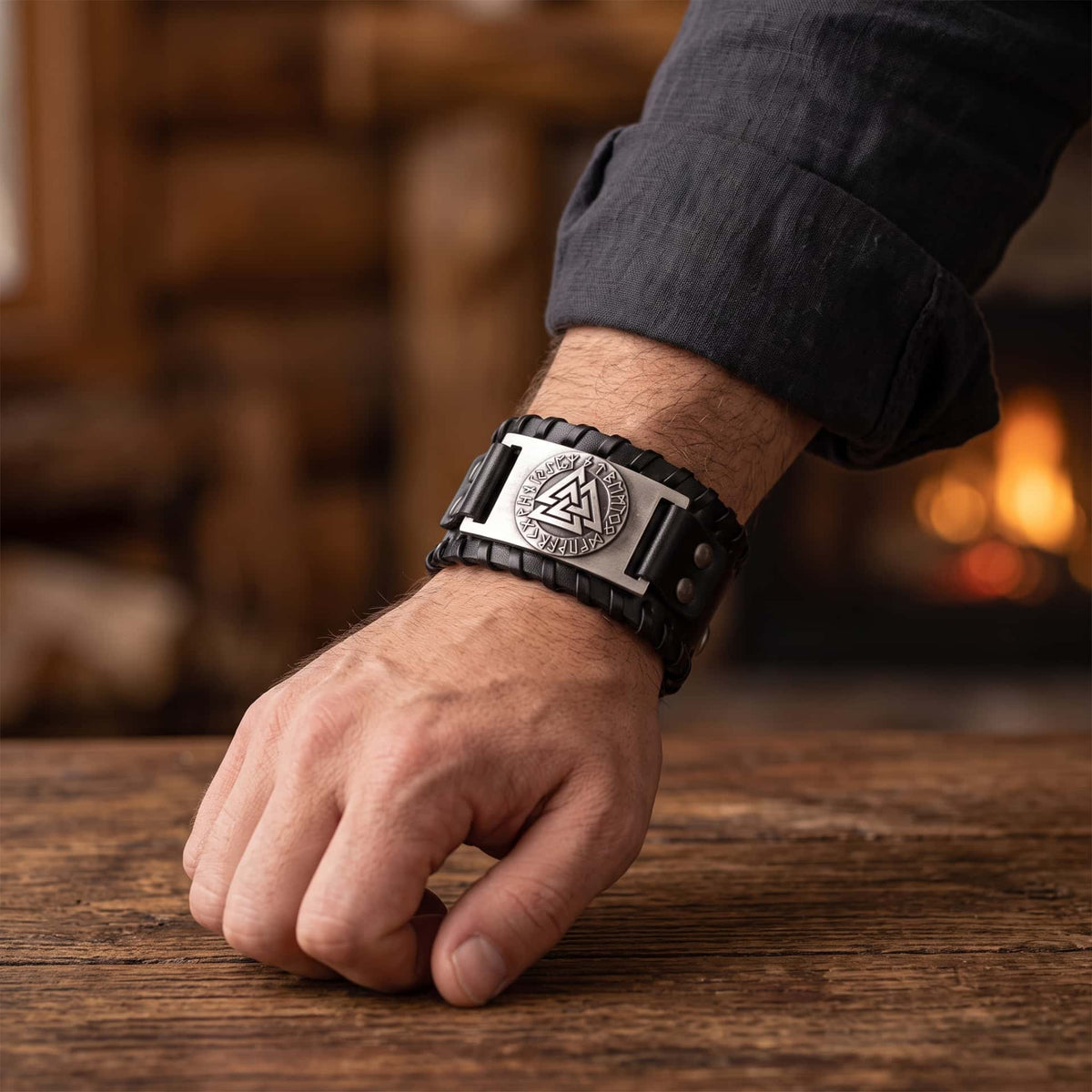
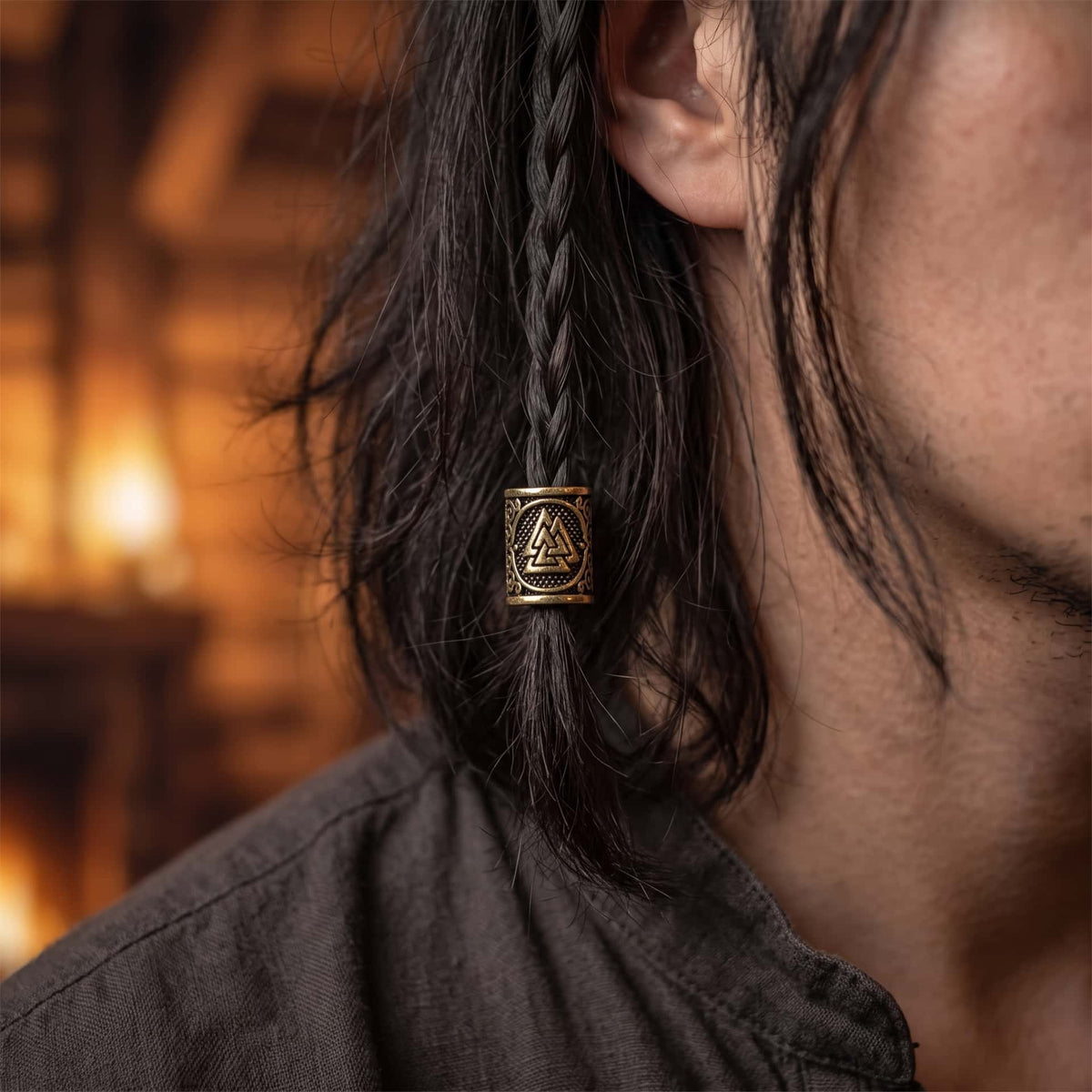
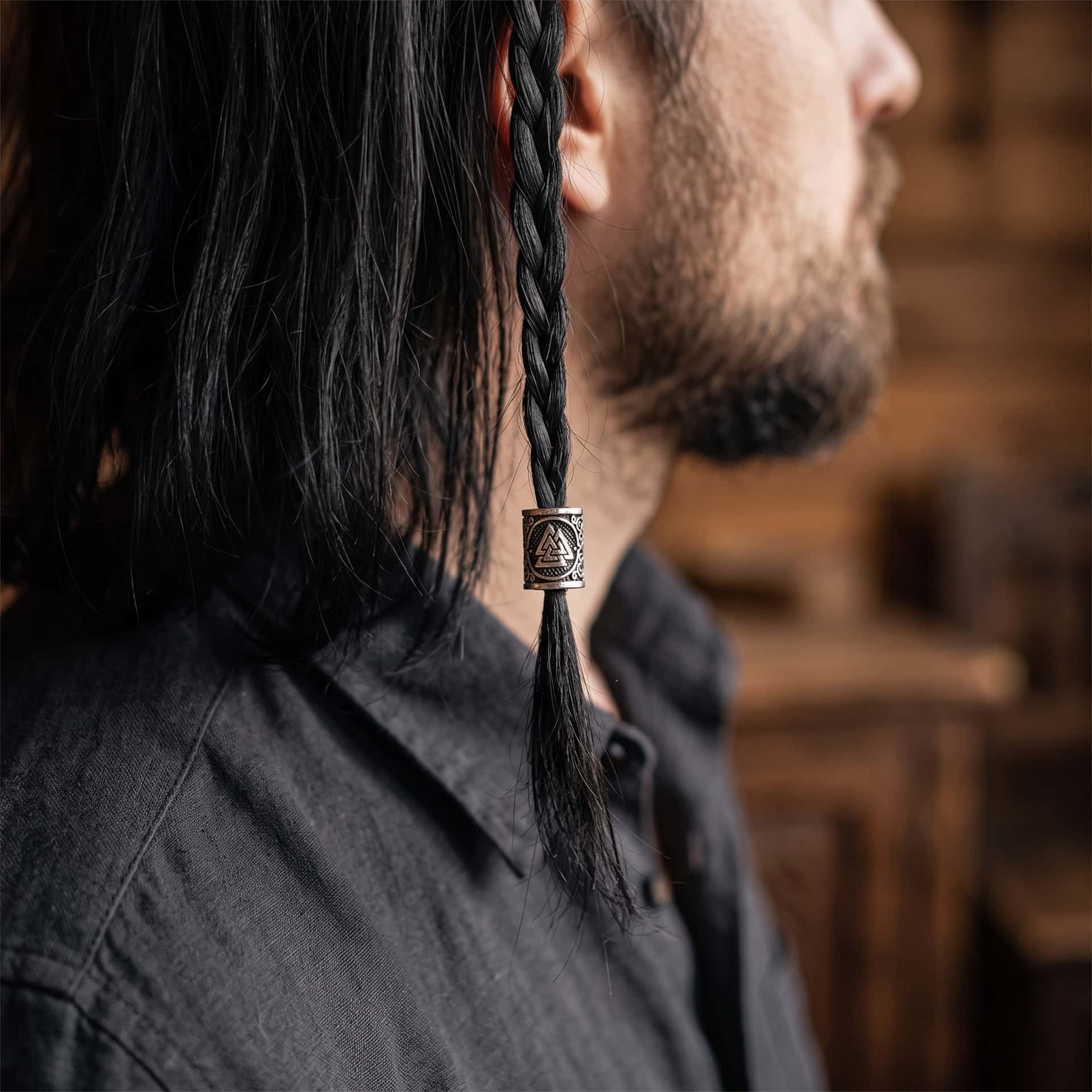
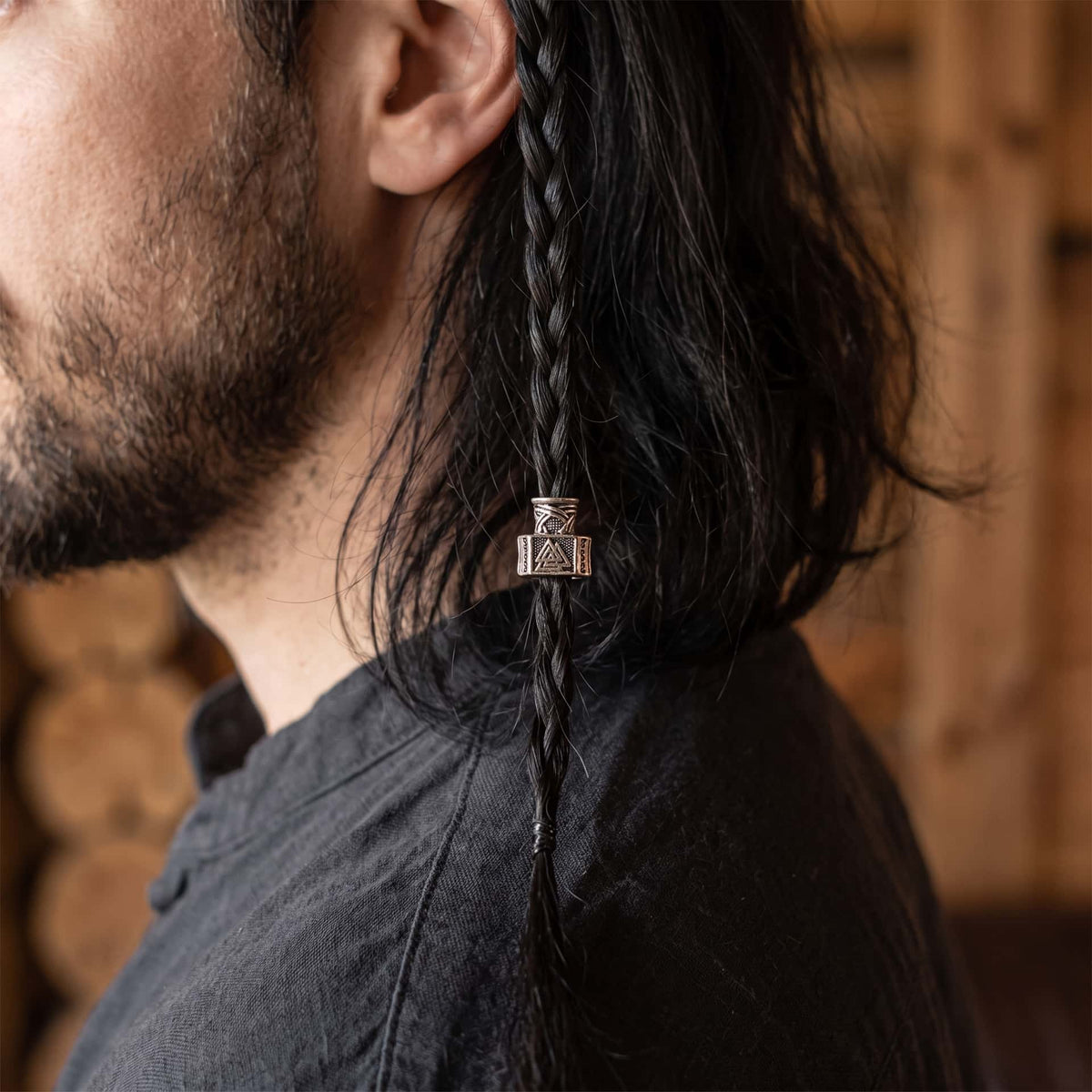

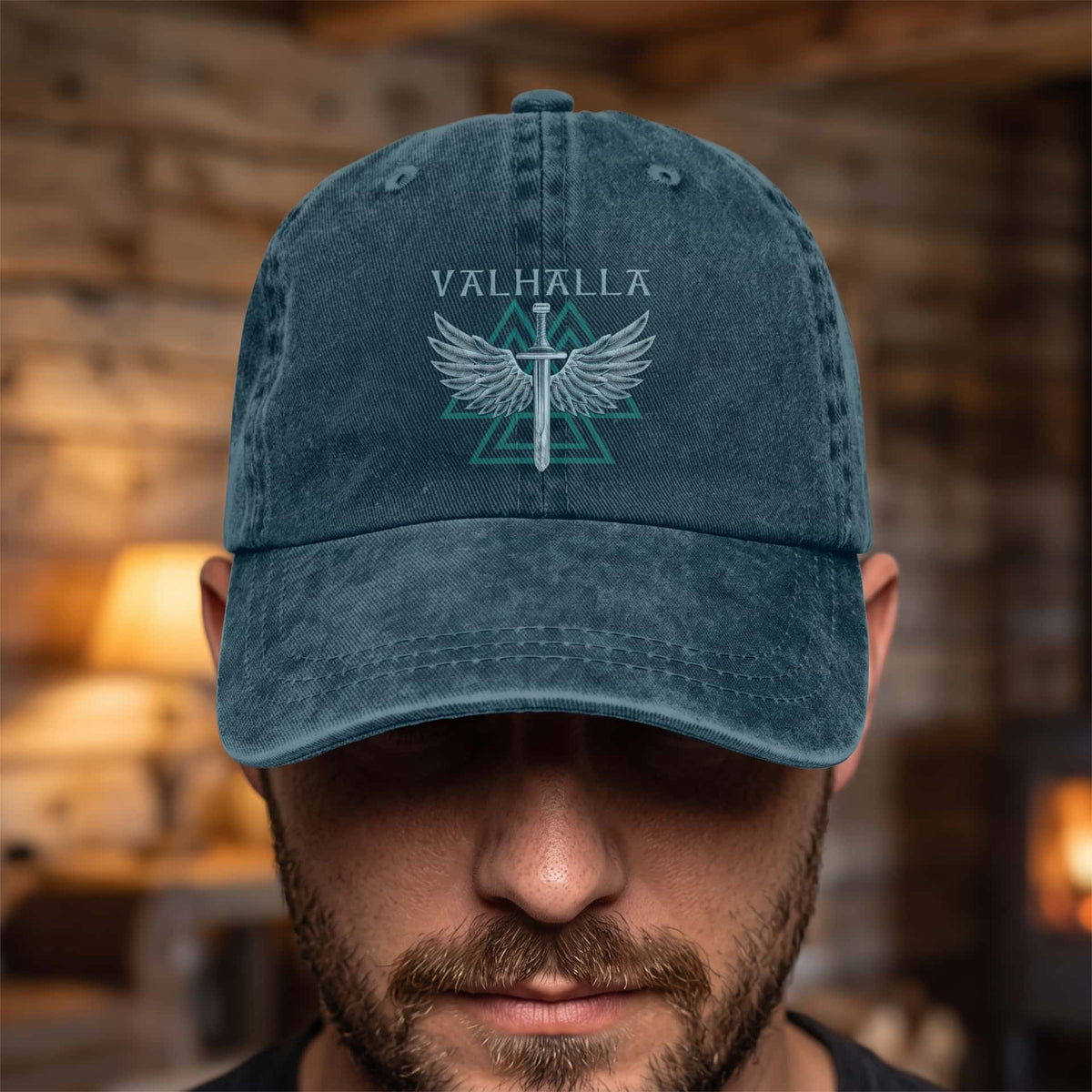
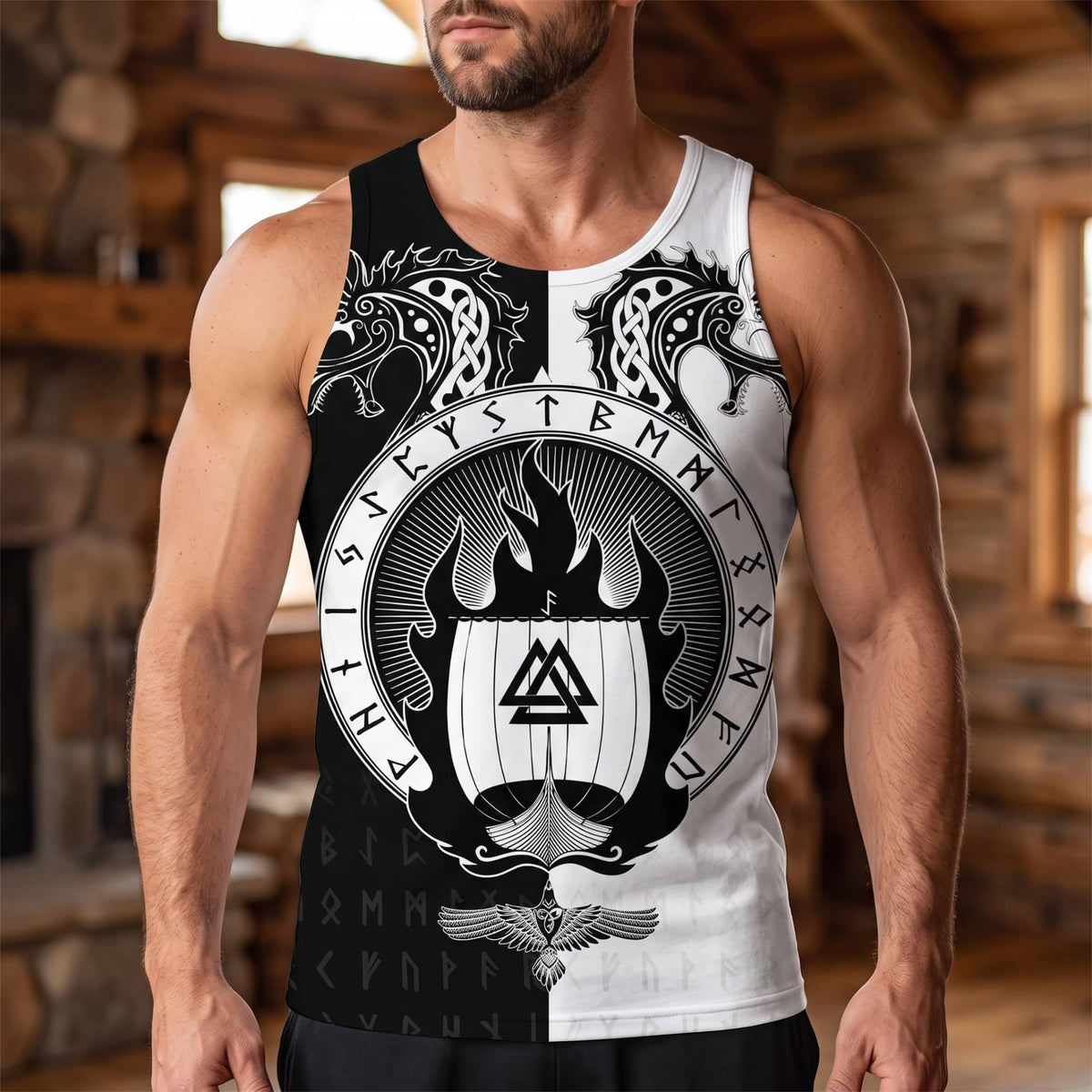
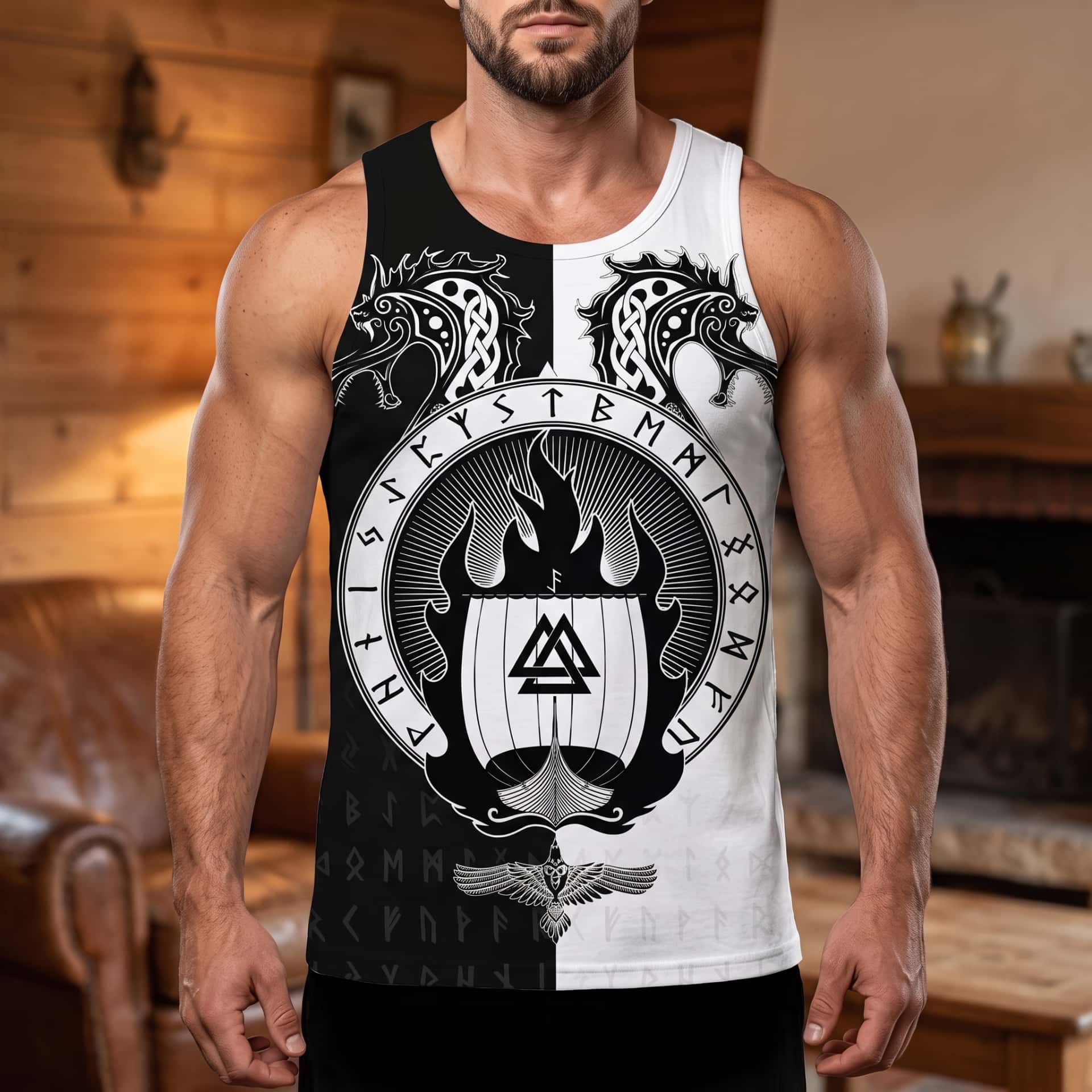
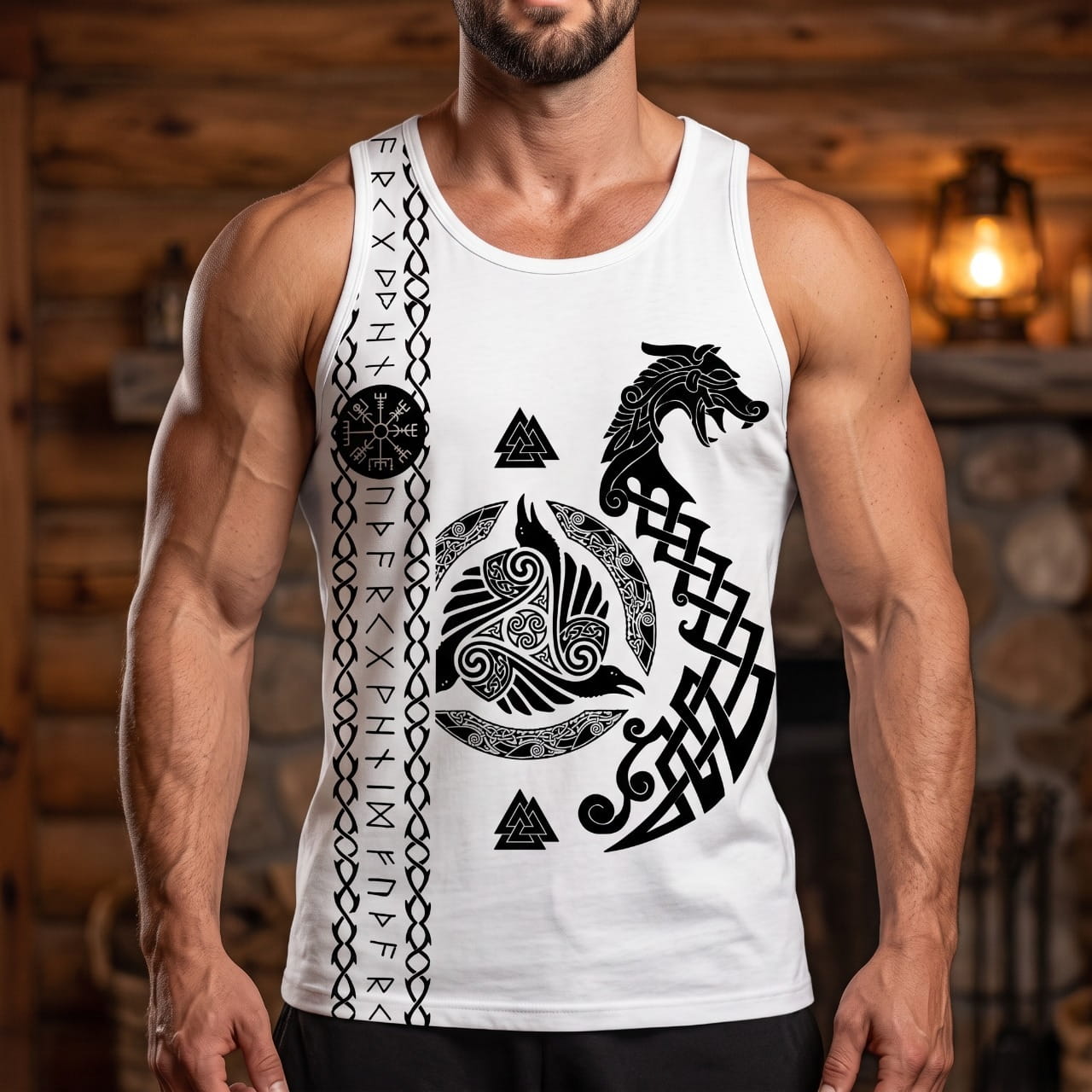
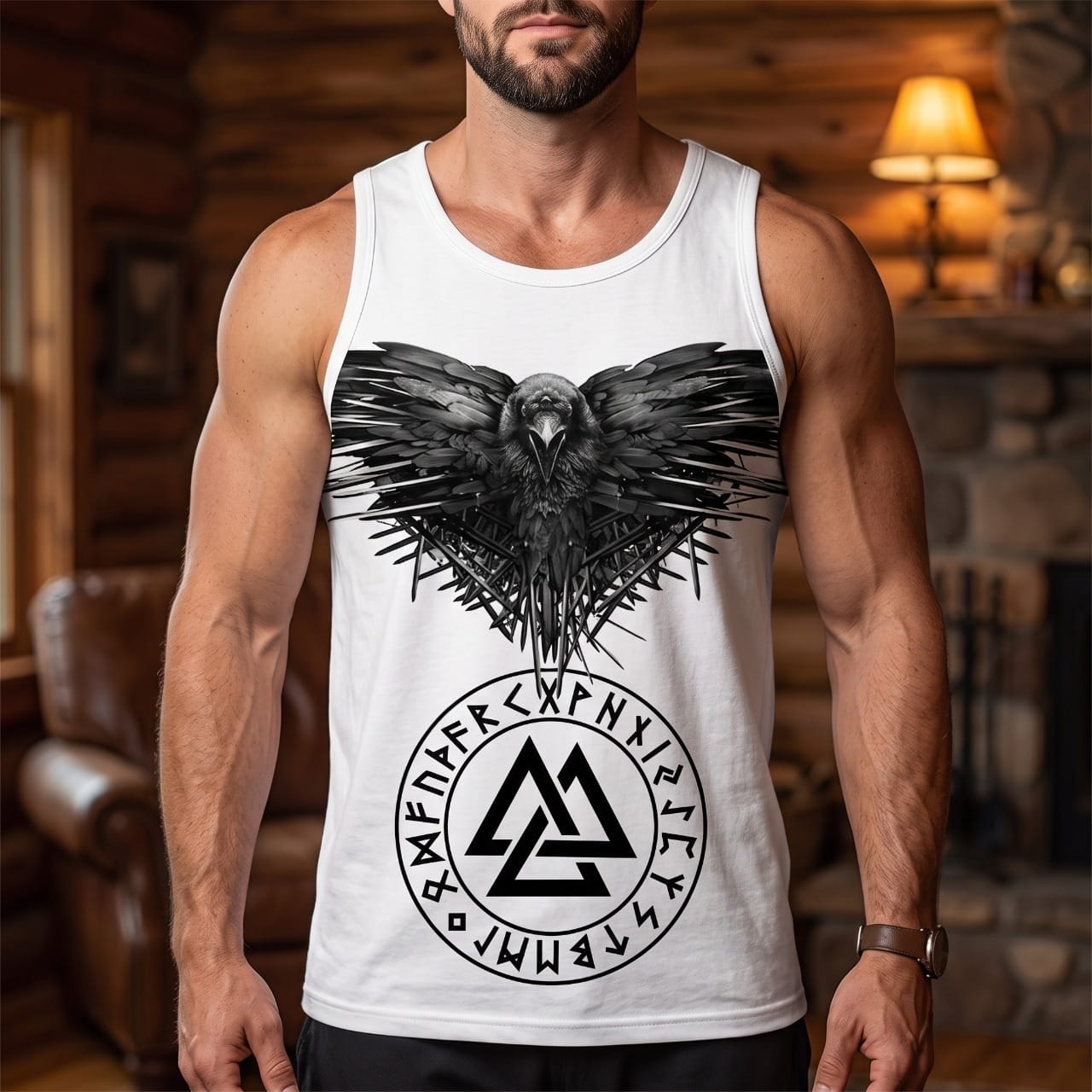
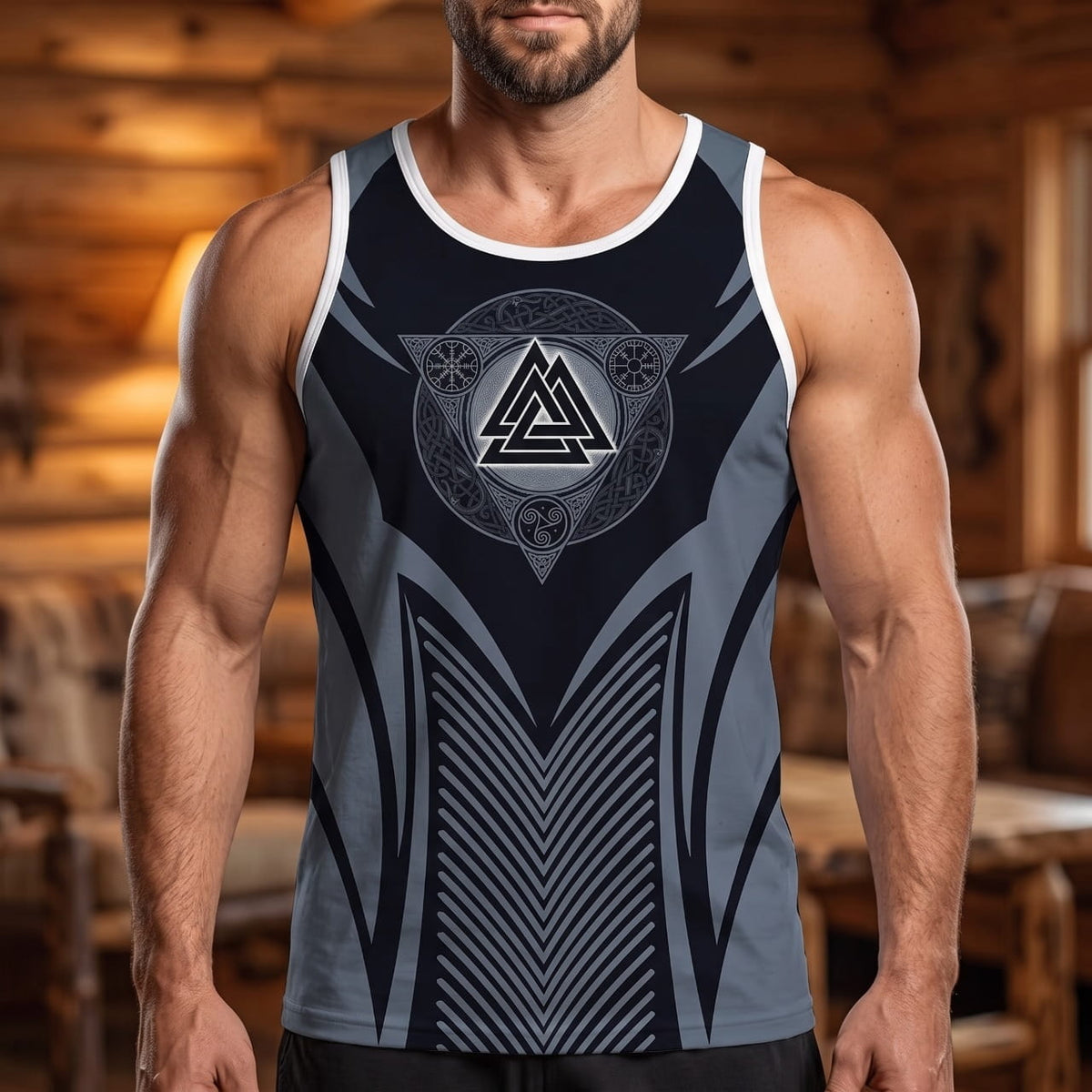
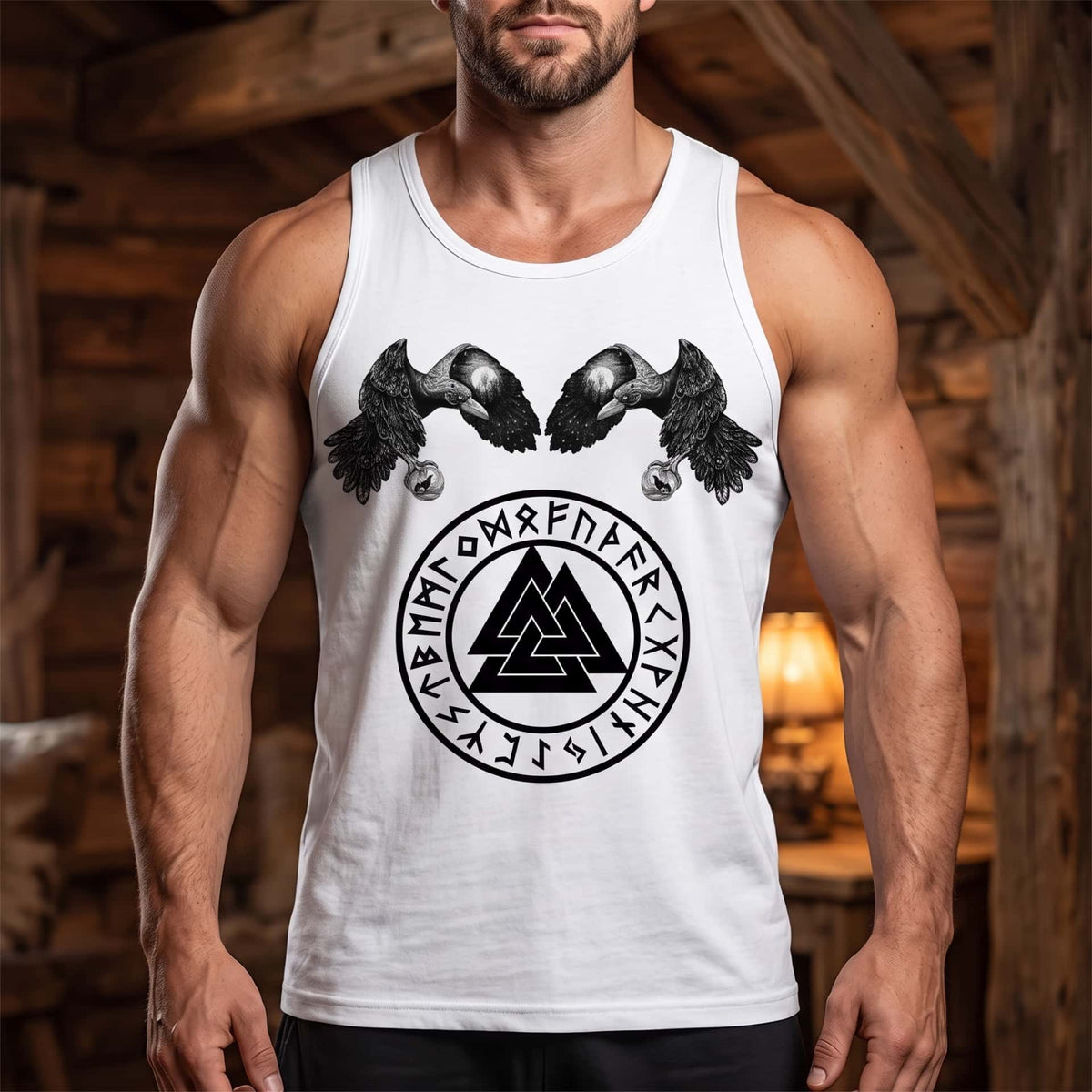
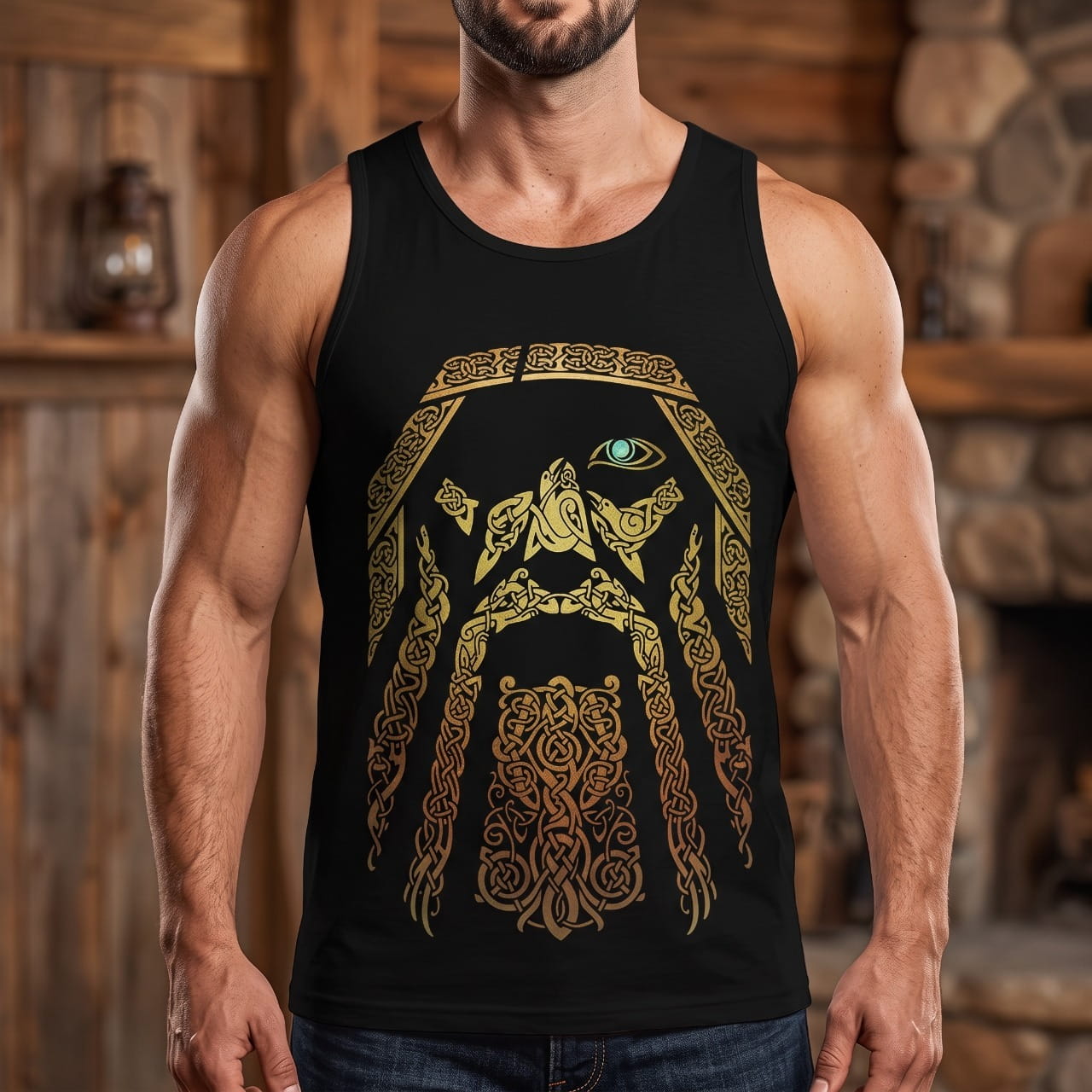
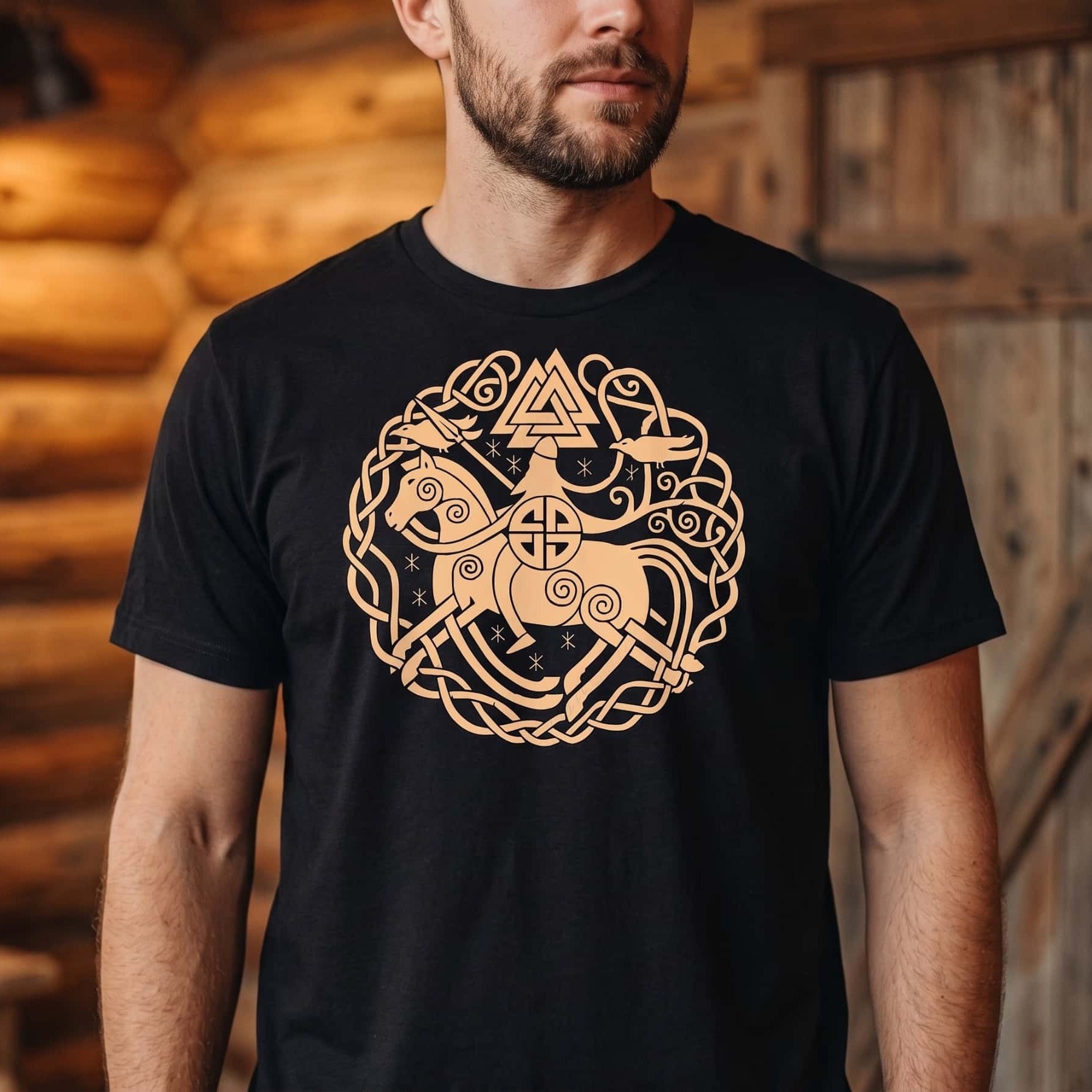
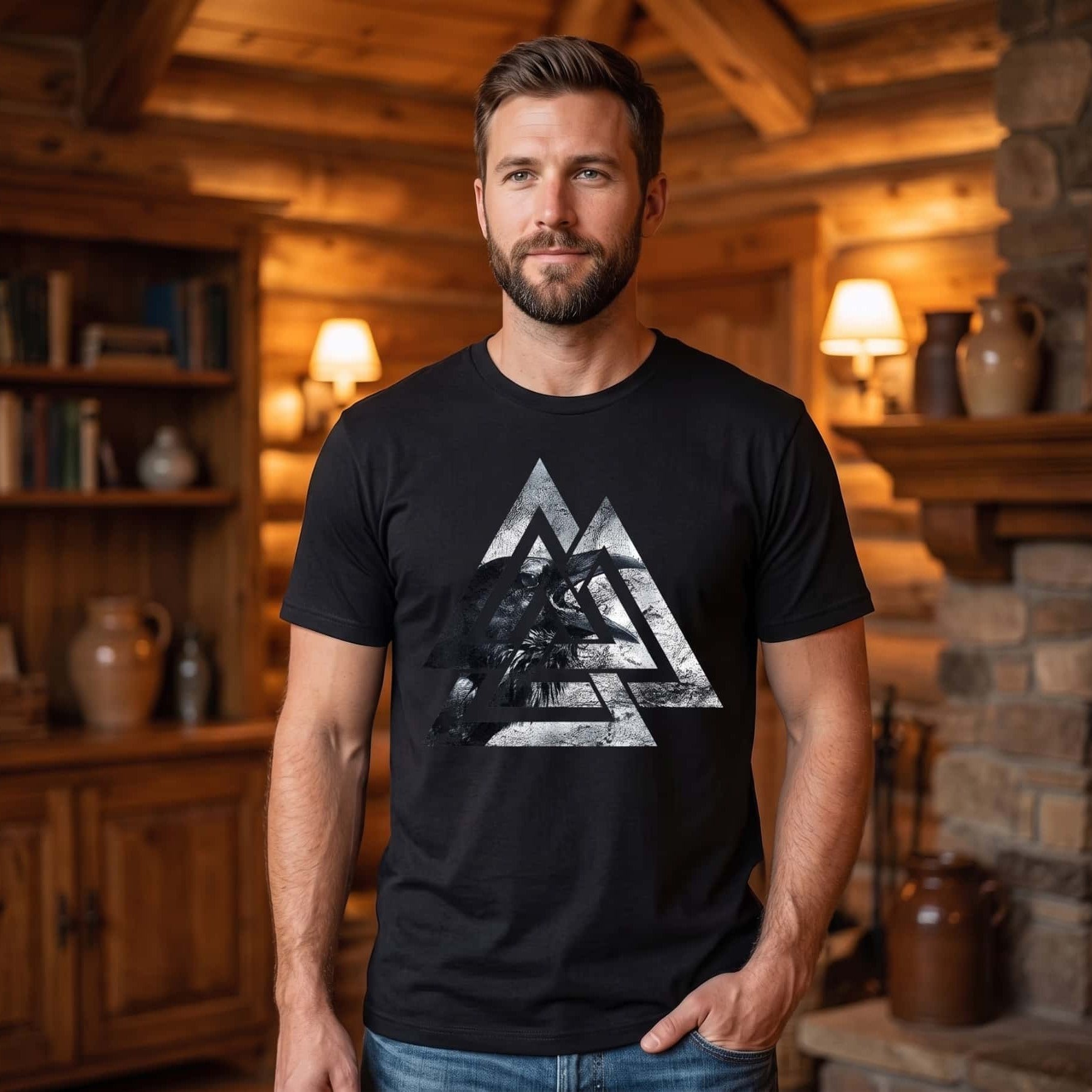
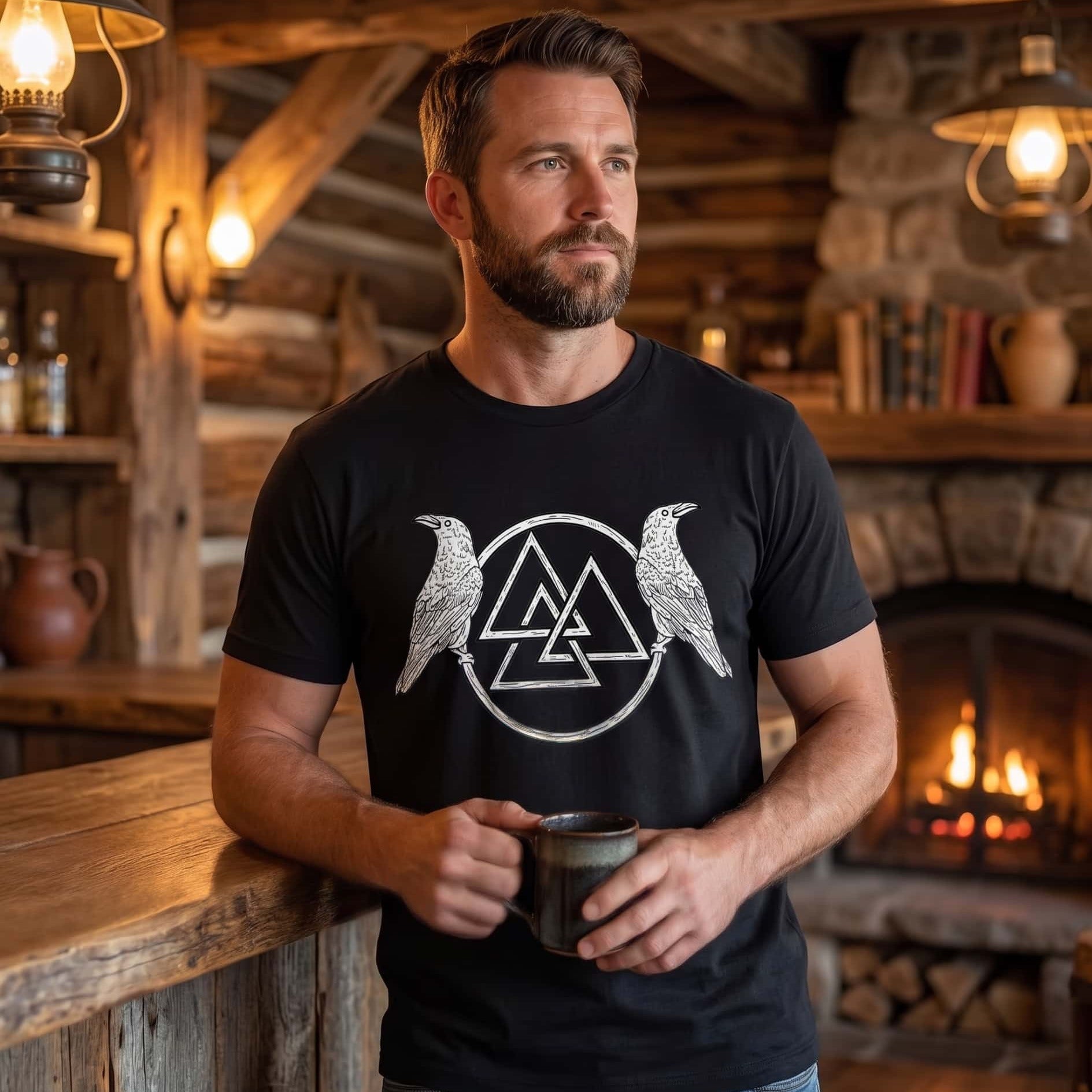
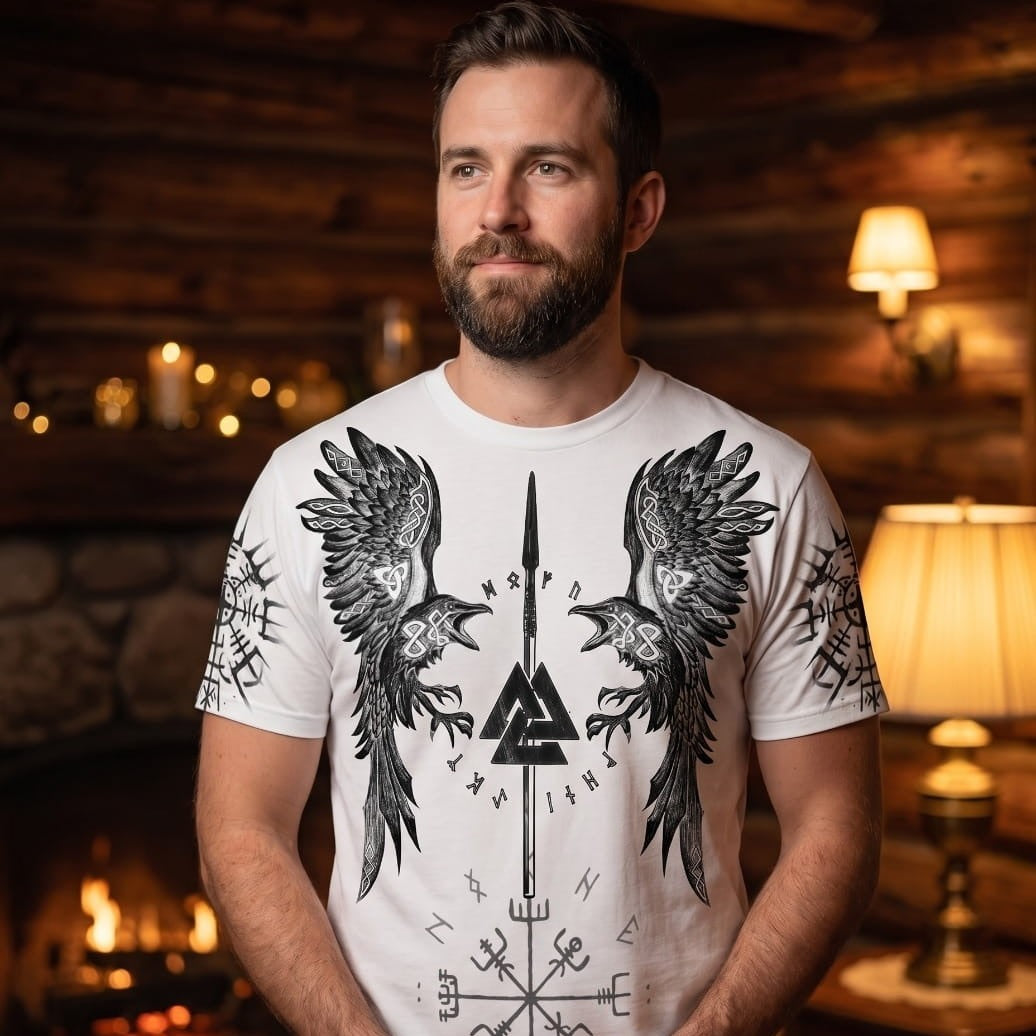
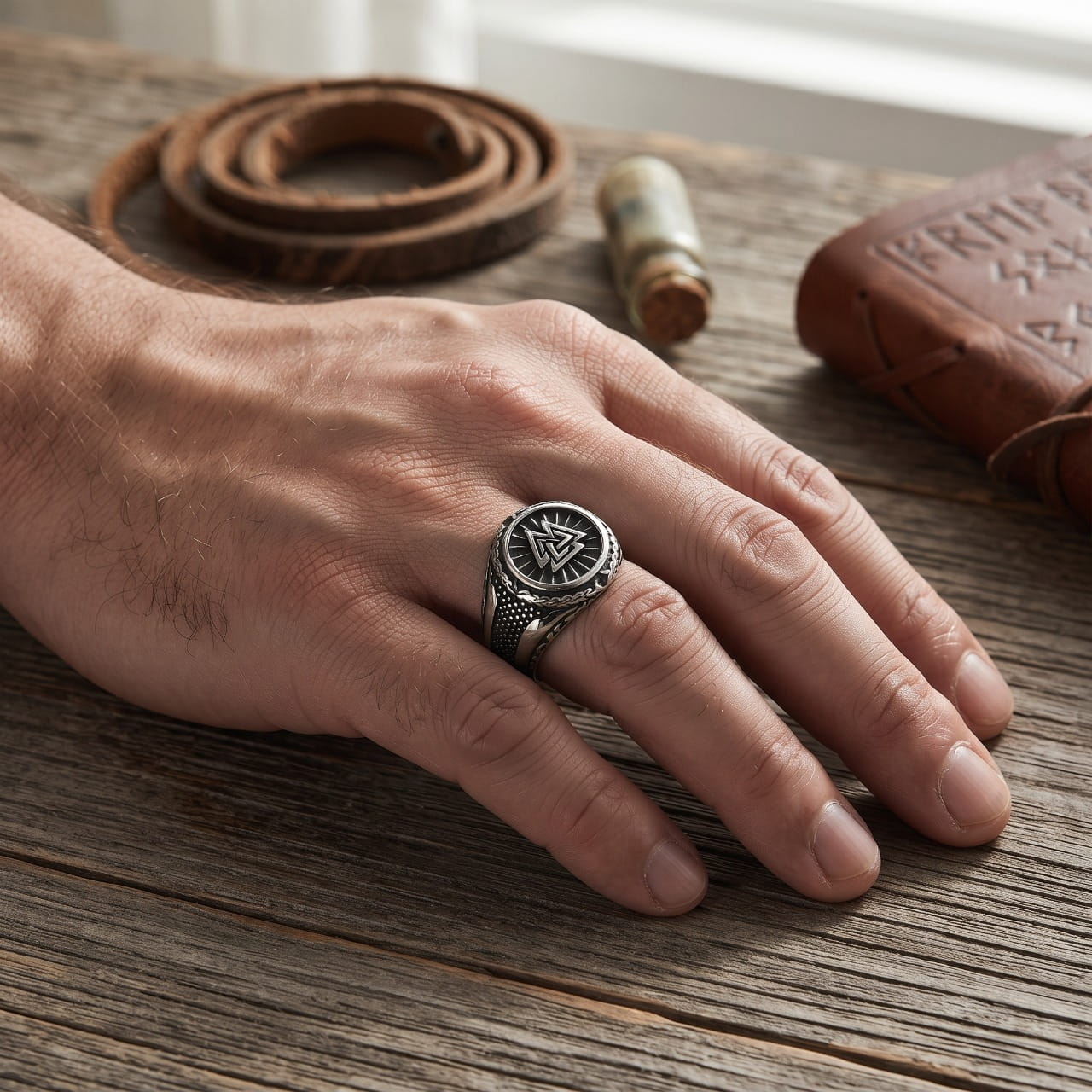
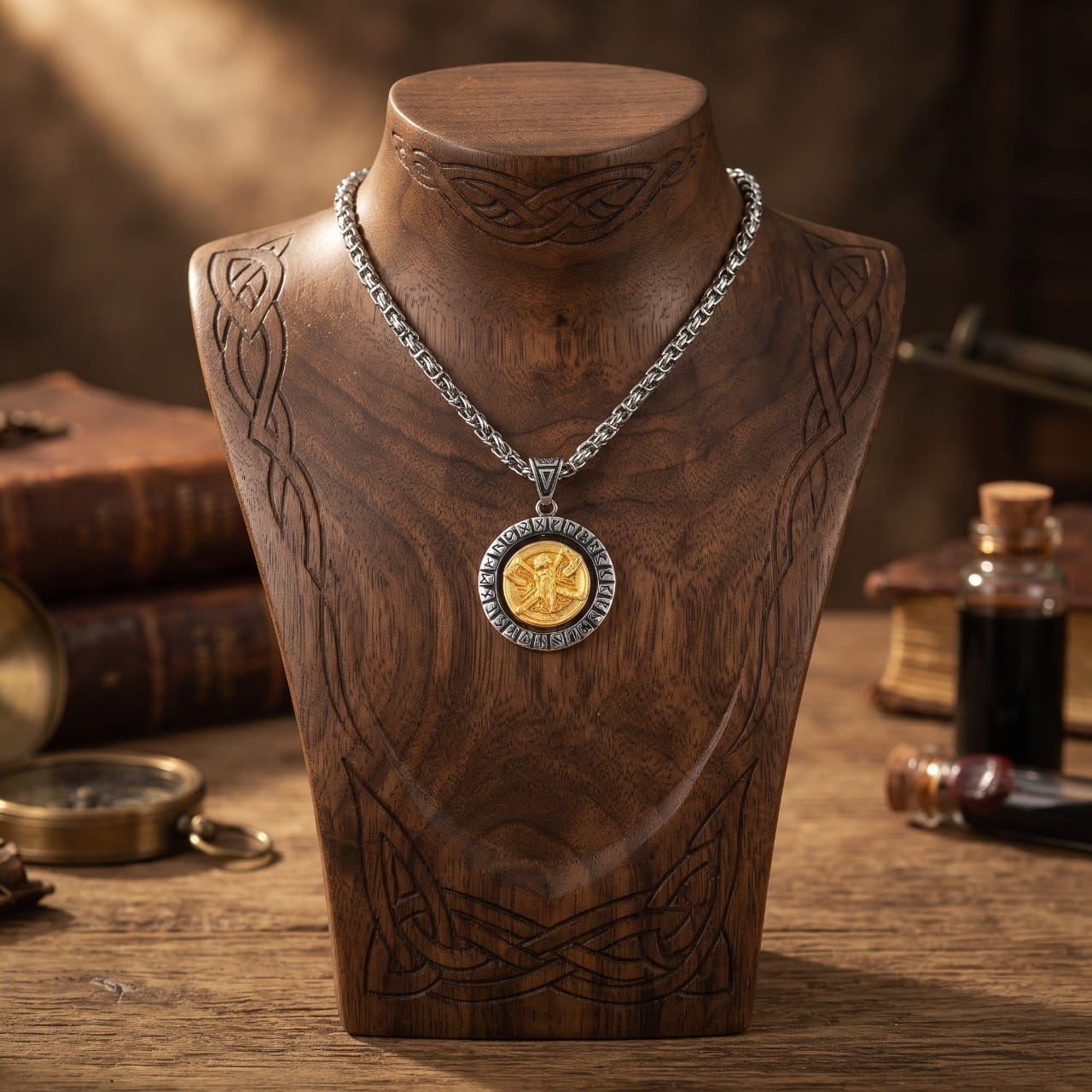
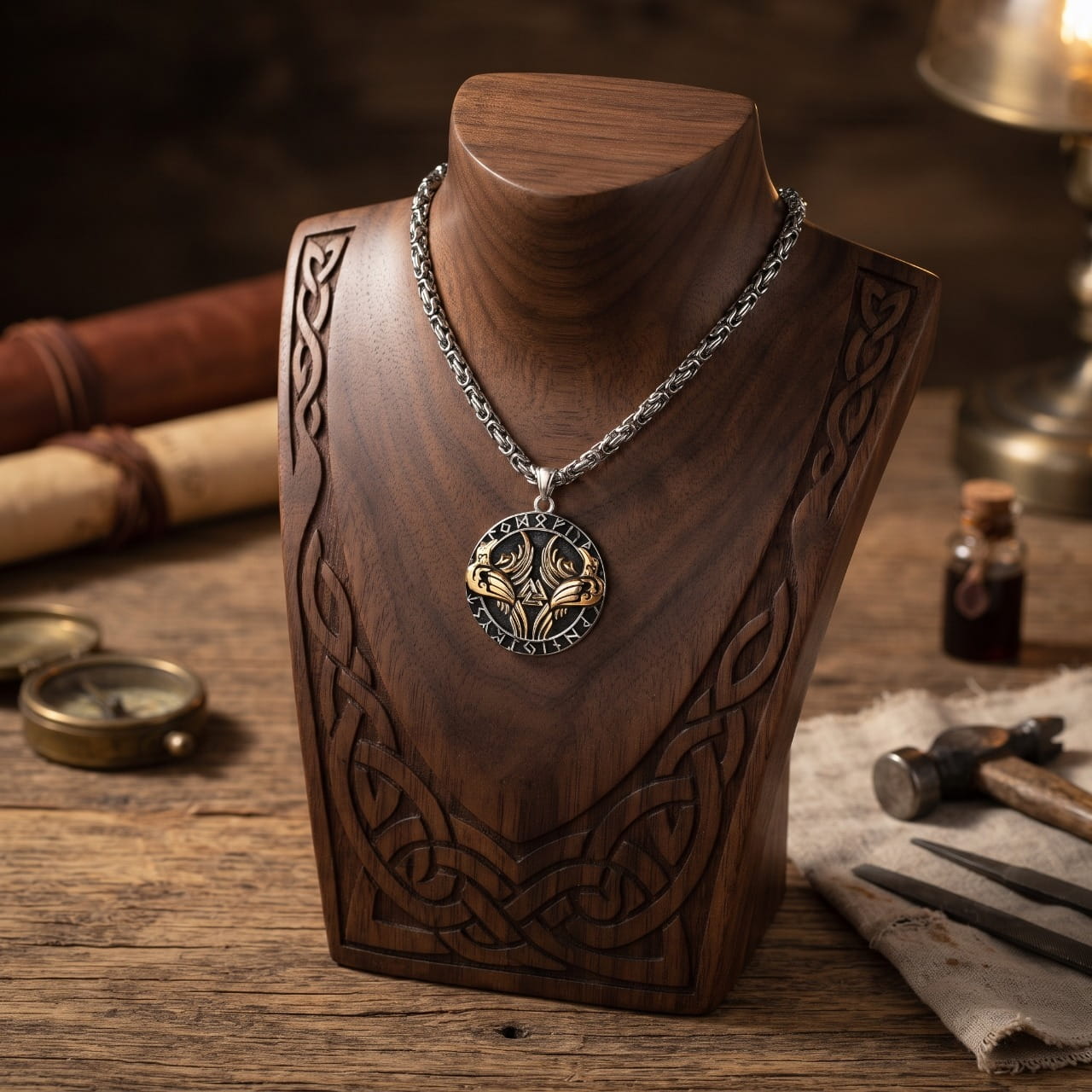
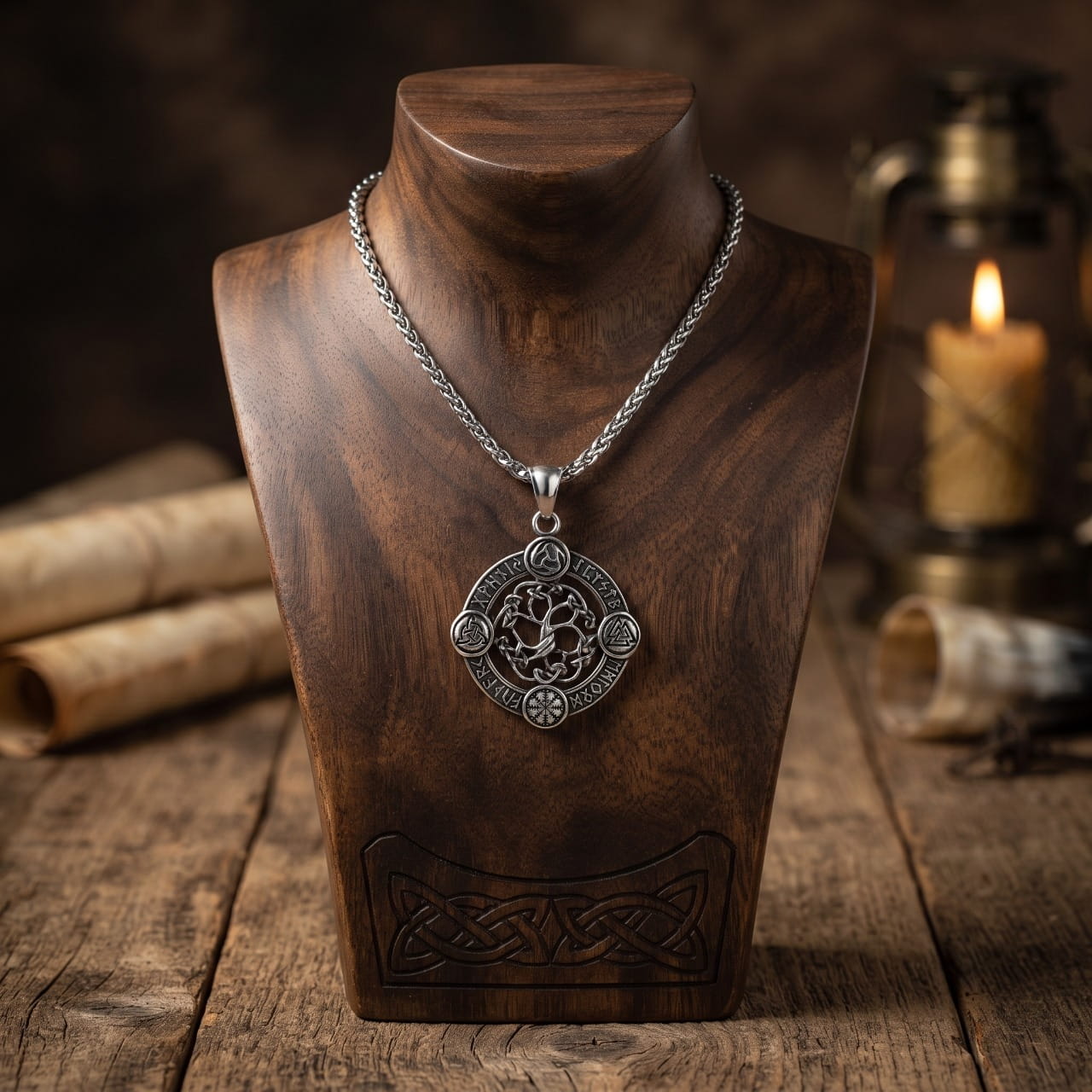
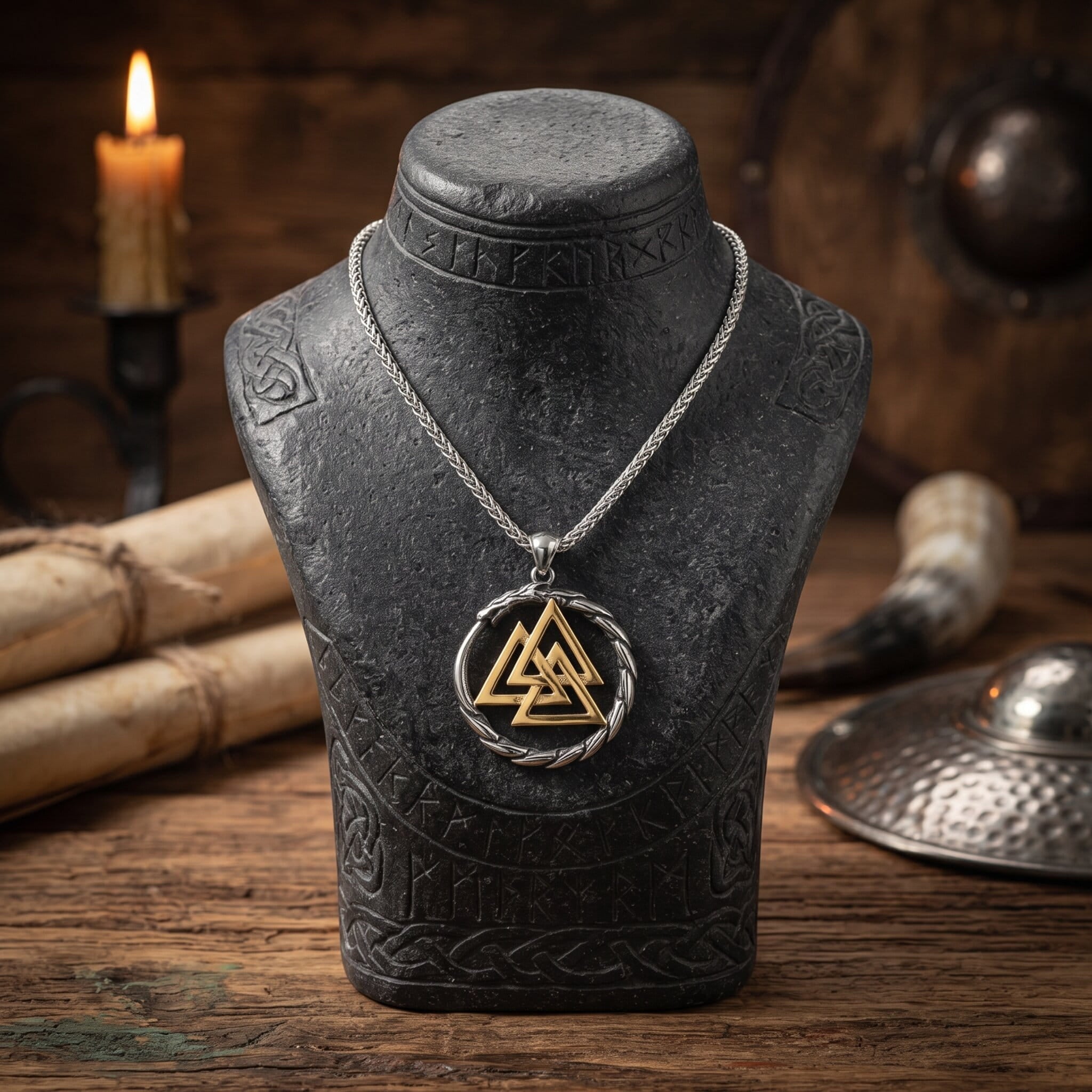
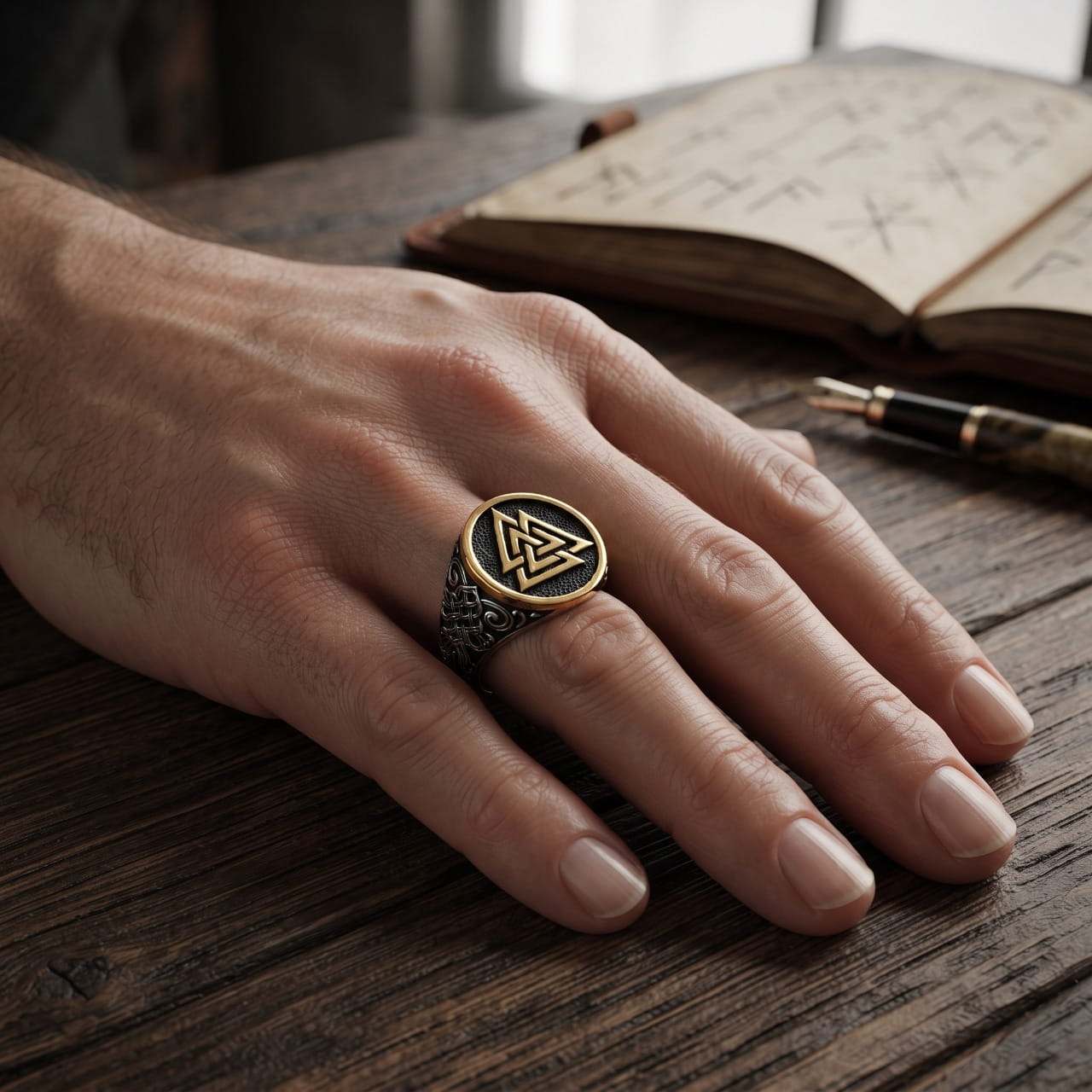
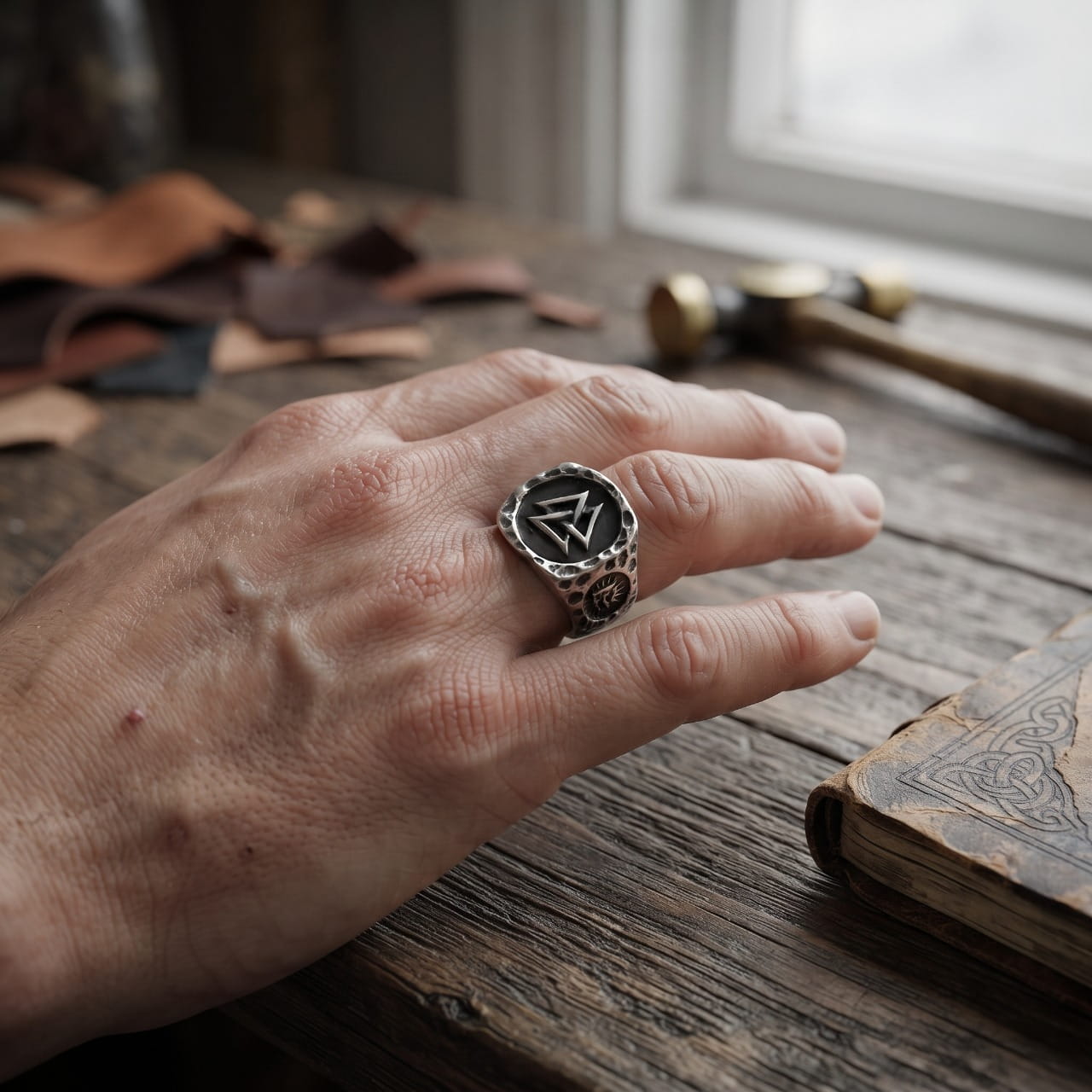
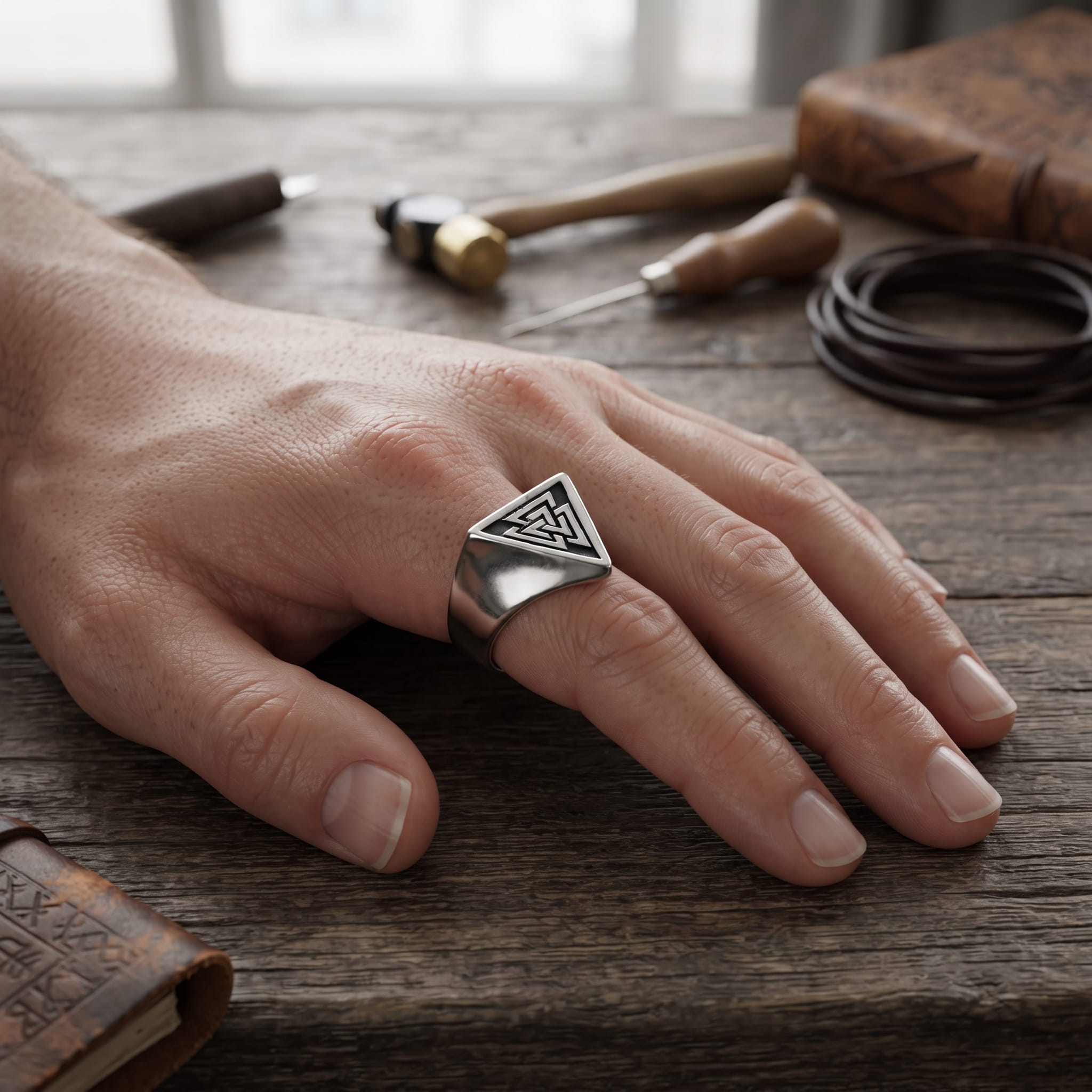
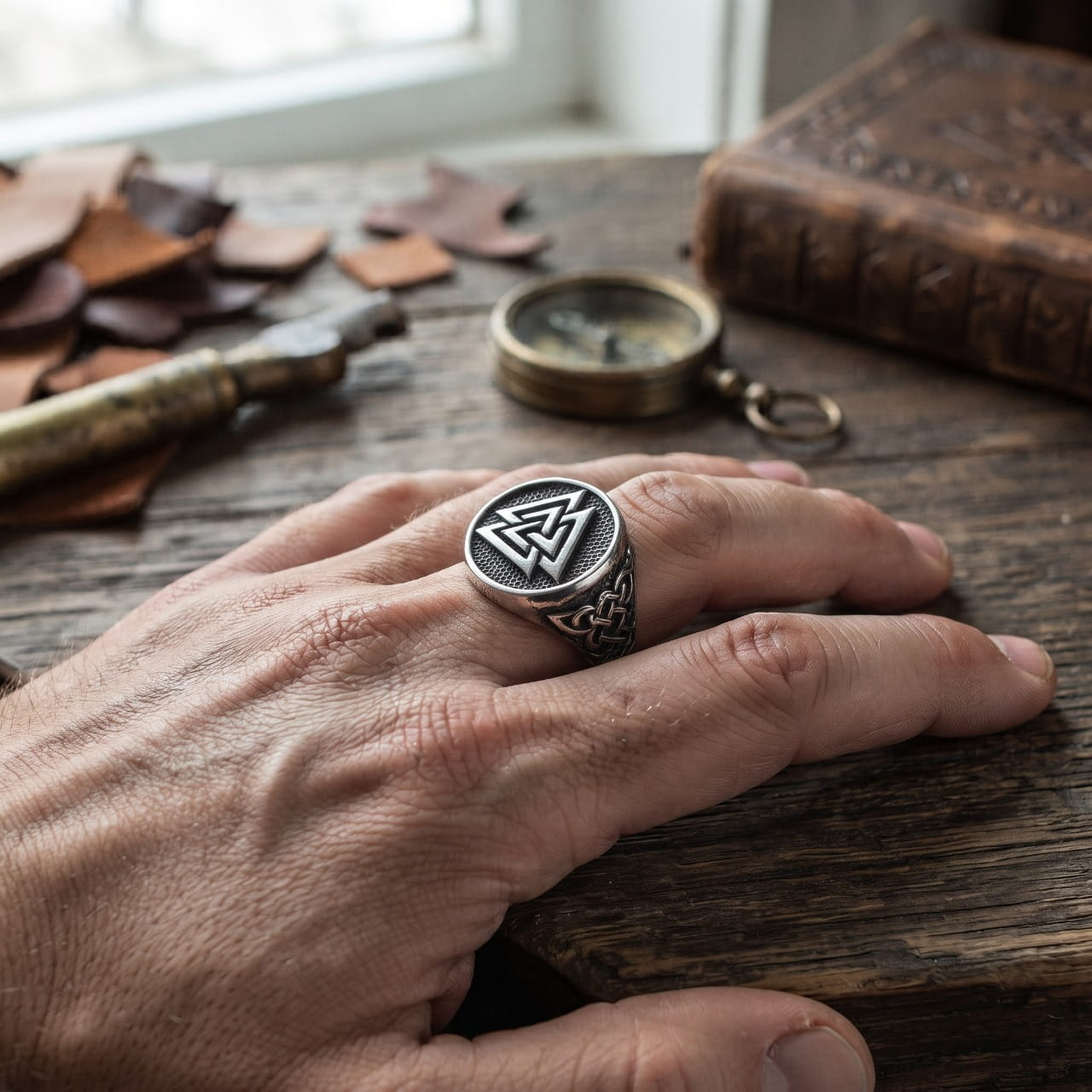
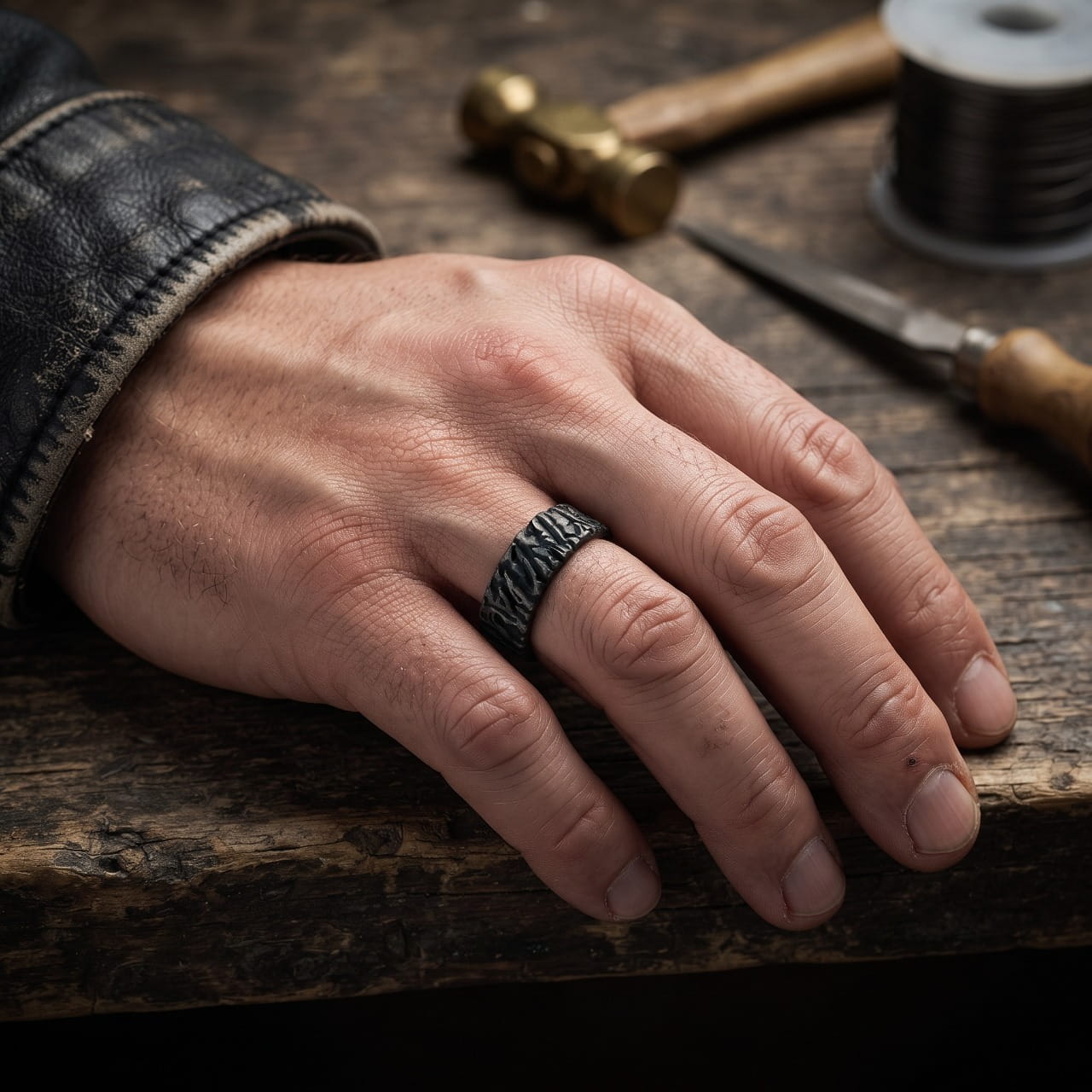
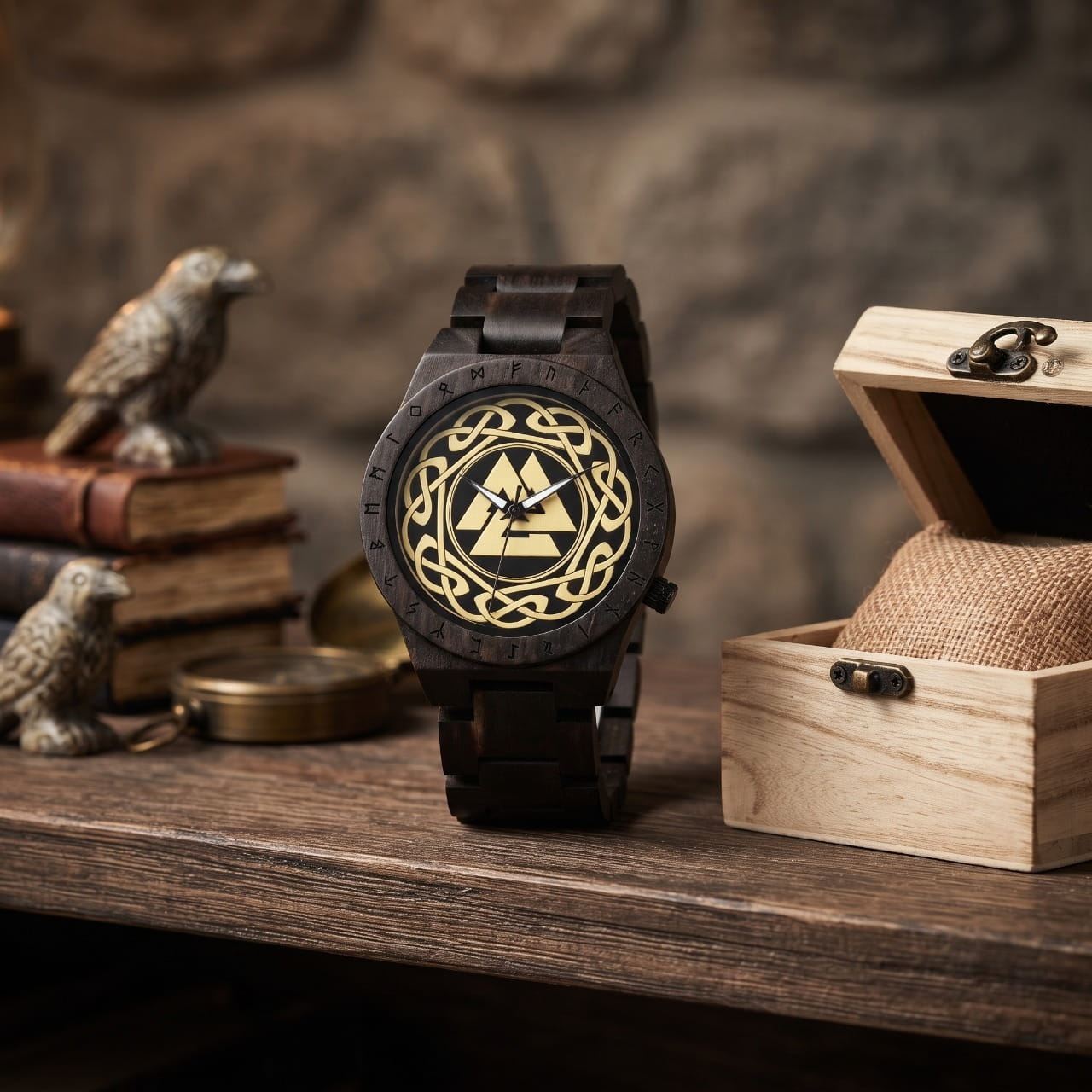
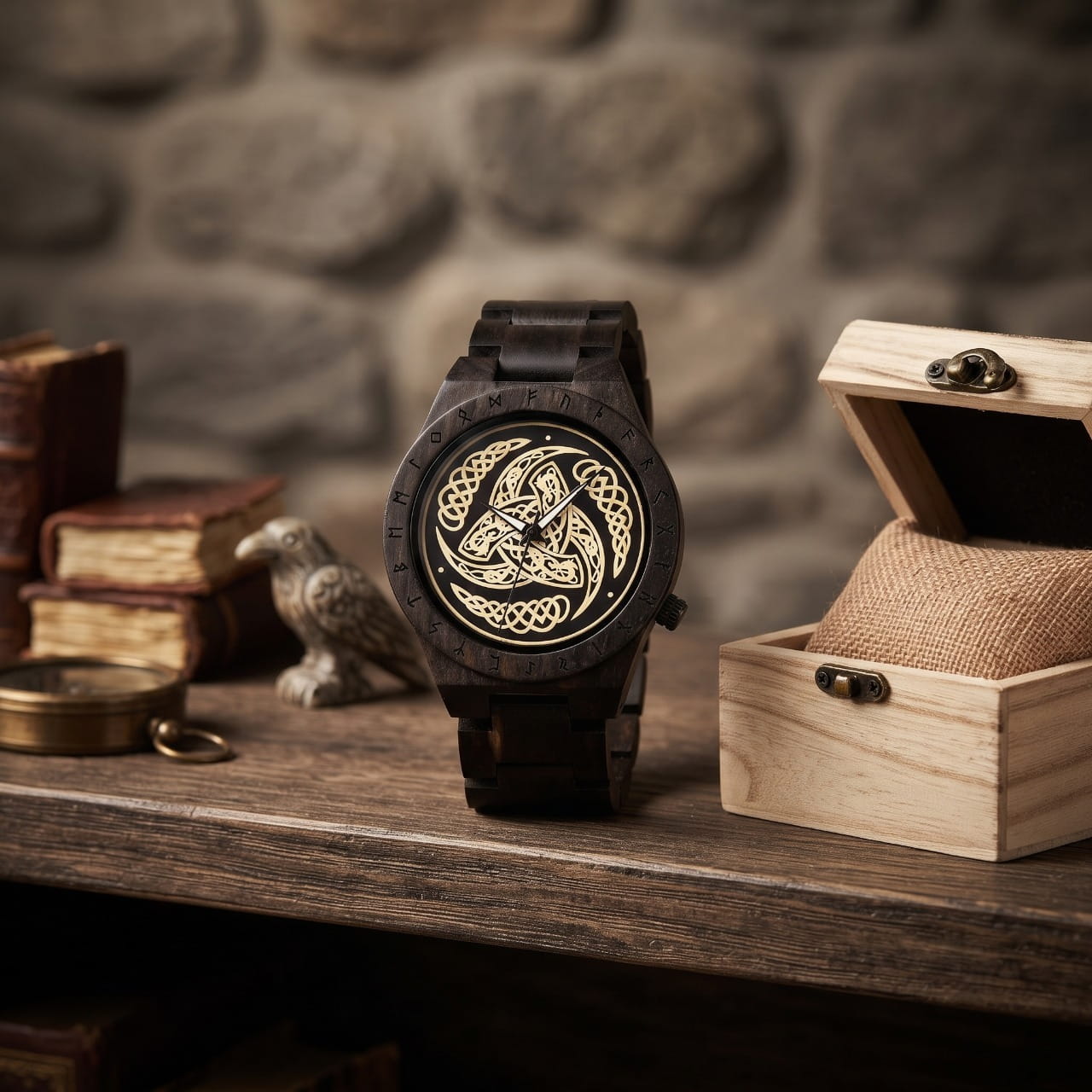
Valknut — The Knot of the Slain — en savoir plus
Three intertwined triangles, nine points, no period-accurate name: the Valknut is at once one of the most well-documented Nordic symbols in imagery and one of the most silent regarding its meaning. This page brings together what the stones show, what the texts do not say, and what we offer regarding it.
The Valknut at our counter, format by format
The Valknut is a graphic motif before it is an object: it is engraved, openworked, and set. It is therefore primarily suited to jewelry.
| Format | For whom |
|---|---|
| Necklaces | The most legible format of the symbol |
| Rings | Signet rings and engraved bands |
| Watches | The symbol on the wrist, discreetly |
The Valknut does not handle miniaturization well: below eight millimeters, the three triangles merge. This is why we do not offer it as an earring stud, whereas we do offer it as a necklace and a ring, where the available surface does it justice.
What the stones show
The Valknut appears on actual objects and monuments from the Viking Age, which clearly distinguishes it from the Vegvísir. It is found notably:
- on the Gotland picture stones, in Sweden, particularly Stora Hammars I and Tängelgårda;
- on the Oseberg ship, in a 9th-century Norwegian burial;
- on a ring found in the Nene Valley, in England.
The context is almost always the same: near Odin, a horse—sometimes with eight legs, which identifies Sleipnir—or a scene that resembles a sacrifice. On Stora Hammars I, the symbol accompanies a scene where one man seems to be suspended from a tree while another is lying on an altar.
The Valknut, in detail
A name forged in the 19th century
Let’s be frank: "valknut" is not an Old Norse word. It was constructed in modern Norwegian from valr, "the dead in battle"—the same root as in valkyrja and Valhǫll—and knut, "knot." No ancient source gives us the name the Vikings used, nor the explanation they gave for it.
What the sources do give us is the iconographic context, and it is consistent: the symbol appears where Odin appears, and where one dies.
Two designs, not one
The Valknut exists in two distinct forms, and the difference is visible. The unicursal form is drawn with a single continuous line, like a knot folded upon itself: this is the one from the Oseberg bed. The Borromean form consists of three separate triangles, intertwined in such a way that removing one releases the other two: this is the one from Stora Hammars.
Both are historical. The latter is more widespread today because it is easier to read from a distance.
Oseberg, the tomb that preserved it
The Valknut from the Oseberg ship is worth pausing over, because the context of its discovery is exceptional. In 1904, Norwegian archaeologists opened a burial mound near Tønsberg and found a twenty-two-meter ship, buried around 834 and preserved by the blue clay of the soil.
On board: two women. One about fifty years old, the other older. Around them, funerary furniture of a richness without equivalent in Scandinavia—a carved cart, four sleds, beds, chests, looms, fifteen horses, six dogs, and two oxen. The Valknut appears on one of the bedposts, engraved among the interlacing.
We still do not know who these women were. Queen and servant? Priestess and sacrificed? The debate is not settled. But the presence of the symbol in the most sumptuous burial of the Viking Age says a lot about its status: it was not an ordinary decorative motif.
Odin, god of the hanged
If the Valknut accompanies Odin, it is because Odin is the god of those who die—and particularly of those who die suspended. The Hávamál has him say that he remained hanging nine nights on the wind-swept tree, wounded by a spear, offered to himself, to grasp the runes and then fall down.
His nicknames confirm this: Hangaguð, the god of the hanged; Valfǫðr, the father of the dead in battle; Draugadróttinn, the lord of the revenants. Adam of Bremen, describing the temple of Uppsala around 1070, reports that the bodies of the sacrificed were hung from the trees in the sacred grove. A nine-pointed symbol engraved next to a hanging scene is therefore not an iconographic coincidence.
The number nine
Three triangles, nine points. Nine returns constantly in Nordic mythology, to the point that it cannot be considered a coincidence. There are nine worlds suspended from Yggdrasil. Odin remains hanging for nine nights on the tree, pierced by his own spear, to bring back the runes. Heimdall is born of nine mothers. The great sacrifice of Uppsala was held every nine years, for nine days, and nine males of every species were hung there.
What it does not mean
Three interpretations circulate that deserve clarification. The Valknut is not a "symbol of protection": nothing in its iconographic context points in this direction; it accompanies death rather than warding it off. It is also not the "heart of Hrungnir"—Snorri does indeed describe the heart of this giant as a three-pointed stone, but that is a connection made by modern scholars, not an equivalence provided by the texts. Finally, it has nothing to do with the Celtic: Celtic interlacing and Nordic knots are distinct graphic families, even if the eye confuses them.
Recognizing a correct design
Count the points: there must be nine. Then check the interlacing—at the crossings, the strands must alternate over and under. A Valknut where the three triangles simply overlap, without braiding, is an imprecise drawing. Finally, the three triangles must be of equal size: one large one containing two small ones is not a Valknut.
The materials at our counter
Our Valknuts are made of stainless steel, polished or blackened. The blackening is not a varnish: it is obtained on the metal, sits in the recesses of the engraving, and leaves the edges bright. This is exactly the principle of niello that Scandinavian goldsmiths practiced, who would pour an alloy of black sulfides into the engraved furrows of silver before re-polishing the surface.
The watches combine steel with wood, with the Valknut engraved on the dial or inlaid into the case. No solid silver pieces in this section.
Care
The Valknut is a motif with recesses: that is where its care comes into play. Lukewarm water, mild soap, a soft toothbrush passed through the furrows, drying with a cloth. On blackened pieces, never use polishing paste: it would lighten the recesses and erase precisely the contrast that makes the symbol legible.
An engraved ring worn every day will see its edges lighten over time, which accentuates the relief. Many find that the piece benefits from it.
How to wear it
The Valknut is a strong graphic symbol: it stands on its own. As a necklace, prefer a sober chain—curb link or leather cord—that does not compete with the motif. As a ring, the signet shape gives it the flat surface it needs; on a narrow band, the design becomes distorted.
Avoid pairing it with a second Nordic symbol worn in the same place: two charged motifs neutralize each other. A twisted bracelet without a motif is a better companion than a second pendant.
A word on sizing, because it is the number one reason for returns on a ring. Our rings are indicated in French size, with the American equivalent: the French size corresponds to the finger circumference in millimeters; a size 60 is 60 mm in circumference. To measure it without a reference ring, wrap the finger with a strip of paper, mark the overlapping point, and measure the resulting length. Take the measurement at the end of the day, with fingers at a normal temperature: finger size easily varies by half a size between morning and evening, and more in hot weather. On a wide signet ring, count half a size more than on a thin band—the contact surface is longer and passing the knuckle is more difficult.
Gifting a Valknut
This is a gift for someone who already knows a bit about the subject. Unlike Thor's hammer, the Valknut is not readable at a glance by a novice—it is a sign of recognition between initiates more than an obvious image.
If the person is a beginner, Mjölnir will be more evocative. If they are interested in Odin in particular, the Valknut and the ravens Huginn and Muninn form the most coherent pair.
Frequently asked questions
Is the Valknut a real Viking symbol?
Yes, unlike the Vegvísir. It appears on Gotland picture stones, on the Oseberg ship, and on an English ring—all dated to the Viking Age. What is missing is not the object: it is its period-accurate name and explanation.
Can you wear it without believing in it?
Of course. This is the case for the vast majority of wearers. A symbol can be worn for its design, its history, or its aesthetics without spiritual commitment.
Why don't you offer it in a small size?
Because it becomes illegible. Below eight millimeters, the intertwining of the three triangles turns into a blur. We prefer not to sell a Valknut that cannot be recognized.
What is the difference from the triquetra?
The Valknut is made of triangles with sharp angles; the triquetra is made of three curved arcs forming lobes. Both have three branches, but one is angular and the other is rounded.
Why are there no wall decorations with the Valknut?
Because we haven't found any that are up to standard. The motif is not well-suited to large formats: when enlarged, the interlacing requires sharp execution that molded resin rarely provides. We prefer not to fill the collection with approximate pieces. If you are looking for a Nordic symbol for a wall, tapestries and wall plaques offer motifs designed for that scale.
Blackened or polished?
A question of legibility above all. On a polished piece, the Valknut is read through the relief and the play of light: it appears and disappears depending on the angle, which is elegant but discreet. On a blackened piece, the black remains in the recesses and the symbol is legible at all times, regardless of the light. If the motif needs to be recognized from a distance, choose the blackened one. If you are looking for a sober piece of jewelry that only reveals itself to those who get close, choose the polished one.
Is it worn just as well by women?
Yes. The Valknut has no gender connotation—remember that it adorns the bed of a female burial, that of Oseberg, which remains the richest tomb of the entire Viking Age. Our Valknut necklaces and rings are unisex; only the ring size changes.
📖 To learn more: our article on the Valknut as a tattoo, our dossier on Odin, and Valhalla, the destination of the dead that the symbol accompanies.