
Filters
89 products
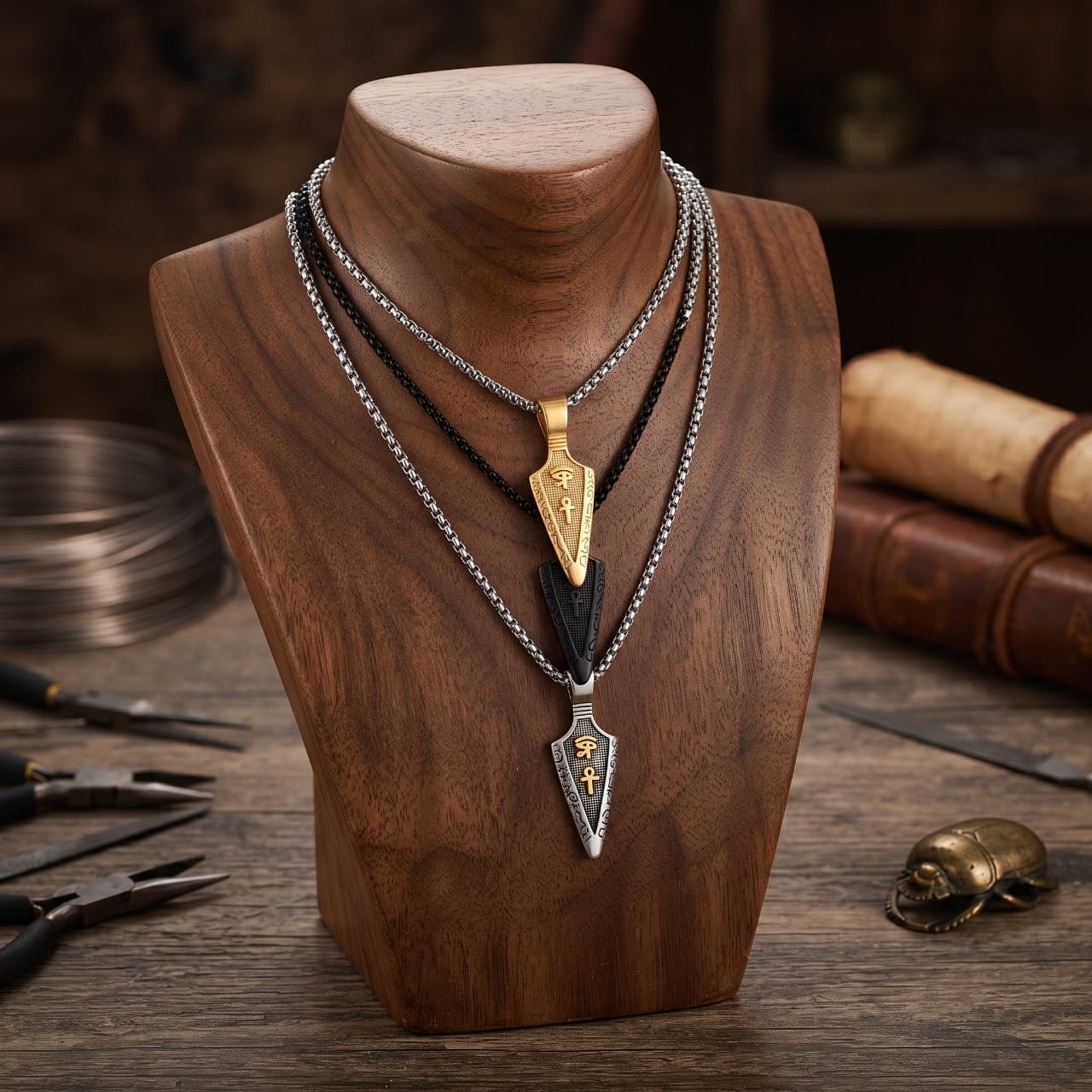
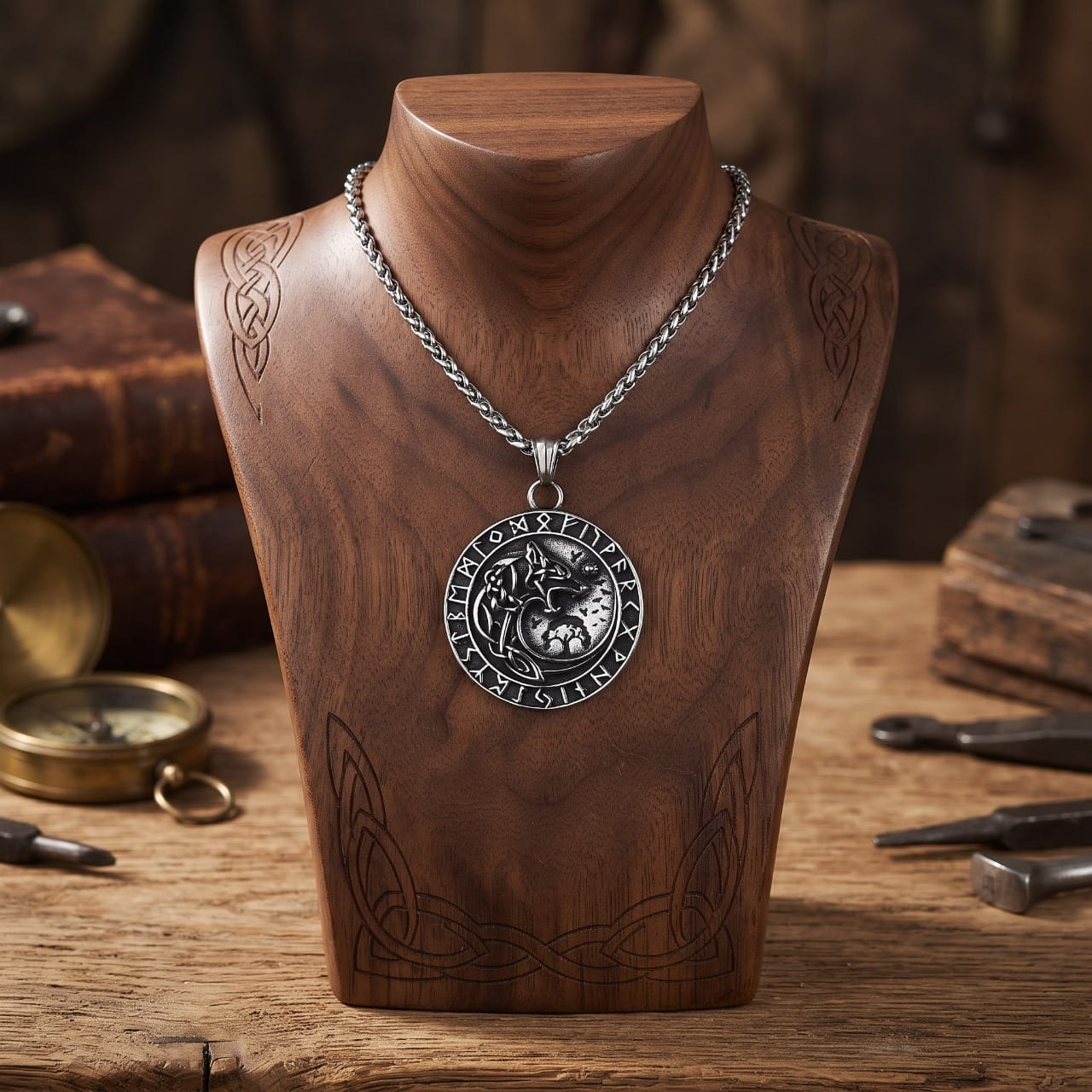
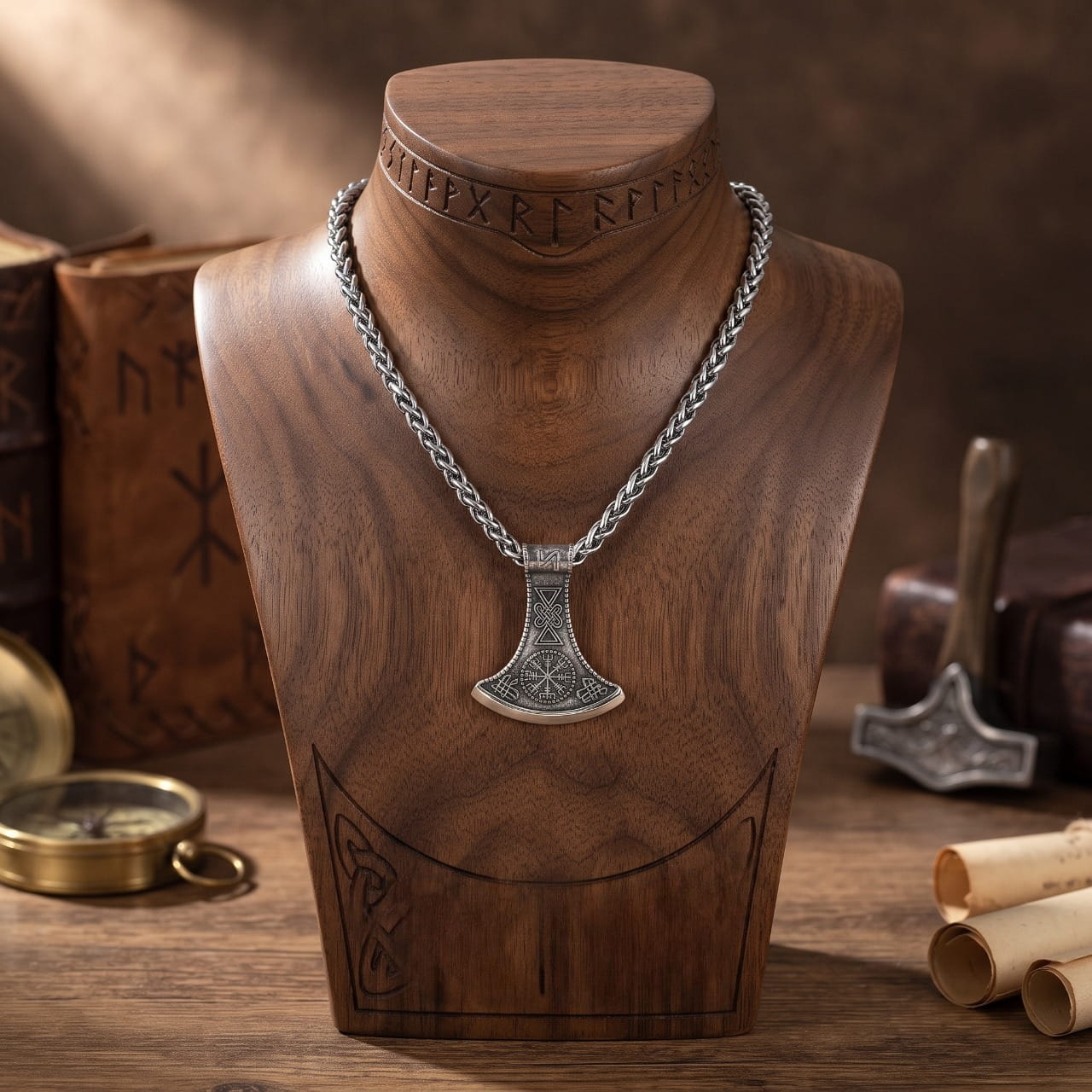
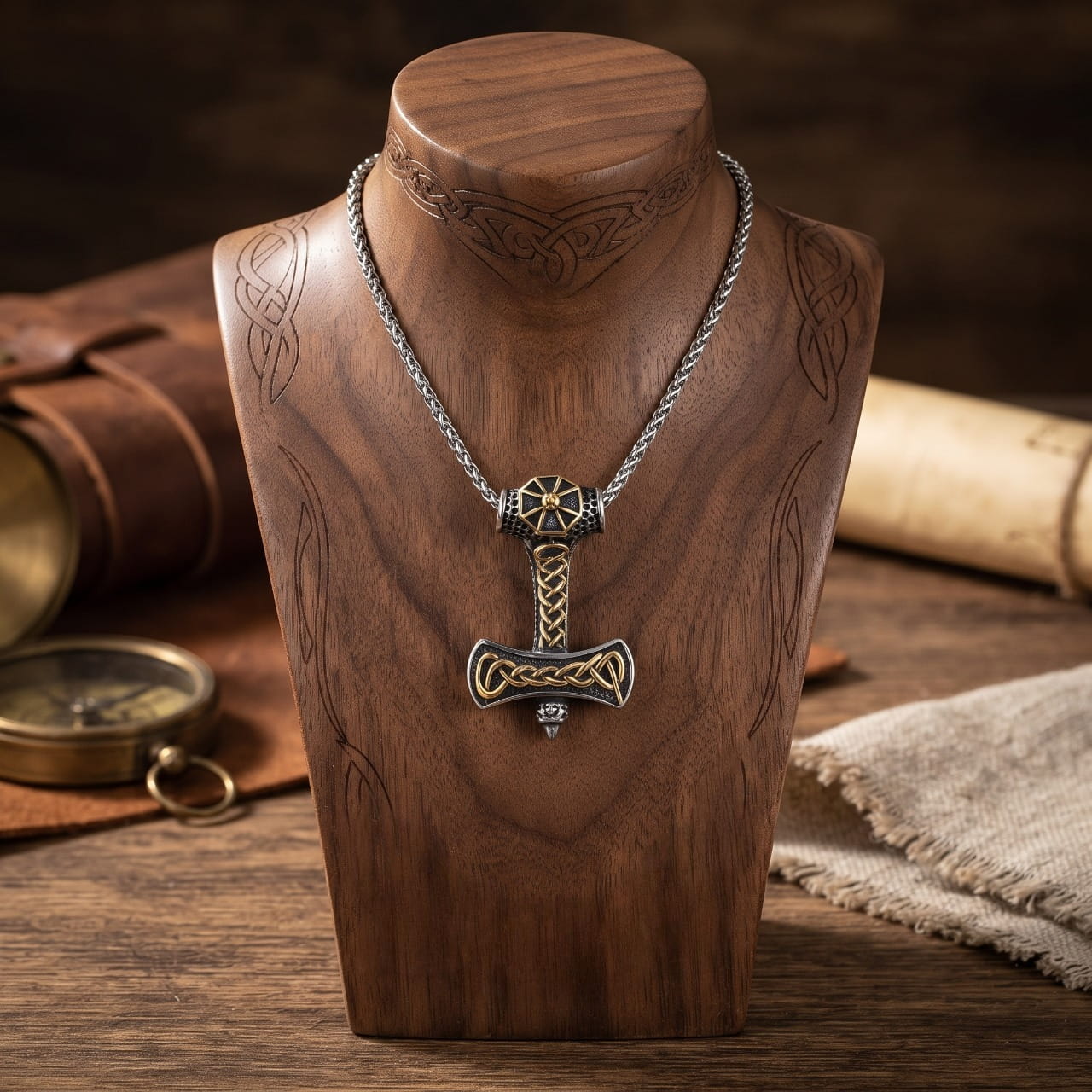





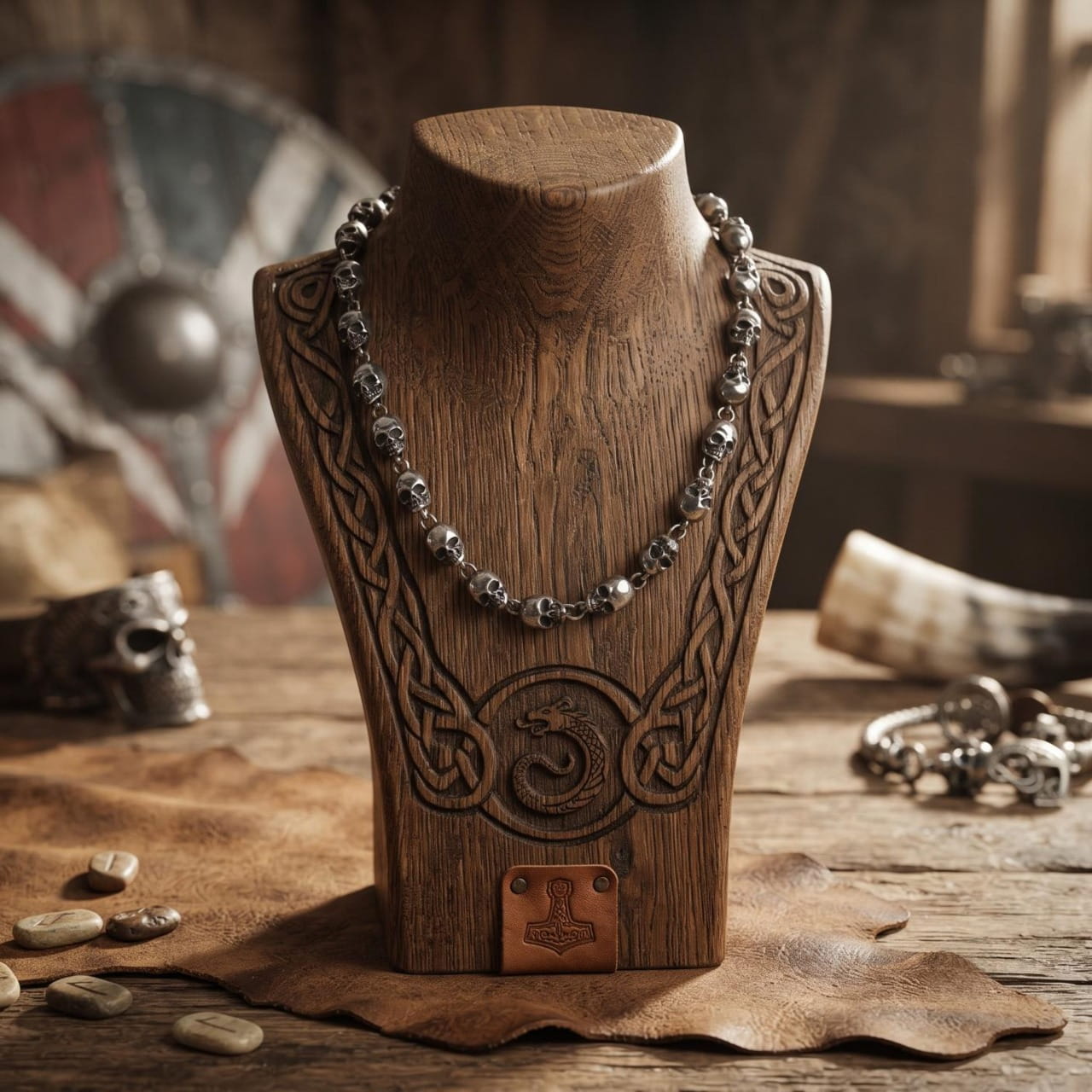
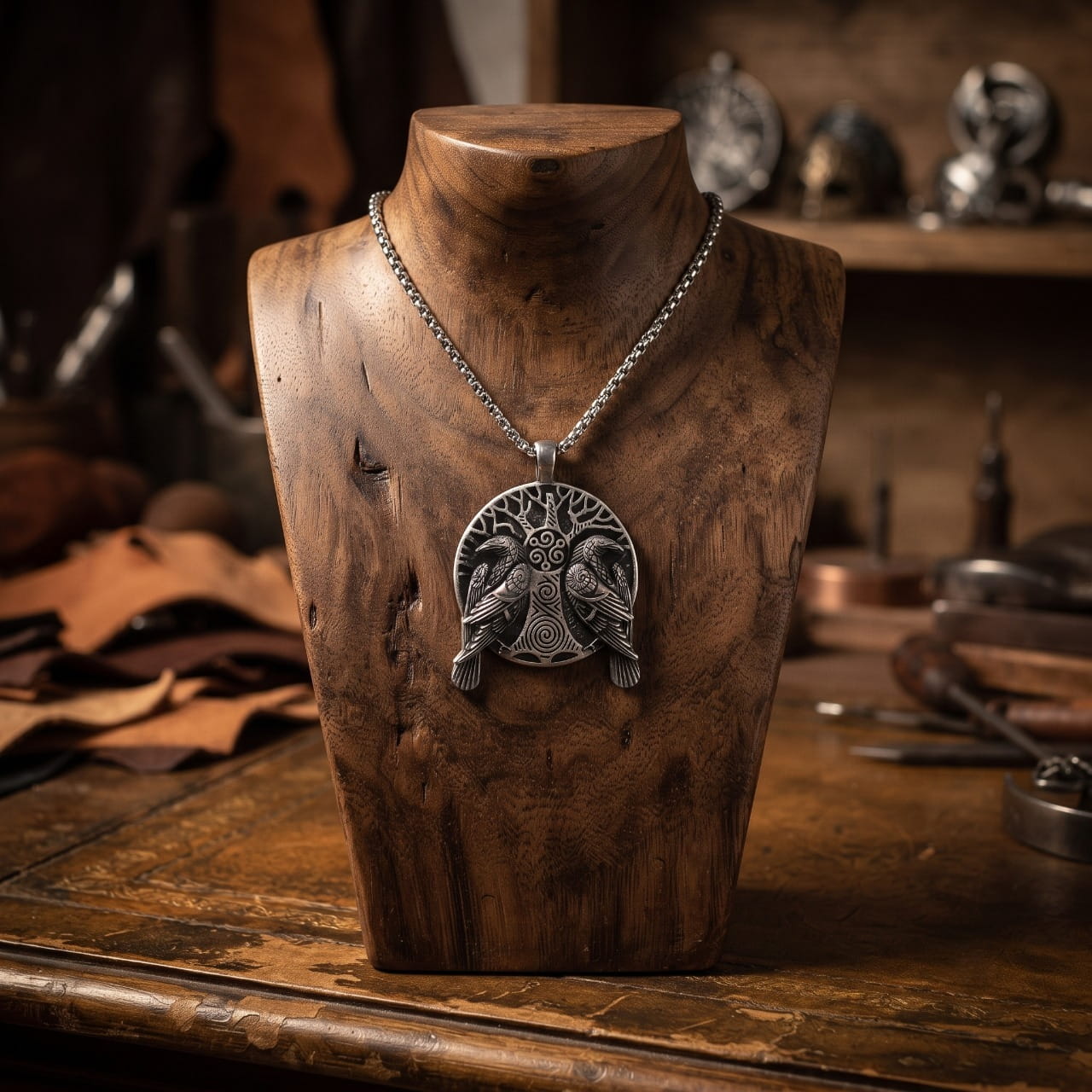
Collections similaires
You would also like
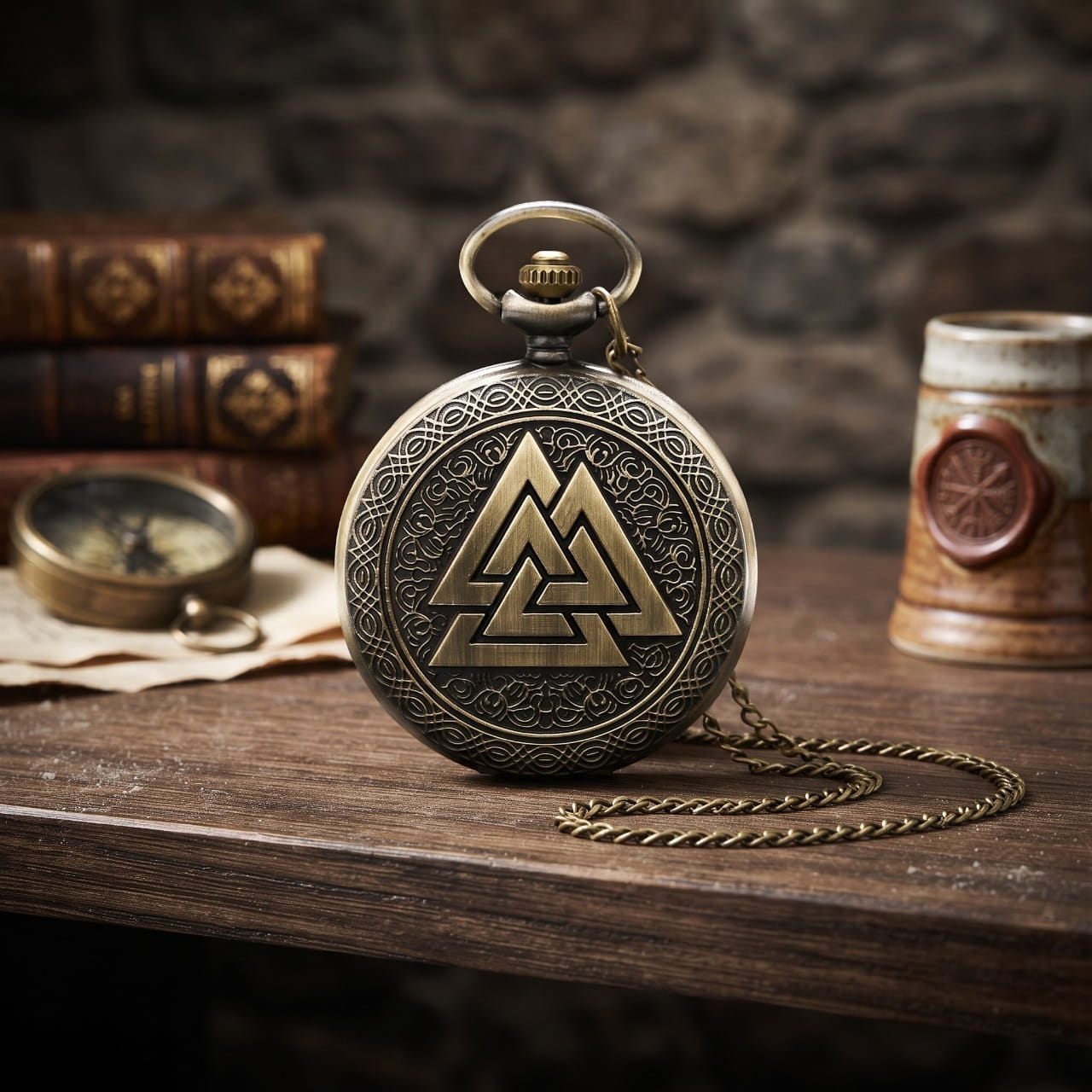
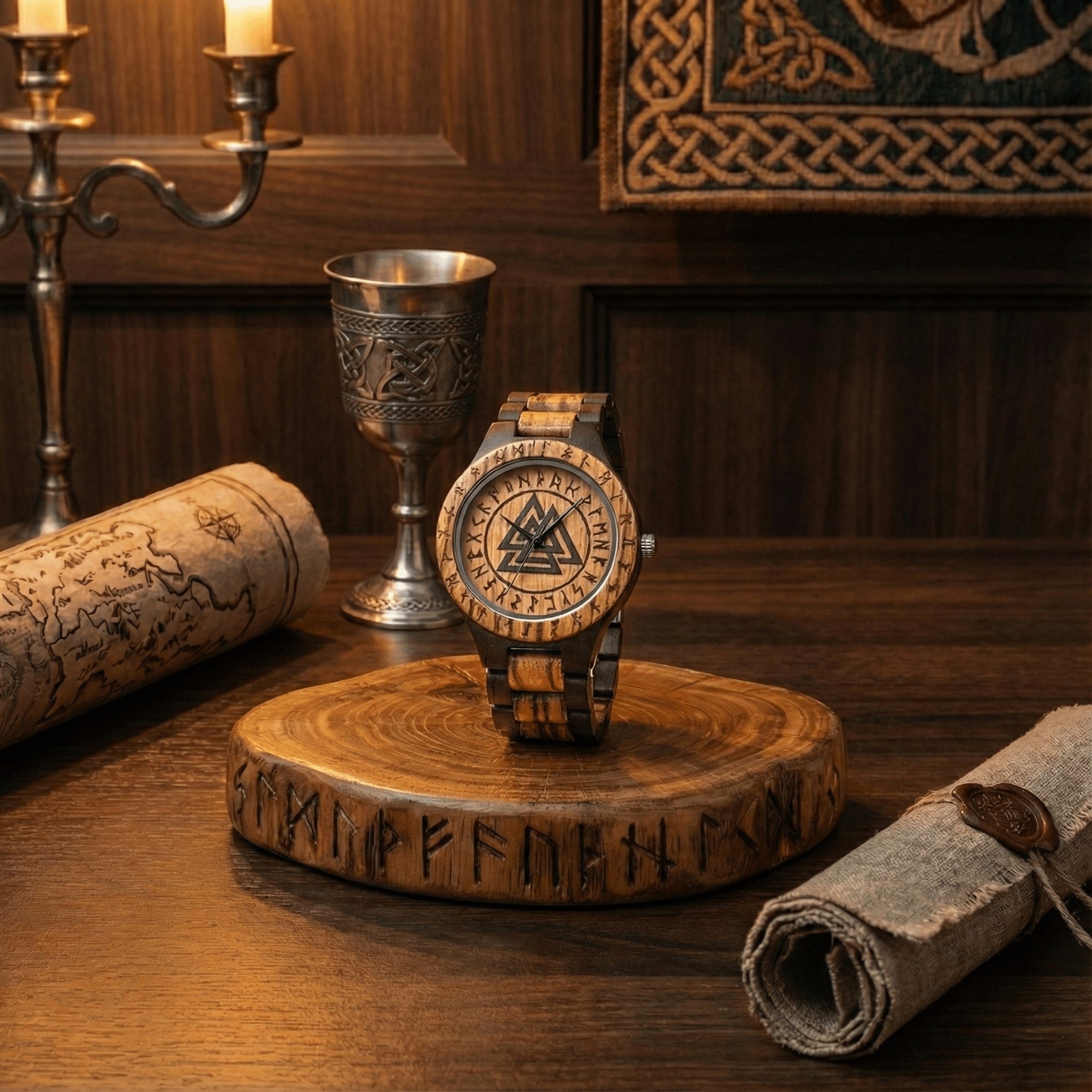
Frequently Asked Questions About Our Viking Necklaces
What Viking pendants do you offer?
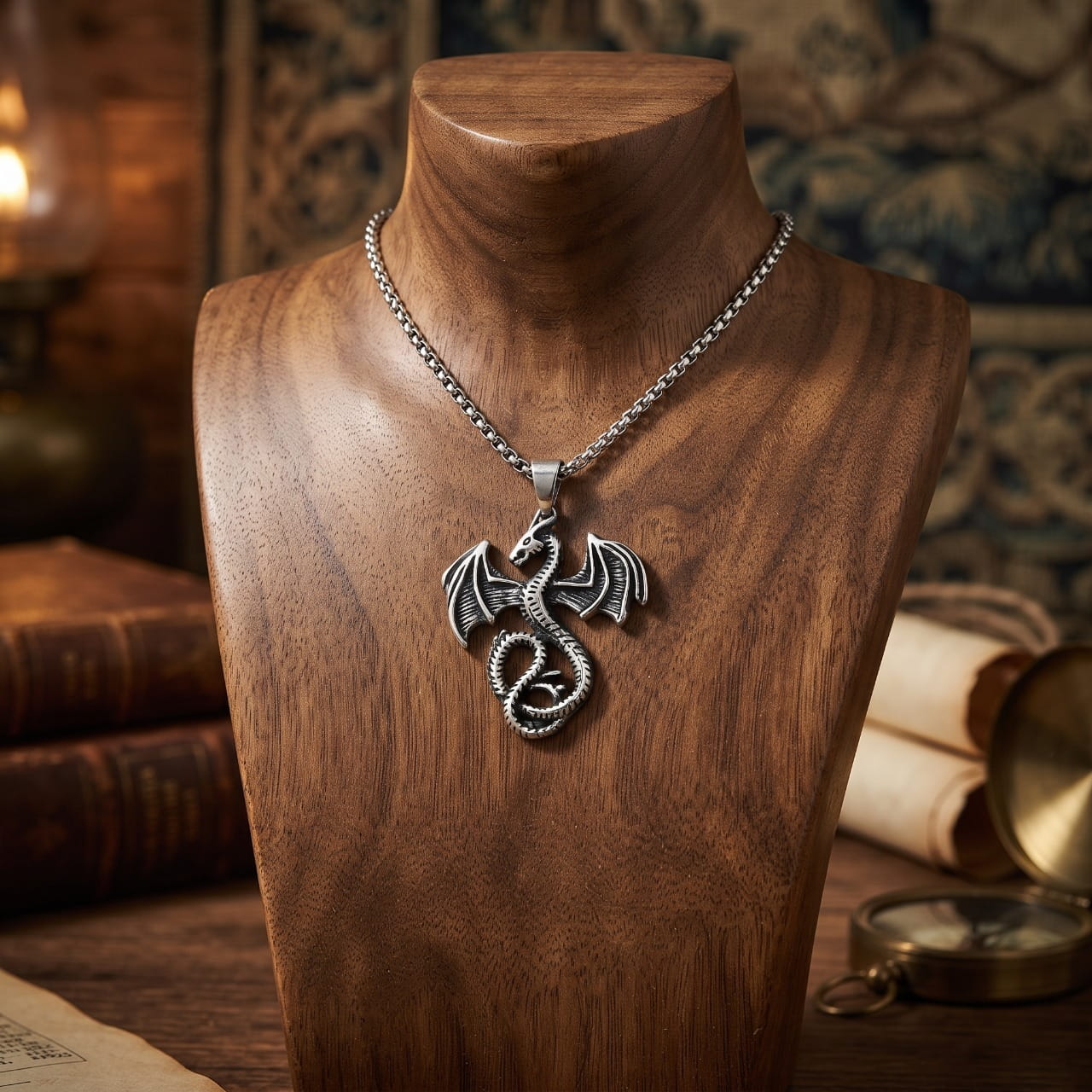
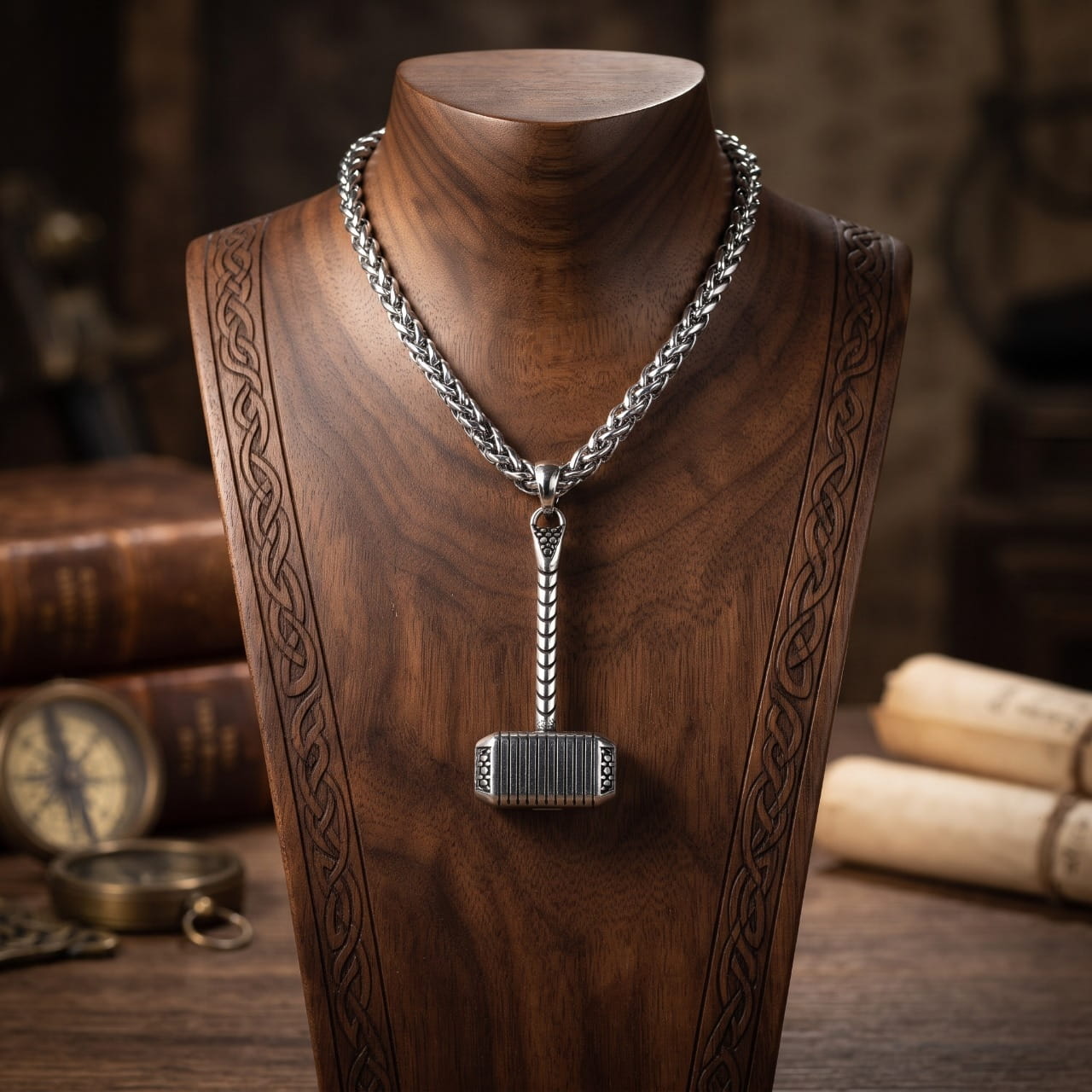
Our collection of Viking necklaces includes the most iconic pendants: Thor's Hammer (Mjölnir), Yggdrasil Tree, Odin's Valknut, Vegvisir Compass, Huginn & Muninn Ravens, Celtic cross, Fenrir wolf head, and many other Norse symbols.
What chain length should I choose for a Viking necklace?
Everything depends on the desired style: 45-50 cm for a fit close to the neck, 55-60 cm for a pendant resting in the middle of the chest (the most popular for men), and 65-70 cm for a long fit. Our chains are often adjustable thanks to an included extender.
Do your Viking necklaces tarnish over time?
No. Our 316L stainless steel necklaces do not tarnish, rust, or change color. This is the major advantage of stainless steel over silver or copper. Your necklace will retain its shine for years without any maintenance.
Are Viking necklaces suitable for women?
Absolutely. Many women wear our Norse pendants, including the Yggdrasil, the Vegvisir, and Valkyrie motifs. The finer designs and delicate chains are perfectly suited to a feminine style. Unisex Viking jewelry is becoming increasingly popular.
What did the Vikings wear around their necks?
Vikings wore protective amulets, notably Thor's hammer (Mjölnir), the most popular symbol found in Scandinavian archaeological excavations. Men and women wore these pendants made of silver, bronze, or iron—both as ornaments and as talismans of divine protection.
Which Viking pendant should I choose for a man?
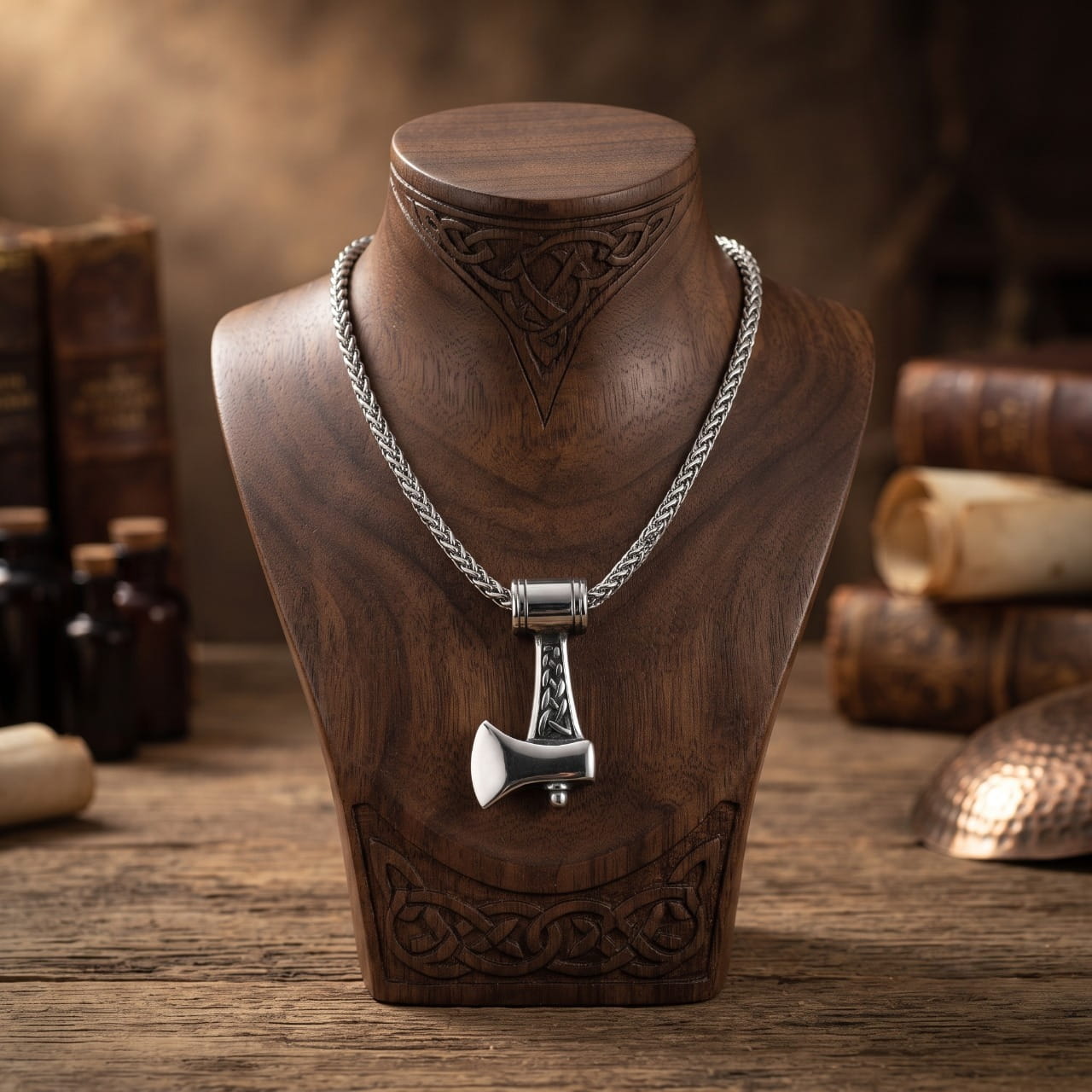
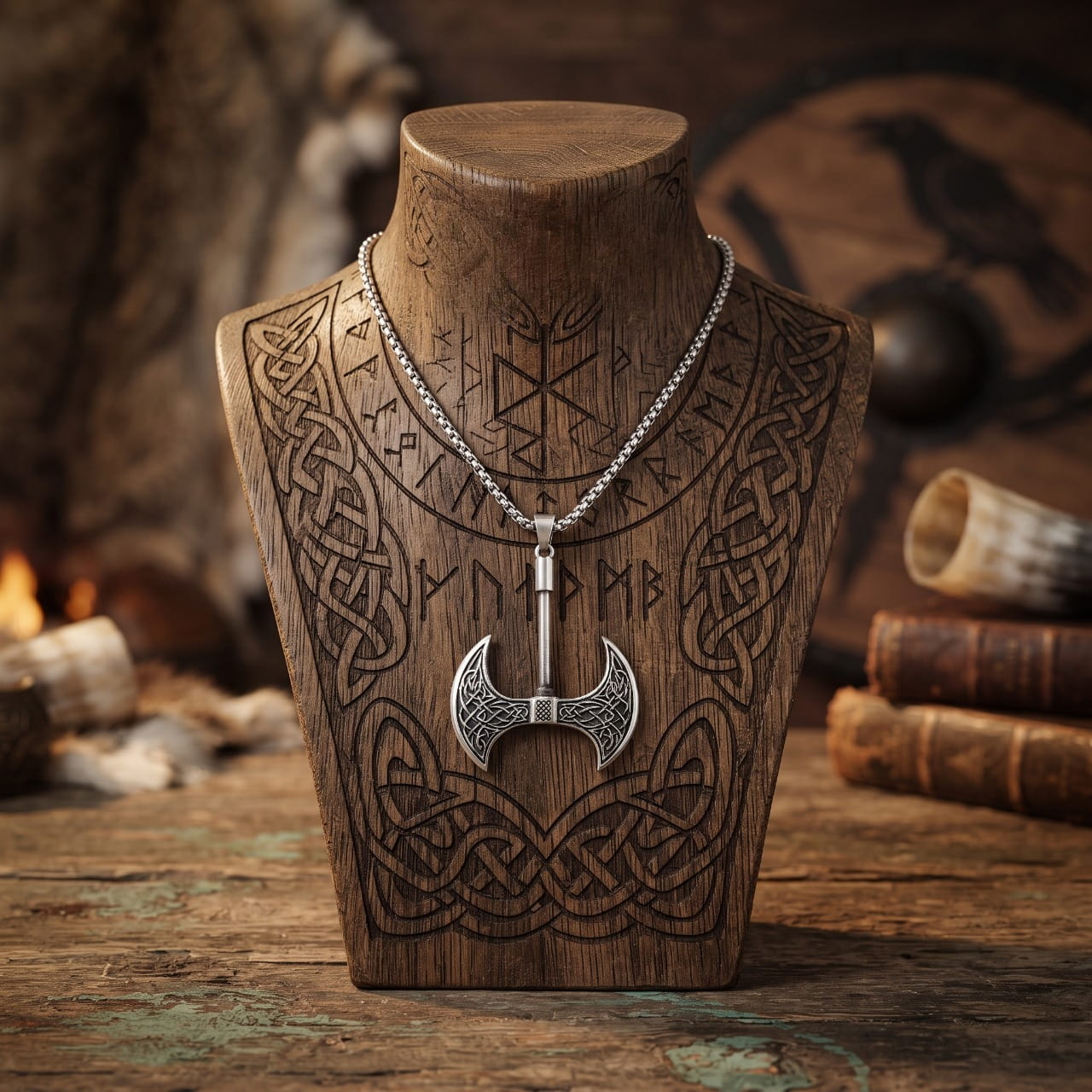
For men, the most popular pendants are the Thor's Hammer (Mjölnir) for strength and protection, the Viking axe for courage, and the Valknut for connection to Odin. Opt for a 55-60 cm chain with a medium to large pendant for a bold, masculine look.
Which Viking pendant should I choose for a woman?
Our pendants most appreciated by women are the Yggdrasil tree (tree of life), the Triquetra (Celtic knot), and the Valkyrie motifs. These finer, more elegant designs are worn on a 45-50 cm chain. The Vegvisir in a compact version is also a very popular choice for its geometric aesthetic.
Do Viking pendants have a spiritual meaning?
Yes. For the Norse, each amulet carried a specific power: Mjölnir protected against chaos, the Vegvisir prevented one from getting lost, and engraved runes activated magical intentions. Today, many wearers choose a pendant whose symbolism resonates with their personal values—strength, protection, wisdom, or adventure.
Viking Necklace — en savoir plus
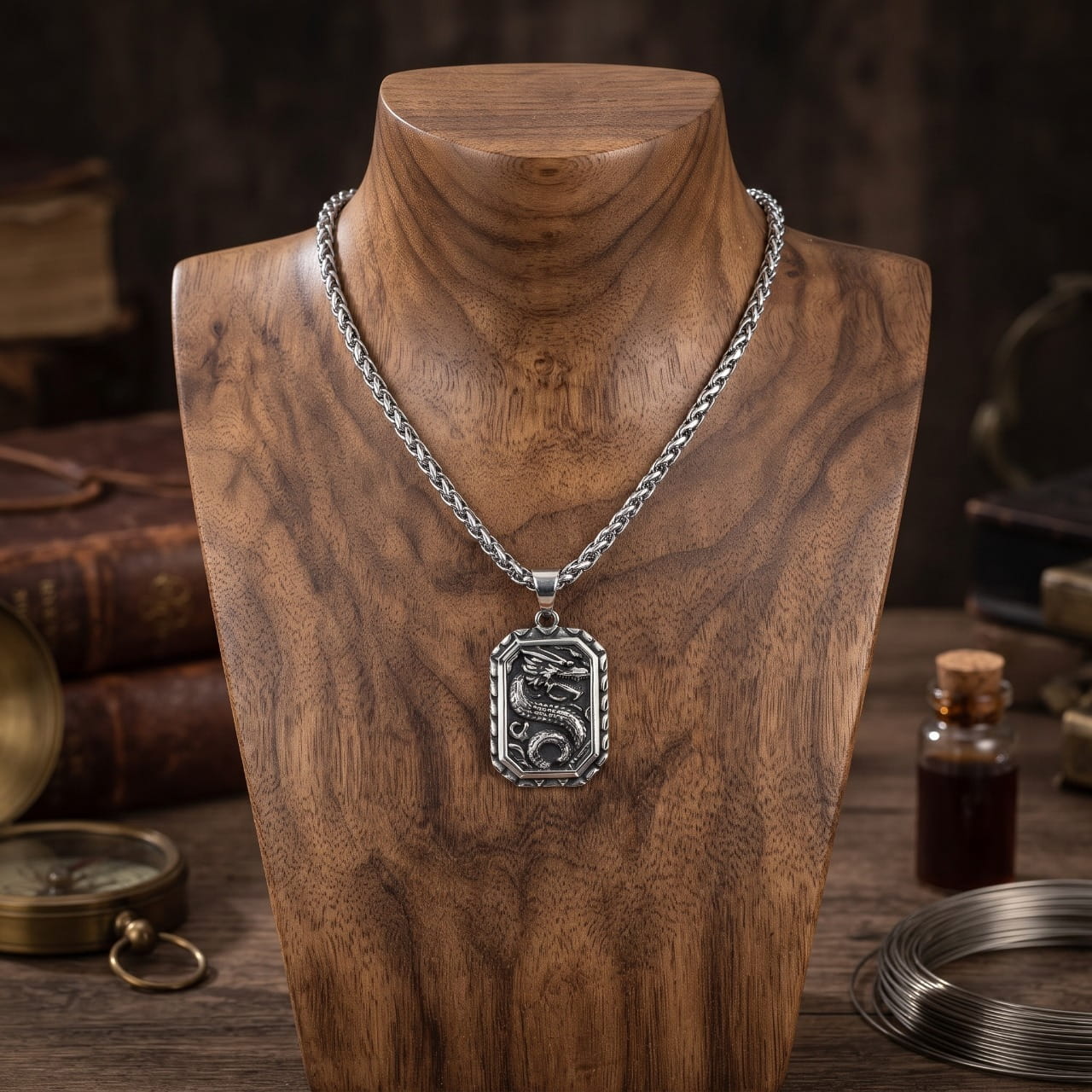
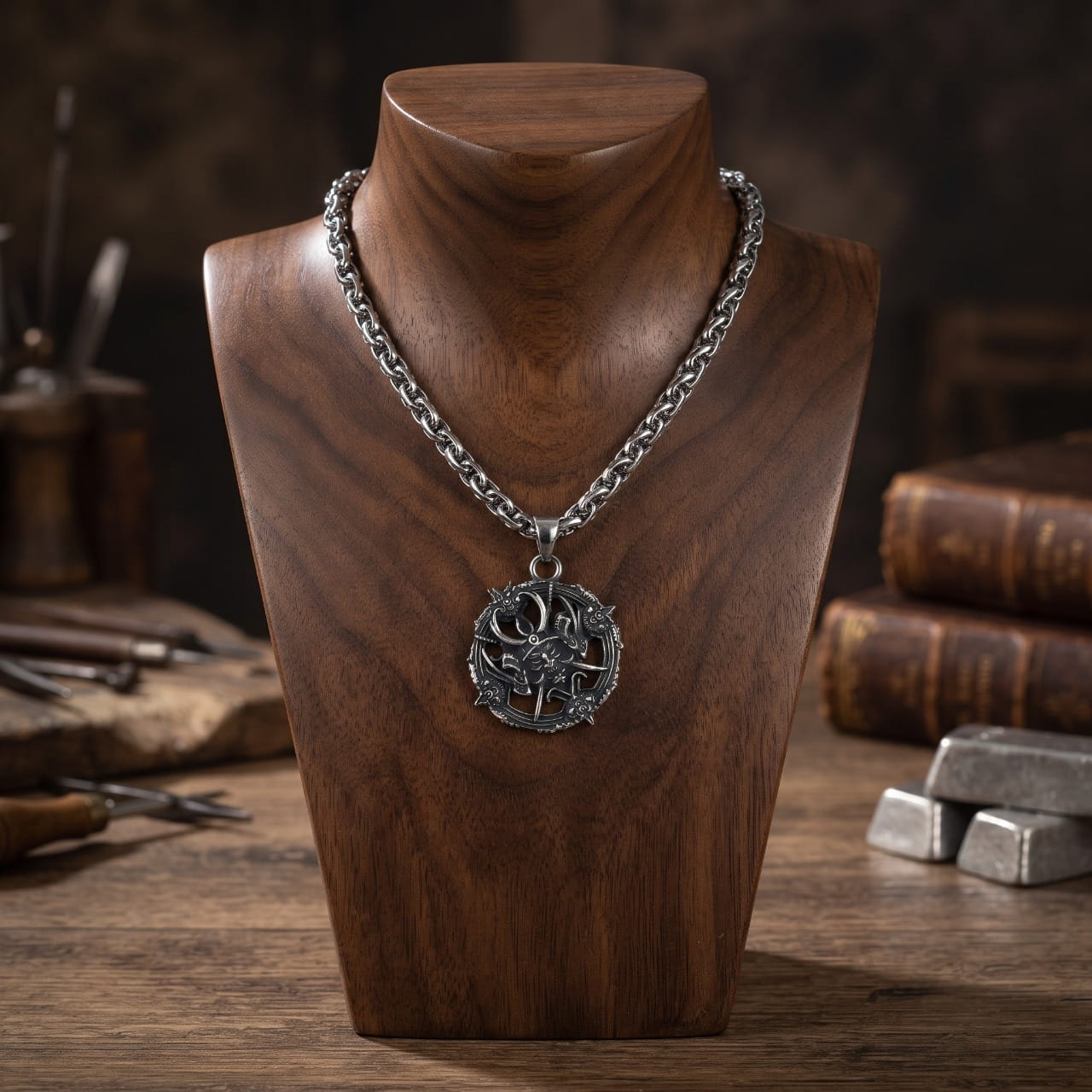
This collection brings together Viking necklaces and Nordic pendants for men and women. Vegvísir compasses, Yggdrasil trees, Triquetra knots, wolf teeth, raven skulls: each piece comes assembled, including the chain or cord, and the vast majority are forged in stainless steel that does not rust or tarnish.
What chain length to choose
This is the question that causes hesitation, and the only one that causes disappointment upon receipt. Our necklaces are available in 50, 55, 60, 65, and 70 cm depending on the model. This length is that of the chain alone, measured including the clasp: the pendant hangs another two to four centimeters below. Here is where each length falls on an adult of average build.
| Length | Where the pendant falls | Best worn |
|---|---|---|
| 50 cm | on the collarbone, at the base of the neck | directly against the skin, open collar |
| 55 cm | two fingers below the collarbone | over a crew-neck t-shirt |
| 60 cm | top of the sternum | the go-to length |
| 65 cm | middle of the chest | over a shirt |
| 70 cm | bottom of the sternum, near the solar plexus | over a thick sweater |
How to check before ordering. Take a shoelace or a tailor's tape measure, wrap it around your neck and let it hang down to where you want the pendant to sit. Pinch it, remove it, measure it flat: you have your length. Another method, even simpler if you already own a necklace that fits you well: lay it flat, clasp closed, and measure the full loop from one end to the other, doubling the measurement.
Two reference points to decide quickly. A man who wears his pendant visibly on a t-shirt almost always chooses 60 cm — it is the most requested length and the one offered by most of our models. A woman who wants it close to the neck generally goes for 50 cm. And if the necklace is to be worn over winter clothing, add five centimeters to what you had planned.
Chain, cord, or leather
Three mounting types coexist in the collection, and the choice changes both the look and the comfort. The steel chain, fine link or cable chain, is the majority mounting: discreet, solid, it does not fray and can be cleaned at the same time as the pendant.
The braided cord gives a rawer finish, closer to what a craftsman of the Viking Age would have created. Several of our Elder Futhark runic rings exist in both versions, it is up to you to choose. Finally, some pieces — resin raven skulls, wolf teeth — are mounted on leather cord, which develops a patina over time but does not fare well with prolonged soaking.
The symbols, one by one
A pendant is rarely chosen by chance: it is the piece one wears against oneself, often every day. Here is what the models in this collection actually represent, what archaeology says about them, and what is wrongly attributed to them.
The Vegvísir
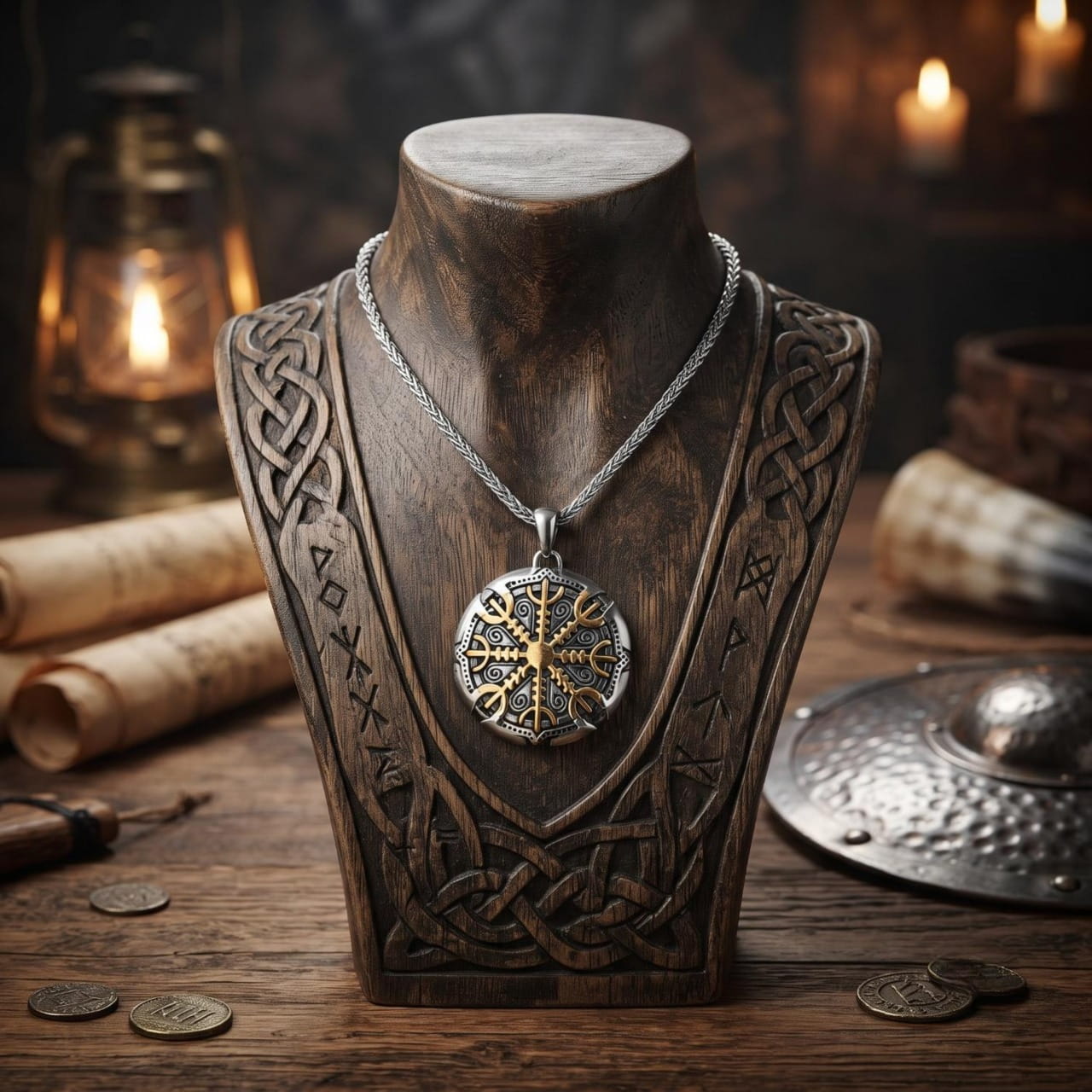
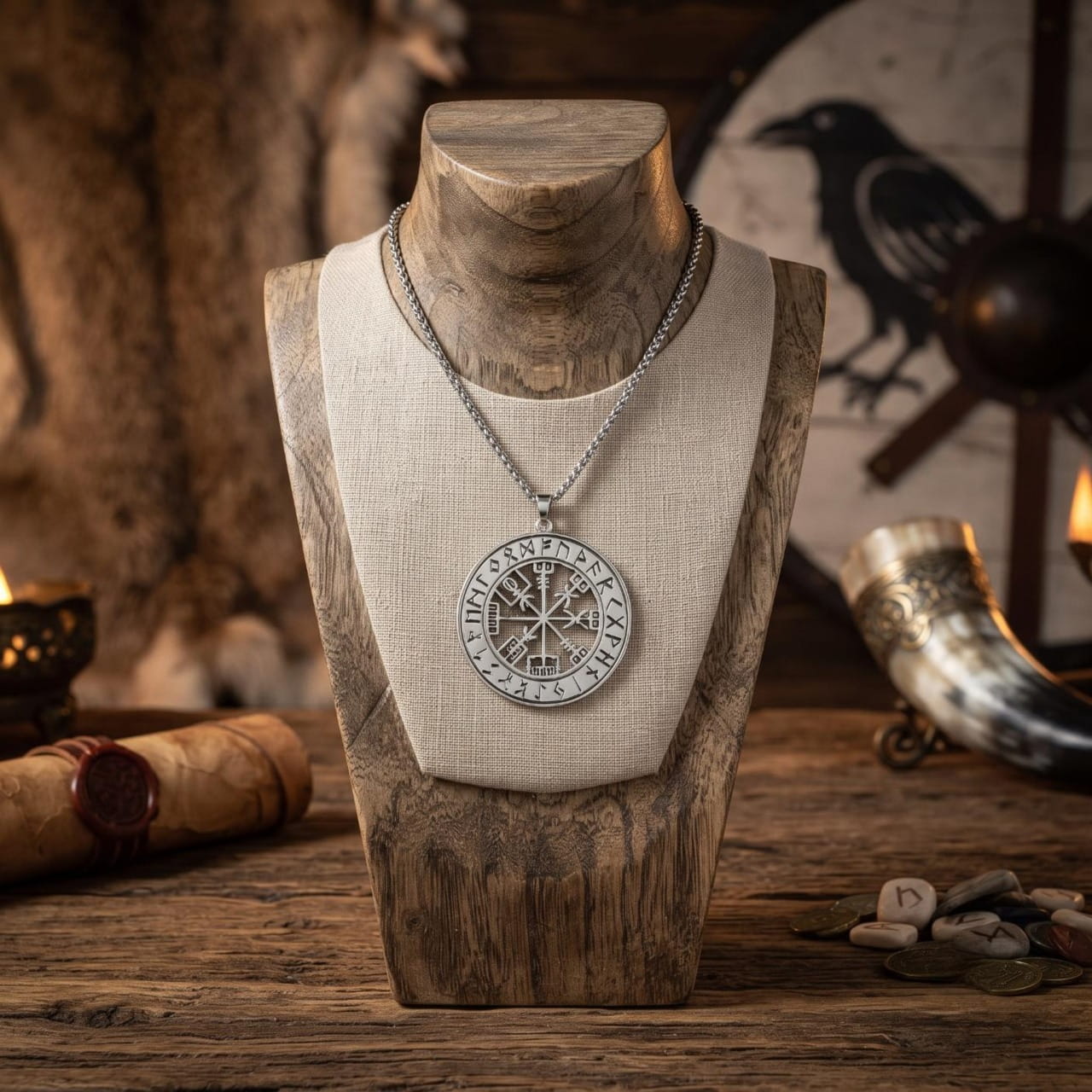
Several necklaces feature this eight-armed circle, alone or paired with an arrowhead. It belongs to the galdrastafir, the Icelandic magical sigils: figures drawn for a specific purpose, protecting a herd, success in a trial, returning from a journey.
A clarification that few shops make: the Vegvísir is not a Viking Age symbol. It only appears in the Huld manuscript, a collection compiled by Geir Vigfússon in Akureyri in 1860, and in two or three Icelandic grimoires of the same nature. About eight centuries elapsed between the end of the Viking Age and this manuscript. It is a beautiful figure, carried by a real and documented Icelandic magical tradition — simply not by the Scandinavians of the 10th century. This detail is developed in our article on the Vegvísir.
The Triquetra
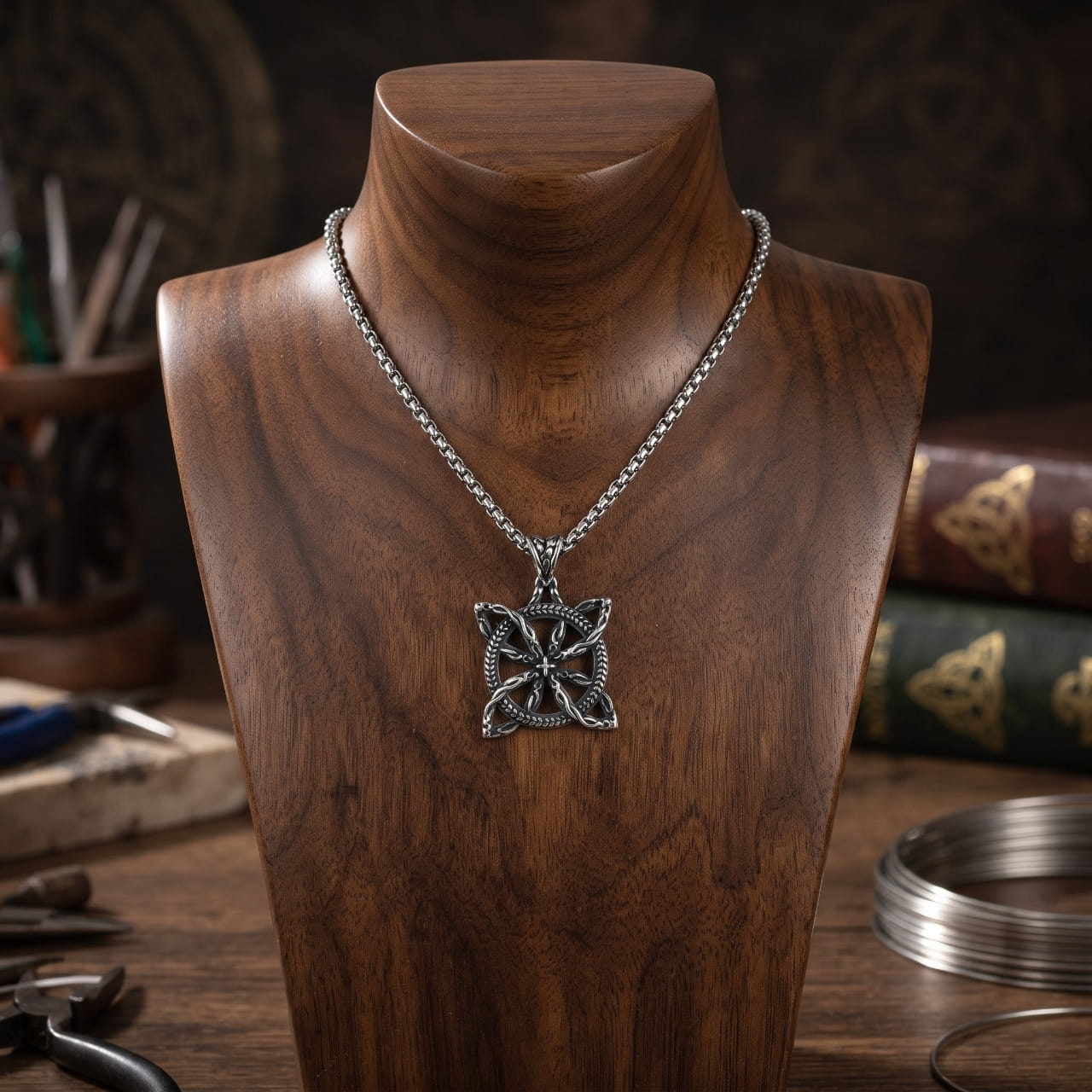
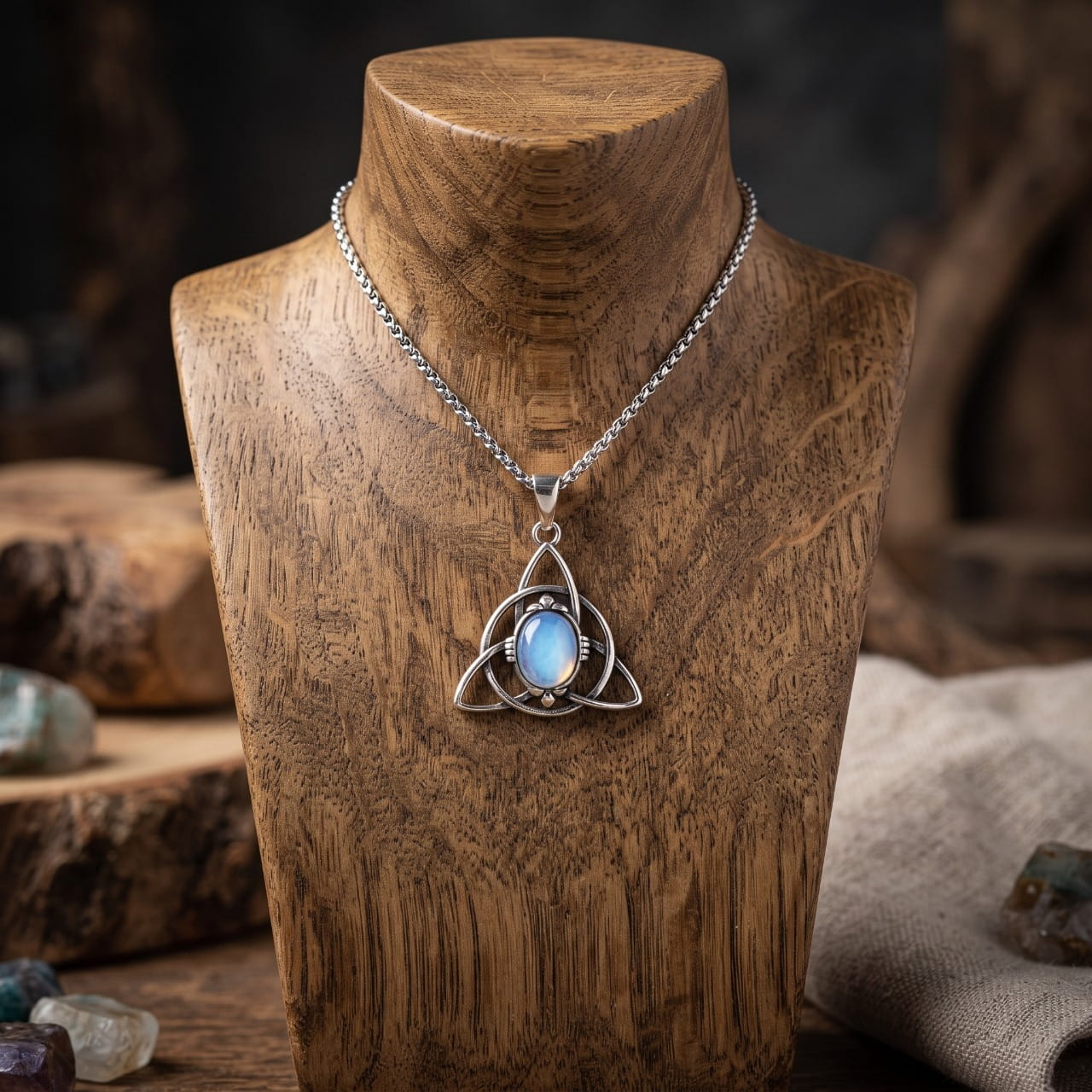
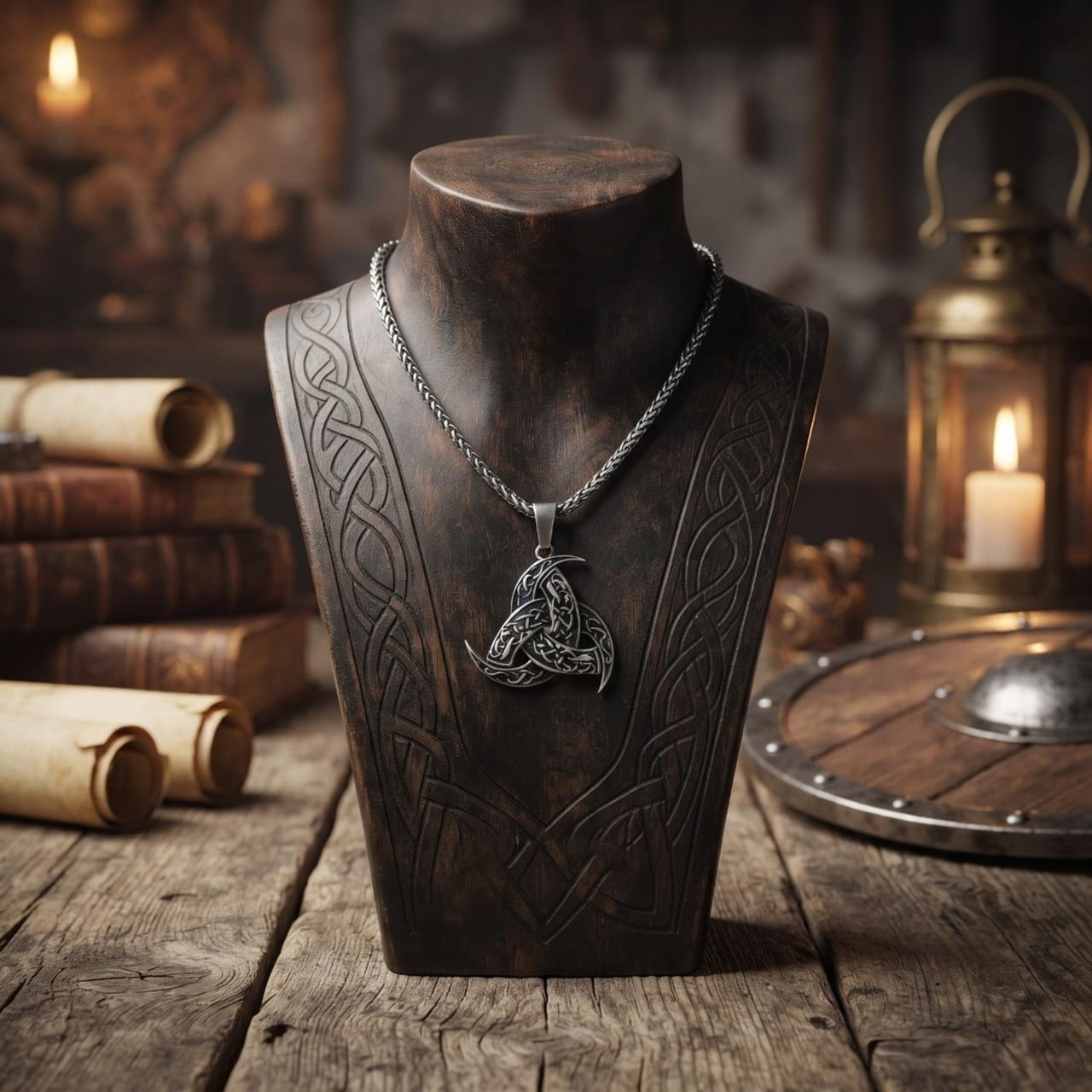
Several models, including one set with a tiger's eye stone. The triquetra is a three-lobed knot drawn with a continuous line, present both on Scandinavian runestones and in Irish insular art — hence the "Celtic" label attached to it, which only accounts for half of its history.
Beware of a common confusion: the triquetra is not the triskelion. The triskelion is composed of three branches or spirals radiating from a center, as seen on Gaulish coins or the flag of the Isle of Man. The triquetra, meanwhile, is made of three intertwined arcs forming pointed lobes. The two figures are regularly confused in jewelry descriptions, including by serious sellers.
Elder Futhark runic rings
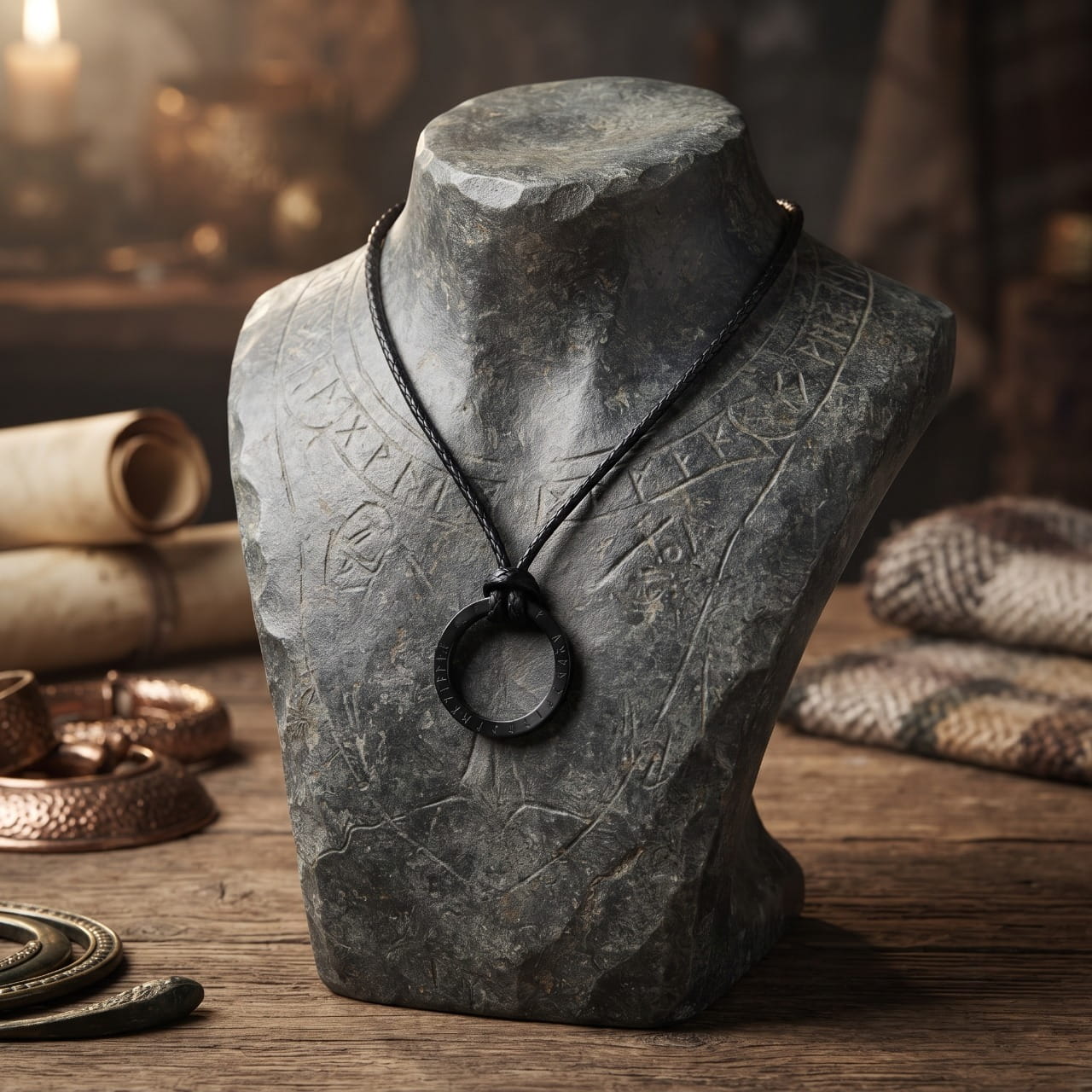
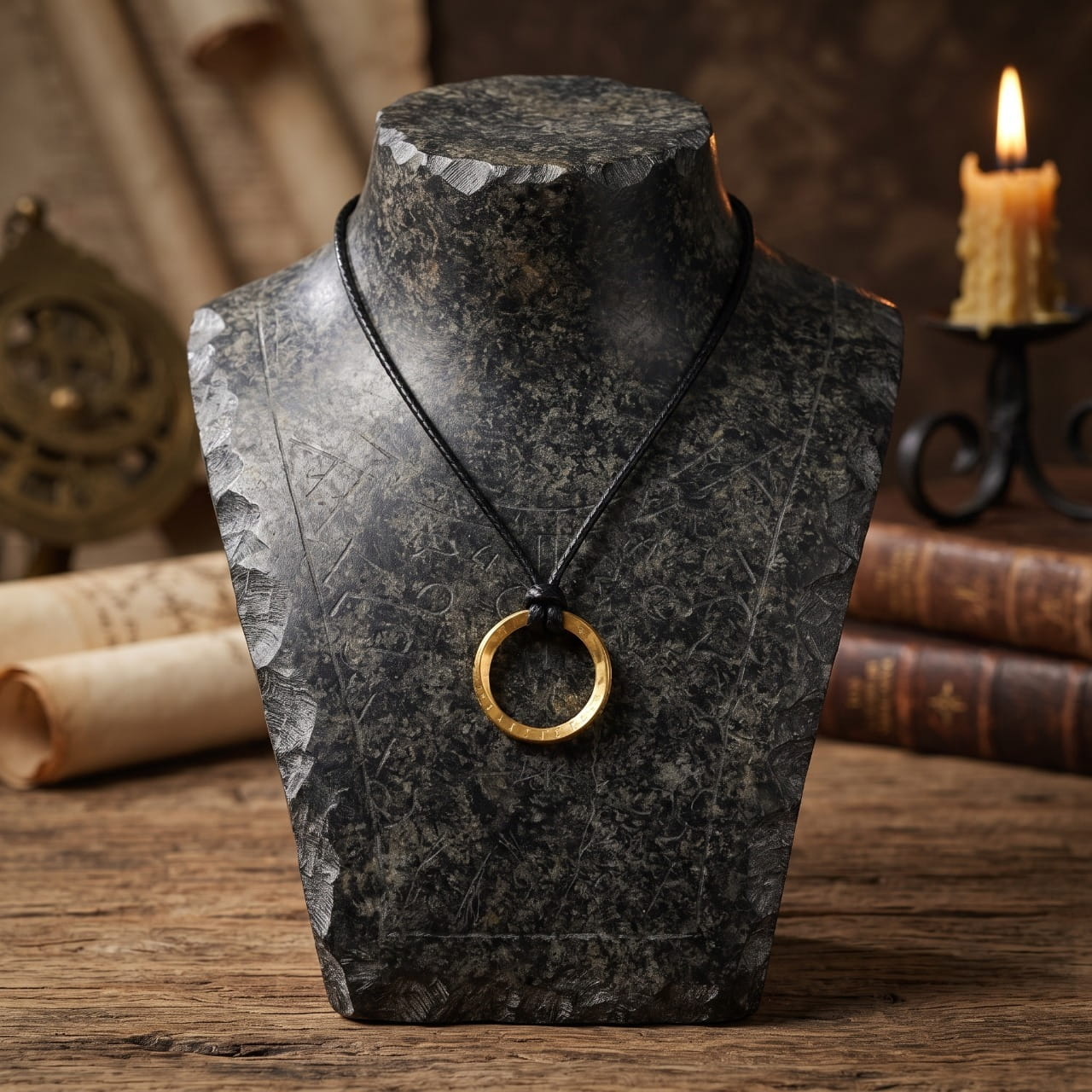
Four versions — steel or gold-plated, on a chain or cord — of a ring bearing the complete runic alphabet engraved on the edge. The format has a real archaeological precedent, and that is rare enough to be noted.
Two 9th-century Anglo-Saxon rings, the Kingmoor Ring (Cumbria) and the Bramham Moor Ring, each bear a runic inscription of about thirty characters — the same formula, with a few signs of difference, which does not correspond to any known word. Specialists agree on seeing it as an incantation rather than a text: runes engraved for their supposed power, not to be read. This is precisely the use that these models adopt.
Yggdrasil, the World Tree
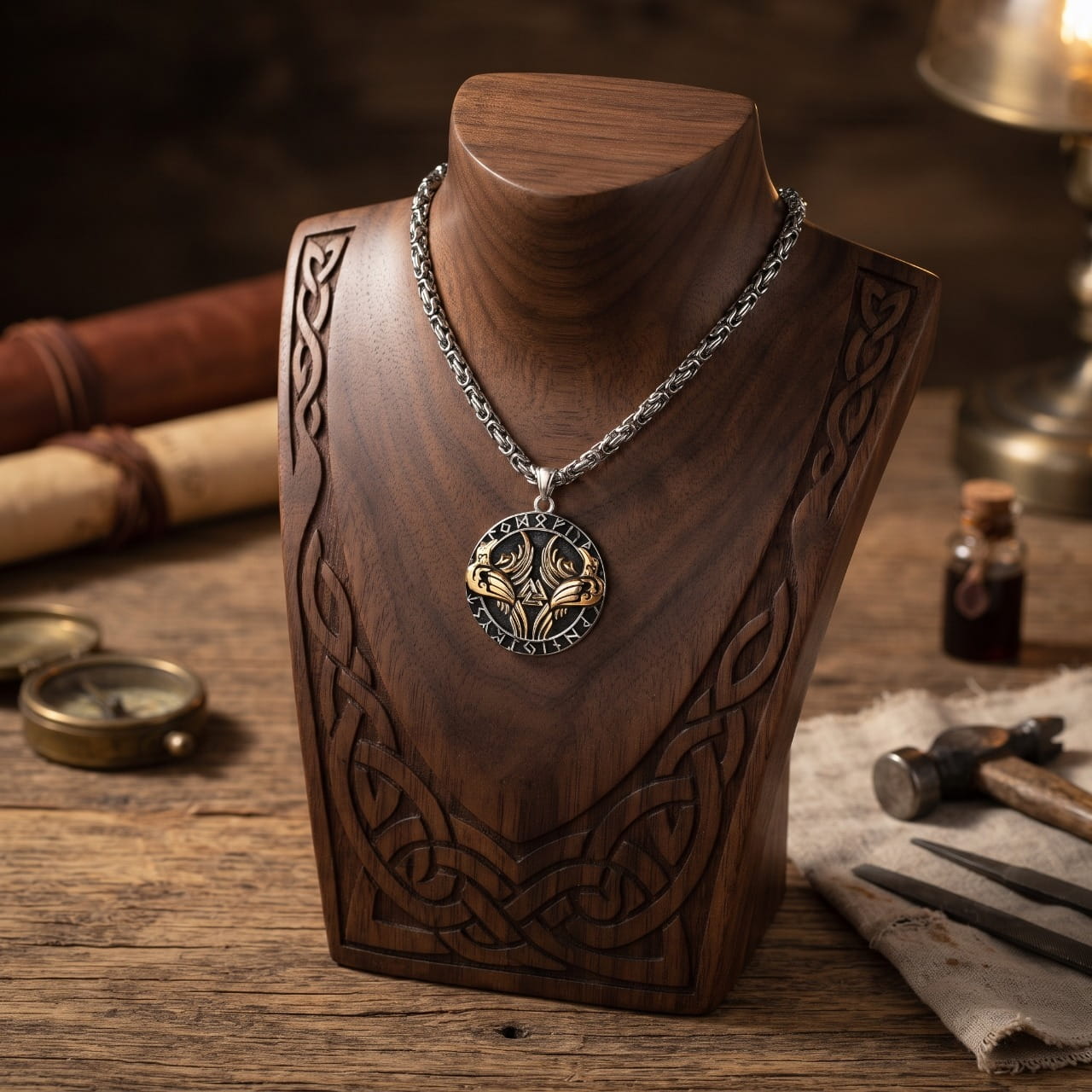
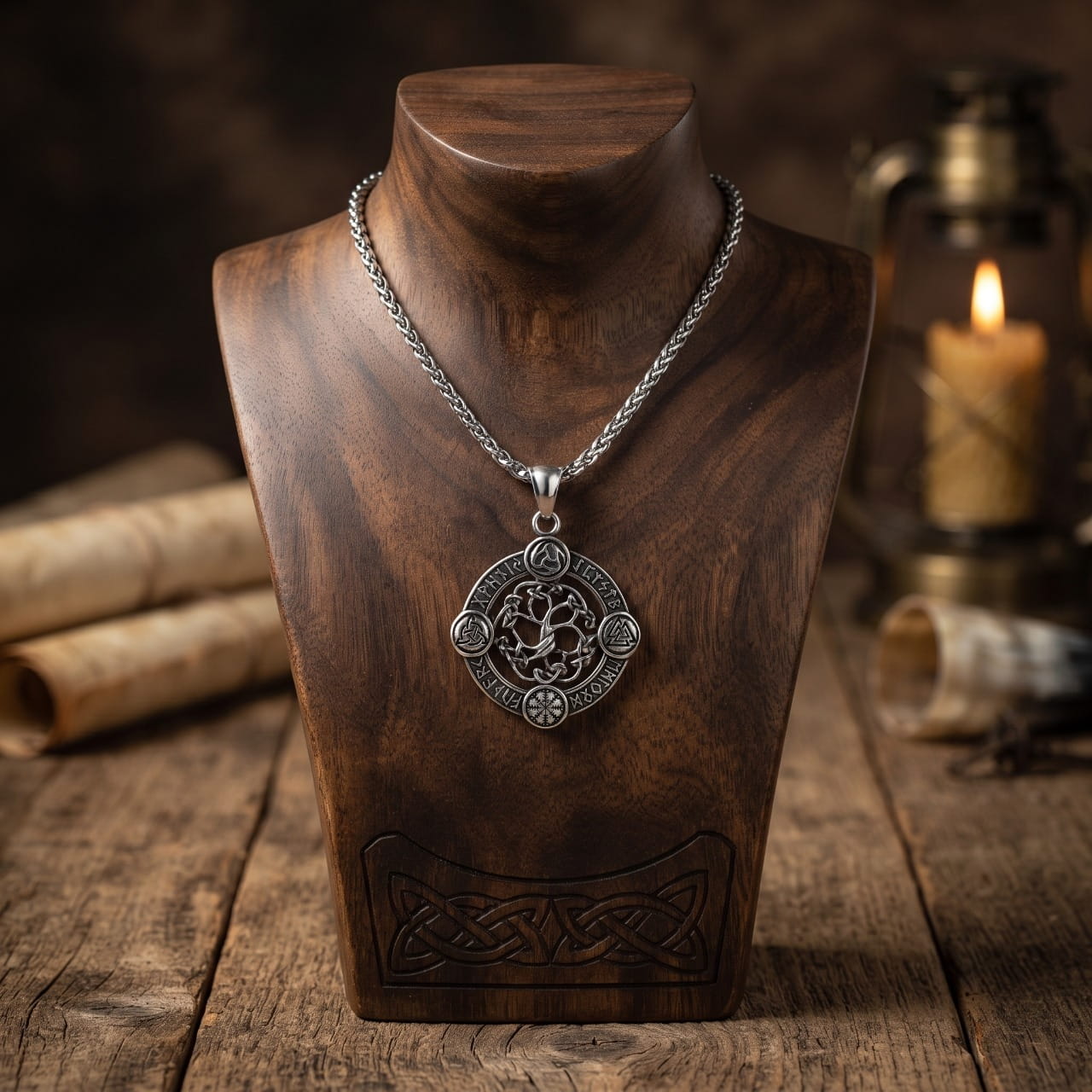
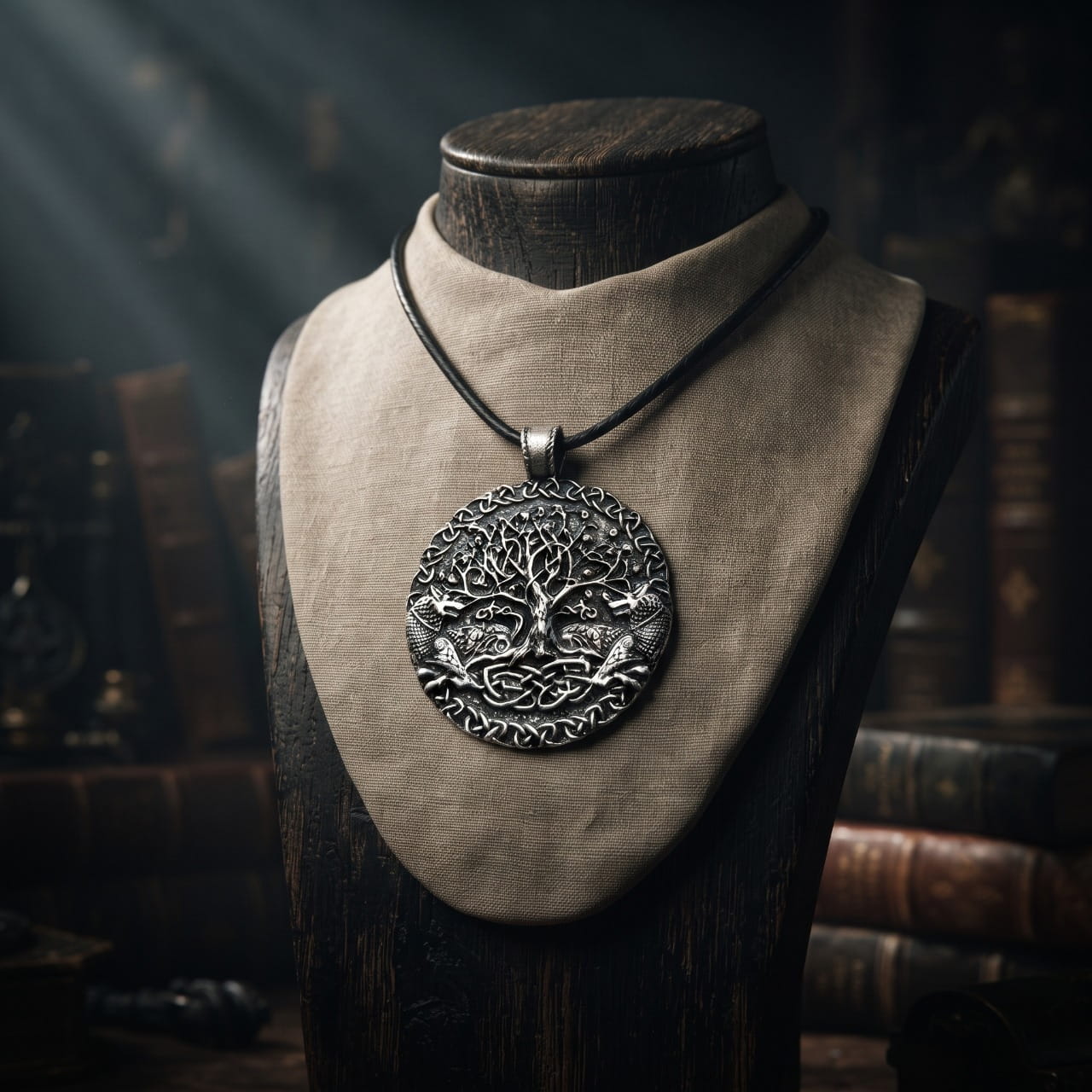
Three pendants feature the tree, including one framed by Odin's ravens and another by his two wolves. Yggdrasil is the ash tree that connects the nine worlds, and its three roots plunge towards three distinct springs: Urðarbrunnr, the well of fate where the Norns sit and weave the lives of men; Mímisbrunnr, the spring of Mímir, where Odin left an eye in exchange for a sip of wisdom; and Hvergelmir, from which all rivers flow.
It is this three-root structure that explains the circular composition of most Yggdrasil pendants: the circle represents the worlds, the tree connects them.
The wolf tooth
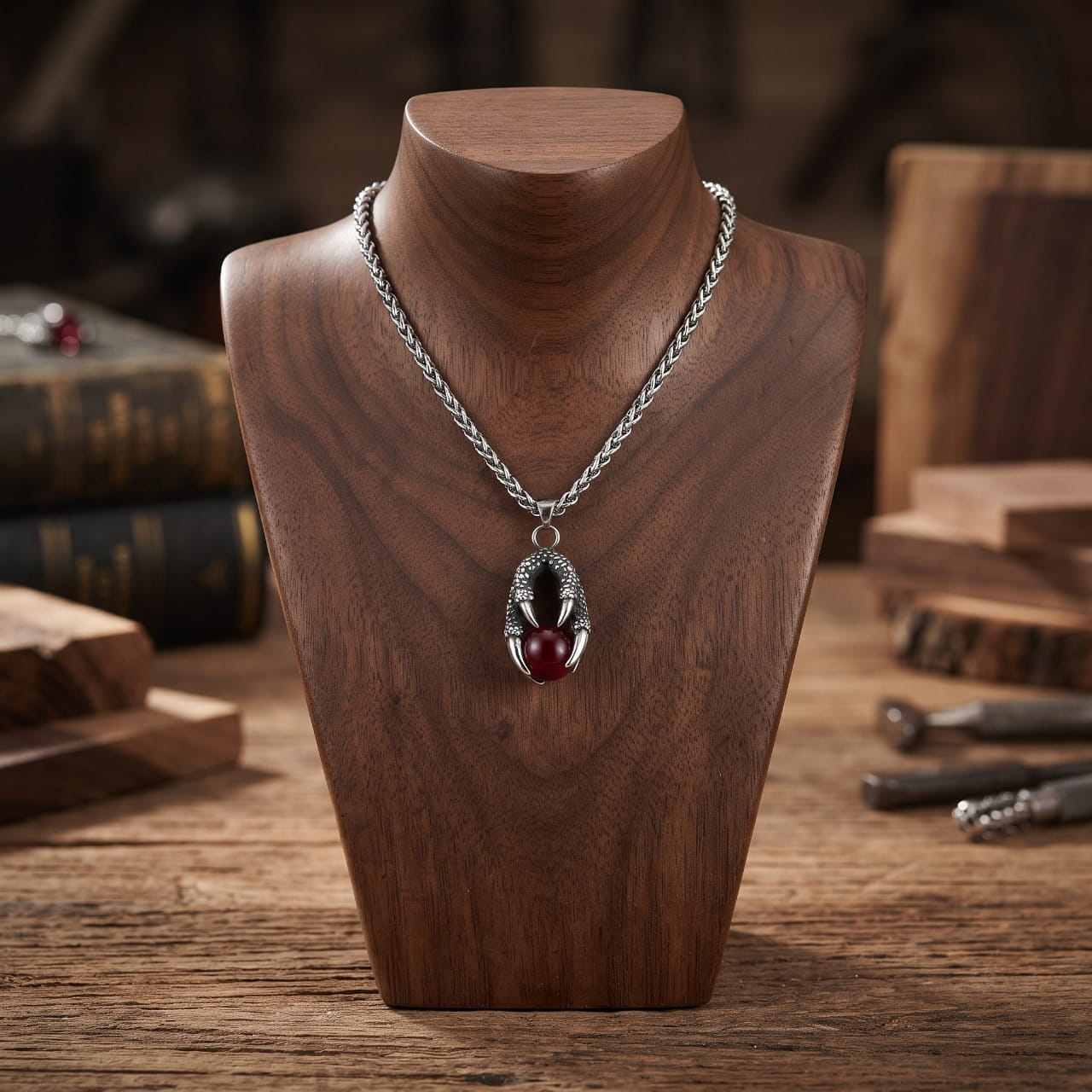
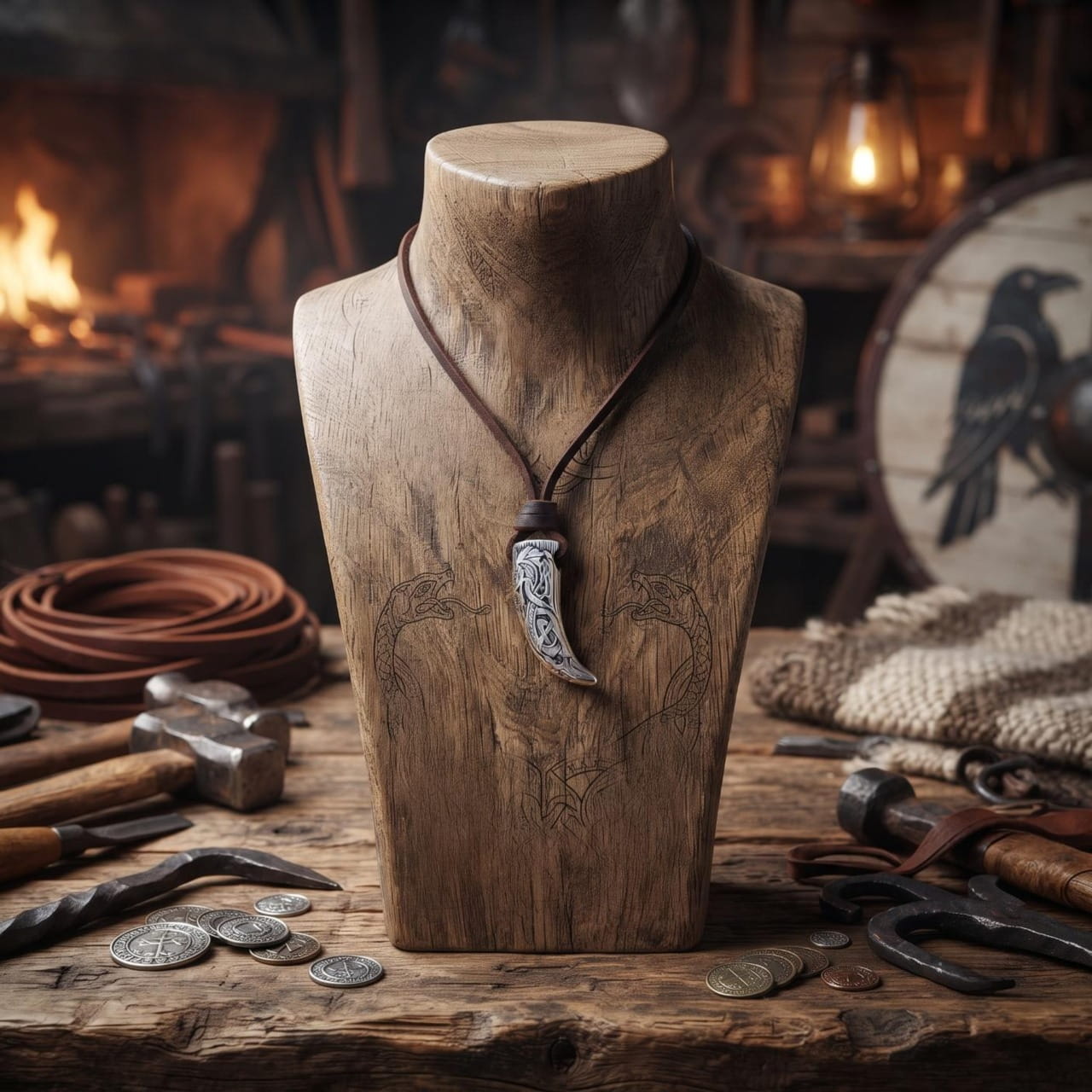
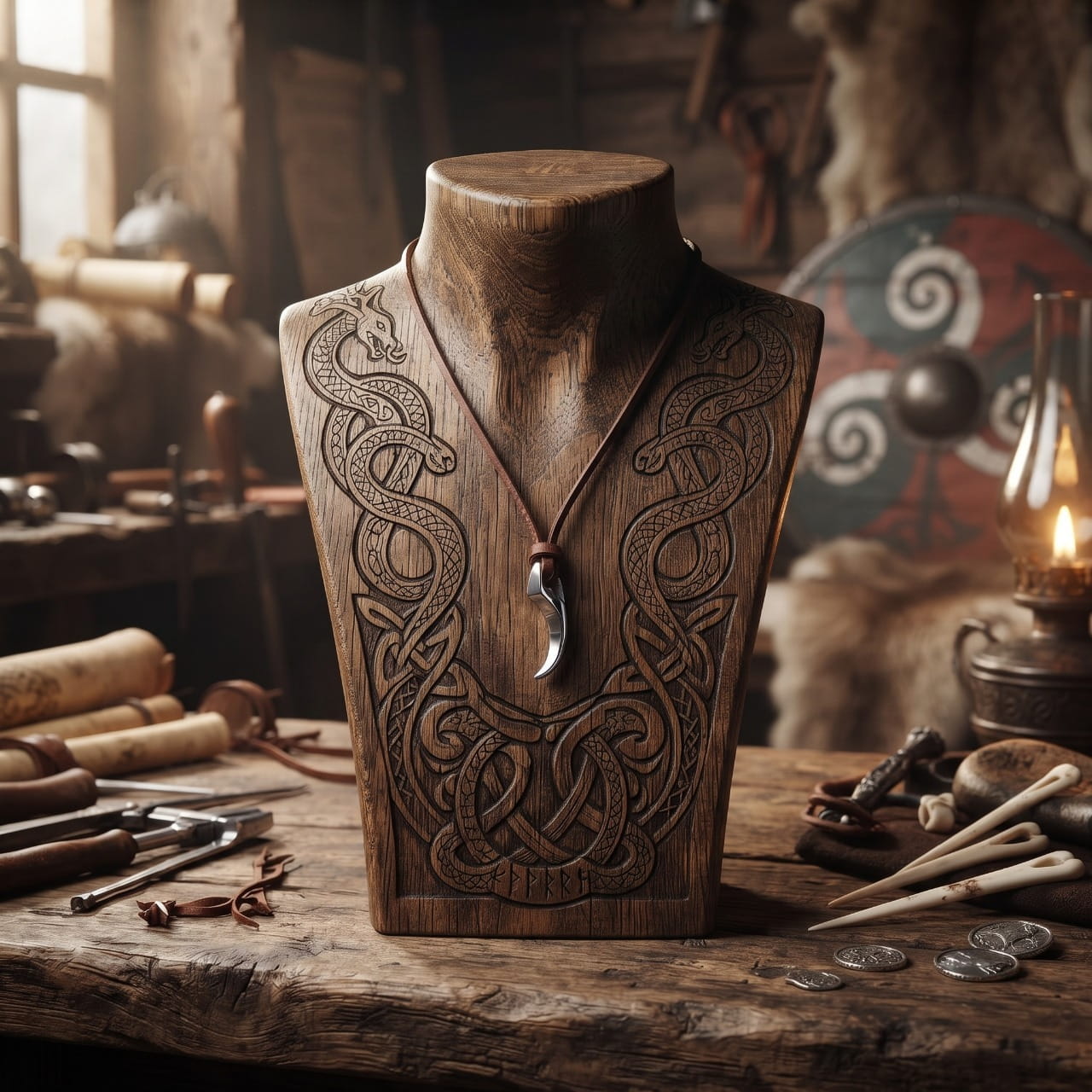
Several necklaces, some mounted on leather cord. The motif refers to Fenrir, the wolf son of Loki, about whom the gods learned that he would cause the death of Odin at Ragnarök. They bound him with Gleipnir, a bond forged from six impossible things: the sound of a cat's footfall, a woman's beard, the roots of a mountain, the tendons of a bear, the breath of a fish, and the saliva of a bird.
Fenrir only agreed to be bound on the condition that a god place his hand in his maw as a token of good faith. Týr resolved to do so, and lost it — he is the only god of the Nordic pantheon to have paid the price personally. Wearing a wolf tooth is therefore carrying a reminder of this strength that can only be contained at the cost of a sacrifice.
The raven skull
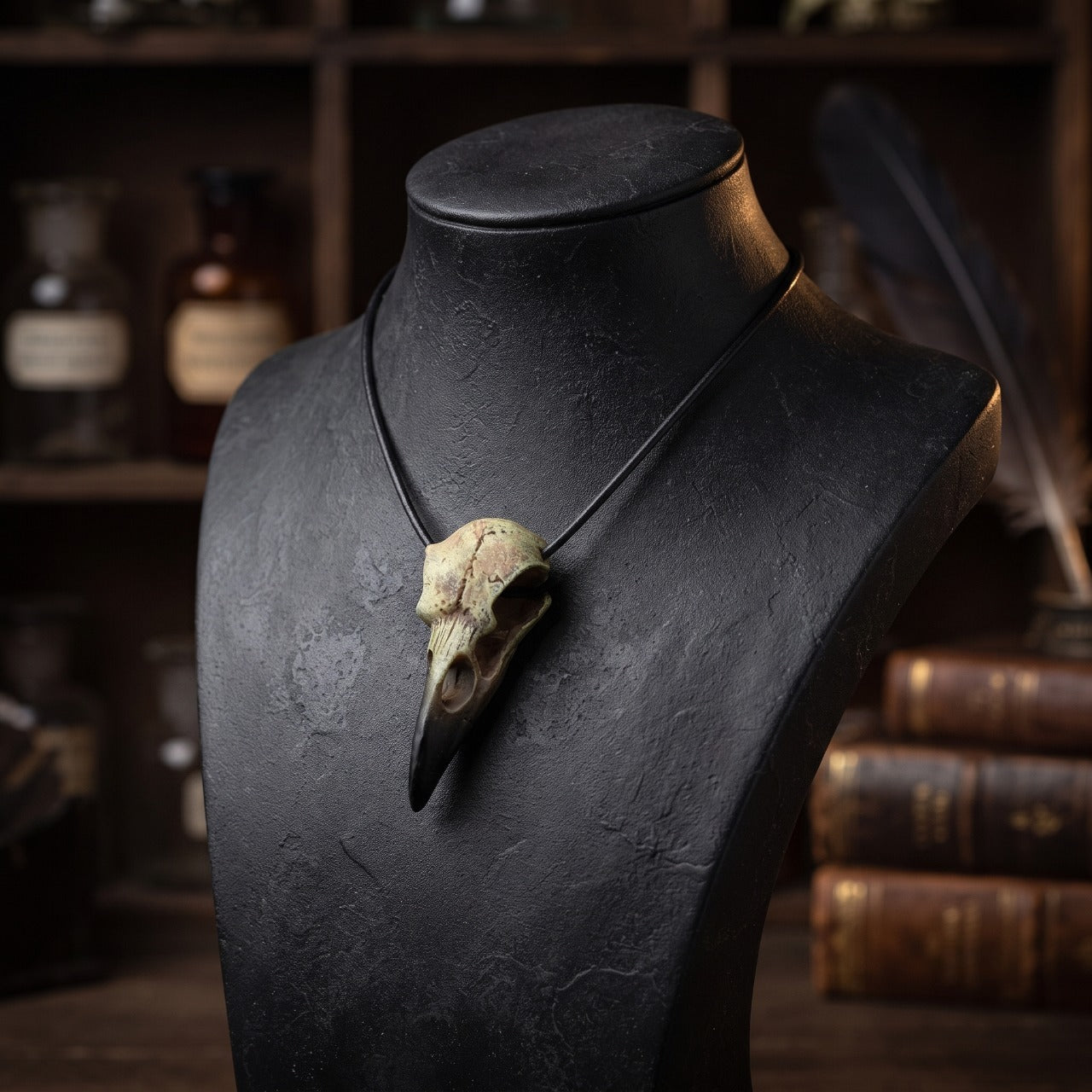
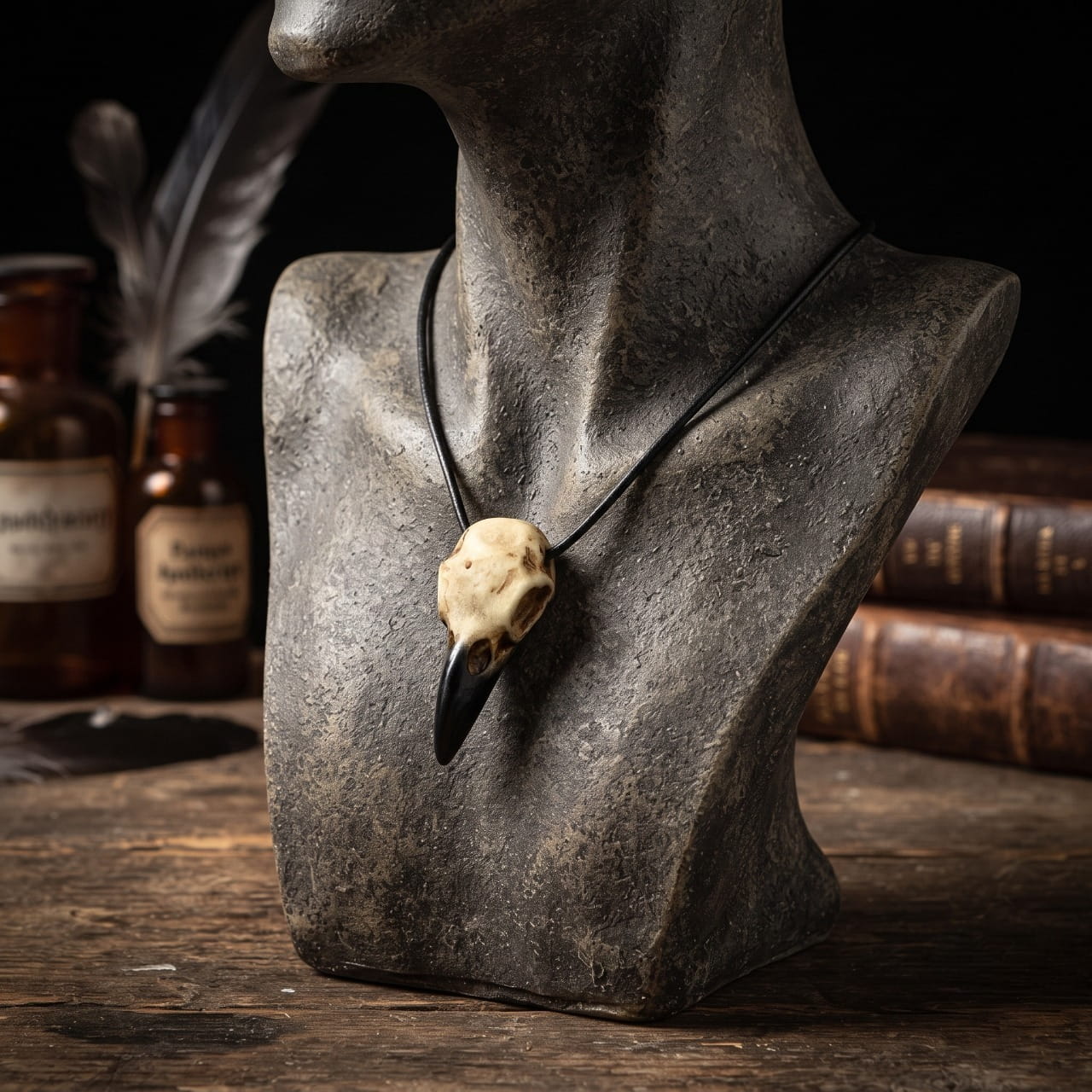
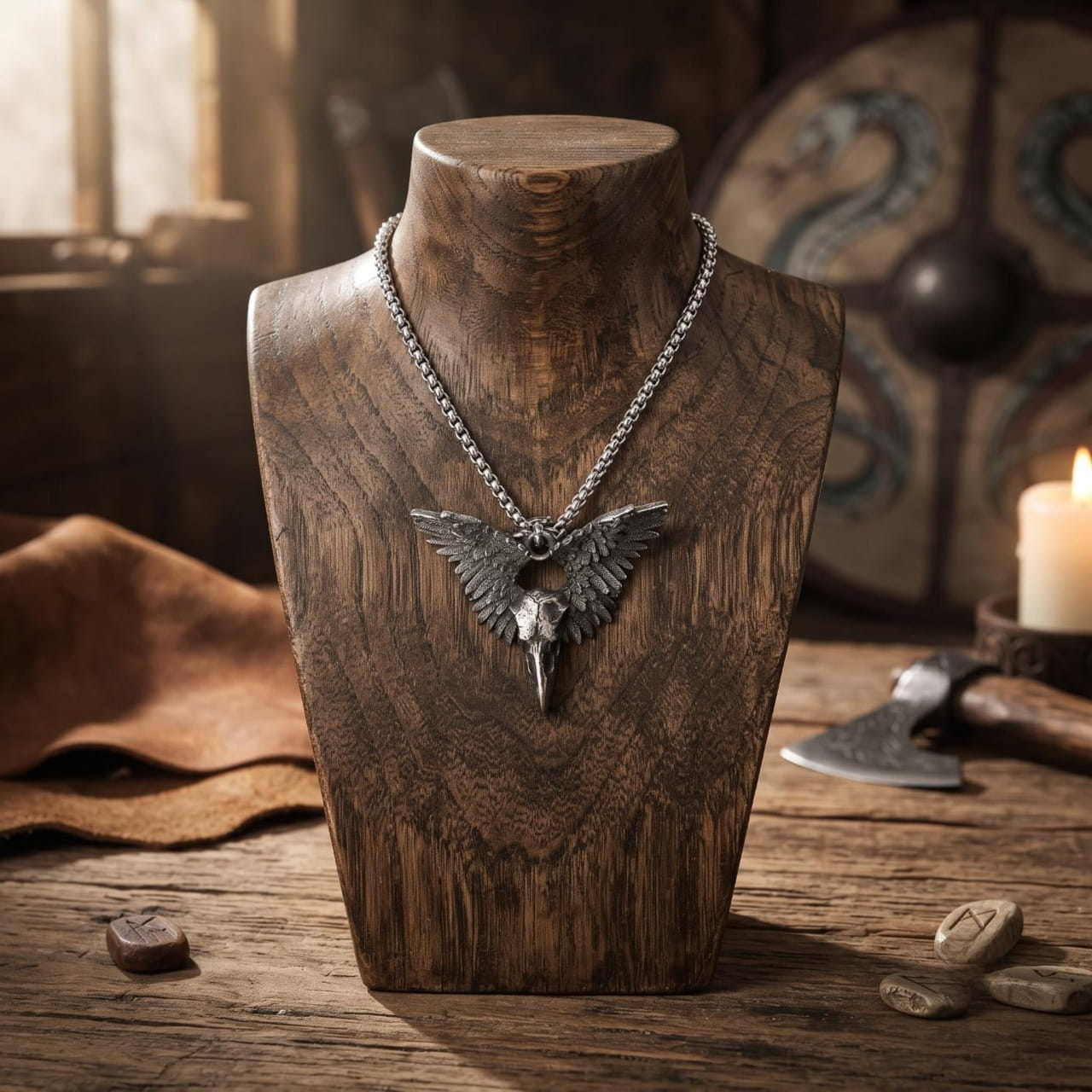
Three pendants, in resin on leather cord, in ivory or patinated versions. Odin's ravens, Huginn and Muninn — thought and memory — travel the world every day and bring back to him what they have seen. The Grímnismál attributes an anxious admission to Odin: he fears that Huginn will not return, but fears even more for Muninn. In other words, he fears losing memory more than losing thought.
An honest clarification: the raven skull itself is not a confirmed motif of Scandinavian art. It is contemporary imagery, born from the intersection of Nordic iconography and Gothic aesthetics. The raven is Viking; its stylized skull is modern.
The Möbius strip
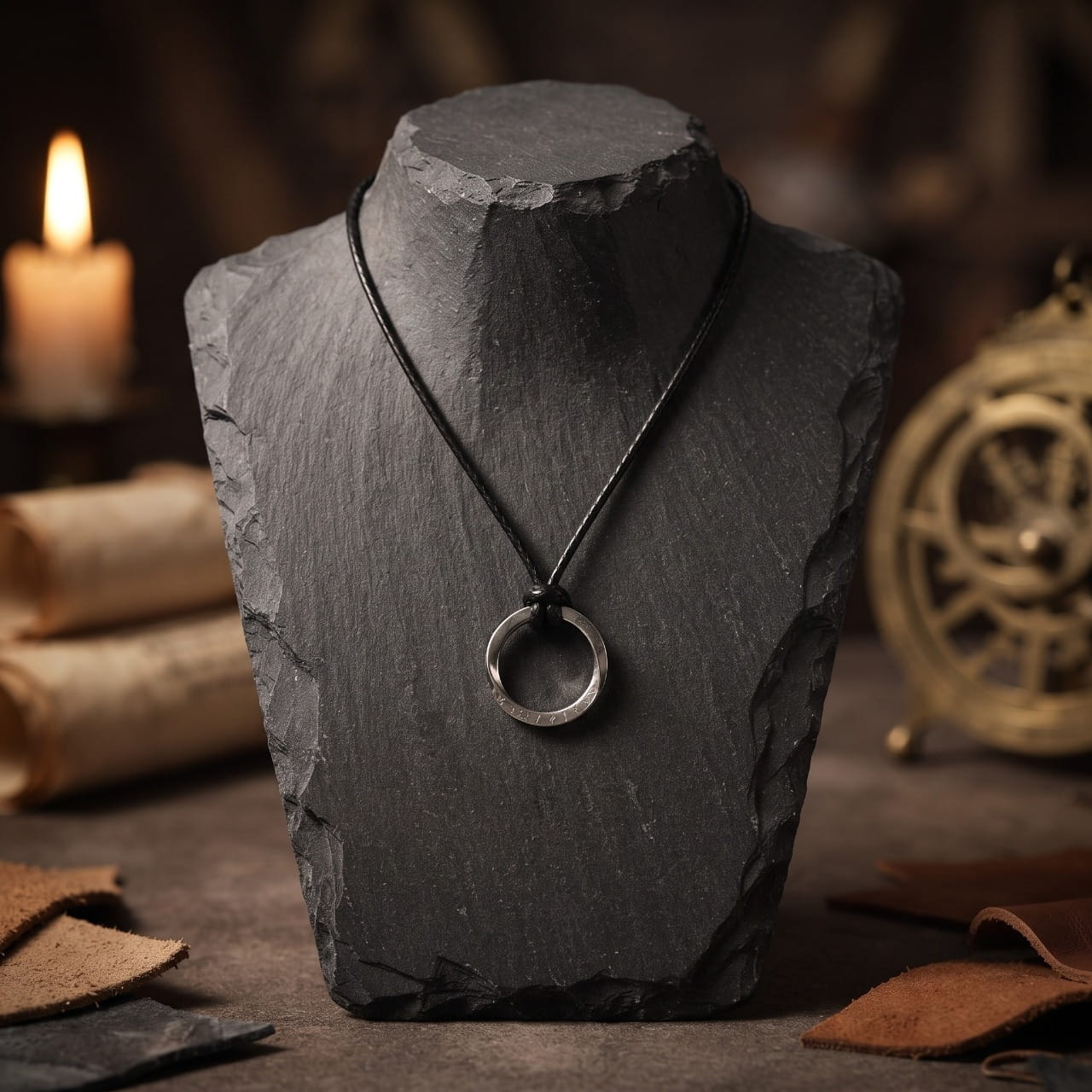
Round pendants feature this loop with neither inside nor outside, in silver-colored, gold, or black steel. Let's be frank: this motif has no connection with Nordic culture. The Möbius strip is a mathematical object described in 1858, independently, by August Möbius and Johann Listing — a surface that has only one side and one boundary.
It appears here because its shape — a continuous loop, without beginning or end — naturally dialogues with Scandinavian interlace, which relies on the same idea of a continuous path. It is an assumed aesthetic choice, not a historical reference, and we prefer to state it rather than invent a Viking origin for it.
Unique pieces
The Mjölnir, Thor's hammer, deserves a moment of attention. It is the quintessential Viking pendant: nearly a thousand examples have been found in Scandinavia and in areas of Nordic settlement. For a long time, their identification remained debated — until the discovery in 2014 at Købelev, on the Danish island of Lolland, of an example bearing the runic inscription hmar x is, "this is a hammer." The question was settled.
A delicious detail to finish: at Trendgården, in Denmark, a mold was unearthed that could cast both Thor's hammers and Christian crosses. The same craftsman served both clienteles, at a time when the two religions coexisted.
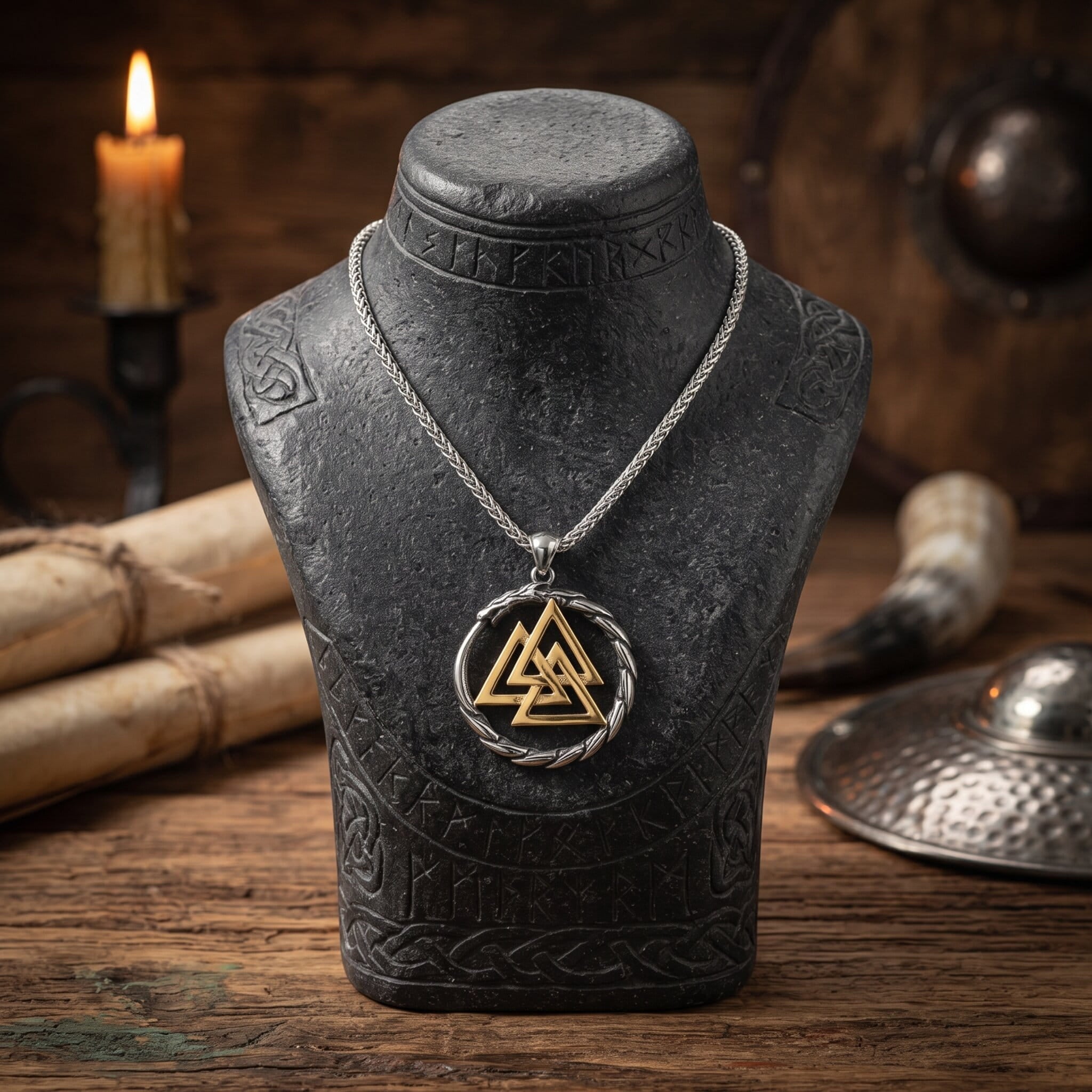
The rest of the collection features the Valknut, Odin's three intertwined triangles; the Ægishjálmur, known as the helm of awe, which shares the origin of the Vegvísir — late Icelandic grimoires, not the Viking Age; the spear Gungnir, which the dwarves forged for Odin and which never missed its mark; the berserker's sword, the interlace axe, the serpent, and the eagle. To learn more, read our guide to 17 Viking symbols, our guide to the Mjölnir necklace, and the meaning of Yggdrasil.
Materials
A large portion of our necklaces are pure stainless steel: hypoallergenic, nickel-free, it does not turn the skin green, is not affected by water or perspiration, and can be worn without a second thought. Some models are enhanced with gold plating, which requires more care: the plating wears off with friction and does not handle perfumes, swimming pools, or household products well.
Some pieces combine steel with titanium, which is lighter and harder. Finally, a few are made of metal or patinated bronze, chosen for their antique look rather than their durability: bronze naturally tarnishes, which is what gives it its character, but it will not suit those looking for a piece of jewelry that stays shiny on its own. The exact material is listed on each product page.
Care
For stainless steel: a soft cloth, lukewarm soapy water, careful drying, and that's it. For gold-plated models, remove the necklace before showering or playing sports, and store it away from humidity. The leather cord should not be soaked: simply wipe it down and let it dry flat, away from any heat source. Bronze that tarnishes can be revived with a soft cloth, without any product.
Which length according to your physique
The table above provides the pendant's placement; three details refine the choice.
Build. On a wide torso, a 60 cm necklace visually rides up and creates the impression of a short necklace. A strong build benefits from switching to 65 or 70 cm to achieve the expected proportion. Conversely, on a slim silhouette, a 70 cm necklace hangs very low and the pendant hits the sternum while walking.
Pendant size. A large, heavy motif — raven skull, massive hammer — requires space around it: it does not fare well with a short chain that wedges it under the collar. A fine pendant, an arrowhead, or a runic ring, on the other hand, handles a 50 cm length close to the neck very well.
Clothing collar. This is the criterion that is often forgotten and that decides everything. A high crew neck swallows a 50 cm necklace. A V-neck or an open shirt highlights a 55 or 60 cm necklace. If you mostly wear sweaters, go up a size: the necklace should rest on the clothing, not underneath it.
Gifting a Viking necklace
It is the simplest piece of jewelry to give as a gift because it does not require an exact measurement. Three reference points are enough.
When in doubt, take 60 cm. It is the length that fits the greatest number of people, and the one offered by the majority of our models. A size error on a necklace is much less noticeable than on a ring.
Choose the symbol, not the chain. The mounting can be easily changed — most of our pendants are on a closed ring or welded bail, so they are compatible with other chains. The motif, however, cannot be changed: that is where you should focus your attention. If the person loves stories, the Mjölnir and the wolf tooth carry a history that can be told when giving the gift.
Check the material if the skin is sensitive. Stainless steel never poses a problem. The few pieces in metal or bronze do not offer the same guarantee, and a gift that causes a skin reaction is a wasted gift.
Frequently Asked Questions
What Viking necklace length to choose for a man? 60 cm in the vast majority of cases: the pendant falls at the top of the sternum and remains visible on a t-shirt. Go down to 55 cm for a closer fit to the neck, go up to 70 cm if the necklace is worn over a sweater.
Is the chain included? Yes. All our necklaces are delivered assembled, with their chain or cord depending on the model. You never buy a pendant alone.
Is stainless steel suitable for sensitive skin? Yes, it is hypoallergenic and nickel-free. However, if you react to alloys, prefer the pure steel models over those in metal or bronze.
Can I wear my necklace in the shower? No problem for stainless steel. Avoid this for gold-plated models and those mounted on leather cord, which water will damage over time.
Are these necklaces for men or women? Both. The most massive pendants and lengths from 60 to 70 cm are more often chosen by men, the fine pieces in 50 cm by women, but no motif is gendered.
Can the pendant be detached from the chain? The pendants are mounted on a closed ring or a welded bail. You can therefore change the chain if you wish, but the original mounting does not open on its own.
What are the delivery times and fees? Tracked delivery is free on orders over €49, regardless of the country of delivery. Below that, fees are displayed in the cart.
Also explore: complete your set with our Viking rings, our Viking bracelets, or our entire collection of Viking jewelry. See also our Viking jewelry for men.