
Filters
28 products
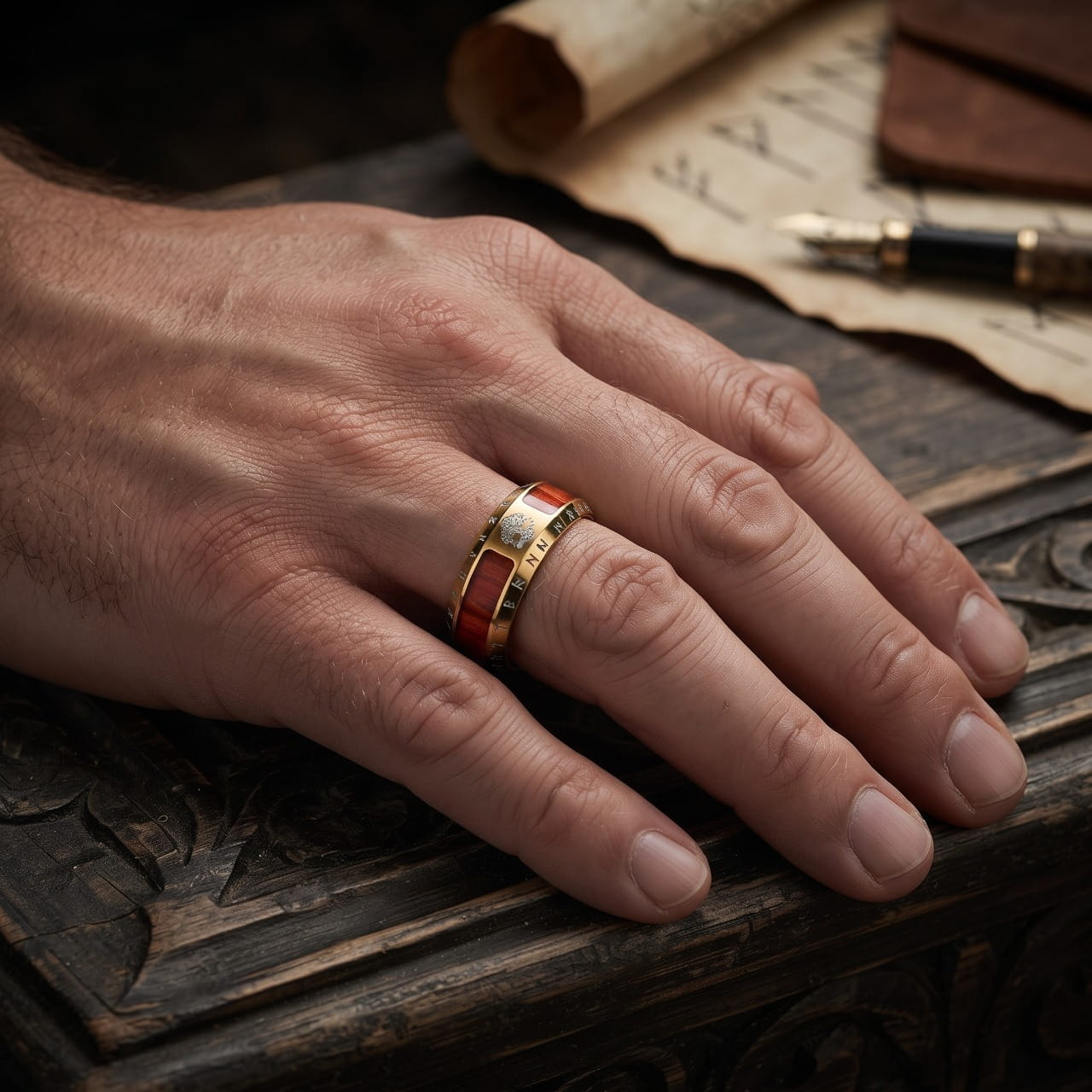
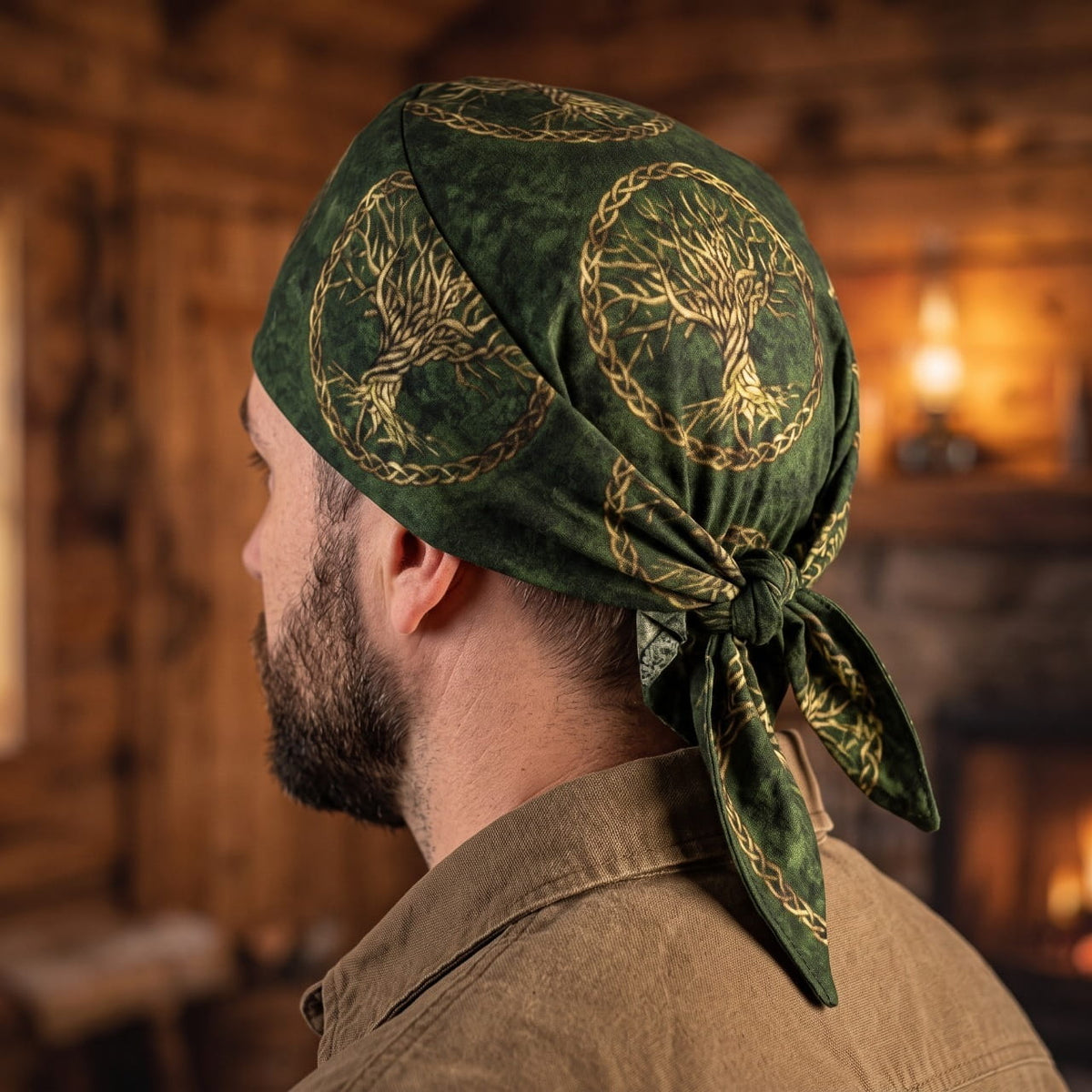
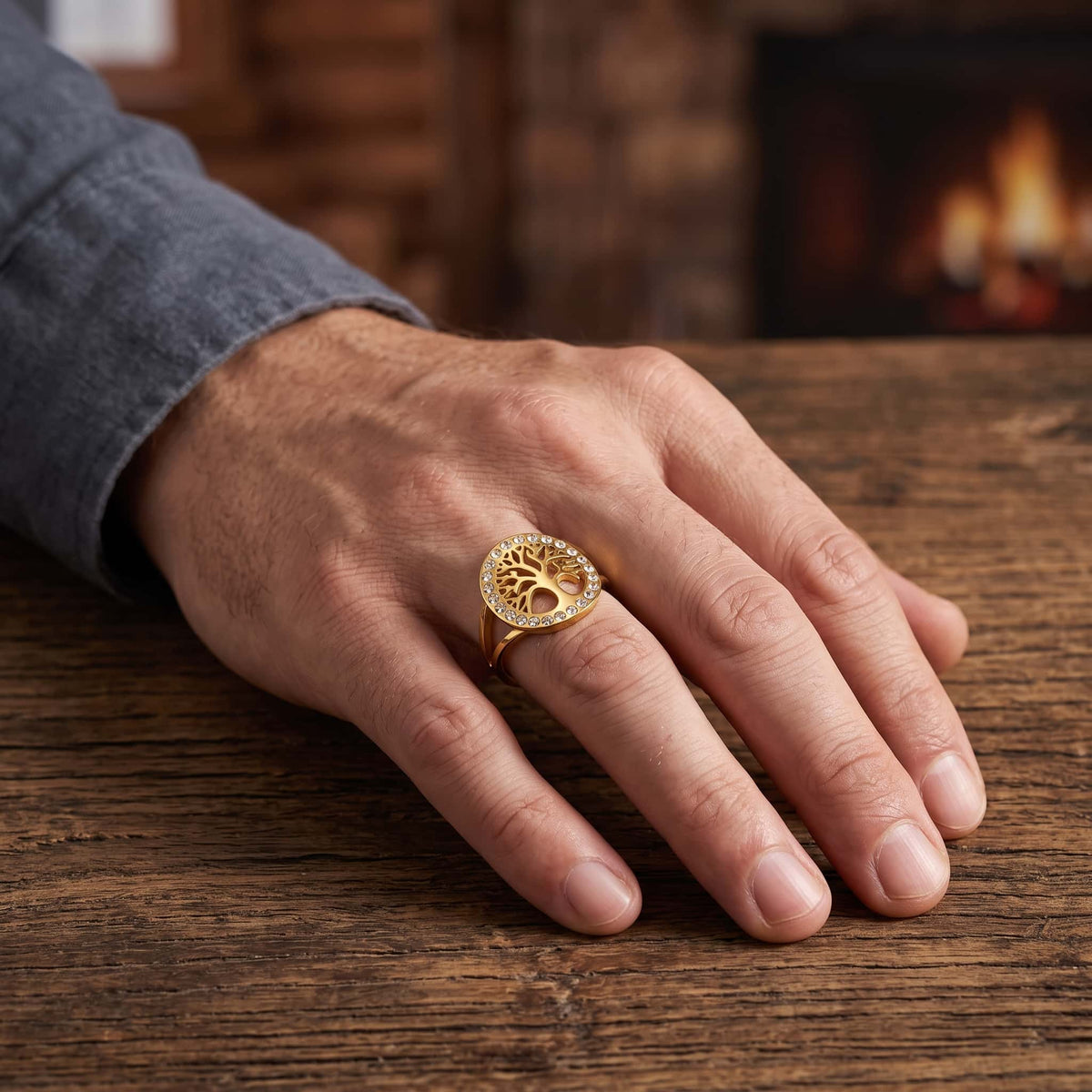
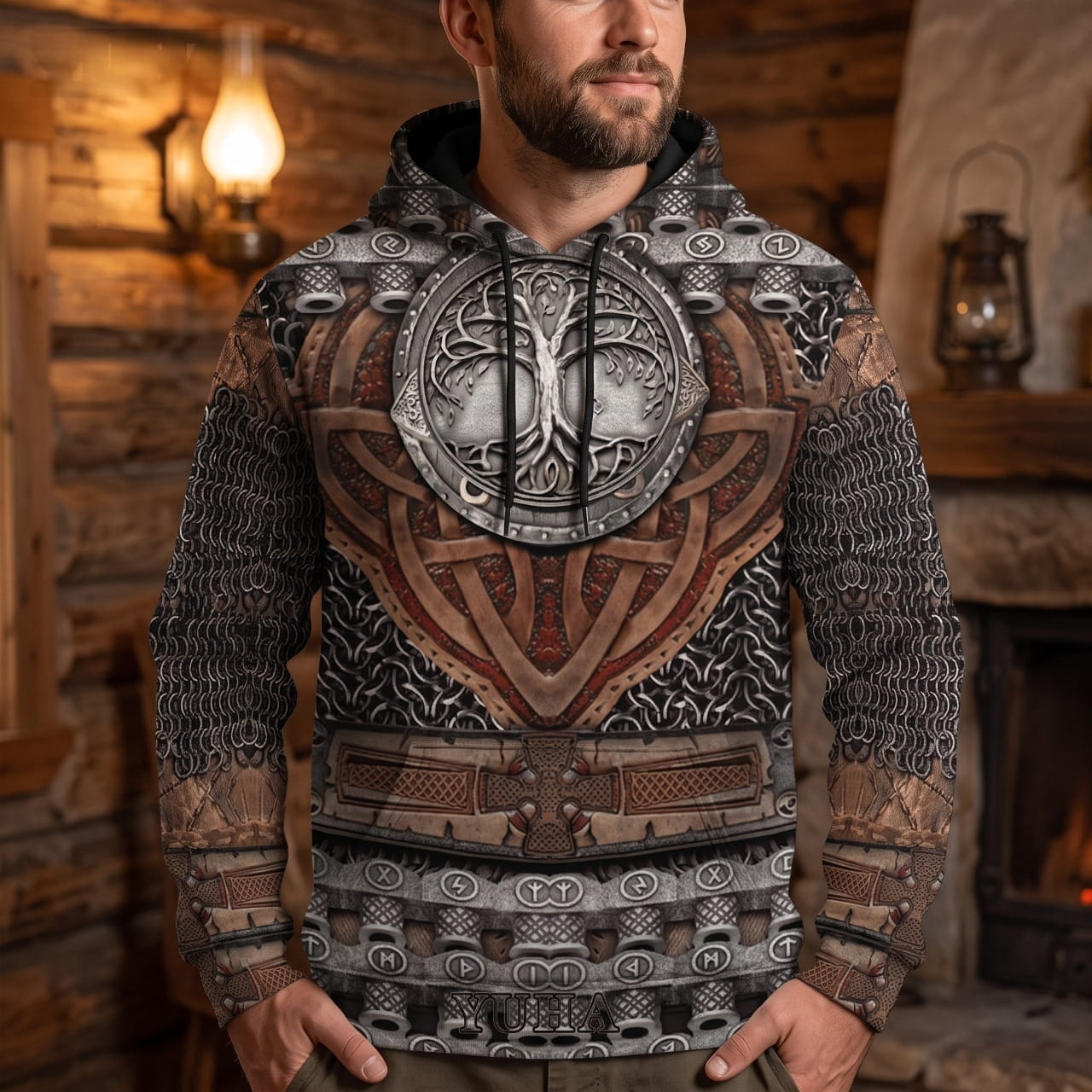
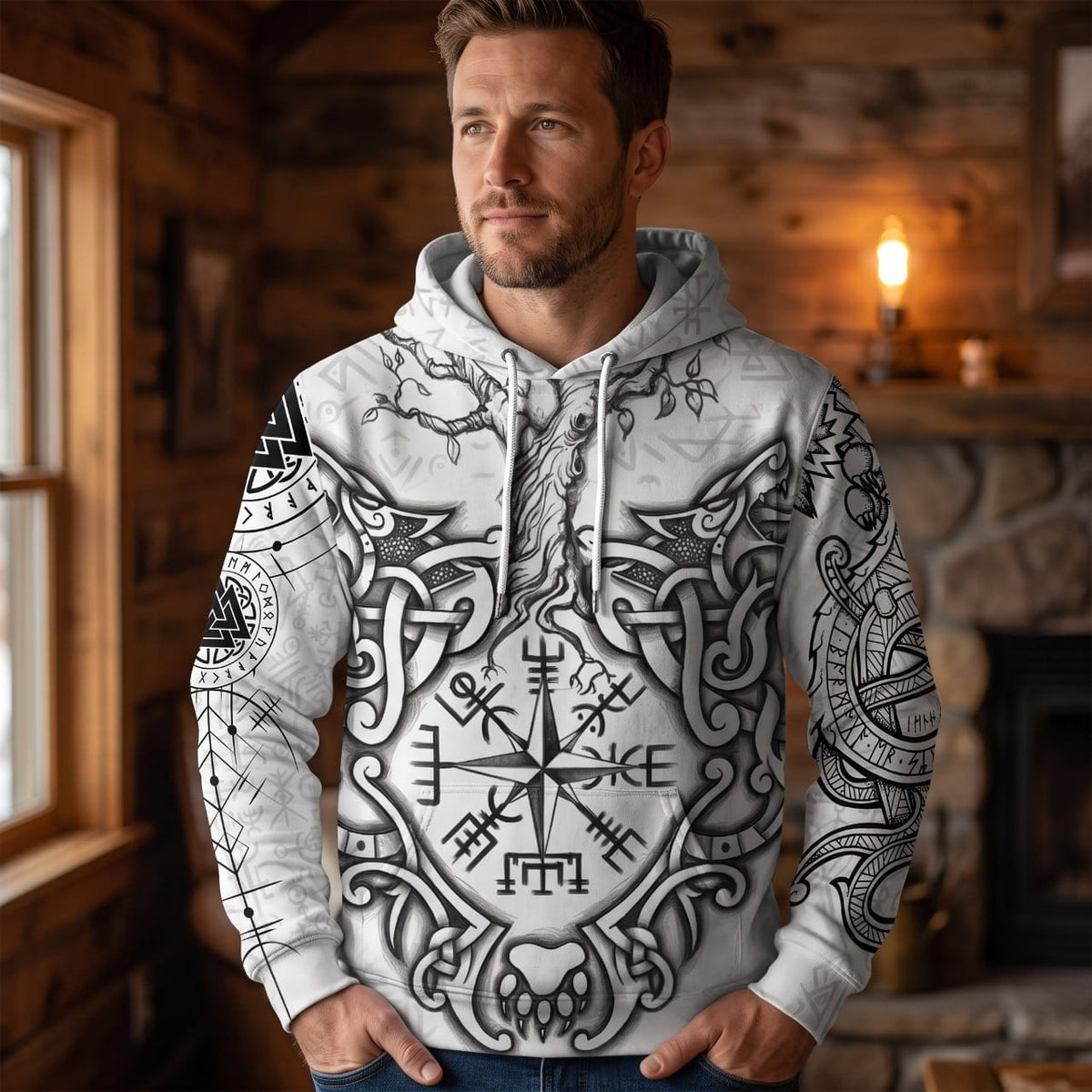
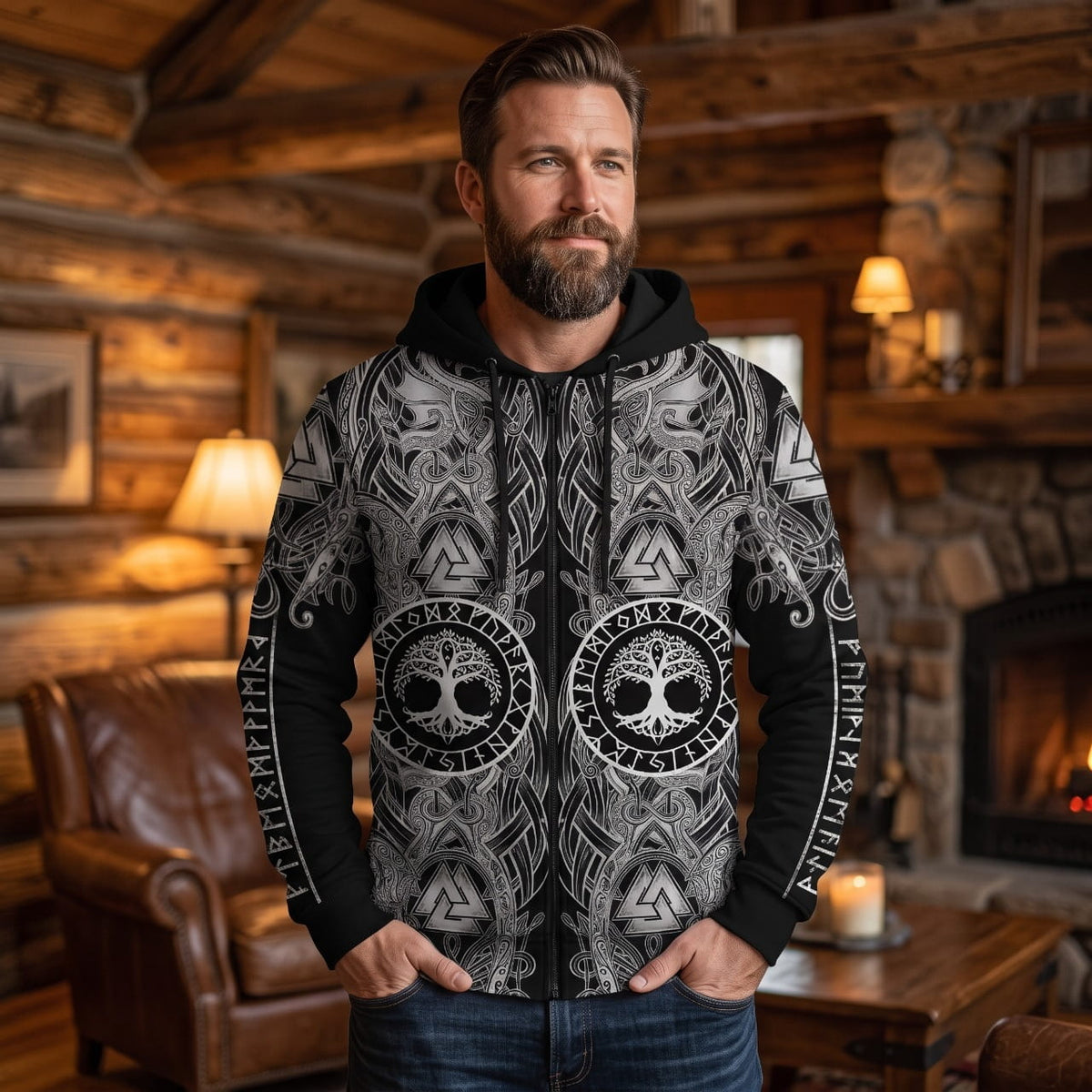
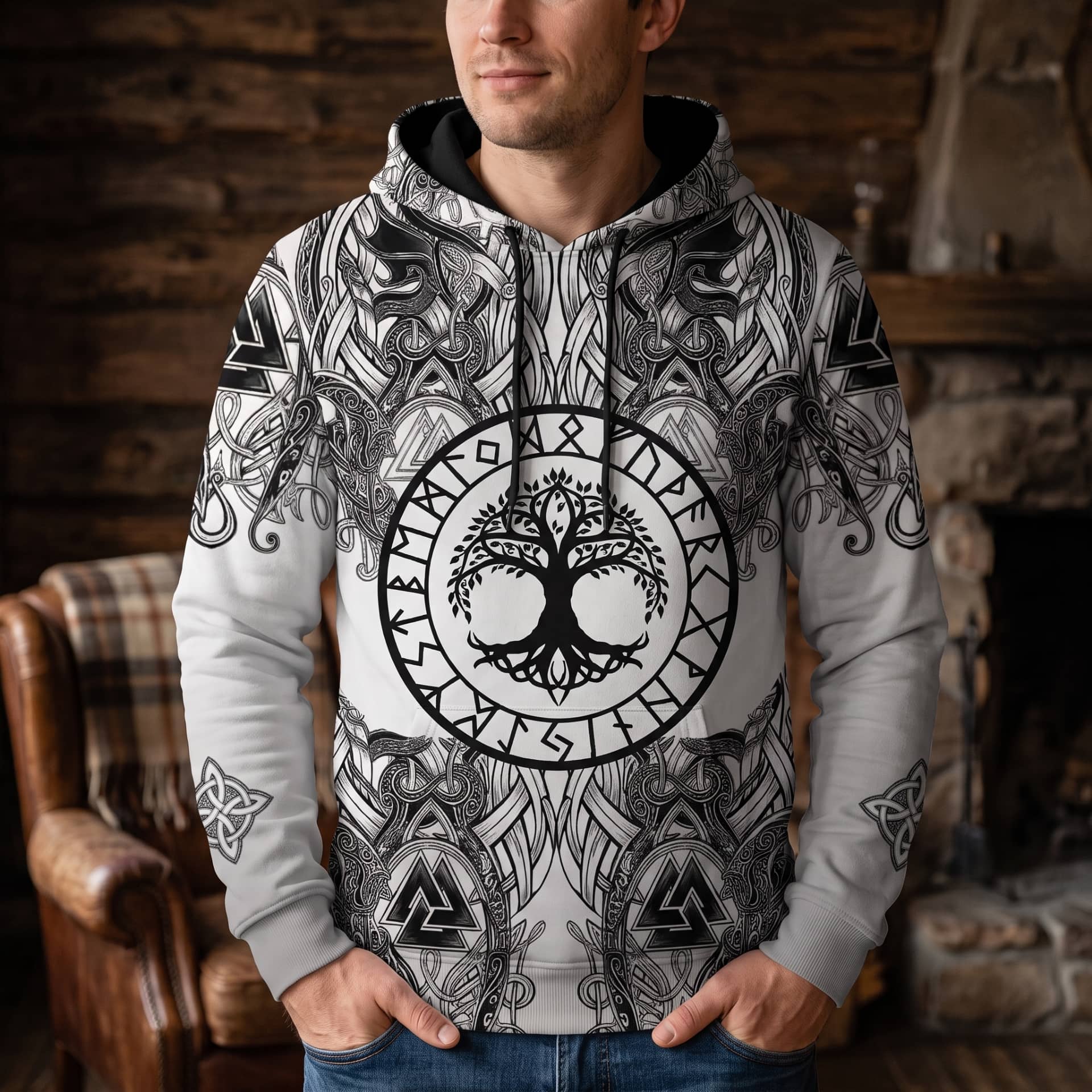

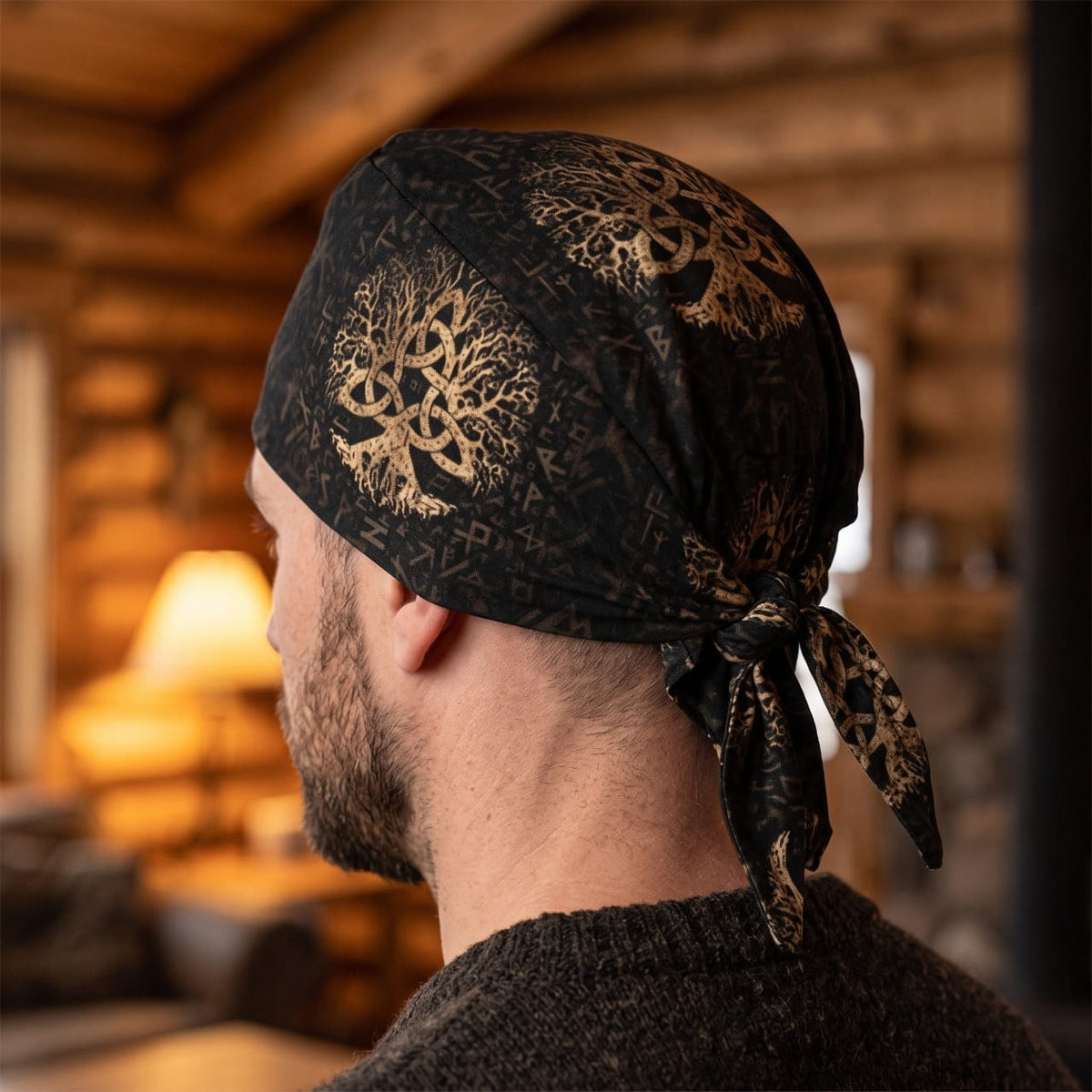
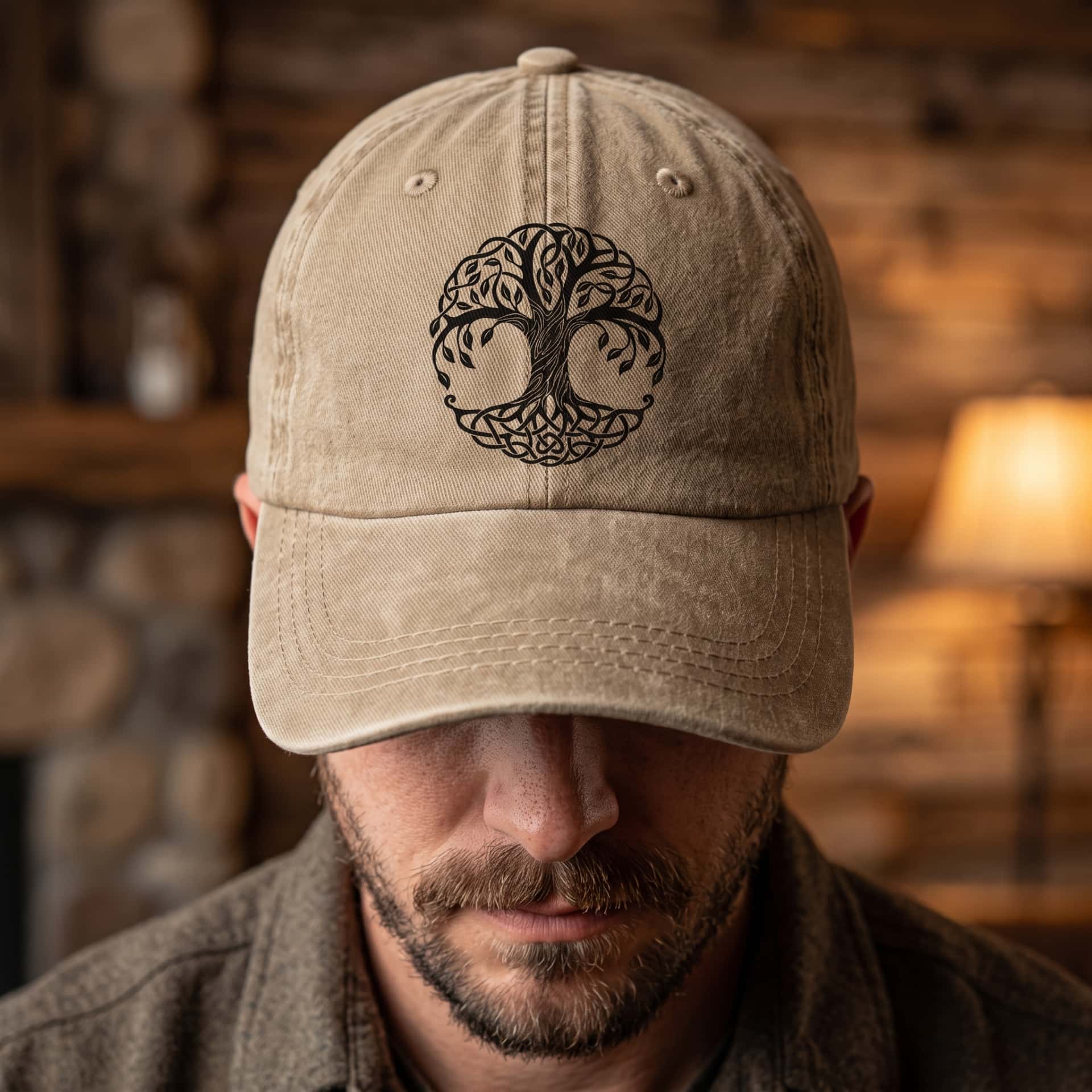
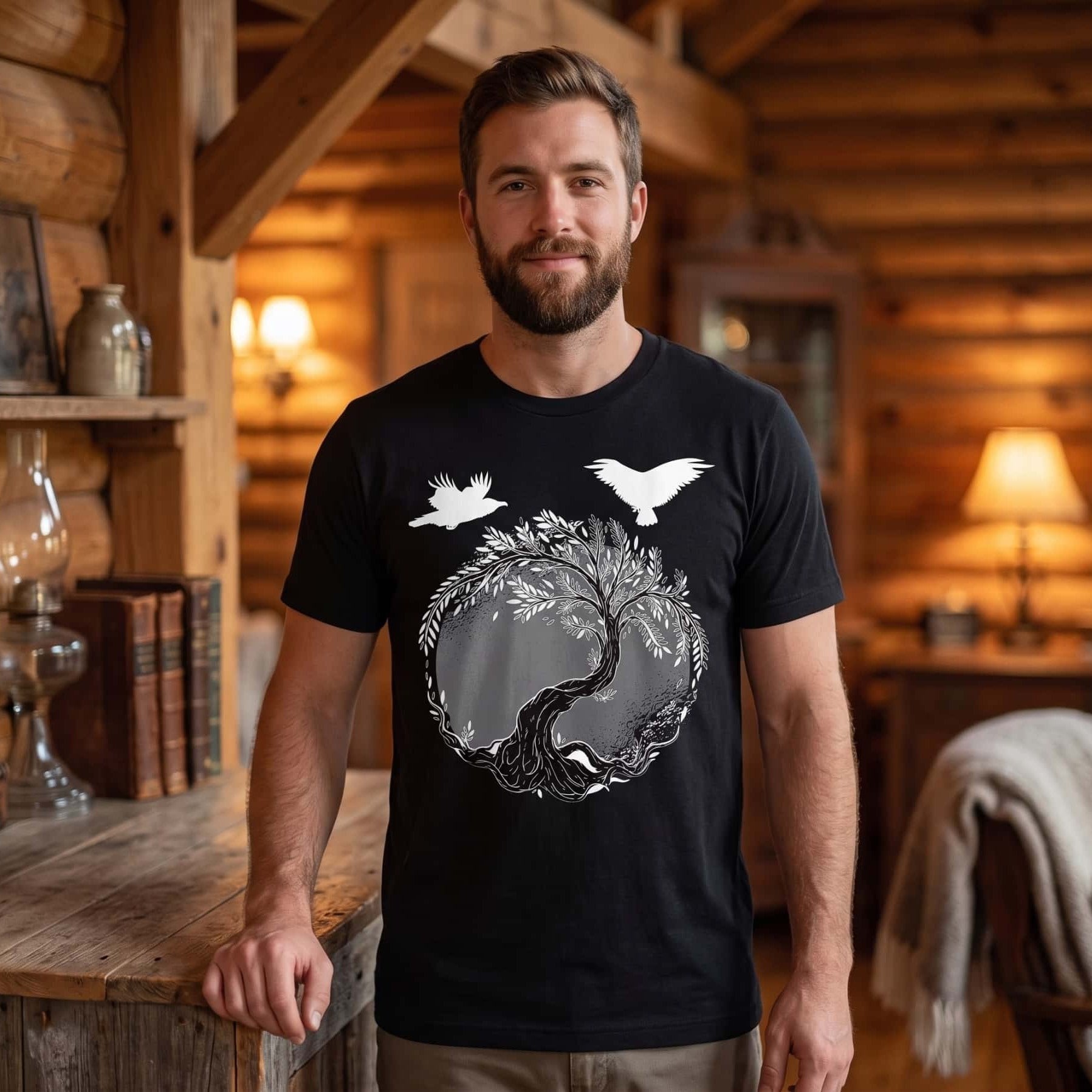
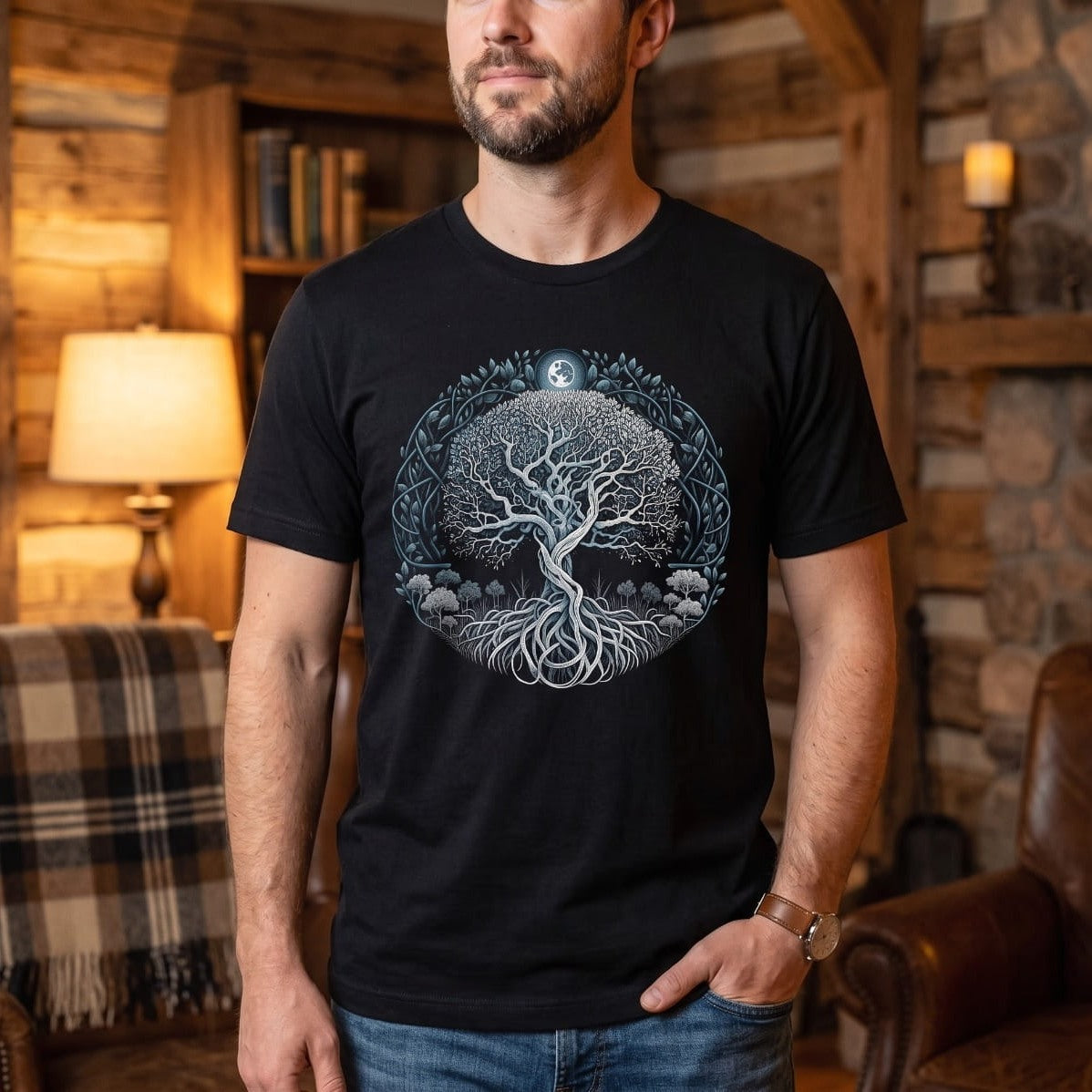
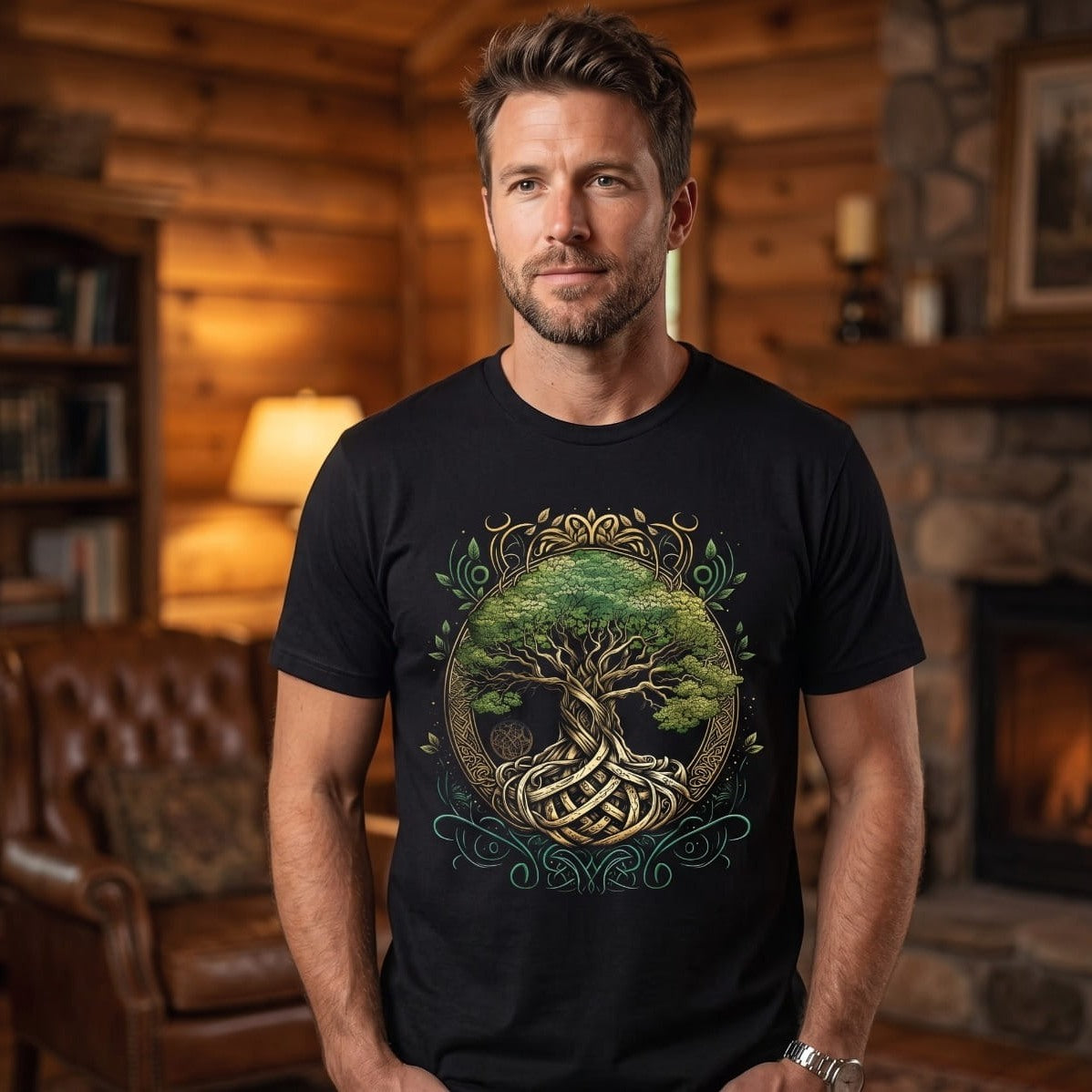
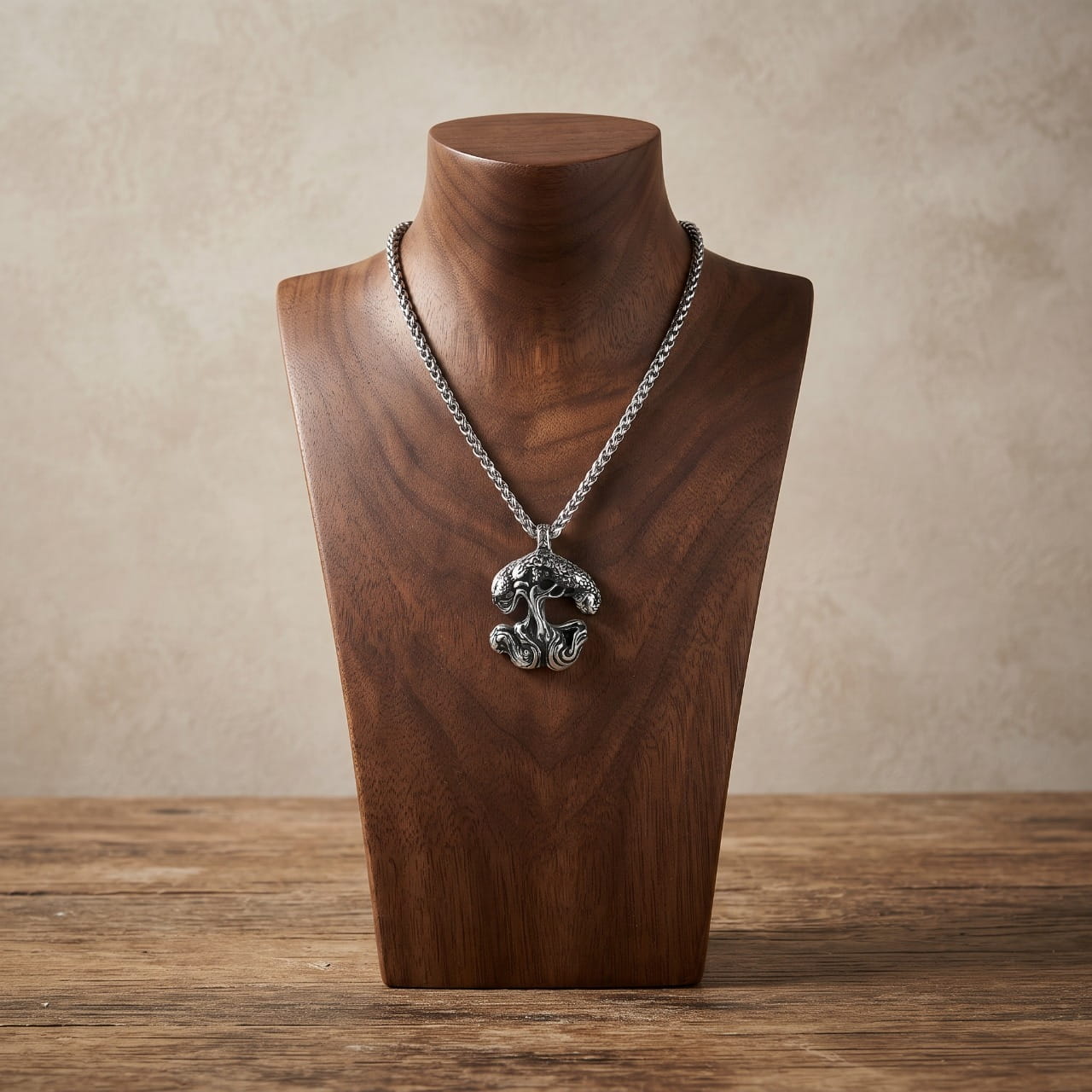
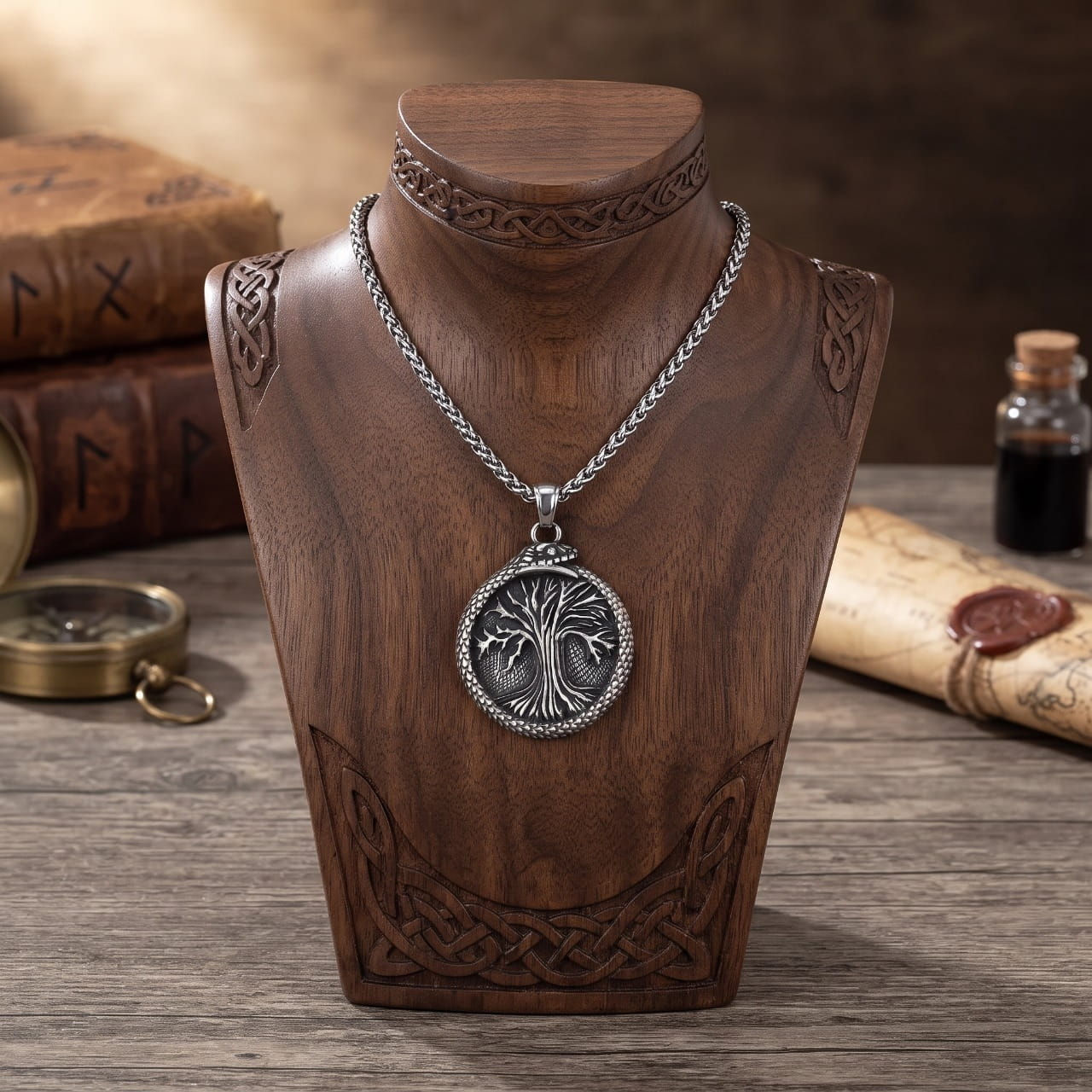
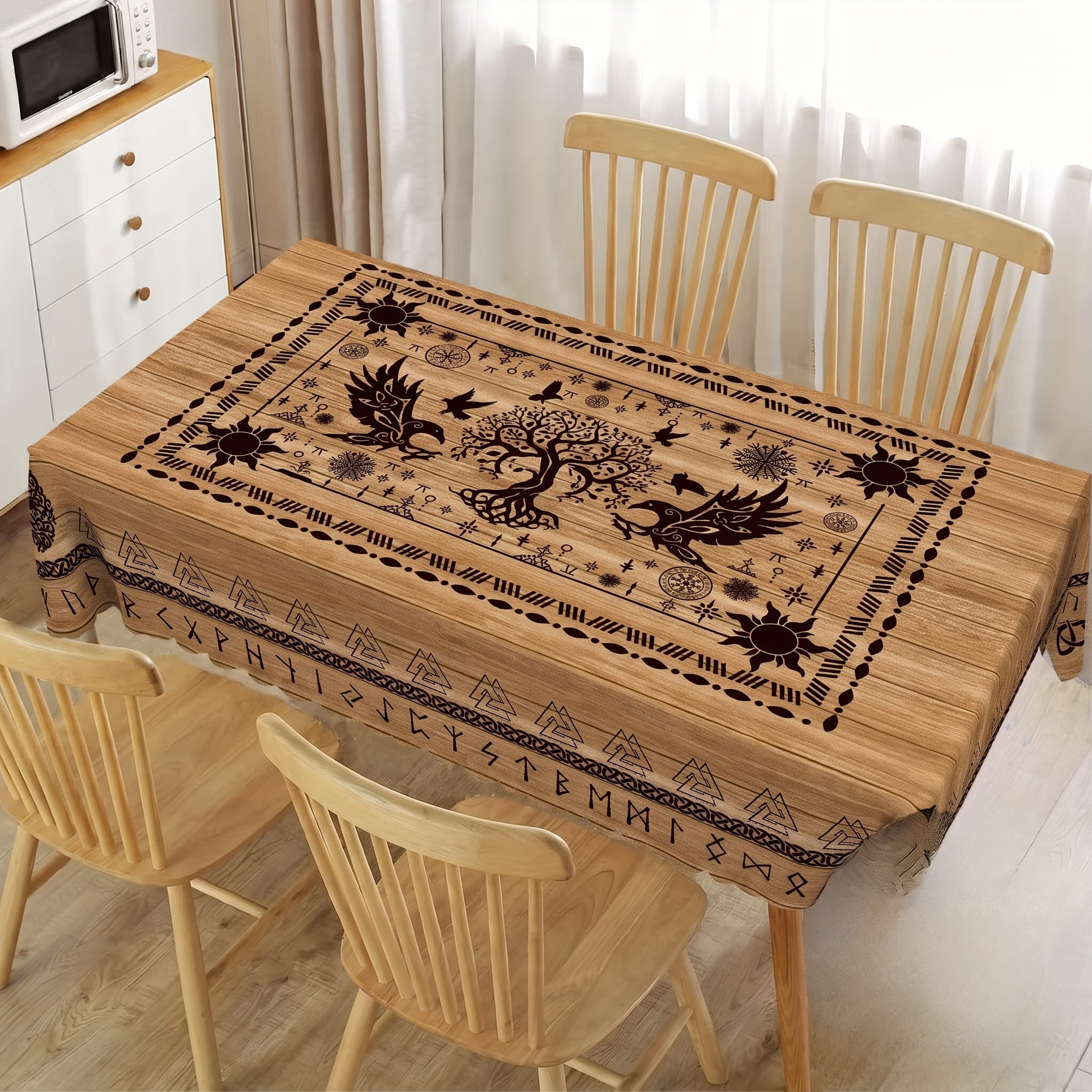
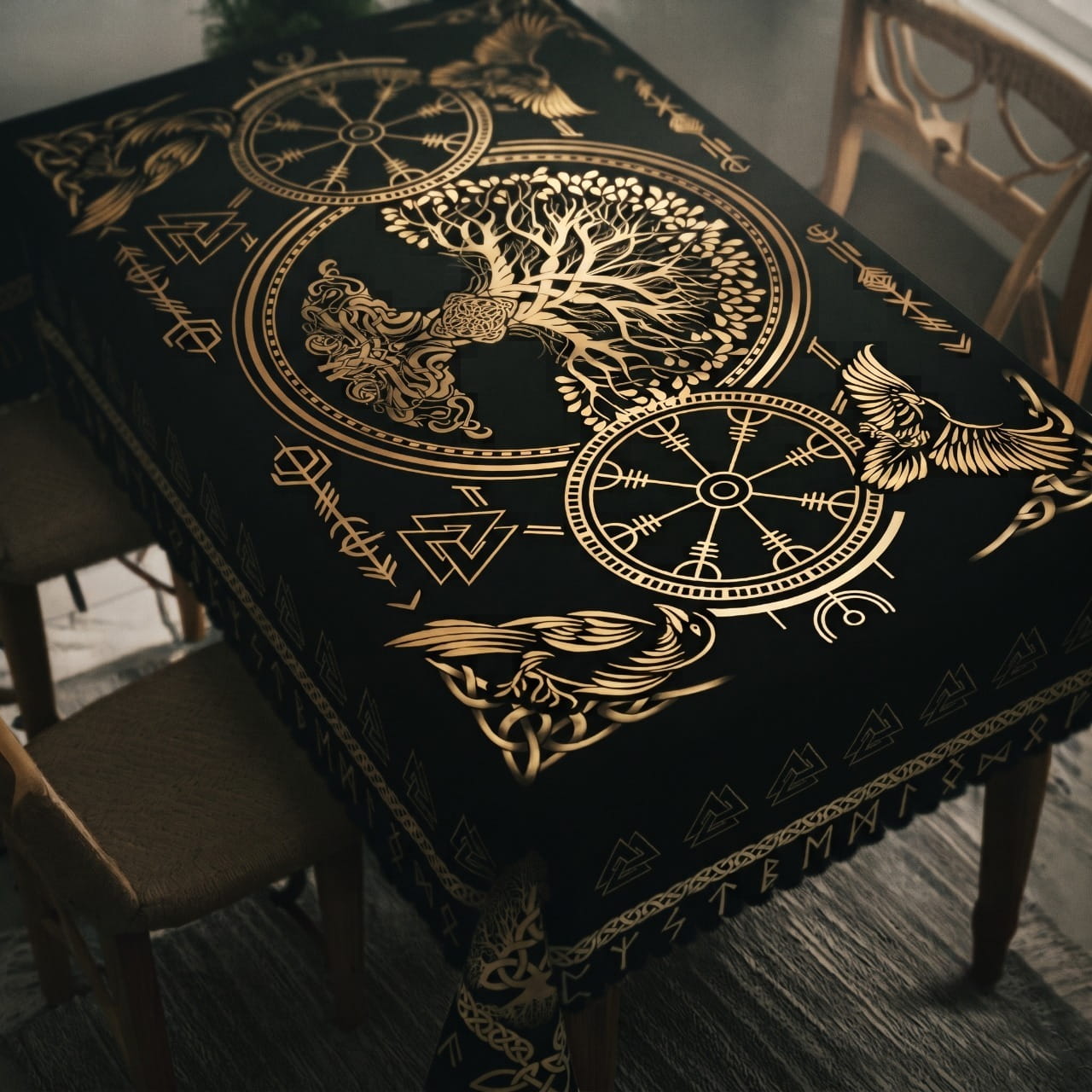
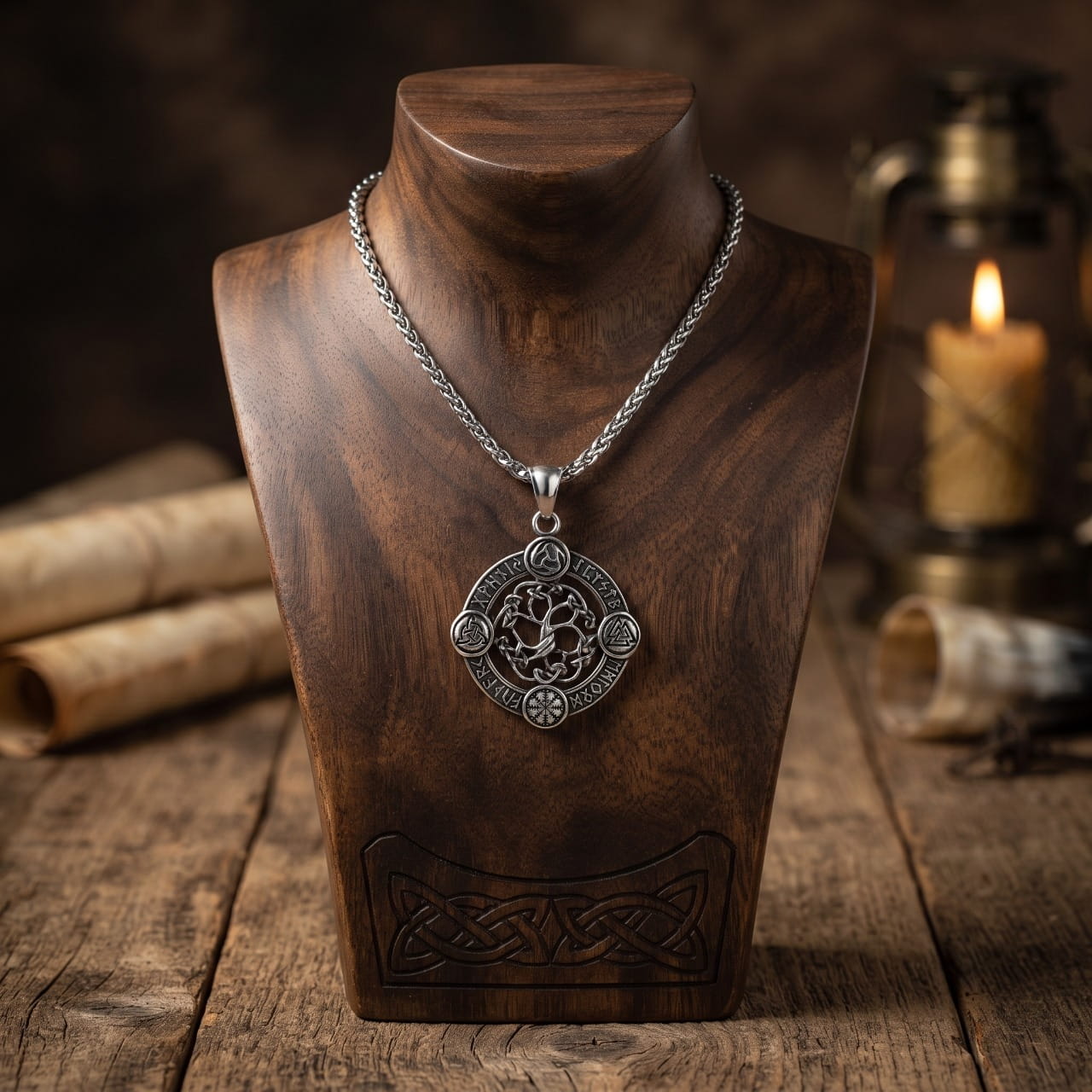
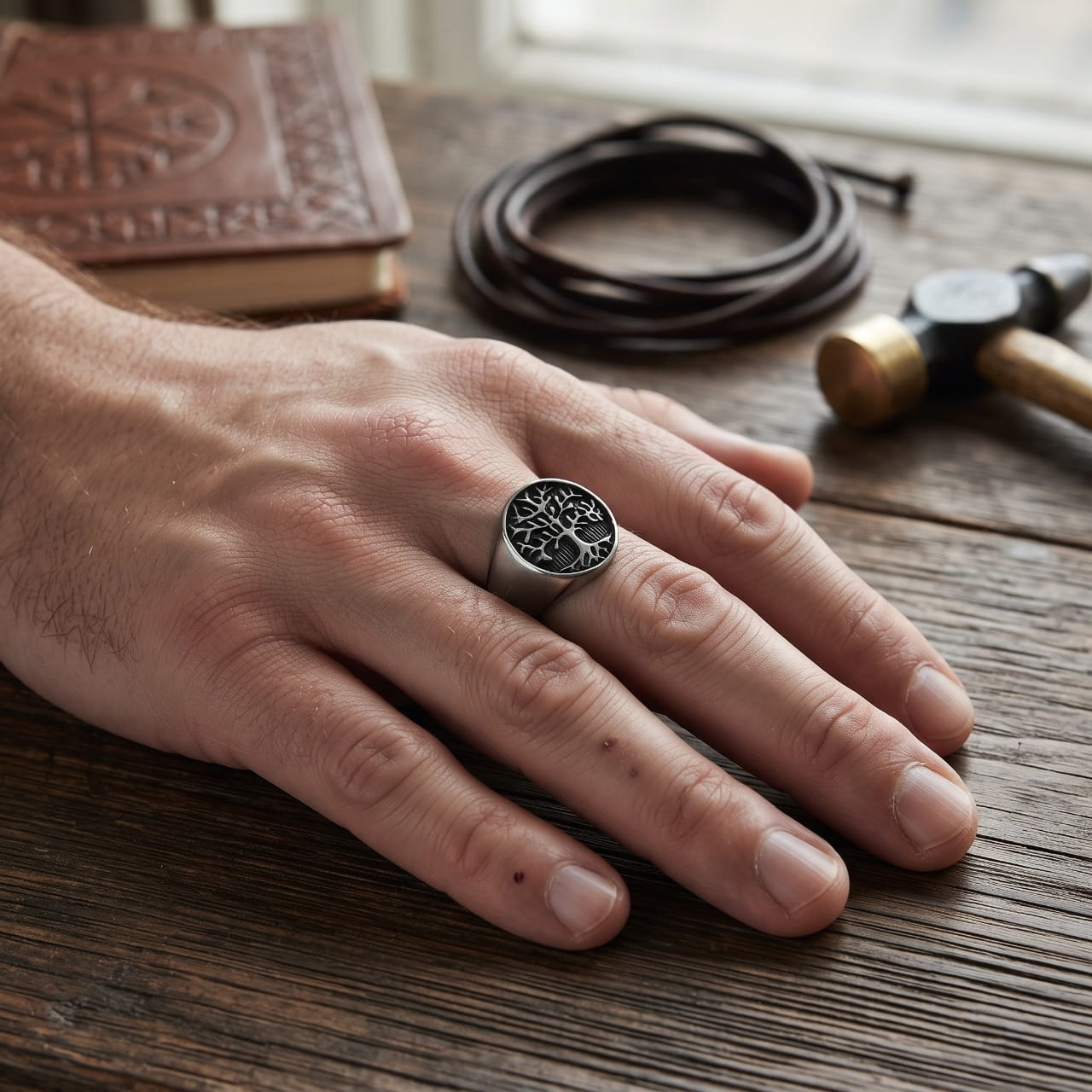
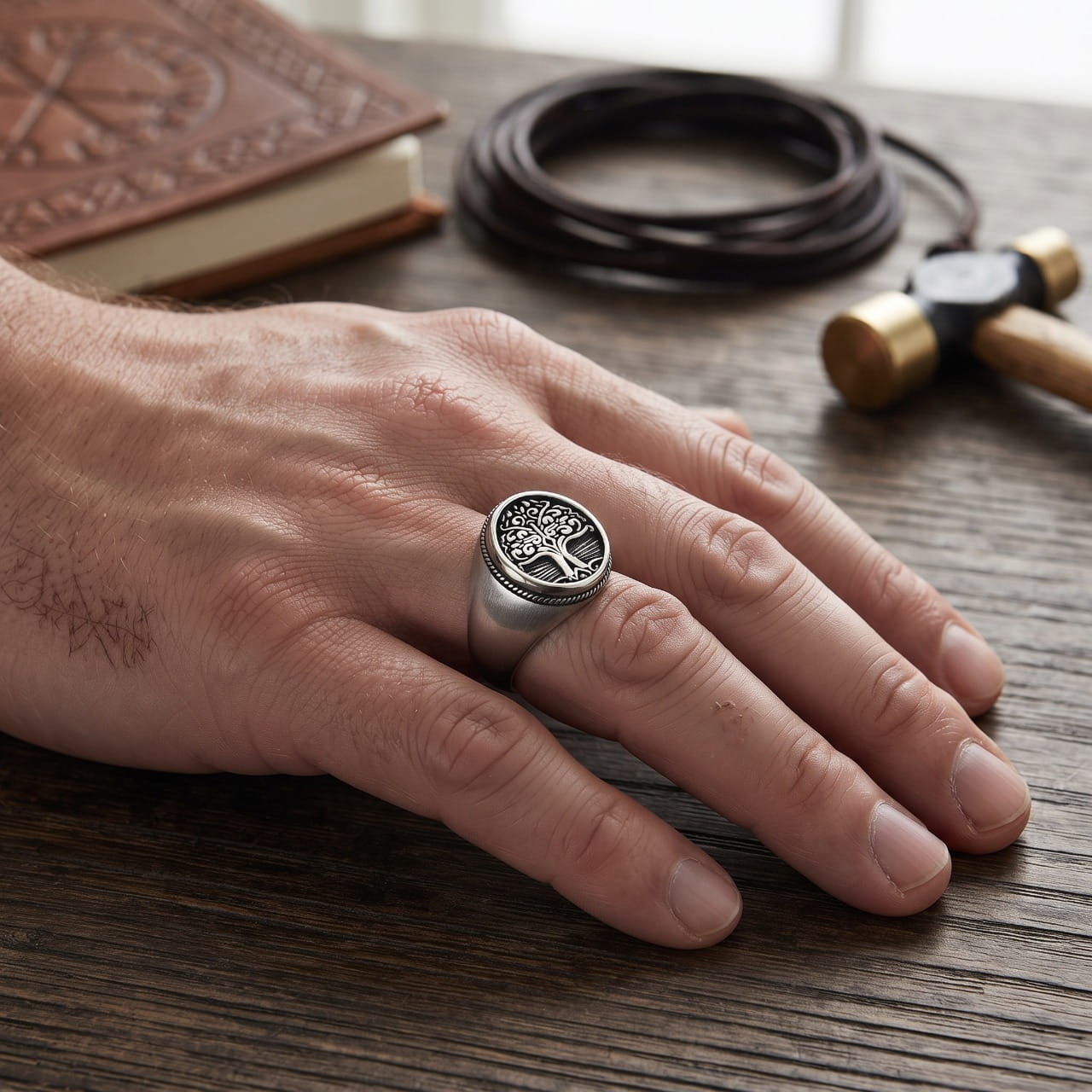
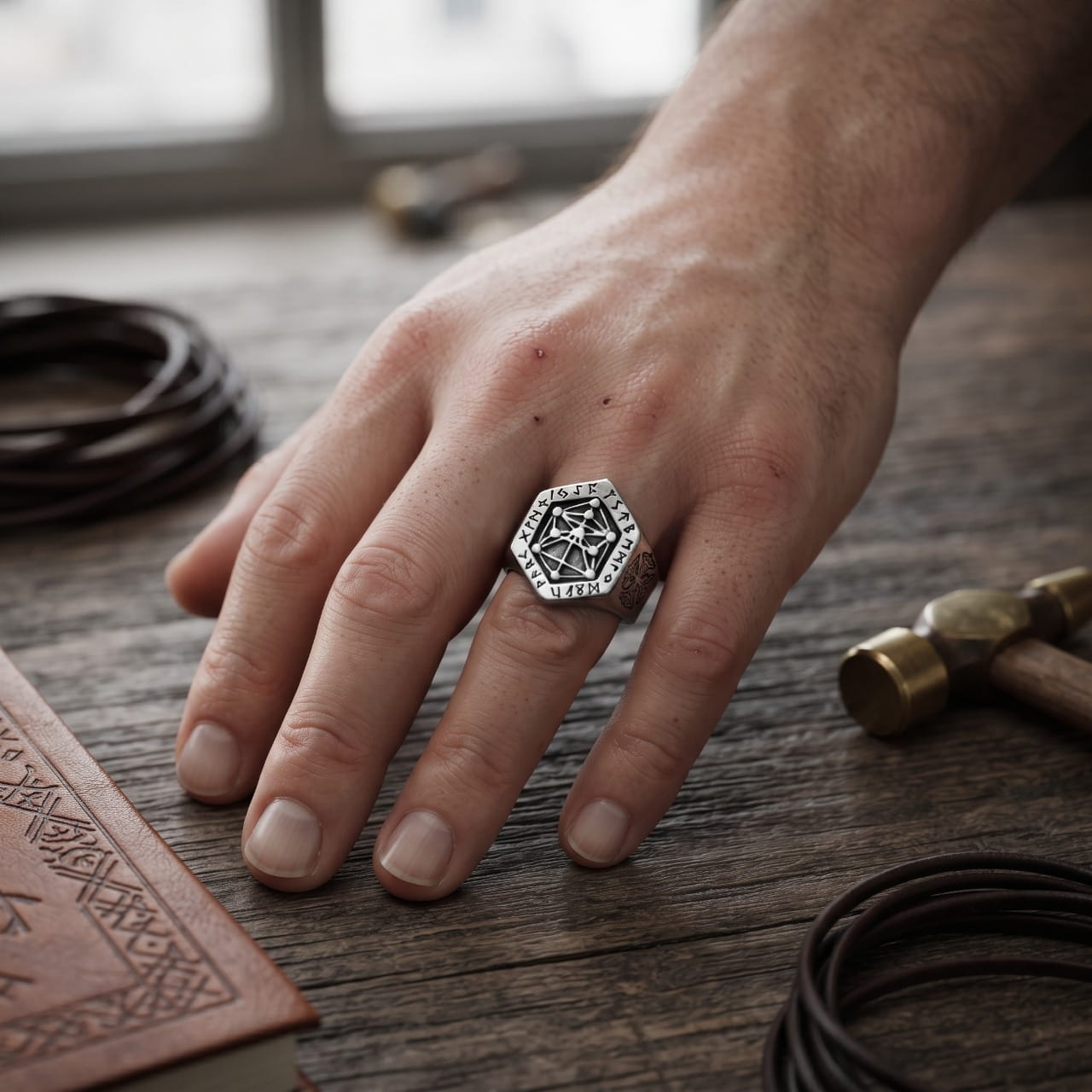
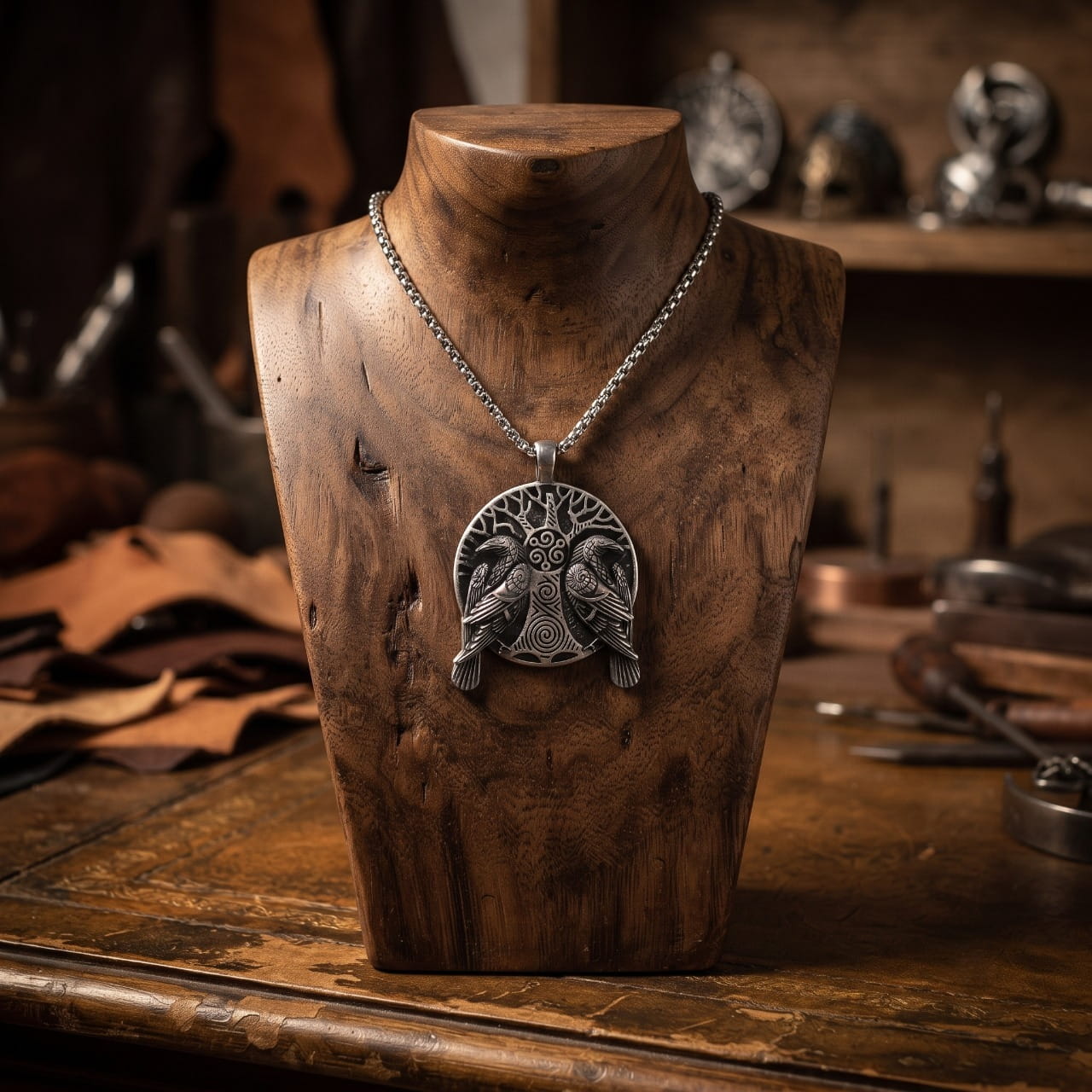
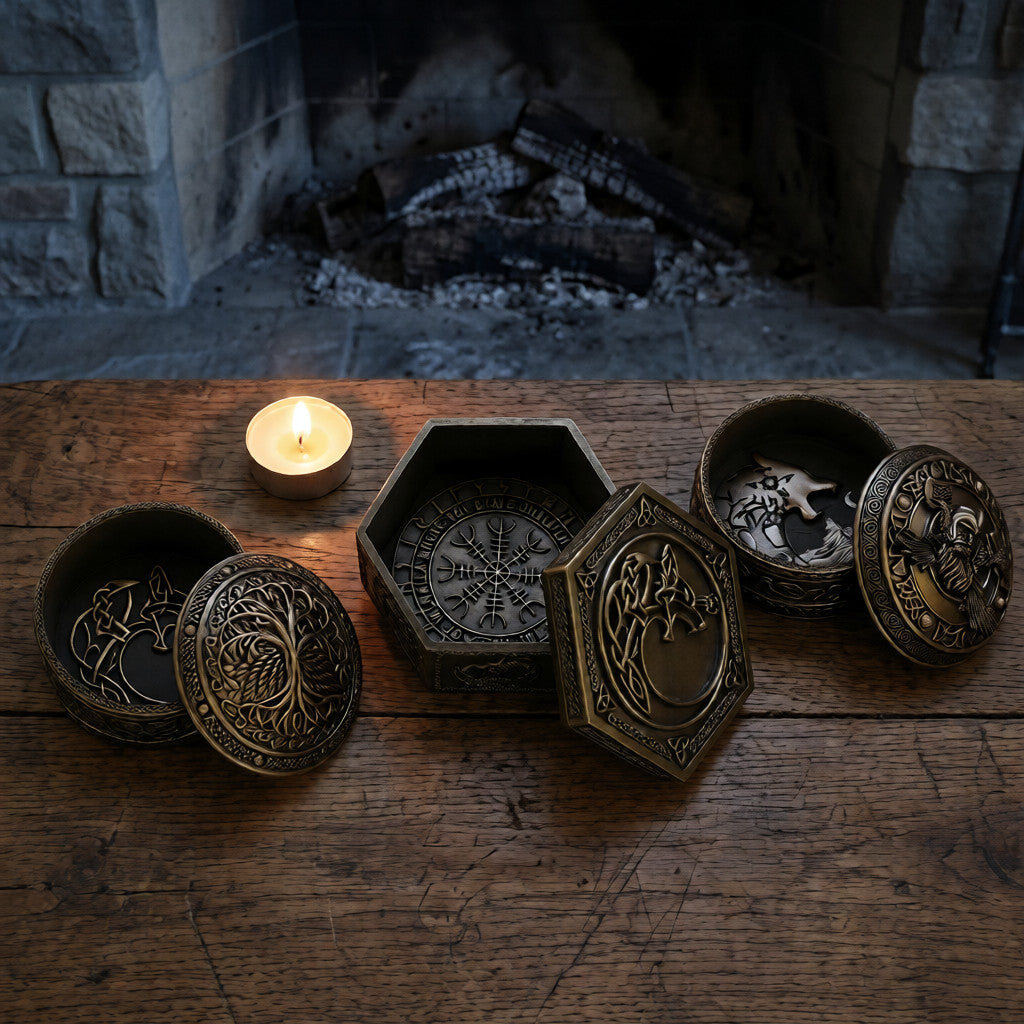
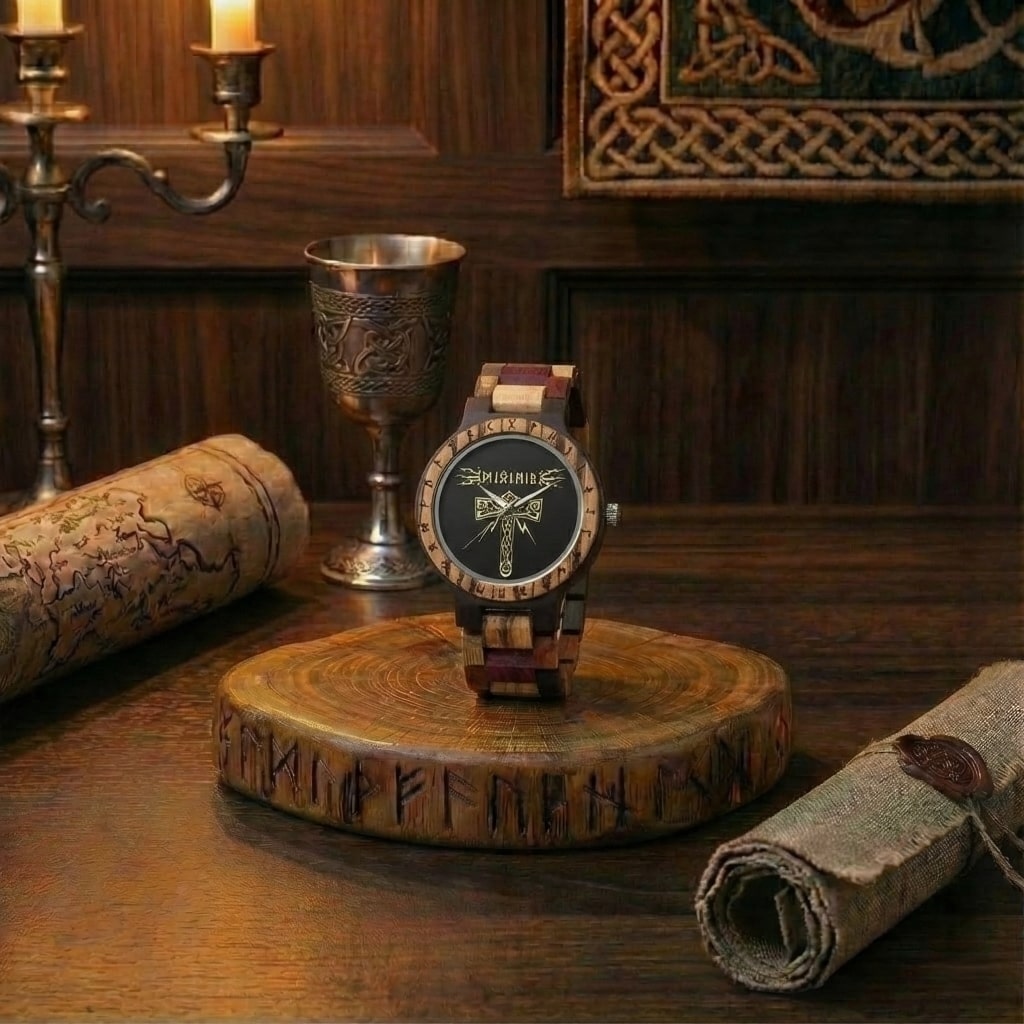
Yggdrasil — The World Tree — en savoir plus
Yggdrasil is the immense ash tree whose branches cover the sky and whose three roots plunge into three different worlds. It is the axis around which the entire Norse cosmos is organized—and, contrary to the peaceful image given by modern decoration, a tree that is in constant suffering.
Yggdrasil at Le Comptoir, format by format
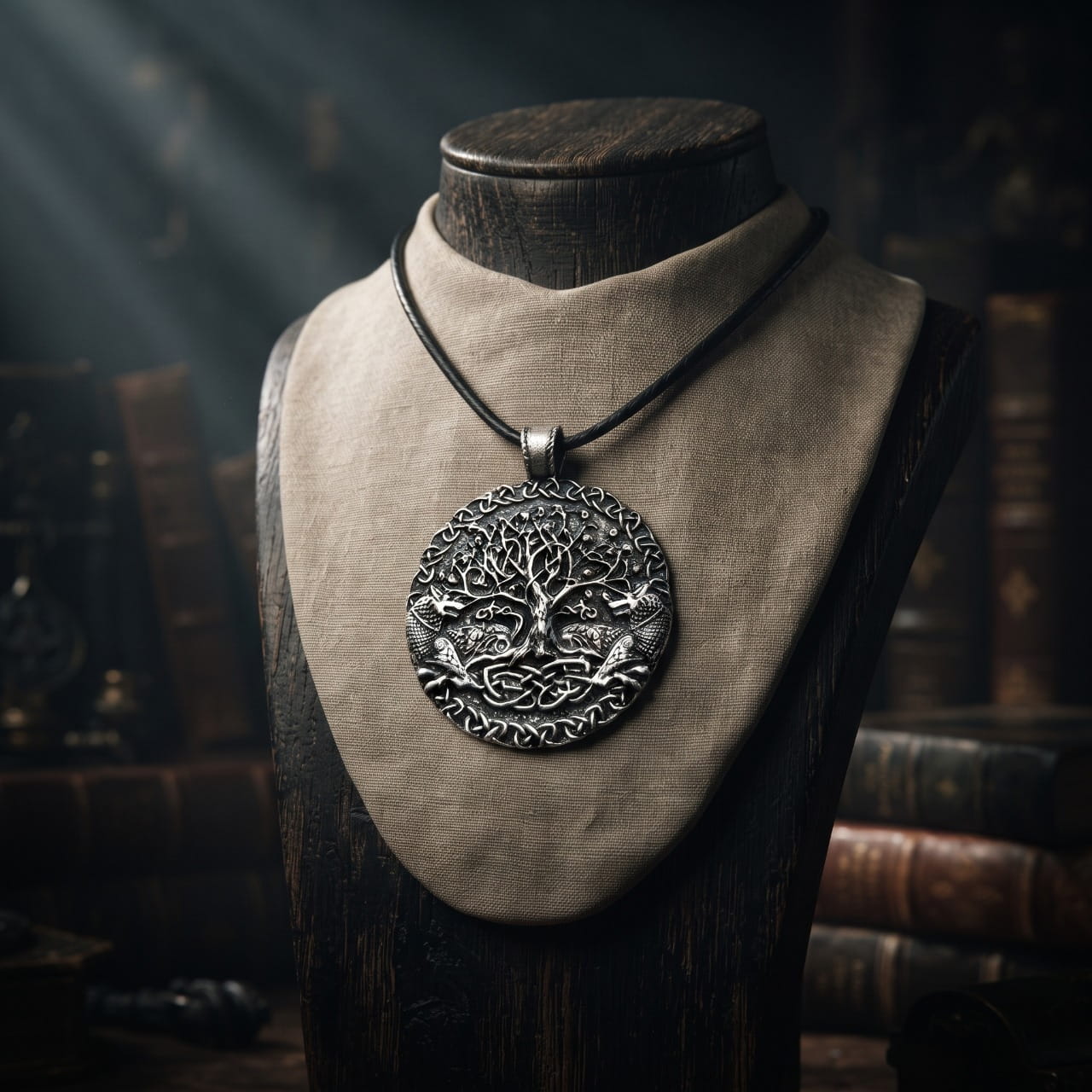
The world-tree is a circular and symmetrical motif: it requires a circle and surface area. It is primarily available as jewelry and home items.
| Format | For whom |
|---|---|
| Necklaces | The openwork medallion, the reference format |
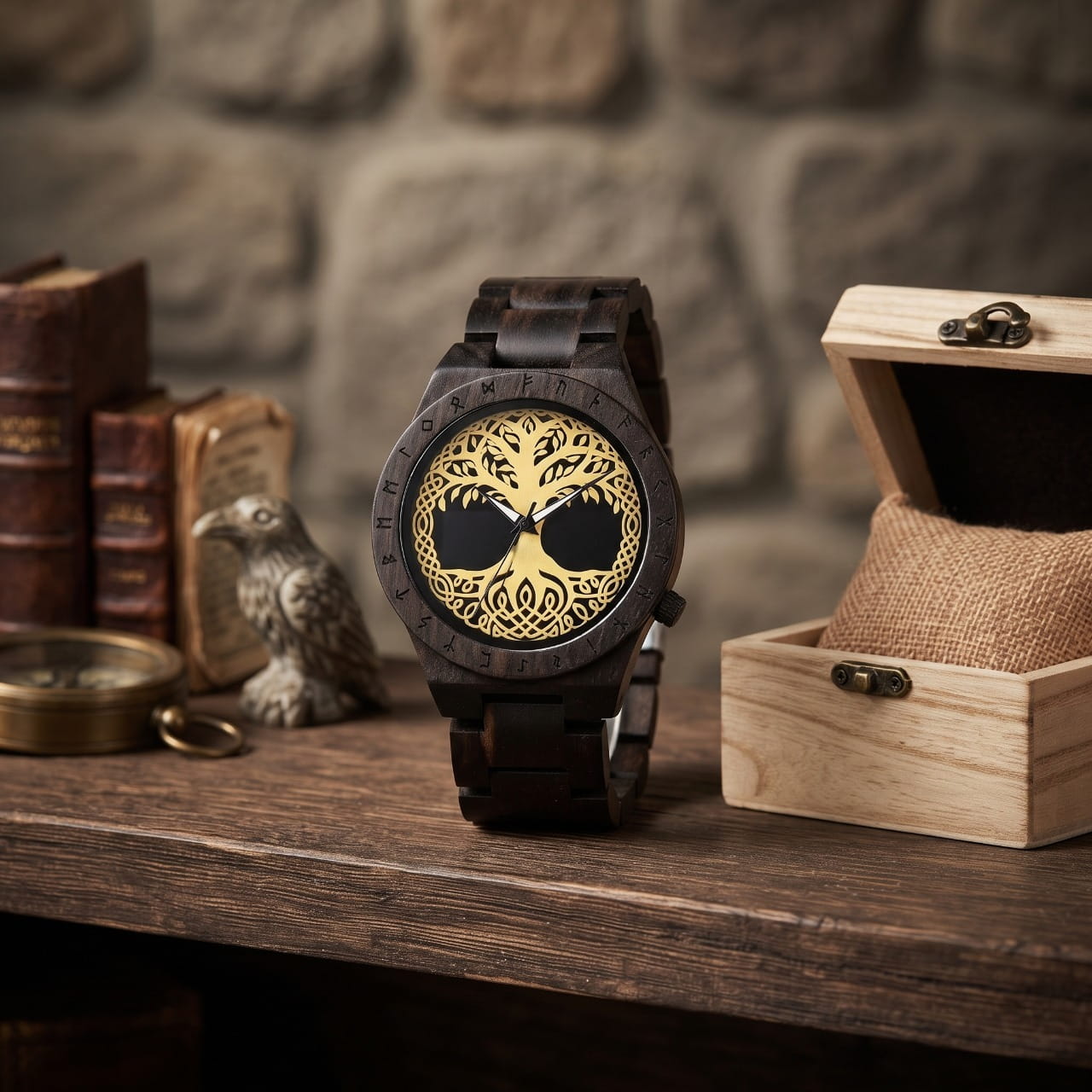
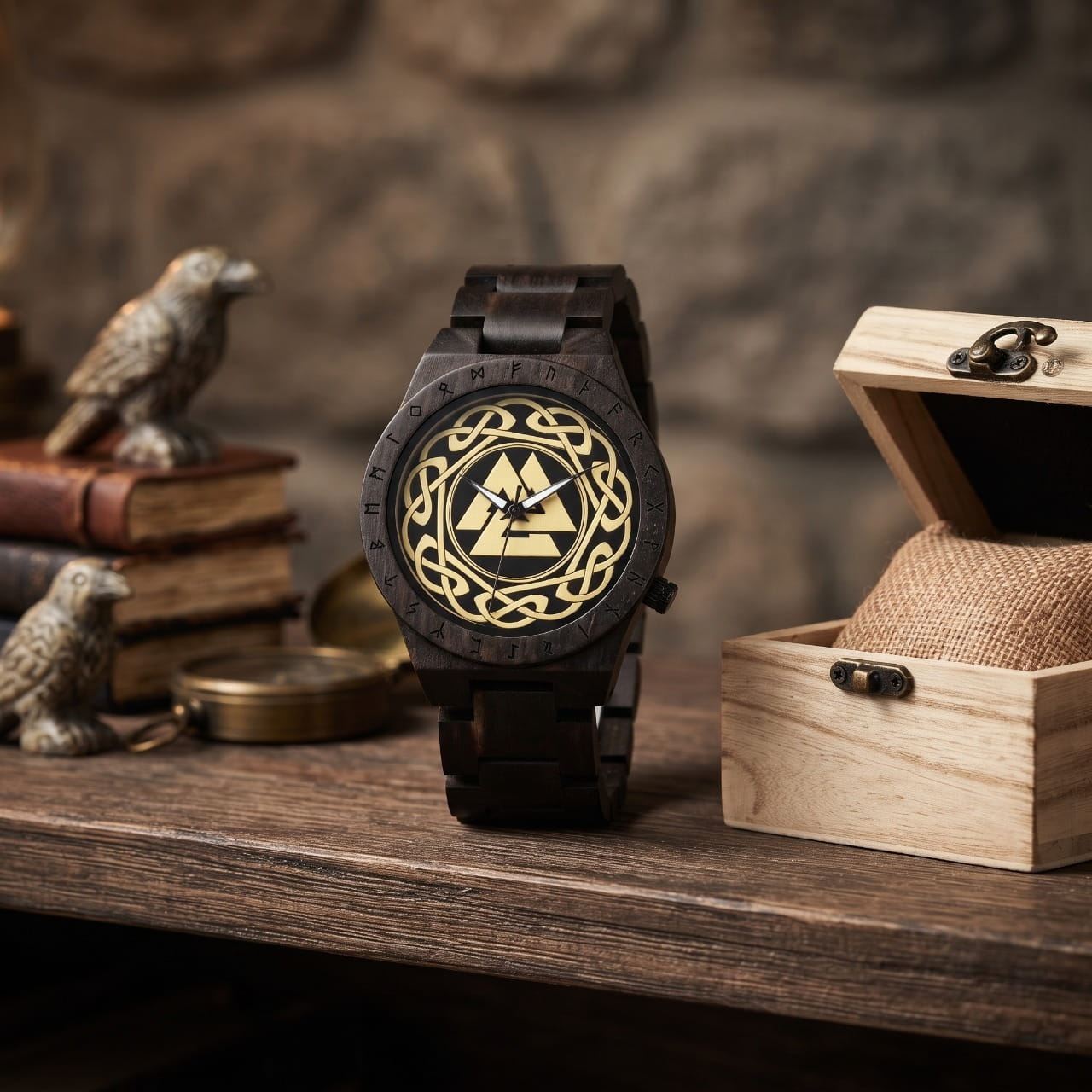
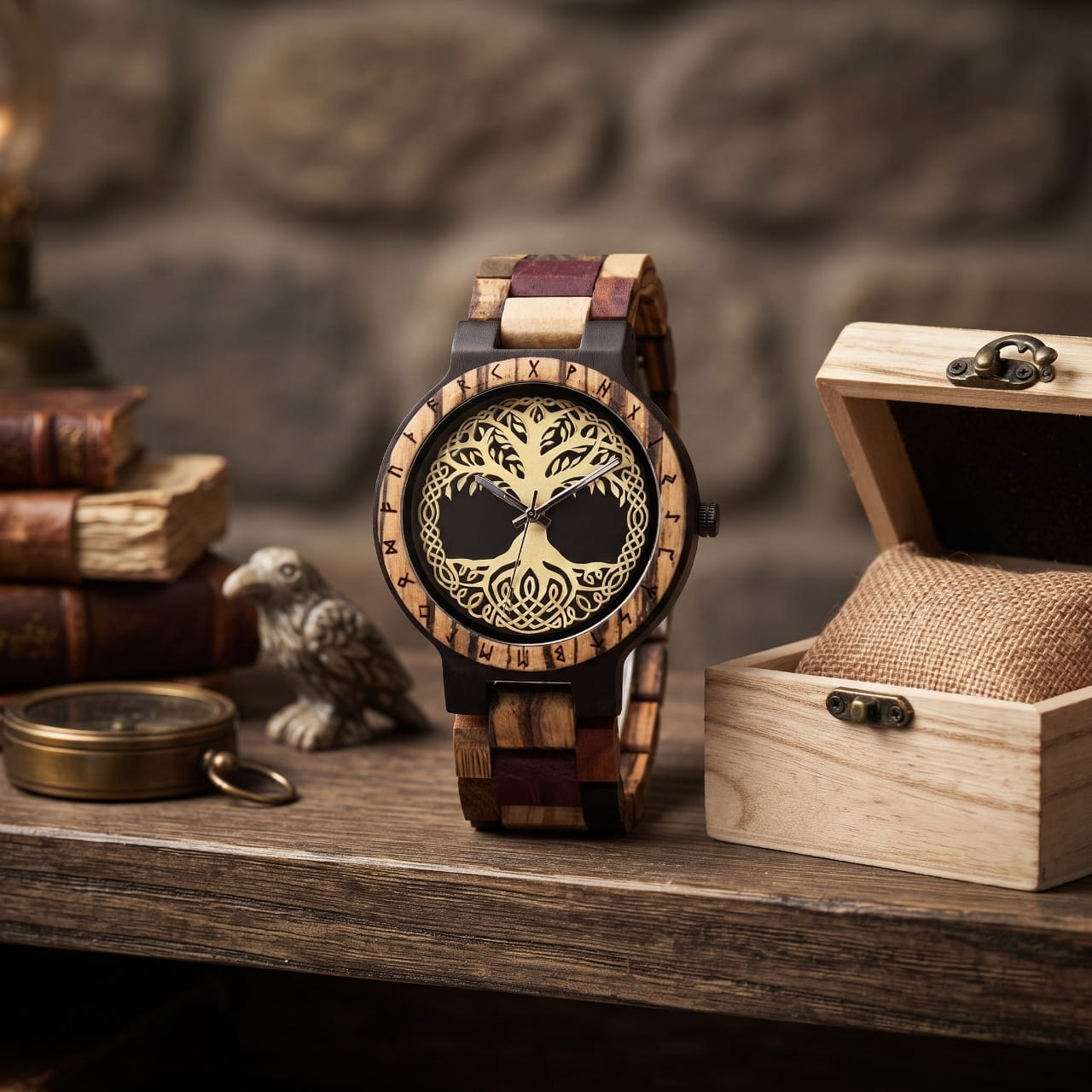
| Watches | The tree engraved on the dial |
| Rings | Signet ring with a round face |
| Tablecloths | The banquet table |
| Jewelry box | Engraved storage |
The openwork pendant remains the most impressive: light passes between the branches and roots, which no solid motif allows. Our Viking necklaces offer several diameters.
What the texts say
Yggdrasil is described in the two Eddas, and the description is surprisingly concrete. It is an ash tree—askr in Old Norse—always green, whose branches extend over all the worlds.
It has three roots, and each one plunges towards a well. The first goes to the Aesir, to the Well of Urd, where the Norns reside. The second goes to the frost giants, to the Well of Mimir, that of wisdom—this is where Odin left an eye as a pledge to take a sip. The third plunges into Niflheim, towards Hvergelmir, the source from which all rivers flow.
The Norns—Urd, Verdandi, and Skuld, the past, the present, and the becoming—draw water from the well every day and water the tree, mixed with the white clay of the bank, so that its branches do not rot.
Yggdrasil, in detail
An inhabited tree, and not peacefully
The Grímnismál lists its population with almost accounting-like precision. An eagle sits at the summit, and between its eyes is perched a hawk named Vedrfölnir. At the very bottom, the dragon Nidhogg gnaws at the roots. Four stags—Dáinn, Dvalinn, Duneyrr, and Durathrór—graze on its buds. Countless snakes coil around the roots.
Between the eagle and the dragon runs a squirrel, Ratatosk, whose sole cosmic function consists of running up and down the trunk to report to each what the other has said about them. It is not a messenger: it is a professional sower of discord, described with the same seriousness as the gods.
The poem concludes bluntly: the tree suffers more trials than men know. The stag bites from above, the flank rots, Nidhogg gnaws from below. Yggdrasil is not a symbol of tranquil eternity—it is a contested balance, maintained every day by the water of the Norns.
The name means "Odin's horse"
The most common reading breaks down Yggdrasill into Yggr—"the Terrible," one of Odin's many names—and drasill, "horse." Ygg's horse.
Yet in Scandinavian poetry, "to ride the horse" is a common metaphor for being hanged: the gallows is the condemned man's mount. The Hávamál has Odin say that he remained hanging for nine nights from the wind-beaten tree, wounded by a spear, sacrificed to himself, before seizing the runes while screaming and falling back down.
The Norse tree of life is therefore, in its very name, a tree of sacrifice. This is not the interpretation favored by modern decoration, but it is that of the sources.
It survives Ragnarök
When everything collapses, the tree trembles but does not fall. The Völuspá and the Vafþrúðnismál agree: two humans, Líf and Lífthrasir, take refuge in the grove of Hoddmímir—which most commentators identify as Yggdrasil—and feed there on the morning dew. It is from them that the humanity of the future will descend.
The tree is therefore both the site of the foundational sacrifice and the shelter that allows for what comes next. It is this dual role that makes it the most optimistic motif of the Norse pantheon, despite the rot and the stags.
Very real sacred trees
Yggdrasil was not just a poetic image. Adam of Bremen, describing the temple of Uppsala around 1070, mentions an immense, ever-green tree planted next to it, whose species no one knew, and a sacred grove where the bodies of the sacrificed were hung.
Among the Saxons, the Irminsul—a pillar or trunk believed to support the sky—was cut down by Charlemagne in 772, a gesture of conquest as much as conversion. The axis-tree was not unique to the Scandinavians: it was a Germanic way of representing the world.
The Norns, or why fate is woven
At the foot of the first root sit the three Norns. Their names read like a treatise on time: Urd, that which has come to pass; Verdandi, that which is coming to pass; Skuld, that which must come to pass. The Völuspá says that they carve runes on wooden tablets and fix the lives of the children of men.
This detail counts for understanding the tree. Norse destiny is not decreed from above: it is crafted, by hand, at the foot of the tree, with water, clay, and notches in the wood. It is a craft, not a divine decree.
The same vocabulary reappears elsewhere. In the Njáls saga, a poem recounts that twelve valkyries weave on a loom whose warp is made of human entrails and whose weights are severed heads: the fabric they craft is the unfolding of a battle. In the Norse imagination, destiny is not written—it is woven and carved.
How the motif is rendered on our pieces
Two treatments coexist and do not result in the same object at all. The openwork pendant is cut from the solid mass: light passes between the branches, the motif is read in negative against what is behind it, and the piece remains light despite its diameter. It is the most spectacular rendering, and the most fragile to impacts on the edges.
The intaglio-engraved motif, on the other hand, occupies a solid surface—a signet ring face or a watch dial. It is read through the play of shadow in the grooves, is more resistant, and is suitable for smaller formats where the openwork would become illegible. Below 20 mm in diameter, always prefer the engraved version.
Recognizing a faithful design
A well-drawn Yggdrasil respects three things. Vertical symmetry first: the roots should occupy the lower half just as the branches occupy the upper half, in mirror image—a tree with large branches and small roots is a decorative tree, not the world-tree. The circle next, which frames the tree and signifies that it contains the worlds. Finally, a clear central trunk, neither twisted nor offset, since it is the axis.
Materials at Le Comptoir
Our Yggdrasils are made of stainless steel for jewelry, most often openwork: the motif is cut out and light passes between the branches. This is what gives the pendant its lightness despite its diameter.
The watches combine steel with wood—a coherent choice for a tree motif, with different graining on each piece. The tablecloths are made of printed polyester, machine washable at 30 degrees. The jewelry box is made of engraved wood.
Maintenance
An openwork pendant requires a little more attention than a solid piece: the cutouts retain soap and dust. Lukewarm water, mild soap, a soft toothbrush passed between the branches, abundant rinsing, and complete drying—water that stagnates in an openwork design eventually leaves a halo.
For the wood of the watches and the box: dry cloth, no immersion, and a drop of wood maintenance oil once a year if the shade dries out. For the tablecloths: machine at 30 degrees, no tumble drying, ironing at low temperature on the reverse side.
How to wear it
The Yggdrasil pendant wears well in a large diameter—it is a motif that benefits from being seen. Below 25 mm, the branches and roots merge. On a 55 cm chain, the medallion falls mid-chest and is fully readable.
It is a round and dense motif: avoid pairing it with a second medallion. On the other hand, it pairs very well with linear pieces—a bangle bracelet or a slim ring—that do not compete with its circular geometry.
Giving an Yggdrasil as a gift
It is by far the most consensual Norse symbol to give. The tree of life speaks to everyone, including someone who knows nothing about Scandinavian mythology: filiation, roots, growth, transmission. Where the Valknut requires an explanation and the hammer displays strength, the tree fits anywhere.
It is for this reason that it works well as a birth, retirement, or Mother's Day gift. The engraved jewelry box is the piece to consider when one wants to give an object rather than jewelry. The full Viking Jewelry section allows you to compare diameters.
Frequently asked questions
Are Yggdrasil and the tree of life the same thing?
Not exactly. "The tree of life" is a universal motif found in almost all cultures. Yggdrasil is the Norse version, with its three roots, nine worlds, eagle, dragon, and squirrel. A tree in a circle without these attributes is a generic tree of life.
What species of tree, exactly?
The texts say an ash. Some researchers argue for the yew, because the yew is always green while the ash loses its leaves, and the Eddas insist on this persistent character. The debate is not settled; tradition holds to the ash.
How many worlds exactly?
Nine, but no ancient source gives a complete list. The lists circulating today—Asgard, Midgard, Jötunheim, Vanaheim, Alfheim, Svartalfheim, Niflheim, Muspelheim, Helheim—are modern reconstructions assembled from scattered mentions.
Is the openwork pendant fragile?
Less than it seems. Stainless steel is significantly more rigid than common silver alloys, and the branches are connected to each other and to the outer circle, which stiffens the whole. The only real risk remains a direct frontal impact on an edge.
Who is Ratatosk, exactly?
A squirrel. His name reads roughly like "drill-tooth." His only function, in the Grímnismál, consists of shuttling between the eagle at the top and the dragon at the roots to report to each the insults of the other. Norse mythology features one-eyed gods, chained wolves, and oceanic serpents—and a four-legged gossip-monger, treated with exactly the same seriousness as the others.
Did Yggdrasil give us the Christmas tree?
No, and beware of overly clear claims on this point. The idea that the decorated tree descended from a Germanic tree cult is widespread but poorly supported: the Christmas tree appeared in Alsace and the Rhineland in the 16th century, in a Christian context. What is attested, however, is the existence of sacred trees and groves in Scandinavia, such as the one in Uppsala described by Adam of Bremen. A link of spirit, not of filiation.
📖 To go further: our complete dossier on Yggdrasil, the one on the nine worlds, and the creatures that inhabit the tree.