
Filters
15 products
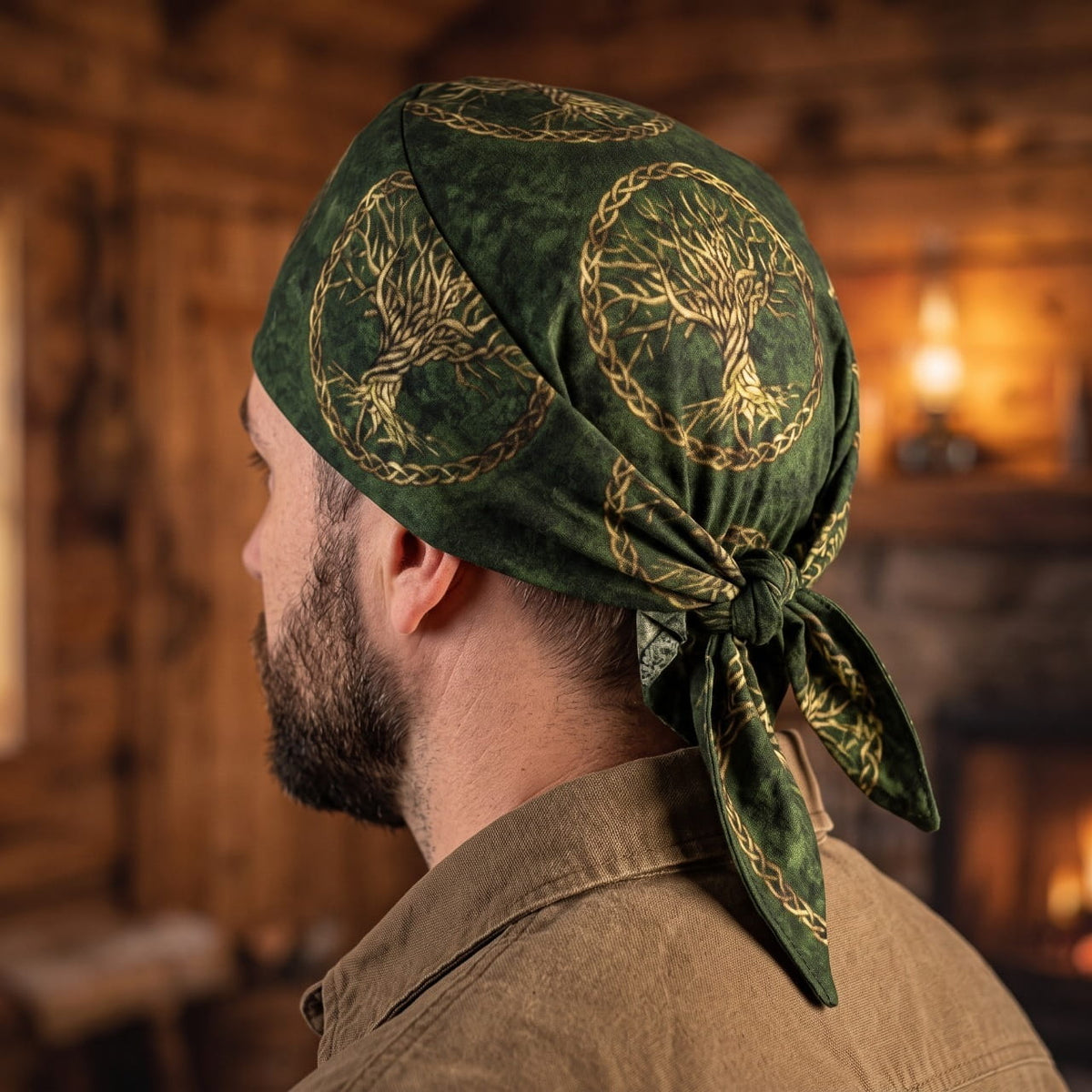
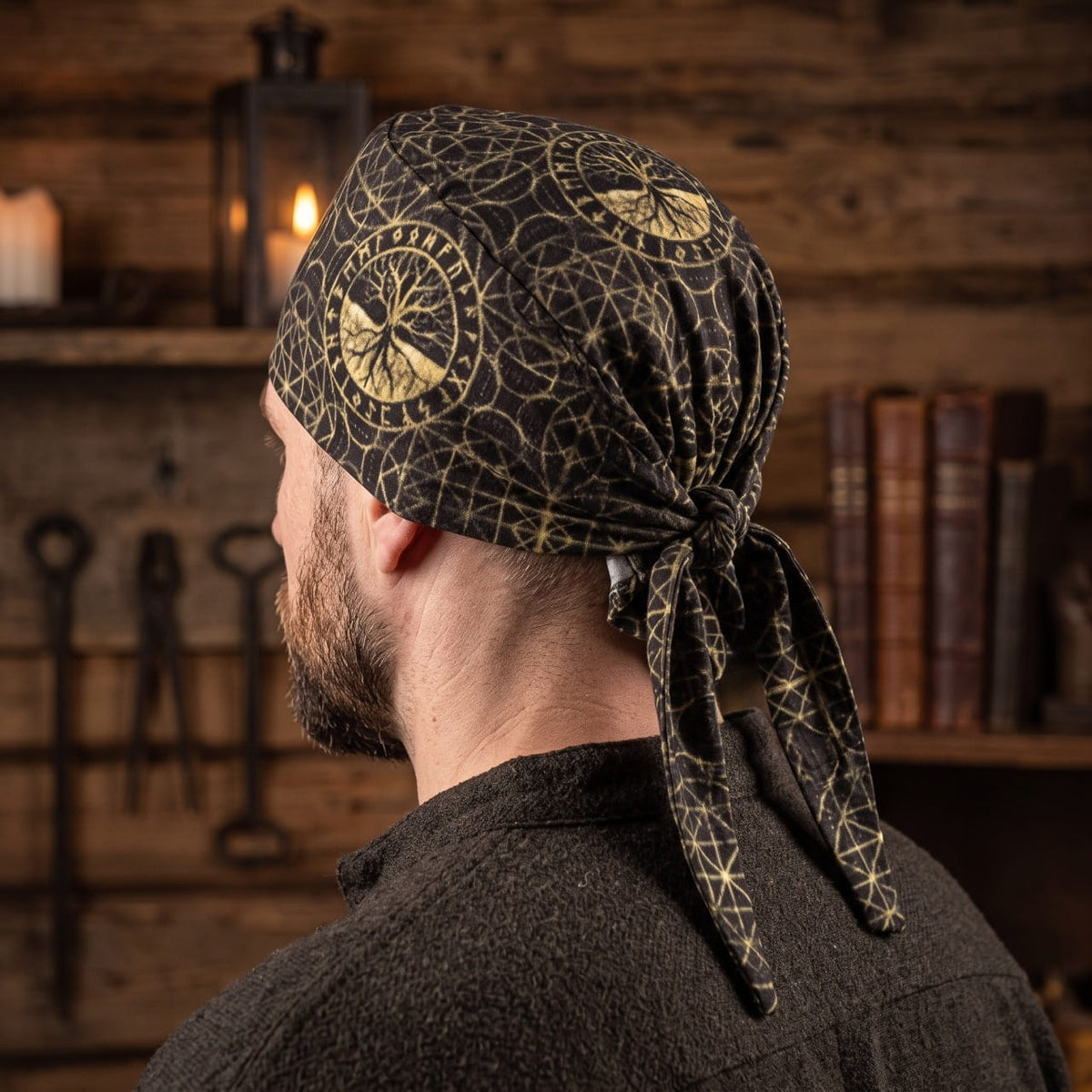


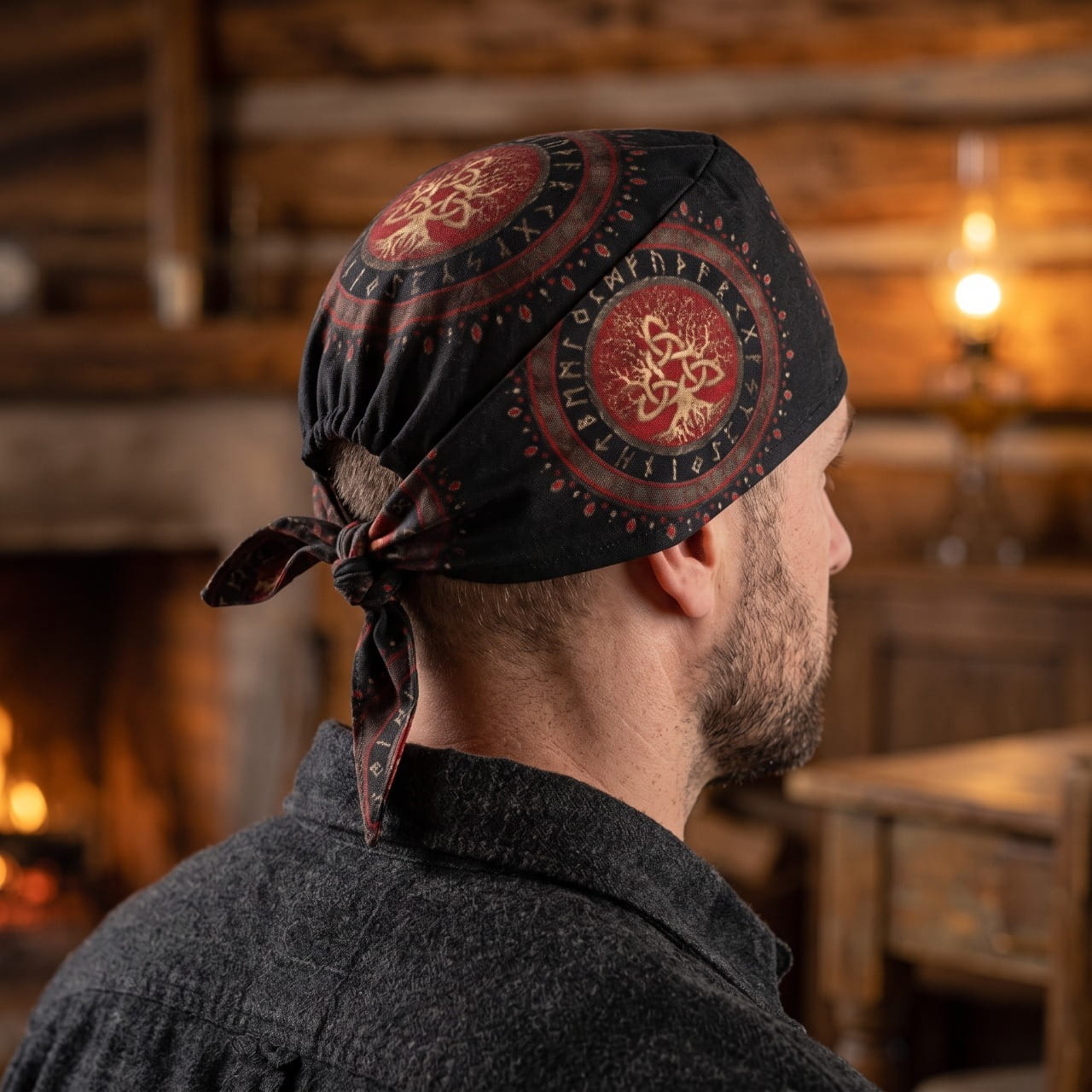
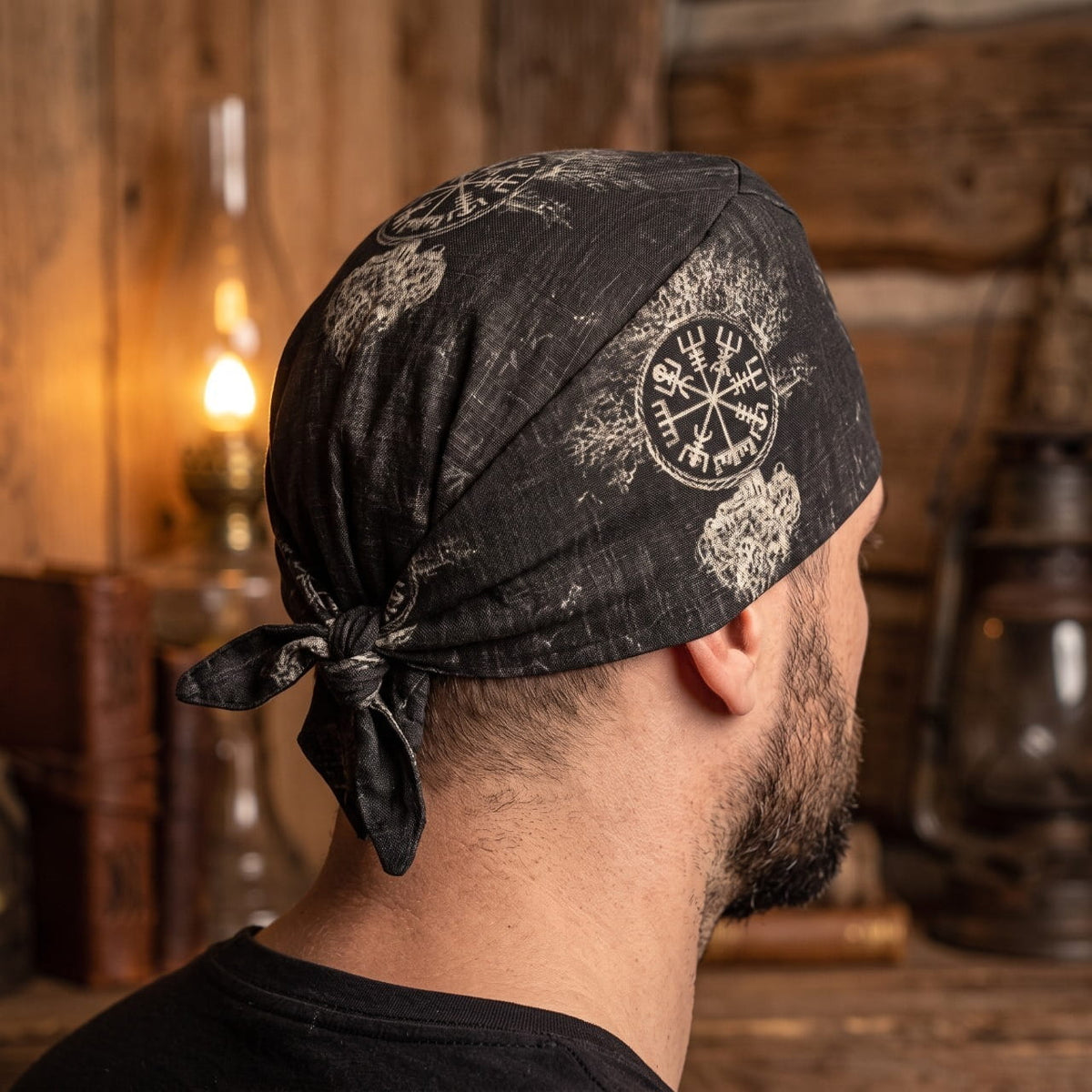


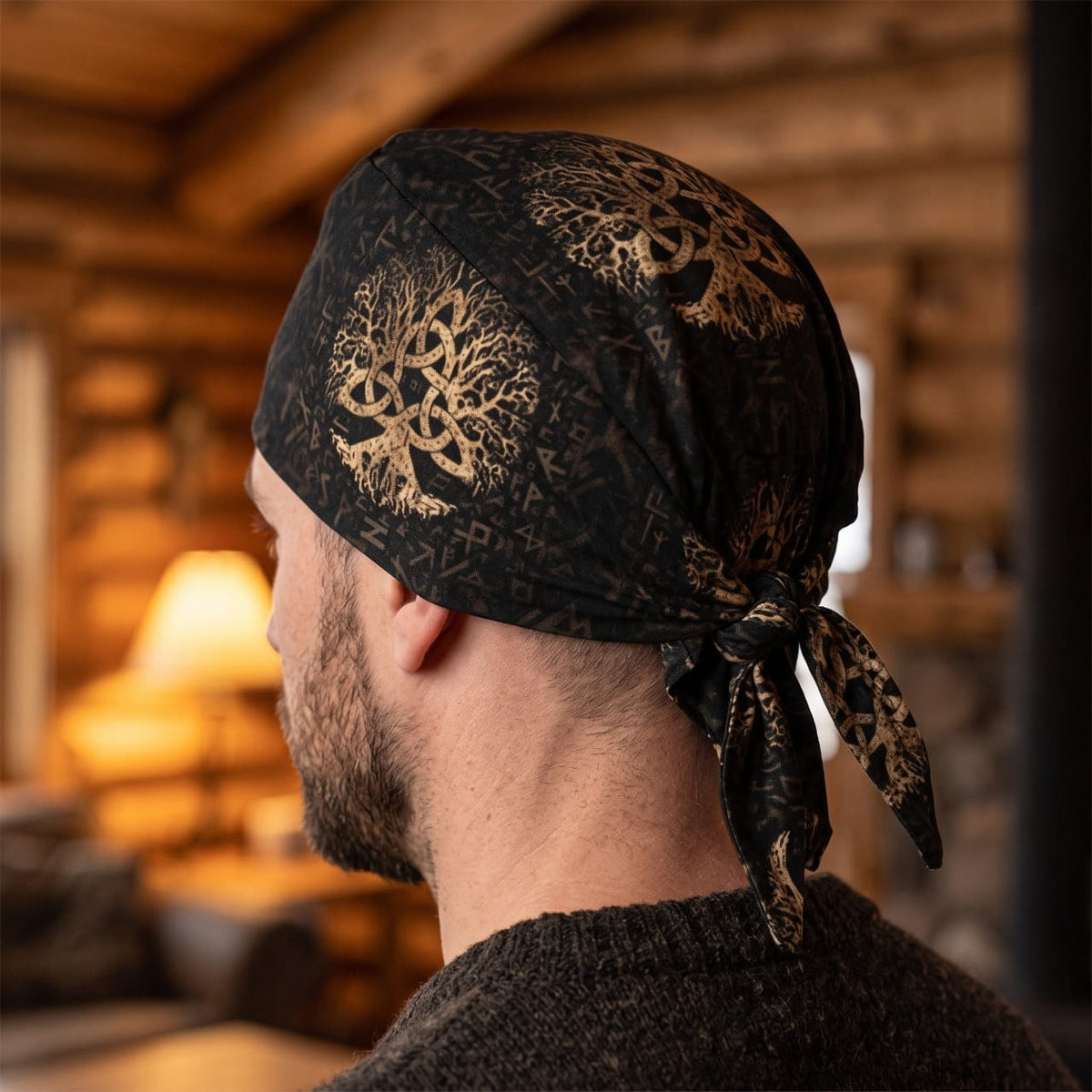
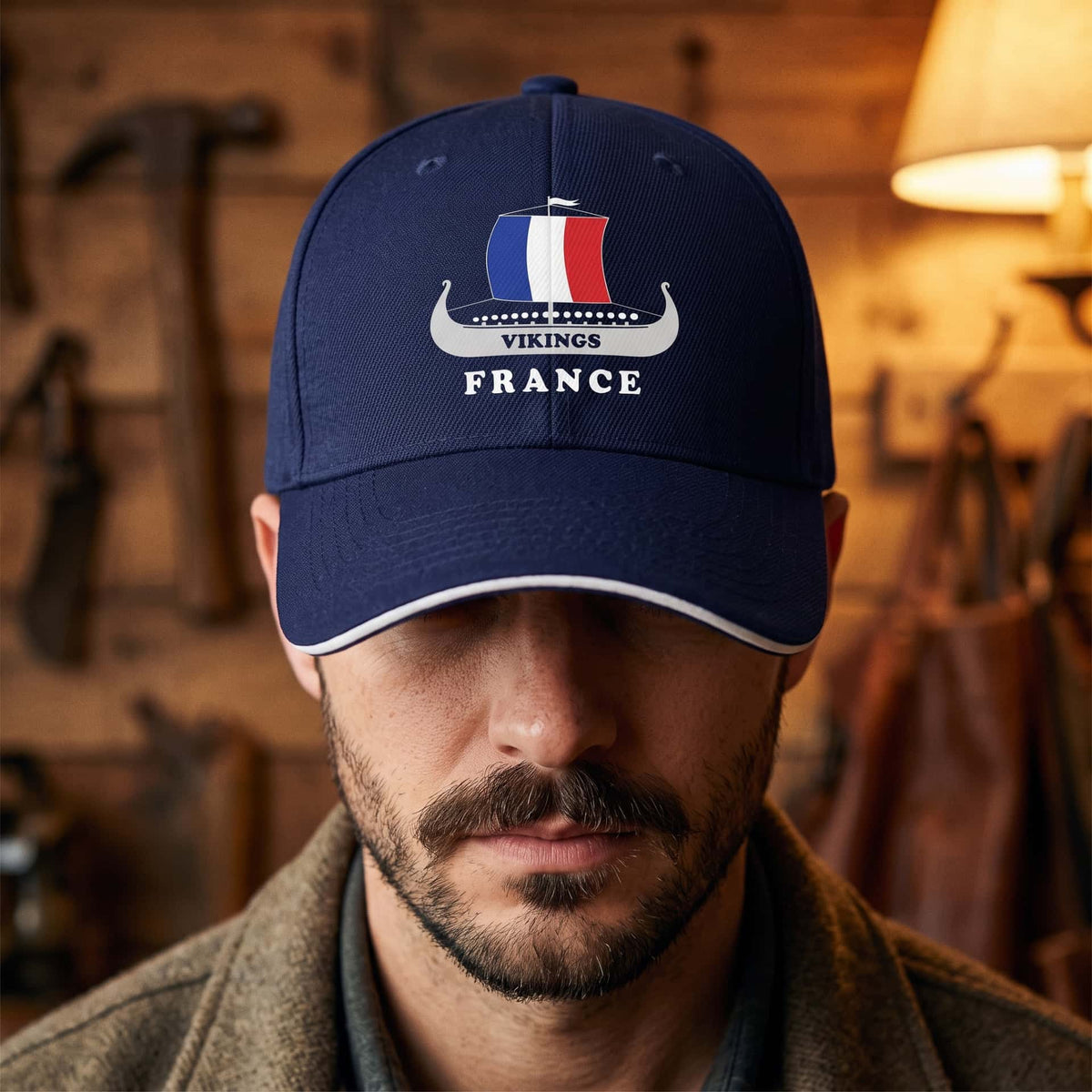
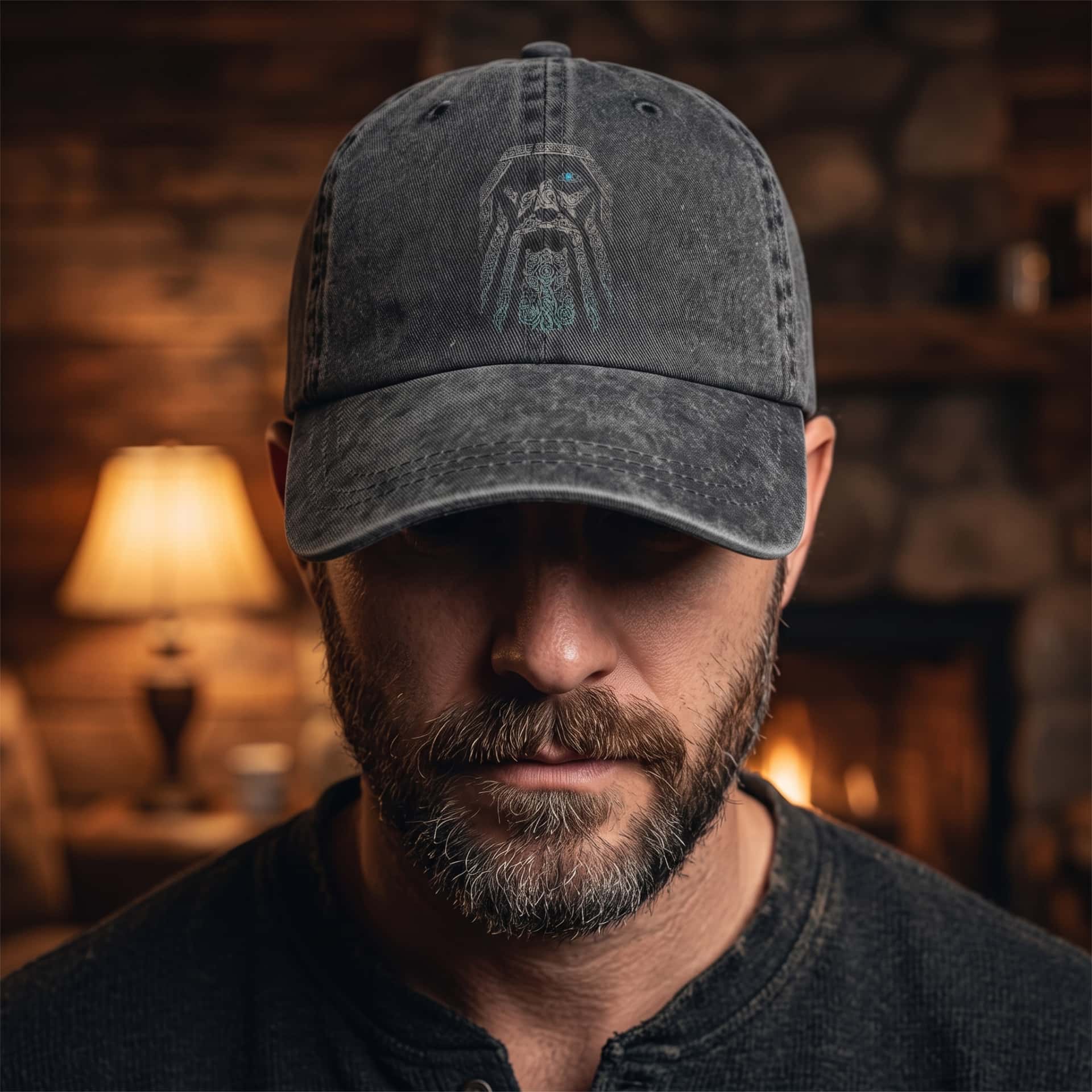
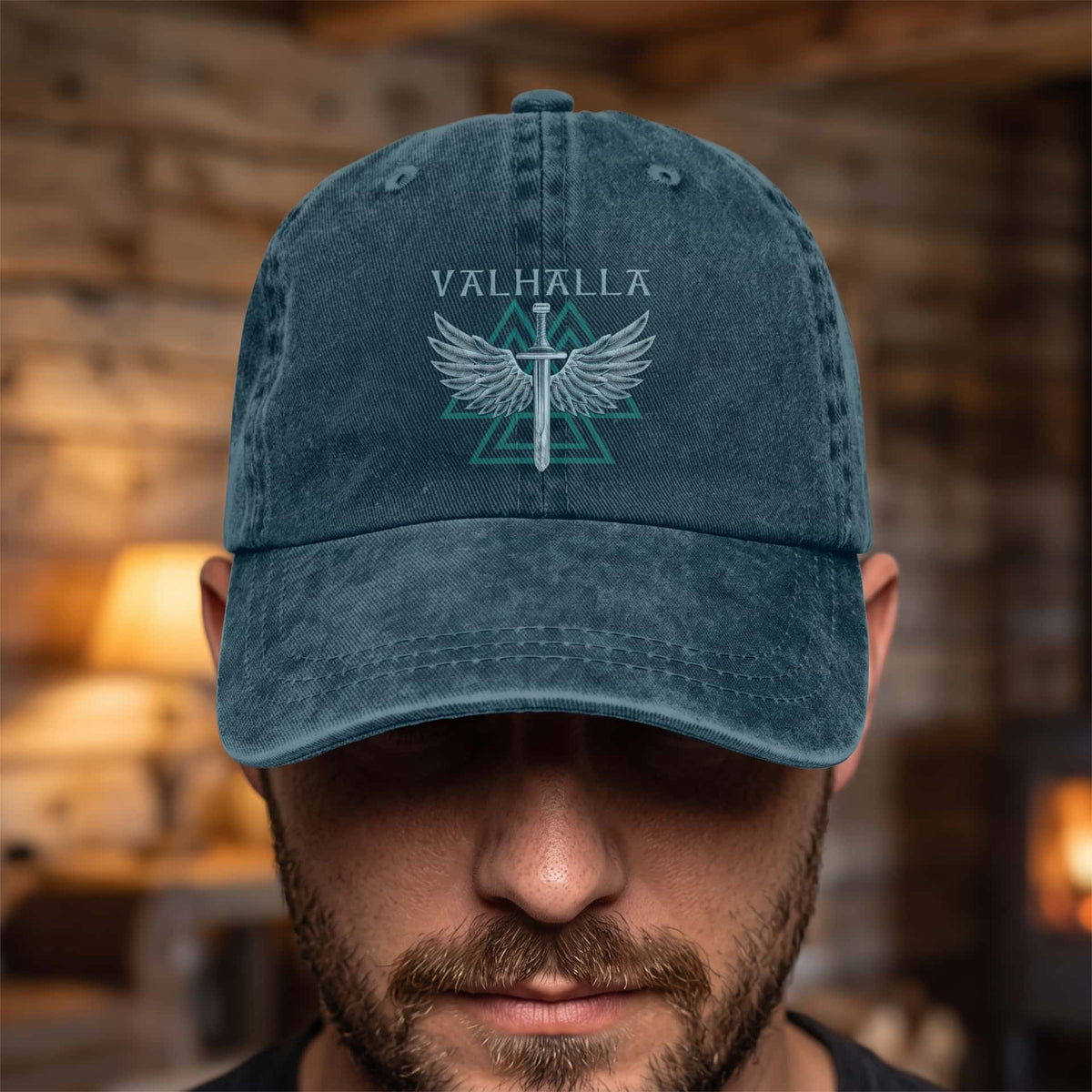
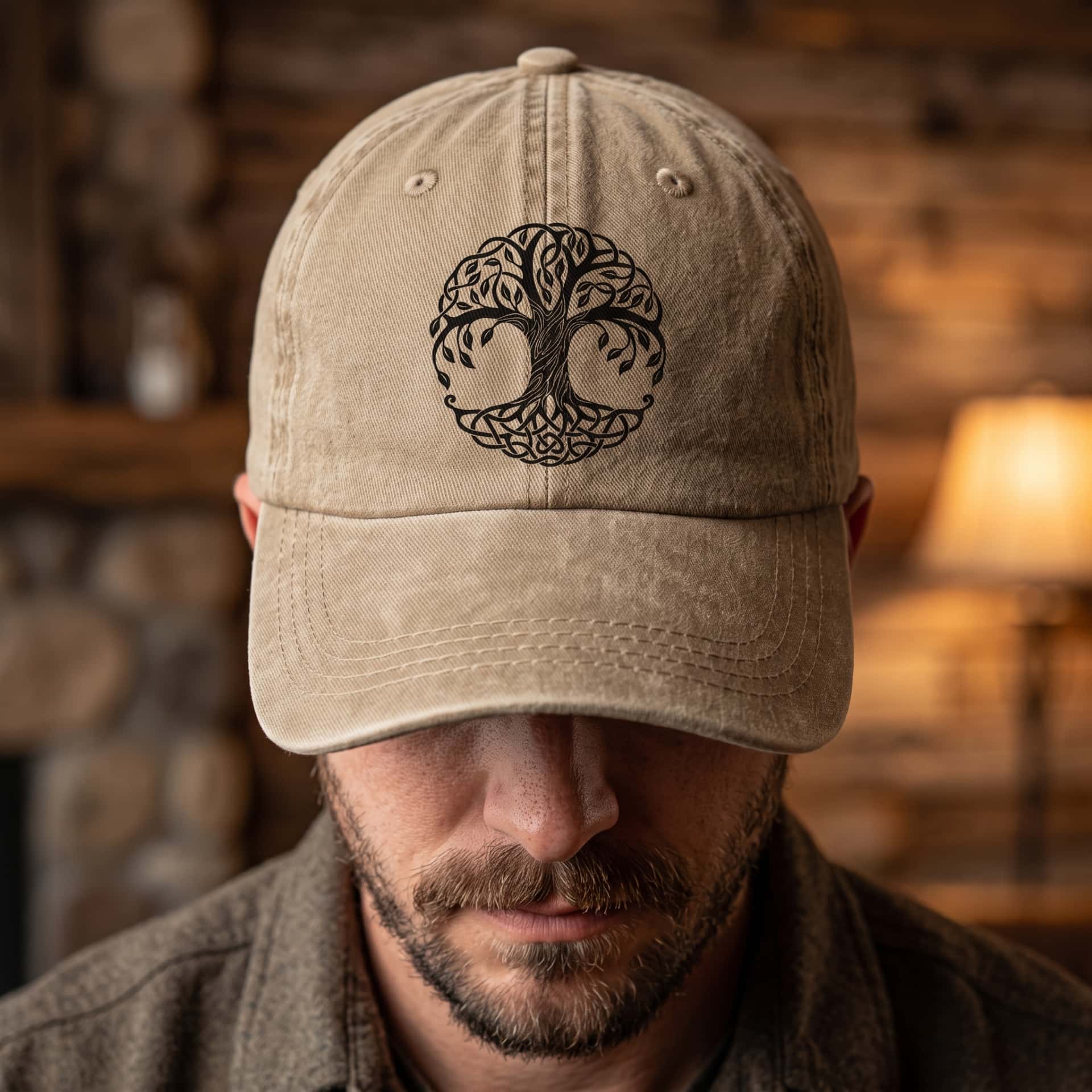
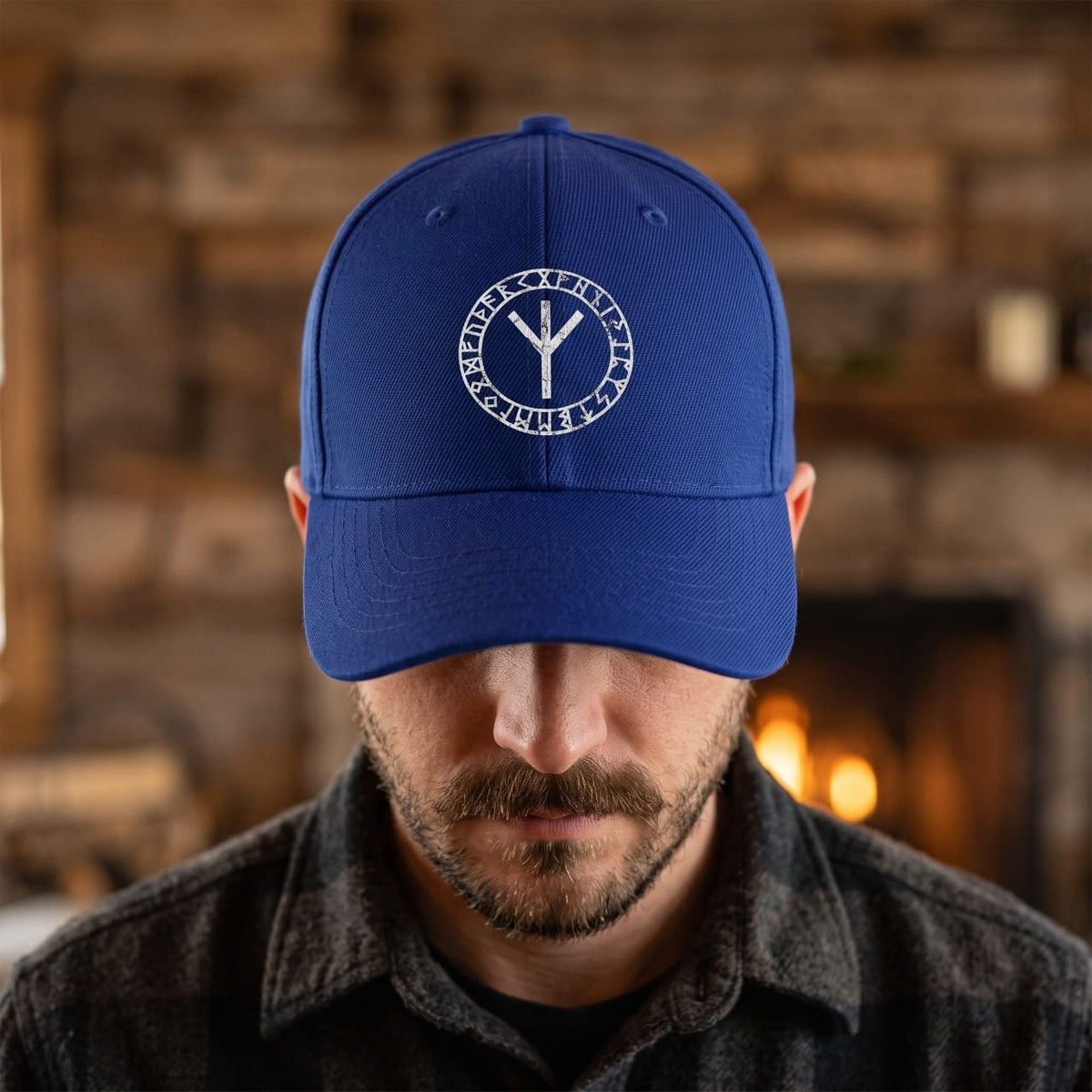
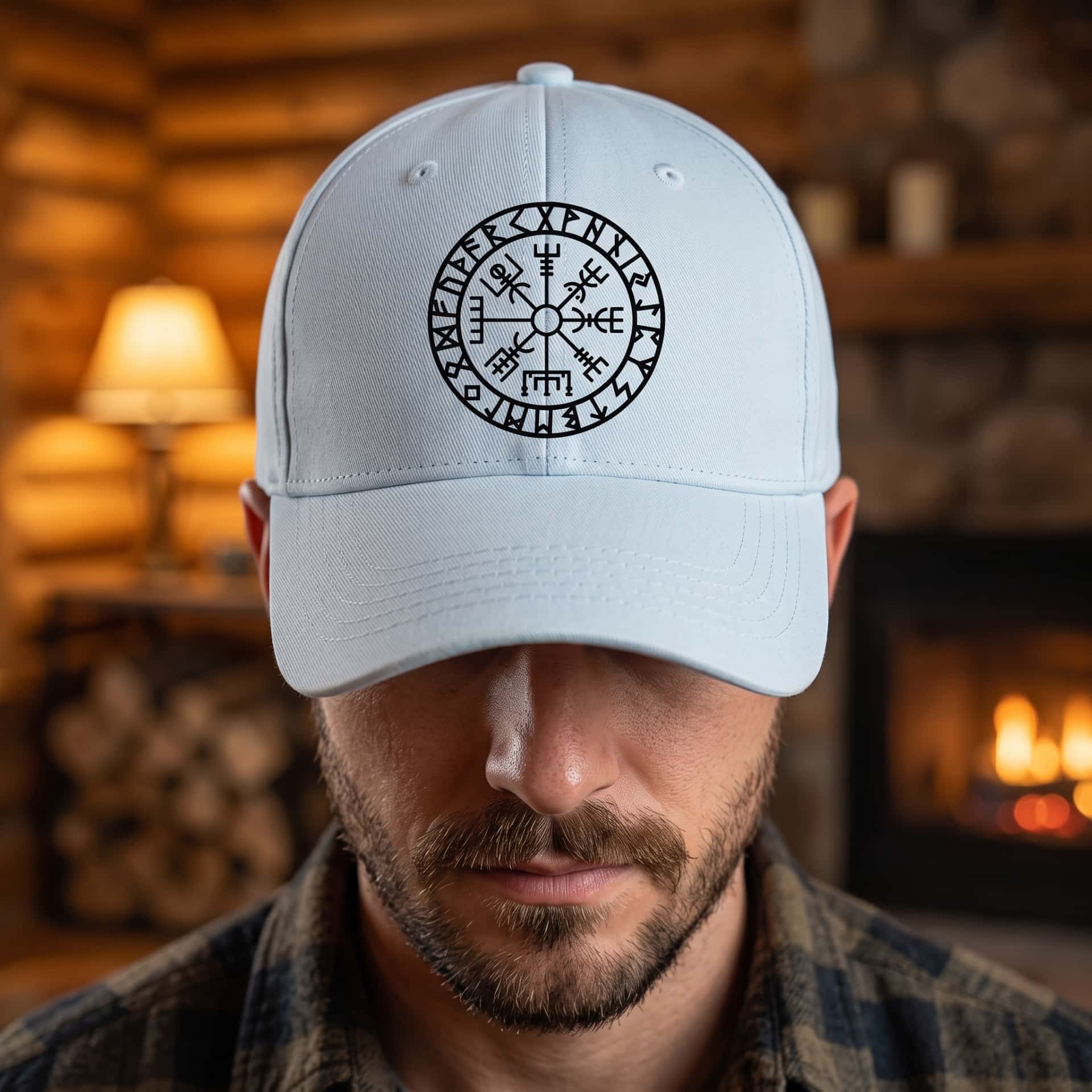
Viking Caps & Bandanas — en savoir plus
Two ways to cover your head, and they are not worn the same way. The Viking cap stays on with an adjustable strap and keeps its shape: an embroidered Vegvísir, Yggdrasil on washed denim, a printed longship. The bandana, for its part, ties at the back of the head — the knot does the tightening, nothing squeezes, and it fits under a helmet without making a bump. Everything comes in one adult size: there is no size to choose on this page.
Cap or bandana: which one for which use
The question is not one of looks, it is a practical one. The two items solve different problems.
The cap has a brim, so it shields your eyes — from sun and light rain alike. It keeps its shape when you set it down, is adjusted once and for all with the back strap, and goes back on with one hand. It is the headwear for walking, driving and sitting out on a terrace. On the other hand, it takes up room in a bag, and its brim gets in the way as soon as you wear something on your head or lie down.
The bandana protects you from nothing, but it does three things a cap cannot. It holds back sweat and hair without any pressure point, because the tension is spread around the whole head instead of being concentrated on a strap. It folds into a pocket and is forgotten. And it fits under a helmet — motorcycle, construction site, climbing, reenactment — without creating the bump that a cap's seam inevitably causes. It is also the only one of the two that can be worn as a neckerchief, as a wristband or tied to a bag.
If you are unsure: the cap for being outdoors, the bandana for being on the move.
The three kinds of caps
The embroidered cap. The design is stitched into the fabric with thread, not printed on it. A white Vegvísir on a dark background, a raised Algiz rune. Embroidery has one decisive advantage over printing: it never flakes, because there is no ink. It ages with the cap instead of aging faster than it. Its drawback is that it allows neither gradients nor fine detail — it is a technique of lines and flat areas of color.
The washed-denim cap. Cotton denim washed to give it a worn-in look from day one, in gray, khaki or sand. The design is more understated, often tone on tone. It is the softest of the three, the one that folds best, and the only one whose fabric keeps developing a patina over time.
The printed cap. A full-color design, bolder, capable of detail that no embroidery could render. It needs a little more care in the wash, since the print sits on the surface.
All of them adjust at the back and fit a standard adult head size.
The bandanas
A square of lightweight fabric, printed over its entire surface, to be tied however you need it. The designs feature the shop's major symbols — Vegvísir, gold Yggdrasil, Valknut, sun wheel, runic medallion — on muted backgrounds: charcoal, ecru, khaki green, sand, marled gray.
Three ways of tying it cover every need. The doo-rag: fold the square into a triangle, set the base on your forehead just above the eyebrows, bring both points behind your head, cross them under the back point and tie — this is the setup that holds best on the move. The headband: roll the square into a strip three to four fingers wide and tie it at the side, to keep your forehead clear without covering the top of your head. The neckerchief: triangle to the front, knot at the nape of the neck, to pull up over your face in wind or dust.
One tip that avoids the classic mistake: tie it looser than your instinct tells you. A well-tied bandana stays put through the friction of the fabric on your hair, not through compression. Tied as tight as it will go, it leaves a mark on your forehead and ends up slipping anyway.
What Scandinavians wore on their heads
Let's start with what did not exist: the horned helmet. No archaeological find from the Viking Age has ever produced one. Only one complete Viking helmet has come down to us, the Gjermundbu helmet from Norway, discovered in 1943: a dome of four riveted plates, with a half-mask protecting the eyes and nose. No horns. The image comes from the costumes of Wagnerian opera and from the Romantic illustrations of the 19th century. Our article on Viking armor covers this equipment in detail.
Everyday headwear, for its part, was mostly a hood — the hetta, cut from wool, sometimes extended by a short cape over the shoulders. People also wore hats worked in nålebinding, a technique of loops knotted with a needle that predates knitting by several centuries and produces a denser, less stretchy fabric. The richest graves at Birka have yielded silk caps trimmed with silver braid, and the Coppergate excavations in York a silk cap from the 10th century that had traveled a very long way — proof that the head was adorned as much as it was protected.
We may as well say it plainly: the bandana is not a Viking object. It has no equivalent in the medieval Scandinavian wardrobe. It is a modern accessory that carries Norse designs here, and it claims to be nothing more.
The designs in the collection
The Vegvísir is the most common, embroidered on caps as well as printed on bandanas. It bears repeating, because it is rarely said: this eight-armed circle is not Viking. It appears only in the Huld manuscript, a collection of Icelandic sigils compiled by Geir Vigfússon in 1860 — eight centuries after the end of the Viking Age. A fine Icelandic magical tradition, but not an Old Scandinavian one. The details are in our article on the Vegvísir.
Yggdrasil, the ash tree that links the nine worlds, is described in the Völuspá and by Snorri — but no medieval depiction of it has come down to us. The gold tree on the bandanas is a modern reconstruction, faithful to the texts.
The sun wheel points to imagery far older than the Viking Age: that of the Nordic Bronze Age, whose most famous witness is the Trundholm sun chariot, unearthed in Denmark and dated to around 1400 BCE — a gilded disc drawn by a bronze horse. The sun is one of the North's oldest obsessions.
The Algiz rune (ᛉ) is embroidered on one of the caps. It is commonly presented as the rune of protection, and that is how it is understood today. An honest caveat: this reading owes a great deal to modern esotericism. The Anglo-Saxon Rune Poem, our oldest source on the meaning of the runes, describes it under the name eolh-secg, a marsh plant whose leaves cut the hand of anyone who grasps it the wrong way. The protection is real, but it bites. Our article on the Futhark runic alphabet goes through each sign and its sources.
The Valknut, three interlocked triangles, is attested archaeologically — the Stora Hammars stones on Gotland, a bed from the Oseberg ship — but its name is a 19th-century Norwegian invention. And the name drakkar is modern too: Scandinavians said langskip, the long ship. Our article on the longship tells how it was built.
Care
The caps do not go in the washing machine. This is the rule that matters most on this page. The drum warps the brim — whose inner stiffener bends and never straightens again — and the rinse slackens the structure of the crown. Clean by hand: lukewarm water, mild soap, a soft brush on the stain, rinse with a damp cloth. Dry the cap set on a round object the size of a head, an upturned bowl for example, so that it keeps its shape as it dries. Never in the dryer.
On embroidered models, do not rub the thread when dry: it pills. On printed models, avoid any stain remover, which fades the print faster than the dirt would have dulled it.
The bandanas wash normally, at 30 °C, with the rest of your colored laundry, without fabric softener. Air dry. Iron at a low temperature if you want a crisp fold — but a slightly wrinkled bandana ties better than an ironed one, which slips.
Frequently asked questions
Are the caps adjustable? Yes, all of them, with a strap at the back. They fit a standard adult head size and require no choice of size when you order.
Are there sizes to choose on this page? No. Caps and bandanas all come in one adult size. The only option offered on some product pages is the color.
How do you tie a Viking bandana? Fold the square into a triangle, set the base on your forehead, bring the points behind your head, cross them under the back point and tie. Tie without pulling tight: the hold comes from friction on the hair, not from compression.
Does the bandana fit under a helmet? Yes, that is actually one of its main uses. Having neither a thick seam nor a strap, it creates no pressure point under the shell, unlike a cap.
Can a cap be machine washed? No. The drum permanently warps the brim's stiffener. Hand wash, mild soap, dry on a rounded support to keep the shape.
Embroidery or print: what is the difference? Embroidery is stitched with thread: it does not flake and ages at the same rate as the fabric, but it allows neither gradients nor fine detail. Printing renders more complex, full-color designs, but it sits on the surface and needs more care.
Did the Vikings wear caps? No. They wore wool hoods, hats worked in nålebinding, and for the wealthiest, silk caps. The brimmed cap and the bandana are modern objects that carry Norse designs here.
What are the delivery times? Allow 10 to 20 working days in total: 3 to 5 days of processing, then 7 to 15 days of delivery in mainland France, 10 to 20 days in the European Union. Free tracked shipping from 49 €, whatever the destination country.
Explore further: to complete the outfit, our Viking T-shirts, our sweatshirts, our tank tops and the whole clothing section. For accessories, our fibulae and brooches and our Viking bracelets. For reading, our guide to Viking armor, which settles the horned-helmet question once and for all, and the guide to the 17 Viking symbols. And for what happens under the headwear — low bun, braid, tied bandana — see our guide to Viking hairstyles.