
Filters
16 products
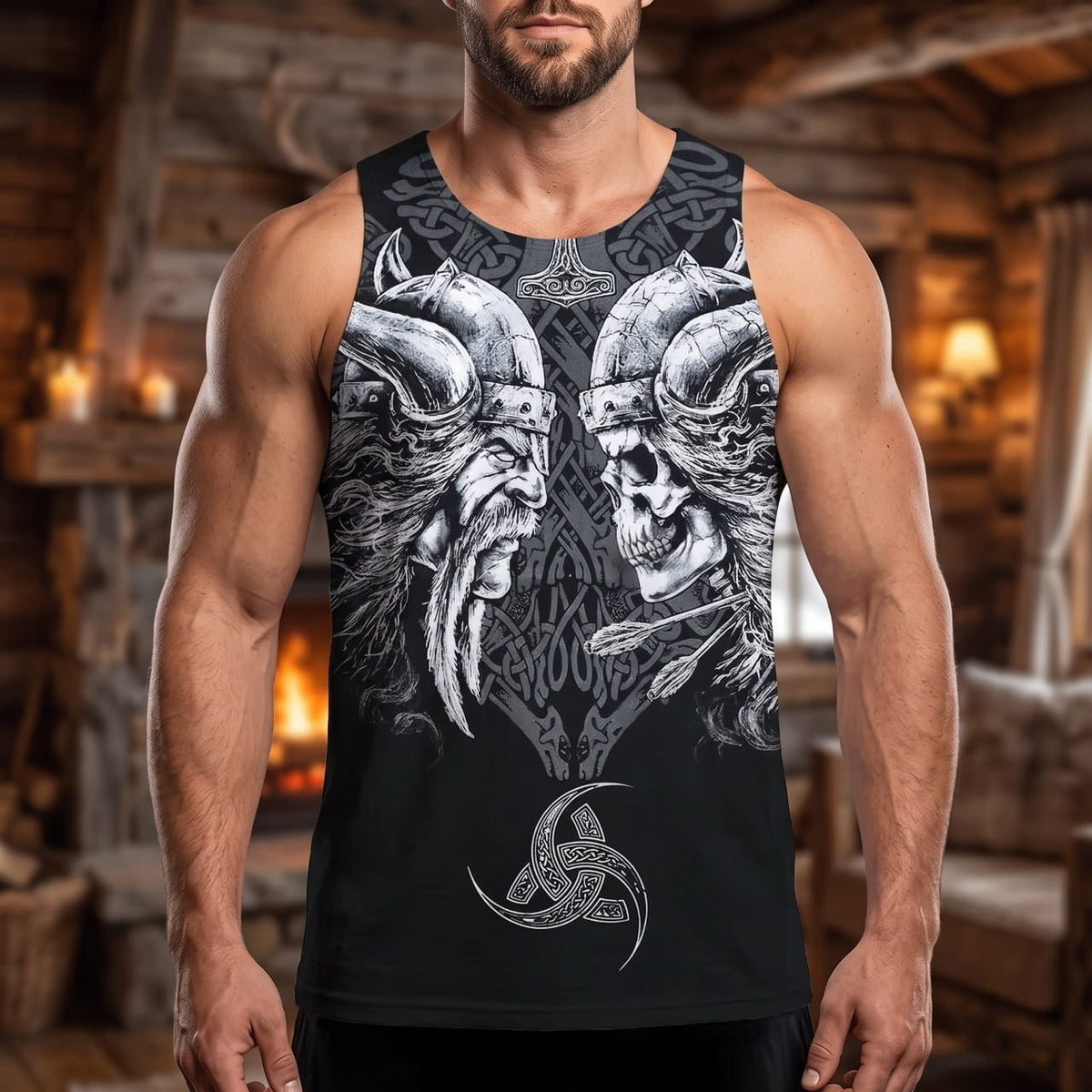
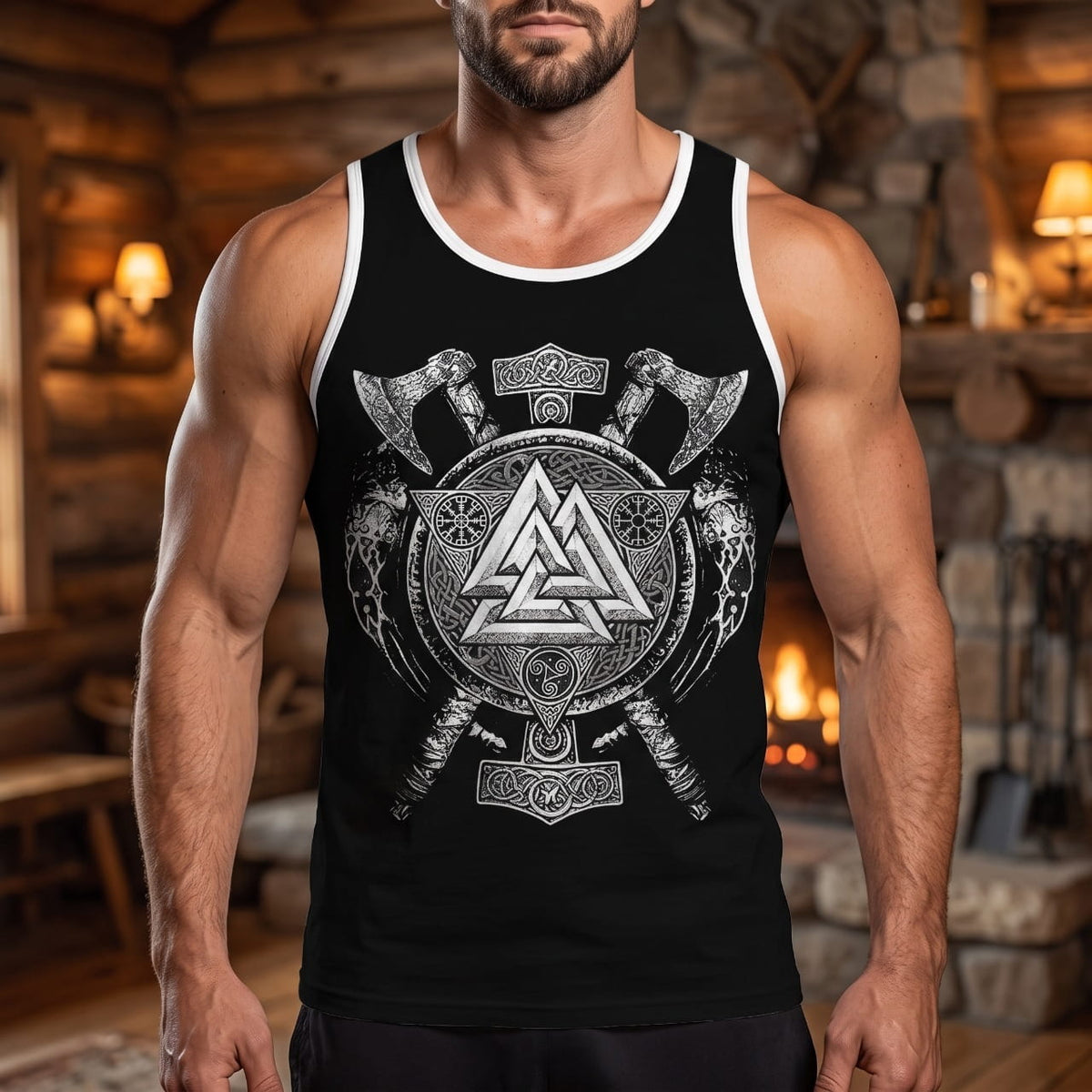
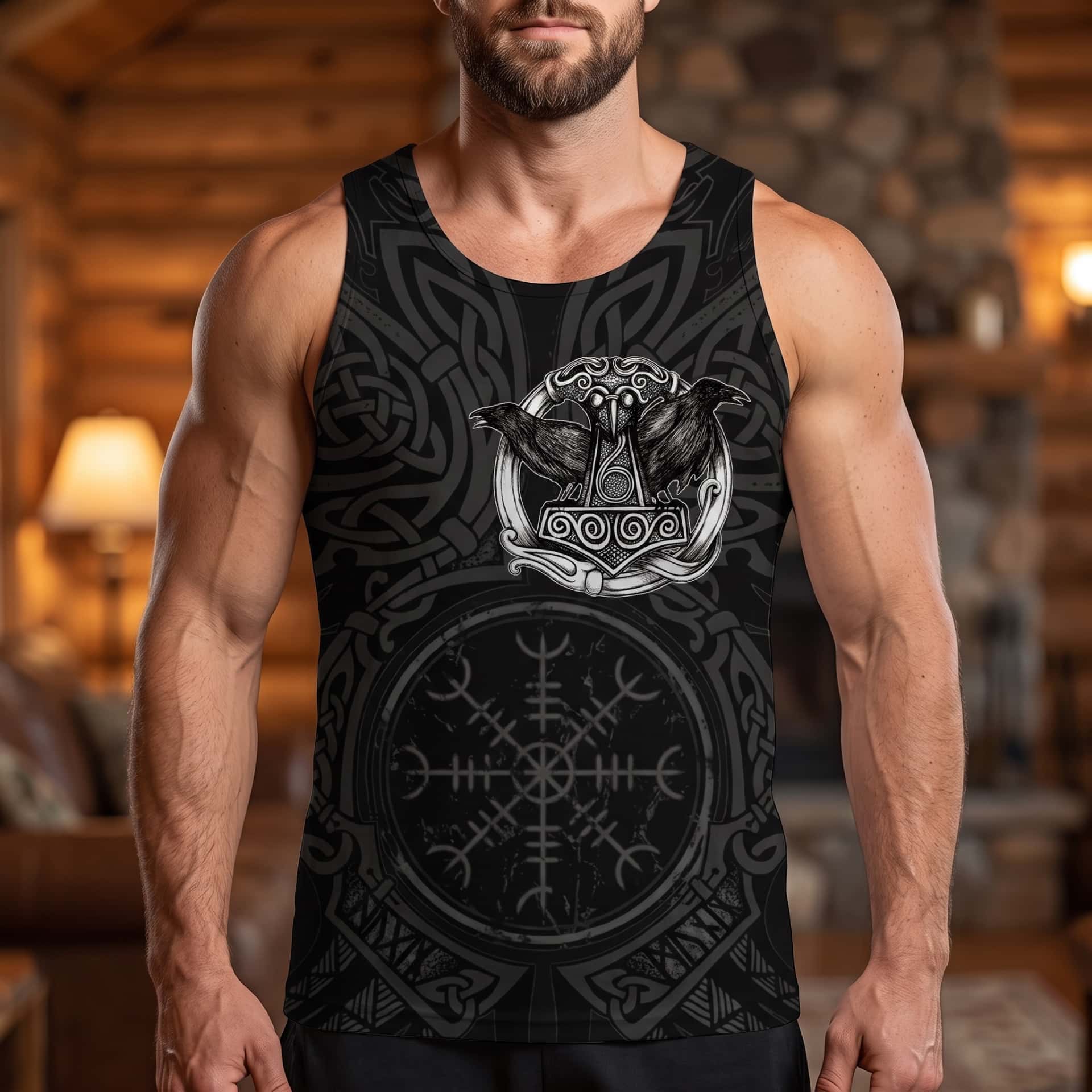
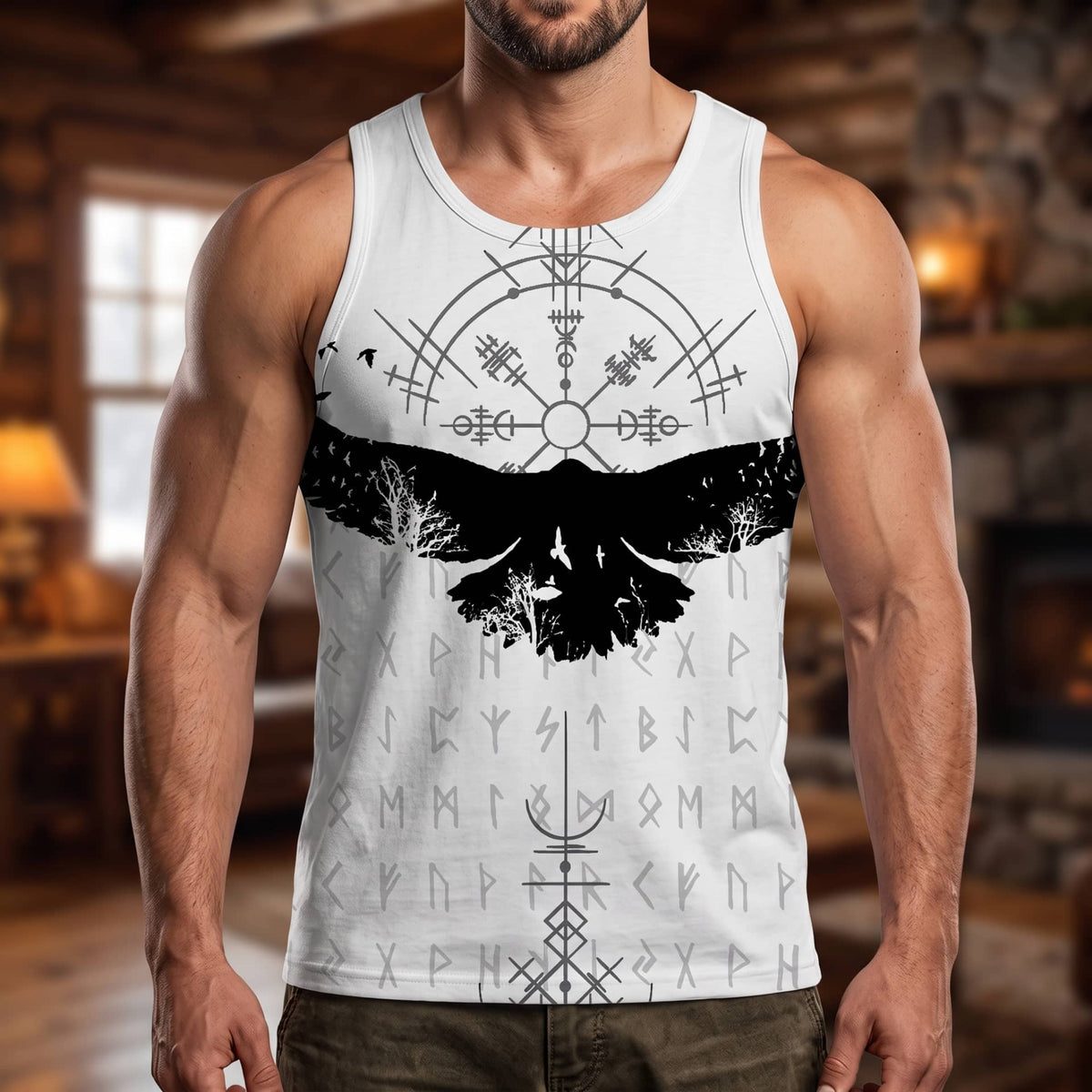
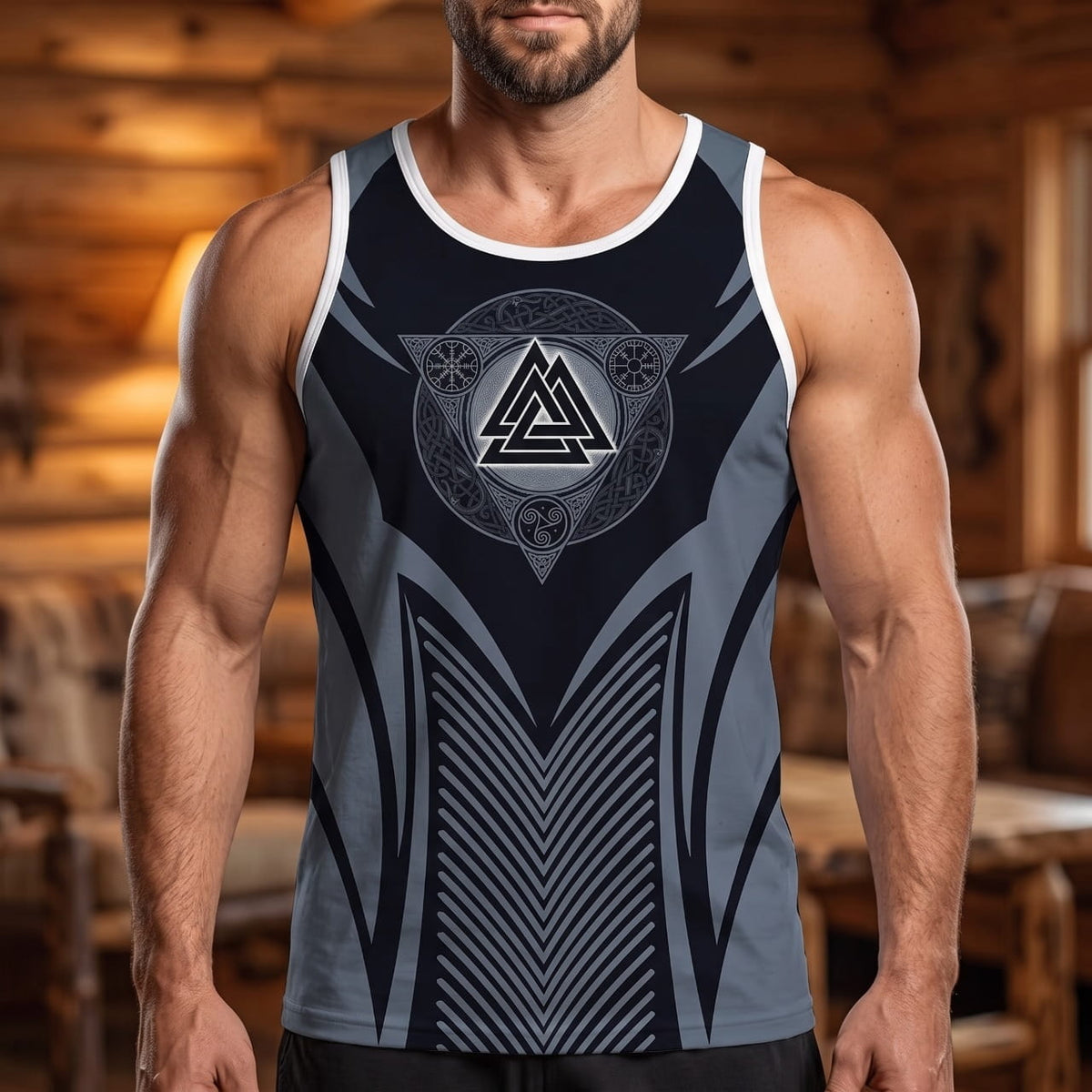
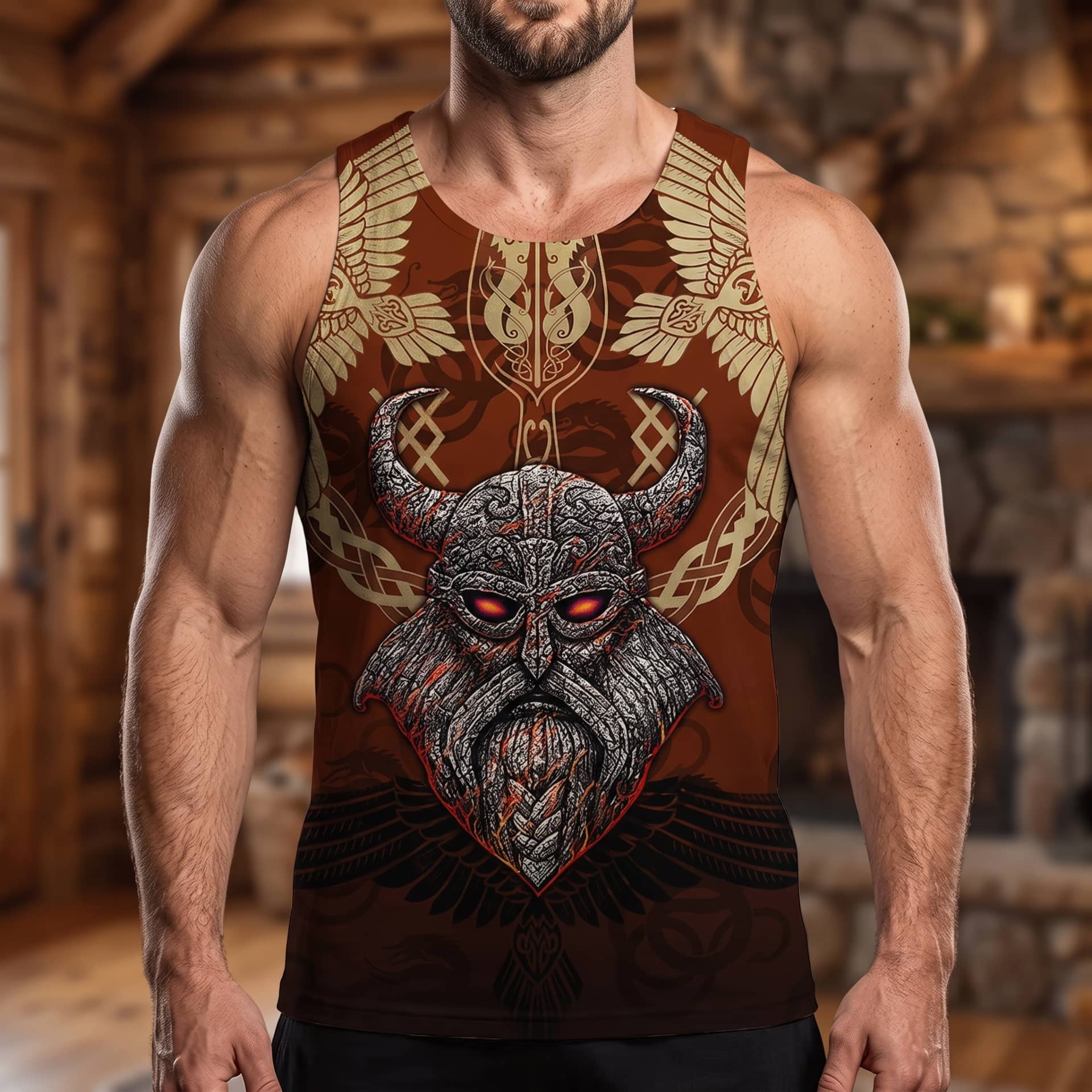
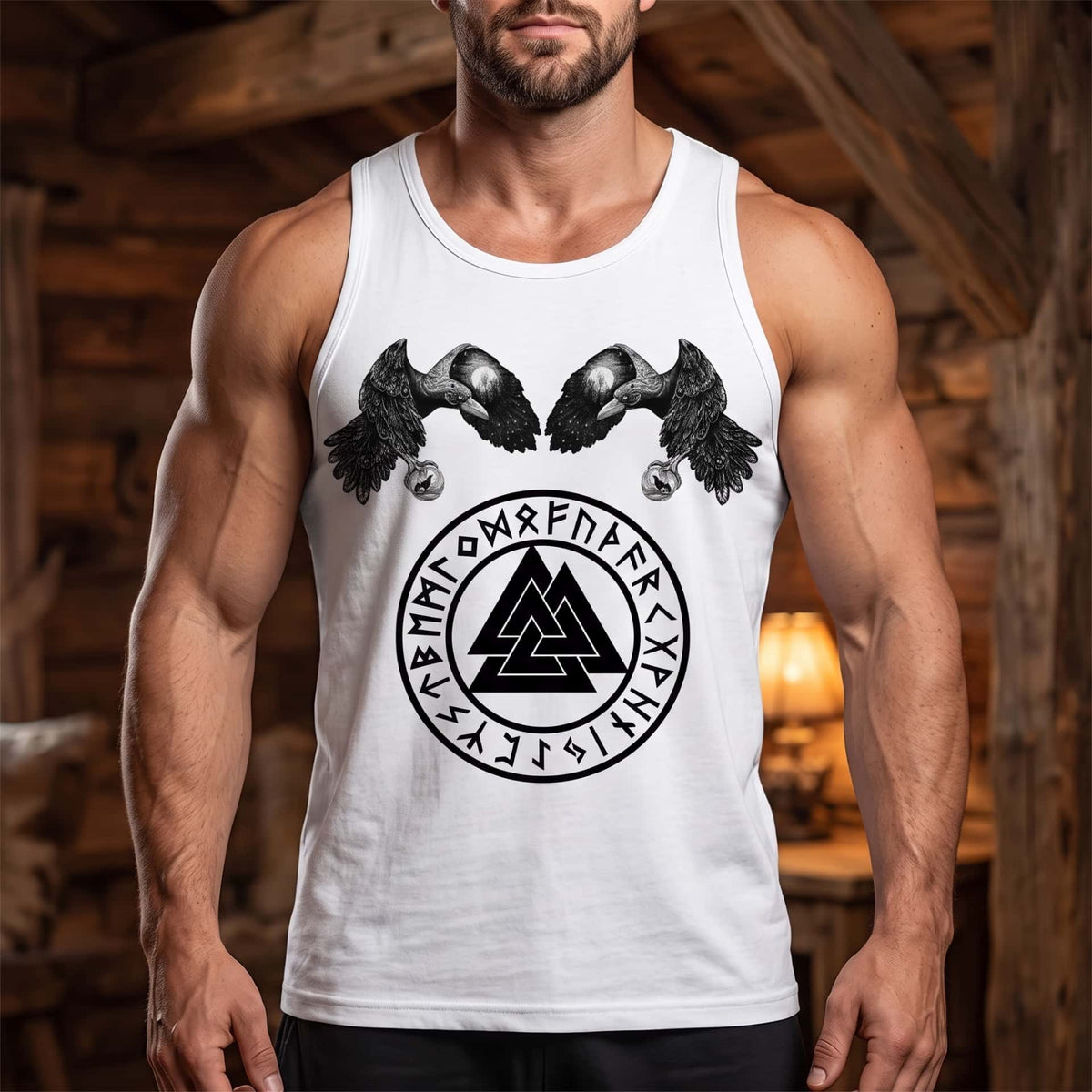
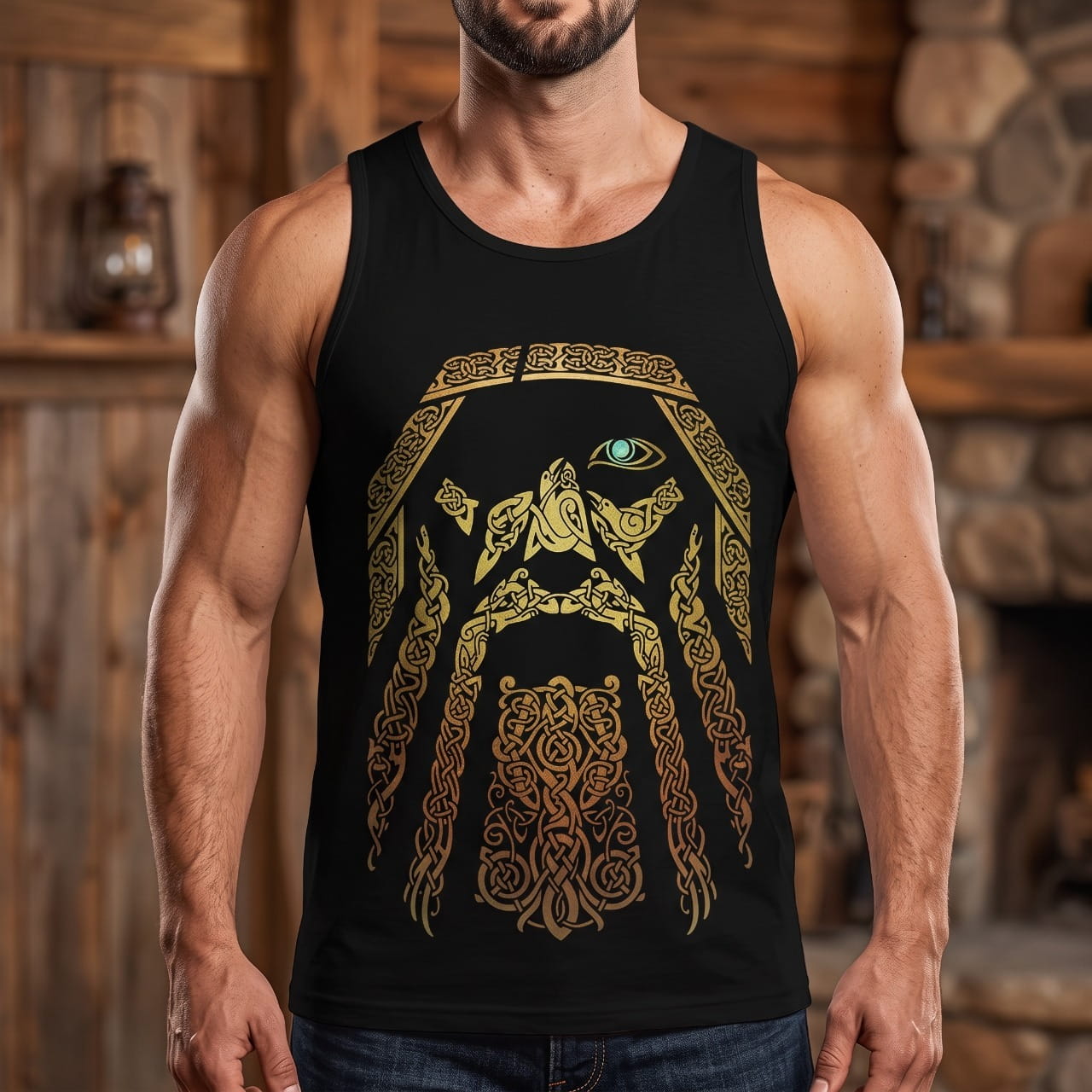
Viking Gym Tank Tops — en savoir plus
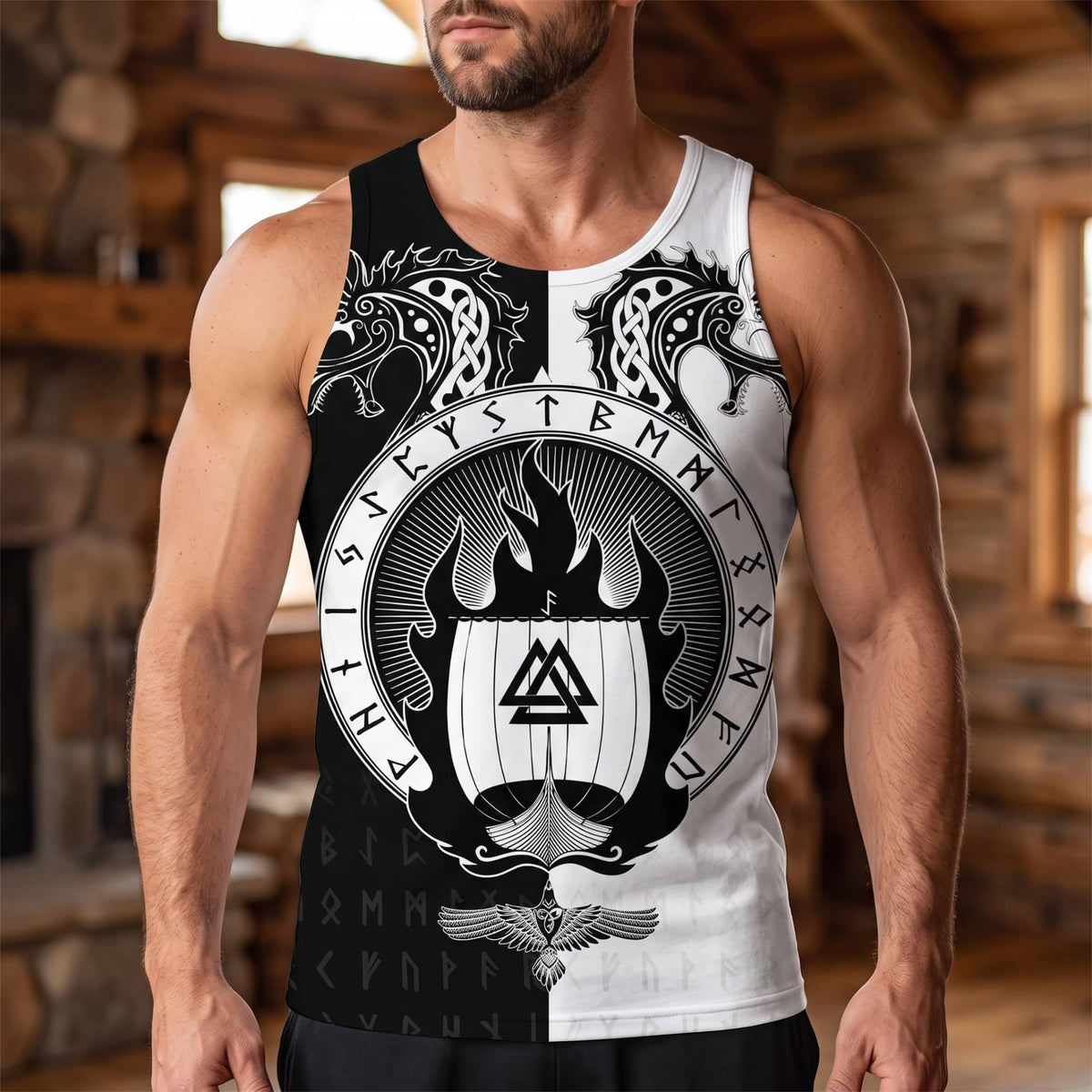
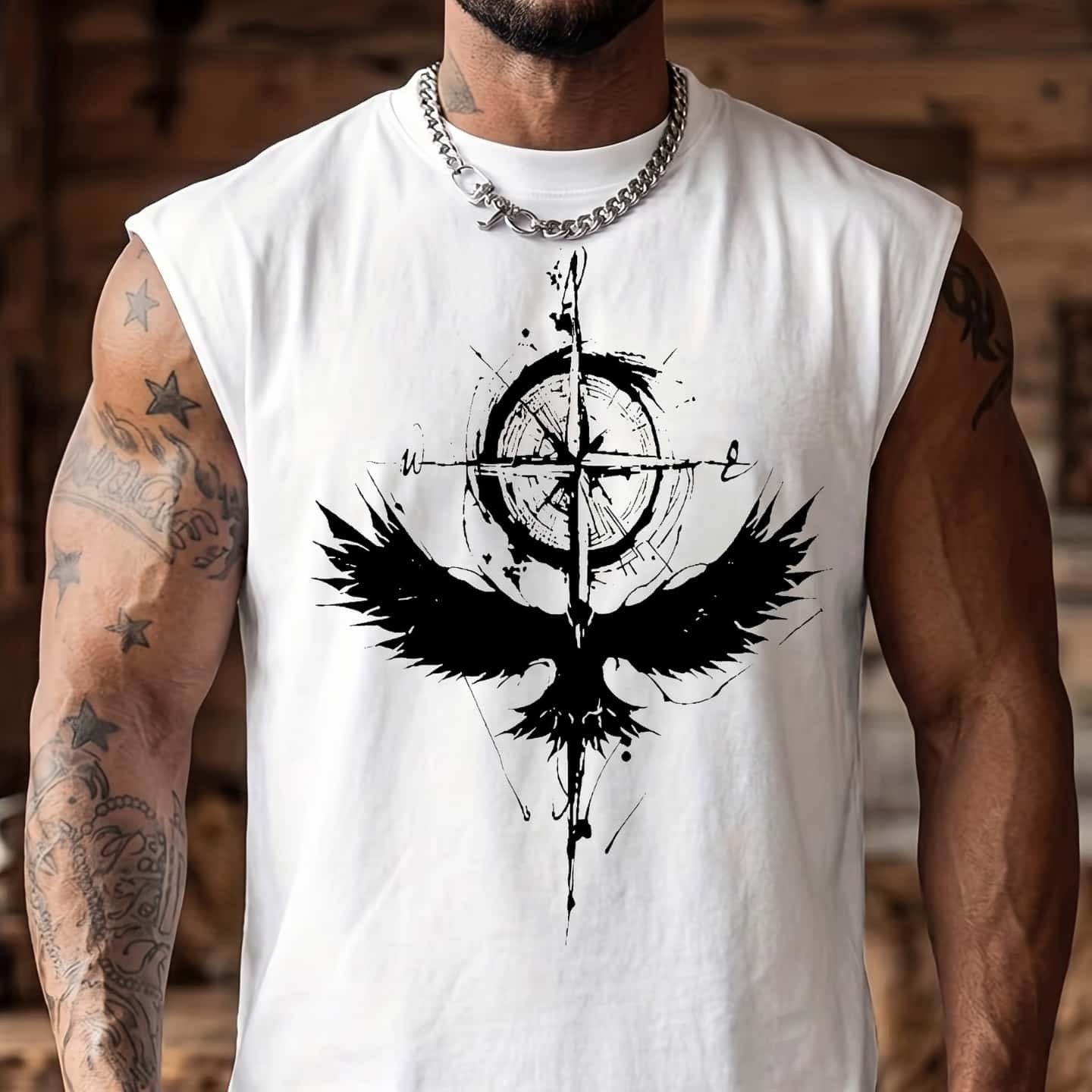
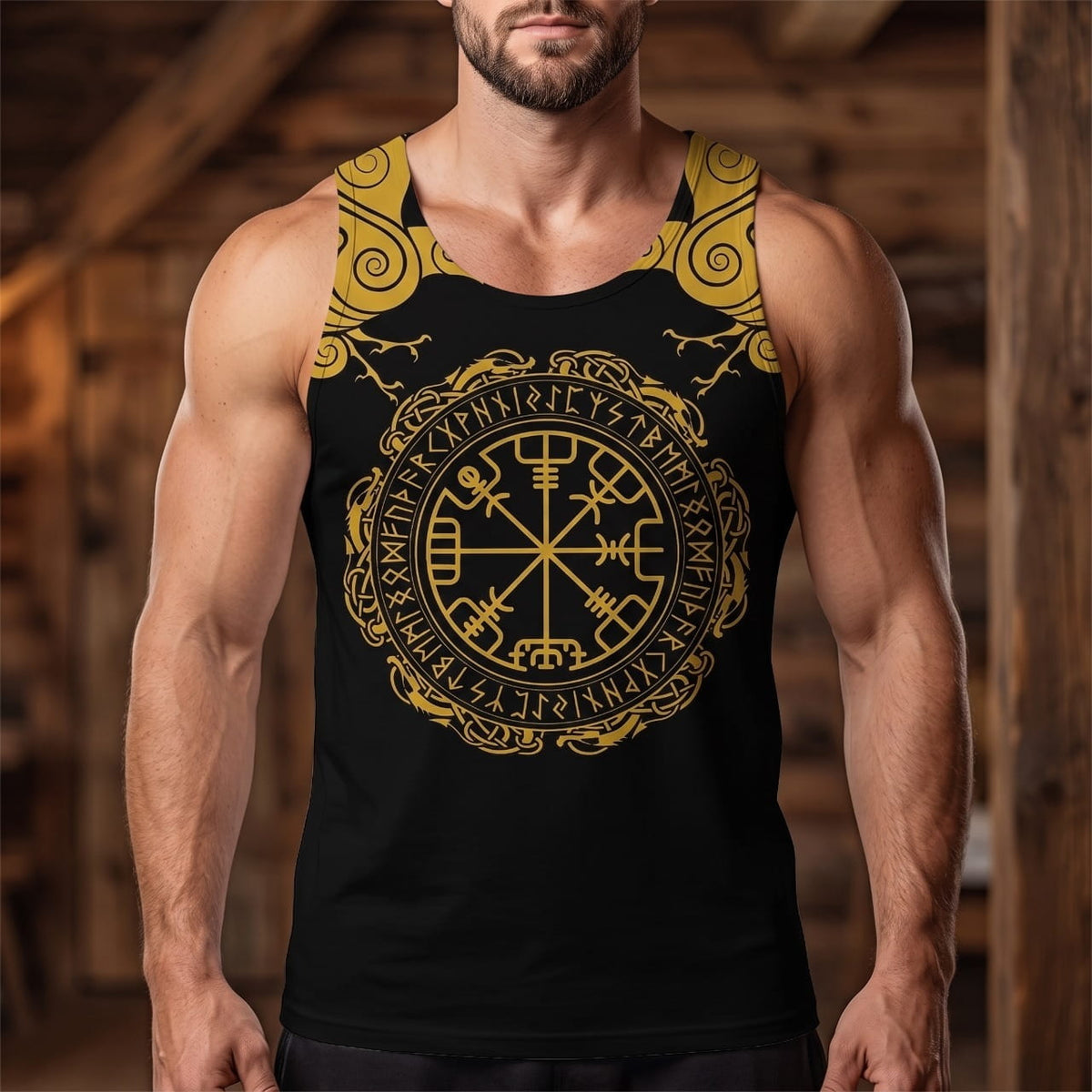
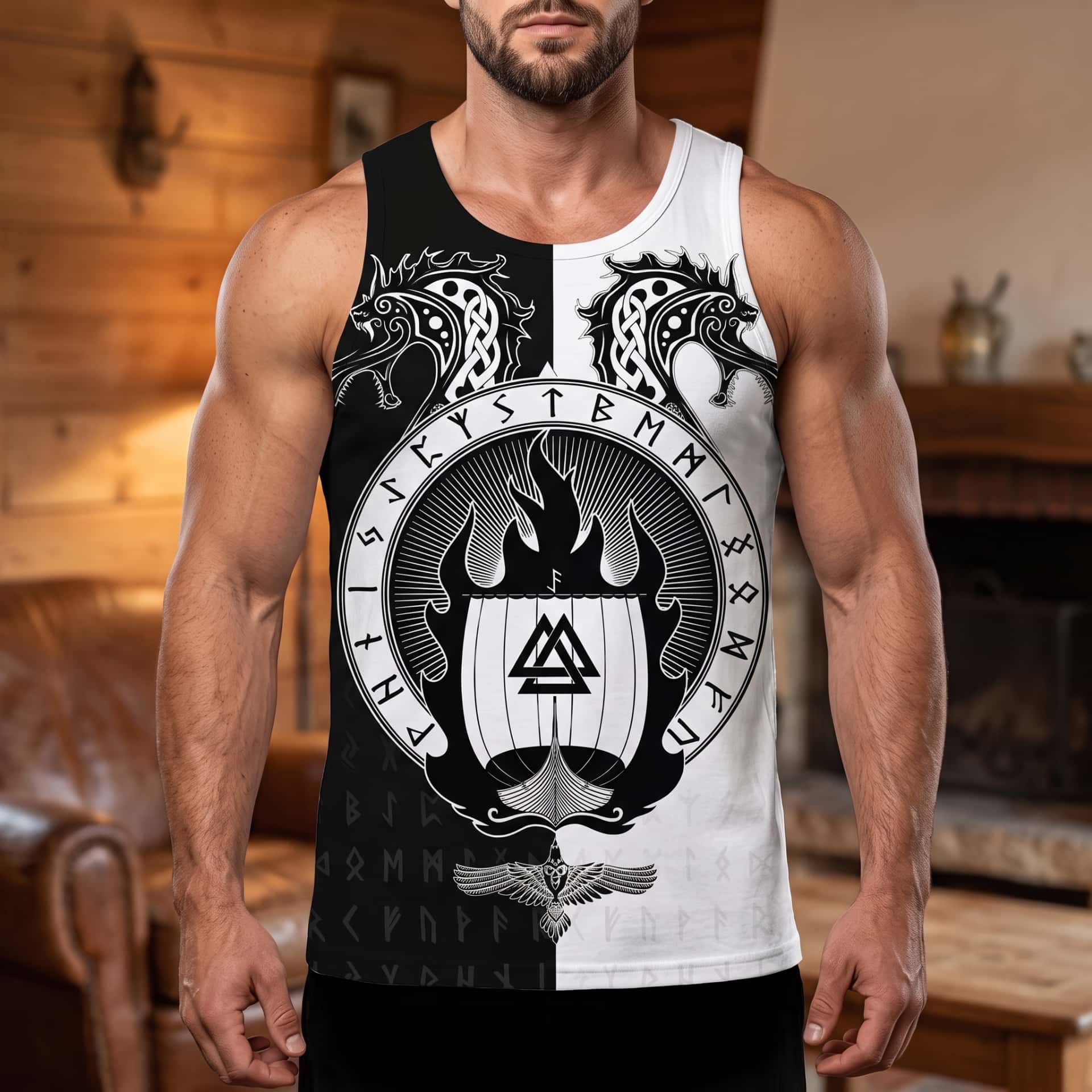
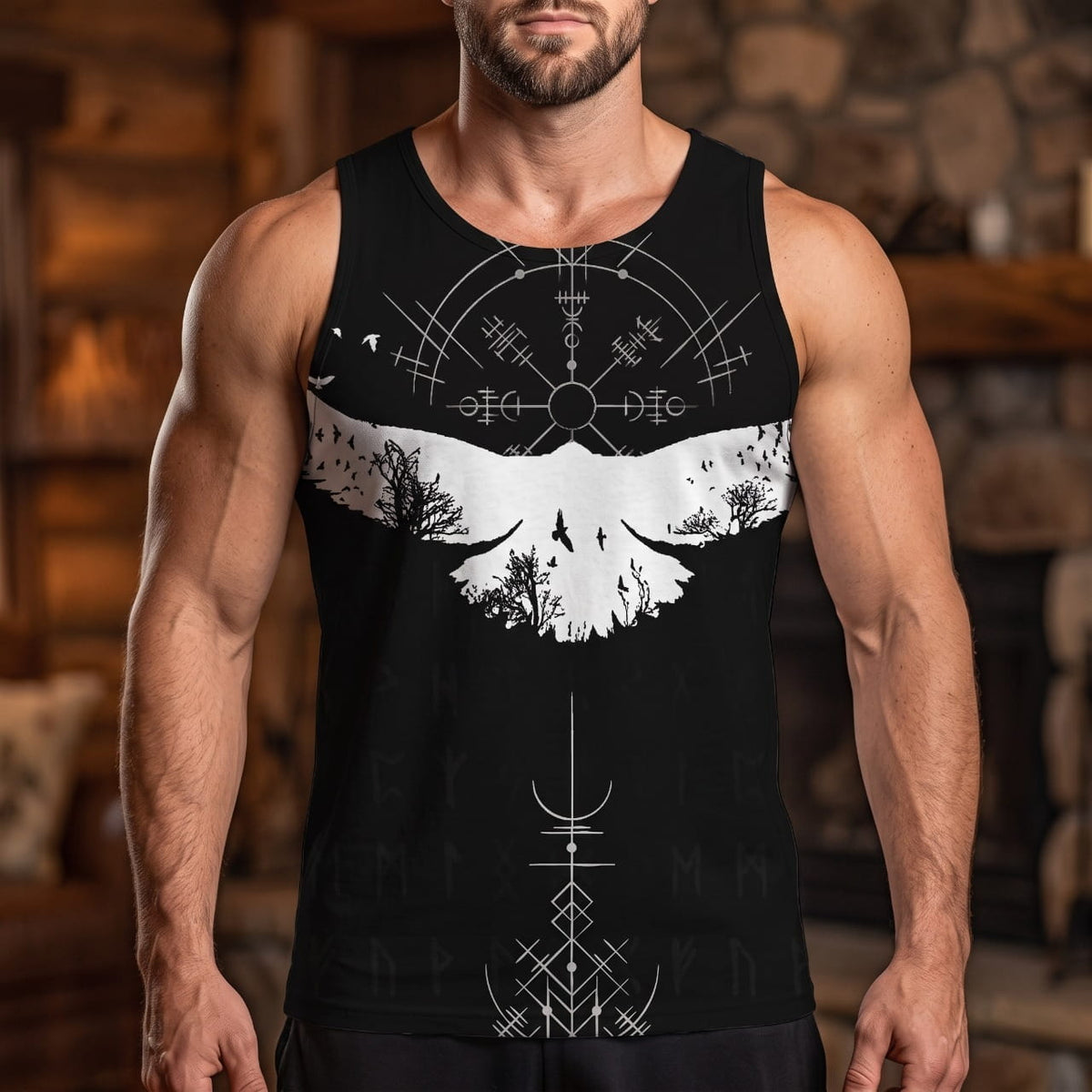
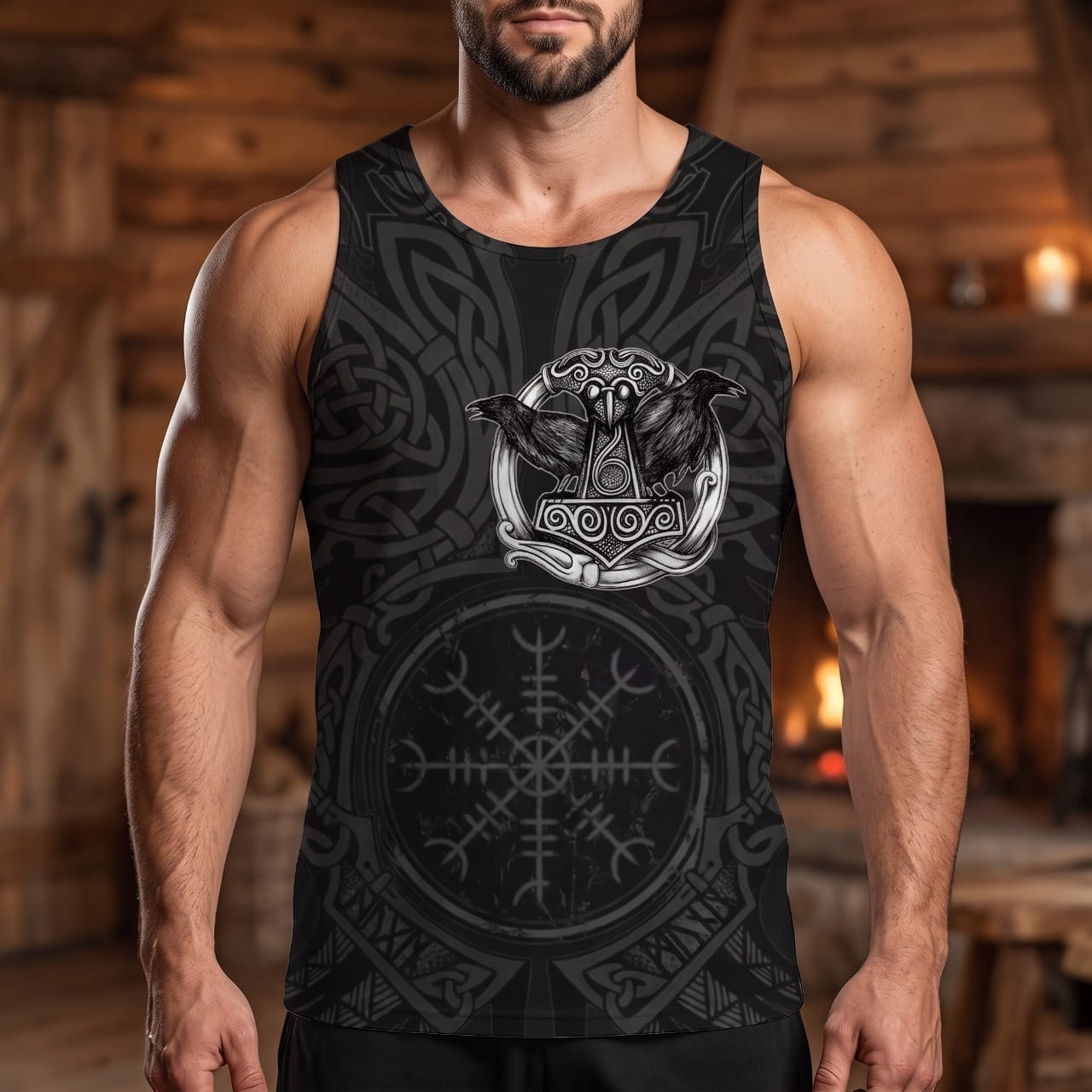
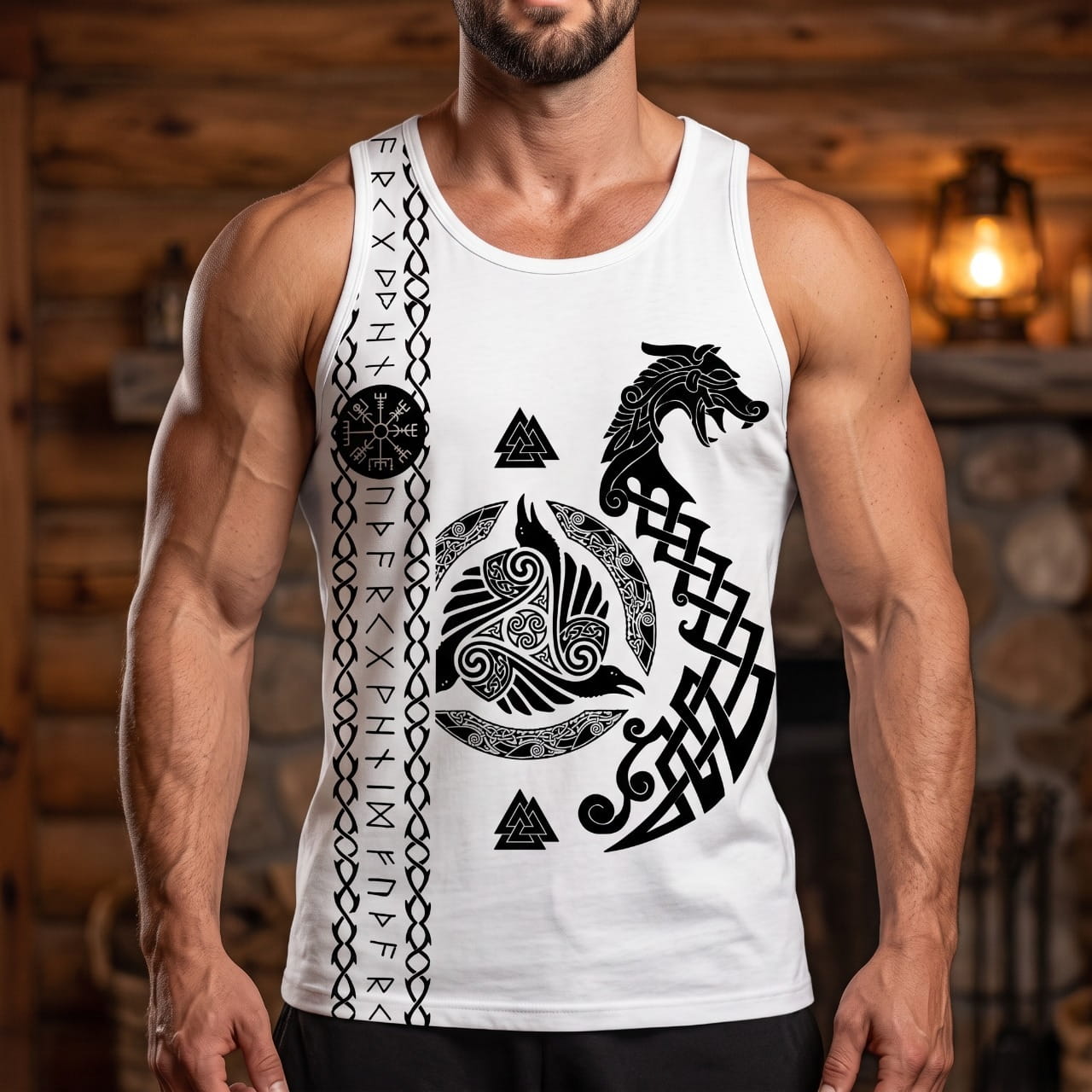
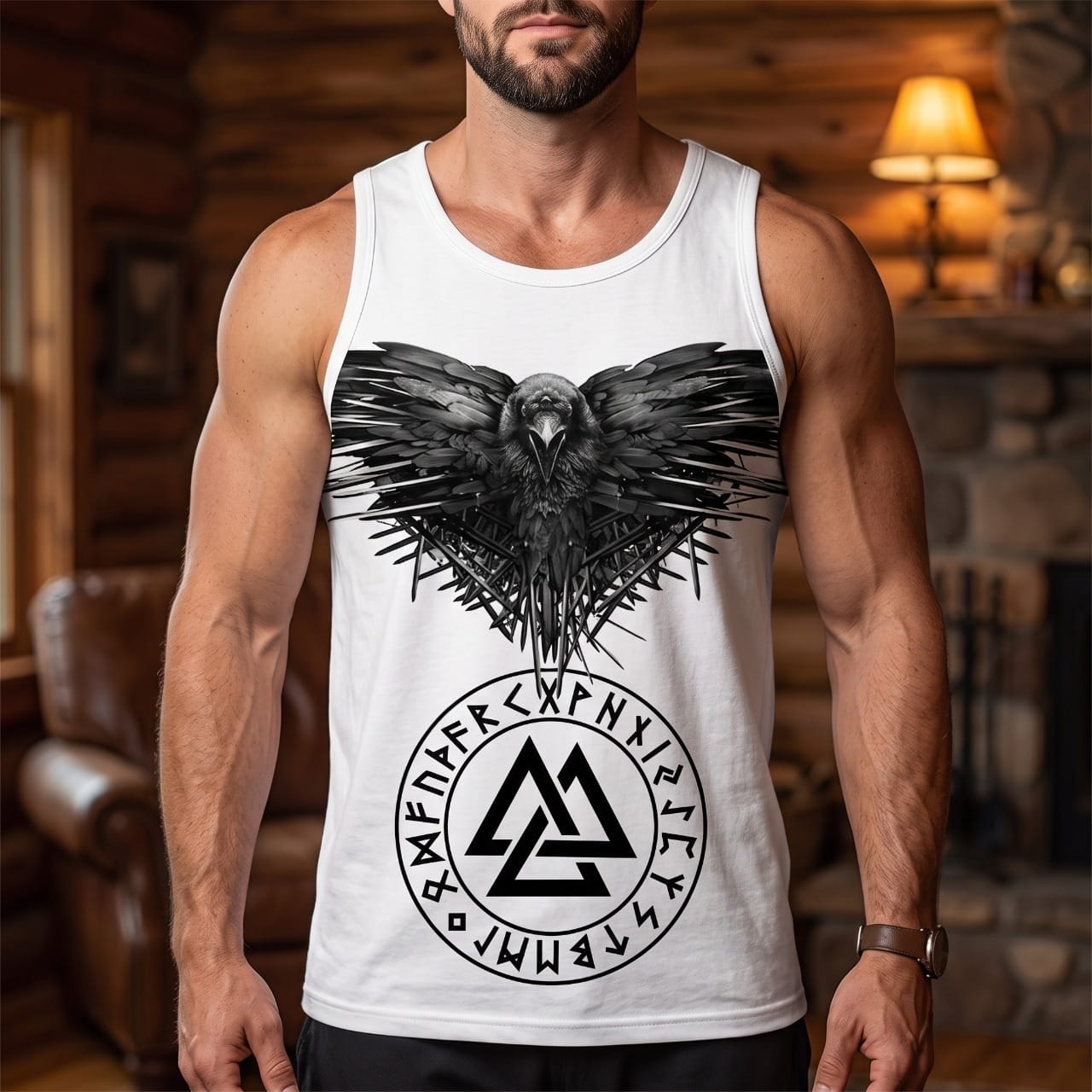
Pumping iron under the sign of Thor: our Viking gym tank tops combine an athletic cut that leaves the shoulders free with the Norse symbols that set the tone — Valknut, Vegvísir, Odin's ravens, Mjölnir. In sizes S to 6XL, in quick-dry performance fabric. This is the most consistent section in the shop: everything in it is designed for a single use, and the models differ only in cut and design.
Three cuts, three uses
Here, the price follows how the garment is built, and how it's built follows what you do in it.
The classic tank top. Wide armholes but finished edges, covered shoulders, all-over print across the whole garment. It's the all-purpose format: it works at the gym as well as outdoors, and it can be worn on its own without looking like an undershirt.
The deep-cut models. Plunging armholes, more open shoulders, a styled back. Designed to let air through and give freedom of movement on overhead lifts — presses, vertical pulls, snatches.
The stretch pieces. Polyester blended with elastane, a closer-fitting cut that follows your movement instead of flapping around. It's the choice for intense training and for anyone who dislikes fabric that shifts.
Why polyester, not cotton
It's not about skimping on material; it's the only choice that holds up in training.
Cotton is hydrophilic: it absorbs sweat and holds on to it. A cotton tank top gets soaked, grows heavy, sticks to the skin and turns cold as soon as you stop — the most uncomfortable garment there is for a long session. Polyester is hydrophobic: it doesn't retain water, it carries it to the outer surface of the fabric, where it evaporates. This is called the wicking effect, and it's why a performance tank top stays dry to the touch while a cotton T-shirt is drenched.
The trade-off is well known: polyester picks up odors faster than cotton, because the bacteria responsible readily cling to synthetic fibers. The fix is simple and comes down to one rule — never leave a performance tank top balled up in a bag. Taken out and hung up at the end of the session, it's no problem at all.
A second, less obvious reason: it's the fabric that allows all-over sublimation printing. The heated ink penetrates the synthetic fiber and sets there, giving a design that runs seamlessly from the small of the back to the shoulder and never peels off — whereas a screen print applied to cotton always ends up cracking exactly where the fabric works hardest.
The designs, and why these ones
The symbols in this section aren't chosen at random: they're the ones that speak of strength, endurance and death in battle. You might as well know what they really say.
The Valknut is the most common here. Three interlocking triangles, carved on the Stora Hammars stones on Gotland and on the bed from the Oseberg ship, in scenes that evoke sacrifice and death in battle — hence its link with Odin and fallen warriors. Its name, however, is a 19th-century Norwegian invention: what the Scandinavians called it remains unknown. Our article on the Valknut reviews the sources.
Mjölnir, Thor's hammer, is the best-documented Norse symbol: more than a thousand hammer pendants found, from Denmark to Russia. Thor isn't the god of brute strength by accident — he's the one who protects, who lifts, and who loses a wrestling match against an old woman named Elli, Old Age, in one of the most memorable passages of the Edda. See our article on Thor.
Odin's ravens, Huginn and Muninn — thought and memory — appear in flight, facing each other, or as a triskelion. The Vegvísir features on several models; let's say it again, this eight-armed circle is not Viking but Icelandic and late, from the Huld manuscript of 1860. We're happy to sell it; we just refuse to pass it off as something it isn't.
Did the Vikings really pump iron?
No — there was no cast iron, let alone training for its own sake. But the question deserves better than a shrug, because the Scandinavian sources really do speak of trials of strength.
The sagas describe glíma, belt wrestling, practiced at assemblies and feasts. Grettis saga makes its hero's physical strength a central element of the story, and Snorri's Edda tells how Thor, invited to trials of strength at the hall of the giant Útgarða-Loki, fails to lift a cat — which is actually the Midgard Serpent — and then to wrestle down an old woman who is Old Age herself. Strength is a serious theme there, and the failure of the strongest of the gods proves it.
There is also a documented Icelandic tradition of lifting stones graded by difficulty: on the beach at Djúpalónssandur, four stones bear the names Amlóði (the good-for-nothing), Hálfdrættingur (the half-pint), Hálfsterkur (half-strong) and Fullsterkur (strong), weighing from 23 to 154 kilos. According to local tradition, a man had to hoist at least the second one onto a stone ledge to be hired on a fishing boat. This particular tradition is attested in the modern era, not in the Viking Age; we'd rather make that clear than let anyone believe that a 10th-century Viking trained at deadlifts.
So the most honest link between these tank tops and the Norse world isn't historical, it's symbolic — and we embrace it as such. For a contemporary example, see our article on Erling Haaland, the modern-day Viking, and for the trance warriors of the sagas, the one on berserkers.
Choosing your size
Same method as across the whole clothing section: lay flat a tank top or T-shirt that fits you, measure from one armpit seam to the other, multiply by two, and compare with the chest measurement on the product page.
One point specific to this section: the cut runs small, so it's narrower in the shoulders. On a tank top, it's the chest measurement that decides, not the length — a model that's too tight squeezes at the armholes and restricts movement long before it's a problem anywhere else. If you have a broad back or developed shoulders, size up without hesitation. On the stretch models, the elastane makes up part of the difference, but not all of it.
Care
Wash at 30 °C maximum, inside out, without fabric softener. That last point matters more here than anywhere else: softener leaves a greasy film on synthetic fibers, and that film cancels the wicking effect. A performance tank top washed with softener stops wicking away sweat — it loses exactly the property you bought it for.
Air dry, never in the dryer: polyester doesn't handle heat well, and elastane fibers even less. No ironing on the design. And the rule that settles everything else: take the garment out of your bag as soon as the session is over.
Frequently asked questions
What size tank top should I choose? Measure a tank top that fits you, laid flat: the width from armpit to armpit multiplied by two, to compare with the chest measurement on the product page. Since the cut runs small and narrow in the shoulders, size up if you have a broad back.
Are the tank tops cotton? No, polyester, sometimes blended with elastane. That's what allows sweat to be wicked away and the all-over print to run seamlessly. Cotton soaks up sweat and turns cold as soon as you stop.
Are they suitable for weight training at the gym? That's exactly what they're for: open armholes for shoulder mobility, quick-dry fabric, and a design printed into the fiber that doesn't wear from rubbing against the bench or the bar.
Can they be worn outside the gym? Yes. The classic tank tops, with covered shoulders and finished armholes, can be worn on their own without any problem. The plunging-cut models are bolder and are really meant for training.
Do you carry big sizes? Yes, up to 6XL on most models. The available sizes are listed on each product page.
Does sweat damage the design? No. The print is made by sublimation, with the ink set inside the fiber: neither sweat nor friction can reach it. The real risk is fabric softener, which clogs the fibers and kills the wicking effect.
What are the delivery times? Allow 10 to 20 working days in total: 3 to 5 days of processing, then 7 to 15 days of delivery to mainland France, 10 to 20 days within the European Union. Free tracked shipping from 49 €, whatever the destination country.
Explore further: for around town, our Viking T-shirts; for winter and after your session, our Viking sweatshirts; and the whole clothing section. For accessories, our Viking bracelets and our Norse watches. For reading, Odin's berserkers and the guide to the 17 Viking symbols.