
Filters
68 products
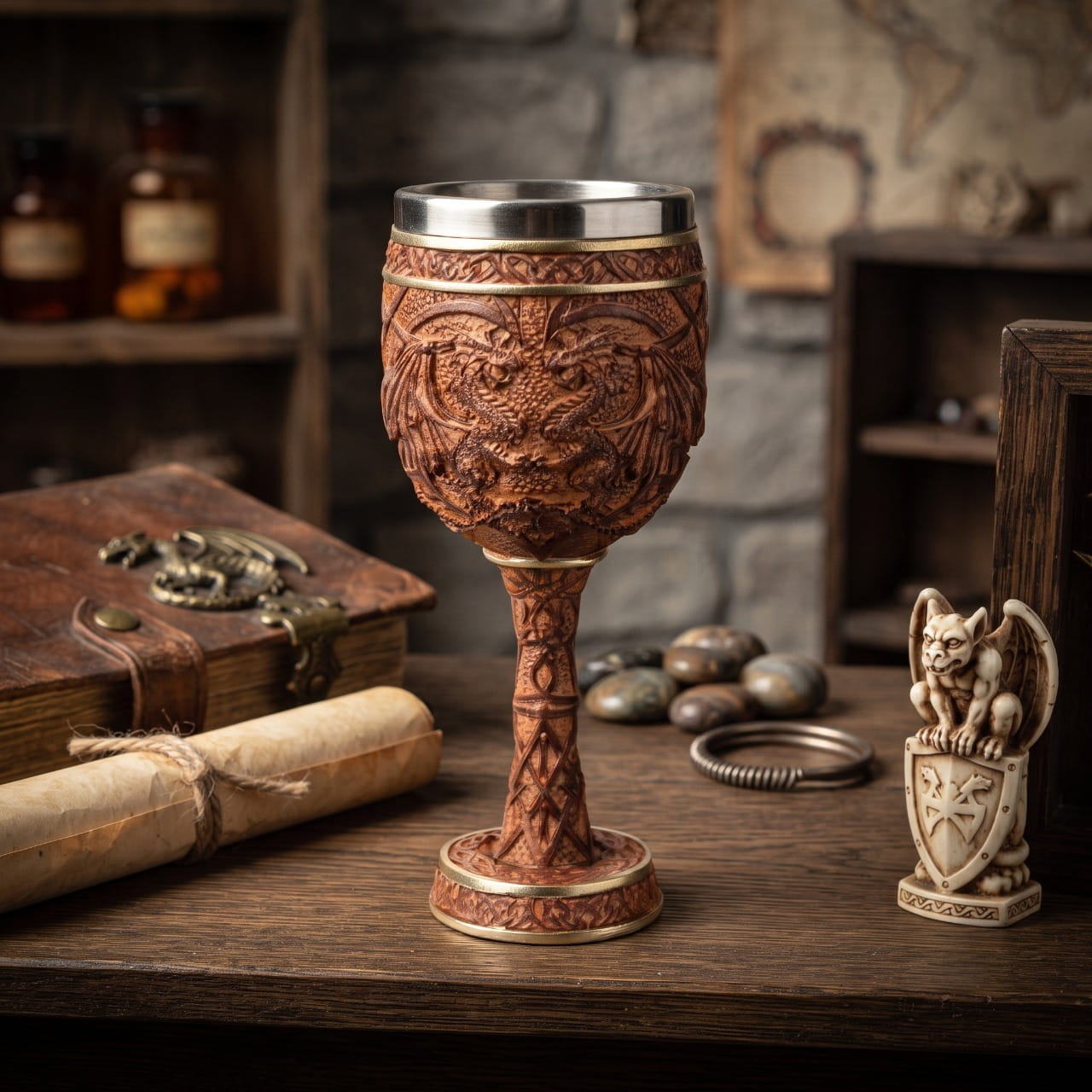
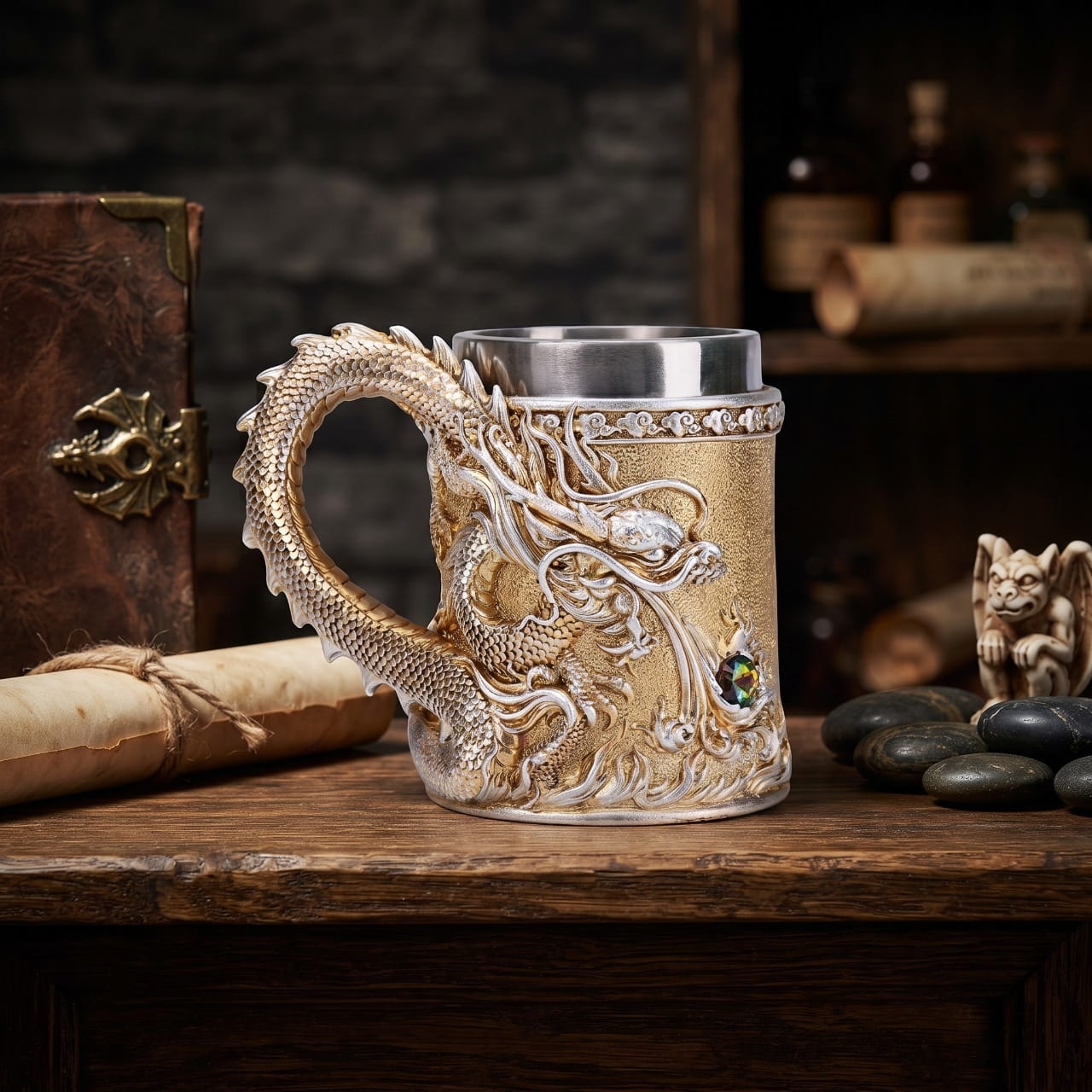
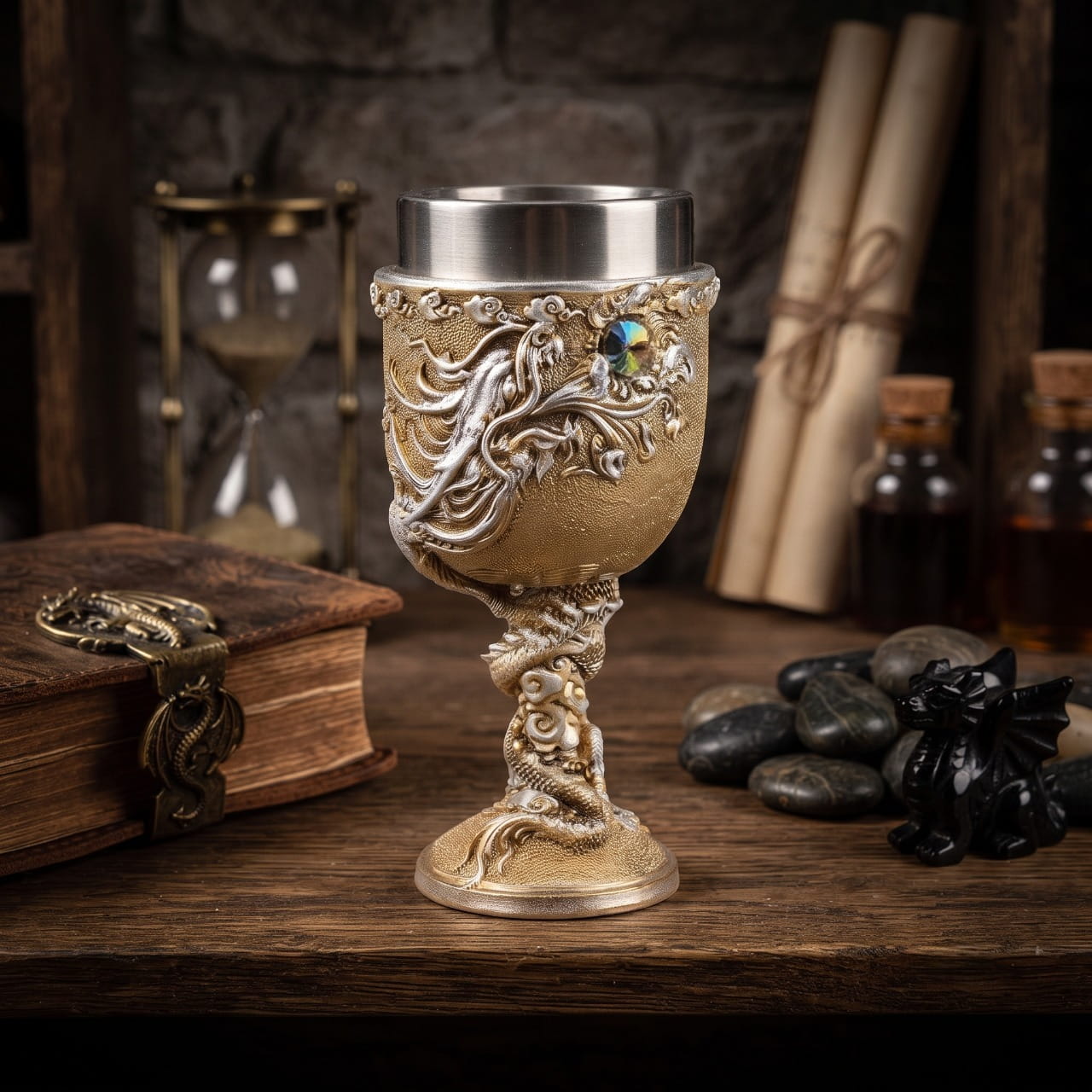
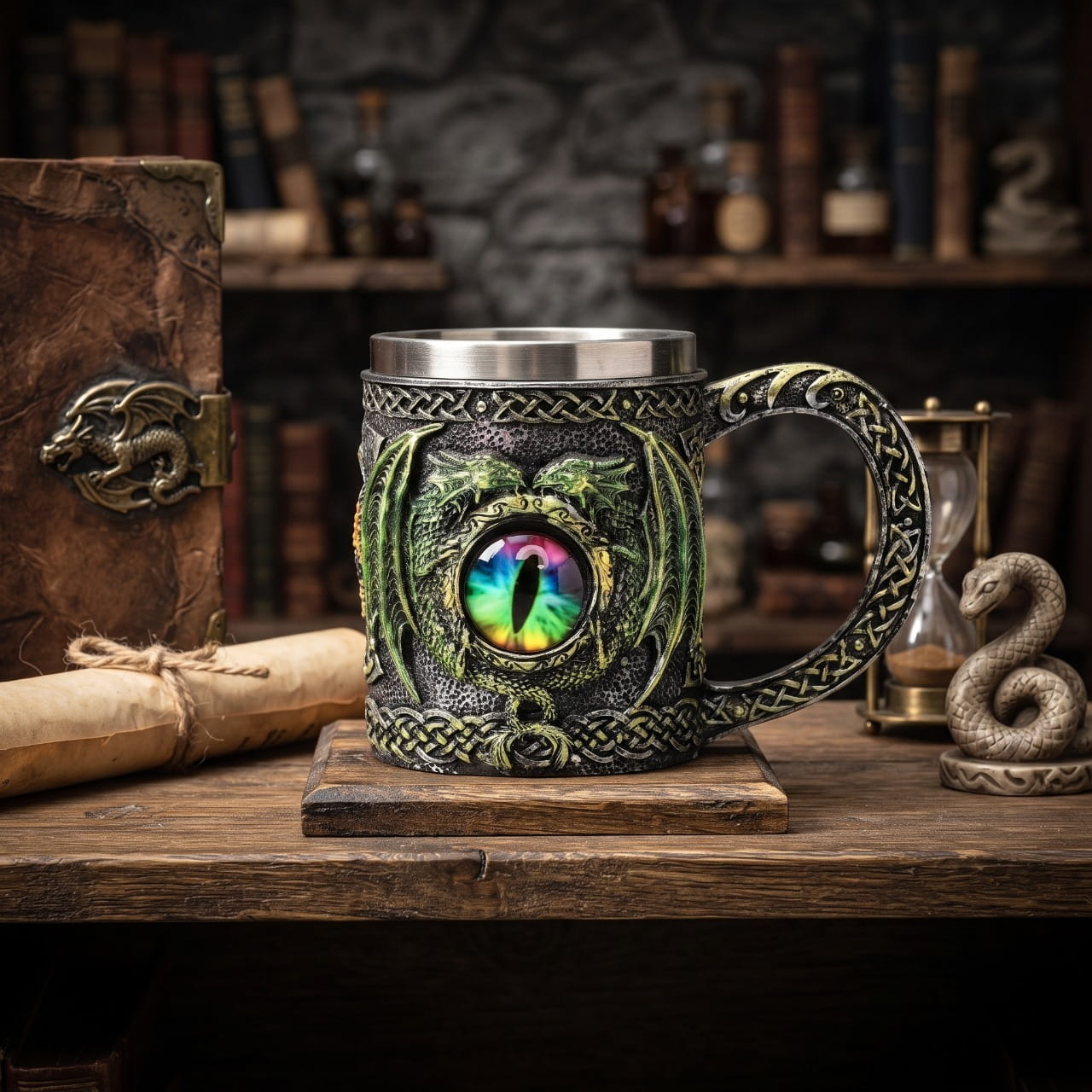
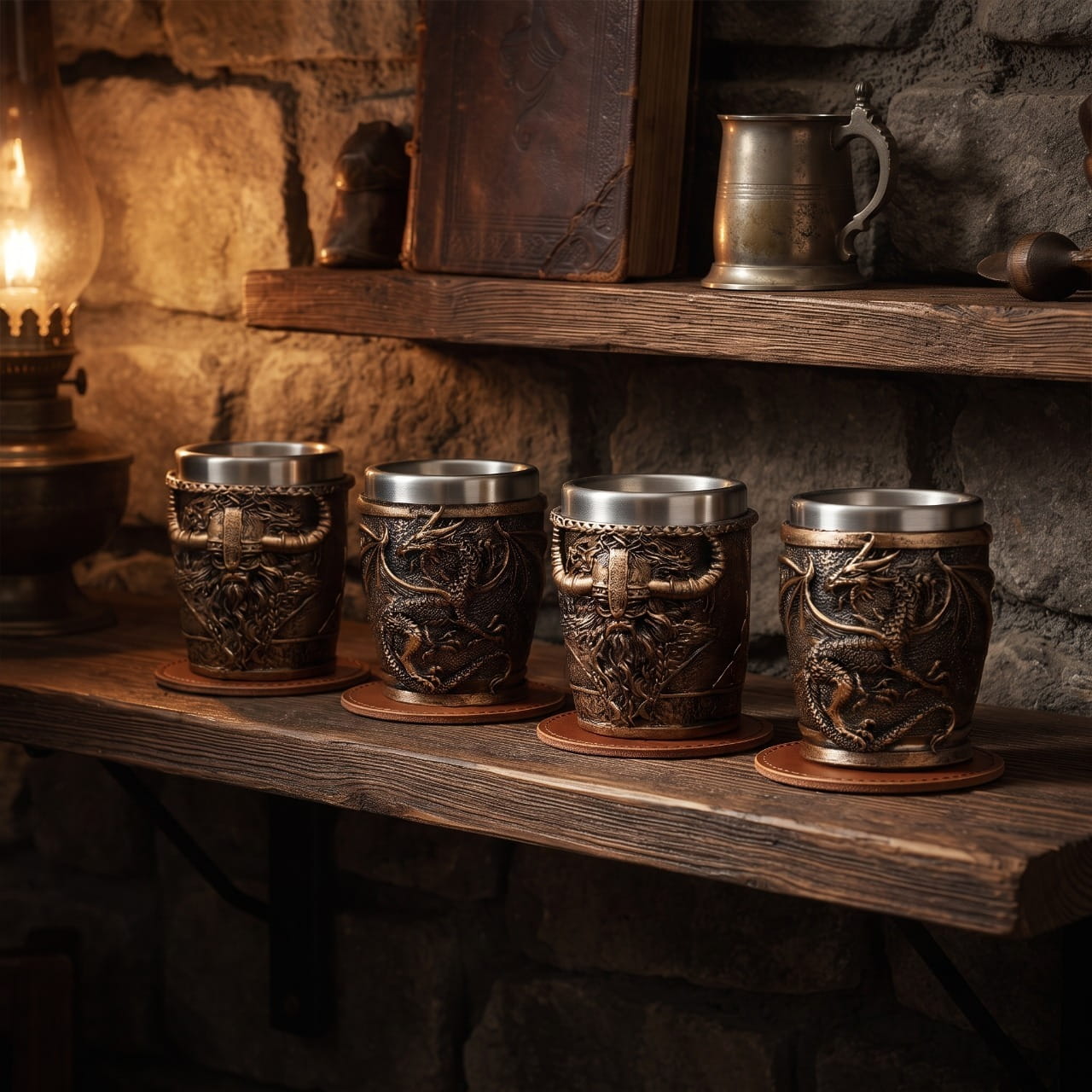
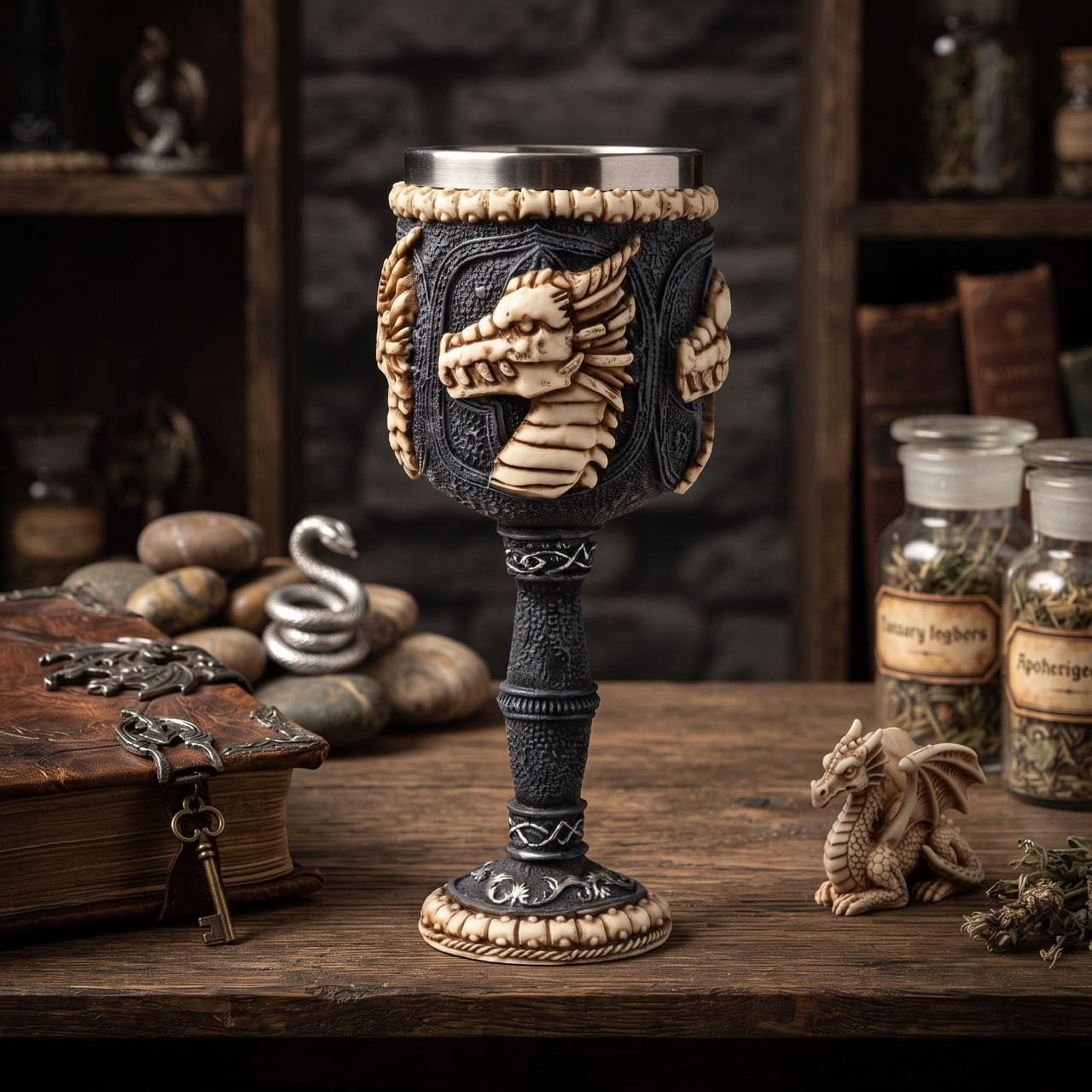
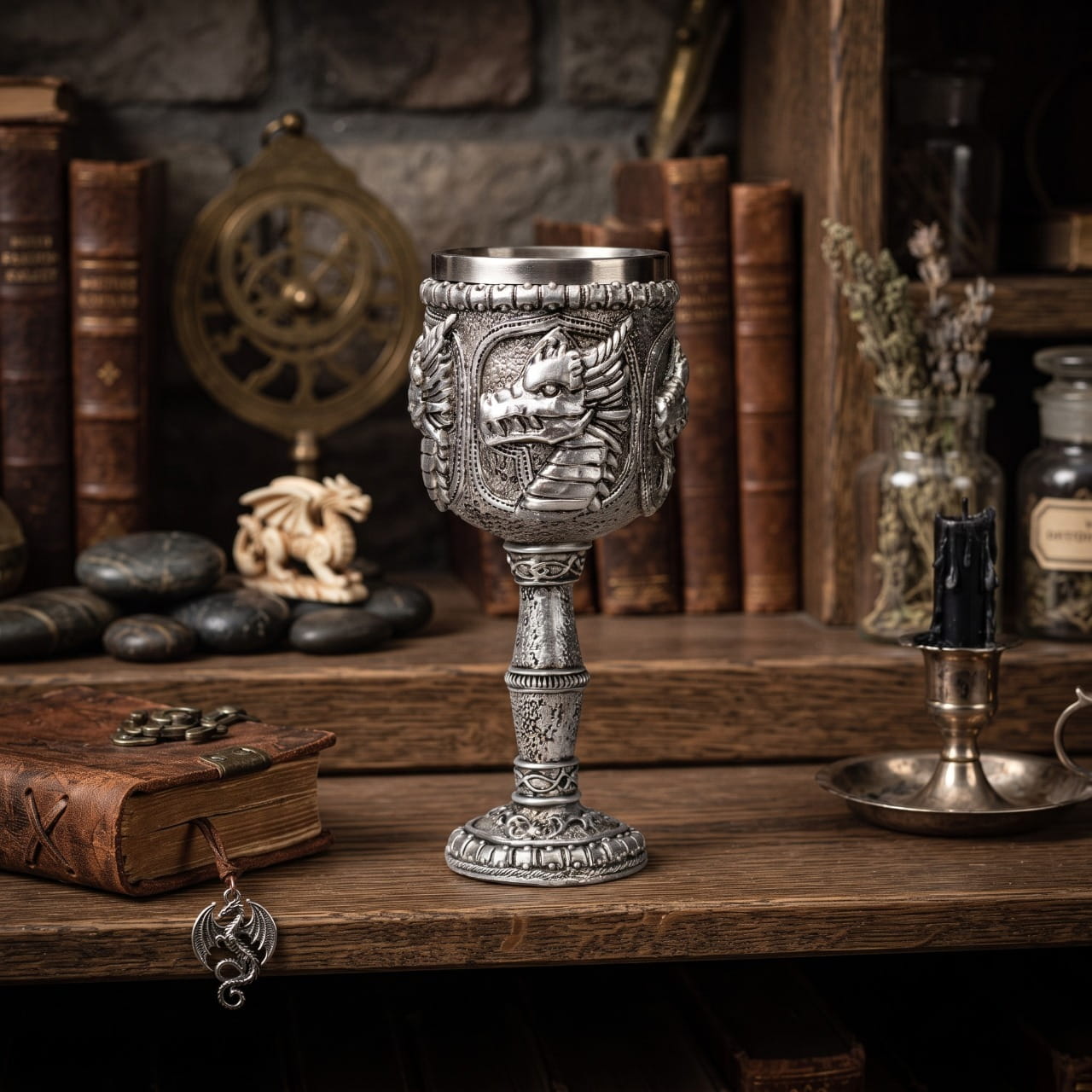
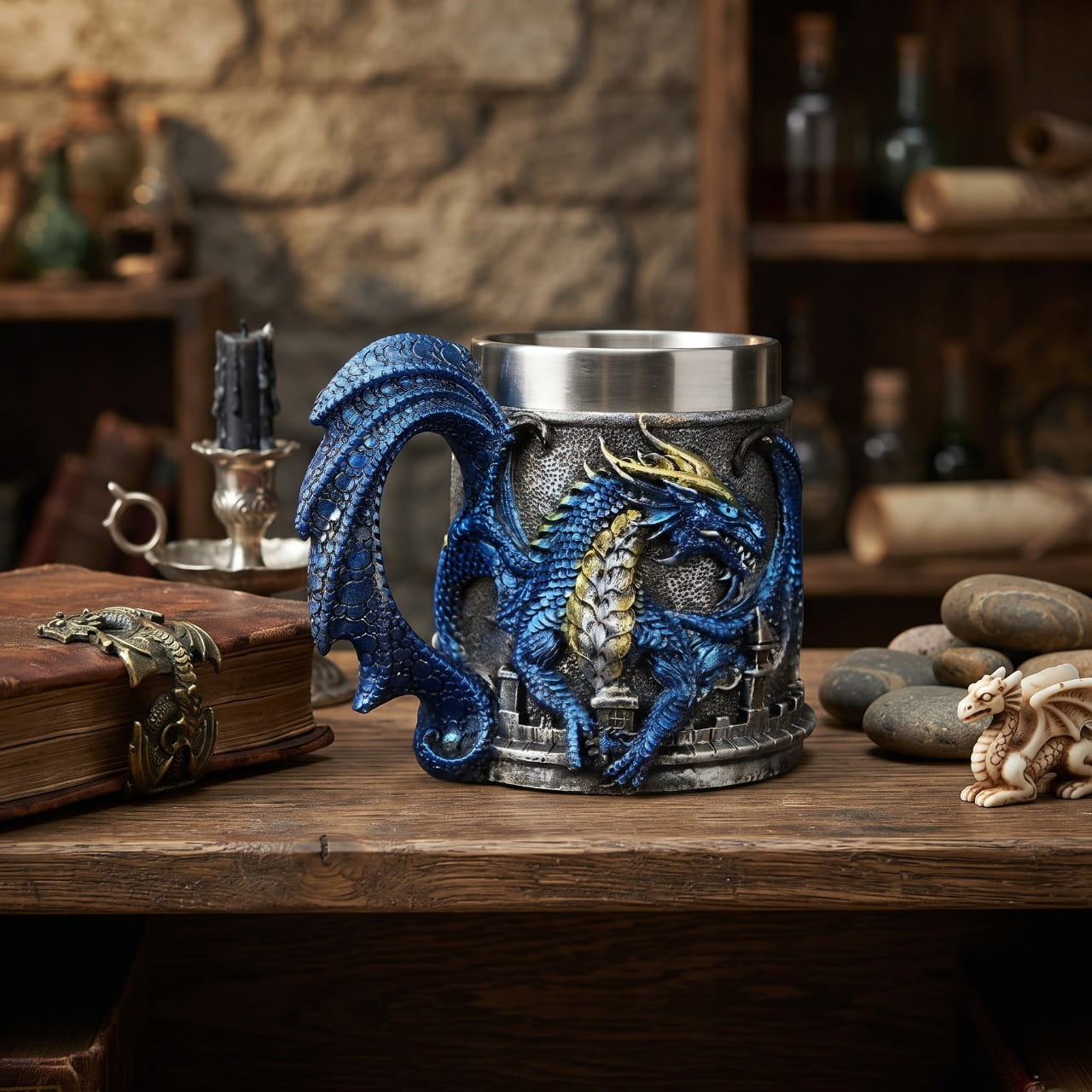
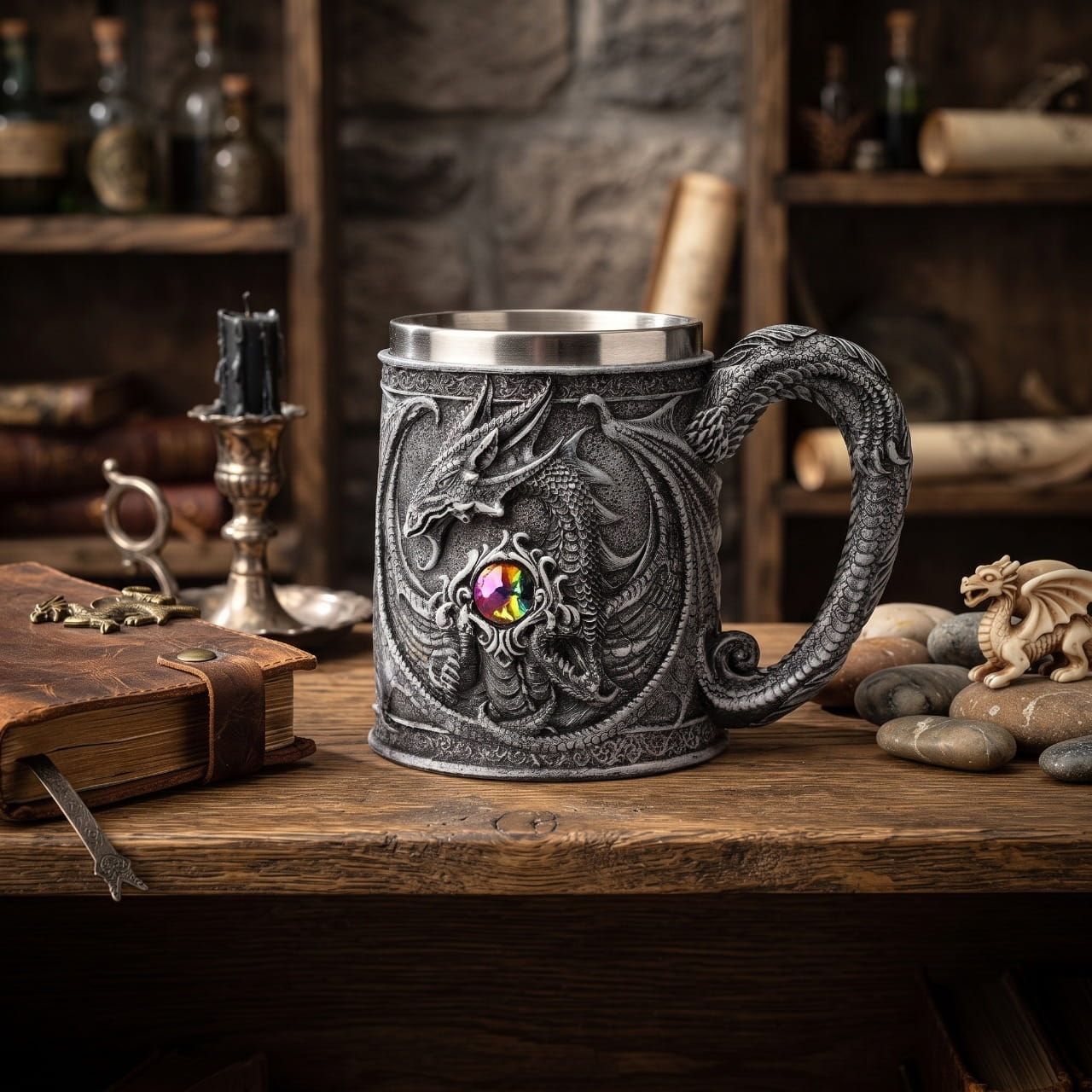
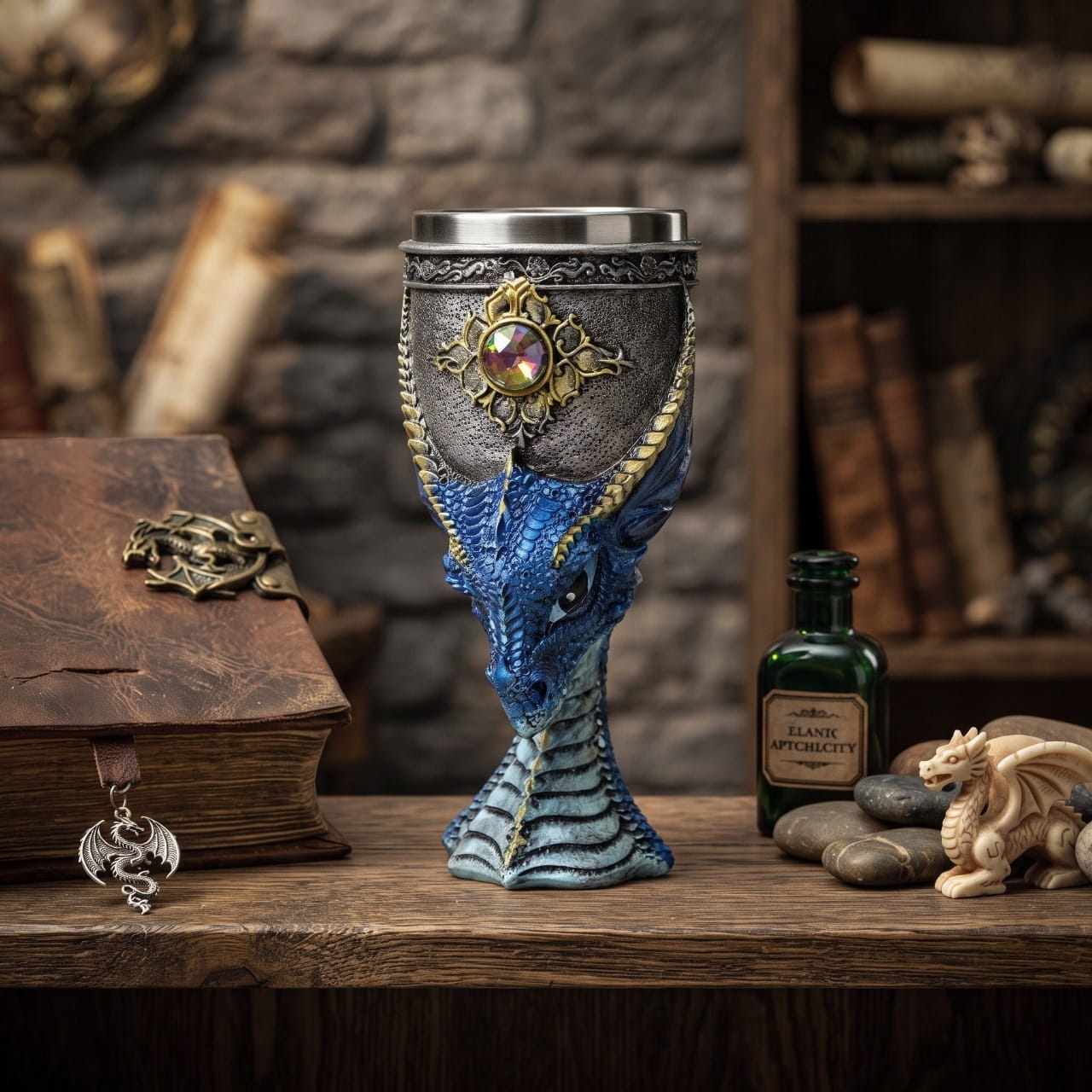
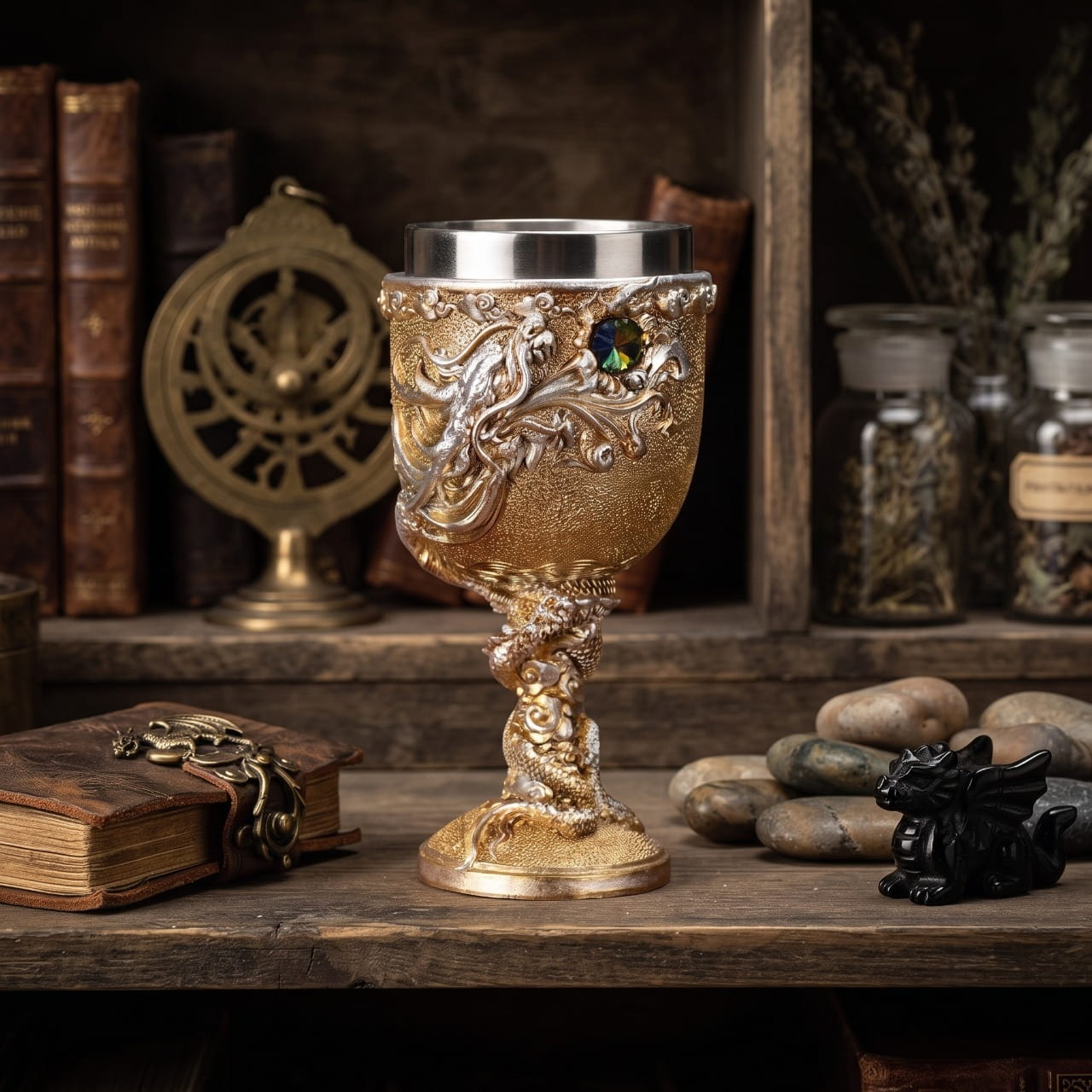
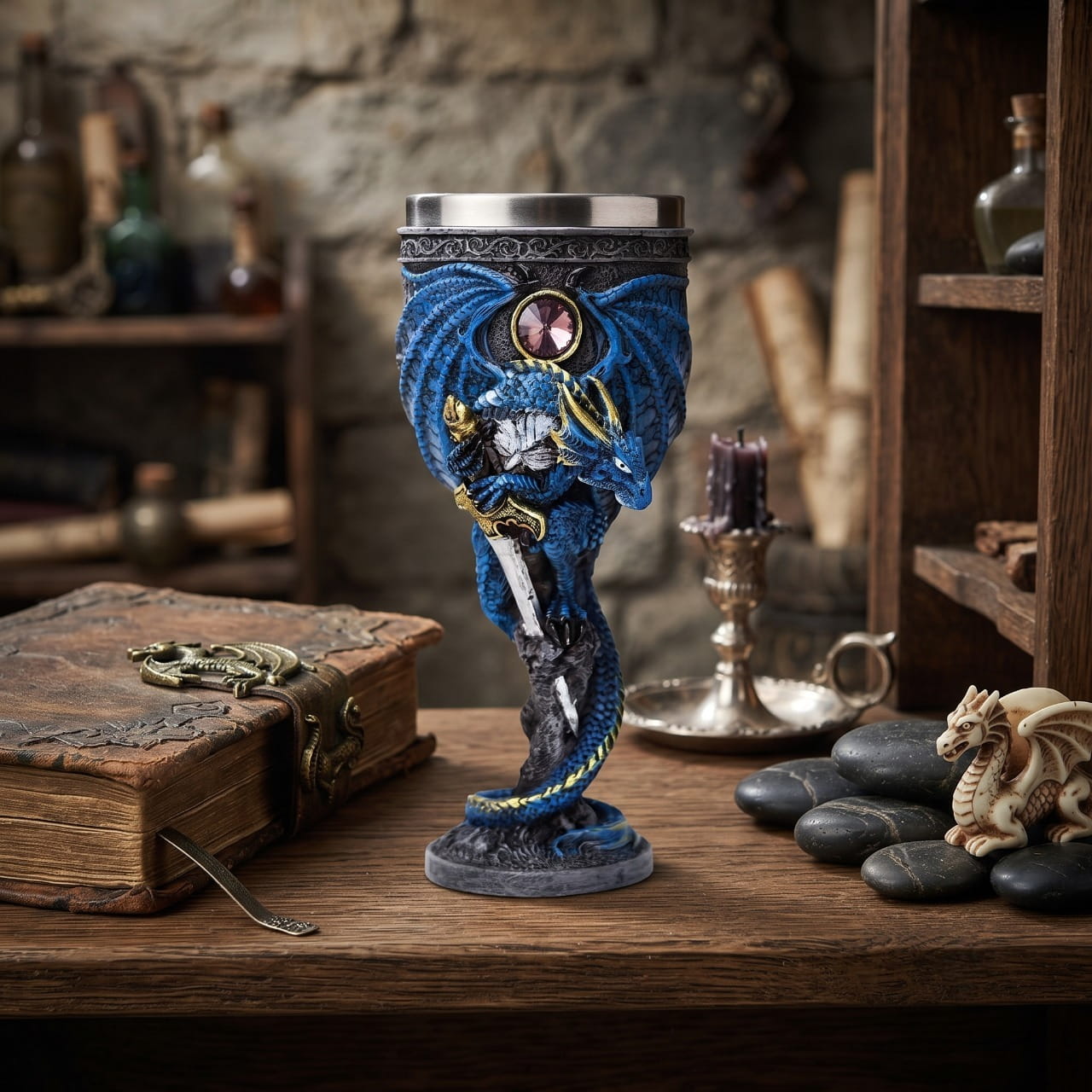
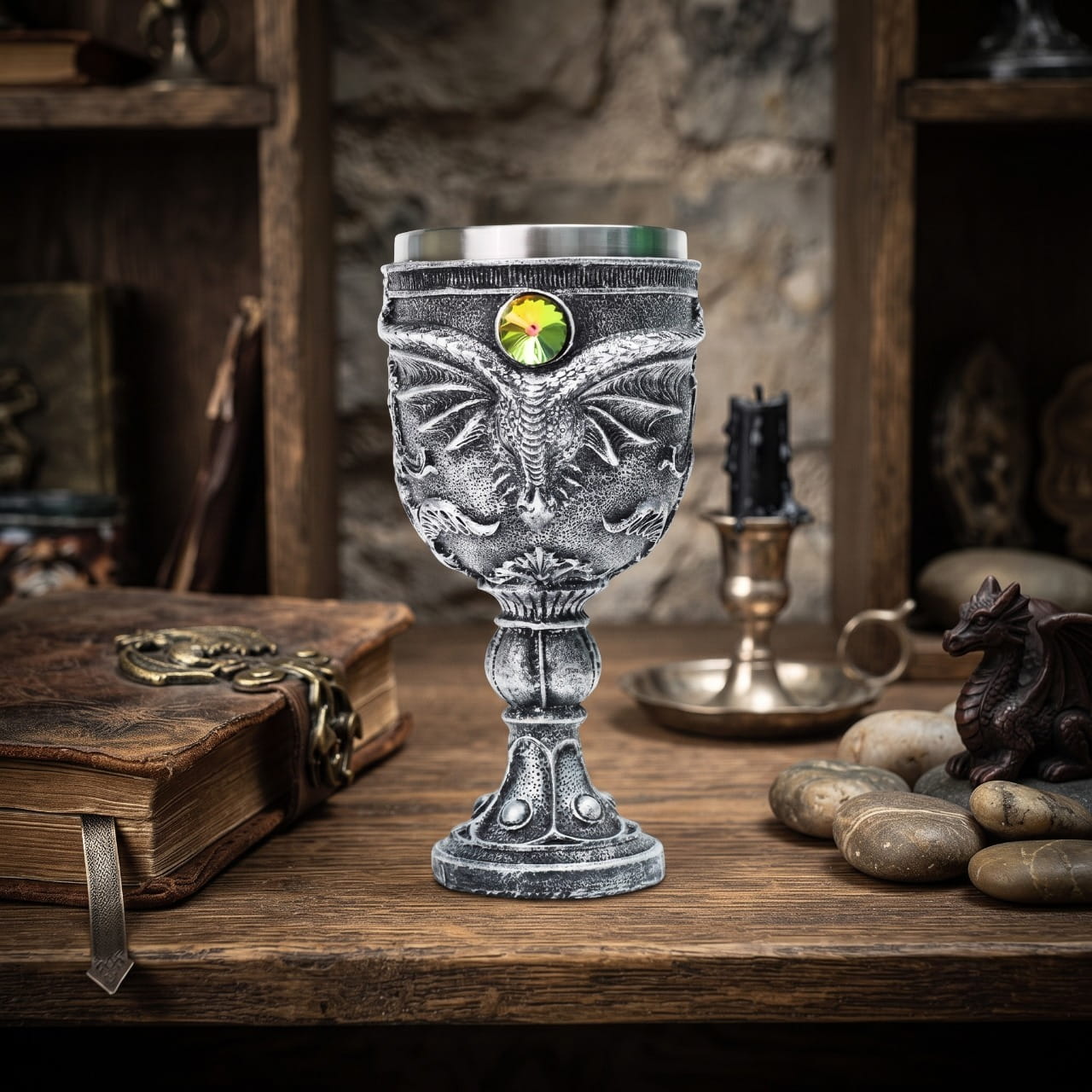
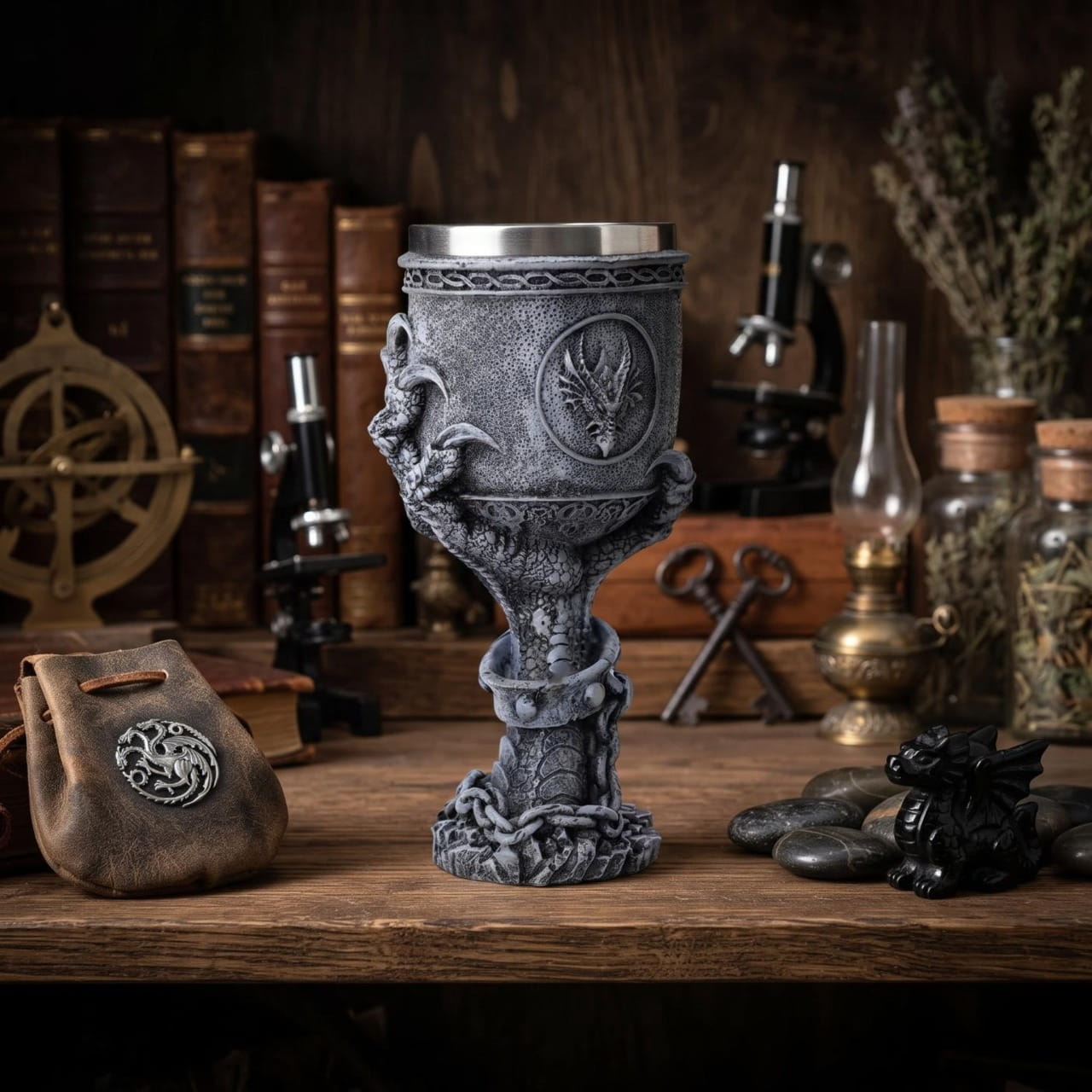
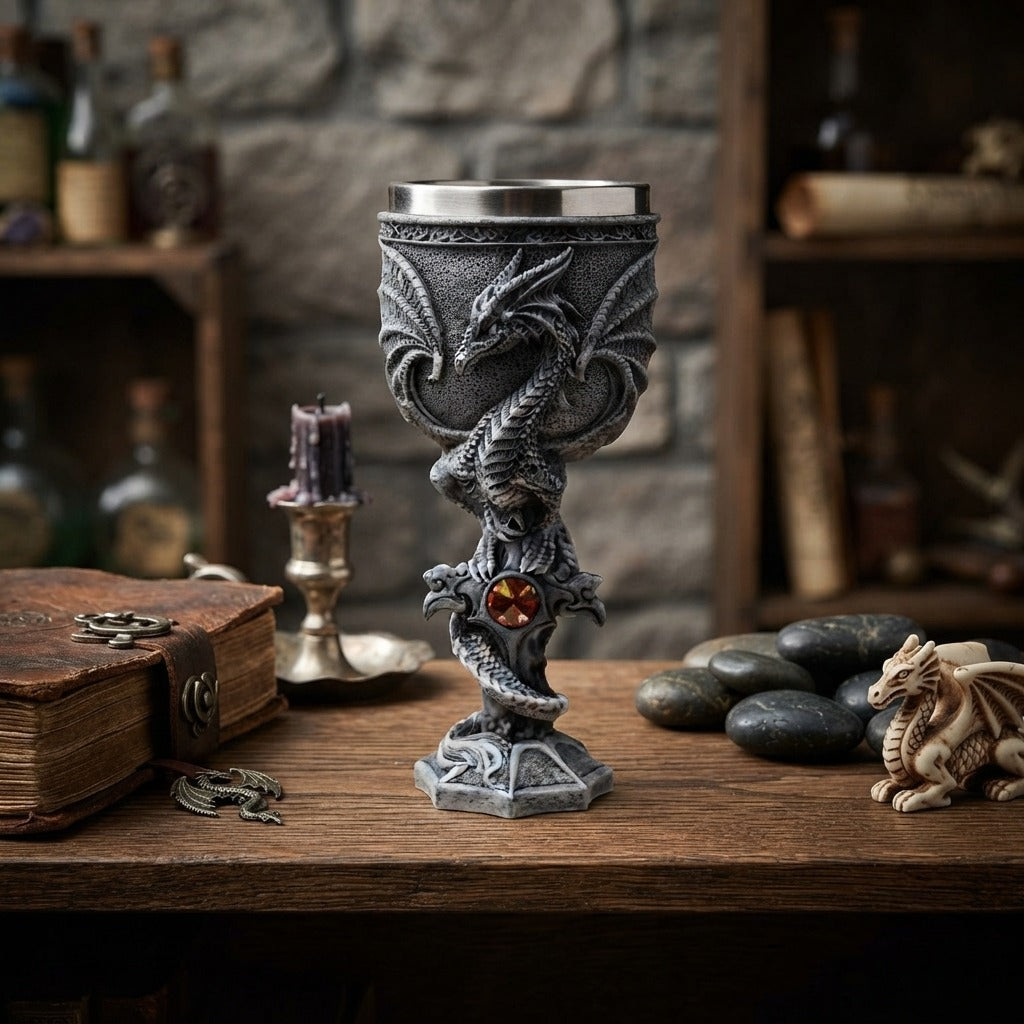
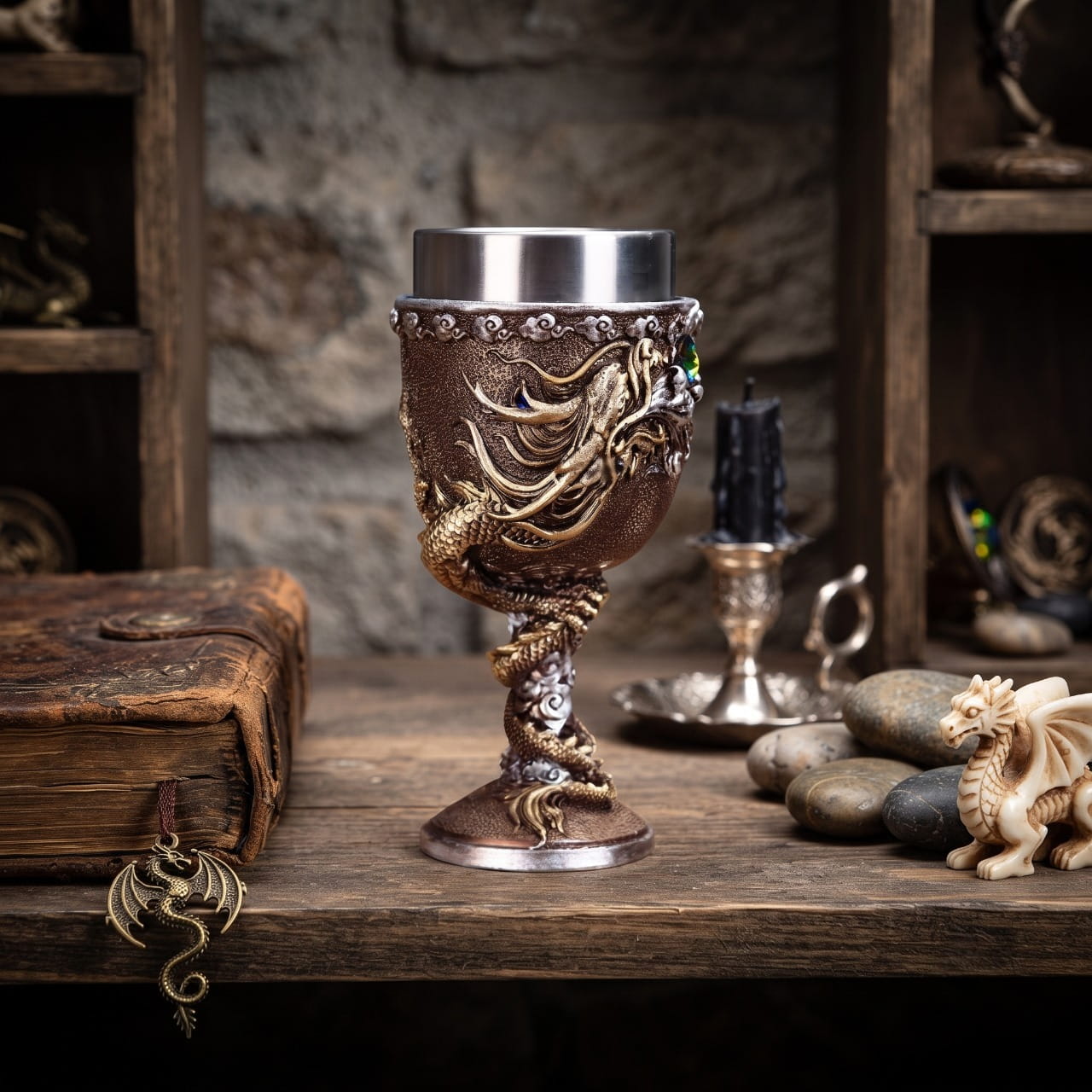
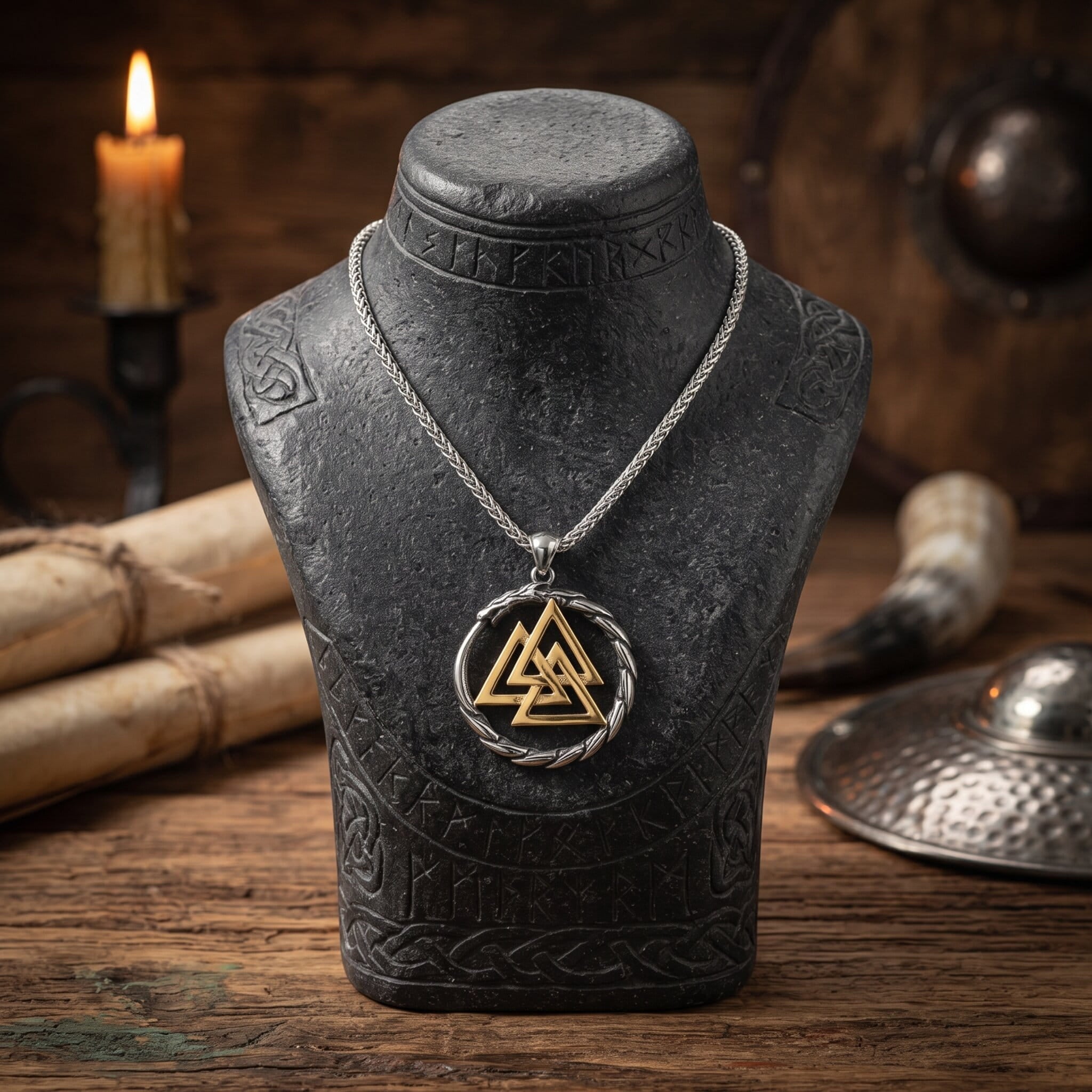


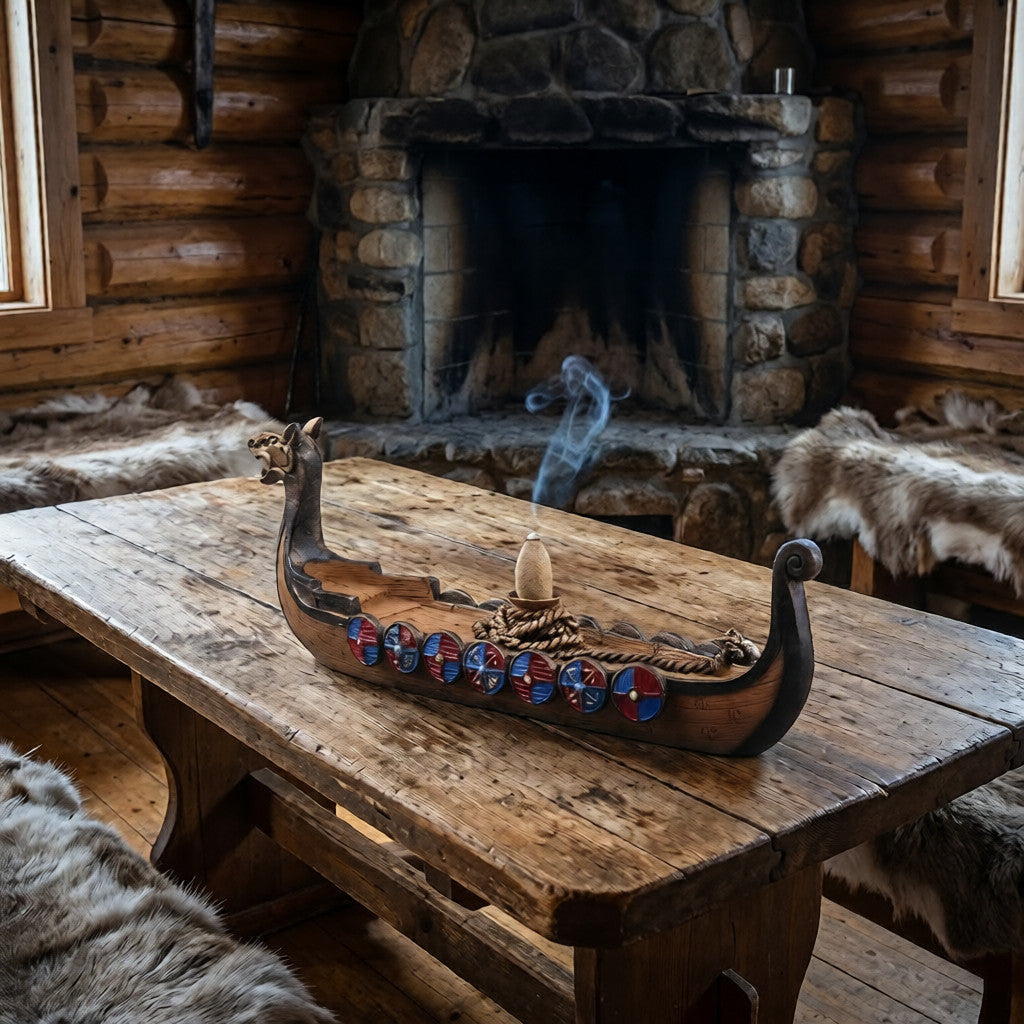
Norse Dragons & Serpents — en savoir plus
The dragon is the most frequently depicted creature in all of Viking art — and yet no Norse source speaks of “dragons” as a species. The sources speak of three specific beings, each with its own name, role and end: Jörmungandr, who encircles the world, Fáfnir, whom greed transformed, and Níðhöggr, who gnaws at the root of the tree. Everything else — the interlaced ribbons on brooches, the prow heads of ships, the jaws carved on drinking horns — belongs to something else: an ornamental language that the craftsmen of the North pushed further than anyone.
This section brings together the pieces that speak this language: the ribbon beast on jewelry, the serpent biting its own tail, the open jaws on chalices and tankards. Below: what the texts really say, what the objects that have been found show, and the two images wrongly believed to be Norse.
Jörmungandr, the serpent that encircles the world
It is the best-attested dragon in Norse mythology, and the only one whose death is known in advance.
The child thrown into the sea
Snorri Sturluson, in the Gylfaginning (around 1220), tells how Loki had three children with the giantess Angrboða: the wolf Fenrir, the woman Hel, and a serpent. Odin had them brought before him. He threw the serpent into the deep sea that surrounds the lands. There the creature grew so large that it ended up encircling the world and biting its own tail. Hence its other name: Miðgarðsormr, the Midgard Serpent.
The detail matters, because it explains the shape the motif takes on objects: a serpent closed in on itself, with no visible beginning or end. This serpent's brother has his own section, Fenrir the Wolf, and the tree it encircles has one too, Yggdrasil.
The fishing trip
The Hymiskviða in the Poetic Edda shows Thor setting out to sea with the giant Hymir. Thor rows beyond the usual fishing grounds, baits his hook with an ox head, and hooks the serpent. He hauls it up to the gunwale; their eyes meet. Hymir, terrified, cuts the line. The serpent sinks back.
This scene is one of the few in Norse mythology that we find carved: the Altuna stone in Sweden (11th century) shows a figure in a boat, his foot going through the hull from the strain, a taut line reaching toward a serpentine shape. You recognize it without needing the text.
The duel at Ragnarök
The Völuspá foretells the end: the serpent rises from the sea and poisons the air. Thor kills it, then takes nine steps and falls, killed by the venom. Neither outlives the other. This face-off is what the pieces pairing a hammer with a serpent echo — see Mjölnir.
Fáfnir, the dragon born of greed
Fáfnir was not born a dragon. He is a son of Hreidmar — a man, changed by gold.
Andvari's gold
The Völsunga saga and the Reginsmál tell the chain of events: Loki kills an otter that was a son of Hreidmar; to pay the blood price, he wrests his gold from the dwarf Andvari, who curses the ring and the treasure. Fáfnir kills his father for that treasure, drives off his brother Regin, settles on the hoard on the heath of Gnitaheiðr — and little by little becomes the serpent that guards it.
It is one of the oldest European tales in which greed physically transforms the one who feeds it. It went on to feed Wagner's cursed ring, and then Tolkien's.
Sigurd, the blood and the language of birds
Regin urges Sigurd to kill the dragon. The young man digs a pit on the path Fáfnir takes to go and drink, and strikes him from below. While roasting the heart, he burns his finger, puts it in his mouth — and suddenly understands the song of the titmice, who warn him that Regin is going to betray him.
This story is carved for all to see on the Ramsund carving (Södermanland, Sweden, around 1030): the dragon's body itself forms the runic band that carries the inscription, Sigurd strikes from below, the birds are in the tree, the horse Grani is tethered. It is proof that the tale was circulating in the Viking Age, not only in later Icelandic manuscripts.
Níðhöggr, the one who gnaws the root
The Grímnismál places him under the third root of Yggdrasil, where he gnaws at the wood relentlessly. The squirrel Ratatoskr runs up and down the trunk carrying the insults of the eagle perched at the top down to the dragon, and back up again. He is the only Norse dragon whose function is purely destructive: he wears the world away from below, continuously, while everything else unfolds. The Völuspá still shows him flying after the end, laden with corpses.
To place the roots, the well and the nine worlds, the article The 9 Worlds of Norse Mythology maps out the complete geography.
What the Vikings actually carved
This is where mythology and archaeology part ways. On objects, you almost never find an identifiable “Fáfnir” or “Jörmungandr.” You find a beast, always the same one, reworked over three centuries.
The ribbon beast
Art historians have divided Scandinavian art into successive styles, named after the sites where they were identified: Borre, Jelling, Mammen, Ringerike, then Urnes. The last of these, named after the Urnes stave church in Norway (11th century), takes the motif to its extreme: a slender quadruped and a thin serpent coil around each other in figure-eight loops, the body reduced to a ribbon, the jaws biting another part of the interlace.
That is the vocabulary taken up by the pieces worked in knotwork — you find it mixed with endless knots in Triquetra & Norse Knotwork, and on the clasps of fibulae and brooches.
The prow heads
Ships carried removable carved heads. The Icelandic Landnámabók preserves a clause of ancient law requiring that the gaping head be taken down before approaching land, so as not to frighten the land's guardian spirits. It is one of the few written rules that tell us about the function of the motif: it was meant to frighten, and people knew how to disarm it.
Construction, navigation and expeditions are covered in detail in Viking Longship: Construction, Navigation and Expeditions, and the models and ship pieces live in Ships & Longships.
Two images wrongly believed to be Norse
The ouroboros
The serpent biting its own tail appears in ancient Egypt, then among the Greek alchemists of Alexandria, long before the Viking Age. The word itself is Greek. So it is not a Norse symbol — but the image overlaps so exactly with Jörmungandr closed around the world that the two have merged in modern usage. The pieces bearing that name in this section play on this encounter, not on a historical lineage.
The Eastern dragon
The long, wingless dragon of Far Eastern tradition has nothing to do with the beast of the North: it is benevolent, associated with water and rain, and its form follows a different ornamental logic. A few pieces in this section are openly inspired by it. They are here because they are beautiful and hold their own on the table, not because they are supposedly Scandinavian.
Finding the right piece
The motif is not worn the same way from one object to another.
- At the table — open jaws on the stem or the handle come into their own on large pieces: see the chalices and the tankards, mugs and cups.
- Around the neck — the coiled serpent or the ouroboros reads well as a pendant: see the necklaces.
- On the hand — the claw and the dragon's head lend themselves to signet rings: see the rings.
- On the ears — coiled-serpent ear cuffs go on without piercing: see the earrings.
- In the hair and beard — the ribbon beast suits elongated shapes: see the hair clips and hair jewelry and the beads.
- On the wall and on the shelf — see the decorations.
And if it is the creature that interests you more than the object, the North's two other beasts have their own sections: Fenrir the wolf and Odin's ravens.