
Filters
94 products
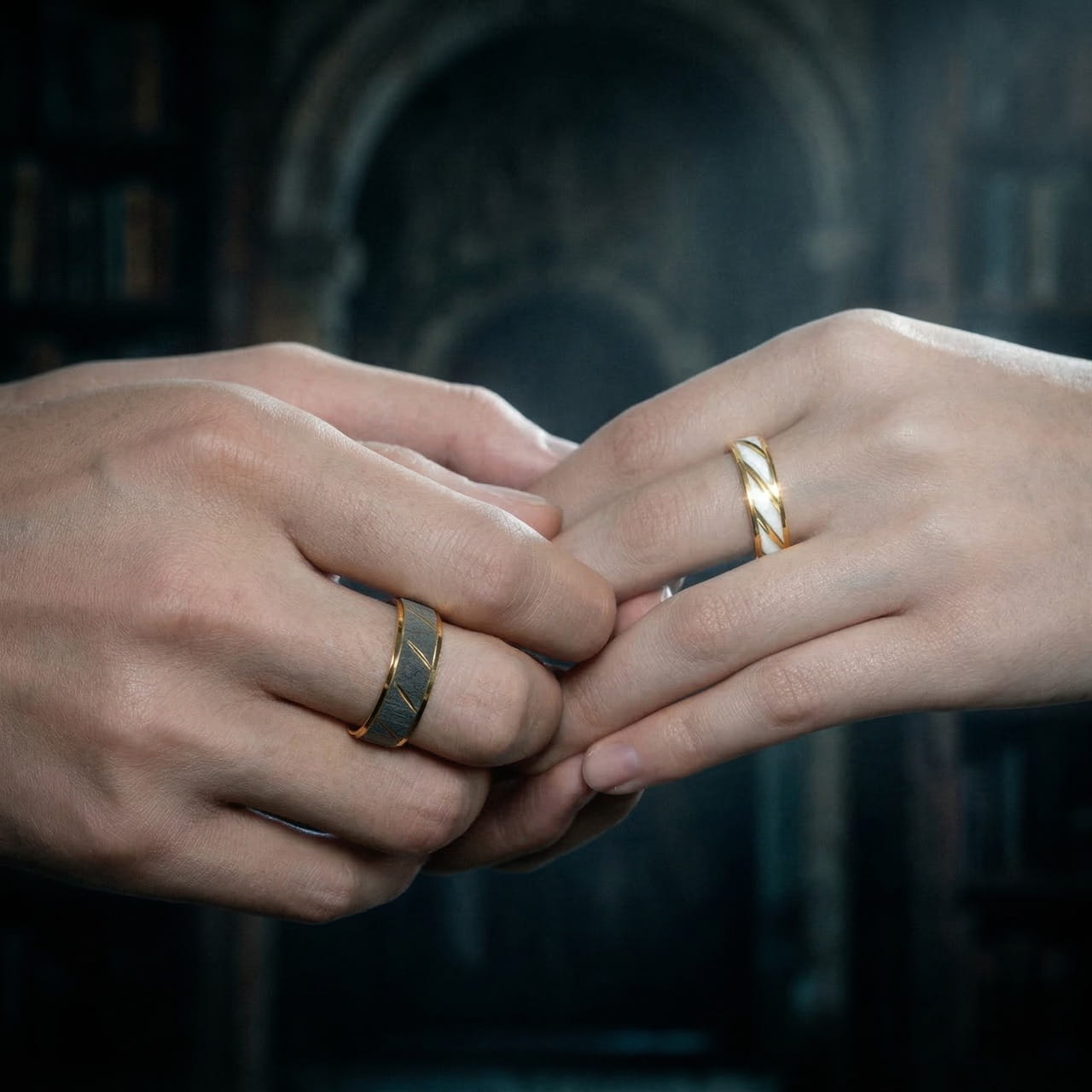
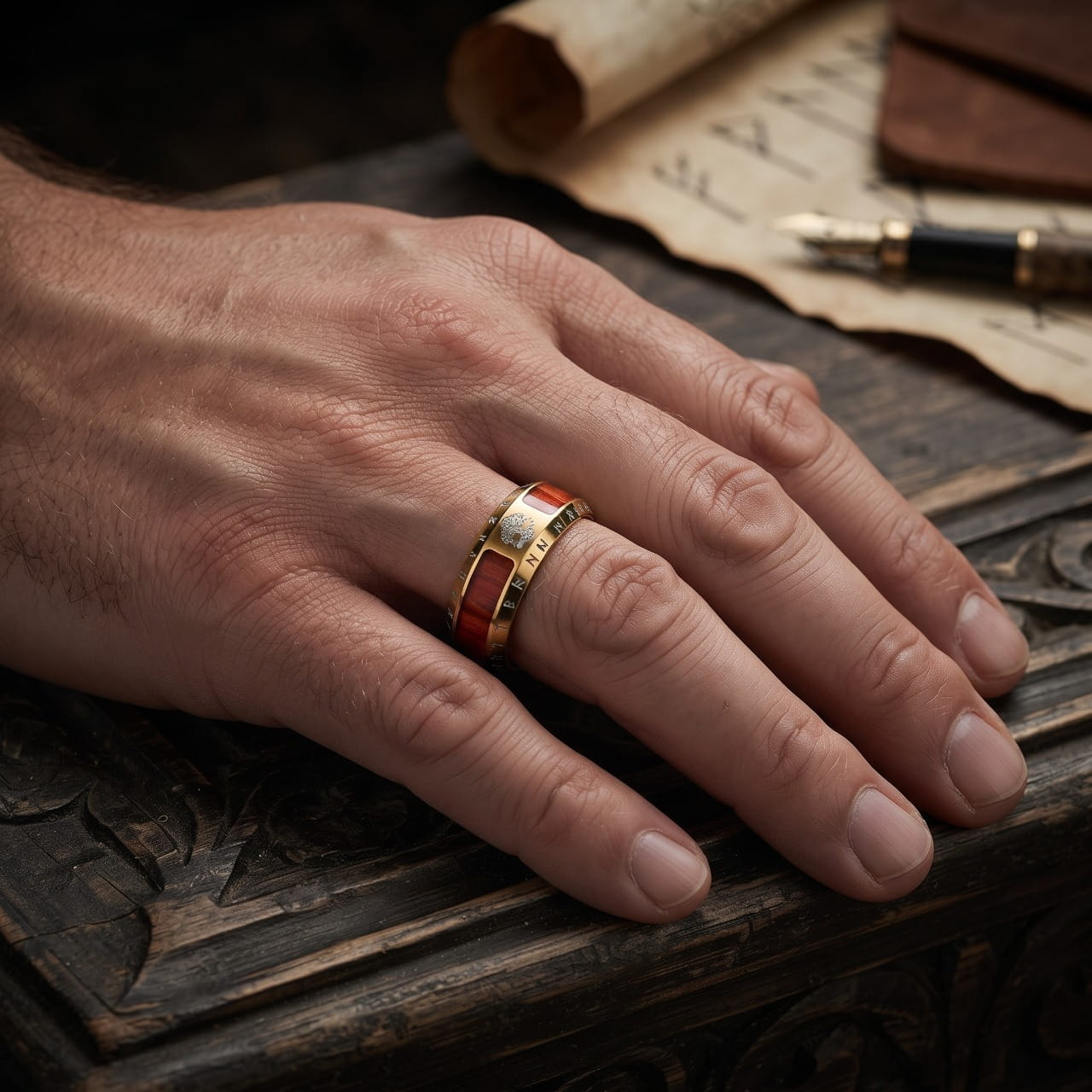
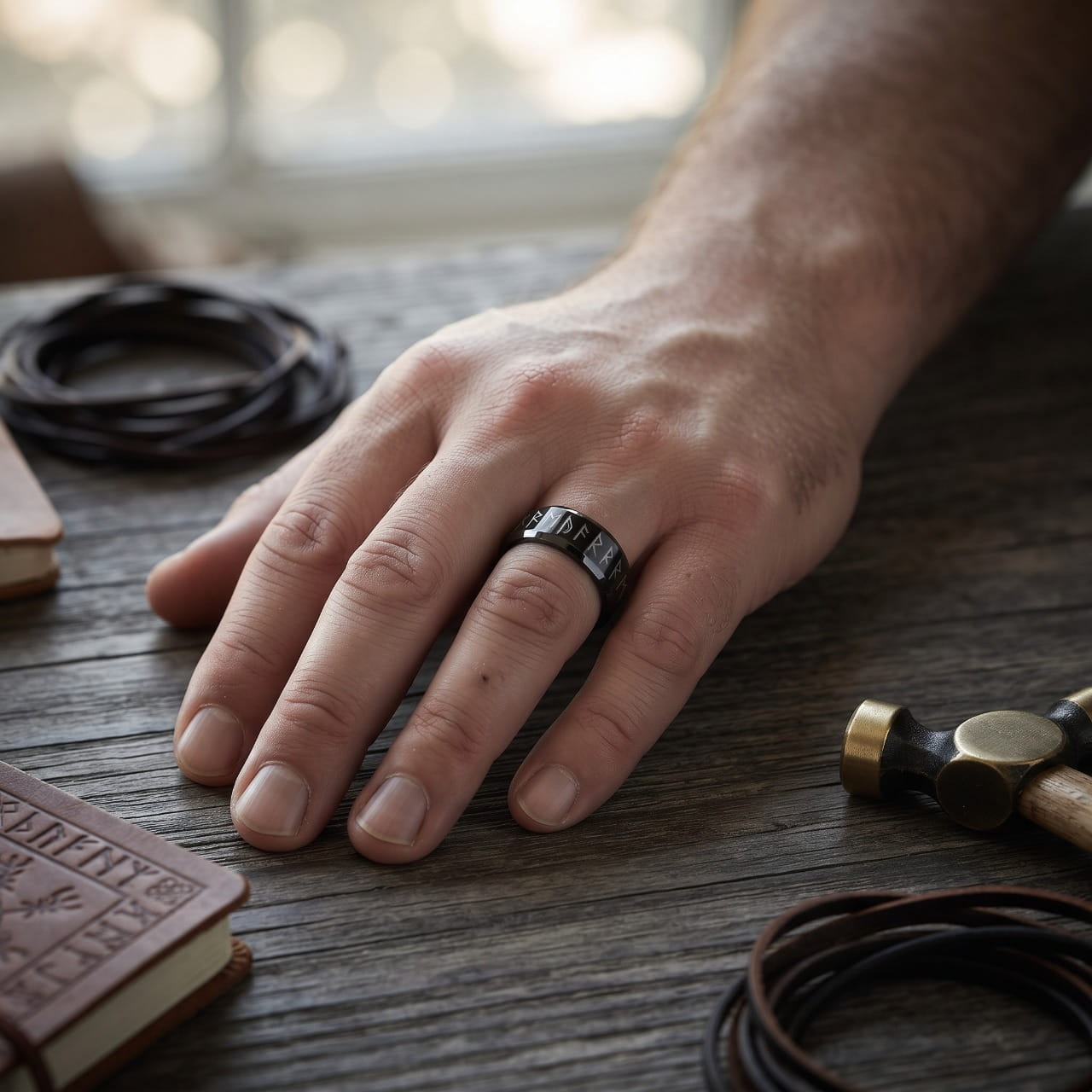
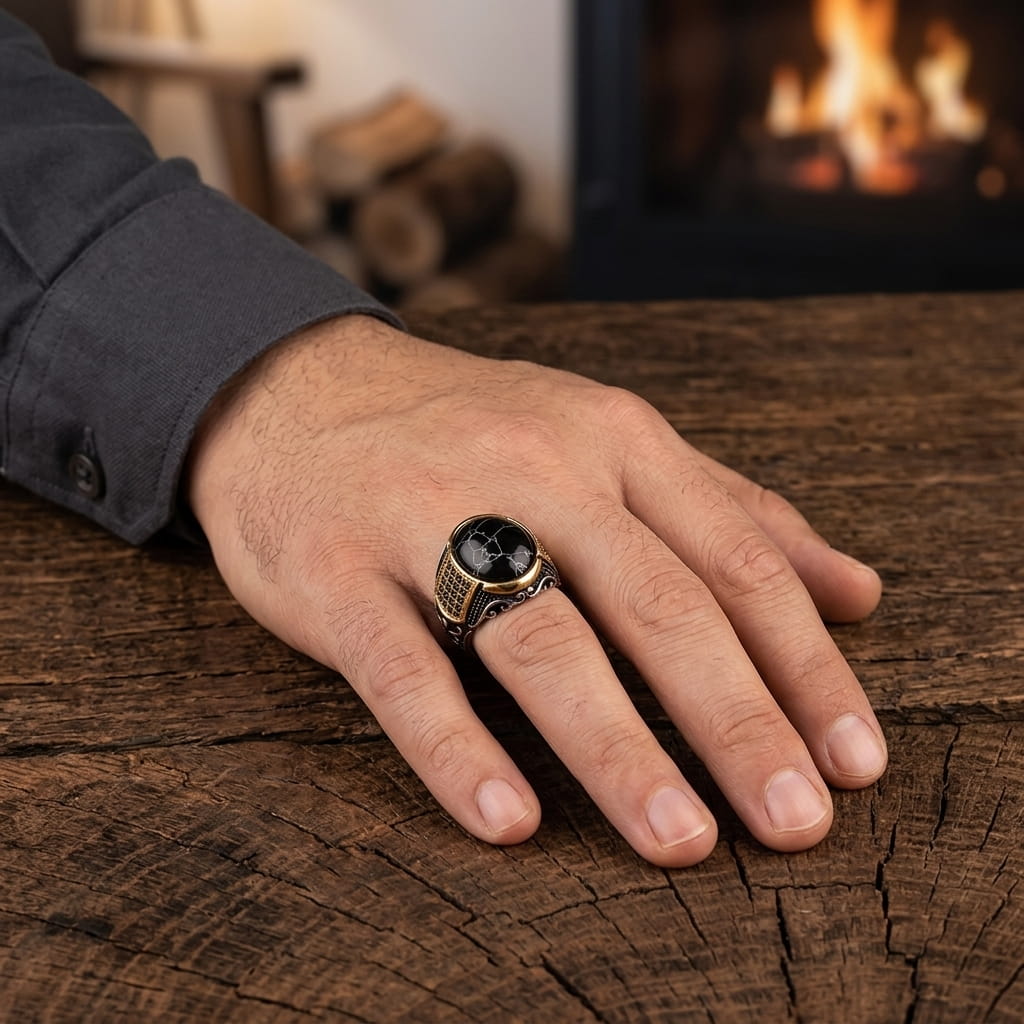

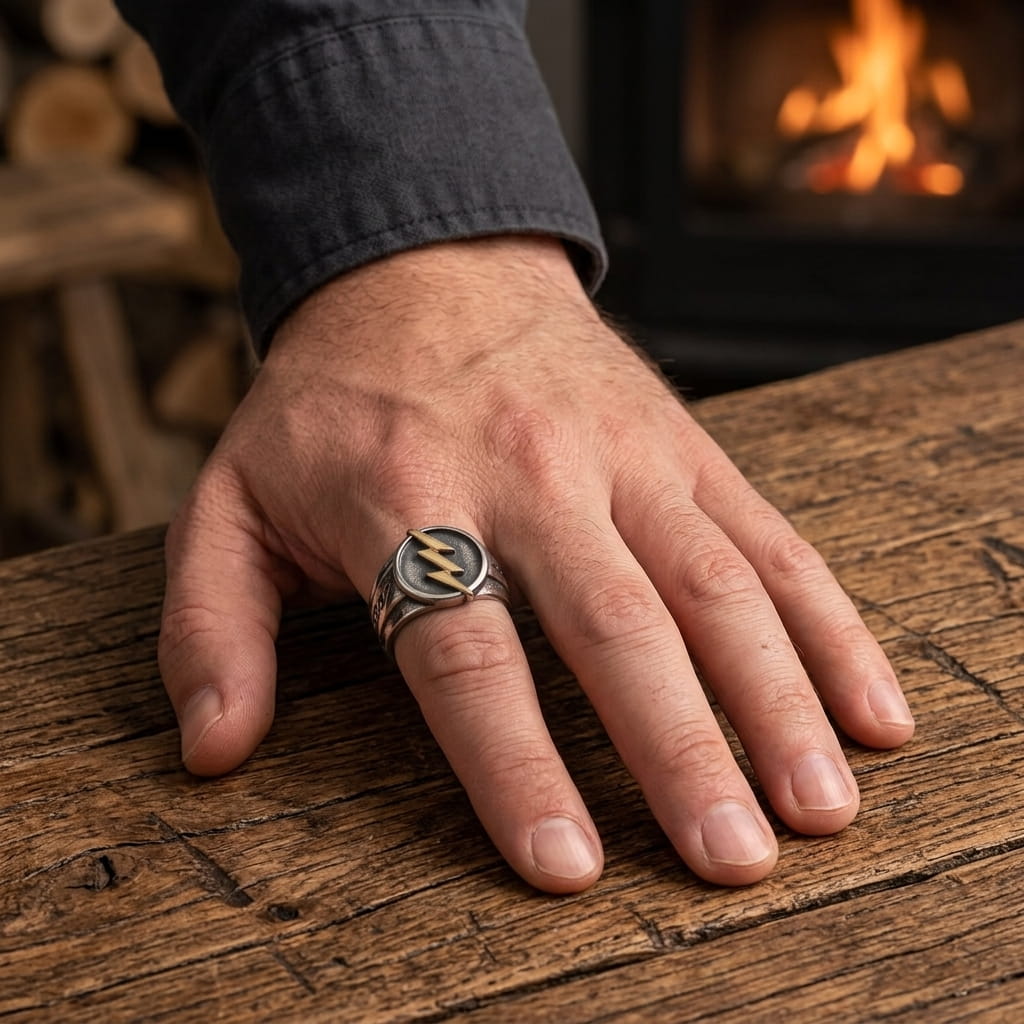
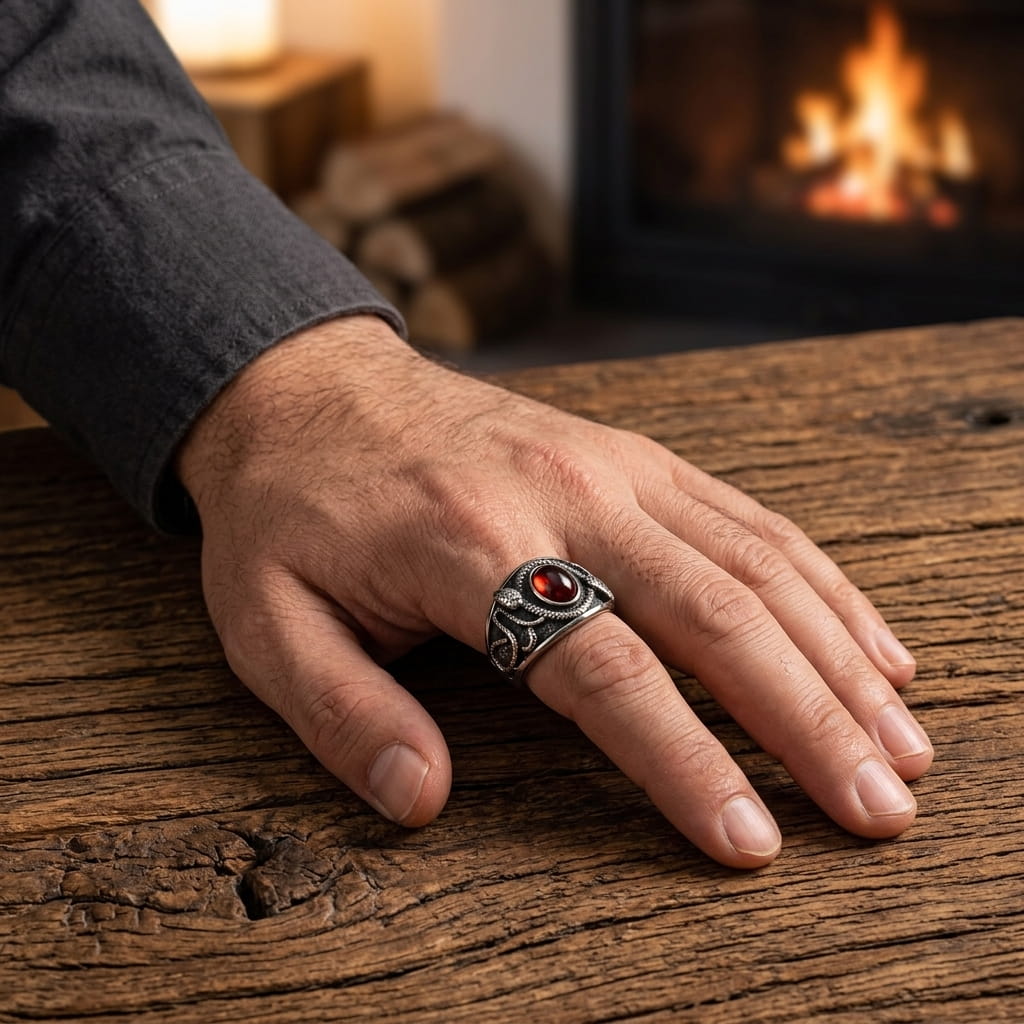
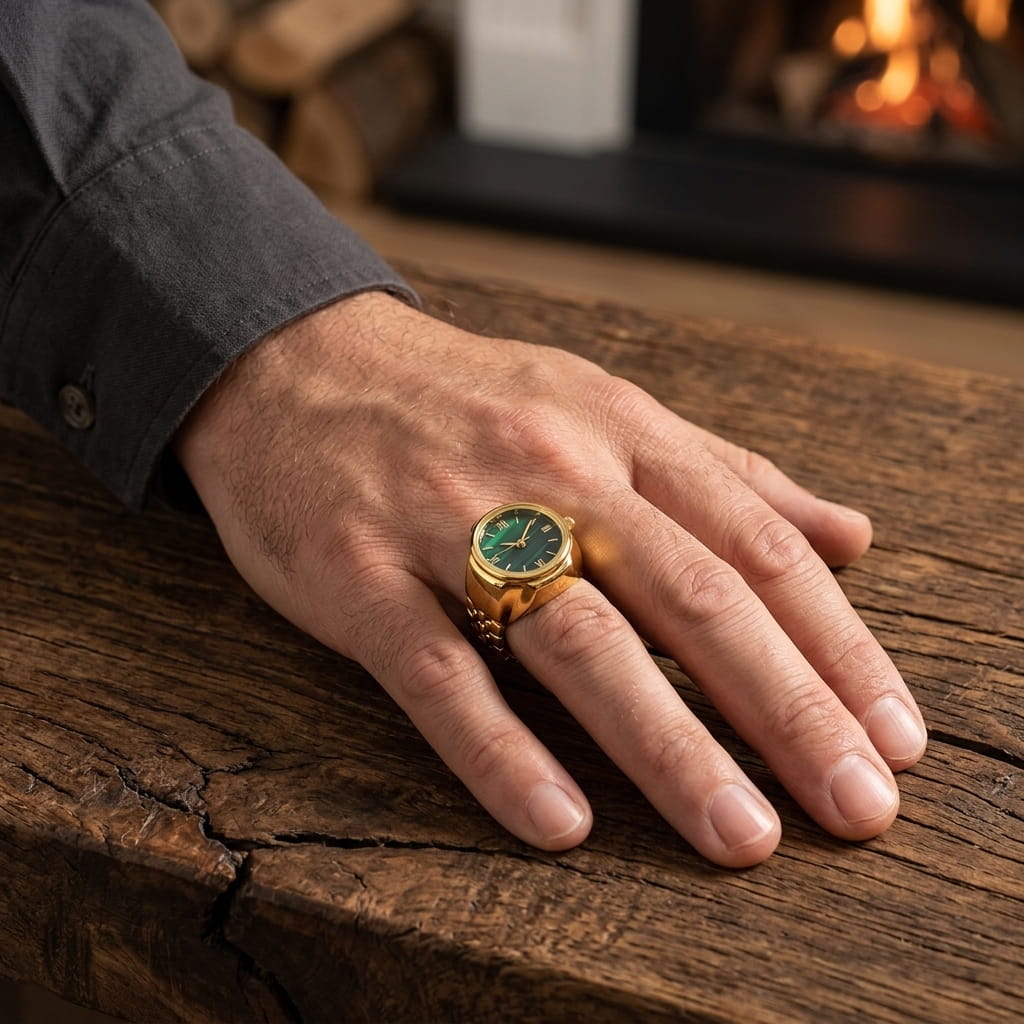
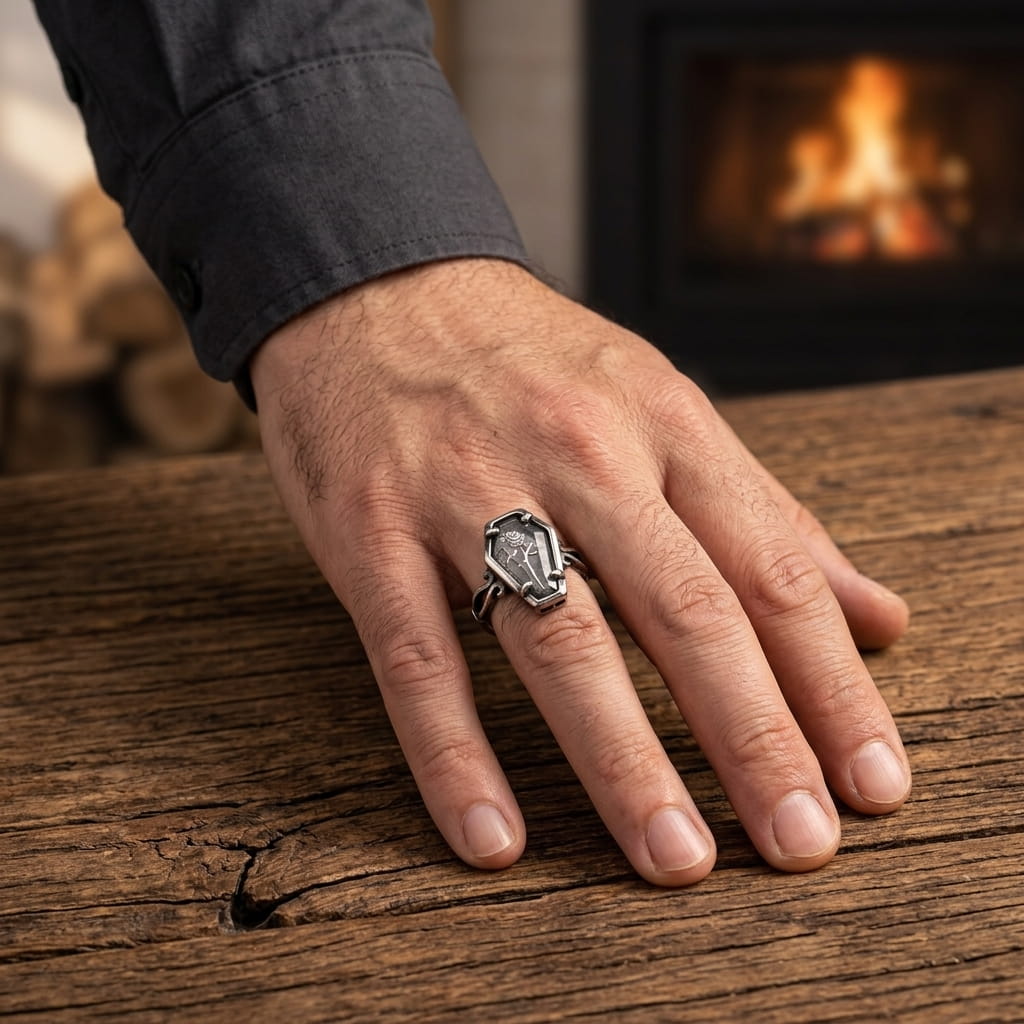
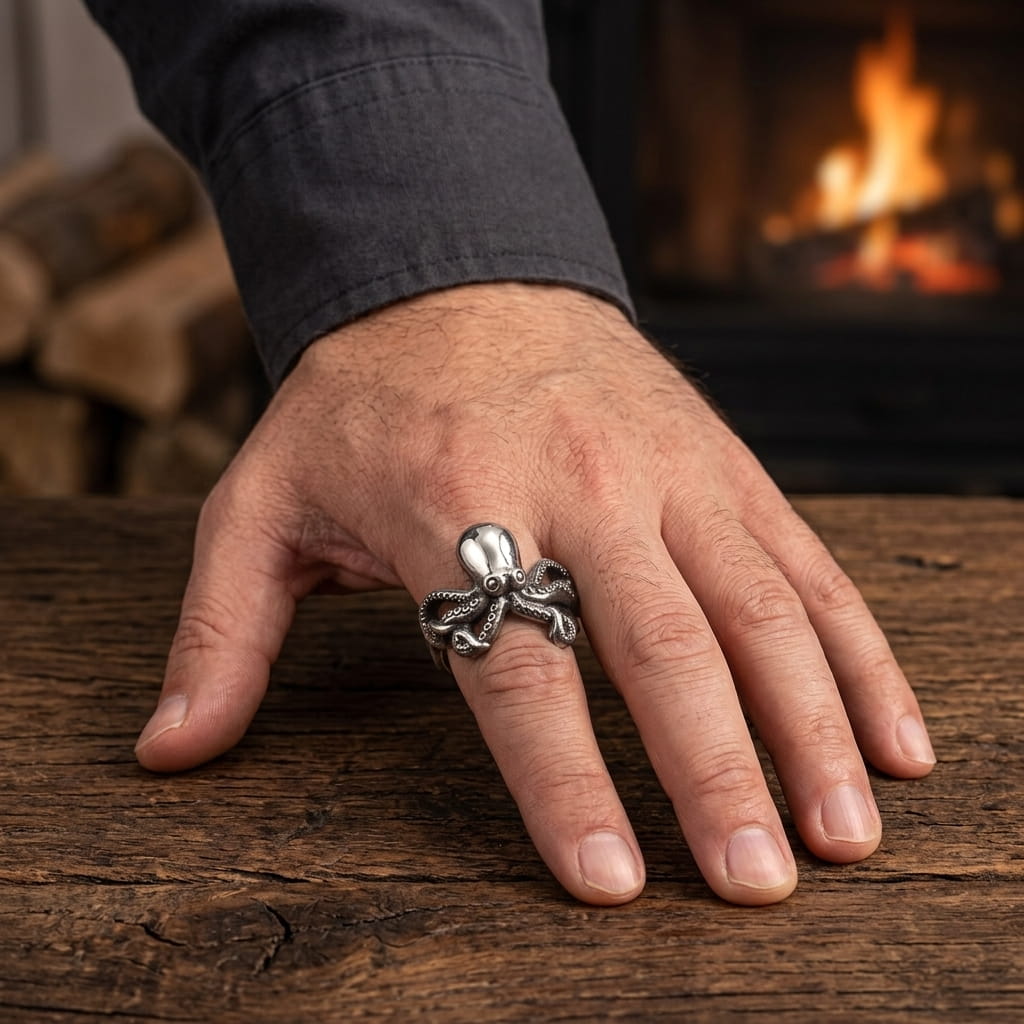
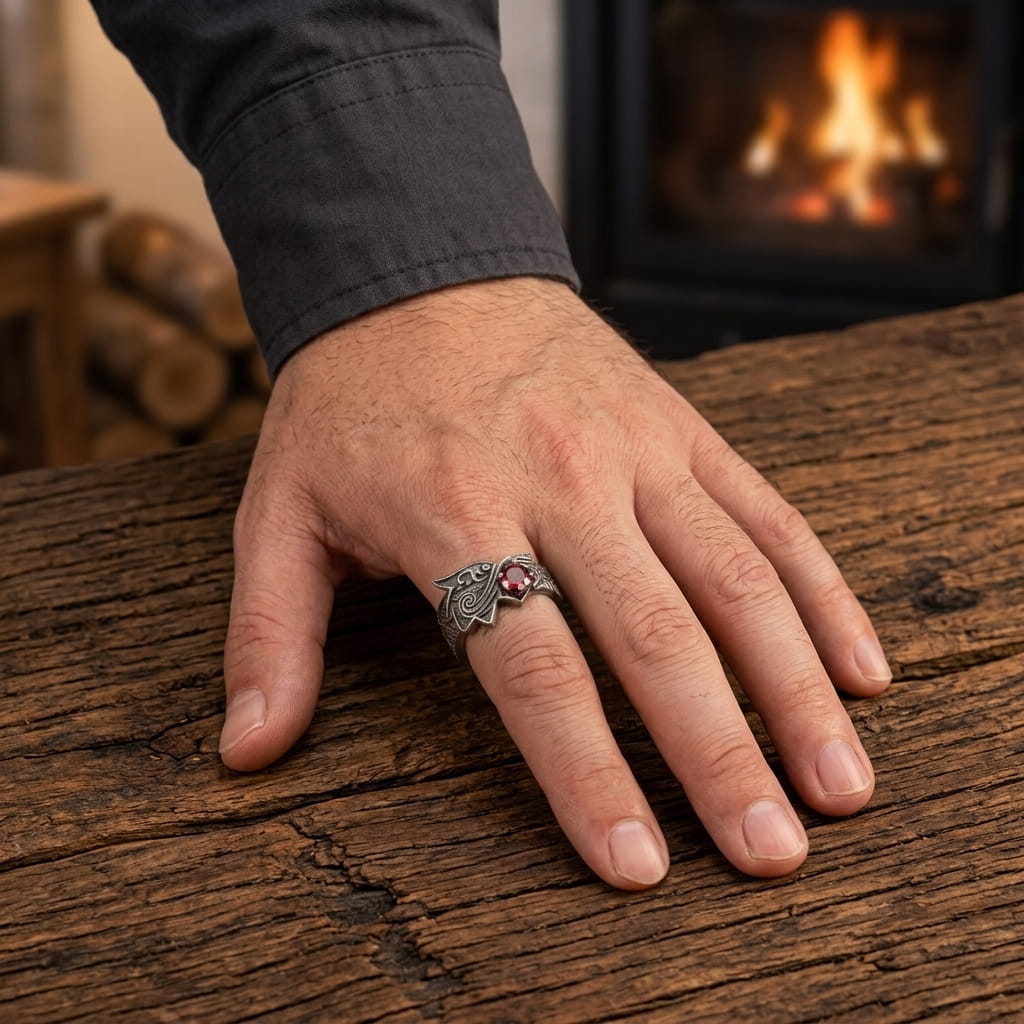
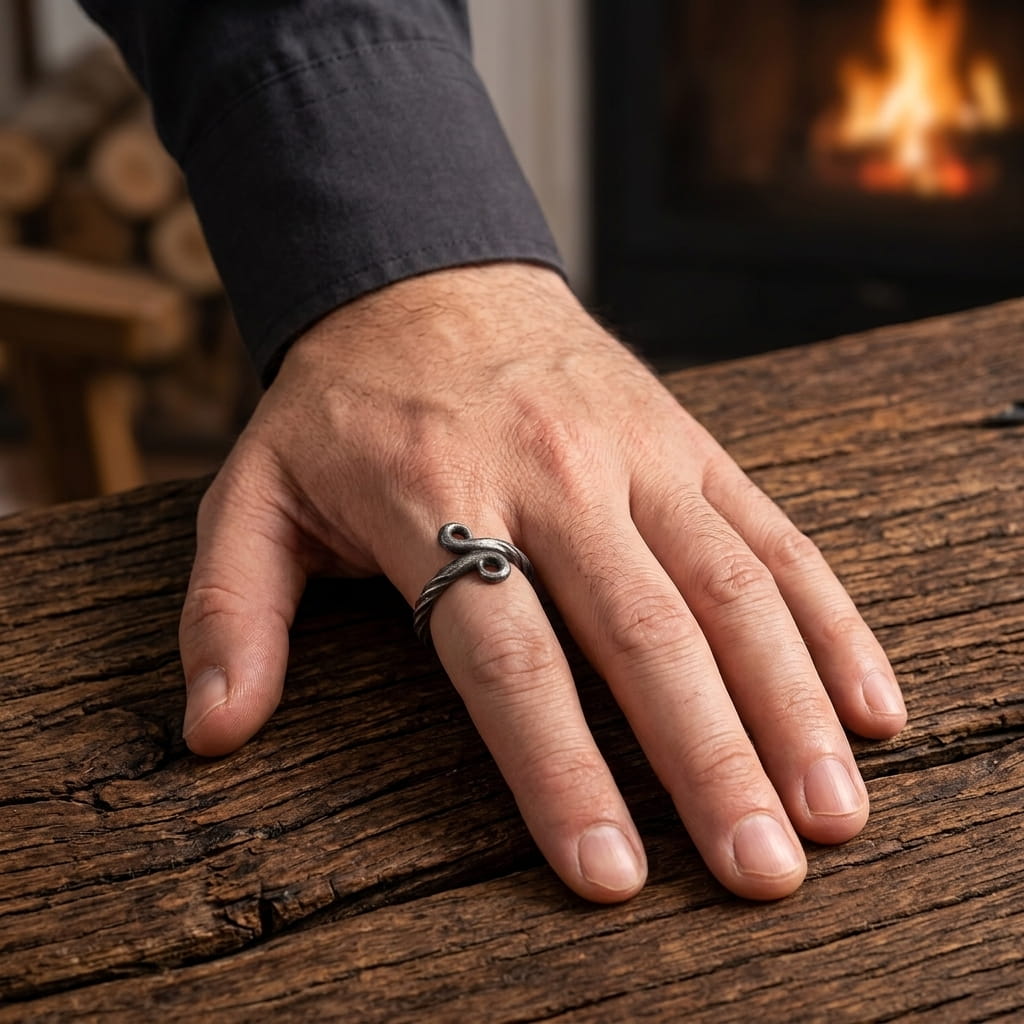
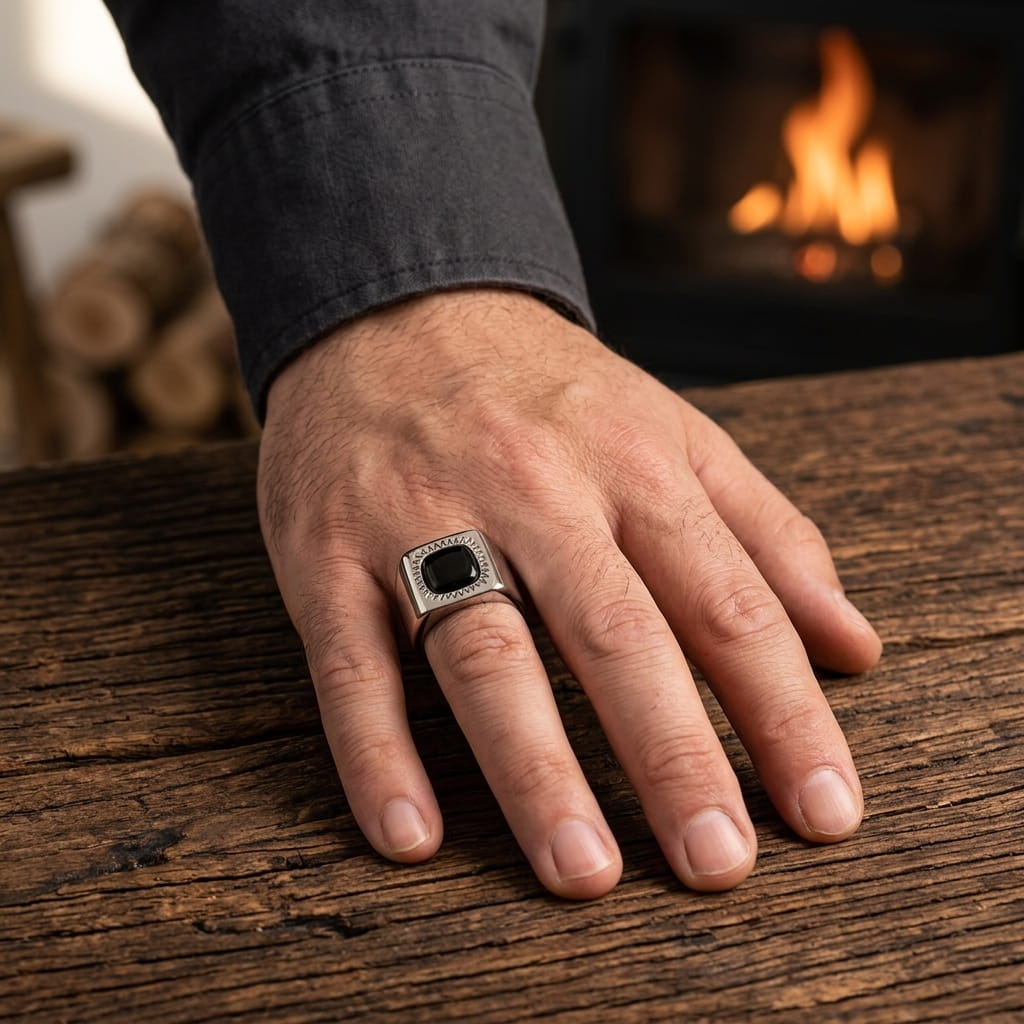
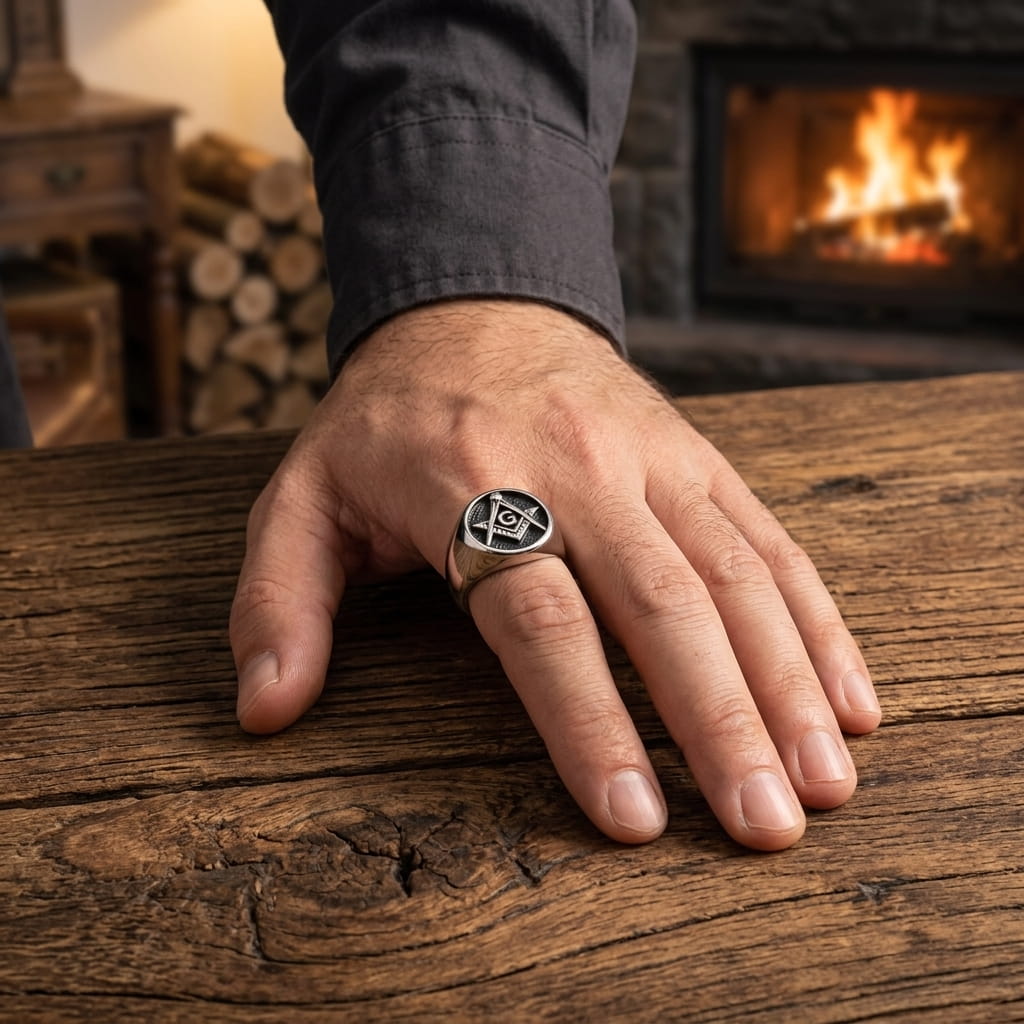

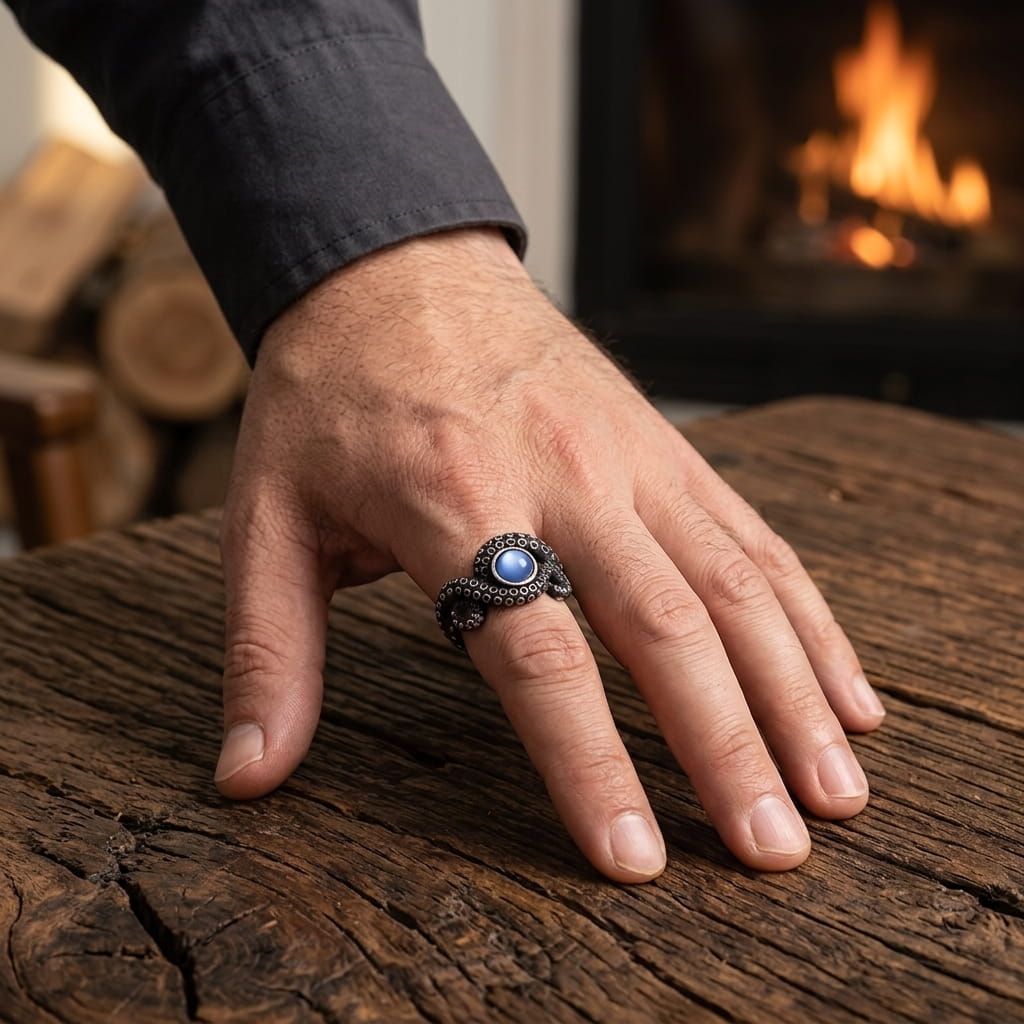
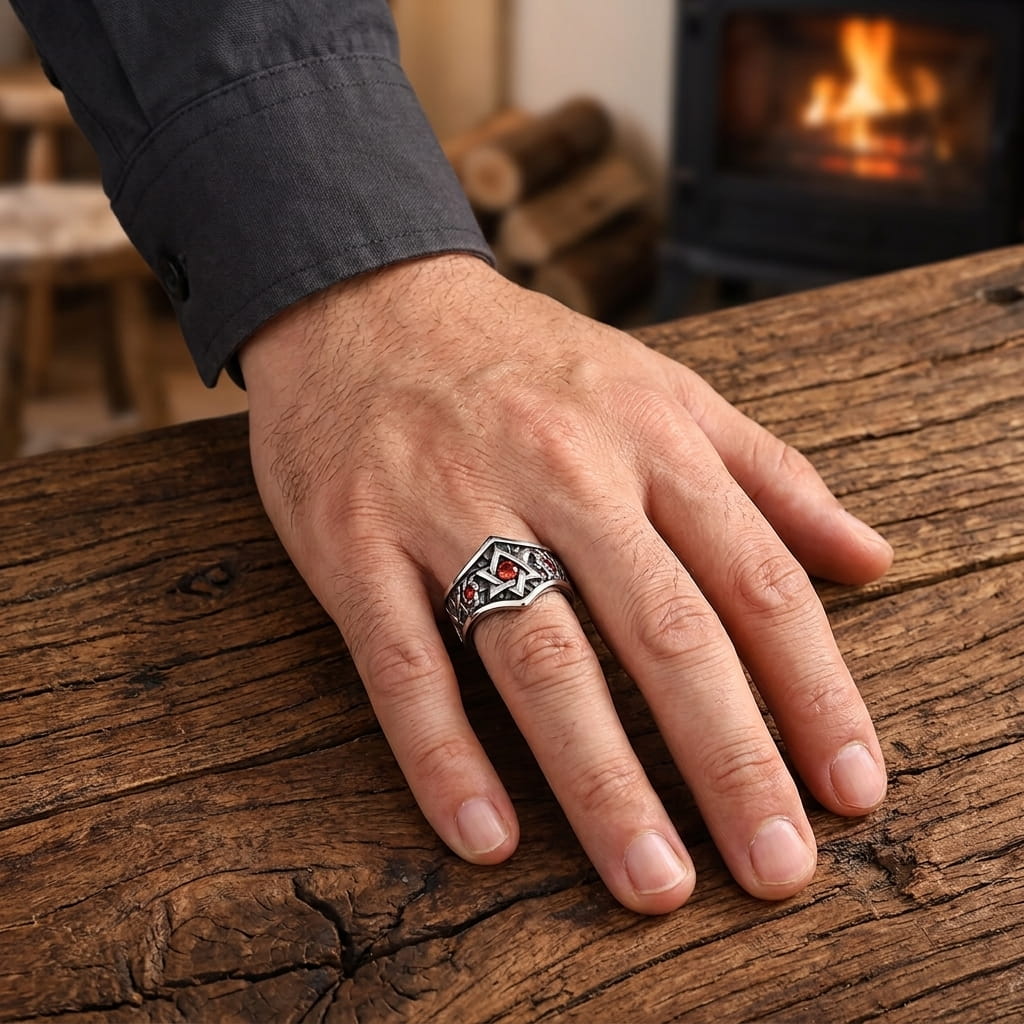
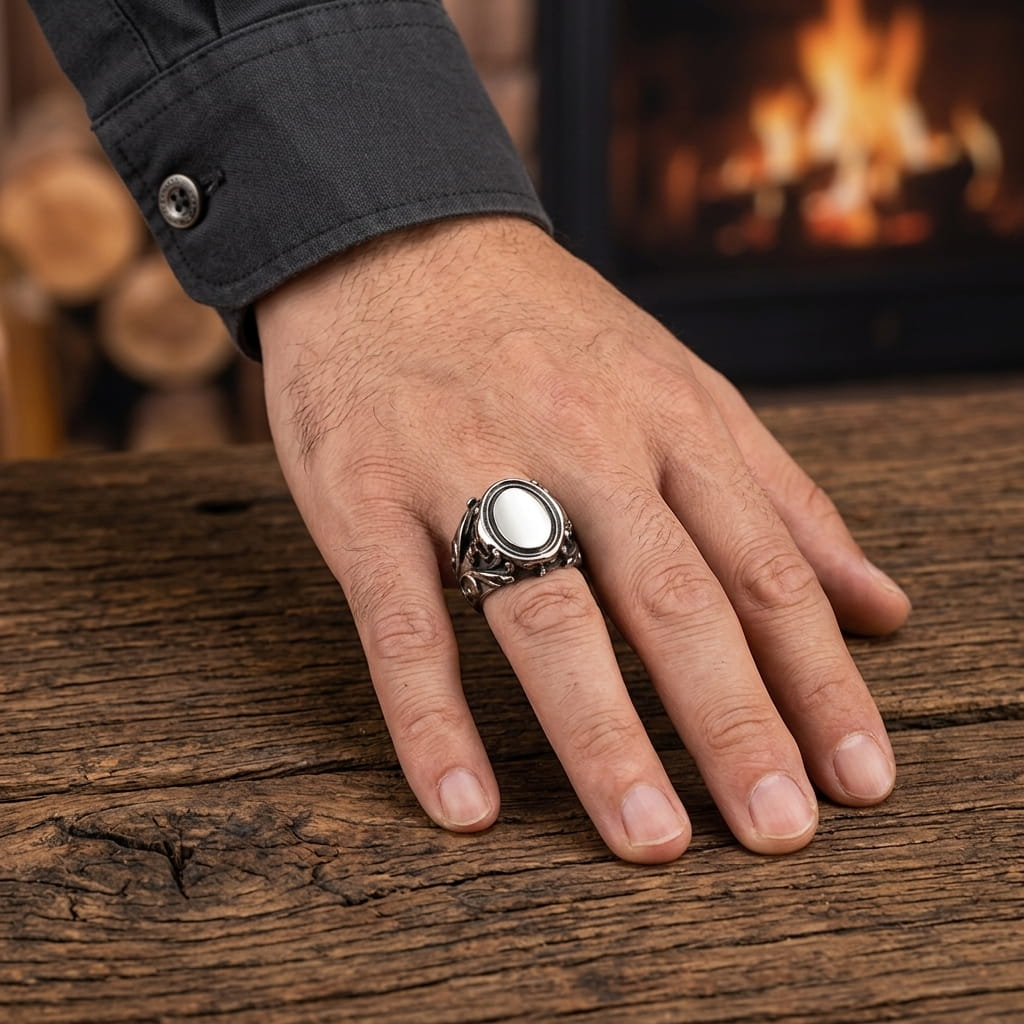
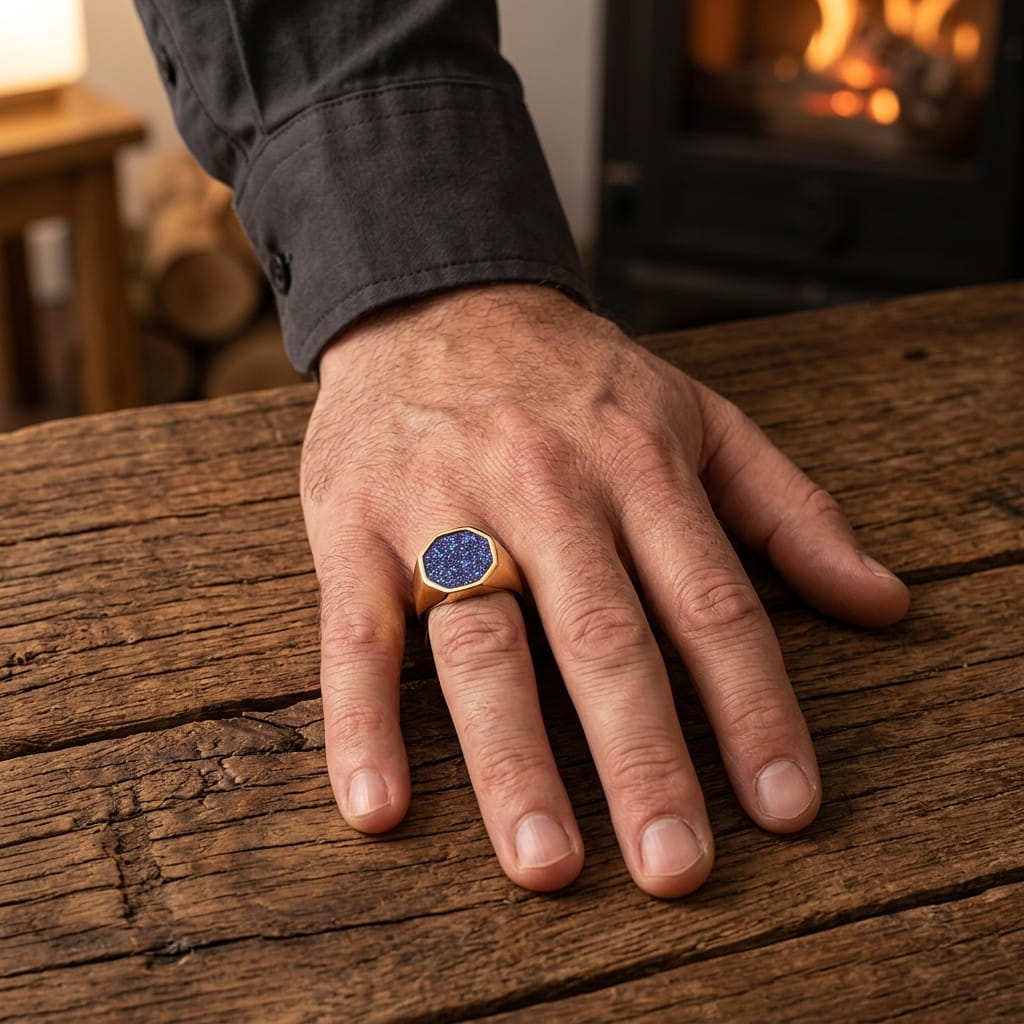
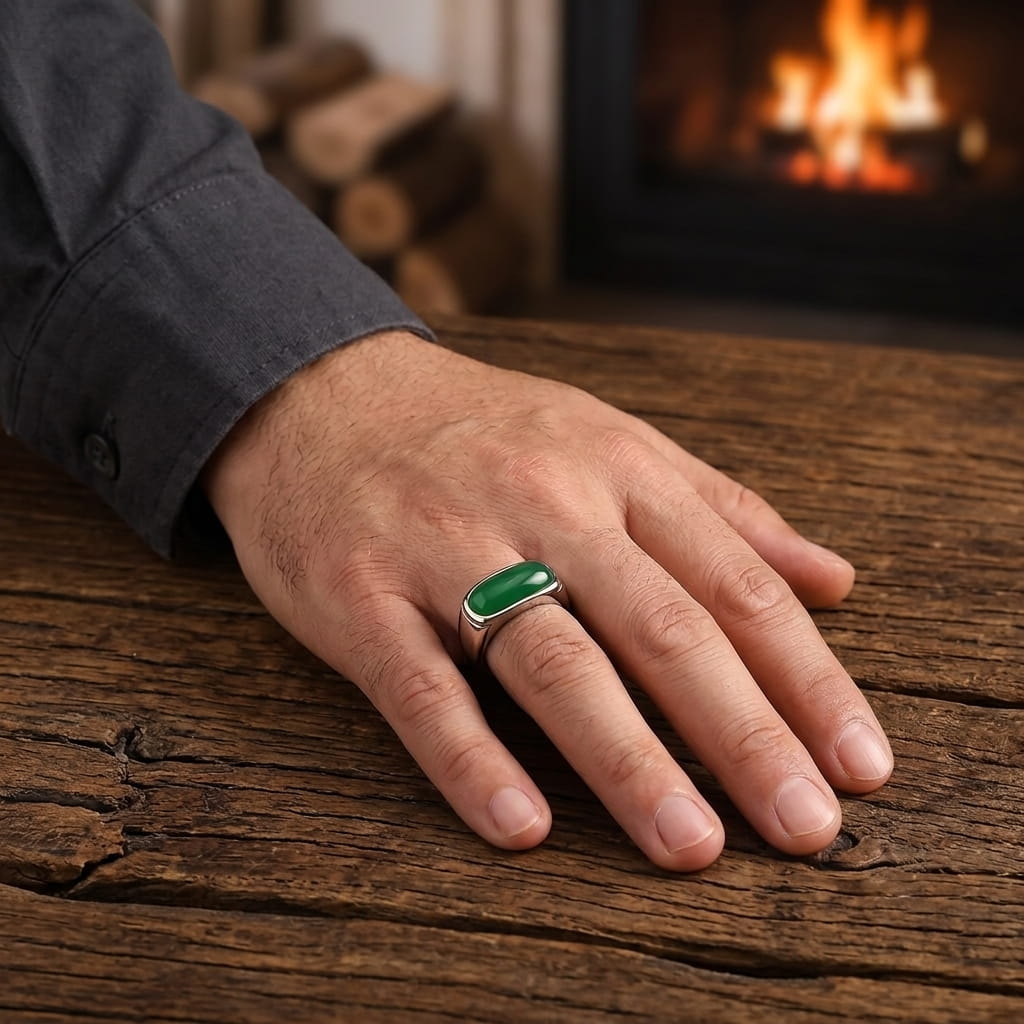
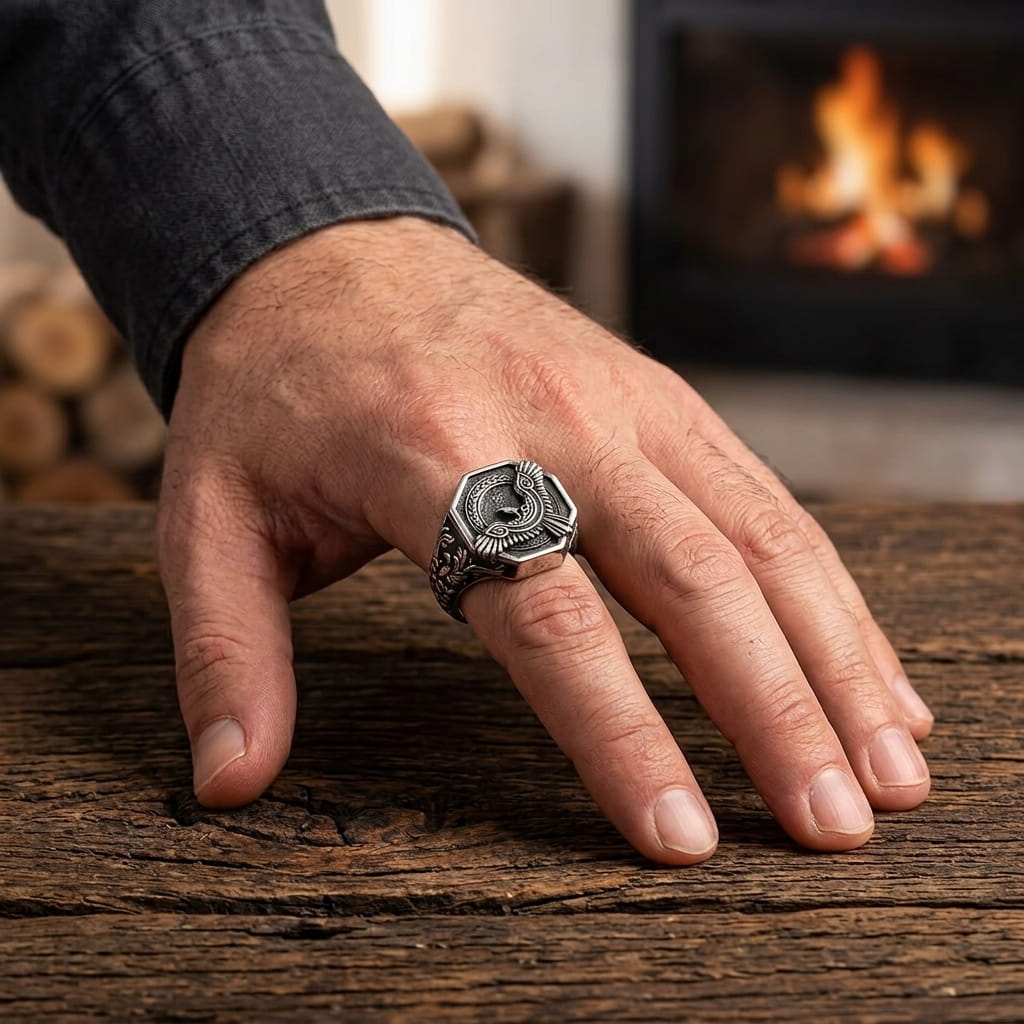
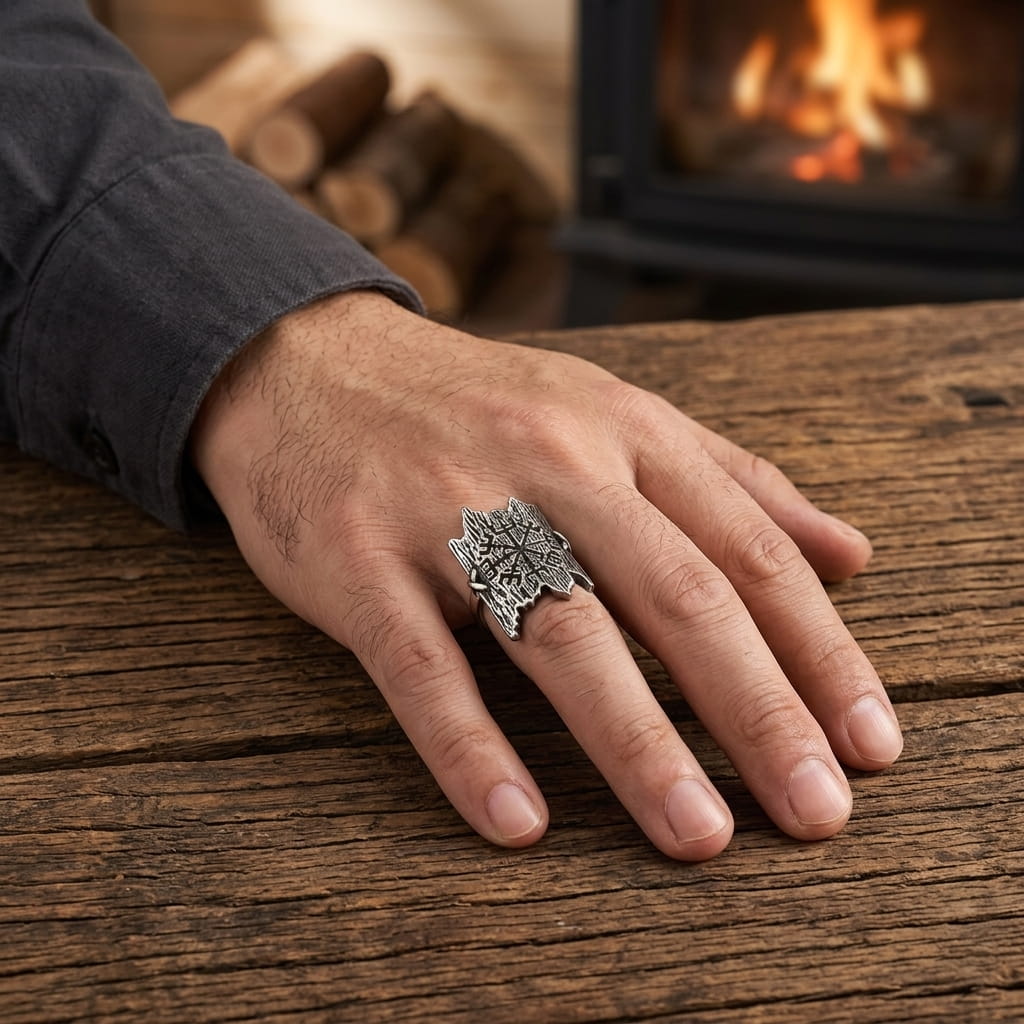
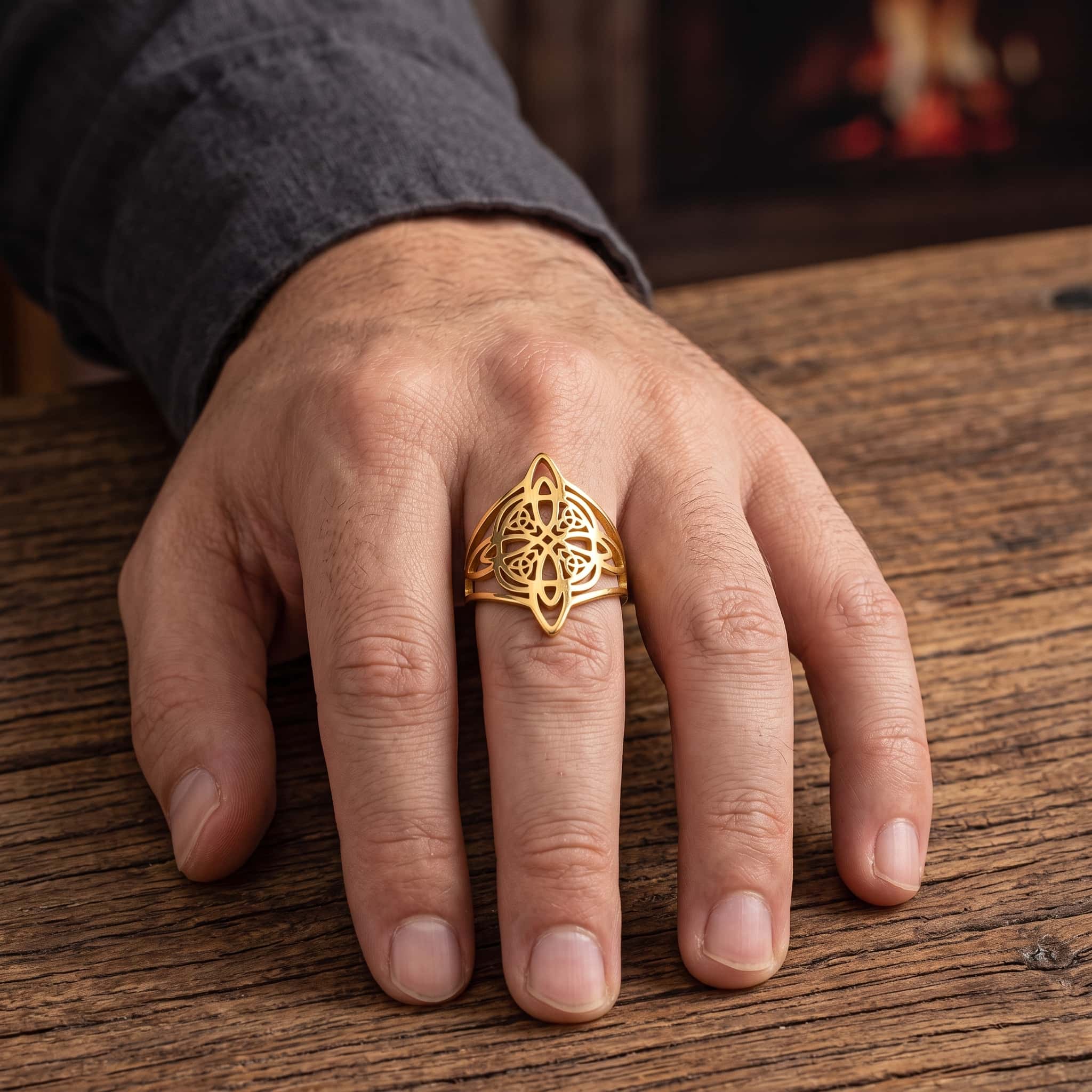


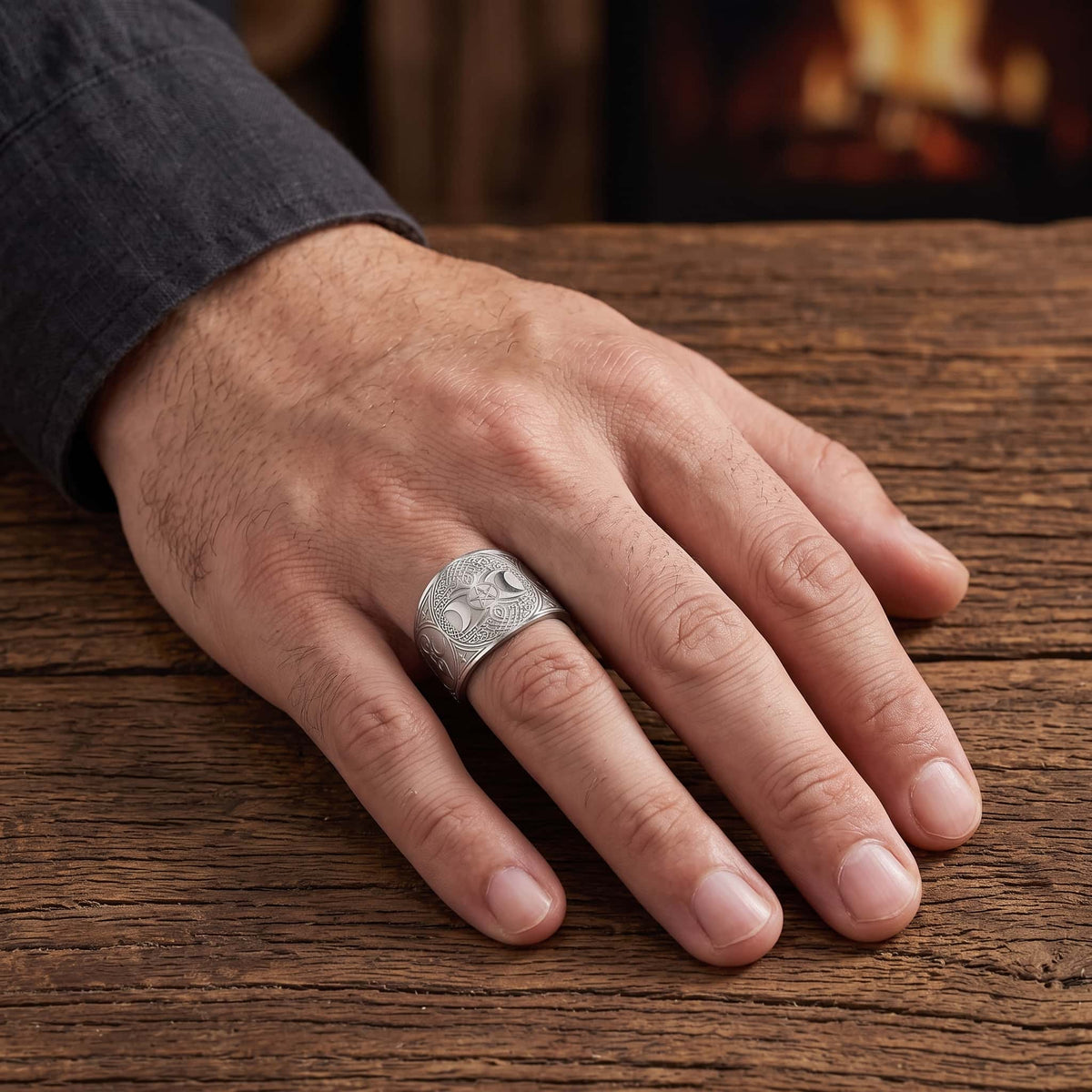
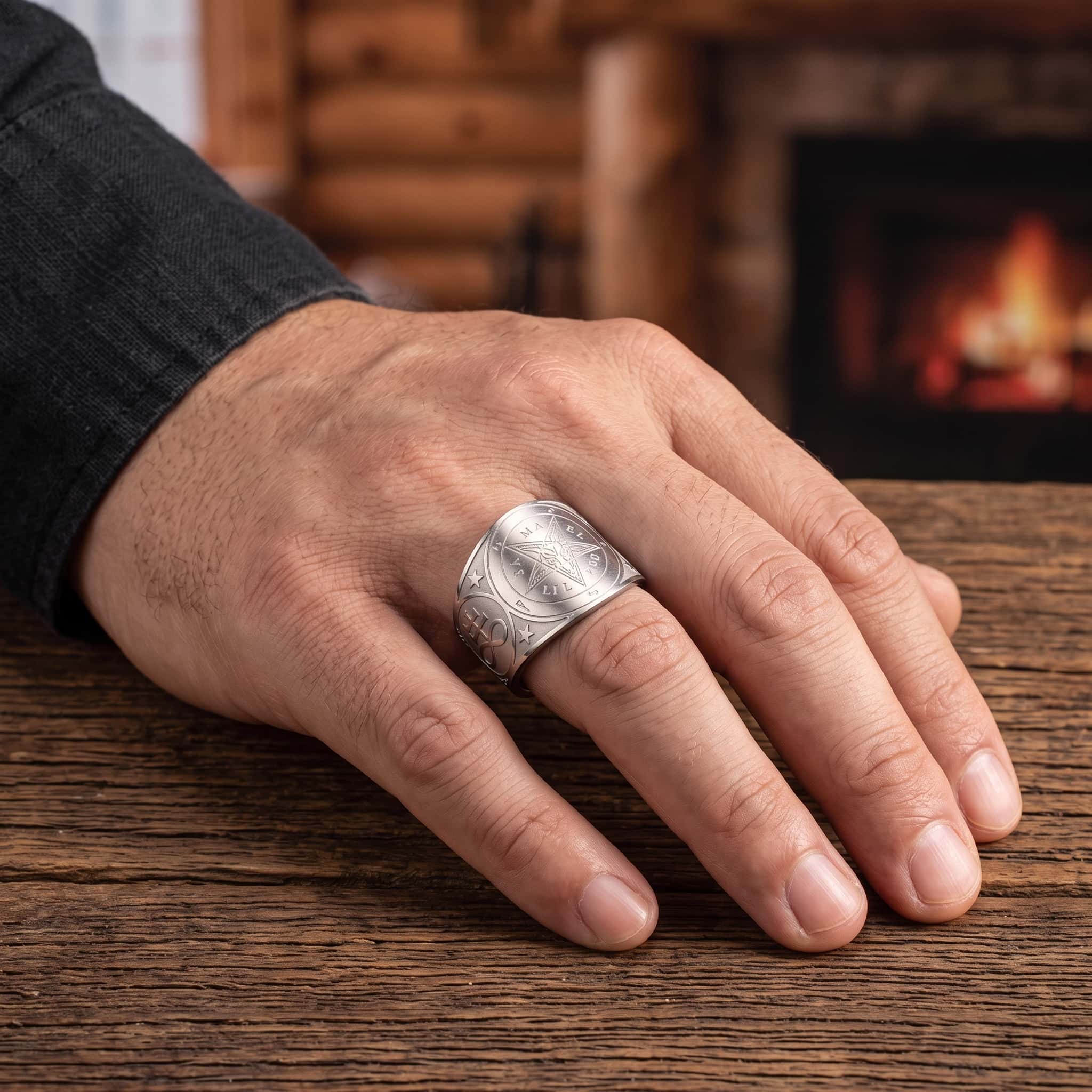
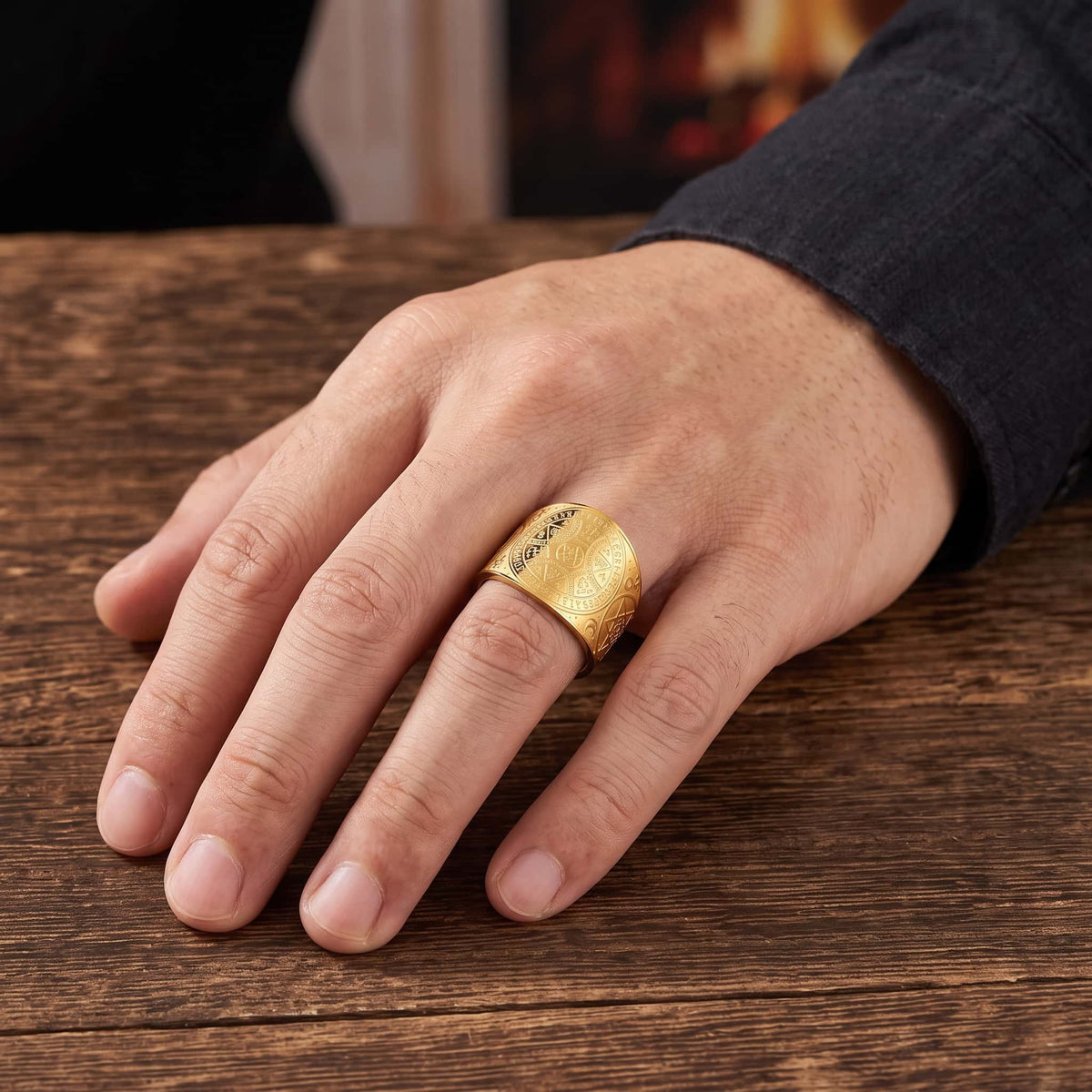
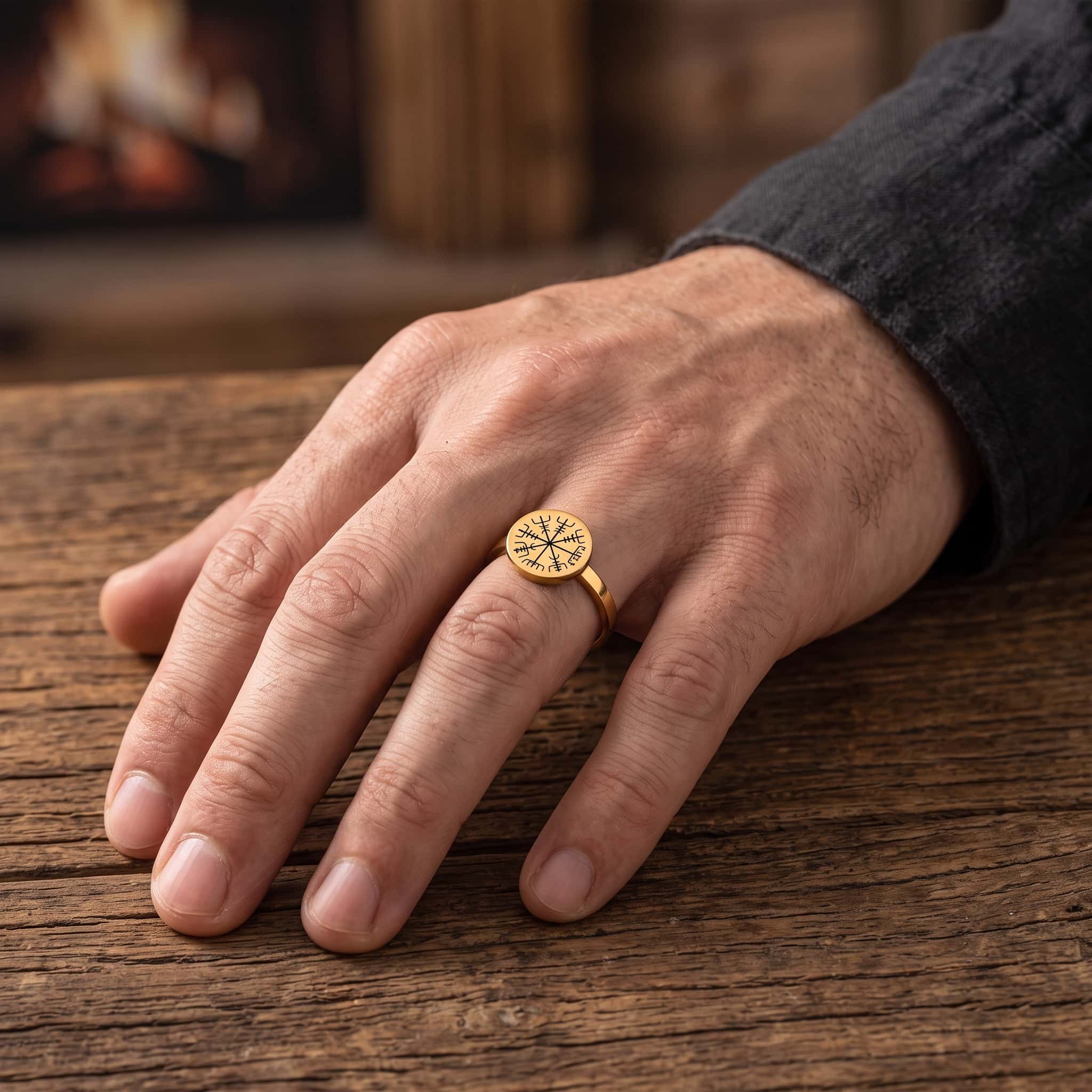

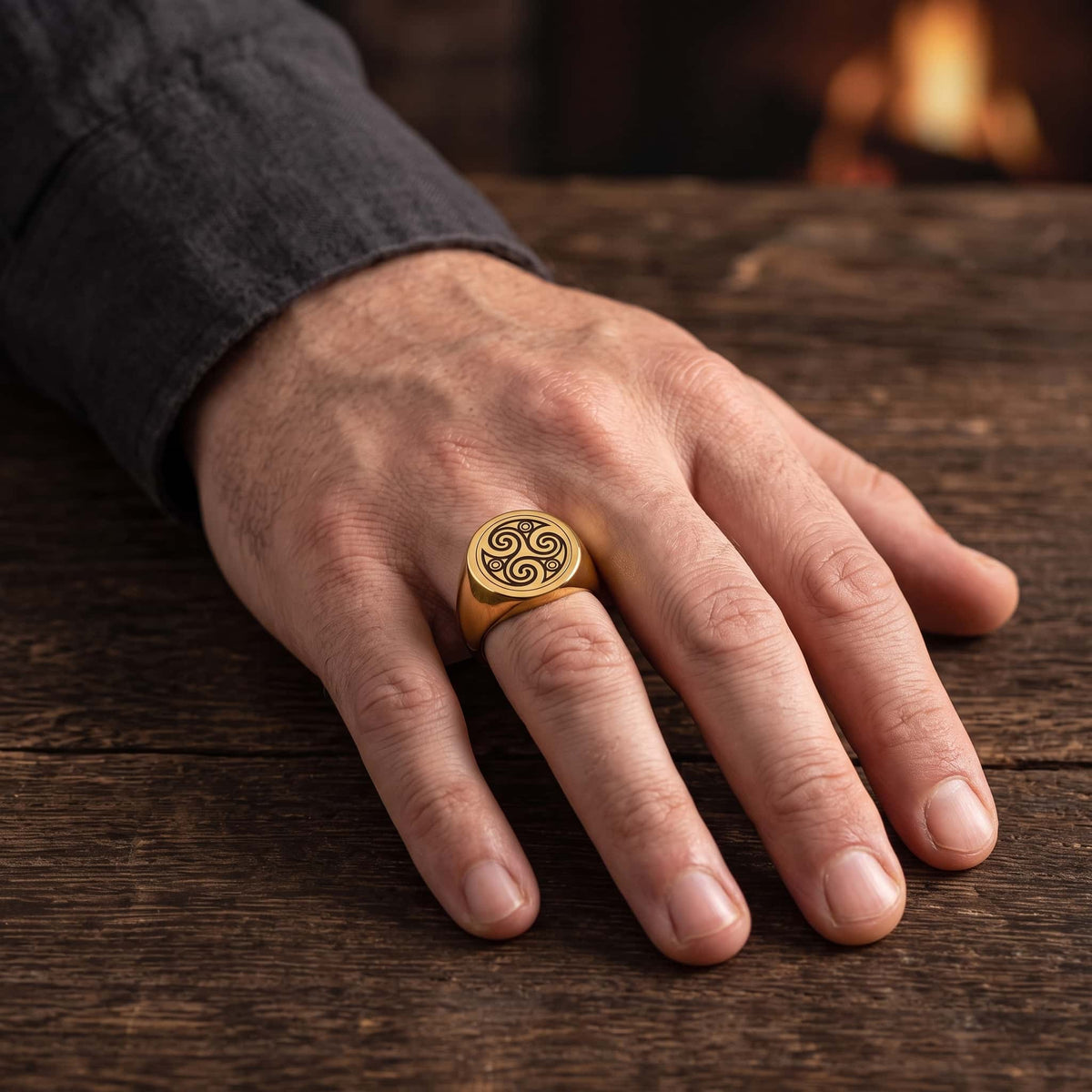
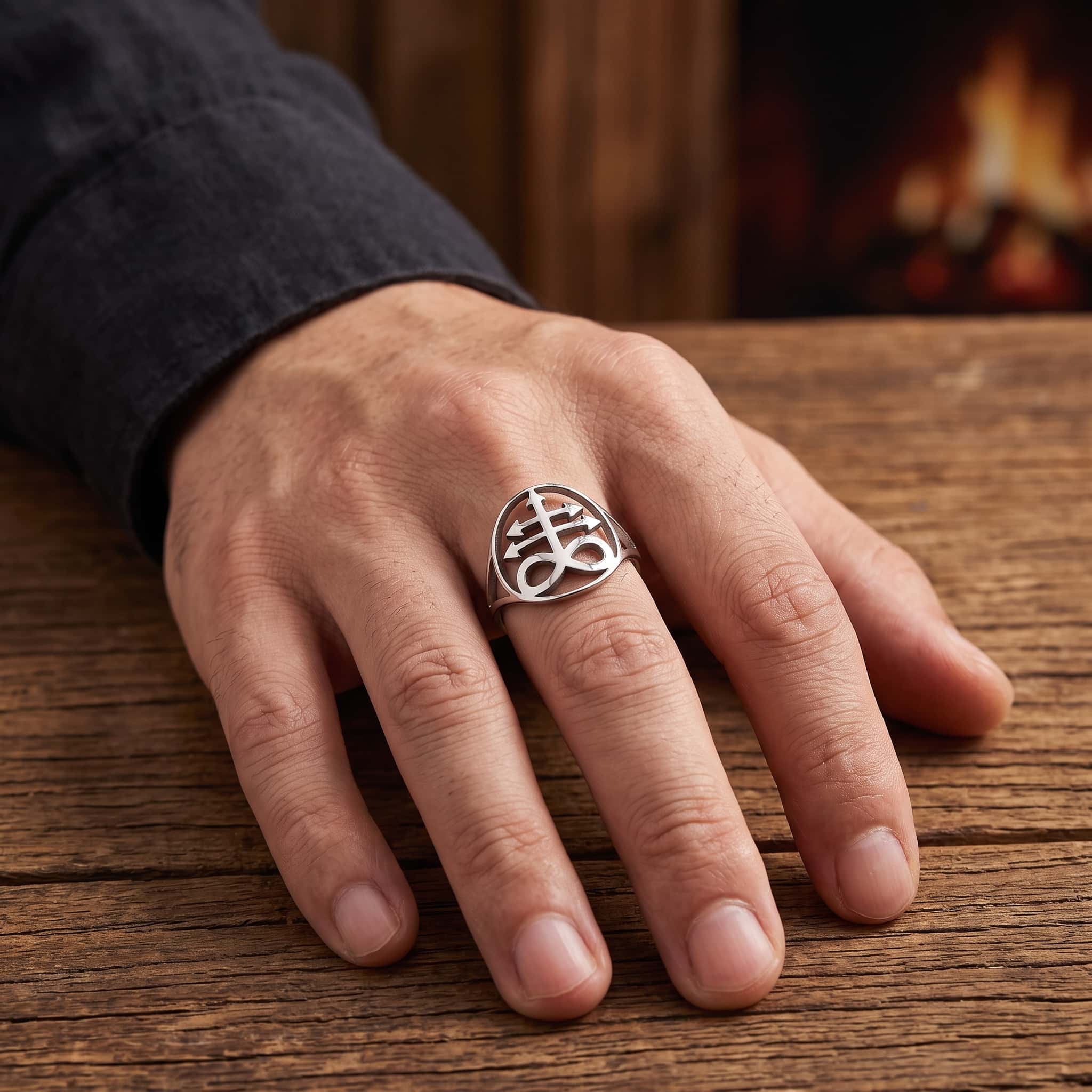
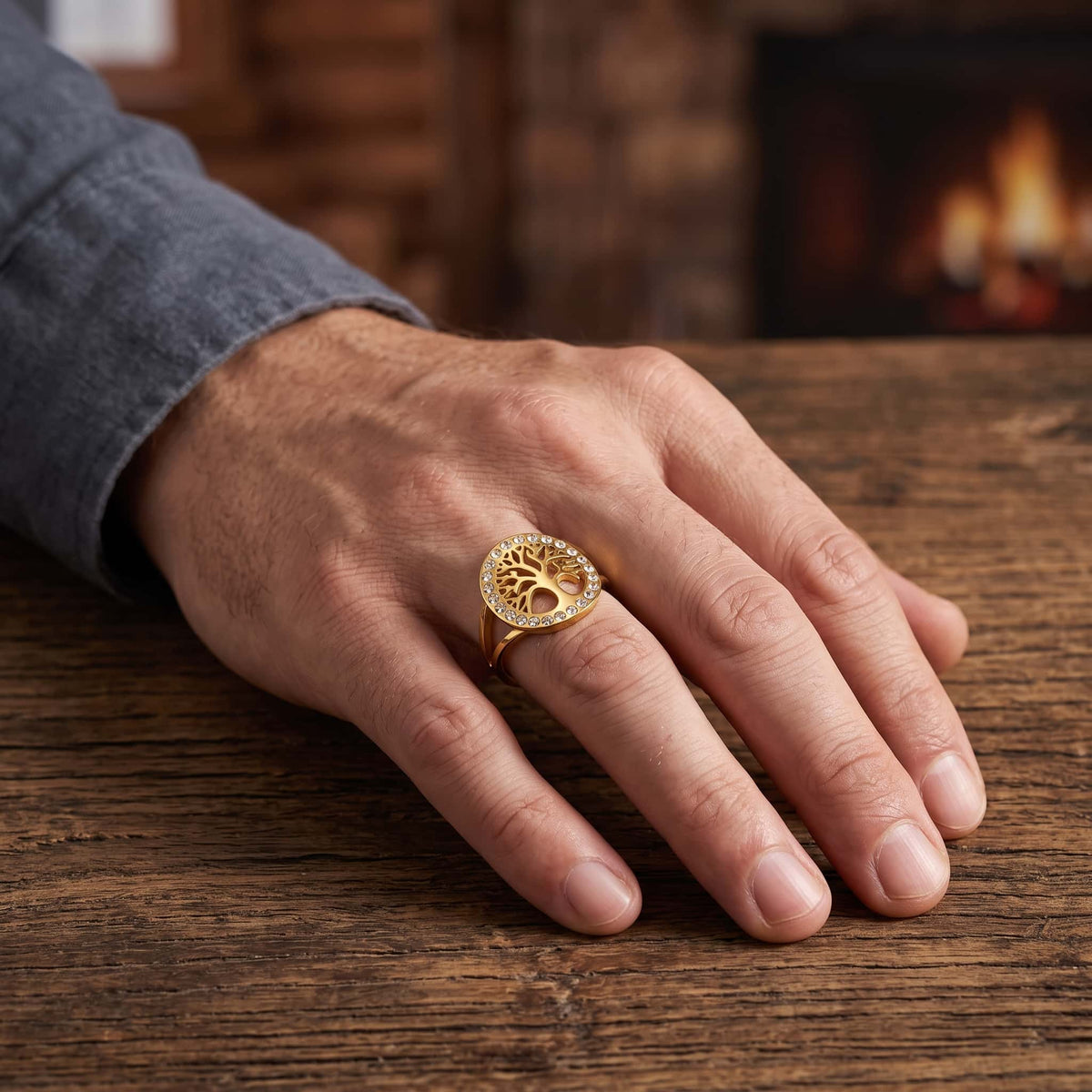
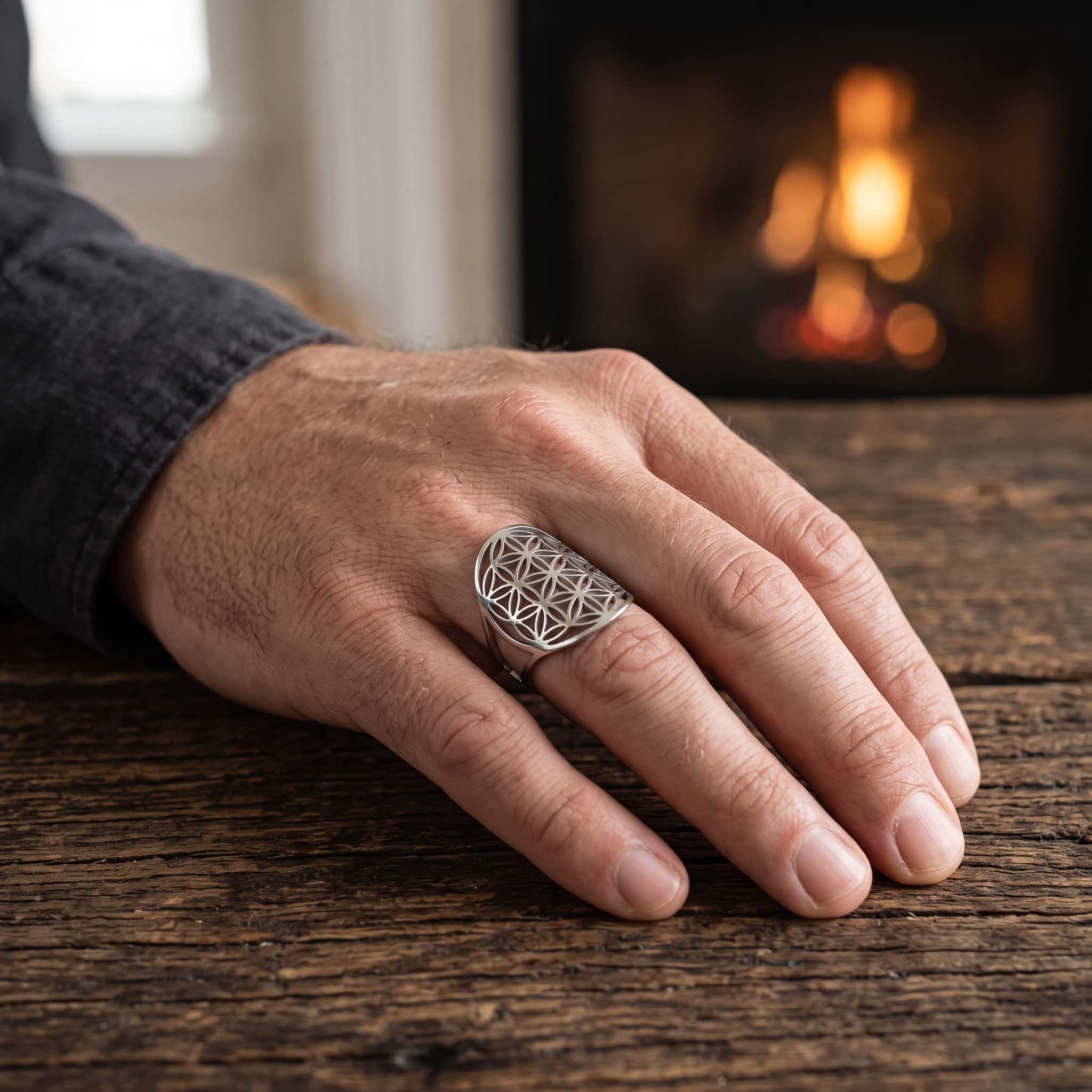
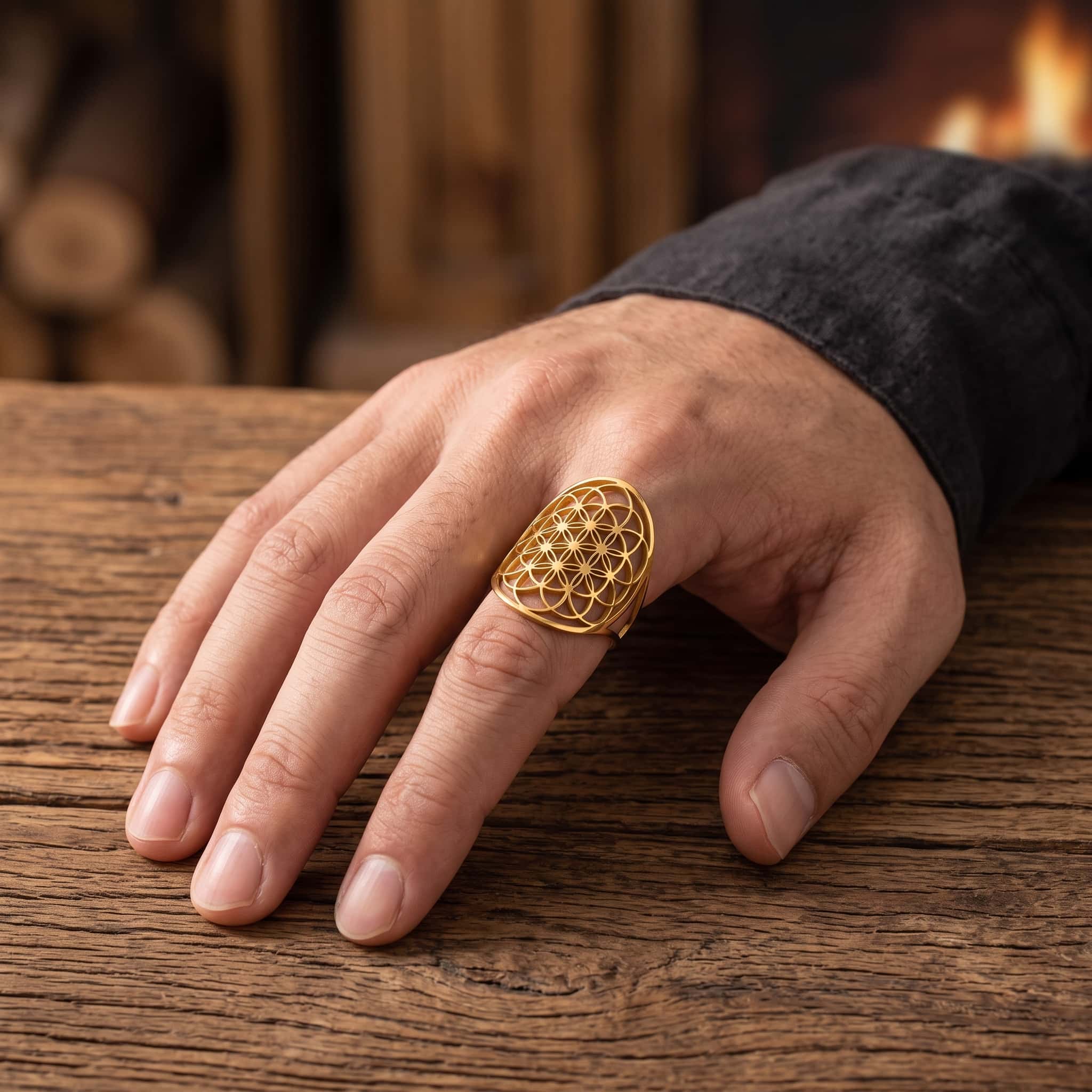

Collections similaires
You would also like
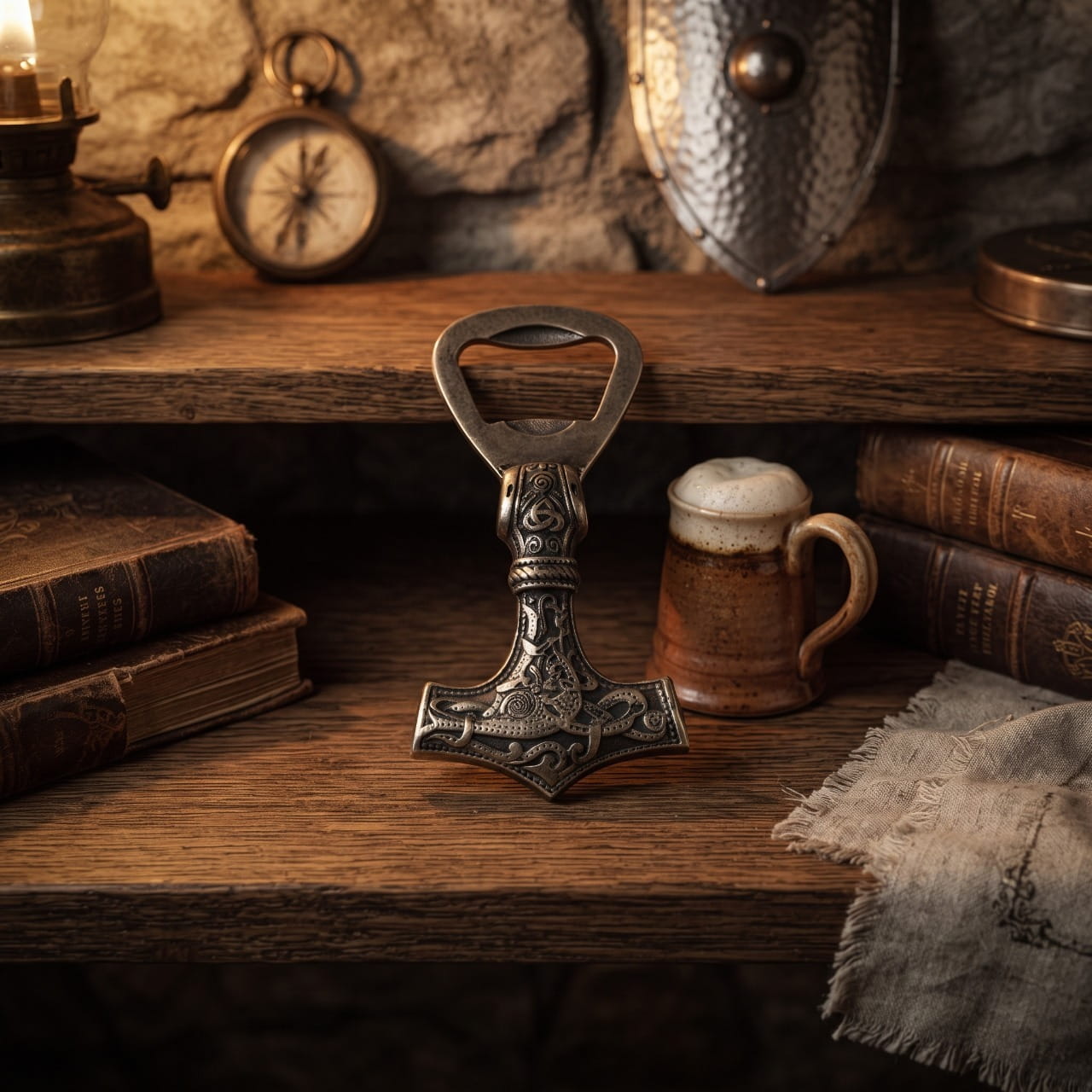

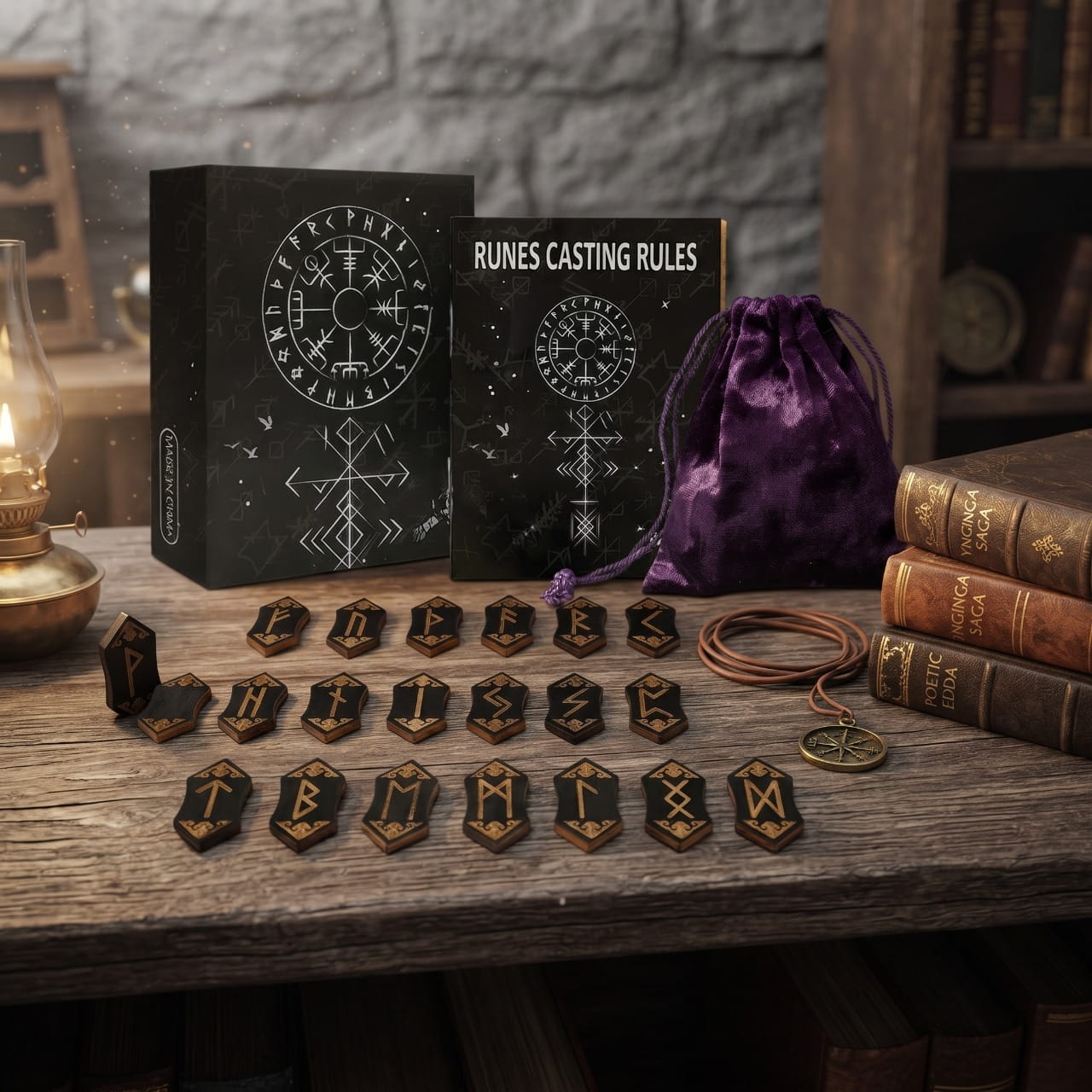
Frequently Asked Questions about our Viking Rings
What material are your Viking rings made of?
Our Viking rings are made from 316L stainless steel, a highly corrosion-resistant and hypoallergenic alloy. Some premium models are made of 925 sterling silver or bronze. Each ring is designed to last for years without tarnishing.
How to choose the right size for a Viking ring?
To find your size, measure the circumference of your finger with a piece of string and compare it with our size guide available on each product page. If in doubt, opt for the larger size — our Viking rings are slightly adjustable due to their thickness. Our customer support can also help you.
What do the symbols engraved on the rings mean?
Each symbol has a profound meaning in Norse mythology: the Valknut (3 triangles) symbolizes Odin and the passage between worlds, the Vegvisir is the Viking compass that guides travelers, the Futhark Runes are the sacred alphabet of the Vikings, and Thor's Hammer (Mjölnir) represents strength and protection.
Are your Viking rings suitable for daily wear?
Absolutely. 316L stainless steel is the same material used in high-end jewelry and watchmaking. It is resistant to water, sweat, and everyday chemicals. You can wear your Nordic ring every day without fear of degradation.
How do I maintain my Viking ring?
A simple cleaning is sufficient: lukewarm water, mild soap, and a microfiber cloth. For rings with deep engravings, a soft toothbrush allows you to reach the details. Avoid harsh chemicals. Stainless steel requires no special maintenance — that is one of its great advantages.
What is the difference between a signet ring and a Viking ring?
A Viking signet ring is a type of ring with a flat face engraved with a symbol (Vegvisir, Valknut, wolf head). It is generally more massive and is worn on the little finger or ring finger. A classic Viking ring can be a thin band, an open torc, or a wide band adorned with interlaced patterns. Both are made of 316L stainless steel.
Can you give a Viking ring as a gift?
Absolutely! Our Viking rings are an ideal gift for fans of Norse mythology, history, or the Vikings series. Each ring comes in an elegant black gift box, ready to be given. Check our size guide to choose the right dimension if you do not know the recipient's size.
What are the most popular Viking symbols on rings?
The 5 most requested symbols are: the Vegvisir (Viking compass), the Valknut (Odin's knot of the dead), Mjölnir (Thor's hammer), the Futhark runes, and the Fenrir wolf heads. Each symbol carries a deep meaning in Norse mythology—protection, strength, wisdom, or connection to the gods.
Viking Ring — en savoir plus
This collection gathers our Viking rings and Nordic signet rings for men and women. Discreet runic bands, rings engraved with Futhark, massive signet rings stamped with a Scandinavian symbol—all are available in multiple sizes, most in 316L stainless steel—a metal that does not rust, does not tarnish, and can be worn daily, even in the shower.
The size chart: from American to French sizing
This is the point that stops most buyers, so let's settle it right away. Our rings are calibrated in US sizes, from 5 to 13. A French jeweler, however, thinks in terms of inner circumference expressed in millimeters: this is what we call the "French size" or ISO standard. Here is the exact correspondence.
| US Size | French Size | Circumference | Inner Diameter |
|---|---|---|---|
| 5 | 49 | 49.3 mm | 15.7 mm |
| 6 | 52 | 51.9 mm | 16.5 mm |
| 7 | 54 | 54.4 mm | 17.3 mm |
| 8 | 57 | 57.0 mm | 18.1 mm |
| 9 | 59 | 59.5 mm | 18.9 mm |
| 10 | 62 | 62.1 mm | 19.8 mm |
| 11 | 65 | 64.6 mm | 20.6 mm |
| 12 | 67 | 67.2 mm | 21.4 mm |
| 13 | 70 | 69.7 mm | 22.2 mm |
How to measure without tools. Two reliable methods. If you already own a ring that fits you, place it on a ruler and measure its inner diameter: record the value in the last column. Otherwise, wrap a strip of paper or a string around the base of your finger, mark the overlap point, and measure the resulting length: this is your circumference, which you can look up in the second-to-last column.
Three precautions are better than one return. Measure at the end of the day, when fingers are slightly swollen. Do not measure in cold weather, as fingers shrink. And if you are hesitating between two sizes, choose the larger one: a wide ring must pass over the knuckle, which is thicker than the base of the finger. Sizes 7 to 10 (54 to 62 in French) are available in almost the entire collection; sizes 11 to 13 on most men's models.
Signet ring or band: two ways to wear
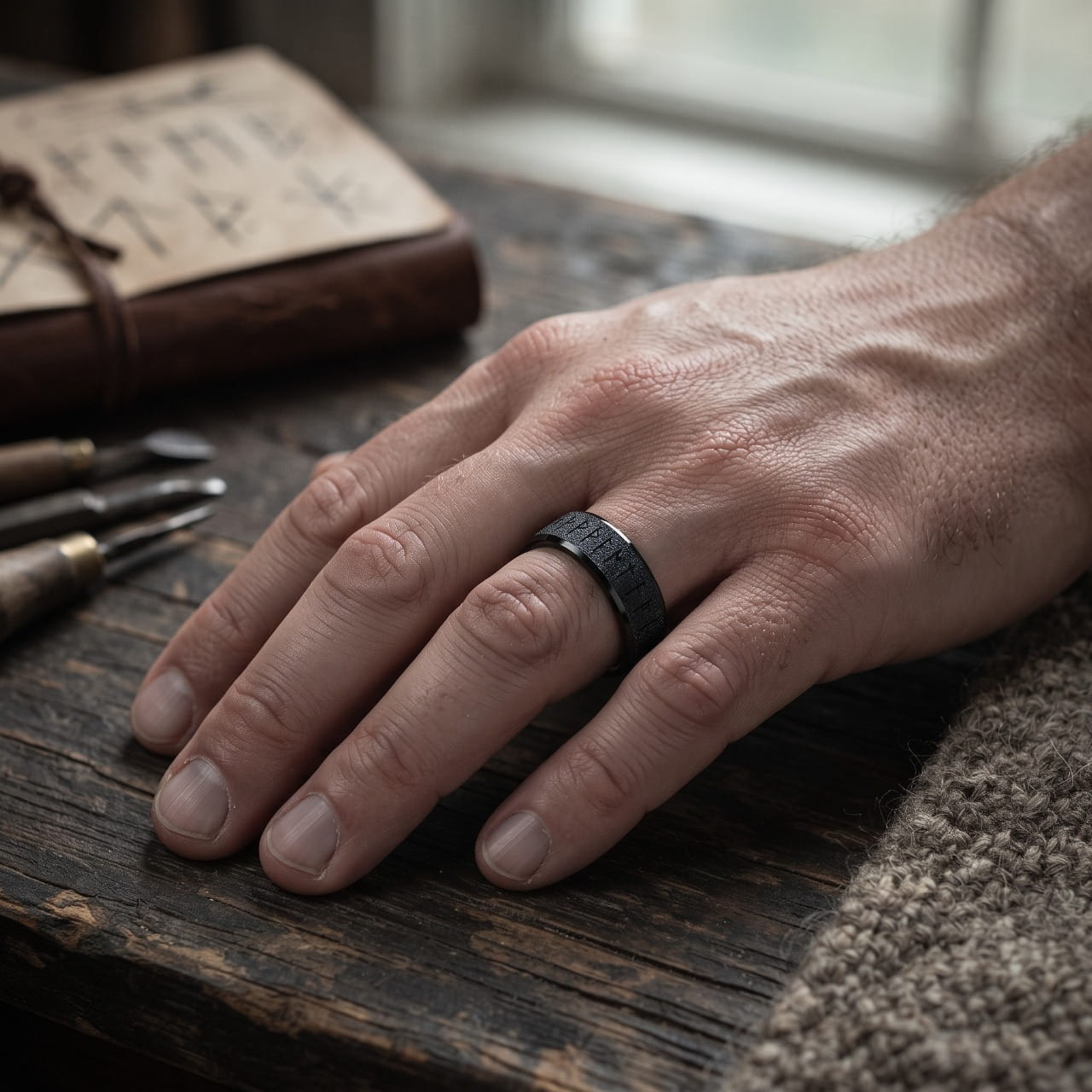
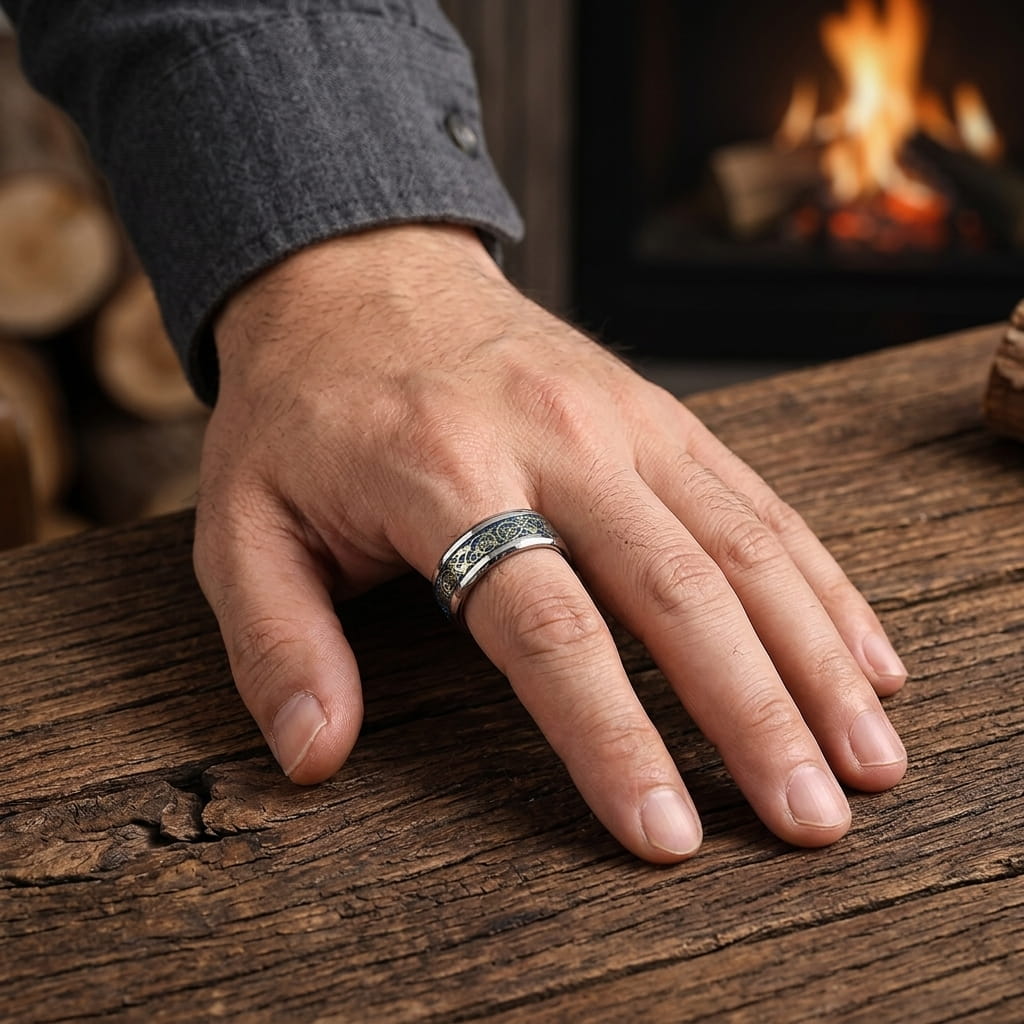
Half of the collection consists of band-type rings: a regular hoop, engraved or hammered all around, 4 to 8 mm thick. It is the most versatile format; it can be worn on any finger and pairs well with a second ring. You will find runic models, Celtic interlace, and bark rings here.
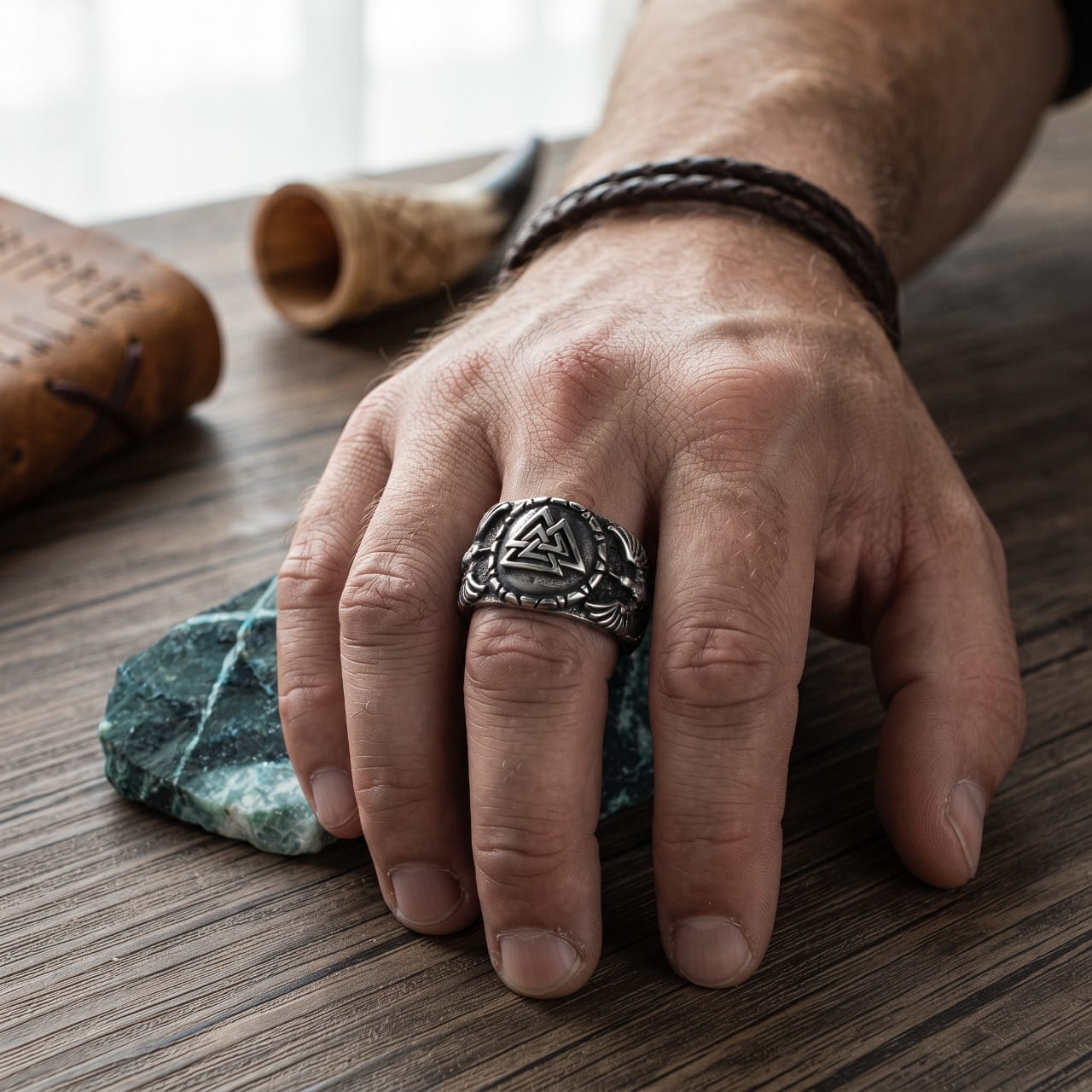
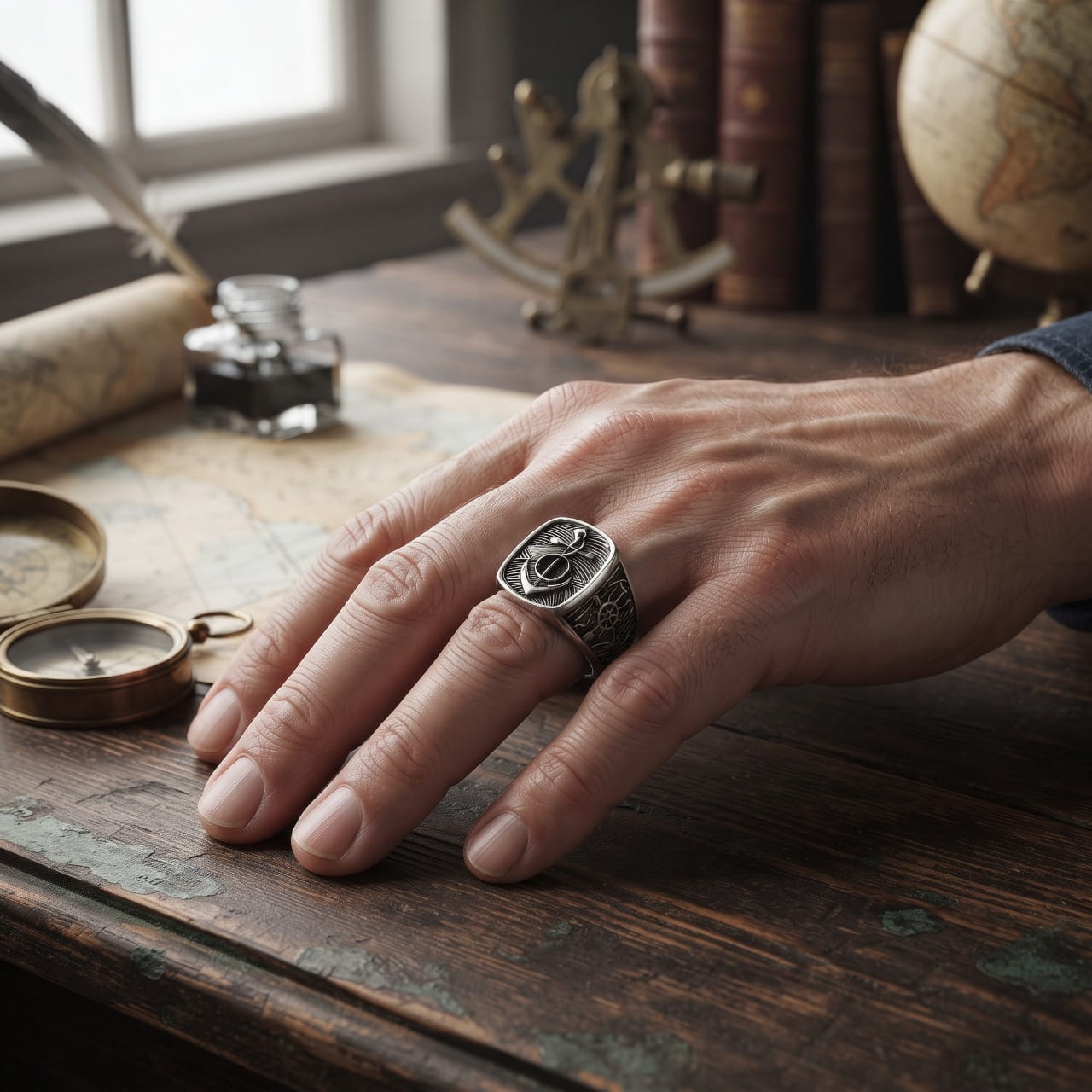
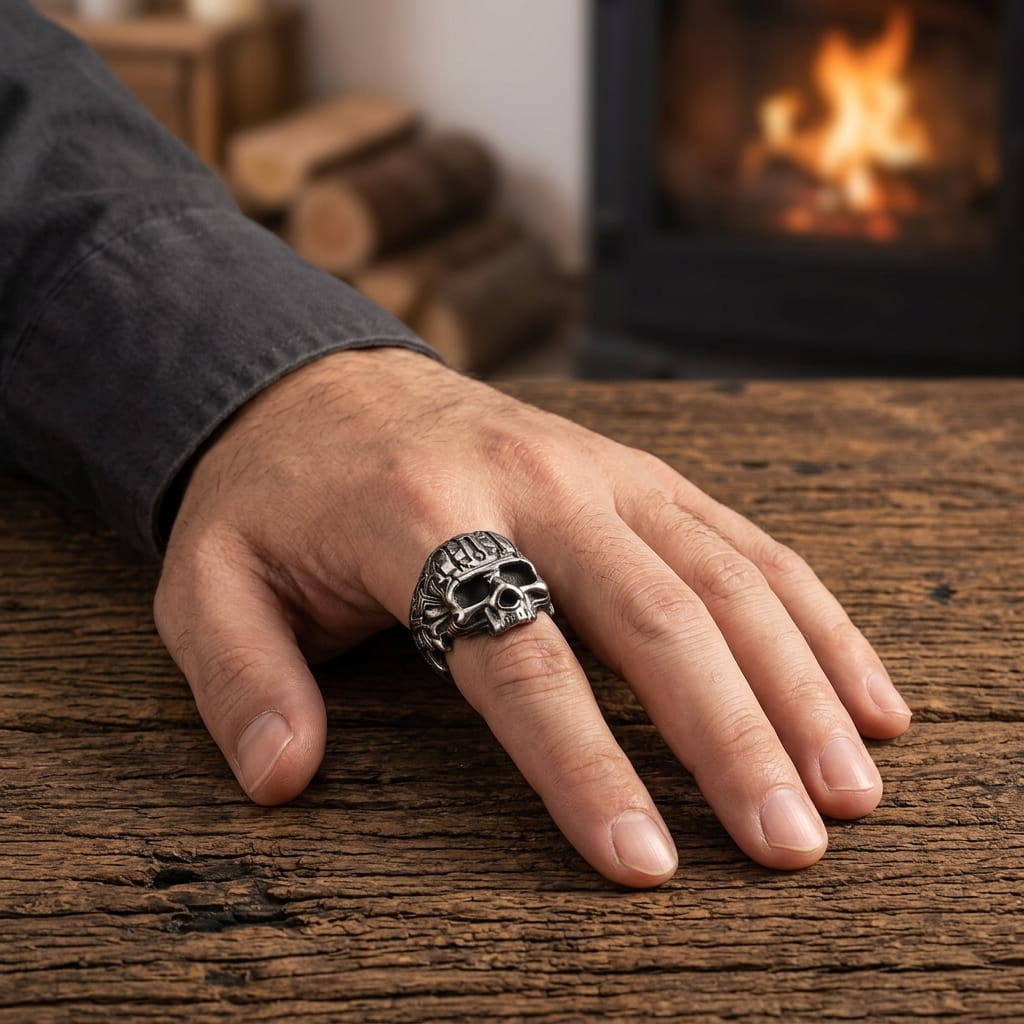
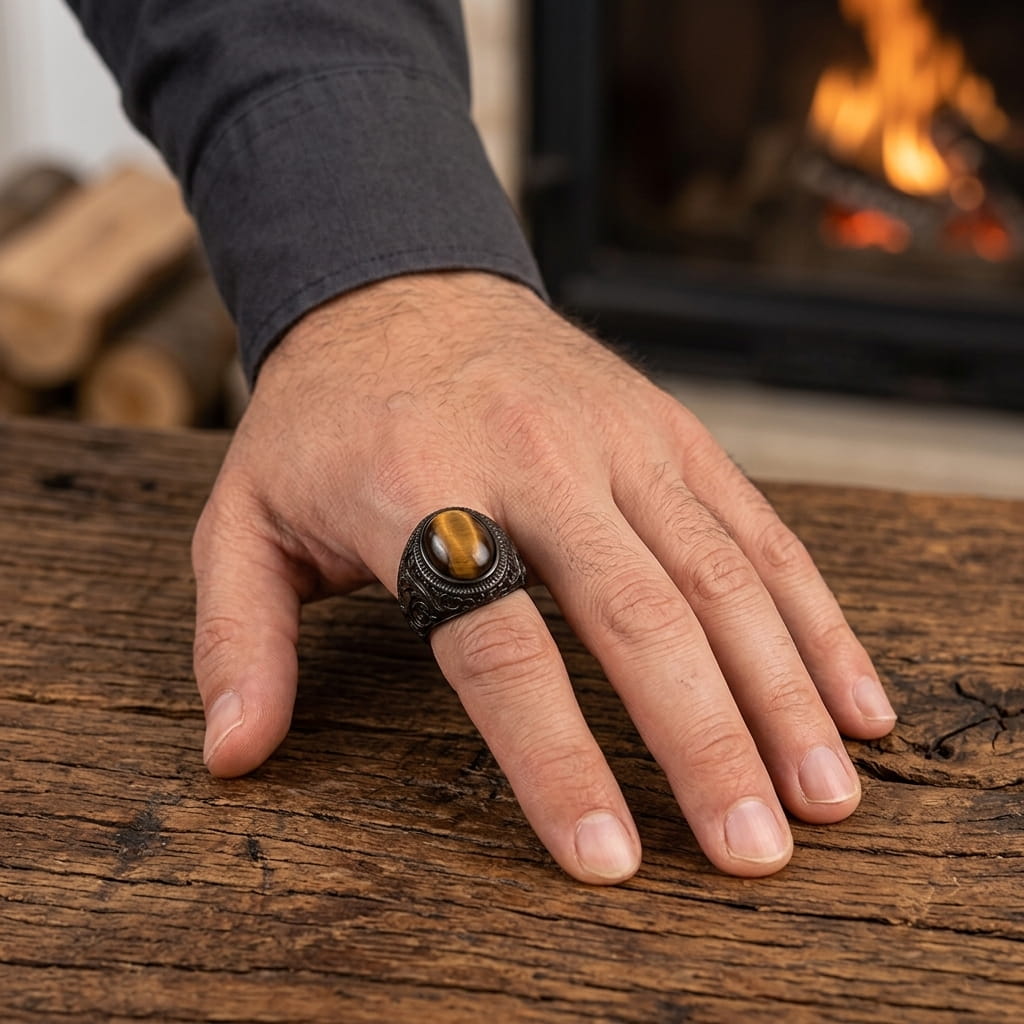
Signet rings complete the collection, recognizable by their flat top stamped with a relief design: Valknut, Yggdrasil, ship's anchor, bear paw, Nordic cross shield, or Sleipnir, Odin's eight-legged horse. Being more imposing, they are traditionally worn on the pinky or ring finger of the non-dominant hand. A tip: a wide signet ring often requires a half-size larger than a thin band, as its rigid plate does not pass over the knuckle as easily.
The symbols, one by one
For the Scandinavians, a ring was not just an ornament: it was a sworn oath, a requested protection, a bond with the gods. Here is what the models in this collection actually feature—and, where applicable, what is incorrectly attributed to them.
The Futhark runes
This is the most represented motif here, on about a dozen rings and signet rings. The Elder Futhark is the runic alphabet used in Scandinavia from the 2nd to the 8th century: twenty-four signs divided into three groups of eight called ættir. Its name simply comes from its first six letters—F, U, Þ, A, R, K.
Each rune is both a letter and a word. Fehu denotes cattle, hence mobile wealth. Uruz the aurochs, brute strength. Ansuz the god and the word. Algiz the elk, read as protection. It is this dual nature—writing sign and concept—that explains why they were engraved on weapons and jewelry far beyond their alphabetical use.
A useful clarification: on our models, the runes are reproduced for their graphic design and individual meaning. They do not form sentences, unless otherwise noted on the product page. If you are looking to write a specific word, our guide to transcribing into Viking runes explains why letter-by-letter transliteration from French does not work.
The Triquetra
Several models feature this three-branched knot traced in a single continuous line, without beginning or end. It is found engraved on the Funbo runestone in Sweden, but also in Irish insular art—the Book of Kells contains several.
Hence a frequent confusion: it is often called a "Celtic knot" when it belongs to both cultural areas, Scandinavian and insular, which largely overlapped during the Viking Age. As for its reading as a symbol of the Christian Trinity, it is later: it dates from the Christianization, not from pagan usage. The modern reading—the intertwining of body, mind, and soul—is a contemporary interpretation, attractive but without medieval sources.
Yggdrasil, the world tree
Several rings feature the tree. Yggdrasil is an ash tree described in the Völuspá of the Poetic Edda and in the Prose Edda of Snorri Sturluson: its roots plunge toward three springs, its branches cover the sky, and it connects the nine worlds. A squirrel, Ratatoskr, runs up and down it to carry insults between the eagle at the top and the dragon Níðhöggr gnawing at the roots.
Here again, honesty is required: no medieval depiction of Yggdrasil has survived. The image of the tree with symmetrical roots that you see on our rings is a modern creation, built from the texts. It is beautiful and faithful to what they describe, but it was not engraved by a 10th-century craftsman.
The Valknut
Several models feature the three interlaced triangles. The motif is well attested by archaeology: it is found on the Stora Hammars stones on Gotland, on the Tängelgårda stone, and on the bed of the Oseberg ship—often in scenes evoking sacrifice or death in battle, which fueled its association with Odin and fallen warriors.
But its name, however, is modern. "Valknut" is a 19th-century Norwegian invention, formed from valr (the slain in battle) and knut (knot). What the Scandinavians called it, and what it meant exactly to them, we do not know. Any categorical explanation of its meaning should be taken with caution—including those you will read elsewhere.
So-called "Celtic" interlace
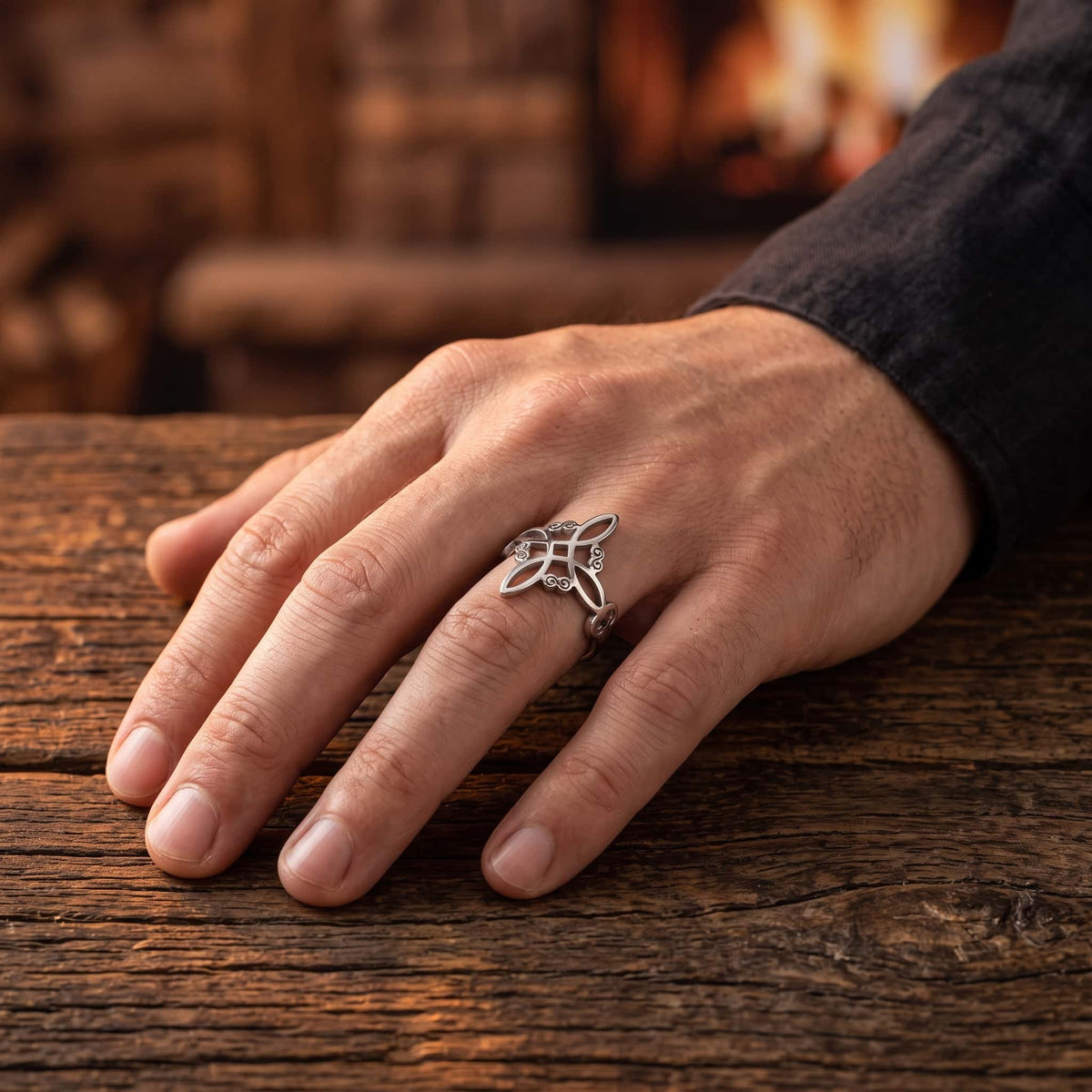
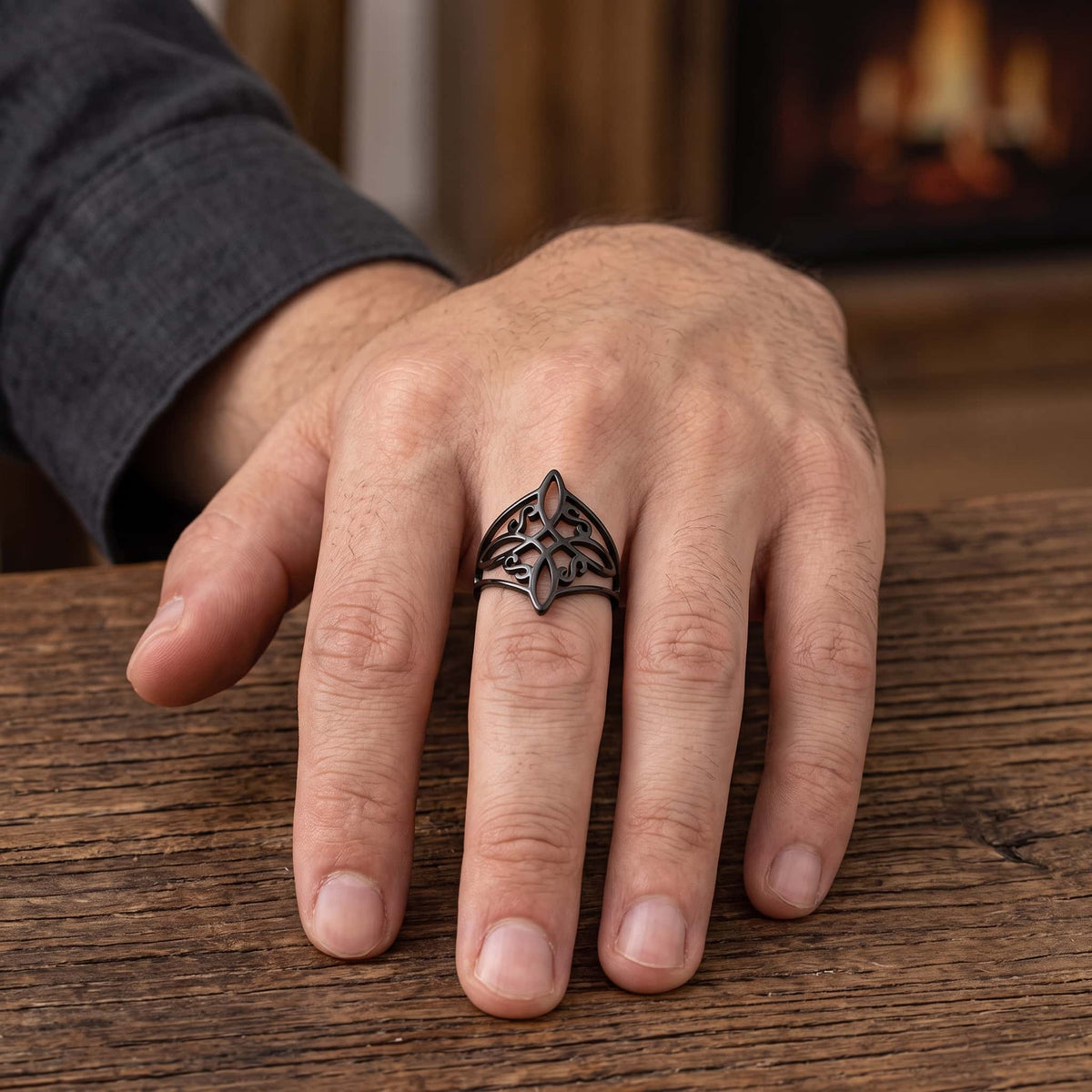
Other rings feature interlace designs. The term "Celtic" is convenient but imprecise: what adorns a Scandinavian jewel actually stems from Nordic animal styles, which succeeded each other from the 9th to the 12th century—Borre, Jelling, Mammen, Ringerike, then Urnes, the last and most slender, whose zoomorphic ribbons stretch into fine loops.
These styles are named after the sites where they were identified, and they are recognized by specific details: the ring-chain of Borre, the ribbon-beasts of Jelling, the plant appendages of Mammen. An interlace on a Viking ring is therefore not "Celtic": it is Nordic, and it has a datable style.
Unique pieces
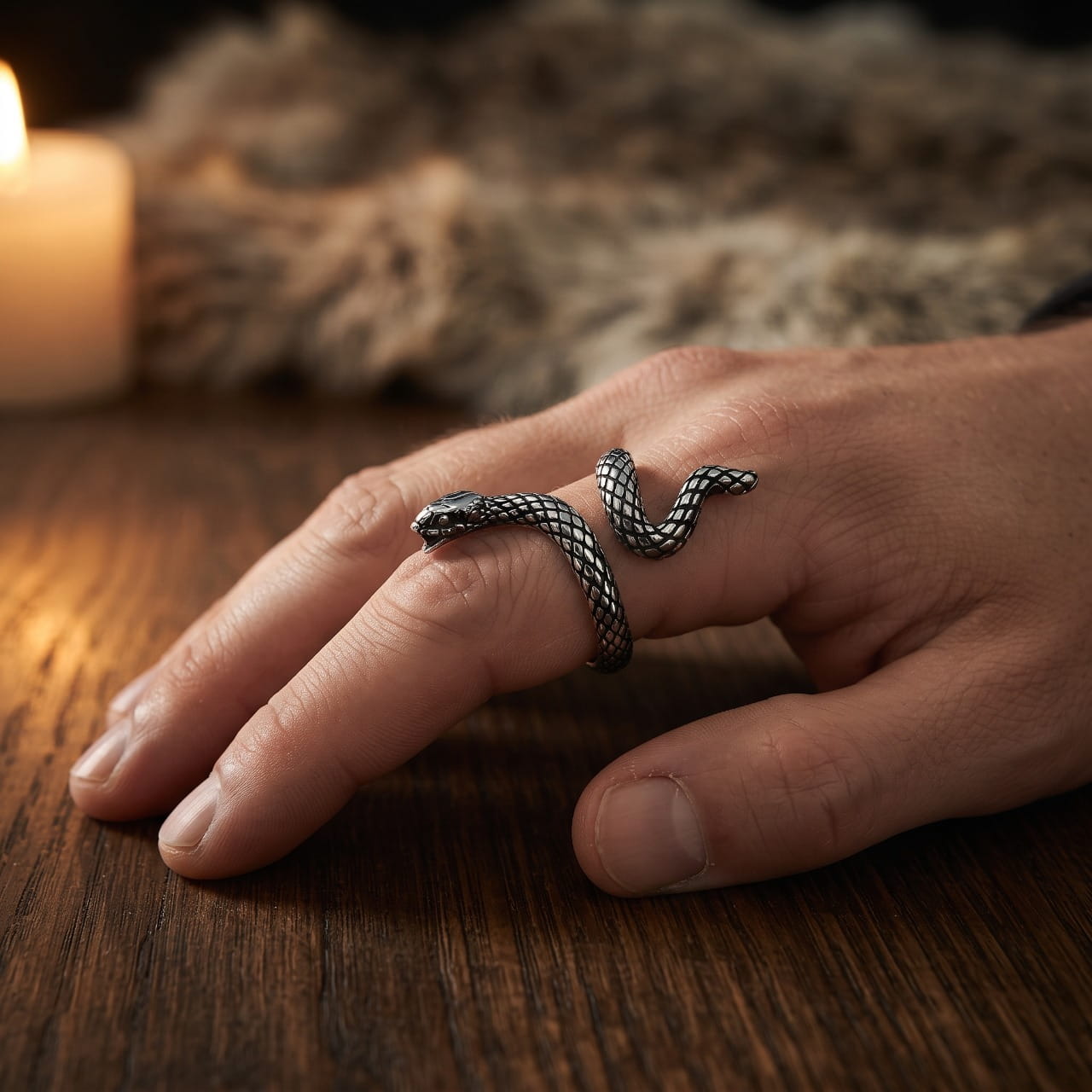
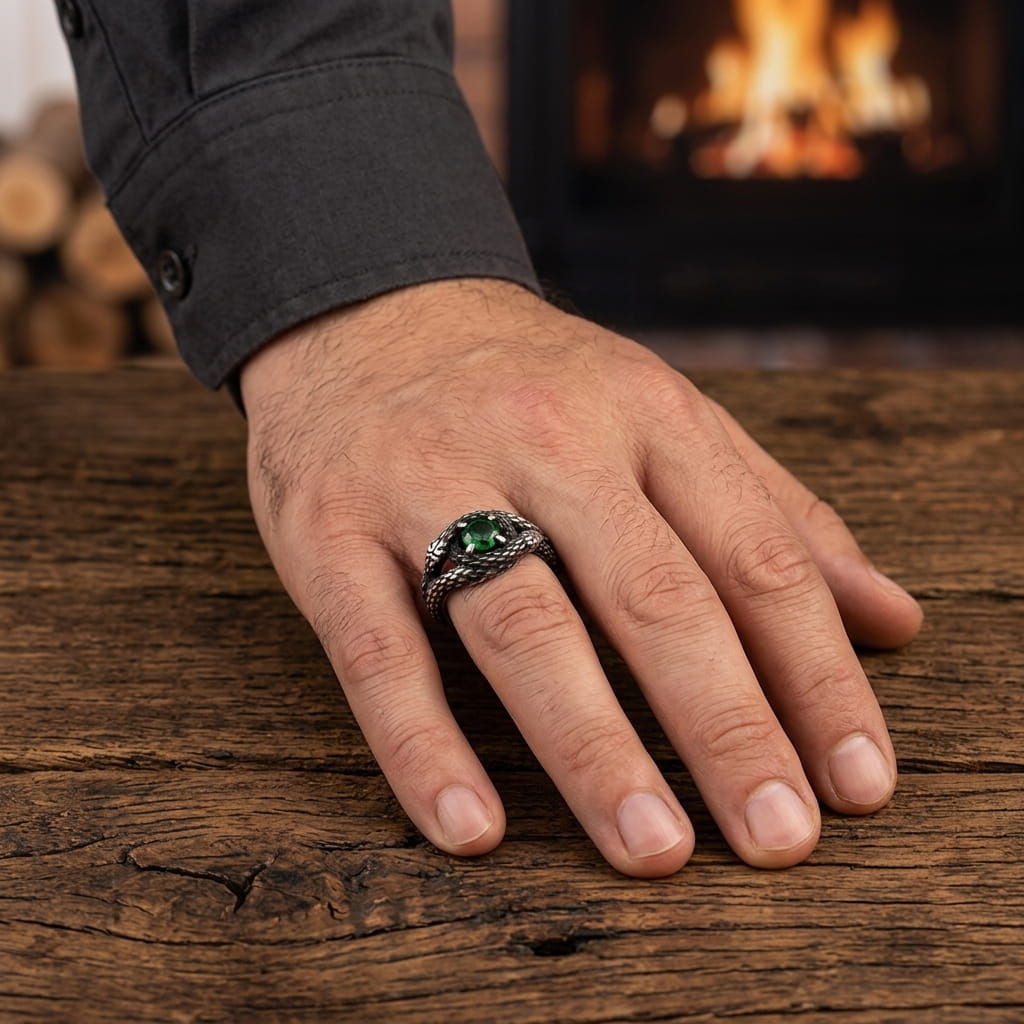
Some models carry a motif that no other shares. The Jörmungandr, the Midgard serpent, so long that it encircles the entire earth and bites its own tail—this is the one Thor fishes for in one of the most famous episodes of the Edda. The berserker's bear, echoing the berserkir of the sagas, literally "those with a bear shirt," whom texts say fought in a fury rendering them insensitive to wounds. A dragon's claw set with a black stone, a raven—Huginn and Muninn, thought and memory, who roam the world every day to inform Odin—and Sleipnir, his eight-legged horse. The serpent and dragon's claw rings also appear in the Nordic dragons and serpents section.
A final word on the Vegvísir, because it deserves a clarification that few shops provide. This eight-branched circle is presented everywhere as a "Viking compass." It is not Viking. It appears in only one document: the Huld manuscript, a collection of Icelandic sigils compiled by Geir Vigfússon in Akureyri in 1860—that is, eight centuries after the end of the Viking Age. It is a beautiful symbol, charged with a real Icelandic magical tradition, but not an ancient Scandinavian one. We prefer to say so.
To go further, read our guide to 17 Viking symbols, the precise meaning of the Valknut, and that of the Vegvísir.
Materials, without cutting corners
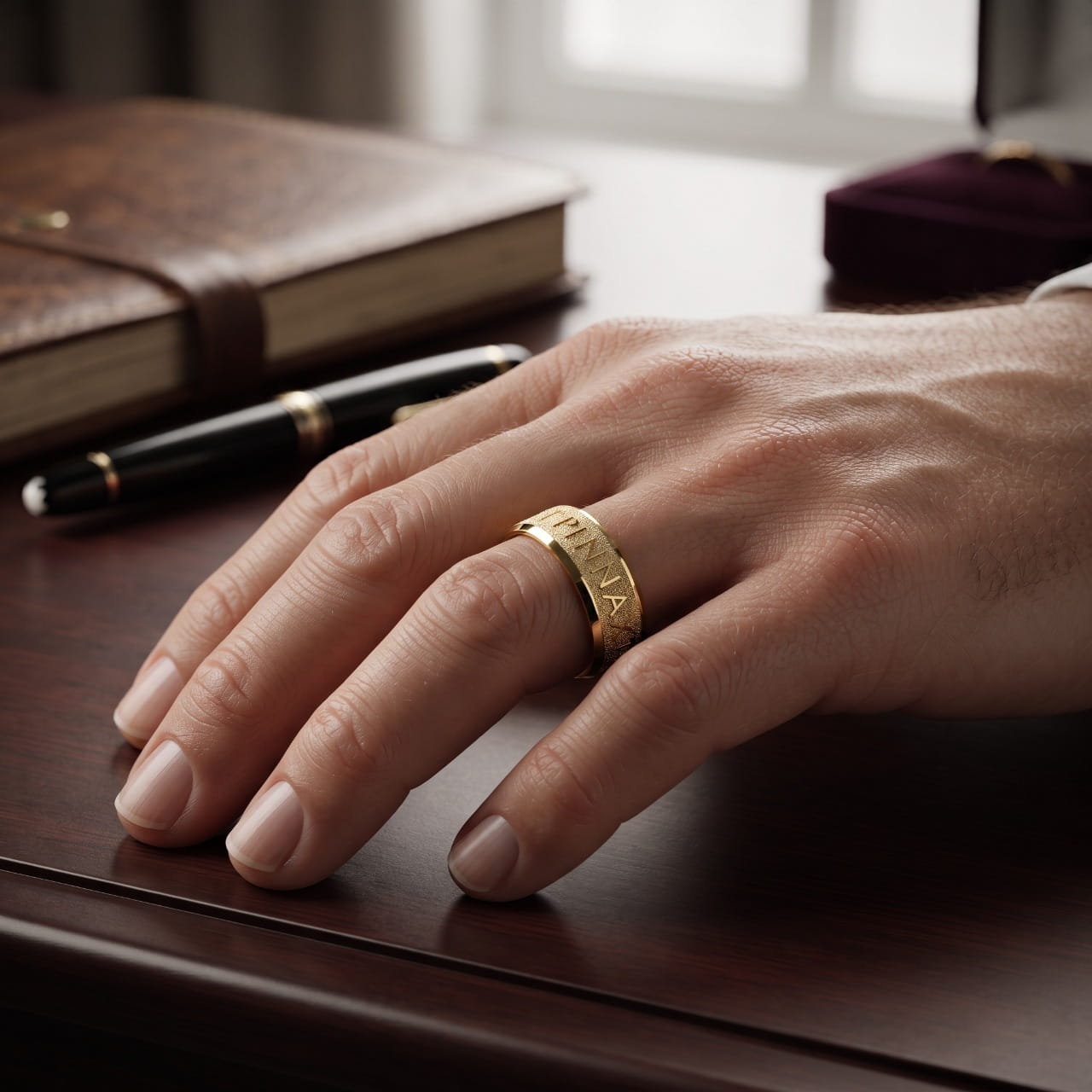
The vast majority of our rings are made of 316L stainless steel, known as surgical grade: hypoallergenic, free of nickel, it does not turn the skin green and is suitable for sensitive skin. It fears neither water, soap, nor sports. Some models combine this steel with gold plating: they require a little more care, as the plating wears down with friction and does not handle perfumes or household products well.
Finally, a few references set with zircon—sold in pairs—are made of gold and black-plated zinc alloy, not steel. It is a lighter, more affordable metal that beautifully renders the contrast with the stone, but it does not offer the same guarantees as 316L: if your skin reacts to costume jewelry alloys, steer instead toward the steel models. The exact material is indicated on each product page.
Maintenance
A soft cloth, lukewarm soapy water, careful drying: 316L steel regains its shine in seconds and keeps it for years. Avoid abrasive products and chlorinated cleaners. For gold-plated models, remove the ring before showering, swimming, or cleaning, and store it away from humidity. None of our rings require professional polishing.
Which ring for your hand
Size settles the question of comfort, not that of appearance. Three criteria count afterward, and they can be verified in thirty seconds in front of a mirror.
The width of the ring in relation to the finger. A 4 to 6 mm ring elongates a short finger and remains discreet on a slender hand. A signet ring or a wide band of 8 mm or more requires a finger of a certain length so as not to give the impression of a miniature bracelet—otherwise, it crushes the knuckle instead of adorning it.
The knuckle. If your knuckle is significantly wider than the base of your finger, a ring adjusted to the knuckle will spin at the base. Two solutions: a thin band, which tolerates this play better, or a clear intermediate size with a slightly domed inner ring, which is easier to slide over.
The intended finger. Thin bands can be worn anywhere, most often on the index or middle finger. Signet rings traditionally go on the pinky or ring finger of the non-writing hand—not by aesthetic convention, but because a raised plate gets in the way as soon as you hold a pen or a tool. If you work with your hands, this is the criterion that takes precedence over all others.
Giving a Viking ring as a gift
It is the most delicate gift in jewelry, for a simple reason: the size. Here are three ways to circumvent the problem without ruining the surprise.
Measure a ring he or she already owns. The most reliable method: discreetly borrow a ring worn on the same finger, place it on a ruler, measure the inner diameter, and enter it into our chart. Be sure to note the original finger—a ring from the ring finger will not fit the index finger.
Take the most common size. In the absence of information, 10 US (62 French) covers the majority of male hands, 7 US (54 French) the majority of female hands. It is not a guarantee, but it is the least risky bet.
Choose a forgiving model. A thin band forgives a half-size difference, whereas a wide signet ring forgives nothing. For a gift, the thin band is objectively the safest choice.
As for the occasions, they all look alike: these rings are offered for a birthday, Father's Day, Christmas, or for no particular reason to someone whose taste for Norse mythology is known. A practical note for the holidays: check the delivery time before ordering at the last minute; it appears on each product page.
For the history of Nordic rings, the choice of finger, and how to wear a signet ring, read our guide Viking ring meaning: finger, size, and symbols.
Frequently Asked Questions
Which Viking ring size to choose? Our sizes are American. Refer to the table above: an 8 US size corresponds to a 57 French size, i.e., 18.1 mm inner diameter. Measure at the end of the day and, in case of hesitation, take the larger size.
How to convert a French size to a US size? Divide your finger circumference in millimeters by the table: 54 mm gives a 7 US, 57 mm an 8 US, 62 mm a 10 US. The French size is the circumference in millimeters; it is the most direct reading.
Is stainless steel suitable for sensitive skin? Yes. 316L steel is hypoallergenic and contains no free nickel. However, plated zinc alloy models do not offer this guarantee: check the material on the sheet if you are prone to reactions.
Is a Viking ring worn on a specific finger? No rule. Thin bands can be worn interchangeably, often on the index or middle finger. Signet rings traditionally go on the pinky or ring finger of the non-writing hand, to avoid discomfort.
Are these rings for men or women? Both. Thin 4 to 6 mm models and sizes 5 to 8 are most often chosen by women, signet rings and sizes 10 to 13 by men, but nothing is gendered in the motifs themselves.
Can I wear it in the shower? Yes for 316L steel, which does not rust. No for gold-plated models, as the plating wears off faster with repeated contact with water and soaps.
What are the delivery times and costs? Tracked delivery is free on orders over €49, regardless of the delivery country. Below this amount, shipping costs are calculated at checkout.
Also explore: complete your set with our Viking necklaces, our Viking bracelets, or our entire collection of Viking jewelry. To learn more, read our complete guide to Viking jewelry and discover the Futhark runic alphabet. See also our Viking jewelry for men.