
Filters
136 products
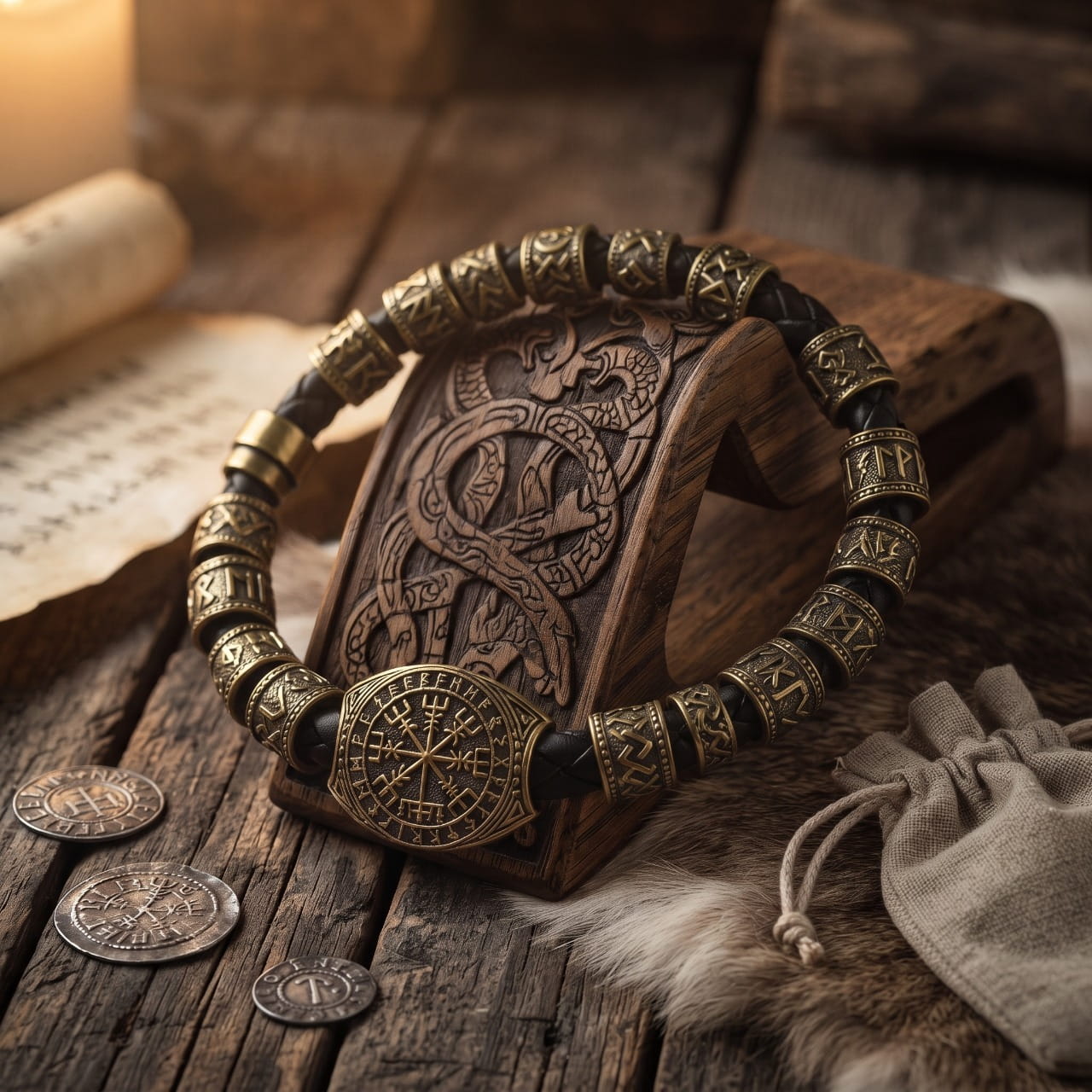
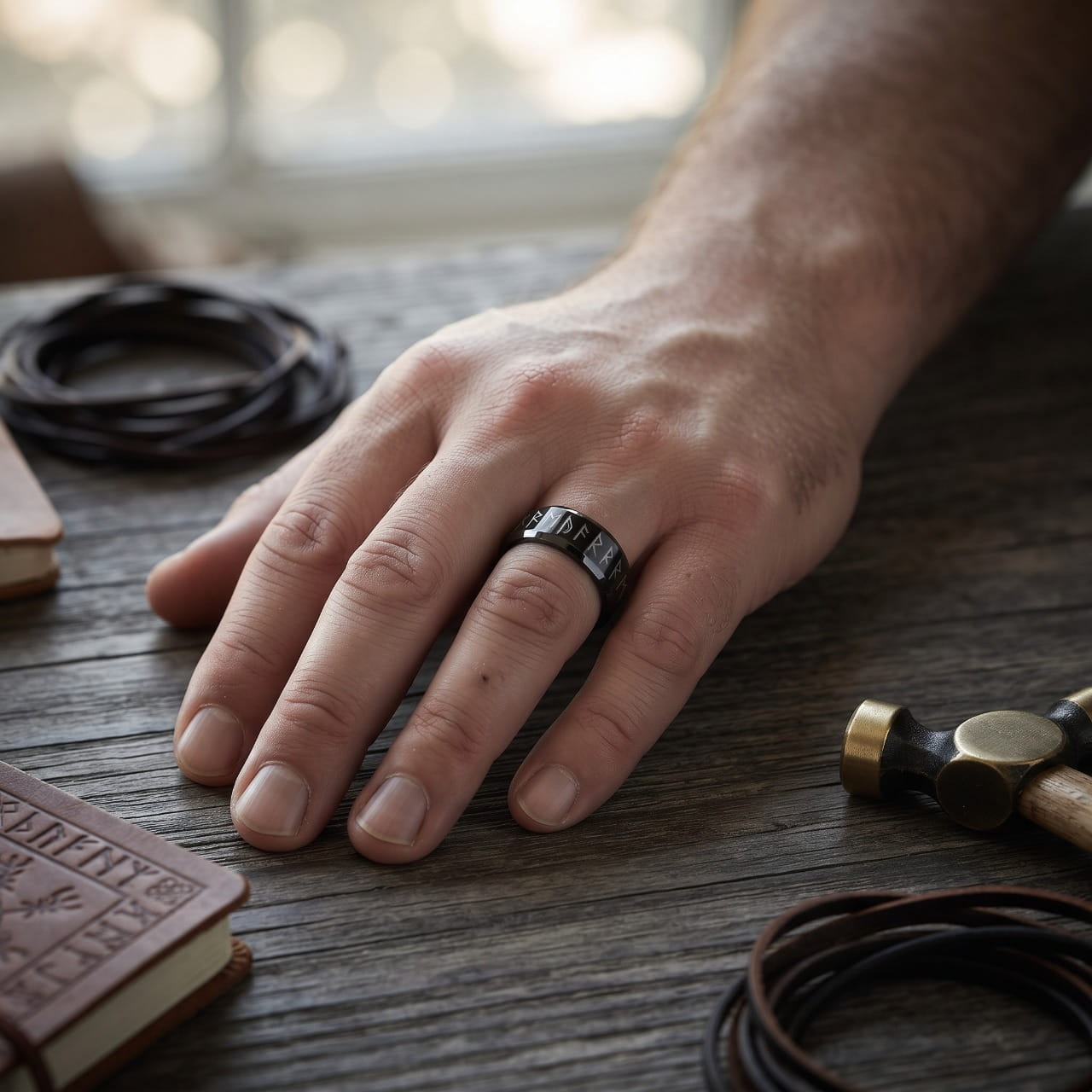
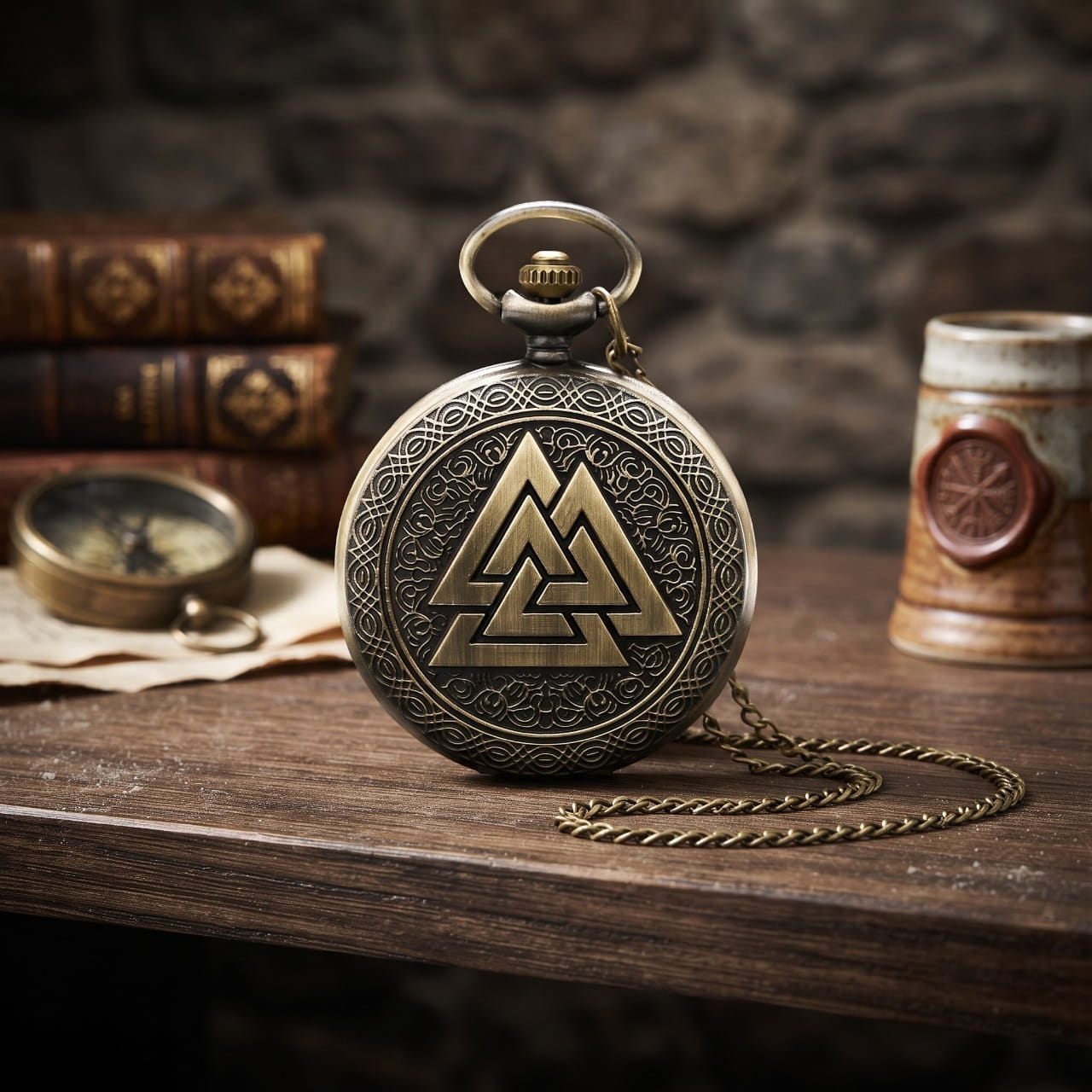
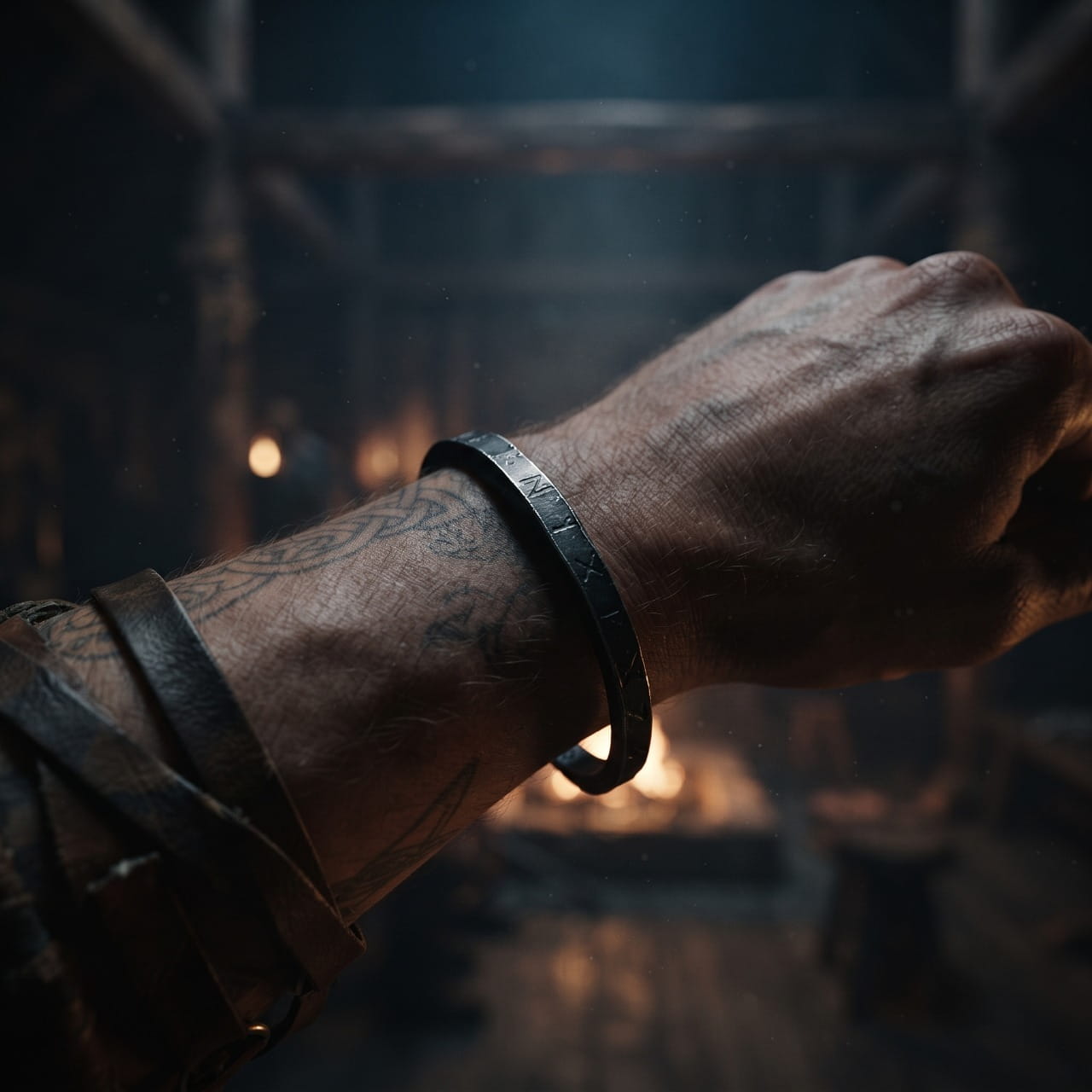
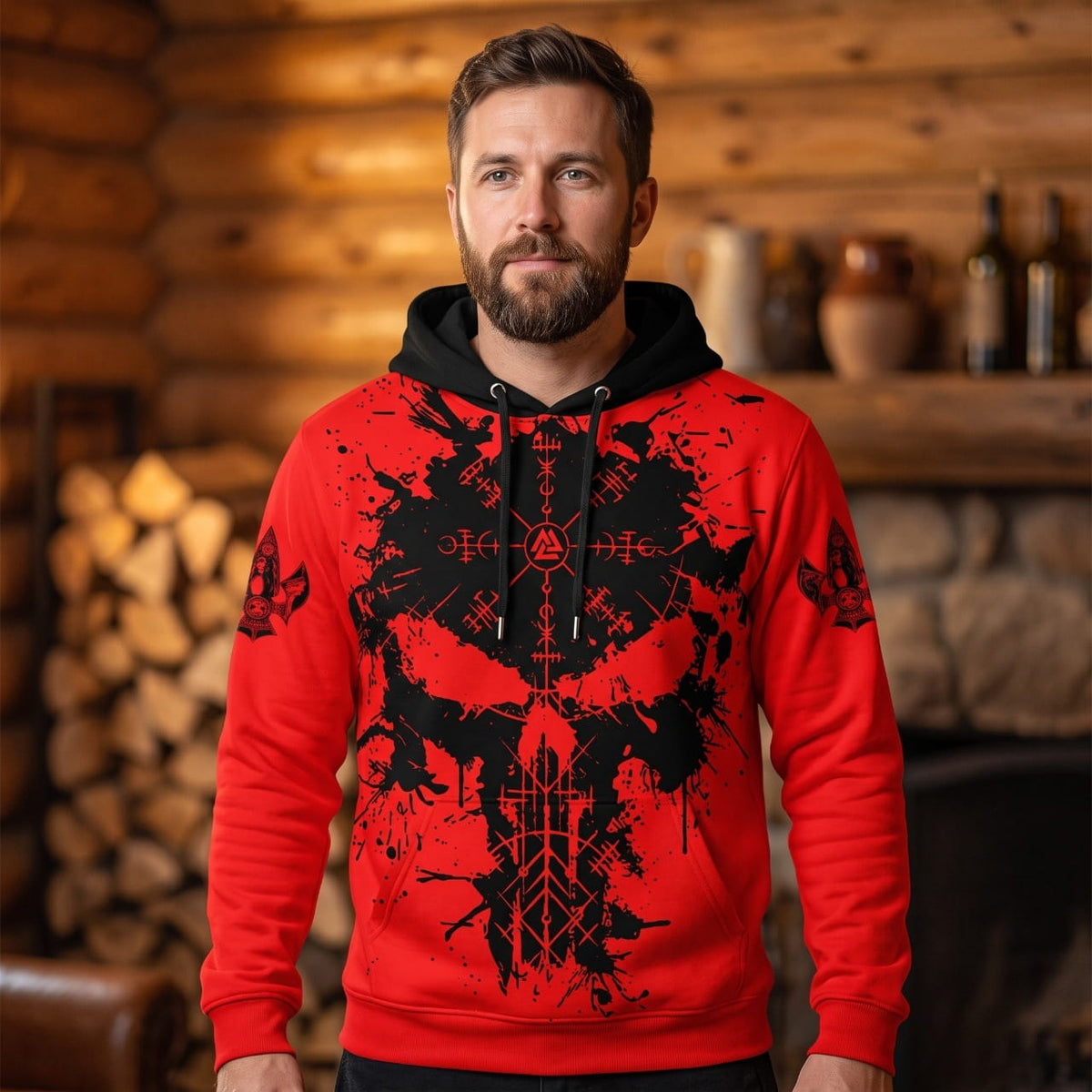
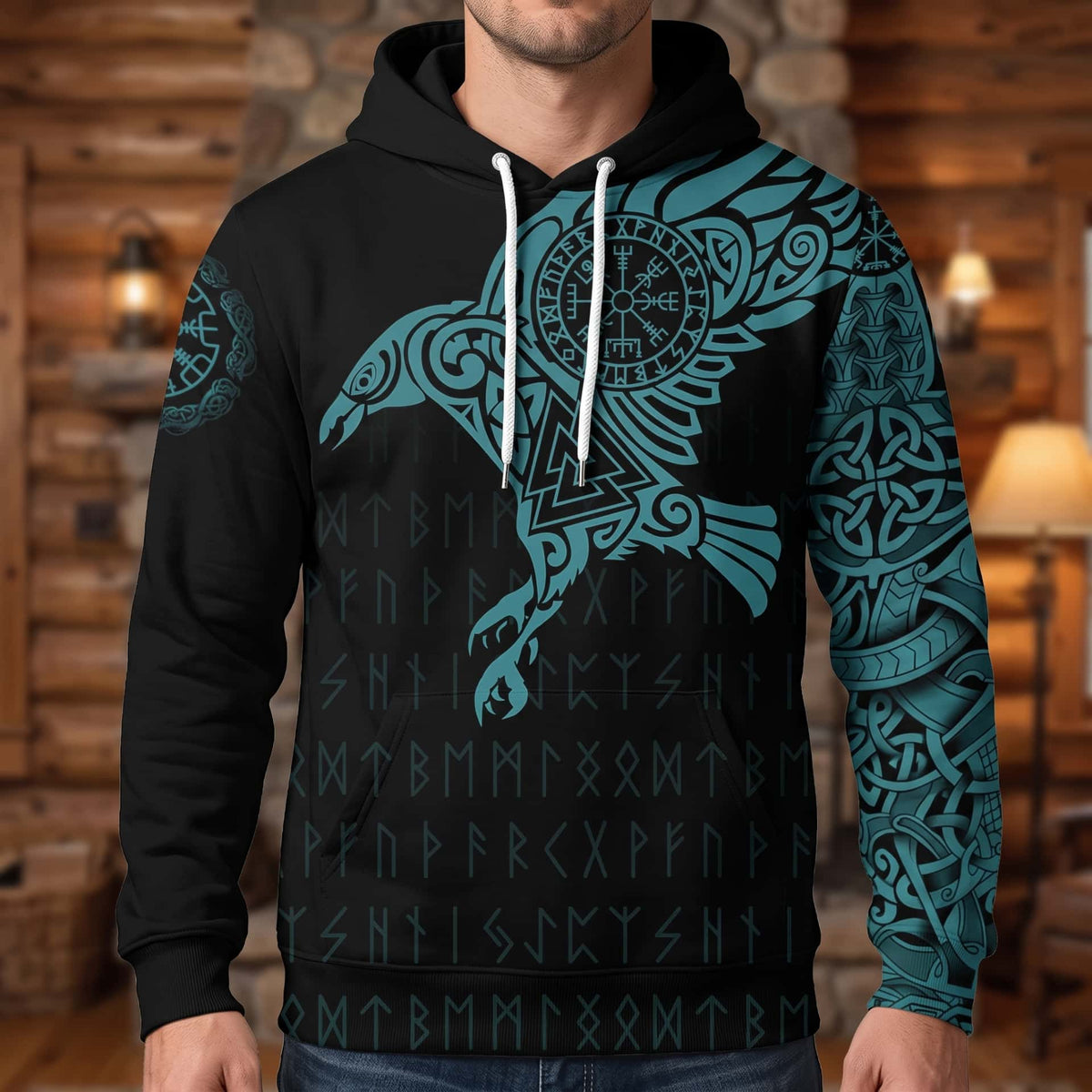
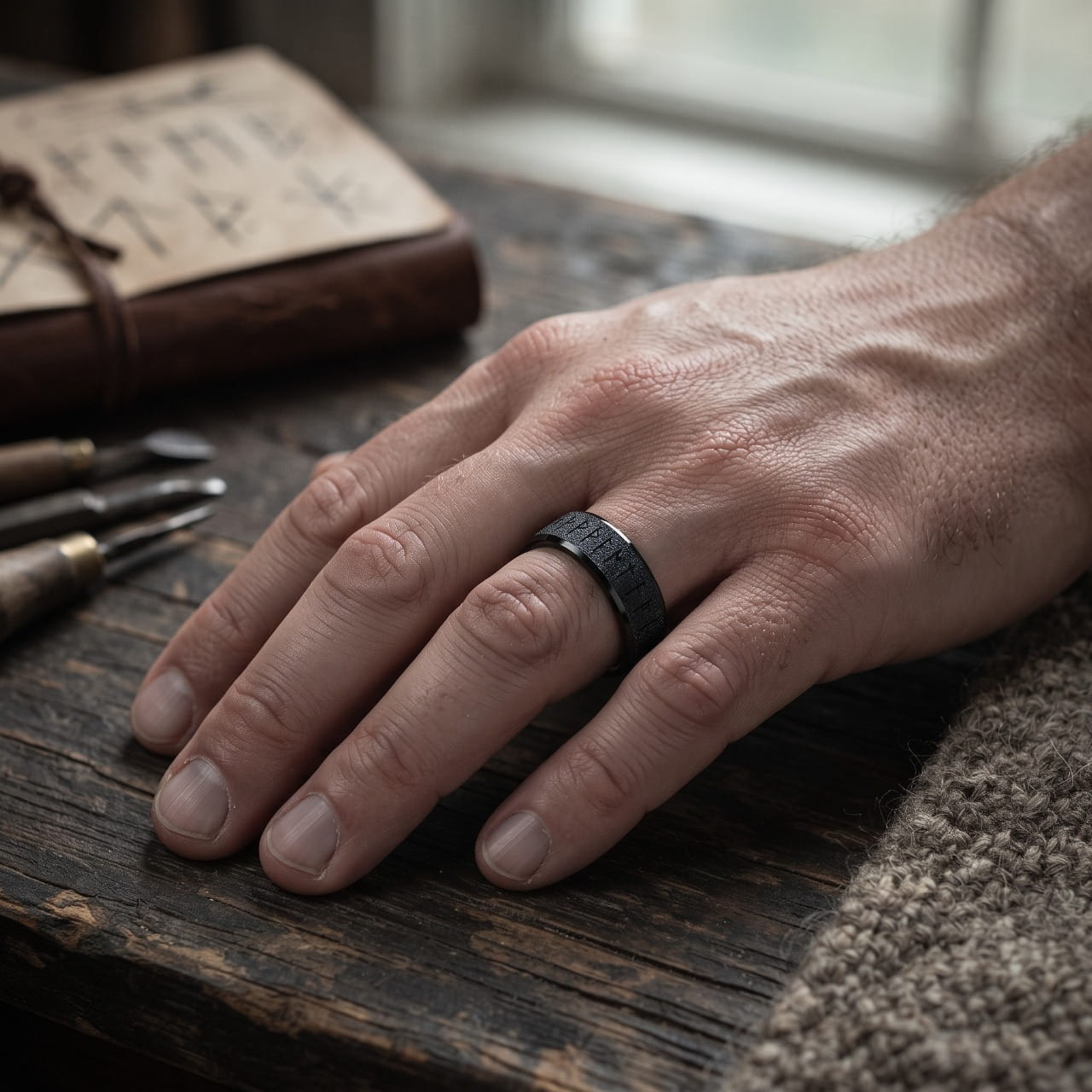
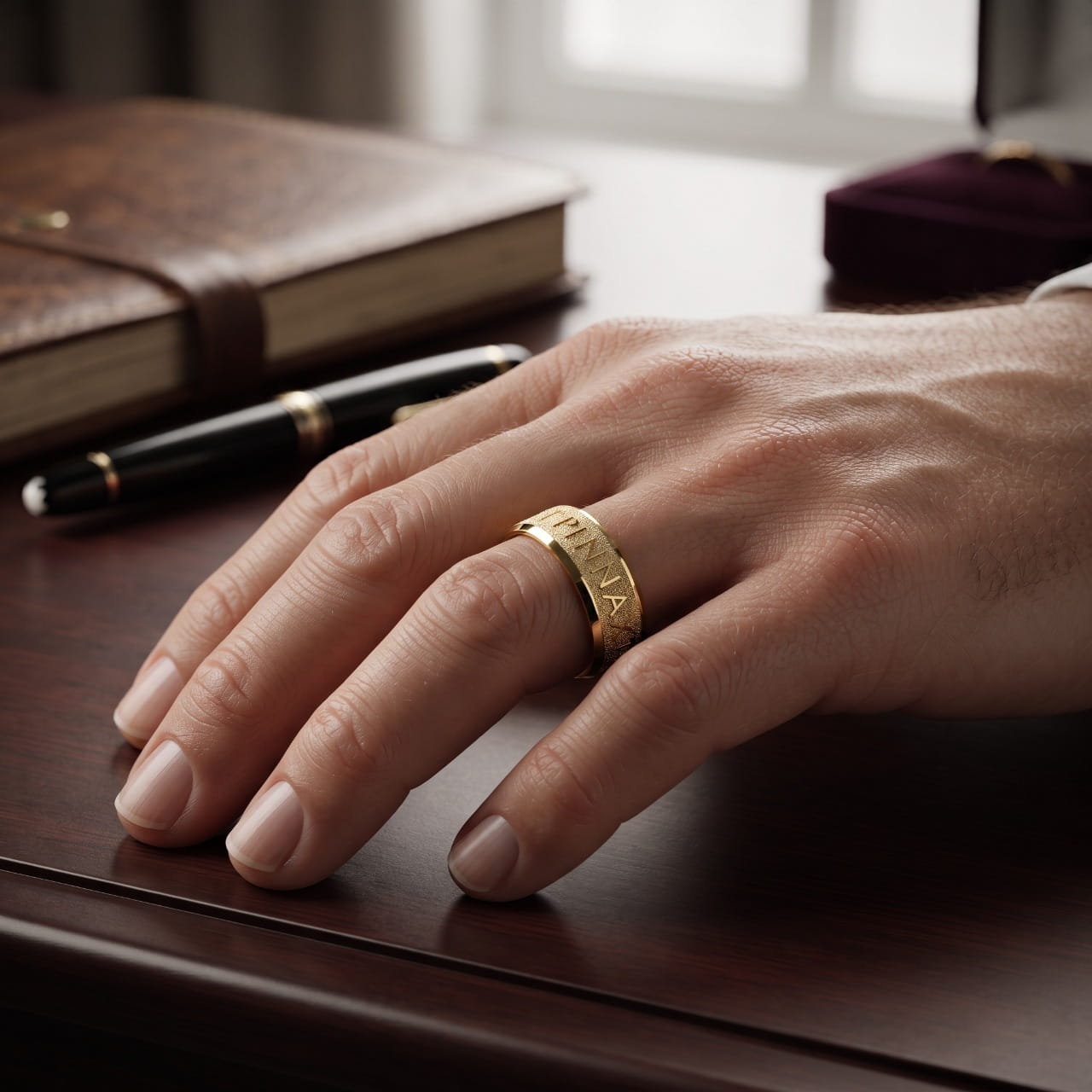
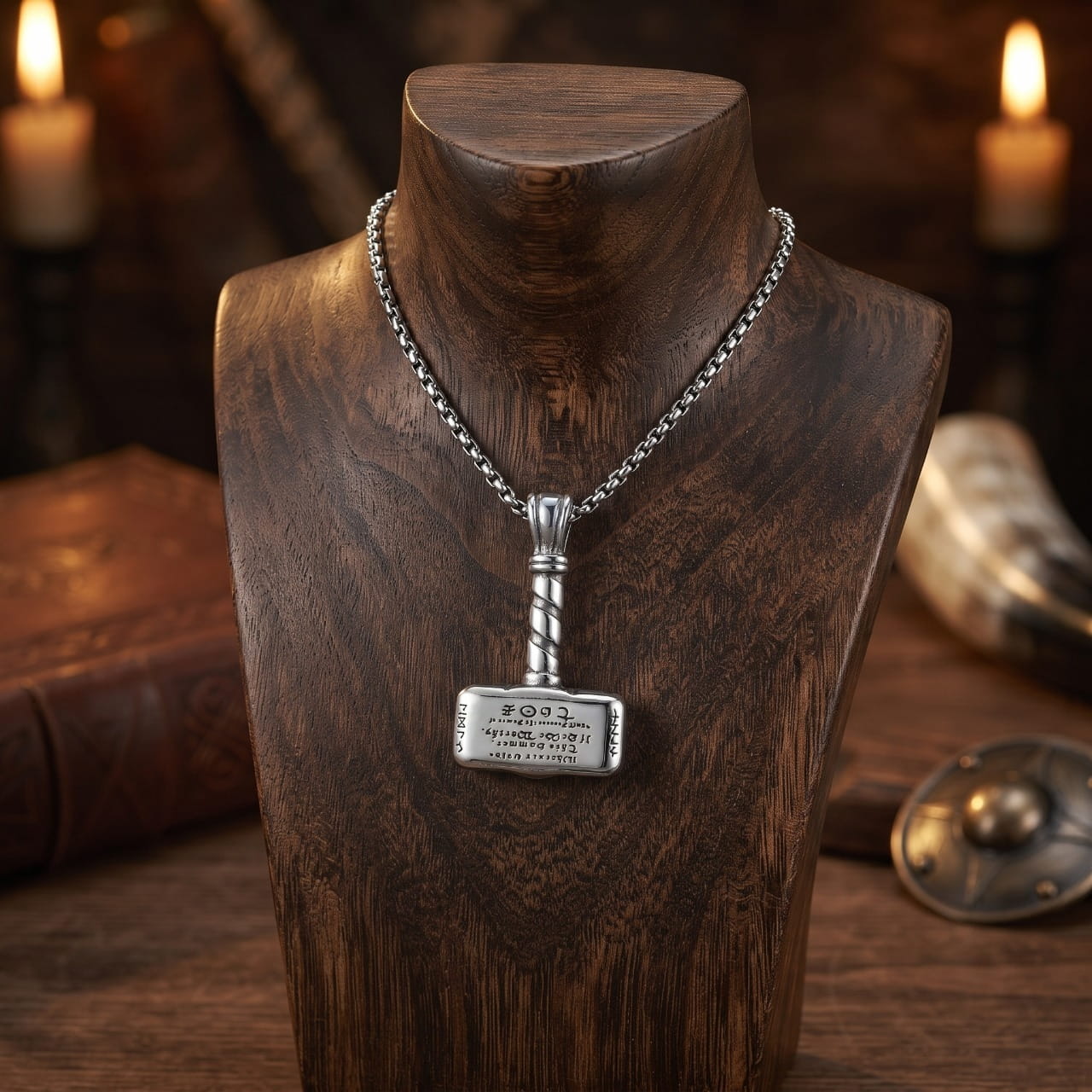
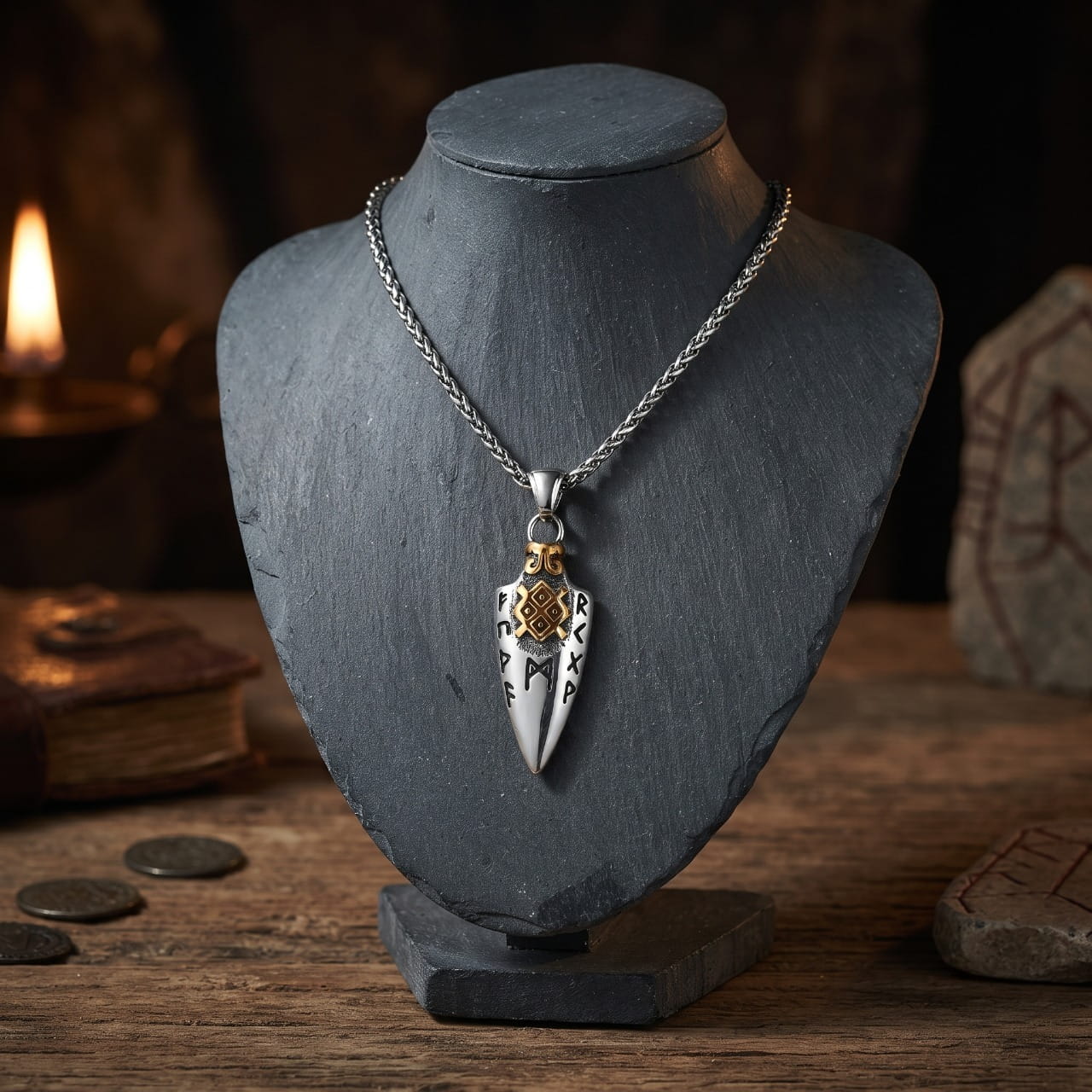
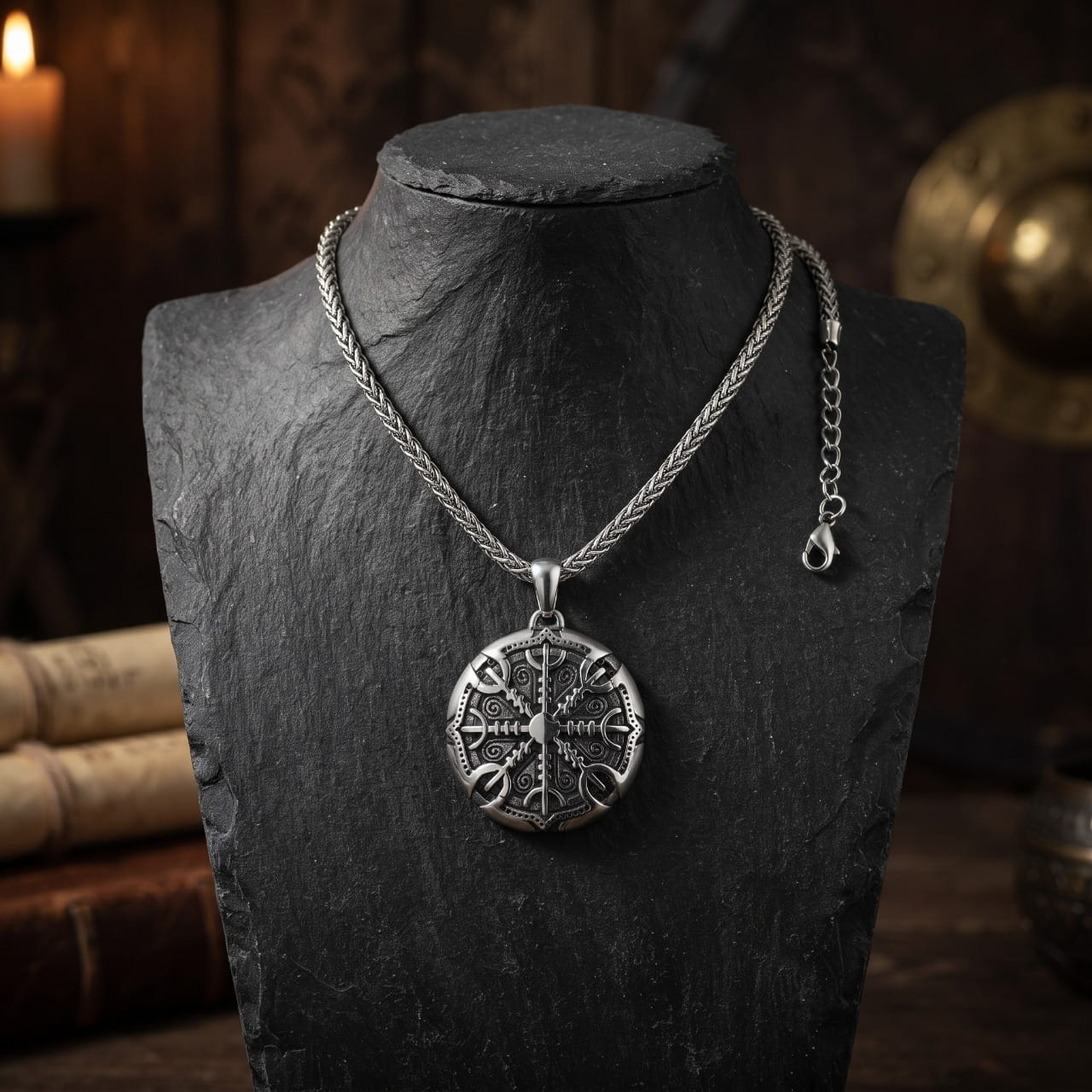
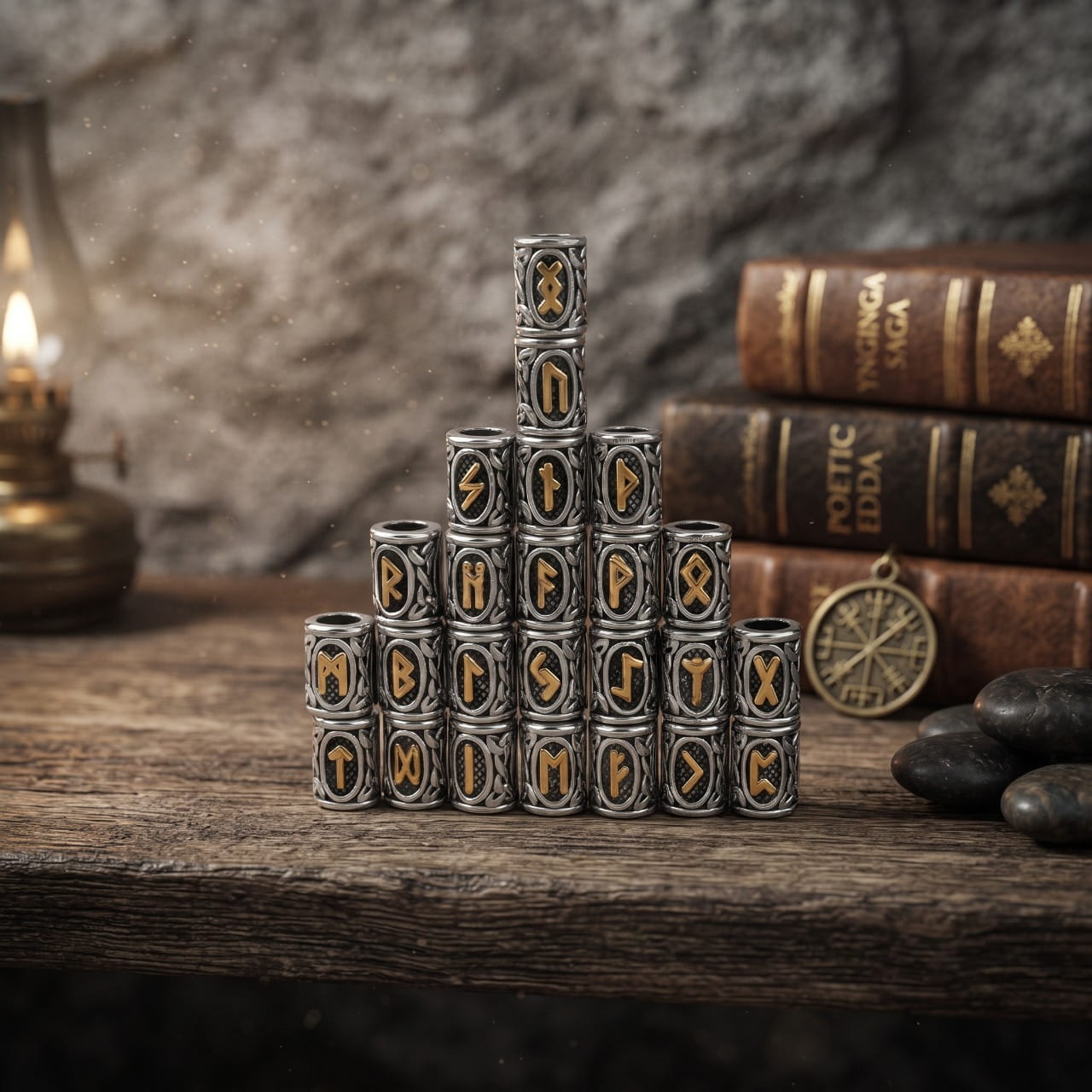
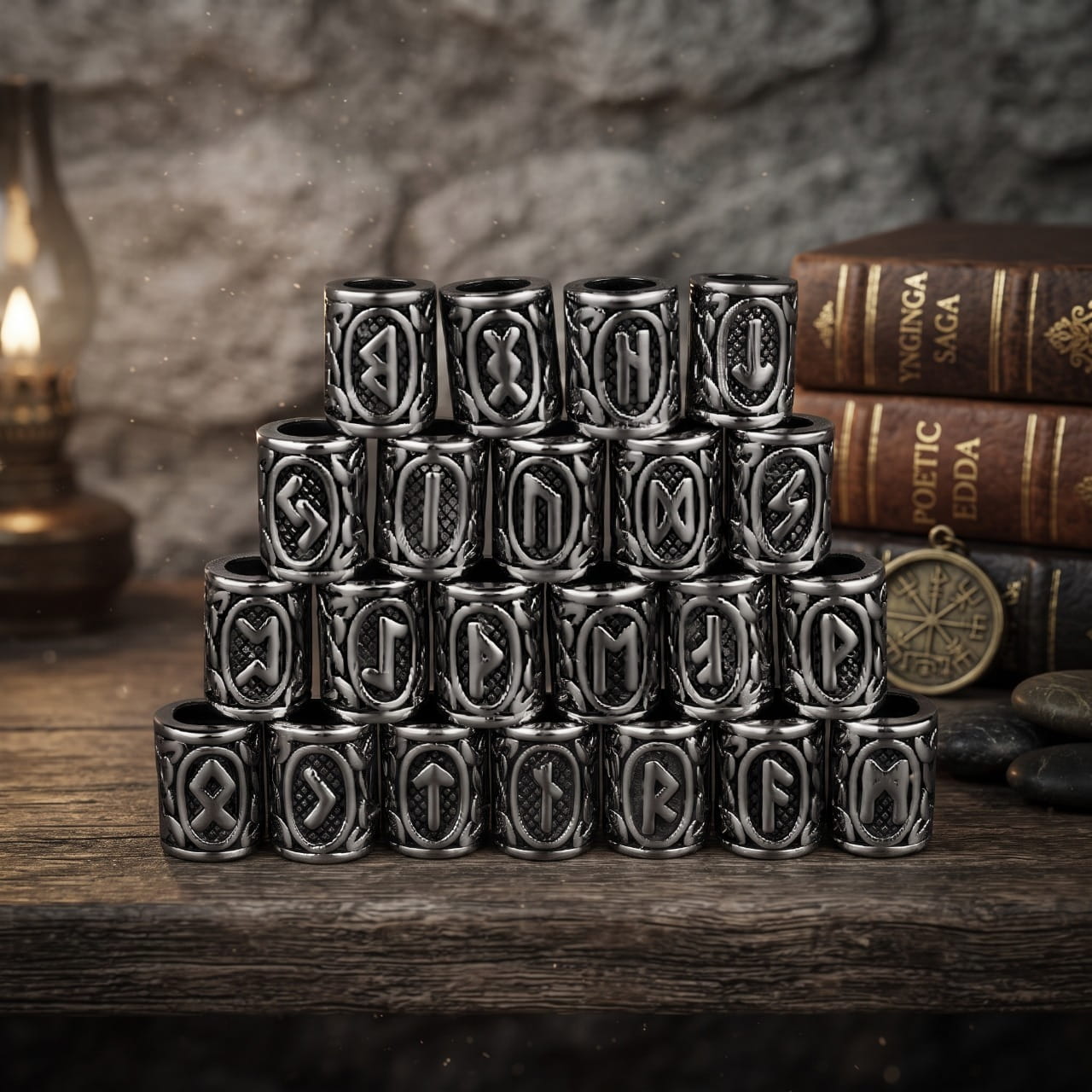
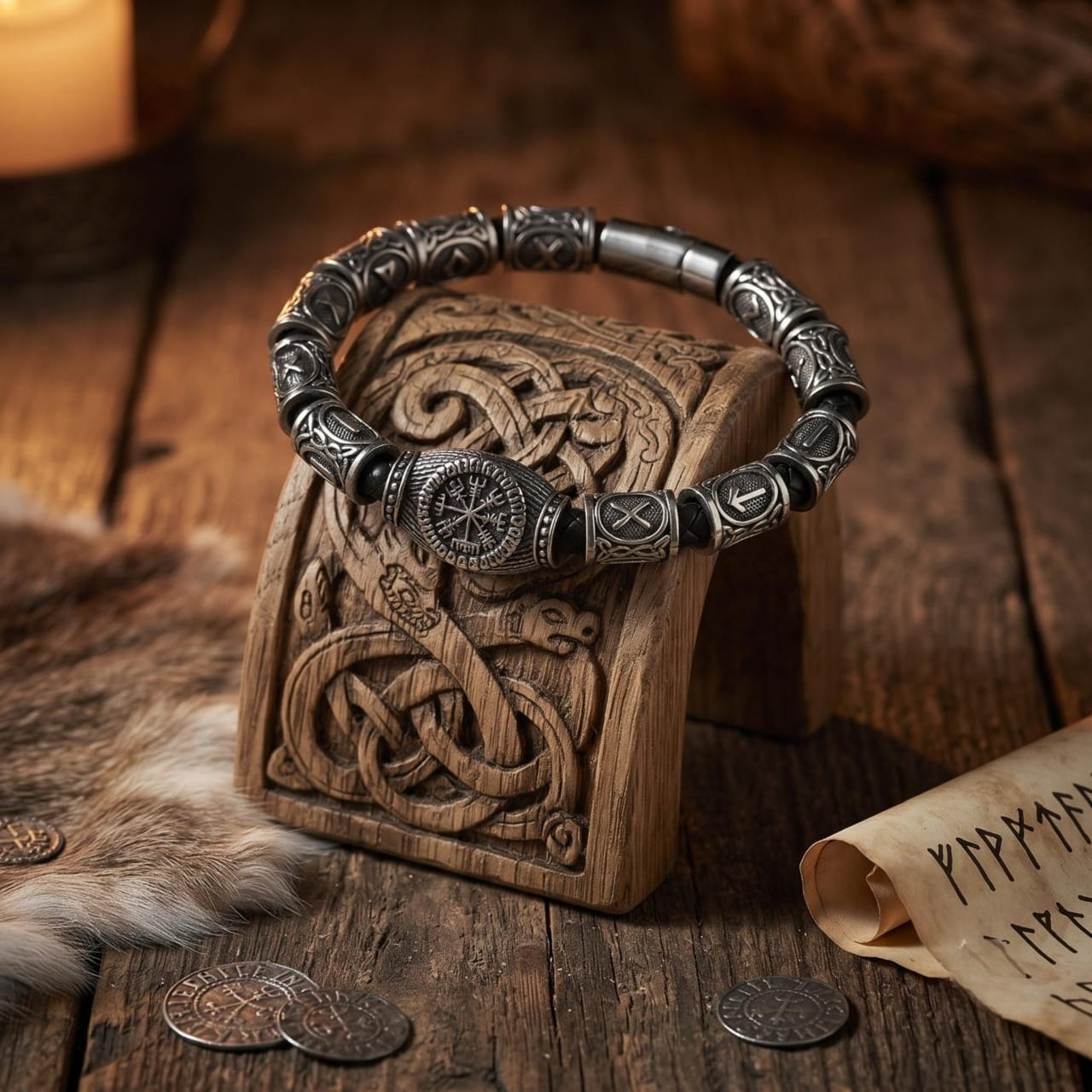

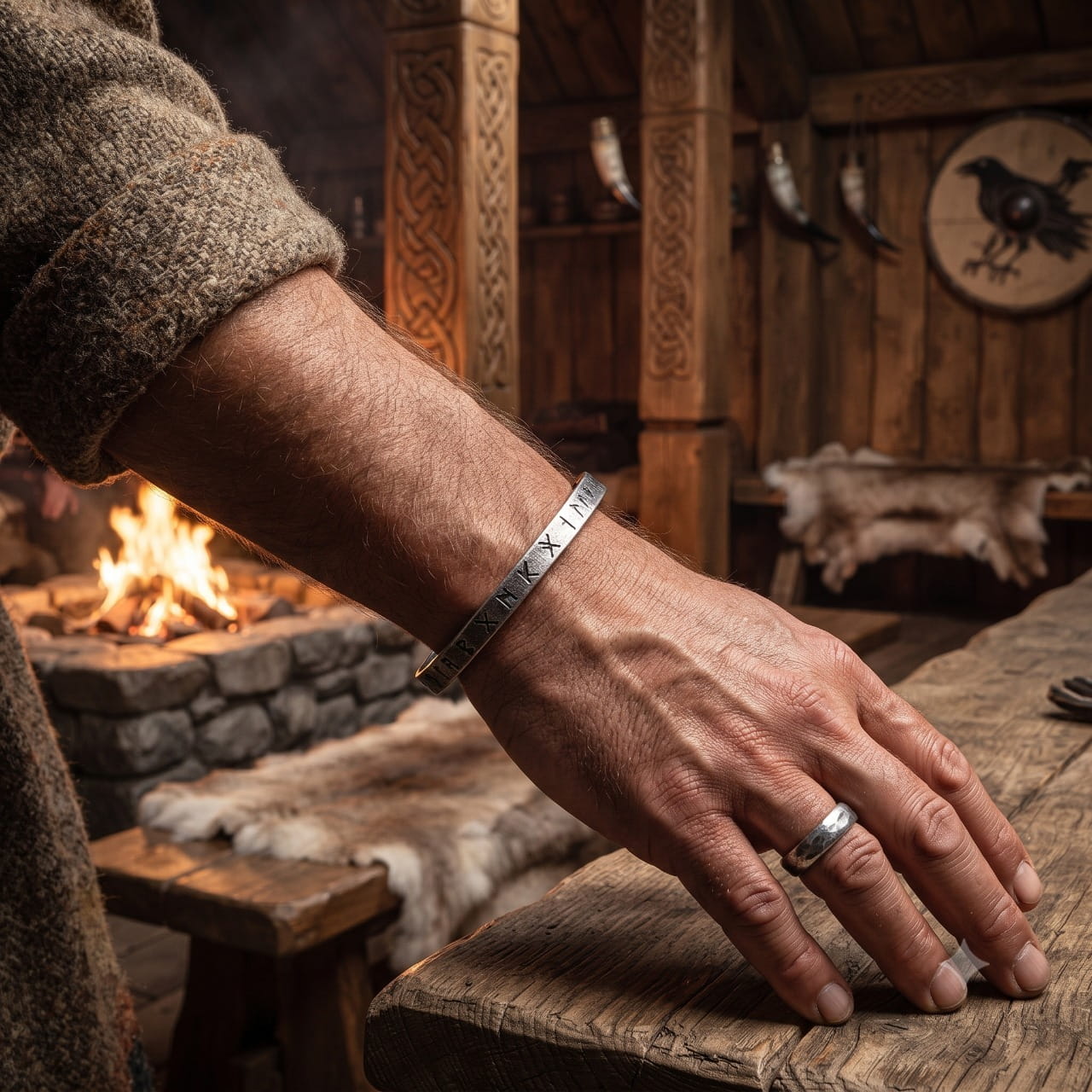
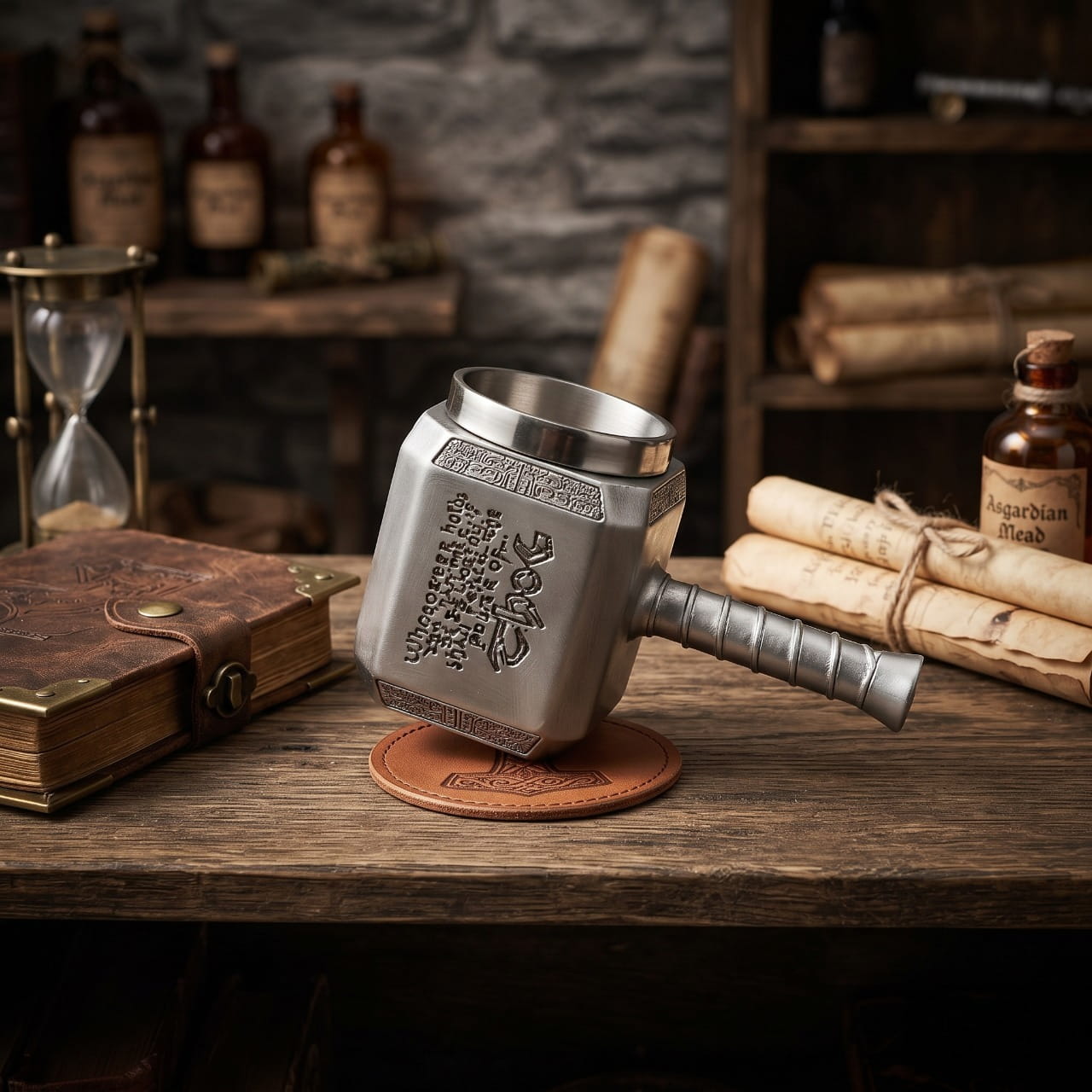

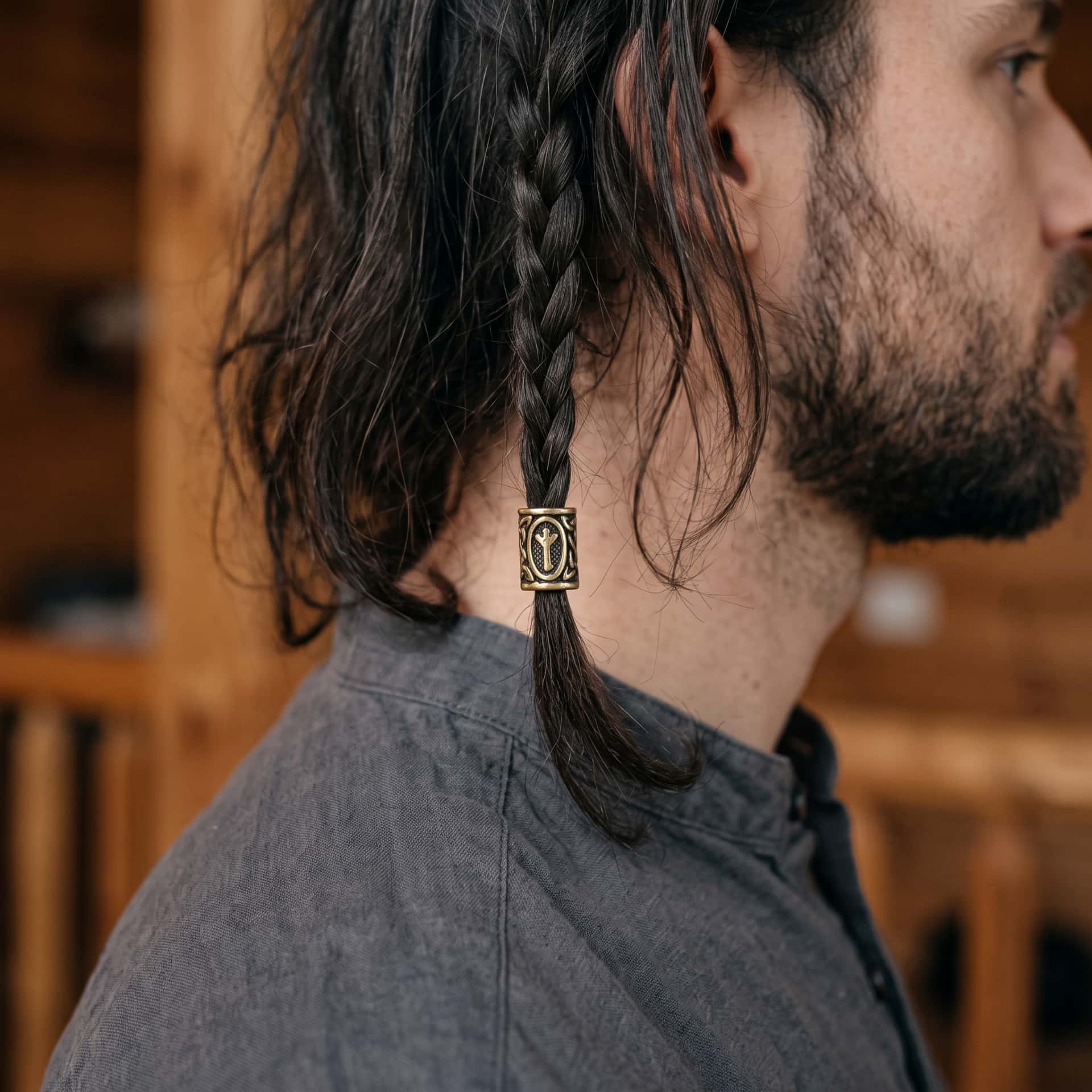

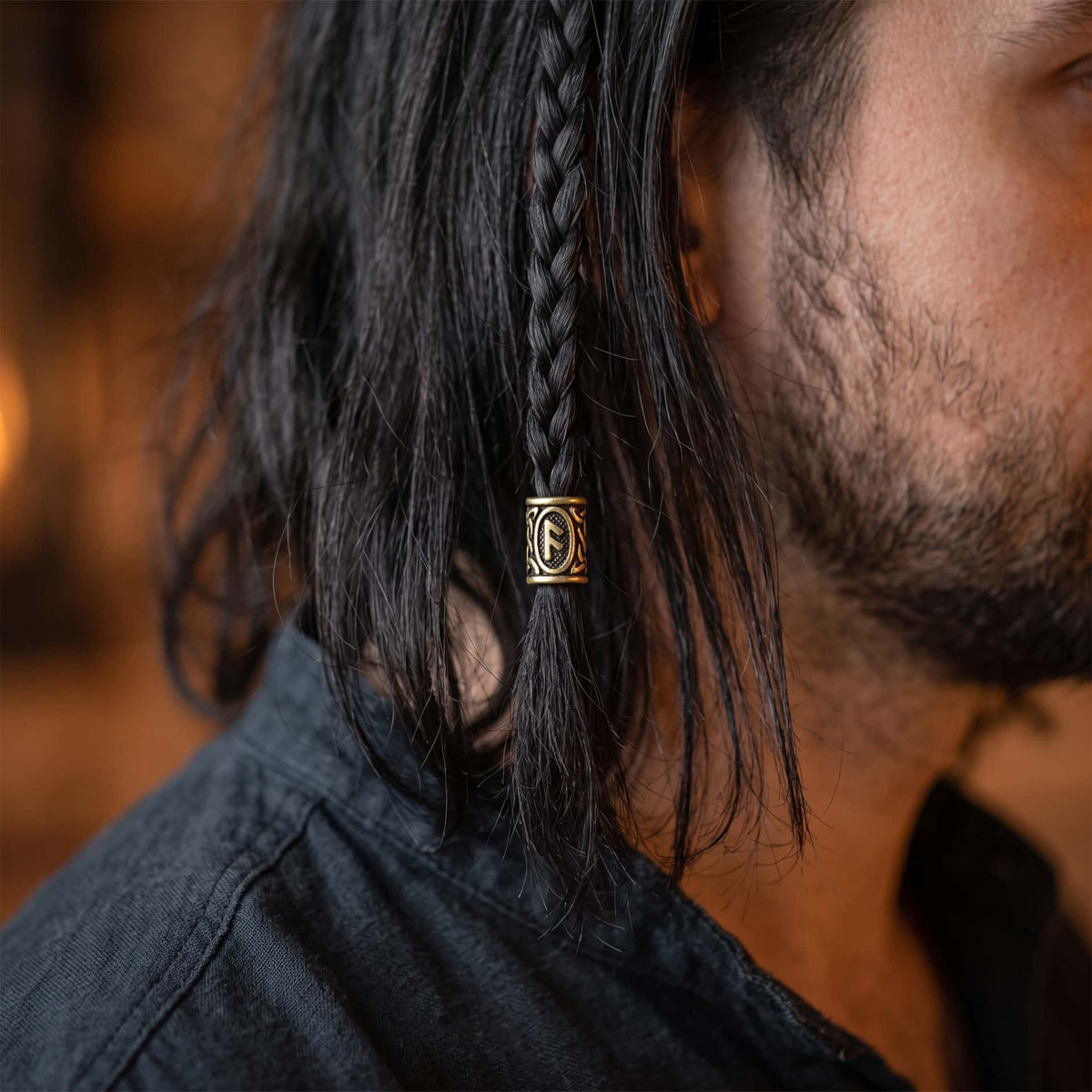
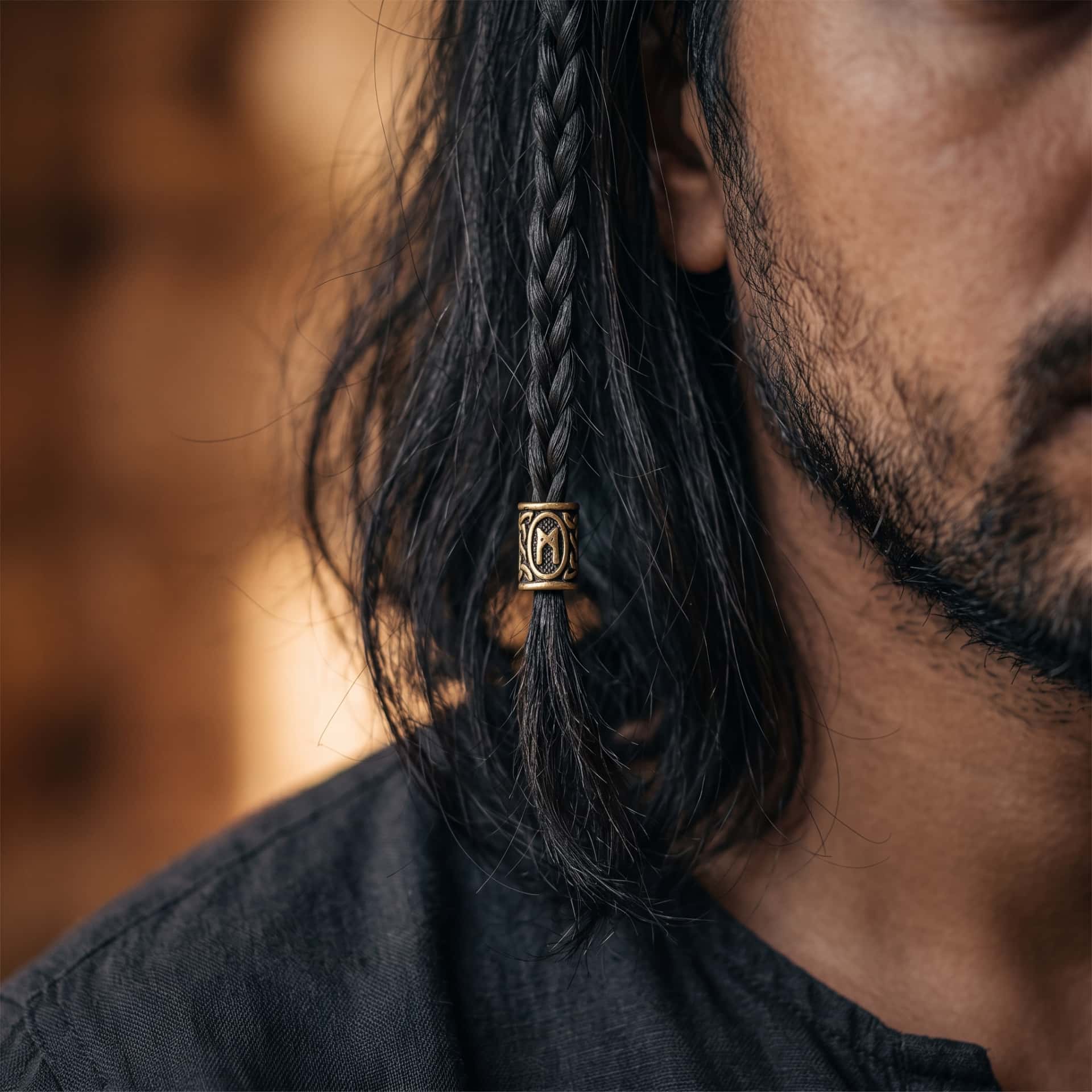
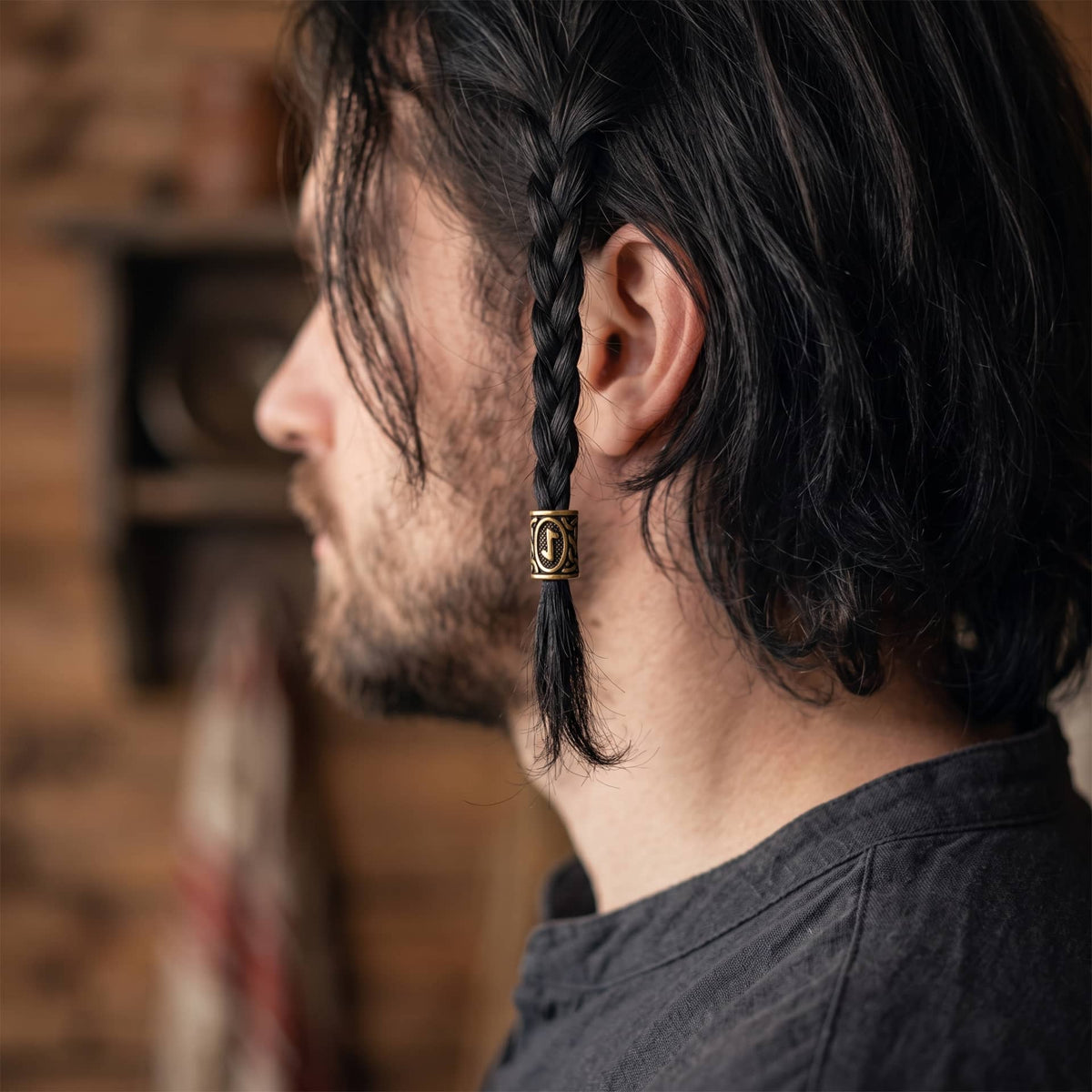
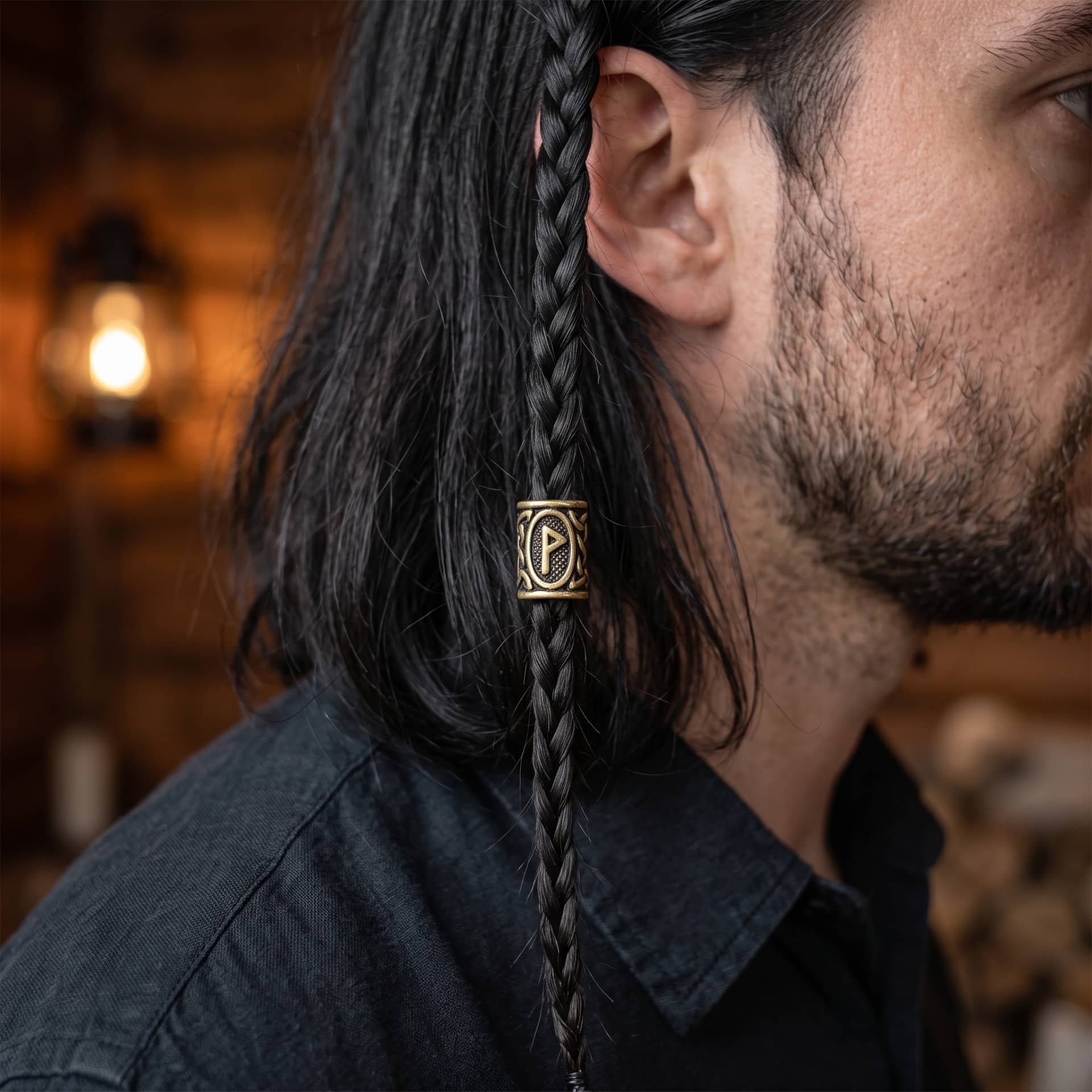
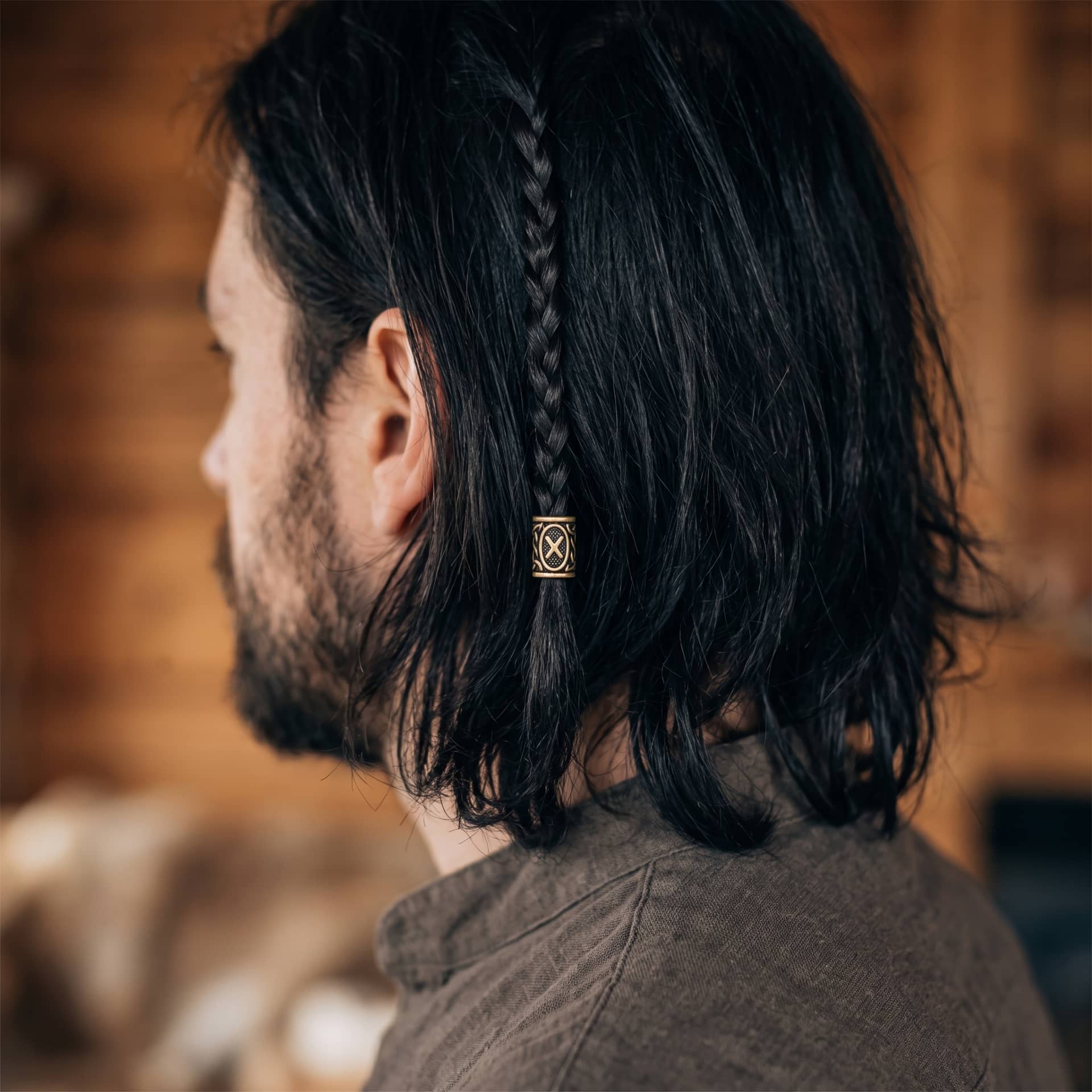
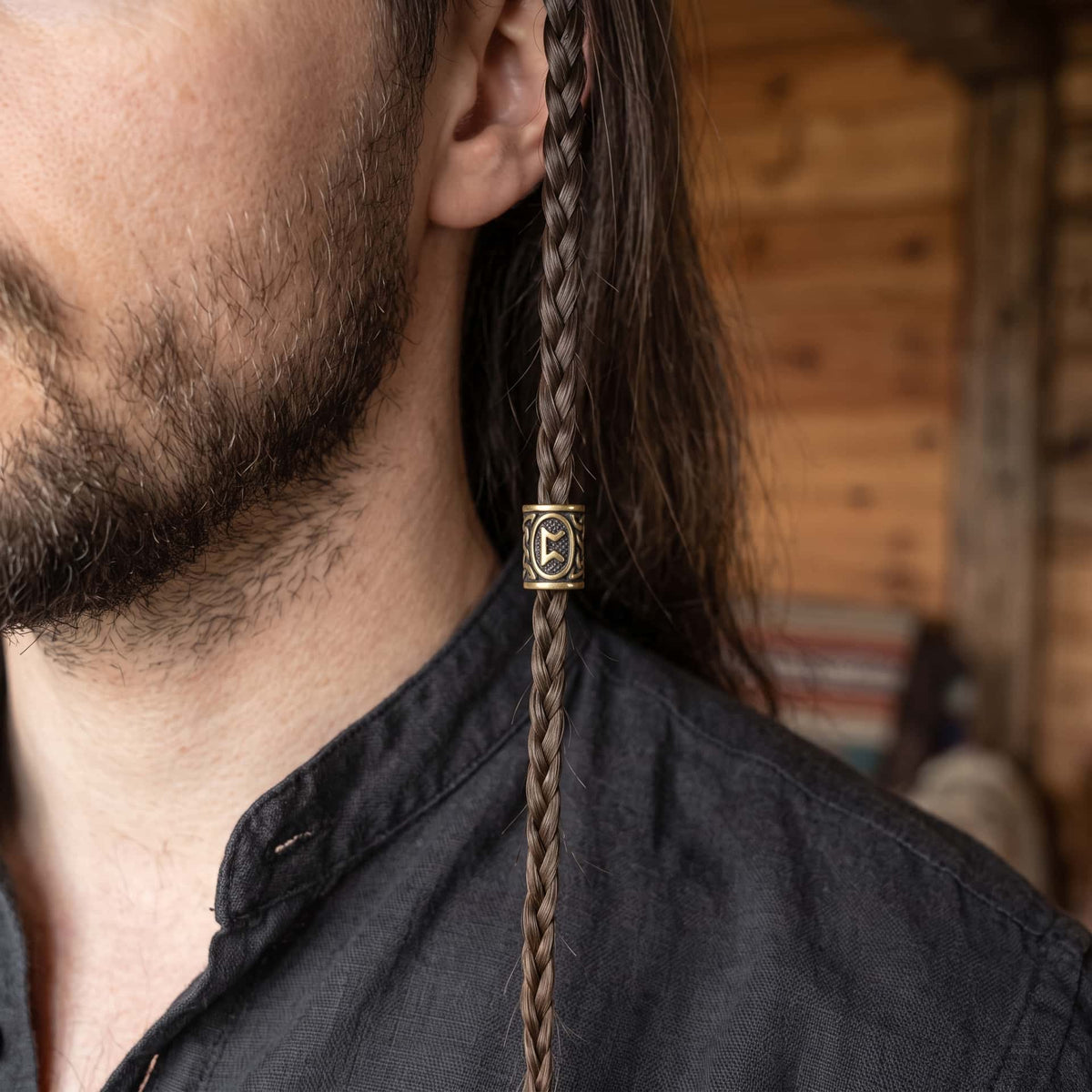
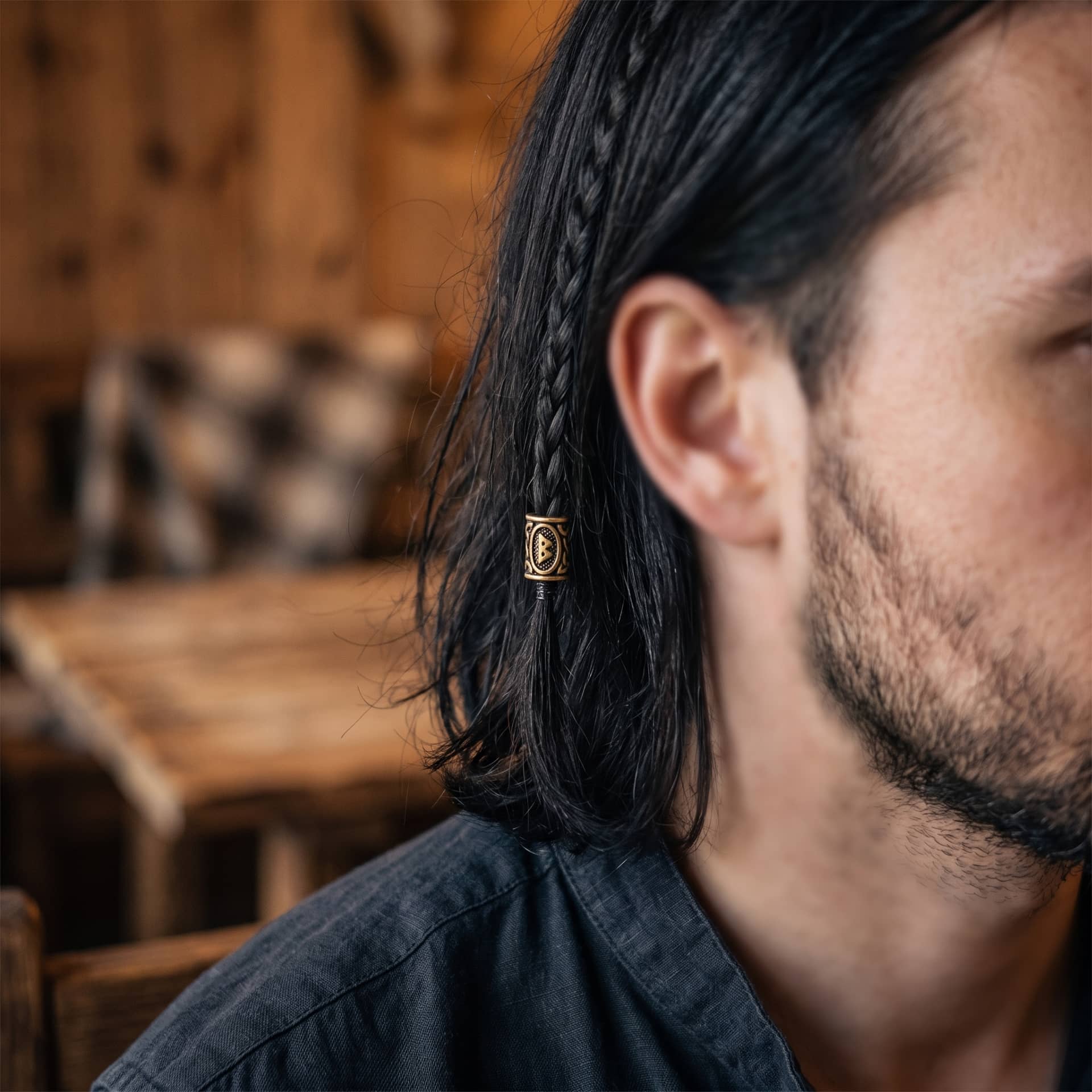
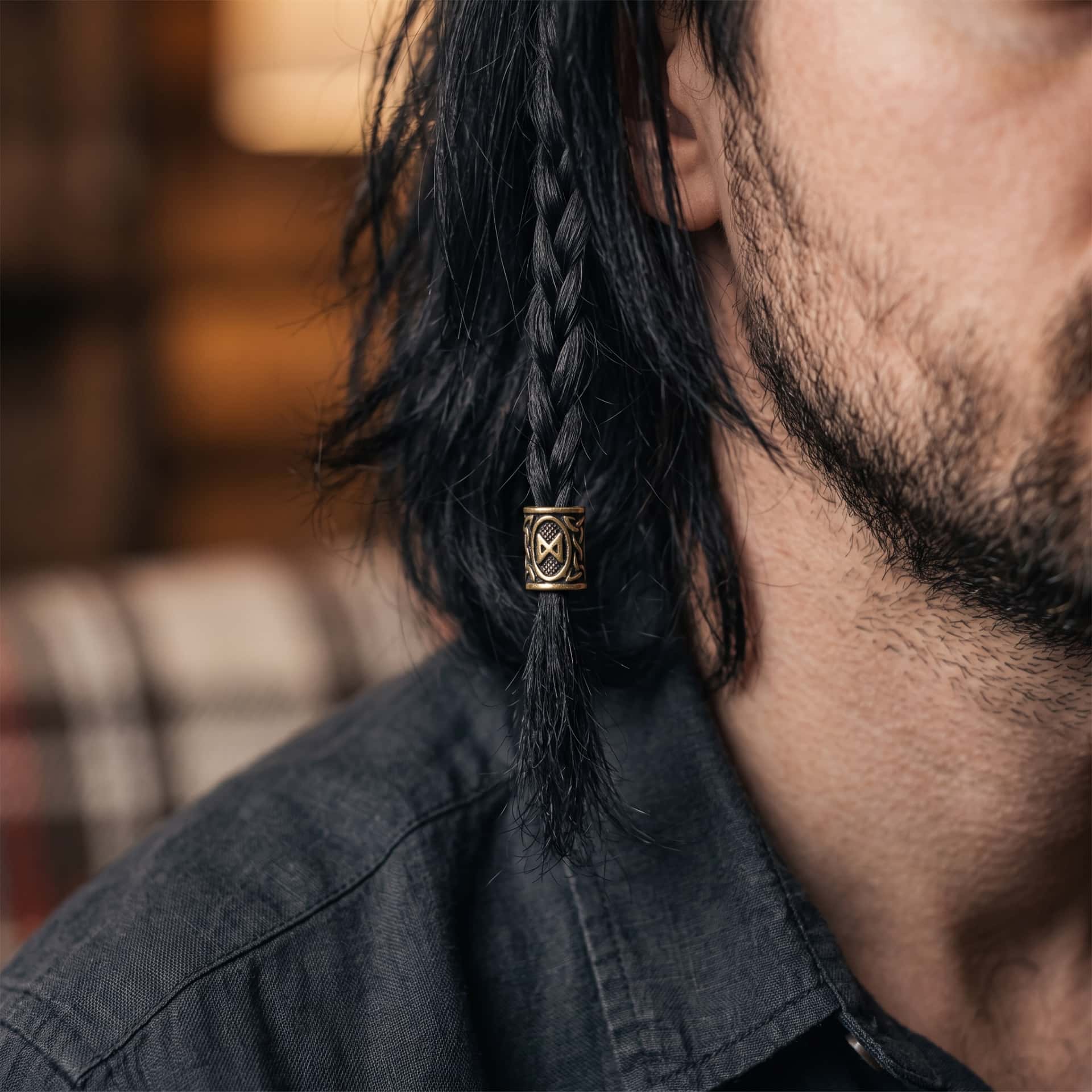
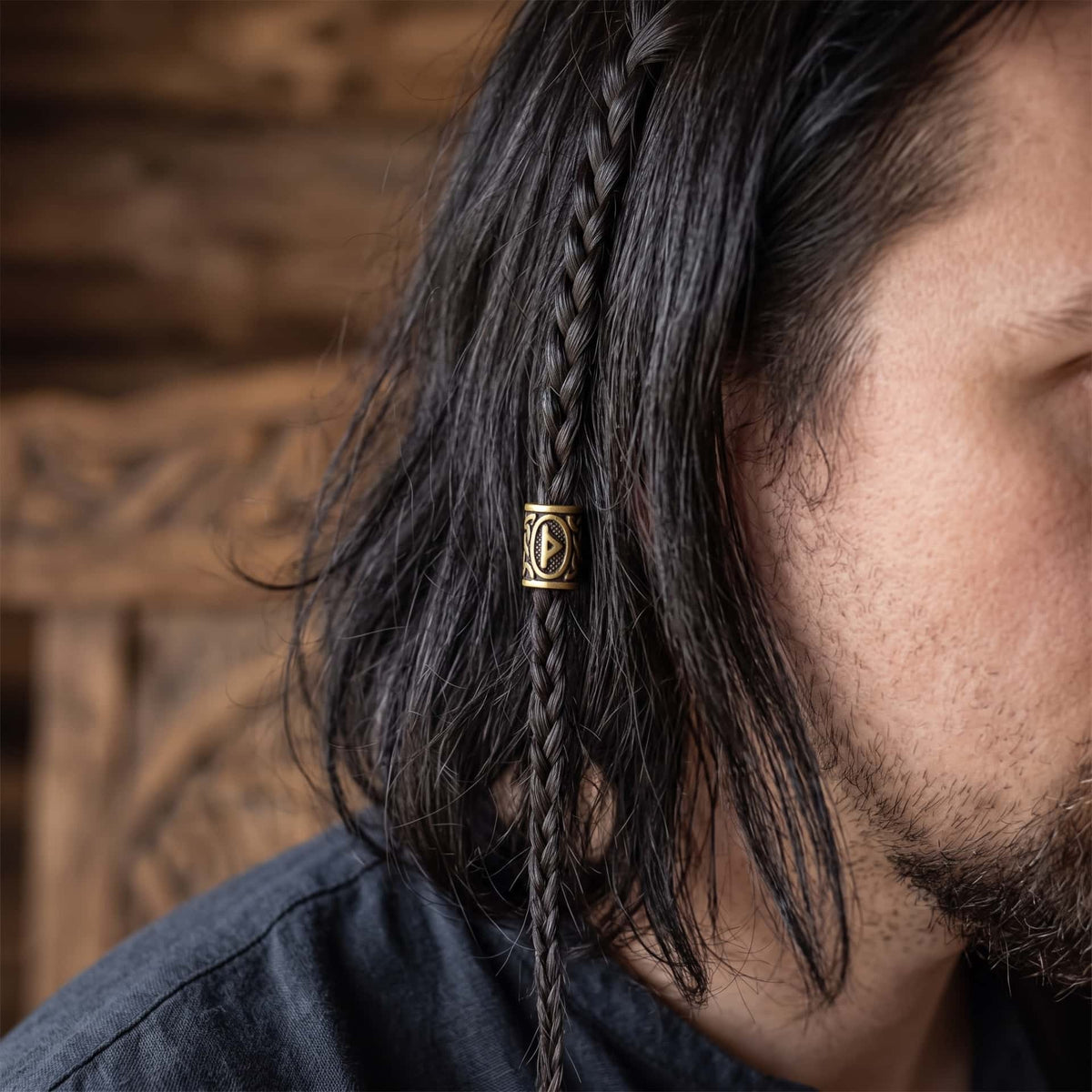

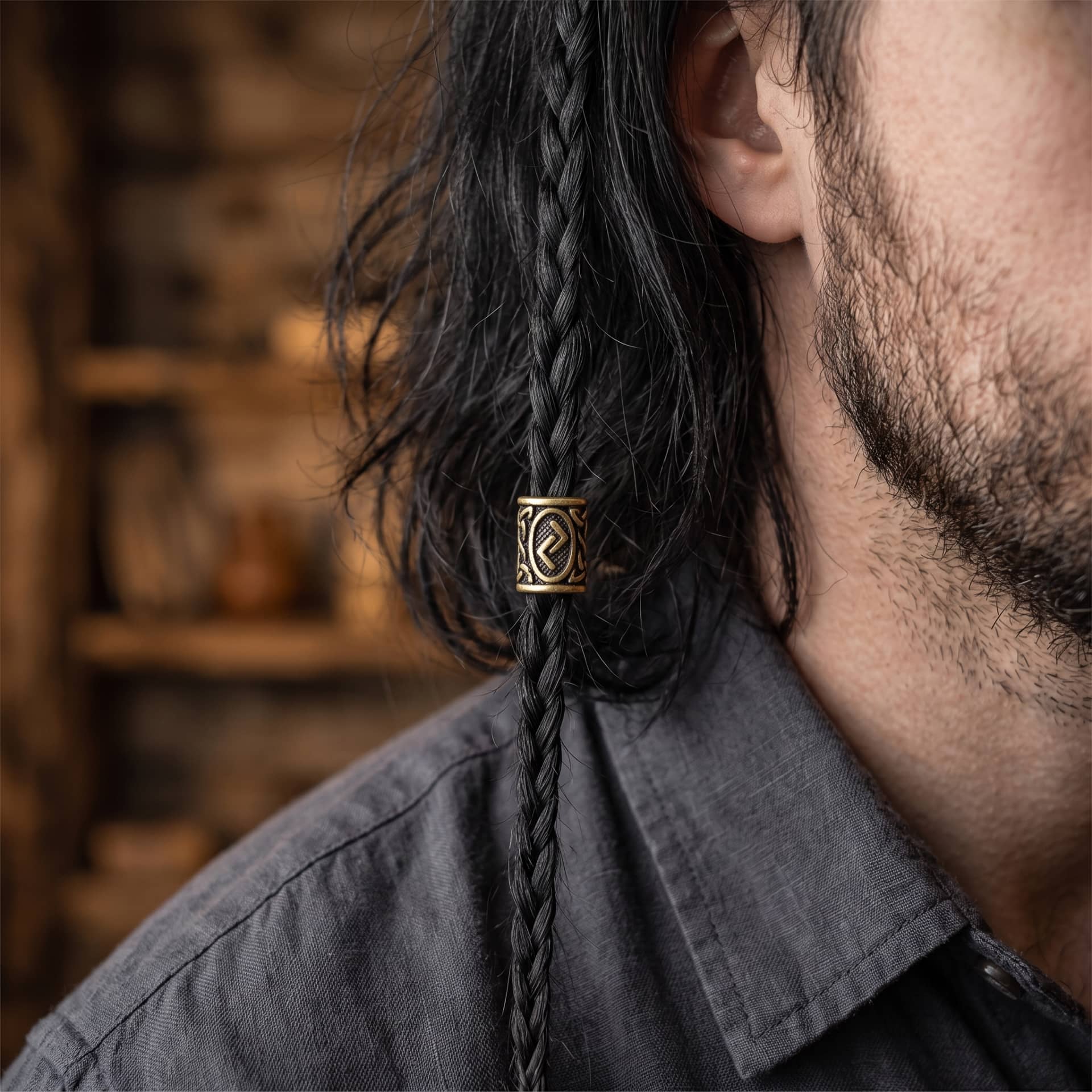
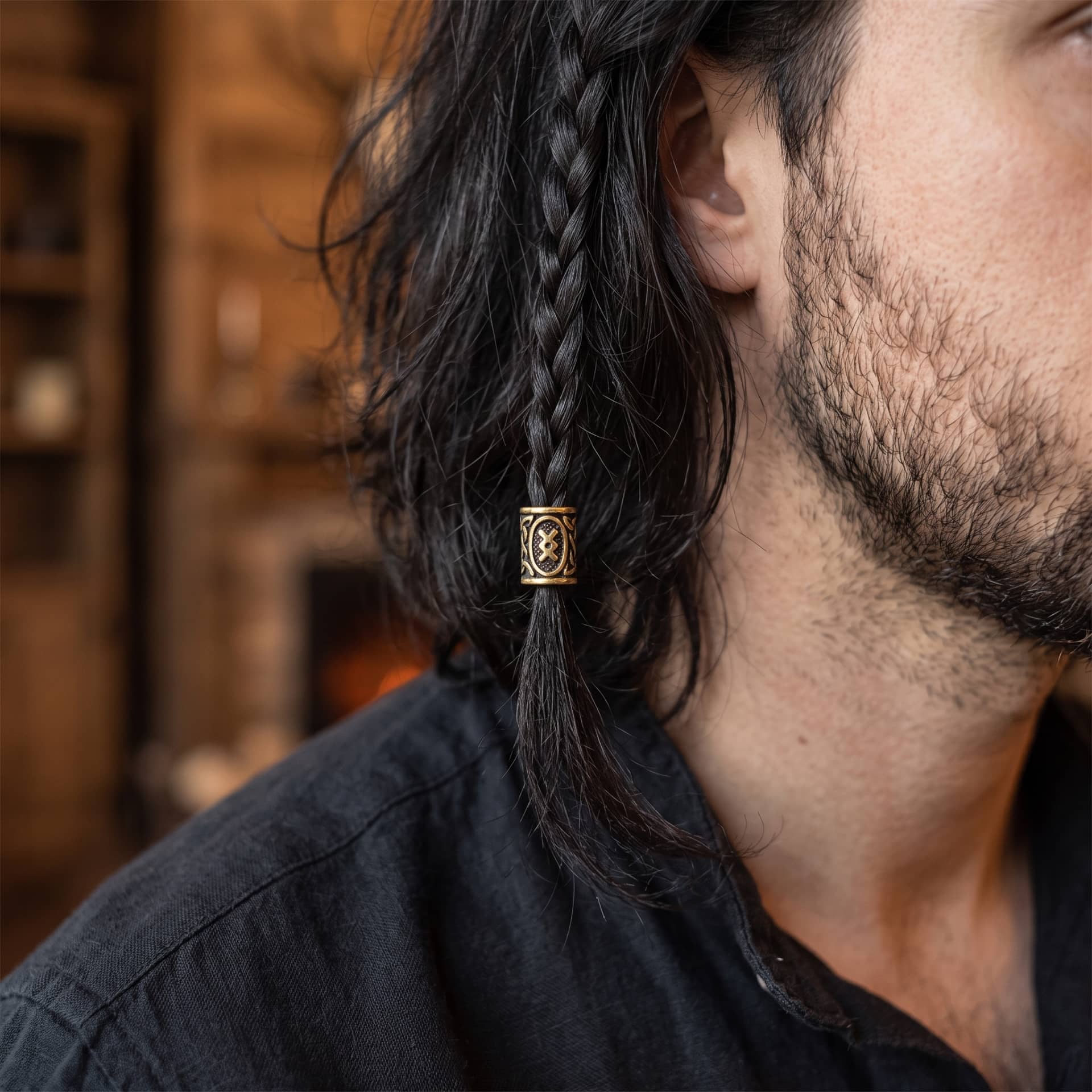
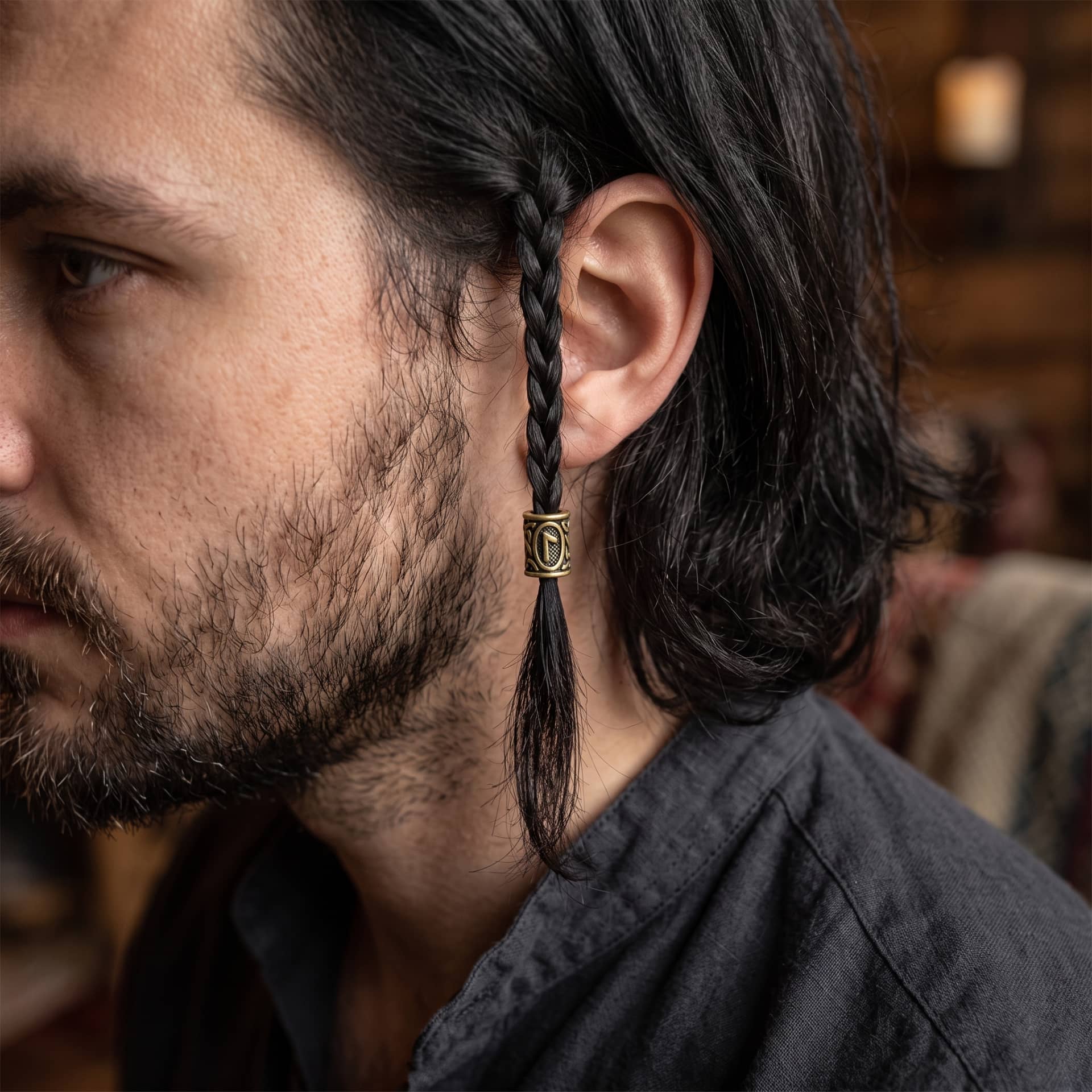
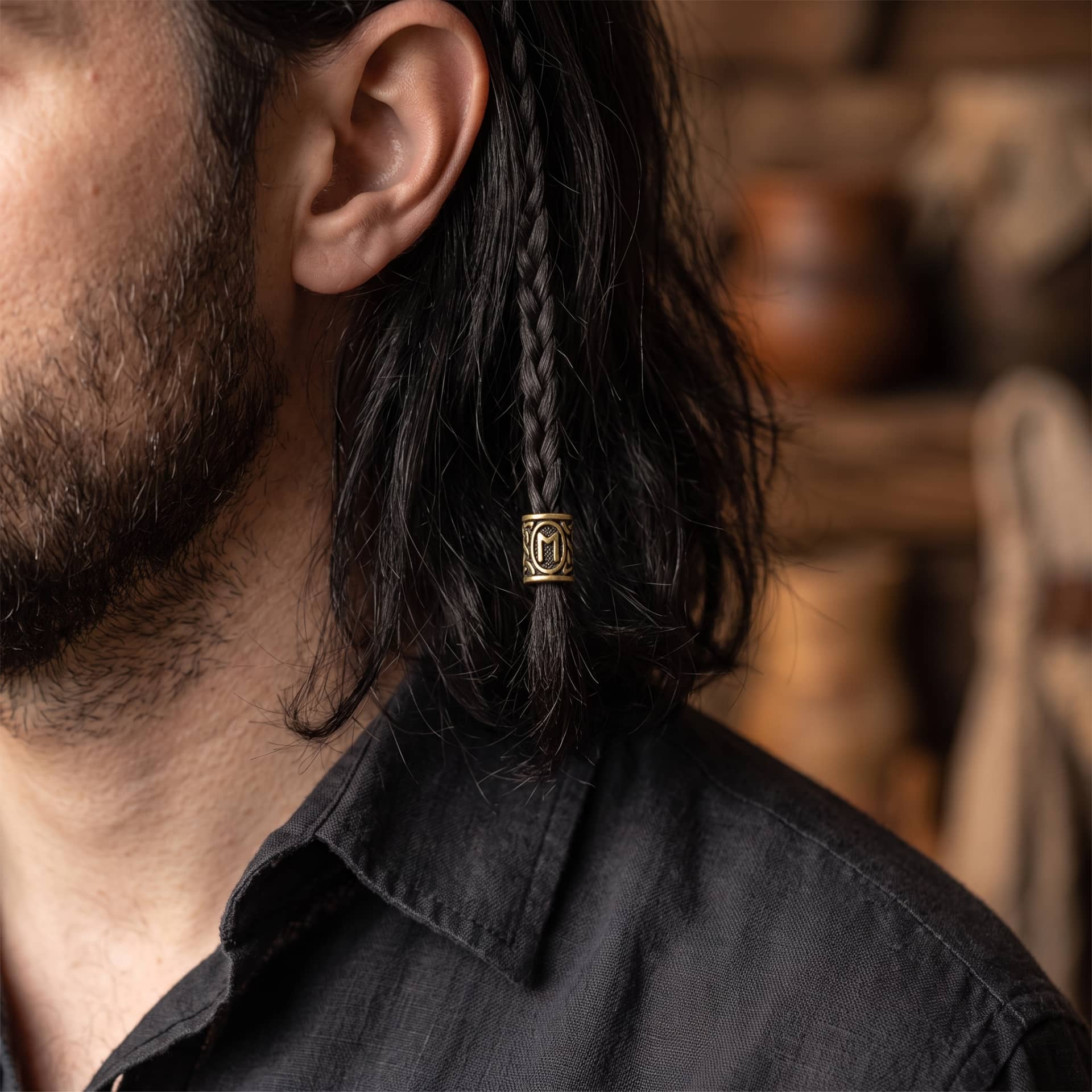

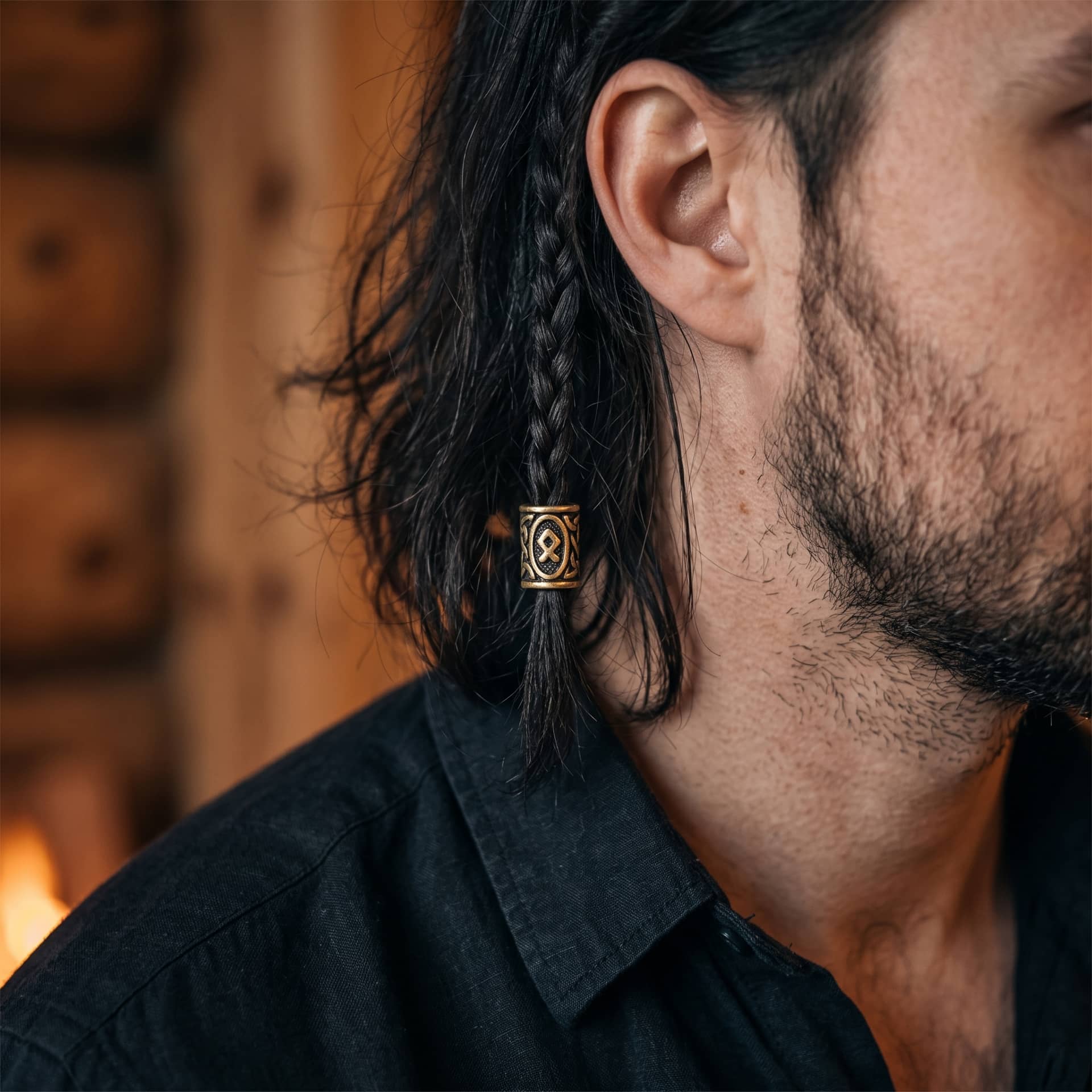
Runes & Futhark — en savoir plus
Runes are not a mysterious alphabet reserved for wizards: they were the ordinary writing system of Scandinavia, used to mark ownership, sign an object, honor the dead, and sometimes insult a neighbor. They are also the most common motif in our collection.
Runes at Le Comptoir, format by format
This is our most extensive symbolic collection, and the only one present in almost all product categories.
| Format | For whom |
|---|---|
| Rings | Engraved bands and signet rings |
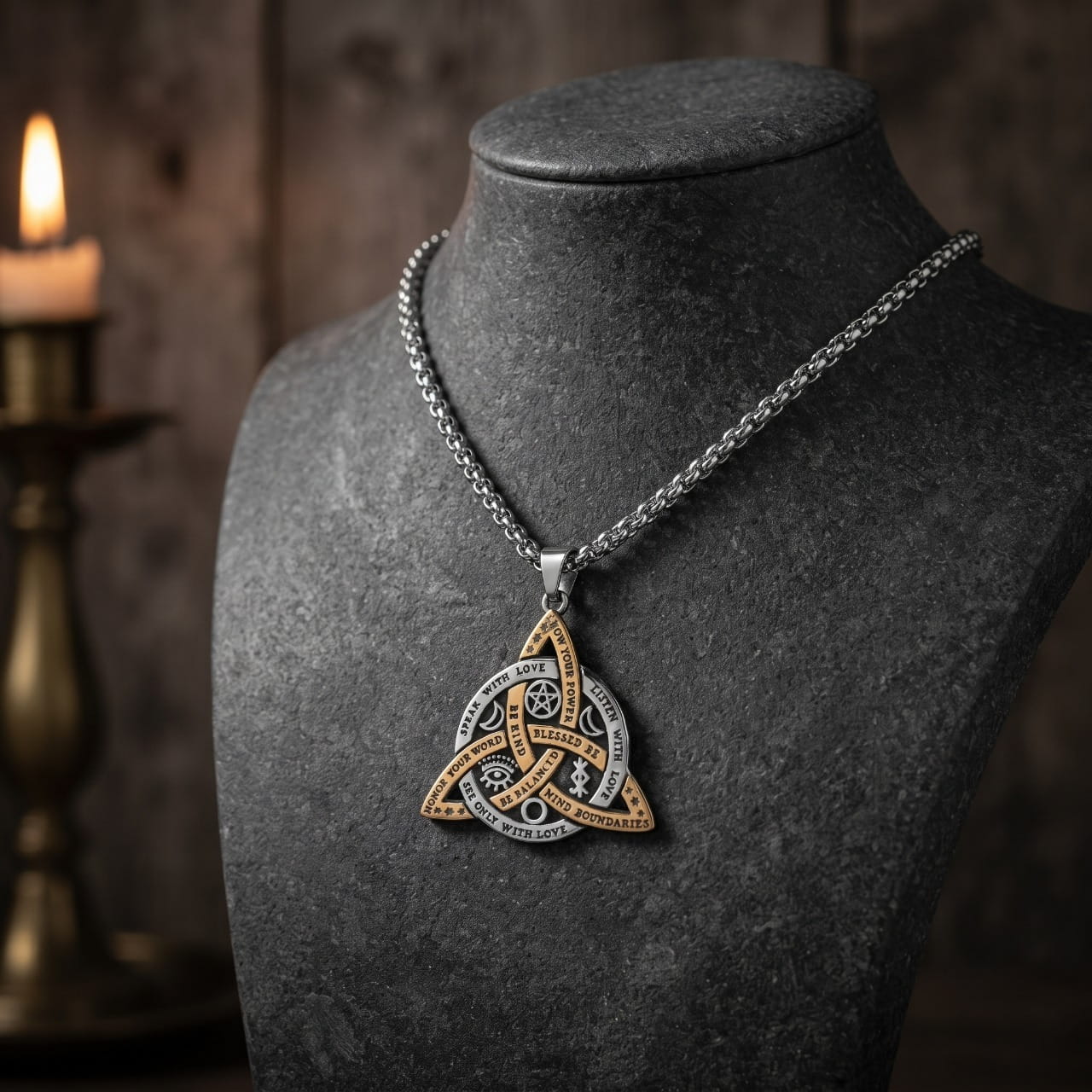
| Necklaces | Pendants and medallions |
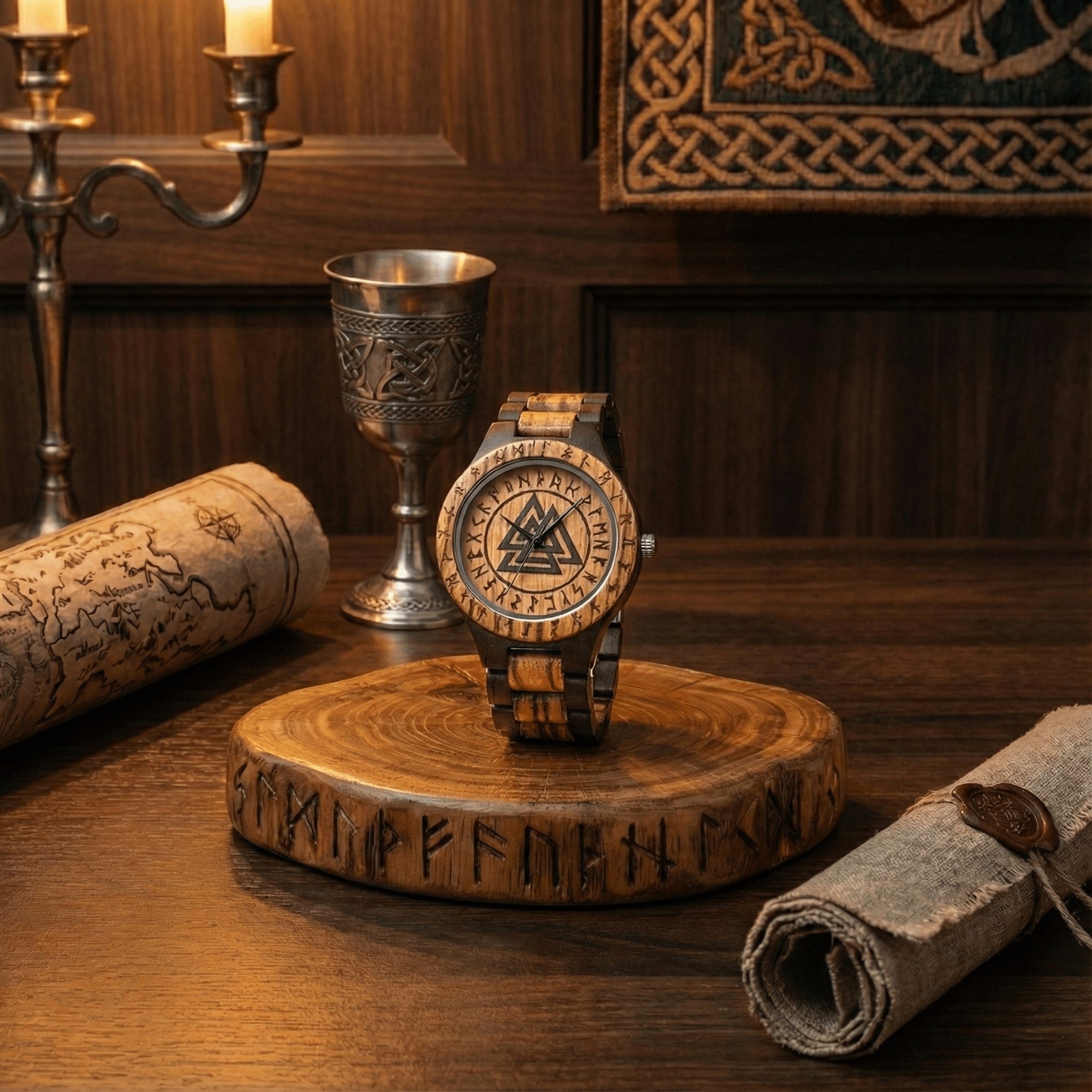
| Watches | The Futhark as hour markers |
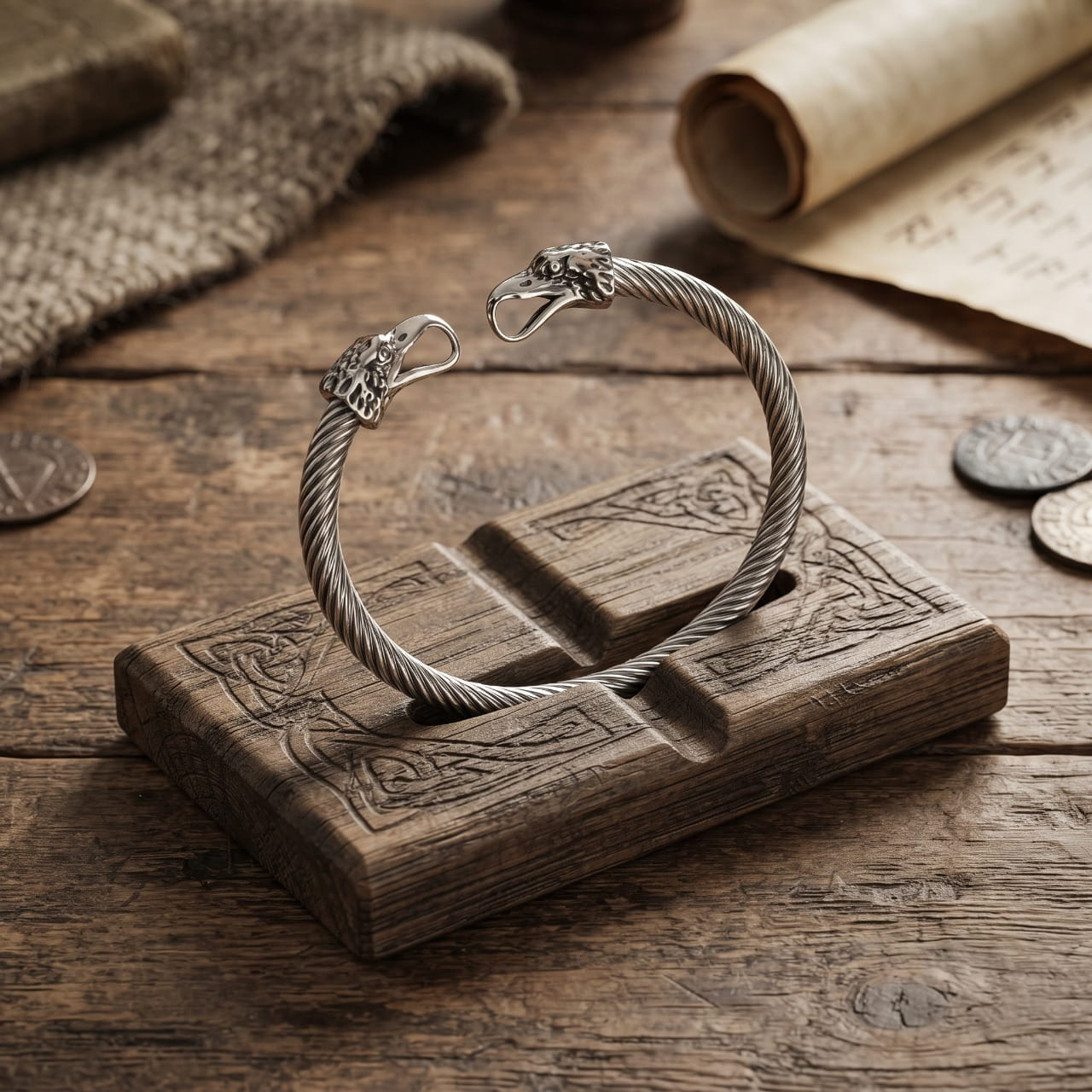
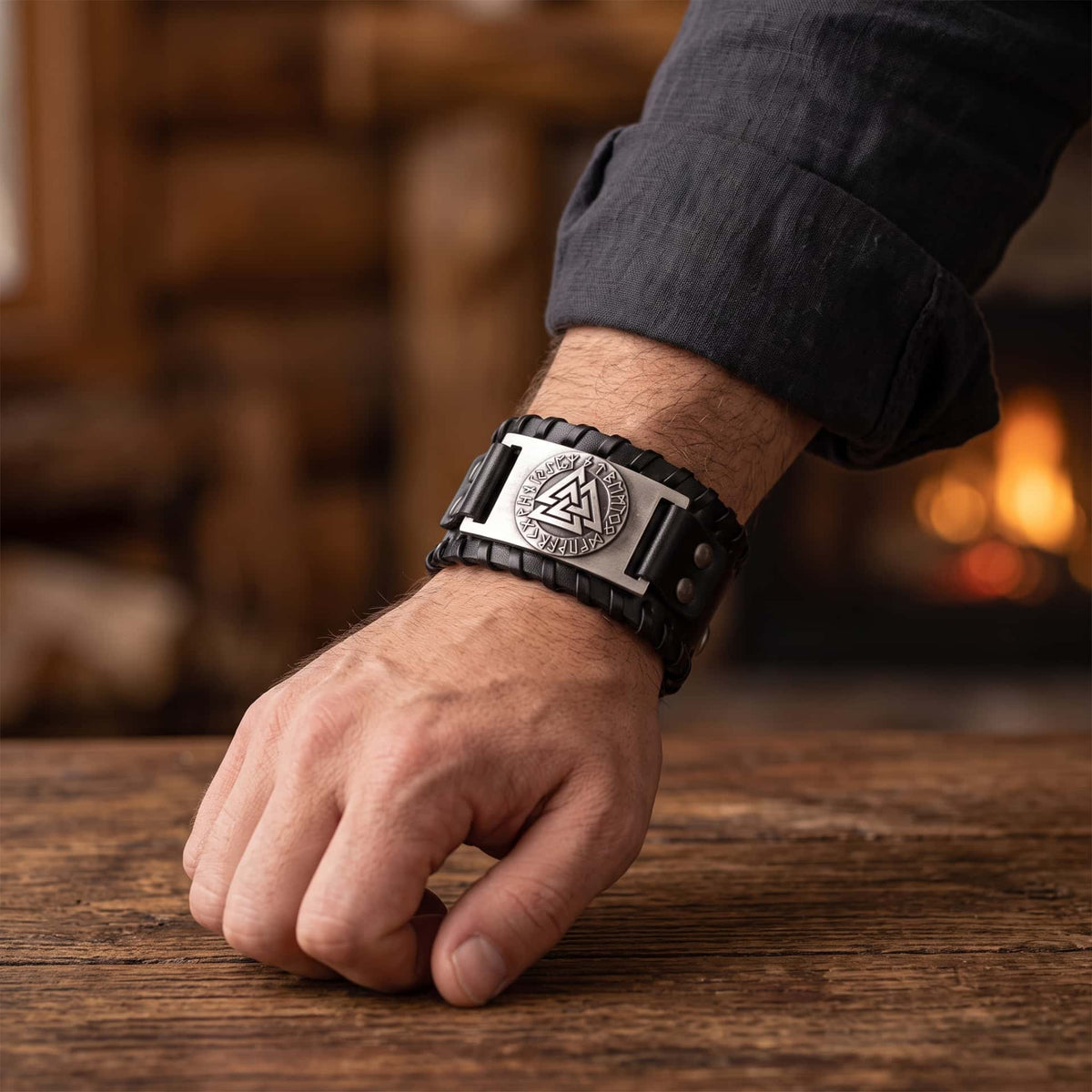
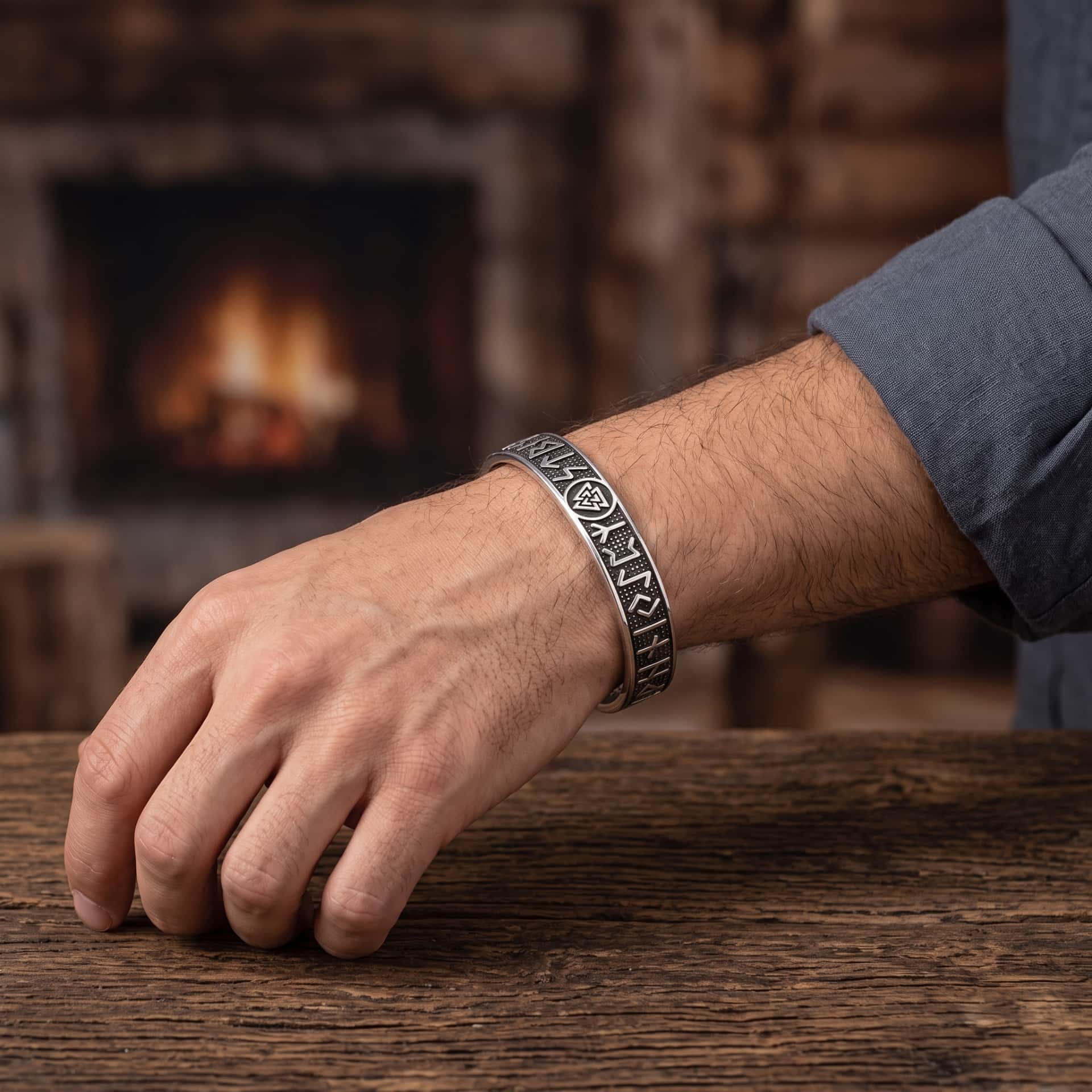
| Bracelets | Engraved bangles and cuffs |
| Tableware | Tankards and mugs |
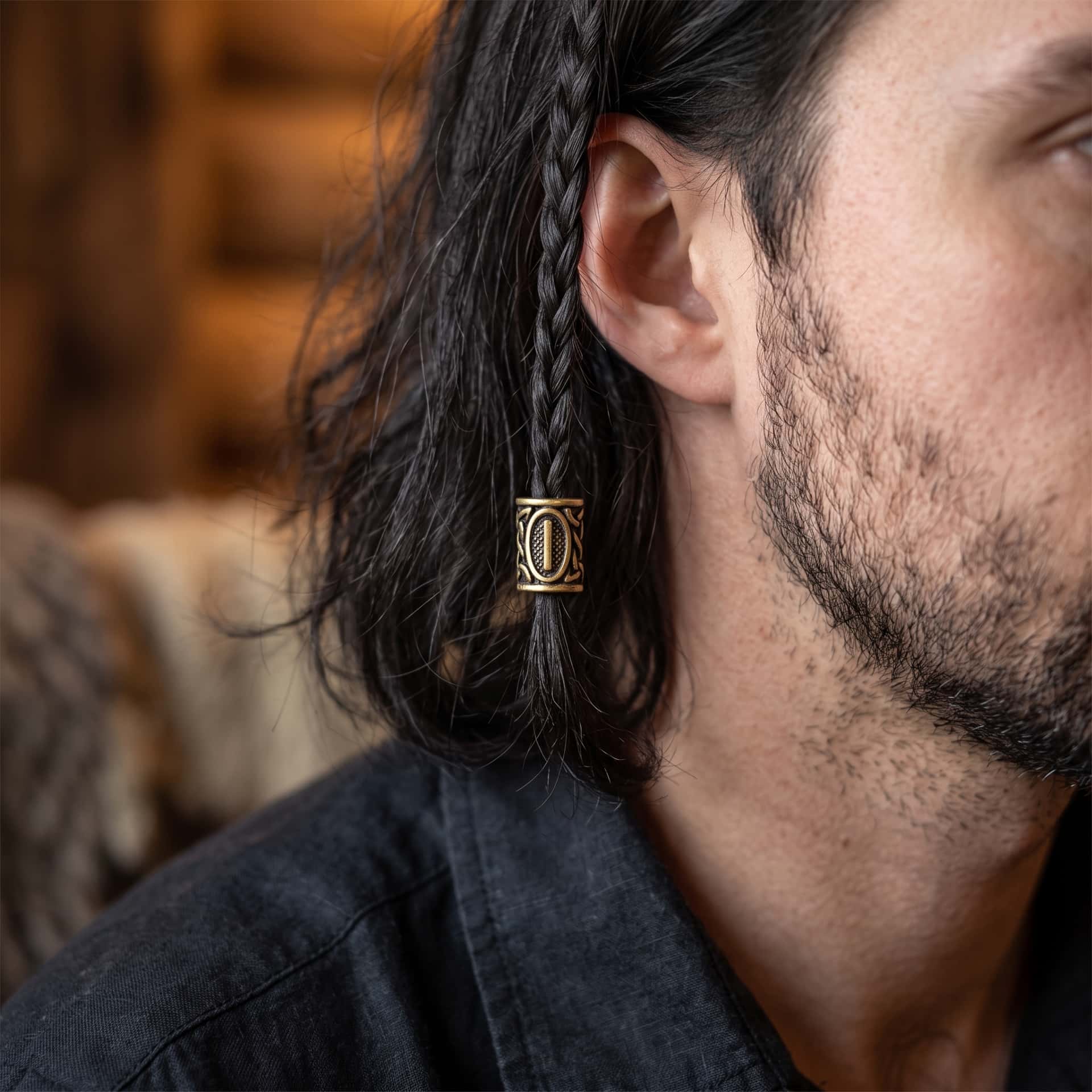
| Small items | Keychains, earrings, plaques |
Watches deserve a mention: many replace the dial numbers with runes, which creates an object that is legible for everyday use while remaining discreet. See our Viking Watch collection.
Two alphabets, not one
Two systems must be distinguished, and the confusion between them explains half of the errors one reads about runes.
The Elder Futhark has 24 characters and was used from the 2nd to the 8th century. It is the alphabet of the oldest inscriptions, which are often short and difficult to interpret.
Then, at the very moment the language became more complex, the alphabet was reduced: the Younger Futhark, used during the Viking Age, only has 16 runes. A single rune can represent several sounds, which makes reading ambiguous and the despair of epigraphists. It exists in two variants: long-branch runes, mainly Danish, and short-twig runes, mainly Swedish-Norwegian.
In the Middle Ages, the system expanded again to about twenty signs to regain precision. Runes did not disappear with paganism: they continued to be used for centuries in an entirely Christian North.
Runes, in detail
Why they are angular
Norse art dislikes straight lines: brooches, standing stones, church doorways—everything is curved and intertwined. Runes are the exception, and the reason is purely technical.
They were carved into wood with a knife, perpendicular to the grain so that the incision would remain clean. A curve follows the grain and is difficult to read; a horizontal line gets lost in the wood grain. This is why the runic alphabet only has vertical and oblique lines, and practically no horizontal ones. The Futhark does not look this way for aesthetic choices: it is the shape imposed by the wood.
Six thousand stones, and mostly Christian ones
There are about six thousand runestones, more than half of which are in Sweden, with an overwhelming concentration in Uppland. Here is the fact that is most surprising: the vast majority date from the 11th century, that is to say, after the conversion. Many bear a cross and a Christian formula asking God to help the soul of the deceased.
The runestone is therefore not a pagan monument. It is a monument of family memory, which exploded at the precise moment Scandinavia became Christian—undoubtedly because the new elites wanted to display their lands and lineage.
What people actually wrote
Excavations in the Bryggen district of Bergen have yielded nearly seven hundred runic inscriptions on wood, dating mostly from the 12th and 13th centuries. This is the most revealing corpus possible, because it is in no way monumental.
There are merchandise tags with the owner's name, business letters, accounts, requests for beer, declarations of love, Latin verses, and a remarkable amount of profanity. Runes were used for everyday life, not just for the gods.
The Bluetooth logo is a rune
The symbol you see on all your devices is a bind-rune: two superimposed runes, ᚼ and ᛒ, which are the initials of Haraldr Blátǫnn—Harald Bluetooth, a 10th-century Danish king who unified Denmark and Norway. The technology was meant to unify communication protocols just as he had unified the kingdoms. The Swedish and Danish engineers who named it knew exactly what they were doing.
Beware of fanciful translations
Writing a French first name in runes is a matter of approximate transcription, not translation. The Younger Futhark does not have all our sounds, several of our letters have no equivalent, and the same rune sometimes covers two or three phonemes. The result is decorative, and we present it as such.
Also beware of the "meanings" attributed to each rune in modern divination guides. The only ancient document that gives meaning to rune names is the runic poem, which is late and poetic, and it says nothing about a divinatory use. Tacitus does mention, in the 1st century, a lottery with sticks marked with signs among the Germanic tribes—but he does not speak of runes, which probably did not yet exist.
Forgers and stones that are not what they seem
Runes have attracted forgers like few other scripts. The most famous case is the Kensington Runestone, exhumed from a field in Minnesota in 1898, whose inscription tells of a Scandinavian expedition to North America in 1362. For a century, it fueled the idea of a Viking presence in the Midwest.
The consensus among runologists today is unambiguous: the language and the forms of certain characters belong to 19th-century Swedish, not medieval Old Norse. This does not take away from the perfectly established fact that Scandinavians did indeed reach America—but five centuries earlier and much further north, at L'Anse aux Meadows, in Newfoundland, where excavations have uncovered a Norse settlement dated around the year 1000.
The Rök Stone, the longest text
Erected in Östergötland in the 9th century, the Rök Stone bears about seven hundred and sixty characters: it is the longest known runic inscription. A father commemorates his dead son on it, then embarks on a series of riddles that mix encryption, heroic allusions, and alphabet changes along the way. No one has provided a definitive reading of it. Runes also knew how to be used to remain incomprehensible.
Materials at Le Comptoir
The jewelry is made of stainless steel, laser-engraved or stamped. The watches combine steel with wood, light or dark essence depending on the model, with a different grain on each piece.
The tankards and mugs combine stainless steel, which comes into contact with the drink, with a sculpted resin shell. The keychains are made of steel or molded zinc.
Maintenance
A runic engraving consists of fine grooves: they collect sebum, and the text loses its contrast. Use warm water, mild soap, a soft toothbrush moving in the direction of the strokes, and dry with a cloth. An engraved ring worn every day will see its edges brighten, which accentuates the relief.
For watch wood: dry cloth, no immersion, and a drop of maintenance oil once a year if the shade dries out. For tankards: hand wash only, never in the dishwasher.
How to wear them
Runes are a texture before they are a sign: they dress a surface without imposing a figure. This is what makes them easy to combine—a rune ring and an engraved bracelet do not clash, unlike two figurative medallions.
It is also what makes them the best companion for other symbols in the collection. A rune ring accompanies a Mjölnir or Yggdrasil pendant without stealing the show. For ring sizing, measure at the end of the day and allow for an extra half-size on a wide signet ring.
Gifting runes
This is the choice to make when you don't know the recipient's precise tastes. Runes evoke the Norse world without committing to a god, an animal, or a stance—whereas a wolf or a Valknut says something specific.
The keychain is the small gift that hits the mark without being overly personal. The rune watch is a step up, worn daily and discreetly. The engraved bracelet is the most common compromise.
Frequently asked questions
Can you write my name in runes?
It can be transcribed, not translated—and the result is approximate because the Younger Futhark does not cover all our sounds. Our rune-engraved pieces are decorative, and we do not offer personalized engraving for this reason. Our Viking rune converter performs this transcription into the Elder Futhark, letter by letter, and explains where it made compromises.
Were runes used to predict the future?
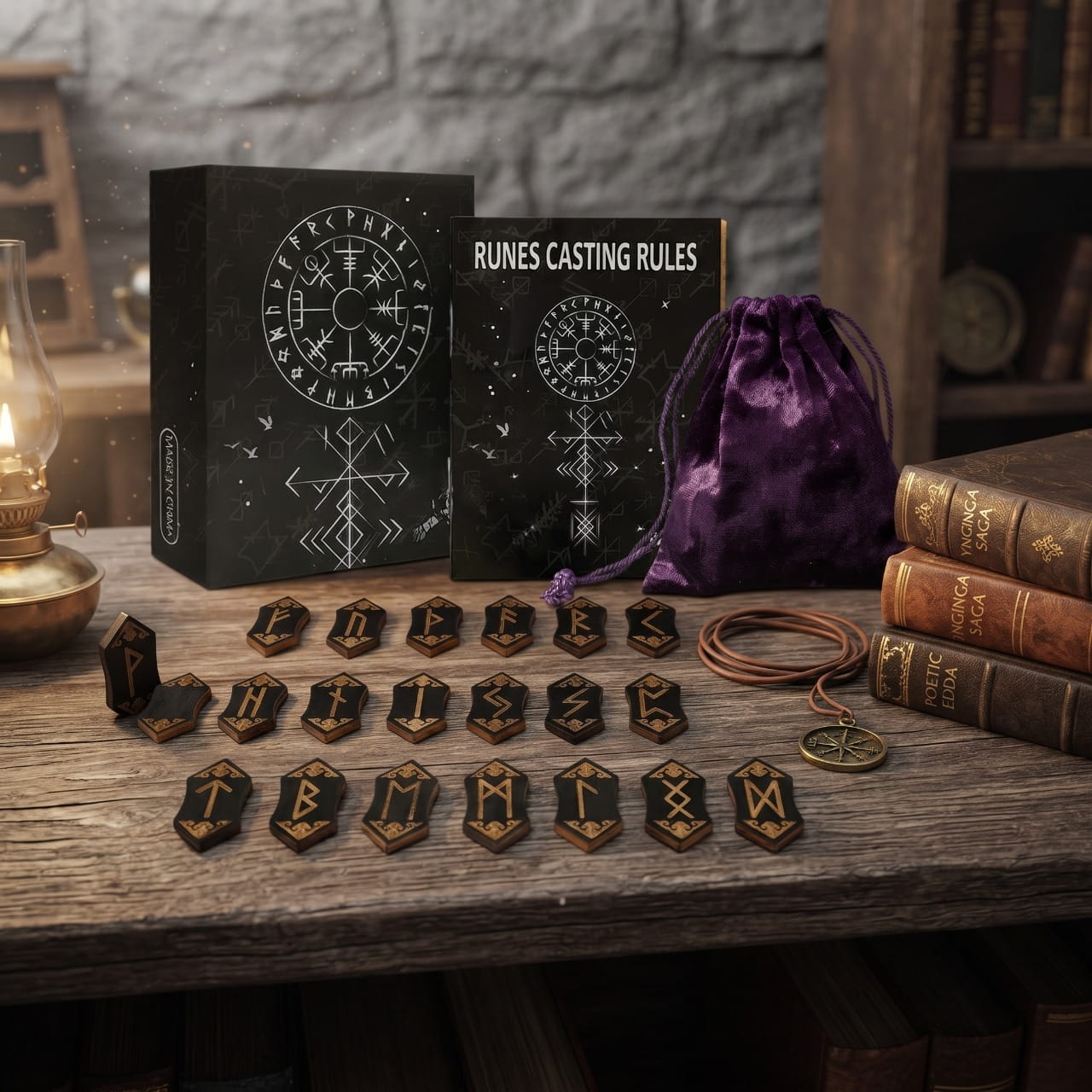
There is no evidence for this in the Viking Age. Runic divination as it is practiced today was developed in the 20th century. This does not take away from the interest of the practice, but it is not a direct heritage.
Exactly how many runes are there?
Twenty-four in the Elder Futhark, sixteen in the Younger Futhark used in the Viking Age, about twenty in late medieval runes. A set of twenty-five runes with a blank stone is a modern invention.
Do the inscriptions on your pieces mean anything?
Most often, no: they are sequences of characters chosen for their graphic appearance. When a piece bears an inscription that has meaning, we indicate it on its product page. We prefer to state this rather than letting people believe in a hidden message.
Why do runes have almost no horizontal lines?
Because they were carved in wood, across the grain. A horizontal line follows the fiber, the incision gets lost in it, and the sign becomes unreadable. The engravers therefore built an alphabet made of vertical and oblique strokes—a material constraint that became a graphic identity, to the point where one recognizes a rune at a glance.
What engraving size remains legible?
On a ring, count on at least 4mm of rune height: below that, the oblique branches close onto the stem and the sign turns into a line. On a pendant or a bracelet, the constraint is less. On a watch face, the runes serve as indices, and their legibility depends primarily on the contrast with the background.
Do runes go out of style?
It is the most neutral motif in the collection, and therefore the most durable. A runic engraving displays neither a god, nor an animal, nor a posture: it is read as a geometric pattern by those who know nothing about it, and as a writing system by those who recognize it. This is also why it combines so well with other symbols.
📖 To go further: our guide to reading and writing runes, our dossier on magic runes and protection, and rune casting, methods and limitations.