
Filters
92 products
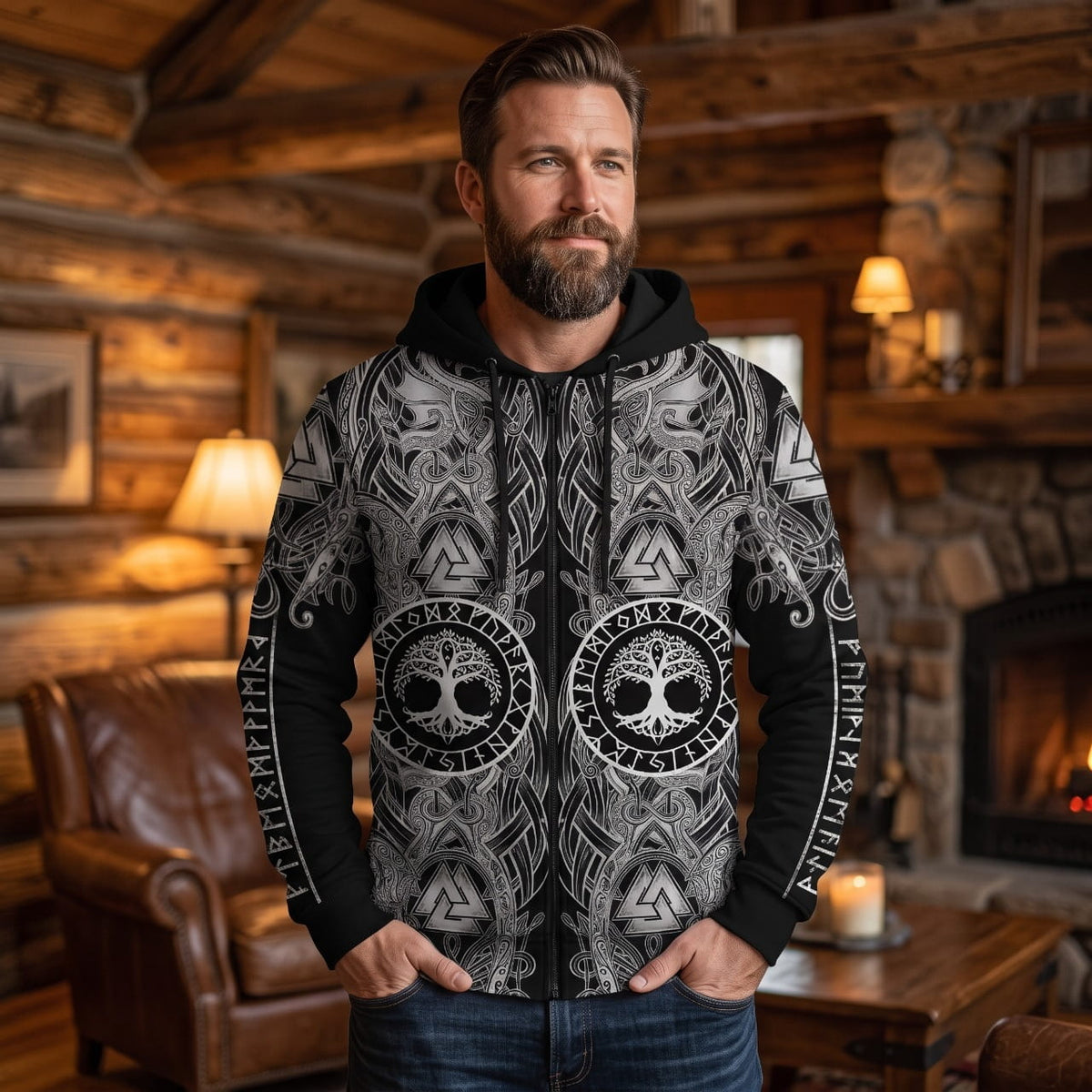
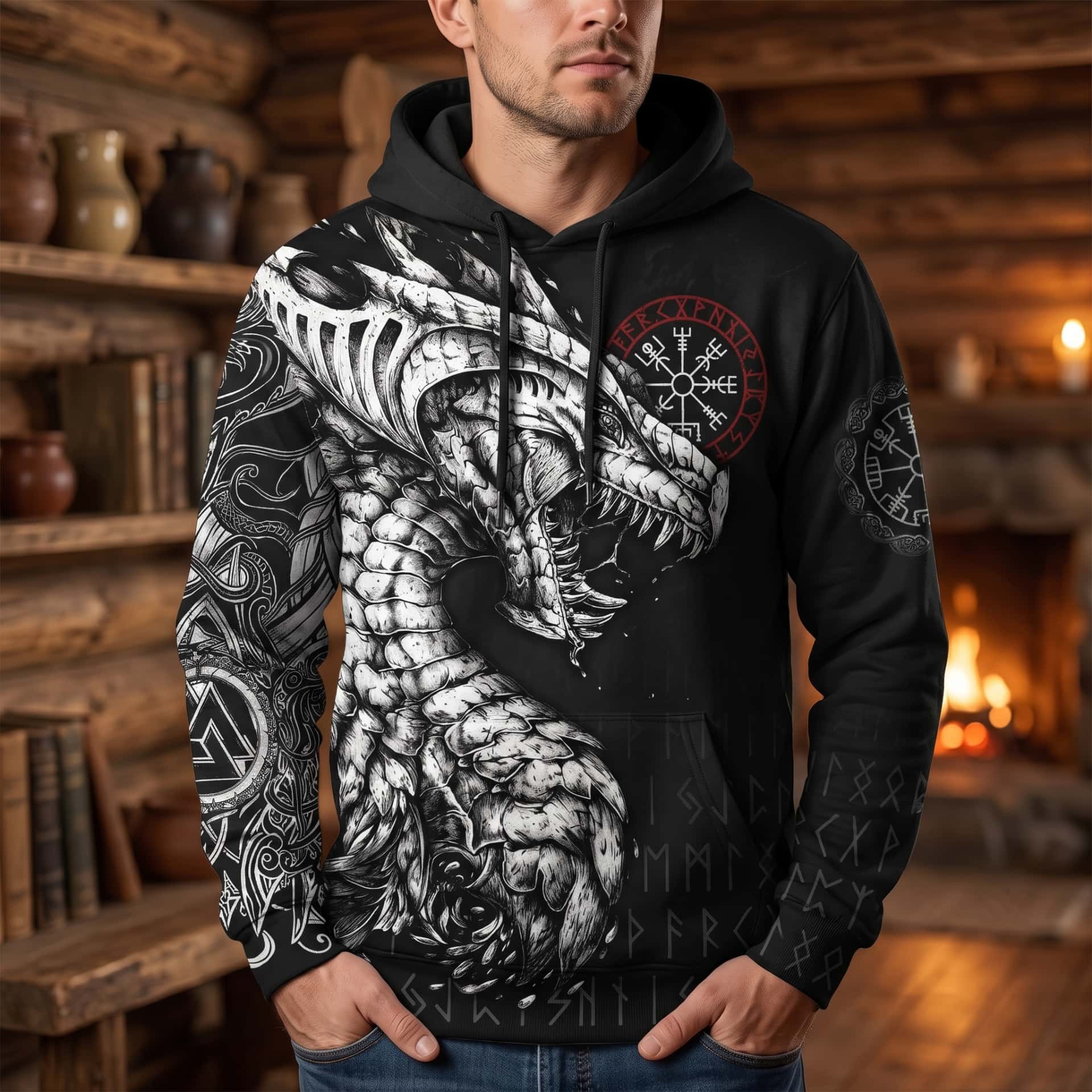
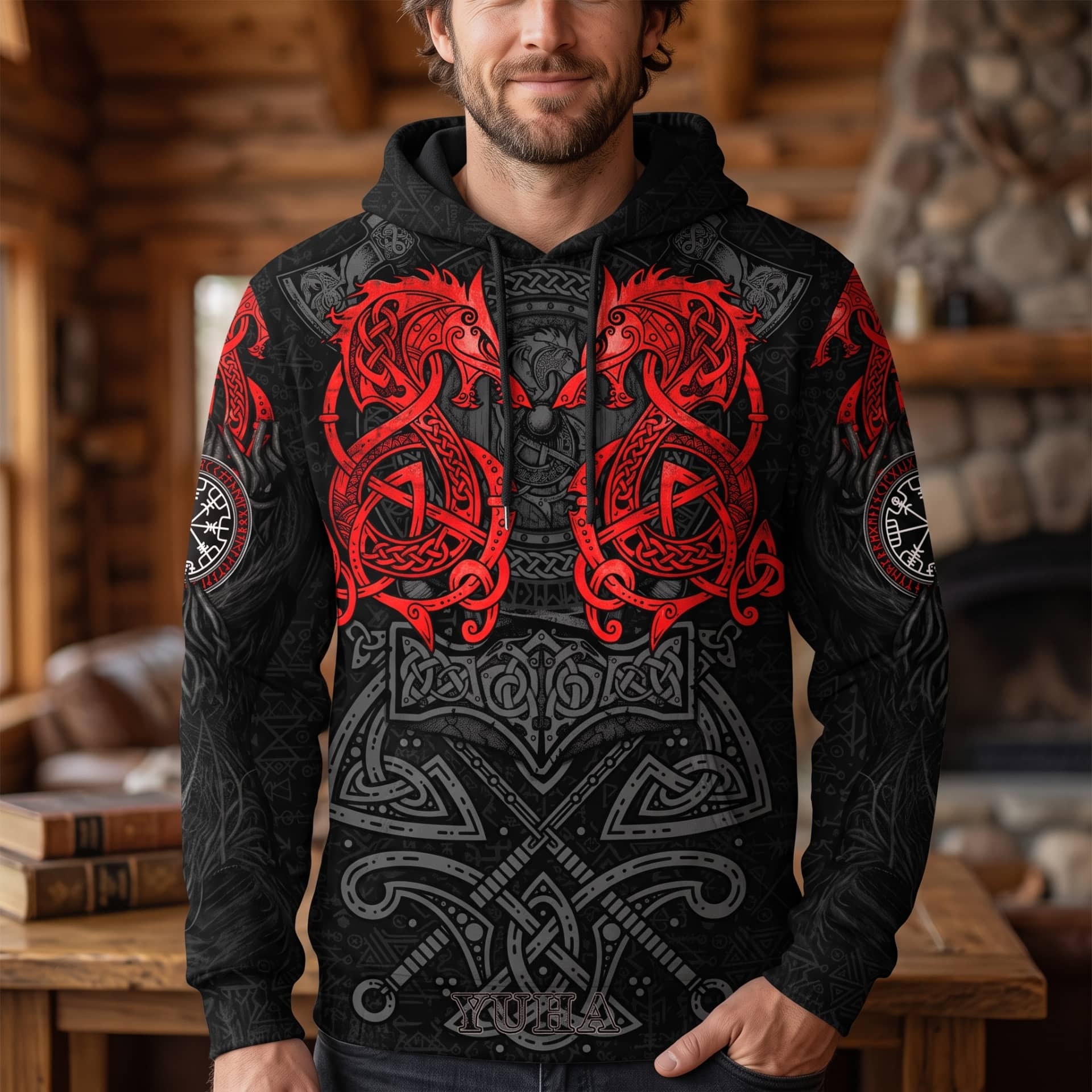
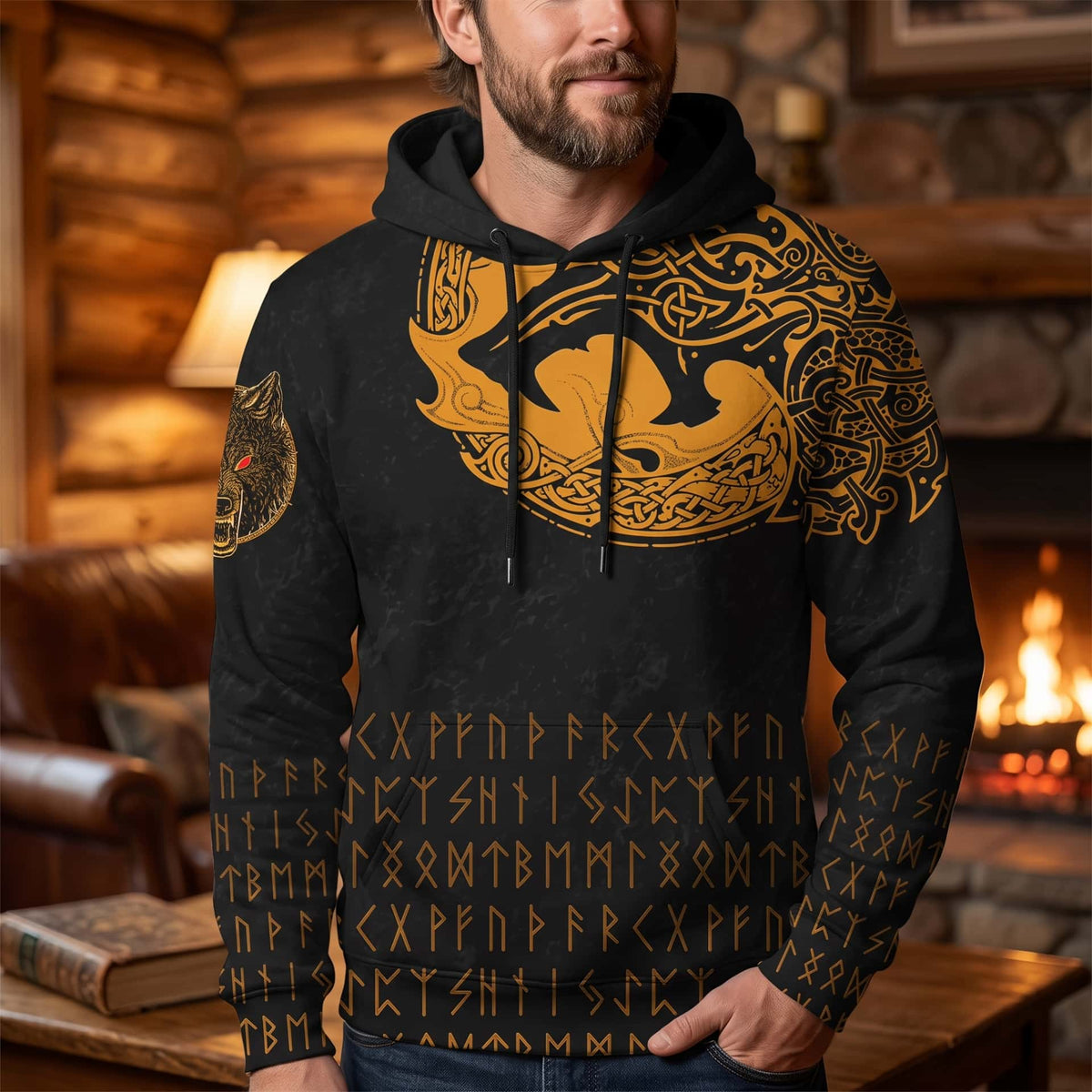
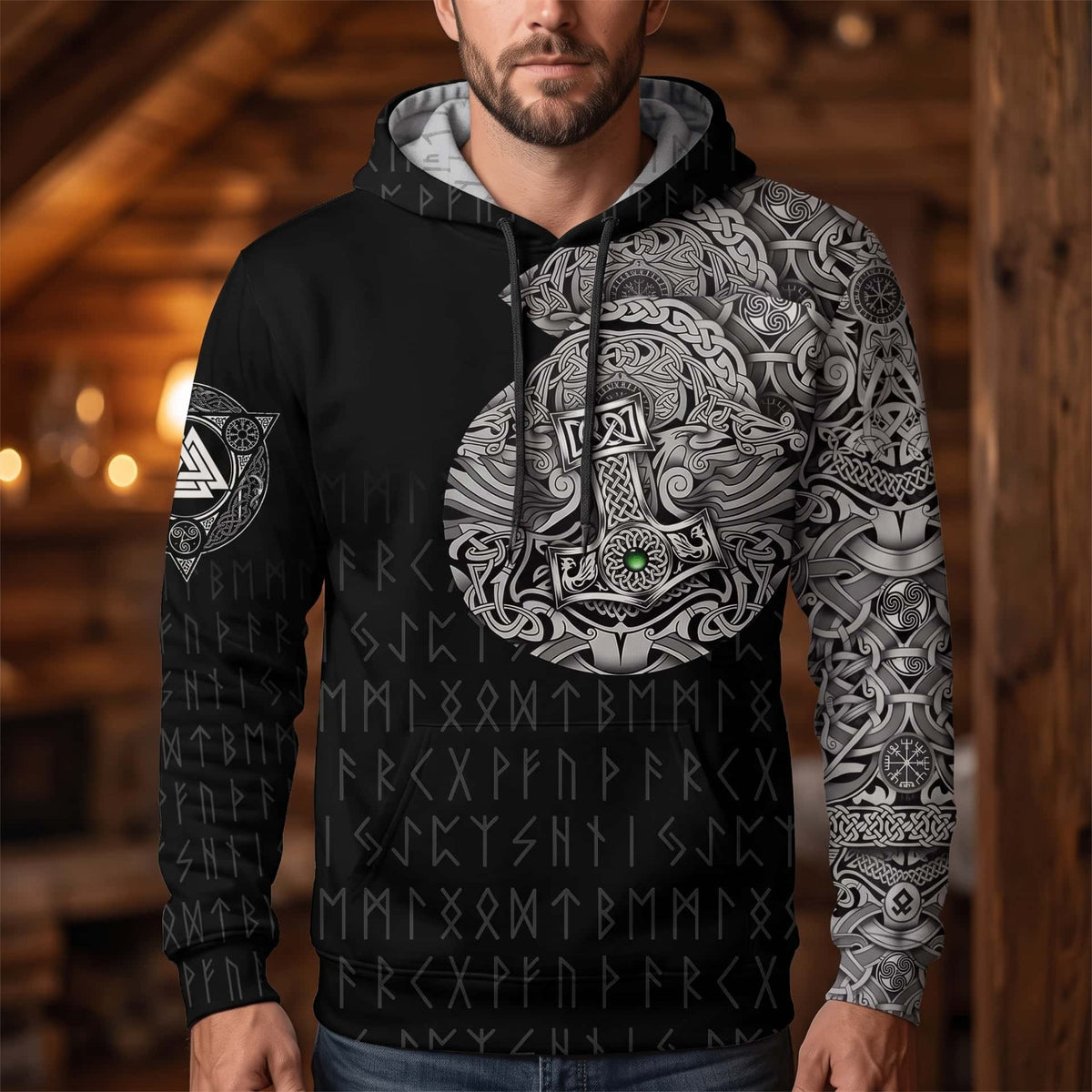
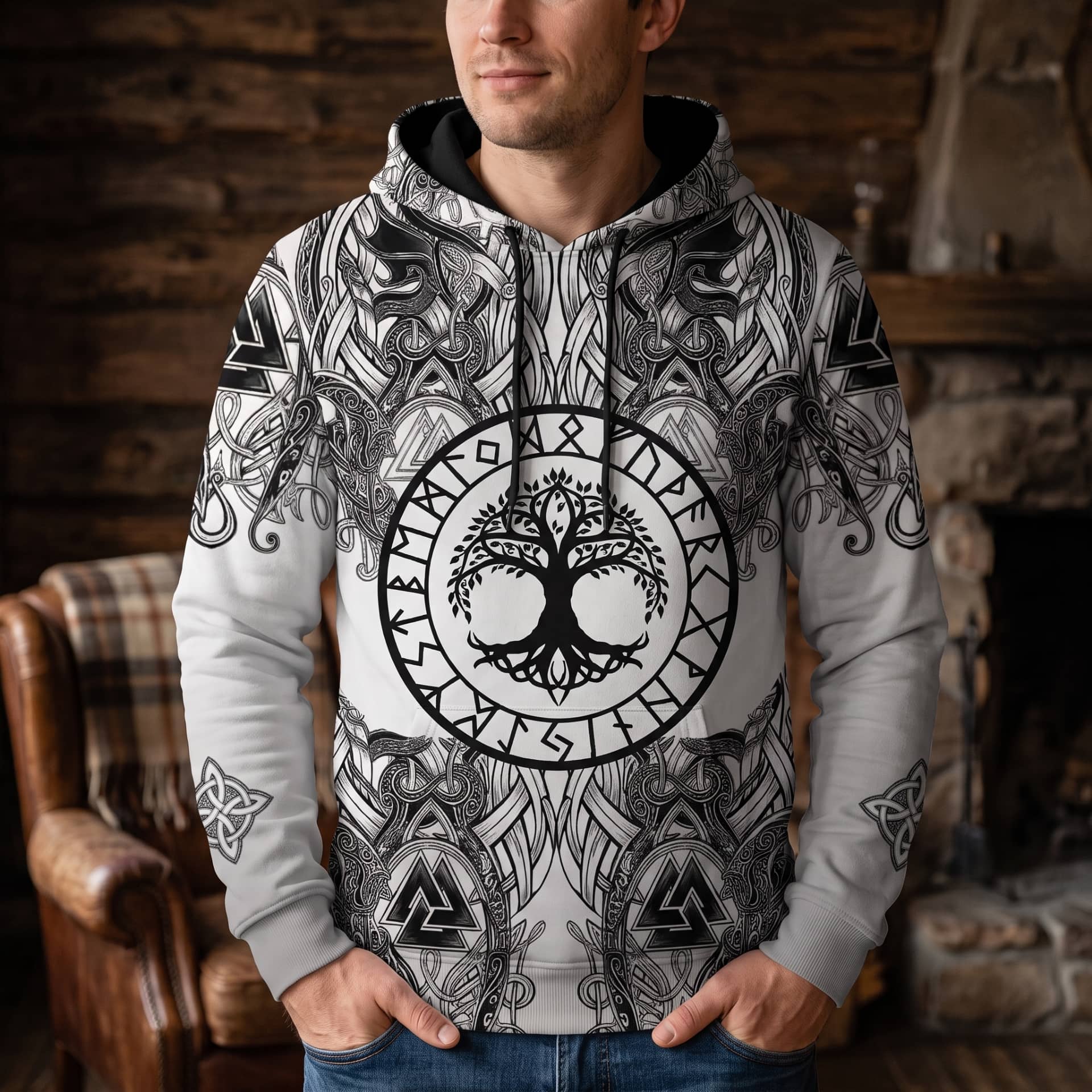
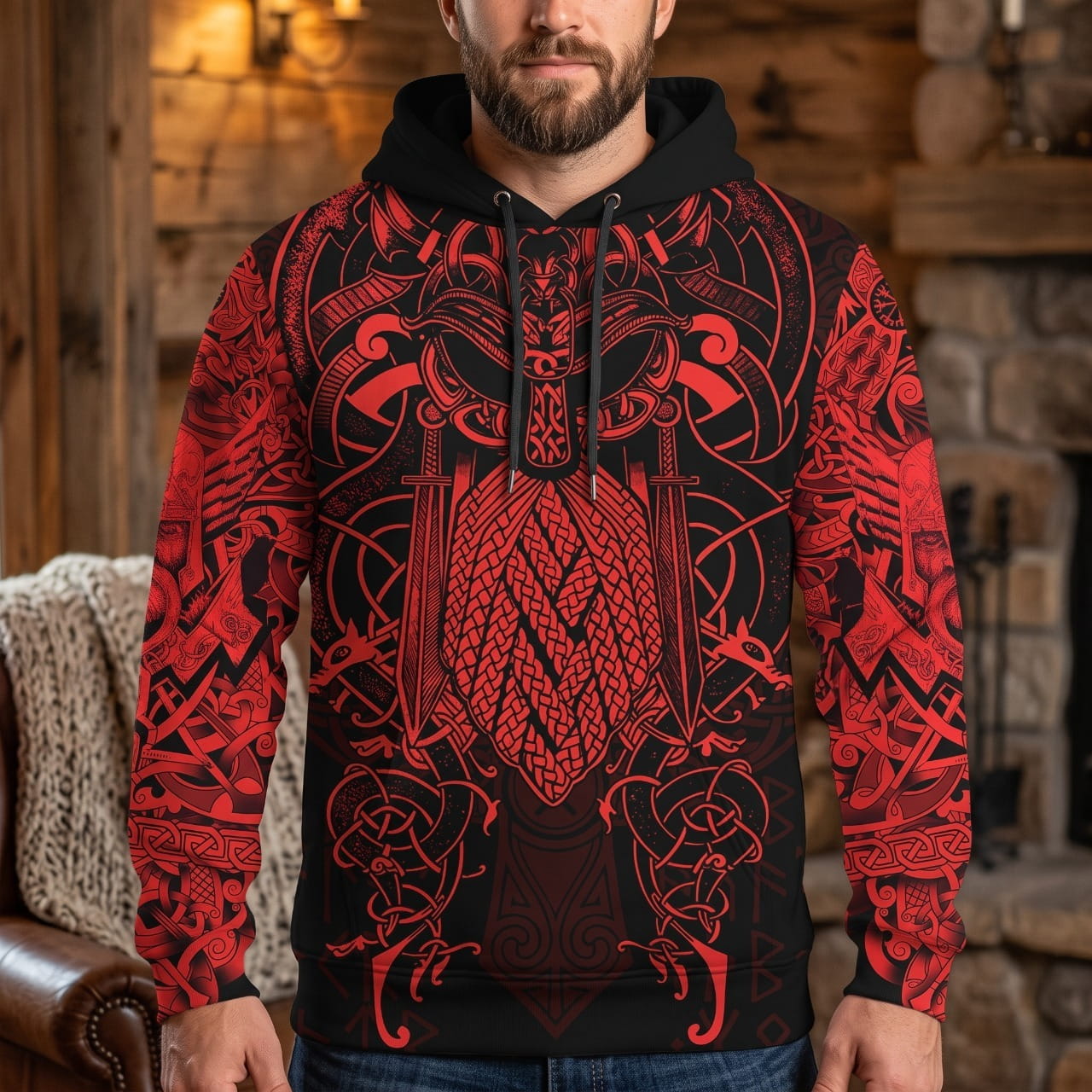
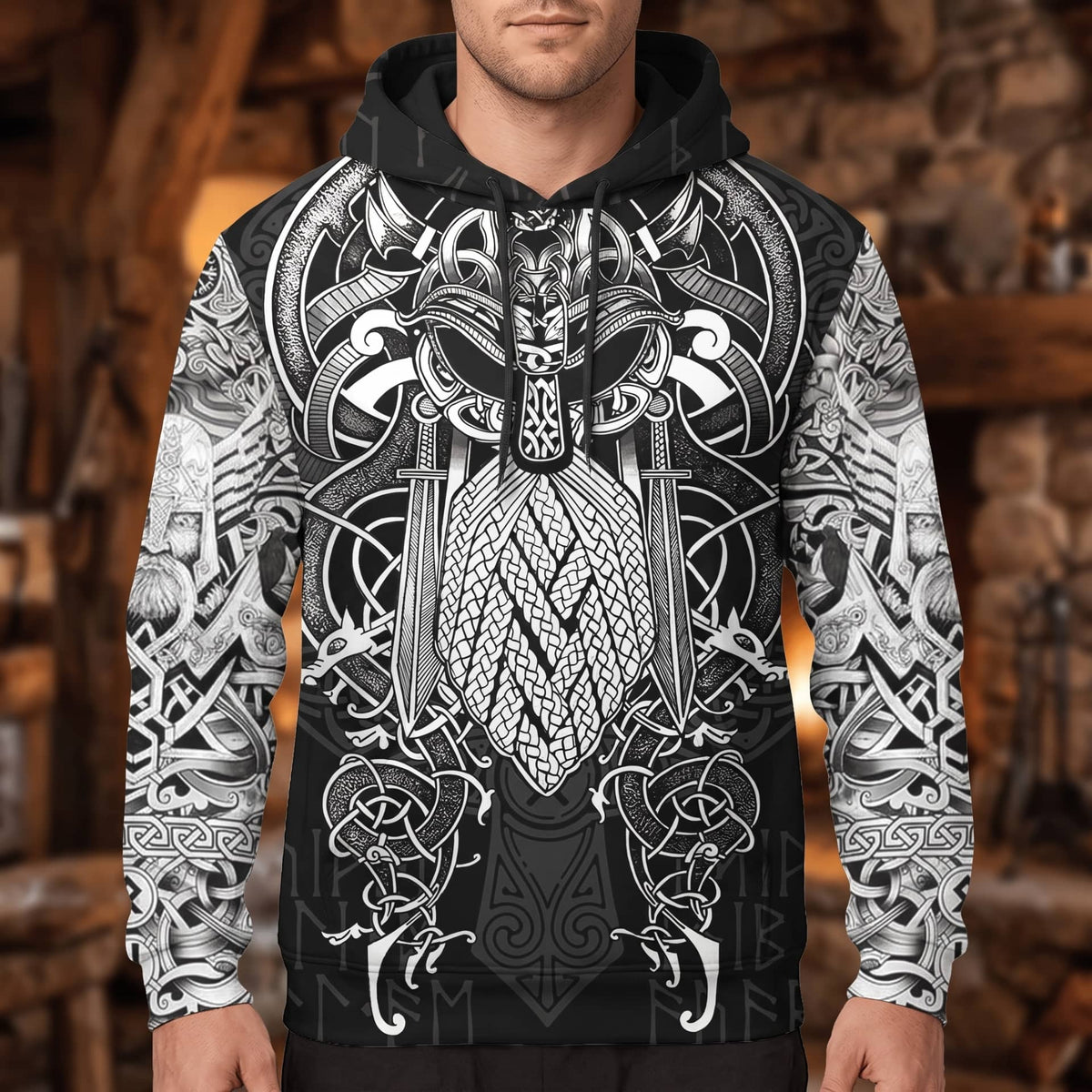
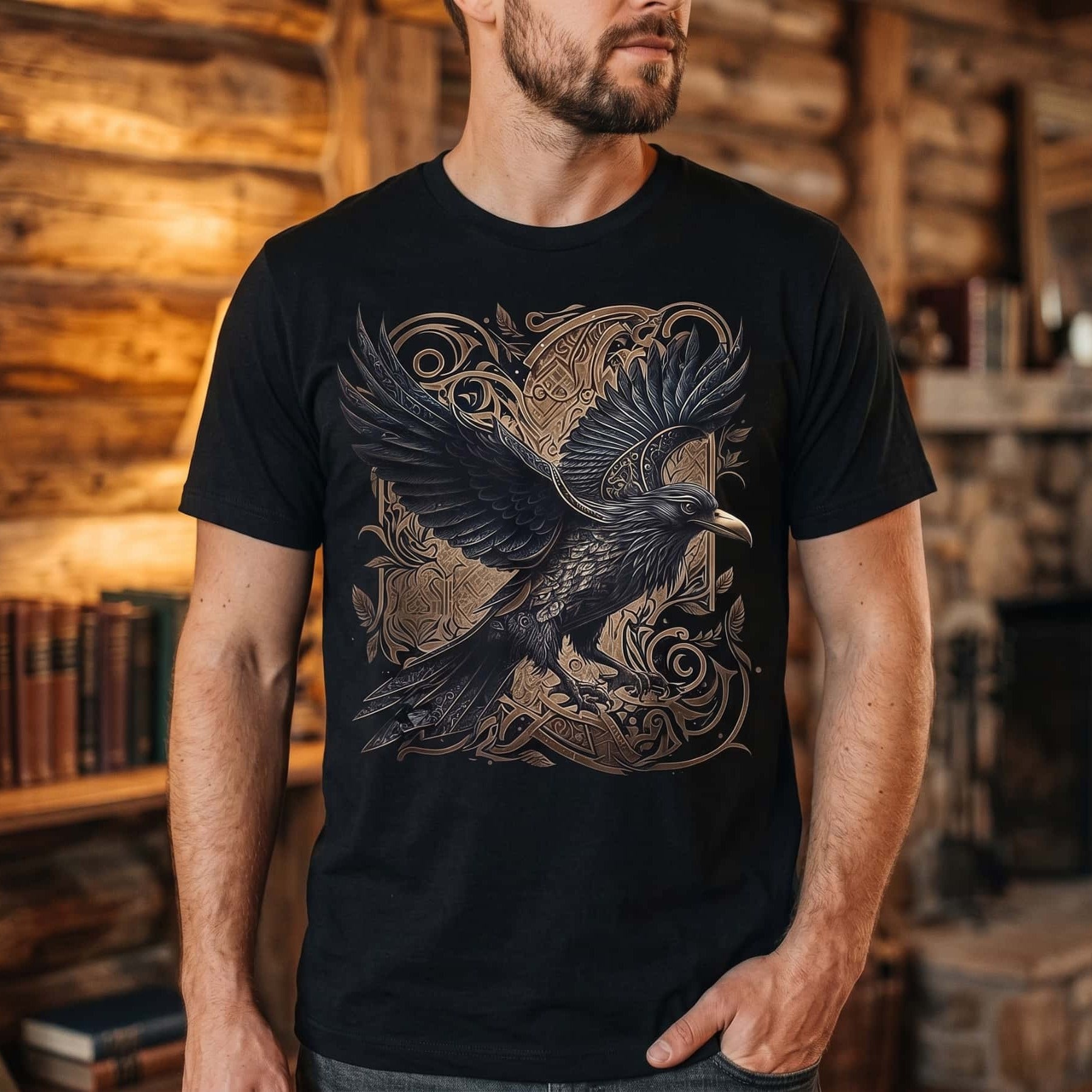
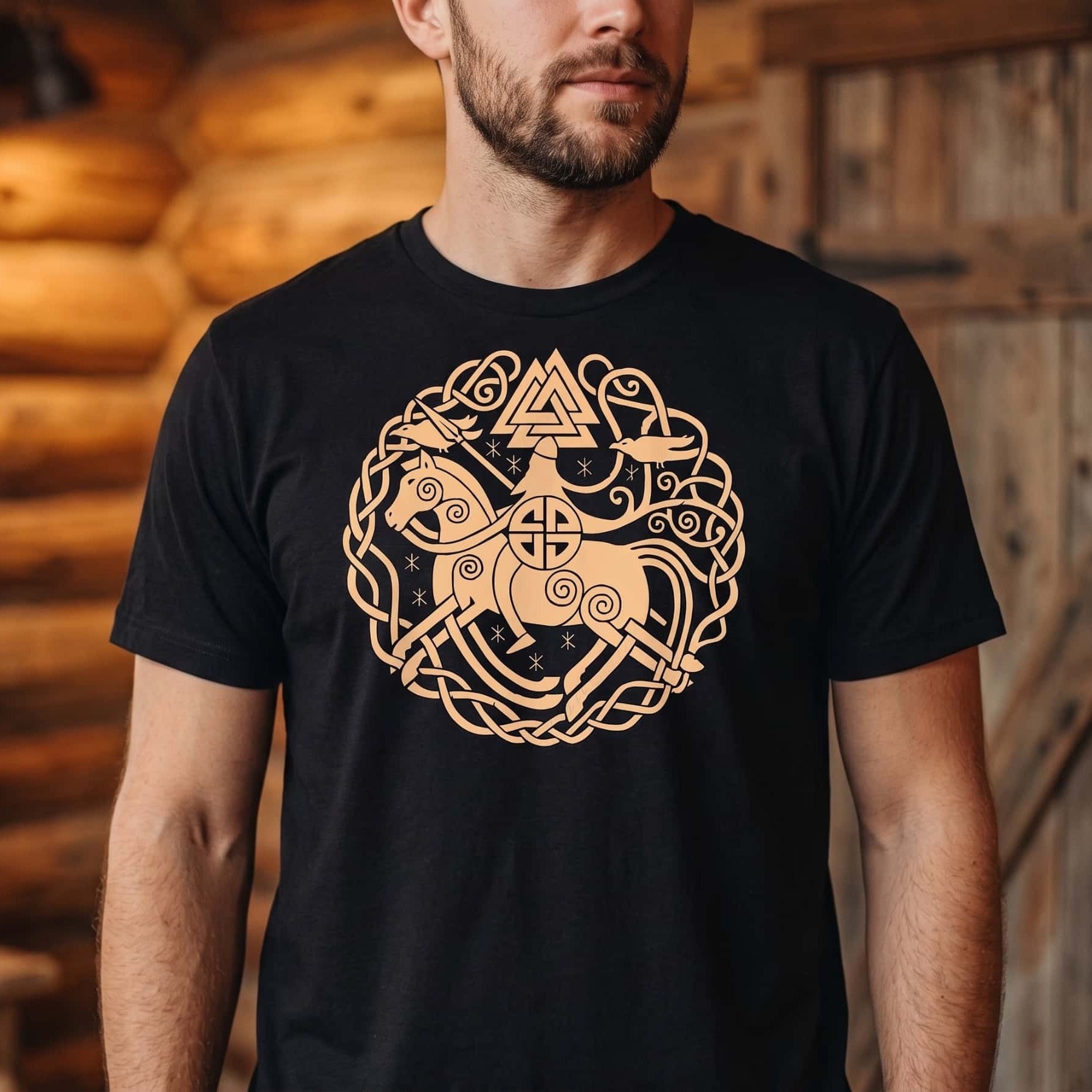

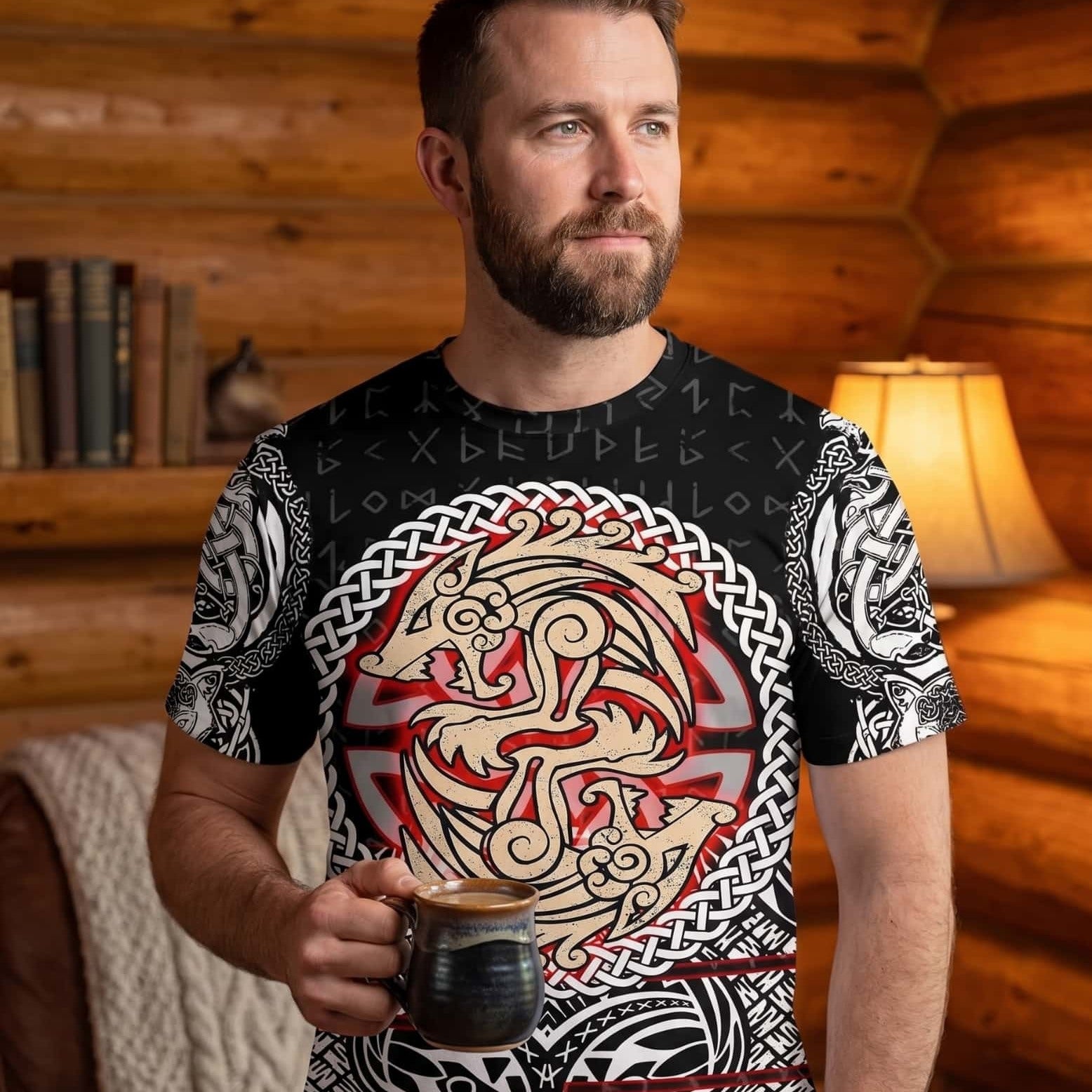
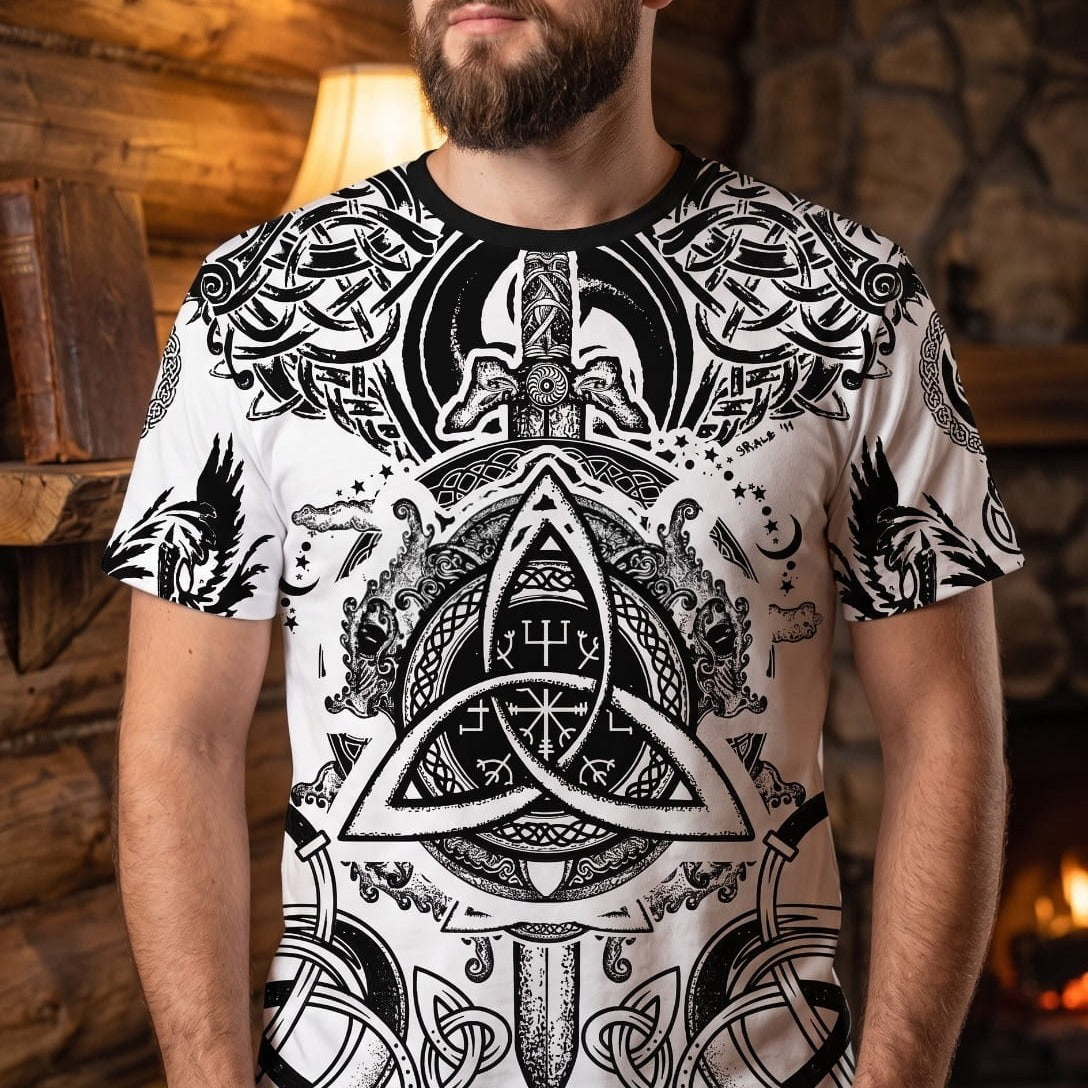
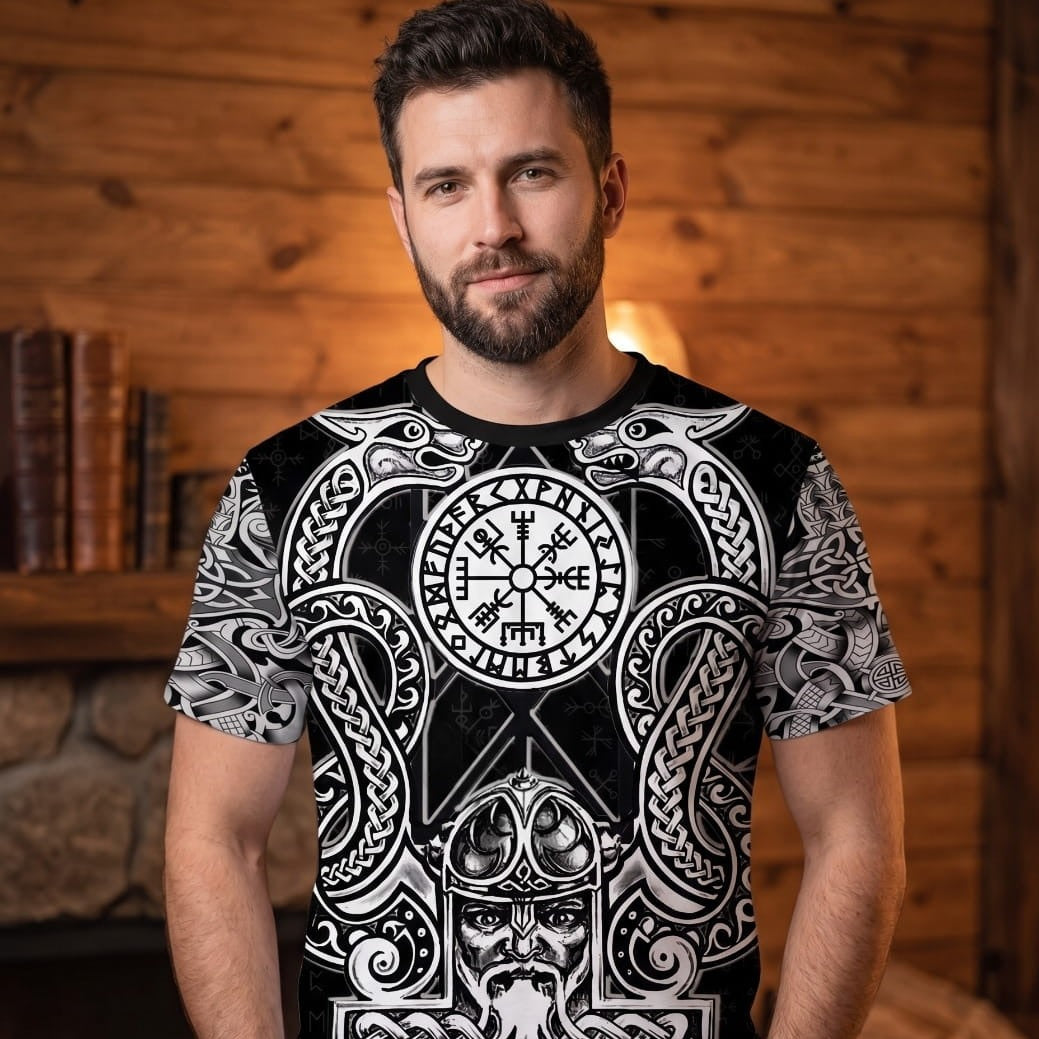
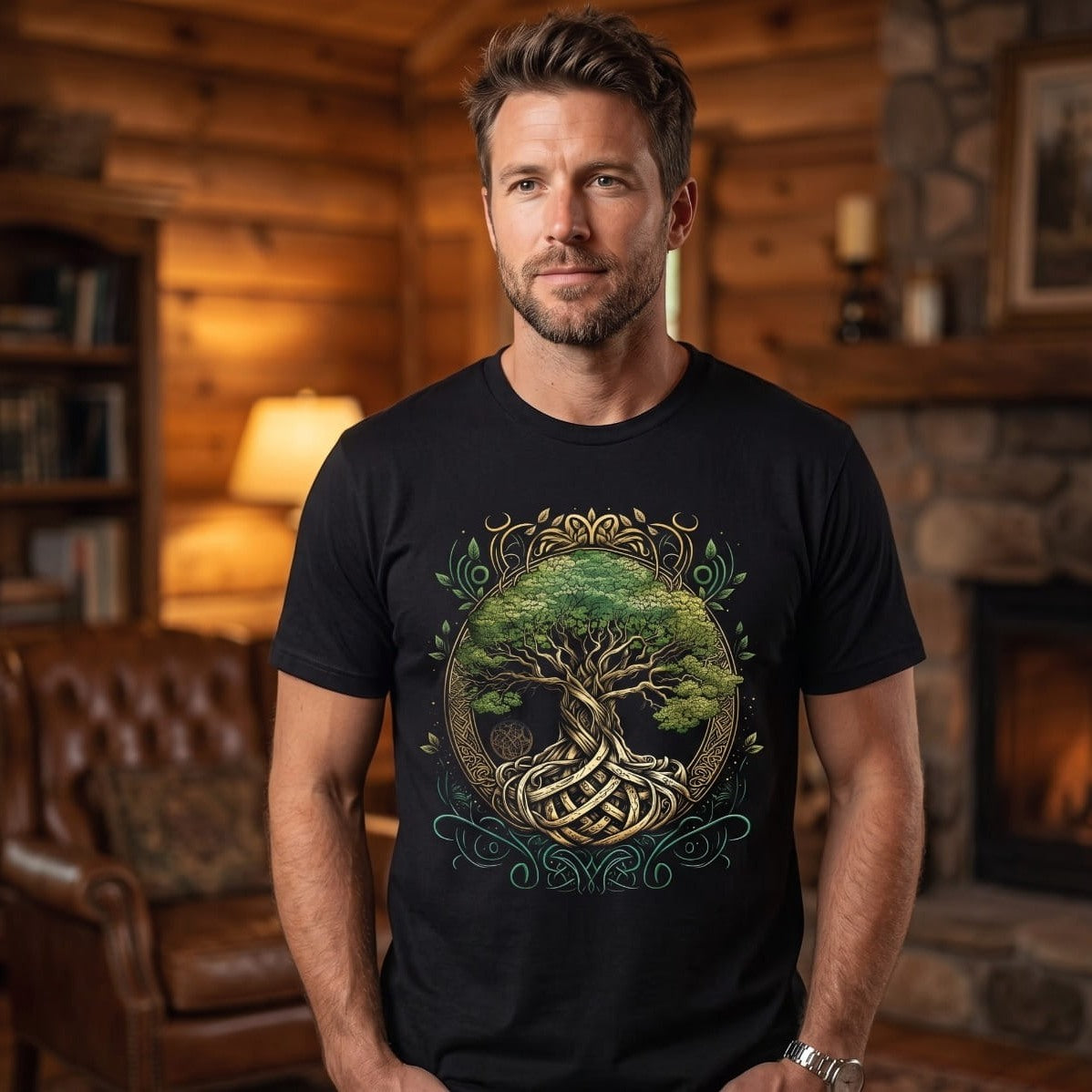
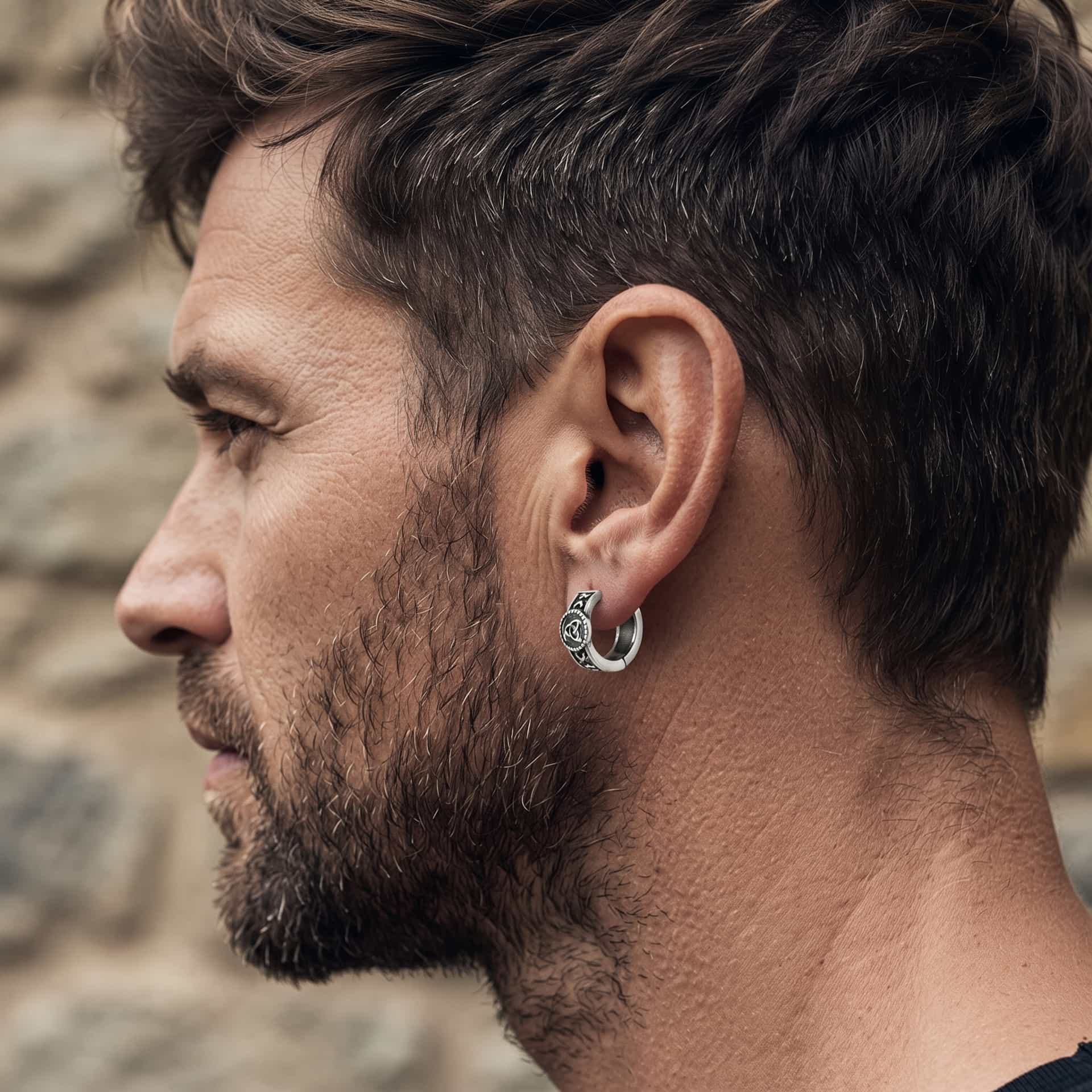
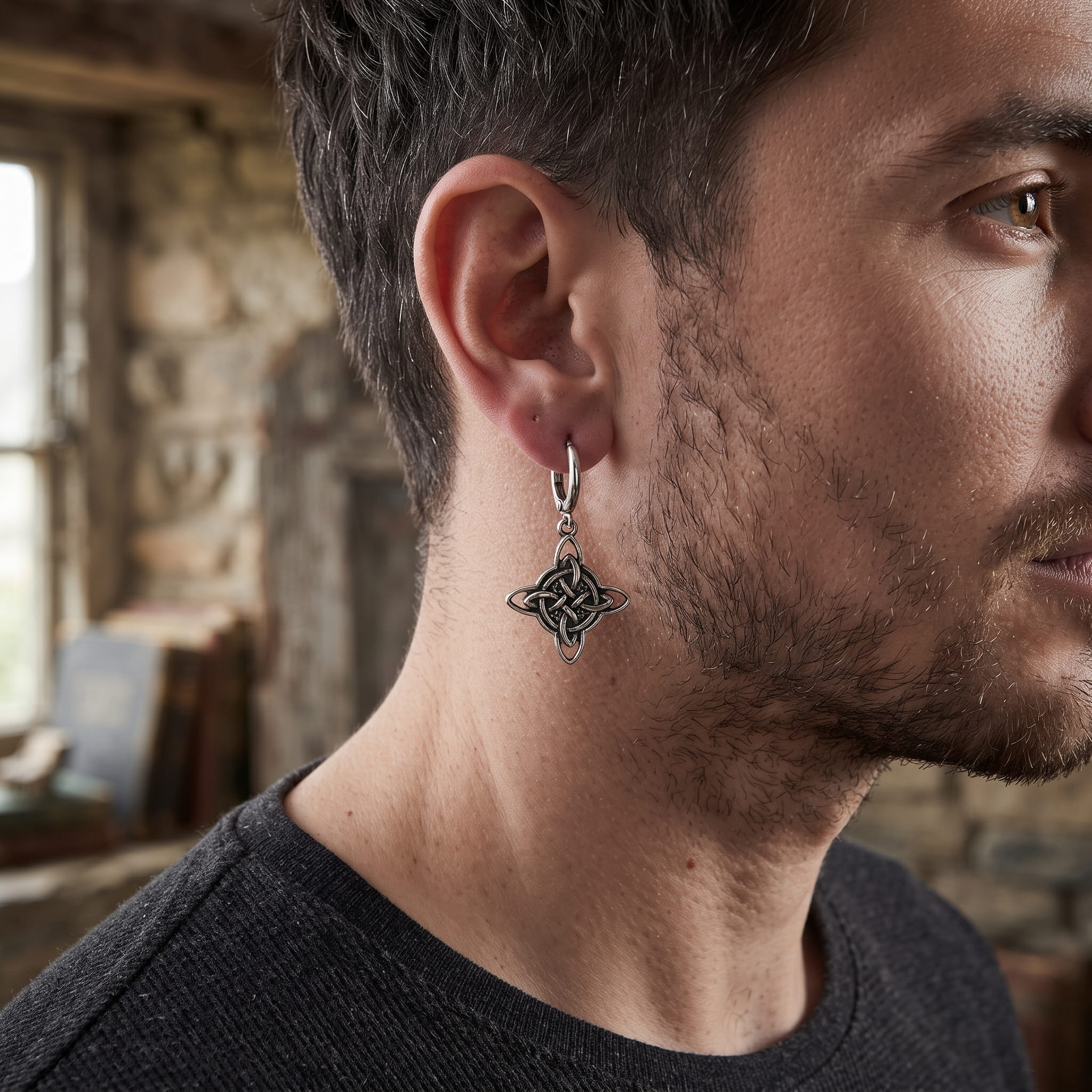
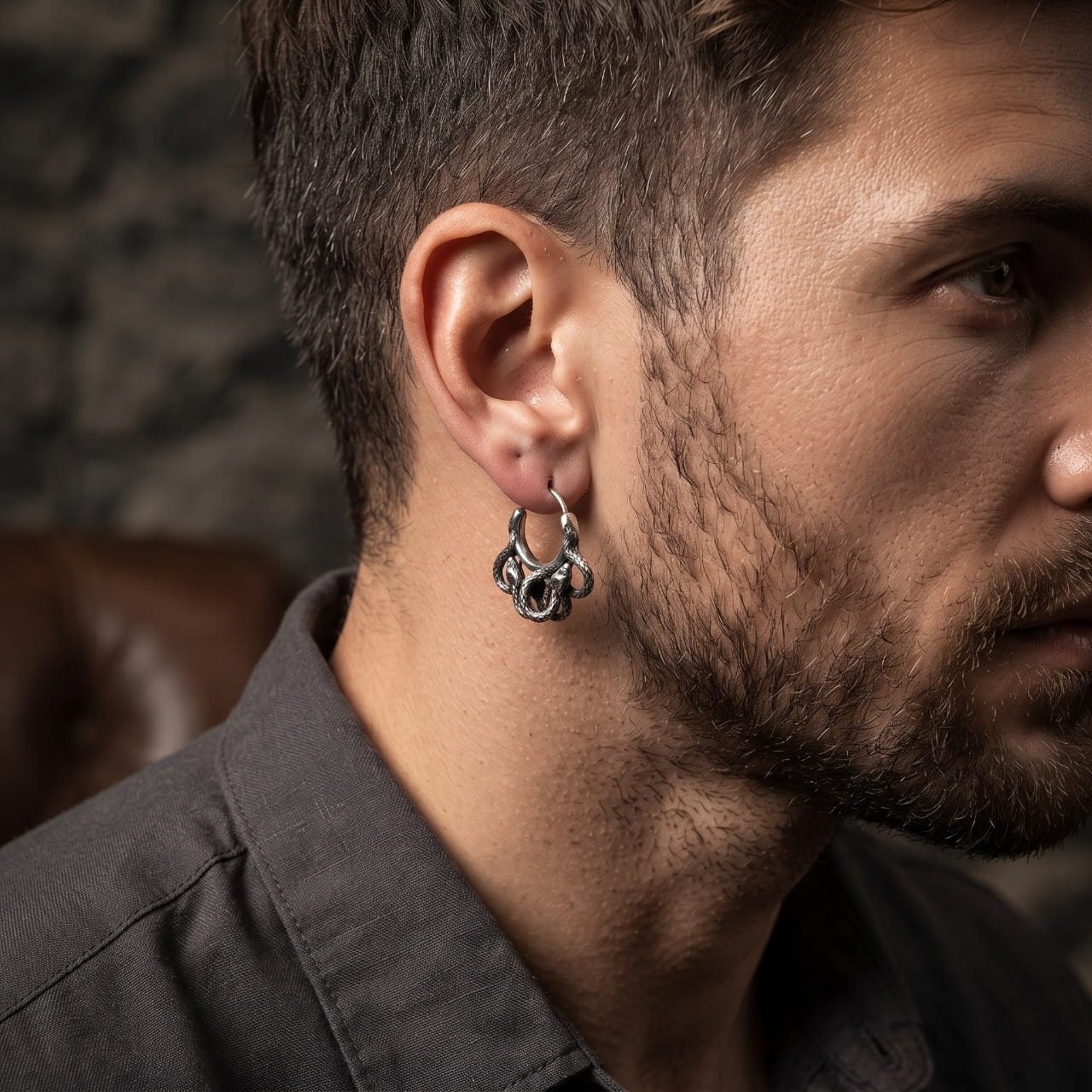
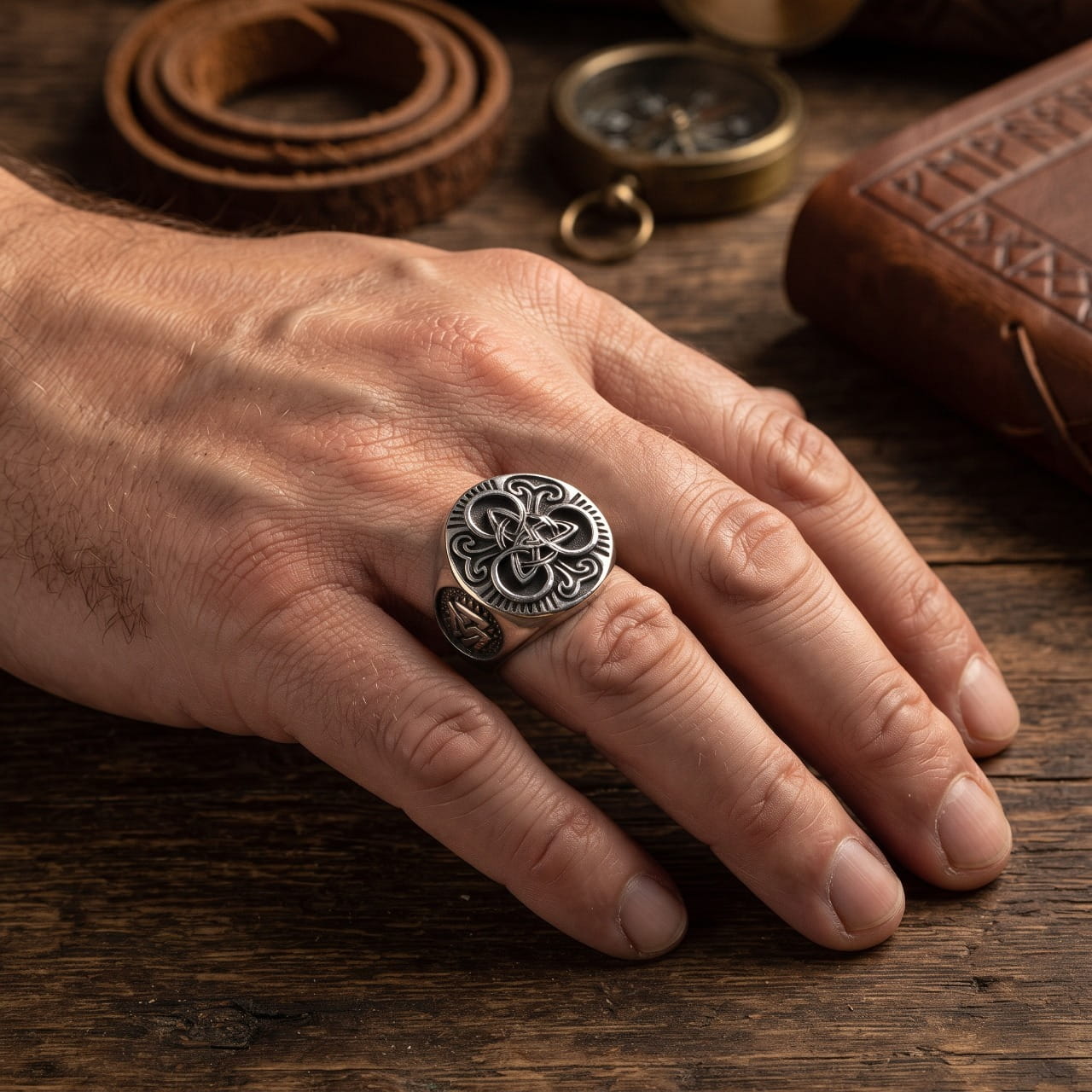
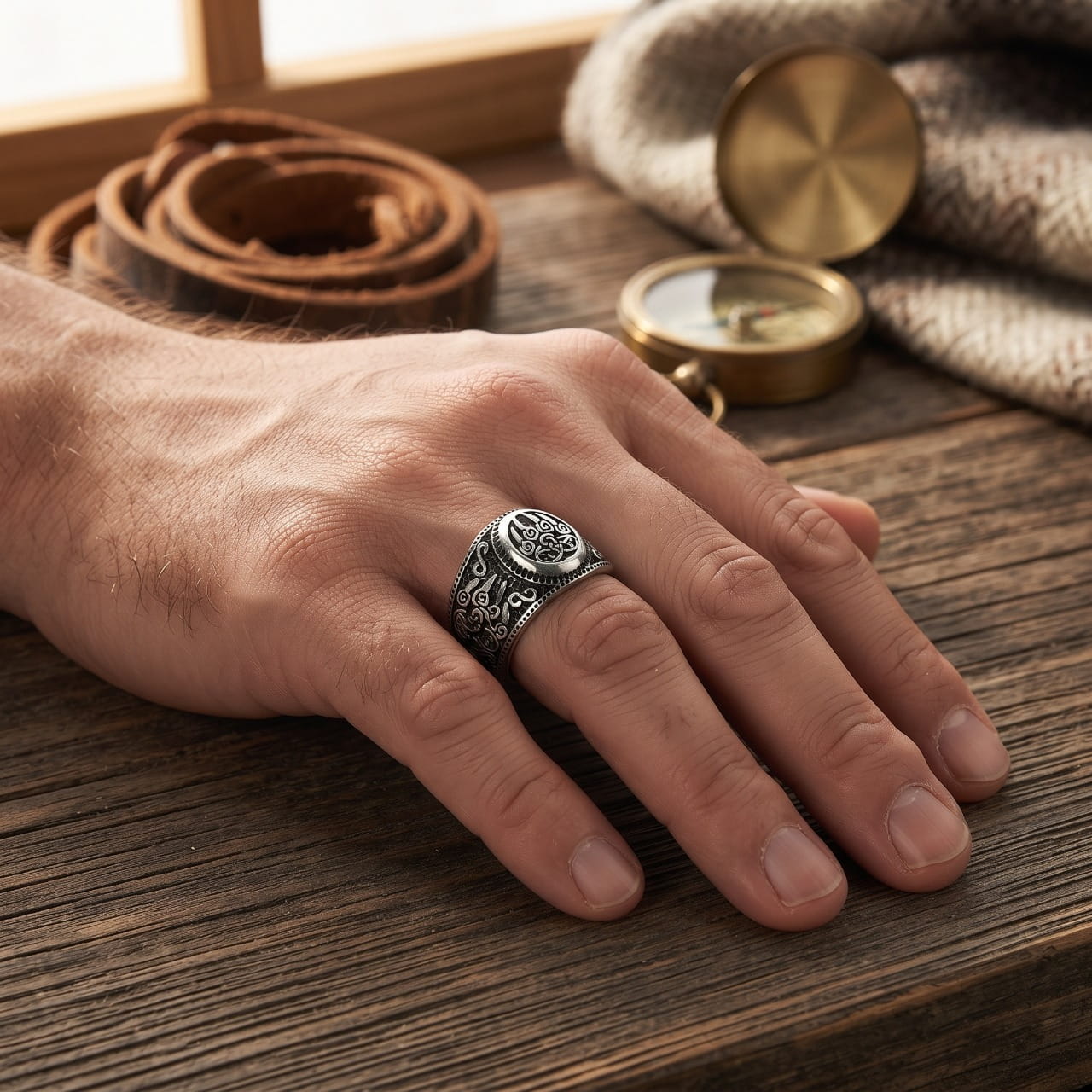
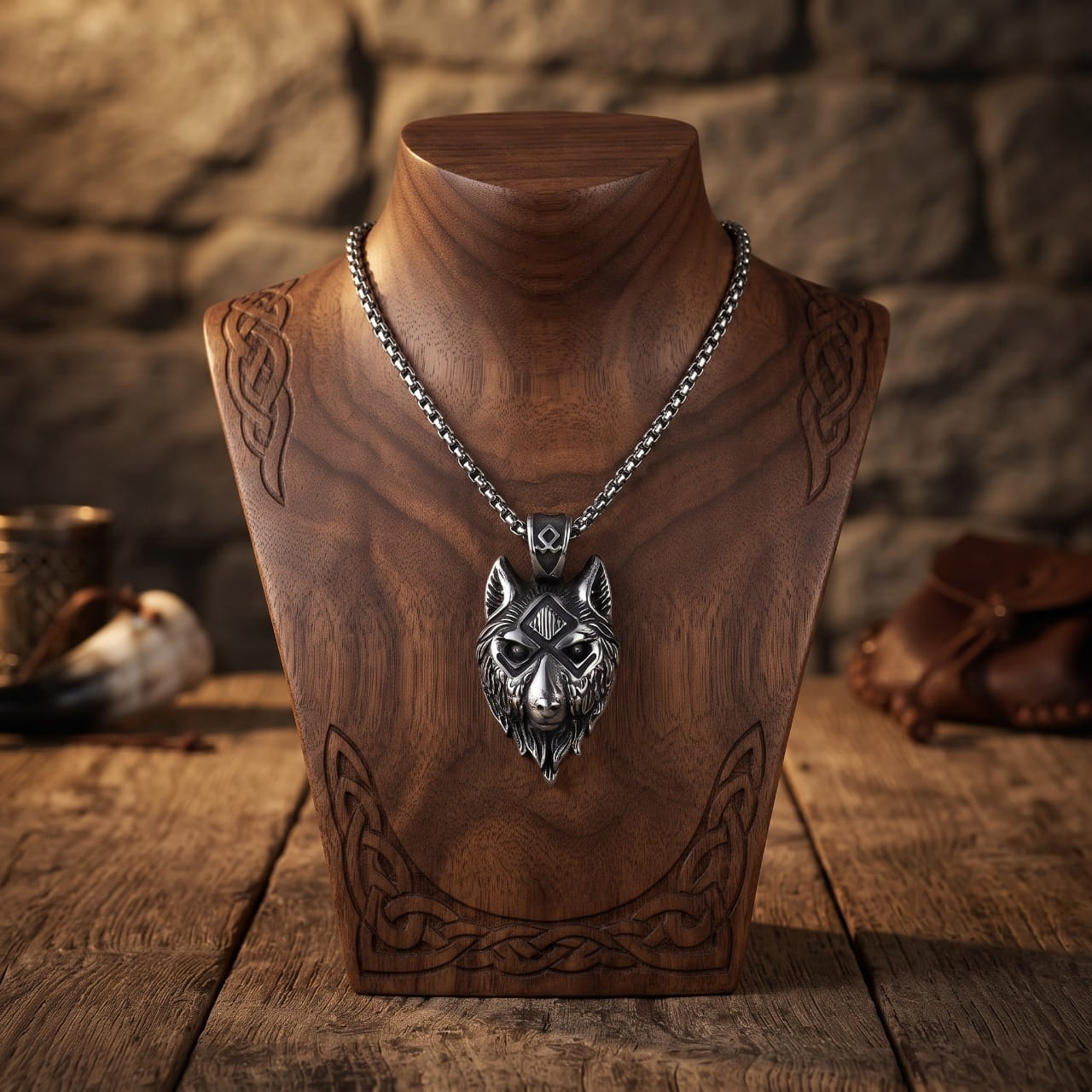
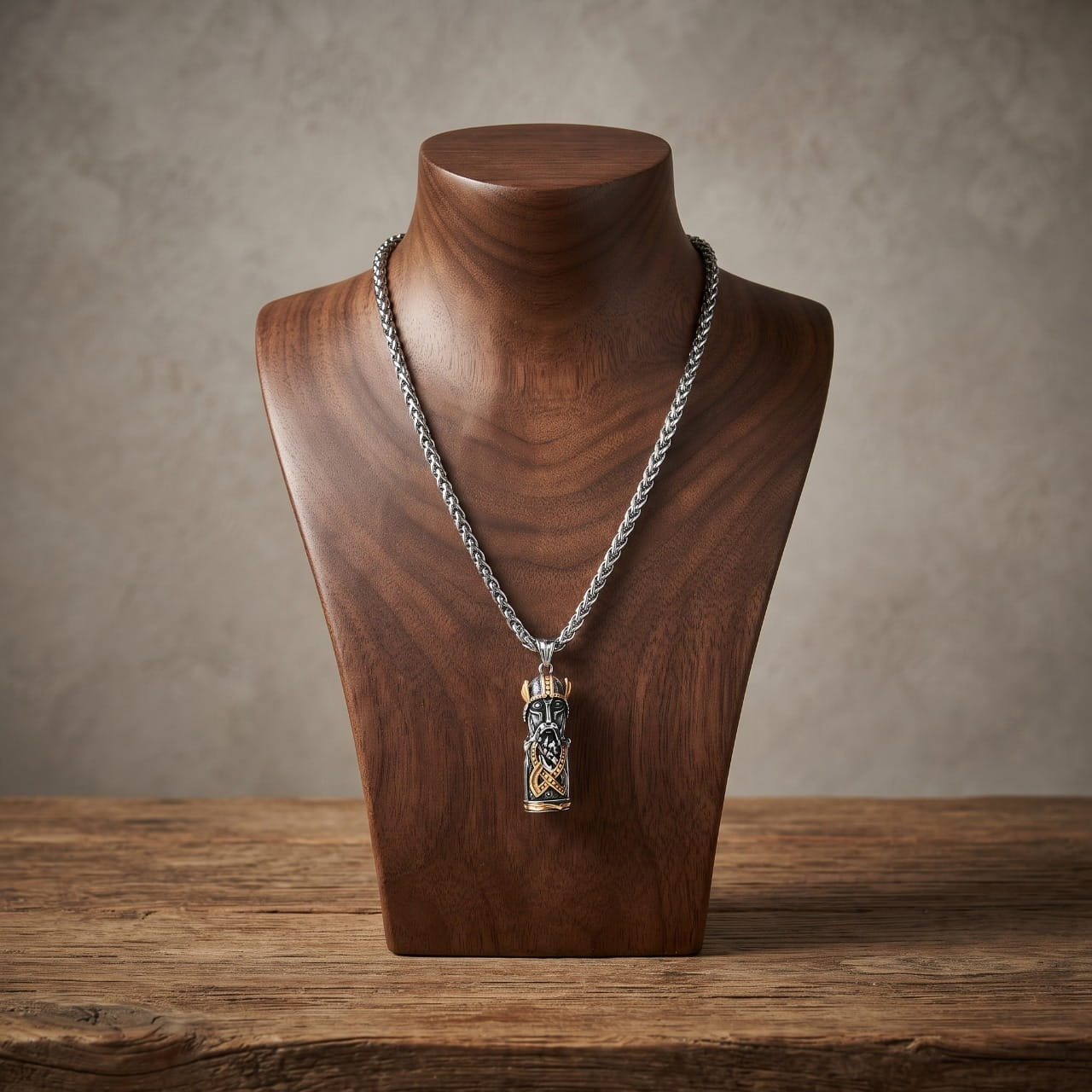
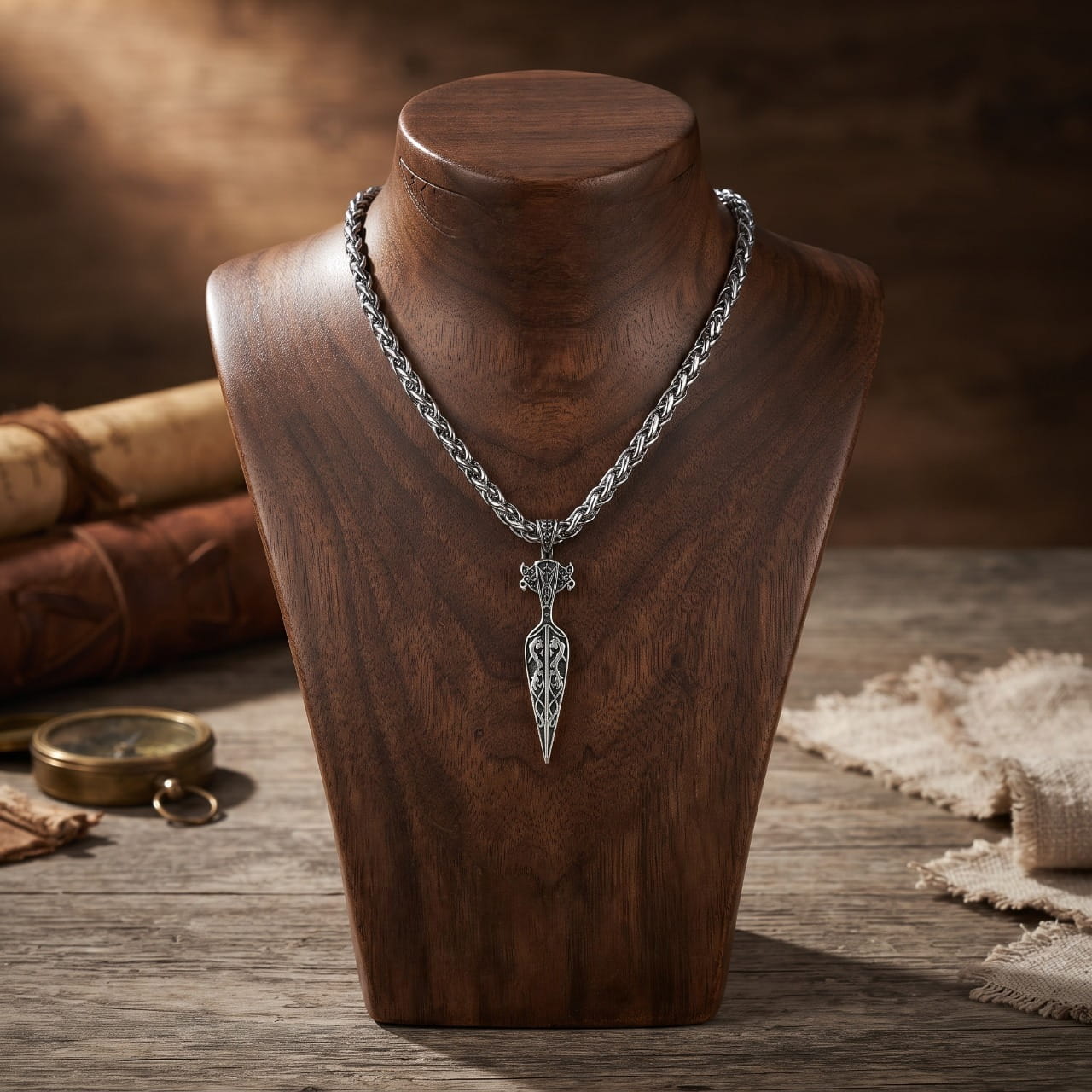
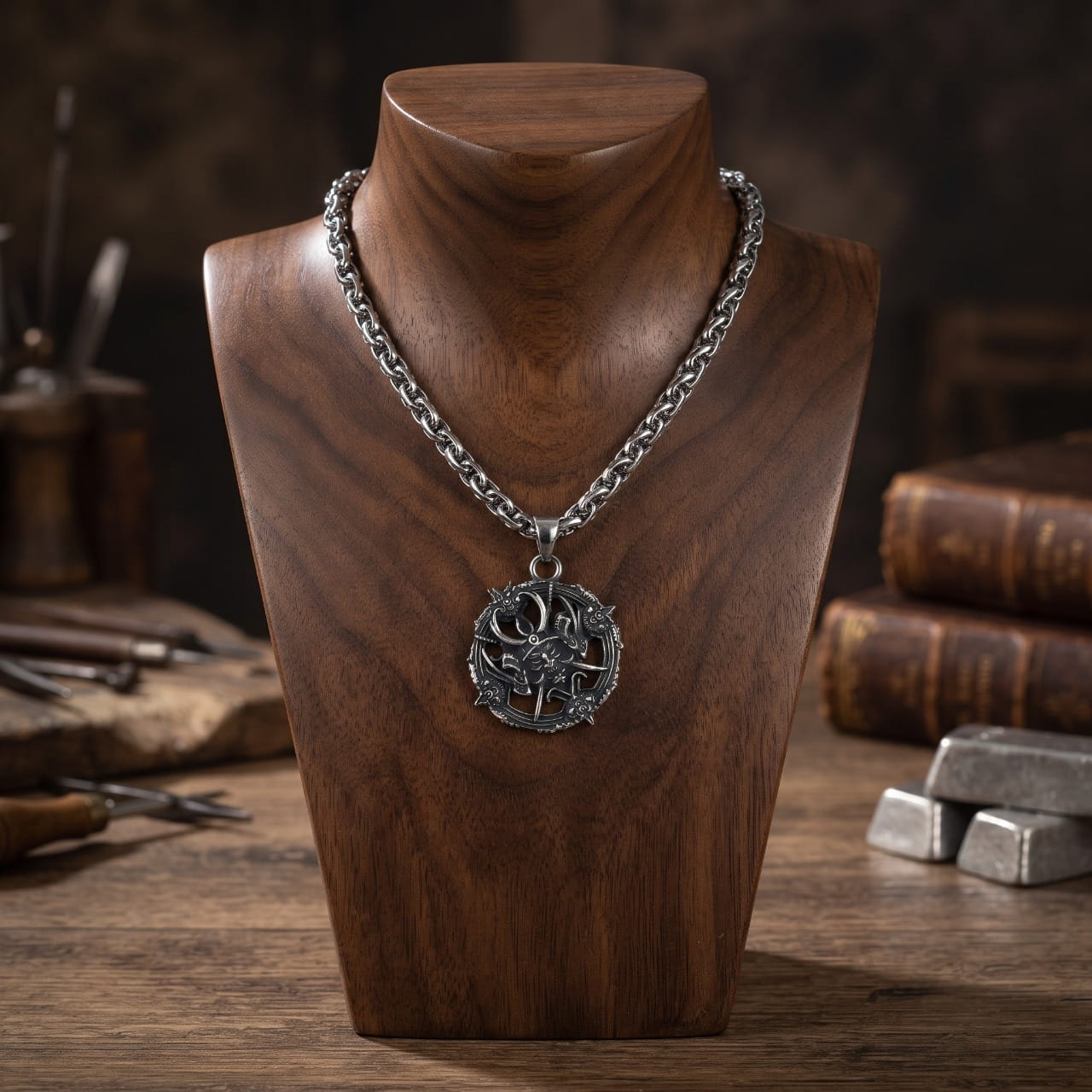
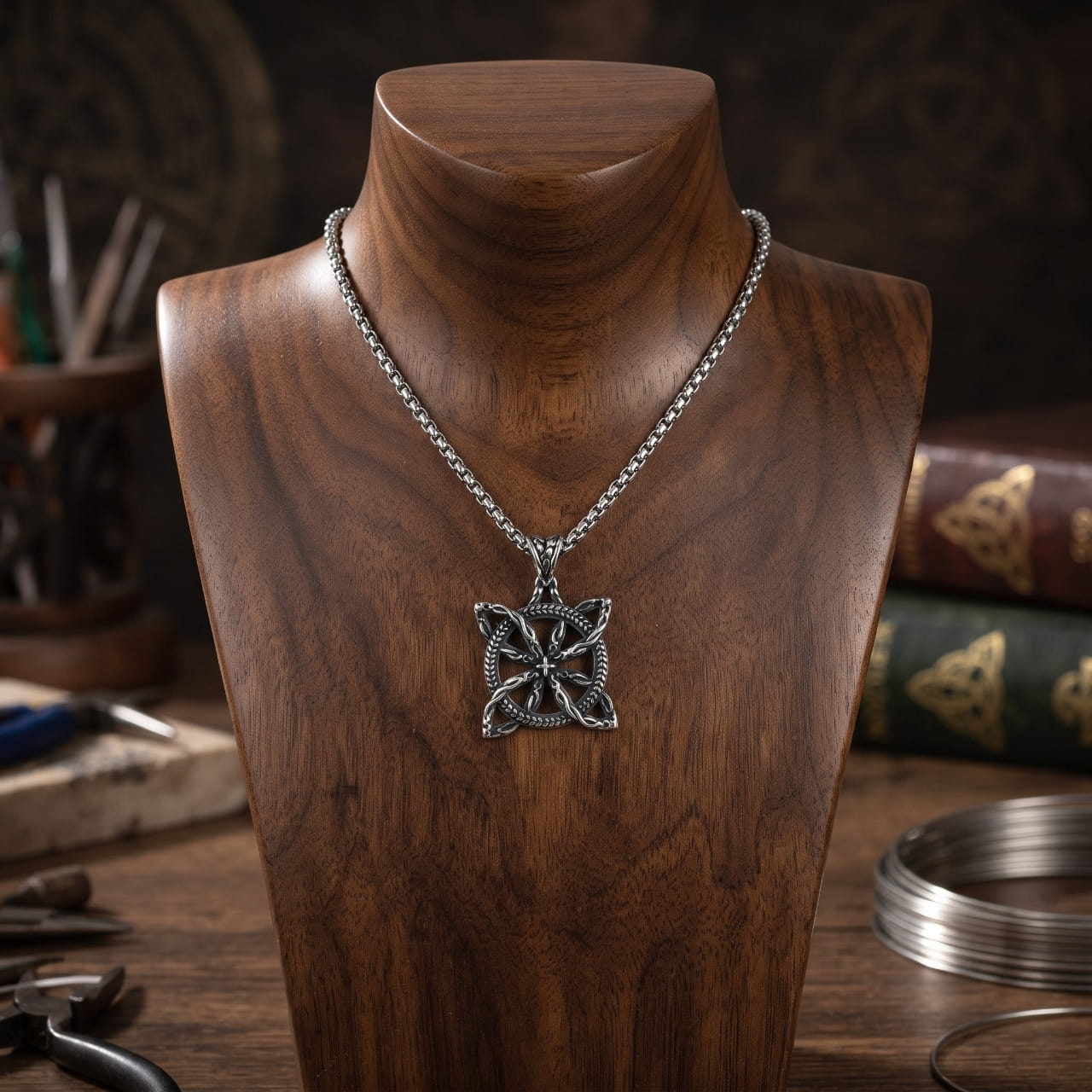
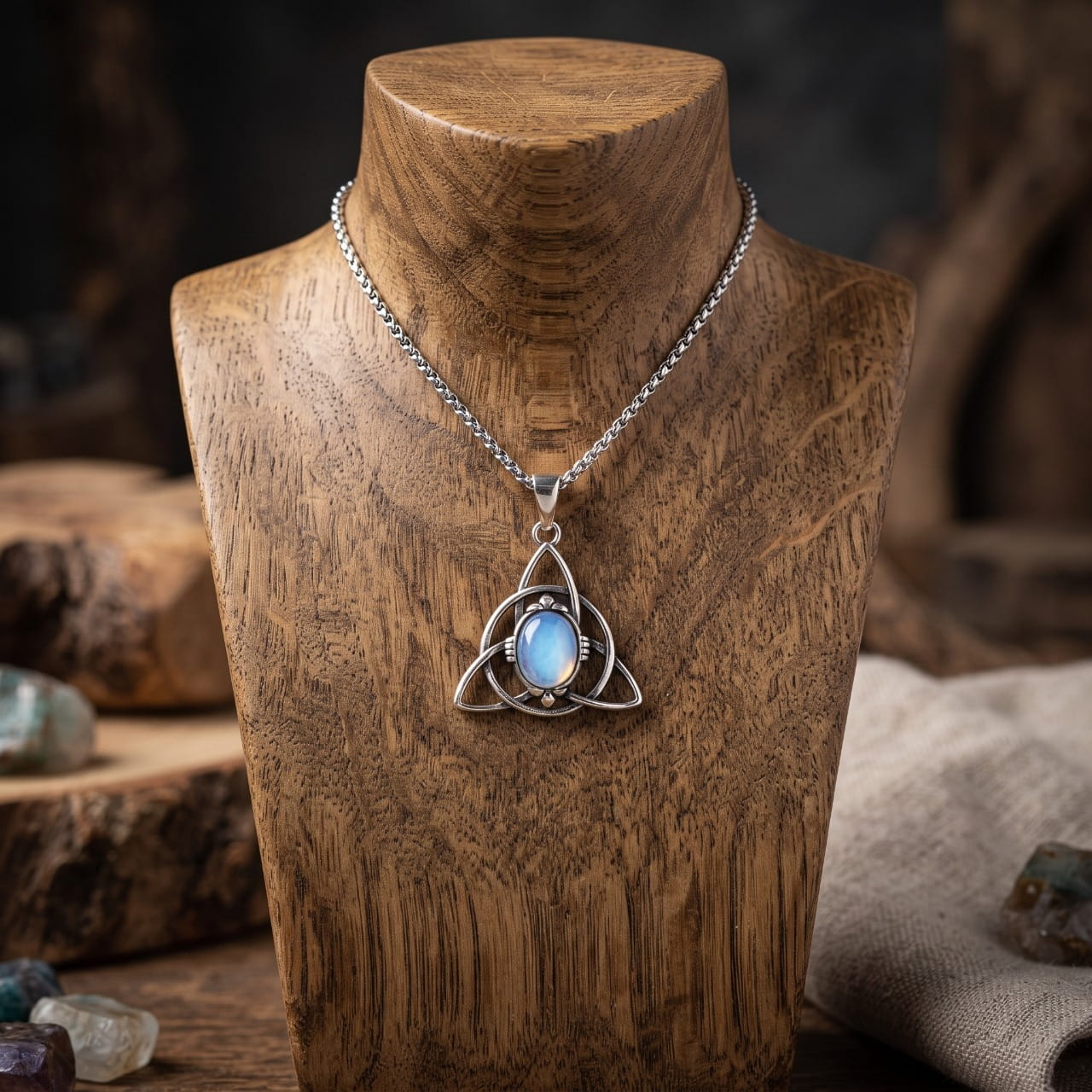
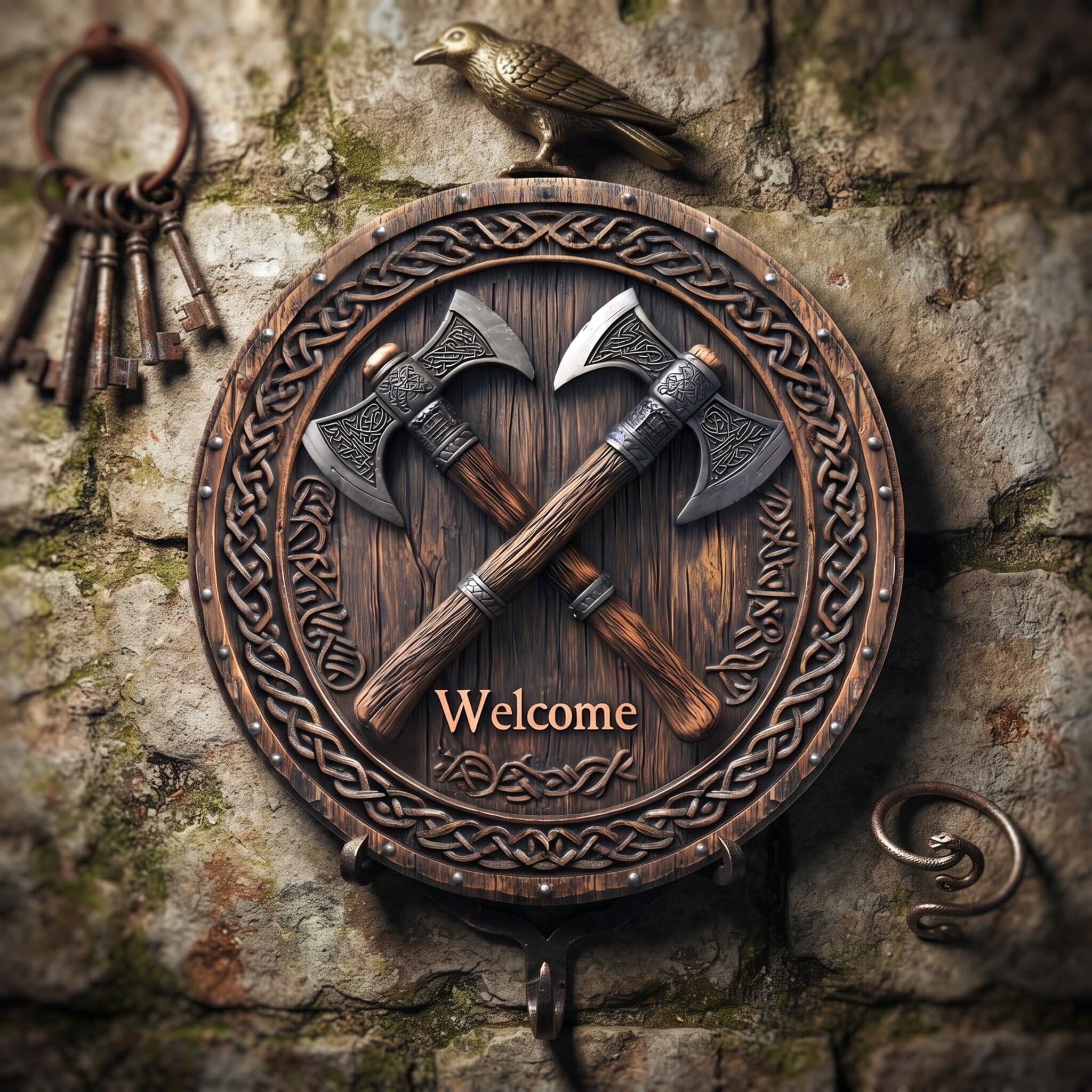
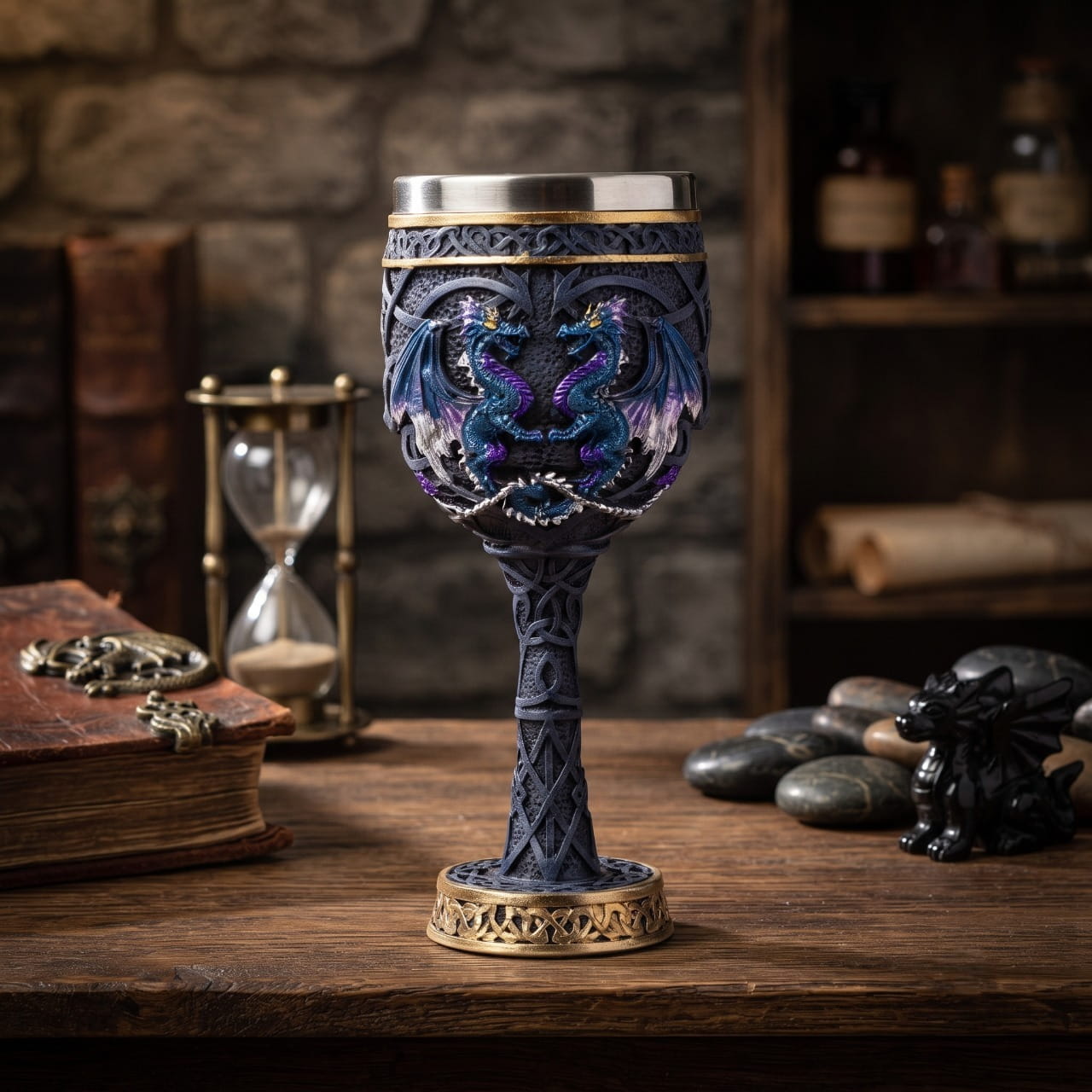
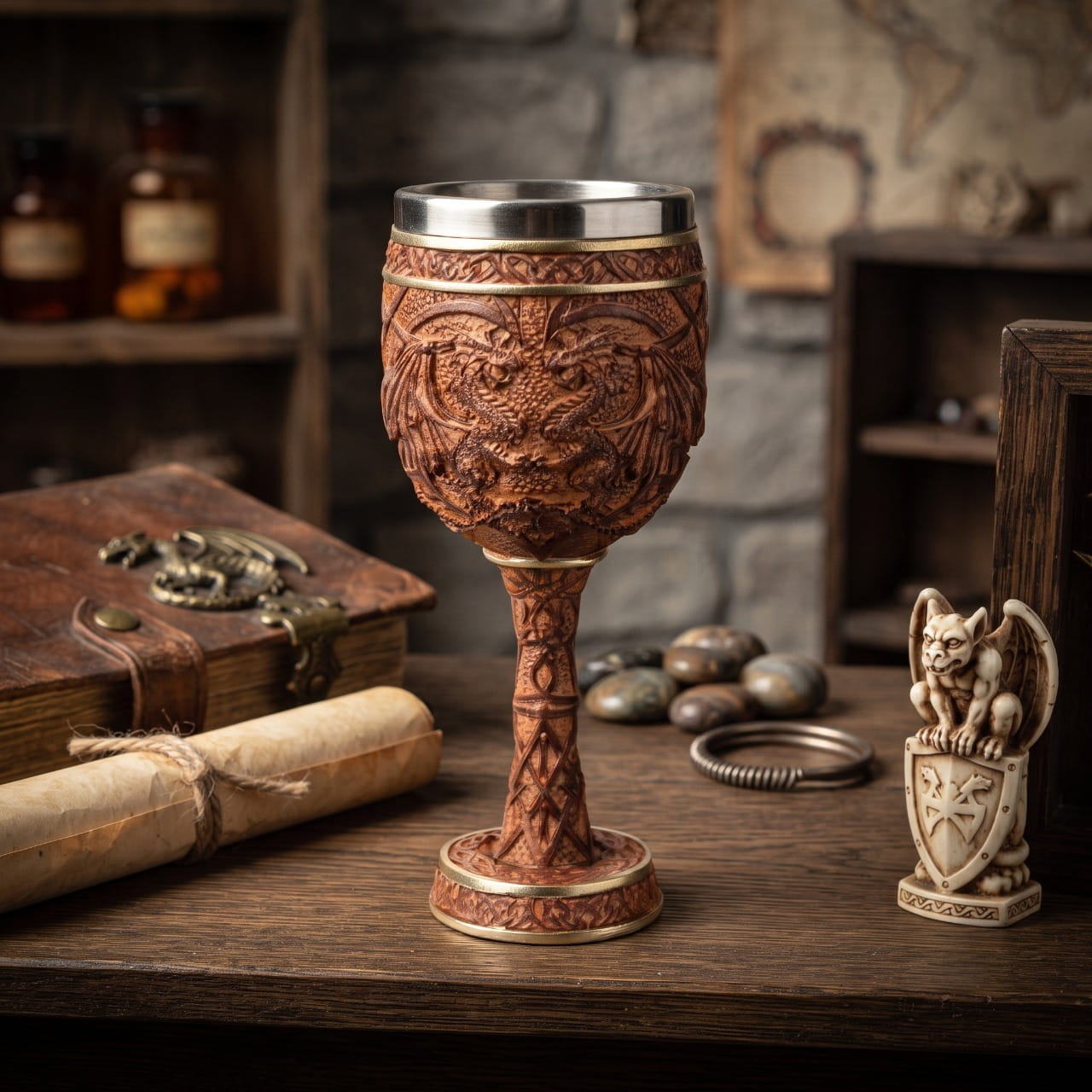
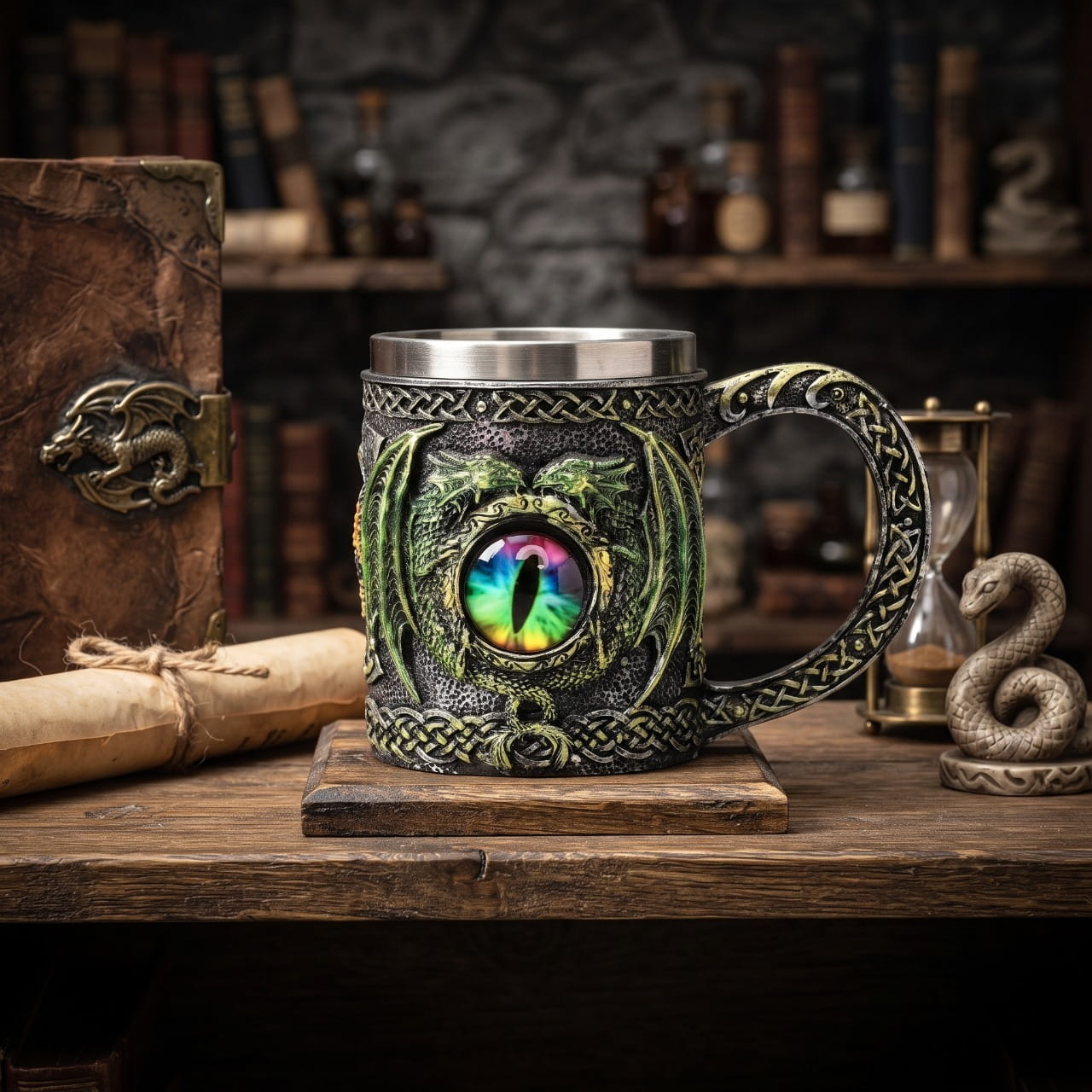
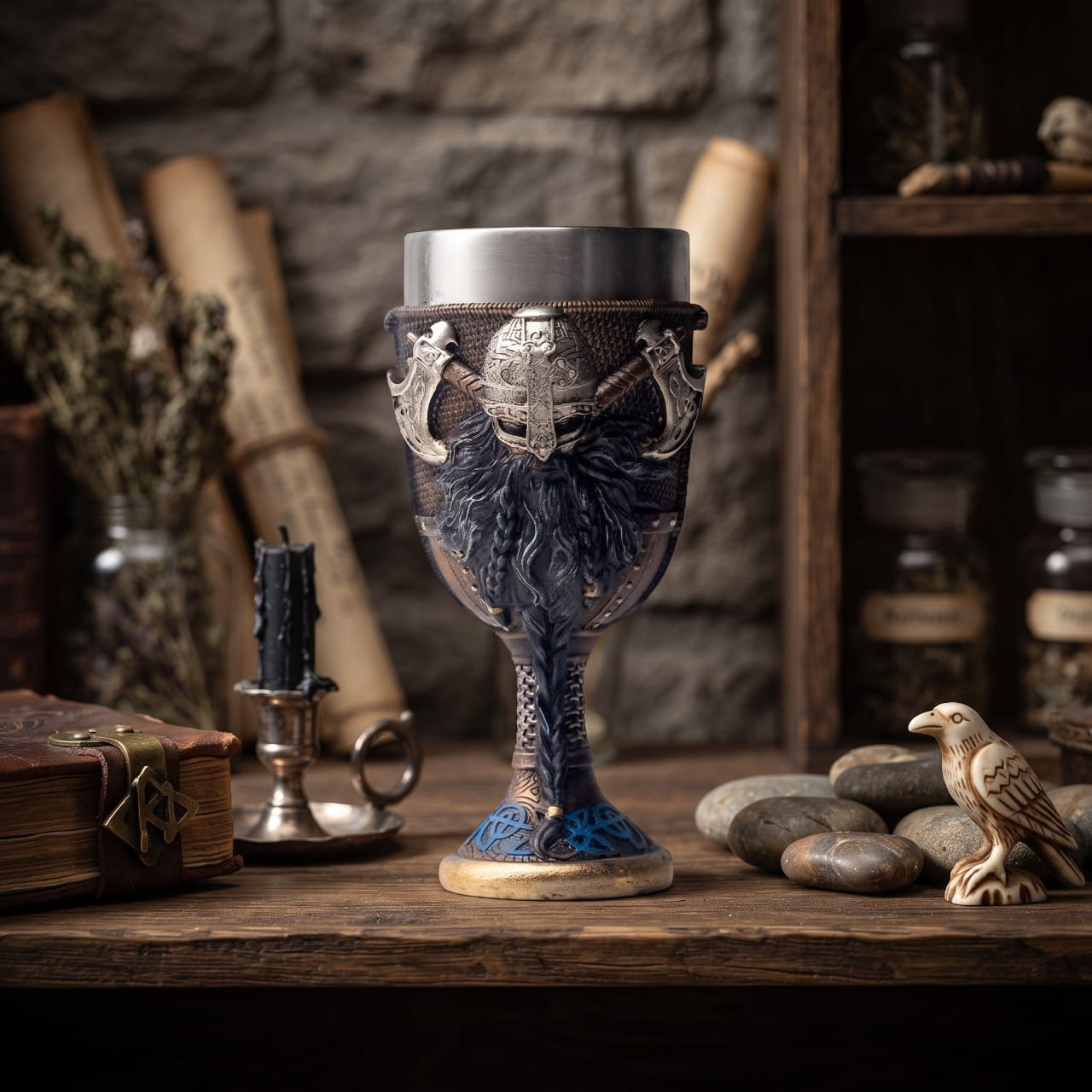
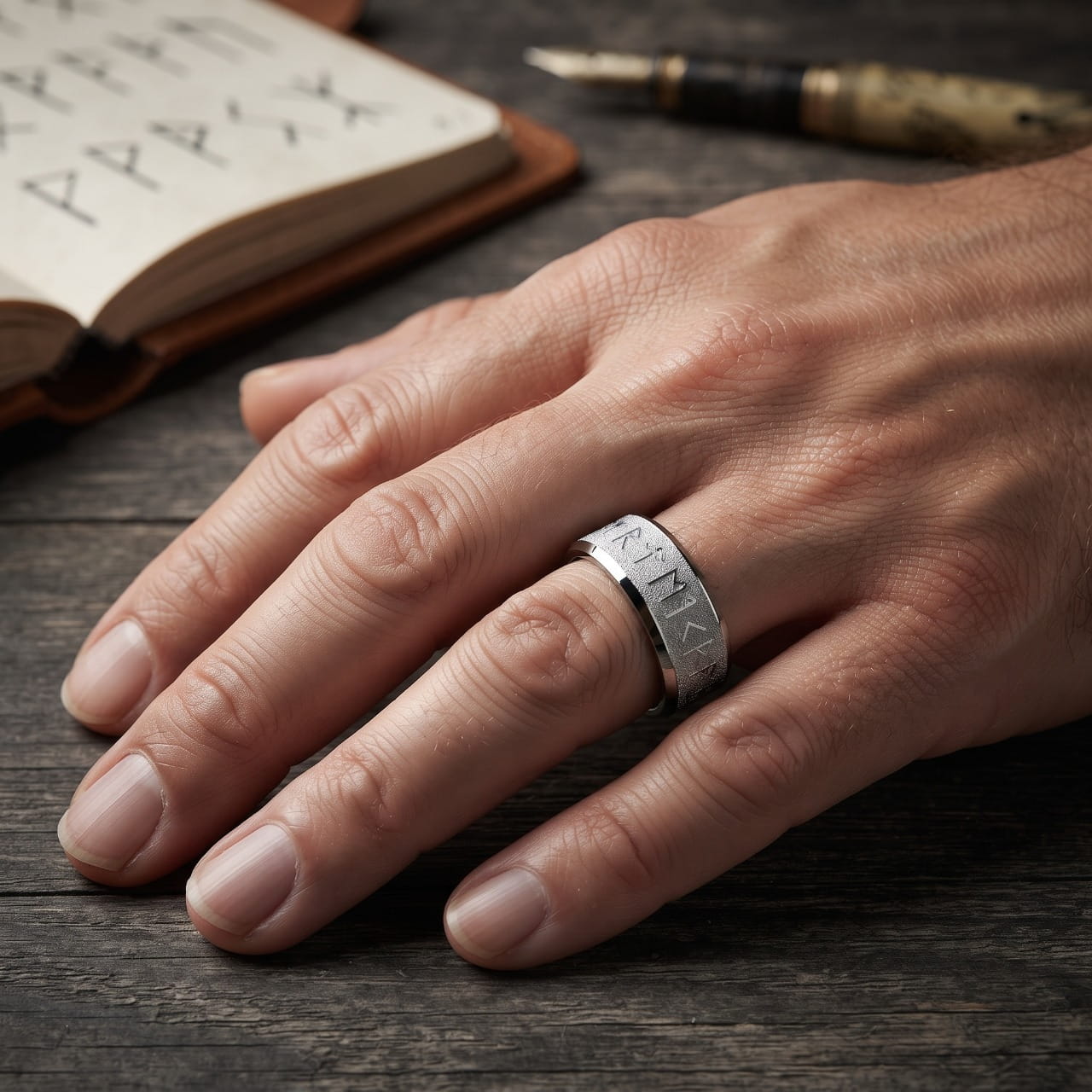
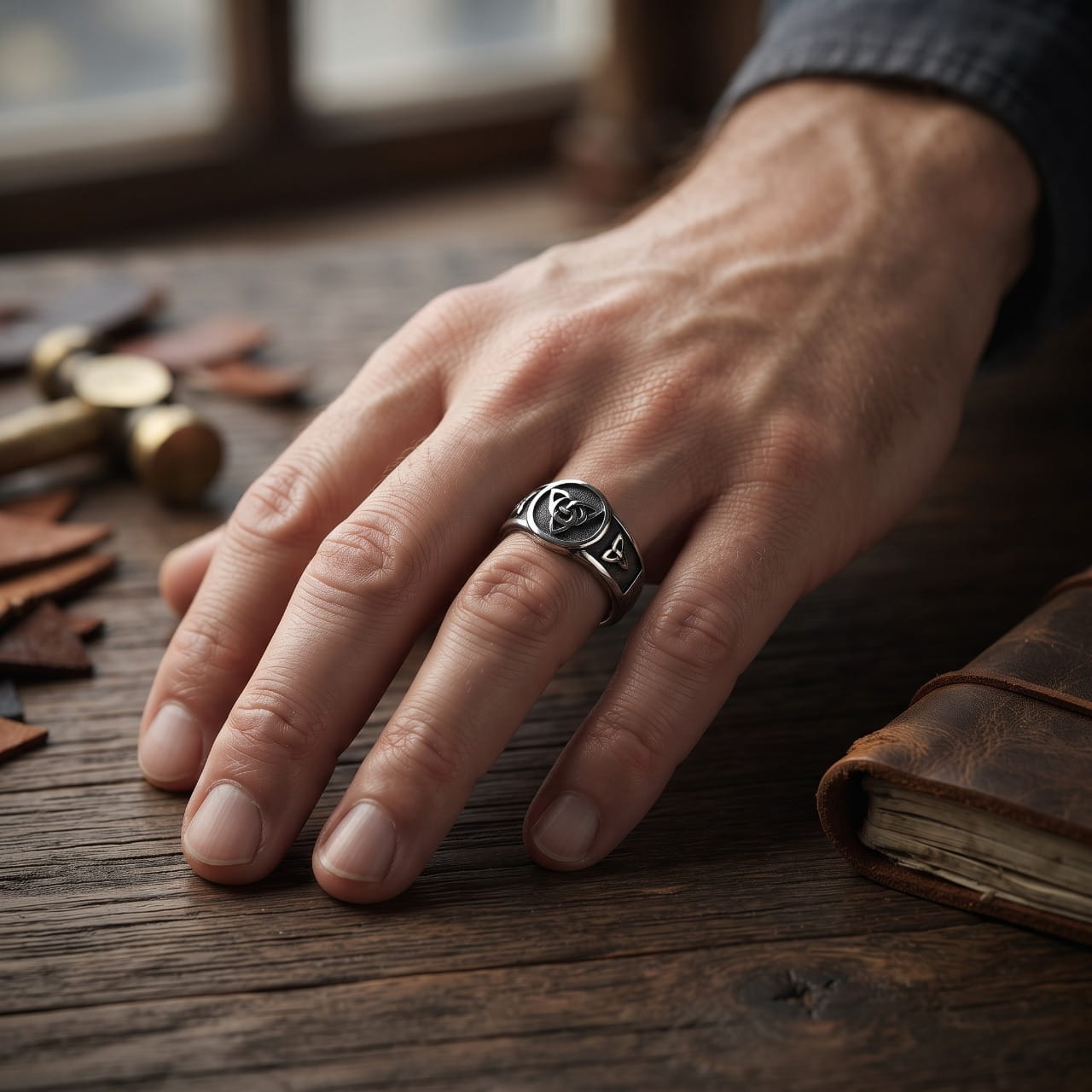
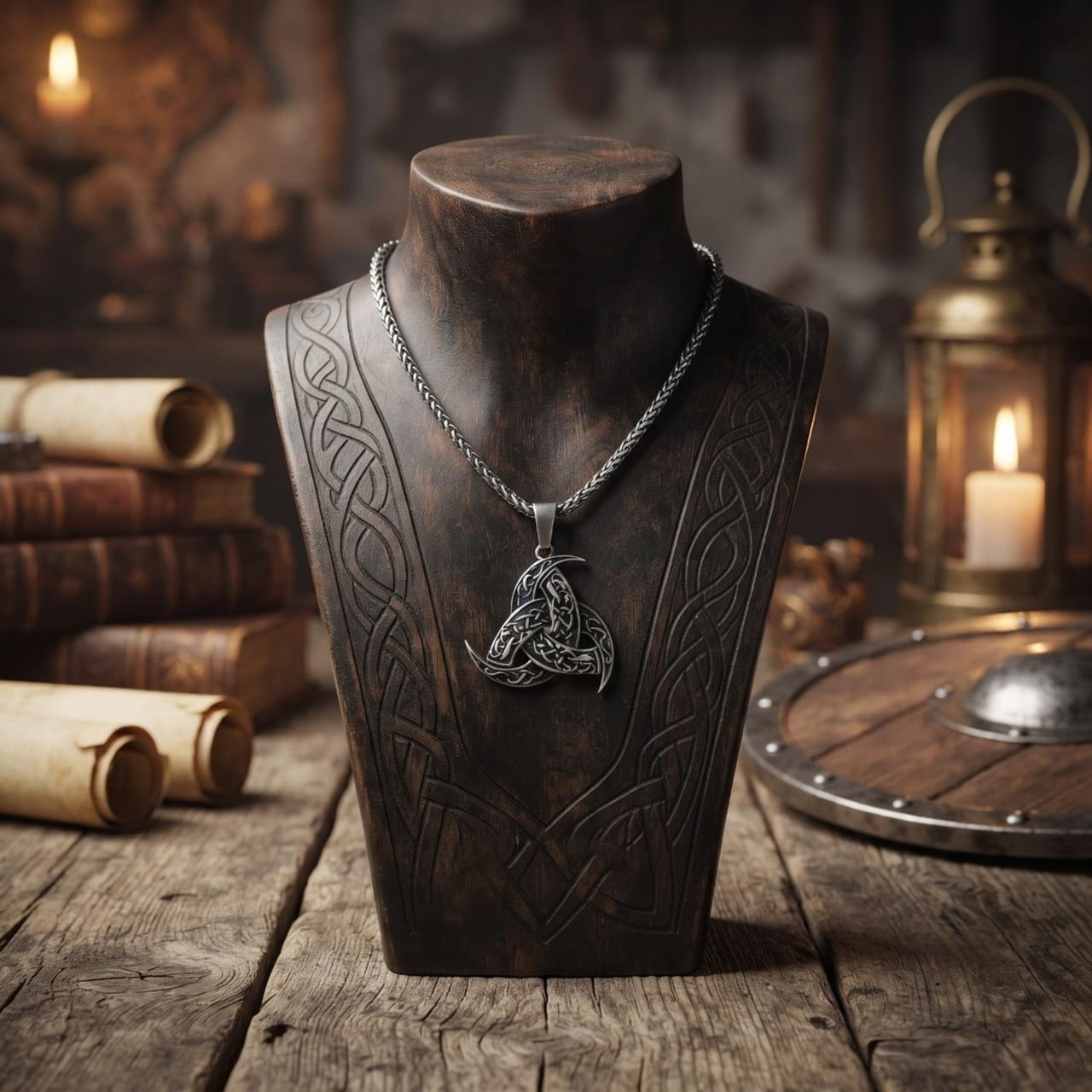
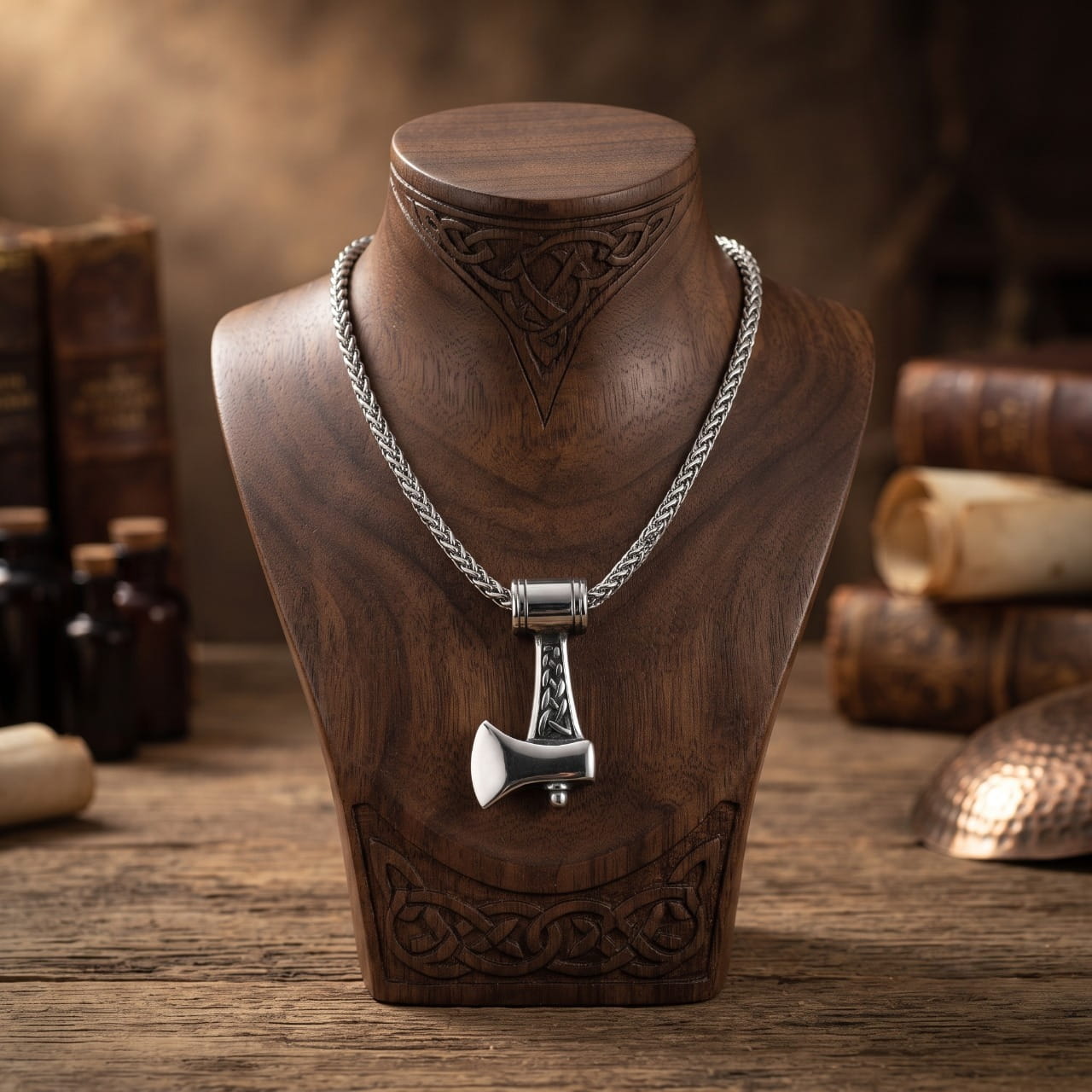
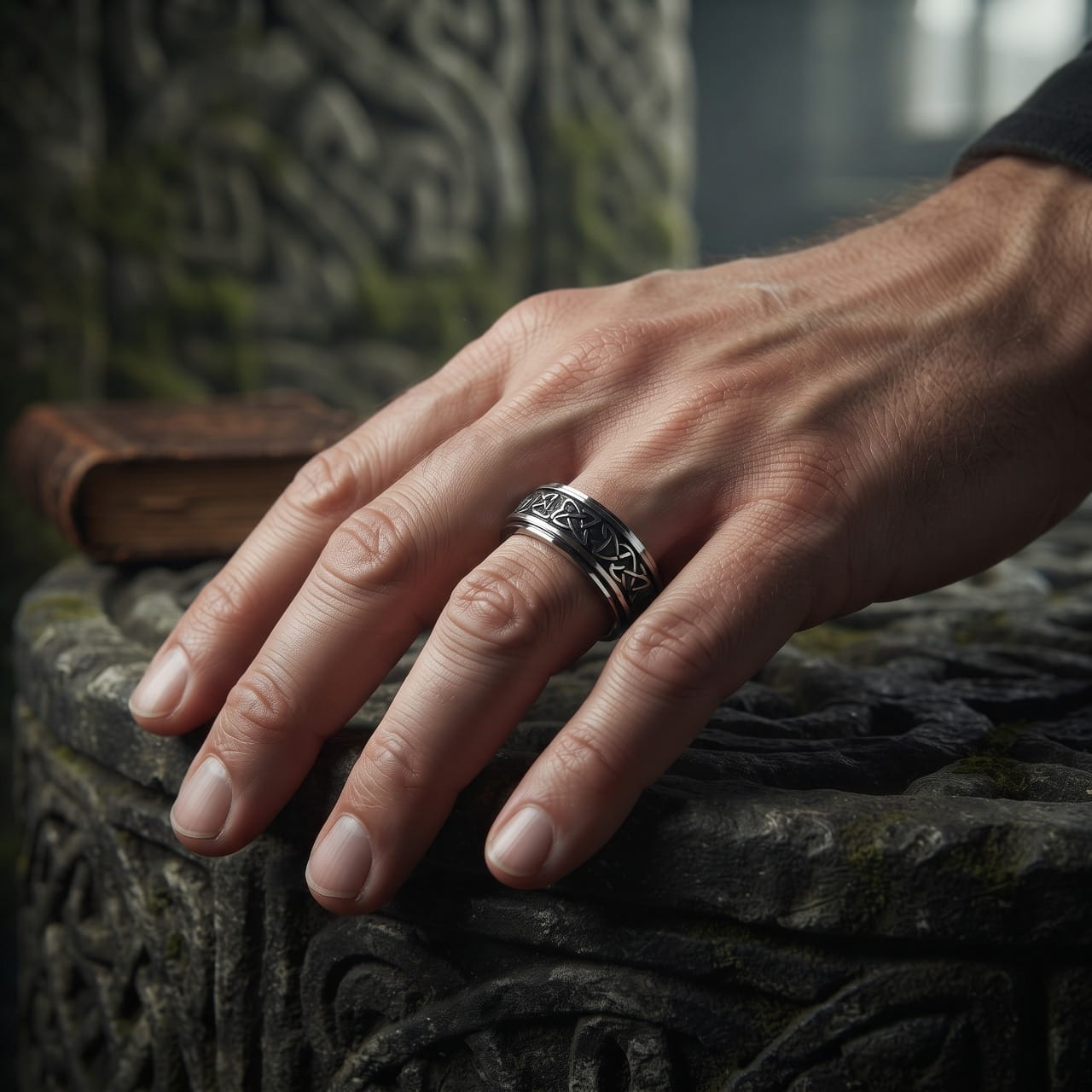
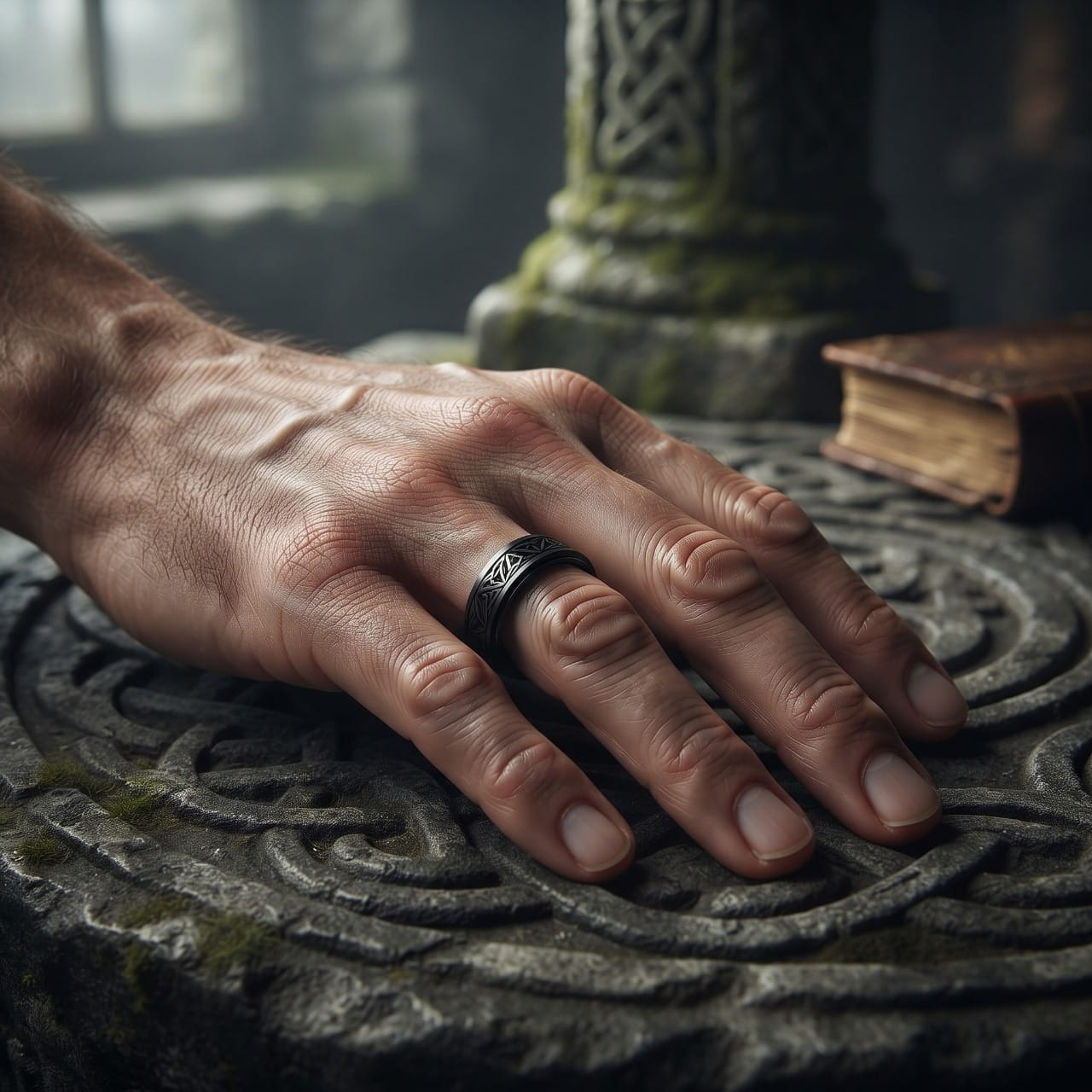
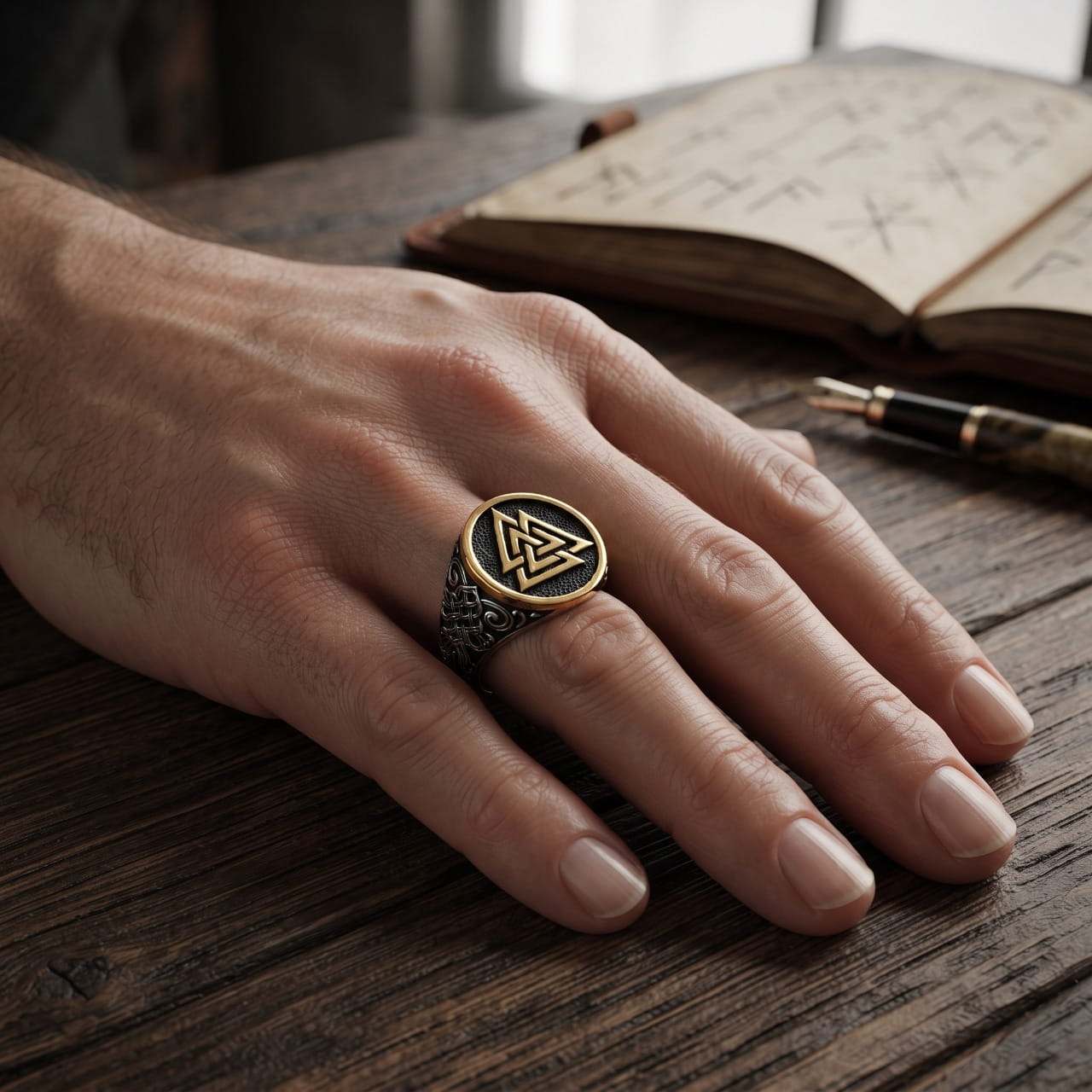
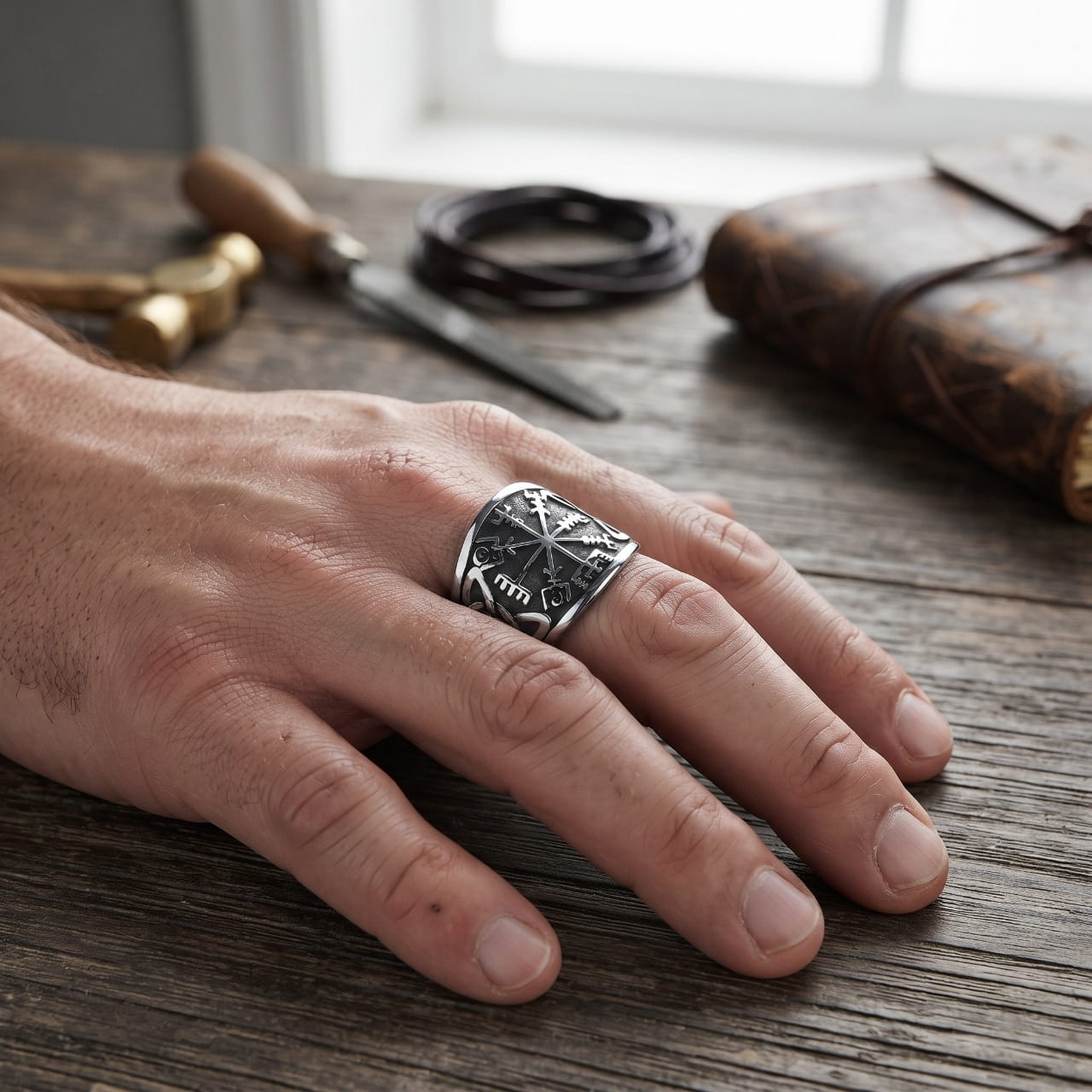
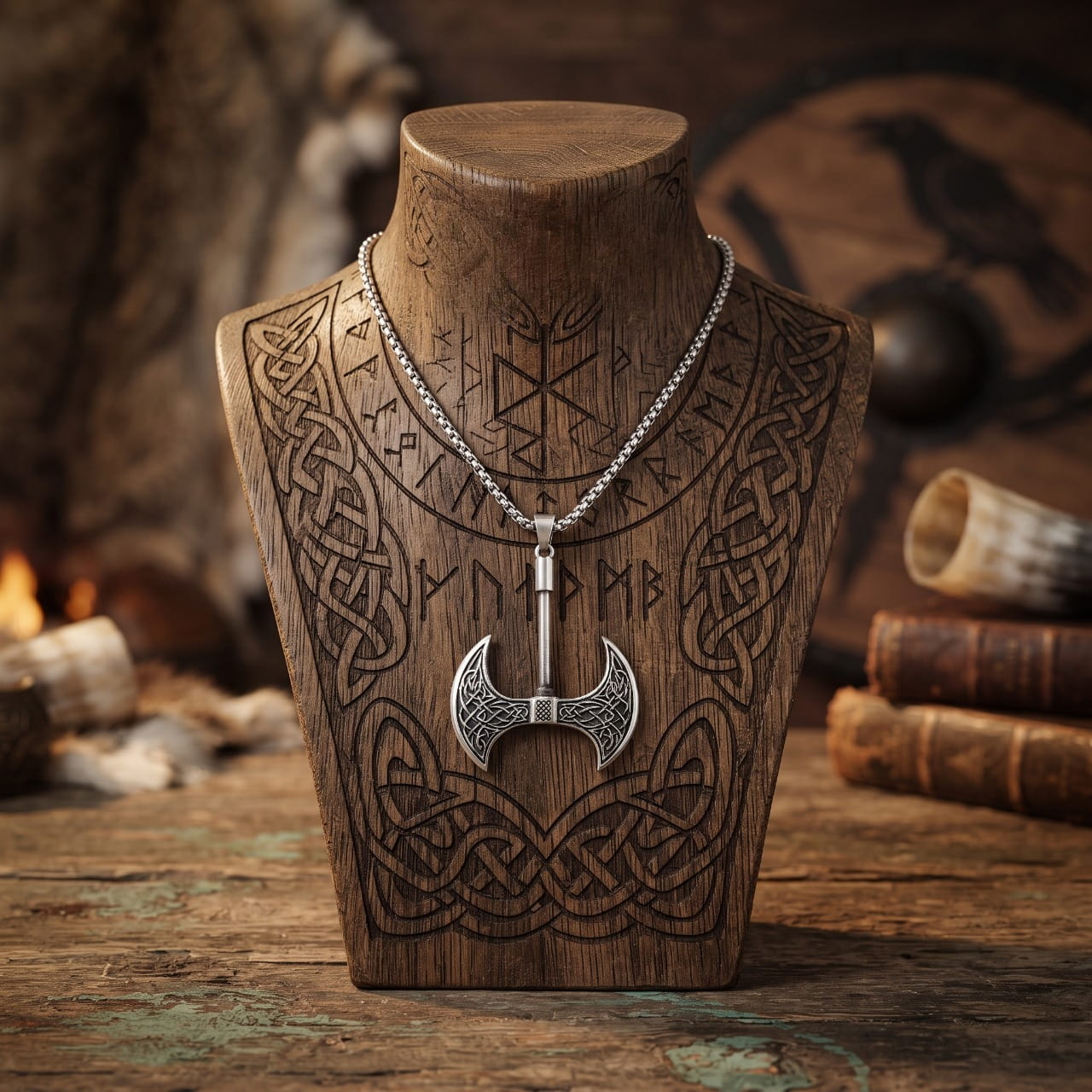
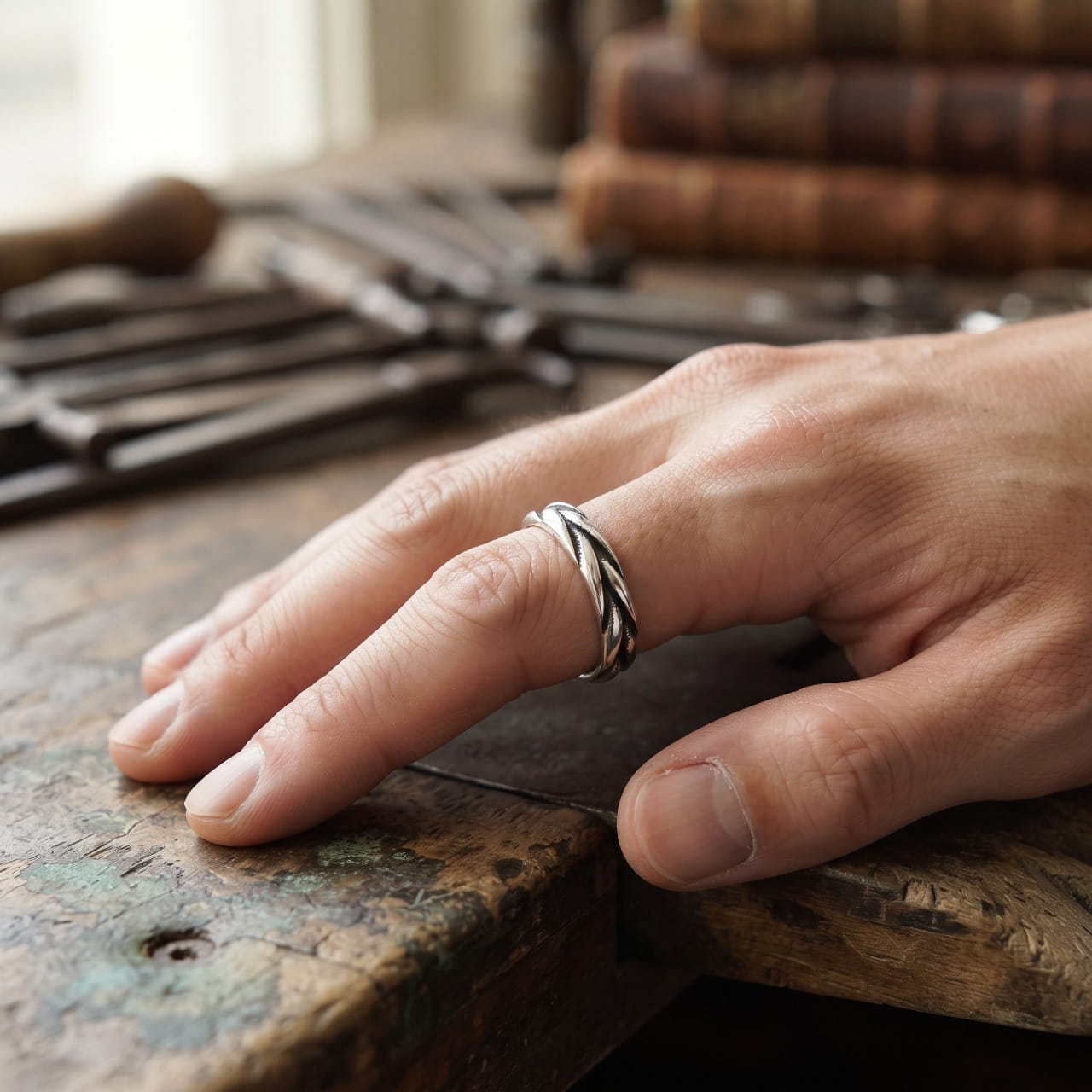
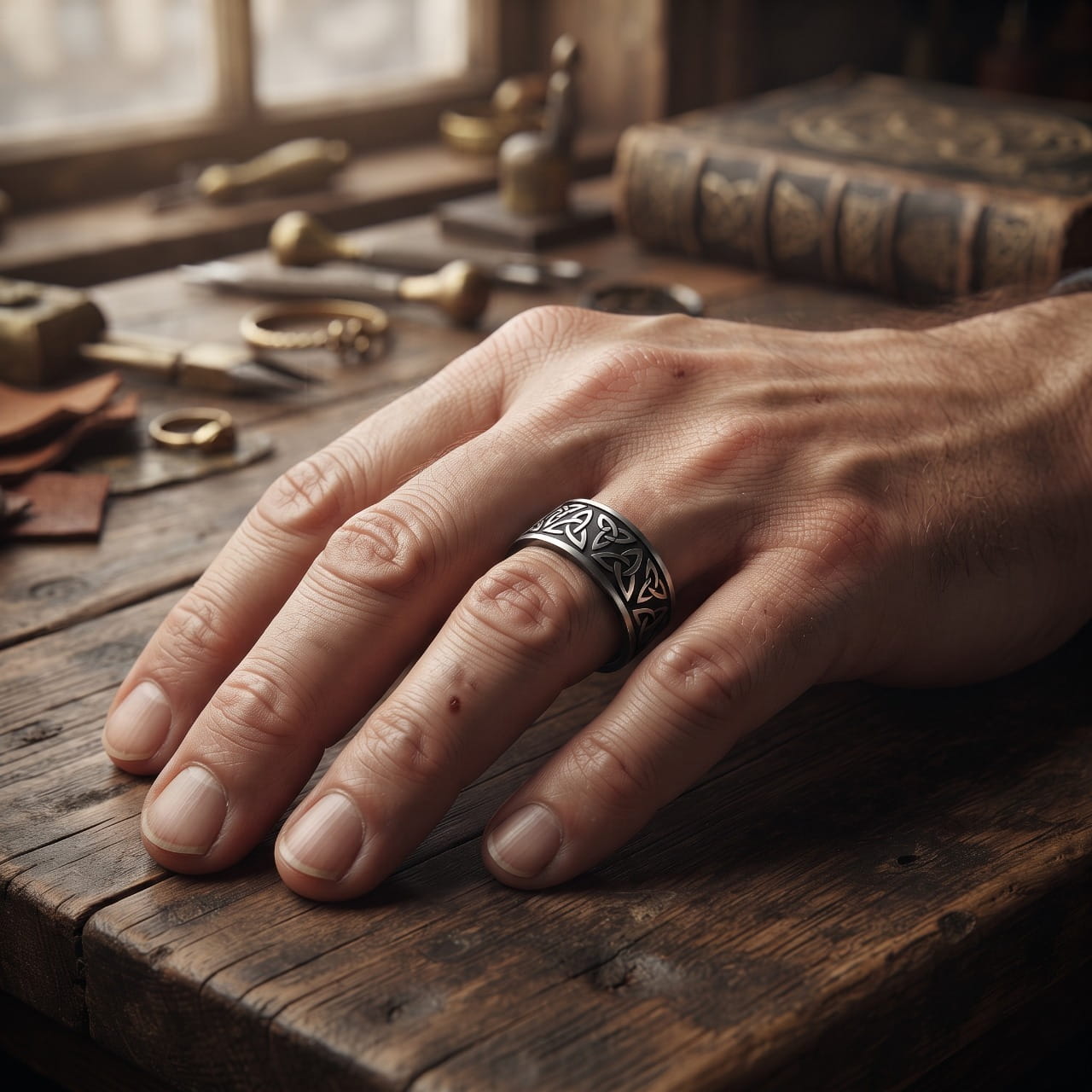
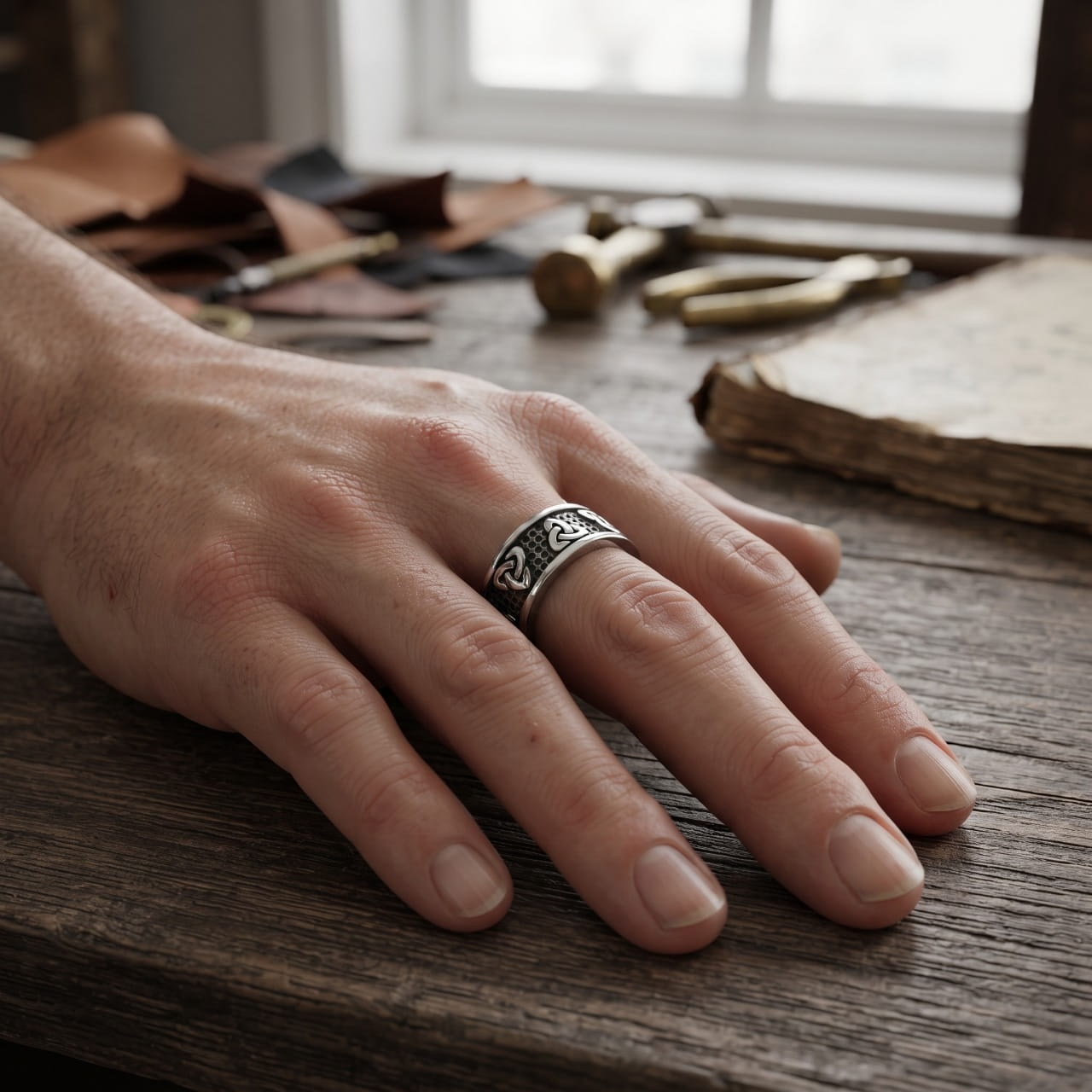
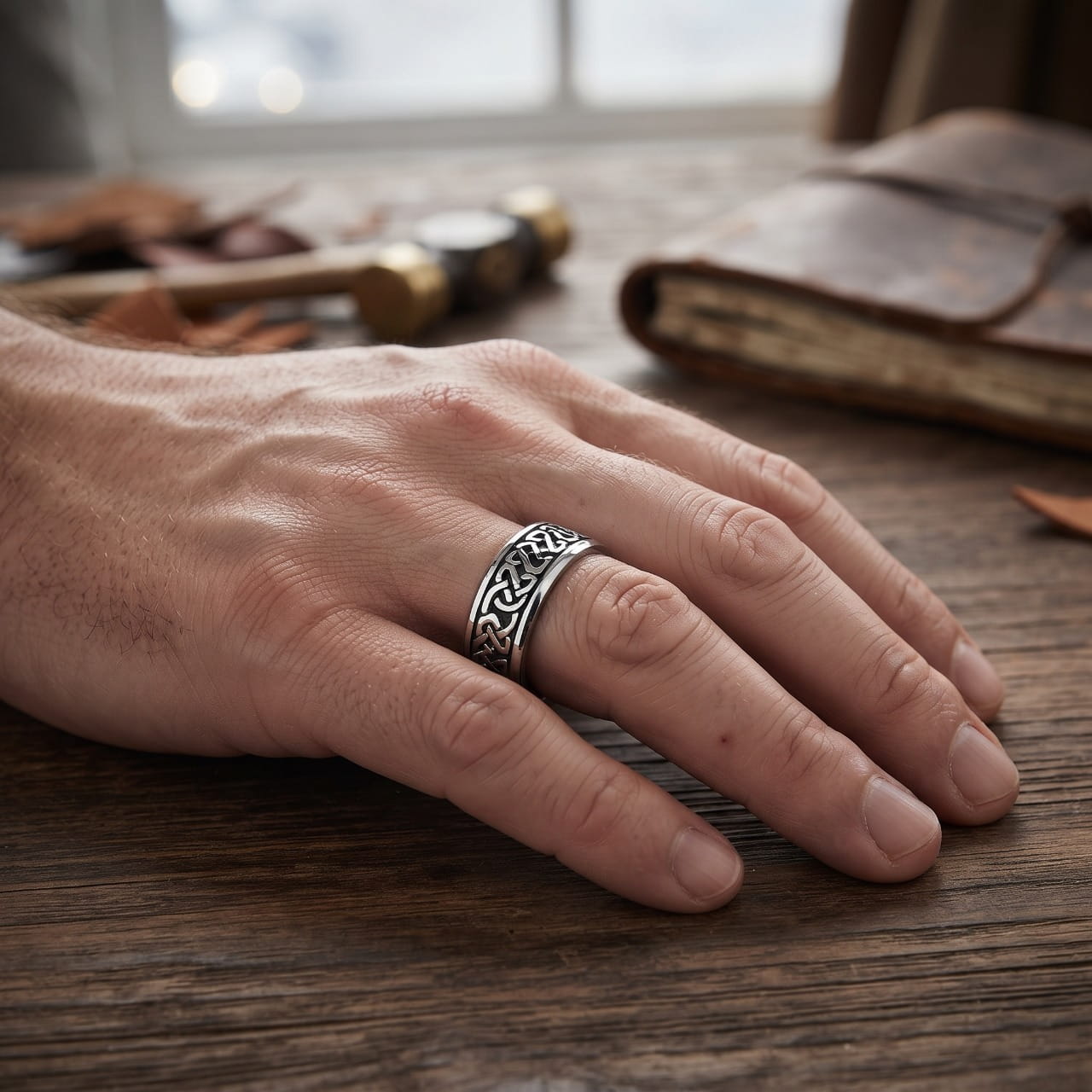
Triquetra & Nordic Interlace — en savoir plus
The triquetra — three interlaced arcs with no beginning or end — and interlace patterns more broadly, form the most recognizable graphic vocabulary of Scandinavian art. It is also the one that dates objects: archaeologists read knots the way others read a signature.
Interlace at Le Comptoir, format by format
This is our best-stocked symbol category after runes, and the most jewelry-oriented: a knot requires a flat surface and a bit of relief.
| Format | For whom |
|---|---|
| Rings | Signet rings and knot bands |
| Necklaces | Openwork or engraved medallions |
| Chalices and tankards | The banquet table |
| Earrings | Hoops and danglers |
| Wall plaque | The wall |
The ring dominates, and it's no coincidence: a ring is already a knot with no beginning or end. The motif and the object say the same thing. See our Viking rings for the full range.
An attested symbol, unlike others
The triquetra definitely appears on Viking Age objects. The most telling evidence is monetary: Olaf Guthfrithsson, Norse king of Dublin and later York, had silver pennies minted around 939-941, several types of which bear this three-branched knot on the reverse.
It is found engraved on Swedish runestones, notably in Uppland, and on various metal objects. These pieces circulated in a Scandinavian kingdom established in England, at a time when Christianity was taking root there — and the motif, with its three interlaced lobes having no beginning or end, lent itself admirably to a double reading: the Trinity for some, a beautiful knot for others.
Interlace, in detail
A clock for archaeologists
Scandinavian knots are not decorative by chance: they date objects. The sequence of styles describes a continuous evolution over nearly three centuries, and a specialist can place a piece within a few decades just by looking at how the animals are knotted.
- Broa and Oseberg styles (c. 780-850): the first gripping animals, stocky, grabbing everything they encounter.
- Borre style (c. 850-950): the chain of rings and the gripping beast, very geometric.
- Jelling style (c. 900-975): ribbon-shaped animals, in an S-shape, with thin bodies.
- Mammen style (c. 950-1020): more plant-like, bodies speckled with dots, as on the famous silver-inlaid Bjerringhøj axe.
- Ringerike style (c. 990-1050): scrolls lengthening into long volutes.
- Urnes style (c. 1050-1125): the culmination, everything reduced to thread-like serpents knotted in elegant loops.
The latter owes its name to the carved portal of the Urnes stave church in Norway, now a World Heritage site. A thousand years later, it is still the graphic vocabulary immediately recognized as "Viking."
Celtic or Nordic?
The confusion is constant and deserves a nuanced answer, because both clear-cut answers are wrong.
Insular interlace — that of the Book of Kells, the Lindisfarne Gospels, Irish crosses — and Scandinavian interlace are two distinct traditions, with their own rules and their own chronology. But they truly met: the Irish Sea, the Kingdom of Dublin, the Isle of Man, and the Hebrides were zones of intense contact for two centuries, and craftsmen exchanged their motifs in both directions.
Calling an Urnes interlace a "Celtic knot" is therefore inaccurate. Saying there is no connection is equally so.
What "no beginning or end" means
The triquetra is what mathematicians call a trefoil knot: a closed curve that cannot be undone without cutting it. This is the property that underlies all its symbolic readings — eternity, the cycle, the indissoluble.
It is also what explains its Christian success: three distinct lobes forming a single continuous figure is a convenient illustration of the Trinity. The motif served both camps without changing a line.
Recognizing a correct interlace
Only one criterion, but it is ruthless: the over-under alternation. At every crossing, the band that passed over must pass under at the next crossing. A knot where two bands always overlap in the same direction is not an interlace, it is a drawing of stacked bands.
On a piece in relief, this can be verified by touch as well as by sight. On a flat engraved design, look at the interruptions in the line: they must alternate regularly around the motif.
The knot as protection
There is a practical reason for the omnipresence of interlace, and it has nothing mystical about it to begin with. In a good portion of European folklore, the knot retains: it traps what might want to pass, it forces one to follow a path. Cords are knotted to hold back the wind, braids are drawn on thresholds, tracery is engraved on lintels.
The idea is simple: a malevolent entity that encounters an endless path must follow it indefinitely and never enters. It is the same reasoning that leads to compass-drawn six-petalled rosettes on the beams of old houses, which building specialists classify as apotropaic marks.
There is no proof that the Scandinavians formulated things this way. But among them, the motif covers exactly the places one protects: church doors, weapon handles, clasps, thresholds.
Do not confuse it with the Valknut
Both have three branches, and that is the only thing they share. The triquetra is made of three curved arcs forming rounded lobes. The Valknut is made of three triangles with sharp angles, and has nine points. One is round, the other is angular.
Materials at Le Comptoir
The jewelry is made of stainless steel, engraved or openwork. Openwork is particularly well-suited to interlace, since the void between the bands is part of the motif: a solid knot loses the legibility of the braiding.
The chalices and the tankard combine stainless steel, in contact with the drink, with a carved resin shell that bears the interlace in relief. The wall plaque is painted resin.
Care
An interlace is a sebum trap: the grooves of the braiding quickly become clogged and the motif loses its contrast before losing its shine. Warm water, mild soap, a soft toothbrush passed in the direction of the bands, abundant rinsing, drying with a cloth.
For chalices and tankards: hand wash, never in the dishwasher — the heat and harsh detergents attack the resin and its decor. Rinse with warm water immediately after use; mead and beer leave sugars that stick in the recesses.
How to wear it
A word on ring size, because it is the number one return reason. Our rings are marked in French sizing: the size corresponds to the inner circumference in millimeters minus forty — a size 60 is 60 mm around the finger.
To measure it without a reference ring, wrap the finger with a strip of paper, mark the overlap point, and measure the length. Take the measurement at the end of the day, at normal temperature: finger size easily varies by half a size between morning and evening, more so in high heat. For a wide signet ring, count half a size larger than for a thin band, as the knuckle is harder to pass.
As for combinations, interlace is the only one of our motifs that accumulates well with itself: a knot ring and pendant do not clash, because the motif is a texture as much as a symbol.
Offering an interlace
It is the safest gift in the symbol category along with the world tree. The endless knot is read as a lasting bond, making it a natural piece for an anniversary, a wedding, or an old friendship — without the definitive nature of a wedding band.
It has a second advantage: it is a motif that declares nothing. Where a wolf or a hammer displays a stance, an interlace remains open. If you do not know the recipient's tastes well, it is the least risky choice. The complete Viking Jewelry category allows you to compare formats.
Frequently Asked Questions
Is the triquetra a Viking or Christian symbol?
Both, successively and then simultaneously. It appears on pagan Scandinavian coins of the 10th century and serves as an emblem of the Trinity in Christian art. It is precisely this ambivalence that allowed it to survive conversion without disappearing.
Why aren't all your interlaces triquetras?
Because the collection brings together a graphic family, not a single sign. It includes the three-lobed triquetra, but also four-branched knots, Borre-style ring chains, and Urnes ribbons. All fall under the same vocabulary.
Openwork or engraved?
Openwork if the piece is large: the void between the bands makes the motif breathe and the braiding can be read at a glance. Engraved if the piece is small or subject to impacts — a ring worn every day holds up better solid than in cut-out.
Are the chalices dishwasher safe?
No. The carved resin shell cannot withstand heat or harsh detergents. Hand wash, warm water, immediate drying. This is the only constraint for these pieces.
How to verify that an interlace is properly braided?
Follow a band with your finger or eye and count the crossings. At each one, it must alternate: over, under, over, under. If it passes twice in a row in the same direction, the motif is not a braiding but a stacking — this is the most frequent defect of cheap reproductions, and it is immediately visible once you know how to look for it.
What ring width for an interlace?
Six millimeters is a good floor. Below that, the braiding must be reduced to a point where the crossings close up and the motif becomes an indistinct frieze. Between 6 and 10 mm, the interlace reads well and the ring remains comfortable. Beyond that, you enter signet ring territory, which requires half a size more.
Does an interlace have a precise meaning?
No fixed meaning, unlike the hammer or the Valknut. It is a symbolic texture: it evokes continuity, connection, the absence of an end, without any source attributing a set meaning to it. That is what makes it so easy to give as a gift.
📖 To go further: the 17 Viking symbols to place the triquetra among the others, our Viking jewelry guide, and our dossier on the Viking blacksmith and his decorative techniques.