
Filters
116 products
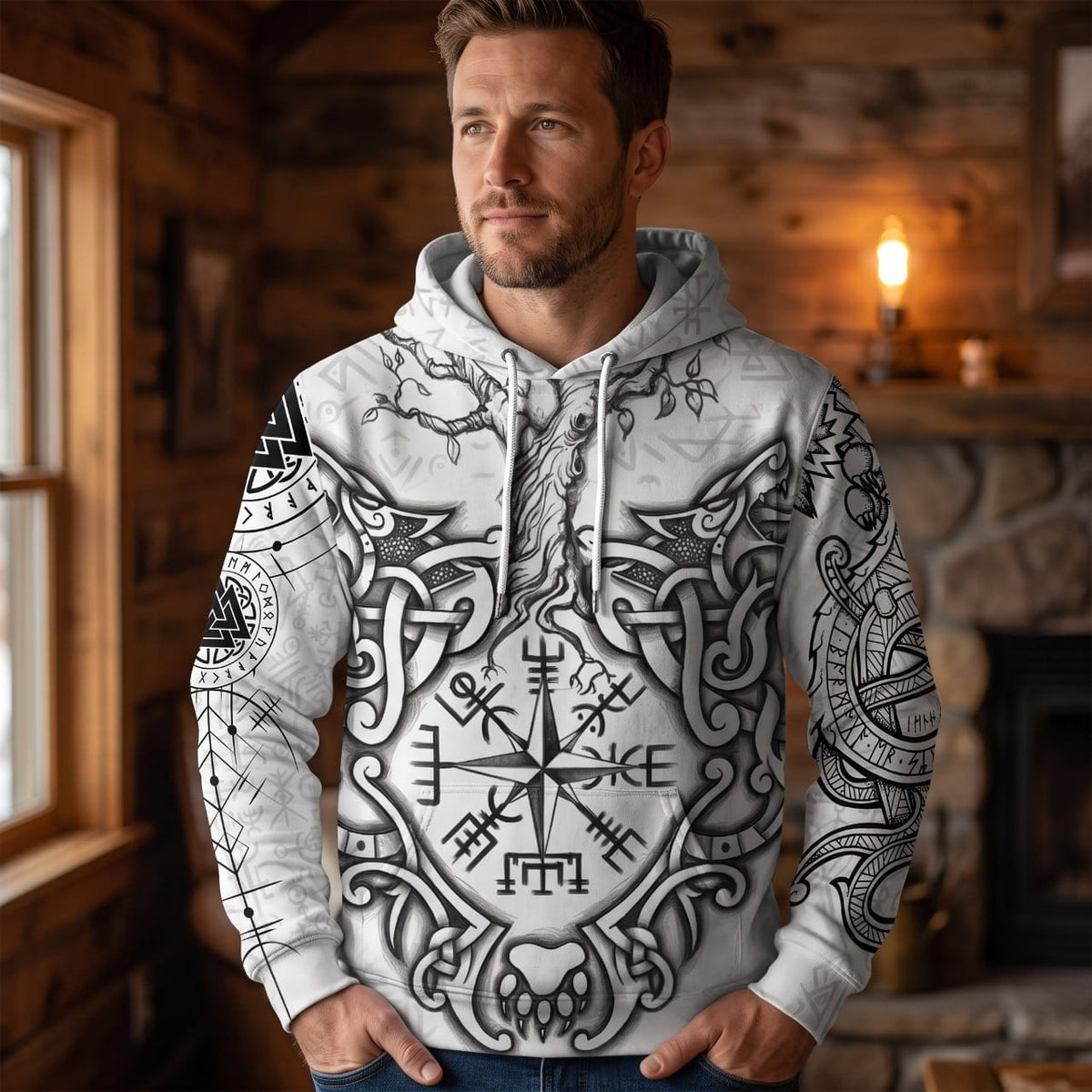
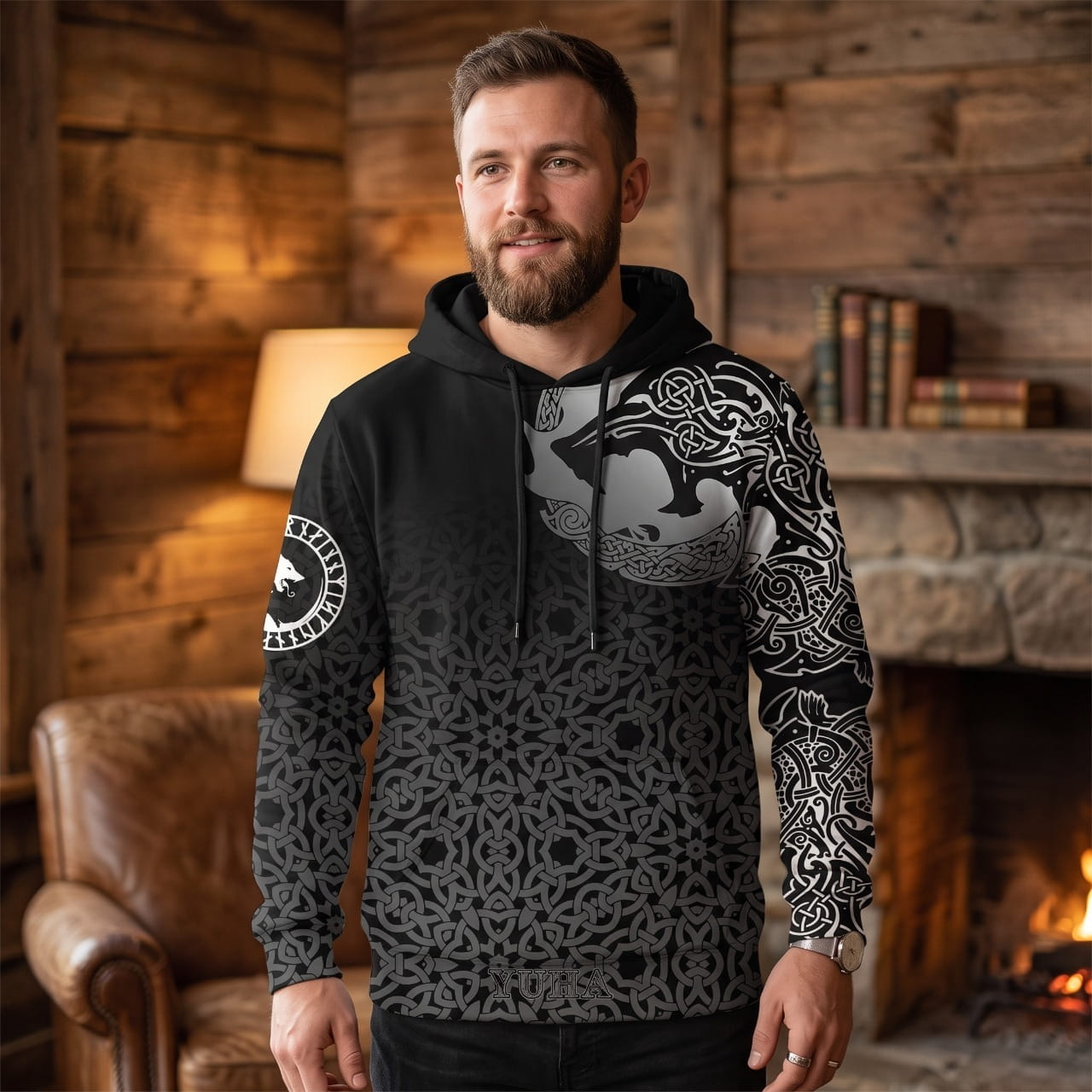
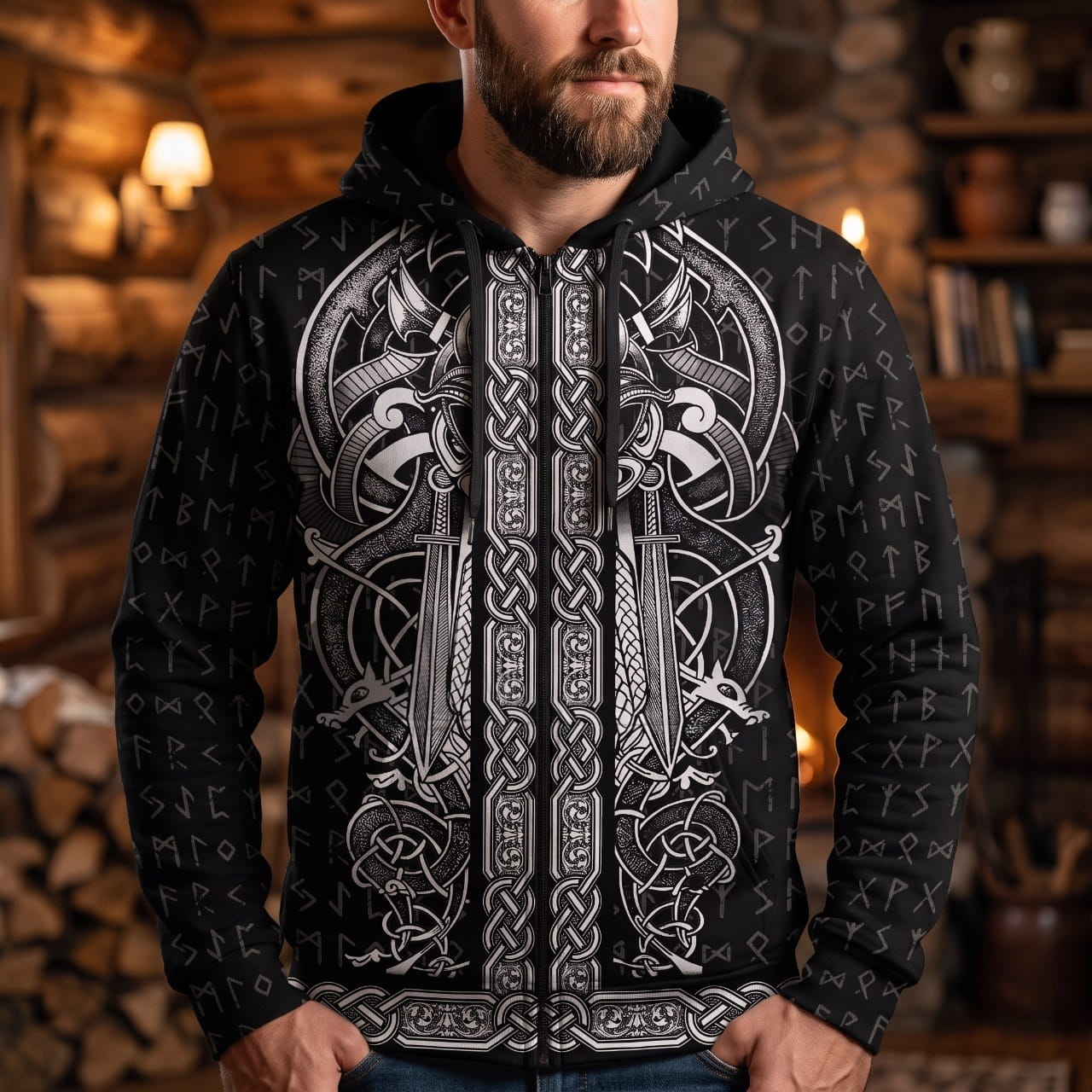
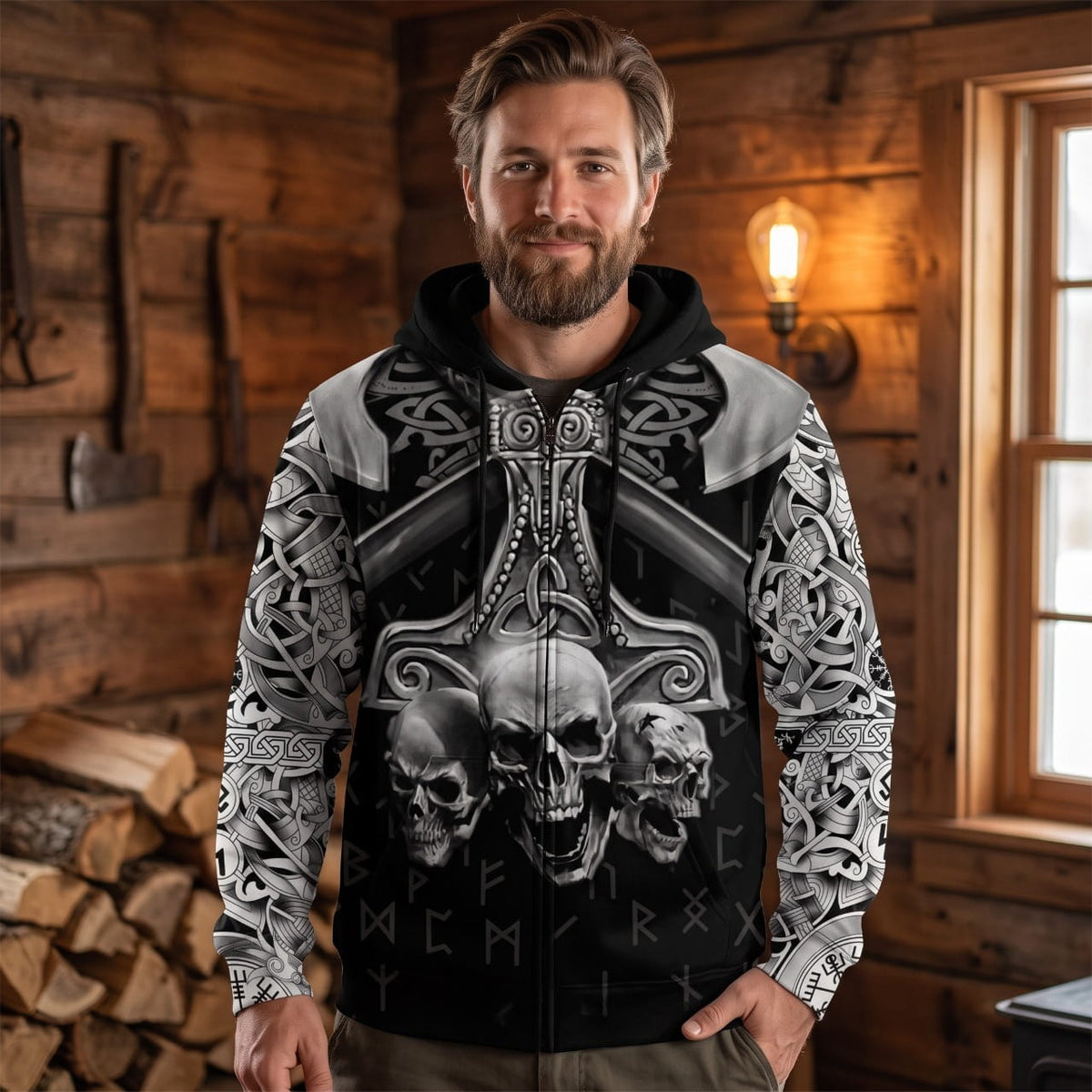
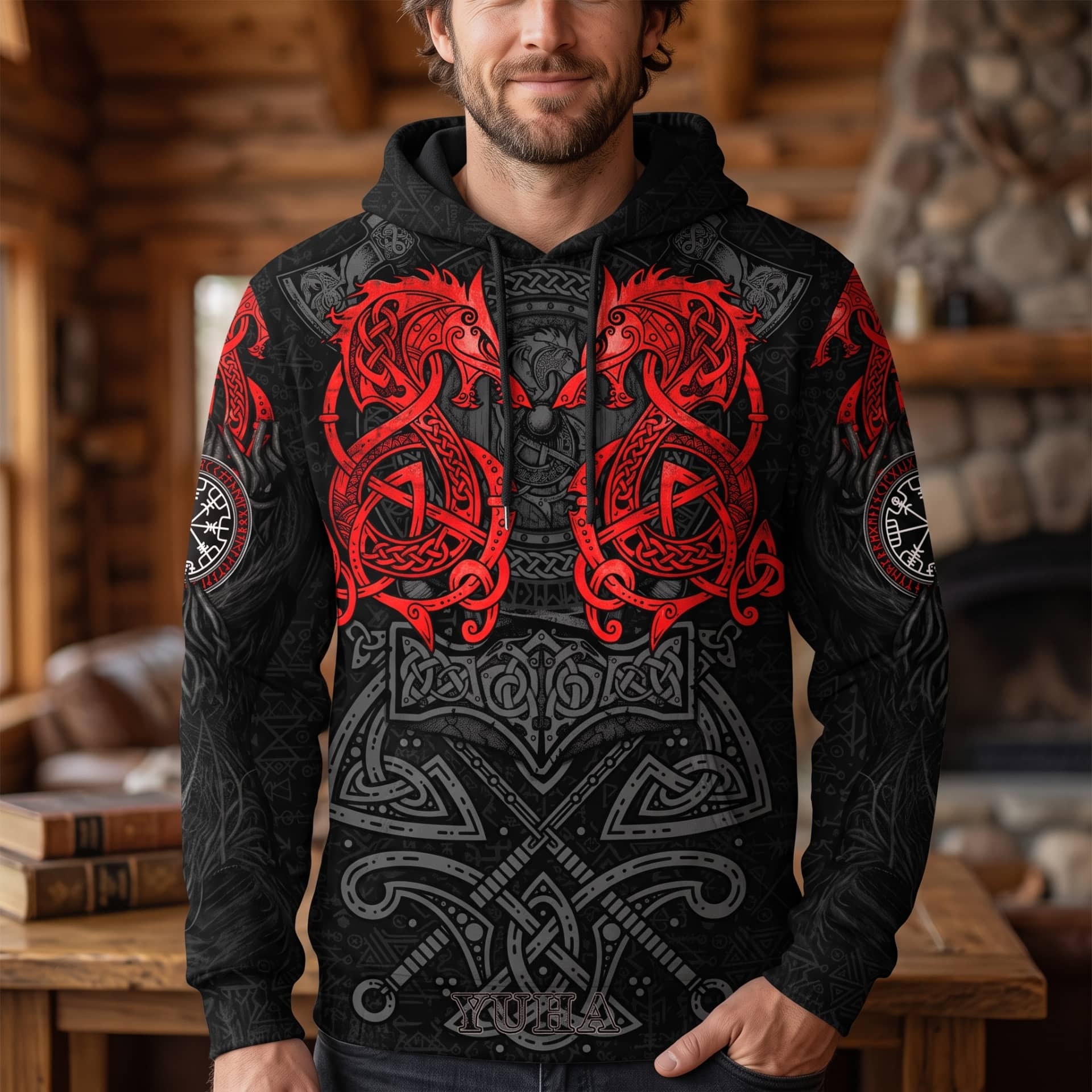
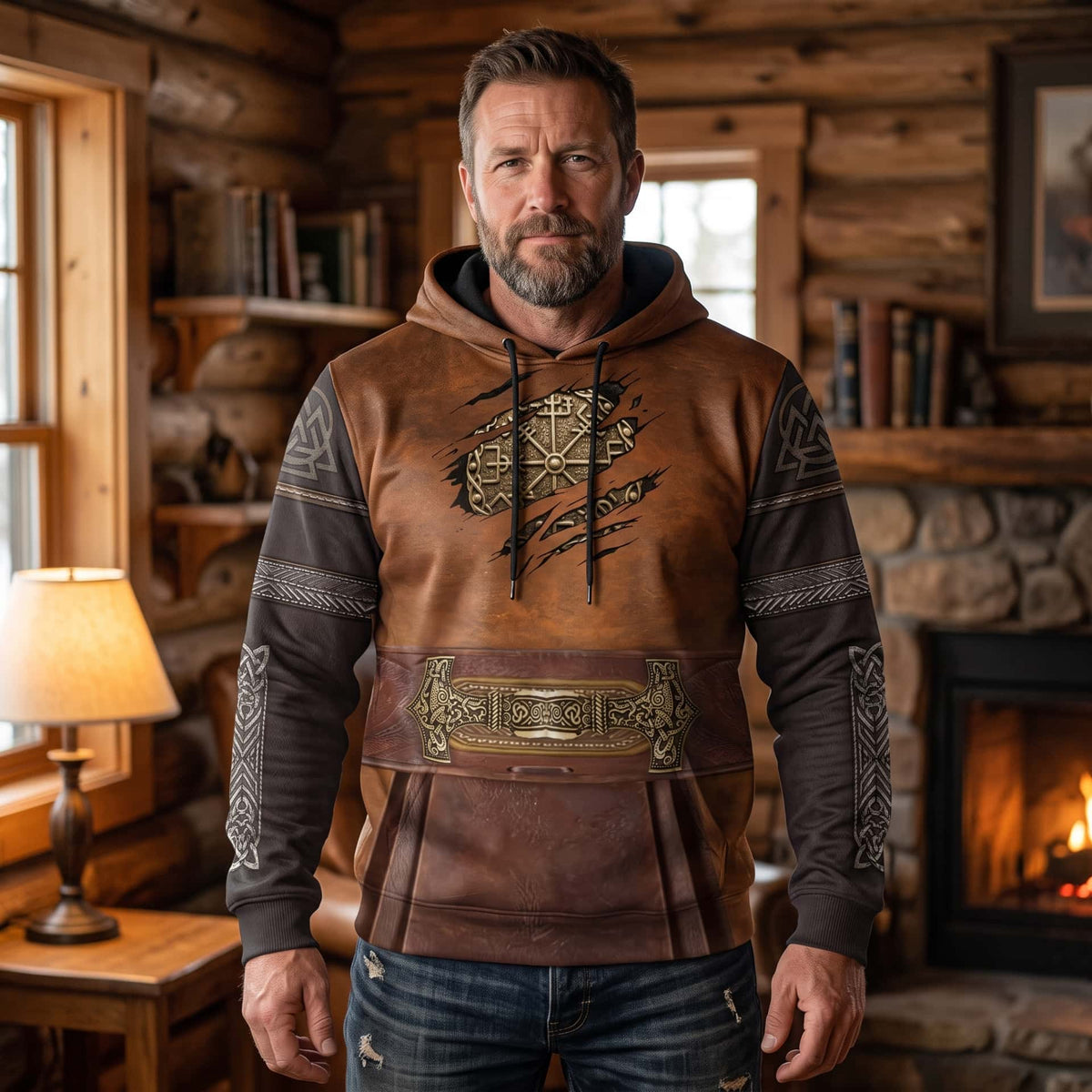
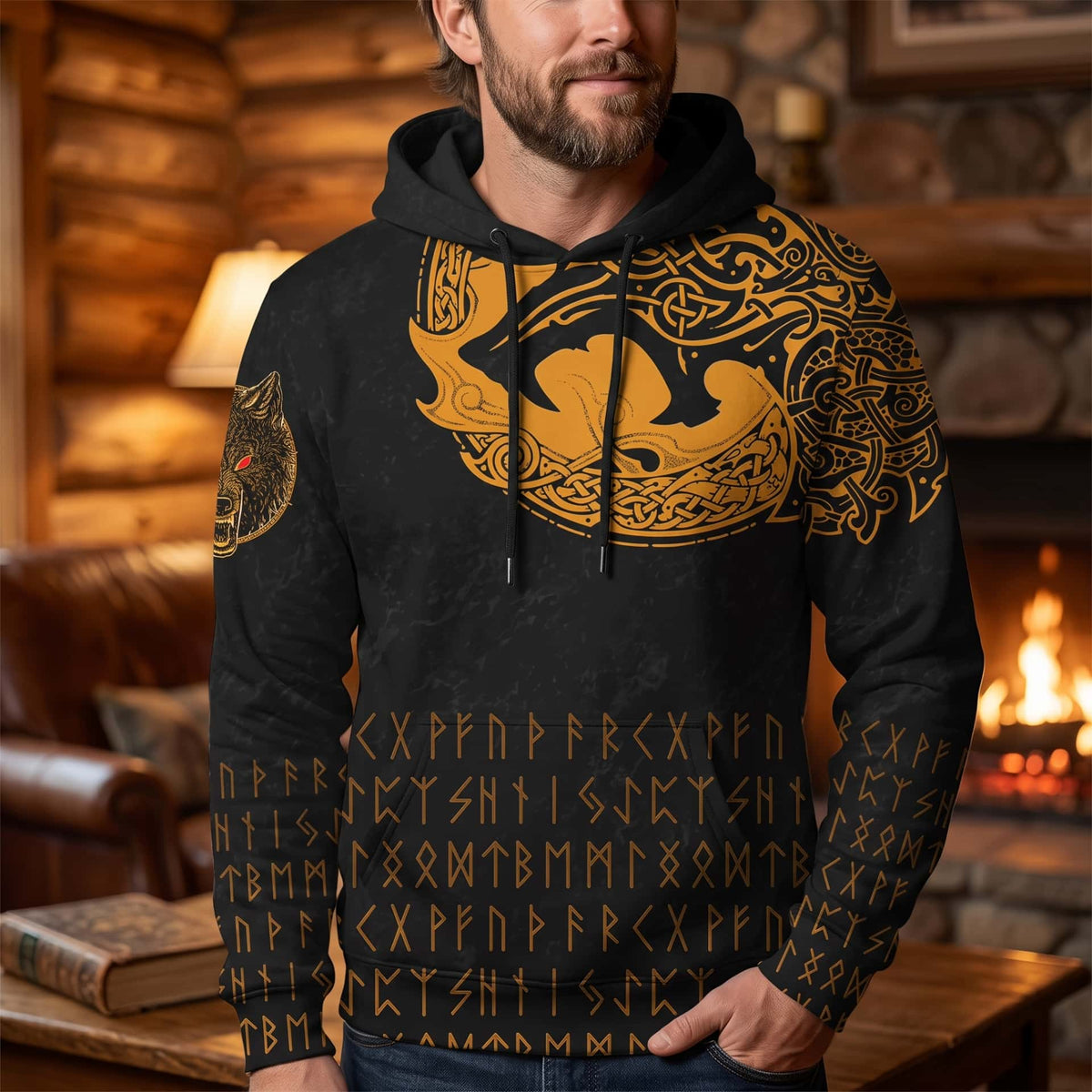
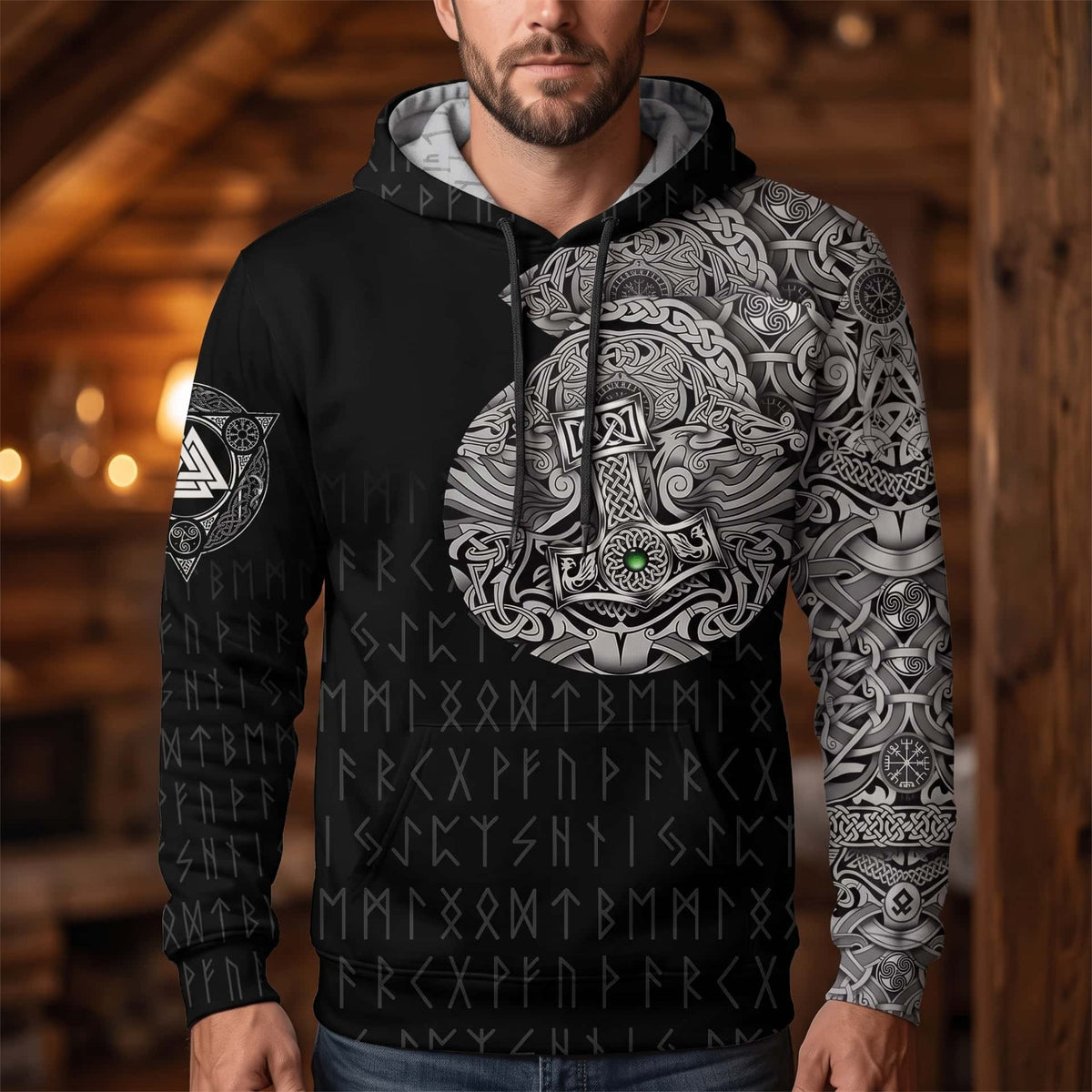
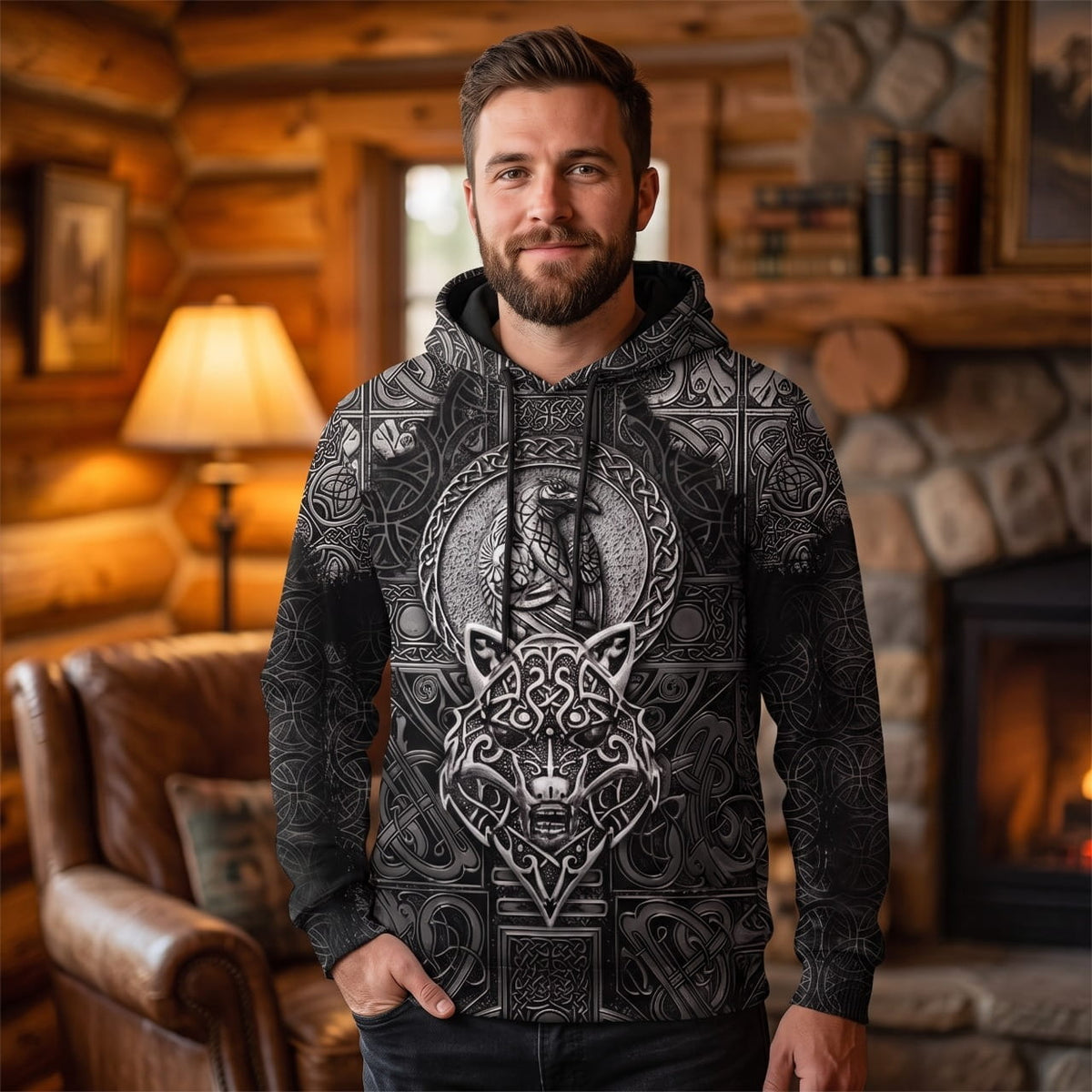
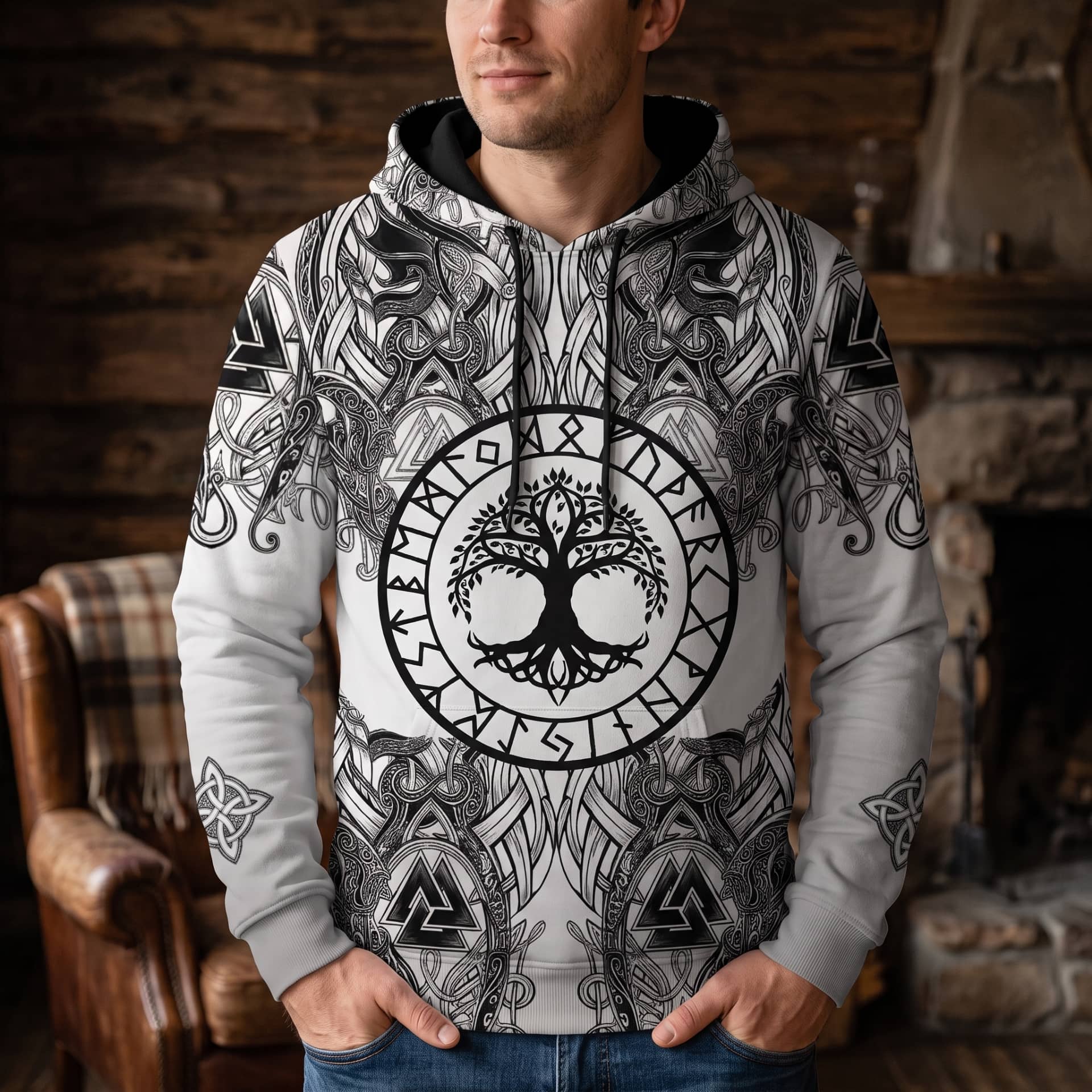
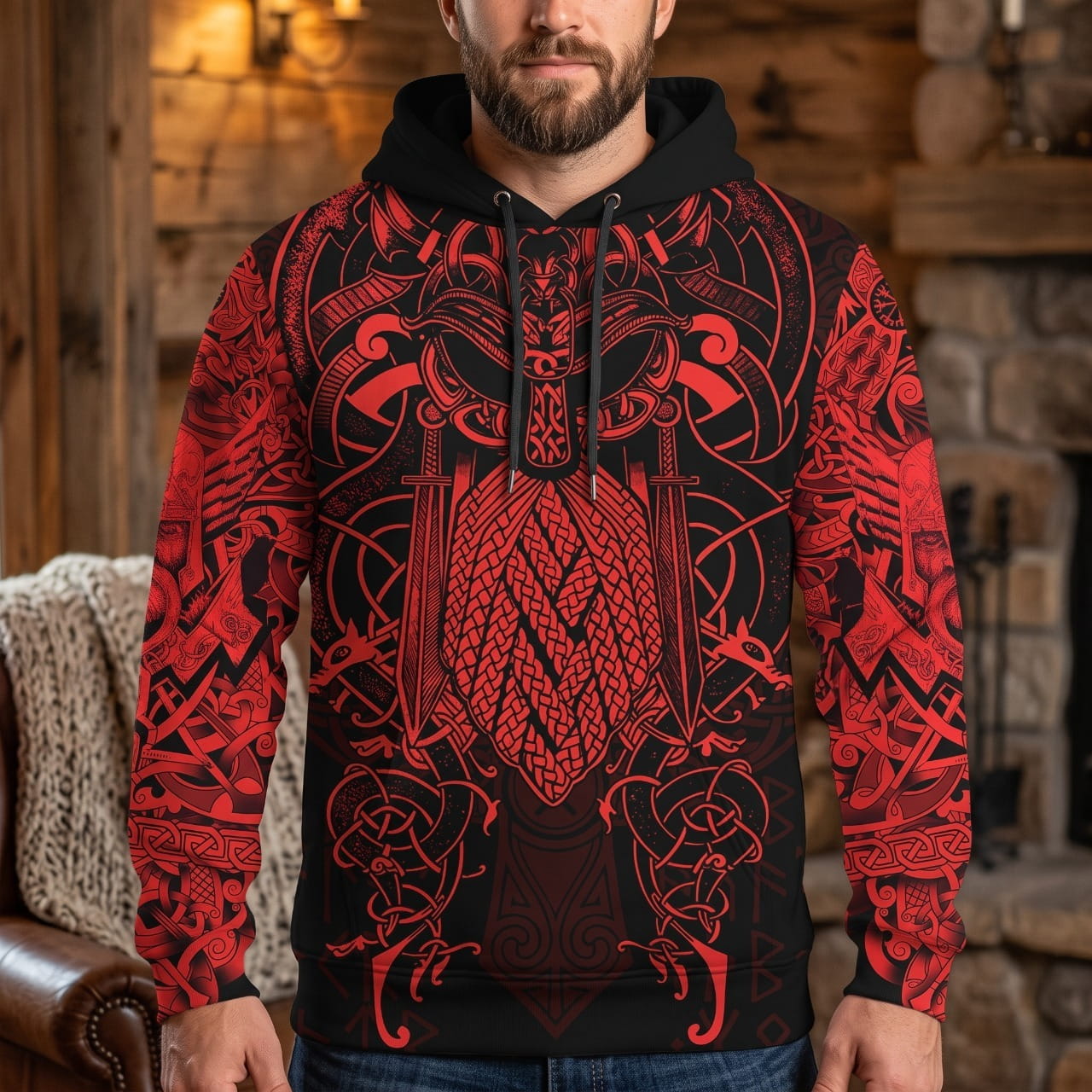
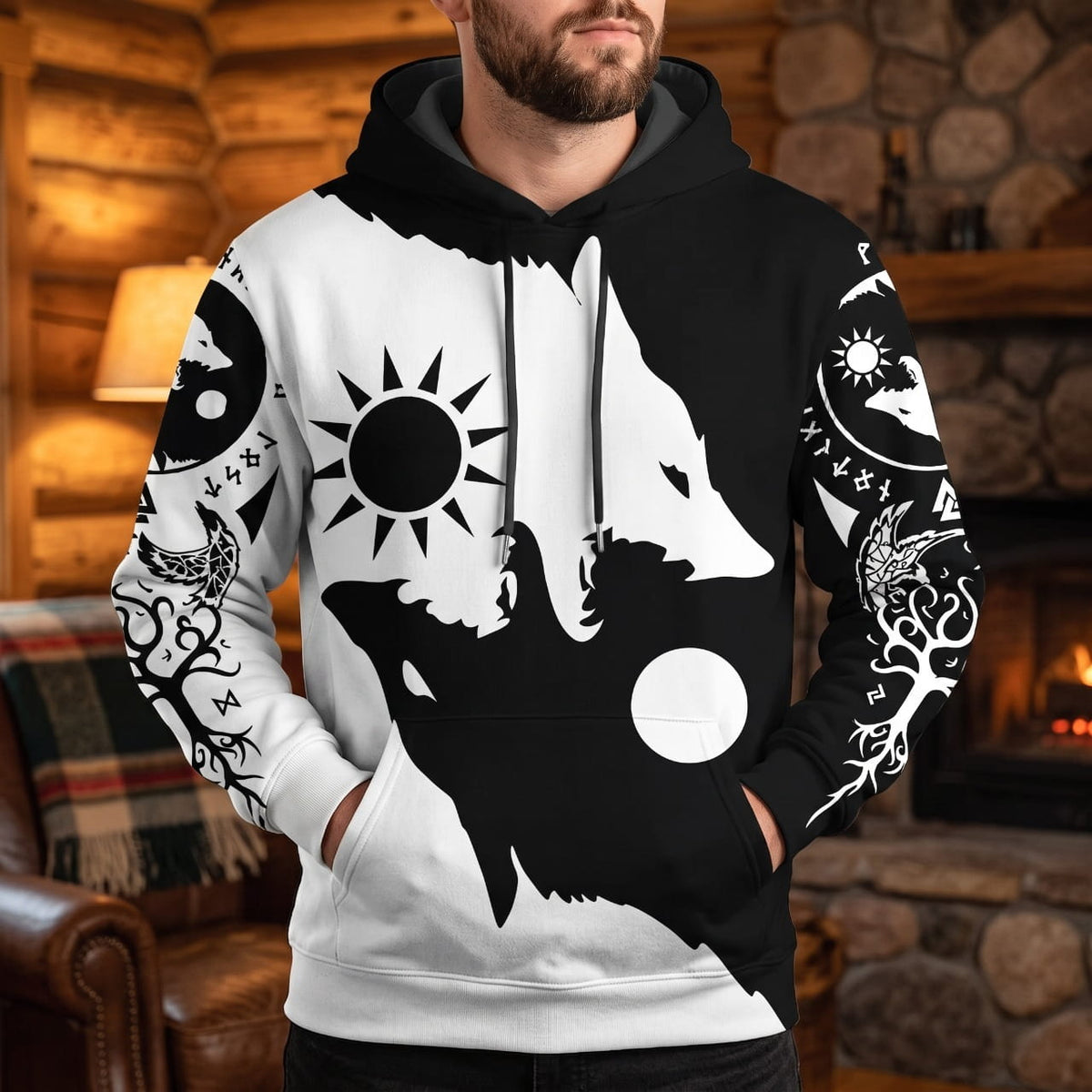
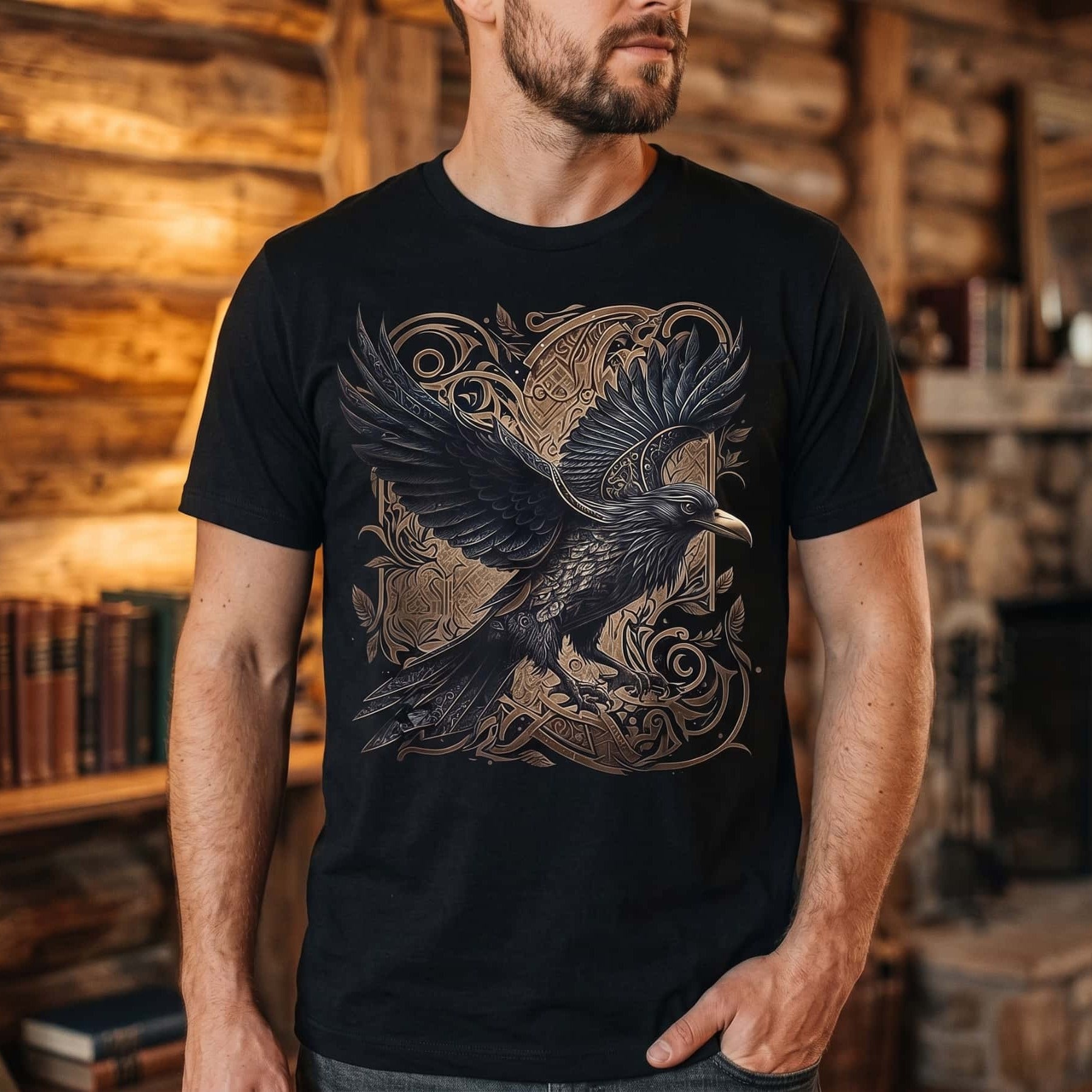
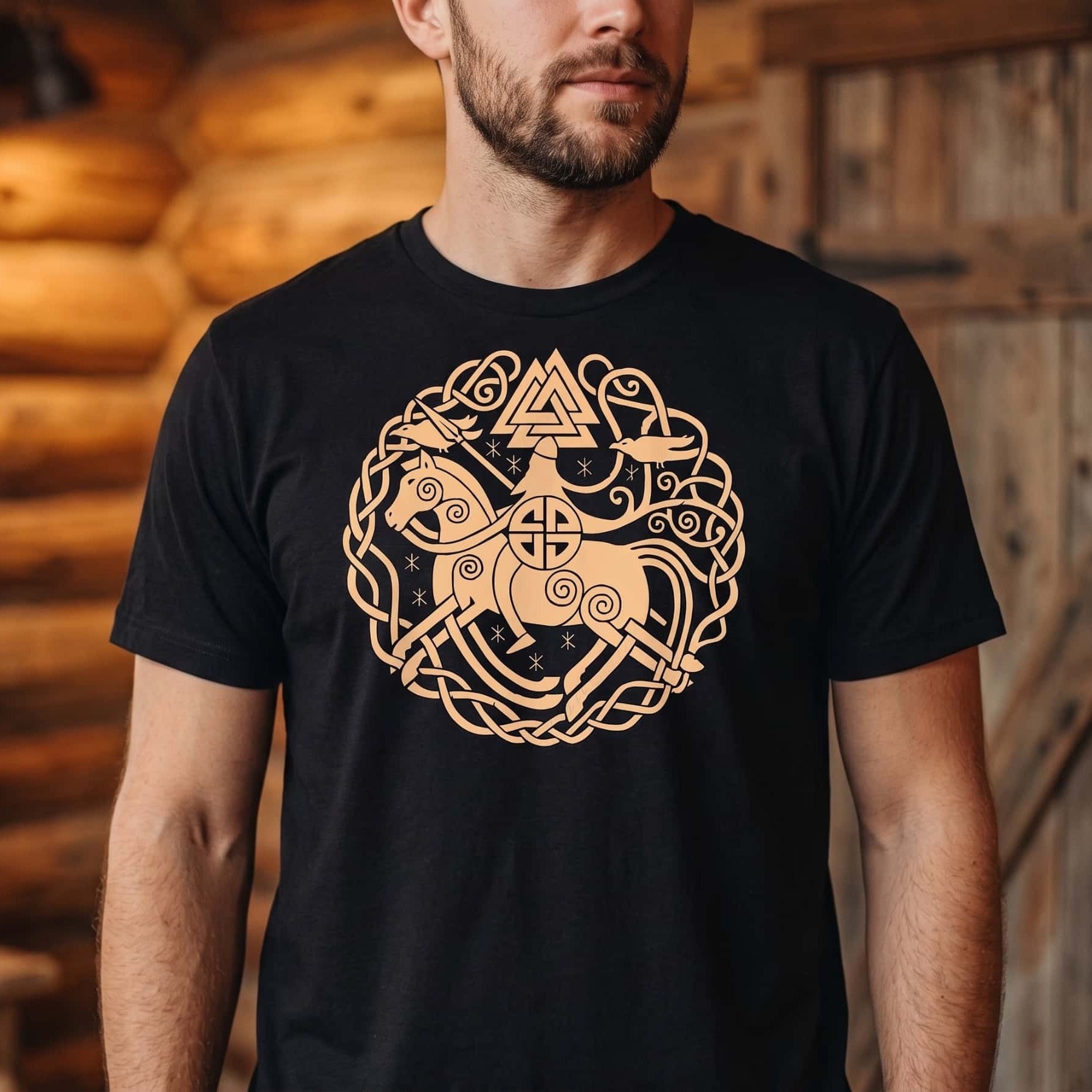
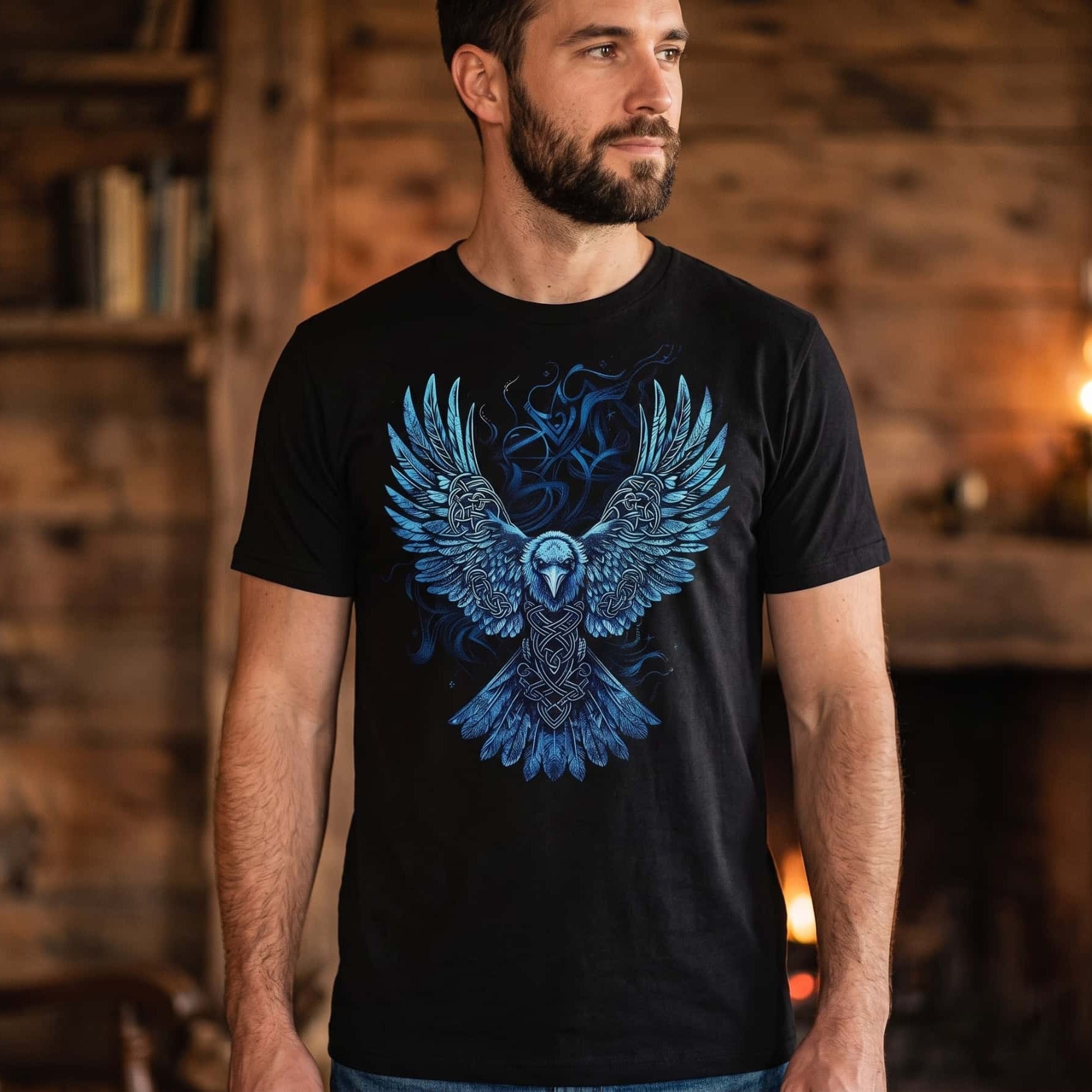
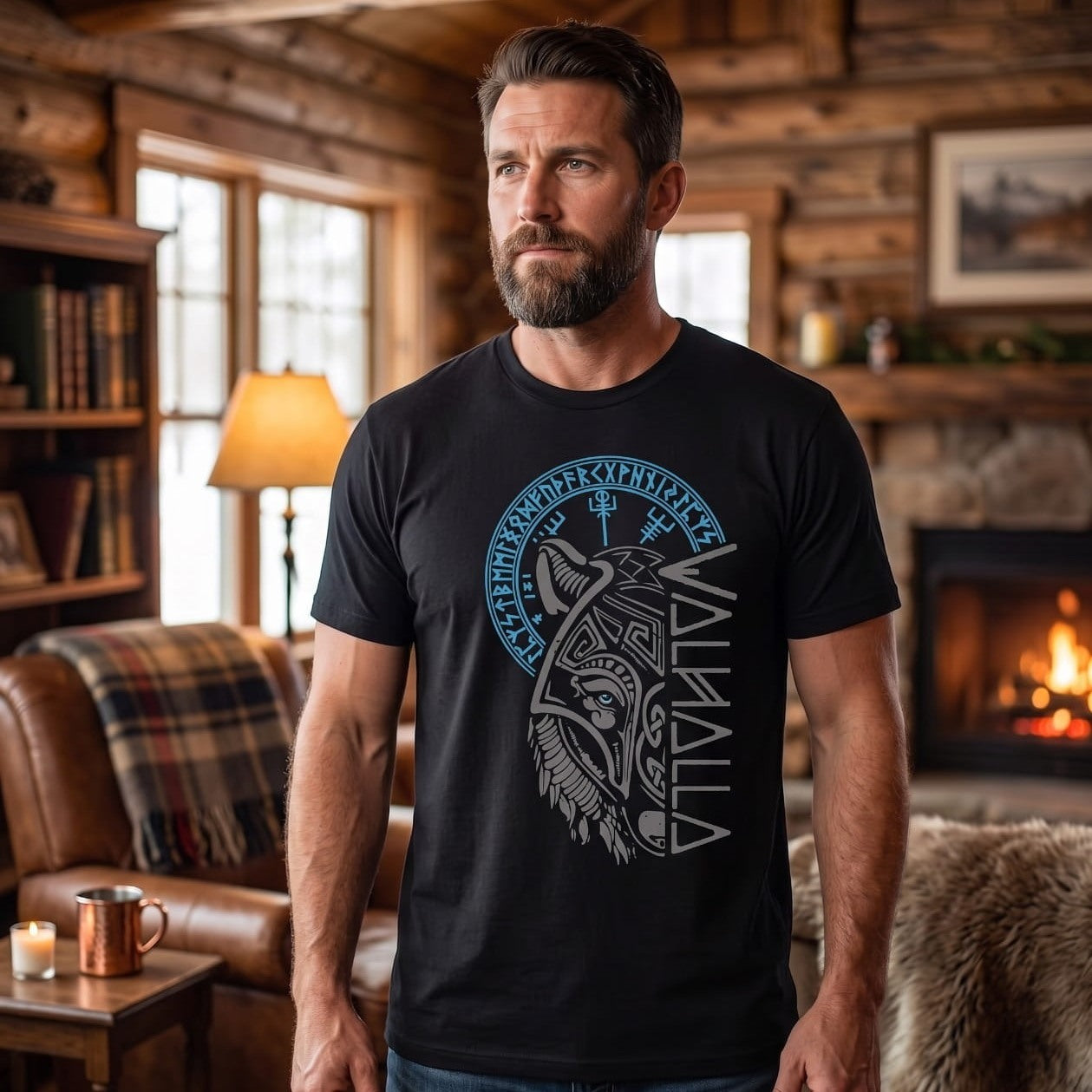
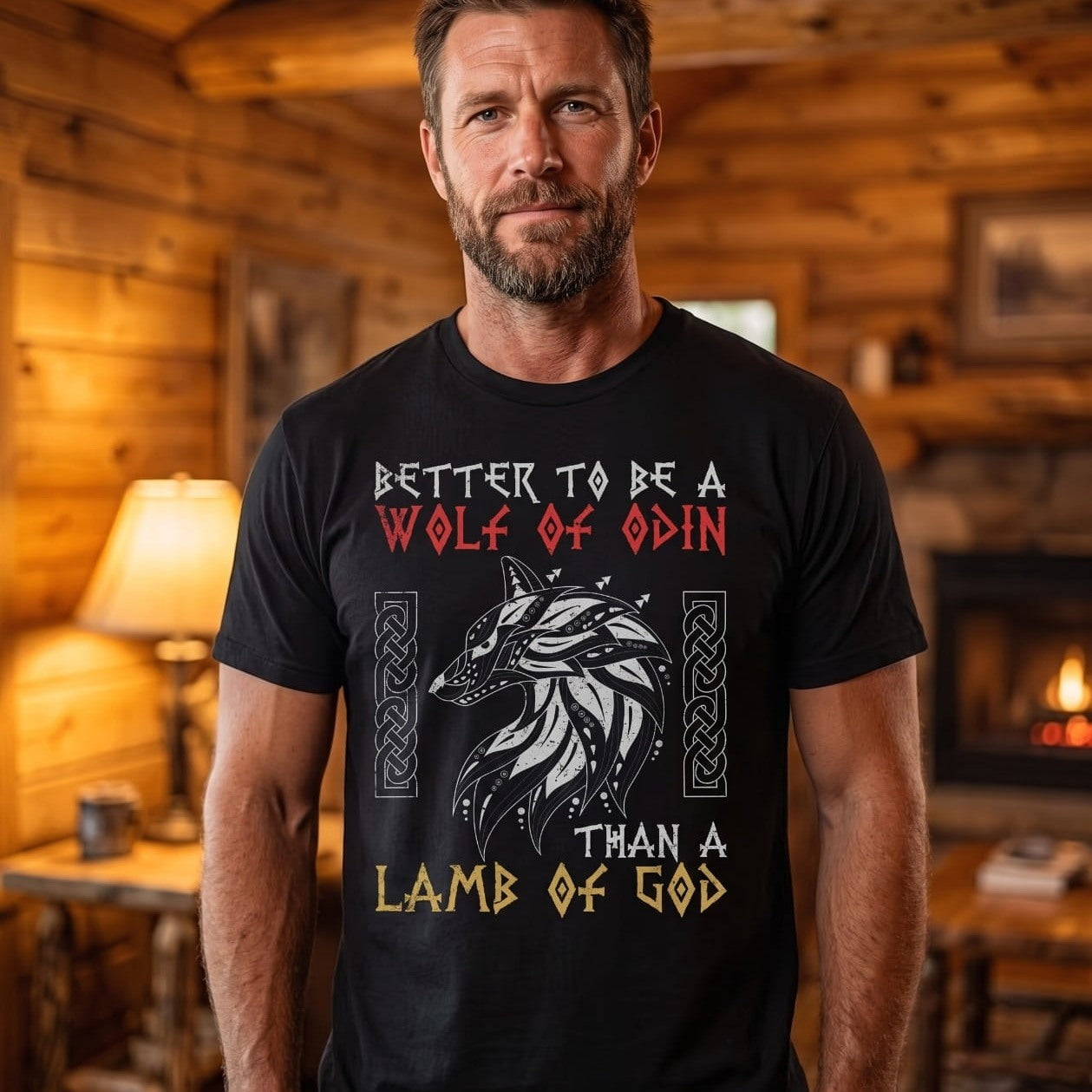
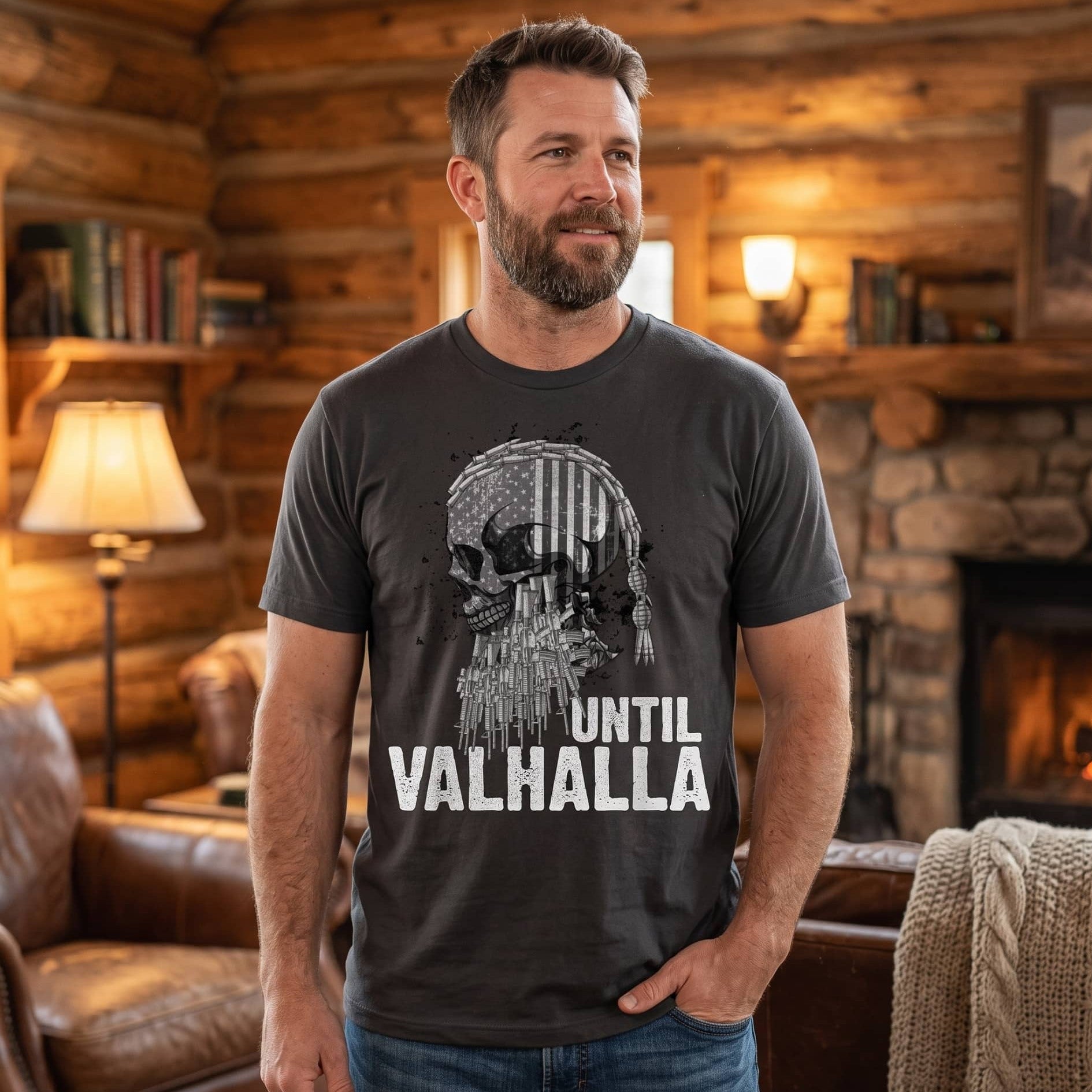
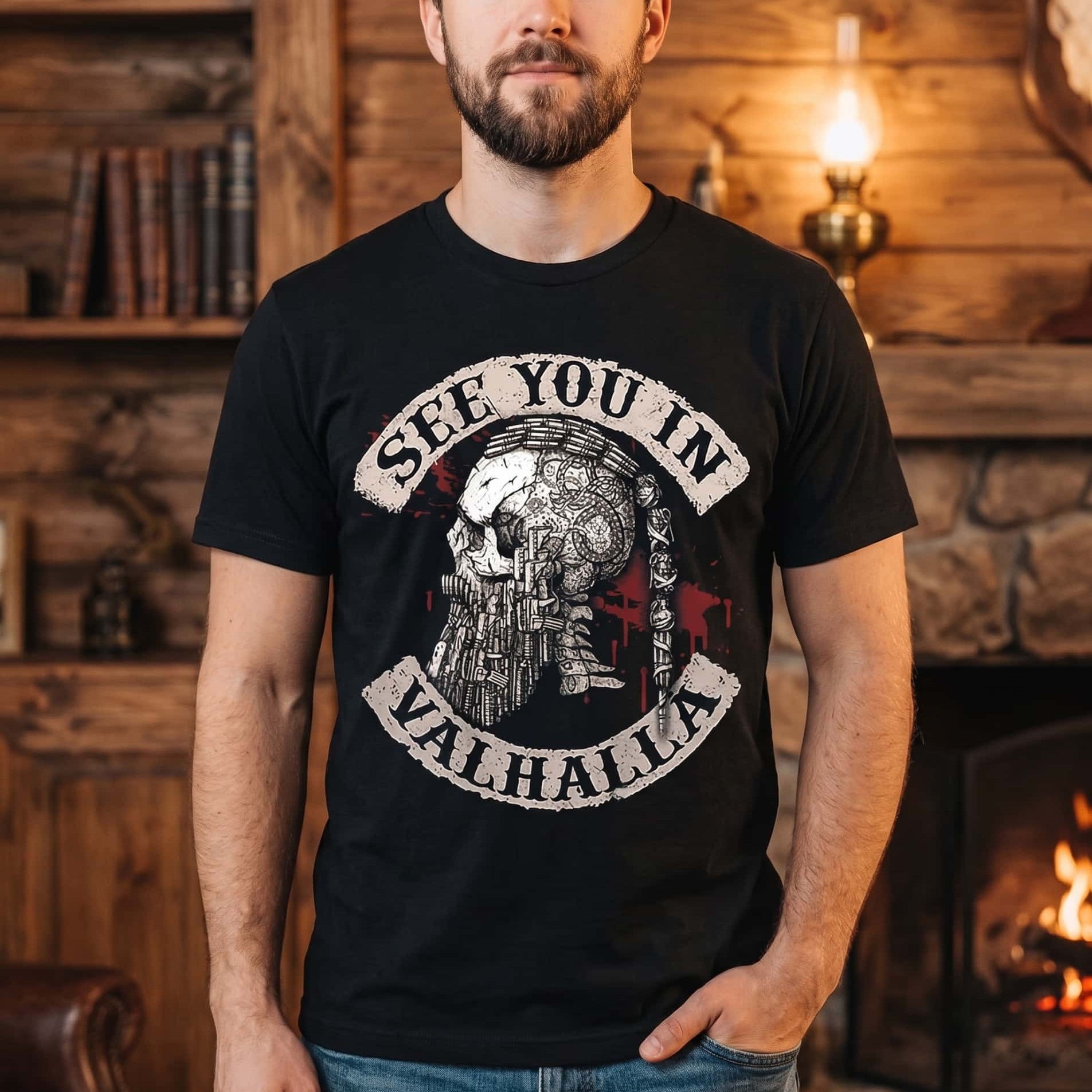
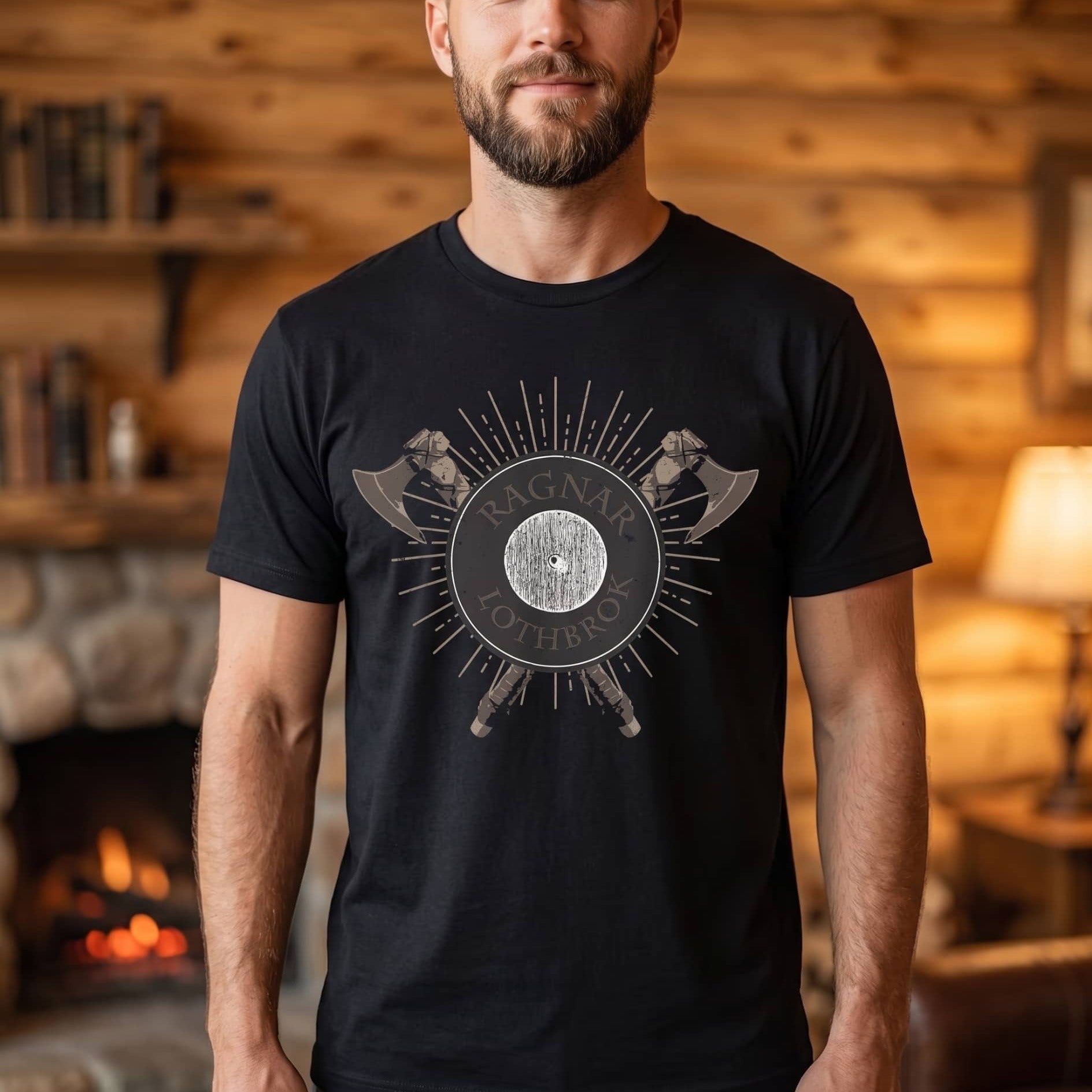
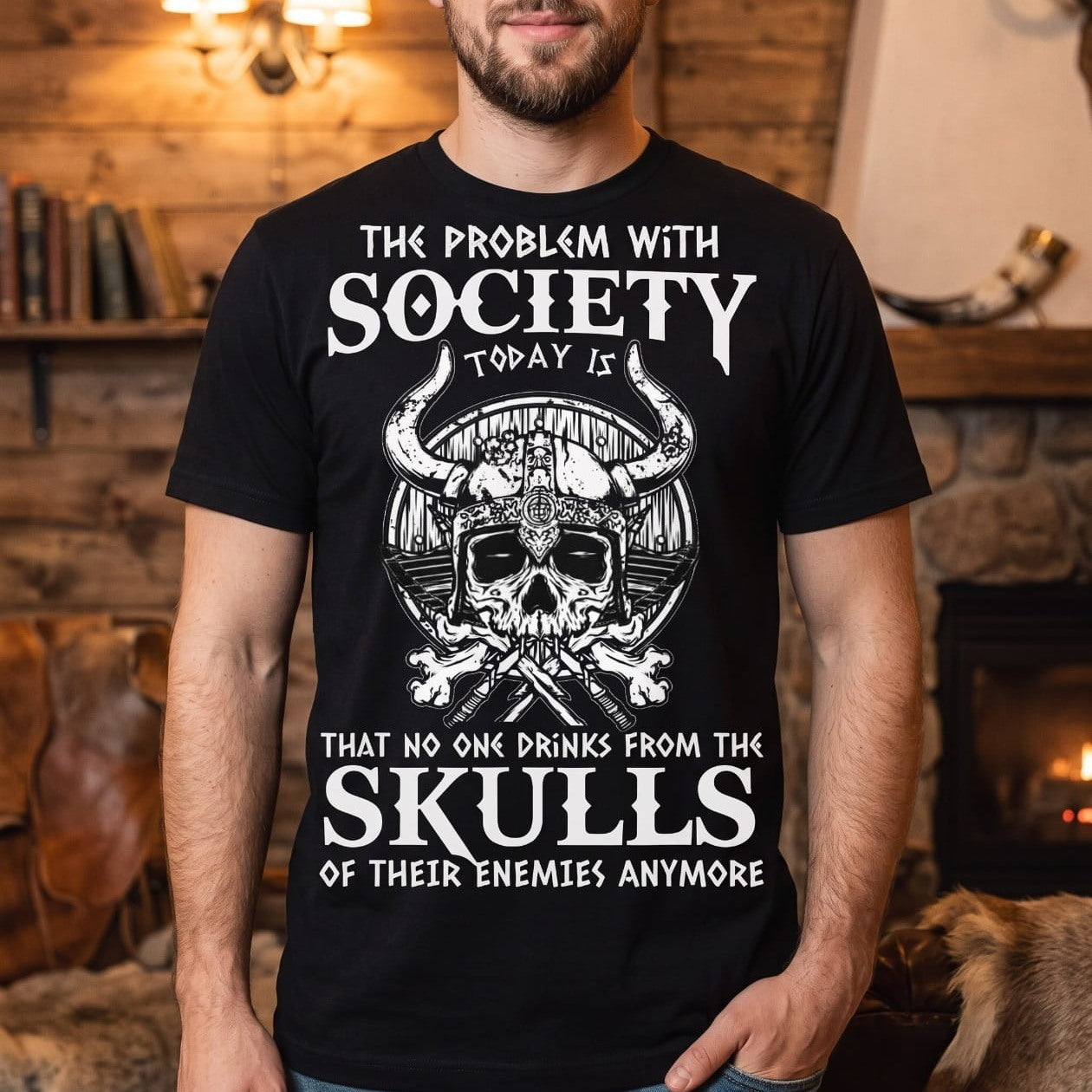
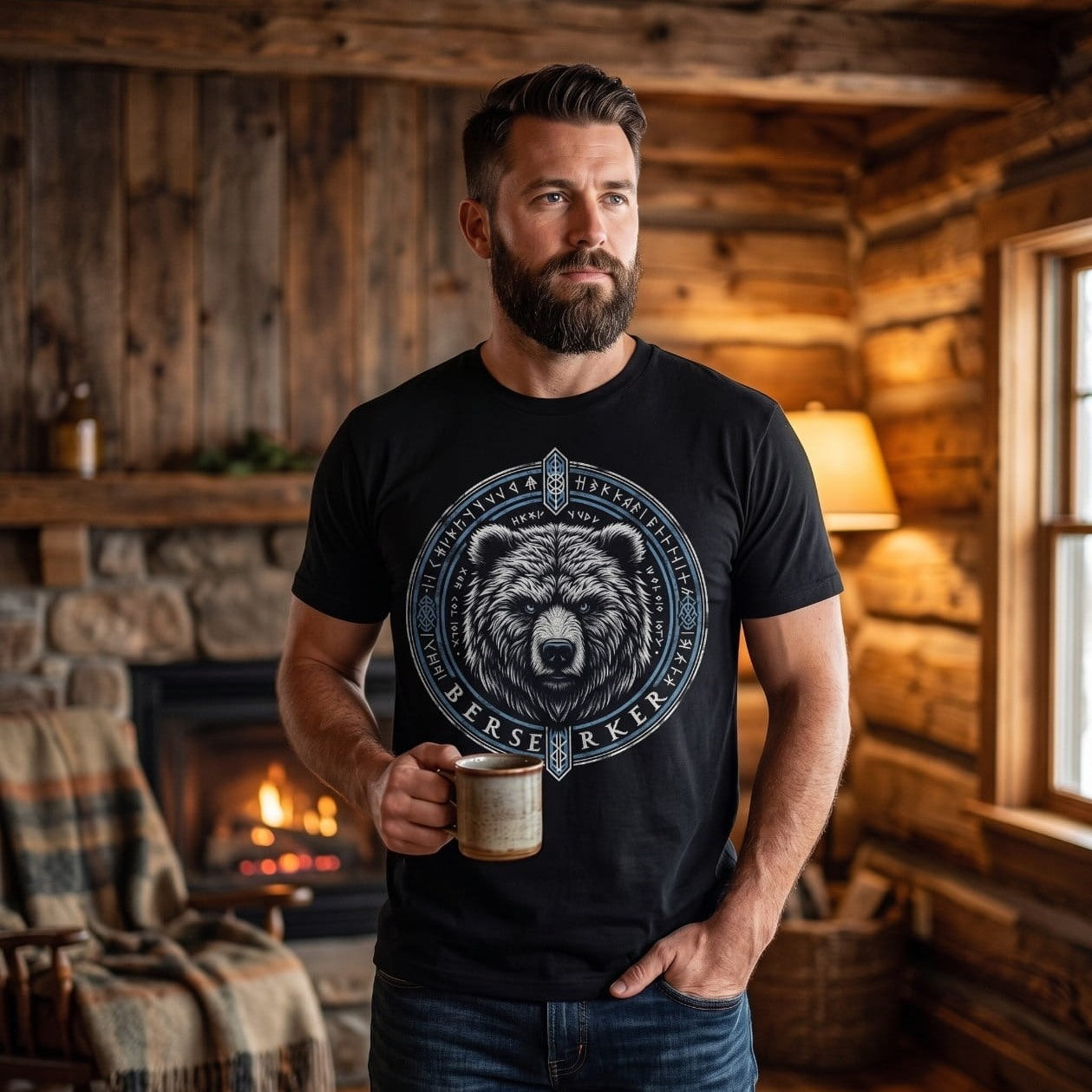
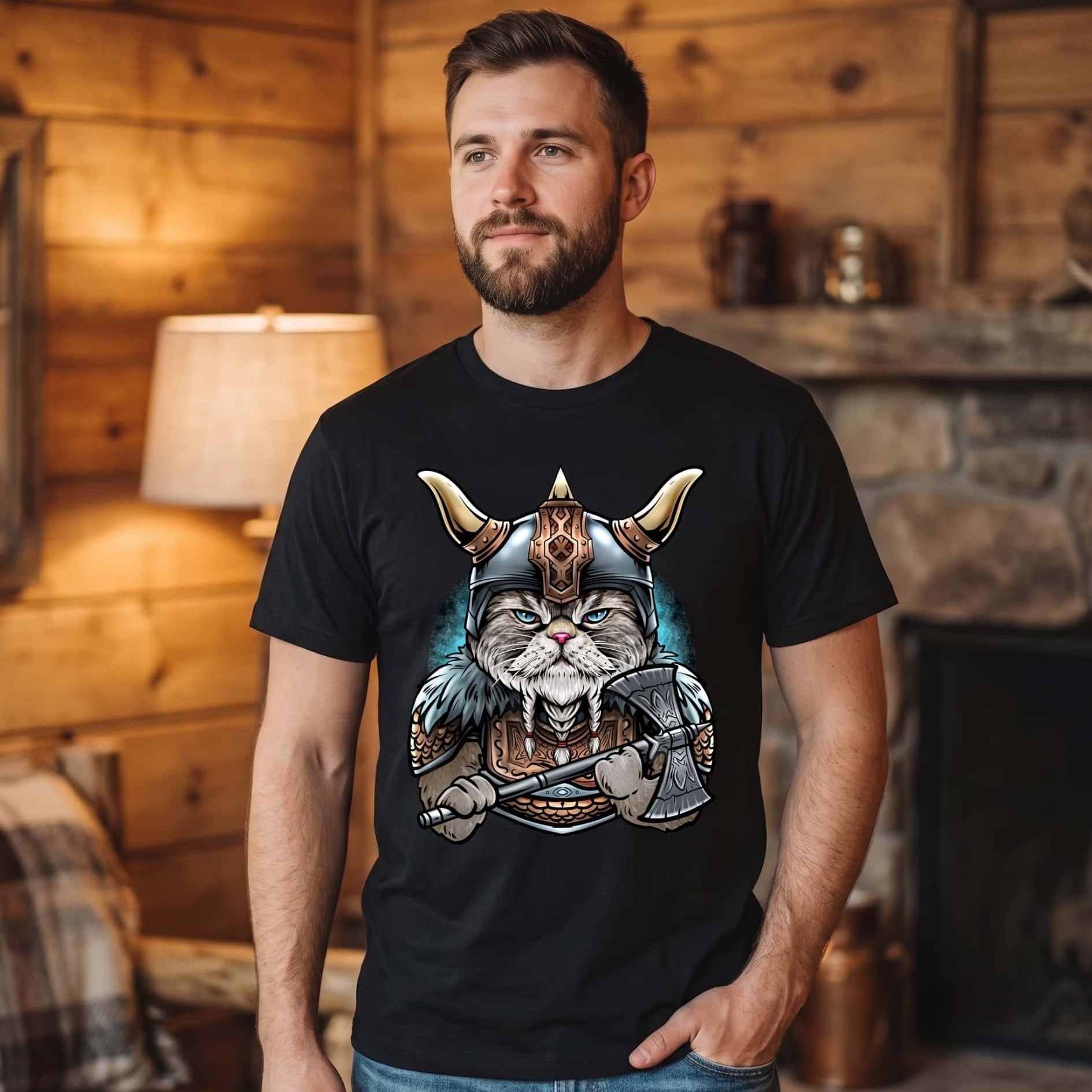
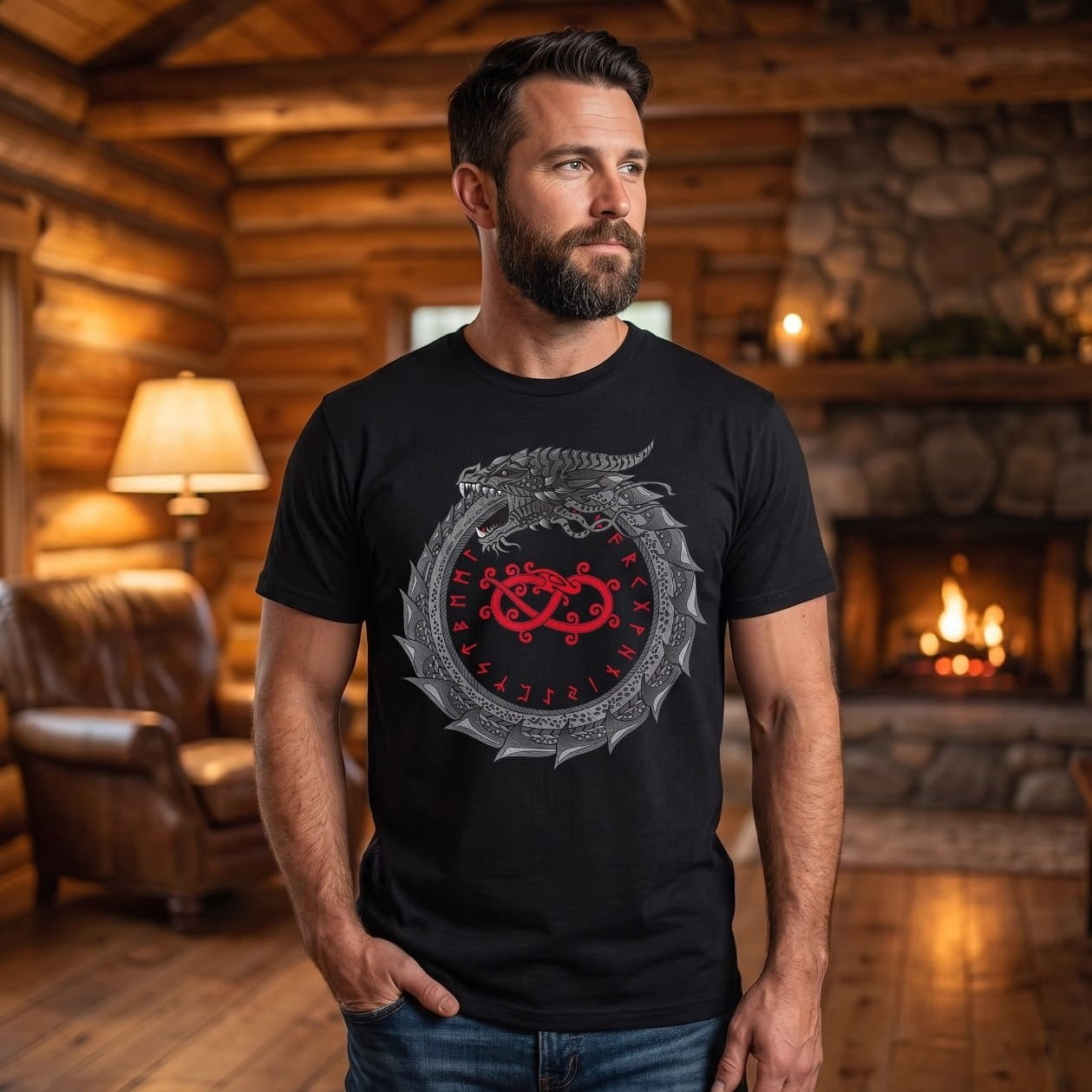
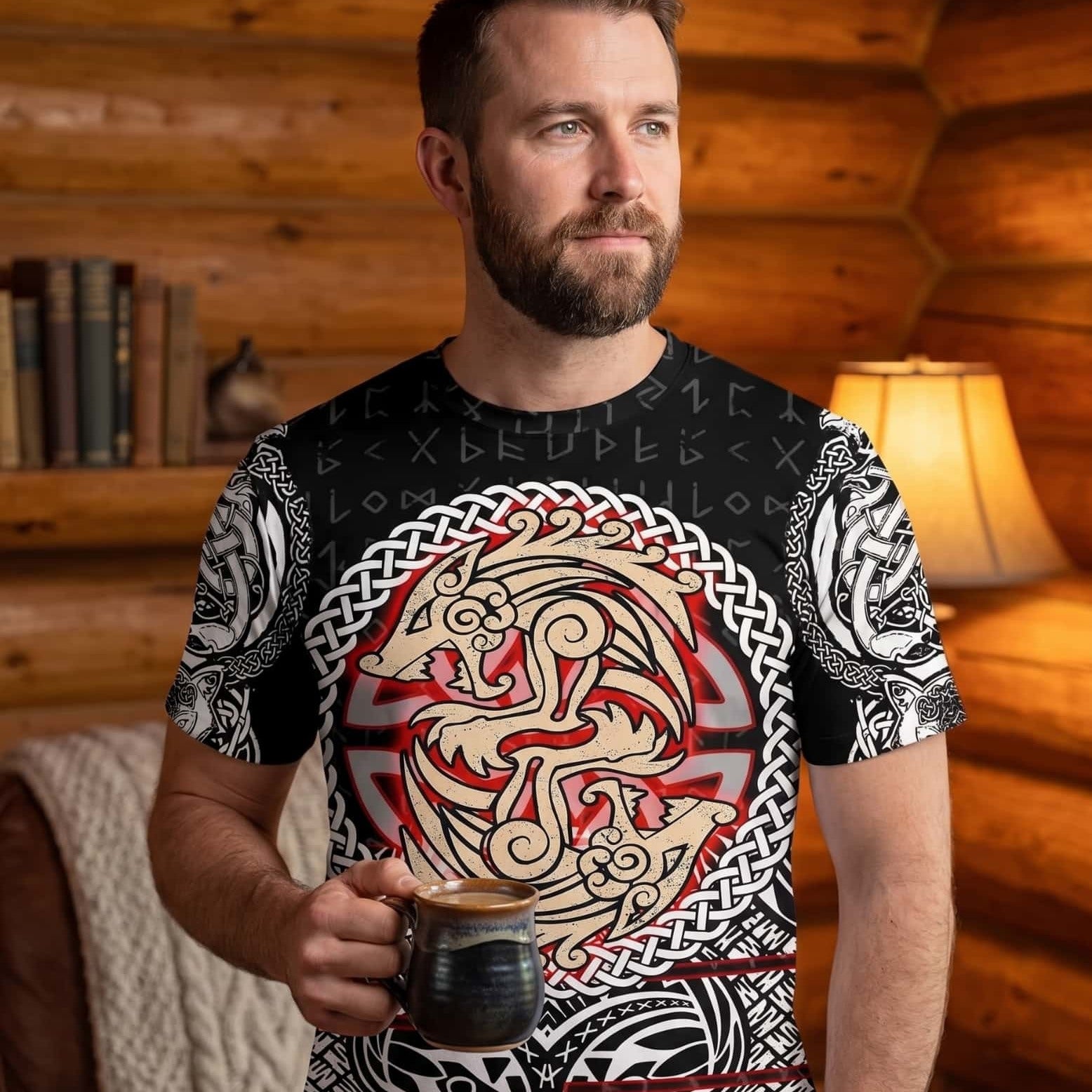
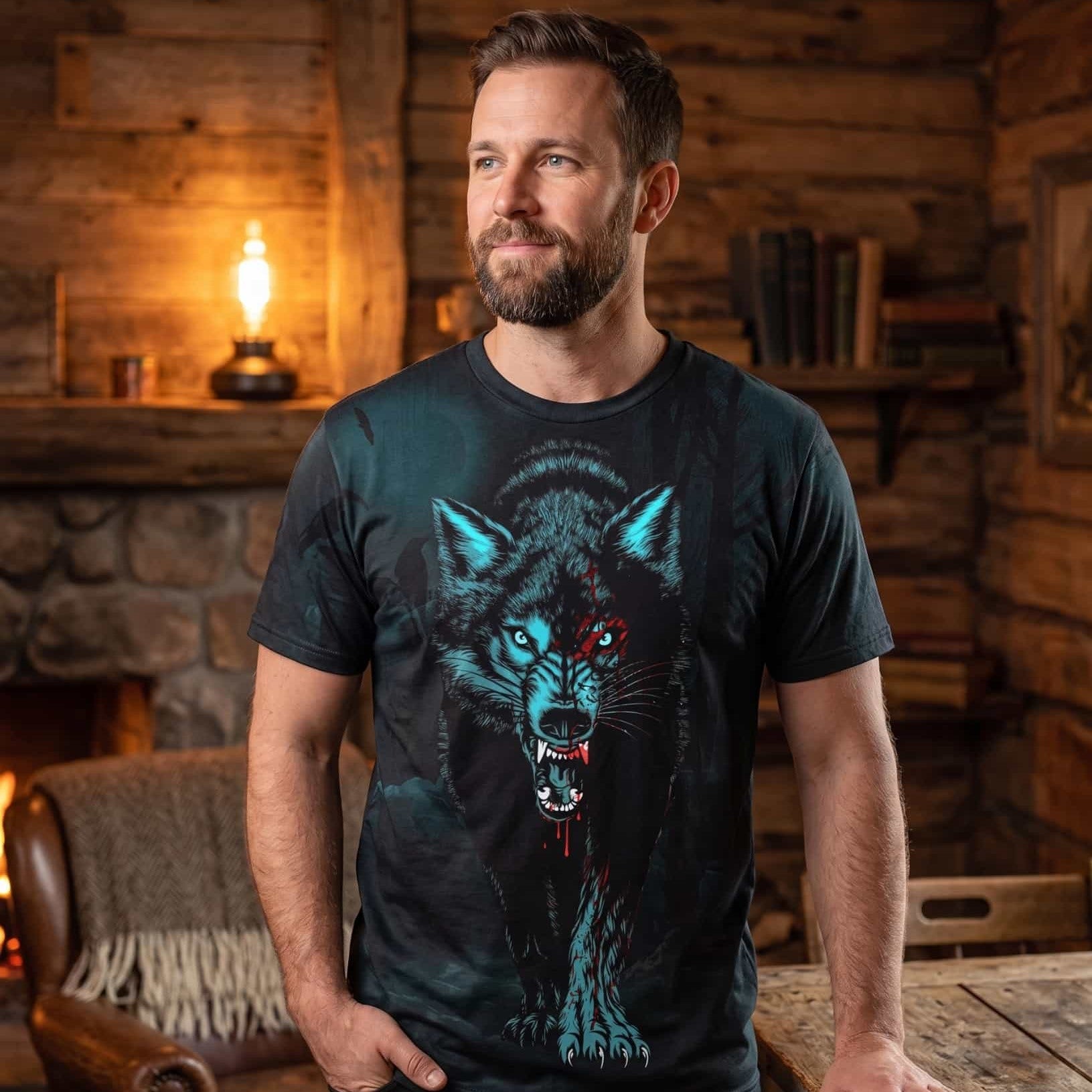
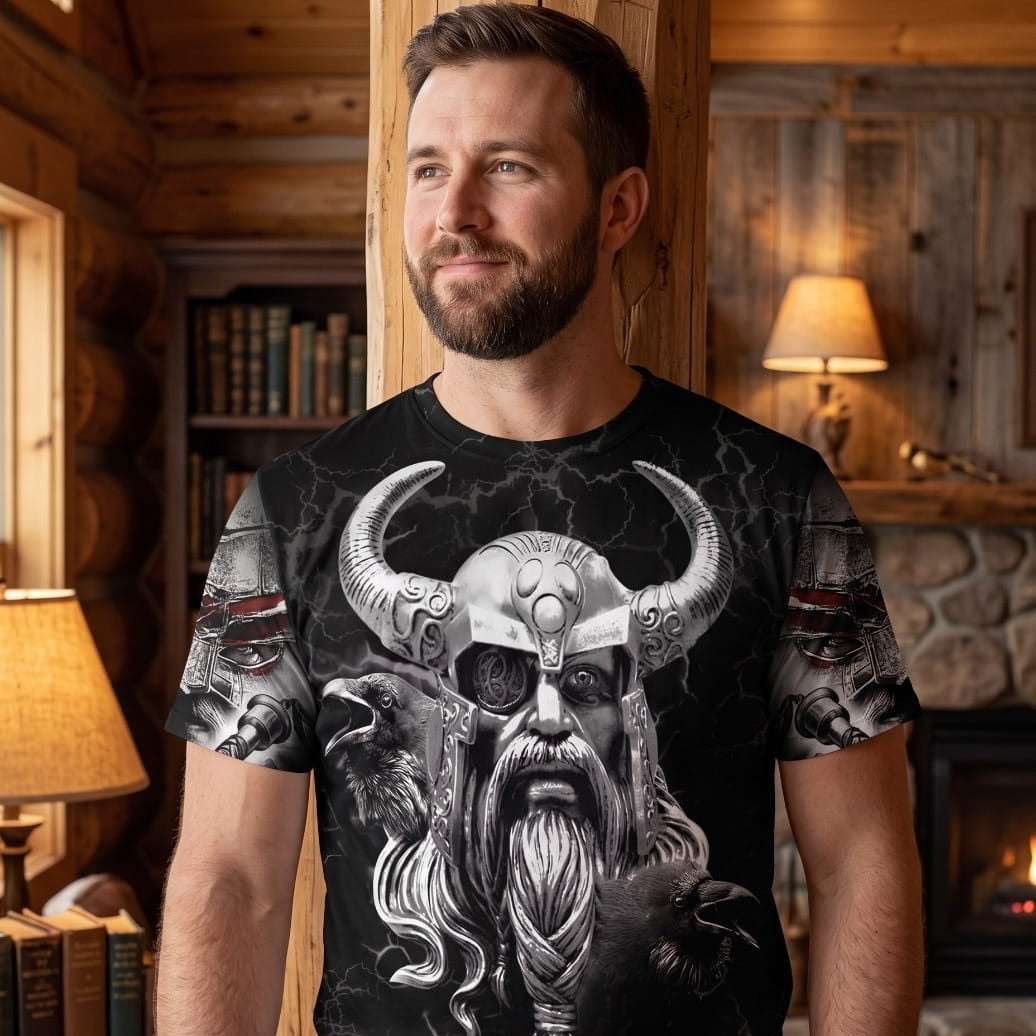
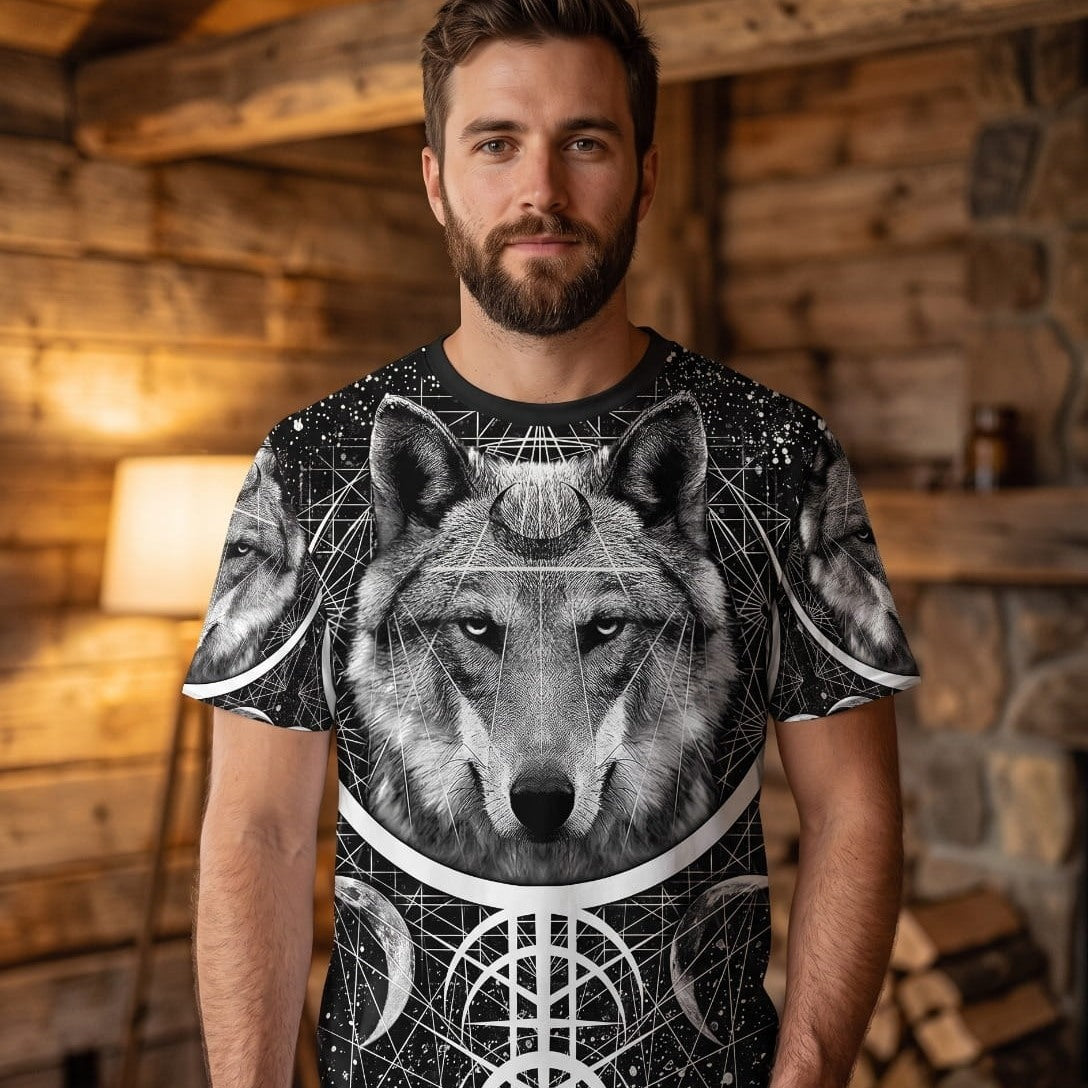
Viking Clothing — en savoir plus
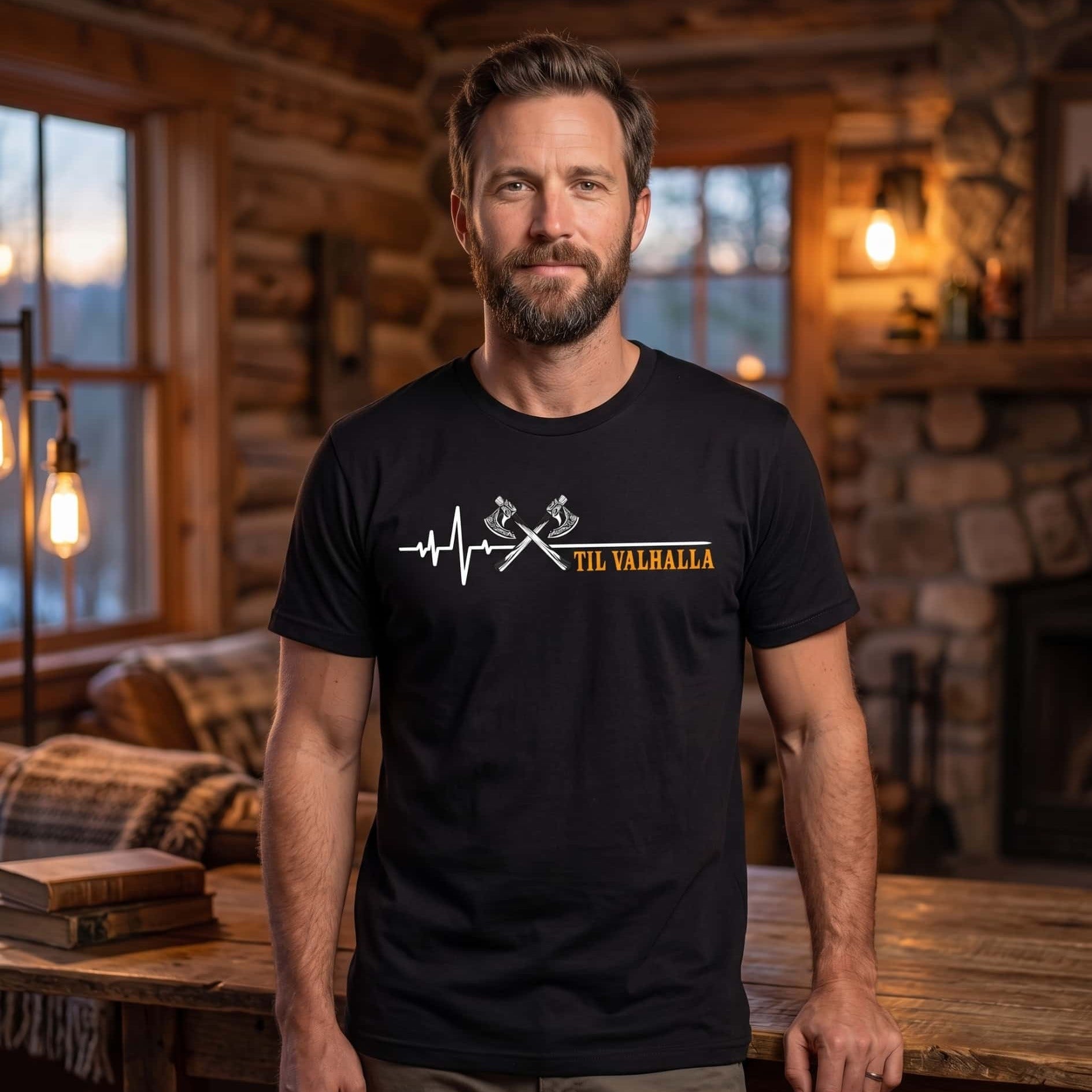
The shop’s textile department brings together everything worn on your back rather than around your neck: t-shirts, hoodies, tank tops, caps, and bandanas with Nordic motifs. Sizes range from XXS to 6XL for adult pieces, with some children's models from 4 to 14 years old and one-size-fits-all headwear. It is the best-stocked department in the shop, and also the one where it is easiest to make a mistake — hence this page, which exists primarily to help you avoid a return.
What the department contains
Four categories, which should not be chosen in the same way.
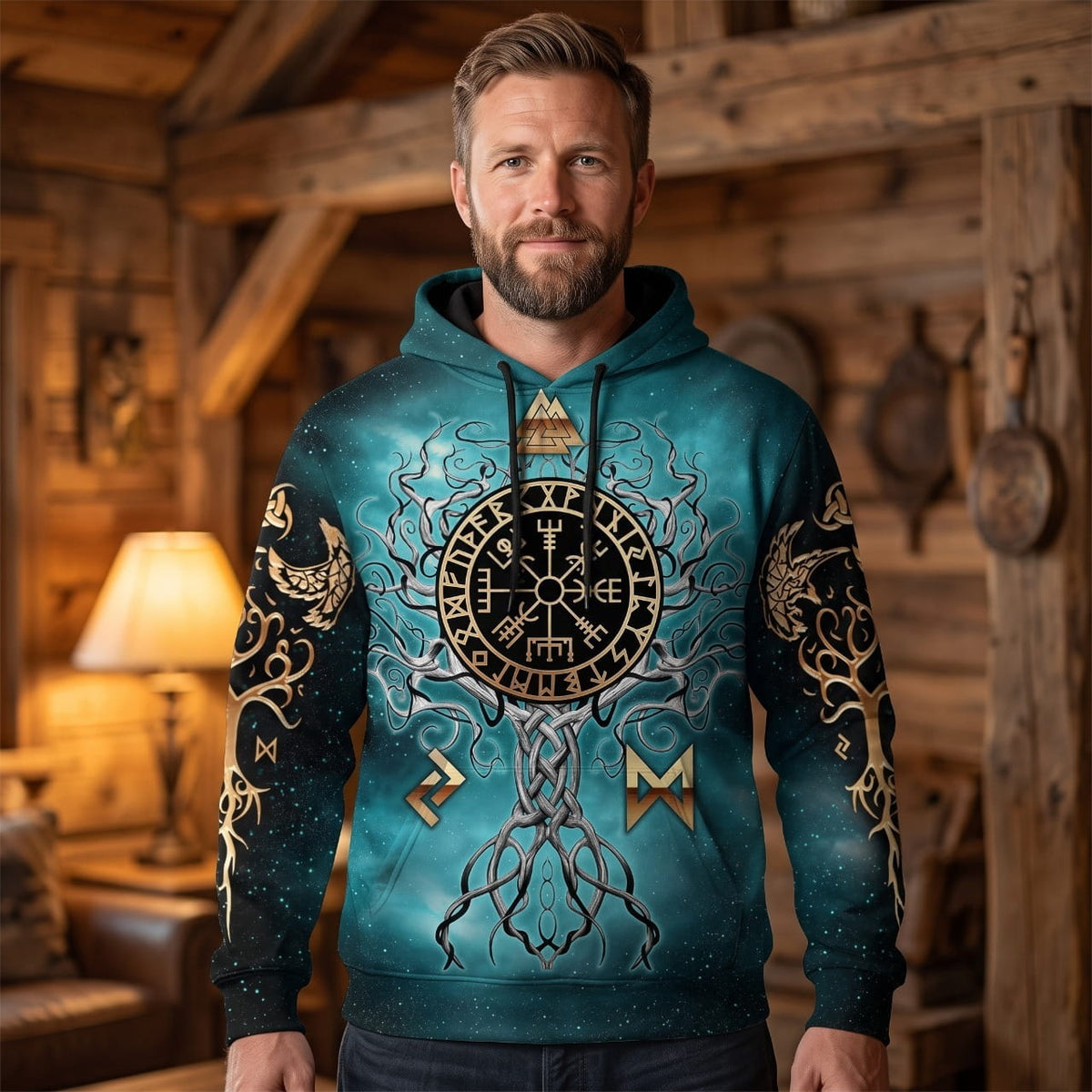
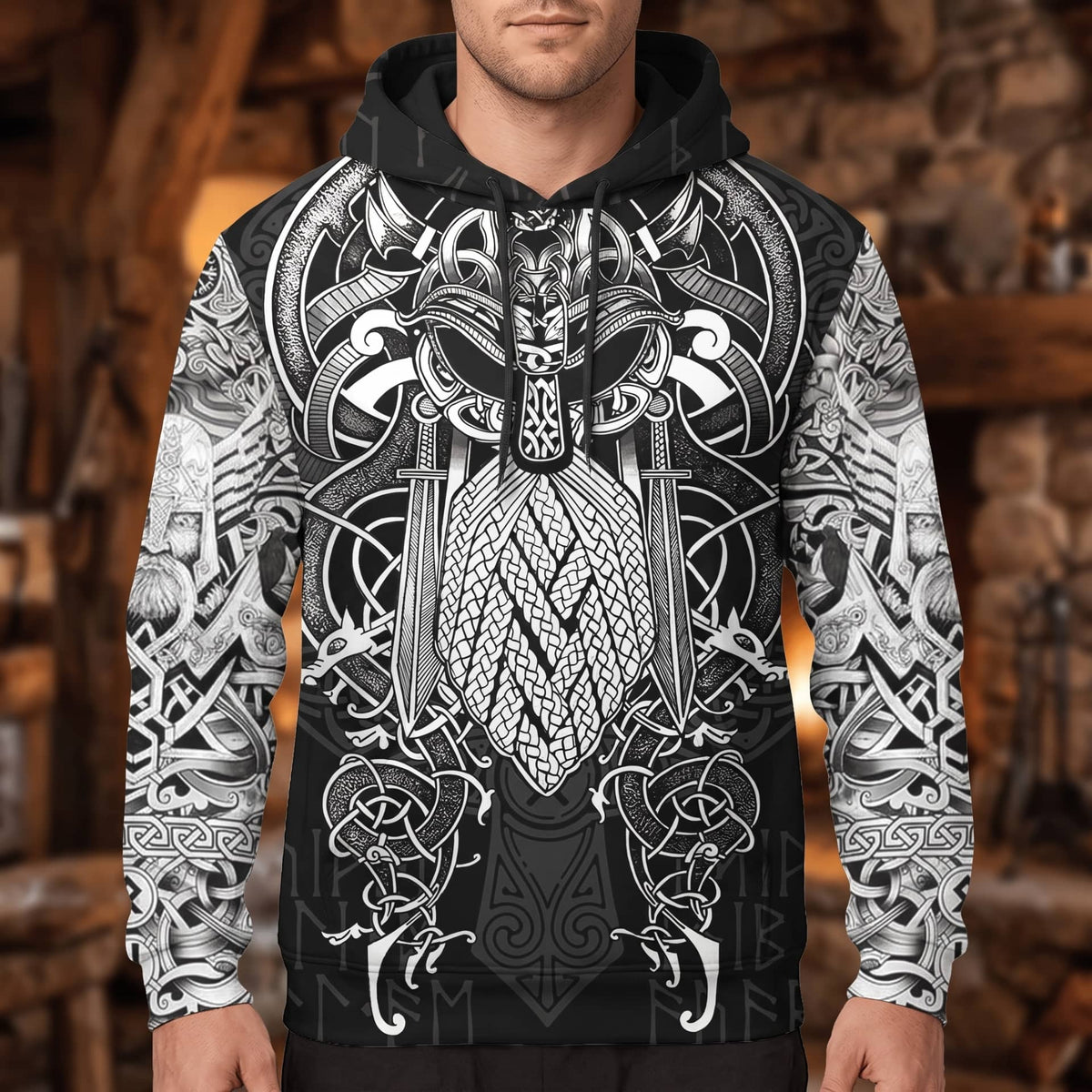
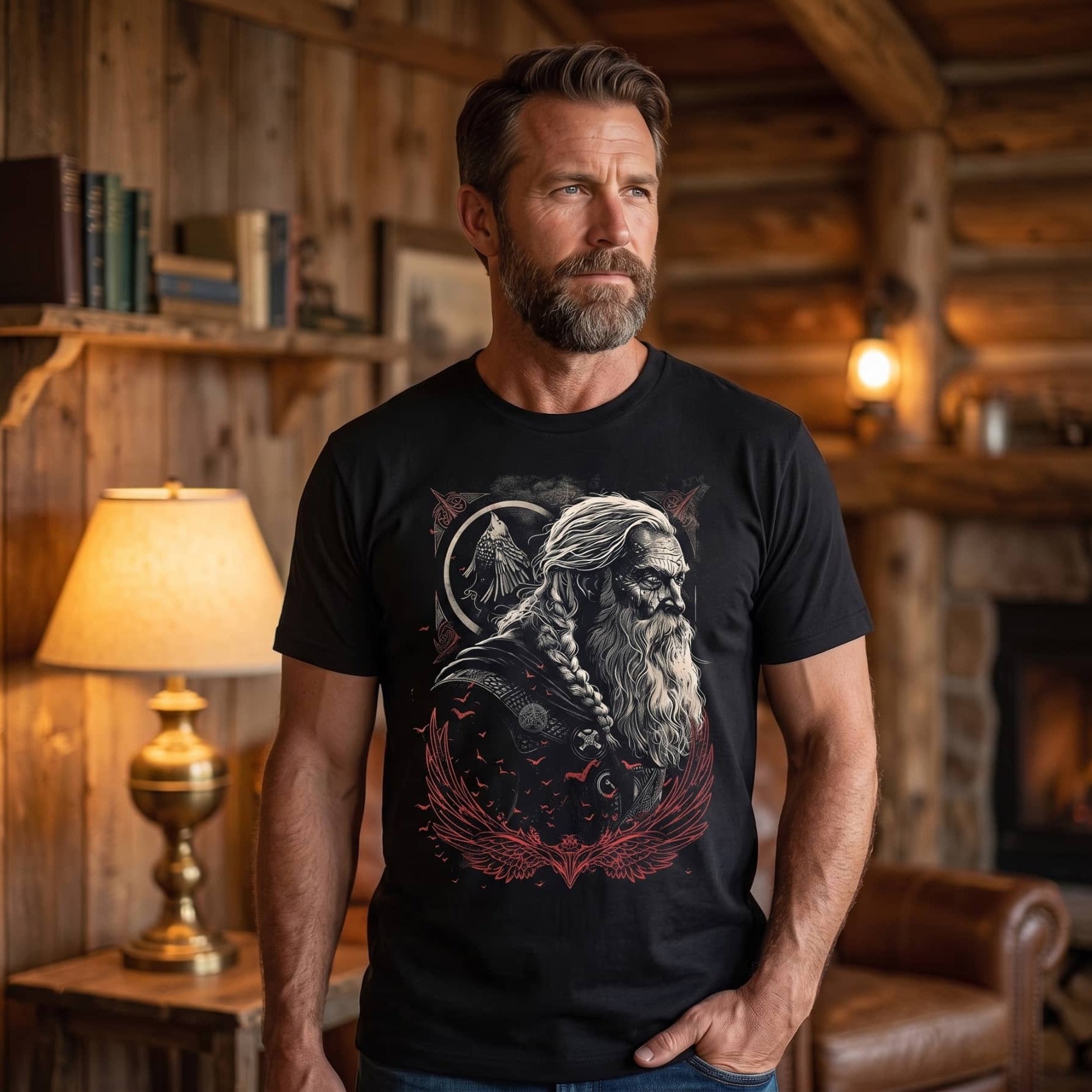
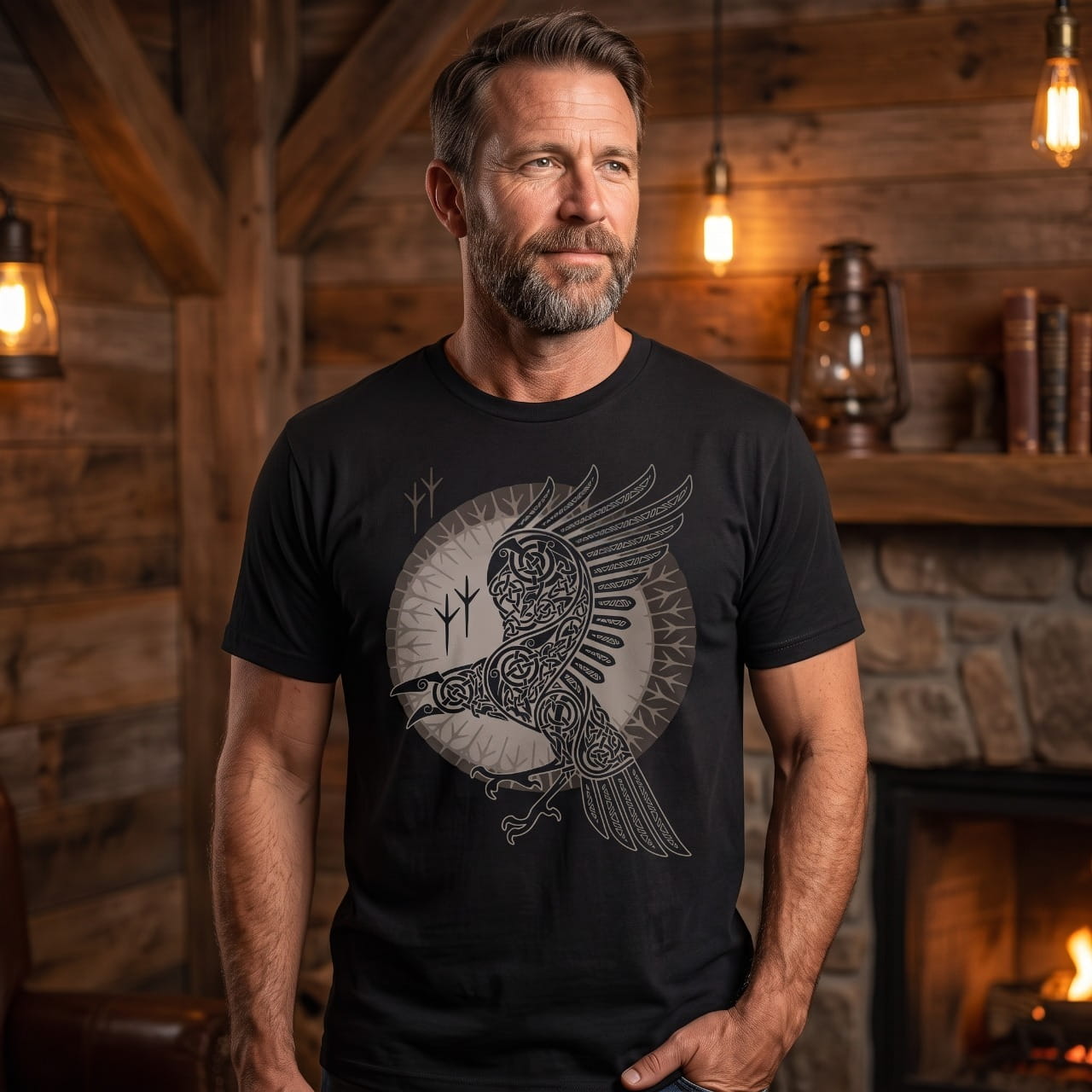
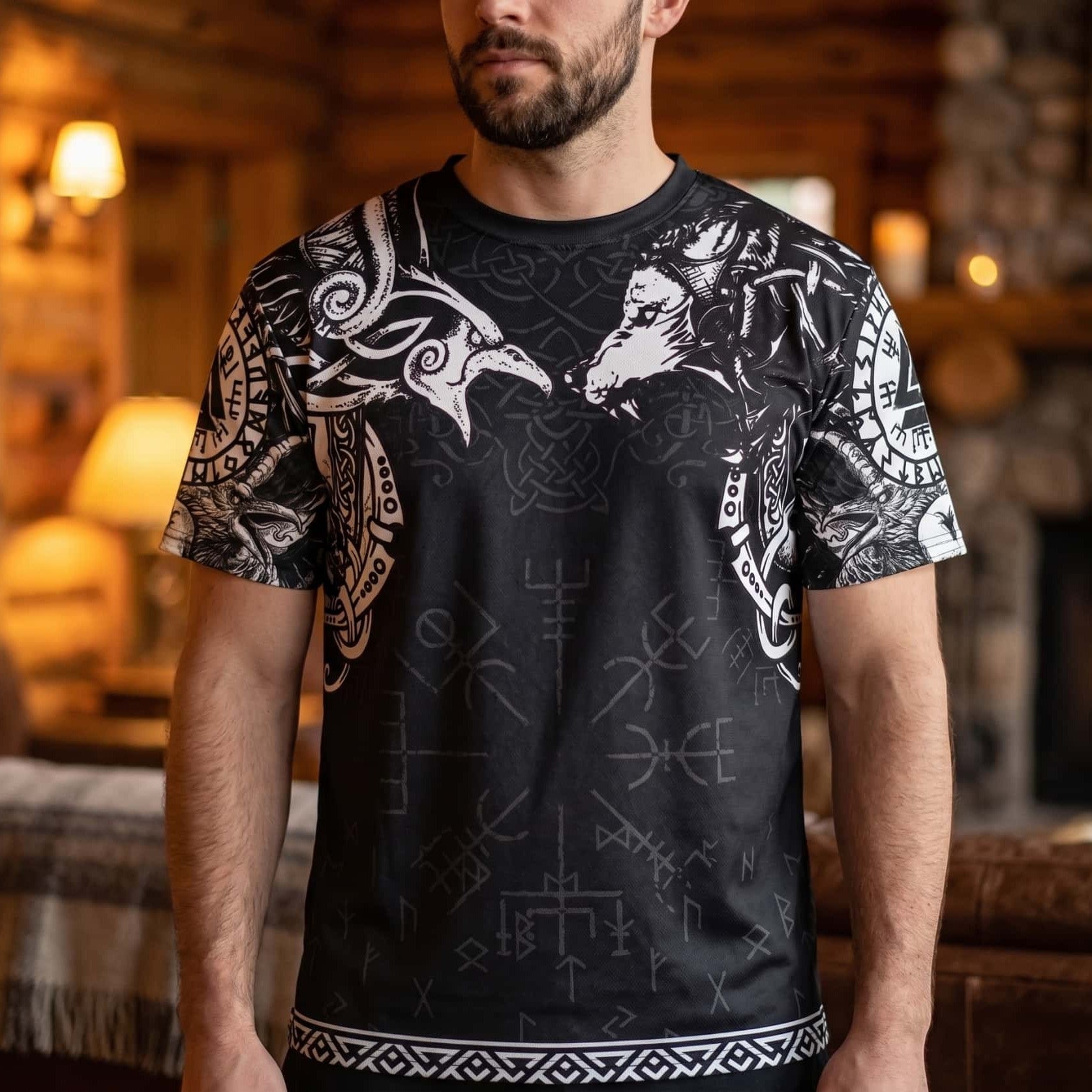
Viking t-shirts make up the bulk of the department. Two printing techniques coexist here and change everything: a motif printed on the chest of a cotton t-shirt, and full-garment sublimation printing on polyester, which covers the clothing from one seam to the other, including sleeves and back.
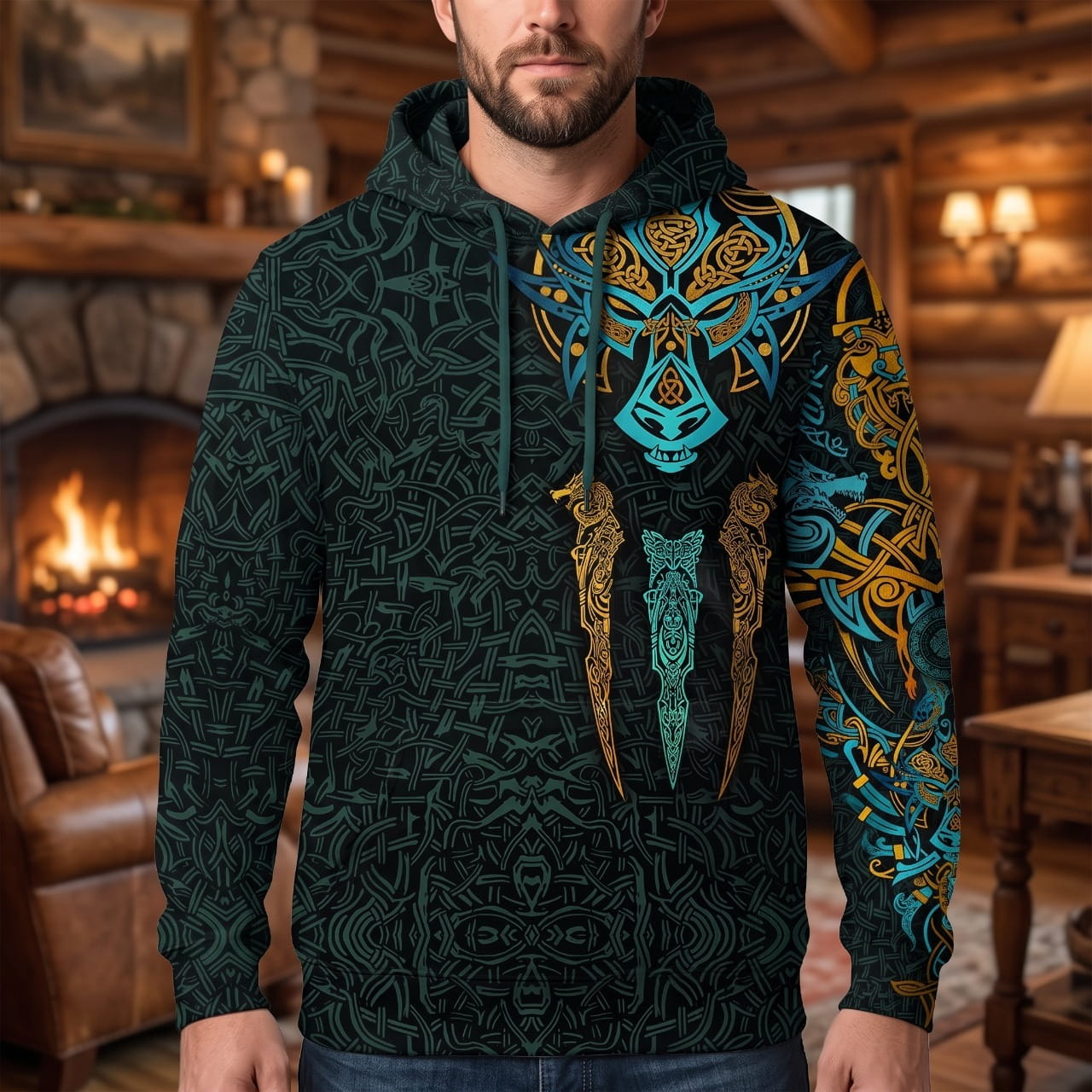
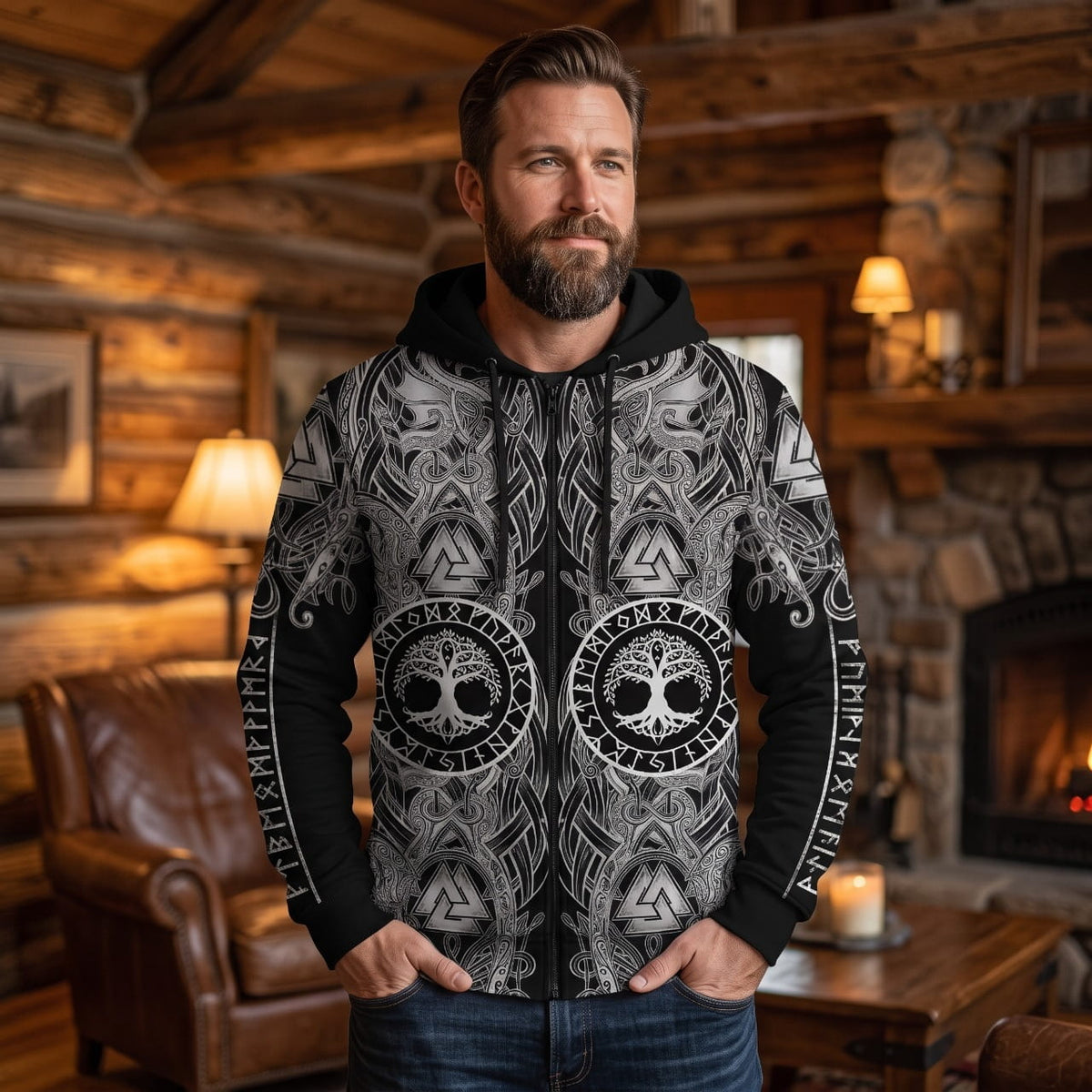
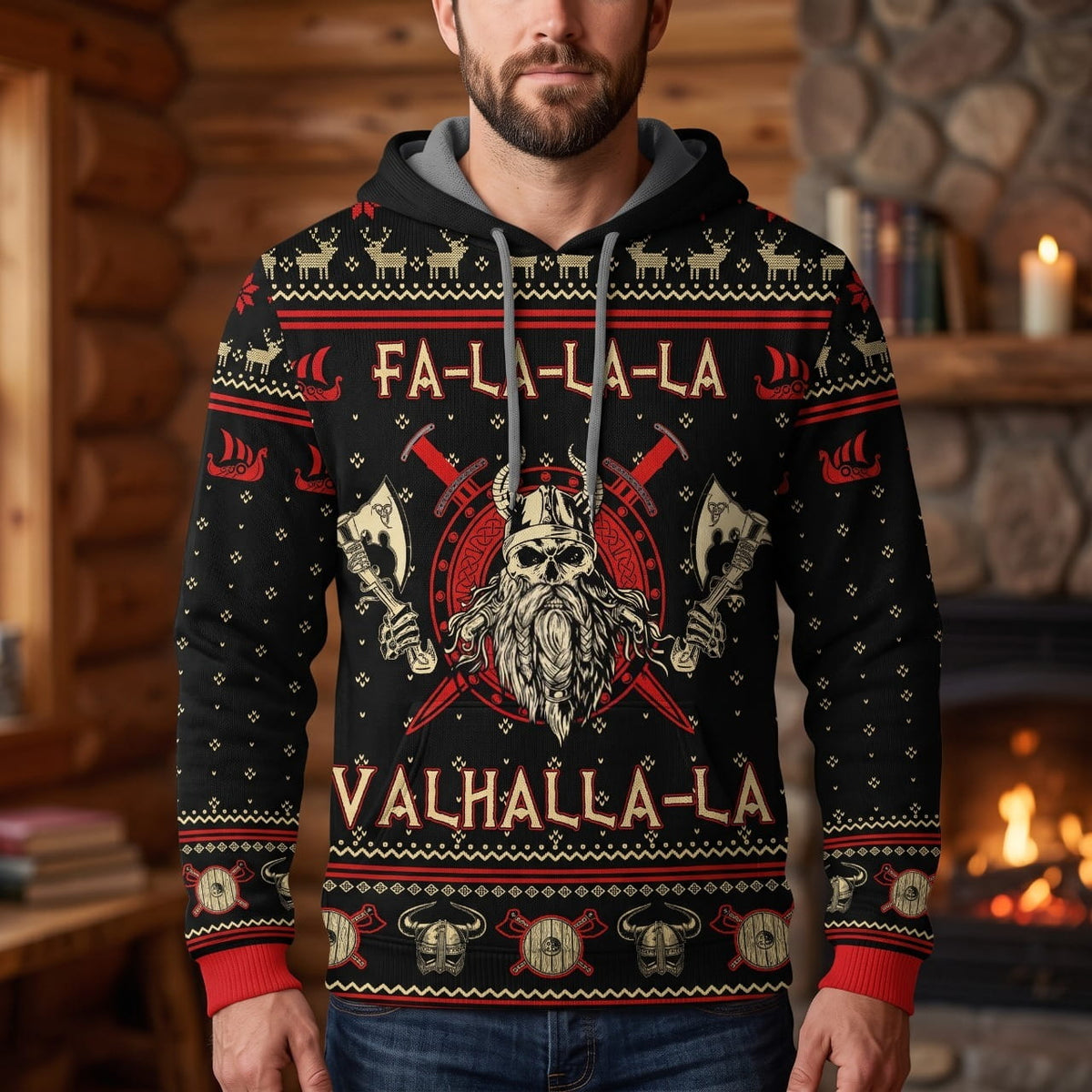
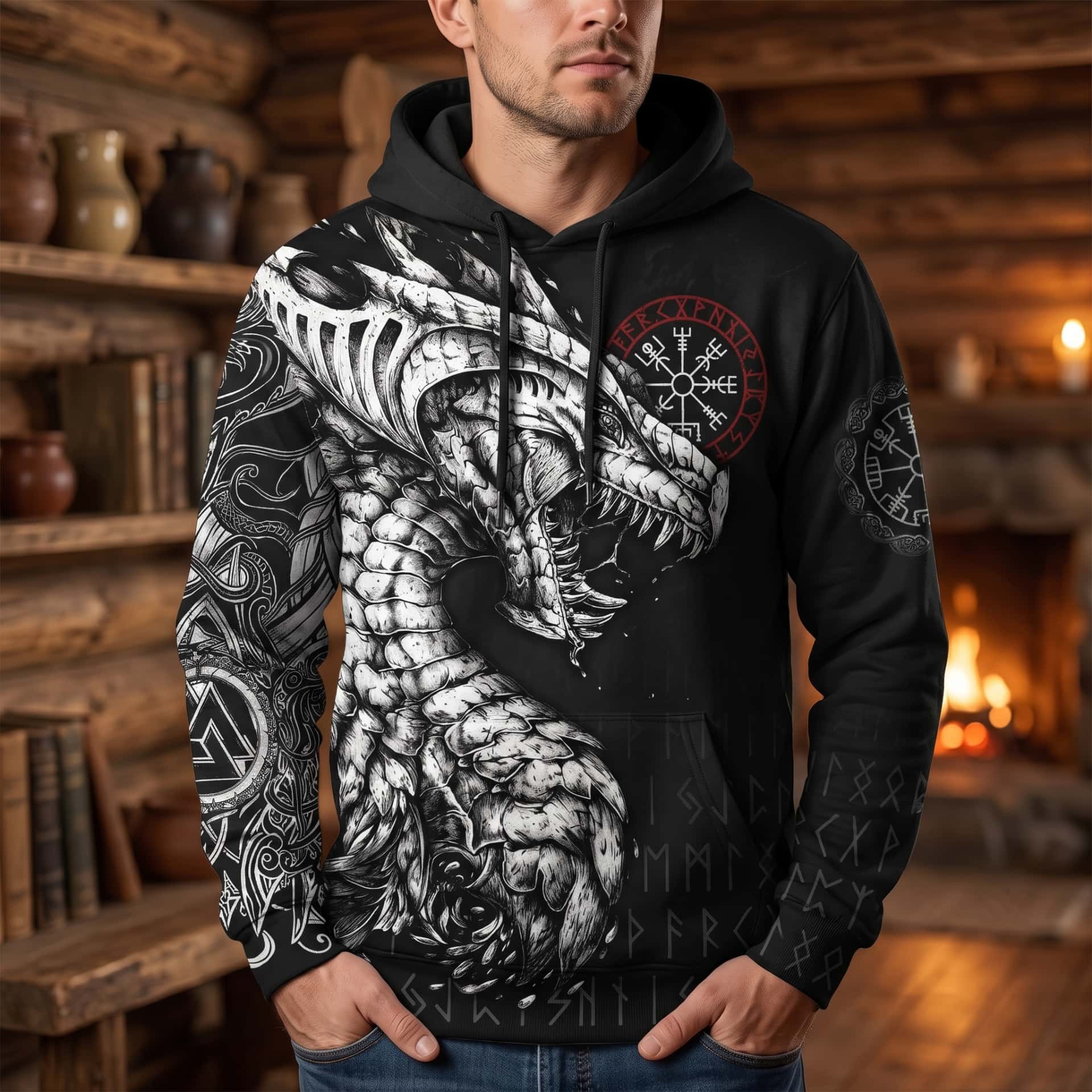
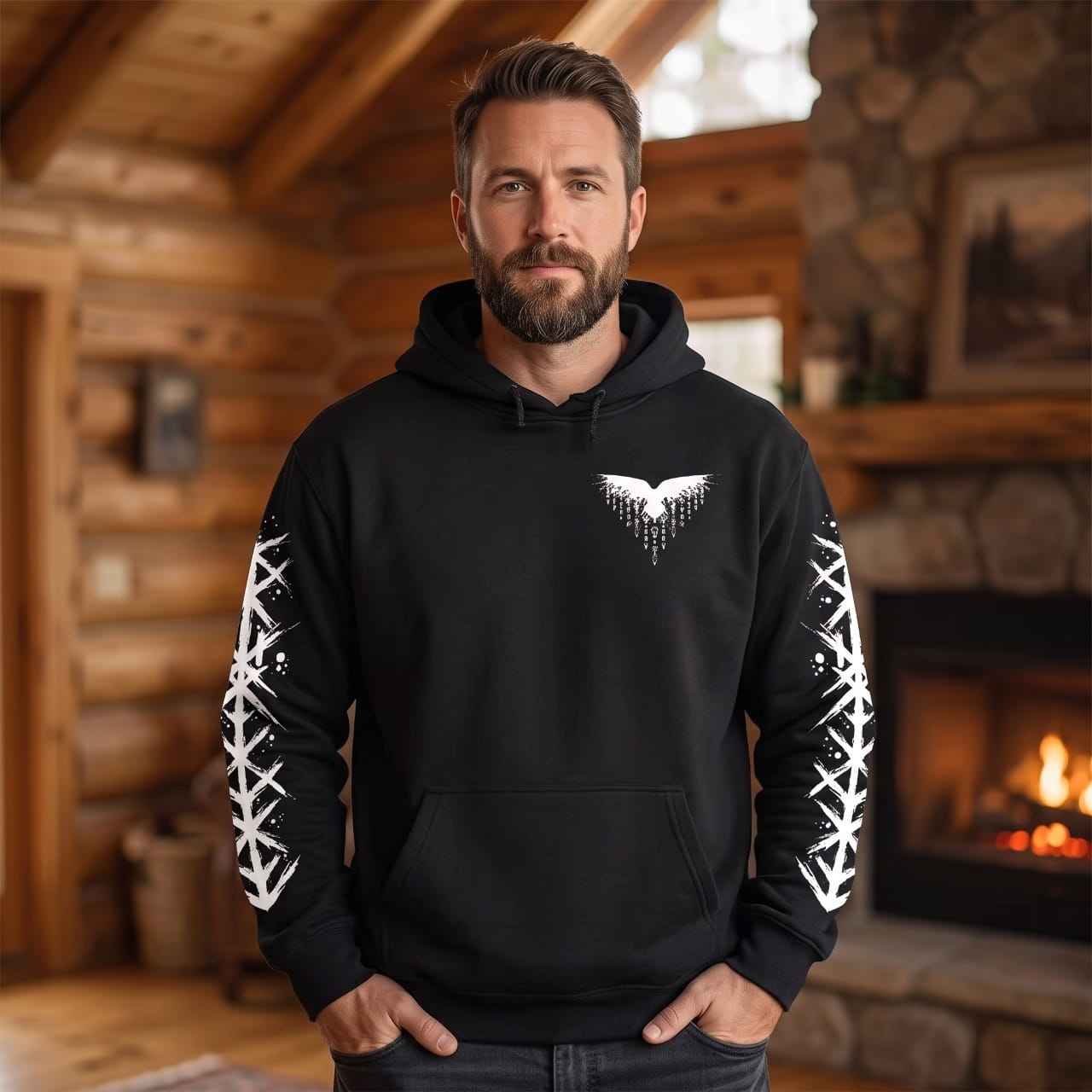
Viking sweatshirts take over when the temperature drops. Almost all have hoods, with a few exceptions: a zip-up model, a Christmas sweatshirt in jacquard knit, and trompe-l'œil designs that imitate leather armor or chainmail.
Tank tops are cut for training: open armholes, technical material, and motifs legible from a distance.
Caps and bandanas complete the outfit without raising any size questions — everything here is one-size-fits-all for adults.
Choosing your size without mistakes
This is the only real trap when buying clothing online, and we prefer to give you a method rather than an approximate conversion chart.
Take a garment you already wear and that fits you well. Lay it flat, spread out properly. Measure the width from one armpit seam to the other, then multiply by two: you get the chest measurement of the garment. Compare this number to the one indicated on the product page you are interested in.
It is foolproof, because you are comparing a garment to a garment, without using a theoretical size — and theoretical sizes are precisely what vary from one manufacturer to another. The measurements we display are those declared by the manufacturer, in centimeters, the chest measurement of the garment laid flat multiplied by two. They appear on each product page when we have them, and we state it when we do not.
A note on the cuts. These pieces run small: narrower in the shoulders and shorter in the body than a European cut of an equivalent size. If you are hesitating between two sizes, take the larger one — this is the advice that prevents the most returns. The difference is mainly in the body length: an M in this cut often falls two to three centimeters higher than a European M, which is more noticeable on a sweatshirt than on a t-shirt.
Cotton or polyester: what the material changes
The department is split between the two, and this is not a technical detail: the material stems directly from the printing technique, and it determines comfort.
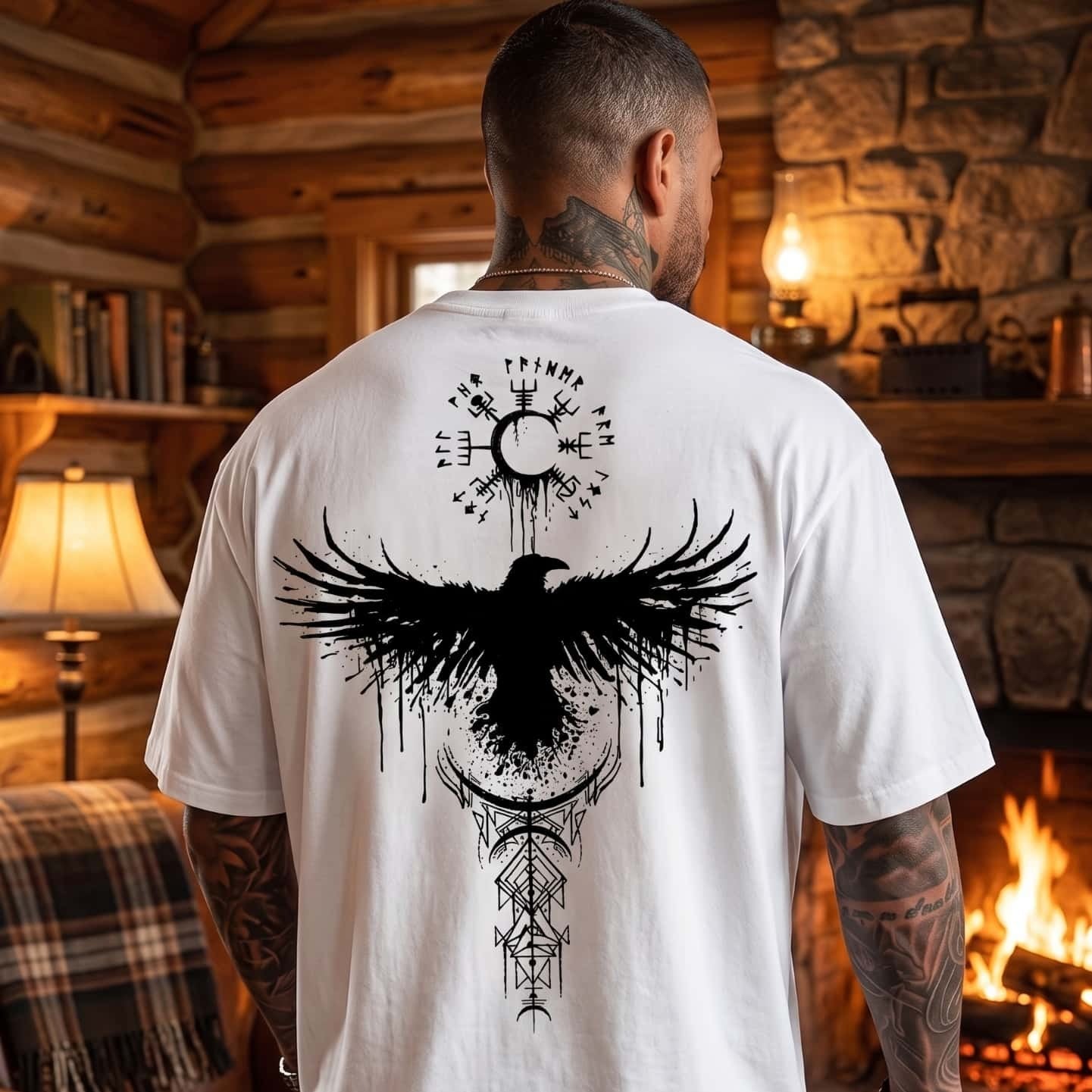
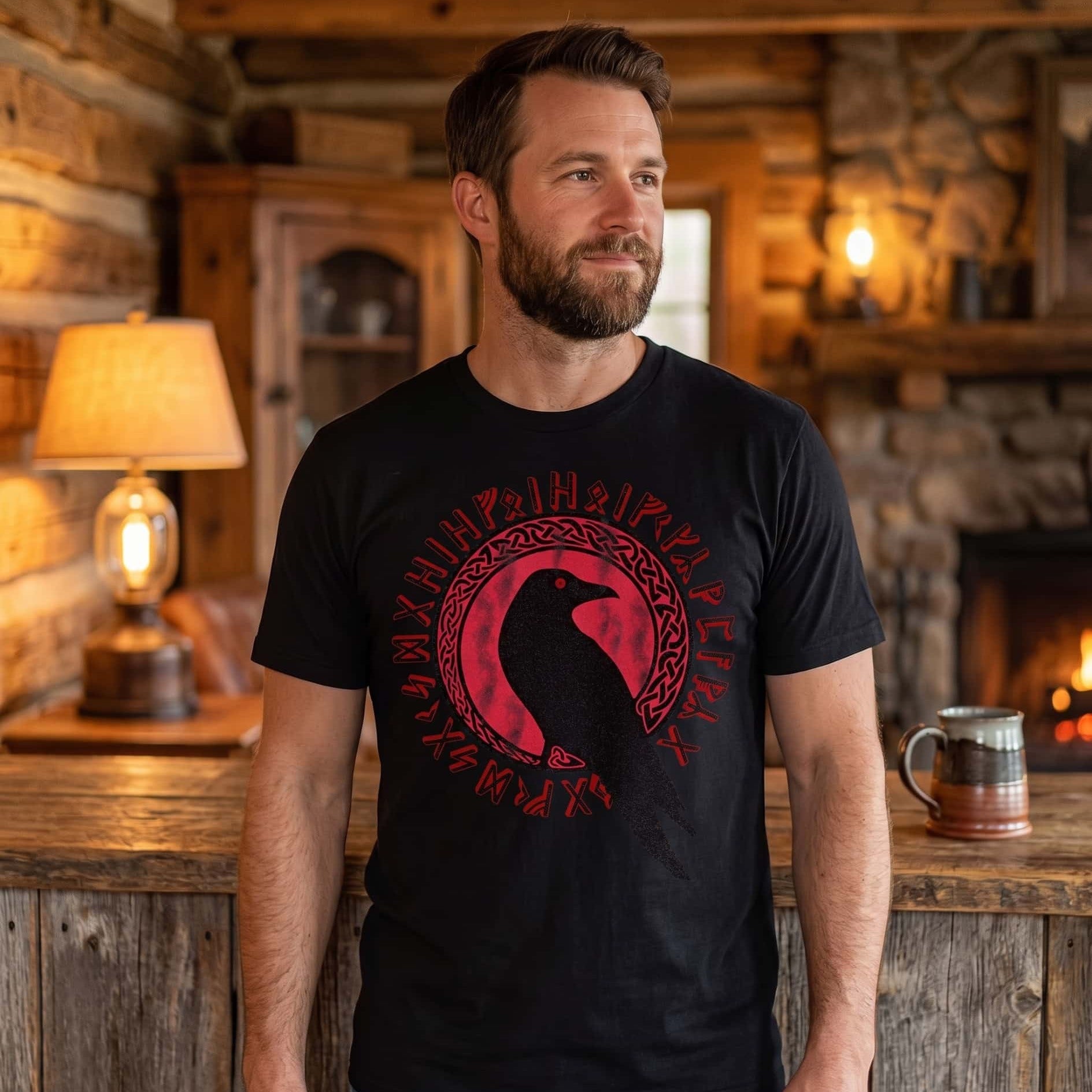
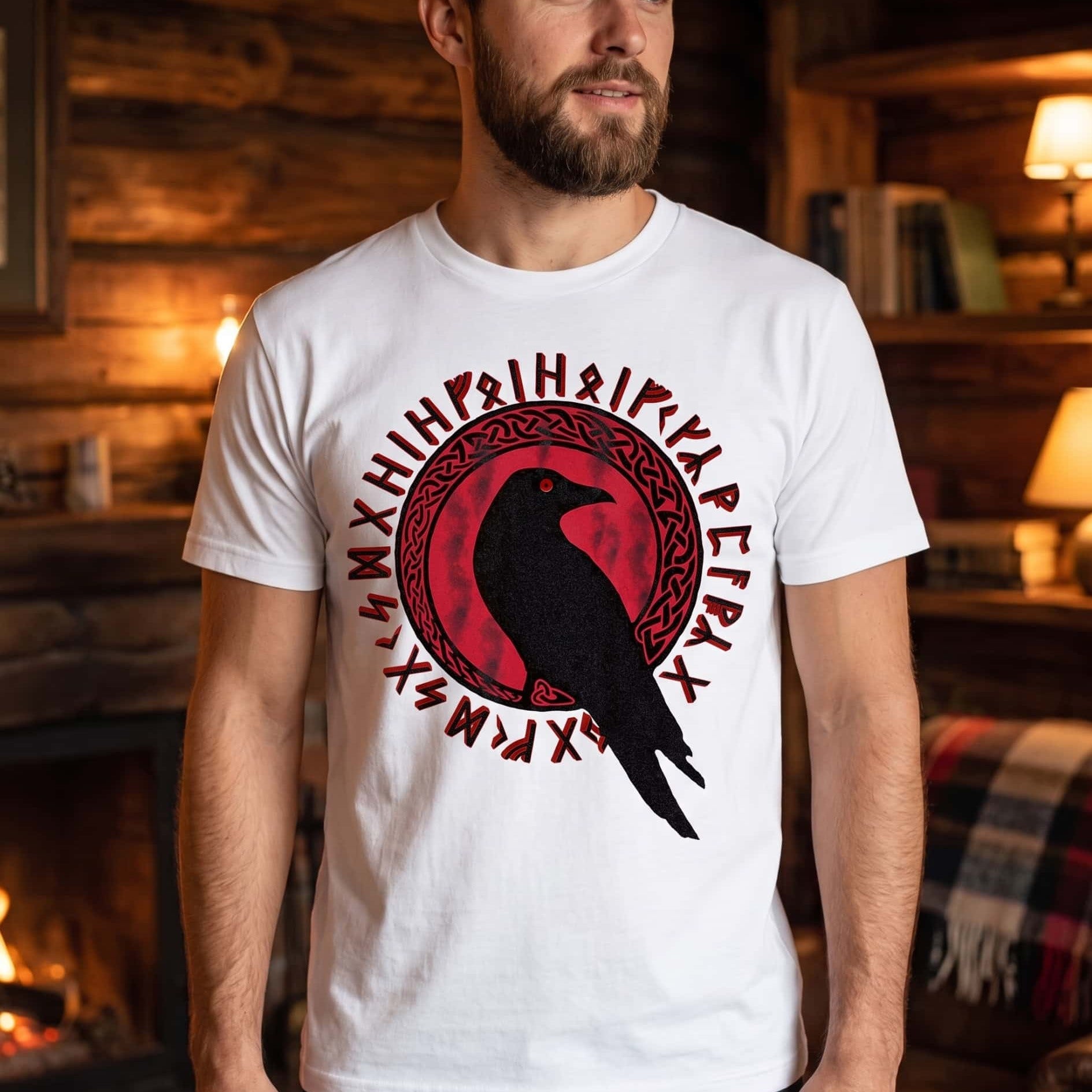
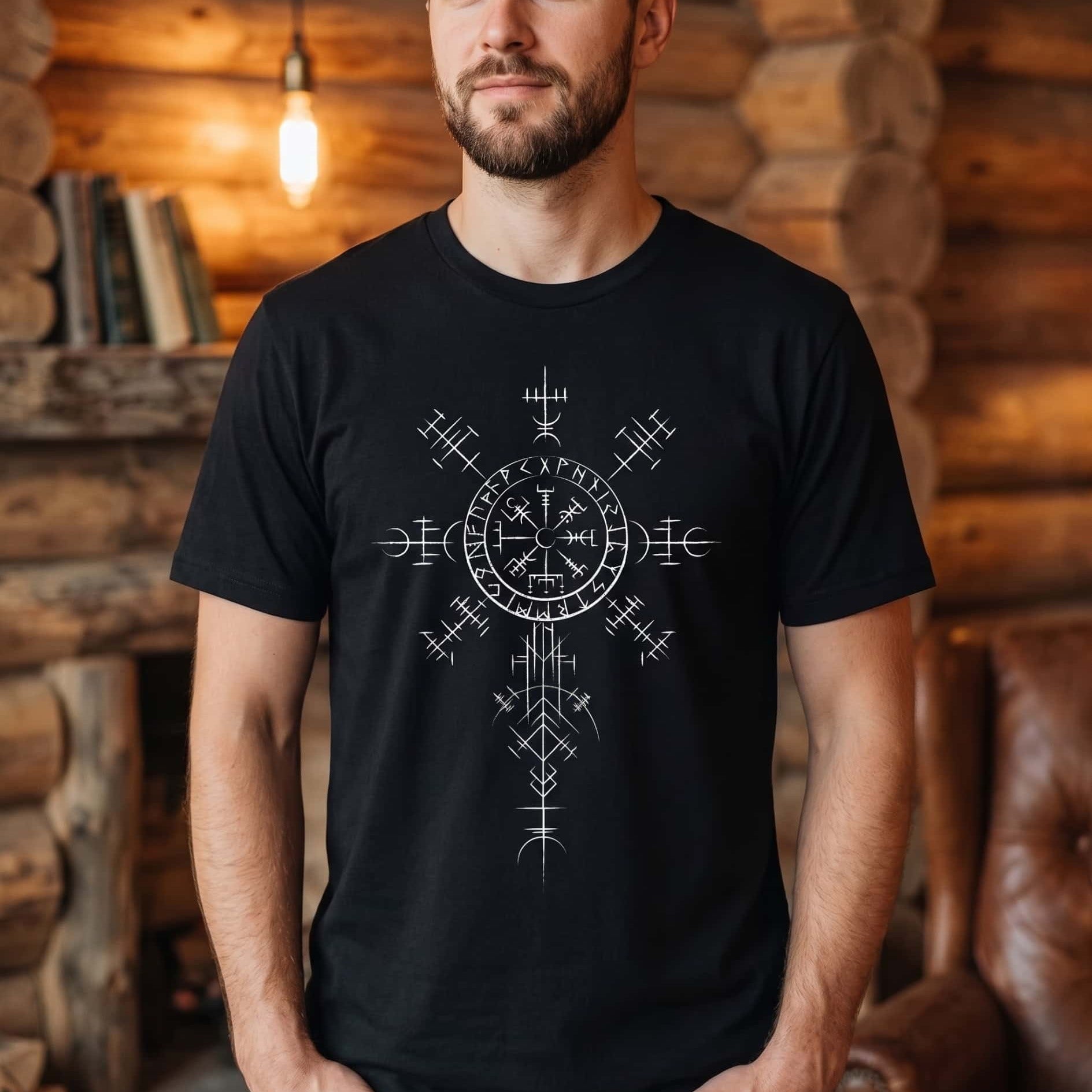
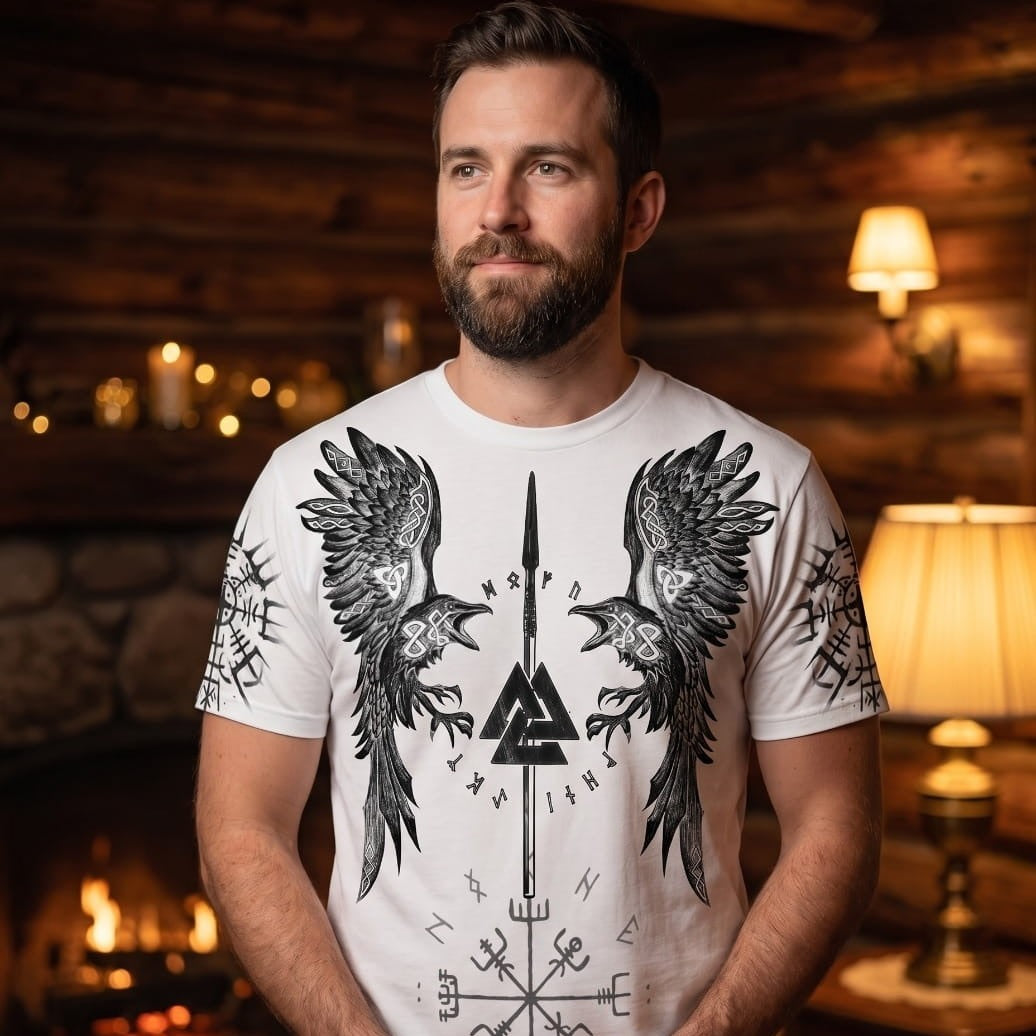
Cotton is used for pieces with localized motifs — a runic medallion on the chest, a raven between the shoulder blades. It breathes better, ages more flexibly, and wrinkles more. It is the choice for daily wear.
Polyester is used for full-garment prints. Sublimation only works on synthetic fiber: the ink is fixed into the fiber itself rather than on the surface, which explains why a full-garment print never cracks or peels, whereas screen printing on cotton eventually cracks. In return, polyester is less comfortable in the heat of a heavy summer and retains odors more.
A few models fall outside this split: jacquard knit sweatshirts mix acrylic, polyester, and elastane — the motif is knitted into the fabric, not printed on it — and some caps are made of washed cotton denim. The exact material is indicated on each product page rather than being announced as a generic "100% cotton" for the whole page.
The motifs, and what they carry
The same symbols recur from one family to another, because they are the ones that structure the Nordic imagination. Here are the most represented ones, and what you need to know before wearing them on your back.
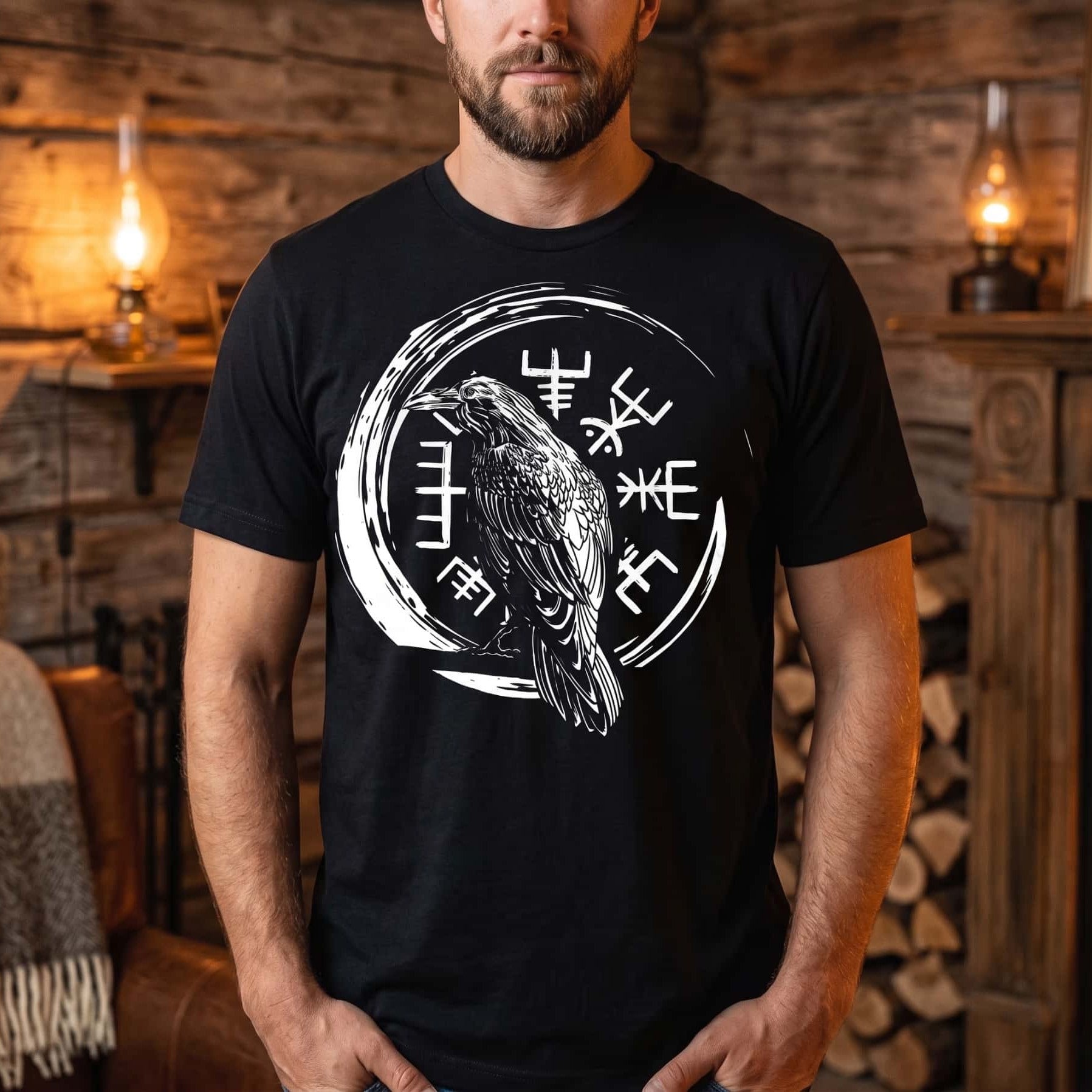
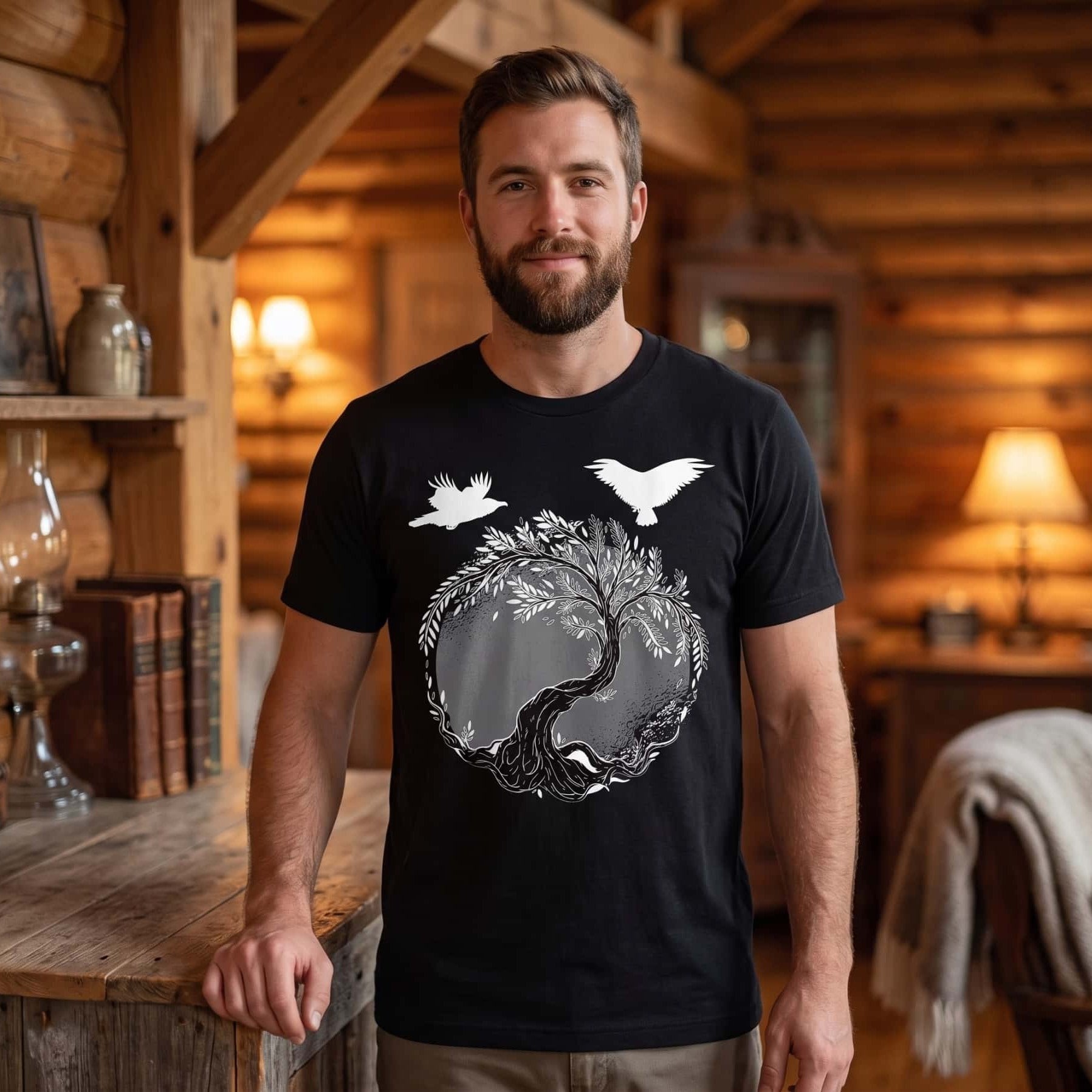
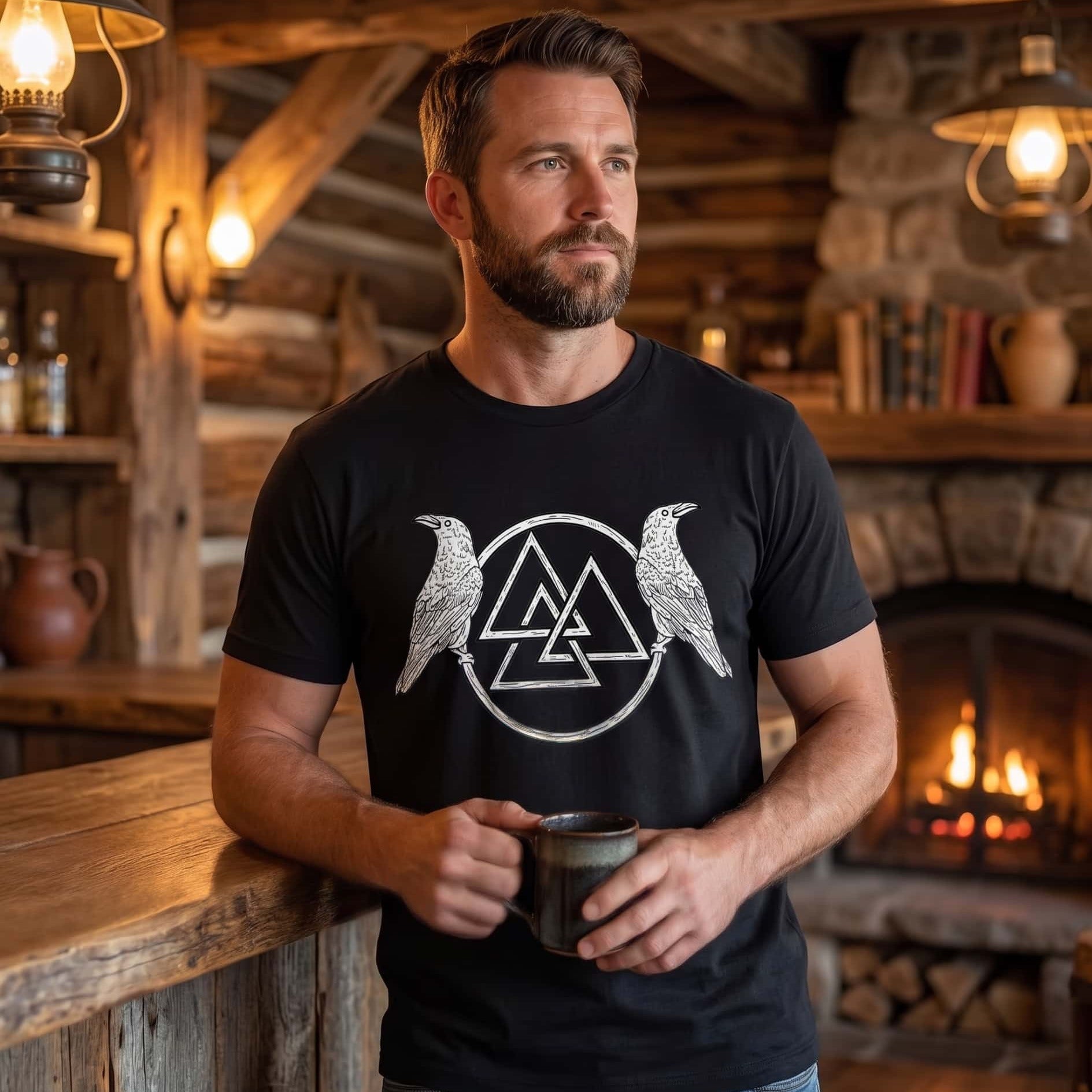
Ravens Huginn and Muninn — thought and memory — travel the world each day and return to whisper in Odin's ear. This is the most frequent motif in the department, ranging from a single profile to a confronted pair. Our collection dedicated to Odin's ravens features them in jewelry.
The Vegvísir, this eight-branched circle presented everywhere as a "Viking compass", is not Viking. It only appears in the Huld manuscript, a collection of Icelandic sigils compiled by Geir Vigfússon in 1860 — eight centuries after the end of the Viking Age. It is a beautiful symbol, carrying a real Icelandic magical tradition, but not an ancient Scandinavian one. We prefer to state this; the details are in our article on the Vegvísir and its true origin.
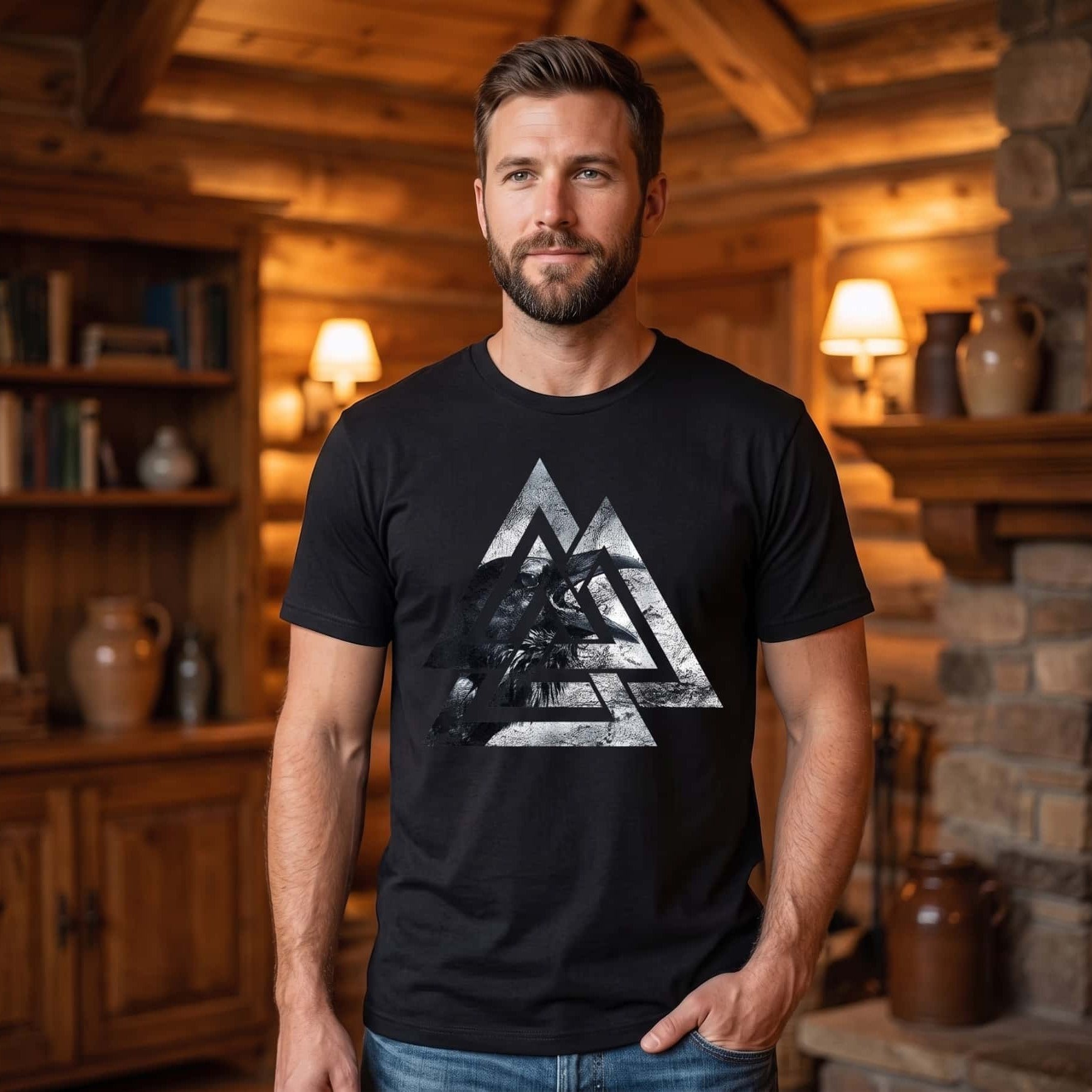
The Valknut, however, is archaeologically attested: three intertwined triangles engraved on the Stora Hammars stones in Gotland and on the Oseberg ship bed, often in scenes of death in battle. Its name, however, is a 19th-century Norwegian invention. What the Scandinavians called it, we do not know.
Yggdrasil, the ash tree that connects the nine worlds, is described in the Völuspá and in Snorri's Edda — but no medieval representation has reached us. The tree with symmetrical roots that you see printed is a modern reconstruction, faithful to the texts, without an archaeological model.
Wolves actually cover three distinct figures: Fenrir, the chained wolf that will devour Odin at Ragnarök, and Sköll and Hati, who pursue the sun and the moon. Mjölnir, Thor's hammer, is the most documented of all — more than a thousand pendants have been found in funerary contexts.
To go further, our guide to the 17 Viking symbols covers each of them with its sources.
What the Scandinavians actually wore
Let's be frank: nothing in this department is a re-enactment. A printed t-shirt is a 21st-century object, and ours does not claim to be anything else. But the question comes up often enough to deserve an answer.
The Viking Age wardrobe relied on two fibers, wool and linen. Men wore a tunic (kyrtill) descending to mid-thigh, over trousers that were loose or tight depending on the region, and a cloak closed at the shoulder by a fibula. Women wore a linen dress topped by an apron-dress suspended by two straps, held by two oval fibulae worn in a pair — a device so constant that these brooches are used today to identify a female burial.
The colors were not dull. Excavations at Birka, Hedeby, and York have yielded textiles dyed with madder (red), woad (blue), and weld (yellow), and even silk ribbons brought from Byzantium in the richest tombs. Cotton was totally absent from medieval Scandinavia. Our article on the daily life of the Vikings details the rest of daily life.
Care for printed clothing
The rule can be summed up in one sentence: what kills a print is heat and fabric softener, not washing.
Wash at 30 degrees maximum, inside out, without fabric softener — it is what dulls prints the fastest by depositing a greasy film on the ink. Air dry, never tumble dry, as the heat cracks screen-printed inks and shrinks the knit. Iron only on the reverse side, and never directly on the motif.
Full-garment sublimation prints are the most tolerant in the department: since the ink is fixed in the fiber, they do not peel and can withstand repeated washing without loss of sharpness. Jacquard knits, however, require the opposite — wash cold, dry flat, never hang on a hanger while damp, or they may stretch at the shoulders.
Frequently Asked Questions
How to choose your Viking clothing size? Measure a garment you already wear while laying it flat: width from armpit to armpit multiplied by two, then compare to the chest measurement indicated on the product page. Since the cut runs small, take the size above if you are hesitating.
How do the sizes compare with European sizing? The cut runs small: narrower in the shoulders and shorter in the body than a European cut of an equivalent size. That is why we publish measurements in centimeters rather than letters.
Do you carry large sizes? Yes. T-shirts and sweatshirts go up to 6XL on most models, and tank tops also go up to 6XL. The available sizes are listed on each product page, model by model.
Cotton or polyester: which to choose? Cotton for daily wear and a localized motif, polyester for a full-garment print that will not crack. The material is indicated on each page.
Does the print resist washing? Yes, at 30 degrees, inside out, and without fabric softener. Full-garment prints, where the ink is fixed in the fiber by sublimation, are the most resistant. What damages a motif is the tumble dryer and an iron placed directly on it.
Are there models for children? A few t-shirts are available in children's sizes, from 4 years old (100 cm) to 14 years old (160 cm). They appear in the drop-down menu of the relevant product pages.
What are the delivery times? Allow 10 to 20 business days in total: 3 to 5 days for preparation, then 7 to 15 days for delivery in mainland France, and 10 to 20 days in the European Union. Tracked delivery is free on orders over €49, regardless of the delivery country.
Also explore: complete the outfit with our Viking jewelry, our Viking necklaces, and our bracelets, or browse our Viking decorations for your interior. As for reading, our guide to Viking symbols explains each motif, and the calendar of Viking festivals in France provides some great opportunities to wear them.